
- Home
- »
- Medical Devices
- »
-
Intravascular Lithotripsy Market Size Report, 2026-2033GVR Report cover

Intravascular Lithotripsy Market (2026 - 2033)
Size, Share & Trends Analysis Report By Product (Systems, Catheters, Generators, and Accessories), By Application (Calcified Coronary Artery Disease, Calcified Peripheral Artery Disease), By End-use, By Region, And Segment Forecasts
Market Size, 2025
$1.1BMarket Estimate, 2026
$1.3BMarket Forecast, 2033
$2.9BCAGR, 2026–2033
11.5%Intravascular Lithotripsy Market Summary
The global intravascular lithotripsy market size was valued at USD 1.1 billion in 2025 and is projected to grow from USD 1.3 billion in 2026 to USD 2.9 billion by 2033, at a CAGR of 11.5% from 2026 to 2033. North America dominated the market, accounting for the largest revenue share of 79.2% in 2025. Market growth is driven by the increasing prevalence of calcified coronary and peripheral artery disease, rising adoption of intravascular lithotripsy for the treatment of severely calcified lesions, and growing demand for advanced vessel preparation technologies that facilitate complex cardiovascular interventions.
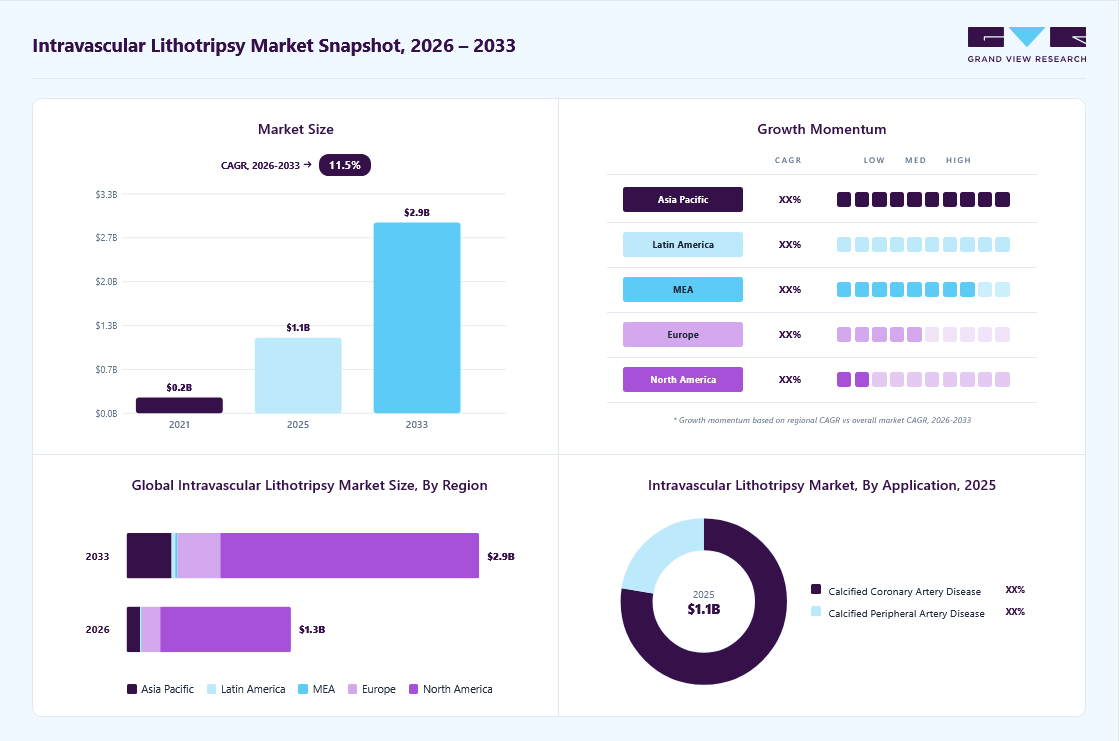 Source: Grand View Research, IR Documents, Primary Interviews, Paid DatabasesTo learn more about this report,
 Download Free Sample Report
Key Market Trends & Insights
- By product: Intravascular lithotripsy catheters segment held the highest market share of 98.6% in 2025.
- By application: Calcified coronary artery disease segment held the highest market share of 77.4% in 2025.
- By end use: Cardiac catheterization laboratories segment held the highest market share of 64.8% in 2025.
Regional Highlights
- Largest regional market: North America (79.2% revenue share, 2025)
- Fastest-growing regional market: Asia Pacific (highest CAGR, 2025)
- By country: The U.S. held the largest market share in 2025.
Market Size & Forecast
- Market size in 2025: USD 1.1 Billion
- Estimated market size in 2026: USD 1.3 Billion
- Projected market size by 2033: USD 2.9 Billion
- CAGR (2026-2033): 11.5%
Three ways to get this report
Buy it, customize it, or ask a question.Ask an Analyst
Analyst response in 1 business day
- AccessReport author, directly
- Reply timeWithin 1 working day
- No sales callDirect answer only
- FormatEmail reply
- CostFree, no cost
Get the Full Report
What the study covers
- FormatsPDF · Excel · Dashboard
- Timeline2026–2033 annual, 2025 base
- Coverage20+ countries, 5 regions
- Companies10+ key players profiled
Customize the Report
20% free customization
- IncludeCountries, segments, points
- TailorTo your product definition
- ExtendDeeper competitor detail
- OrA fully bespoke study
- Turnaround5–10 working days
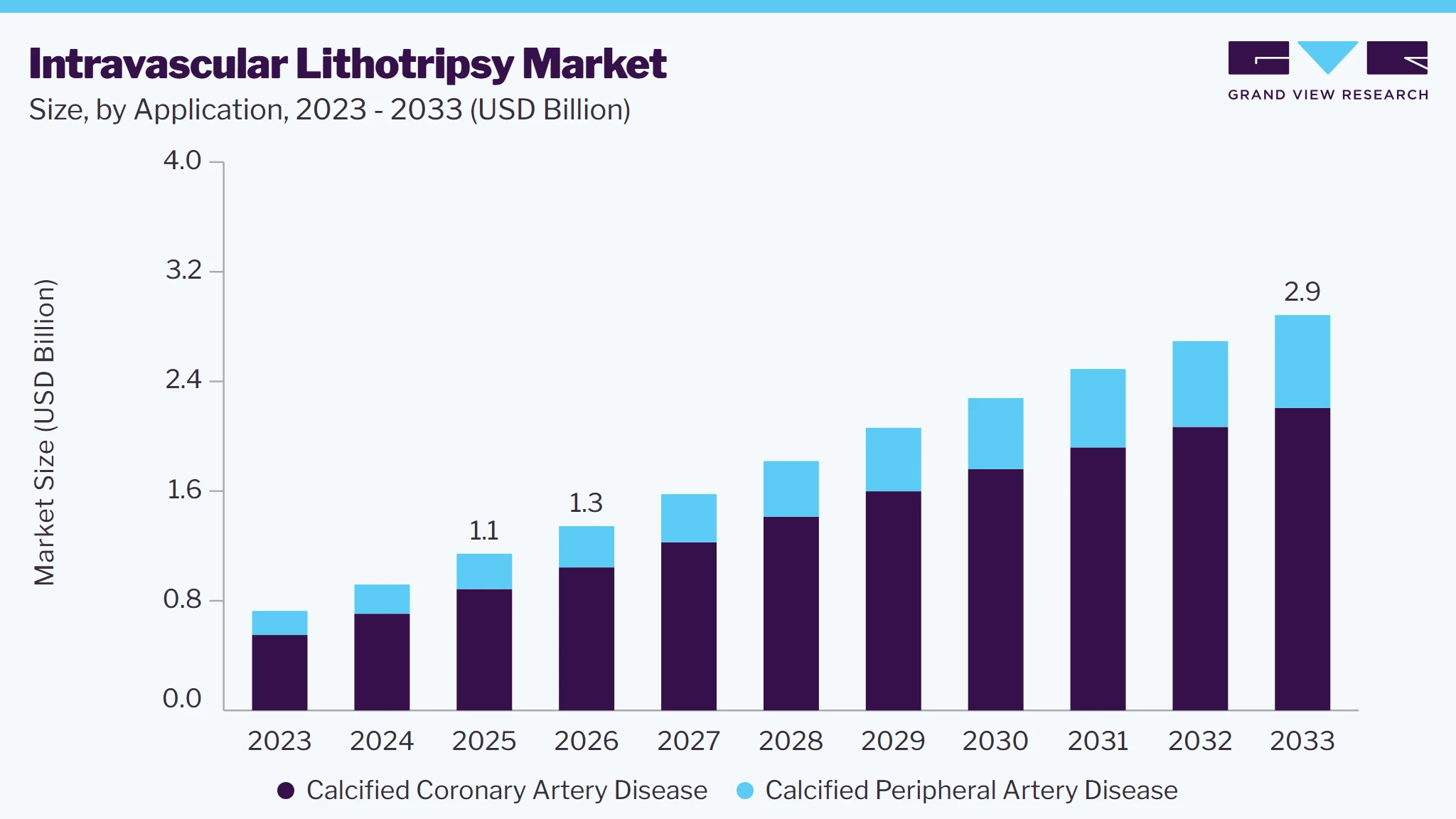 To learn more about this report, Download Free Sample Report
Market Dynamics
The intravascular lithotripsy market is driven by the rising prevalence of coronary artery disease, increasing cases of calcified arterial lesions, and growing demand for minimally invasive cardiovascular procedures. Technological advancements in lithotripsy balloon catheters are improving the treatment of severely calcified lesions and supporting adoption in percutaneous coronary intervention (PCI). However, high device costs, limited access to advanced catheterization facilities, and stringent regulatory requirements may restrain market growth. Expanding clinical evidence, increasing physician awareness, and the adoption of intravascular lithotripsy in peripheral arterial interventions are expected to create growth opportunities.
The increasing use of intravascular lithotripsy (IVL) for heavily calcified coronary lesions is expected to support market growth as physicians increasingly adopt calcium-modification technologies during complex percutaneous coronary intervention (PCI). Severe coronary calcification can limit balloon expansion and stent delivery and is associated with suboptimal stent expansion, increasing the need for effective lesion-preparation technologies before stent implantation. Adoption has also expanded as IVL is incorporated into treatment strategies for increasingly complex coronary anatomy, including severely calcified and otherwise difficult-to-treat lesions.
Recent clinical evidence has further supported the use of coronary IVL in complex patient populations. In May 2025, Shockwave Medical, a Johnson & Johnson company, reported results from the EMPOWER CAD study at EuroPCR 2025, a prospective, multicenter, real-world study that enrolled 399 women across 45 centers in Europe and the U.S. The study population represented a clinically complex group, with 99.3% of lesions classified as severely calcified, 46.1% of patients having diabetes, 32.3% having a prior myocardial infarction, and 27.8% having chronic kidney disease. An IVL-first strategy was used for 90.6% of lesions, demonstrating the use of IVL as an initial calcium-modification approach. At 30 days, procedural success was 86.9%, while target lesion failure was 12.1%; serious angiographic complications occurred in only 0.2% of patients at final angiography. The findings provide additional clinical support for IVL use in severely calcified lesions and complex patient subgroups. The continued generation of clinical evidence by Shockwave Medical and other IVL manufacturers is expected to increase physician familiarity and confidence in IVL, supporting broader incorporation of IVL-first strategies into lesion-preparation workflows and increasing demand for IVL catheters.
Restraints - High procedural cost of IVL compared with alternative calcium-modification technologies
The market faces cost-related challenges that may restrict IVL adoption in hospitals with constrained procedural budgets and cost-sensitive healthcare systems. IVL requires a dedicated single-use lithotripsy catheter, resulting in higher device-related expenditure than some established calcium-modification techniques. In the ShortCUT trial, an investigator-initiated study supported by a research grant from Boston Scientific, IVL was associated with USD 3,632 higher procedural costs than cutting balloon angioplasty, with the difference primarily driven by the cost of the randomized device. The cutting balloon angioplasty demonstrated noninferiority to IVL for stent expansion, with no significant differences in strategy success or 30-day major adverse cardiovascular and cerebrovascular events, highlighting the availability of a lower-cost alternative for selected calcified coronary lesions.
In addition, a systematic review and meta-analysis published in January 2026 identified the higher cost of IVL as a drawback in comparison with rotational atherectomy. The availability of established alternatives, including cutting balloons and atherectomy, therefore creates cost-based competition for IVL and may limit adoption in settings where hospitals place greater emphasis on upfront device costs and overall procedural expenditure.
The expansion of IVL technologies across coronary and peripheral interventions is expected to accelerate market development by increasing the range of clinical applications and improving treatment options for complex calcified lesions. Recent regulatory clearances, product launches, and strategic investments by major medical device companies are expanding the commercial availability of IVL across these applications. In March 2025, the FDA cleared the SEISMIQ IVL System, followed by its U.S. launch by Boston Scientific for the treatment of complex calcified peripheral artery disease. In February 2026, the FDA approved the Shockwave C2 Aero Fly coronary IVL catheter, which provides a higher pulse rate and shorter pause time compared with the preceding C2 Aero catheter, supporting more efficient treatment delivery during coronary procedures. In addition, Boston Scientific agreed to acquire Bolt Medical in January 2025, expanding its calcium-modification portfolio and strengthening its presence across coronary and peripheral interventions. These product and portfolio developments are increasing the availability of IVL systems across treatment settings and lesion types, while continued investment by established device companies is expected to broaden physician access and adoption, supporting expansion of the overall IVL market.
Market Concentration & Characteristics
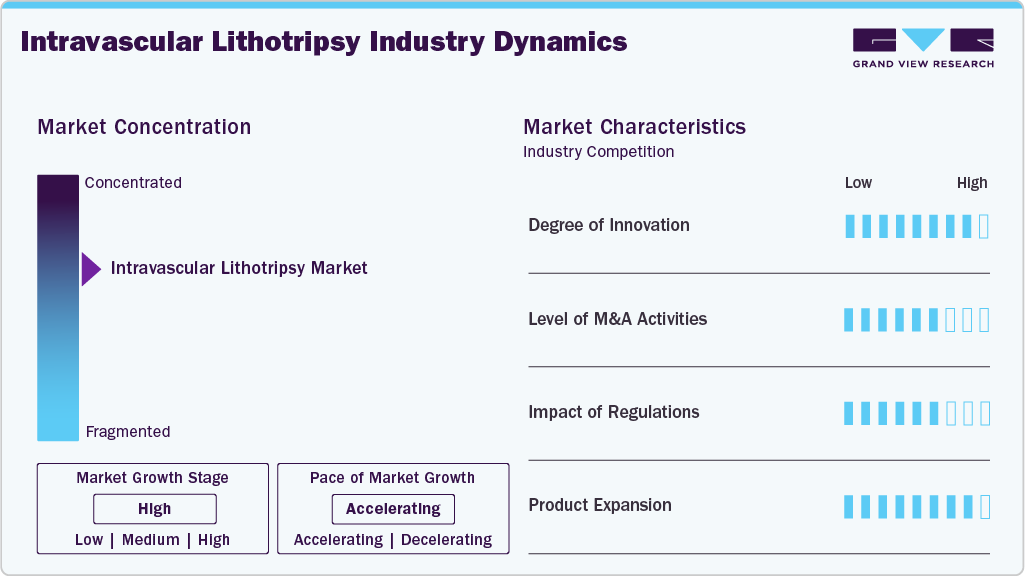
The chart below illustrates the relationship between industry concentration, characteristics, and participants. The X-axis represents the level of market concentration, ranging from low to high. The Y-axis represents various market characteristics, including industry competition, degree of innovation, level of mergers & acquisition activities, regulatory impact, product substitutes, and regional expansion.
The market demonstrates a high degree of innovation, with manufacturers developing advanced technologies to improve the treatment of severely calcified coronary lesions. For instance, in May 2026, Boston Scientific’s Seismiq 4CE Coronary IVL Catheter demonstrated promising results in a first-in-human study involving 41 patients, achieving a 97.4% device success rate and 89.5% procedural success rate, with no reported vessel perforations, abrupt closures, or no-reflow events following IVL. The Seismiq platform uses laser energy to generate acoustic pressure waves that target and fracture vascular calcium, highlighting ongoing innovation in IVL technology for complex coronary interventions.
 To learn more about this report, Download Free Sample Report
M&A activity in the market has increased as major medical device companies seek to expand their peripheral vascular portfolios and gain access to next-generation calcium-modification technologies. For instance, in May 2026, Stryker completed the acquisition of Amplitude Vascular Systems (AVS), a medical technology company developing a next-generation IVL platform for treating complex peripheral arterial disease. AVS’s technology uses pulsed CO₂-generated pressure waves delivered through an IVL balloon catheter to fracture calcium and improve luminal gain, while being designed to enhance catheter deliverability, treatment speed, and therapy efficiency.
“This acquisition is a significant milestone in expanding our peripheral vascular portfolio and enhancing our ability to address challenging arterial. By integrating AVS’s innovative CO₂-generated pressure wave technology with Stryker’s scale and resources, we are well-positioned to deliver solutions that support physicians and patient outcomes.” -Kevin Lobo, Chair and CEO, Stryker.
Regulations have a moderate impact on the IVL market because regulatory requirements affect the speed at which new technologies enter the market and increase manufacturers’ development and compliance costs. In the U.S., the FDA’s 510(k) premarket notification pathway requires IVL manufacturers to demonstrate substantial equivalence to a legally marketed device before commercialization, which lengthen product development and approval timelines. However, regulatory clearance also supports physician confidence, patient safety, and broader clinical adoption, thereby influencing market growth.
Product expansion in the market is high, as manufacturers are actively introducing next-generation catheters with improved deliverability, lesion-crossing, repositioning, and treatment capabilities. For instance, in May 2026, Johnson & Johnson globally launched the Shockwave C2 Aero Coronary IVL Catheter, featuring improved deliverability, enhanced lesion crossing, and repositioning capabilities for treating calcified coronary artery disease, thereby expanding its existing IVL product portfolio.
“Shockwave C2 Aero makes it easier to navigate tortuous coronary anatomy without relying on additional upfront ancillary devices. That enhanced deliverability and efficiency can change IVL use and expand its role in treatment algorithms. By continuing to address real unmet physician needs like deliverability, crossability and repositioning, Johnson & Johnson is pushing expectations for what the technology can achieve in complex PCI procedures.” -Margaret McEntegart, M.D., Ph.D., Director of Complex Percutaneous Coronary Intervention Program at Columbia University Medical Center/New York-Presbyterian Hospital.
Analyst Perspective
The intravascular lithotripsy market is characterized by increasing competition between established medtech companies with broad cardiovascular portfolios and emerging players focused on differentiated calcium-modification technologies. Established companies are strengthening their positions through product innovation, clinical validation, geographic expansion, physician education, and integration of IVL into coronary and peripheral vascular treatment pathways, while emerging players are pursuing novel catheter designs, energy-delivery mechanisms, and targeted applications to address unmet procedural needs. Competitive intensity is expected to increase as companies seek to improve catheter deliverability, lesion crossing, treatment efficiency, and clinical outcomes while expanding IVL adoption across complex calcified lesions. Strategic acquisitions, partnerships, clinical studies, and new product launches are further contributing to technology advancement and portfolio expansion.
Product Insights
The intravascular lithotripsy catheters segment accounted for the largest share of around 98.6% in 2025, primarily due to the increasing use of IVL catheters for modifying calcified lesions and improving vessel expansion during endovascular procedures. The segment is also benefiting from technological advancements that enable treatment of increasingly complex lesions. For instance, in September 2025, Johnson & Johnson launched the Shockwave Javelin Peripheral IVL Catheter in Europe, a novel Forward IVL platform designed to modify extremely narrowed or occluded calcified peripheral lesions. The launch expanded the application of IVL technology in patients with peripheral artery disease (PAD), a condition affecting more than 230 million people globally and approximately 15 million people aged 45 years and older in Europe. The expansion is particularly relevant to patients with chronic limb-threatening ischemia (CLTI), the most advanced form of PAD, which affects nearly 25 million people globally and is associated with substantial risks of major amputation and mortality.
The intravascular lithotripsy accessories segment is the second-largest segment in 2025, driven by the increasing use of supporting components required for the effective delivery of IVL therapy. These accessories include IVL generators, connectors, cables, and other procedural components that support catheter operation during lithotripsy procedures. The growing adoption of IVL for coronary and peripheral artery disease, particularly for complex and heavily calcified lesions, is increasing demand for compatible accessories. In addition, the expansion of IVL platforms into peripheral vascular applications and more challenging anatomies is broadening the utilization of these supporting components. The increasing volume of IVL procedures and the need for reliable, compatible equipment further support segment growth, while continued innovation in IVL systems is expected to create additional demand for associated accessories.
Application Insights
The calcified coronary artery disease segment held the largest market share of 77.4% in 2025. The segment growth is driven by the high prevalence of coronary calcification among patients undergoing percutaneous coronary intervention (PCI) and the increasing use of IVL to modify calcified lesions before stent placement. According to a study published by NCBI in February 2025, calcified coronary artery disease is a common clinical finding and is visible angiographically in approximately 25-30% of patients presenting for PCI. The substantial prevalence of coronary calcification, combined with the challenges associated with treating heavily calcified lesions using conventional angioplasty, is supporting the adoption of IVL technology in coronary interventions.
The calcified peripheral artery disease segment is expected to register the fastest growth during the forecast period, supported by the high prevalence of peripheral artery disease (PAD) and increasing demand for minimally invasive treatment of heavily calcified peripheral lesions. According to data published by the American College of Cardiology in October 2024, PAD affects more than 200 million people globally and accounts for approximately 10-15% of the population over 50 years of age; prevalence is estimated at 3-10% among adults in Western populations and can exceed 20% in Asia and other developing regions. The substantial patient population, combined with the challenges associated with treating severely calcified and narrowed peripheral vessels, is expected to increase the adoption of IVL. Furthermore, the development of next-generation peripheral IVL technologies capable of addressing difficult-to-cross and occlusive calcified lesions is expected to further support segment growth.
End Use Insights
The cardiac catheterization laboratories segment dominated the market with a revenue share of 64.8% in 2025. Cardiac catheterization laboratories are equipped to perform complex coronary interventions and provide the controlled procedural environment required for intravascular imaging, lesion preparation, calcium modification, and stent placement. The increasing integration of IVL systems into catheterization laboratory workflows, together with the expansion of facilities performing complex PCI and the growing availability of coronary IVL catheters, is supporting the segment's leading position. In addition, improvements in catheter deliverability and compatibility with existing catheterization laboratory equipment are facilitating broader adoption of IVL within these specialized end-use settings.
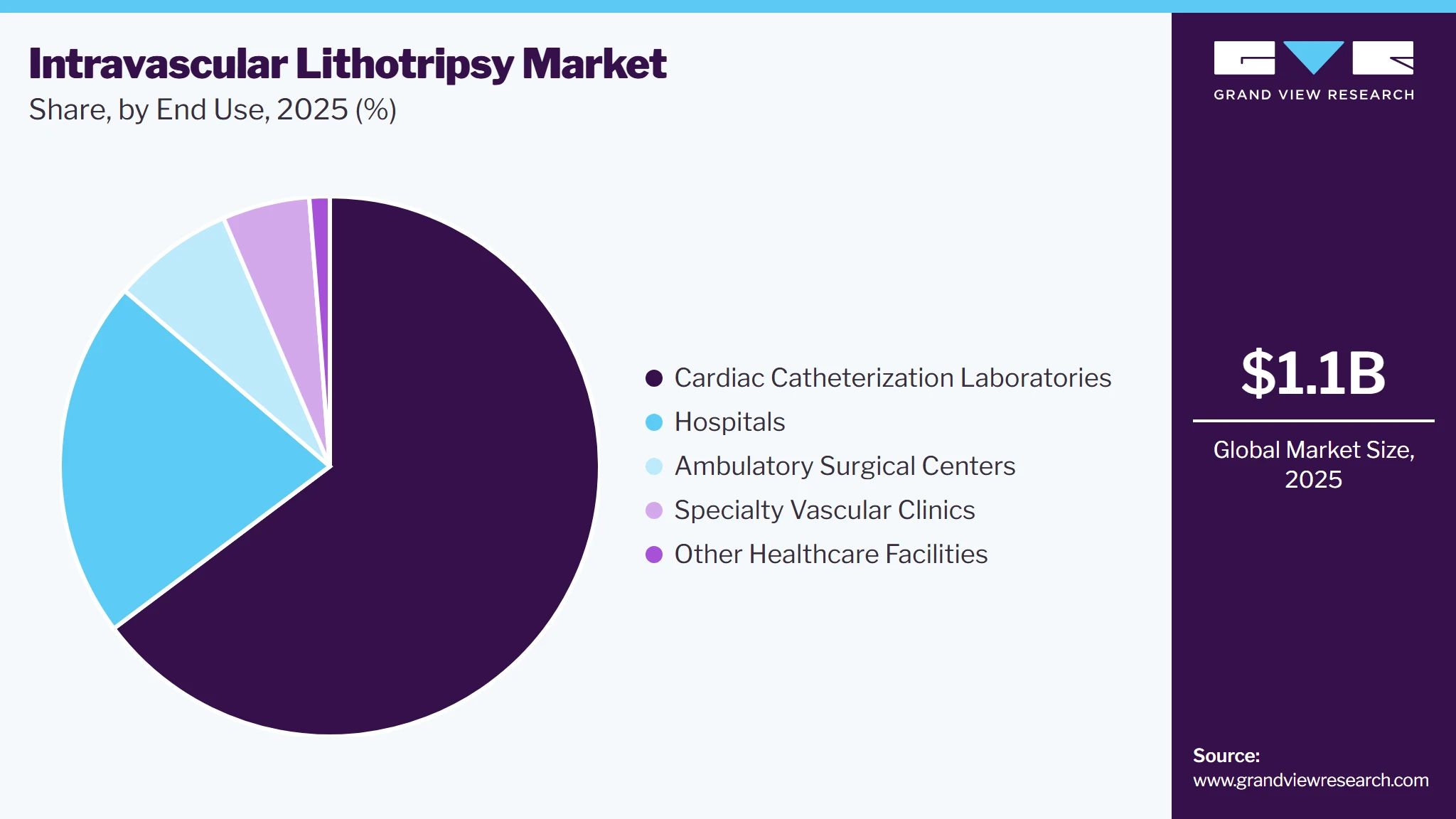 To learn more about this report, Download Free Sample Report
The ambulatory surgical centers segment is anticipated to grow at the fastest CAGR over the forecast period, driven by the continued migration of peripheral vascular procedures from hospitals to lower-cost outpatient settings, shorter recovery times, and expanding reimbursement support for IVL procedures. In the U.S., the 2024 CMS OPPS/ASC final rule established payment pathways for IVL procedures involving the iliac, femoral, and popliteal arteries, supporting the adoption of peripheral IVL in ASCs. The broader ASC environment is also expanding rapidly. For instance, Vizient’s 2026 Impact of Change forecast projects ASC procedure volume to grow by 24% over the next decade, supported by advances in minimally invasive technologies, payer demand for lower-cost care settings, consumer preference for outpatient care, and the continued expansion of procedures eligible for ambulatory surgery.
“Ambulatory surgery will remain one of healthcare’s fastest-growing care settings. The growth will be driven by advances in minimally invasive technology, consumer expectations, payer demand for lower-cost care settings and continued expansion of procedures eligible for ambulatory surgery.”
-Karyl Kopaskie, principal of Vizient strategy intelligence.
Regional Insights
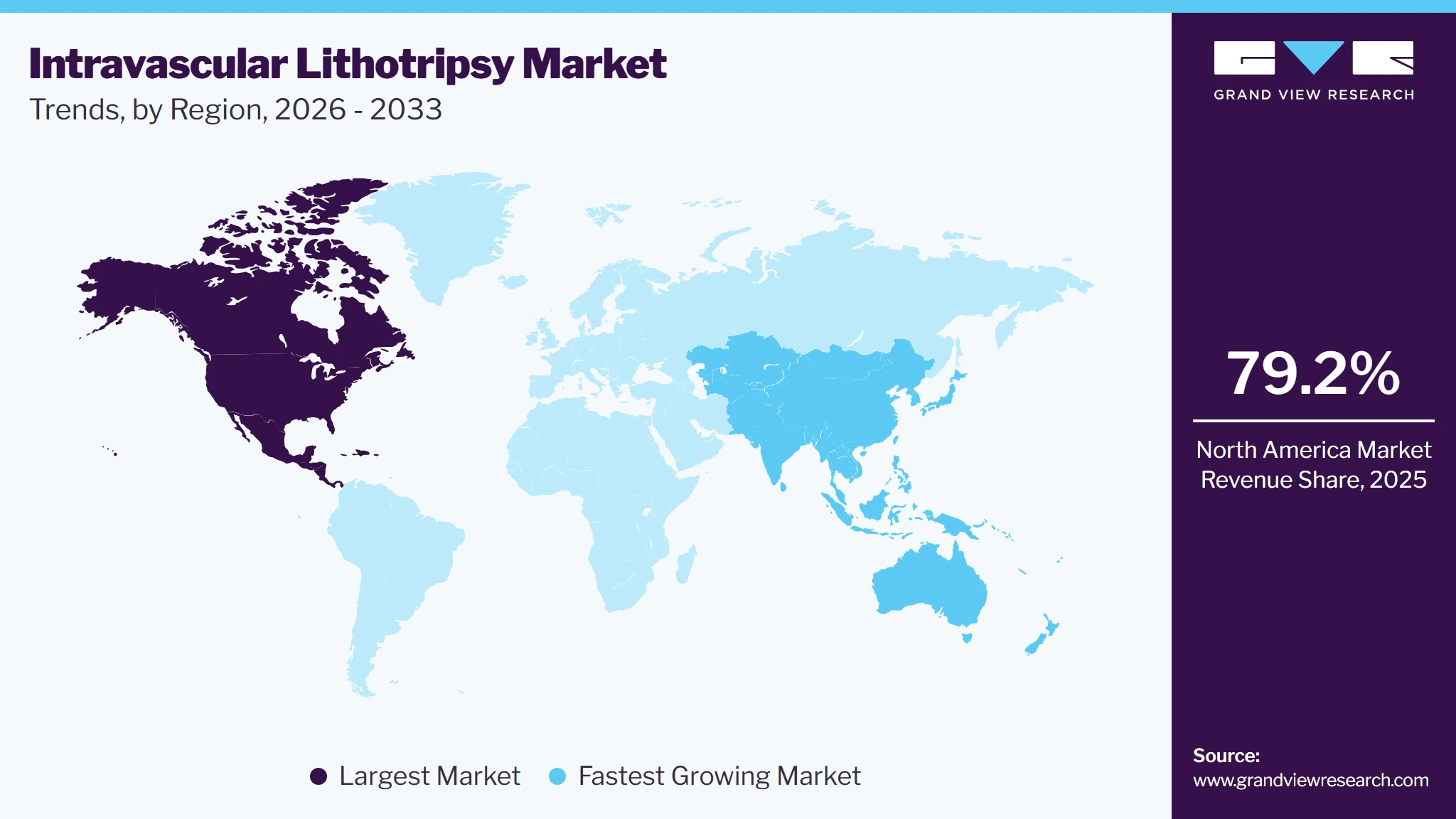
North America dominated the intravascular lithotripsy (IVL) market, accounting for 79.2% of global revenue in 2025. The region’s growth is supported by advanced cardiovascular care infrastructure, and high adoption of minimally invasive vascular interventions. The region has a large and well-established network of hospitals, cardiac catheterization laboratories, and specialized vascular centers, providing a strong clinical base for IVL procedures. In addition, the increasing prevalence of coronary and peripheral artery disease, particularly among the aging population, is contributing to demand for calcium-modification technologies. For instance, according to data published by Cardiac Advisor in February 2024, approximately 1 in 20 U.S. adults, or around 5% of Americans aged 20 years and older, live with coronary artery disease, highlighting the substantial patient population requiring advanced interventions for coronary disease and supporting demand for technologies such as IVL.
 To learn more about this report, Download Free Sample Report
U.S. Intravascular Lithotripsy Market Trends
The U.S. dominated the North America market in 2025, supported by the country’s advanced cardiovascular care infrastructure, high adoption of minimally invasive vascular procedures, and increasing use of calcium-modification technologies for treating complex coronary and peripheral lesions. The presence of established interventional cardiology centers, leading IVL manufacturers, and a well-developed regulatory framework has facilitated the commercialization and adoption of IVL technologies. For instance, in July 2026, the U.S. FDA granted clearance to Shockwave Medical’s E8 Peripheral IVL Catheter, expanding the range of IVL technologies available for peripheral vascular applications in the U.S. market.
Europe Intravascular Lithotripsy Market Trends
The intravascular lithotripsy market in Europe is expected to grow significantly over the forecast period. The availability of new technologies with differentiated energy-delivery approaches is broadening the competitive landscape and providing physicians with additional options for calcium modification. For instance, in April 2025, Elixir Medical announced the EU MDR CE Mark approval and commercial launch of its LithiX Hertz Contact (HC) IVL System in Europe for the treatment of moderate to severely calcified coronary artery lesions. The first procedures were performed at leading cardiovascular centers in Italy, France, and Germany, demonstrating early clinical adoption across multiple European markets. The continued introduction of innovative IVL systems, expansion of commercial availability, and adoption across specialized cardiovascular centers are expected to support the growth of the European IVL market.
“With LithiX we created the first mechanical IVL platform capable of treating broad calcified lesion morphologies with great final outcomes, while minimizing injury to adjacent non-calcified vessel.” - Motasim Sirhan, CEO of Elixir Medical.
The Germany intravascular lithotripsy market is expected to represent a significant market for IVL in Europe, supported by its extensive interventional cardiology infrastructure and established capacity for complex cardiovascular procedures. According to the European Society of Cardiology's available country-level data, the country had 28.59 interventional cardiologists per million people, reflecting a substantial specialist base capable of performing advanced catheter-based interventions. Moreover, the country’s established PCI infrastructure provides an important clinical base for the adoption of IVL, particularly as coronary calcification becomes increasingly recognized as a challenge during complex interventions.
The UK intravascular lithotripsy market is witnessing growth. Increasing clinical acceptance of the technology within the National Health Service (NHS), growing evidence from real-world clinical practice, and efforts to evaluate IVL across broader peripheral vascular applications is driving the market in the country. For instance, in February 2025, NICE published guidance concluding that IVL are used as an option for treating calcified coronary arteries during PCI with standard arrangements for clinical governance, consent, and audit. This regulatory and clinical recognition supports the integration of IVL into UK cardiovascular care pathways.
Asia Pacific Intravascular Lithotripsy Market Trends
The Asia Pacific is expected to register the fastest growth rate over the forecast period. The region is witnessing greater clinical validation of IVL systems, which is improving physician familiarity with calcium-modification techniques and supporting their integration into coronary intervention procedures. For instance, in December 2025, the prospective, multicenter LEAD-FIM study conducted across 11 sites in China enrolled 184 patients with severely calcified coronary lesions and reported a procedural success rate of 96.7%, significantly exceeding the prespecified performance goal of 85.0%. The study also reported 85.3% overall stent expansion at the site of maximum calcification and no serious device-related adverse events, demonstrating the potential of IVL to facilitate stent delivery and optimize stent expansion in severely calcified lesions. Such clinical evidence, together with expanding interventional cardiology capabilities and increasing adoption of locally developed IVL technologies across Asia Pacific, is expected to support regional market growth.
The China intravascular lithotripsy market holds the largest market share in 2025. The expansion of cardiovascular intervention infrastructure and growing availability of locally developed medical devices are supporting broader access to advanced coronary treatment technologies. For instance, in February 2025, MicroPort RotaPace received market approval in China for the TomaHawk Integrated Coronary IVL System, comprising a disposable coronary IVL balloon catheter and treatment device for complex coronary artery disease. The system was designed to simplify IVL procedures, reduce operational complexity, and facilitate the treatment of moderate-to-severe calcified lesions, supporting the wider clinical application of IVL technology in China.
The India intravascular lithotripsy market is anticipated to register significant growth during the forecast period, driven by the increasing adoption of advanced coronary intervention techniques and growing clinical experience in treating heavily calcified coronary lesions. The availability of real-world evidence from Indian cardiac centers is strengthening physician confidence in IVL and supporting its use as a vessel-preparation technology during complex PCI. For instance, results from the Shock India Registry, presented in the Journal of the American College of Cardiology in October 2024, evaluated 1,053 patients with calcified coronary artery disease across 53 sites in India. In the OCT-guided subgroup, the primary efficacy endpoint was achieved in 89% of patients, while device and angiographic success reached 100%; stent expansion at the maximum calcium site was 102.63 ± 23.71%. The registry also reported no cases of perforation, severe dissection, abrupt vessel closure, slow flow, or no-reflow, providing real-world evidence supporting the safety and effectiveness of IVL for complex calcified coronary interventions in India.
Latin America Intravascular Lithotripsy Market Trends
The Latin America region is expected to witness significant growth over the forecast period, supported by the increasing adoption of advanced interventional cardiology technologies and growing demand for effective vessel preparation in patients with heavily calcified coronary lesions. The expansion of specialized catheter-based cardiovascular procedures and the introduction of new IVL technologies are improving access to calcium-modification solutions and broadening treatment options for complex PCI.
The Brazil intravascular lithotripsy market is anticipated to register significant growth during the forecast period. The growing involvement of leading medical device manufacturers in the region is strengthening the availability of innovative IVL systems and supporting physician familiarity with technology. For instance, in June 2026, Lepu Medical launched its Vesscrack Coronary IVL Balloon Dilatation Catheter in Brazil at the Instituto Dante Pazzanese de Cardiologia, a leading cardiovascular center. The system features high navigability, nine diameter options, and a next-generation balloon design delivering up to 120 pulses, supporting treatment of complex calcified coronary lesions and optimal stent expansion.
Middle East And Africa Intravascular Lithotripsy Market Trends
The Middle East and Africa intravascular lithotripsy market is anticipated to witness significant growth over the forecast period. The development of specialized cardiovascular centers and increasing availability of complex PCI capabilities are improving access to advanced lesion-preparation technologies across the region. In addition, growing clinical evidence from healthcare institutions is strengthening physician confidence in IVL and demonstrating its applicability to both native coronary lesions and in-stent restenosis. For instance, a retrospective study conducted in March 2026 at King Faisal Specialist Hospital and Research Centre in Riyadh, Saudi Arabia, involving 45 patients treated with IVL between January 2019 and January 2025, reported successful reperfusion in all patients, with 100% achieving final TIMI 3 flow and no in-hospital major adverse cardiovascular events (MACE). Such evidence supports the clinical utility of IVL for severely calcified coronary lesions and contribute to broader adoption of the technology across the region.
The intravascular lithotripsy market in South Africa is witnessing growth. Cost efficiency is particularly important in the South Africa healthcare environment, where reducing procedure-related expenditure while maintaining clinical effectiveness can support the adoption of innovative technologies. For instance, a pilot study conducted by Discovery in South Africa evaluated Shockwave Intravascular Lithotripsy and reported that the technology demonstrated a favorable safety profile while reducing costs associated with traditional disposable devices used for calcium modification. Such evidence highlighting both clinical and economic benefits support broader adoption of IVL.
Key Intravascular Lithotripsy Company Insights
Key participants in the intravascular lithotripsy industry are focusing on devising innovative business growth strategies, such as expanding their product portfolios, partnerships and collaborations, mergers and acquisitions, and expanding their business footprints.
Key Intravascular Lithotripsy Companies
The following key companies have been profiledfor this study on the intravascular lithotripsy market.
-
Johnson & Johnson MedTech (Shockwave)
-
Boston Scientific
-
Elixir Medical
-
MicroPort Scientific
-
Sonosemi Medical
-
Spectrumedics Medical
-
Lepu Medical
-
Zhonghui Medical
-
FastWave Medical
Competitive Benchmarking
Category
Operating Strategies
Competitive Edge
Weakness
Established Players (Johnson & Johnson MedTech (Shockwave), Boston Scientific, MicroPort Scientific, Lepu Medical)
- Strengthen clinical evidence, physician training, commercialization, and distribution networks to accelerate adoption of IVL technologies.
- Leverage broad cardiovascular portfolios and established healthcare relationships to integrate IVL into existing interventional workflows.
- Strong brand recognition established physician relationships, and extensive commercial and distribution infrastructure.
- Greater financial and R&D resources support product innovation, clinical trials, regulatory approvals, and geographic expansion.
- Large organizational structures result in longer development and commercialization cycles compared with specialized IVL startups.
- Established platforms face increasing competition from newer technologies offering differentiated catheter designs, energy-delivery mechanisms, or improved lesion-crossing capabilities
Emerging & Specialized Players (Elixir Medical, Sonosemi Medical, Spectrumedics Medical, Zhonghui Medical, FastWave Medical)
- Focus on differentiated IVL technologies designed to address specific limitations of conventional calcium-modification systems.
- Develop specialized catheter platforms aimed at improving deliverability, treatment efficiency, lesion crossing, and calcium modification.
- Greater focus on specialized IVL innovation allows emerging companies to develop differentiated technologies and target unmet clinical needs.
- Novel energy-delivery mechanisms and catheter designs provide opportunities to differentiate from established IVL platforms.
- Limited commercialization history, physician familiarity, and distribution infrastructure compared with established medtech companies.
- Smaller financial resources and clinical evidence bases may constrain large-scale clinical trials, regulatory expansion, and global market penetration.
Product Pipeline Analysis, By Stage
The intravascular lithotripsy market pipeline is advancing through the development of next-generation systems targeting complex coronary, carotid, and peripheral calcified lesions. Key players are progressing through pivotal clinical studies and first-in-human evaluations, focusing on improving device deliverability, lesion modification, and treatment options for patients with heavily calcified arteries.
Company
Product
Pipeline Stage
Application
Shockwave Medical / Johnson & Johnson MedTech
Shockwave Javelin Coronary IVL Catheter
Pivotal FORWARD CAD IDE study initiated in April 2025; investigational
Difficult-to-cross, calcified coronary lesions
Shockwave Medical / Johnson & Johnson MedTech
Shockwave SkyRunner Carotid IVL System
Pivotal SKYWARD IDE clinical program initiated in June 2026; investigational
Calcified carotid lesions prior to stenting
Stryker / Amplitude Vascular Systems
Pulse IVL System
First-in-human coronary study initiated in May 2026; investigational
Moderate-to-severely calcified coronary artery disease
Cagent Vascular
Serranator SONIC IVL System
First human-use cases reported in May 2026; clinical development ongoing; investigational
Peripheral and coronary calcified lesions
New IVL Platforms Emerging Globally
The introduction of advanced IVL platforms designed to improve device deliverability, lesion crossing, and calcium modification in complex peripheral and coronary artery disease. Key developments include new product launches, regulatory clearances, and geographic expansion by major players, supporting broader clinical adoption and strengthening competition in the global market.
Company
System
Country of Origin
Initial Authorization
Global Market Presence
Key Highlights
Shockwave Medical / Johnson & Johnson MedTech
Shockwave Javelin Peripheral IVL Catheter
U.S.
U.S. commercial launch in March 2025; European launch in September 2025
U.S.; Europe
Forward IVL platform designed for calcium modification in extremely narrowed and difficult-to-cross peripheral lesions
Boston Scientific / Bolt Medical
Bolt IVL System / SEISMIQ
U.S.
FDA 510(k) clearance March 25, 2025
U.S.
Advanced IVL platform for calcified peripheral lesions; Boston Scientific completed its acquisition of Bolt Medical in April 2025
Shockwave Medical / Johnson & Johnson MedTech
Shockwave C2 Aero Coronary IVL Catheter
U.S.
Global commercial launch May 2026
U.S.; Japan; Europe and Canada planned
Next-generation coronary IVL platform designed to improve deliverability, lesion crossing, and balloon repositioning
Recent Developments
-
In May 2026, Johnson & Johnson launched the Shockwave C2 Aero Coronary IVL Catheter, a next-generation device designed to improve deliverability, lesion crossing, and balloon repositioning during treatment of calcified coronary artery disease. The launch expanded the company’s IVL portfolio and enabled physicians to address a broader range of complex calcified coronary lesions using the established Shockwave IVL mechanism of action.
-
In May 2026, Boston Scientific presented late-breaking data from the FRACTURE trial at EuroPCR, evaluating its Seismiq 4CE Coronary IVL Catheter in 420 patients with severely calcified coronary artery disease. The study reported a 93.3% rate of freedom from major adverse cardiac events at 30 days and a 93.7% procedural success rate, exceeding the study’s predefined targets. The findings supported the potential of the Seismiq 4CE platform as a new coronary IVL option for complex PCI, although the device had not yet received FDA approval at the time of the report.
-
In October 2024, MedAxiom partnered with Shockwave Medical to educate cardiologists and cardiology programs on the benefits and clinical applications of intravascular lithotripsy (IVL). The collaboration aimed to support greater awareness and adoption of IVL for treating severely calcified coronary and peripheral artery disease.
Intravascular Lithotripsy Market Report Scope
Report Attribute
Details
Market size in 2025
USD 1.1 billion
Estimated market size in 2026
USD 1.3 billion
Projected market size by 2033
USD 2.9 billion
Growth rate
CAGR of 11.5% from 2026 to 2033
Actual data
2021 - 2025
Forecast data
2026 - 2033
Quantitative units
Revenue in USD million/billion and CAGR from 2026 to 2033
Report coverage
Revenue forecast, company ranking, competitive landscape, growth factors, and trends
Segments covered
Products, application, end use, region
Regional scope
North America; Europe; Asia Pacific; Latin America; Middle East and Africa
Country scope
U.S.; Canada; Mexico; UK; Germany; Spain; France; Italy; Spain; Denmark; Sweden; Norway; China; Japan; India; Australia; South Korea; Thailand; Brazil; Argentina; South Africa; Saudi Arabia; UAE; Kuwait
Key companies profiled
Johnson & Johnson MedTech (Shockwave); Boston Scientific; Elixir Medical; MicroPort Scientific; Sonosemi Medical; Spectrumedics Medical; Lepu Medical; Zhonghui Medical; FastWave Medical
Customization scope
Free report customization (equivalent up to 8 analysts working days) with purchase. Addition or alteration to country, regional & segment scope.
Pricing and purchase options
Avail customized purchase options to meet your exact research needs. Explore purchase options
Global Intravascular Lithotripsy Market Report Segmentation
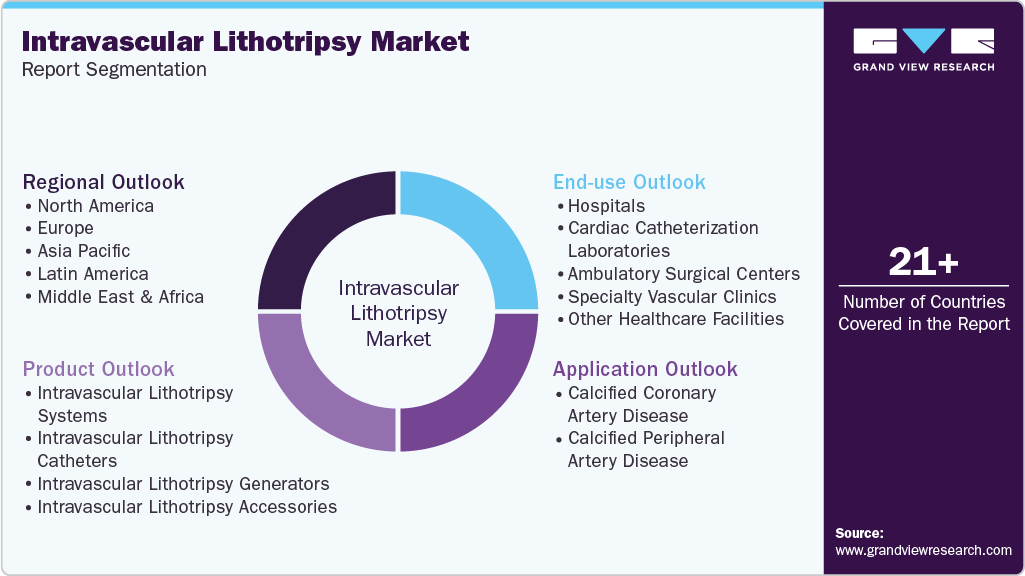
This report forecasts revenue growth at global, regional, and country levels and provides an analysis of the latest industry trends in each of the sub-segments from 2021 to 2033. For this study, Grand View Research has segmented the global intravascular lithotripsy market report based on product, application, end use, and region.
 To learn more about this report, Download Free Sample Report
-
Product Outlook (Revenue, USD Million, 2021 - 2033)
-
Intravascular Lithotripsy Systems
-
Intravascular Lithotripsy Catheters
-
Intravascular Lithotripsy Generators
-
Intravascular Lithotripsy Accessories
-
-
Application Outlook (Revenue, USD Million, 2021 - 2033)
-
Calcified Coronary Artery Disease
-
Calcified Peripheral Artery Disease
-
-
End Use Outlook (Revenue, USD Million, 2021 - 2033)
-
Hospitals
-
Cardiac Catheterization Laboratories
-
Ambulatory Surgical Centers
-
Specialty Vascular Clinics
-
Other Healthcare Facilities
-
-
Regional Outlook (Revenue, USD Million, 2021 - 2033)
-
North America
-
U.S.
-
Canada
-
Mexico
-
-
Europe
-
Germany
-
UK
-
France
-
Italy
-
Spain
-
Denmark
-
Sweden
-
Norway
-
-
Asia Pacific
-
China
-
Japan
-
India
-
South Korea
-
Australia
-
Thailand
-
-
Latin America
-
Brazil
-
Argentina
-
-
Middle East and Africa
-
South Africa
-
Saudi Arabia
-
UAE
-
Kuwait
-
-
Research Methodology
The intravascular lithotripsy market figures in this report are based on a proven research process that combines executive interviews with secondary research from proprietary databases, company filings, and recognized regulatory and institutional sources. Market size is built through value-chain sizing-reconciling supply-side and demand-side estimates-and triangulated with bottom-up and top-down approaches. Every estimate passes multiple levels of expert validation before publication, with each intravascular lithotripsy segment quantified using the revenue-capture definitions in the table below.
Segment Definition
Segment - Product
Revenue capture definition
Intravascular Lithotripsy Systems
Medical device systems designed to modify calcified vascular lesions using acoustic pressure waves delivered within the vessel. These systems typically comprise IVL catheters, generators, and related accessories used during endovascular procedures.
Intravascular Lithotripsy Catheters
Specialized balloon catheters equipped with lithotripsy emitters that deliver acoustic pressure waves to fracture calcified plaque within the vessel wall. They are used for lesion preparation before balloon angioplasty or stent placement.
Intravascular Lithotripsy Generators
Console-based devices that generate and control the electrical energy required to activate lithotripsy emitters within IVL catheters. They regulate pulse delivery and enable controlled calcium modification during vascular procedures.
Intravascular Lithotripsy Accessories
Supporting components required for the operation and deployment of IVL systems, including connectors, cables, charging components, and other system-specific accessories. These products facilitate energy transmission, device connectivity, and procedural operation.
Segment - Application
Revenue capture definition
Calcified Coronary Artery Disease
Application of IVL for modifying calcified lesions in the coronary arteries to improve vessel compliance and facilitate subsequent PCI. The technology is particularly used for severely calcified lesions that may limit balloon expansion or stent deployment.
Calcified Peripheral Artery Disease
Application of IVL for treating calcified lesions in peripheral arteries, including iliac, femoral, and popliteal vessels. IVL fractures vascular calcium to facilitate lesion expansion and improve vessel preparation before angioplasty or stenting.
Segment - End Use
Revenue capture definition
Hospitals
Healthcare facilities where IVL procedures are performed across inpatient and outpatient interventional settings. Hospitals generally provide comprehensive cardiovascular and vascular infrastructure for treating complex calcified lesions.
Cardiac Catheterization Laboratories
Specialized hospital units equipped for catheter-based cardiovascular procedures, including coronary angioplasty and IVL-assisted PCI. These facilities provide imaging, monitoring, and interventional equipment required for complex coronary procedures.
Ambulatory Surgical Centers
Outpatient facilities where eligible IVL-assisted vascular procedures can be performed without an overnight hospital stay. Their adoption is supported by minimally invasive techniques, shorter recovery times, and the migration of suitable procedures to outpatient settings.
Specialty Vascular Clinics
Specialized outpatient centers focused on the diagnosis and treatment of peripheral vascular diseases and related conditions. These clinics may use IVL for selected peripheral calcified lesions requiring minimally invasive endovascular intervention.
Other Healthcare Facilities
Other clinical settings capable of supporting IVL procedures outside hospitals, cardiac catheterization laboratories, ASCs, and specialty vascular clinics. This category may include specialized outpatient or integrated healthcare facilities with appropriate interventional capabilities.
Estimation Model
Market Estimation Process
Application in Intravascular Lithotripsy Market
Market Sizing - Bottom-Up Procedure & Device Demand (Model I)
Estimates IVL demand from PCI and peripheral intervention volumes, the proportion of procedures involving calcified lesions, IVL utilization rates, IVL catheter use per procedure, and applicable ASPs. The model is built across coronary and peripheral applications and reconciled by geography and treatment setting.
Market Sizing - Commodity Flow / Supplier-Side Revenue (Model II)
Estimates market value from manufacturer-reported IVL revenues, product sales, catheter volumes, regulatory/commercial launches, geographic sales exposure, and company disclosures. Product-level and company-level revenue estimates are reconciled with the procedure-based demand model.
Bottom-Up Modeling
Builds the market from the procedure level upward by analyzing coronary vs. peripheral IVL, lesion type, vessel/application, IVL catheter utilization, procedure volumes, end-use setting, and geography to establish underlying unit demand and market value.
Top-Down Validation
Cross-checks bottom-up estimates against manufacturer revenues, product shipments, company filings, regulatory databases, clinical-trial activity, hospital procurement information, distributor activity, and reported PCI/peripheral intervention volumes.
Quantitative Indicators
Incorporates PCI volumes, peripheral intervention volumes, calcified lesion prevalence, IVL utilization rates, catheter units, ASPs, manufacturer revenues, installed commercial footprint, procedure growth, and regional sales to quantify market demand and value.
Qualitative Indicators
Assesses physician adoption, preference for IVL versus atherectomy and specialty balloons, clinical evidence, product launches, regulatory approvals, catheter deliverability, treatment of complex lesions, reimbursement, hospital procurement practices, and expansion into new vascular applications.
Competitive Share Benchmarking
Estimates and validates company shares using manufacturer disclosures, product-level revenues, estimated catheter utilization, regulatory/commercial presence, geographic reach, clinical adoption, hospital access, and portfolio breadth across coronary and peripheral IVL.
Clinical & Real-World Validation
Uses peer-reviewed clinical studies, registries, clinical-trial results, real-world IVL studies, procedural outcomes, lesion characteristics, and published utilization data to validate assumptions regarding IVL adoption, procedural use, and treatment of calcified lesions.
Key Model Inputs
Includes PCI and peripheral intervention volumes, prevalence of moderate-to-severe vascular calcification, IVL penetration, lesion complexity, IVL-first adoption, catheter utilization per procedure, ASPs, reimbursement, regulatory approvals, physician adoption, replacement/repeat procedure demand, and geographic availability.
Segment Share Modeling
Allocates market value and volume across coronary vs. peripheral applications, vessel/lesion type, catheter type, procedure setting, and geography using procedural, clinical, utilization, and commercial parameters.
Regional Share Modeling
Estimates regional and country-level contribution using PCI/peripheral intervention volumes, calcified lesion burden, IVL adoption, healthcare expenditure, reimbursement, regulatory access, distributor coverage, hospital infrastructure, and device pricing.
Forecasting Framework
Forecasts 2026-2033 market growth based on procedure volume trends, increasing treatment of calcified lesions, IVL penetration, clinical evidence, product launches, expansion into coronary and peripheral applications, regulatory approvals, physician adoption, competitive entry, reimbursement, and ASP trends.
Data Triangulation & Validation
Reconciles estimates across procedures → eligible calcified lesions → IVL utilization → catheter units → ASPs → market value, with manufacturer disclosures, regulatory data, clinical evidence, procurement information, and secondary research used as independent validation layers.
Primary Research Validation
Interviews interventional cardiologists, vascular specialists, hospital cath-lab/procurement teams, distributors, and industry experts to validate IVL utilization, clinical preferences, competitive positioning, ASPs, procurement behavior, reimbursement, and adoption barriers.
Delivered Customizations
This report has been delivered with the following In-depth customizations
Client Request
Customization Delivered
Value Adds
Procedure-volume analysis
IVL procedure volumes by coronary/peripheral application, geography, and end-use setting, including historical trends and forecasts.
Analysis of procedure volumes across hospitals, cardiac catheterization laboratories, ASCs, and specialty vascular clinics.
Estimation of IVL penetration among eligible calcium-modification procedures and addressable procedure volumes.Helps the client understand actual procedural demand, IVL penetration, and future adoption opportunities.
Supports market forecasting by linking revenue growth with underlying procedure volumes.
Helps identify priority geographies and healthcare settings for commercial expansion.Average Selling Price (ASP) analysis
ASP of IVL catheters, generators, and accessories by geography and application, including historical pricing trends.
Comparison of ASPs between coronary and peripheral IVL products and across major markets.Development of price-volume assumptions to assess the contribution of pricing and unit growth to overall market revenue.
Helps with pricing strategy, revenue forecasting, and product positioning.
Identifies potential pricing premiums associated with differentiated products and technologies.
Provides insight into regional pricing variations and competitive pricing pressureProcedure-to-catheter demand analysis
Conversion of IVL procedure volumes into estimated catheter demand using application-specific IVL penetration and catheter utilization assumptions for coronary and peripheral interventions.
partnerships. Market share analysis is evaluated across major geographic markets and the defined product segments.
Creates a direct link between procedural activity and IVL device demand. Helps validate market estimates and assess the impact of procedure growth and adoption on catheter volumes.
Frequently Asked Questions About This Report
The global intravascular lithotripsy market size was estimated at USD 1.1 billion in 2025 and is expected to reach USD 1.3 billion in 2026.
The global intravascular lithotripsy market is expected to grow at a compound annual growth rate of 11.5% from 2026 to 2033 to reach USD 2.9 billion by 2033.
By product, the intravascular lithotripsy catheters segment held the highest market share of 98.6% in 2025.
The North America intravascular lithotripsy market held the largest share of 79.2% of the global market in 2025.
Market growth is driven by the increasing prevalence of calcified coronary and peripheral artery disease, rising adoption of intravascular lithotripsy for the treatment of severely calcified lesions, and growing demand for advanced vessel preparation technologies that facilitate complex cardiovascular interventions.
Some of the key players operating in the market are Johnson & Johnson MedTech (Shockwave); Boston Scientific; Elixir Medical; MicroPort Scientific; Sonosemi Medical; Spectrumedics Medical; Lepu Medical; Zhonghui Medical; FastWave Medical; Others
By application, the calcified coronary artery disease segment held the highest market share of 77.4% in 2025.
By end use, the cardiac catheterization laboratories segment held the highest market share of 64.8% in 2025.
About the Author(s)
Medical Devices Research Team
Healthcare · Medical DevicesThis report was authored by the medical devices research team at Grand View Research - comprising two research analysts, one senior research analyst, and one industry expert - with specialized expertise in the medical devices segment of the healthcare industry. All findings are based on proprietary healthcare databases, executive interviews, and regulatory analysis, subject to internal peer review prior to publication.
Last Updated:
Speak to Analyst

Customize this report to your needs - add regions, segments, or data points, with 20% free customization.
Or view our licence options:


ISO 9001:2015 & 27001:2022 Certified
We are GDPR and CCPA compliant! Your transaction & personal information is safe and secure. For more details, please read our privacy policy.


