
- Home
- »
- Clothing, Footwear & Accessories
- »
-
Islamic Clothing Market Size And Share Report, 2026-2033GVR Report cover

Islamic Clothing Market (2026 - 2033)
Size, Share & Trends Analysis Report By End User (Women, Men), By Product (Ethnic Wear, Sustainable Fashion, Sportswear), By Distribution Channel (Offline, Online), By Region (North America, Europe, Acia Pacific), And Segment Forecasts
Market Size, 2025
$89.2BMarket Estimate, 2026
$93.8BMarket Forecast, 2033
$140.6BCAGR, 2026–2033
5.2%Islamic Clothing Market Summary
The global Islamic clothing market size was valued at USD 89.2 billion in 2025 and is projected to grow from USD 93.8 billion in 2026 to USD 140.6 billion by 2033, growing at a CAGR of 5.2% from 2026 to 2033. The market in Middle East & Africa dominated with a revenue share of 48.0% in 2025. One major driver of this market is the growing global demand for modest fashion, fueled by cultural and religious preferences.
 Source: Grand View Research, IR Documents, Primary Interviews, Paid DatabasesTo learn more about this report,
 Download Free Sample Report
 Key Market Trends & Insights
- By product: Ethnic wear segment held the largest market share of 78.5% in 2025.
- By end user: Women segment held the largest market share of 76.3% in 2025.
- By distribution channel: Offline segment held the largest market share of 64.4% in 2025.
Regional Highlights
- Largest regional market: Middle East & Africa (48.0% revenue share, 2025)
- By country: Saudi Arabia held the largest market share in 2025
Market Size & Forecast
- Market size in 2025: USD 89.2 Billion
- Estimated market size in 2026: USD 93.8 Billion
- Projected market size by 2033: USD 140.6 Billion
- CAGR (2026-2033): 5.2%
Three ways to get this report
Buy it, customize it, or ask a question.Ask an Analyst
Analyst response in 1 business day
- AccessReport author, directly
- Reply timeWithin 1 working day
- No sales callDirect answer only
- FormatEmail reply
- CostFree, no cost
Get the Full Report
What the study covers
- FormatsPDF · Excel · Dashboard
- Timeline2026–2033 annual, 2025 base
- Coverage20+ countries, 5 regions
- Companies10+ key players profiled
Customize the Report
20% free customization
- IncludeCountries, segments, points
- TailorTo your product definition
- ExtendDeeper competitor detail
- OrA fully bespoke study
- Turnaround5–10 working days
In addition, the rise of e-commerce and social media has broadened access and visibility, supporting market expansion. The Islamic clothing industry is witnessing steady growth driven by rising demand for modest fashion, fueled by increasing Muslim populations and greater cultural awareness globally. Consumers are seeking stylish yet faith-compliant apparel, encouraging brands to offer modern designs that align with Islamic values. The growing influence of Muslim fashion influencers and social media has also played a key role in shaping preferences and expanding market reach. In addition, the rise of e-commerce platforms has improved accessibility to a wide range of modest wear across regions. Efforts toward inclusive fashion and innovations in fabric and design are further propelling the market forward. According to the data published in April 2025, Qom, Iran, is becoming a hub for modest fashion and attracts millions of pilgrims, both domestic and international, annually, making it a suitable marketplace for Islamic clothing and modest fashion.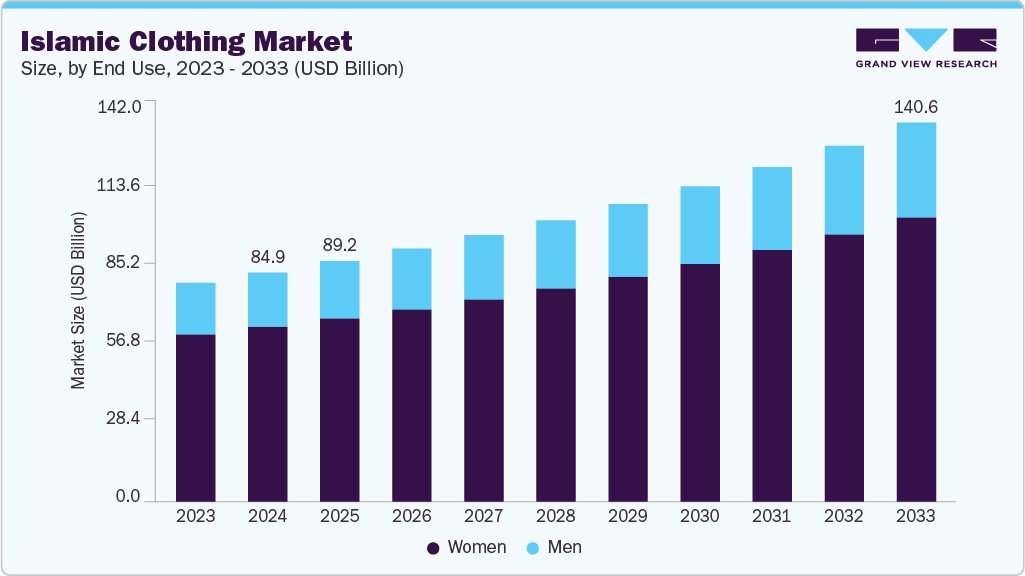 To learn more about this report, Download Free Sample Report
 There has been a significant rise in awareness and appreciation of modest fashion in Islamic communities and globally in recent years. This trend is driven by a growing desire among consumers to embrace clothing that aligns with their cultural and religious values while still being stylish and contemporary. According to data published in December 2024, the UAE government promotes the inclusion and cultural representation of hijabs.
The rise of social media platforms and fashion influencers plays a crucial role in popularizing modest fashion trends. Many Muslim fashion bloggers, designers, and celebrities showcase creative and modern ways to wear traditional Islamic garments, making modest fashion more accessible and appealing to younger generations. This increased visibility has helped break stereotypes about Islamic clothing being old-fashioned or restrictive, encouraging more consumers to explore and invest in modest apparel. According to the data published in December 2024, popular hijab influencers-based in Dubai include Nourhan Elgouhary with 802k followers, Rasha Albeik with 750k followers, and Yusra Alsayed with 739k followers on social media.
Market Dynamics
The Islamic clothing market is experiencing significant growth driven by the expanding global Muslim population, increasing demand for modest fashion, and the growing influence of social media and e-commerce platforms. Islamic clothing encompasses a wide range of garments including abayas, hijabs, burkhas, niqabs, thobes, jubbas, prayer outfits, and modest contemporary wear designed in accordance with cultural and religious preferences. Rising consumer spending, greater fashion consciousness among Muslim consumers, and the emergence of international modest fashion brands are further contributing to market expansion. Additionally, increasing product innovation, sustainable fabric adoption, and growing accessibility through online retail channels are expected to support long-term market growth.
The expanding global Muslim population is one of the primary factors driving demand in the Islamic clothing market. Increasing religious awareness and the desire to maintain cultural and faith-based identity have encouraged consumers to invest in clothing that aligns with Islamic principles of modesty. Demand is particularly strong across countries in the Middle East, Asia-Pacific, and parts of Africa, while Muslim communities in North America and Europe are also contributing significantly to market growth.
In addition to religious considerations, modest fashion has evolved into a mainstream fashion category. Younger consumers are increasingly seeking apparel that combines modesty with contemporary styles, premium fabrics, and personalized designs. Fashion influencers, celebrities, and modest fashion bloggers have further increased awareness and acceptance of Islamic clothing among broader consumer groups. The growing participation of women in education and the workforce has also driven demand for fashionable yet modest attire suitable for professional and social environments, supporting market expansion globally.
Price sensitivity among consumers in several developing markets remains a significant restraint for the Islamic clothing industry. Premium modest fashion products often involve high-quality fabrics, intricate embroidery, customized tailoring, and designer branding, resulting in higher retail prices. This can limit adoption among budget-conscious consumers, particularly in lower-income regions.
The market also faces challenges from the widespread availability of counterfeit and low-cost imitation products. Unorganized manufacturers frequently offer similar designs at substantially lower prices, intensifying competition for established brands and affecting profit margins. Additionally, variations in cultural preferences, dress codes, and fashion trends across different regions require brands to maintain diverse product portfolios, increasing operational complexity and inventory management costs. These factors can hinder market growth, particularly for international brands seeking expansion into price-sensitive markets.
The rapid growth of e-commerce platforms and digital retail channels presents substantial opportunities for the Islamic clothing market. Online marketplaces enable brands to reach a broader global consumer base, including underserved Muslim populations in regions where physical retail availability is limited. Social media platforms, influencer marketing, virtual fashion showcases, and direct-to-consumer business models are helping brands increase visibility and customer engagement while reducing dependence on traditional retail networks.
Sustainability is emerging as another major opportunity within the market. Consumers are increasingly seeking ethically produced garments made from organic, recycled, and environmentally friendly materials. As awareness of sustainable fashion continues to rise, Islamic clothing manufacturers are introducing eco-friendly collections that align with both modest fashion values and environmental responsibility. Furthermore, growing investments in customization, digital design technologies, premium fashion segments, and luxury modest wear are expected to create new revenue streams for market participants.
Analyst Perspective
The Islamic clothing market is benefiting from the convergence of demographic expansion, rising disposable incomes in Muslim-majority economies, and increasing demand for modest fashion among younger consumers. What was once a predominantly traditional apparel segment has evolved into a global fashion category influenced by digital commerce, social media, and changing consumer preferences for style, comfort, and cultural identity. The strongest competitive advantage will belong to brands that successfully balance religious compliance with contemporary fashion trends while offering diverse product portfolios across everyday wear, occasion wear, sportswear, and sustainable clothing. Digital-first strategies and international market expansion will remain key growth drivers.
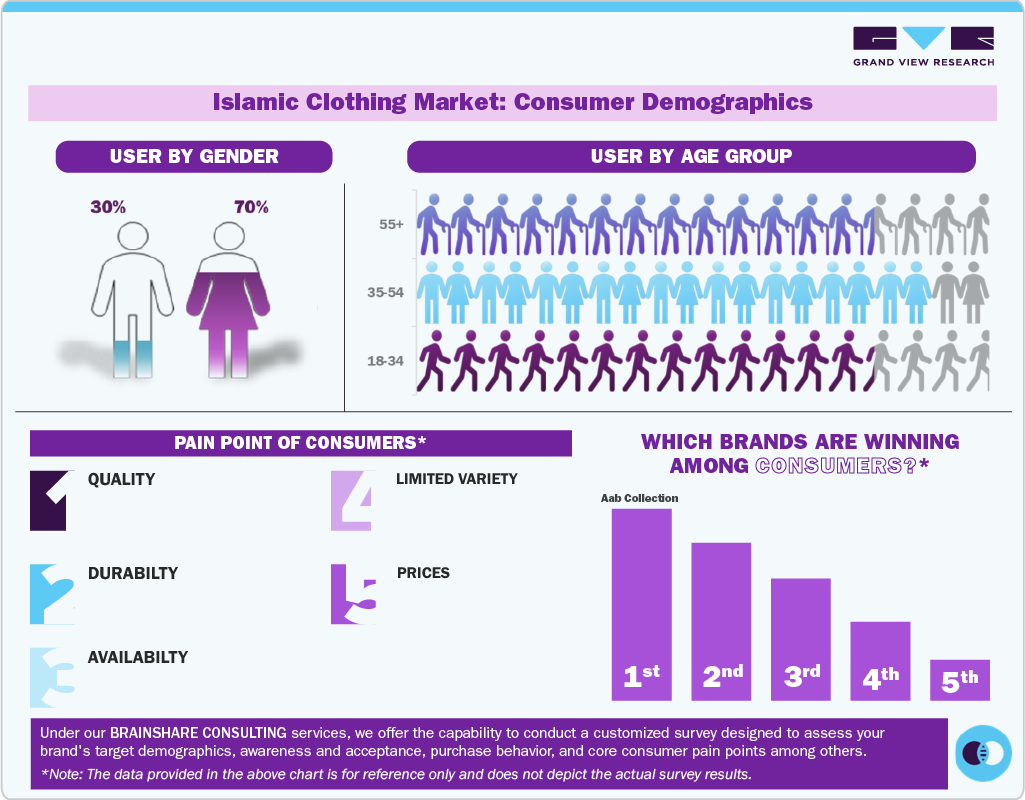
Consumer Insights
 To learn more about this report, Download Free Sample Report
 End Use Insights
Based on end user, the women segment led the market with the largest revenue share of 76.3% in 2025. The women segment accounted for the largest share of the Islamic clothing market due to the broader product portfolio and higher purchasing frequency associated with female modest fashion. Islamic women's apparel encompasses a wide range of garments including hijabs, abayas, jilbabs, khimars, modest dresses, tunics, skirts, prayer wear, and sportswear, creating significantly greater product diversity compared to men's offerings. Growing fashion consciousness among Muslim women has accelerated demand for stylish, premium, and trend-oriented modest clothing that combines religious requirements with contemporary design preferences. Furthermore, increasing participation of women in education, professional employment, social activities, and digital commerce has expanded spending on modest fashion globally.
 To learn more about this report, Download Free Sample Report
 The men segment is anticipated to witness a CAGR of 5.8% from 2026 to 2033 due to the growing global Muslim population, rising cultural pride, and the broader popularity of modest fashion. Younger generations are embracing traditional attire as a means of expressing their identity, while modern designs and e-commerce have made Islamic wear more accessible and stylish. The comfort and versatility of garments like thobes and kurtas, combined with rising disposable incomes in Muslim-majority nations and the entry of mainstream brands into the modest fashion segment, are further fueling the global growth of this market.
Product Insights
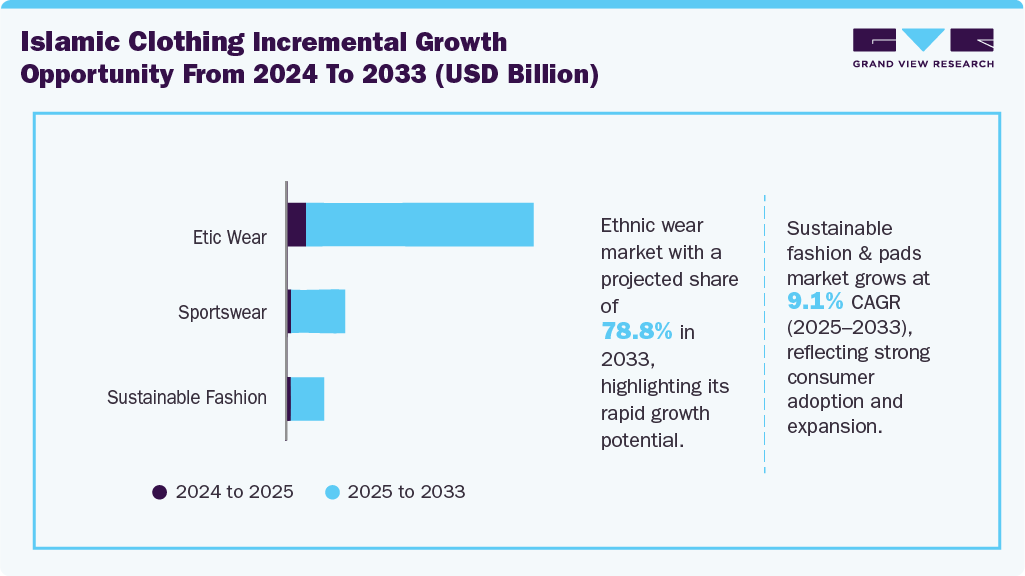
Based on product, the ethnic wear segment led the market with the largest revenue share of 78.5% in 2025. The dominance of the ethnic wear segment is primarily driven by the strong cultural and religious preference for traditional Islamic garments across Muslim-majority countries and diaspora populations worldwide. Products such as abayas, jilbabs, kaftans, thobes, kanduras, shalwar kameez, and modest traditional dresses remain integral to daily wear, religious gatherings, weddings, Ramadan, Eid celebrations, and other cultural occasions. Unlike contemporary modest fashion, ethnic Islamic clothing enjoys consistent year-round demand due to its deep-rooted association with cultural identity and religious observance. Additionally, increasing disposable incomes in the Middle East, Southeast Asia, and South Asia have fueled demand for premium and designer ethnic wear collections.
 To learn more about this report, Download Free Sample Report
 Sustainable fashion is projected to witness a CAGR of 8.0% from 2026 to 2033. The sustainable fashion segment is primarily driven by a rising environmental consciousness among Muslim consumers who seek to align their clothing choices with both their faith and ethical values. Many Muslim consumers recognize that sustainability is deeply rooted in Islamic principles, such as modesty, resource conservation, and social responsibility, which discourage wastefulness and encourage mindful consumption. This awareness motivates them to prefer apparel made from eco-friendly materials, such as organic cotton and recycled fabrics, produced through fair labor practices and transparent supply chains. In addition, the increasing availability of stylish, modern modest wear that incorporates sustainable design innovations appeals to younger, fashion-forward Muslim consumers who want to express their identity without compromising environmental ethics. Social media and Muslim fashion influencers further amplify this trend by showcasing sustainable modest fashion, making it more visible and desirable.
Distribution Channel Insights
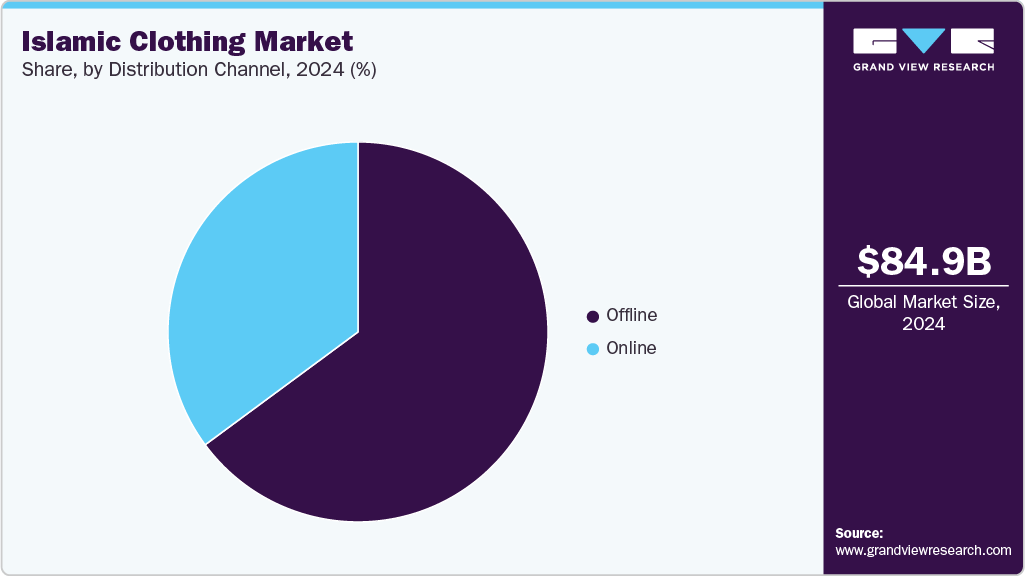
The offline distribution channel is the largest growing segment, which accounted for a share of 64.4% in 2025. Consumers often prefer to touch, feel, and try on garments before purchasing to ensure a proper fit, high-quality fabric, and adherence to modesty standards. Traditional and cultural attire usually involves tailoring, customization, and personal consultations, which are better facilitated in physical stores. Moreover, in many Muslim-majority regions, local boutiques, bazaars, and specialized retailers remain the primary shopping channels due to limited online penetration and a preference for face-to-face transactions. Festivals like Eid and Ramadan also drive heavy in-store shopping, as consumers value the social and experiential aspect of buying clothing in person.
The online distribution channel is expected to grow at a CAGR of 6.3% from 2026 to 2033. The sales of Islamic clothing through online distribution channels are expected to witness the highest growth in the coming years. The market is largely driven by the convenience and accessibility that e-commerce websites provide, allowing shoppers to browse extensive collections of modest wear anytime and anywhere. Consumers appreciate the wide variety of styles, sizes, and price points available on these platforms, which often include detailed product descriptions, size guides, and customer reviews that aid informed purchasing decisions.
Regional Insights
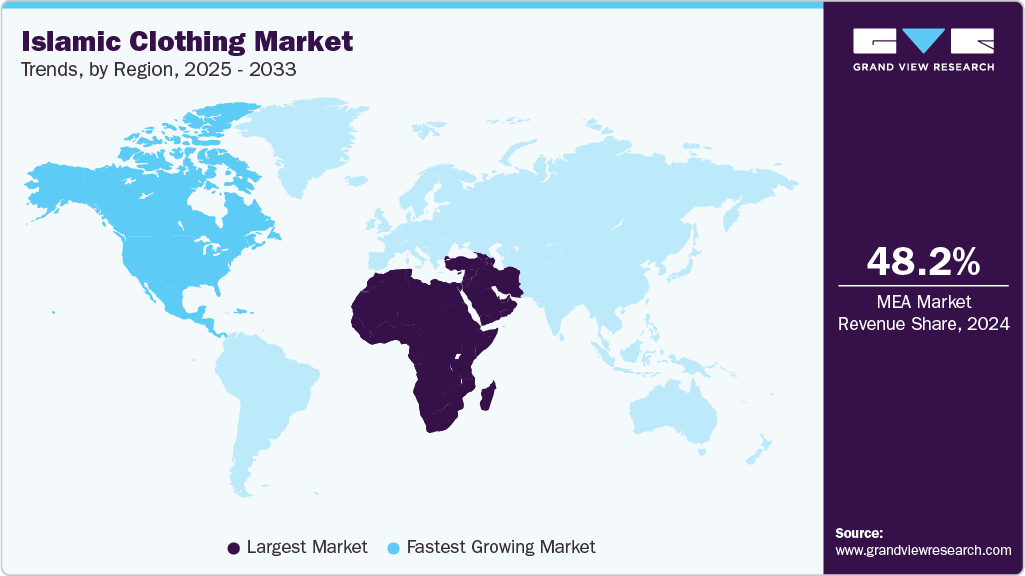
Middle East & Africa dominated the Islamic clothing market with the largest revenue share of 48.0% in 2025, owing to its large Muslim population, strong cultural adherence to modest fashion, and high consumer spending on religious and traditional apparel. Demand remains particularly strong for abayas, hijabs, thobes, kaftans, and other modest wear across both everyday and occasion-based use. Additionally, the growing influence of fashion-conscious consumers, rising disposable incomes in Gulf countries, and increasing availability of premium and designer modest wear collections continue to support market growth across the region.
 To learn more about this report, Download Free Sample Report
 Saudi Arabia Islamic Clothing Market Trends
The Islamic clothing market in the Saudi Arabia held the largest share in the Middle East & Africa region in 2025. Saudi Arabia represents the largest market within the region due to its deeply rooted Islamic traditions, large domestic consumer base, and strong demand for modest apparel across all age groups. The country has witnessed increasing spending on premium abayas, luxury modest fashion, and customized Islamic clothing driven by rising disposable incomes and evolving fashion preferences. Furthermore, the expansion of organized retail, growing e-commerce penetration, and the emergence of local modest fashion brands are contributing to sustained market growth while reinforcing Saudi Arabia’s leadership position in the regional Islamic clothing industry.
Increasing urbanization and rising disposable income, especially in countries like the UAE, Saudi Arabia, and Nigeria, have shifted toward premium and designer Islamic fashion. Consumers are now looking for garments that blend tradition with modern aesthetics, which has created a robust market for innovative, stylish, and high-quality products. There is a growing demand for modest wear that can be worn at workplaces, educational institutions, social gatherings, and even in athletic settings. In addition, the increasing presence of Islamic fashion events and influencers in the region promotes awareness and interest in diverse Islamic clothing styles.
In May 2025, Aab Collection launched the first drop of its Eid al-Adha collection, designed for warm weather days, elegant evenings, and everything in between. The release reflects Aab’s continued commitment to blending traditional modest wear with contemporary elegance. The much-anticipated collection officially arrived on June 8, offering fresh styles just in time for Eid celebrations.
North America Islamic Clothing Market Trends
The North American Islamic clothing industry is driven by the region’s growing Muslim population, rising cultural diversity, and the mainstream acceptance of modest fashion. Consumers are increasingly seeking apparel that balances religious values with contemporary style, prompting both local designers and global brands to introduce modern modest collections. The surge of e-commerce and social media influencers has expanded market visibility, while sustainability and ethical fashion practices are becoming key factors in purchasing decisions. In addition, rising disposable incomes and inclusivity in fashion are encouraging more men and non-Muslim consumers to adopt modest wear, further fueling market growth.
The U.S. Islamic clothing industry is projected to grow at a CAGR of 7.1% from 2026 to 2033. In the U.S., modest fashion is increasingly characterized by blending modesty with contemporary style, moving beyond traditional silhouettes to include modern cuts, soft draping, layering, and trend-driven colors that allow women to express their personal style while maintaining coverage. At the same time, identity and cultural representation shape how Muslim consumers engage with clothing, as many use modest dress to affirm both their American and Muslim identities in diverse social spaces. For instance, Haute Hijab, a U.S.-based brand that designs stylish hijabs and modest dresses for modern Muslim women who want to balance faith-based modesty with everyday fashion, illustrates how modest wear has become both a cultural statement and a lifestyle fashion choice in the American market.
Asia Pacific Islamic Clothing Market Trends
The Asia Pacific Islamic clothing industry is experiencing robust growth, driven by its large Muslim population, rising disposable incomes, and increasing fashion consciousness across countries such as Indonesia, Malaysia, Pakistan, and Bangladesh. Consumers are embracing modern modest wear that combines traditional elements with contemporary design, while e-commerce and social media platforms are expanding access and brand visibility. The region’s strong textile manufacturing base supports both domestic demand and exports, and growing interest in sustainability and ethical fashion among younger consumers is shaping product innovation and design trends.
Key Islamic Clothing Company Insights
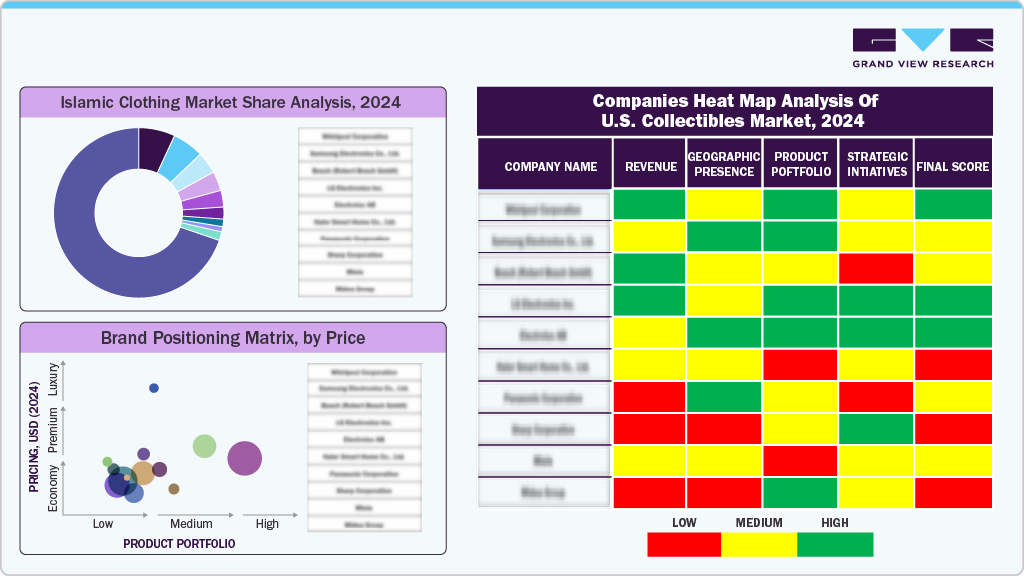
Leading players in the Islamic clothing industry include Aab Collection, Modanisa, and Haute Hijab. The global market for Islamic clothing remains highly competitive, with key players focusing on expanding production capabilities and strengthening distribution networks across both online and offline channels. Manufacturers are investing in design innovation, sustainable fabric sourcing, and advanced tailoring technologie to meet the growing demand for modest, stylish, and eco-friendly apparel. The rising global Muslim population further drives market growth, increasing cultural pride and the expression of identity, as well as the expanding adoption of modest fashion across mainstream and luxury segments.
 To learn more about this report, Download Free Sample Report
 Key Islamic Clothing Companies
The following key companies have been profiled for this study on the islamic clothing market.
-
Aab Collection
-
Modanisa
-
Haute Hijab
-
SUKAINA
-
An-Nahar
-
AbayaAddict
-
Inayah
-
SHUKR Islamic Clothing
-
Haf & Haf
-
The WRDS Clothing
Competitive Benchmarking
Category
Operating Strategies
Competitive Edge
Weakness
Established Players (Modanisa, SHUKR Islamic Clothing, Haute Hijab, Inayah, Aab Collection)
- Expand global e-commerce presence through multilingual platforms and international shipping networks. Launch seasonal collections combining modest fashion with contemporary trends.
- Collaborate with designers, influencers, and modest fashion advocates to strengthen brand visibility.
- Invest in sustainable fabrics, premium product lines, and digital marketing initiatives.
- Strong brand recognition within the global modest fashion industry, extensive online customer reach, and diversified product portfolios across abayas, hijabs, dresses, and modest wear.
- Ability to leverage established supply chains and customer loyalty to maintain market leadership.
- High dependence on online sales channels and increasing competition from regional and private-label brands.
- Exposure to changing fashion trends, logistics costs, and fluctuating consumer spending patterns.
- Premium pricing may limit accessibility in price-sensitive markets.
Emerging & Specialized Players (SUKAINA, An-Nahar, AbayaAddict, Haf & Haf, The WRDS Clothing)
- Focus on niche segments such as luxury abayas, contemporary modest wear, customized Islamic apparel, and youth-oriented collections.
- Utilize social media-driven marketing, influencer partnerships, and direct-to-consumer sales models.
- Emphasize unique designs, limited-edition collections, and cultural authenticity to attract targeted consumer groups.
- Greater agility in responding to emerging fashion trends and regional preferences.
- Strong customer engagement through personalized shopping experiences and distinctive product offerings.
- Ability to cater to underserved segments seeking premium, contemporary, or culturally inspired Islamic clothing.
- Limited financial resources, smaller production capacities, and narrower geographic reach compared to established brands.
- Challenges in scaling operations, maintaining inventory efficiency, and competing with larger players on pricing and brand visibility.
- Higher dependence on digital marketing for customer acquisition.
Recent Developments
-
In July 2025, A UK-based couplelaunched a faith-inspired children's lifestyle brand called Once Upon a Dua, targeting the UAE market and broader Gulf region. Founded in 2022, the brand offers a range of baby essentials and toys, including keepsake hijabi dolls, Arabic-alphabet dinner sets, ride-on cars, and personalized items that combine Scandinavian-influenced design with Islamic cultural themes. They aim to fill a niche for stylish yet faith-forward children's products by blending modern aesthetics and value-driven design, noting that parents increasingly value culture and heritage in their children's toys and essentials.
Islamic Clothing Market Report Scope
Report Attribute
Details
Market size in 2025
USD 89.2 billion
Estimated market size in 2026
USD 93.8 billion
Projected market size by 2033
USD 140.6 billion
Growth rate
CAGR of 5.2% from 2026 to 2033
Base year for estimation
2025
Historical data
2021 - 2024
Forecast period
2026 - 2033
Quantitative units
Revenue in USD million/billion and CAGR from 2026 to 2033
Report coverage
Revenue forecast, company ranking, competitive landscape, growth factors, and trends
Segments covered
End use, product, distribution channel, region
Regional scope
North America; Europe; Asia Pacific; Central & South America; MEA
Country scope
U.S.; Canada; Mexico; Germany; UK; France; Italy; Spain; Norway; Denmark; Sweden; Russia; Iceland; Finland; China; Japan; India; South Korea; Australia; Thailand; Singapore; Brazil; Argentina; Egypt; Saudi Arabia; Nigeria; UAE; Rest of MEA
Key companies profiled
Aab Collection; Modanisa; Haute Hijab; SUKAINA; An-Nahar; AbayaAddict; Inayah; SHUKR Islamic Clothing; Haf & Haf; The WRDS Clothing
Customization scope
Free report customization (equivalent up to 8 analysts' working days) with purchase. Addition or alteration to country, regional & segment scope.
Pricing and purchase options
Avail customized purchase options to meet your exact research needs. Explore purchase options
Global Islamic Clothing Market Report Segmentation
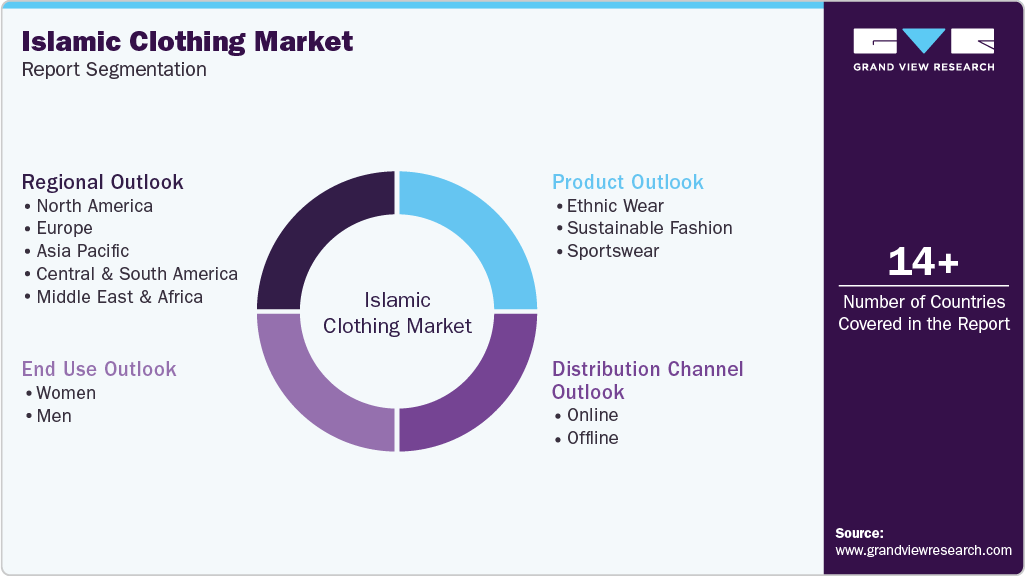
This report forecasts revenue growth at regional levels and provides an analysis of the latest trends and opportunities in each sub-segment from 2021 to 2033. For this study, Grand View Research has segmented the global Islamic clothing market report by end use, product, distribution channel, and region:
 To learn more about this report, Download Free Sample Report
 -
End Use Outlook (Revenue, USD Billion, 2021 - 2033)
-
Women
-
Men
-
-
Product Outlook (Revenue, USD Billion, 2021 - 2033)
-
Ethnic Wear
-
Abayas & Hijabs
-
Prayer Outfits
-
Burkha & Naqaab
-
Thobes & Jubbas
-
Others
-
-
Sustainable Fashion
-
Sportswear
-
-
Distribution Channel Outlook (Revenue, USD Billion, 2021 - 2033)
-
Online
-
E-commerce Website
-
Company-owned Website
-
-
Offline
-
-
Regional Outlook (Revenue, USD Billion, 2021 - 2033)
-
North America
-
U.S.
-
-
Europe
-
Germany
-
UK
-
Turkey
-
Russia
-
-
Asia Pacific
-
Indonesia
-
Malaysia
-
India
-
-
Middle East and Africa (MEA)
-
Egypt
-
Saudi Arabia
-
Nigeria
-
UAE
-
-
Central & South America
-
Research Methodology
Segment Definition
Segment - Product
Revenue capture definition
Ethnic Wear
Covers traditional Islamic-inspired apparel reflecting regional and cultural dressing styles, including abayas, kaftans, thobes, kurtas, jalabiyas, and modest dresses. The scope includes everyday wear, ceremonial attire, festive clothing, and premium ethnic collections marketed through both organized retail and independent fashion brands worldwide.
Sustainable Fashion
Covers Islamic clothing manufactured using environmentally responsible materials, ethical sourcing practices, recycled fabrics, organic textiles, and sustainable production methods. The study includes modest fashion products positioned under eco-friendly and socially responsible categories, encompassing apparel offered by both established brands and emerging sustainable fashion labels.
Sportswear
Covers modest athletic and performance apparel designed for sports, fitness, and active lifestyles, including sports hijabs, tracksuits, swimwear, leggings, tops, and training outfits. The scope includes products developed for recreational, professional, and wellness activities, distributed through sporting goods retailers, specialty modest fashion brands, and online channels.
Segment - End User
Revenue capture definition
Women
Covers Islamic clothing products designed for female consumers, including modest apparel such as abayas, hijabs, jilbabs, dresses, tunics, modest activewear, and occasion wear. The scope includes products sold through online and offline channels, luxury and mass-market offerings, and fashion collections catering to religious, cultural, and lifestyle requirements across global markets.
Men
Covers Islamic clothing products intended for male consumers, including thobes, jubbas, kurtas, kanduras, modest casual wear, formal attire, and sportswear. The study includes traditional and contemporary Islamic fashion products distributed through retail stores, specialty outlets, and e-commerce platforms across key regional and international markets.
Estimation Model
Layer Name
Key Question
Description
Modest Fashion Consumer Layer
Who has a need for Islamic clothing?
Begin with the global Muslim population along with non-Muslim consumers seeking modest fashion apparel. Apply participation rates across religious wear, cultural attire, modest fashion preferences, and faith-based dressing requirements to identify the potential consumer base for Islamic clothing products.
Retail Accessibility Layer
Who can be reached through Islamic fashion distribution channels?
Filter the eligible consumer base using apparel retail penetration, e-commerce accessibility, disposable income levels, urbanization rates, and availability of Islamic fashion brands. This derives the addressable market with access to Islamic clothing through specialty stores, department stores, brand outlets, and online platforms.
Purchase & Adoption Layer
Who actively purchases Islamic clothing products?
Apply adoption rates and purchase frequency across women and men. Demand is driven by religious practices, cultural traditions, modest fashion trends, seasonal events such as Ramadan and Eid, increasing fashion consciousness, and growing acceptance of contemporary Islamic wear.
Monetisation Layer
How much revenue is generated?
Multiply active buyers by annual spending across ethnic wear, sustainable fashion, sportswear, and other Islamic clothing categories. Include recurring purchases resulting from fashion cycles, festive occasions, lifestyle changes, and premium product adoption to estimate total market revenue.
Delivered Customizations
This report has been delivered with the following In-depth customizations
Client Request
Customization Delivered
Value Adds
Product Category Analysis Across Gender and Distribution Channels
Detailed assessment of Abayas & Hijabs, Prayer Outfits, Burkha & Naqaab, Thobes & Jubbas, Other Ethnic Wear, Sustainable Fashion, and Sportswear across men's and women's segments. Analysis includes category penetration, consumer preferences, spending patterns, and purchasing behavior across online and offline channels. Regional and country-level benchmarking can be conducted to identify high-growth product categories and underserved markets.
Identifies the strongest-performing product segments and emerging opportunities across different consumer groups. Supports product portfolio optimization, merchandising strategies, and targeted market expansion initiatives.
Modest Fashion Trends & Premium Islamic Apparel Analysis
Comprehensive evaluation of evolving modest fashion trends, including designer modest wear, luxury abayas, contemporary hijab fashion, fusion ethnic wear, and premium Islamic apparel collections. Analysis examines consumer willingness to pay, brand positioning, fashion influence, and demand for modern interpretations of traditional clothing across major markets.
Helps brands capitalize on premiumization opportunities and evolving fashion preferences. Supports new product development, premium pricing strategies, and brand differentiation in a highly competitive market.
Sustainable Islamic Fashion & Ethical Apparel Opportunity Assessment
In-depth analysis of the growing demand for Sustainable Fashion within the Islamic clothing market. The study evaluates consumer preferences for eco-friendly fabrics, ethical sourcing, circular fashion initiatives, organic textiles, and environmentally responsible production practices. Competitive benchmarking of sustainability initiatives among leading brands is also included.
Enables stakeholders to identify emerging growth opportunities within sustainable modest fashion. Supports ESG initiatives, sustainable product development, sourcing decisions, and long-term brand positioning strategies.
Frequently Asked Questions About This Report
The global Islamic clothing market was valued at USD 89.2 billion in 2025 and is projected to reach USD 140.6 billion by 2033.
Key growth drivers include the expanding Muslim population, rising disposable incomes, increasing acceptance of modest fashion globally, growth of online retail platforms, and growing demand for premium and sustainable Islamic apparel.
The women's segment accounted for 76.3% of global revenue in 2025, driven by strong demand for hijabs, abayas, modest dresses, and other Islamic fashion products.
Ethnic wear is the largest product category, accounting for 78.5% of market revenue in 2025, reflecting the continued importance of traditional Islamic attire.
Sustainable Islamic fashion is projected to be the fastest-growing segment, expanding at a CAGR of 8.0% through 2033 due to increasing consumer preference for environmentally responsible apparel.
The market is expected to grow at a CAGR of 5.2% from 2025 to 2033, driven by increasing demand for modest fashion, rising disposable incomes, and expanding e-commerce penetration.
Middle East & Africa dominated the market with a 48.0% revenue share in 2025, supported by a large Muslim population and strong cultural adoption of Islamic apparel.
Some key players operating in the islamic clothing market include Aab Collection; Modanisa; Haute Hijab; SUKAINA; An-Nahar; AbayaAddict; Inayah; SHUKR Islamic Clothing; Haf & Haf; The WRDS Clothing
About the Author(s)
Clothing, Footwear & Accessories Research Team
Consumer Goods · Clothing, Footwear & AccessoriesThis report was authored by the clothing, footwear & accessories research team at Grand View Research - comprising two research analysts, one senior research analyst, and one industry expert - with specialized expertise in the clothing, footwear & accessories segment of the consumer goods industry. All findings are based on proprietary consumer goods databases, executive interviews, and regulatory analysis, subject to internal peer review prior to publication.
Last Updated:
Speak to Analyst

Customize this report to your needs - add regions, segments, or data points, with 20% free customization.
Or view our licence options:


ISO 9001:2015 & 27001:2022 Certified
We are GDPR and CCPA compliant! Your transaction & personal information is safe and secure. For more details, please read our privacy policy.


