
- Home
- »
- Nutraceuticals & Functional Foods
- »
-
Lactoferrin Market Size, Share & Trends Report, 2026-2033GVR Report cover
![Lactoferrin Market (2026 - 2033)Report]()
Lactoferrin Market (2026 - 2033)
Size, Share & Trends Analysis Report By Function (Iron Absorption, Intestinal Flora Protection), By Application (Personal Care Products, Infant Formula), By Region, And Segment Forecasts
Market Size, 2025
$322.0MMarket Estimate, 2026
$349.2MMarket Forecast, 2033
$622.3MCAGR, 2026–2033
8.6%Lactoferrin Market Summary
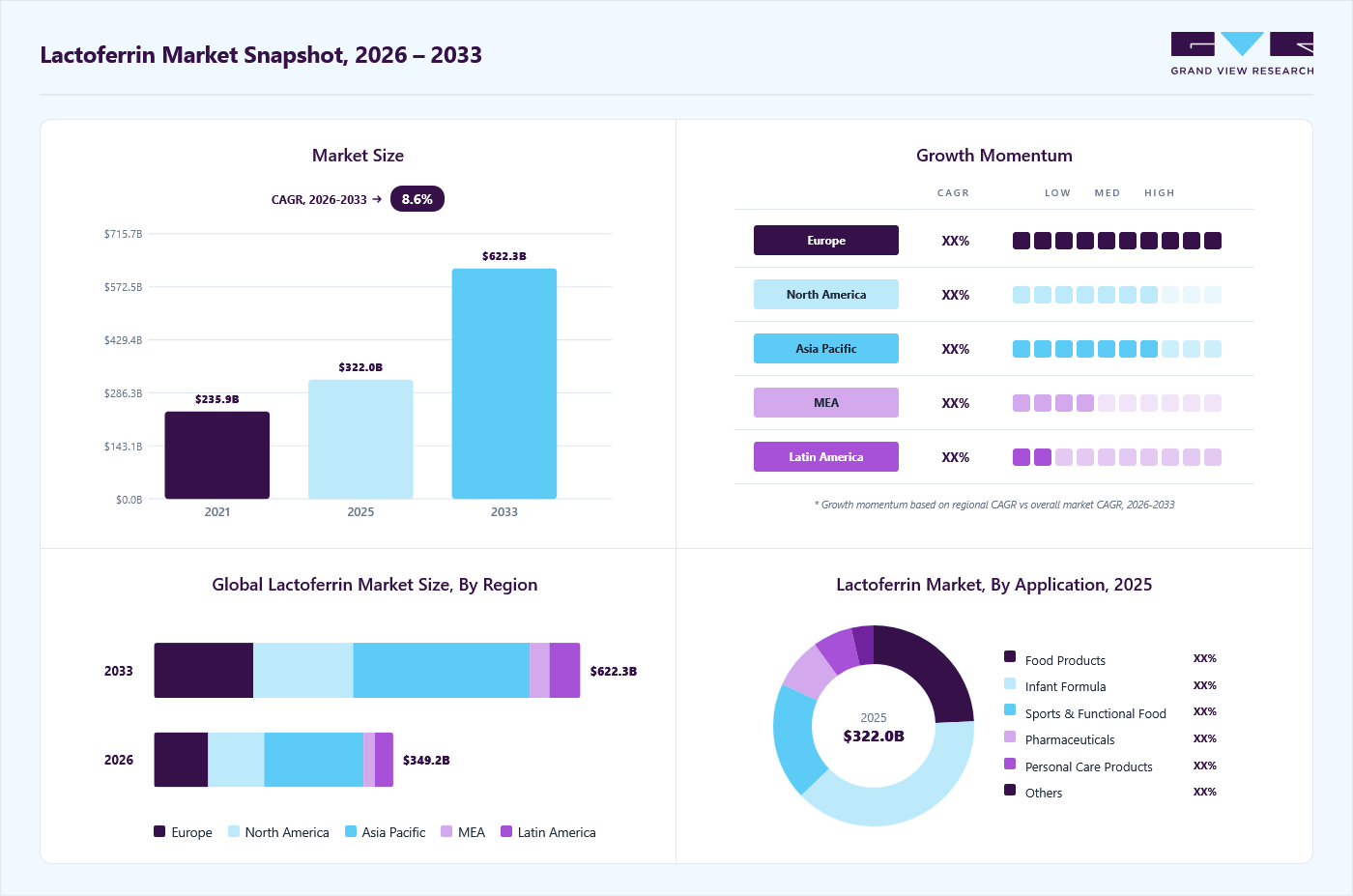
The global lactoferrin market size was valued at USD 322.0 million in 2025 and is projected to grow from USD 349.2 million in 2026 to USD 622.3 million by 2033, at a CAGR of 8.6% from 2026 to 2033. The market in Asia Pacific dominated with a revenue share of 41.6% in 2025. This growth is driven by a rising consumer awareness of the health benefits of lactoferrin, including its antimicrobial, antiviral, and immunomodulatory properties.
Key Market Trends & Insights
- By function: Iron absorption segment held the largest market share of 29.4% in 2025.
- By application: Infant formula segment held the largest market share of 38.5% in 2025.
Regional Highlights
- Largest regional market: Asia Pacific (41.6% revenue share, 2025)
- By country: China held the largest market share in 2025
Market Size & Forecast
- Market size in 2025: USD 322.0 Million
- Estimated market size in 2026: USD 349.2 Million
- Projected market size by 2033: USD 622.3 Million
- CAGR (2026-2033): 8.6%
This has led to increased demand for lactoferrin in dietary supplements, infant formula, and functional foods. Additionally, the growing prevalence of bacterial and viral infections has further fueled the market growth as consumers seek products to boost their immune systems. The expansion of the pharmaceutical and personal care industries is also contributing to the market, with lactoferrin being used in products for skin care and wound healing.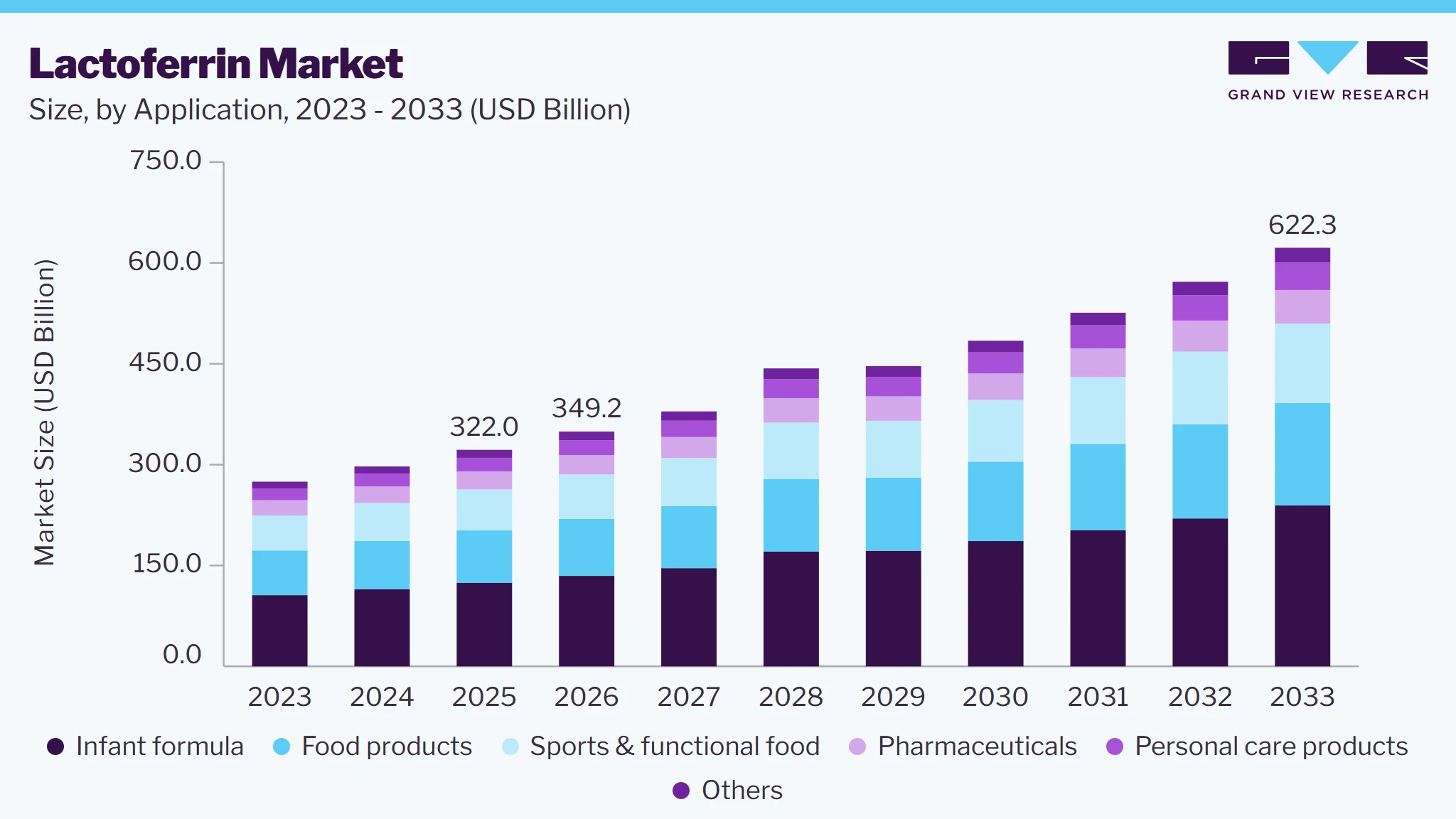
The advancements in lactoferrin extraction and purification technologies have significantly improved accessibility and cost-effectiveness, facilitating market expansion. The COVID-19 pandemic has further heightened interest in lactoferrin, particularly due to its potential antiviral properties, leading consumers to seek products that support immune health. Additionally, ongoing research and development initiatives are broadening the applications of lactoferrin across diverse sectors, including pharmaceuticals and personal care products, thereby enhancing its market reach and growth potential.
Market Dynamics
The lactoferrin market is experiencing steady growth, driven by increasing consumer awareness of preventive healthcare and the rising demand for functional ingredients that support immunity, gut health, and overall well-being. Lactoferrin, a naturally occurring iron-binding glycoprotein, has gained significant commercial interest due to its multifunctional properties, including immune cell stimulation, antibacterial activity, anti-inflammatory effects, antioxidant protection, and enhancement of iron absorption. These attributes have expanded its adoption across infant nutrition, dietary supplements, pharmaceuticals, and personal care applications. A key market driver is the growing demand for premium infant formula products that closely replicate the nutritional profile of human breast milk. The increasing prevalence of lifestyle-related health concerns has encouraged consumers to seek functional foods and nutraceuticals containing bioactive ingredients such as lactoferrin. The sports and functional nutrition sector is also contributing to market expansion as consumers increasingly prioritize recovery, immunity, and digestive health.
The lactoferrin market is benefiting from a growing global focus on preventive healthcare and proactive wellness management. Consumers are becoming more conscious of the relationship between nutrition and long-term health, leading to increased demand for ingredients that offer scientifically supported physiological benefits. Lactoferrin has gained considerable attention due to its ability to support immune function, maintain intestinal health, enhance iron utilization, and contribute to overall wellness. As a result, manufacturers are increasingly incorporating lactoferrin into nutritional supplements, fortified foods, and health-focused product formulations.
Another important growth factor is the expanding demand for premium infant nutrition products. Parents are increasingly seeking infant formulas that replicate the functional components found in human milk, creating strong demand for lactoferrin-enriched formulations. At the same time, the rising popularity of functional foods, sports nutrition products, and wellness supplements is encouraging manufacturers to develop innovative products containing bioactive ingredients. These trends are expected to sustain demand for lactoferrin across multiple application sectors over the coming years.
The production of lactoferrin involves highly specialized extraction, separation, and purification processes that require substantial technological expertise and capital investment. Since lactoferrin is predominantly sourced from dairy-based raw materials, production volumes are influenced by milk availability, processing efficiency, and supply chain stability. Achieving the purity standards required for infant nutrition, pharmaceutical, and clinical applications further increases manufacturing complexity and operational expenses.
In addition, market participants must navigate diverse regulatory frameworks governing ingredient safety, product claims, and quality standards. Compliance with these requirements often demands significant investments in testing, documentation, and certification processes. Combined with fluctuations in raw material costs and limited large-scale production capacity, these factors contribute to higher product prices. Consequently, adoption may remain constrained in price-sensitive regions where consumers and manufacturers prioritize cost-effective alternatives.
The increasing interest in specialized healthcare products presents a significant opportunity for the lactoferrin market. Ongoing scientific investigations continue to explore its potential applications in immune support, digestive health management, antimicrobial therapies, and specialized clinical nutrition. As evidence supporting its biological functions continues to expand, healthcare companies are identifying new opportunities to integrate lactoferrin into innovative therapeutic and wellness-oriented product offerings.
Simultaneously, the evolution of personalized nutrition is creating favorable conditions for market growth. Consumers are increasingly seeking tailored nutritional solutions designed to address individual health objectives, age-specific requirements, and lifestyle preferences. Lactoferrin’s multifunctional properties make it a valuable ingredient for targeted formulations aimed at immunity, gut health, and nutritional optimization. Furthermore, advancements in biotechnology and alternative production methods have the potential to improve supply availability and manufacturing efficiency, supporting broader commercialization across global markets.
Analyst Perspective
The lactoferrin market is evolving from a niche dairy-derived bioactive ingredient market into a broader health and wellness segment driven by increasing demand for immune-supporting, antimicrobial, and functional nutrition products. While infant formula remains the largest application area, growing adoption in dietary supplements, functional foods, sports nutrition, and pharmaceutical formulations is creating new avenues for growth. Rising consumer focus on preventive healthcare, gut health, and healthy aging is supporting demand for scientifically validated ingredients with multiple health benefits. Additionally, advancements in dairy processing and protein extraction technologies are improving product purity and supply availability. Going forward, companies with strong raw milk sourcing capabilities, clinical research support, and diversified application portfolios are expected to strengthen their competitive positioning as demand for premium nutraceutical ingredients continues to expand globally
Function Insights
The iron absorption segment dominated with a revenue share of 29.4% in 2025, in the lactoferrin market, primarily due to the increasing prevalence of iron deficiency and related disorders such as anemia, which affects a significant portion of the global population. Lactoferrin's ability to bind and transport iron enhances its absorption in the body, making it a valuable component in dietary supplements and functional foods aimed at addressing iron deficiencies. The growing awareness of the health benefits of lactoferrin and its role in improving iron levels has further driven the demand for products in this segment.
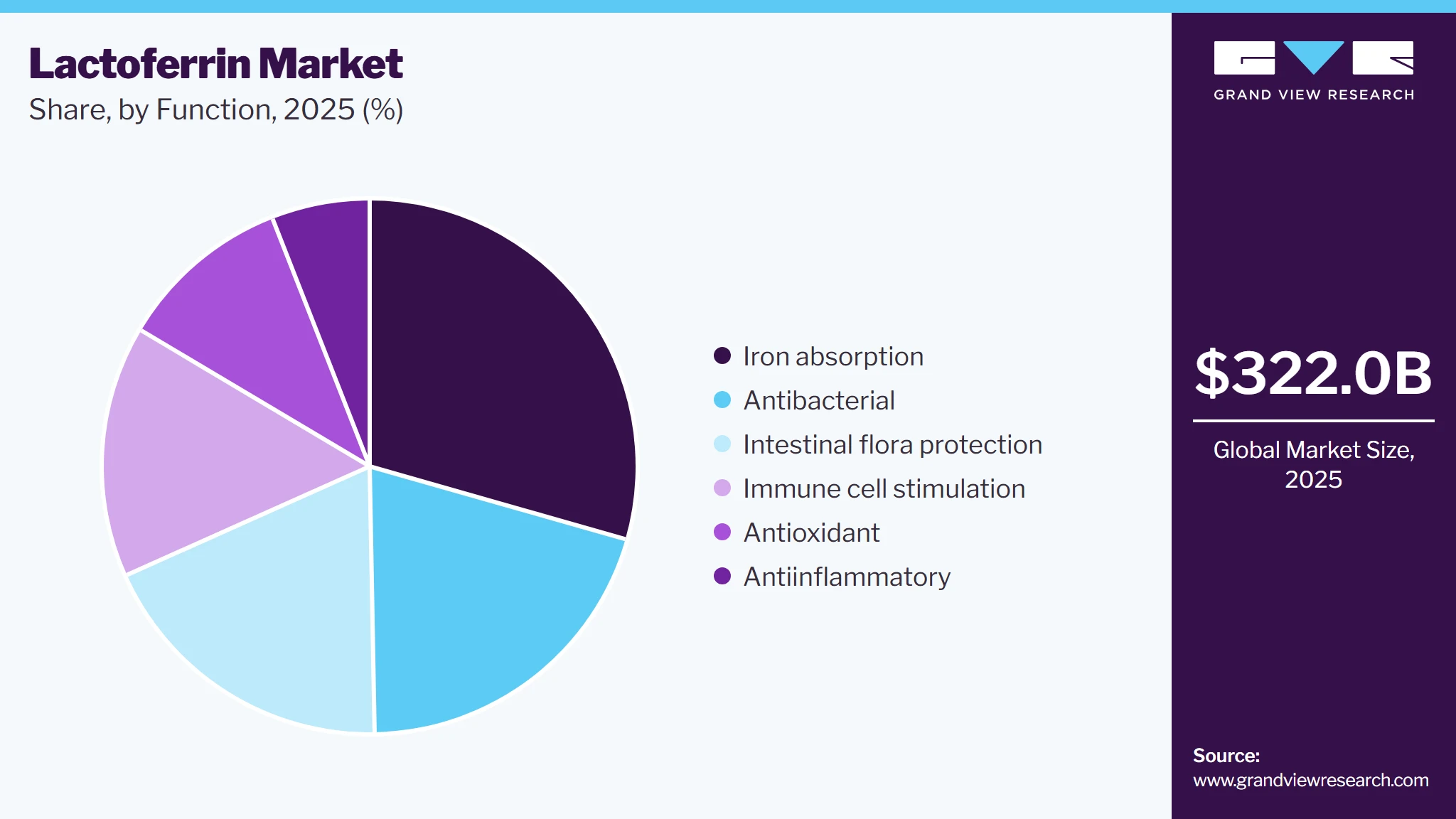
The intestinal flora protection segment is expected to grow at a CAGR of 9.1% from 2025 to 2030, driven by the increasing consumer awareness of the importance of gut health and the role of probiotics and prebiotics in maintaining a healthy intestinal flora. Lactoferrin's antimicrobial properties help protect the gut from harmful bacteria, promoting a balanced and healthy microbiome. The rising demand for probiotic and prebiotic products, along with the expanding market for functional foods and dietary supplements, is expected to fuel the growth of this segment.
Application Insights
The infant formula segment accounted for the largest share of the lactoferrin market, representing 38.5% of total revenue in 2025, driven by the increasing awareness of the health benefits of lactoferrin for infants. Lactoferrin is a crucial component of breast milk, known for its immune-boosting properties and ability to enhance iron absorption. These benefits make lactoferrin a valuable ingredient in infant formula, providing essential nutrients and supporting the immune system of newborns. The rising demand for high-quality, fortified infant formulas, coupled with the increasing number of working mothers, has fueled the growth of this segment. Moreover, the growing focus on infant nutrition and health across various regions has further propelled the demand for lactoferrin in the infant formula segment.
The personal care products segment is projected to grow the fastest over the forecast period. The increasing consumer interest in natural and multifunctional ingredients in personal care products is a significant driver for this growth. Lactoferrin's antimicrobial, anti-inflammatory, and skin-soothing properties make it an attractive ingredient for skincare and cosmetic formulations. It is commonly used in products such as creams, lotions, and anti-aging treatments. The growing demand for personal care products that offer multiple benefits, including skin protection and rejuvenation, is expected to drive the adoption of lactoferrin in this segment. Additionally, ongoing research and development efforts aimed at exploring new applications of lactoferrin in personal care products are likely to further boost this segment's growth.
Regional Insights
North America lactoferrin market accounted for a 23.3% revenue share in 2024, driven by a combination of rising consumer awareness regarding health and wellness and increasing demand for functional foods. The region’s robust healthcare infrastructure and strong emphasis on nutritional supplementation have contributed to the widespread adoption of lactoferrin across various applications. Key industries, including dietary supplements and infant formula, are witnessing significant growth, bolstered by the increasing prevalence of lifestyle diseases and a growing aging population.
U.S. Lactoferrin Market Trends
The U.S. dominated the North American Lactoferrin market in 2024. The growing popularity of lactoferrin among consumers, particularly in dietary supplements and functional foods, has driven demand significantly. Moreover, the rise of e-commerce platforms has made lactoferrin products more accessible to a wider audience, further fueling market growth. Regulatory support for health claims related to lactoferrin's immunomodulatory properties is also enhancing its appeal. As health-conscious consumers increasingly seek natural and efficacious ingredients, the U.S. market is expected to continue leading in terms of revenue and product variety.
Europe Lactoferrin Market Trends
Europe's Lactoferrin market is anticipated to grow fastest throughout the forecast period, driven by increasing health consciousness and a rising trend towards preventive healthcare. European consumers are becoming more aware of the potential health benefits associated with lactoferrin, including its role in enhancing immune function and gut health. This awareness is supported by a strong regulatory framework that encourages innovation in nutraceuticals. Additionally, the growing demand for organic and clean-label products in Europe is propelling manufacturers to incorporate lactoferrin into their offerings.
Asia Pacific Lactoferrin Market Trends
Asia Pacific for 41.6% of the Lactoferrin market revenue in 2025, driven by a burgeoning population, increasing disposable incomes, and a rising focus on health and nutrition. Countries such as China and India are witnessing a rapid uptick in demand for lactoferrin, particularly in infant nutrition and dietary supplements. The region's growing awareness of the benefits of lactoferrin, combined with a strong consumer shift towards preventive healthcare, is propelling market growth.

China Lactoferrin Market Trends
China held a leading position in the Asia Pacific lactoferrin market.
Key Lactoferrin Company Insights
Some of the key companies in the Lactoferrin market include Hilmar Cheese Company, Pharming Group NV, FrieslandCamina, Synlait Milk Ltd., Ingredia SA, and others.
-
Pharming Group NV is actively involved in the lactoferrin market, particularly in the development of human lactoferrin (hLF) as a functional food. The company has initiated projects to demonstrate the safety and effectiveness of hLF in managing inflammatory bowel diseases (IBD).
-
FrieslandCampina is a prominent name in the lactoferrin market, known for its extensive dairy processing capabilities. The company produces lactoferrin from bovine milk and integrates it into various products, including infant formula, dietary supplements, and functional foods.
Key Lactoferrin Companies
The following key companies have been profiled for this study on the lactoferrin market.
-
Hilmar Cheese Company
-
Pharming Group NV
-
FrieslandCampina
-
Synlait Milk Ltd.
-
Ingredia SA
-
MP Biomedicals
-
Tatura Milk Industries Ltd.
-
Glanbia plc
-
APS BioGroup
-
ProHealth
-
Fonterra Cooperative Group Ltd.
-
Farbest Brands
-
InVitria
-
Milei GmbH
-
Ferrin-tech LLC
Competitive Benchmarking
Category
Operating Strategies
Competitive Edge
Weakness
Established Players (Fonterra Cooperative Group Ltd., FrieslandCampina, Glanbia plc, Hilmar Cheese Company, Synlait Milk Ltd., Ingredia SA, Milei GmbH, Tatura Milk Industries Ltd., MP Biomedicals, Farbest Brands)
• Leverage vertically integrated dairy supply chains to ensure consistent access to raw materials.
• Focus on large-scale production and process optimization to improve operational efficiency and product quality.
• Expand global distribution networks and establish long-term supply agreements with infant formula, nutraceutical, and pharmaceutical manufacturers.
• Invest in product innovation, clinical research, and premium ingredient development to strengthen market positioning.• Strong global brand presence and long-standing relationships with major infant nutrition and food manufacturers.
• Advanced processing technologies and extensive expertise in dairy-derived bioactive ingredients.
• Economies of scale that support competitive pricing and reliable supply capabilities.
• Robust research and development resources enabling continuous product improvement and portfolio diversification.• Dependence on dairy-based raw materials exposes operations to milk supply fluctuations and price volatility.
• Large organizational structures can slow decision-making and product development cycles.
• High capital requirements for processing infrastructure and quality compliance increase operational costs.
• Greater exposure to regulatory scrutiny due to extensive international operations and broad product portfolios.Emerging / Regional Players (Pharming Group NV, APS BioGroup, ProHealth, InVitria, Ferrin-tech LLC)
• Focus on niche applications such as recombinant lactoferrin, specialty healthcare products, and advanced biotechnology solutions.
• Pursue strategic partnerships, licensing agreements, and collaborative research initiatives to accelerate commercialization.
• Target high-growth segments including personalized nutrition, pharmaceutical formulations, and specialty supplements.
• Emphasize innovation-driven business models and differentiated technologies to gain market recognition.• Greater agility in responding to emerging market trends and evolving customer requirements.
• Specialized expertise in innovative technologies such as recombinant protein production and precision biotechnology.
• Ability to focus on underserved market niches and develop highly customized solutions.
• Strong potential to capitalize on next generation lactoferrin applications in healthcare, biotechnology, and personalized nutrition.• Limited production capacity compared to established multinational competitors.
• Smaller distribution networks may restrict market penetration and customer reach.
• Dependence on external funding or strategic partnerships can create financial uncertainty.
• Lower brand recognition and customer trust in highly regulated nutrition and healthcare markets.Recent Developments
-
In September 2024, Helaina secured a USD 45 million Series B funding round, spearheaded by Avidity Partners. This investment elevates Helaina’s total equity funding to USD 83 million. The capital raised will facilitate the market introduction of human lactoferrin, branded as effera. This protein, derived from mammalian milk, is being strategically positioned to address the women’s health, active nutrition, and healthy aging sectors.
-
In August 2024, De Novo Foodlabs, specializing in the production of animal-free lactoferrin through precision fermentation, has secured USD 1.5 million in a seed investment round led by Joyful VC in California. This funding will facilitate the acceleration of the commercialization of its novel product, NanoFerrin, enhancing the company’s capacity to scale production and market penetration of this innovative lactoferrin alternative in the food technology sector.
Lactoferrin Market Report Scope
Report Attribute
Details
Market size in 2025
USD 322.0 million
Estimated Market size in 2026
USD 349.2 million
Projected Market size by 2033
USD 622.3 million
Growth rate
CAGR of 8.6% from 2026 to 2033
Base year for estimation
2025
Historical data
2021 - 2024
Forecast period
2026 - 2033
Quantitative units
Volume, Kilotons; Revenue in USD million/billion and CAGR from 2026 to 2033
Report coverage
Revenue & Volume forecast, company ranking, competitive landscape, growth factors, and trends
Segments covered
Function, application & region
Regional scope
North America; Europe; Asia Pacific; Latin America; MEA
Country scope
U.S.; Canada; Mexico; Germany; UK; France; Italy; Spain; Netherlands; Russia; China; India; Japan; South Korea; Australia; Vietnam; Brazil; Argentina; Saudi Arabia; and South Africa
Key companies profiled
Hilmar Cheese Company; Pharming Group NV; FrieslandCamina; Synlait Milk Ltd.; Ingredia SA; MP Biomedicals; Tatura Milk Industries Ltd.; Glanbia plc; APS BioGroup; ProHealth; Fonterra Cooperative Group Ltd.; Farbest Brands; InVitria; Milei GmbH; Ferrin-tech LLC
Customization scope
Free report customization (equivalent up to 8 analysts' working days) with purchase. Addition or alteration to country, regional & segment scope.
Pricing and purchase options
Avail customized purchase options to meet your exact research needs. Explore purchase options
Global Lactoferrin Market Report Segmentation
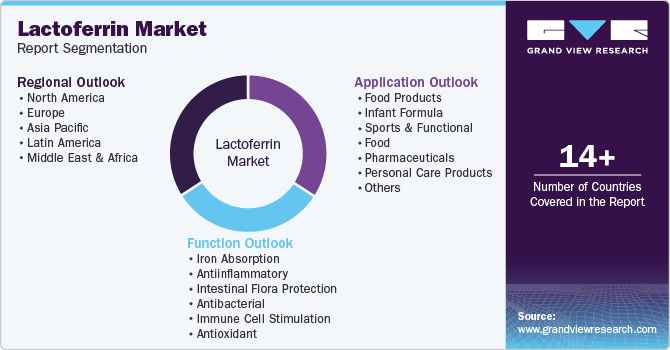
This report forecasts revenue growth at global, regional, and country levels and provides an analysis of the latest industry trends in each of the sub-segments from 2021 to 2033. For this study, Grand View Research has segmented the global lactoferrin market report based on function, application, and region:
-
Function Outlook (Revenue, USD Million, 2021 - 2033)
-
Iron Absorption
-
Antiinflammatory
-
Intestinal Flora Protection
-
Antibacterial
-
Immune Cell Stimulation
-
Antioxidant
-
-
Application Outlook (Revenue, USD Million, 2021 - 2033)
-
Food Products
-
Infant Formula
-
Sports & Functional Food
-
Pharmaceuticals
-
Personal care products
-
Others
-
-
Regional Outlook (Revenue, USD Million, 2021 - 2033)
-
North America
-
U.S.
-
Canada
-
Mexico
-
-
Europe
-
Germany
-
UK
-
Italy
-
Spain
-
France
-
-
Asia Pacific
-
China
-
India
-
Japan
-
South Korea
-
Australia & New Zealand
-
-
Latin America
-
Brazil
-
Argentina
-
-
Middle East and Africa (MEA)
-
UAE
-
-
Research Methodology
The lactoferrin market figures in this report are based on a proven research process that combines executive interviews with secondary research from proprietary databases, company filings, and recognized regulatory and institutional sources. Market size is built through value-chain sizing - reconciling supply-side and demand-side estimates - and triangulated with bottom-up and top-down approaches. Every estimate passes multiple levels of expert validation before publication, with each lactoferrin segment quantified using the revenue-capture definitions in the table below.
Segment Definition
Segment - Function
Revenue capture definition
Iron Absorption
Revenue generated from the sale and utilization of lactoferrin in products formulated to enhance iron absorption and improve iron bioavailability. This includes applications in infant formula, dietary supplements, functional foods, and clinical nutrition products designed to address iron deficiency and support healthy blood formation.
Anti-inflammatory
Revenue generated from the incorporation of lactoferrin into products intended to support the management of inflammatory conditions and promote immune balance. Demand is driven by its use in nutraceuticals, pharmaceuticals, medical nutrition products, and functional food formulations targeting inflammation-related health concerns.
Antibacterial
Revenue generated from the use of lactoferrin in applications requiring antimicrobial and pathogen-inhibiting properties. This includes dietary supplements, infant nutrition products, pharmaceuticals, oral care products, and functional foods formulated to support microbial balance and reduce the risk of bacterial infections.
Immune Cell Stimulation
Revenue generated from the utilization of lactoferrin in products developed to enhance immune system performance and support immune cell activity. This segment includes dietary supplements, infant formula, functional beverages, clinical nutrition products, and pharmaceutical formulations aimed at strengthening immune health and disease resistance.
Antioxidant
Revenue generated from the incorporation of lactoferrin into products designed to protect cells against oxidative stress and support overall health. Applications include nutraceuticals, functional foods, personal care products, anti-aging formulations, and specialized healthcare products that leverage lactoferrin's antioxidant properties.
Segment - Application
Revenue capture definition
Food Products
Revenue generated from the use of lactoferrin in functional foods, fortified dairy products, beverages, bakery products, and nutritional food formulations designed to provide additional health benefits beyond basic nutrition.
Infant Formula
Revenue generated from the incorporation of lactoferrin into infant formula products formulated to mimic the nutritional and functional characteristics of human breast milk. This segment represents one of the largest applications due to lactoferrin's role in supporting immunity, iron absorption, and gut health in infants.
Sports & Functional Food
Revenue generated from the use of lactoferrin in sports nutrition products, performance supplements, protein formulations, functional beverages, and wellness foods designed to support recovery, immunity, digestive health, and overall physical performance.
Pharmaceuticals
Revenue generated from the utilization of lactoferrin in pharmaceutical products, clinical nutrition formulations, therapeutic supplements, and healthcare applications targeting immune modulation, gastrointestinal health, antimicrobial support, and specialized medical conditions.
Personal care products
Revenue generated from the incorporation of lactoferrin into skincare, oral care, cosmetic, and personal hygiene products. Demand is supported by its antimicrobial, anti-inflammatory, antioxidant, and skin-conditioning properties.
Other Applications
Revenue generated from the use of lactoferrin across emerging and niche applications, including animal nutrition, veterinary healthcare, biotechnology research, specialty formulations, and other industrial or healthcare-related uses not classified within the primary application categories.
Estimation Model
Layer Name
Key Question
Description
End-Use Industry Demand Layer
What forms the demand base?
Identify global demand across major end-use industries including infant nutrition, food & beverages, pharmaceuticals, nutraceuticals, sports nutrition, personal care, and animal nutrition. This layer establishes the addressable demand base by evaluating the consumption of bioactive ingredients that support immune health, iron absorption, gut health, antimicrobial protection, and overall wellness.
Lactoferrin Adoption Layer
Where is Lactoferrin used?
Estimate the penetration of lactoferrin across key application areas including infant formula, food products, sports & functional foods, pharmaceuticals, personal care products, and other specialized applications. Assess adoption levels across geographic regions, product categories, consumer health trends, and formulation strategies employed by manufacturers.
Consumption Intensity Layer
How much Lactoferrin is used?
Analyze average lactoferrin inclusion rates across various end-use applications. Consumption intensity varies depending on product type, target health benefits, regulatory guidelines, formulation requirements, purity specifications, and manufacturer positioning. This layer evaluates dosage levels and usage patterns across infant nutrition, dietary supplements, pharmaceuticals, functional foods, and personal care formulations.
Revenue Layer
How is market revenue generated?
Market revenue is generated through the sale of lactoferrin ingredients to manufacturers of infant formula, functional foods, dietary supplements, pharmaceuticals, sports nutrition products, and personal care formulations. Revenue growth is supported by increasing consumer demand for immune-supporting ingredients, premium nutritional products, preventive healthcare solutions, and scientifically validated bioactive compounds across global markets.
Delivered Customizations
This report has been delivered with the following In-depth customizations
Client Request
Customization Delivered
Value Adds
Regional Segmentation
Detailed regional assessment of the lactoferrin market across North America, Europe, Asia Pacific, Latin America, and Middle East & Africa, including country-level analysis of dairy production capacity, lactoferrin extraction capabilities, raw material availability, manufacturing footprint, import-export dynamics, regulatory frameworks, and application demand. The study further evaluates regional consumption trends across infant formula, food products, sports & functional foods, pharmaceuticals, personal care products, and other applications to identify key growth markets and evolving supply-demand dynamics.
Enables identification of high-growth regional markets, major production centers, and emerging demand hubs. Supports market entry strategies, capacity expansion planning, distribution network optimization, and investment decision-making through enhanced visibility into regional consumption trends, competitive landscapes, and regulatory environments.
Cross- Segmentation Benchmarking
Detailed cross-segmentation analysis assessing lactoferrin demand across key application segments including infant formula, food products, sports & functional foods, pharmaceuticals, personal care products, and other applications, mapped against major functional benefits such as iron absorption, anti-inflammatory activity, antibacterial protection, immune cell stimulation, and antioxidant support. The analysis identifies high-growth function-application combinations, demand concentration trends, and evolving consumer preferences across global markets.
Supports portfolio optimization and strategic market prioritization by identifying the most attractive function-application opportunities. Enables targeted product development, effective resource allocation, enhanced customer targeting, and improved revenue generation opportunities across the lactoferrin value chain.
Pricing Analysis
Comprehensive assessment of historical and current lactoferrin pricing trends across major regions, including raw milk and whey feedstock costs, extraction and purification expenses, processing economics, supply-demand balances, regulatory compliance costs, and downstream application demand influences. The study also evaluates pricing variations by purity grade, application sector, geographic region, and distribution channel, along with the impact of production capacity utilization and international trade dynamics on market pricing.
Supports procurement planning, supplier evaluation, margin optimization, pricing strategy development, and contract negotiations through enhanced understanding of cost structures, pricing drivers, supply constraints, and future pricing outlooks across the lactoferrin market.
Frequently Asked Questions About This Report
The global lactoferrin market size was estimated at USD 322.0 billion in 2025 and is expected to reach USD 349.2 billion in 2026.
The lactoferrin market is expected to grow at a compound annual growth rate of 8.6% from 2026 to 2033 to reach USD 622.3 million by 2033.
Infant formula was the dominant application segment in terms of revenue, occupying over 38.5% of the lactoferrin market in 2025, and is expected to experience significant growth over the forecast period.
Some of the key players in the lactoferrin market are Hilmar Cheese Company; Pharming Group NV; FrieslandCampina; Synlait Milk Ltd.; Ingredia SA; MP Biomedicals; Tatura Milk Industries Ltd.; Glanbia plc; APS BioGroup; ProHealth; Fonterra Cooperative Group Ltd.; Farbest Brands; InVitria; Milei GmbH; Ferrin-tech LLC.
The key factors that are driving the lactoferrin market primarily include the increasing incorporation of lactoferrin in various products ranges including infant food, food supplements, dietetic foods, alcoholic beverages, and sports nutrition owing to its health benefits.
Asia Pacific dominated the lactoferrin market with a revenue share of 41.6% in 2025.
Europe is expected to grow the fastest with a compound annual growth rate of 9.0% during the forecast period.
Iron absorption dominated the function segment in the lactoferrin market with a revenue share of 29.4% in 2025.
Personal care products segment is expected to grow the fastest with a compound annual growth rate of 9.1% during the forecast period.
About the Author(s)
Nutraceuticals & Functional Foods Research Team
Consumer Goods · Nutraceuticals & Functional FoodsThis report was authored by the nutraceuticals & functional foods research team at Grand View Research - comprising two research analysts, one senior research analyst, and one industry expert - with specialized expertise in the nutraceuticals & functional foods segment of the consumer goods industry. All findings are based on proprietary consumer goods databases, executive interviews, and regulatory analysis, subject to internal peer review prior to publication.
Last Updated:
Speak to Analyst

Need a Tailored Report?
Customize this report to your needs — add regions, segments, or data points, with 20% free customization.
Or view our licence options:


ISO 9001:2015 & 27001:2022 Certified
We are GDPR and CCPA compliant! Your transaction & personal information is safe and secure. For more details, please read our privacy policy.












