
- Home
- »
- Pharmaceuticals
- »
-
Latin America Enteral Nutrition Market Report, 2026-2033GVR Report cover

Latin America Enteral Nutrition Market (2026 - 2033)
Size, Share & Trends Analysis Report By Nutrition Product (Standard / Polymeric Formula, High-Protein Formula), By Nutrition Flow Type, By Stage, By Indication, By End-use, By Sales Channel, By Region, And Segment Forecasts
Market Size, 2025
$559.6MMarket Estimate, 2026
$592.5MMarket Forecast, 2033
$870.1MCAGR, 2026–2033
5.6%Latin America Enteral Nutrition Market Summary
The Latin America enteral nutrition market size was valued at USD 559.6 million in 2025 and is projected to grow from USD 592.5 million in 2026 to USD 870.1 million by 2033, at a CAGR of 5.6% from 2026 to 2033. This growth is attributed to the rising incidence of cancer, expansion of hospital infrastructure and healthcare capacity, increasing focus on clinical nutrition, education and professional awareness.
Key Market Trends & Insights
- By nutrition product: Standard/polymeric formula segment held the largest market share of 41.1% in 2025.
- By indication: Nutrition deficiency segment held the largest market share of 20.5% in 2025.
- By end use: Hospitals distress syndrome segment dominated the market in 2025.
- By sales channel: Institutional segment dominated the market with the largest revenue share in 2025.
Market Size & Forecast
- Market size in 2025 : USD 559.6 Million
- Estimated market size in 2026: USD 592.5 Million
- Projected market size by 2033 : USD 870.1 Million
- CAGR (2026-2033): 5.6%
Prism AI by Grand View Research Free to tryAsk a question about the latin america enteral nutrition marketTry asking✓Every figure cited from GVR research Prefer the report? Download free sample →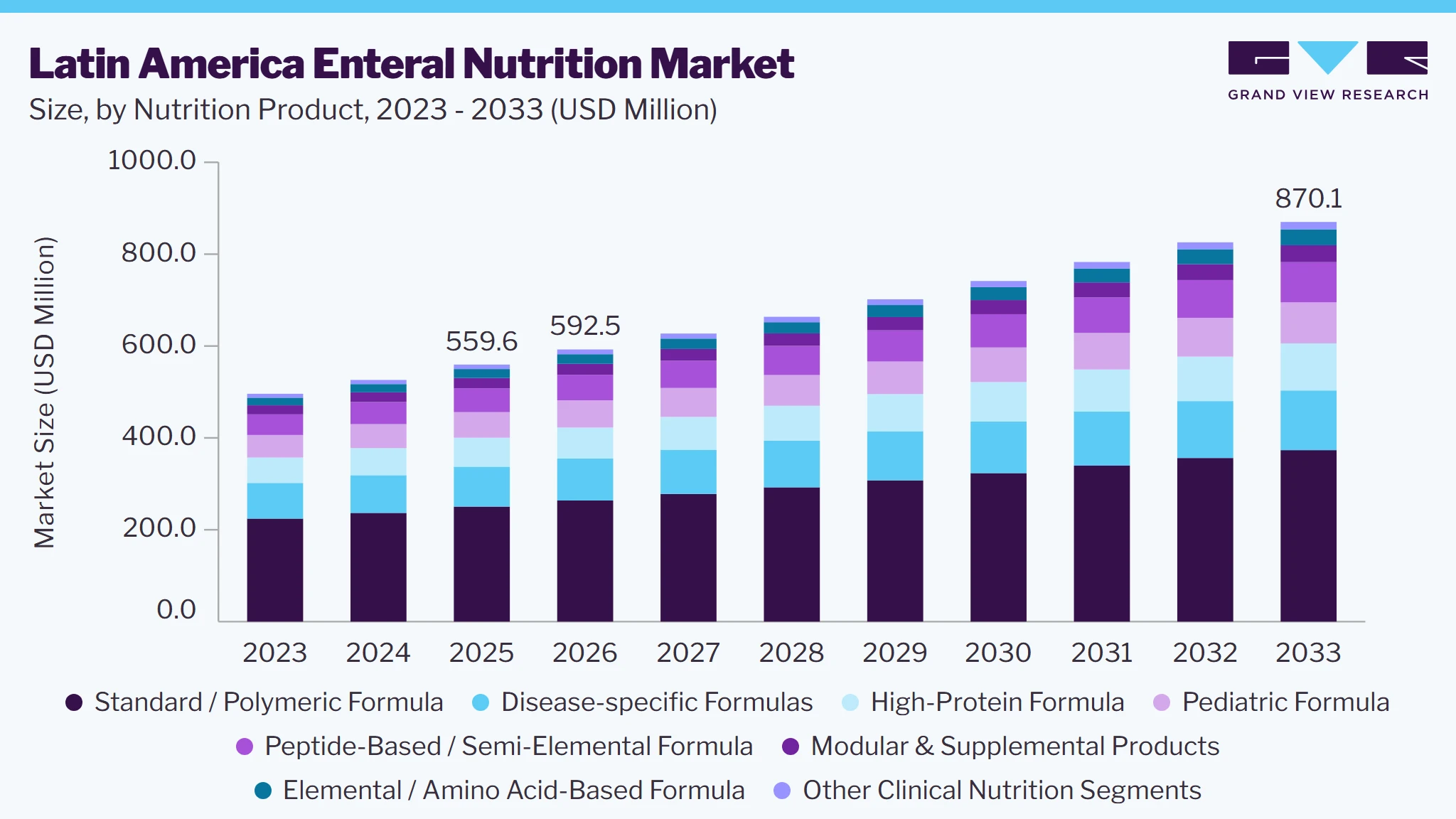 Source: Grand View Research, IR Documents, Primary Interviews, Paid DatabasesTo learn more about this report,
 Download Free Sample Report
Market Dynamics
The Latin America enteral nutrition market is driven by the high prevalence of hospital malnutrition, increasing adoption of medical nutrition therapy, and growing demand for specialized nutritional support. Rising use of nutritional screening, expanding critical care and oncology services, and increasing adoption of enteral feeding across hospitals and homecare settings are supporting market growth.
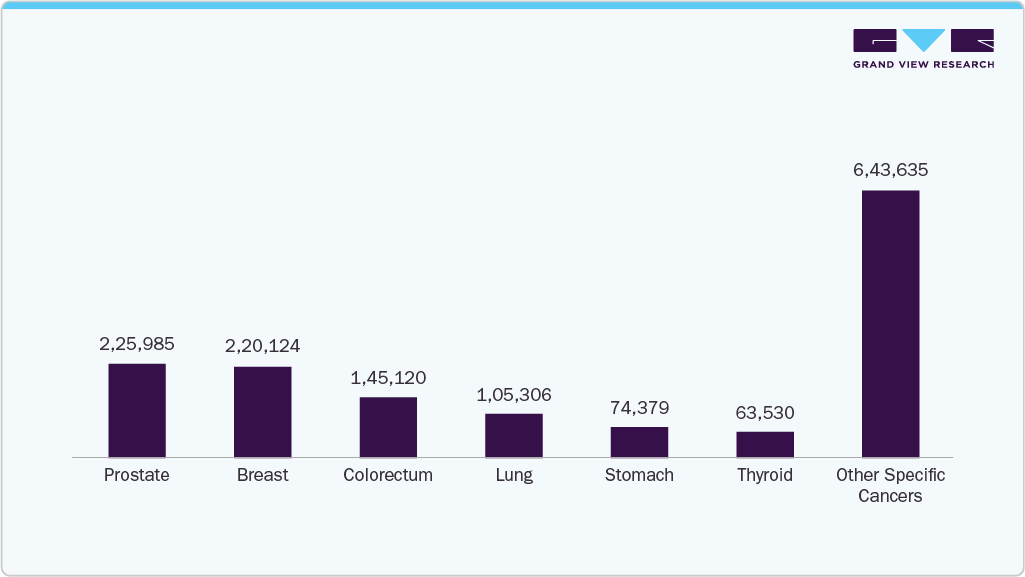
Cancer patients are highly vulnerable to malnutrition due to disease progression and treatments such as chemotherapy, radiotherapy, and surgery, which can cause appetite loss, nausea, mucositis, gastrointestinal complications, and swallowing difficulties. Enteral nutrition therefore provides essential calories, protein, and micronutrients for patients unable to meet nutritional needs orally but with a functioning gastrointestinal tract.According to the American Cancer Society, approximately 1.5 million new cancer cases and 741,000 cancer deaths, excluding non-melanoma skin cancers, were estimated in the Latin America and Caribbean (LAC) region in 2022. The substantial cancer burden and increasing integration of nutritional management into cancer care are expected to support demand for enteral feeding formulas across hospitals, oncology centers, and post-acute care settings.
 To learn more about this report, Download Free Sample Report Limited availability of specialized nutrition-support expertise across Latin America restrains the appropriate adoption and utilization of enteral nutrition. Variations in the availability of trained dietitians, nutrition-support teams, and clinical training can affect nutritional screening, formula selection, feeding initiation, and patient monitoring. Differences in institutional capabilities may further contribute to inconsistent enteral feeding practices, particularly across facilities with limited access to specialized healthcare professionals.
Furthermore, limited implementation of standardized, evidence-based nutrition-support protocols can result in delayed initiation or underutilization of enteral feeding among eligible patients. Shortages of specialized professionals and gaps in continuing education can restrict the integration of nutritional therapy into routine clinical practice. As a result, uneven access to nutrition-support expertise may limit the consistent use of enteral formulas and feeding solutions across the region, thereby restraining market growth.
Some of the major enteral nutrition manufacturers have limited direct presence in several Latin American countries, creating scope for geographic expansion among existing market participants. While products from certain players may reach these markets through indirect or third-party channels, the relatively low direct presence of major manufacturers indicates further potential for expanding their geographic footprint. This is particularly relevant across selected Central American, Caribbean, and South American markets where fewer major players maintain direct operations.Expansion across these markets provides an opportunity for manufacturers to strengthen direct market positioning, increase control over commercial activities, and broaden their regional footprint. Established players with existing operations in larger Latin American markets can leverage their regional experience and product portfolios to expand into countries with limited direct representation, supporting greater penetration of enteral nutrition products across the region.
Market Concentration & Characteristics
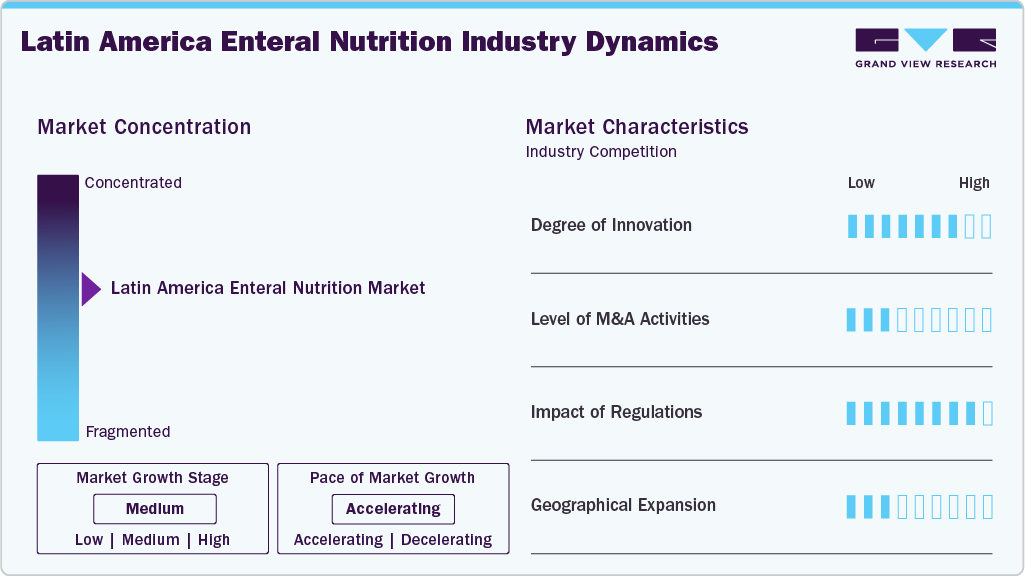
The degree of innovation in the Latin America enteral nutrition market is moderate to high, driven by the development of specialized, high-protein, peptide-based, and disease-specific formulations. Companies are focusing on improving nutrient composition, digestive tolerance, and product suitability for patients with complex nutritional requirements. These advancements are supporting more personalized nutritional management across hospitals, long-term care facilities, and homecare settings.
Level of Mergers & Acquisitions and Collaboration Activities: The level of mergers, acquisitions, and collaboration activities in the Latin America enteral nutrition market is low to moderate. Companies pursue acquisitions and partnerships to expand specialized nutrition portfolios, strengthen distribution networks, and improve clinical capabilities. For instance, in February 2026, Alpina completed the acquisition of Boydorr SAS, Boydorr Nutrition, and the Centro Latinoamericano de Nutrición (CELAN), strengthening its specialized medical nutrition and nutraceuticals portfolio and adding scientific and technological capabilities in Colombia and the region.
 To learn more about this report, Download Free Sample Report
The impact of regulations on the Latin America enteral nutrition market is high, as manufacturers must comply with country-specific requirements related to sanitary registration, product composition, labeling, quality, and safety. Differences in regulatory frameworks across countries can increase the time and resources required for product registration and commercialization. Compliance with evolving nutritional and food-safety requirements therefore remains an important consideration for market participants.
Country expansion in the Latin America enteral nutrition market is increasing as companies seek to strengthen their presence across emerging healthcare markets. Manufacturers are expanding through local distributors, hospital networks, and broader product portfolios to reach underserved patient populations. Growth opportunities in Mexico, South America, Central America, and the Caribbean are encouraging companies to establish wider regional distribution and improve availability of specialized enteral nutrition products.
Analyst Perspective
The Latin America enteral nutrition market is growing due to the rising prevalence of malnutrition, increasing demand for medical nutrition therapy, and expanding use of specialized nutritional support across hospitals and homecare settings. Demand for standard, high-protein, pediatric, and disease-specific formulas is increasing, driven by the growing burden of chronic diseases, cancer, and gastrointestinal disorders. Key players, including Abbott, Danone, Fresenius Kabi, Nestlé Health Science, and regional companies, are focusing on product innovation, portfolio expansion, and distribution partnerships. Competition is expected to remain intense as established players leverage strong brand presence and distribution networks, while emerging companies target niche nutritional needs and regional opportunities.
Nutrition Product Insights
The Standard / polymeric formula segment dominated the market with revenue share of 41.1% in 2025. This dominance is by its broad clinical applicability and nutritional completeness. These formulas contain intact proteins, carbohydrates, fats, vitamins, and minerals and are suitable for patients with a functioning gastrointestinal tract who are unable to meet their nutritional requirements through regular food intake. Their availability in different calorie densities and fiber-containing formulations supports use across hospitals, intensive care units, long-term care facilities, and home enteral nutrition. The established use of industrialized enteral formulas further supports the segment, with the ELANPE Study published in January 2025 reporting that 75% of hospitals across 14 Latin American countries used industrialized enteral formulas.
The Peptide-Based / semi-elemental formula segment is expected to grow at the fastest CAGR of 8.0% over the forecast period from 2026 to 2023. This is driven by the increasing need for better-tolerated enteral nutrition among patients with impaired digestion, malabsorption, gastrointestinal dysfunction, and feeding intolerance. These formulas contain partially hydrolyzed proteins in peptide form, requiring less digestive processing and facilitating nutrient absorption. Growing demand for specialized nutritional support among hospitalized and critically ill patients who have poor tolerance to standard formulas is expected to further support segment growth across region.
Nutrition Flow Type Insights
The intermittent feeding flow segment dominated the market in 2025, driven by its flexibility and suitability for patients who can tolerate relatively larger feeding volumes. Intermittent feeding provides defined feeding periods followed by feeding-free intervals, making it relevant in pediatric care, medically stable patients, and home enteral nutrition where feeding schedules can be aligned with daily activities and caregiver routines. Its clinical applicability across hospital and home-care settings continues to support its adoption in Latin America.
The continuous feeding flow segment is expected to grow at fastest CAGR during the forecast period from 2026 to 2033. This growth is driven by its suitability for critically ill patients and those with limited gastrointestinal tolerance or increased nutritional requirements. Continuous feeding delivers enteral nutrition at a controlled and consistent rate, helping patients receive nutrients gradually while reducing the need for larger feeding volumes over shorter periods. The continued use of medical nutrition therapy across hospitals is expected to support segment growth, with the ELANPE Study published in January 2025 highlighting the ongoing need for clinical nutrition support across Latin American hospitals.
Stage Insights
The adults segment dominated the market with revenue share in 2025, driven by the nutritional requirements associated with critical illness, chronic diseases, cancer, neurological conditions, and gastrointestinal disorders. Enteral nutrition is particularly important for adults unable to meet their nutritional requirements through oral intake, supporting nutritional management across hospitals and intensive care settings. According to a 2026 study published in Revista Colombiana de Gastroenterología, 88.6% of 299 adult patients with shock requiring vasopressors across three intensive care units in Medellín, Colombia, received enteral nutrition between January 2023 and January 2025, highlighting substantial utilization among critically ill adults in Latin American hospital settings.
The pediatrics segment is expected to register significant growth, driven by the high nutritional requirements of infants and children experiencing critical illness, congenital conditions, gastrointestinal disorders, and growth-related nutritional deficiencies. The need to maintain adequate energy and protein intake during critical illness supports the use of enteral nutrition in pediatric intensive care, particularly when oral feeding is insufficient or not feasible. Growing awareness of nutritional management among critically ill children is expected to further support demand for specialized pediatric enteral nutrition products across Latin America.
Indication Insights
The nutrition deficiency segment dominated the market with revenue share of 20.5% in 2025, due to the inadequate dietary intake, food insecurity, chronic diseases, and limited access to affordable nutritious foods. According to PAHO in July 2026, 22.9% of the population in Latin America and the Caribbean experienced moderate or severe food insecurity in 2025, while the average cost of a healthy diet reached USD 4.91 per person per day, the highest among global regions. These affordability and nutritional access challenges continue to support demand for specialized nutritional interventions and enteral nutrition products among vulnerable populations.
The Alzheimer’s segment is expected to grow at fastest CAGR over the coming period, driven by the rising prevalence of dementia and associated feeding difficulties among older adults across Latin America. Progressive cognitive and functional impairment can affect food recognition, self-feeding, chewing, and swallowing, increasing the risk of weight loss and malnutrition and creating a need for nutritional support. According to a population-based study published in JAMA Neurology in July 2026, age- and sex-standardized dementia prevalence increased by 4.9 percentage points in Mexico, 4.1 percentage points in Peru, and 5.0 percentage points in Puerto Rico. The growing dementia burden is expected to support demand for long-term nutritional management and specialized enteral nutrition products among patients with advanced disease and feeding difficulties.
End Use Insights
The Hospitals segment dominated the market, accounting for 68.1% of revenue in 2025, driven by the growing need for nutritional support among severely ill and hospitalized patients across Latin America. The large hospital infrastructure in key markets, including nearly 4,000 hospitals in Mexico in 2024, 2,897 hospital facilities opened in Colombia between 2022 and 2025, and 5,181 officially registered health establishments in Chile as of December 2025, provides a broad institutional base for enteral nutrition products and supports their adoption in hospital-based care.
The Long-term care & nursing homes segment is expected to register the fastest growth over the forecast period from 2026 to 2033. This is driven by the growing aging population and increasing prevalence of functional limitations across Latin America. Nursing homes and residential care facilities provide an important setting for nutritional management among older adults with dysphagia, cognitive impairment, chronic diseases, reduced appetite, and difficulties with daily activities. According to PAHO in April 2026, approximately 8 million people aged 65 years and older in Latin America and the Caribbean required support with basic daily activities, representing 14.4% of the older population, with this proportion projected to reach 16% by 2050. This trend is expected to increase demand for prolonged nutritional support and enteral nutrition in long-term care settings.
Sales Channel Insights
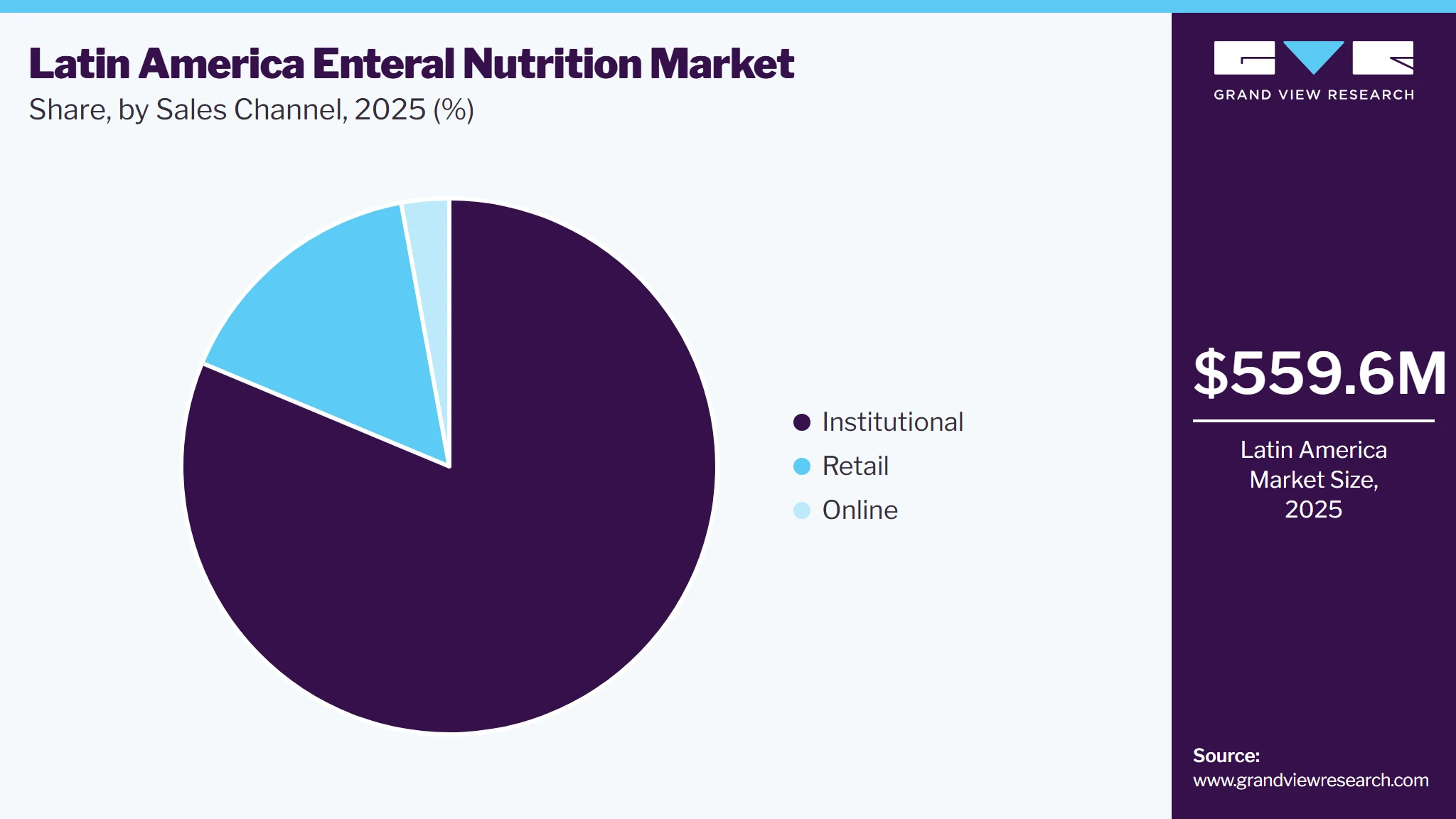
The institutional channel dominated the market with revenue share of 82.4% in 2025. This dominance is due to the regular procurement of enteral nutrition products by hospitals and other healthcare institutions to meet the nutritional needs of hospitalized patients. Large-scale public procurement programs can consolidate institutional demand and support the supply of enteral formulas across hospital networks. For instance, in July 2025, ChileCompra initiated a 24-month coordinated procurement of enteral nutrition products covering 30 healthcare establishments and 54 products, with an estimated value of USD 11.3 million. The procurement was intended to support patients with nutritional deficiencies across Chile’s hospital network, demonstrating institutional demand for enteral nutrition products.
 To learn more about this report, Download Free Sample Report
The Online sales channel is expected to register the fastest growth, with a CAGR of 12.8%, supported by rising e-commerce adoption and digital purchasing across key Latin American markets. In Colombia, e-commerce sales reached COP 145.4 trillion (USD 37.6 billion) in 2025, increasing 11.1% year-over-year, while online transactions reached 684.6 million, up 19.9%. In Chile, e-commerce sales reached nearly USD 10 billion in 2025, growing more than 9% in real terms, with online retail penetration reaching 12.6%, while growing digital adoption in Mexico is expanding the potential customer base for online healthcare and nutrition purchases. The continued expansion of digital purchasing is expected to improve access to enteral nutrition products and support recurring home-care purchases.
Regional Insights
Brazil Enteral Nutrition Market Trends
The Brazil enteral nutrition market is supported by the increasing need for nutritional support among hospitalized, critically ill, and nutritionally at-risk patients, along with growing adoption of medical nutrition therapy. Rising prevalence of chronic diseases, cancer, gastrointestinal disorders, and conditions affecting oral intake is supporting demand for standard, high-protein, pediatric, and disease-specific enteral formulas across hospitals, long-term care facilities, and homecare settings.
Argentina Enteral Nutrition Market Trends
Increasing need for nutritional support among hospitalized, critically ill, and nutritionally at-risk patients, along with growing adoption of medical nutrition therapy drive the market growth in the country. Rising prevalence of chronic diseases, cancer, gastrointestinal disorders, and conditions affecting oral intake is supporting demand for standard, high-protein, pediatric, and disease-specific enteral formulas across hospitals, long-term care facilities, and homecare settings.
Mexico Enteral Nutrition Market Trends
The Mexico enteral nutrition market is driven by the high prevalence of nutritional risk among hospitalized patients, increasing use of medical nutrition therapy, and growing need for specialized nutritional support across hospital and post-acute care settings. Enteral nutrition is particularly relevant for patients unable to meet nutritional requirements through oral intake due to chronic diseases, neurological disorders, gastrointestinal conditions, and critical illness. According to a PubMed-indexed study published in June 2022, among 255 hospitalized adults at nutritional risk in Mexico, 23.5% received enteral nutrition and 9.0% received combined enteral and parenteral nutrition as part of medical nutritional therapy. The documented use of enteral nutrition among nutritionally at-risk patients indicates continued clinical demand for enteral formulas and nutritional support solutions in Mexico.
South America Enteral Nutrition Market Trends
The South America enteral nutrition market is driven by the increasing need for nutritional support among hospitalized, critically ill, and nutritionally at-risk patients, along with growing adoption of medical nutrition therapy. Rising use of specialized enteral formulas for patients unable to meet nutritional requirements through oral intake is supporting demand across hospitals, long-term care, and homecare settings. The growing burden of chronic and acute diseases, expanding healthcare infrastructure, and improving availability of specialized nutritional products are further supporting market growth.
Central America Enteral Nutrition Market Trends
The Central America enteral nutrition market is driven by the increasing need for nutritional support among hospitalized, critically ill, pediatric, and nutritionally vulnerable patients. Growing awareness of medical nutrition therapy and rising management of chronic diseases, gastrointestinal disorders, and cancer are supporting the use of standard, high-protein, pediatric, and disease-specific enteral formulas across healthcare settings.
Market growth is further supported by expanding healthcare infrastructure and improving access to specialized nutritional products through distributors and institutional procurement channels. Demand from public and private hospitals, long-term care facilities, and homecare settings is increasing as enteral feeding becomes more integrated into patient management.
Caribbean Enteral Nutrition Market Trends
The Caribbean enteral nutrition market is driven by the increasing need for nutritional support among hospitalized, older, critically ill, and nutritionally vulnerable patients. Growing awareness of disease-related malnutrition and medical nutrition therapy is supporting the use of standard, high-protein, pediatric, and disease-specific enteral formulas across hospitals, critical care, long-term care, and homecare settings. Improving healthcare infrastructure and access to specialized nutritional products through healthcare providers and distribution networks are further supporting market development.
Key Latin America Enteral Nutrition Company Insights
Key players in the Latin America enteral nutrition market are strengthening their positions through portfolio expansion, specialized formula development, product launches, distribution partnerships, and geographic expansion. Established companies such as Abbott (Nutrition), Danone (Nutricia), Fresenius Kabi AG, Nestlé Health Science, and Megalabs (Victus Inc.) leverage broad product portfolios and established distribution networks, while regional and emerging players such as Gesber, Abamia Labs, Medtrition Inc., and ALPINA (Boydorr) focus on specialized nutritional solutions and regional market expansion.
Key Latin America Enteral Nutrition Companies:
-
Abbott (Nutrition)
-
Danone (Nutricia)
-
Fresenius Kabi AG
-
Nestle Health Science
-
Gesber
-
Megalabs (Victus Inc.)
-
Abamia Labs
-
Medtrition Inc.
-
ALPINA (Boydorr)
Competitive Benchmarking
Category
Operating Strategies
Competitive Edge
Weakness
Established Players (Abbott (Nutrition), Danone (Nutricia), Fresenius Kabi AG, Nestlé Health Science)
- Expand specialized enteral nutrition portfolios, develop disease-specific and high-protein formulas, strengthen healthcare-provider relationships, and expand distribution across Latin America.
- Strong brand recognition, broad clinical nutrition portfolios, established healthcare distribution networks, extensive product expertise, and strong relationships with hospitals and healthcare professionals.
- Higher product costs, complex regulatory requirements across countries, dependence on institutional procurement, and competition from regional manufacturers.
Emerging Players (Gesber, Megalabs (Victus Inc.), Abamia Labs, Medtrition Inc., ALPINA (Boydorr))
- Expand specialized enteral nutrition portfolios, strengthen regional distribution, target underserved markets, and develop products tailored to local nutritional requirements.
- Regional market knowledge, specialized product offerings, flexible distribution strategies, and ability to address specific nutritional needs across selected Latin American markets.
- Smaller distribution networks, lower brand recognition compared with multinational companies, limited R&D resources, and dependence on regulatory approvals for geographic expansion.
Recent Developments
-
In February 2026, Alpina completed the acquisition of Boydorr SAS, Boydorr Nutrition, and the Centro Latinoamericano de Nutrición (CELAN). The acquisition strengthens Alpina’s portfolio in specialized medical nutrition and nutraceuticals while adding scientific and technological capabilities to support nutrition and healthcare needs in Colombia and the region.
-
In June 2022, Megalabs announced the acquisition of Victus Inc., strengthening its presence in the nutritional products segment across Latin America. The transaction expanded Megalabs’ portfolio through Victus’ specialized nutrition business and regional commercial presence.
Latin America Enteral Nutrition Market Report Scope
Report Attribute
Details
Market size in 2025
USD 559.6 million
Estimated market size in 2026
USD 592.5 million
Projected market size by 2033
USD 870.1 million
Growth Rate
CAGR of 5.6% from 2026 to 2033
Actual data
2021 - 2025
Forecast period
2026 - 2033
Quantitative units
Market value in USD million, and CAGR from 2026 to 2033
Report coverage
Revenue forecast, company ranking, competitive landscape, growth factors, and trends
Segments covered
Nutrition product, nutrition flow type, stage, indication, end use, sales channel, region
Regional scope
Latin America; South America; Central America; Caribbean
Country scope
Brazil, Argentina, Mexico, Colombia, Peru, Chile, Ecuador, Venezuela, Rest of South America, Panama, Costa Rica, Guatemala, El Salvador, Honduras, Nicaragua, Rest of Central America, Dominican Republic
Key companies profiled
Abbott (Nutrition), Danone (Nutricia), Fresenius Kabi AG, Nestlé Health Science, Gesber, Megalabs (Victus Inc.), Abamia Labs, Medtrition Inc., ALPINA (Boydorr).
Customization scope
Free report customization (equivalent up to 8 analysts working days) with purchase. Addition or alteration to country, regional & segment scope.
Pricing and purchase options
Avail customized purchase options to meet your exact research needs. Explore purchase options
Latin America Enteral Nutrition Report Segmentation
This report forecasts revenue growth at regional and country levels and provides an analysis of the latest industry trends in each of the sub-segments from 2021 to 2033. For this study, Grand View Research has segmented the Latin America enteral nutritionmarket report based on nutrition product, nutrition flow type, stage, indication, end use, sales channel, and region.
-
Nutrition Product Outlook (Revenue, USD Million, 2021 - 2033)
-
Standard / Polymeric Formula
-
High-Protein Formula
-
Peptide-Based / Semi-Elemental Formula
-
Elemental / Amino Acid-Based Formula
-
Pediatric Formula
-
Disease-specific Formulas
-
Alzheimer’s
-
Nutrition Deficiency
-
Cancer Care
-
Diabetes
-
Chronic Kidney Diseases
-
Orphan Diseases
-
Dysphagia
-
Pain Management
-
Malabsorption/GI Disorder/Diarrhea
-
Others
-
-
Modular & Supplemental Products (protein modules, fibre, thickeners)
-
Other Clinical Nutrition Segments
-
-
Nutrition Flow Type Outlook (Revenue, USD Million, 2021 - 2033)
-
Intermittent Feeding Flow
-
Continuous Feeding Flow
-
-
Stage Outlook (Revenue, USD Million, 2021 - 2033)
-
Adults
-
Pediatrics
-
Neonatal / Preterm
-
Other Pediatrics
-
-
-
Indication Outlook (Revenue, USD Million, 2021 - 2033)
-
Alzheimer’s
-
Nutrition Deficiency
-
Cancer Care
-
Diabetes
-
Chronic Kidney Diseases
-
Orphan Diseases
-
Dysphagia
-
Pain Management
-
Malabsorption/GI Disorder/Diarrhea
-
Others
-
-
End use Outlook (Revenue, USD Million, 2021 - 2033)
-
Hospitals
-
Cardiology
-
Neurology
-
Critical Care (ICU)
-
Oncology
-
Others
-
-
Home Care
-
Long-Term Care & Nursing Homes
-
Ambulatory / Specialty Clinics
-
-
Sales Channel Outlook (Revenue, USD Million, 2021 - 2033)
-
Online
-
Retail
-
Retail Pharmacies
-
Supermarkets & Other Retail Outlets
-
-
Institutional
-
Public/Institutional Tender & Hospital Procurement
-
Direct Manufacturer Sales to Institutions
-
Medical & Pharmaceutical Distributors
-
Hospital Pharmacies
-
-
-
Regional Outlook (Revenue, USD Million, 2021 - 2033)
-
Brazil
-
Argentina
-
Mexico
-
South America
-
Colombia
-
Peru
-
Chile
-
Ecuador
-
Venezuela
-
-
Central America
-
Panama
-
Costa Rica
-
Guatemala
-
El Salvador
-
Honduras
-
Nicaragua
-
-
Caribbean
-
Dominican Republic
-
Rest of the Caribbean (Including Jamaica, Trinidad and Tobago, the Bahamas, Barbados, and other Caribbean markets)
-
-
Research Methodology
The Latin America enteral nutrition market figures in this report are based on a proven research process that combines executive interviews with secondary research from proprietary databases, company filings, and recognized regulatory and institutional sources. Market size is built through value-chain sizing-reconciling supply-side and demand-side estimates-and triangulated with bottom-up and top-down approaches. Every estimate passes multiple levels of expert validation before publication, with each Latin America enteral nutrition segment quantified using the revenue-capture definitions in the table below.
Segment Definition
Segment- Nutrition Product
Revenue Capture Definition
Standard / Polymeric Formula
Revenue generated from the sale of standard and polymeric enteral nutrition formulas containing intact proteins and balanced carbohydrates, fats, vitamins, and minerals for patients with a functioning gastrointestinal tract.
High-Protein Formula
Revenue generated from the sale of high-protein enteral nutrition formulas designed to provide increased protein and energy to patients with elevated nutritional requirements.
Peptide-Based / Semi-Elemental Formula
Revenue generated from the sale of peptide-based or semi-elemental enteral formulas containing partially hydrolyzed proteins to support nutrient absorption and improve tolerance in patients with impaired digestion.
Elemental / Amino Acid-Based Formula
Revenue generated from the sale of elemental enteral formulas containing free amino acids and highly simplified nutrients for patients with severe malabsorption or impaired digestive capacity.
Pediatric Formula
Revenue generated from the sale of enteral nutrition formulas specifically formulated to meet the nutritional requirements of infants, children, and adolescents requiring nutritional support.
Modular & Supplemental Products
Revenue generated from the sale of modular and supplemental enteral nutrition products, including protein modules, fiber supplements, and thickeners, used to modify or supplement patients’ nutritional intake.
Other Clinical Nutrition Segments
Revenue generated from the sale of other specialized enteral nutrition products that do not fall within the defined formula categories.
Segment- Nutrition Flow Type
Revenue Capture Definition
Intermittent Feeding Flow
Revenue generated from the sale of enteral nutrition products administered through intermittent feeding, in which nutritional formulas are delivered at scheduled intervals rather than continuously.
Continuous Feeding Flow
Revenue generated from the sale of enteral nutrition products administered continuously over an extended period through controlled feeding using enteral feeding equipment.
Segment- Stage
Revenue Capture Definition
Adults
Revenue generated from the sale of enteral nutrition products formulated or primarily used to meet the nutritional requirements of adult patients requiring enteral feeding.
Pediatrics
Revenue generated from the sale of enteral nutrition products formulated or primarily used to meet the nutritional requirements of infants, children, and adolescents requiring enteral feeding.
Segment- Indication
Revenue Capture Definition
Nutrition Deficiency
Revenue generated from the sale of enteral nutrition products used to address inadequate nutrient intake, malnutrition, or increased nutritional requirements associated with nutritional deficiencies.
Cancer Care
Revenue generated from the sale of enteral nutrition products used to support nutritional requirements of patients undergoing cancer treatment or experiencing disease- or treatment-related nutritional challenges.
Dysphagia
Revenue generated from the sale of enteral nutrition products used to provide nutritional support to patients with swallowing difficulties who cannot safely or adequately meet nutritional requirements through oral intake.
Malabsorption / GI Disorder / Diarrhea
Revenue generated from the sale of specialized enteral nutrition products used to support patients with gastrointestinal disorders, malabsorption, diarrhea, or impaired nutrient digestion and absorption.
Diabetes
Revenue generated from the sale of enteral nutrition products formulated to support the nutritional management of patients with diabetes or impaired glucose regulation.
Chronic Kidney Diseases
Revenue generated from the sale of enteral nutrition products formulated to support the nutritional requirements of patients with chronic kidney disease, including products with adjusted protein, electrolyte, and mineral content.
Alzheimer’s
Revenue generated from the sale of enteral nutrition products used to provide nutritional support to patients with Alzheimer’s disease who experience inadequate oral intake or require assisted feeding.
Orphan Diseases
Revenue generated from the sale of specialized enteral nutrition products designed to support patients with rare or orphan diseases requiring condition-specific nutritional management.
Pain Management
Revenue generated from the sale of enteral nutrition products used to support nutritional requirements of patients experiencing conditions associated with pain that may impair adequate oral nutritional intake.
Others
Revenue generated from the sale of enteral nutrition products used for indications not specifically included in the defined indication categories.
Segment- End-use
Revenue Capture Definition
Hospitals
Revenue generated from the sale of enteral nutrition products supplied to hospitals for use in inpatient, critical care, surgical, oncology, and other clinical settings.
Home Care
Revenue generated from the sale of enteral nutrition products supplied for patients receiving nutritional support in home-based care settings.
Long-Term Care & Nursing Homes
Revenue generated from the sale of enteral nutrition products supplied to long-term care facilities and nursing homes for residents requiring ongoing nutritional support.
Ambulatory / Specialty Clinics
Revenue generated from the sale of enteral nutrition products supplied to ambulatory and specialty clinics for patients receiving nutritional management outside traditional inpatient hospital settings.
Segment- Sales Channel
Revenue Capture Definition
Institutional
Revenue generated from the sale of enteral nutrition products through institutional procurement channels, including hospitals, healthcare facilities, government institutions, and other organized healthcare purchasers.
Retail
Revenue generated from the sale of enteral nutrition products through retail channels, including pharmacies, medical stores, and other physical outlets serving individual consumers and caregivers.
Online
Revenue generated from the sale of enteral nutrition products through online platforms, including company websites, e-commerce marketplaces, online pharmacies, and other digital sales channels.
Estimation Model
Category
Description
Top-Down Market Sizing
Market size was estimated by assessing the overall Latin America enteral nutrition market and allocating revenues across nutrition product, flow type, stage, indication, end use, and sales channel using company revenues, industry data, healthcare statistics, and segment-level adoption patterns.
Bottom-Up Market Sizing
Market size was estimated by aggregating company-level revenues, product sales, pricing data, healthcare facility demand, and country-level consumption across key enteral nutrition products and markets.
Country-Level Segment Share Modeling
Country-level segment shares were derived using nutritional risk, disease burden, healthcare infrastructure, hospital capacity, medical nutrition adoption, product availability, reimbursement, and procurement patterns. Weighted assumptions were applied to develop regional and country-level segment distributions.
Data Triangulation & Validation Model
Market estimates were validated by triangulating secondary research, company-level revenue assessments, product and pricing data, healthcare statistics, procurement information, and demand-side indicators to ensure consistency across segments and countries.
Forecasting & CAGR Modeling
Market forecasts were developed using disease burden, hospitalization trends, healthcare expenditure, medical nutrition adoption, healthcare infrastructure, product penetration, demographic trends, and regulatory developments. Trend- and scenario-based modeling was applied to estimate future market growth and CAGR.
Delivered Customizations
This report has been delivered with the following In-depth customizations
Client Request
Customization Delivered
Value Adds
Pricing Analysis & Market Access Assessment
Country-wise pricing analysis, reimbursement and market access framework, and public tender and procurement environment analysis across key Latin American countries.
Pricing Analysis & Market Access Assessment
Competitive Positioning & Market Share Analysis
Company market share and revenue analysis for 2025, including Mexico and country-level analysis across South America, Central America, and the Caribbean.
Competitive Positioning & Market Share Analysis
White-space Mapping & Market Entry Proposition
Assessment of white-space and unmet needs by product segment and country, with identified opportunities mapped to the NEWEAT portfolio and corresponding entry propositions developed by market type.
Helps identify underserved segments, prioritize product and country opportunities, define suitable market-entry approaches, and support targeted expansion across Latin America.
About the Author(s)
Pharmaceuticals Research Team
Healthcare · PharmaceuticalsThis report was authored by the pharmaceuticals research team at Grand View Research - comprising two research analysts, one senior research analyst, and one industry expert - with specialized expertise in the pharmaceuticals segment of the healthcare industry. All findings are based on proprietary healthcare databases, executive interviews, and regulatory analysis, subject to internal peer review prior to publication.
Last Updated:
Speak to Analyst

Customize this report to your needs - add regions, segments, or data points, with 20% free customization.
Or view our licence options:


ISO 9001:2015 & 27001:2022 Certified
We are GDPR and CCPA compliant! Your transaction & personal information is safe and secure. For more details, please read our privacy policy.


