
- Home
- »
- Medical Devices
- »
-
Light Therapy Market Size, Growth Report, 2026-2033GVR Report cover

Light Therapy Market (2026 - 2033)
Size, Share & Trends Analysis Report By Product (Light Box, Handheld Devices for Skin Treatment), By Application, By Light Type (Blue Light, Red Light), By End Use, By Region, And Segment Forecasts
Market Size, 2025
$1.3BMarket Estimate, 2026
$1.4BMarket Forecast, 2033
$2.4BCAGR, 2026–2033
8.6%Light Therapy Market Summary
The global light therapy market size was valued at USD 1.3 billion in 2025 and is projected to grow from USD 1.4 billion in 2026 to USD 2.4 billion by 2033, growing at a CAGR of 8.6% from 2026 to 2033. North America held the largest global share, at over 35.0%, in 2025.
Key Market Trends & Insights
- By product: Handheld devices held the largest market share of approximately 30.0% in 2025.
- By application: Sleeping disorders held the largest market share of approximately 25.0% in 2025.
- By light type: Blue light held the largest market share in 2025.
Regional Highlights
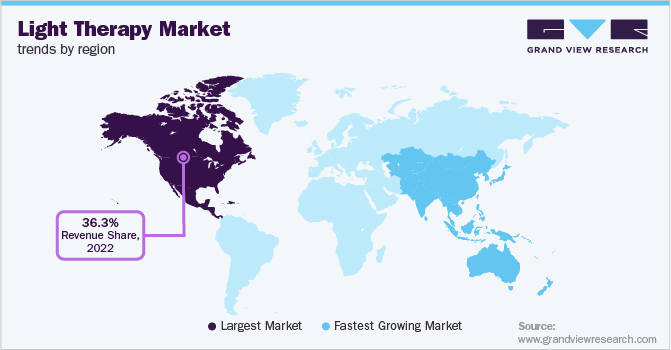
- Largest regional market: North America (35.0% revenue share, 2025)
- Fastest-growing regional market: Asia Pacific (fastest CAGR, 2026-2033)
Market Size & Forecast
- Market size in 2025: USD 1.3 Billion
- Estimated market size in 2026: USD 1.4 Billion
- Projected market size by 2033: USD 2.4 Billion
- CAGR (2026-2033): 8.6%
Three ways to get this report
Buy it, customize it, or ask a question.Ask an Analyst
Analyst response in 1 business day
- AccessReport author, directly
- Reply timeWithin 1 working day
- No sales callDirect answer only
- FormatEmail reply
- CostFree, no cost
Get the Full Report
What the study covers
- FormatsPDF · Excel · Dashboard
- Timeline2026–2033 annual, 2025 base
- Coverage20+ countries, 5 regions
- Companies10+ key players profiled
Customize the Report
20% free customization
- IncludeCountries, segments, points
- TailorTo your product definition
- ExtendDeeper competitor detail
- OrA fully bespoke study
- Turnaround5–10 working days
The light therapy industry’s growth is driven by the increasing prevalence of skin disorders such as acne, psoriasis, and eczema, which are commonly treated with light-based therapies. The rising incidence of sleep disorders, depression, and seasonal affective disorder (SAD) is also contributing to market growth. The growing adoption of non-invasive treatments and the rising prevalence of skin diseases are driving the market. Moreover, market players are engaged in various strategic initiatives, such as product launches, that are fostering the industry’s growth.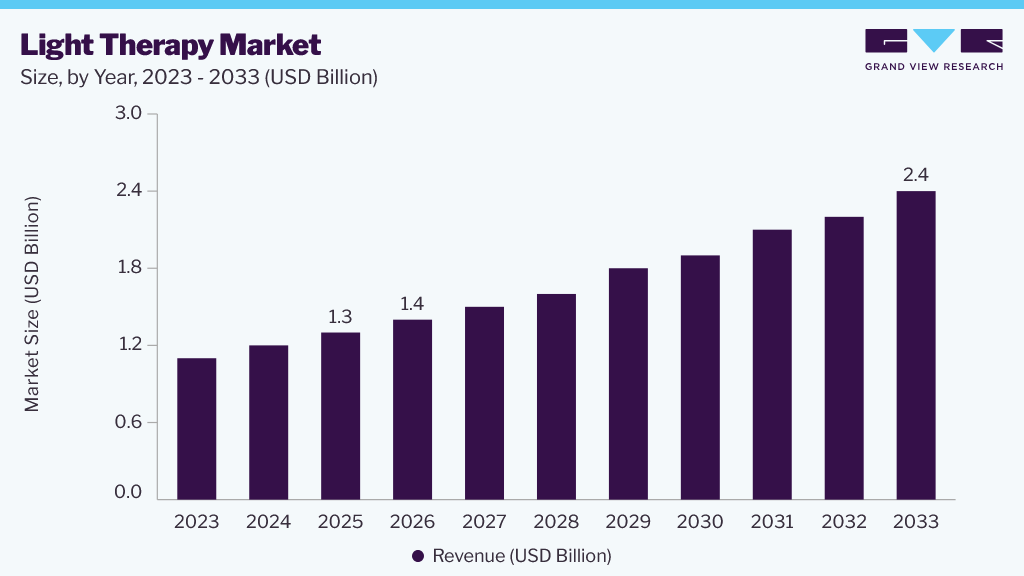 Source: Grand View Research, IR Documents, Primary Interviews, Paid DatabasesTo learn more about this report,
 Download Free Sample Report
 The market is witnessing strong growth driven by rising consumer awareness of circadian rhythm management, seasonal affective disorder (SAD), and the benefits of photobiomodulation for pain management and wound healing. The growing preference for at-home treatment devices, driven by advancements in portable and wearable light therapy solutions, is further accelerating adoption across both clinical and personal care segments. Technological advancements such as LED-based devices, smart connectivity features, and wavelength-specific customization are improving treatment efficacy and user convenience. Furthermore, expanding applications in dermatology, particularly for acne, psoriasis, and vitiligo, are broadening the clinical use base of light therapy systems.
The growing integration of light therapy in wellness and aesthetic clinics, coupled with rising healthcare expenditure and favorable reimbursement frameworks in select developed markets, is also supporting market expansion. However, factors such as high device costs in advanced systems and limited awareness in emerging economies may slightly restrain broader adoption in the near term.
Market Dynamics
The rising global burden of mental health disorders, skin diseases, and sleep-related conditions primarily drives the light therapy market. Increasing cases of depression, anxiety, and circadian rhythm disruptions are boosting demand for non-invasive and drug-free treatment options such as LED and UV light therapy. Growing awareness of home-based wellness solutions and the preference for safer, pharmaceutical-free therapies are further supporting adoption across both clinical and consumer segments.
The rising prevalence of skin disorders and mental health conditions is significantly driving demand for light therapy devices worldwide. According to the report published by the World Health Organization (WHO) in September 2025, more than 1 billion people globally are living with mental health disorders, including depression and anxiety, creating a strong demand for non-invasive treatment solutions such as light therapy. In addition, according to the WHO report published in August 2025, approximately 332 million people worldwide suffer from depression, while disrupted sleep and circadian rhythm disorders continue to increase globally. Light therapy is adopted for the treatment of seasonal affective disorder (SAD), depression, anxiety, and sleep disorders because it helps regulate circadian rhythms, improve mood, and enhance sleep quality without extensive pharmaceutical use. The growing preference for drug-free and home-based therapies has further accelerated market adoption. In dermatology, the increasing burden of chronic skin disorders such as psoriasis, acne, eczema, and vitiligo is also contributing to market growth. Healthcare providers are using LED and ultraviolet (UV) light therapy to reduce inflammation, promote skin healing, and improve patient outcomes in dermatological care. Furthermore, studies have shown a strong relationship between psoriasis, poor sleep quality, anxiety, and depression, further increasing the need for integrated light-based treatment approaches.
The high cost of advanced light therapy devices and treatment procedures is a major factor restraining the growth of the light therapy market. Light therapy technologies, such as LED-based systems, laser therapy devices, and photodynamic therapy equipment, are designed to deliver targeted treatment for various conditions, including skin disorders, chronic pain, wound healing, and seasonal affective disorder (SAD). However, these devices often involve sophisticated technology and specialized components, which significantly increase their manufacturing and purchase costs. Healthcare providers, dermatology clinics, hospitals, and wellness centers must make substantial investments to acquire and maintain advanced light therapy systems. In addition to the initial purchase cost, expenses related to installation, staff training, maintenance, and equipment upgrades further increase the overall financial burden. Smaller healthcare facilities and clinics with limited budgets may find it difficult to adopt these technologies, restricting their availability to a wider patient population. For patients, the cost of treatment may be a challenge. Light therapy applications require multiple treatment sessions over several weeks or months to achieve optimal results. This can lead to considerable out-of-pocket expenses, particularly in regions where health insurance plans provide limited or no reimbursement for light therapy procedures.
The growing demand for convenient, non-invasive, and self-administered treatment options presents a significant opportunity for the light therapy market. Consumers are increasingly seeking therapies that can be used at home to manage conditions such as acne, psoriasis, seasonal affective disorder (SAD), sleep disorders, pain, and wound healing.
Advances in LED technology have enabled manufacturers to develop compact, portable, and wearable light therapy devices that are safer, more affordable, and easier to use than traditional clinical systems. In April 2026, ThyRed launched a portable neck-worn LED photobiomodulation (PBM) wellness wearable. The device delivers red and near-infrared light therapy through a lightweight, hands-free design intended for daily use. The rising adoption of telehealth and remote patient monitoring is further supporting the use of home-based light therapy solutions. Patients can receive treatment guidance from healthcare professionals while continuing therapy from the comfort of their homes, reducing the need for frequent clinic visits.
The increasing awareness of wellness, skincare, and mental health is encouraging consumers to invest in personal light therapy devices for preventive and therapeutic purposes. Manufacturers are integrating smart features such as mobile app connectivity, personalized treatment settings, and usage tracking, thereby enhancing the user experience and treatment adherence. As healthcare systems increasingly emphasize patient-centered and decentralized care, demand for home-use and wearable light therapy products is expected to grow substantially. This trend creates lucrative opportunities for market players to expand their product portfolios, reach a broader consumer base, and drive long-term market growth.
Analyst Perspective
The light therapy market is growing at the intersection of medical treatment and consumer wellness, driven by rising demand for non-invasive, drug-free solutions. It is used for conditions such as acne, skin disorders, sleep problems, and seasonal mood issues, and is also seeing rising adoption in home-based skincare and wellness devices. The market is gradually shifting from simple devices to connected systems that offer guided usage and personalized treatment plans. Overall, growth is supported by higher health awareness and the preference for safe, easy-to-use therapies.
Product Insights
The handheld device segment led the light therapy market, accounting for the largest revenue share of approximately 30.0% in 2025. This can be attributed to the product’s wide range of features, including portability, efficient technology, and user-friendliness. They are used for skin treatment and employ LED-based light therapy, featuring portability, targeted wavelengths, and battery-powered operation, enhancing convenience for at-home and clinical use. For instance, in September 2025, BioPhotas, Inc. launched the Celluma POD Series 2, expanding its portfolio of portable light therapy solutions. The battery-powered handheld LED device received FDA clearance for four treatment modes: acne, pain management, aging skin, and body contouring.
The light visor segment is expected to grow at the fastest CAGR over the forecast period. The segment growth is driven by the increase in aircraft travelers, which has led to various conditions, including insomnia, eye fatigue, and jet lag. This is due to changes in time zones and sleep patterns. It is portable and user-friendly, and can be worn on the head. It regulates melatonin levels and improves the body's circadian rhythms.
Application Insights
The sleeping disorder segment led the light therapy industry, accounting for the largest revenue share of approximately 25.0% in 2025. There are various conditions related to sleep disorders, such as insomnia, hypersomnia, and sleep-disordered breathing. These conditions are often linked to unhealthy lifestyle habits, including smoking, excessive alcohol consumption, irregular sleep schedules, and increased screen time before bedtime. Light therapy has emerged as an effective non-pharmacological treatment option for sleep disorders. Its ability to regulate the body's internal clock, improve sleep quality, and reduce reliance on medications has increased its adoption among both healthcare providers and consumers. Supporting this trend, in October 2025, Helight introduced its red-light sleep therapy device through Ulta Beauty stores. The device is designed to improve sleep quality and support circadian rhythm regulation through scientifically calibrated red-light exposure, highlighting the growing consumer acceptance of light-based therapies for managing insomnia and other sleep-related disorders.
The SAD/winter blues segment is expected to grow at the fastest CAGR over the forecast period. This growth is attributed to the increasing screen time and unhealthy lifestyle habits, including limited physical activity, poor dietary patterns, and spending extended periods indoors during the winter months.
Light Type Insights
The blue light segment led the light therapy market, accounting for more than 40.0% of revenue in 2025, and is expected to grow at the fastest CAGR over the forecast period. Blue light therapy is used to treat various conditions such as acne, skin disorders, depression, and seasonal affective disorder. The treatment session, depending on the condition and treatment area, varies from 15 minutes to 90 minutes.
According to the AAD association, 9,500 people in the U.S. are diagnosed with skin cancer daily, and approximately 1 million people in the U.S. are suffering from melanoma. Growing awareness of aesthetics, especially among younger consumers, is further supporting market expansion. According to a study published in the Journal of Photochemistry and Photobiology B: Biology in December 2025, a novel 450-nm blue laser-mediated photodynamic therapy demonstrated strong antibacterial activity against Cutibacterium acnes, the primary bacterium associated with acne vulgaris. The researchers found that the therapy generated high levels of reactive oxygen species (ROS), leading to bacterial destruction and reduced acne-related inflammation.
End Use Insights
The home healthcare segment led the light therapy industry, accounting for the largest revenue share of over 55.0% in 2025. Increasing consumer awareness of the benefits of light-based treatments and technological advancements, such as remote patient monitoring, is driving market growth. In addition, the increasing prevalence of acne, psoriasis, eczema, skin rejuvenation procedures, and other dermatological conditions is driving patients to dermatology clinics. The adoption of advanced light therapy systems, including LED- and laser-based devices, enables clinics to offer effective, non-invasive treatment options with minimal recovery.
Dermatology clinics specialize in treating various skin conditions, such as acne, eczema, psoriasis, and vitiligo. According to WHO estimates, skin diseases affect almost 900 million people, which is expected to drive demand for dermatology clinics. Moreover, the increasing adoption of non-invasive treatments and technological advancements, such as laser technology, is expected to drive market growth over the forecast period.
Regional Insights
North America dominated the global light therapy market, accounting for the largest revenue share of over 35.0% in 2025, owing to rising cases of SAD/Winter blues and psoriasis. Light therapy involves exposing the skin to ultraviolet light from artificial sources under medical supervision. UVB and UVA light, or a combination of both, are used to reduce inflammation, slow down skin cell growth, and improve symptoms. According to estimates from the Canadian Dermatology Association, approximately 1 million people have psoriasis, which is driving growth in the market for these devices. Furthermore, product innovations are contributing to market expansion. In January 2025, Nanoleaf launched its LED Light Therapy Face Mask. The device uses red and blue LED light therapy to support acne treatment, highlighting the growing adoption of advanced at-home light therapy solutions in the U.S. market.
 To learn more about this report, Download Free Sample Report
 Europe Light Therapy Market Trends
The Europe light therapy industry is expected to grow significantly during the forecast period. This is attributed to the prevalence of various skin conditions such as psoriasis, acne, and vitiligo in the region. Moreover, increasing cases of SAD and winter blues in the region are further driving the demand. The market is driven by increasing awareness about the benefits of light therapy in treating seasonal affective disorder (SAD) and other mood disorders. In addition, the rising adoption of light therapy devices in the homecare segment and the growing number of people suffering from SAD and other mood disorders are also driving the market growth.
Asia Pacific Light Therapy Market Trends
The Asia-Pacific light therapy industry is experiencing significant growth, driven by rising awareness of its benefits and increased investment in telemedicine. In addition, the increasing adoption of light therapy devices in hospitals, clinics, and the home care segment is also driving growth. The market is expected to continue growing over the coming years, driven by the rising prevalence of sleep disorders and the increasing adoption of light therapy devices the treat skin conditions such as acne, psoriasis, and eczema.
Key Light Therapy Company Insights
The key players are implementing strategies such as new product launches, mergers, collaborations, partnerships, and acquisitions to improve their market position. Several players are attempting to implement demand-friendly strategic plans. Zerigo Health has a mobile application that automatically calculates and prescribes dosages based on the patient’s condition. In addition, the company has a GPS tracker that shows progress and provides 1-to-1 consultation.
-
In July 2025, BioPhotas, Inc., announced the launch of the Celluma NOVA, a first-of-its-kind 5-mode, battery-powered, FDA-cleared LED light therapy device. The innovation enhances portability and clinical versatility, addressing skin aging, acne, pain management, hair restoration, and body contouring within a single compact, professional-grade platform for at-home and clinical applications.
-
In March 2025, BioPhotas, Inc. introduced its latest product, the Celluma PRO Plus, strengthening its portfolio of advanced LED light therapy solutions. The device addresses acne treatment, pain management, and wrinkles.
Key Light Therapy Companies
The following key companies have been profiled for this study of the light therapy market.
-
Koninklijke Philips N.V.
-
Beurer GmbH
-
BioPhotas, Inc.
-
Northern Light Technologies
-
Lumie
-
Verilux, Inc.
-
The Daylight Company Ltd.
-
Zerigo Health
-
NATUREBRIGHT
-
Zepter IT
Light Therapy Market Report Scope
Report Attribute
Details
Market size in 2025
USD 1.3 billion
Estimated market size in 2026
USD 1.4 billion
Projected market size by 2033
USD 2.4 billion
Growth rate
CAGR of 8.6% from 2026 to 2033
Base year for estimation
2025
Historical data
2021 - 2024
Forecast period
2026 - 2033
Quantitative units
Revenue in USD billion and CAGR from 2026 to 2033
Report coverage
Revenue forecast, company ranking, competitive landscape, growth factors, and trends
Segments covered
Product, application, light type, end use, and region
Regional scope
North America; Europe; Asia Pacific; Latin America; Middle East & Africa
Country scope
U.S.; Canada; UK; Germany; France; Italy; Spain; Denmark; Sweden; Norway; China; Japan; India; Australia; South Korea; Thailand; Brazil; Mexico; Argentina; South Africa; Saudi Arabia; UAE; Kuwait
Key companies profiled
Koninklijke Philips N.V.; Beurer GmbH; BioPhotas, Inc.; Northern Light Technologies; Lumie; Verilux, Inc.; The Daylight Company Ltd.; Zerigo Health; NATUREBRIGHT; Zepter IT
Customization scope
Free report customization (equivalent to 8 analyst working days) with purchase. Addition or alteration to country, regional & segment scope.
Pricing and purchase options
Avail of customized purchase options to meet your exact research needs. Explore purchase options
Global Light Therapy Market Report Segmentation
This report forecasts revenue growth at the global, regional & country levels and provides an analysis of the latest industry trends and opportunities in each of the sub-segments from 2021 to 2033. For this study, Grand View Research has segmented the global light therapy market report based on product, application, light type, end use, and region:
-
Product Outlook (Revenue, USD Million, 2021 - 2033)
-
Light Box
-
Floor and Desk Lamps
-
Handheld Devices for Skin Treatment
-
Light Visor
-
Dawn Simulator
-
Light Therapy Lamps
-
-
Application Outlook (Revenue, USD Million, 2021 - 2033)
-
Psoriasis
-
Vitiligo
-
Eczema
-
Acne Vulgaris
-
SAD/Winter Blues
-
Sleeping Disorders
-
-
Light Type Outlook (Revenue, USD Million, 2021 - 2033)
-
Blue Light
-
Red Light
-
White Light
-
-
End-use Outlook (Revenue, USD Million, 2021 - 2033)
-
Dermatology Clinics
-
Home Healthcare
-
-
Regional Outlook (Revenue, USD Million, 2021 - 2033)
-
North America
-
U.S.
-
Canada
-
-
Europe
-
U.K.
-
Germany
-
France
-
Italy
-
Spain
-
Denmark
-
Sweden
-
Norway
-
-
Asia Pacific
-
China
-
Japan
-
India
-
Australia
-
South Korea
-
Thailand
-
-
Latin America
-
Brazil
-
Mexico
-
Argentina
-
-
Middle East & Africa
-
South Africa
-
Saudi Arabia
-
UAE
-
Kuwait
-
-
Frequently Asked Questions About This Report
The global light therapy market is expected to grow at a CAGR of 8.6% from 2026 to 2033, reaching USD 2.4 billion.
North America dominated with a 35.0% revenue share in 2025.
Increasing adoption of light therapy devices for the treatment of various medical conditions, such as seasonal affective disorder (SAD), insomnia, and psoriasis, along with growing demand for non-invasive and drug-free treatments for mental health conditions such as depression and anxiety.
The global light therapy market size was valued at USD 1.3 billion in 2025 and is estimated at USD 1.4 billion for 2026.
The handheld devices segment dominated the light therapy market, accounting for 30.0% of the market in 2025.
Key players include Koninklijke Philips N.V., Beurer GmbH, Biophotas, Northern Light Technologies, Lumie, Verilux, Inc., The Daylight Company Ltd., Zerigo Health, NATUREBRIGHT, and Zepter IT.
About the Author(s)
Medical Devices Research Team
Healthcare · Medical DevicesThis report was authored by the medical devices research team at Grand View Research - comprising two research analysts, one senior research analyst, and one industry expert - with specialized expertise in the medical devices segment of the healthcare industry. All findings are based on proprietary healthcare databases, executive interviews, and regulatory analysis, subject to internal peer review prior to publication.
Last Updated:
Speak to Analyst

Customize this report to your needs - add regions, segments, or data points, with 20% free customization.
Or view our licence options:


ISO 9001:2015 & 27001:2022 Certified
We are GDPR and CCPA compliant! Your transaction & personal information is safe and secure. For more details, please read our privacy policy.


