
- Home
- »
- Animal Health
- »
-
Livestock Biosecurity Solutions Market Size Report, 2033GVR Report cover

Livestock Biosecurity Solutions Market (2026 - 2033)
Size, Share & Trends Analysis Report By Animal (Poultry, Swine, Cattle), By Solution (Chemical Disinfectants, Water Sanitation Solutions), By Indication, By End Use, By Region, And Segment Forecasts
Market Size, 2025
$7.5BMarket Estimate, 2026
$7.9BMarket Forecast, 2033
$13.4BCAGR, 2026–2033
7.7%Livestock Biosecurity Solutions Market Summary
The global livestock biosecurity solutions market size was estimated at USD 7.5 billion in 2025 and is projected to grow from USD 7.9 billion in 2026 to USD 13.4 billion by 2033, growing at a CAGR of 7.7% from 2026 to 2033. North America dominated the market, accounting for a revenue share of 30.1% in 2025. The market is driven by increasing concerns regarding livestock disease outbreaks, zoonotic infections, and production losses. Rising adoption of preventive healthcare practices across commercial poultry, swine, and dairy farms is increasing demand for disinfection, sanitation, pest control, and access management solutions.
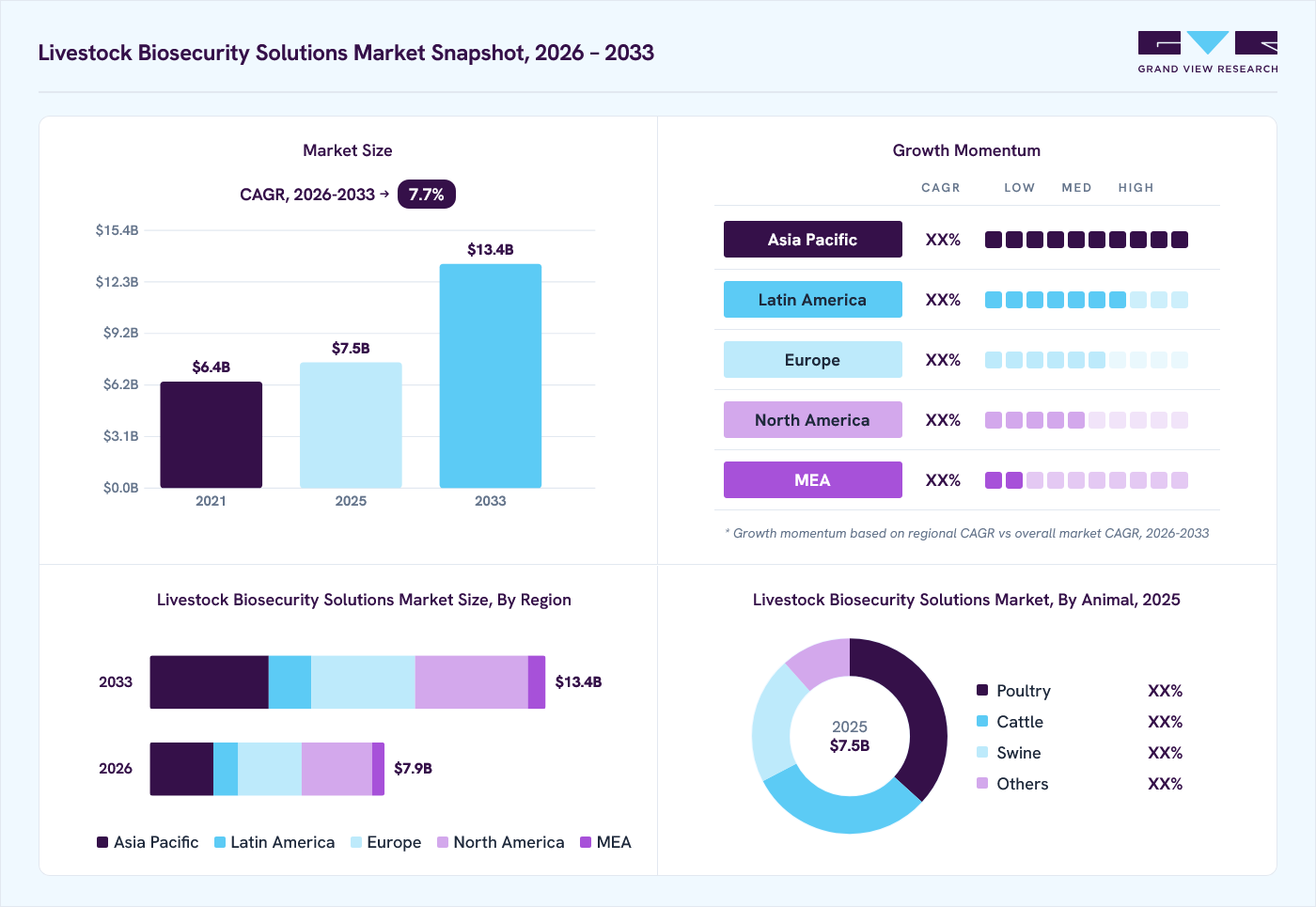 Source: Grand View Research, IR Documents, Primary Interviews, Paid DatabasesTo learn more about this report,
 Download Free Sample Report
Key Market Trends & Insights
- By solution, the chemical disinfectants segment led the market with the largest revenue share of 36.3% in 2025.
- Based on animal, the poultry segment led the market with the largest revenue share of 36.7% in 2025.
- Based on indication, infectious disease prevention segment led the market with the largest revenue share of 30.6% in 2025.
- Based on end use, commercial poultry farms segment led the market with the largest revenue share of 29.4% in 2025.
Regional Highlights
- Largest regional market: North America (30.1% revenue share, 2025)
- By country: The U.S. held the largest market share in 2025.
Market Size & Forecast
- Market size in 2025: USD 7.5 Billion
- Estimated market size in 2026: USD 7.9 Billion
- Projected market size by 2033: USD 13.4 Billion
- CAGR (2026-2033): 7.7%
Prism AI by Grand View Research Free to tryAsk a question about the livestock biosecurity solutions marketTry asking✓Every figure cited from GVR research Prefer the report? Download free sample →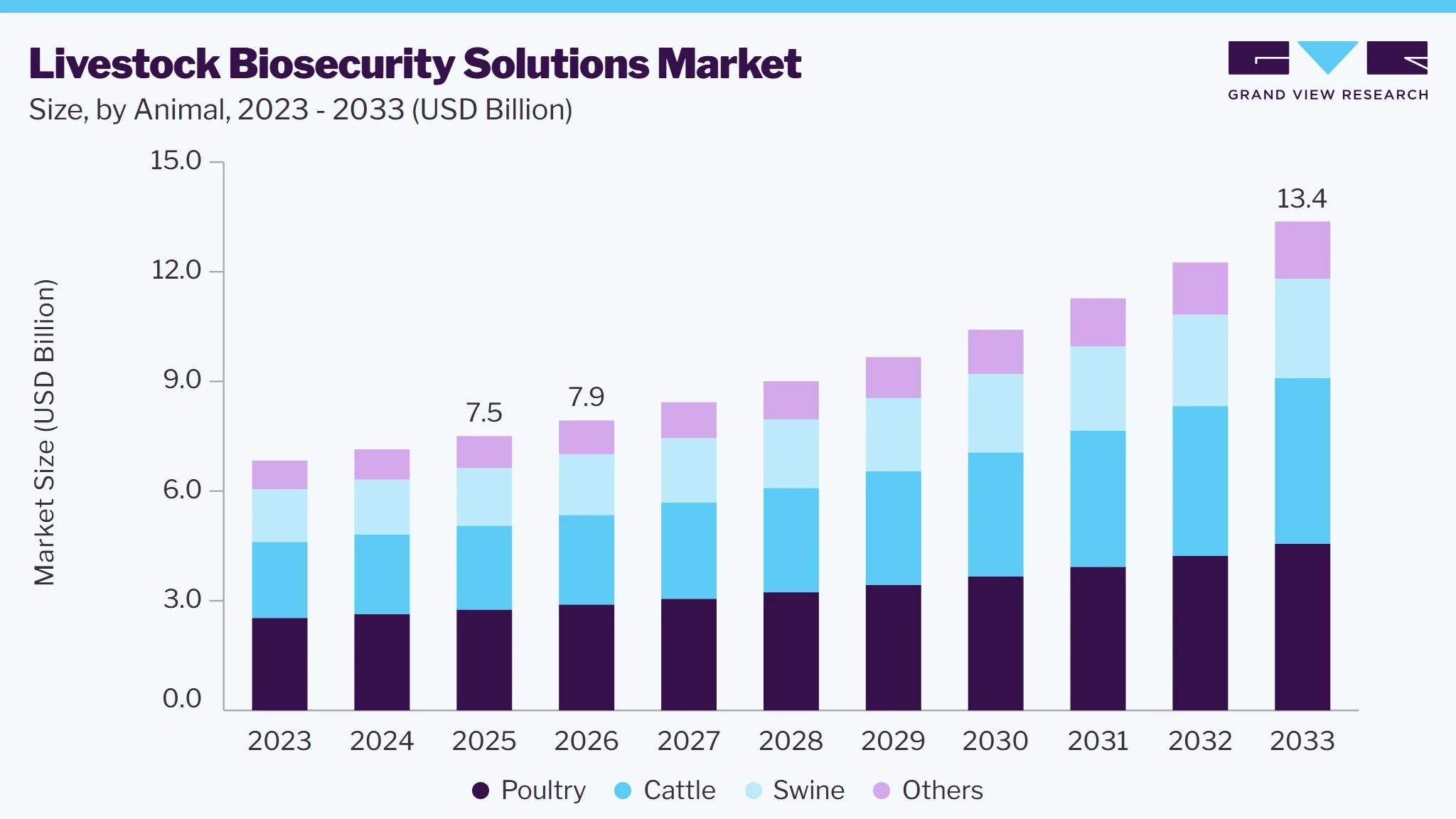 To learn more about this report, Download Free Sample Report
Moreover, stringent government regulations on animal health, farm hygiene, and disease prevention are further supporting market growth.
Market Dynamics
The livestock biosecurity solutions market is driven by increasing incidences of infectious livestock diseases, growing awareness of animal health management, and the need to minimize economic losses associated with disease outbreaks. Rising concerns regarding diseases such as avian influenza, African swine fever, foot-and-mouth disease, and bovine tuberculosis are encouraging livestock producers to adopt preventive measures, including farm disinfection, sanitation, pest and rodent control, vaccination management, and controlled farm access. Furthermore, the expansion of commercial poultry farms, dairy operations, and intensive swine production facilities is increasing the need for structured biosecurity protocols. Government initiatives and stricter animal health regulations are also encouraging farms to implement disease surveillance, hygiene monitoring, and pathogen prevention measures.
However, market growth faces challenges associated with the high implementation and maintenance costs of comprehensive biosecurity programs, particularly among small-scale and resource-constrained livestock farmers. Investments in disinfection infrastructure, protective equipment, automated monitoring systems, and routine sanitation increase operational expenditure. Additionally, limited awareness of standardized biosecurity practices, inadequate farm infrastructure, and inconsistent implementation across developing economies restrict adoption. Maintaining compliance across large farms and multi-location livestock operations also presents operational challenges. These factors create differences in adoption rates across farm sizes and geographical markets.
The increasing occurrence of avian influenza outbreaks across commercial poultry farms is driving demand for livestock biosecurity solutions. For instance, according to an article published by PoultryMed in October 2026, recent detection of avian influenza at a commercial layer farm in Lutjegast, Netherlands, resulted in the culling of approximately 45,000 laying hens. Such outbreaks highlight the economic risks associated with infectious diseases and the need for preventive measures. Consequently, poultry producers are increasing investments in farm disinfection, sanitation, controlled access, and pathogen prevention solutions to minimize disease transmission and production losses.
Furthermore, recurring outbreaks are encouraging poultry farm operators to strengthen preventive biosecurity protocols rather than depend solely on disease control measures after infection. Commercial farms are increasingly prioritizing routine disinfection, vehicle and personnel access controls, protective clothing, pest management, and environmental sanitation to reduce pathogen introduction and transmission. This growing focus on farm-level disease prevention is expected to increase the adoption of comprehensive biosecurity solutions, particularly across large-scale commercial poultry operations.
The high costs associated with implementing and maintaining comprehensive biosecurity measures act as a restraint on market growth. Livestock farms require substantial investments in disinfection systems, sanitation equipment, protective clothing, pest control, access management infrastructure, and monitoring technologies. These expenses can be particularly challenging for small-scale farmers and livestock producers in developing economies. Additionally, recurring costs associated with disinfectants, equipment maintenance, employee training, and routine hygiene procedures increase operational expenditure. Limited financial resources and competing farm-level investment priorities may discourage producers from adopting comprehensive biosecurity programs, resulting in inconsistent implementation across livestock production facilities.
The growing adoption of artificial intelligence, satellite-based monitoring, and digital farm management technologies presents opportunities for the livestock biosecurity solutions market. For instance, according to an article published by AI for Developing Countries Forum (AIFOD) in September 2026, the introduction of India's AI-powered 'Krishi Samadhan' app in September 2026 demonstrates increasing government interest in technology-driven pest identification and preventive management. Although initially developed for crop protection, similar AI-enabled approaches can be extended to livestock farming for disease surveillance, pathogen identification, environmental monitoring, and early detection of infection risks. Integration of AI algorithms, IoT sensors, and digital monitoring platforms can help livestock producers identify potential biosecurity threats, monitor farm hygiene, and implement timely preventive measures.
Furthermore, multilingual digital platforms can improve technology accessibility among smallholder livestock farmers in developing economies. Biosecurity solution providers have opportunities to develop affordable, AI-enabled monitoring and surveillance platforms, particularly for poultry, dairy, and swine farms, supporting wider adoption of technology-based disease prevention practices.
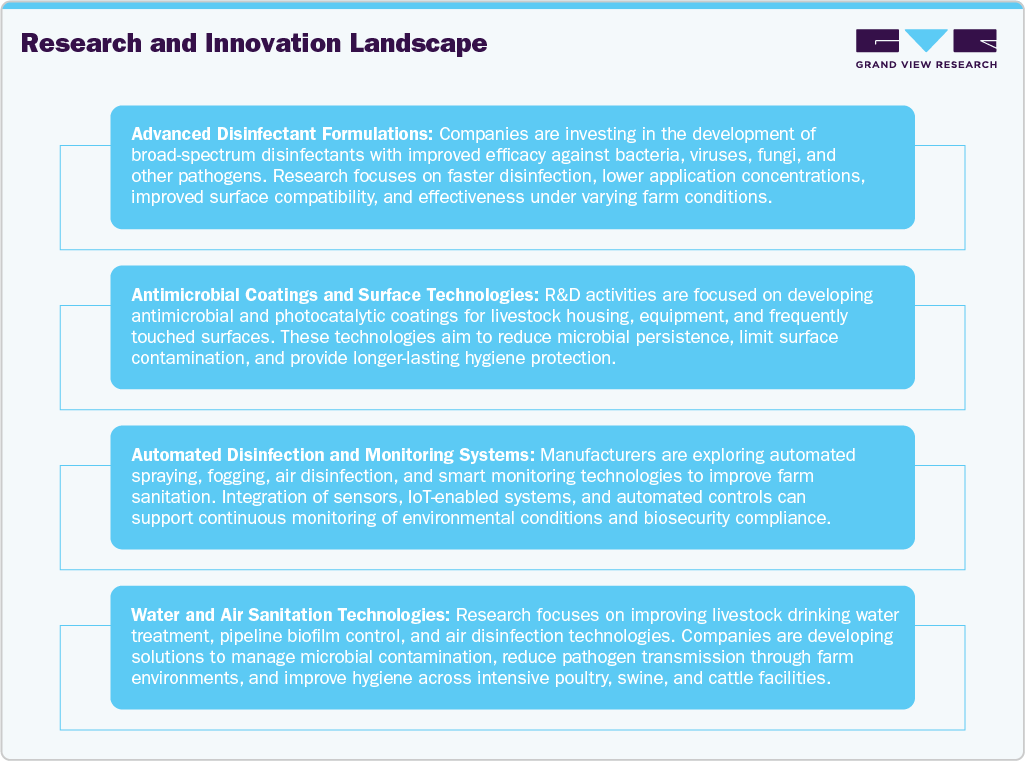 To learn more about this report,The growing focus on research and innovation is expected to strengthen the Livestock Biosecurity Solutions market by improving product efficacy, application efficiency, and farm-level disease prevention. Advancements in broad-spectrum disinfectants, antimicrobial coatings, automated disinfection systems, and water and air sanitation technologies are expanding the range of available solutions. Furthermore, integration of IoT-enabled monitoring and automated controls is expected to improve biosecurity management, reduce pathogen transmission risks, and encourage adoption across commercial poultry, swine, and cattle farms. Download Free Sample Report
Market Concentration & Characteristics
The livestock biosecurity solutions sector is highly fragmented, with numerous disinfectant manufacturers, animal health companies, farm hygiene solution providers, pest control companies, and biosecurity equipment suppliers competing across regional and global markets. Market participants differentiate themselves through product efficacy, pathogen coverage, formulation quality, pricing, application efficiency, and compatibility with different livestock farming environments.
The livestock biosecurity solutions industry is witnessing innovation through automated disinfection systems, advanced sanitation technologies, smart access control, and digital farm monitoring platforms. Manufacturers are developing automated vehicle wheel dips, personnel disinfection chambers, electrostatic sprayers, and thermal fogging equipment to improve pathogen control across livestock facilities. In addition, IoT-enabled environmental sensors and AI-based monitoring systems are emerging to support early identification of disease risks, monitor farm hygiene conditions, and improve compliance with biosecurity protocols.
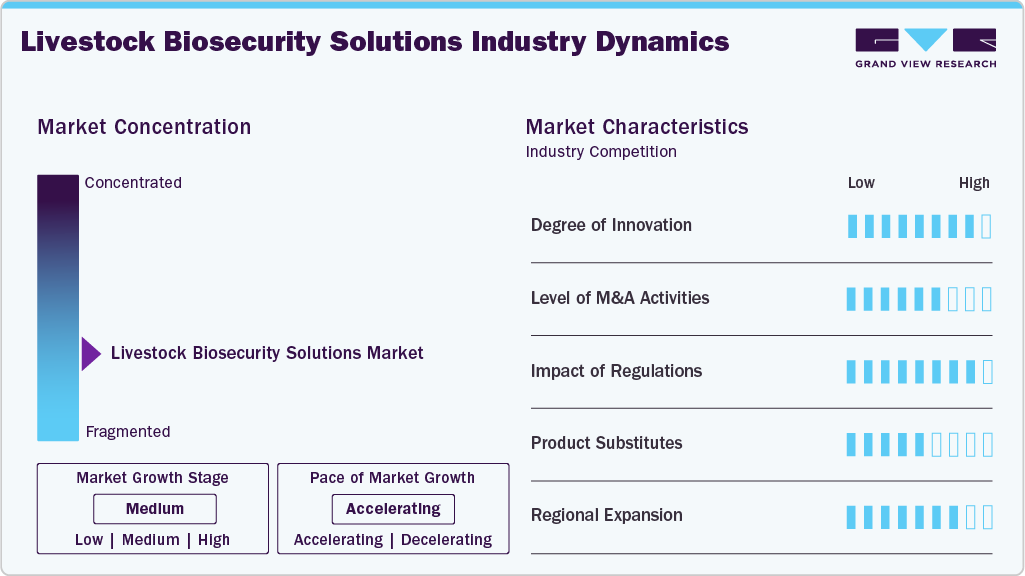 To learn more about this report, Download Free Sample Report
Mergers and acquisitions, along with strategic partnerships, provide opportunities for companies to expand their biosecurity product portfolios, strengthen technological capabilities, and increase geographic reach. Disinfectant manufacturers and animal health companies are collaborating with farm equipment suppliers, pest control providers, and technology developers to introduce integrated biosecurity solutions. For instance, partnerships between disinfection equipment manufacturers and commercial poultry integrators can support the deployment of automated vehicle washing, personnel hygiene stations, and farm sanitation systems across large-scale operations.
Regulatory requirements governing animal disease prevention, farm hygiene, sanitation, disinfectant usage, and livestock movement influence industry development. International frameworks established by the World Organisation for Animal Health (WOAH) provide biosecurity guidance for preventing disease transmission across livestock production systems. In addition, the European Union's Animal Health Law (Regulation EU 2016/429) establishes requirements for disease prevention, surveillance, and biosecurity responsibilities among animal keepers and operators. Compliance with these requirements encourages livestock producers to invest in disinfection infrastructure, controlled farm access, and preventive hygiene programs while increasing operational costs.
Manual cleaning, conventional farm sanitation practices, routine washing, and basic hygiene protocols represent alternative approaches to commercial livestock biosecurity solutions. Small-scale livestock farmers may use conventional detergents, lime application, manual spraying, and locally available disinfectants instead of investing in automated disinfection equipment and integrated biosecurity systems. Similarly, physical barriers, natural ventilation, and manual pest control can serve as alternatives to technologically advanced monitoring and prevention systems.
Livestock biosecurity solution providers are expanding their geographic presence through distributor partnerships, local manufacturing, veterinary institution collaborations, and participation in government animal disease prevention programs. Emerging economies, particularly India, China, and Brazil, offer growth opportunities due to their substantial livestock populations and expanding commercial farming infrastructure. For instance, India's National Animal Disease Control Programme (NADCP), which focuses on controlling foot-and-mouth disease and brucellosis, supports broader attention toward livestock disease prevention.
Analyst Perspective
The livestock biosecurity solutions industry is expected to witness steady growth, supported by increasing regulatory focus on animal disease prevention, farm hygiene, and livestock movement controls. Regulations governing disinfectant approvals, animal health standards, and disease reporting are shaping solution adoption across regions. However, high installation and maintenance costs, limited awareness among small-scale farmers, inconsistent implementation, and inadequate farm infrastructure remain key challenges. Companies offering cost-effective, scalable, and integrated biosecurity solutions are likely to gain competitive advantages.
Solution Insights
On the basis of solution, the chemical disinfectants segment generated the largest revenue share of 36.3% in 2025. The growing focus on drinking water hygiene in pig farming is driving demand for chemical disinfectants as part of comprehensive livestock biosecurity programs. Biofilm formation in water pipelines can harbor harmful microorganisms, increasing infection risks and negatively affecting animal growth, feed conversion, and productivity. For instance, according to an article published by Farm Journal, Inc. in September 2026, specialized formulations such as Hydroliq WATER DISINFECTION Plus help eliminate germs, control biofilm formation, and maintain hygienic drinking water quality. Increasing adoption of such solutions across piglet rearing, fattening, and breeding operations is expected to support demand for water disinfection chemicals. Furthermore, the growing focus on reducing antibiotic usage and improving animal welfare is expected to contribute to segment growth.
The others segment is growing at the fastest rate over the forecast period, due to the increasing investments in structured farm-level disease prevention and controlled livestock movement. Livestock transport biosecurity systems are gaining adoption through vehicle washing, disinfection stations, and controlled loading and unloading facilities to minimize pathogen transmission between farms. Poultry house entry biosecurity systems are witnessing demand for personnel disinfection chambers, footbaths, protective clothing, and access control infrastructure to prevent pathogen introduction. Additionally, livestock biosecurity monitoring systems are gaining traction through digital surveillance, environmental sensors, automated alerts, and hygiene monitoring technologies, enabling producers to identify potential contamination risks and strengthen preventive disease management across commercial farming facilities.
Animal Insights
On the basis of animal, the poultry segment dominated the market with the largest revenue share of 36.7% in 2025. The increasing production of poultry meat is expected to drive demand for biosecurity solutions across commercial poultry farms. According to OECD projections reported in October 2026, global poultry meat production is expected to increase by 19% to reach 176.9 million metric tons by 2035, compared with the 2023-2025 average. Expanding poultry production will require additional investments in farm sanitation, disinfection systems, controlled entry facilities, pest management, and disease surveillance to protect larger bird populations.
Furthermore, increasing farm density and production intensity can elevate disease transmission risks, encouraging poultry producers to strengthen biosecurity protocols and adopt integrated preventive solutions. Large-scale poultry operations will increasingly require perimeter fencing, vehicle disinfection stations, personnel hygiene barriers, and poultry house entry controls to minimize pathogen introduction. Additionally, regular cleaning of housing facilities, equipment, and water supply systems will support disease prevention and reduce the risk of cross-contamination between poultry batches. These requirements are expected to increase the adoption of comprehensive farm biosecurity infrastructure.
Cattle registered the fastest CAGR in the livestock biosecurity solutions market driven by, increasing incidence of bluetongue virus (BTV) outbreaks. For instance, according to a BBC report published in October 2026, a cattle farm in Somerset, UK, experienced an outbreak that affected its entire herd and resulted in approximately USD 14,732.57 in milk production losses. Additionally, confirmed cases were reported across 350 farms in Somerset, 28 in Wiltshire, 18 in Gloucestershire, and one in Bristol since July 2026. Such outbreaks are encouraging cattle producers to strengthen disease prevention through insect vector control, farm sanitation, animal movement management, and monitoring practices, supporting demand for integrated livestock biosecurity solutions.
Indication Insights
On the basis of indication, the infectious disease prevention segment held the dominant revenue share of 30.6% in 2025. The increasing occurrence of Newcastle disease outbreaks in commercial poultry farms is creating demand for livestock biosecurity and infectious disease prevention solutions. For instance, according to a report published by The Rio Times on October 29, 2026, Brazil confirmed its third Newcastle disease outbreak in Santa Catarina within nine days, highlighting the rapid spread of contagious poultry diseases. The outbreak prompted a 60-day emergency response across four municipalities and raised concerns among international poultry buyers, with some countries imposing import restrictions. Such developments are encouraging poultry producers and government authorities to strengthen disease surveillance, farm disinfection, controlled poultry movement, quarantine procedures, and access management to minimize pathogen transmission, protect poultry populations, and maintain international trade continuity.
The others segment is growing at a fastest CAGR in the livestock biosecurity solutions market, owing to increasing awareness of contamination risks associated with livestock feed, drinking water, pests, and disease-carrying vectors. Livestock producers are increasingly adopting rodent control programs, insect management solutions, feed storage protection, water treatment systems, and pipeline sanitation measures to maintain farm hygiene. Furthermore, growing concerns regarding biofilm formation, microbial contamination, and pest-related disease transmission are encouraging farms to implement routine monitoring and preventive control measures. Increasing investments in integrated farm hygiene practices are expected to support segment growth across commercial livestock operations.
End Use Insights
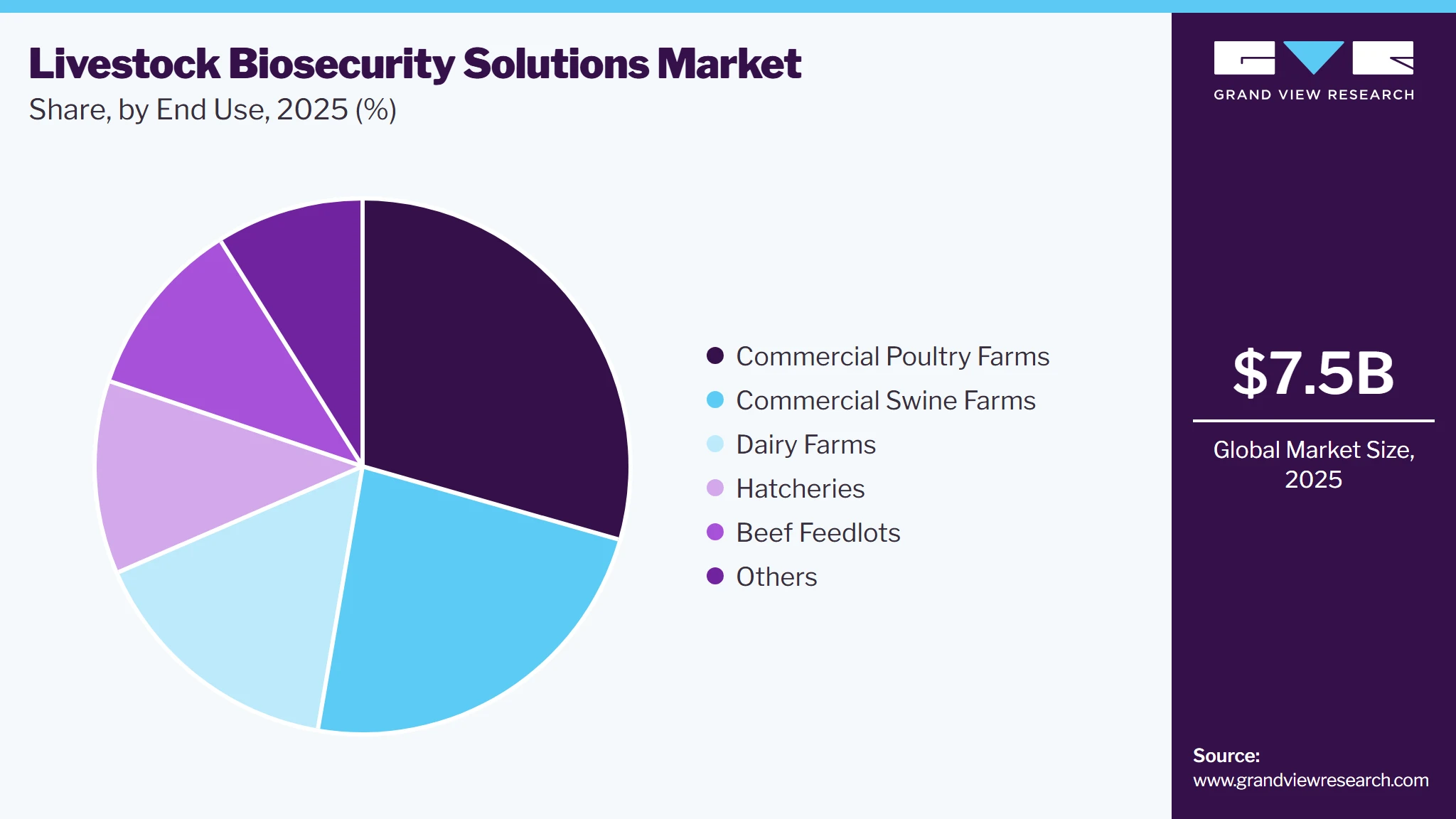
On the basis of end use, commercial poultry farms held the largest share of 29.4% in 2025, owing to increasing poultry meat and egg production, rising farm density, and the need to prevent infectious disease transmission across large bird populations. Expansion of integrated poultry operations is encouraging investments in automated disinfection systems, poultry house entry controls, vehicle sanitation facilities, pest management, and routine farm cleaning. Additionally, stringent poultry health requirements imposed by food safety authorities and growing concerns regarding production losses from avian influenza and Newcastle disease are expected to increase the adoption of comprehensive biosecurity solutions.
 To learn more about this report, Download Free Sample Report
The others segment is estimated to grow at the fastest CAGR in the market, due to increasing requirements for controlled animal environments in research, training, exhibition, and auction facilities. Livestock research institutions require specialized sanitation, disinfection, and access control measures to prevent cross-contamination between animal groups and maintain hygienic experimental conditions. Similarly, livestock exhibitions and auction facilities involve frequent animal movement and interaction between animals from different farms, increasing the risk of pathogen transmission. Consequently, these facilities are expected to increase investments in quarantine areas, temporary isolation facilities, equipment disinfection, and controlled animal entry and exit procedures.
Regional Insights
North America Livestock Biosecurity Solutions Market Trends
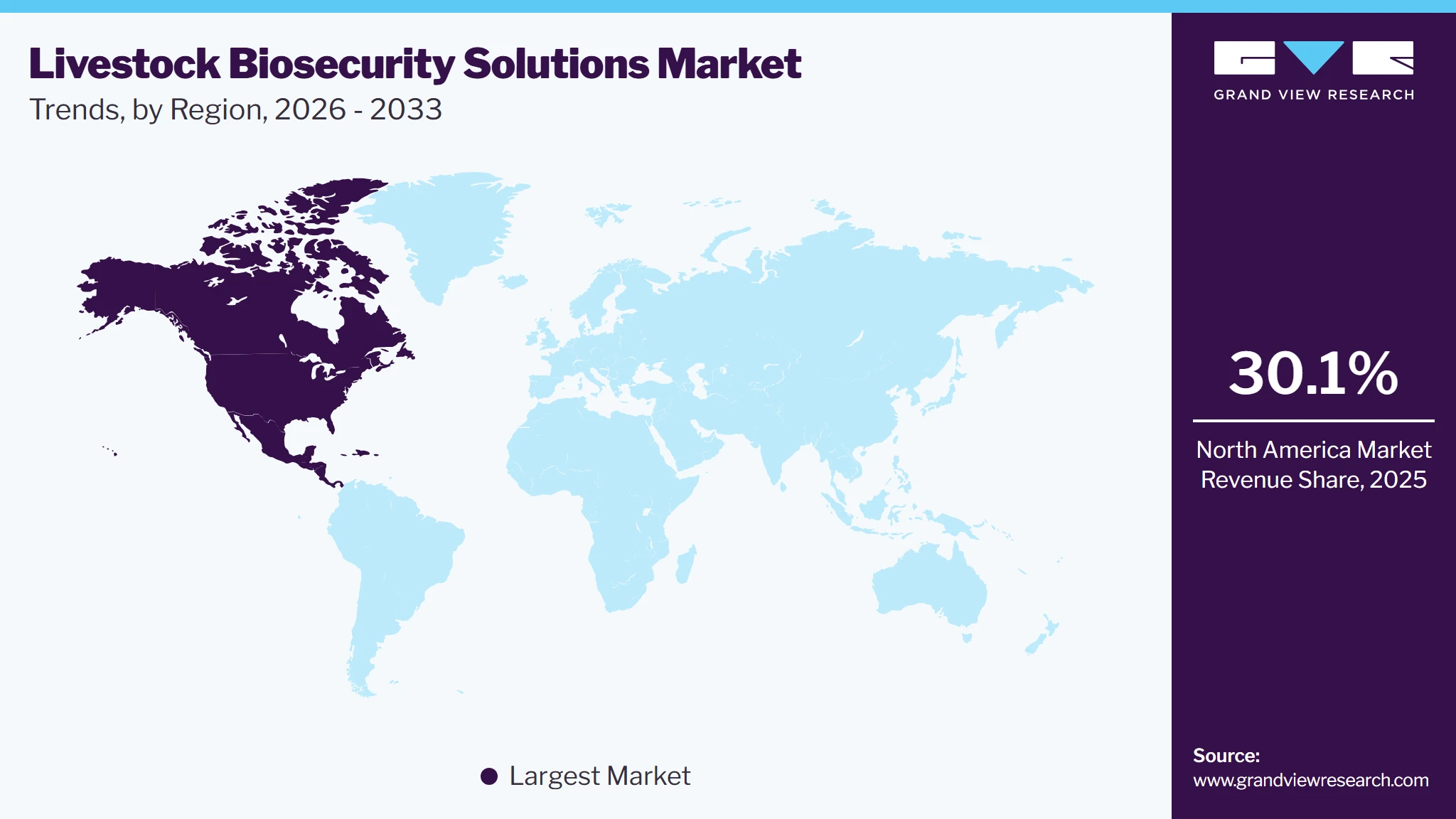
North America held the largest revenue share of 30.1% in 2025, attributed to the increasing awareness of livestock disease prevention, stringent animal health and farm hygiene requirements, and rising adoption of advanced biosecurity technologies. Growing concerns regarding avian influenza, Newcastle disease, and other infectious livestock diseases are encouraging producers to strengthen farm-level preventive measures. Additionally, the expansion of commercial poultry, dairy, and swine operations is increasing demand for disinfection systems, controlled entry infrastructure, pest management, and automated monitoring solutions. Furthermore, the adoption of precision farming technologies and improved biosecurity compliance practices is expected to support regional industry growth.
 To learn more about this report, Download Free Sample Report
U.S. livestock biosecurity solutions market is anticipated to grow owing to increasing investments in biosecurity, disease surveillance, and precision farming technologies. For instance, the 2026 USPOULTRY Live Production, Welfare & Biosecurity Seminar, held in October 2026, highlighted strategies for preventing highly pathogenic avian influenza (HPAI) introductions through wildlife risk assessments and farm-specific mitigation measures. Discussions on sensor-based monitoring of feed, water consumption, temperature, and humidity further indicate growing adoption of technology-driven farm monitoring. These developments are expected to increase demand for disinfection, access control, and integrated biosecurity monitoring solutions across U.S. poultry farms.
Canada livestock biosecurity solutions market is expected to grow swiftly, owing to stricter farm-level biosecurity requirements and increasing efforts to prevent highly pathogenic avian influenza (HPAI) transmission. For instance, Chicken Farmers of Canada made physical entry barriers mandatory under its On-Farm Food Safety Program (OFFSP), effective August 23, 2026. The requirement encourages poultry farmers to install designated entry zones and enforce footwear and outerwear changes before barn access. Such regulatory measures are expected to increase investments in access control infrastructure, disinfection stations, protective clothing, and farm hygiene solutions across Canadian poultry operations.
Europe Livestock Biosecurity Solutions Market Trends:
Europe livestock biosecurity solutions market is influenced by increasing adoption of structured farm management practices and rising emphasis on maintaining livestock health, productivity, and food supply stability. Growing investments in modern livestock infrastructure and improved animal husbandry practices are encouraging producers to adopt comprehensive preventive measures. Additionally, greater awareness of zoonotic disease risks, cross-border animal movement, and the economic impact of livestock diseases is supporting demand for advanced biosecurity protocols, integrated farm management systems, and preventive health solutions across the region.
Germany livestock biosecurity solutions market is supported by increasing focus on disease prevention, herd health management, and farm-level hygiene practices. For instance, according to an article published by DLG e.V. in 2026, the upcoming EuroTier 2026 trade fair is expected to strengthen awareness and adoption of preventive solutions by highlighting practical strategies for controlling African swine fever (ASF), foot-and-mouth disease (FMD), and highly pathogenic avian influenza (HPAI). Growing requirements for barn sanitation, personnel hygiene, vehicle disinfection, controlled farm access, health monitoring, and vaccination management are expected to increase investments in integrated biosecurity solutions across pig, cattle, and poultry farms.
UK livestock biosecurity solutions market is anticipated to grow owing to the continued occurrence of highly pathogenic avian influenza (HPAI) outbreaks and stricter disease control requirements. According to Defra's October 2026 update, 100 HPAI cases were recorded during the 2025-2026 outbreak season, while new H5N1 and H5N5 cases were confirmed in October 2026. The implementation of protection and surveillance zones, poultry movement controls, and stringent farm biosecurity practices is expected to increase demand for disinfection, access management, sanitation, and disease monitoring solutions.
Asia Pacific Livestock Biosecurity Solutions Market Trends
Asia Pacific is expected to grow at the fastest CAGR over the forecast period, due to the expansion of commercial livestock production, increasing investments in animal health infrastructure, and rising awareness of preventive farm management practices. Growing demand for consistent production quality and improved livestock productivity is encouraging producers to adopt standardized hygiene protocols and structured disease prevention programs. Furthermore, increasing modernization of livestock facilities and the adoption of technology-enabled farm management practices are expected to create opportunities for integrated biosecurity solutions across the region.
The livestock biosecurity solutions market in China is accelerating, due to increasing concerns regarding cross-border transmission of infectious livestock diseases and the need for stricter disease control measures. According to a report published by The Moscow Times in April 2026, China confirmed 219 cattle infections across two herds in Xinjiang due to a foot-and-mouth disease variant. Authorities implemented livestock culling, disinfection, and tighter border controls, increasing the need for farm sanitation, animal movement monitoring, quarantine measures, and integrated disease prevention solutions across livestock operations.
The livestock biosecurity solutions market in India isexpected to grow owing to the increasing incidence of highly pathogenic avian influenza (HPAI) outbreaks across commercial poultry farms. According to an article published by WATT Poultry on October 28, 2026, approximately 2,000 chickens died from H5N1 infection at a poultry farm in Anantapur, Andhra Pradesh, during the first week of October. The outbreak prompted local movement restrictions, highlighting the need for stronger farm sanitation, disinfection, controlled animal movement, disease surveillance, and preventive biosecurity measures across India's poultry sector.
Latin America Livestock Biosecurity Solutions Market Trends
The livestock biosecurity solutions market in the Latin America region is anticipated to grow owing to the region's strong livestock export activities and increasing requirements for meeting international animal health standards. Meat exporters are facing greater pressure to maintain disease-free production systems and demonstrate compliance with importing countries' sanitary requirements. This is encouraging investments in farm-level biosecurity audits, livestock traceability, quarantine infrastructure, animal transportation hygiene, and standardized sanitation protocols. The expansion of organized meat processing and export-oriented livestock production is expected to create further demand for integrated biosecurity solutions.
Brazil livestock biosecurity solutions market is gaining momentum as the poultry industry strengthens farm-level disease prevention and outbreak containment measures to protect commercial flocks and maintain export market access. The increasing risk of contagious viral infections is driving investments in comprehensive biosecurity practices, including farm disinfection, controlled animal movement, quarantine procedures, vehicle sanitation, and access restrictions. Furthermore, growing requirements for effective disease surveillance, farm hygiene, and rapid outbreak containment are encouraging poultry producers to adopt integrated biosecurity solutions to minimize pathogen transmission, safeguard flock health, and reduce production losses.
Middle East & Africa Livestock Biosecurity Solutions Market Trends
Middle East & Africa livestock biosecurity solutions market is expected to expand owing to increasing investments in domestic food production and efforts to reduce dependence on imported animal products. Governments are encouraging the development of local poultry, dairy, and livestock farming capabilities, creating demand for improved farm infrastructure and preventive animal health management. Producers are increasingly adopting hygiene barriers, feed storage protection, water sanitation, and pest management practices to improve production reliability. The development of intensive livestock facilities is expected to support regional adoption of biosecurity solutions.
South Africa livestock biosecurity solutions market isexpected to grow, owing to the need for stronger disease prevention across livestock trading networks and animal gathering facilities. Livestock auctions, shows, and inter-farm transfers create opportunities for pathogens to spread between herds. Consequently, producers and livestock traders are adopting animal isolation, movement documentation, vehicle disinfection, and controlled access procedures. Regulatory requirements for animal health declarations and quarantine before herd integration are further encouraging investments in structured biosecurity measures across commercial cattle and other livestock operations.
UAE livestock biosecurity solutions market is anticipated to expand owing to the country's strengthening veterinary quarantine framework for imported and transiting animal consignments. As the country maintains substantial international livestock trade flows, border inspection and animal health verification are becoming important areas of preventive disease management. Updated veterinary quarantine legislation introduced in 2025 is expected to increase requirements for consignment screening, health certification, laboratory examination, and isolation of potentially infected animals. These measures are creating demand for specialized quarantine infrastructure and animal health control solutions.
Key Companies & Market Share Insights
The livestock biosecurity solutions market is highly fragmented, with competition distributed across animal health companies, disinfectant manufacturers, farm hygiene solution providers, pest control companies, and specialized biosecurity equipment suppliers. Companies differentiate themselves through disinfectant efficacy, pathogen coverage, formulation quality, application efficiency, pricing, and compatibility with different livestock farming environments.
Key Livestock Biosecurity Solutions Companies:
The following key companies have been profiled for this study on the livestock biosecurity solutions market.
-
LANXESS
-
Roam Technology
-
BASF
-
VES-Artex
-
Neogen Corporation
-
Ecolab Inc.
-
Virox
-
Evonik
-
Diversey
-
Afrivet
Competitive Benchmarking
Category
Operating Strategies
Competitive Edge
Weakness
Established Players (LANXESS, BASF, Ecolab Inc., Neogen Corporation, Evonik)
- Established players in the Livestock Biosecurity Solutions market focus on expanding product portfolios across farm disinfectants, cleaning and sanitation chemicals, water hygiene solutions, antimicrobial technologies, and pest control products. Companies invest in formulation development, product efficacy testing, regulatory approvals, distribution networks, and collaborations with livestock producers, veterinary organizations, and agricultural distributors. Strategies include introducing disease-specific disinfectants, improving broad-spectrum pathogen control, expanding geographic presence, and offering integrated farm hygiene solutions.
- Established players benefit from strong brand recognition, broad product portfolios, established distribution networks, and technical expertise in chemical formulations and farm hygiene. Their experience in developing disinfectants, sanitation products, and antimicrobial solutions supports adoption across commercial poultry, swine, and cattle operations. Established customer relationships, regulatory compliance capabilities, and the ability to serve large-scale livestock producers also support market access and product cross-selling.
- Established players face challenges associated with R&D expenditure, product registration, regulatory compliance, and maintaining product efficacy against a broad range of pathogens. Developing new formulations and expanding product approvals across different countries require continued investment. Price sensitivity among small and medium-scale livestock producers and competition from regional disinfectant manufacturers may constrain market penetration in cost-sensitive markets.
Emerging and Specialized Players (Roam Technology, VES-Artex, Virox, Afrivet)
- Emerging and specialized players focus on developing targeted biosecurity products and solutions, including broad-spectrum disinfectants, automated sanitation systems, livestock facility hygiene equipment, and specialized farm disinfection technologies. Companies seek to expand market presence through distributor partnerships, regional collaborations, product launches, and technical support for livestock producers. Their strategies also include addressing specific farm hygiene requirements and developing solutions for poultry, swine, and cattle production environments.
- These players can compete through specialized product portfolios, application-specific technologies, flexible product development, and targeted customer engagement. Their focus on particular biosecurity requirements, such as surface disinfection, poultry house sanitation, and controlled farm hygiene, enables them to address specific operational needs. Regional distribution partnerships and technical support can also improve product accessibility and customer relationships.
- Smaller and specialized players may face constraints related to brand recognition, R&D funding, distribution coverage, and manufacturing scale. Expanding into international markets can require substantial product registration, regulatory documentation, and local partnerships. A narrower product portfolio and dependence on third-party distributors may also limit customer reach and competitiveness against companies with broader product offerings and established global networks.
Recent Developments
-
In March 2026, Roam Technology, launched Virox, a DEFRA-approved broad-spectrum surface disinfectant designed to strengthen on-farm biosecurity and protect livestock against infectious diseases. The product eliminates bacteria, viruses, yeasts, and fungi while meeting European EN standards. It is approved for use against major livestock disease threats, including foot-and-mouth disease, swine vesicular disease, and avian influenza, as well as general orders.
-
In December 2025, LANXESS, a specialty chemicals company, introduced a range of innovative biosecurity products for the Indian poultry market under its LANXESS Biosecurity Solutions portfolio. The products, including TH4+, BioVX, Virkon H2O, and Glutex GQ1, were launched through the company's distribution and marketing partners, Huvepharma SEA (Pune) Private Limited and Alivira Animal Health Limited.
-
In May 2025, Osho Chemical Industries Limited launched Benzal-G, a broad-spectrum disinfectant, at an event held in Rwika, Embu County, Kenya. The launch engaged local poultry farmers and introduced the product as a solution to improve hygiene and strengthen biosecurity practices across poultry farms.
Livestock Biosecurity Solutions Market Report Scope
Report Attribute
Details
Market size value in 2025
USD 7.5 billion
Market size value in 2026
USD 7.9 billion
Revenue forecast in 2033
USD 13.4 billion
Growth Rate
CAGR of 7.7% from 2026 to 2033
Actual Data
2021 - 2025
Forecast period
2026 - 2033
Quantitative units
Revenue in USD Million and CAGR from 2026 to 2033
Report coverage
Revenue forecast, company ranking, Competitive landscape, growth factors, and trends
Segments covered
Solution, animal, Indication, end use and region
Regional scope
North America, Europe, Asia Pacific, Latin America, MEA
Country scope
U.S., Canada, Mexico, UK, Germany, France, Italy, Spain, Denmark, Sweden, Norway, Japan, China, India, Thailand, South Korea, Australia, Brazil, Argentina, South Africa, UAE, Saudi Arabia, Kuwait, Qatar, Oman
Key companies profiled
LANXESS, Roam Technology, BASF, VES-Artex, Neogen Corporation, Ecolab Inc., Virox, Evonik, Diversey, Afrivet
Customization scope
Free report customization (equivalent up to 8 analysts working days) with purchase. Addition or alteration to country, regional & segment scope.
Pricing and purchase options
Avail customized purchase options to meet your exact research needs. Explore purchase options
Global Livestock Biosecurity Solutions Market Report Segmentation
This report forecasts revenue growth at global, regional, and country levels and provides an analysis of the latest industry trends in each of the sub-segments from 2021 to 2033. For this study, Grand View Research has segmented the global livestock biosecurity solutions market report based on solution, animal, indication, end use, and region.
-
Livestock Biosecurity Solutions Market, by Solution Outlook (Revenue, USD Million, 2021 - 2033)
-
Chemical Disinfectants
-
Surface Protection & Antimicrobial Coatings
-
Photocatalytic Coatings
-
Others
-
-
Water Sanitation Solutions
-
Air Disinfection Systems
-
Farm Hygiene & Sanitation Equipment
-
Pest & Vector Control Solutions
-
Others
-
-
Livestock Biosecurity Solutions Market, by Animal Outlook (Revenue, USD Million, 2021 - 2033)
-
Cattle
-
Poultry
-
Swine
-
Others
-
-
Livestock Biosecurity Solutions Market, by Indication Outlook (Revenue, USD Million, 2021 - 2033)
-
Infectious Disease Prevention
-
Pathogen and Microbial Contamination Control
-
Zoonotic Disease Prevention
-
External Pathogen Introduction Prevention
-
Cross-Contamination and Disease Transmission Control
-
Others
-
-
Livestock Biosecurity Solutions Market, by End Use Outlook (Revenue, USD Million, 2021 - 2033)
-
Commercial Poultry Farms
-
Hatcheries
-
Commercial Swine Farms
-
Dairy Farms
-
Beef Feedlots
-
Others
-
-
Livestock Biosecurity Solutions Market, by Regional Outlook (Revenue, USD Million, 2021 - 2033)
-
North America
-
U.S.
-
Canada
-
Mexico
-
-
Europe
-
UK
-
Germany
-
France
-
Italy
-
Spain
-
Denmark
-
Sweden
-
Norway
-
-
Asia Pacific
-
Japan
-
China
-
India
-
Australia
-
Thailand
-
South Korea
-
-
Latin America
-
Brazil
-
Argentina
-
-
Middle East & Africa
-
South Africa
-
UAE
-
Saudi Arabia
-
Kuwait
-
Qatar
-
Oman
-
-
Research Methodology
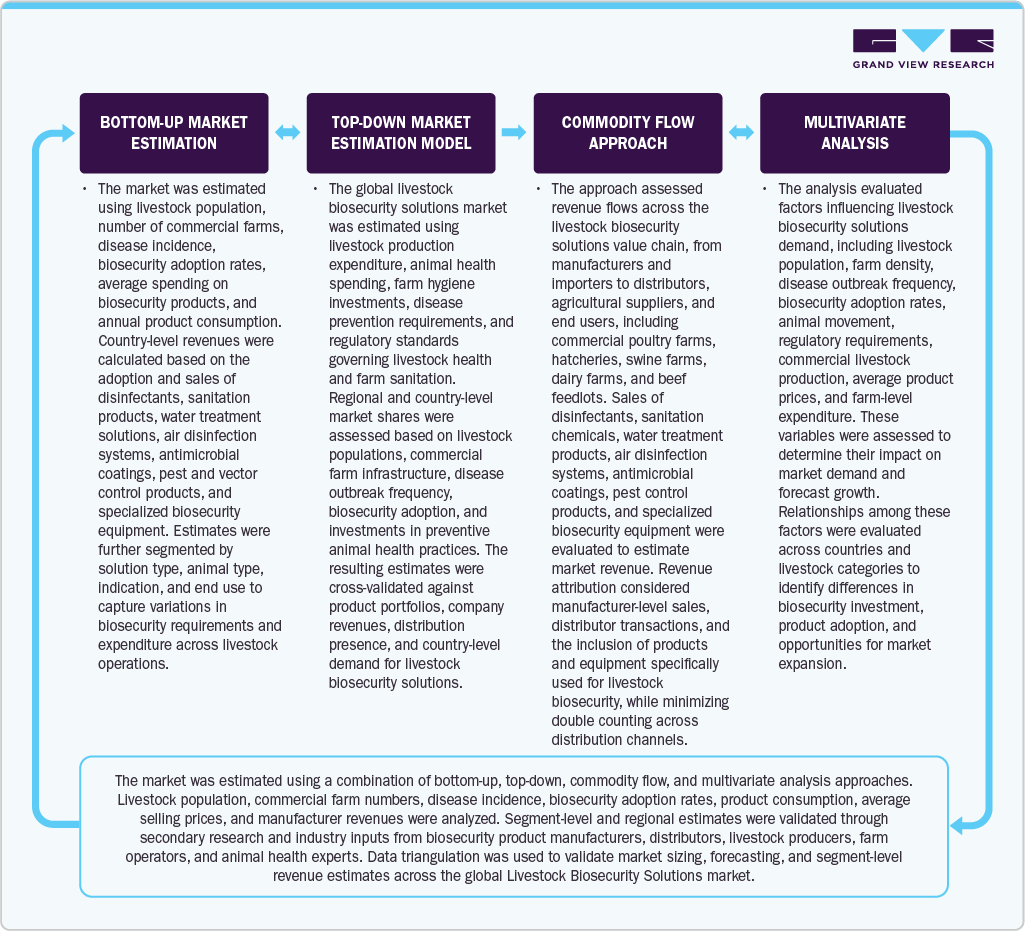
The livestock biosecurity solutions market figures in this report are based on a proven research process that combines executive interviews with secondary research from proprietary databases, company filings, and recognized regulatory and institutional sources. Market size is built through value-chain sizing - reconciling supply-side and demand-side estimates - and triangulated with bottom-up and top-down approaches. Every estimate passes multiple levels of expert validation before publication, with each livestock biosecurity solutions segment quantified using the revenue-capture definitions in the table below.
Segment Definition
Segment - Solution
Revenue capture definition
Chemical Disinfectants
Revenue generated from the sale of chemical-based disinfectant products used to eliminate or reduce bacteria, viruses, fungi, and other harmful microorganisms on livestock farm surfaces, equipment, animal housing, and vehicles.
Surface Protection & Antimicrobial Coatings
Revenue generated from the sale of protective and antimicrobial coating products applied to farm surfaces, walls, floors, equipment, and animal housing to inhibit microbial growth and reduce pathogen persistence.
Photocatalytic Coatings
Revenue generated from the sale of photocatalytic coating products that use light-activated materials to break down organic contaminants and reduce microbial accumulation on livestock facility surfaces.
Others
Revenue generated from the sale of additional surface hygiene and protective products, including antimicrobial surface treatments, protective sealants, and specialized coatings used to maintain hygienic conditions across livestock facilities.
Water Sanitation Solutions
Revenue generated from the sale of water treatment and sanitation products and systems used to control microbial contamination, biofilm formation, and harmful pathogens in livestock drinking water supplies, storage tanks, and distribution pipelines.
Air Disinfection Systems
Revenue generated from the sale of air treatment and disinfection systems, including ultraviolet air treatment, filtration, and air purification equipment, used to reduce airborne pathogens and microbial contaminants within livestock housing and farm facilities.
Farm Hygiene & Sanitation Equipment
Revenue generated from the sale of equipment used for cleaning, washing, and disinfecting livestock facilities, including pressure washers, fogging machines, sprayers, foam cleaning systems, and automated sanitation equipment.
Pest & Vector Control Solutions
Revenue generated from the sale of pest and vector management products and systems used to control rodents, insects, flies, mosquitoes, ticks, and other disease-carrying organisms across livestock farms and animal housing facilities.
Others
Revenue generated from the sale of specialized biosecurity systems, including livestock vehicle washing and disinfection systems, personnel entry barriers, boot and footwear disinfection stations, poultry house entry control systems, and digital or automated systems used to monitor farm hygiene and biosecurity compliance.
Segment - Animal
Revenue capture definition
Cattle
Revenue generated from the sale of livestock biosecurity products, equipment, and systems used across dairy farms, beef production facilities, cattle breeding units, and feedlots to prevent infectious disease transmission and maintain herd hygiene.
Poultry
Revenue generated from the sale of livestock biosecurity products, equipment, and systems used in broiler farms, layer farms, breeder operations, and poultry production facilities to prevent pathogen introduction, control contamination, and maintain hygienic bird-rearing environments.
Swine
Revenue generated from the sale of livestock biosecurity products, equipment, and systems used across pig breeding, nursery, growing, finishing, and commercial swine production facilities to minimize pathogen transmission and maintain farm sanitation.
Others
Revenue generated from the sale of biosecurity products, equipment, and systems used in aquaculture facilities, fish farms, and shrimp production units to control microbial contamination, maintain water hygiene, and prevent the spread of infectious diseases among aquatic species.
Segment - Indication
Revenue capture definition
Infectious Disease Prevention
Revenue generated from the sale of biosecurity products, equipment, and systems used to prevent the introduction and transmission of infectious diseases caused by bacterial, viral, fungal, and other pathogenic agents among livestock populations.
Pathogen and Microbial Contamination Control
Revenue generated from the sale of products and systems used to reduce microbial contamination on farm surfaces, equipment, animal housing, feed handling areas, and other livestock production environments.
Zoonotic Disease Prevention
Revenue generated from the sale of biosecurity products and systems used to minimize the transmission of pathogens between animals and humans through farm sanitation, personnel hygiene, protective barriers, and contamination control measures.
External Pathogen Introduction Prevention
Revenue generated from the sale of biosecurity products and systems used to prevent the entry of disease-causing agents into livestock facilities through personnel, visitors, vehicles, equipment, incoming animals, and other external sources.
Cross-Contamination and Disease Transmission Control
Revenue generated from the sale of products and systems used to minimize the transfer of pathogens between animal groups, housing units, production areas, equipment, personnel, and livestock transportation facilities.
Others
Revenue generated from the sale of products and systems used to control disease transmission through pests and vectors and prevent microbial or chemical contamination of livestock feed, drinking water, storage facilities, and distribution systems.
Segment - End Use
Revenue capture definition
Commercial Poultry Farms
Revenue generated from the sale of livestock biosecurity products, equipment, and systems used in commercial broiler, layer, and breeder farms to maintain poultry house hygiene, prevent pathogen introduction, and control infectious disease transmission.
Hatcheries
Revenue generated from the sale of biosecurity products, equipment, and systems used in poultry hatcheries to maintain hygienic incubation environments, sanitize eggs and equipment, control microbial contamination, and prevent disease transmission among eggs and newly hatched chicks.
Commercial Swine Farms
Revenue generated from the sale of livestock biosecurity products, equipment, and systems used in commercial pig breeding, farrowing, nursery, growing, and finishing facilities to maintain farm sanitation and prevent infectious disease transmission.
Dairy Farms
Revenue generated from the sale of livestock biosecurity products, equipment, and systems used in dairy cattle facilities to maintain animal housing hygiene, sanitize milking areas and equipment, control pathogen transmission, and protect herd health.
Beef Feedlots
Revenue generated from the sale of livestock biosecurity products, equipment, and systems used in intensive beef cattle feeding facilities to control disease transmission, maintain animal housing sanitation, manage livestock movement, and reduce contamination risks.
Others
Revenue generated from the sale of biosecurity products, equipment, and systems used in livestock research centers, veterinary training institutions, animal exhibitions, and livestock auction facilities to maintain controlled animal environments, prevent cross-contamination, and manage disease transmission during animal handling and movement.
Estimation Model
 To learn more about this report, Download Free Sample Report
Delivered Customizations
This report has been delivered with the following In-depth customizations
Client Request
Customization Delivered
Value Adds
Country-level Market Assessment
Detailed country-level market sizing and forecasts for livestock biosecurity solutions, covering demand across livestock species, solution categories, indications, and end-use facilities. Assessment includes country-specific livestock populations, disease outbreak patterns, commercial farming structures, biosecurity adoption, regulatory requirements, and farm hygiene practices.
Identifies high-growth geographical markets, evaluates regional expansion opportunities, and prioritizes countries based on livestock population, disease prevalence, commercial farming activity, biosecurity adoption, and market potential. Supports market entry planning, investment prioritization, and resource allocation.
Competitive Benchmarking and Market Positioning
Comprehensive benchmarking of established and specialized players, including LANXESS, Roam Technology, BASF, VES-Artex, Neogen Corporation, Ecolab Inc., Virox, Evonik, and Afrivet. Analysis covers product portfolios, disinfectant formulations, sanitation technologies, antimicrobial solutions, distribution networks, product launches, strategic initiatives, competitive advantages, and business limitations.
Provides insights into competitive positioning, product differentiation, technology capabilities, and portfolio gaps. Helps identify potential partnership opportunities, underserved livestock categories, regional expansion opportunities, and strategies to strengthen market presence.
Biosecurity Solution and Application Assessment
Detailed assessment of livestock biosecurity solution categories, including chemical disinfectants, surface protection and antimicrobial coatings, water sanitation solutions, air disinfection systems, farm hygiene and sanitation equipment, and pest and vector control solutions. Evaluation covers applications across infectious disease prevention, pathogen and microbial contamination control, zoonotic disease prevention, and cross-contamination control across poultry, cattle, and swine operations.
Identifies high-potential biosecurity technologies, emerging product development opportunities, and areas for innovation. Supports R&D prioritization, portfolio optimization, and evaluation of solutions that can improve pathogen control, farm hygiene, operational efficiency, and disease prevention across livestock facilities.
About the Author(s)
Animal Health Research Team
Healthcare · Animal HealthThis report was authored by the animal health research team at Grand View Research - comprising two research analysts, one senior research analyst, and one industry expert - with specialized expertise in the animal health segment of the healthcare industry. All findings are based on proprietary healthcare databases, executive interviews, and regulatory analysis, subject to internal peer review prior to publication.
Last Updated:
Speak to Analyst

Customize this report to your needs - add regions, segments, or data points, with 20% free customization.
Or view our licence options:


ISO 9001:2015 & 27001:2022 Certified
We are GDPR and CCPA compliant! Your transaction & personal information is safe and secure. For more details, please read our privacy policy.


