
- Home
- »
- Medical Devices
- »
-
Locum Tenens Staffing Market Size Report, 2026-2033GVR Report cover

Locum Tenens Staffing Market (2026 - 2033)
Size, Share & Trends Analysis Report By Type (Physicians, Surgeons, Nurses, Anesthesiologist, Radiologist), By End-use (Hospitals, Ambulatory Facilities), By Region, And Segment Forecasts
Market Size, 2025
$18.6BMarket Estimate, 2026
$20.0BMarket Forecast, 2033
$33.8BCAGR, 2026–2033
7.8%Locum Tenens Staffing Market Summary
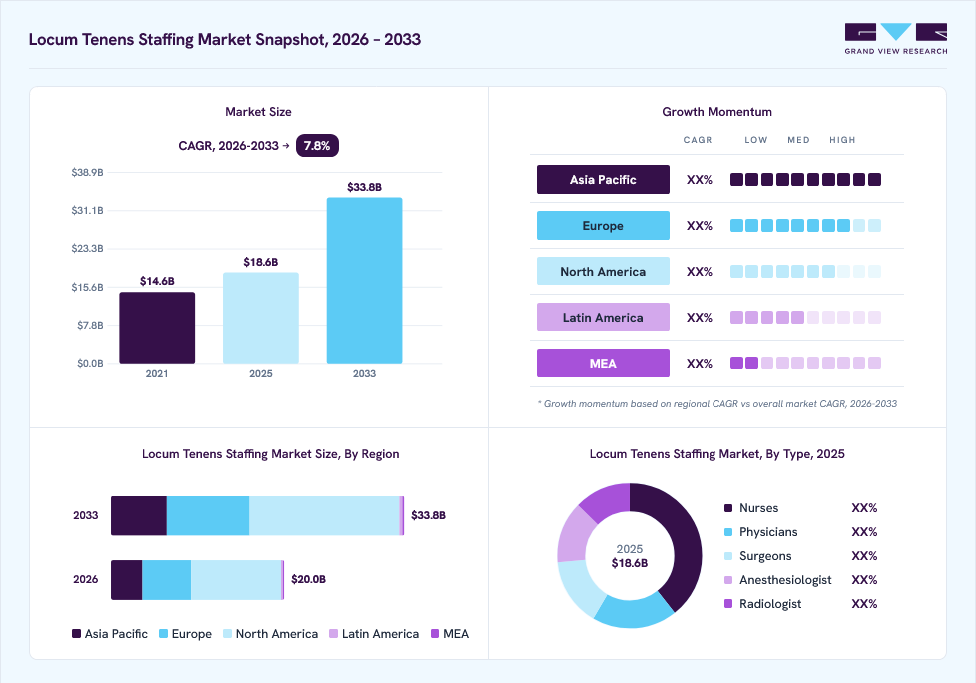
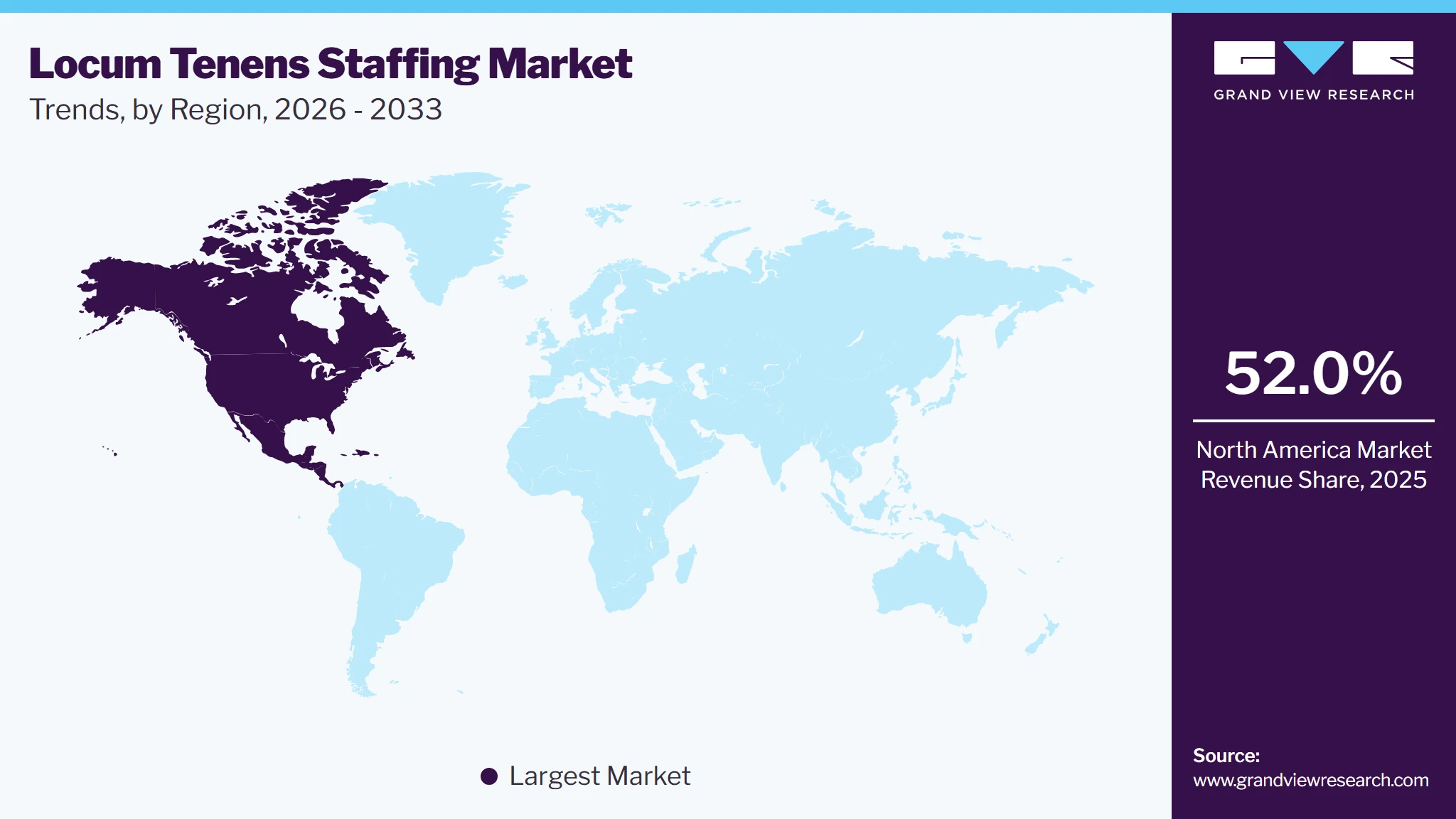
The global locum tenens staffing market size was valued at USD 18.6 billion in 2025 and is projected to grow from USD 20.0 billion in 2026 to USD 33.8 billion by 2033, at a CAGR of 7.8% from 2026 to 2033. North America dominated the market, accounting for a revenue share of 52.0% in 2025. The market is expected to grow significantly, driven by a combination of factors that include the increasing demand for healthcare services and a shortage of healthcare professionals.
 Source: Grand View Research, IR Documents, Primary Interviews, Paid DatabasesTo learn more about this report,
 Download Free Sample Report
Key Market Trends & Insights
- By type: Nurses segment dominated the market with the largest revenue share of 39.3% in 2025.
- By end use: Hospitals segment dominated the market with the largest revenue share of 39.8% in 2025.
Regional Highlights
- Largest regional market: North America (52.0% revenue share, 2025)
- By country: The U.S. held the largest market share in 2025.
Market Size & Forecast
- Market size in 2025: USD 18.6 Billion
- Estimated market size in 2026: USD 20.0 Billion
- Projected market size by 2033: USD 33.8 Billion
- CAGR (2026-2033): 7.8%
Three ways to get this report
Buy it, customize it, or ask a question.Ask an Analyst
Analyst response in 1 business day
- AccessReport author, directly
- Reply timeWithin 1 working day
- No sales callDirect answer only
- FormatEmail reply
- CostFree, no cost
Get the Full Report
What the study covers
- FormatsPDF · Excel · Dashboard
- Timeline2026–2033 annual, 2025 base
- Coverage20+ countries, 5 regions
- Companies10+ key players profiled
Customize the Report
20% free customization
- IncludeCountries, segments, points
- TailorTo your product definition
- ExtendDeeper competitor detail
- OrA fully bespoke study
- Turnaround5–10 working days
The aging population and the rise in chronic illnesses are leading to a greater need for medical services, which in turn is exacerbating the shortage of healthcare workers, including primary care physicians and specialists. This shortage is particularly acute in rural areas, where the distribution of physicians and Advanced Practice Providers (APPs) is uneven, leading to staffing shortages.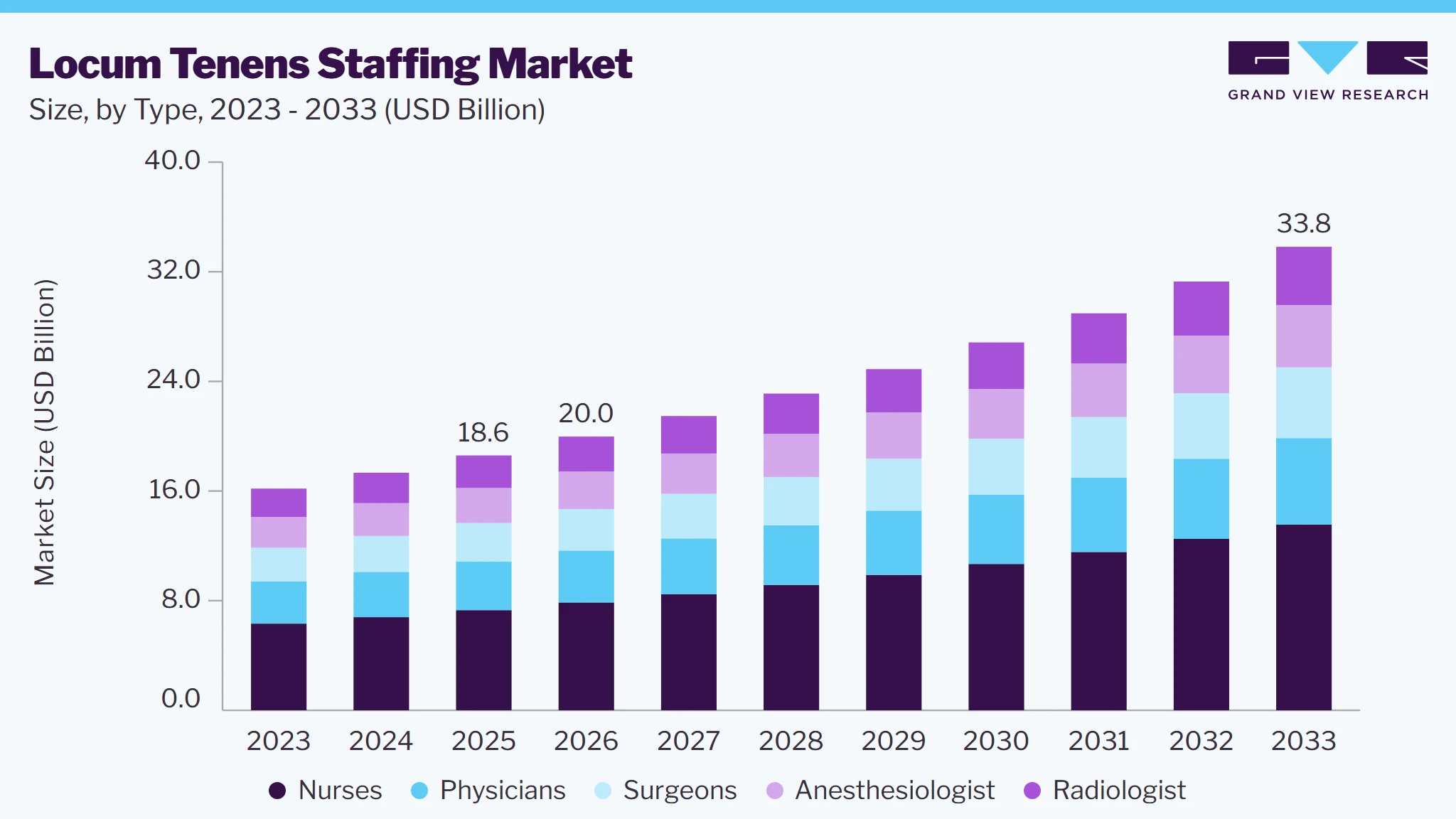 To learn more about this report, Download Free Sample Report
The locum tenens model offers a solution to these challenges by providing healthcare facilities with temporary staffing to fill gaps, which is particularly useful during peak seasons when permanent physicians are on vacation or sabbatical or when there is a sudden increase in patient demand, such as during the COVID-19 pandemic. This model not only helps maintain patient care levels but also allows healthcare facilities to cut back on the expenses associated with hiring, onboarding, and training new providers.
In addition, locum tenens work offers healthcare professionals the flexibility to choose their working hours and the opportunity to gain experience in various healthcare systems across different locations, making it an attractive career option. This flexibility can also serve as a remedy to burnout, which is a significant issue contributing to high physician turnover rates.
The market growth is further supported by the increasing number of healthcare facilities, including government and non-government hospitals, long-term care centers, and acute care centers. With the projected physician shortage in the US reaching 124,000 by 2034, the demand for locum tenens services is expected to continue rising.
Market Dynamics
The locum tenens staffing market is experiencing steady growth due to increasing physician shortages, rising healthcare service demand, and the need for flexible workforce solutions across healthcare facilities. Locum tenens staffing professionals are widely utilized to address staffing gaps caused by provider burnout, retirement, workforce shortages, seasonal demand fluctuations, and the expansion of healthcare services in underserved and rural areas. Growing acceptance of temporary healthcare staffing models, increasing demand for specialized physicians and advanced practice providers, and the availability of technology-enabled staffing platforms are contributing to market expansion.
Furthermore, rising healthcare expenditure, increasing patient volumes, expansion of telehealth services, and healthcare organizations' focus on maintaining continuity of care while controlling labor costs are expected to continue driving growth in the locum tenens staffing market. The ongoing shortage of healthcare professionals and the growing preference for flexible work arrangements among clinicians are also creating significant opportunities for market participants.
Increasing provider burnout and physician retirements are significant drivers of the locum tenens staffing market. Healthcare professionals are facing growing workloads, long working hours, staffing shortages, and increasing administrative responsibilities, which have contributed to higher levels of stress and burnout across the healthcare sector. According to CHG Healthcare's 2025 State of Locum Tenens Staffing Report, healthcare organizations reported actual locum tenens staffing utilization that was 25% higher than planned in 2024 due to persistent physician shortages and growing workforce pressures. The report also found that 43% of physicians who accepted locum assignments experienced reduced burnout, highlighting the role of locum tenens staffing as a solution for workforce fatigue and retention challenges. Moreover, an April 2026 workforce report indicated that 42% of active physicians are expected to reach retirement age within the next decade, while approximately 45% of physicians reported experiencing burnout in 2025, underscoring the long-term staffing challenges driving demand for temporary healthcare professionals
As a result, many physicians are reducing their clinical hours, seeking more flexible work arrangements, or leaving permanent positions altogether. At the same time, a substantial portion of the physician workforce is nearing retirement age, creating additional gaps in healthcare staffing. These workforce challenges are driving hospitals, clinics, and other healthcare facilities to increasingly rely on locum tenens staffing professionals to maintain continuity of care, address temporary staffing shortages, and ensure uninterrupted access to medical services. As burnout and retirements continue to impact healthcare systems globally, demand for locum tenens staffing solutions is expected to grow steadily.
One of the major restraints in the market is the relatively high cost associated with hiring temporary healthcare professionals compared to permanent staff. Healthcare facilities often incur additional expenses related to recruitment agency fees, travel, accommodation, licensing, credentialing, and premium compensation rates for locum tenens staffing providers. For smaller hospitals, rural healthcare centers, and budget-constrained organizations, these costs can limit the frequent use of locum tenens staffing services. While locum tenens staffing helps address workforce shortages and maintain continuity of care, the financial burden associated with temporary placements may hinder broader market adoption, particularly in cost-sensitive healthcare settings.
Locum Tenens Staffing Pay Rate
Specialty
Average Locum Tenens Staffing Pay Rate (USD/Hour)
Anesthesiology
300 – 425
Emergency Medicine
250 – 300
Family Medicine
120 – 135
General Surgery
150 – 200
Hospitalist
170 – 190
Obstetrics & Gynecology (OB/GYN)
150 – 200
Source: Locumstory (2026)
A significant opportunity in the locum tenens staffing market lies in addressing persistent healthcare workforce shortages in rural, remote, and underserved regions. Many hospitals, community health centers, and healthcare facilities face challenges in recruiting and retaining permanent physicians and specialists, creating a growing need for temporary healthcare professionals. Locum tenens staffing providers help maintain continuity of care, reduce patient wait times, and ensure access to essential medical services in areas with limited healthcare resources.
As governments and healthcare organizations continue to invest in expanding healthcare access and reducing provider shortages, demand for locum tenens staffing solutions is expected to increase. This trend presents substantial growth opportunities for staffing agencies and healthcare workforce management providers operating in the locum tenens staffing market.
Market Concentration & Characteristics
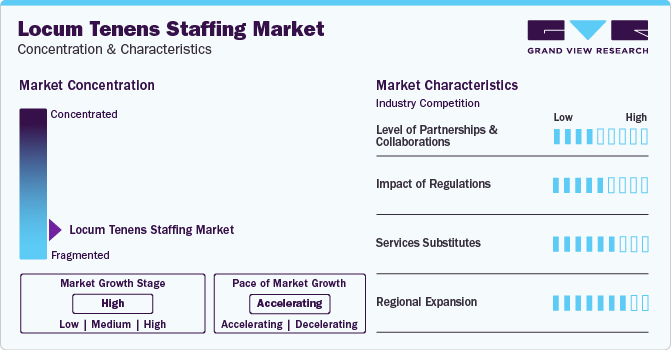
The chart below illustrates the relationship between market concentration, industry characteristics, and industry participants. The x-axis represents the level of industry concentration, ranging from low to high. The y-axis represents various industry characteristics, including industry competition, level of partnerships & collaboration activities, and impact of regulations, service substitutes, and geographic expansion. For instance, the locum tenens staffing industry is fragmented, with many small players entering the market and offering new services. The level of partnerships & collaborations activities is medium, and service expansion is high. The impact of regulations on the market is medium, and the regional expansion is medium.
 To learn more about this report, Download Free Sample Report
The level of partnerships & collaborations in the market is moderate due to the industry's emphasis on forming alliances and working together to address the growing demand for temporary physician staffing. Moreover, the industry players work together to address staffing shortages, expand services, and meet the evolving needs of the healthcare sector.
Regulations greatly shape the industry by governing licensing, credentialing, and scope of practice. They affect provider flexibility, staffing efficiency, and costs. In addition, reimbursement, tax laws, and quality standards impact pricing, demand, and operational practices. Adapting to regulatory shifts is vital for compliance and maintaining high-quality patient care in this dynamic industry.
Per diem, staffing and travel nurses are substitutes for locum tenens staffing. The high demand for nursing services by healthcare facilities leads to a demand for alternative options for staffing. In addition, benefits such as flexible schedules and better compensation have led to healthcare personnels working as per diem and travel nurses.
The level of regional expansion in the market is moderate due to the rapid expansion of the healthcare sector in regions such as North America and Asia-Pacific, which are experiencing significant market growth.
Analyst Perspective
The locum tenens staffing market is benefiting from increasing physician shortages, growing healthcare service demand, and rising adoption of flexible workforce solutions across hospitals, ambulatory care centers, and other healthcare facilities. Healthcare organizations are increasingly relying on locum tenens professionals to address staffing gaps, maintain continuity of care, manage fluctuating patient volumes, and reduce the impact of clinician burnout. Technological advancements in staffing platforms, credentialing systems, and workforce management solutions are further improving placement efficiency and expanding access to qualified healthcare providers.
The key competitive advantage will lie with staffing firms that offer extensive provider networks, rapid placement capabilities, advanced digital recruitment tools, and specialty-specific workforce solutions. By combining technology-enabled staffing processes with strong provider relationships, comprehensive credentialing support, and nationwide coverage, companies can enhance client satisfaction, improve fill rates, and strengthen their competitive position in the evolving locum tenens staffing market.
Type Insights
Based on type, the nurses segment dominated the market with the largest revenue share of 39.3% in 2025 and anticipated to grow at the fastest CAGR from 2026 to 2033. The growth is attributed to well-documented shortage of nurses across medical facilities. Rising demand for registered nurses (RNs), nurse practitioners (NPs), and licensed practical nurses (LPNs) across various healthcare settings, including hospitals, clinics, long-term care facilities, and home healthcare is expected to drive the segment growth during the forecast period.
The physicians segment held the second largest share due to increasing shortages in low-economic countries. This scarcity creates a constant need for temporary staffing solutions, making locum tenens physicians highly sought-after. Locum tenens physicians are considered to be a cost-effective solution for temporary needs or peak seasons, compared to hiring full-time staff. This makes them a fiscally responsible option for managing fluctuating workloads and is expected to boost segment growth.
End-use Insights
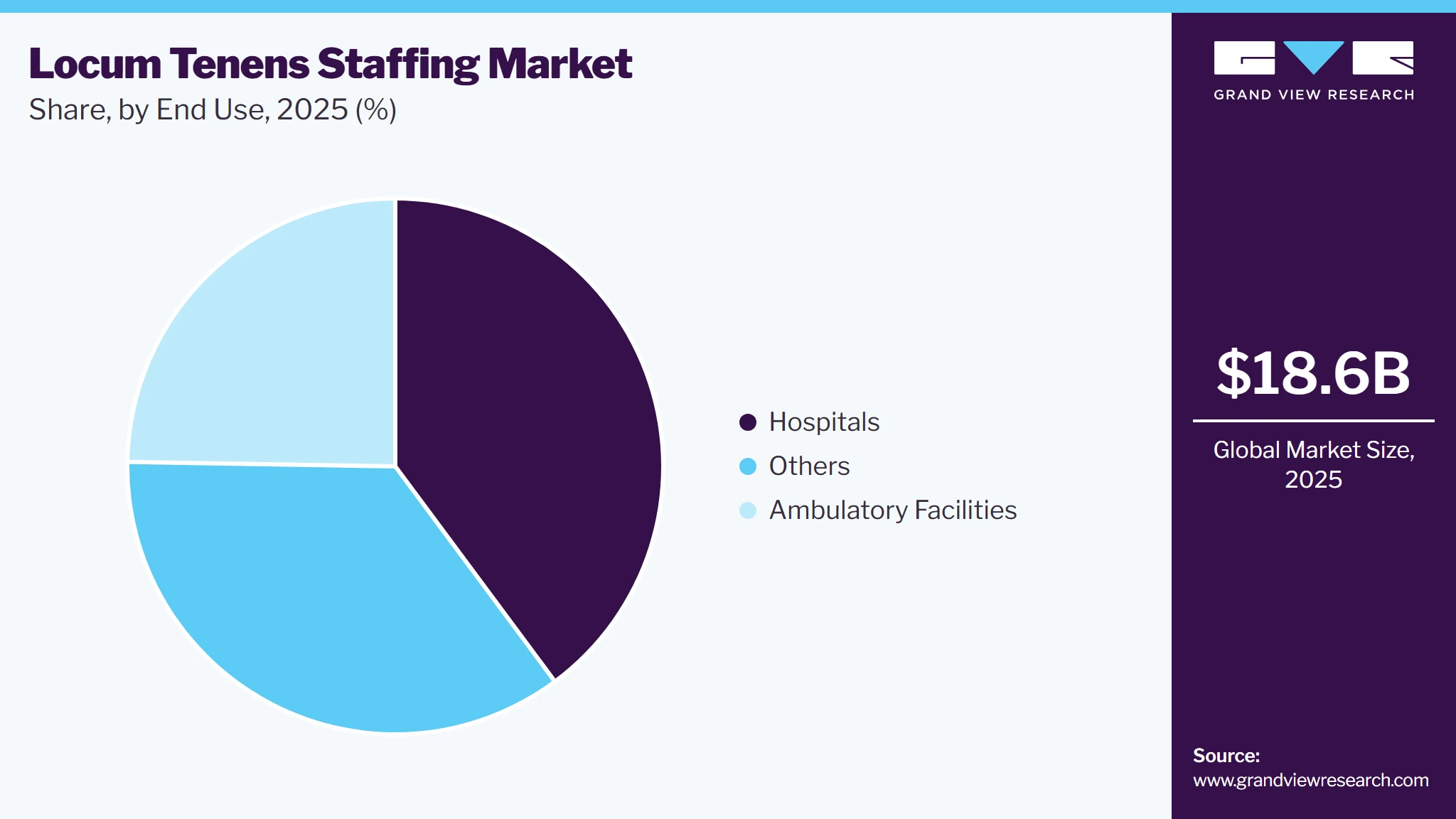
Based on end use, the hospitals segment dominated the market with the largest revenue share of 39.8% in 2025 and anticipated to grow at the fastest CAGR from 2026 to 2033. Many hospitals are aligning their workforce according to government regulations, which mandate specific nurse-to-patient ratios that must be upheld. Adherence to patient-centered regulations and legislation is driving an increase in the number of staff members within hospitals to accommodate the heightened demand for services. Moreover, the shortage of proficient professionals and nurses in hospitals impacts both patient care and clinical outcomes significantly. According to the U.S. Bureau of Labor Statistics, between 2020 and 2030, there is projected to be a heightened demand for medical staff, with approximately 275,000 additional nurses needed. Employment prospects for nurses are anticipated to grow at a fastest CAGR of 9% compared to all other occupations from 2016 to 2026.
 To learn more about this report, Download Free Sample Report
The ambulatory facilities segment is expected to grow at the fastest CAGR during the forecast period. The growing shift of patient care towards ambulatory services has led to a greater need for flexible staffing solutions in these facilities. This has led to increasing adoption of locum tenens staffing in ambulatory centers.
Regional Insights
North America dominated the women’s health app market with the largest revenue share of 52.0% in 2025. This can be attributed to the increase in demand for healthcare professionals, fueled by factors like population growth, aging demographics, and healthcare reform, driving the need for flexible staffing solutions.
 To learn more about this report, Download Free Sample Report
U.S. Locum Tenens Staffing Market Trends
The locum tenens staffing market in the U.S. held the largest share in the North America region in 2025, owing to physician shortages in various specialties and geographic regions necessitating the temporary placement of healthcare professionals to maintain patient care standards. The increasing demand for healthcare services, driven by an aging population and rising chronic diseases, further amplifies the need for flexible staffing solutions in the U.S.
Europe Locum Tenens Staffing Market Trends
The locum tenens staffing market in Europe is anticipated to grow at a significant CAGR over the forecast period, due to the aging population with rising healthcare demands creating a significant need for temporary physicians, particularly in countries with a strained healthcare system or geographically underserved areas. Moreover, locum tenens staffing agencies bridge this gap by offering flexible solutions to hospitals facing staffing shortages. In addition, factors like physician migration within Europe and a growing acceptance of the locum tenens model further contribute to market growth.
The Germany locum tenens staffing market held largest share in the Europe region in 2025. Temporary staffing has become an integral part of this country with increasing demand for medical services. The demand for skilled professionals is increasing due to a rise in investment by various healthcare facilities, a lack of skilled physicians & nurses, and an increase in geriatric population.
The locum tenens staffing market in UK is expected to witness at the fastest CAGR over the forecast period. This can be attributed to the growing awareness of the advantages of temporary employment, such as flexibility and diverse work experiences.
Asia Pacific Locum Tenens Staffing Market Trends
The locum tenens staffing market in Asia Pacific is expected to witness at the fastest CAGR over the forecast period. The growing elderly population in the Asia Pacific region is putting a strain on healthcare systems. This creates a surging demand for temporary physicians to manage the increasing need for medical care are favoring the market growth.
The Japan locum tenens staffing market held the largest share in 2025, owing to rise in aging populations, leading to a surge in demand for healthcare services, a growing trend among younger Japanese physicians towards work-life balance, and flexible work arrangements.
The locum tenens staffing market in India has witnessed high demand in the recent years. The growing demand for quality healthcare at affordable costs. The Indian government is recognizing the value of locum tenens staffing as a way to address healthcare access issues which is expected to contribute to the market growth in India.
Latin America Locum Tenens Staffing Market Trends
The locum tenens staffing market in Latin America is anticipated to grow at a significant CAGR during the forecast period, due to uneven distribution of doctors and nurses across the region, and increase in healthcare expenditure which leads to an increase in investment in temporary staffing solutions to address an physician shortages and improve access to care.
The Brazil locum tenens staffing market held the largest share in 2025, owing to the increasing demand for qualified healthcare professionals is driving the market growth in the country. The rising population and growing prevalence of chronic diseases have led to an increased demand for healthcare services in Brazil. This has resulted in healthcare facilities continuously seeking healthcare professionals such as doctors to fulfill this demand.
Middle East & Africa Locum Tenens Staffing Market Trends
The locum tenens staffing market in Middle East & Africa region is anticipated to witness at a significant CAGR during the forecast period, due to the persistent physician shortages, escalating demand for healthcare services, and the need for flexible staffing solutions. With population growth, aging demographics, and increasing prevalence of chronic diseases, locum tenens professionals play a crucial role in filling temporary gaps in staffing, providing specialized expertise, and ensuring continuity of care.
The South Africa locum tenens staffing market held the largest share in 2025. Employer’s cost-effectiveness and physicians demand for locum tenens work are key factors driving the market growth in South Africa. Furthermore, the rising demand for physicians and the increasing number of a large network of clinics in South Africa are also anticipated to drive market growth.
Key Locum Tenens Staffing Company Insights
The market is highly fragmented, with the presence of many country-level players. With the growing aging population and the need for mobile health, a few smaller competitors are entering the industry. Some of the emerging companies are CompHealth, Global Medical Staffing, and Medicus Healthcare Solutions.
Key Locum Tenens Staffing Companies:
The following key companies have been profiled for this study on the locum tenens staffing market.
-
CHG Management, Inc.
-
AMN Healthcare
-
ViSTA Staffing Solutions
-
LocumTenens.com
-
Aya Healthcare, Inc.
-
Weatherby Healthcare. A CHG Company.
-
The Delta Companies
-
Medicus Healthcare Solutions, LLC
-
Locumpedia
-
Maxim Staffing
Competitive Benchmarking
Category
Operating Strategies
Competitive Edge
Weakness
Established Players (CHG Healthcare, AMN Healthcare, Cross Country Healthcare, Jackson Healthcare)
- Maintain large provider networks, offer multi-specialty staffing solutions, leverage advanced recruitment technologies, establish long-term contracts with hospitals, and expand through acquisitions and partnerships.
- Extensive healthcare client relationships, nationwide coverage, strong brand recognition, large candidate databases, comprehensive credentialing capabilities, and economies of scale.
- Higher operational costs, complex organizational structures, slower response to niche market opportunities, and dependence on large healthcare systems for revenue growth.
Emerging Players (Weatherby Healthcare, CompHealth, LocumTenens.com, Vista Staffing)
- Focus on specialty-specific staffing, digital recruitment platforms, personalized provider matching, rapid placement services, and flexible workforce solutions for underserved markets.
- Greater agility, faster placement turnaround times, specialized expertise in high-demand specialties, stronger provider engagement, and innovative technology-enabled staffing models.
- Limited geographic reach, smaller provider pools, lower brand visibility, fewer long-term healthcare contracts, and comparatively constrained financial resources for expansion.
Recent Developments
-
In November 2023, AMN Healthcare announced the acquisition of MSDR, which comprises two healthcare staffing organizations such as DRW Healthcare Staffing and Medical Search International, which specializes in advanced practices and locum tenens
-
In August 2023, Caliber Healthcare Solutions unveiled a new brand aimed at aligning with its status as the foremost provider-focused locum tenens staffing choice within the healthcare sector. Formerly recognized as Health Carousel Locum Tenens, Caliber embodies a novel approach to recruiting top-tier physicians and advanced practice providers dedicated to enhancing patient outcomes
-
In August 2023, LocumTenens.com completed the acquisition of Inlightened, a technology-enabled platform that links forward-thinking client firms with a network of carefully screened healthcare professionals (HCPs) offering on-demand consultation and expertise. This acquisition unlocks new opportunities for both companies, greatly enhancing their ability to drive innovation and provide physicians and advanced practice providers with opportunities for non-patient-facing gig work
-
In October 2021, Consilium Staffing announced the formation of a new team that is dedicated to locum tenens placement in surgical and sub-specialties, including pulmonary critical care. Additionally, the focus is on placements in gynecology and obstetrics, an area that has seen steady demand even throughout the past year and a half
Locum Tenens Staffing Market Report Scope
Report Attribute
Details
Market size in 2025
USD 18.6 billion
Estimated market size in 2026
USD 20.0 billion
Projected market size by 2033
USD 33.8 billion
Growth rate
CAGR of 7.8% from 2026 to 2033
Historical data
2021 - 2025
Forecast period
2026 - 2033
Quantitative units
Revenue in USD million/billion and CAGR from 2026 to 2033
Report coverage
Revenue forecast, company ranking, competitive landscape, growth factors, and trends
Segments covered
Type, end-use, region
Regional scope
North America; Europe; Asia Pacific; Latin America; MEA
Country scope
U.S.; Canada; Germany; UK; France; Italy; Spain; Norway; Denmark; Sweden; China; Japan; India; South Korea; Australia; Thailand; Brazil; Mexico; Argentina; Saudi Arabia; South Africa; UAE; Kuwait
Key companies profiled
CHG Management, Inc.; AMN Healthcare; ViSTA Staffing Solutions; LocumTenens.com; Aya Healthcare, Inc.; Weatherby Healthcare. A CHG Company.; The Delta Companies; Medicus Healthcare Solutions; LLC; Locumpedia; Maxim Staffing
Customization scope
Free report customization (equivalent up to 8 analysts' working days) with purchasse. Addition or alteration to country, regional & segment scope.
Pricing and purchase options
Avail customized purchase options to meet your exact research needs. Explore purchase options
Global Locum Tenens Staffing Market Report Segmentation
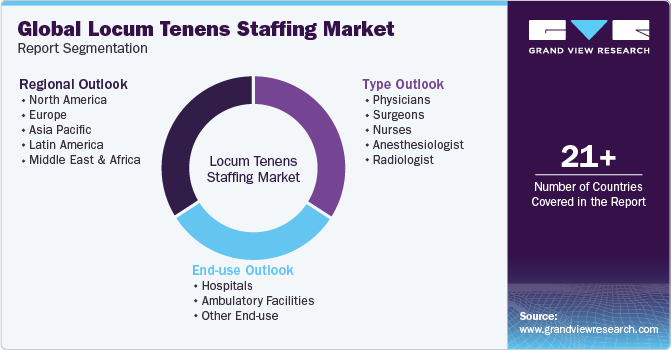
This report forecasts revenue growth at global, regional, and country levels and provides an analysis of the latest industry trends in each of the sub-segments from 2021 to 2033. For this study, Grand View Research has segmented the locum tenens staffing market report based on type, end-use, and region.
 To learn more about this report, Download Free Sample Report
-
Type Outlook (Revenue, USD Million, 2021 - 2033)
-
Physicians
-
Surgeons
-
Nurses
-
Anesthesiologist
-
Radiologist
-
-
End-use Outlook (Revenue, USD Million, 2021 - 2033)
-
Hospitals
-
Ambulatory Facilities
-
Other End-use
-
-
Regional Outlook (Revenue, USD Million, 2021 - 2033)
-
North America
-
U.S.
-
Canada
-
-
Europe
-
UK
-
Germany
-
France
-
Italy
-
Spain
-
Denmark
-
Sweden
-
Norway
-
-
Asia Pacific
-
China
-
Japan
-
India
-
South Korea
-
Australia
-
Thailand
-
-
Latin America
-
Brazil
-
Mexico
-
Argentina
-
-
Middle East and Africa (MEA)
-
South Africa
-
Saudi Arabia
-
UAE
-
Kuwait
-
-
Research Methodology
The locum tenens staffing market figures in this report are based on a proven research process that combines executive interviews with secondary research from proprietary databases, company filings, and recognized regulatory and institutional sources. Market size is built through value-chain sizing - reconciling supply-side and demand-side estimates - and triangulated with bottom-up and top-down approaches. Every estimate passes multiple levels of expert validation before publication, with each locum tenens staffing segment quantified using the revenue-capture definitions in the table below.
Segment Definition
Segment - Type
Revenue capture definition
Nurses
Temporary nursing professionals hired to fill short-term staffing gaps in hospitals, clinics, and healthcare facilities. They help maintain patient care continuity during workforce shortages, seasonal demand, or employee leave periods.
Physicians
Licensed medical doctors engaged on a temporary basis to provide primary or specialty care services when healthcare organizations face staffing shortages, recruitment delays, or increased patient volumes.
Surgeons
Locum tenens surgeons are contracted temporarily to perform surgical procedures and support healthcare facilities experiencing shortages in surgical specialists or increased procedural demand.
Anesthesiologists
Temporary anesthesia specialists who administer anesthesia and monitor patients before, during, and after surgical procedures, ensuring uninterrupted operating room services.
Radiologists
Locum tenens radiologists provide temporary diagnostic imaging interpretation services, including X-rays, CT scans, MRI, and ultrasound examinations, helping healthcare facilities address specialist shortages and workload fluctuations.
Segment - End Use
Revenue capture definition
Hospitals
Hospitals utilize locum tenens physicians and advanced practice providers to address temporary staffing shortages, maintain continuity of patient care, manage fluctuating patient volumes, and fill vacancies across various specialties.
Ambulatory Facilities
Ambulatory facilities, including outpatient clinics, urgent care centers, ambulatory surgery centers (ASCs), and specialty clinics, employ locum tenens professionals to ensure uninterrupted healthcare services and operational efficiency.
Others
This segment includes government healthcare facilities, community health centers, rural healthcare organizations, correctional healthcare facilities, telehealth providers, and academic medical centers that use locum tenens staff to meet temporary workforce needs.
Estimation Model
Model Details
This research methodology outlines the process for estimating the size of the global locum tenens staffing market for the period from 2021 to 2033. The study covers key staffing segments, including physician locum tenens, nurse practitioners (NPs), physician assistants (PAs), certified registered nurse anesthetists (CRNAs), and other advanced practice providers across major geographic regions including North America, Europe, Asia Pacific, Latin America, and the Middle East & Africa.
The objective is to develop a robust and defensible market estimate through a combination of bottom-up and top-down approaches supported by primary industry validation.
A triangulated market sizing approach was used, combining:
-
Bottom-Up Analysis from locum tenens placements, staffing agency revenues, provider utilization rates, and average bill rates
-
Top-Down Checks using healthcare workforce shortage data, healthcare expenditure, physician workforce statistics, patient volume trends, and industry association publications
-
Primary Research with staffing agencies, hospitals, ambulatory care centers, healthcare administrators, physicians, advanced practice providers, and industry consultants
Step-By-Step Market Estimation Process
- Healthcare Workforce Utilization Model
This model calculates market size by estimating the number of healthcare providers working through locum tenens arrangements and the associated annual spending.
-
Step 1: Country-level healthcare workforce data for 2021–2025 was collected from government healthcare agencies, physician associations, workforce databases, and international healthcare organizations.
-
Step 2: A locum tenens utilization rate was applied, estimating the percentage of healthcare facilities utilizing temporary medical staffing annually. Utilization rates were derived from hospital surveys, staffing industry reports, workforce shortage studies, and primary interviews.
-
Step 3: Average annual spending per locum tenens provider was estimated using staffing agency billing rates, physician compensation benchmarks, provider specialty rates, and healthcare facility interviews.
-
Step 4: Market size was calculated by multiplying:Step 5: Calculations were performed at the country level and subsequently aggregated to regional and global levels.
- Healthcare Facilities Utilizing Locum Tenens × Average Number of Placements × Average Annual Spending per Placement
-
Step 6: Historical and forecast growth rates were incorporated based on physician shortages, healthcare service demand, aging populations, clinician burnout, and workforce flexibility trends.
- Staffing Agency Revenue Extrapolation Model
This model estimates market size using revenues generated by locum tenens staffing agencies.
-
Step 1: The number of active locum tenens staffing firms and healthcare workforce solution providers by country was identified through company disclosures, industry associations, business registries, and proprietary databases.
-
Step 2: Average annual revenue per staffing agency was estimated using financial reports, industry benchmarks, agency interviews, and market intelligence sources.
-
Step 3: Agency revenues were adjusted for regional differences in physician compensation, specialty mix, billing rates, placement duration, and healthcare reimbursement environments.
-
Step 4: Country-level market size was calculated by multiplying the number of staffing agencies by the adjusted average annual revenue per agency.
-
Step 5: Regional and global market values were generated through aggregation of country-level estimates.
-
Step 6: Annual adjustments were applied to account for agency expansion, healthcare workforce shortages, telehealth staffing growth, and consolidation trends within the staffing industry.
- Provider Placement and Bill Rate Model
This model estimates market size based on the volume of locum tenens assignments and average bill rates across healthcare specialties.
-
Step 1: Provider placement data was collected from staffing agencies, healthcare facilities, workforce studies, industry associations, and healthcare recruitment databases.
-
Step 2: Placements were categorized into:
-
Primary Care Physicians
-
Emergency Medicine Physicians
-
Anesthesiologists
-
Surgeons
-
Hospitalists
-
Obstetricians & Gynecologists
-
Nurse Practitioners (NPs)
-
Physician Assistants (PAs)
-
Other Healthcare Providers
-
-
Step 3: Average bill rates and placement durations were established using staffing agency data, compensation surveys, and expert interviews.
-
Step 4: Revenue generated by each specialty category was calculated by multiplying:Step 5: Category-level revenues were aggregated to determine country, regional, and global market sizes.
- Number of Placements × Average Bill Rate × Average Assignment Duration
-
Step 6: Forecast assumptions incorporated physician shortage trends, demand for flexible staffing, regulatory changes, telemedicine adoption, and healthcare infrastructure expansion.
Geographic Demand Potential Index (GDPI) Validation Model
In addition to the core triangulation models, a Geographic Demand Potential Index (GDPI) model was developed to benchmark locum tenens staffing demand across countries and regions globally.
This model applied four macroeconomic and industry-specific indicators:
-
Healthcare Workforce Shortage Index
-
Healthcare Expenditure per Capita
-
Hospital & Ambulatory Facility Density
-
Aging Population & Patient Demand Index
Each country's GDPI score was calculated and normalized to estimate its relative share of global locum tenens staffing demand.
The resulting scores were used as a validation framework for the market estimates generated through Models 1–3, ensuring alignment with actual staffing shortages, healthcare utilization levels, and regional workforce dynamics.
Final Market Triangulation
The final global locum tenens staffing market size was derived through triangulation of:
-
Healthcare Workforce Utilization Model
-
Staffing Agency Revenue Extrapolation Model
-
Provider Placement and Bill Rate Model
-
Geographic Demand Potential Index (GDPI) Validation Model
The weighted average of these models, validated through primary interviews and secondary industry sources, was used to generate the final historical estimates (2021–2025) and forecast projections (2026–2033) for the locum tenens staffing market.
Delivered Customizations
This report has been delivered with the following In-depth customizations
Client Request
Customization Delivered
Value Adds
AI-Enabled Workforce Planning & Staffing Analytics Assessment
Developed an advanced analysis of AI-driven locum tenens staffing platforms utilizing predictive workforce analytics, provider matching algorithms, credentialing automation, scheduling optimization tools, and workforce forecasting models. The study benchmarked digital staffing capabilities across leading locum tenens providers.
Enables stakeholders to identify next-generation staffing technologies, evaluate digital workforce management innovations, and strengthen investments in automated recruitment and provider placement solutions.
Healthcare Provider Journey & Placement Behavior Analysis
Conducted a provider-centric assessment tracking the locum tenens journey from job discovery and credentialing to assignment selection, onboarding, contract completion, and repeat placements. The study incorporated specialty preferences, compensation expectations, geographic mobility trends, and digital engagement patterns.
Provides actionable insights for improving provider recruitment, retention strategies, placement efficiency, and personalized engagement models across diverse healthcare professional segments.
Compensation & Bill Rate Benchmarking Study
Evaluated specialty-wise provider compensation, agency bill rates, assignment duration trends, geographic pay variations, and premium pricing opportunities.
Supports pricing optimization, contract negotiations, profitability analysis, and competitive positioning.
Frequently Asked Questions About This Report
The global locum tenens staffing market is expected to grow at a compound annual growth rate of 7.8% from 2026 to 2033 to reach USD 33.8 billion by 2033.
The nurses segment led with a 39.3% revenue share in 2025, and is the fastest-growing segment.
Some key players operating in the locum tenens staffing market include CHG Management, Inc., AMN Healthcare, ViSTA Staffing Solutions, LocumTenens.com, Aya Healthcare, Inc., Weatherby Healthcare. A CHG Company., The Delta Companies, Medicus Healthcare Solutions, LLC, Locumpedia, and Maxim Staffing
Key factors that are driving the locum tenens staffing market growth include the rising shortage of medical personnel, improving healthcare infrastructure and increasing investment in public health, and rising demand for temporary nursing staff.
The hospitals segment led with a 39.8% revenue share in 2025, and is the fastest-growing segment.
Asia Pacific is the fastest-growing region over the forecast period.
North America dominated with a 52.0% revenue share in 2025.
The global locum tenens staffing market size was estimated at USD 18.6 billion in 2025 and is projected to grow from USD 20.0 billion in 2026.
About the Author(s)
Medical Devices Research Team
Healthcare · Medical DevicesThis report was authored by the medical devices research team at Grand View Research - comprising two research analysts, one senior research analyst, and one industry expert - with specialized expertise in the medical devices segment of the healthcare industry. All findings are based on proprietary healthcare databases, executive interviews, and regulatory analysis, subject to internal peer review prior to publication.
Last Updated:
Speak to Analyst

Customize this report to your needs - add regions, segments, or data points, with 20% free customization.
Or view our licence options:


ISO 9001:2015 & 27001:2022 Certified
We are GDPR and CCPA compliant! Your transaction & personal information is safe and secure. For more details, please read our privacy policy.


