- Home
- »
- Medical Devices
- »
-
Microwave Ablation Market Size, Share Report, 2026-2033GVR Report cover
Microwave Ablation Market (2026 - 2033)
Size, Share & Trends Analysis Report By Component Type (Generator, Power Distribution System), By Application (Oncology, Cardiovascular, Urology, Orthopedic), By End-use, By Region, And Segment Forecasts
Market Size, 2025
$494.9MMarket Estimate, 2026
$569.8MMarket Forecast, 2033
$1,302.0MCAGR, 2026–2033
12.5%Microwave Ablation Market Summary
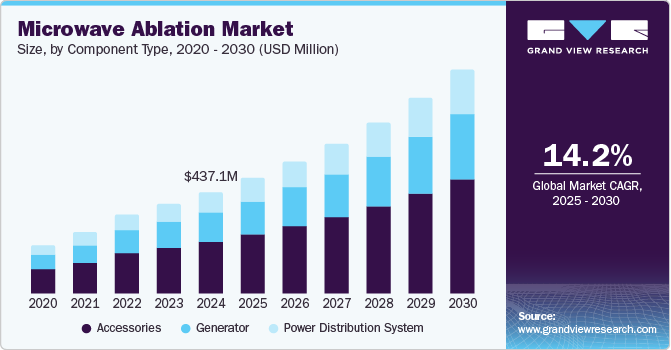
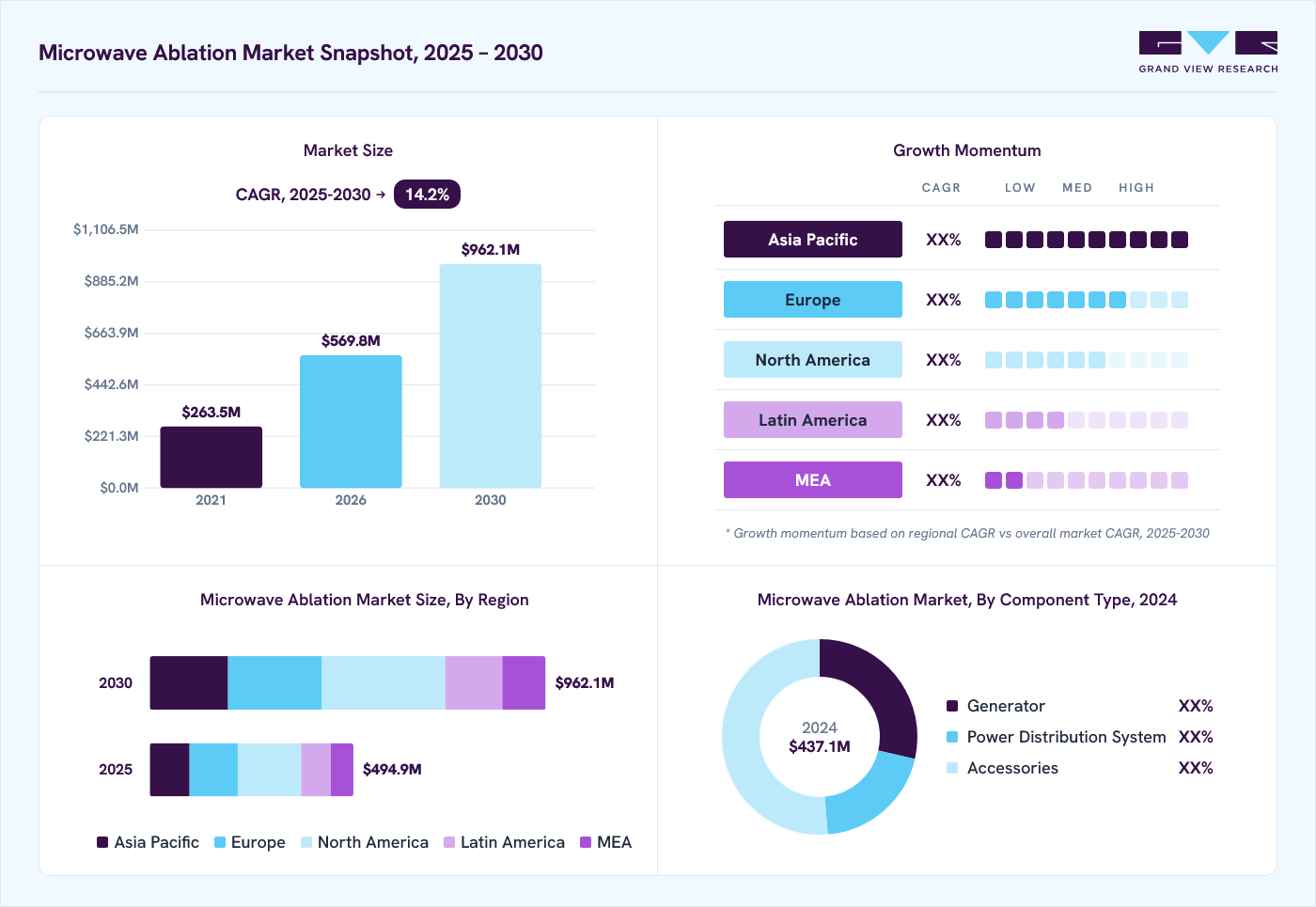
The microwave ablation market size was valued at USD 494.9 million in 2025 and is projected to grow from USD 569.8 million in 2026 to USD 1,302.0 million by 2033, at a CAGR of 12.5% from 2026 to 2033. North America dominated the market, accounting for a revenue share of 31.2% in 2025. The market growth can be attributed to the increasing incidence of various cancers, including liver, lung, kidney, and bone cancers.
Key Market Trends & Insights
- By component type: Accessories segment led the market with the largest revenue share of 51.3% in 2025.
- By application: Oncology segment led the market with the largest revenue share of 31.3% in 2025.
- By end use: Hospital segment led the market with the largest revenue share of 46.3% in 2025.
Regional Highlights
- Largest regional market: North America (31.2% revenue share, 2025)
- By country: The U.S. held the largest market share in 2025.
Market Size & Forecast
- Market size in 2025: USD 494.9 Million
- Estimated market size in 2026: USD 569.8 Million
- Projected market size by 2033: USD 1,302.0 Million
- CAGR (2026-2033): 12.5%
According to the American Cancer Society, in 2024, the U.S. projected approximately 2,001,140 new cancer cases, with notable figures of 234,580 for lung cancer, 41,630 for liver cancer, and 81,610 for kidney cancer. These statistics underscore the rising demand for effective treatment options, particularly those such as microwave ablation that offer minimally invasive solutions targeting tumors with precision and safety.Advancements in medical technology serve as another catalyst for market growth. Continuous improvements in microwave ablation devices have enhanced their effectiveness through innovations such as real-time imaging guidance and artificial intelligence integration. Such technological developments are becoming essential as the cancer treatment landscape evolves, resulting in improved treatment outcomes and reduced complications for patients diagnosed with increasingly prevalent cancers. This trend aligns with the growing focus on employing advanced methodologies to address the rising number of cancer diagnoses effectively.

In 2024, around 65% of patients undergoing cancer treatment expressed a preference for minimally invasive techniques, which typically provide shorter recovery times and decreased postoperative pain compared to traditional surgical methods. This notable demand for innovative treatment modalities, such as microwave ablation, highlights the changing attitudes toward surgical interventions in the oncology field, making them more appealing to both patients and providers.
This trend is especially pronounced in North America and Europe, where collaborative efforts between healthcare institutions, research organizations, and medical device manufacturers are fostering innovation. Such partnerships enhance access to microwave ablation technologies and drive market growth, as they enable the development of new solutions tailored to meet the rising demands of cancer treatment amid an evolving healthcare landscape.
Market Dynamics
The microwave ablation market is positioned at the intersection of several long-term oncology, interventional radiology, and minimally invasive surgical care trends, including the rising global burden of cancer, increasing prevalence of chronic liver and lung diseases, and continuous advancements in image-guided thermal ablation technologies. Microwave ablation solutions enable hospitals, cancer centers, ambulatory surgical centers, and interventional radiology clinics to treat a broad range of malignant and benign tumors through precise, localized thermal destruction of diseased tissue. These technologies are widely utilized in the management of liver cancer, lung cancer, kidney tumors, bone metastases, and other soft-tissue lesions, providing minimally invasive treatment alternatives for patients who may not be suitable candidates for conventional surgery. Modern microwave ablation systems utilize advanced microwave generators, high-performance ablation antennas, real-time temperature monitoring technologies, and sophisticated imaging guidance platforms to deliver controlled and predictable tissue coagulation. Integration with ultrasound, computed tomography (CT), magnetic resonance imaging (MRI), and fusion imaging technologies enables precise lesion targeting, enhanced procedural accuracy, and improved treatment planning. These innovations support complete tumor coverage while minimizing damage to surrounding healthy tissues, thereby improving clinical outcomes and reducing procedure-related complications.
The increasing prevalence of cancer worldwide is one of the most significant drivers fueling the growth of the microwave ablation market. For instance, in January 2025, the American Cancer Society estimated that the U.S. alone would witness more than 2 million new cancer cases in 2025, reflecting the continued expansion of the oncology patient pool. The increasing incidence of liver, lung, kidney, and other solid tumors is creating greater demand for minimally invasive treatment approaches such as microwave ablation, particularly for patients who are poor candidates for surgical resection. Microwave ablation has emerged as an effective minimally invasive treatment option for patients with liver cancer, lung cancer, kidney tumors, bone metastases, and other solid tumors, particularly when conventional surgery is not feasible. As the global burden of cancer continues to rise due to aging populations, lifestyle-related risk factors, and improved diagnostic capabilities, healthcare providers are increasingly adopting microwave ablation technologies to achieve localized tumor destruction while minimizing damage to surrounding healthy tissues. Compared with traditional surgical interventions, microwave ablation offers advantages such as shorter procedure times, reduced hospital stays, faster recovery, and lower complication rates, making it an attractive treatment modality for both physicians and patients.
One of the primary restraint for the growth of the microwave ablation market is the high cost associated with microwave ablation systems, image-guided navigation technologies, and procedure-related infrastructure. Successful microwave ablation procedures require advanced equipment, including microwave generators, specialized ablation antennas, real-time imaging systems such as CT, MRI, or ultrasound, and highly trained interventional radiologists or surgical specialists. The significant capital investment required for acquiring and maintaining these technologies can limit adoption, particularly among smaller hospitals and healthcare facilities in developing and resource-constrained regions. In addition, the procedure demands substantial clinical expertise for accurate tumor localization, treatment planning, and image-guided needle placement, creating a dependence on skilled professionals who may not be readily available in all healthcare settings.
Analyst Perspective
The global microwave ablation market is positioned at the intersection of several long-term oncology, minimally invasive intervention, and precision medicine trends, including the rising global incidence of cancer, increasing preference for image-guided minimally invasive therapies, and continuous advancements in thermal ablation technologies. The growing prevalence of primary and metastatic tumors involving the liver, lung, kidney, bone, and other soft tissues is creating significant growth opportunities for medical device manufacturers, interventional radiology providers, and cancer treatment centers. This expansion is accelerating as healthcare systems, oncologists, and interventional specialists increasingly seek effective treatment alternatives that can deliver precise tumor destruction, reduced procedural complications, shorter hospital stays, and faster patient recovery compared with conventional open surgical approaches. Microwave ablation has emerged as an attractive therapeutic option for patients who are poor surgical candidates or require repeat local tumor control, further supporting its clinical adoption across a broad range of oncological applications.
Component Type Insights
Based on component type, the accessories segment led the market with the largest revenue share of 51.3% in 2025. The accessories segment predominantly comprises applicator antennas, which effectively deliver energy to tissue and offer numerous advantages and clinical applications. Typically, multiple antennas are utilized in a single procedure to create extensive and reproducible ablation zones. Key attributes of these antennas include minimal invasiveness and high efficiency in penetrating deep tissues for optimal active heating. However, anatomical structures such as airways, blood vessels, bile ducts, and the bowel can impact antenna performance. Leading companies, such as Medtronic, are advancing this market with innovative products such as the Emprint SX navigation antenna and Emprint Percutaneous Antennas featuring Thermosphere Technology.
Generators are expected to grow at the fastest CAGR of 14.4% over the forecast period. Generators play a crucial role in delivering power to multiple antennae, adhering to stringent safety standards in human medicine due to close proximity to patients. Features include integrated DC/DC protection, real-time temperature and RF power monitoring, and durable connectors for extended service life. Notable advancements include AMICA Microwave and RF System Gen by Mermaid Medical, a programmable, combined RFA and MWA technology.
Application Insights
Based on application, the oncology segment led the market with the largest revenue share of 31.3% in 2025, driven by rising cancer incidence, particularly among liver, lung, kidney, and bone cancer patients, creating a need for effective treatment options. Factors contributing to the demand include the minimally invasive nature of microwave ablation, technological advancements, and increased awareness and acceptance among healthcare professionals and patients.
Cardiovascular applications are expected to register the fastest CAGR of 14.3% over the forecast period. Microwave ablation has become a safe and effective treatment for atrial fibrillation (AF), particularly in patients with concurrent cardiac conditions, with significant success in achieving stable sinus rhythm. Its minimally invasive nature allows for procedures on a beating heart, which reduces recovery times. Continuous technological advancements enhance efficacy and safety, driving demand as the prevalence of cardiovascular diseases rises.
End-use Insights
Based on end use, the hospital segment led the market with the largest revenue share of 46.3% in 2025 as they serve as primary healthcare providers for patients requiring microwave ablation, particularly for cancer treatment, due to their comprehensive services that enhance access to advanced care. Equipped with state-of-the-art technology and specialized expertise, hospitals efficiently perform complex procedures. According to the American Hospital Association, insurance reimbursement supports affordability, while the extensive network of over 6,200 hospitals in the U.S. underscores their capacity for delivering these services.
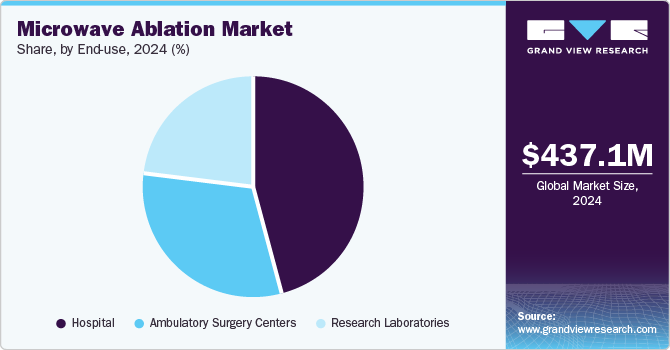
Research laboratories are projected to grow at the fastest CAGR of 14.3% over the forecast period. Research laboratories drive innovation in microwave ablation technologies and techniques, enhancing their efficacy and safety. They conduct clinical trials to validate effectiveness, particularly for cancer treatment, which bolsters acceptance in clinical practice. Collaborations with medical institutions further enhance credibility, while educational initiatives inform healthcare professionals about microwave ablation's benefits. In 2023, approximately 1.3 million researchers globally contribute to these advancements.
Regional Insights
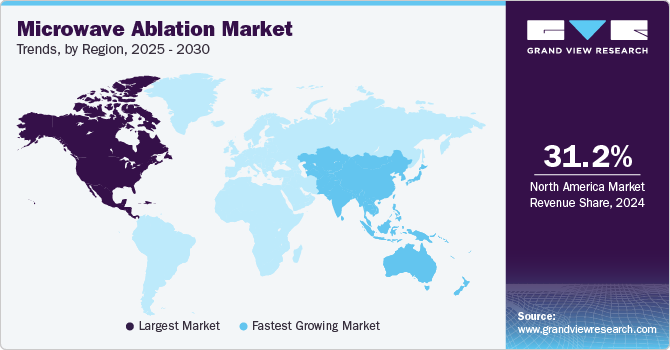
North America dominated the microwave ablation market with the largest revenue share of 31.2% in 2025. It is projected that the region would continue to grow as a result of technological advancements and the rising prevalence of chronic diseases. There is a strong demand for imaging analysis due to the rising prevalence of chronic diseases in this area, such as cardiovascular disorders. For instance, the CDC estimates that about 805,000 Americans get a heart attack each year. Over the projected period, the region is anticipated to continue to dominate.
U.S. Microwave Ablation Market Trends
The microwave ablation market in the U.S. held the largest share in the North America region in 2025. Market growth in the country is driven by substantial investments in healthcare technology and research. The presence of leading medical device manufacturers encourages innovation, while the high incidence of cancer cases escalates demand for effective treatment options. Favorable insurance coverage and reimbursement policies incentivize hospitals to implement microwave ablation procedures.
Europe Microwave Ablation Market Trends
Europe microwave ablation market held substantial market share in 2024. Increasing cancer incidence rates and heightened awareness of minimally invasive procedures are driving industry growth in the country. Elevated healthcare expenditures across European countries promote the adoption of advanced medical technologies. Furthermore, regulatory approvals for microwave ablation devices and growing collaborations between healthcare providers and manufacturers enhance market growth in this region.
The microwave ablation market in UK is expected to grow in the forecast period, influenced by a growing aging population, with approximately 18% aged 65 and older as of 2023. The rising incidence of cancers, such as liver and lung cancer, necessitates effective treatment options such as microwave ablation. Moreover, advancements in medical technology and supportive healthcare policies facilitate the adoption of these innovative therapies in clinical practice.
Asia Pacific Microwave Ablation Market Trends
Asia Pacific microwave ablation market is expected to register the fastest CAGR of 14.5% in the forecast period, driven by increased healthcare investments and a rising prevalence of chronic diseases, including cancer. Countries such as China and India are experiencing notable growth due to expanded healthcare infrastructure and enhanced access to advanced medical technologies. Moreover, a larger patient population seeking efficient treatment options fuels demand for microwave ablation procedures.
Japan microwave ablation market dominated the Asia Pacific microwave ablation market in 2024, supported by an aging population, with approximately 28% of citizens aged 65 and older as of 2023. The high prevalence of cancers, particularly liver and lung cancers, drives the demand for effective treatment options such as microwave ablation. Japan's advanced healthcare system further facilitates the adoption of innovative medical technologies, improving patient access to these therapies.
Key Microwave Ablation Company Insights
Some key companies operating in the market include AngioDynamics; Medtronic; Emblation Ltd.; HUBER+SUHNER; Johnson & Johnson Services, Inc.; among others. The market is fragmented owing to high competition at the global level as it has the presence of severe key players. These players focus on growth strategies, such as new product launches, collaborations, partnerships, operational expansion, mergers & acquisitions, and patient awareness campaigns.
-
AngioDynamics specializes in microwave ablation systems designed for soft tissue treatment, particularly the Solero MTA System. This system utilizes a solid-state generator to achieve effective spherical ablations of up to 5 cm in just 6 minutes.
-
HUBER+SUHNER supplies essential connectivity components for microwave ablation devices, including low-loss cables and connectors. Their solutions enhance energy transfer efficiency and ensure compliance with medical safety standards, supporting both miniaturization and reliability in ablation technology.
Key Microwave Ablation Companies
The following key companies have been profiled for this study on the microwave ablation market.
-
AngioDynamics
-
Medtronic
-
Emblation Ltd.
-
HUBER+SUHNER
-
Johnson & Johnson Services, Inc.
-
MedWaves, Inc.
-
SympleSurgical Inc.
-
Mermaid Medical
-
Varian Medical Systems, Inc.
-
Terumo Corporation
Competitive Benchmarking
Category
Operating Strategies
Competitive Edge
Weakness
Established Players (AngioDynamics, Medtronic, Emblation Ltd., HUBER+SUHNER)
- Focus on expanding comprehensive tumor ablation portfolios encompassing microwave ablation systems, radiofrequency ablation platforms, cryoablation technologies, navigation systems, and image-guided intervention solutions.
- Strengthen strategic collaborations with hospitals, cancer centers, interventional radiology departments, and academic research institutions to increase technology adoption and clinical utilization.
- Strong brand recognition, extensive global sales networks, and long-standing relationships with healthcare providers support market leadership.
- Robust R&D capabilities and significant financial resources enable continuous product innovation and development of next-generation ablation technologies.
- High manufacturing, clinical validation, and regulatory compliance costs associated with FDA, CE Mark, and international medical device requirements.
- Large organizational structures may slow product development and commercialization compared with more agile competitors.
Emerging Players (Mermaid Medical, Varian Medical Systems, Inc., Terumo Corporation)
- Focus on niche innovation opportunities such as portable microwave ablation systems, AI-assisted treatment planning, advanced antenna designs, and outpatient ablation solutions.
- Target underserved regional markets and smaller healthcare facilities through cost-effective and flexible product offerings.
- Faster innovation cycles and organizational agility enable rapid introduction of technologically differentiated products.
- Ability to offer customized solutions and competitive pricing compared with larger multinational manufacturers.
- Challenges in obtaining extensive clinical validation and regulatory approvals across multiple regions.
- Dependence on external funding and strategic partnerships may affect long-term growth and commercialization efforts.
Recent Developments
-
In December 2024, AngioDynamics received FDA clearance for the NanoKnife System, enabling prostate tissue ablation and enhancing treatment options.
-
In November 2024, Johnson & Johnson MedTech received FDA approval for the VARIPULSE Platform in the U.S. for treating atrial fibrillation.
-
In October 2024, Medtronic received FDA approval for the Affera Mapping and Ablation System with Sphere-9 Catheter in the U.S., enhancing treatment options for persistent atrial fibrillation.
-
In July 2024, Varian received FDA 510(k) clearance for its IntelliBlate microwave ablation system in the U.S., providing clinicians with enhanced predictability, precision, and control during procedures.
-
In February 2024, Biosense Webster obtained CE mark approval for the VARIPULSE Platform in Europe, enabling real-time integrated 3D mapping for treating recurrent paroxysmal atrial fibrillation through pulsed field ablation.
Microwave Ablation Market Report Scope
Report Attribute
Details
Market size in 2025
USD 494.9 million
Estimated market size in 2026
USD 569.8 million
Projected market size by 2033
USD 1,302.0 million
Growth rate
CAGR of 12.5% from 2026 to 2033
Historical data
2021 - 2024
Forecast period
2026 - 2033
Quantitative units
Revenue in USD million/billion and CAGR from 2026 to 2033
Report coverage
Revenue forecast, company ranking, competitive landscape, growth factors, and trends
Segments covered
Component type, application, end-use, region
Regional scope
North America; Europe; Asia Pacific; Latin America; MEA
Country scope
U.S.; Canada; Mexico; Germany; UK; France; Italy; Spain; Norway; Denmark; Sweden; China; Japan; India; South Korea; Australia; Thailand; Brazil; Argentina; Saudi Arabia; South Africa; UAE; Kuwait;
Key companies profiled
AngioDynamics; Medtronic; Emblation Ltd.; HUBER+SUHNER; Johnson & Johnson Services, Inc.; MedWaves, Inc.; SympleSurgical Inc.; Mermaid Medical; Varian Medical Systems, Inc.; Terumo Corporation
Customization scope
Free report customization (equivalent up to 8 analysts' working days) with purchase. Addition or alteration to country, regional & segment scope.
Pricing and purchase options
Avail customized purchase options to meet your exact research needs. Explore purchase options
Global Microwave Ablation Market Report Segmentation
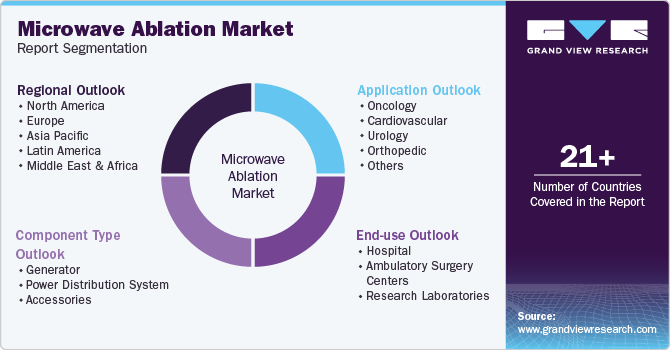
This report forecasts revenue growth at global, regional, and country levels and provides an analysis of the latest industry trends in each of the sub-segments from 2021 to 2033. For this study, Grand View Research has segmented the global microwave ablation market report based on component type, application, end-use, and region:
-
Component Type Outlook (Revenue, USD Million, 2021 - 2033)
-
Generator
-
Power Distribution System
-
Accessories
-
-
Application Outlook (Revenue, USD Million, 2021 - 2033)
-
Oncology
-
Cardiovascular
-
Urology
-
Orthopedic
-
Others
-
-
End-use Outlook (Revenue, USD Million, 2021 - 2033)
-
Hospital
-
Ambulatory Surgery Centers
-
Research Laboratories
-
-
Regional Outlook (Revenue, USD Million, 2021 - 2033)
-
North America
-
U.S.
-
Canada
-
Mexico
-
-
Europe
-
UK
-
Germany
-
France
-
Italy
-
Spain
-
Denmark
-
Sweden
-
Norway
-
-
Asia Pacific
-
Japan
-
China
-
India
-
Australia
-
South Korea
-
Thailand
-
-
Latin America
-
Brazil
-
Argentina
-
-
Middle East & Africa
-
South Africa
-
Saudi Arabia
-
UAE
-
Kuwait
-
-
Research Methodology
The microwave ablation market figures in this report are based on a proven research process that combines executive interviews with secondary research from proprietary databases, company filings, and recognized regulatory and institutional sources. Market size is built through value-chain sizing - reconciling supply-side and demand-side estimates - and triangulated with bottom-up and top-down approaches. Every estimate passes multiple levels of expert validation before publication, with each microwave ablation segment quantified using the revenue-capture definitions in the table below.
Segment Definition
Segment - Component Type
Revenue capture definition
Generator
Revenue is generated through the capital procurement of high-frequency electromagnetic power consoles that produce the required energy (commonly at 915 MHz or 2.45 GHz) to induce thermal coagulation necrosis. Manufacturers earn significant upfront income from hardware unit sales, which are supplemented over time by multi-year service contracts, system recalibration fees, and optional software-driven power profile updates.
Power Distribution System
Revenue flows from the commercialization of specialized hardware modules designed to safely route, manage, and split electromagnetic energy from the source console to individual treatment nodes. Market participants derive income from high-performance coaxial assemblies, multi-channel power splitters, phase shifters, and automated switches that enable synchronized multi-probe firing arrays.
Accessories
Revenue is captured through the continuous production and high-volume sale of single-use consumables and surgical peripheral kits essential for each clinical procedure. This high-margin segment generates predictable, recurring income from interstitial microwave antennas (probes), internal cooling line mechanisms, skin-protection thermal sensors, and specialized fine-gauge sterile placement kits.
Segment - Application
Revenue capture definition
Oncology
Revenue is derived from specialized thermal ablation systems optimized for the targeted destruction of malignant and benign solid tumors, particularly in the liver, lungs, kidneys, and bones. Income is fueled by high-frequency clinical case volumes and continuous probe re-orders, driven by the expanding clinical adoption of minimally invasive procedures over traditional tumor resections.
Cardiovascular
Revenue flows from dedicated cardiac microwave ablation systems engineered to treat complex arrhythmias, such as atrial fibrillation, via catheter-based delivery. Medtech companies capture value through premium, flexible intravascular mapping and ablation catheters designed to deliver rapid, localized transmural lesions across cardiac tissue.
Urology
Revenue is captured through the commercialization of microwave thermal systems configured for treating tissue abnormalities within the male genitourinary tract, including benign prostatic hyperplasia (BPH) and localized renal-cell carcinomas. Income is driven by the sale of specialized transurethral or percutaneous rigid antennas designed to protect nearby structures while ensuring uniform zone coagulation.
Orthopedic
Revenue is generated by marketing microwave ablation tools tailored for targeting painful osteoid osteomas, primary bone tumors, and painful osteolytic skeletal metastases. Manufacturers monetize this segment through robust, high-torque structural probes capable of penetrating dense cortical bone layers to provide instant palliative pain relief and local tumor control.
Others
Revenue encompasses non-primary clinical interventions, including gynecology procedures (such as endometrial tissue ablation for menorrhagia) and dermatology or superficial vascular treatments (such as the ablation of varicose veins).
Segment - End Use
Revenue capture definition
Hospital
Revenue is generated through large-scale capital budget allocations, national healthcare tenders, and multi-year group purchasing organization (GPO) supply contracts. Device manufacturers earn bulk revenue via the wholesale deployment of premium multi-channel generator systems, institution-wide service contracts, and steady volume commitments for single-use accessories used across main operating rooms and interventional radiology suites.
Ambulatory Surgery Centers
Revenue flows from targeted, high-throughput commercial sales tailored to lean outpatient surgical setups. Income is driven by cost-efficient, compact generator setups and rapid-turnaround consumable accessory bundles, aligning directly with the center's goal of minimizing operating room time, lowering per-procedure costs, and speeding up patient discharge times.
Research Laboratories
Revenue is captured by distributing specialized, highly adjustable microwave ablation setups and open-architecture research software to medical universities and preclinical institutes. This segment features lower overall unit volumes but commands premium pricing tiers, supported by specialized development grants and academic institutional procurement channels.
Estimation Model
Step
Guiding Question
Process Steps
Data Sources
Scope Definition
What is being studied?
Define Application & Component Categories.
Segment End-Use Applications/Industries.
Set Geographic Boundaries (Global/Regional).
Align on Base Year & Forecast Horizon (2021-2031).
FDA, WHO, National medical device registries.
Build the Product Base
How large is the total addressable market?
Gather Input Procurement & Tender Volume Data.
Extract Patent Trend Base.
Apply Component Type & Frequency Price Splits.
Project Volume Trajectories.
Institutional procurement portals, hospital billing codes, medical device manufacturer corporate
Estimate Penetration
What is the technical adoption ratio of multi-channel approaches and how many systems would demand this approach for the given volume data?
Quantify the Transition to Advanced Frequency & Synchronization Platforms.
Evaluate the Shift toward Advanced Internal Cooling Technologies.
Assess the Adoption Rate for Multi-Modal Image Guidance Systems
Determine the Integration Rate of On-Label and Off-Label Components.
Primary interviews with interventional radiologists, surgical oncologists, hospital capital equipment committees
Revenue Conversion
How does volume become revenue?
Collect Device and Consumable Cost Metrics.
Segment by Revenue Streams.
Apply End-Use Share.
Cross-Check with Import/Export Data.
Distributor wholesale pricing catalogs, clinic procurement order registries
Delivered Customizations
This report has been delivered with the following In-depth customizations
Client Request
Customization Delivered
Value Adds
Competitive Landscape Analysis
Conducted a comprehensive competitive landscape assessment for the global microwave ablation market, covering major manufacturers of high-frequency electromagnetic generators, power distribution modules, and specialized ablation antennas across main hospital operating rooms, interventional radiology suites, and ambulatory surgery centers. The study evaluated market positioning, product portfolios, strategic original equipment manufacturer (OEM) alliances, and key device innovations. Additionally, the analysis tracked international regulatory approval pathways, high-margin single-use accessory attachment strategies, medical device group purchasing organization (GPO) contract wins, and clinical training networks deployed by leading global medical technology conglomerates and specialized interventional oncology market participants.
Enables stakeholders to understand the competitive dynamics, technical positioning, and strategic corporate initiatives shaping the global microwave ablation market. The study supports informed decision-making related to clinical distribution partnerships, hardware-level portfolio differentiation, R&D engineering investments, and global brand commercialization planning. It also helps medical device manufacturers identify gaps in localized anatomical probe designs, benchmark complex regulatory compliance steps across distinct global regions, and strengthen market penetration across hospital network formularies and large-scale surgical procurement channels.
Application Analysis
Conducted a detailed segment-level assessment of the global microwave ablation market categorized by clinical indication and procedural approach, explicitly evaluating applications in Oncology, Cardiovascular Medicine, Urology, and Orthopedics. The study mapped out exact volume-to-value dynamics across targeted solid tumor profiles, including hepatocellular carcinoma (liver), non-small cell lung cancer, renal cell carcinoma (kidney), and benign osteoid osteomas. The analysis evaluated the specific clinical utilization profiles of different probe geometries, tracking how high-volume percutaneous interventional procedures drive rapid, recurring antenna replenishment cycles, whereas complex cardiac transmural or open surgical applications are tightly bound to specialized multi-specialty hybrid operating theatres.
Enables stakeholders to gain granular insights into high-growth clinical application segments, evolving interventionalist preferences, and technology-driven procedural strategies across the medical device ecosystem. The study supports strategic hardware portfolio optimization, targeted indications-based clinical training curriculum design, and proactive product development pipelines tailored to match localized physician specialty fields, patient safety profiles, and institutional cross-departmental budgeting priorities.
Macroeconomic Analysis
Conducted a detailed macroeconomic assessment of the primary global forces shaping the microwave ablation market. The study evaluated the impact of international healthcare expenditures, public vs. private medical insurance reimbursement codes, and stringent regulatory compliance frameworks on the manufacturing overhead and pricing structures of capital medical hardware. It analyzed the financial implications of shifting active component supply chain dynamics, regional manufacturing localization policies, and fluctuating raw material costs. Furthermore, the analysis assessed how macroeconomic pressures including inflationary adjustments in hospital capital equipment budgets, changes in out-of-pocket health spending power, and government-mandated price caps on single-use surgical components affect the commercial adoption of premium, multi-channel microwave ablation systems over lower-cost alternative ablation modalities or traditional open surgery.
Enables stakeholders to navigate geographic financial volatility, mitigate international trade and regulatory compliance risks, and strategically optimize global tier-pricing and product positioning structures. It provides corporate leadership with actionable financial insights to support long-term investment planning, manage supply chain disruptions, and isolate high-margin geographic markets where robust medical reimbursement frameworks actively offset the premium upfront cost of sophisticated capital ablation systems and recurring single-use probe sets.
Frequently Asked Questions About This Report
The global microwave ablation market size was estimated at USD 494.9 million in 2025 and is expected to reach USD 569.8 million in 2026.
The global microwave ablation market is expected to grow at a compound annual growth rate of 12.5% from 2026 to 2033 to reach USD 1,302.0 million by 2033.
Some key players operating in the microwave ablation market include Angio Dynamics, Medtronic PLC, Emblation microwave, Huber+Suhner, Johnson & Johnson Services Inc., MedWaves Inc., Symple Surgical, Mermaid Medical, and Varian Medical Systems, Inc., and Terumo Corporation
Key factors that are driving the microwave ablation market growth include the increase in liver, lung, bone, and kidney cancer incidences worldwide, rising preference for minimally invasive surgeries, and technological advancements
North America dominated the microwave ablation market with a 31.2% revenue share in 2025.
Oncology segment held the largest revenue share in 2025, while the cardiovascular is the fastest-growing area.
On the basis of the component type, the accessories held the largest share of 51.3% in 2025 owing to the recurring demand for disposable procedure-specific accessories, including microwave ablation antennas and applicator kits, which require replacement for every procedure.
Hospital segment led the market with the largest revenue share of 46.3% in 2025.
About the Author(s)
Medical Devices Research Team
Healthcare · Medical DevicesThis report was authored by the medical devices research team at Grand View Research - comprising two research analysts, one senior research analyst, and one industry expert - with specialized expertise in the medical devices segment of the healthcare industry. All findings are based on proprietary healthcare databases, executive interviews, and regulatory analysis, subject to internal peer review prior to publication.
Last Updated:
Speak to Analyst
Customize this report to your needs — add regions, segments, or data points, with 20% free customization.
Or view our licence options:

ISO 9001:2015 & 27001:2022 Certified
We are GDPR and CCPA compliant! Your transaction & personal information is safe and secure. For more details, please read our privacy policy.