
- Home
- »
- Organic Chemicals
- »
-
Mixed Mode Chromatography Resin Market Report, 2033GVR Report cover

Mixed Mode Chromatography Resin Market (2026 - 2033)
Size, Share & Trends Analysis Report By Technique (Ion Exchange-Hydrophobic, Hydroxyapatite), By End-use (Pharmaceutical & Biotechnology), By Region, And Segment Forecasts
Market Size, 2025
$125.1MMarket Estimate, 2026
$132.8MMarket Forecast, 2033
$256.6MCAGR, 2026–2033
9.9%Mixed Mode Chromatography Resin Market Summary
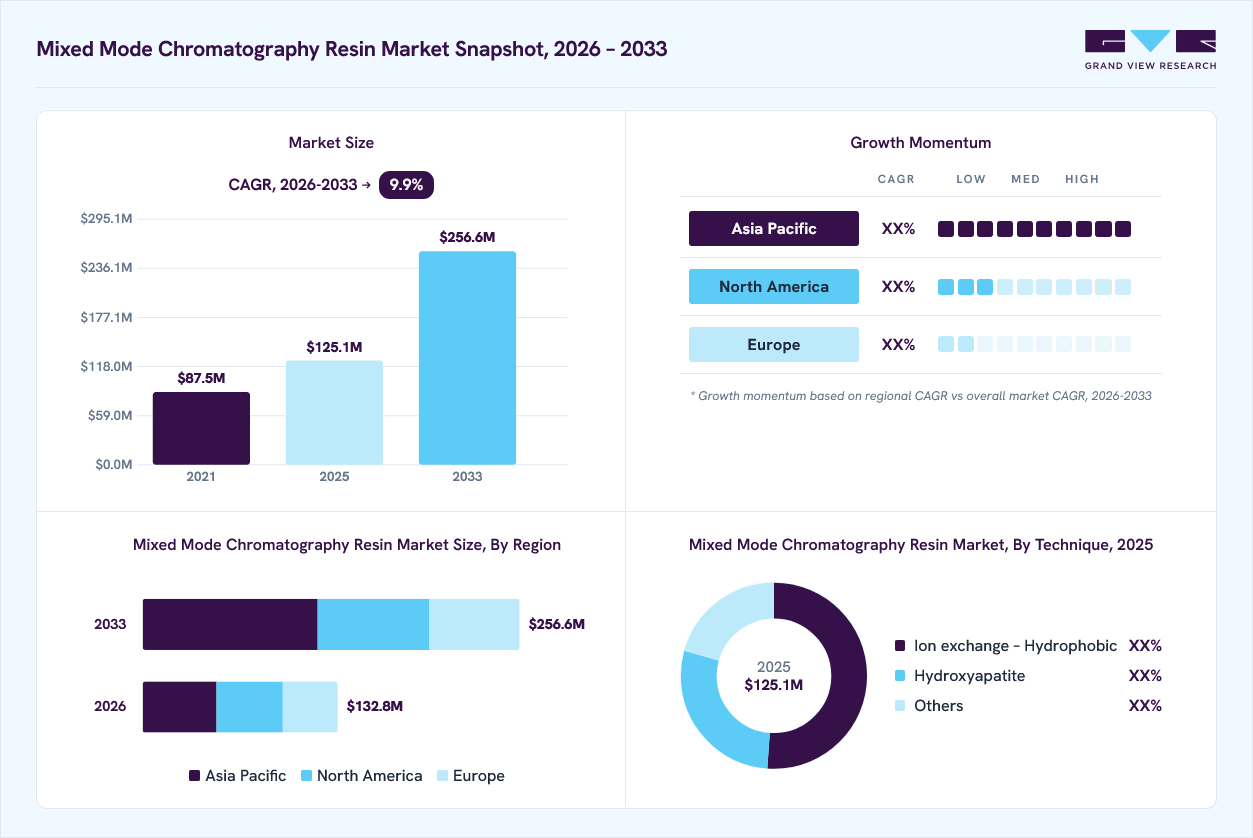
The global mixed mode chromatography resin market size was valued at USD 125.1 million in 2025 and is projected to grow from USD 132.8 million in 2026 to USD 256.6 million by 2033, at a CAGR of 9.9% from 2026 to 2033. Asia Pacific dominated the market, accounting for a revenue share of 36.7% in 2025. The increasing demand for biopharmaceuticals, growing production of monoclonal antibodies and vaccines, and rising focus on high-purity biologics are driving the growth of the mixed mode chromatography resin market.
 Source: Grand View Research, IR Documents, Primary Interviews, Paid DatabasesTo learn more about this report,
 Download Free Sample Report
Key Market Trends & Insights
- By technique: Ion exchange - hydrophobic segment led the market with the largest revenue share of 51.1% in 2025.
- By end use: Pharmaceutical & biotechnology segment led the market with the largest revenue share of 100% in 2025.
Regional Highlights
- Largest regional market: Asia Pacific (36.7% revenue share, 2025)
- By country: China held the largest market share in 2025.
Market Size & Forecast
- Market size in 2025: USD 125.1 Million
- Estimated market size in 2026: USD 132.8 Million
- Projected market size by 2033: USD 256.6 Million
- CAGR (2026-2033): 9.9%
Three ways to get this report
Buy it, customize it, or ask a question.Ask an Analyst
Analyst response in 1 business day
- AccessReport author, directly
- Reply timeWithin 1 working day
- No sales callDirect answer only
- FormatEmail reply
- CostFree, no cost
Get the Full Report
What the study covers
- FormatsPDF · Excel · Dashboard
- Timeline2026–2033 annual, 2025 base
- Coverage20+ countries, 5 regions
- Companies10+ key players profiled
Customize the Report
20% free customization
- IncludeCountries, segments, points
- TailorTo your product definition
- ExtendDeeper competitor detail
- OrA fully bespoke study
- Turnaround5–10 working days
Its superior selectivity, high binding capacity, and efficient impurity removal are accelerating adoption across biopharmaceutical manufacturing, while the expanding use of single-use bioprocessing technologies, increasing biologics production, and stronger emphasis on cost-efficient purification continue to support market growth during the forecast period. The expansion of Contract Manufacturing Organizations (CMOs) seeking effective purification solutions further propels market growth. Moreover, ongoing advancements in chromatography resin technology improve performance and scalability, meeting the evolving needs of the industry.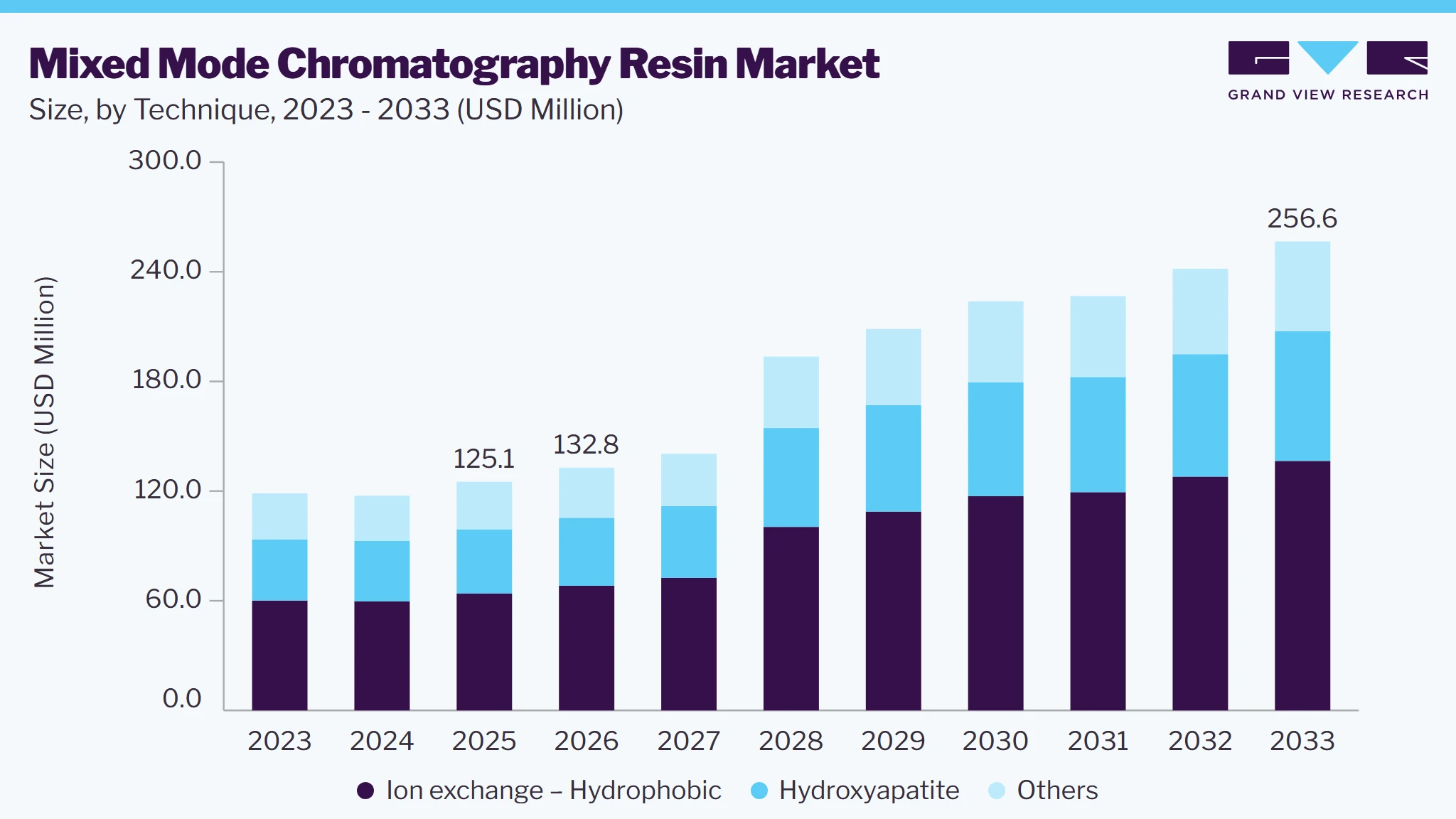 To learn more about this report, Download Free Sample Report
The mixed-mode chromatography resin incorporates ligands with both hydrophobic and ionic characteristics, allowing it to interact with biomolecules based on their charge, hydrophobicity, and size. This capability enhances the purification processes for proteins, peptides, and nucleic acids, increasing selectivity and flexibility in separating complex mixtures. As the demand for biopharmaceuticals rises, particularly for monoclonal antibodies, vaccines, and recombinant proteins, companies seek efficient purification methods to ensure high product purity and yield.
In addition, monoclonal antibody production, crucial for therapeutic applications, particularly benefits from the effectiveness of mixed-mode chromatography resins in achieving desired purity levels and adopting single-use technologies in bioprocessing facilities, further propelling the market. These technologies integrate seamlessly with mixed-mode chromatography resins, streamlining operations while reducing costs. In monoclonal antibody production, single-use systems significantly cut setup times and eliminate the need for cleaning validations, thus enhancing overall efficiency. Furthermore, expanding Contract Manufacturing Organizations (CMOs) in the biopharmaceutical sector presents new opportunities for resin suppliers.
CMOs prioritize cost-effective purification solutions as they aim to meet increasing biopharmaceutical demand. Companies like Catalent and Lonza increasingly rely on mixed mode chromatography resins to optimize their bioprocessing operations. Moreover, advancements in chromatography resin technology are driving market growth. Innovations such as novel ligands with specific binding properties and improved resin matrices with higher binding capacities enable enhanced performance and scalability in biopharmaceutical purification processes. These developments are essential for effectively meeting the industry's evolving needs.
Market Dynamics
The mixed mode chromatography resin market is driven by the rapid expansion of biopharmaceutical manufacturing, increasing demand for high-purity monoclonal antibodies, vaccines, recombinant proteins, and the growing adoption of advanced purification technologies. The superior selectivity, high binding capacity, and flexibility of mixed mode chromatography resins in separating complex biomolecules are accelerating their use across bioprocessing applications. Additionally, the expansion of Contract Manufacturing Organizations (CMOs), rising adoption of single-use bioprocessing systems, and continuous advancements in ligand design and resin matrix technologies are improving purification efficiency, scalability, and cost-effectiveness, supporting the sustained growth of the global mixed mode chromatography resin market.
The mixed mode chromatography resin market is experiencing steady growth, driven by rising investments in biopharmaceutical research and the rapid expansion of Contract Development and Manufacturing Organizations (CDMOs), where efficient, scalable, and high-purity purification processes are essential. Mixed mode chromatography resins are increasingly adopted in biologics manufacturing owing to their superior selectivity, high binding capacity, and ability to purify complex biomolecules with enhanced process efficiency and flexibility.
Market growth is further supported by increasing development of monoclonal antibodies, vaccines, recombinant proteins, and other biologics, alongside growing outsourcing of biopharmaceutical manufacturing to CDMOs. Continuous advancements in chromatography resin technologies, expanding bioprocessing capacities, and rising demand for cost-effective downstream purification solutions have significantly strengthened market demand. As biopharmaceutical companies continue to prioritize productivity, scalability, and regulatory compliance, the mixed mode chromatography resin market is expected to witness sustained growth during the forecast period.
Strict regulatory frameworks remain a significant restraint for the mixed mode chromatography resin market. Regulatory authorities require comprehensive documentation, rigorous quality validation, and strict compliance throughout resin development and manufacturing processes. Any modifications to resin composition, ligand chemistry, or manufacturing methods often necessitate extensive re-validation and regulatory approval, increasing compliance costs and extending product commercialization timelines. These stringent requirements can delay biopharmaceutical production, disrupt manufacturing schedules, and limit the rapid adoption of innovative resin technologies, thereby restraining the long-term growth of the global mixed mode chromatography resin market.
The increasing expiration of biologic drug patents and growing demand for affordable biologic therapies are creating significant growth opportunities for the mixed mode chromatography resin market. Rising biosimilar manufacturing is accelerating the adoption of mixed mode chromatography resins for scalable, high-yield, and cost-effective purification processes. The expanding biopharmaceutical industry and increasing investments in biosimilar development are further supporting market expansion, as manufacturers seek efficient alternatives to expensive Protein A chromatography columns. Additionally, continuous advancements in purification technologies are expected to drive sustained demand for mixed mode chromatography resins during the forecast period.
Analyst Perspective
The mixed mode chromatography resin market is shifting from capacity‑driven growth to innovation‑ and value‑driven expansion. Demand is fueled by biopharmaceutical manufacturing, rising biosimilar production, and the need for high‑purity biologics. Pharma companies and CDMOs remain the primary demand generators. Future value creation will rely on advanced ligand chemistries and higher‑capacity resin matrices. Compatibility with single‑use bioprocessing and application‑specific purification platforms will improve efficiency. Competitive advantage will favor firms with strong research, proprietary technologies, and global networks. Strategic collaborations with biopharma manufacturers will strengthen market positioning. Challenges include strict regulatory requirements, pricing pressure, raw material cost fluctuations, and alternative purification technologies. Market leadership will depend on innovation, regulatory expertise, supply chain resilience, and customized purification solutions for next‑generation therapeutics.
Technique Insights
Based on technique, theIon exchange - hydrophobic segment led the market with the largest revenue share of 51.1% in 2025 attributed to its effectiveness in separating biomolecules based on charge and hydrophobicity. This dual capability enhances protein and nucleic acid purification, making it crucial for biopharmaceutical applications. In addition, rising demand for high-purity products in drug development propels this segment forward. Furthermore, advancements in resin technology improve selectivity and binding capacities, making these techniques increasingly appealing to manufacturers seeking reliable purification solutions in modern bioprocessing.
The hydroxyapatite segment is expected to grow at a CAGR of 12.1% over the forecast period, owing to its unique ability to purify proteins based on their affinity for calcium phosphate selectively. This method is particularly useful for purifying biomolecules like antibodies and enzymes that require gentle handling to maintain their activity. In addition, the rising emphasis on biopharmaceutical research drives demand for effective purification techniques that ensure product integrity. Furthermore, advancements in hydroxyapatite resin technology improve scalability and performance, making it an appealing choice for manufacturers aiming to meet stringent quality standards in their processes.
End-use Insights
Based on end use, the pharmaceutical & biotechnology segment led the market with the largest revenue share of 100% in 2025, owing to increasing investments in biopharmaceutical research and development, particularly for novel therapies like monoclonal antibodies and gene therapies, heightening the demand for effective purification techniques. In addition, chromatography plays a crucial role in ensuring the purity and efficacy of these products throughout drug manufacturing processes. Furthermore, advancements in resin technology enhance selectivity and binding capacities, making these resins indispensable for isolating complex biomolecules. Moreover, the rising prevalence of chronic diseases further propels the need for targeted therapies, driving market expansion.
Regional Insights
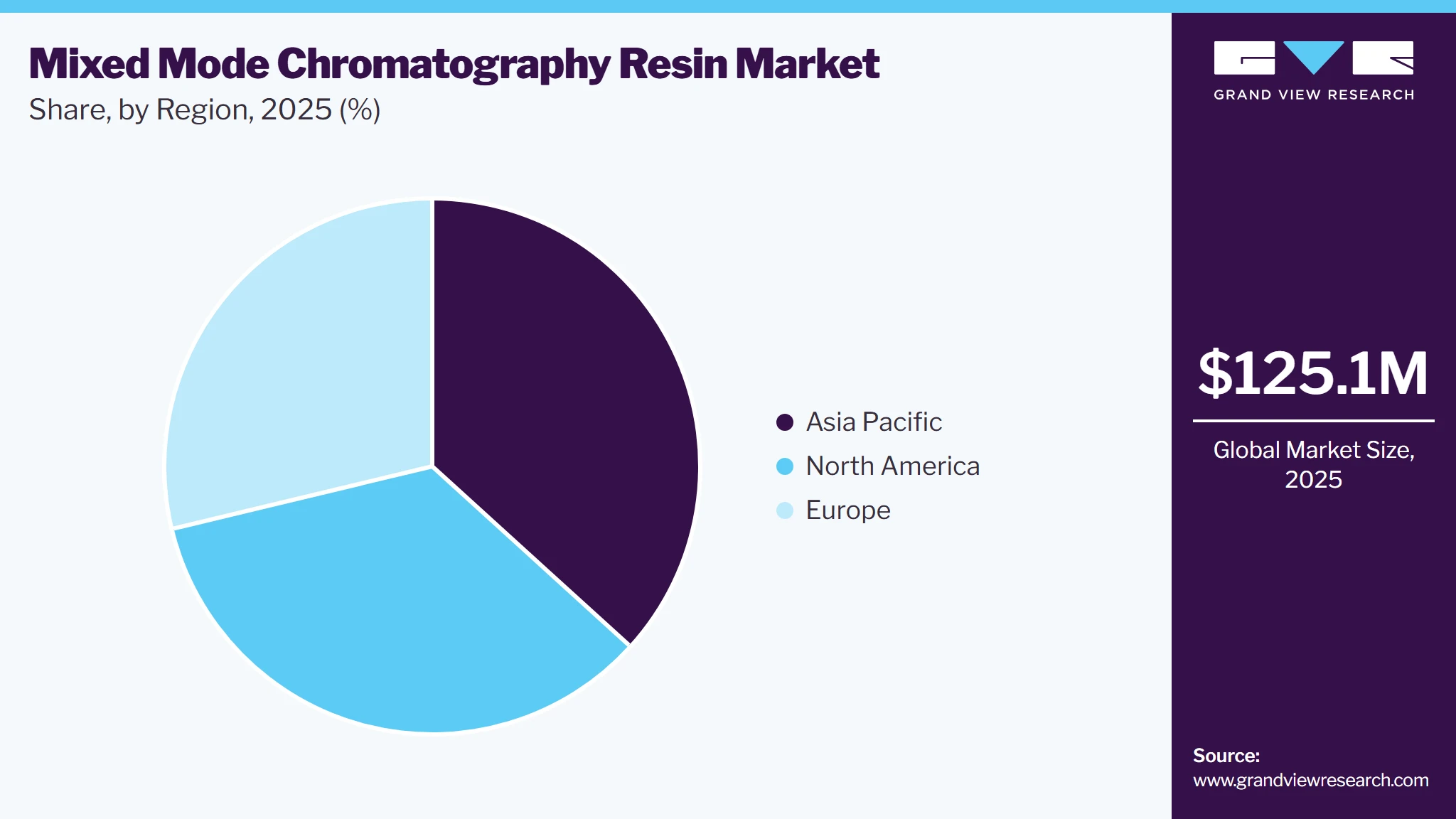
The mixed mode chromatography resin market in North America dominated the global market and accounted for the largest revenue share of 35.3% in 2025 attributed to the strong presence of pharmaceutical and biotechnology companies. In addition, stringent drug purity and safety regulatory requirements necessitate advanced purification techniques, boosting demand for mixed mode chromatography resins. Furthermore, the region's well-established infrastructure and skilled workforce further enhance its capacity to support innovative chromatography solutions, solidifying North America's dominant market position.
 To learn more about this report, Download Free Sample Report
U.S. Mixed Mode Chromatography Resin Market Trends
The U.S. mixed mode chromatography resin market led the North American market and accounted for the largest revenue share in 2024, owing to robust investments in biopharmaceutical R&D and a thriving pharmaceutical sector. The demand for high-purity products drives the need for effective purification methods, particularly in biologics production. Furthermore, the presence of leading pharmaceutical companies fosters a competitive environment that encourages innovation in chromatography technologies. Regulatory pressures from agencies like the FDA also compel manufacturers to adopt advanced purification techniques, ensuring compliance with stringent quality standards and thereby driving market growth.
Asia Pacific Mixed Mode Chromatography Resin Market Trends
Asia Pacific dominated the mixed mode chromatography resin market with the largest revenue share of 36.7% in 2025. This growth is attributed to increasing investments in biopharmaceuticals and rising healthcare expenditures. Countries like China and India are expanding their pharmaceutical sectors, focusing on developing biosimilars and generics. In addition, this growth is complemented by a surge in contract manufacturing organizations (CMOs) that require efficient purification solutions. Furthermore, government initiatives to promote biotechnology research and development further stimulate demand for advanced chromatography techniques, positioning Asia Pacific as a key player in the global market.
The mixed mode chromatography resin market in China accounted for the largest market revenue share in the Asia Pacific in 2025, driven by the country's booming biopharmaceutical industry and government support for biotechnology initiatives. In addition, the increasing focus on developing novel therapeutics and biosimilars necessitates advanced purification technologies to ensure product quality and compliance with regulatory standards. Furthermore, China's growing number of research institutions and pharmaceutical companies enhances the demand for effective separation techniques.
Europe Mixed Mode Chromatography Resin Market Trends
The mixed mode chromatography resin market in Europe held a significant revenue share in 2025 is driven by stringent regulatory requirements and a strong emphasis on drug safety and efficacy. In addition, the region's well-established pharmaceutical industry is increasingly investing in R&D for biologics and biosimilars, driving demand for advanced purification techniques. Furthermore, European countries are focusing on sustainable practices within biomanufacturing, which aligns with the capabilities of mixed-mode chromatography resins to provide efficient separation solutions. The presence of leading pharmaceutical firms and research institutions also contributes to a competitive landscape that fosters innovation in chromatography technologies.
Germany mixed mode chromatography resin market dominated the European market and is expected to grow at a CAGR of 9.4% over the forecast period, driven by its robust pharmaceutical sector and commitment to innovation. In addition, the country is home to numerous leading pharmaceutical companies that prioritize high-quality purification processes for biologics and complex molecules. Furthermore, Germany's strong focus on research and development fosters advancements in chromatography technologies, enhancing efficiency and selectivity.
Key Mixed Mode Chromatography Resin Company Insights
Some of the key companies in the market include GE Healthcare Lifesciences, Merck KGaA, Tosoh Corp, and others. These companies adopt various strategies, including new product launches and strategic partnerships, to gain a competitive edge. Furthermore, mergers and acquisitions also enable companies to integrate innovative technologies and expand their product portfolios, driving growth in this competitive landscape.
-
GE Healthcare Life Sciences manufactures various chromatography products, including mixed mode resins that efficiently purify biomolecules such as proteins, peptides, and nucleic acids. The company’s offerings cater primarily to the biopharmaceutical and biotechnology segments, providing tools that enhance the productivity and quality of drug development processes. Their innovative chromatography solutions are designed to meet the evolving needs of researchers and manufacturers in the life sciences industry.
-
Merck KGaA produces diverse chromatography resins, including mixed-mode options that enhance the purification and separation of complex biomolecules. The company focuses on serving the pharmaceutical and biotechnology sectors, offering advanced drug development, production, and quality control solutions. Its extensive portfolio aims to support researchers in achieving high purity levels while optimizing purification workflows in biopharmaceutical manufacturing processes.
Key Mixed Mode Chromatography Resin Companies:
The following key companies have been profiled for this study on the mixed mode chromatography resin market.
-
GE Healthcare Lifesciences
-
Merck KGaA
-
Tosoh Corp
-
Purolite Corp
-
Danaher Corp.
-
JSR Micro Inc.
-
Bio-Rad Labs
-
Purolite
-
Sepragen Corporation
-
Thermo Fisher Scientific
Competitive Benchmarking
Category
Operating Strategies
Competitive Edge
Weakness
Established Players (Merck KGaA, Danaher Corporation (formerly GE Healthcare Life Sciences chromatography business), Thermo Fisher Scientific, Tosoh Corporation, Bio-Rad Laboratories, Purolite)
- Focus on strengthening their position in the mixed mode chromatography resin market through the development and commercialization of high-performance mixed-mode chromatography resins for monoclonal antibodies, vaccines, recombinant proteins, plasma-derived products, and other biologics.
- Strong emphasis is placed on expanding product portfolios with advanced ligand chemistries, higher binding capacities, improved selectivity, and scalable purification solutions.
- Continuous investments in chromatography innovation, bioprocessing technologies, manufacturing capacity expansion, and strategic collaborations with biopharmaceutical companies, CDMOs, research institutes, and biotechnology firms support global market penetration and long-term commercial growth.
- Extensive expertise in chromatography science, ligand engineering, and bioprocessing technologies enables the commercialization of high-performance mixed mode chromatography resins with superior selectivity, binding capacity, purification efficiency, and scalability.
- Strong research and development capabilities, globally recognized brands, vertically integrated manufacturing operations, diversified life science portfolios, established relationships with leading biopharmaceutical manufacturers, and extensive global distribution networks provide sustainable competitive differentiation and recurring revenue opportunities across biologics manufacturing and downstream purification applications.
- High capital investment requirements for advanced resin development, ligand synthesis, precision manufacturing, and continuous product innovation increase operational complexity and production costs.
- Market growth is influenced by stringent regulatory requirements, lengthy product qualification cycles, increasing competition from regional chromatography suppliers, and pricing pressure from biopharmaceutical manufacturers.
- Additionally, significant research and development expenditures, complex quality validation processes, and continuous investments in manufacturing modernization and next-generation purification technologies may affect profitability and long-term market share.
Emerging Players (Sepragen Corporation)
- Focus on expanding their presence in the mixed mode chromatography resin market through the development of innovative, application-specific, and cost-effective chromatography solutions for biopharmaceutical purification, process development, and laboratory-scale as well as commercial-scale manufacturing.
- Emphasis is placed on improving purification efficiency, enhancing process scalability, developing customized separation technologies, and strengthening collaborations with biotechnology companies, research organizations, CDMOs, and pharmaceutical manufacturers.
- Strategic partnerships and targeted commercialization initiatives support product innovation, business expansion, and entry into high-growth regional and international markets.
- Strong flexibility in product innovation, customized chromatography solutions, responsive technical support, and specialized separation technologies enables these companies to effectively address evolving biopharmaceutical purification requirements.
- Their ability to rapidly commercialize new products, deliver application-specific solutions, optimize downstream processing performance, and provide competitive pricing strengthens adoption across research laboratories, biotechnology companies, and emerging biologics manufacturers.
- Agile business models and customer-centric product development further enhance their competitive positioning in the global mixed mode chromatography resin market.
- Limited global manufacturing capacity compared with multinational competitors, relatively smaller distribution networks, and comparatively lower financial and research resources may restrict competition in large-scale commercial biopharmaceutical manufacturing.
- Dependence on niche customer segments, increasing regulatory compliance requirements, and pricing pressure from established suppliers can constrain market expansion.
- Additionally, substantial investments in manufacturing scale-up, advanced chromatography technologies, global commercialization, and customer acquisition are required to compete effectively in the global mixed mode chromatography resin market.
Mixed Mode Chromatography Resin Market Report Scope
Report Attribute
Details
Market size in 2025
USD 125.1 million
Estimated market size in 2026
USD 132.8 million
Projected market size by 2033
USD 256.6 million
Growth rate
CAGR of 9.9% from 2026 to 2033
Base year for estimation
2025
Historical data
2021 - 2024
Forecast period
2026 - 2033
Quantitative units
Revenue in USD million/billion, volume in kilotons, and CAGR from 2026 to 2033
Report coverage
Revenue forecast, company ranking, competitive landscape, growth factors, and trends
Segments covered
Technique, end-use, region
Regional scope
North America, Europe, Asia Pacific
Country scope
U.S., China, India, Japan, Germany, UK, France, South Korea
Key companies profiled
GE Healthcare Lifesciences; Merck KGaA; Tosoh Corp; Purolite Corp; Danaher Corp; Bio-Rad Labs; Purolite; Sepragen Corporation; Thermo Fisher Scientific
Customization scope
Free report customization (equivalent up to 8 analysts' working days) with purchase. Addition or alteration to country, regional & segment scope.
Pricing and purchase options
Avail customized purchase options to meet your exact research needs. Explore purchase options
Global Mixed Mode Chromatography Resin Market Report Segmentation
This report forecasts revenue growth at global, regional, and country levels and analyzes the latest industry trends in each sub-segment from 2021 to 2033. For this study, Grand View Research has segmented the mixed mode chromatography resin market report based on technique, end-use, and region:
 To learn more about this report, Download Free Sample Report
-
Technique Outlook (Volume, Thousand Litres, Revenue, USD Million, 2021 - 2033)
-
Ion exchange - Hydrophobic
-
Hydroxyapatite
-
Others
-
-
End-use Outlook (Volume, Thousand Litres, Revenue, USD Million, 2021 - 2033)
-
Pharmaceutical & Biotechnology
-
-
Regional Outlook (Volume, Thousand Litres, Revenue, USD Million, 2021 - 2033)
-
North America
-
U.S.
-
-
Europe
-
Germany
-
UK
-
France
-
-
Asia Pacific
-
India
-
Japan
-
China
-
South Korea
-
-
Research Methodology
The mixed mode chromatography resin market figures in this report are based on a proven research process that combines executive interviews with secondary research from proprietary databases, company filings, and recognized regulatory and institutional sources. Market size is built through value-chain sizing - reconciling supply-side and demand-side estimates - and triangulated with bottom-up and top-down approaches. Every estimate passes multiple levels of expert validation before publication, with each mixed mode chromatography resin segment quantified using the revenue-capture definitions in the table below.
Segment Definition
Segment - Technique
Revenue capture definition
Ion Exchange-Hydrophobic
Revenue is captured through the production and sale of mixed mode chromatography resins incorporating both ion exchange and hydrophobic interaction mechanisms for the purification of monoclonal antibodies, recombinant proteins, vaccines, peptides, and other biologics. Demand is driven by increasing biopharmaceutical production, superior selectivity, high binding capacity, efficient impurity removal, improved process flexibility, and the growing need for cost-effective, high-yield downstream purification solutions.
Hydroxyapatite
Revenue is captured through the commercialization of hydroxyapatite-based mixed mode chromatography resins used for the purification of proteins, antibodies, nucleic acids, viruses, and complex biomolecules. Growth is supported by increasing demand for high-purity biopharmaceutical products, exceptional separation efficiency based on multiple interaction mechanisms, high contaminant removal capability, compatibility with polishing applications, and expanding adoption in advanced biologics manufacturing processes.
Others
Revenue is captured through the production and sale of other mixed mode chromatography resins utilizing specialized ligand chemistries and multimodal interaction mechanisms for challenging downstream purification applications. Demand is driven by continuous advancements in chromatography technologies, increasing development of next-generation biologics, rising adoption of customized purification platforms, enhanced scalability, improved purification performance, and growing investments in bioprocess optimization across the biopharmaceutical industry.
Segment - End Use
Revenue capture definition
Pharmaceutical & Biotechnology
Revenue is captured through the commercialization of mixed mode chromatography resins used across pharmaceutical and biotechnology companies for the purification of monoclonal antibodies, vaccines, recombinant proteins, plasma-derived products, peptides, nucleic acids, and other biologics. Growth is supported by increasing biologics production, expanding biosimilar development, rising investments in biopharmaceutical research and development, stringent regulatory requirements for product purity, and growing adoption of efficient, scalable, and cost-effective downstream purification technologies.
Estimation Model
Layer Name
Key Question
Description
Top-Down Mixed Mode Chromatography Resin Demand Assessment Layer
What defines market boundaries?
This layer begins with global demand for mixed mode chromatography resin across pharmaceutical & biotechnology applications. Demand is filtered based on biologics production, monoclonal antibody manufacturing, vaccine production, recombinant protein development, biosimilar expansion, increasing adoption of downstream purification technologies, and growing investments in biopharmaceutical manufacturing worldwide.
Technique Validation Layer
Where is demand generated?
This layer evaluates demand distribution across ion exchange-hydrophobic, hydroxyapatite, and other mixed-mode chromatography techniques. Market revenue is aligned with critical purification requirements including high binding capacity, superior selectivity, impurity removal efficiency, scalability, process flexibility, recovery yield, and compatibility with complex biomolecule purification across biopharmaceutical manufacturing processes.
Product and Technology Conversion Layer
Who captures market revenue?
This layer converts technique-level demand into the mixed mode chromatography resin market revenue by applying product mix ratios across ion exchange-hydrophobic, hydroxyapatite, and other multimodal chromatography resin technologies. Revenue allocation considers ligand chemistry, resin matrix composition, binding capacity, purification performance, manufacturing complexity, process scalability, product pricing, regulatory compliance, and supplier positioning across the global chromatography resin value chain.
Regional Commercial Cross-Check Layer
How are assumptions validated?
This layer validates demand concentration by comparing North America's leadership in biopharmaceutical innovation, biologics manufacturing, and R&D investments; Europe's growth supported by advanced pharmaceutical production, biosimilar development, and stringent regulatory standards; and Asia Pacific's rapid expansion driven by increasing biopharmaceutical manufacturing capacity, CDMO growth, and rising healthcare investments.
Delivered Customizations
This report has been delivered with the following In-depth customizations
Client Request
Customization Delivered
Value Adds
Regional Segmentation
Delivered detailed market sizing, forecasts, and growth analysis by region (North America, Europe, & Asia Pacific) and, where required, country-level analysis covering the U.S., Canada, Germany, France, the U.K., Italy, Spain, China, Japan, India, & South Korea.
Enables identification of high-growth regional markets, supports regional expansion strategies, optimizes investment allocation, and improves market entry planning.
Competitive Benchmarking
Conducted benchmarking of leading manufacturers based on product portfolio, chromatography resin technologies, production capabilities, application focus, innovation pipeline, geographic presence, strategic initiatives, partnerships, acquisitions, and competitive positioning.
Supports competitive intelligence, identifies technology leaders, evaluates market positioning, and assists strategic planning and partnership decisions.
Opportunity Assessment
Identified high-growth opportunities across biosimilar, monoclonal antibody purification, vaccine manufacturing, recombinant proteins, gene and cell therapy, CDMO expansion, single-use bioprocessing, and emerging biopharmaceutical markets, along with technology adoption trends and investment hotspots.
Enables clients to prioritize high-return investments, target emerging applications, accelerate innovation strategies, and capitalize on future market growth opportunities.
Frequently Asked Questions About This Report
The increasing demand for biopharmaceuticals, growing production of monoclonal antibodies and vaccines, and rising focus on high-purity biologics are driving the growth of the mixed mode chromatography resin market. Its superior selectivity, high binding capacity, and efficient impurity removal are accelerating adoption across biopharmaceutical manufacturing, while the expanding use of single-use bioprocessing technologies, increasing biologics production, and stronger emphasis on cost-efficient purification continue to support market growth during the forecast period.
The mixed mode chromatography resin market was estimated at around USD 125.1 million in the year 2025 and is expected to reach around USD 132.8 million in 2026.
The mixed mode chromatography resin market is expected to grow at a compound annual growth rate of 9.9% from 2026 to 2033 to reach around USD 256.6 million by 2033.
The Asia Pacific Mixed Mode Chromatography Resin market accounted for the largest share of 36.7% market size in 2025.
Based on technique, the ion exchange – hydrophobic segment accounted for the largest share of 51.1% market size in 2025. Rising demand for high-efficiency biopharmaceutical purification and cost-effective downstream processing is accelerating ion exchange–hydrophobic mixed mode chromatography resin adoption due to its superior selectivity, high binding capacity, enhanced impurity removal, and ability to efficiently separate complex biomolecules.
The key players in the mixed mode chromatography resin market are GE Healthcare Lifesciences, Merck KGaA, Tosoh Corp, Purolite Corp, Danaher Corp, Bio-Rad Labs, Purolite, Sepragen Corporation, and Thermo Fisher Scientific.
The pharmaceutical & biotechnology led the mixed mode chromatography resin market in 2025 with a 100.0% share. Rising demand for high-purity biopharmaceuticals and efficient downstream purification is accelerating mixed mode chromatography resin adoption due to its superior selectivity, high binding capacity, enhanced impurity removal, process flexibility, and scalability across pharmaceutical & biotechnology applications.
About the Author(s)
Organic Chemicals Research Team
Bulk Chemicals · Organic ChemicalsThis report was authored by the organic chemicals research team at Grand View Research - comprising two research analysts, one senior research analyst, and one industry expert - with specialized expertise in the organic chemicals segment of the bulk chemicals industry. All findings are based on proprietary bulk chemicals databases, executive interviews, and regulatory analysis, subject to internal peer review prior to publication.
Last Updated:
Speak to Analyst

Customize this report to your needs - add regions, segments, or data points, with 20% free customization.
Or view our licence options:


ISO 9001:2015 & 27001:2022 Certified
We are GDPR and CCPA compliant! Your transaction & personal information is safe and secure. For more details, please read our privacy policy.


