
- Home
- »
- Biotechnology
- »
-
Next-generation Sequencing Library Preparation Market Report, 2026-2033GVR Report cover
![Next-generation Sequencing Library Preparation Market (2026 - 2033)Report]()
Next-generation Sequencing Library Preparation Market (2026 - 2033)
Size, Share & Trends Analysis Report By Sequencing Type (Targeted Genome Sequencing, Whole Genome Sequencing), By Product, By Application, By End Use, By Region, And Segment Forecasts
Market Size, 2025
$2.0BMarket Estimate, 2026
$2.2BMarket Forecast, 2033
$5.3BCAGR, 2026–2033
13.5%Next-generation Sequencing Library Preparation Market Summary
The global next-generation sequencing library preparation market size was valued at USD 2.0 billion in 2025 and is projected to grow from USD 2.2 billion in 2026 to USD 5.3 billion by 2033, at a CAGR of 13.5% from 2026 to 2033. The North America market held the largest share of 42.4% of the global market in 2025. Rapid advancements in sequencing technology and bioinformatics have enabled the identification of DNA variations.

Key Market Trends & Insights
- By sequencing type: The targeted genome sequencing segment dominated the global industry in 2025, accounting for 64.3% of total revenue.
- By product: The reagents and consumables segment dominated the market with the largest share in 2025.
- By application: The drug & biomarker discovery segment dominated the market with a share of 65.0% in 2025.
- By end use: The academic & research institutions segment held the largest market share of 36.5% in 2025..
Regional Highlights
- Largest regional market: North America (42.4% revenue share, 2025)
- Fastest-growing regional market: Asia Pacific (highest CAGR, 2026-2033)
- By country: The U.S. held the largest market share in 2025.
Market Size & Forecast
- Market size in 2025: USD 2.0 Billion
- Estimated market size in 2026: USD 2.2 Billion
- Projected market size by 2033: USD 5.3 Billion
- CAGR (2026-2033): 13.5%
Moreover, with the widespread application of NGS and Whole-Genome Sequencing (WGS), a wide range of genes can be examined in a single platform simultaneously, which expands the utility of DNA sequencing in clinical diagnosis applications. These factors are expected to drive substantial growth in the market over the forecast period.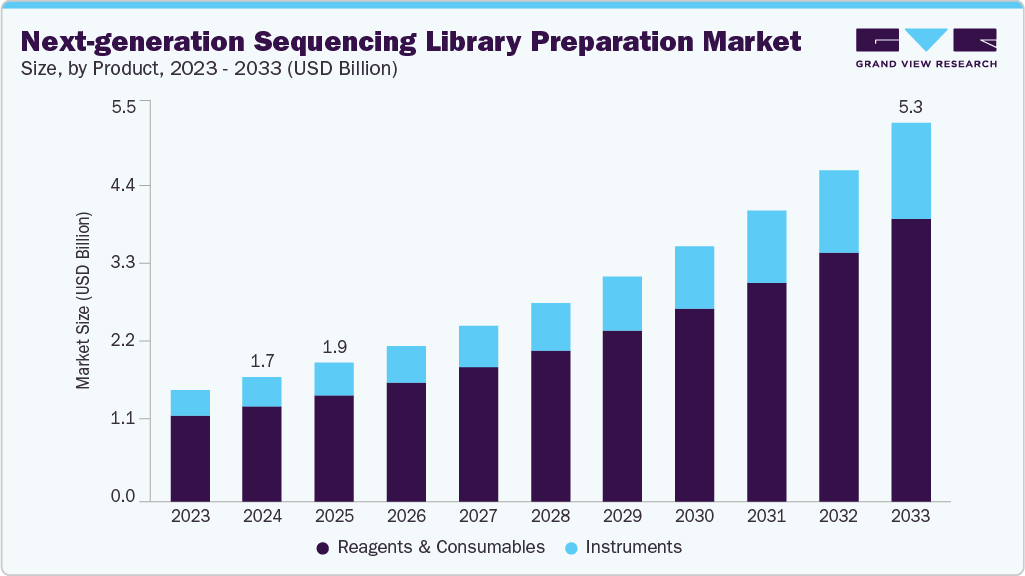
The rapid advancement of genomic research is a major driver fueling the demand for next-generation sequencing (NGS) library preparation kits. As scientists delve deeper into understanding the genetic basis of diseases, biological processes, and evolutionary mechanisms, NGS has become an indispensable tool. Applications such as whole genome sequencing, targeted sequencing, and transcriptomics require diverse and specialized library preparation methods to convert DNA or RNA samples into sequencing-ready formats. This broadening scope of research, particularly in cancer genomics, where identifying tumor mutations and heterogeneity is critical, and in rare genetic disorders, where pinpointing causative mutations is essential, continuously increases the need for efficient, accurate, and high-quality library prep solutions.
Pipeline Analysis for Cancer Genomics
NCT Number
Conditions
Sponsor
Phases
Estimated Completion Date
NCT04565054
Breast Cancer Female
West German Study Group
PHASE3
2029
NCT05215340
Metastatic Non-Small Cell Lung Cancer
Daiichi Sankyo
PHASE3
2028
NCT06074588
Non-small Cell Lung Cancer (NSCLC)
Merck Sharp & Dohme LLC
PHASE3
2033
NCT06357533
Non-Small Cell Lung Cancer
AstraZeneca
PHASE3
2033
NCT05050084
Prostate Adenocarcinoma
NRG Oncology
PHASE3
2026
NCT05502237
Non-small Cell Lung Cancer
Gilead Sciences
PHASE3
2028
NCT05687266
NSCLC
AstraZeneca
PHASE3
2027
NCT05555732
Metastatic Non-Small Cell Lung Cancer
Daiichi Sankyo
PHASE3
2027
NCT04484818
Prostate Carcinoma
ECOG-ACRIN Cancer Research Group
PHASE3
2028
NCT06472245
Patients With Non-Small Cell Lung Cancer
OSE Immunotherapeutics
PHASE3
2028
NCT06065748
Estrogen Receptor-Positive, HER2-Negative Advanced Breast Cancer
Hoffmann-La Roche
PHASE3
2028
Source: Secondary Research, Grand View Research
Moreover, the rise in multi-disciplinary studies combining genomics with epigenetics and transcriptomics has increased the complexity and variety of library preparation protocols. For instance, in April 2025, Watchmaker Genomics and Revvity partnered to automate DNA and RNA library preparation for next-generation sequencing (NGS) workflows. Utilizing Revvity's Sciclone G3 NGSx workstation, the collaboration enabled fully automated, verified methods supporting up to 96 samples per run, including low-input and FFPE samples. This advancement aimed to streamline operations and enhance data quality for genomics laboratories worldwide. This surge in genomic applications across basic research, clinical diagnostics, and environmental studies sustains strong growth in the NGS library preparation market, as scientists and clinicians require reliable tools to generate robust and reproducible sequencing data for critical insights, especially in fields such as oncology and rare disease research, where precision is paramount.
Technological advances in sequencing platforms have been a significant factor driving the growth of the NGS library preparation market. Innovations in sequencing technology have dramatically increased throughput, enabling laboratories to process larger samples simultaneously and generate vast amounts of data quickly and accurately. These improvements have also substantially reduced the cost per genome or transcriptome sequenced, making NGS more accessible to research institutions, clinical labs, and commercial entities. For instance, in June 2025, SPT Labtech introduced advanced automation and miniaturization solutions for next-generation sequencing (NGS) library preparation. Their firefly and mosquito platforms enable advanced low-volume workflows, enhancing precision and reducing reagent costs. These innovations aim to address the growing challenges of manual library preparation and support scalable, cost-effective genomics research. As sequencing technology becomes more powerful and affordable, compatible library preparation is needed to efficiently handle higher sample volumes without compromising data quality.
Moreover, as sequencing technologies evolve with higher sensitivity and accuracy, library preparation methods must adapt to meet these enhanced requirements. The shift towards more automated, scalable, and streamlined workflows reflects the demand for faster turnaround times and reproducibility in advanced sequencing projects. This is particularly important for large-scale population studies, clinical diagnostics, and multi-omics research, where consistent and high-quality library preparation is critical for reliable results.
Market Concentration & Characteristics
The development of advanced NGS tools has revolutionized therapeutic development and disease detection by enabling easier cell isolation. For instance, in July 2024, researchers introduced an open microfluidic platform for automating the customization of next-generation sequencing (NGS) library preparation. This lab-on-a-chip solution streamlined essential steps such as PCR-based target enrichment, adapter ligation, and nucleic acid purification into a compact, cost-effective system. Demonstrated with cell-free DNA samples, the platform achieved results comparable to manual methods, offering a scalable alternative for low-to-medium throughput applications in clinical diagnostics and cancer monitoring. These developments collectively represent a significant leap forward in sequencing technology, driving broader adoption and deeper biological insights.
Mergers and acquisition activities can significantly impact on the growth of the next-generation sequencing library preparations industry. Partnerships help companies to reduce costs and increase efficiency. For instance, in May 2025, Twist Bioscience and Element Biosciences expanded their collaboration to co-develop end-to-end next-generation sequencing (NGS) solutions. Twist became the exclusive provider of Trinity library preparation and target enrichment kits for Element's AVITI sequencer. This partnership aims to streamline hybrid capture processes, offering researchers a unified workflow from library prep through sequencing. The integrated solutions enhance performance across key NGS applications, including agbio, population genomics, and clinical research. This collaboration aims to streamline the hybrid capture process, offering researchers a seamless workflow from library preparation through sequencing. By integrating these solutions, the partnership enhances performance across key NGS applications, including agricultural biotechnology, population genomics, and clinical research.
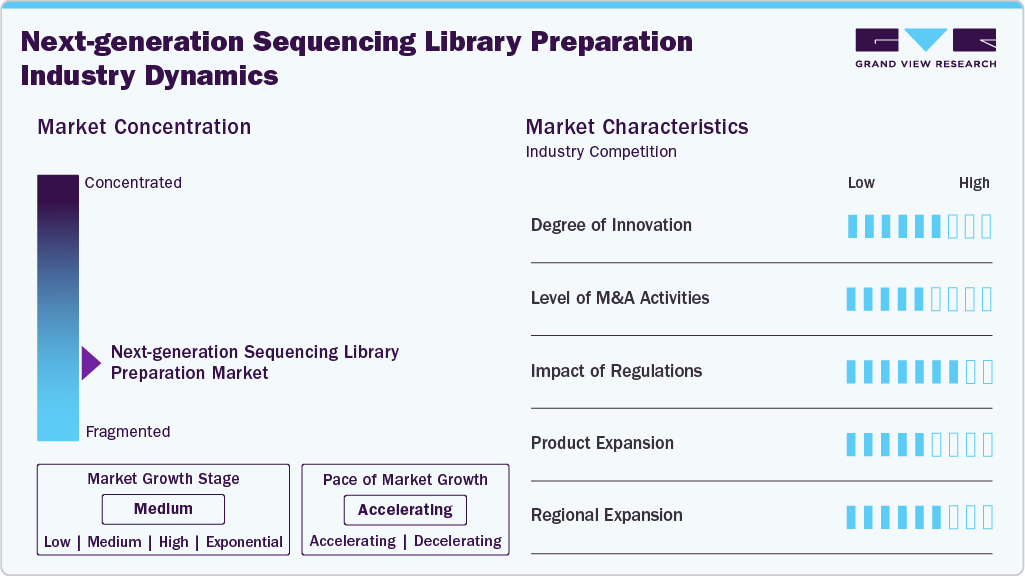
The development and application of next-generation sequencing library preparation technologies are subject to stringent regulations to ensure safety, efficacy, and ethical considerations. Ethical considerations also play a significant role in regulating NGS technologies. Many countries have bioethical committees or advisory boards assessing the moral implications of NGS tools. Overall, regulatory oversight is essential for fostering trust and widespread adoption of NGS technologies while influencing the pace and direction of industry growth.
The industry has seen significant growth in recent years, driven by the increasing number of new products launched for NGS technology. For instance, in October 2024, Twist Bioscience launched the FlexPrep Ultra-High Throughput (UHT) Library Preparation Kit, designed to streamline next-generation sequencing (NGS) workflows for agrigenomics and population genomics applications. This kit incorporates Twist's proprietary Normalization by Ligation (NBL) technology, eliminating time-consuming upfront sample quantification and enabling early pooling of up to 12 samples per reaction. The NGS workstation features automated library preparation capabilities, making it easier for customers to streamline their workflows.
The industry is experiencing high regional expansion, driven by an increasing customer base for NGS products. North America and Europe remain dominant due to advanced healthcare infrastructure and high adoption rates of genomic technologies. However, significant investments and growing research initiatives in Asia Pacific, particularly in China, India, Japan, and South Korea, are accelerating regional market growth. These regions benefit from expanding biopharma industries, government funding, and rising demand for personalized medicine and clinical diagnostics. Moreover, with increasing collaborations and infrastructure development, Latin America and the Middle East are emerging as new frontiers. Strategic regional expansion allows NGS companies to tap into diverse patient populations, address local healthcare needs, and strengthen their global footprint.
Sequencing Type Insights
The targeted genome sequencing segment dominated the global industry in 2025, accounting for 64.3% of total revenue. This can be attributed to the advancements in sequencing technologies that enhance accuracy & efficiency, increasing applications in personalized medicine & disease diagnostics, and growing investments in genomic research. For instance, in December 2024, GEN published a tutorial detailing advancements in size selection for long-read sequencing workflows. The tutorial emphasized removing shorter DNA fragments to enhance sequencing efficiency. It highlighted using automated systems such as the Light Bench, which employs Ranger Technology for electrophoresis-based size selection. These advancements aim to streamline long-read sequencing, making it more efficient and cost-effective for applications such as whole-genome analysis and structural variant detection.
The whole genome sequencing segment is anticipated to grow significantly during the forecast period. One of the major factors contributing to growth is the increased use of WGS to combat COVID-19. For instance, in March 2025, Covaris introduced the truCOVER WGS PCR-free Library Prep Kit, designed to enhance whole genome sequencing (WGS) workflows. This kit addresses common challenges such as DNA fragmentation variability, poor library conversion, and sequencing bias, which can negatively impact data quality and reproducibility. Eliminating the need for quantitative PCR-based quality control steps streamlines the preparation process, reducing turnaround time by approximately 30% and minimizing consumable usage through single-tube workflows. The truCOVER kit is compatible with various sample types, including saliva, blood, and formalin-fixed paraffin-embedded (FFPE) tissues, offering flexibility and consistency across diverse applications in genetic disease diagnostics, drug development, and personalized medicine, further derives the segment growth in next-generation sequencing library preparations industry.
Product Insights
The reagents and consumables segment dominated the market with the largest share in 2025. This can be attributed to several factors, including the increasing demand for reliable and high-quality reagents for sample preparation, the rising number of genomic research projects and clinical diagnostics utilizing NGS, and continuous advancements in reagent technologies that improve efficiency and accuracy. For instance, in February 2024, Integrated DNA Technologies (IDT) and Element Biosciences launched specialized xGen NGS products adapters, universal blockers, and amplification primers exclusively for Element’s AVITI System in the U.S. This collaboration aimed to enhance next-generation sequencing workflows across DNA, RNA, and methylation applications, supporting efficient hybridization capture and minimizing sequencing errors.
The instruments segment is anticipated to grow at the fastest CAGR over the forecast period. The rise in technological advancements in NGS sequencing instruments, growing R&D investment, and an increase in the application of instruments for clinical diagnostics & drug discovery are some of the major factors influencing the growth of the NGS sequencing instruments segment. In recent years, several platforms & systems, such as Illumina’s Solexa, Thermo Fisher’s SOLiD systems, and Ion Torrent series, and PacBio’s PacBio Sequel, have offered unique prospects for high-throughput functional genomic research and impose an incredible influence on genomic research, boosting segment growth.
Application Insights
The drug & biomarker discovery segment dominated the market with a share of 65.0% in 2025 and is anticipated to grow at the fastest CAGR over the forecast period. Several factors, including the increasing focus on personalized medicine & targeted therapies, which rely heavily on genomic data for drug development. For instance, in December 2024, Alithea Genomics launched the MERCURIUS Full-Length DRUG-seq technology. This innovative RNA sequencing solution enabled the preparation of Illumina-compatible libraries for up to 384 samples in a single tube, eliminating the need for RNA isolation. This advancement allowed researchers to perform large-scale compound screening based on full-length RNA sequencing, potentially opening new avenues in drug discovery targeting gene isoforms and splicing variants, driving further demand in the market.
The disease diagnostics segment is anticipated to grow at a significant CAGR during the forecast period. The decreasing cost of technology has significantly increased the utilization of data analysis platforms and NGS software by numerous academic institutions and research centers for their projects requiring data interpretation. For instance, in January 2026, Illumina, Inc. announced expanded adoption of its cloud-based DRAGEN Bio-IT Platform by research institutions and clinical laboratories to accelerate genomic data analysis for disease diagnostics, enabling faster and more cost-efficient interpretation of sequencing data. Similarly, in October 2025, QIAGEN N.V. launched enhancements to its QIAGEN Digital Insights (QDI) platform, aimed at supporting academic and clinical researchers with scalable NGS data interpretation tools for oncology and rare disease diagnostics, further reinforcing the role of advanced bioinformatics in disease diagnosis
End Use Insights
The academic & research institutions segment held the largest market share of 36.5% in 2025. The extensive use of NGS technologies in educational settings for fundamental research, genome sequencing projects, and translational research aimed at understanding diseases and developing new therapies is anticipated to propel the segment over the forecast period.
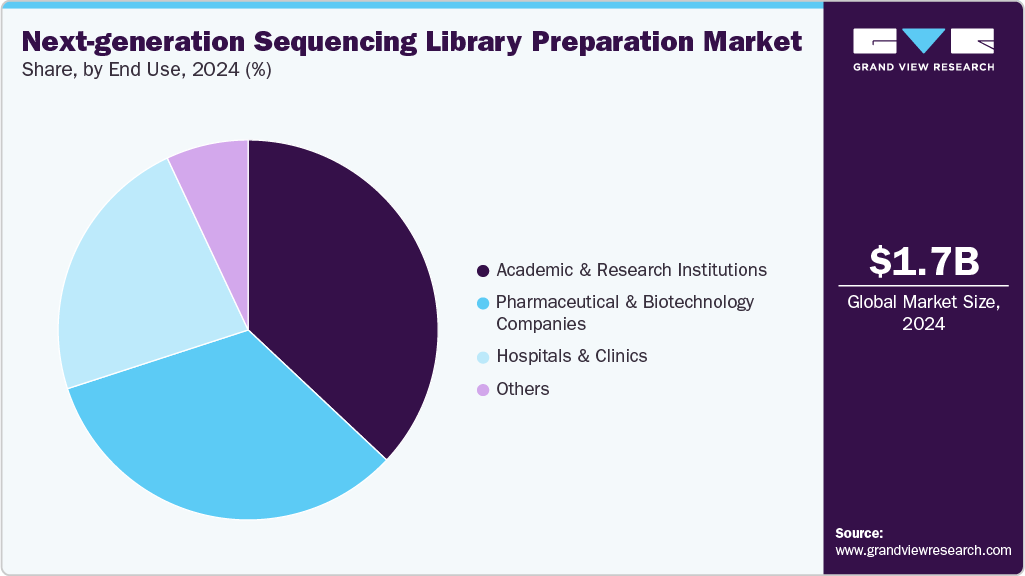
The pharmaceutical and biotechnology companies segment is anticipated to grow at the fastest CAGR of 14.73% over the forecast period. This can be attributed to the increasing adoption of companion diagnostics and personalized medicines. For instance, in February 2026, the U.S. FDA approved the PD-L1 IHC 22C3 pharmDx as a companion diagnostic to identify ovarian cancer patients eligible for pembrolizumab (Keytruda), highlighting the growing integration of targeted therapies with biomarker-based diagnostics in precision oncology.
Regional Insights
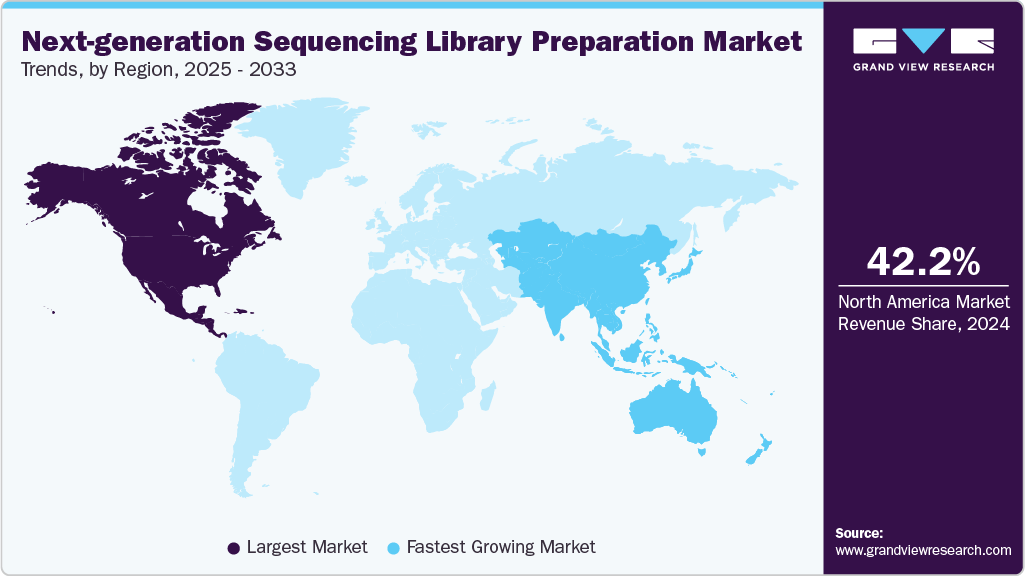
North America held the largest share of 42.4% of the global next-generation sequencing library preparation industry in 2025. The market growth in the region can be mainly attributed to extensive disease-based research studies sponsored by academic research institutes and pharmaceutical giants. Moreover, the growing investments in R&D, technological developments by key players, and advanced healthcare infrastructure are further fueling the market growth in the region.
U.S. Next-Generation Sequencing Library Preparation Market Trends
The next-generation sequencing library preparation industry in the U.S. is anticipated to grow over the forecast period due to government funding & growing focus on genome studies, and the rising prevalence of diseases. For instance, in July 2024, Illumina launched its DNA Prep portfolio in the U.S., offering rapid, scalable library preparation solutions using bead-linked transposon technology. The portfolio includes Illumina DNA Prep, DNA Prep with Enrichment, and DNA PCR-Free Prep, each designed to streamline workflows across whole-genome, targeted, and PCR-free sequencing applications. Supporting diverse sample types and a wide DNA input range, the kits deliver consistent fragment sizes and reduce hands-on time and bias. The solutions are fully automation-compatible for high-throughput environments and seamless integration with Illumina sequencing platforms. Moreover, increasing research in drug discovery, personalized medicine, and targeted therapies is further anticipated to fuel market growth.
Europe Next-Generation Sequencing Library Preparation Market Trends
The Europe next-generation sequencing library preparation industry is anticipated to grow over the forecast period. This growth is driven by declining sequencing costs, technological advancements, and expanding clinical applications in oncology, personalized medicine, and rare disease diagnostics. Countries such as the UK, Germany, and France are leading adoption through national genomic initiatives and strong healthcare infrastructure. Increased demand for automated, high-tech workflows is also fueling the rise of instruments and consumables.
The next-generation sequencing library preparation market in the UK is experiencing robust growth, driven by advancements in medical research and the increasing emphasis on personalized medicine. The UK's strong healthcare infrastructure, combined with its world-class research institutions and biotechnology sector, provides fertile ground for developing and applying cutting-edge next-generation sequencing technologies. For instance, in July 2024, Paragon Genomics partnered with Biosecure ID to distribute its CleanPlex NGS products in the UK and Ireland, expanding access to multiplexed target enrichment solutions for research, diagnostics, and precision medicine applications across the region.
The next-generation sequencing library preparation market in Germany is expected to grow over the forecast period due to genetic disorders' increasing incidence and prevalence, favorable government policies supporting research activities, and key players' introduction of new drugs and therapies.
Asia Pacific Next-Generation Sequencing Library Preparation Market Trends
The Asia Pacific next-generation sequencing library preparation industry is expected to grow at the fastest CAGR of 14.9% from 2026 to 2033. This is attributed to the increasing incidence of chronic diseases, growing government support for genomic research and development, and a rising preference for next-generation sequencing library preparation technologies in therapeutics. For instance, in February 2025, researchers introduced a streamlined protocol for constructing targeted and methylome single-stranded DNA sequencing libraries. This method enabled efficient genomic and epigenomic analyses from limited DNA quantities, including damaged samples, enhancing the accuracy of somatic variant detection and methylation profiling in clinical settings.
The China next-generation sequencing library preparation market is witnessing rapid growth, underpinned by the country's robust healthcare reforms, growing biotechnology sector, and significant government investments in biomedical research and innovation. China's focus on advancing precision medicine and developing innovative therapies for cancer and other chronic diseases drives substantial demand for cutting-edge NGS technologies.
The Japan next-generation sequencing library preparation market is expected to grow rapidly over the forecast period. The country's healthcare and clinical research service providers have been integrating NGS technologies for the past couple of years. They are expected to account for a considerable share of the Asia Pacific market's revenue share. Ongoing developments in HLA and prenatal NGS testing, coupled with international collaborations with U.S. & European companies are expected to fuel the growth of Japan next-generation sequencing library preparation industry during the forecast period.
MEA Next-Generation Sequencing Library Preparation Market Trends
The next-generation sequencing library preparation industry in the Middle East and Africa is expected to witness steady growth fueled by the expanding role of biotechnology in healthcare. As regional healthcare systems increasingly adopt genomic technologies for disease diagnosis and treatment, the demand for efficient and accurate sequencing solutions is set to rise. Moreover, government initiatives and collaborations with international research institutions will likely accelerate the adoption of NGS platforms across the region.
The next-generation sequencing library preparation market in Kuwait is anticipated to witness growth over the forecast period, owing to governmental and private entities' escalating investment in scientific research and development. This investment propels advancements in NGS technologies, consequently presenting opportunities for developing novel and enhanced NGS tools and applications.
Key Next-generation Sequencing Library Preparation Company Insights
The next-generation sequencing library preparation industry is characterized by a robust competitive landscape, with several established players leading the way through cutting-edge technological advancements, comprehensive service portfolios, and strategic collaborations. Industry leaders such as Illumina, Agilent Technologies, F. Hoffmann-La Roche, and Pacific Biosciences of California, Inc. have maintained a significant market share due to their innovative solutions, strong distribution networks, and vast product offerings in NGS library preparation reagents and consumables.
Companies such as Thermo Fisher Scientific, QIAGEN, and BD continue to dominate by providing advanced, scalable solutions for various applications, from clinical diagnostics to genomics and personalized medicine research. These organizations have solidified their leadership by addressing the increasing demand for high-quality, reliable, and cost-effective library preparation workflows, facilitating next-generation sequencing for academic and commercial purposes.
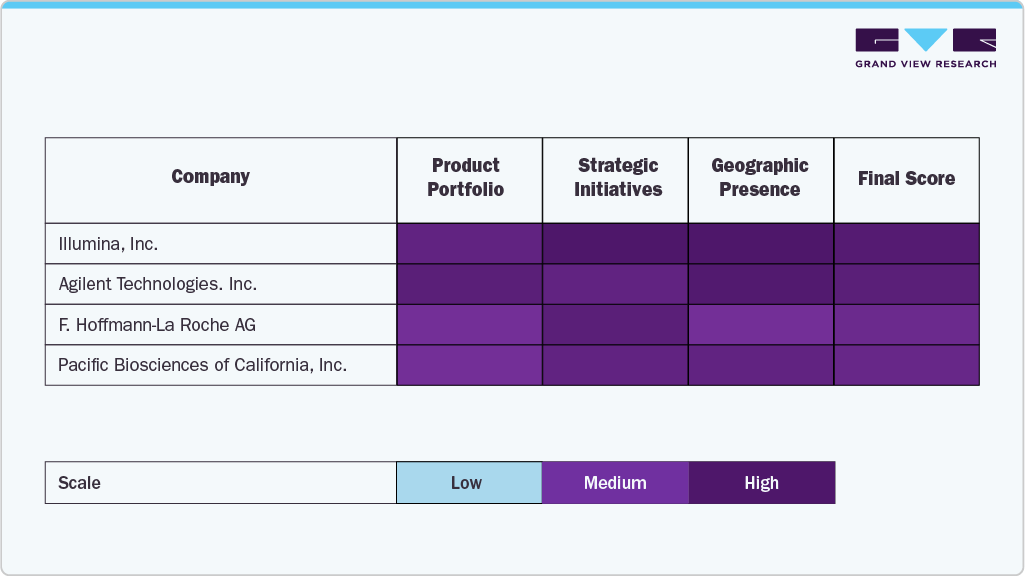
New entrants such as Oxford Nanopore Technologies and Pacific Biosciences have expanded their presence in the NGS market by offering unique and disruptive technologies, including portable sequencing platforms and long-read sequencing capabilities. These firms are quickly gaining traction with their innovative products, which provide superior performance in specialized sequencing applications such as metagenomics, single-cell sequencing, and real-time analysis.
The NGS library preparation market is witnessing rapid technological advancements driven by increased demand for precision medicine, genomics research, and diagnostics. This is coupled with the rising adoption of NGS technologies in fields includes oncology, infectious disease, and reproductive health. The future of the NGS library preparation market will be shaped by innovations in automation, reagent quality, and cost-effectiveness, alongside a growing emphasis on accessibility, scalability, and integration with downstream sequencing platforms.
Key Next-generation Sequencing Library Preparation Companies:
The following key companies have been profiled for this study on the next-generation sequencing library preparation market.
- Illumina, Inc.
- Agilent Technologies, Inc.
- F. Hoffmann-La Roche AG, Inc.
- BD
- Oxford Nanopore Technologies
- New England Biolabs Inc.
- Revvity, Inc.
- QIAGEN N.V.
- Pacific Biosciences of California, Inc.
- Thermo Fisher Scientific Inc.
Recent Developments
-
In May 2025, F. Hoffmann-La Roche Ltd. introduced its novel Sequencing by Expansion (SBX) technology, enabling ultra-fast and scalable DNA/RNA sequencing within hours, significantly enhancing efficiency in clinical genomics and precision diagnostics.
-
In April 2025, Oxford Nanopore Technologies partnered with Cepheid to co-develop automated sequencing-driven solutions. The collaboration integrates Cepheid’s GeneXpert platform for sample preparation and library construction with Oxford Nanopore’s real-time sequencing capabilities. Early validation studies confirmed the technical feasibility of this combined approach, supporting the development of a Research Use Only (RUO) workflow. This solution enables rapid, on-site sequencing for infectious disease detection, with turnaround times of just a few hours. While initially focused on identifying bacterial and fungal pathogens from cultured samples, the initiative is expected to expand into broader infectious disease applications and eventually transition toward clinically approved diagnostic use.
-
In January 2025, Thermo Fisher Scientific introduced Olink Reveal, an accessible next-generation sequencing (NGS)-based proteomics solution designed to integrate seamlessly with existing NGS platforms such as Illumina's NextSeq 2000, NovaSeq X and NovaSeq 6000. This innovation enables researchers to measure approximately 1,000 human proteins, facilitating broad proteome screening and in-depth characterization of critical inflammation processes. Olink Reveal is engineered to eliminate the need for specialized instrumentation, reduce costs, simplify workflows, and make high-plex proteomics more accessible to laboratories without extensive infrastructure. By integrating genomics with proteomics, Olink Reveal enables researchers to gain deeper insights into dynamic biological processes, enhancing the understanding of complex diseases and supporting the advancement of precision medicine.
-
In October 2024, BD (Becton, Dickinson, and Company) announced the launch of a new robotics-compatible reagent kit designed to automate and standardize single-cell research workflows. This initiative, developed in collaboration with Hamilton Company, aims to streamline the preparation of DNA libraries, an essential step in single-cell multiomics studies, by integrating BD's OMICS-One XT WTA Assay with Hamilton's Microlab NGS STAR automated liquid handling platform. This combination facilitates high-throughput processing, reduces manual errors, and enhances reproducibility, particularly in oncology and immunology research. The integrated solution is now commercially available globally, offering researchers a scalable and efficient approach to single-cell analysis.
Next-Generation Sequencing Library Preparation Market Report Scope
Report Attribute
Details
Market size in 2025
USD 2.0 billion
Estimated market size in 2026
USD 2.2 billion
Projected market size by 2033
USD 5.3 billion
Growth rate
CAGR of 13.5% from 2026 to 2033
Actual data
2021 - 2025
Forecast period
2026 - 2033
Quantitative units
Revenue in USD million/billion and CAGR from 2026 to 2033
Report coverage
Revenue forecast, company ranking, competitive landscape, growth factors, and trends
Segments covered
Product, sequencing type, application, end use, region
Regional scope
North America; Europe; Asia Pacific; Latin America; MEA
Country scope
U.S.; Canada; Mexico; UK; Germany; France; Italy; Spain; Denmark; Sweden; Norway; India; China; Japan; Australia; South Korea; Thailand; Brazil; Argentina; Saudi Arabia; UAE; South Africa; Kuwait
Key companies profiled
Illumina, Inc.; Agilent Technologies, Inc.; F. Hoffmann-La Roche AG, Inc.; BD; Oxford Nanopore Technologies; New England Biolabs Inc.; Revvity, Inc.; QIAGEN N.V.; Pacific Biosciences of California, Inc.; Thermo Fisher Scientific Inc.
Customization scope
Free report customization (equivalent up to 8 analyst’s working days) with purchase. Addition or alteration to country, regional & segment scope.
Global Next-generation Sequencing Library Preparation Market Report Segmentation
This report forecasts revenue growth at global, regional, and country levels and provides an analysis of the latest industry trends in each of the sub-segments from 2021 to 2033. For this study, Grand View Research has segmented the global next-generation sequencing library preparation market report based on sequencing type, product, application, end use, and region:
-
Sequencing Type Outlook (Revenue, USD Million, 2021 - 2033)
-
Targeted Genome Sequencing
-
Whole Genome Sequencing
-
Whole Exome Sequencing
-
Other Sequencing Types
-
-
Product Outlook (Revenue, USD Million, 2021 - 2033)
-
Reagents & Consumables
-
DNA Library Preparation Kits
-
RNA Library Preparation Kits
-
Other Reagents & Consumables
-
-
Instruments
-
-
Application Outlook (Revenue, USD Million, 2021 - 2033)
-
Drug & Biomarker Discovery
-
Disease Diagnostics
-
Cancer Diagnostics
-
Reproductive Health Diagnostics
-
Infectious Disease Diagnostics
-
Other Disease Diagnostic Applications
-
-
Others
-
-
End Use Outlook (Revenue, USD Million, 2021 - 2033)
-
Hospitals and Clinics
-
Academic and Research Institutions
-
Pharmaceutical and Biotechnology Companies
-
Others
-
-
Regional Outlook (Revenue, USD Million, 2021 - 2033)
-
North America
-
U.S.
-
Canada
-
Mexico
-
-
Europe
-
UK
-
Germany
-
France
-
Italy
-
Spain
-
Denmark
-
Sweden
-
Norway
-
-
Asia Pacific
-
Japan
-
China
-
India
-
Australia
-
South Korea
-
Thailand
-
-
Latin America
-
Brazil
-
Argentina
-
-
MEA
-
South Africa
-
Saudi Arabia
-
UAE
-
Kuwait
-
-
Frequently Asked Questions About This Report
Some key players operating in the next-generation sequencing library preparation market include Agilent Technologies, Inc., Integrated DNA Technologies, F. Hoffmann-La Roche AG, Inc., Illumina, Inc., Beckman Coulter Inc. (now part of Danaher Corporation), Becton, Merck KGaA, Dickinson and Company, New England Biolabs, Inc., PerkinElmer Inc., QIAGEN N.V., Pacific Biosciences of California, Inc., Thermo Fisher Scientific Inc., and Tecan Group Ltd.
Key factors that are driving the market growth include rise in sequencing and increasing awareness of genomics amongst the healthcare professionals. Additionally, there have been more research and development projects utilizing NGS technologies, a rise in the use of NGS for clinical diagnostics, and applications for discovery that require NGS technology
The targeted genome sequencing segment led with a 64.3% revenue share in 2025, while the whole genome sequencing segment is anticipated to grow significantly during the forecast period.
The reagents and consumables segment held the largest revenue share in 2025, while the instruments segment is the fastest-growing.
The drug & biomarker discovery segment led with a 65.0% revenue share in 2025, while the disease diagnostics segment is anticipated to grow at a significant CAGR during the forecast period.
Academic & research institutions segment held the largest share (over 36.0%) in 2025, while the pharmaceutical and biotechnology companies segment is the fastest-growing.
The global next-generation sequencing library preparation market size was estimated at USD 2.0 billion in 2025 and is expected to reach USD 2.2 billion in 2026.
The global next-generation sequencing library preparation market is expected to grow at a compound annual growth rate of 13.5% from 2026 to 2033 to reach USD 5.3 billion by 2033.
Which segment accounted for the largest next-generation sequencing library preparation market share?North America dominated the next-generation sequencing library preparation market with a share of 42.4% in 2025. This is attributable to extensive disease-based research studies sponsored by academic research institutes and pharmaceutical giants.
About the Author(s)
Biotechnology Research Team
Healthcare · BiotechnologyThis report was authored by the biotechnology research team at Grand View Research - comprising two research analysts, one senior research analyst, and one industry expert - with specialized expertise in the biotechnology segment of the healthcare industry. All findings are based on proprietary healthcare databases, executive interviews, and regulatory analysis, subject to internal peer review prior to publication.
Last Updated:
Speak to Analyst

Need a Tailored Report?
Customize this report to your needs — add regions, segments, or data points, with 20% free customization.
Or view our licence options:


ISO 9001:2015 & 27001:2022 Certified
We are GDPR and CCPA compliant! Your transaction & personal information is safe and secure. For more details, please read our privacy policy.












