
- Home
- »
- Healthcare IT
- »
-
Operating Room Management Software Market Report, 2033GVR Report cover

Operating Room Management Software Market (2026 - 2033)
Size, Share & Trends Analysis Report By Solution (Anesthesia Information Management, Data Management & Communication), By Deployment, By End Use, By Region, And Segment Forecast
Market Size, 2055
$3.6BMarket Estimate, 2026
$4.0BMarket Forecast, 2033
$9.6BCAGR, 2056–2033
13.2%Operating Room Management Software Market Summary
The global operating room management software market size was valued at USD 3.6 billion in 2025 and is projected to grow from USD 4.0 billion in 2026 to USD 9.6 billion by 2033, at a CAGR of 13.2% from 2026 to 2033. North America dominated the market, accounting for a revenue share of 44.1% in 2025. This market growth is attributed to rising adoption of electronic health records, a surge in surgical procedures, a growing focus on cost reduction and efficiency enhancements in hospitals and ambulatory surgery centers (ASCs), and advancements in technology for managing operating rooms.
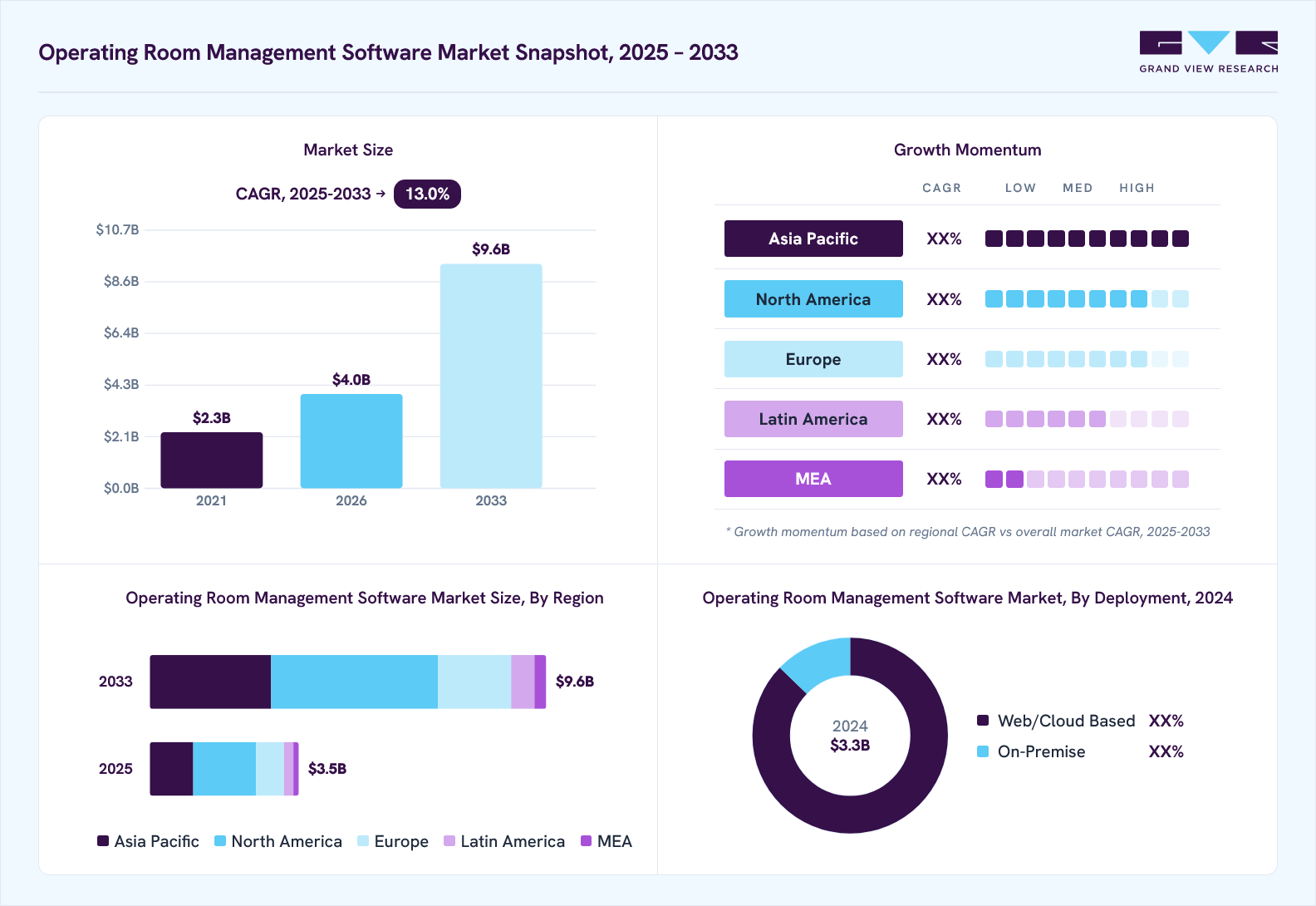 Source: Grand View Research, IR Documents, Primary Interviews, Paid DatabasesTo learn more about this report,
 Download Free Sample Report
 Key Market Trends & Insights
- By deployment: Web/cloud based segment led the market with the largest revenue share of 87.6% in 2025.
- By solution: Data management & communication segment led the market with the largest revenue share of 28.2% in 2025.
- By end use: the hospitals segment led the market with the largest revenue share of 52.7% in 2025.
Regional Highlights
- Largest regional market: North America (44.1% revenue share, 2025)
- By country: The U.S. held the largest market share in 2025.
Market Size & Forecast
- Market sizeMarket size in 2025: USD 3.6 Billion
- Estimated market size in 2026: USD 4.0 Billion
- Projected market size by 2033: USD 9.6 Billion
- CAGR (2026-2033): 13.2%
Three ways to get this report
Buy it, customize it, or ask a question.Ask an Analyst
Analyst response in 1 business day
- AccessReport author, directly
- Reply timeWithin 1 working day
- No sales callDirect answer only
- FormatEmail reply
- CostFree, no cost
Get the Full Report
What the study covers
- FormatsPDF · Excel · Dashboard
- Timeline2056–2033 annual, 2055 base
- Coverage20+ countries, 5 regions
- Companies10+ key players profiled
Customize the Report
20% free customization
- IncludeCountries, segments, points
- TailorTo your product definition
- ExtendDeeper competitor detail
- OrA fully bespoke study
- Turnaround5–10 working days
The market is poised for remarkable growth. With the healthcare sector increasingly embracing digital transformation, these software solutions are becoming essential. They optimize surgical scheduling, resource allocation, and patient data management, enhancing efficiency and patient care quality. As the global healthcare industry expands and evolves, the demand for such software is expected to increase. In addition, advancements in artificial intelligence and data analytics are expected further to drive the market growth over the forecast period.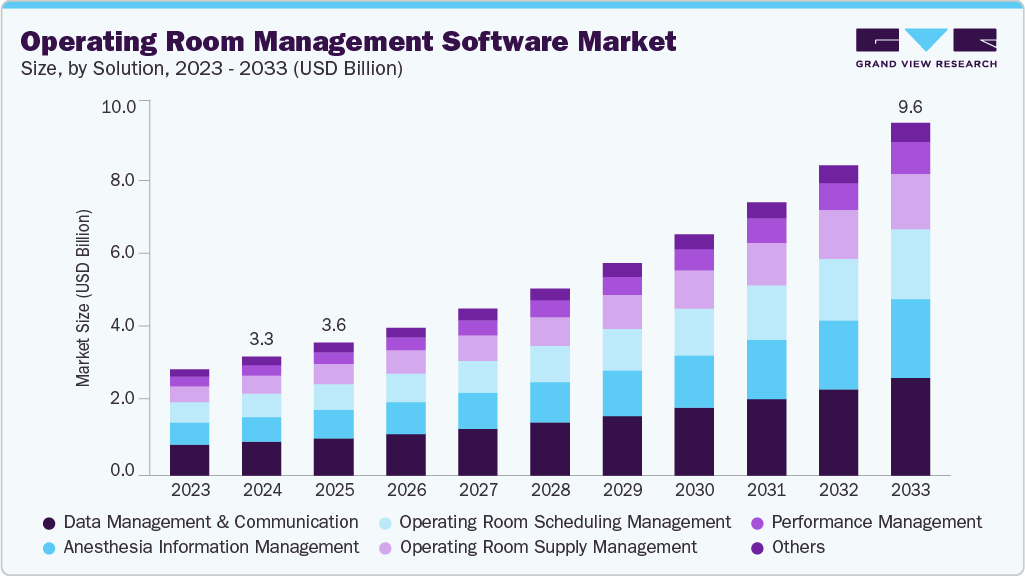 To learn more about this report, Download Free Sample Report
 Moreover, the increasing prevalence of chronic diseases worldwide is a significant reason for the growing need for operating rooms. Severe chronic illnesses often require surgery. For instance, according to an article by the WHO in September 2023, more than 300 million surgical procedures are performed worldwide yearly. This rise in surgical procedures is anticipated to boost the demand for operating room management software, ultimately driving market expansion.
Furthermore, rising investments in developing operating room management software are expected to drive market growth over the forecast period by launching innovative products. For instance, in October 2023, U.S.-based Avail Medsystems introduced a new capability to host third-party clinical software applications in operating rooms as part of broader platform enhancements to improve surgical collaboration, workflow efficiency, and access to clinical intelligence.
Technological advancements in operating room management software are driving market growth. For instance, Electronic Health Records (EHR) improve data accuracy, streamline clinical workflows, and facilitate real-time access to patient information during surgeries. As healthcare providers increasingly invest in cutting-edge solutions to improve patient outcomes and workflow efficiency, the solution providers are seizing the opportunity to provide cutting-edge technology and gain the highest possible market share. For instance, in September 2024, Oracle launched new Electronic Health Record (EHR) innovations in the U.S., aiming to improve patient care, streamline clinical workflows, and improve health data management through advanced automation, integrated analytics, and user-friendly digital interfaces.
The COVID-19 pandemic has had a significant impact on the market. The initial phase of the pandemic saw a decrease in the number of surgeries due to lockdowns and suspensions of medical procedures, which negatively affected market growth. This had a negative effect on market growth. According to a study published in the British Journal of Surgery, COVID-19 resulted in the postponement or cancellation of 28 million surgeries worldwide in 2020, with many of these surgeries being rescheduled for 2021. This delay in surgeries has created a greater need to improve scheduling efficiency. As a result, companies in the market have introduced various technologies to meet the growing demand. For instance, in June 2021, Getinge announced the release of the "Torin" AI-based operating room management system in the U.S. This technology aims to address the challenges posed by the pandemic and improve the management of operating rooms.
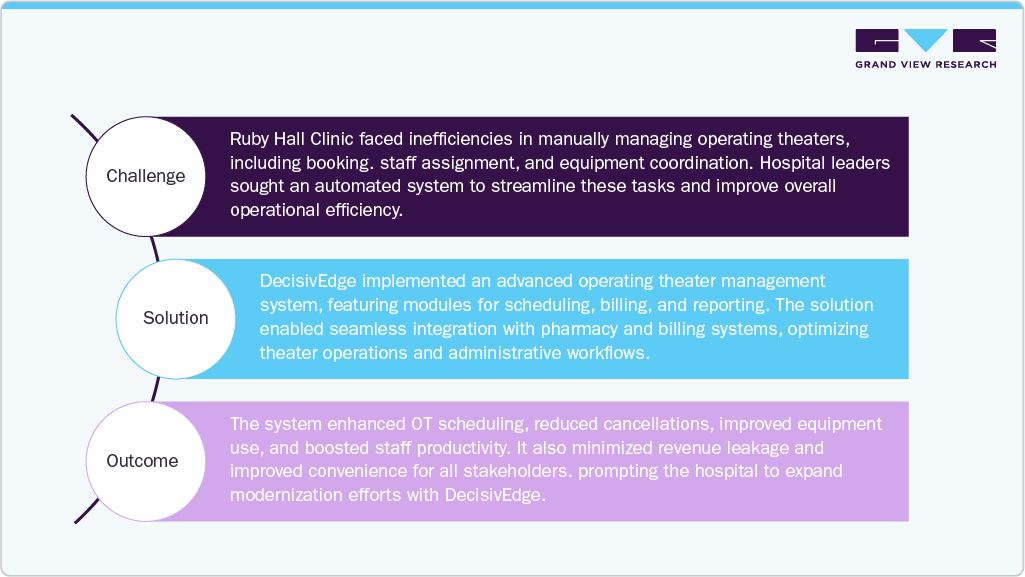
Case Study: Ruby Hall Clinic Transforms Operating Theater Management with DecisivEdge’s Automated Solution.
Introduction: Efficient operating theater management is critical to hospital performance and patient care. To address the challenges, Ruby Hall Clinic partnered with DecisivEdge to overcome manual operational challenges through a modern, automated theater management system.
 To learn more about this report, Download Free Sample Report
 Market Dynamics
The growing number of surgical procedures globally, along with increasing pressure on hospitals to improve operating room utilization and patient throughput, is driving demand for operating room management software. Healthcare providers are increasingly adopting digital OR management solutions to automate scheduling, optimize resource allocation, reduce surgical delays, improve perioperative workflows, and enhance coordination among surgical teams. The integration of AI-powered scheduling, real-time patient tracking, and analytics further supports efficient operating room operations while reducing operational costs.
For instance, according to a study published by NCBI in May 2024, approximately 234.2 million surgical procedures are performed globally each year. The increasing volume of surgeries is placing significant pressure on healthcare facilities to improve operating room scheduling, optimize resource utilization, reduce procedure delays, and enhance perioperative workflow efficiency. Thus, hospitals and ambulatory surgical centers are increasingly adopting operating room management software to streamline surgical operations and improve patient outcomes.
Case Study: Published by Trendsic in June 2026: Custom Scheduling Application Maximizes Open OR Surgical Center’s Operating Room Efficiency
Overview
Open operating room surgical center partnered with Trendsic to develop a custom web and mobile operating room scheduling application that enables physicians to release unused operating room ime in real time. The solution was designed to maximize operating room utilization, improve scheduling flexibility, reduce idle capacity, and increase operational efficiency while enhancing patient care.
Challenge
Open operating room surgical center relied on a traditional block scheduling model where physicians were assigned dedicated weekly operating room time slots. However, unused time blocks frequently remained vacant because physicians had no mechanism to release them or make them available to others. This resulted in underutilized operating rooms, lost revenue, longer patient waiting times, and inefficient resource utilization.
Solution
Trendsic developed a web and mobile application that put real-time scheduling control directly in the hands of Open OR’s physicians
Capability 1
Capability 2
Capability 3
Capability 4
The application enables physicians to instantly release unused operating room time slots whenever their surgical schedules change. This prevents operating room capacity from remaining idle and allows the released time to be utilized efficiently.
The solution provides real-time visibility into operating room availability across the surgical center. This ensures available operating rooms are quickly identified and utilized, improving scheduling efficiency and patient throughput.
Physicians view and reserve newly released operating room time slots through the platform. This capability minimizes scheduling gaps by allowing unused surgical capacity to be reassigned to other physicians in real time.
The platform integrates operating room scheduling with inventory and staff management systems, ensuring that the required surgical supplies, equipment, and clinical personnel are available for every scheduled procedure.
Results & Outcomes
• Real-time scheduling and cross-physician booking significantly reduced idle operating room time, increasing overall operating room utilization and profitability.
• Faster access to available operating rooms reduced patient waiting times while providing physicians with greater scheduling flexibility.
• Integration of staff scheduling, inventory management, and utilization analytics improved resource allocation, supported data-driven decision-making, and enabled scalable OR operations.
Conclusion
By enabling physicians to release and rebook unused operating rooms in real time, Trendsic helped Open OR Surgical Center reduce downtime, increase profitability, and improve patient care, setting a new benchmark for operating room management. From local healthcare providers to large-scale business operations, Trendsic delivers the same tailored web and mobile application development across Louisiana and nationwide.
Deploying these solutions requires substantial investment in software licensing, hardware infrastructure, system customization, integration with existing Hospital Information Systems (HIS), Electronic Health Records (EHR), Anesthesia Information Management Systems (AIMS), and other clinical applications, as well as staff training and ongoing maintenance. The implementation process is often complex and time-consuming, requiring workflow redesign and temporary operational adjustments that disrupt routine hospital activities. In addition, healthcare organizations must allocate continuous resources for software upgrades, cybersecurity, technical support, and regulatory compliance, further increasing the total cost of ownership. Thus, many hospitals with limited IT budgets or resource constraints postpone or limit investments in advanced operating room management software.
AI-powered operating room management platforms analyze historical surgical volumes, patient flow, surgeon availability, equipment utilization, and staffing patterns to optimize operating room scheduling, predict surgical delays, reduce cancellations, and improve resource allocation. These capabilities help healthcare providers maximize operating room utilization, minimize idle time, enhance patient throughput, and improve overall surgical efficiency. As hospitals continue to invest in digital transformation and smart hospital initiatives, the demand for intelligent operating room management solutions with AI-driven decision support is expected to accelerate.
For instance, in June 2025, LeanTaaS, Inc. launched iQueue for Surgical Clinics, the industry's first AI-powered surgical coordination platform that connects surgical clinics with hospital operating rooms. The platform extends AI-driven scheduling and capacity optimization from the initial patient consultation through operating room management. This enabled healthcare providers to improve surgical scheduling, streamline patient flow, reduce delays, and optimize operating room utilization. Building on its existing platform, LeanTaaS currently supports more than 4 million surgeries annually across the U.S. Thus, this launch reflects the growing adoption of AI-enabled operating room management solutions to improve surgical scheduling and enhance operational efficiency.
“Surgical clinics are the entry point for many patients to the surgical workflow and represent the financial and operational front door to the operating room. With iQueue for Surgical Clinics, health systems now simplify the end-to-end workflow at the point of care. By eliminating the ‘black-box’ inefficiencies that plague case coordination, iQueue for Surgical Clinics drives better patient access, more surgeries, and smarter operations — benefiting patients, surgeons, and the bottom line.” -- Rami Karjian, Head of Operating Rooms Business at LeanTaaS.
Prominent Operating Room Management Software
Software’s
Key Features
Epic OpTime
Epic’s perioperative solution commonly used for operating room scheduling, intraoperative documentation, and perioperative coordination.
Oracle Health SurgiNet (Cerner)
Perioperative scheduling and surgical workflows within the Oracle Health (Cerner) ecosystem. Used for hospitals running Oracle Health/Cerner who want integrated perioperative scheduling tied to clinical operations.
LeanTaaS iQueue for Operating Rooms
A specialized platform focused on operating room capacity management and utilization improvement, often used alongside an EHR.
Surgical Information Systems (SIS) (Perioperative Management)
A perioperative-focused system that include scheduling and operational workflows for surgical services.
Picis (Perioperative Solutions)
A perioperative solution historically associated with anesthesia and perioperative documentation, and in some deployments used to support operating room operational workflows.
TeleTracking (Patient Flow / Perioperative Flow)
A patient flow platform often used to improve real-time operational coordination across beds, transport, and perioperative throughput.
QGenda (Staff & Provider Scheduling for Perioperative)
A workforce scheduling platform often used for provider schedules, call, and coverage, highly relevant to operating room operations where anesthesia and specialty coverage must match surgical demand.
HST Pathways (ASC Management)
An ambulatory surgery center (ASC) management platform that includes scheduling as part of broader operational and administrative workflows.
Market Concentration & Characteristics
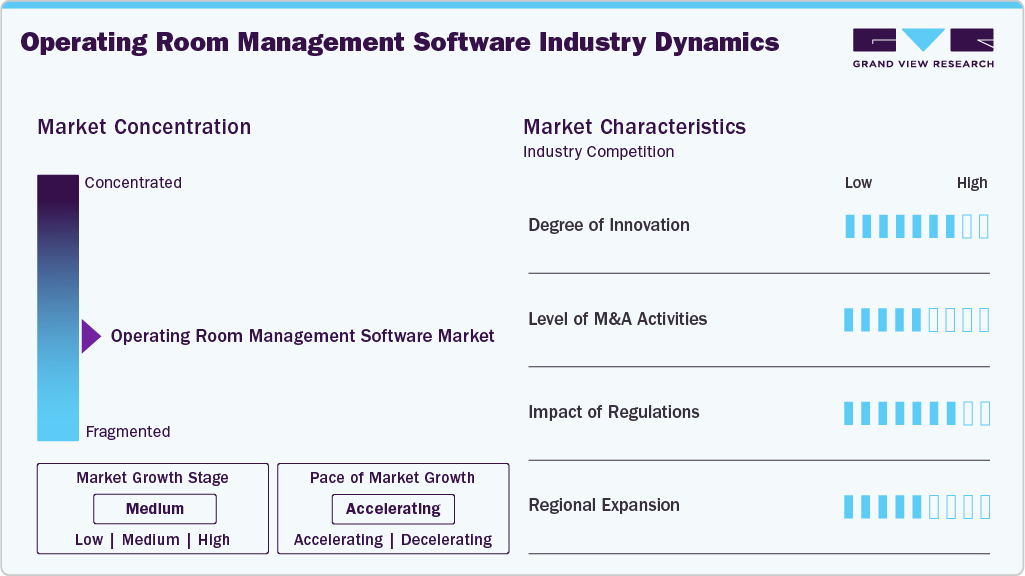
The degree of innovation in the operating room management software industry is high, driven by advancements in artificial intelligence, machine learning, and data analytics. Software developers are introducing real-time surgical dashboards, predictive scheduling, and integrated communication tools to streamline OR workflows. Customizable platforms with improved interoperability are also gaining traction, enabling seamless data exchange with EHR systems and surgical equipment.
The industry's level of mergers and acquisitions (M&A) is moderate, as key players aim to expand their product portfolios, acquire innovative technologies, and strengthen their market presence. Strategic collaborations between healthcare IT firms and surgical solution providers are common, allowing for integrated offerings that cater to growing hospital needs. These M&A activities drive technological synchronicity and help companies scale rapidly in response to the rising demand for advanced OR management systems across global healthcare facilities.
 To learn more about this report, Download Free Sample Report
 The impact of regulations on the operating room management software industry is high. Companies and service providers need to meet regulatory standards with HIPAA in the U.S. and GDPR in Europe. Data protection laws are essential for patient privacy and secure data handling. In addition, software systems must adhere to medical device and clinical software certification protocols, including FDA and CE approvals.
Regional expansion in the industry is moderate. While North America leads in adoption due to advanced healthcare infrastructure and favorable reimbursement models, the Asia Pacific is emerging as a high-growth region. Increasing investments in hospital digitization, rising surgical volumes, and government initiatives to modernize healthcare systems encourage vendors to enter new markets. Localization strategies, partnerships with regional health providers, and tailored solutions are central to expanding global market reach.
Analyst Perspective
The operating room management software market is growing steadily as healthcare providers focus on surgical efficiency and resource optimization. Hospitals are shifting from basic scheduling tools to integrated platforms that combine scheduling, staff coordination, inventory management, and real-time analytics. Increased adoption of AI and predictive analytics helps optimize operating room utilization, reduce surgical delays, and support better decision-making. Integration with electronic health records, anesthesia information systems, and hospital information systems is now a key competitive advantage for vendors. Although high implementation costs remain challenges, the long-term operational and financial benefits continue to drive adoption.
Solution Insights
Based on solution, the data management & communication segment led the market with the largest revenue share of 28.2% in 2025. These solutions enable efficient data sharing, smooth communication, and effective collaboration among surgical teams. They establish a central storage system for patient information, allowing medical professionals to access essential data in real-time. Moreover, these solutions make it easy to share patient status updates across various stages of perioperative care, assist in ensuring schedule compliance, and streamline the exchange of media and case-related information among different operating rooms and hospital departments.
Anesthesia information management is anticipated to grow at the fastest CAGR over the forecast period. This growth is driven by the increasing demand for accurate, real-time documentation of anesthesia records, improved patient safety, and enhanced clinical decision-making. For instance, in June 2024, AI-powered anesthesia monitoring systems were launched in India to improve surgical safety and precision and overcome the limitations of traditional anesthesia monitoring methods. These advanced systems enabled real-time patient monitoring and decision support, representing a significant step forward in medical technology adoption.
Deployment Insights
Based on deployment, the web/cloud based segment led the market with the largest revenue share of 87.6% in 2025. The cloud & web-based segment has dominated the global market with a revenue share of 87.15% in 2024 and is projected to grow at the fastest CAGR during the forecast period. The growth is attributed to the increasing adoption of cloud solutions in clinics to improve efficacy and reduce costs. Cloud solutions offer scalability, allowing healthcare organizations to adjust or expand their software usage as required. This flexibility helps them efficiently manage growing hospital needs and serve a larger patient population without substantial infrastructure investments. In addition, the cloud provides benefits like real-time data sharing, secure data handling, flexible storage options, and reliable performance. As a result, these factors drive the increasing adoption and demand for cloud-based operating room management software, enabling healthcare organizations to streamline their operations, improve patient care, and optimize resource utilization.
The on-premise segment is expected to grow substantially during the forecast period. The availability of new on-premises software provides healthcare organizations with enhanced offline access, adherence to compliance requirements, customization capabilities, and greater control over their data. It also gives organizations more control over system upgrades, long-term cost management, and the flexibility to integrate with existing systems. These factors drive the healthcare sector's demand for and adoption of on-premises software.
End Use Insights
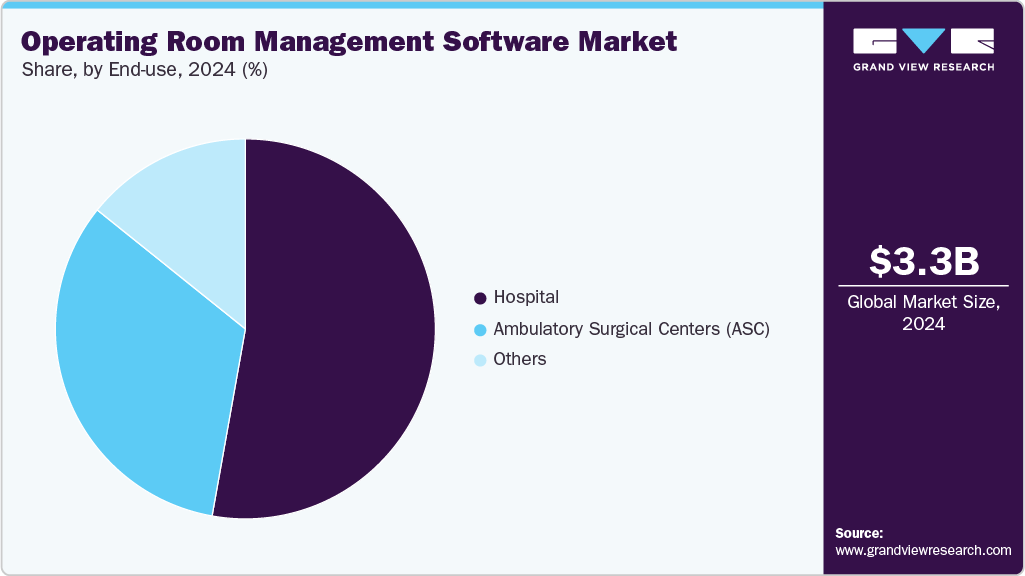
Based on end use, the hospitals segment led the market with the largest revenue share of 52.7% in 2025. The hospitals segment accounted for the largest revenue share of 52.80 % in 2024 due to the growing number of surgical procedures. According to the American Cancer Society, there were over 2 million new cancer cases and 611,720 cancer-related deaths in 2024 in the U.S. alone. These conditions often require surgical intervention, contributing to increased demand for efficient operating room management solutions. In addition, hospitals are rapidly adopting advanced software to streamline workflows and improve patient safety during complex procedures.
 To learn more about this report, Download Free Sample Report
 The ambulatory surgical centers segment is anticipated to grow at the fastest CAGR over the forecast period. This is attributable to the shift from inpatient to outpatient surgical procedures, driven by advancements in minimally invasive techniques, reduced healthcare costs, and shorter recovery times. In addition, ASCs increasingly adopt digital tools to optimize scheduling, resource allocation, and patient throughput.
Regional Insights
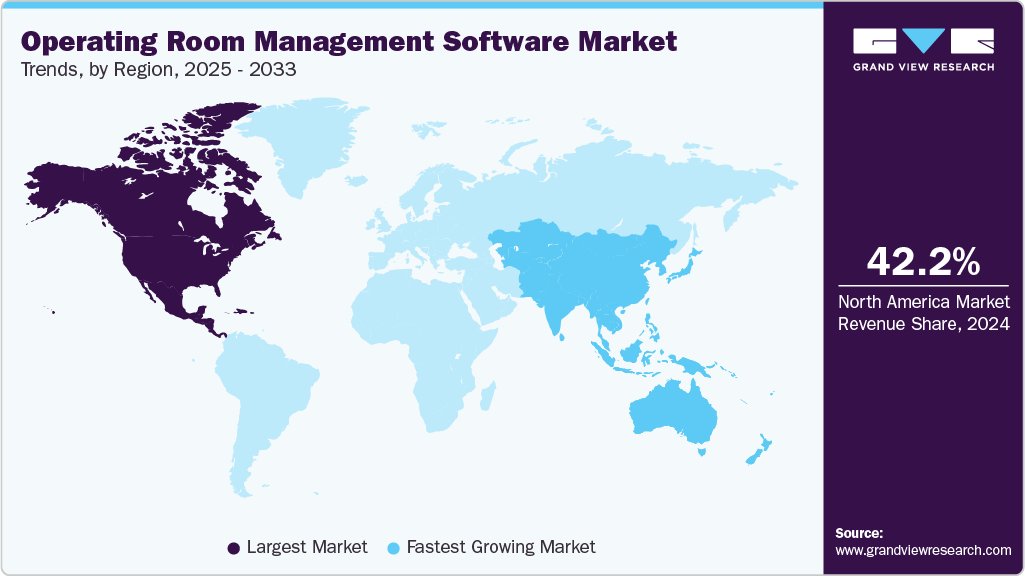
North America dominated operating room management software market with the largest revenue share of 44.1% in 2025. This can be attributed to the rapid adoption of technologically developed products. Regional growth is driven by factors such as the well-established infrastructure, the growing adoption of operating room management software, and major market players in the region.
 To learn more about this report, Download Free Sample Report
 U.S. Operating Room Management Software Market Trends
The operating room management software market in the U.S. held the largest share in the North America region in 2025, Hillrom introduced the Helion Integrated Surgical System to the U.S. market to advance connected care within operating rooms (ORs). The Helion System enhances connectivity, flexibility, and communication among surgical teams in the OR, ultimately improving patient outcomes. These product launches are expected to increase operating room management software adoption, thus driving regional market growth.
Europe Operating Room Management Software Market Trends
The operating room management software market in Europe is growing due to the rising focus on patient safety, operational efficiency, and healthcare cost containment. Countries are investing in modernizing surgical departments and adopting digital operating room systems. Favorable regulatory standards and funding initiatives across EU nations support implementing OR management software, particularly in public hospitals, enhancing workflow coordination and clinical outcomes across the region.
The UK operating room management software market is showing significant growth over the forecast period. It is getting a boost from the National Health Service’s (NHS) digital transformation goals, which emphasize surgical efficiency, patient safety, and reduced wait times. With the increasing adoption of minimally invasive surgeries and structured clinical protocols, hospitals are investing in OR software to streamline processes and maximize resource use. Government funding and collaborations with tech firms accelerate digital adoption in surgical environments.
Asia Pacific Operating Room Management Software Market Trends
The operating room management software market in the Asia Pacific is anticipated to experience significant growth in the forecast period. This growth can be attributed to several factors, including a high prevalence of chronic diseases, a large patient population, and the increasing number of hospitals and healthcare facilities with expanding infrastructure in the region. In addition, many governments in the Asia Pacific region are making significant investments in cloud and related healthcare technologies to facilitate digital transformation, which has the potential to drive market growth. For instance, in August 2021, the government of Delhi announced a USD 19 million project to establish a cloud-based hospital information management system, a move that was expected further to support the healthcare technology market in the region.
China operating room management software market growth is fueled by healthcare modernization, rising surgical demand, and government focus on digital health. The country’s large population and aging demographic drive surgical volumes, prompting hospitals to invest in efficient OR management systems. Domestic and international vendors are actively expanding in China, offering AI-enabled, localized software platforms tailored to Chinese hospitals' regulatory and workflow needs.
Latin America Operating Room Management Software Market Trends
The operating room management software market in Latin America is growing significantly over the forecast period, driven by gradual healthcare infrastructure upgrades and an increasing focus on surgical care efficiency. Public-private partnerships and pilot implementations are helping introduce OR software in the region. Countries like Mexico and Argentina are increasingly exploring web and cloud-based systems to overcome cost and integration challenges.
Brazil operating room management software market is growing due to its expanding private hospital sector and increasing number of surgical procedures. Adopting health IT solutions is gaining traction, particularly among urban healthcare providers focused on improving operational performance and patient care quality. Government initiatives for healthcare modernization and rising investments in health tech startups contribute to the country's growing OR software adoption.
Middle East & Africa Operating Room Management Software Market Trends
The operating room management software market in the Middle East and Africa region is witnessing significant growth over the forecast period, led by rising healthcare investments in Gulf countries and ongoing hospital expansions. Governments in the region are focusing on digital health infrastructure to manage increasing patient loads and surgical cases. Moreover, partnerships with global vendors are gradually improving access to advanced OR technologies across the Middle East and Africa.
South Africa operating room management software market dominated the Middle East and Africa region in 2024 due to increasing demand for surgical care, growing private healthcare investments, and the modernization of hospital IT systems. Urban medical centers are more likely to adopt OR management software to address workflow inefficiencies and improve surgical scheduling. However, public sector adoption remains limited due to resource constraints, creating opportunities for low-cost, scalable digital solutions in the future.
Key Operating Room Management Software Company Insights
The market is competitive owing to the presence of systems providers. The market players are adopting various strategies, such as partnerships, new product launches, and regional expansion, to gain higher market shares. For instance, in September 2023, Fujitsu and Baptist Health South Florida announced the launch of an innovative solution to transform operating room scheduling. The primary objectives of this newly launched solution are to boost utilization rates and improve the financial health of the surgical discipline. Such improvements in operating room scheduling can have significant benefits, including reducing wait times for patients, maximizing the utilization of costly surgical facilities, and potentially lowering healthcare costs.
Key Operating Room Management Software Companies
The following key companies have been profiled for this study on the operating room management software market.
-
Surgical Information Systems
-
Veradigm LLC (Allscripts Healthcare Solutions, Inc)
-
Picis Clinical Solutions, Inc., a division of N. Harris Computer Corporation.
-
GE Healthcare
-
Koninklijke Philips N.V.
-
BD
-
Oracle Corporation
-
PerfectServe, Inc.
-
Getinge
-
Max Systems Inc.
Competitive Benchmarking
Category
Operating Strategies
Competitive Edge
Weakness
Established Players (e.g., Oracle Corporation, GE HealthCare, Koninklijke Philips N.V., Becton, Dickinson and Company (BD), Getinge)
- Invest in AI-enabled perioperative workflow automation and enterprise-wide OR management platforms.
- Expand market presence through strategic partnerships, acquisitions, and integration with hospital information systems (HIS/EHR).
- Strong global brand recognition with extensive healthcare customer base and comprehensive product portfolios.
- High interoperability with enterprise healthcare IT infrastructure, enabling perioperative workflow management.
- High implementation and maintenance costs limit adoption among small and mid-sized healthcare facilities.
- Longer deployment timelines and complex system customization requirements compared to specialized vendors.
Emerging Players (e.g., Surgical Information Systems (SIS), Veradigm LLC (Allscripts Healthcare Solutions, Inc.), Picis Clinical Solutions, Inc. (a division of N. Harris Computer Corporation), PerfectServe, Inc., Max Systems Inc)
- Focus on niche perioperative workflow optimization, physician communication, and cloud-based operating room solutions.
- Differentiate through flexible deployment models, user-friendly interfaces, and rapid software innovation.
- Faster implementation with highly customizable solutions tailored to hospital-specific workflows.
- Agile product development enables quicker adoption of AI, analytics, and mobile-enabled collaboration features.
- Limited global geographic presence and smaller customer base compared to multinational healthcare IT vendors.
- Lower brand recognition and relatively limited financial resources restrict large-scale expansion.
Recent Developments
-
In November 2024, the US-based North American Partners in Anesthesia launched NAPA Managed Services, a comprehensive suite developed to meet essential operating room (OR) operational needs for health systems.
-
In October 2022, OMNIMED introduced SmartOR, a modular, AI-driven platform for hospital operating rooms. The system captured and analyzed millions of intraoperative data points, such as pose, sterile zones, and heat mapping, to enhance workflow efficiency and patient safety
Operating Room Management Software Market Report Scope
Report Attribute
Details
Market size in 2025
USD 3.6 billion
Estimated market size in 2026
USD 4.0 billion
Projected market size by 2033
USD 9.6 billion
Growth rate
CAGR of 13.2% from 2026 to 2033
Historical data
2021 - 2024
Forecast period
2026 - 2033
Quantitative units
Revenue in USD million/billion and CAGR from 2026 to 2033
Report coverage
Revenue forecast, company ranking, competitive landscape, growth factors, and trends
Segments covered
Solution, deployment, end use, region
Regional scope
North America; Europe; Asia Pacific; Latin America; MEA
Country scope
U.S.; Canada; UK; Germany; France; Italy; Spain; Sweden; Norway; Denmark; China; Japan; India; Australia; South Korea; Thailand; Brazil; Mexico; Argentina; South Africa; Saudi Arabia; UAE; Kuwait
Key companies profiled
Surgical Information Systems; Veradigm LLC (Allscripts Healthcare Solutions, Inc); Picis Clinical Solutions, Inc., a division of N. Harris Computer Corporation; GE Healthcare; Koninklijke Philips N.V.; BD; Oracle Corporation; PerfectServe, Inc.; Getinge; Max Systems Inc.
Customization scope
Free report customization (equivalent to up to 8 analysts' working days) with purchase. Addition or alteration to country, regional & segment scope.
Pricing and purchase options
Avail customized purchase options to meet your exact research needs. Explore purchase options
Global Operating Room Management Software Market Report Segmentation
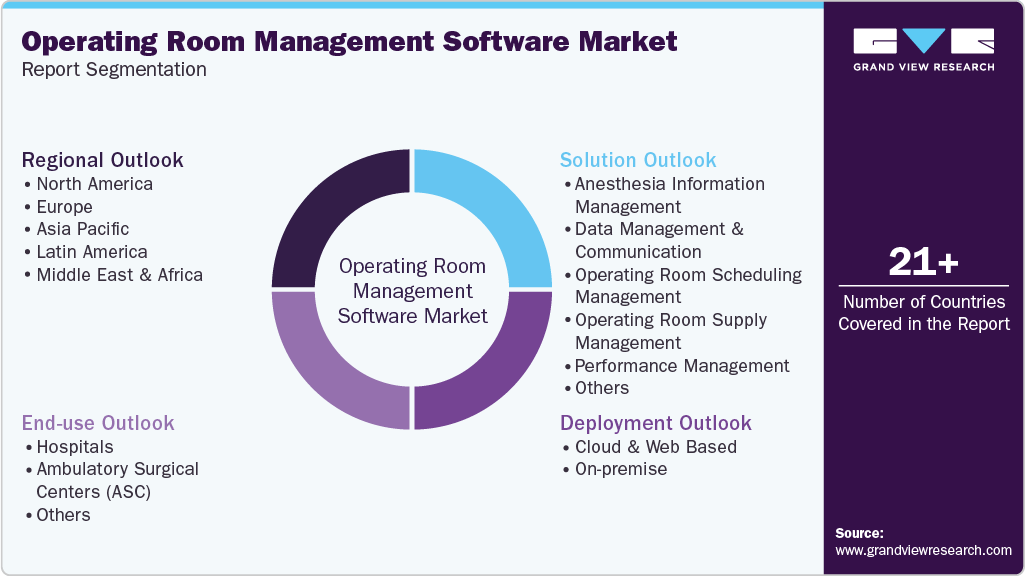
This report forecasts revenue growth at regional and country levels and provides an analysis of the latest industry trends in each of the sub-segments from 2021 to 2033. For this study, Grand View Research has segmented the global operating room management software market based on solution, deployment, end use, and region:
 To learn more about this report, Download Free Sample Report
 -
Solution Outlook (Revenue, USD Million, 2021 - 2033)
-
Anesthesia Information Management
-
Data Management & Communication
-
Operating Room Scheduling Management
-
Operating Room Supply Management
-
Performance Management
-
Others
-
-
Deployment Outlook (Revenue, USD Million, 2021 - 2033)
-
Cloud & Web Based
-
On-premise
-
-
End Use Outlook (Revenue, USD Million, 2021 - 2033)
-
Hospitals
-
Ambulatory Surgical Centers (ASC)
-
Others
-
-
Regional Outlook (Revenue, USD Million, 2021 - 2033)
-
North America
-
U.S.
-
Canada
-
Mexico
-
-
Europe
-
UK
-
Germany
-
France
-
Italy
-
Spain
-
Sweden
-
Norway
-
Denmark
-
-
Asia Pacific
-
Japan
-
China
-
India
-
Australia
-
Thailand
-
South Korea
-
-
Latin America
-
Brazil
-
Argentina
-
-
Middle East & Africa
-
South Africa
-
Saudi Arabia
-
UAE
-
Kuwait
-
-
Segment Definition
Segment
Revenue capture definition
By Solution
Anesthesia Information Management
Software that automates the capture, documentation, and management of anesthesia-related clinical data before, during, and after surgical procedures. It supports anesthesiologists by improving documentation accuracy and regulatory compliance.
Data Management & Communication
Solutions that enable centralized storage, integration, and secure exchange of perioperative data among operating room staff, hospital departments, and electronic health record (EHR) systems. They enhance clinical coordination and workflow efficiency.
Operating Room Scheduling Management
Software designed to optimize operating room scheduling by managing surgical appointments, surgeon availability, staff allocation, and operating room utilization. It helps minimize scheduling conflicts and maximize surgical throughput.
Operating Room Supply Management
Solutions that track, manage, and optimize surgical inventory, medical devices, implants, and consumables used in operating rooms. They help reduce inventory costs, prevent stock shortages, and improve supply chain efficiency.
Performance Management
Software that monitors and analyzes key operating room performance indicators such as utilization rates, turnover times, procedure durations, and staff productivity. It supports data-driven operational improvements and resource optimization.
Others
Includes additional operating room management functionalities such as perioperative workflow management, patient tracking, clinical documentation, billing integration, quality reporting, and analytics solutions that enhance overall surgical operations.
By Deployment
Web/Cloud Based
Operating room management software hosted on cloud infrastructure and accessed through web browsers or internet-enabled devices. It offers scalability, remote accessibility, automatic software updates, and lower infrastructure requirements.
On-Premise
Software installed and operated on servers located within the healthcare facility's IT infrastructure. It provides greater control over data security, customization, and compliance with internal hospital policies.
By End Use
Hospitals
Large healthcare facilities utilizing operating room management software to coordinate surgical scheduling, perioperative workflows, anesthesia management, resource allocation, and operating room performance across multiple specialties.
Ambulatory Surgical centers (ASC)
Outpatient surgical facilities that use operating room management software to streamline same-day surgical scheduling, patient flow, resource management, and operational efficiency while supporting high procedure volumes.
Others
Includes specialty surgical clinics, academic medical centers, military healthcare facilities, and other healthcare organizations that utilize operating room management software to manage surgical operations and optimize perioperative workflows.
Estimation Model
 To learn more about this report, Download Free Sample Report
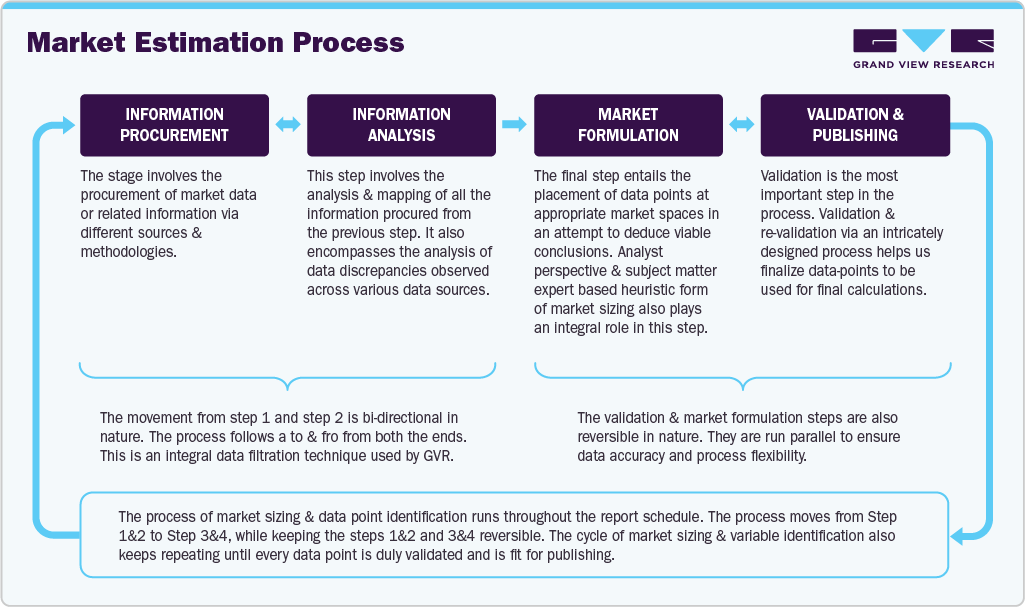
 Market-specific Research Models:
Consensus-Based Estimates & Forecasting
The operating room management software market presents emerging dominant opportunities, featuring global key players such as Surgical Information Systems; Veradigm LLC (Allscripts Healthcare Solutions, Inc); Picis Clinical Solutions, Inc., a division of N. Harris Computer Corporation; GE Healthcare; Koninklijke Philips N.V.; BD; Oracle Corporation; PerfectServe, Inc.; Getinge; Max Systems Inc. To ensure a holistic approach, the GVR research team adopted a comprehensive methodology, considering multiple companies worldwide and utilizing various variables for data accuracy.
Our methodology included:
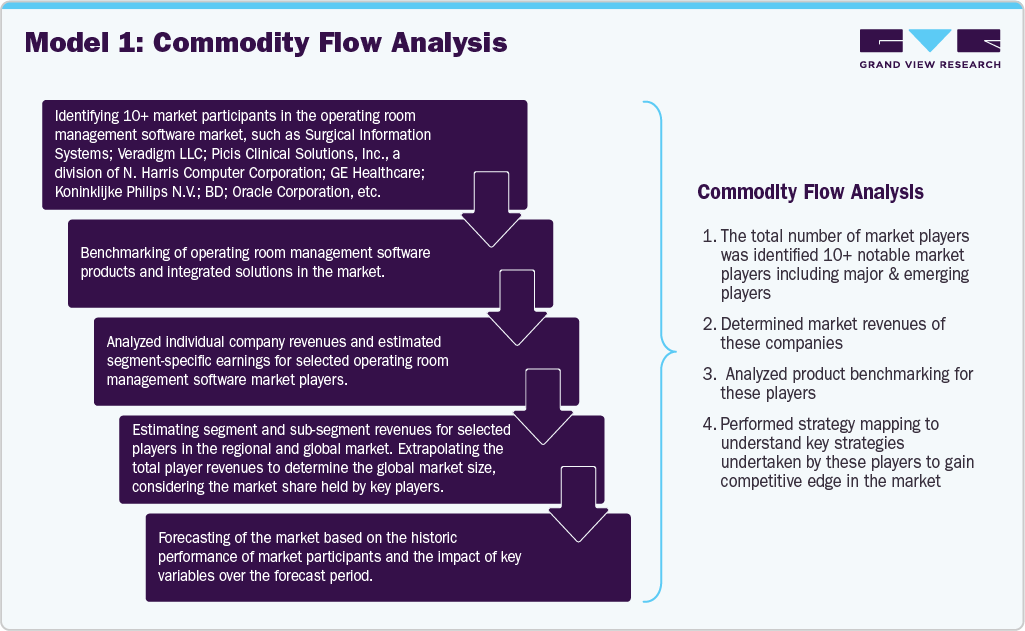
Model 1: Commodity Flow Analysis - For public players, annual reports were referenced. For private players, premium paid data sources such as S&P Global, Crunchbase, ZoomInfo, RocketReach, etc., were used for the latest revenue insights.
Model 2: Parent Market Analysis
Model 3: Country-level Multivariate Analysis Assumptions
Model 4: Segment-level Multivariate Analysis Assumptions
Model 5: Operating Room Management Software Market CAGR Calculations
Model 1: Commodity Flow Analysis
 To learn more about this report, Download Free Sample Report
 Commodity flow analysis was employed to track the movement of operating room management software through the value chain, from technology providers to end users. This analysis provided insights into demand generation points, intermediary roles, and ultimate consumption patterns.
Delivered Customizations
This report has been delivered with the following In-depth customizations
Client Request
Customization Delivered
Value Adds
Operating Room Workflow Optimization Analysis
Conducted an in-depth assessment of pre-operative, intra-operative, and post-operative workflow optimization, highlighting software capabilities that reduce delays, improve OR utilization, and streamline patient flow.
Enabled stakeholders to identify workflow bottlenecks and evaluate software solutions that maximize operating room efficiency and surgical throughput.
Integration Ecosystem Assessment
Evaluated compatibility of operating room management software with EHRs, ERP systems, anesthesia management, PACS, and surgical robotics platforms.
Enabled clients to understand interoperability capabilities and identify vendors offering seamless healthcare IT integration.
Vendor Pricing Model Analysis
Compared subscription-based, perpetual license, SaaS, and enterprise pricing models adopted by leading operating room management software vendors.
Enabled buyers to evaluate cost structures and select the most suitable deployment model based on budget and operational requirements.
Frequently Asked Questions About This Report
Some key players operating in the operating room management software market include Surgical Information Systems; Veradigm LLC (Allscripts Healthcare Solutions, Inc); Picis Clinical Solutions, Inc., a division of N. Harris Computer Corporation; GE Healthcare; Koninklijke Philips N.V.; BD; Oracle Corporation; PerfectServe, Inc.; Getinge; and Max Systems Inc.
Key factors that are driving the operating room management software market growth include rising adoption of electronic health records, a surge in surgical procedures, a growing focus on cost reduction and efficiency enhancements in hospitals and ambulatory surgery centers (ASCs), and advancements in technology related to managing operating rooms.
North America dominated with a 44.1% revenue share in 2025.
Asia Pacific is the fastest-growing region over the forecast period.
The web/cloud based segment led with a 87.6% revenue share in 2025, and is the fastest-growing segment.
The hospitals segment led with a 52.7% revenue share in 2025, while ambulatory surgical centers (ASC) is the fastest-growing segment.
The global operating room management software market size was estimated at USD 3.6 billion in 2025 and is projected to grow from USD 4.0 billion in 2026.
The global operating room management software market is expected to grow at a compound annual growth rate of 13.2% from 2026 to 2033 to reach USD 9.6 billion by 2033.
The data management & communication segment led with a 28.2% revenue share in 2025, while anesthesia information management is the fastest-growing segment.
About the Author(s)
Healthcare IT Research Team
Healthcare · Healthcare ITThis report was authored by the healthcare it research team at Grand View Research - comprising two research analysts, one senior research analyst, and one industry expert - with specialized expertise in the healthcare it segment of the healthcare industry. All findings are based on proprietary healthcare databases, executive interviews, and regulatory analysis, subject to internal peer review prior to publication.
Last Updated:
Speak to Analyst

Customize this report to your needs - add regions, segments, or data points, with 20% free customization.
Or view our licence options:


ISO 9001:2015 & 27001:2022 Certified
We are GDPR and CCPA compliant! Your transaction & personal information is safe and secure. For more details, please read our privacy policy.


