
- Home
- »
- Medical Devices
- »
-
Ophthalmic Surgical Robotic Systems Market Report, 2035GVR Report cover

Ophthalmic Surgical Robotic Systems Market (2027 - 2035)
Size, Share & Trends Analysis Report Component (Surgical Robots, Surgical Robotic Accessories), By End Use (Hospitals, ASCs, Specialty Ophthalmic Clinics, Academic and Research Institutes), By Region, And Segment Forecasts
Market Size, 2026
$379.9MMarket Estimate, 2027
$440.5MMarket Forecast, 2035
$1,476.0MCAGR, 2027–2035
16.3%Ophthalmic Surgical Robotic Systems Report Summary
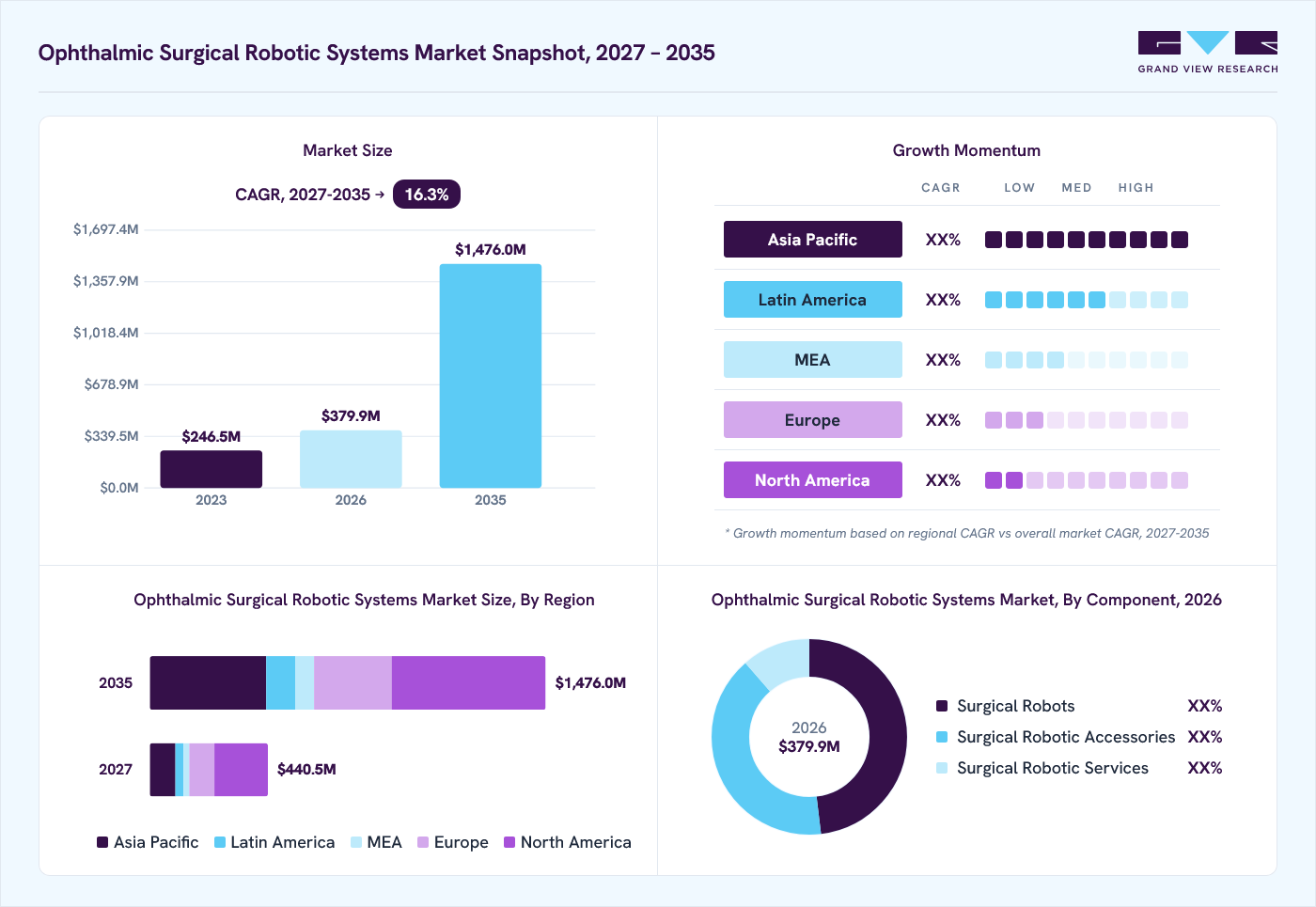
The global ophthalmic surgical robotic systems market size was valued at USD 379.9 million in 2026 and is projected to grow from USD 440.5 million in 2027 to USD 1475.96 million by 2035, at a CAGR of 16.3% from 2027 to 2035. North America dominated the market, accounting for a revenue share of 46.0% in 2026. Market growth is driven by the increasing demand for precision-based ophthalmic procedures, rising prevalence of cataracts and retinal disorders, and advancements in robotic-assisted microsurgery. In addition, increasing investments in robotic surgical technologies, expanding clinical research activities, and the development of teleoperated ophthalmic systems are expected to create new growth opportunities.
 Source: Grand View Research, IR Documents, Primary Interviews, Paid DatabasesTo learn more about this report,
 Download Free Sample Report
Key Market Trends & Insights
- By component, the surgical robots segment held the highest market share of 48.05% in 2026.
- Based on end use, the hospitals segment held the highest market share in 2026.
Regional Highlights
- Largest regional market: North America (46.0% revenue share, 2026)
- By country: The U.S. held the largest market share in 2026.
Market Size & Forecast
- Market size in 2026: USD 379.9 Million
- Estimated market size in 2027: USD 440.5 Million
- Projected market size by 2035: USD 1476.0 Million
- CAGR (2027-2035): 16.3%
Prism AI by Grand View Research Free to tryAsk a question about the ophthalmic surgical robotic systems marketTry asking✓Every figure cited from GVR research Prefer the report? Download free sample →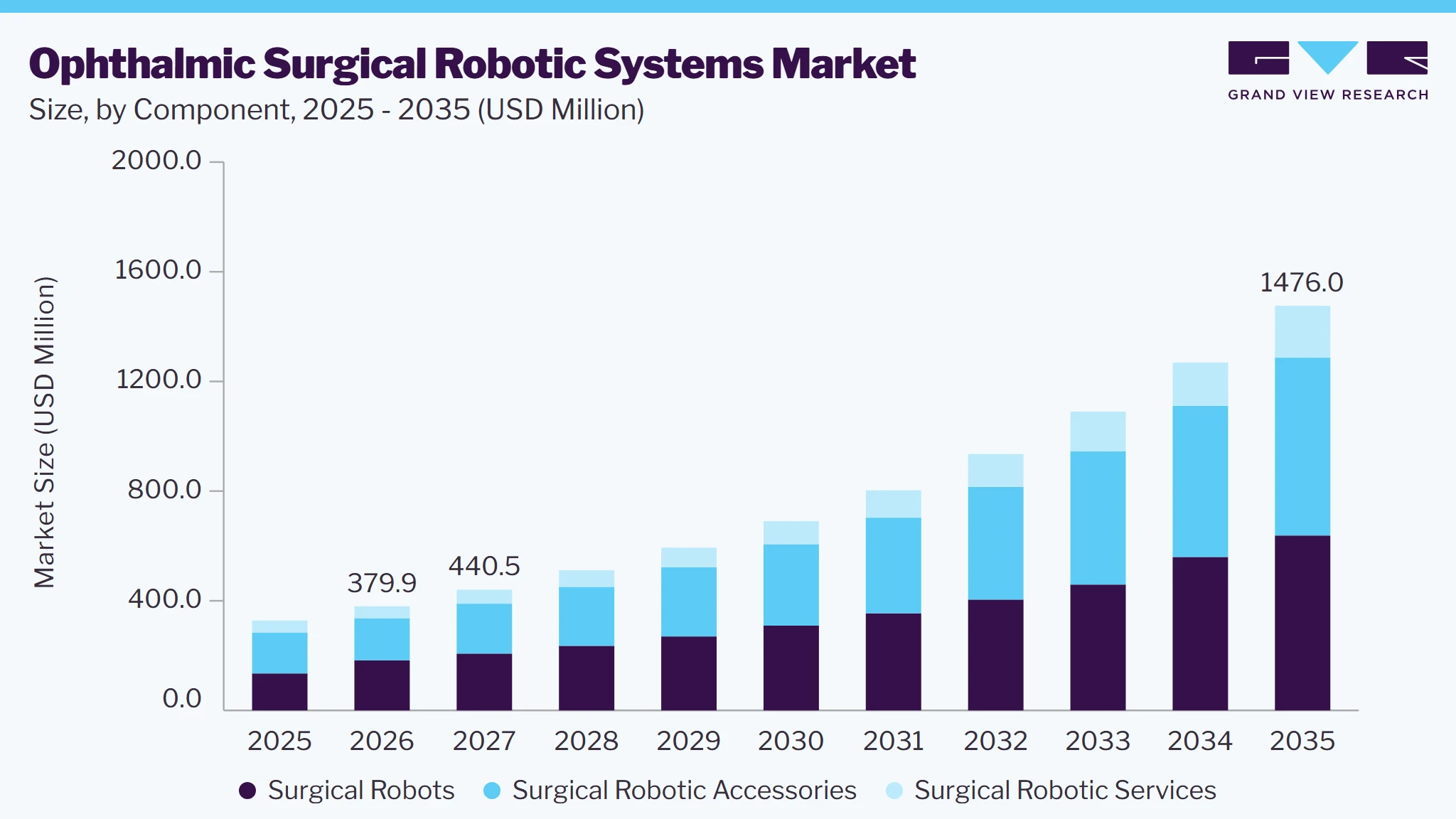 To learn more about this report, Download Free Sample Report
Market Dynamics
The market growth is driven by rising demand for eye surgeries, shortages of specialized ophthalmologists, and advancements in robotic precision and microsurgical control. However, risks associated with surgical complications and equipment failure remain key restraints. Opportunities are emerging in remote and teleoperated ophthalmic surgery, while innovations in robotic-assisted cataract surgery, retinal interventions, and corneal transplantation are expanding the potential applications of these systems.
The widening gap between demand for ophthalmic surgery and the availability of qualified surgeons is driving interest in ophthalmic surgical robotic systems. According to the data published by cataract & refractive surgery in September 2026, an estimated 600 million people globally require cataract surgery, while approximately 30 million procedures are performed annually. The global ophthalmology workforce comprises roughly 275,500 physicians, with an average density of 34 ophthalmologists per million people. However, workforce availability varies significantly across income groups, restricting access to essential eye care in underserved regions.
Country income group
Ophthalmologists per million people
High-income countries
76
Upper-middle-income countries
46
Lower-middle-income countries
17
Low-income countries
4
These disparities are particularly pronounced in Sub-Saharan Africa, where the ophthalmologist density is approximately three per million people. Workforce shortages also affect developed markets: U.S. projections cited in the source indicate that ophthalmologist supply will decline by 12% between 2020 and 2035, while demand for ophthalmic care is expected to increase by 24%.
Ophthalmic surgical robotic systems address this challenge by supporting precision-intensive procedures, stabilizing instruments, and improving consistency in selected surgical steps. By supporting surgeons in complex procedures and helping standardize surgical techniques, robotic systems offer a potential route to improving surgical capacity and extending specialized expertise.
Advancements in Robotic Precision and Microsurgical Control
Ophthalmic surgery requires highly controlled movements around delicate structures, particularly during retinal procedures. Robotic platforms integrate motion control, surgeon-operated interfaces, and precision instruments to reduce unwanted movement and support tasks that are difficult to perform manually. Progress in clinical evaluation is strengthening the evidence base for these technologies, although broader benefits in long-term patient outcomes still require validation.
For instance, in 2026, AcuSurgical reported the publication of the first-in-human clinical study of its LUCA robotic platform in the journal RETINA. The prospective study involved seven patients undergoing surgery for an epiretinal membrane or macular hole at Ghent University Hospital. No device-related adverse events or serious adverse events were reported, and the robot-assisted portion was completed as planned in six of the seven patients. The findings supported the initial safety and feasibility of robotic assistance in vitreoretinal surgery.
Ophthalmic procedures involve delicate ocular structures, where instrument instability, inadequate force feedback, or technical malfunctions result in tissue injury and compromise surgical outcomes. Robotic systems also introduce specific concerns, including instrument failure, limited tactile feedback, and the possibility of intraoperative delays or conversion to manual surgery. Although robotic assistance improves precision in selected procedures, current evidence does not establish a consistent reduction in complication rates compared with conventional surgery.
For instance, an ophthalmic surgery review published in October 2026 on the American Academy of Ophthalmology’s EyeWiki platform reported that, in a Phase I human trial of robotic retinal vein cannulation, a microneedle tip fractured in one of four treated eyes and had to be retrieved using endoforceps. The review also identified equipment malfunction, reduced sensory feedback, and potential intraoperative delays as risks associated with robotic-assisted vitreoretinal surgery.
Remote robotic surgery presents an opportunity to extend specialized surgical expertise to hospitals and regions with limited access to experienced ophthalmologists. Teleoperated systems allow a surgeon to control robotic instruments from a separate location, potentially reducing geographic barriers to complex retinal interventions. Wider deployment will depend on reliable connectivity, low-latency control, patient safety protocols, regulatory authorization, and clinical validation.
For instance, in August 2026, JAMA Ophthalmology published a case report describing a robot-assisted subretinal injection performed remotely between two clinical sites in China separated by approximately 4,000 km. The procedure investigated the feasibility and safety of teleoperated delivery of tissue plasminogen activator (t-PA) for submacular hemorrhage. The procedure was completed without intraoperative complications, with seven minutes of robotic teleoperation during a total surgical time of 46 minutes. Mean network latency was 77.9 milliseconds, ranging from 71 to 90 milliseconds, and 0.056 mL of r-tPA was delivered. The case demonstrated the potential of remote robotic ophthalmic intervention.
Emerging robotic and automated innovations in ophthalmological surgery
Innovation
Representative systems
Key capability
Evidence and status
1. Telemanipulation robotic systems
Zeiss Preceyes (PSS); IRISS
Remote console, motion scaling and imaging; tremor eliminated; PSS precision better than 20 µm
PSS CE marked 2016; RCT (12 patients) matched manual outcomes but was slower. IRISS: preclinical
2. Co-manipulation platforms
Steady-Hand Eye Robot (SHER); KU Leuven system
Shared surgeon-robot control; force sensing smooths movement and removes tremor
SHER 3.0: tip accuracy <30 µm (benchtop). KU Leuven: first human robot-assisted vein cannulation
3. Handheld robotic devices
Micron (Carnegie Mellon and Johns Hopkins)
Surgeon holds the tool; built-in actuator cancels tip tremor with minimal workflow disruption
Tremor reduced by 90%; ex vivo vein cannulation success rose from 29% to 63%
4. Robot-assisted cataract surgery
Polaris platform (Horizon Surgical system, UCLA)
AI-supported robot with real-time imaging, haptic feedback and 3D view for incisions and phacoemulsification
First robot-assisted cases in 10 patients (Oct 2025); no adverse effects reported to date
5. Autonomous capsulotomy devices
FLACS; Zepto precision pulse capsulotomy
Automated capsulorrhexis for consistency: laser (FLACS) or non-laser nitinol ring (Zepto)
FLACS: no significant outcome difference vs manual, high cost. Zepto: early, limited evidence
University Research Initiatives in Ophthalmic Surgical Robotic Systems
University / Institution
Robotic System
Technology and Development Focus
University of California, Los Angeles (UCLA)
Intraocular Robotic Interventional and Surgical System (IRISS)
Developed through collaboration between UCLA’s Mechatronics and Control Laboratory and Stein Eye Institute. The system supports teleoperated and automated procedures, simultaneous manipulation of two surgical instruments, automatic instrument switching, and 3D visualization through microscope-mounted cameras.
Johns Hopkins University
Steady-Hand Eye Robot (Eye Robot 1, Eye Robot 2, and Eye Robot 2.1)
Developed as a cooperatively controlled robotic assistant that follows the surgeon’s hand movements. Virtual fixtures constrain instrument motion near sensitive anatomical structures, while robotic assistance reduces the effects of physiological hand tremors.
Recent Industry Developments
• AI-guided robotic assistance for retinal microsurgery: In March 2024, the European Union-funded GEYEDANCE project, coordinated by ACMIT, advanced the integration of AI with ophthalmic surgical robotics for procedures such as vitrectomy and membrane peeling. The project developed AI-based retinal geometry measurement and robotic instrument guidance using intraoperative OCT. Its integrated solution with the Preceyes Surgical System underwent validation in living-animal trials, demonstrating progress toward AI-assisted precision in delicate retinal procedures.
• AI-based surgical recognition and instrument tracking: Research published in Current Opinion in Ophthalmology in May 2026 highlighted the growing application of AI in ophthalmic surgery, particularly automated surgical-phase recognition, real-time instrument tracking, and outcome prediction. These capabilities support the development of robotic systems that interpret surgical activity and provide context-aware assistance, improving workflow consistency and intraoperative decision support.
Competitive Landscape & AI Product Benchmarking
Company / Platform
Surgical application
AI and advanced technology capabilities
ForSight Robotics - JASPER
Cataract surgery
Real-time eye tracking, computer vision, 3D visualization, motion scaling and tremor elimination.
Horizon Surgical Systems - Polaris
Cataract surgery
Machine learning, multimodal imaging, real-time 3D detection and image-guided surgical assistance.
Ophthorobotics - Robotic Intravitreal Injection System
Intravitreal injections
AI-assisted injection, automated eye tracking, iris identification, ocular alignment and automated injection execution.
Source: Company Website, Investor Presentation, Grand View Research
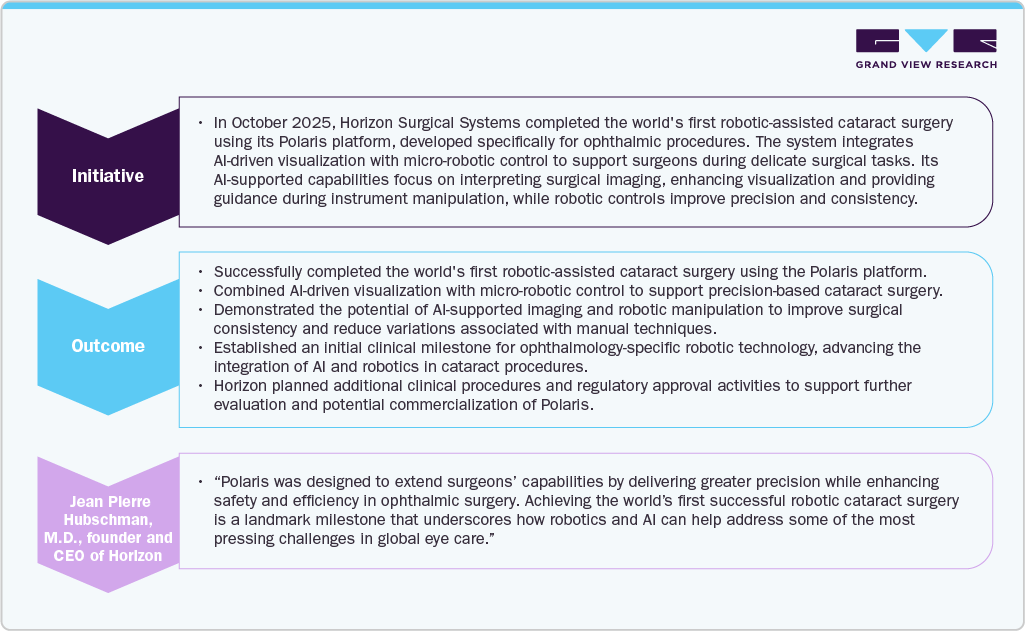
Study: Horizon Surgical Systems - AI-Integrated Polaris Robotic Platform for Cataract Surgery
 To learn more about this report, Download Free Sample Report
Market Concentration & Characteristics
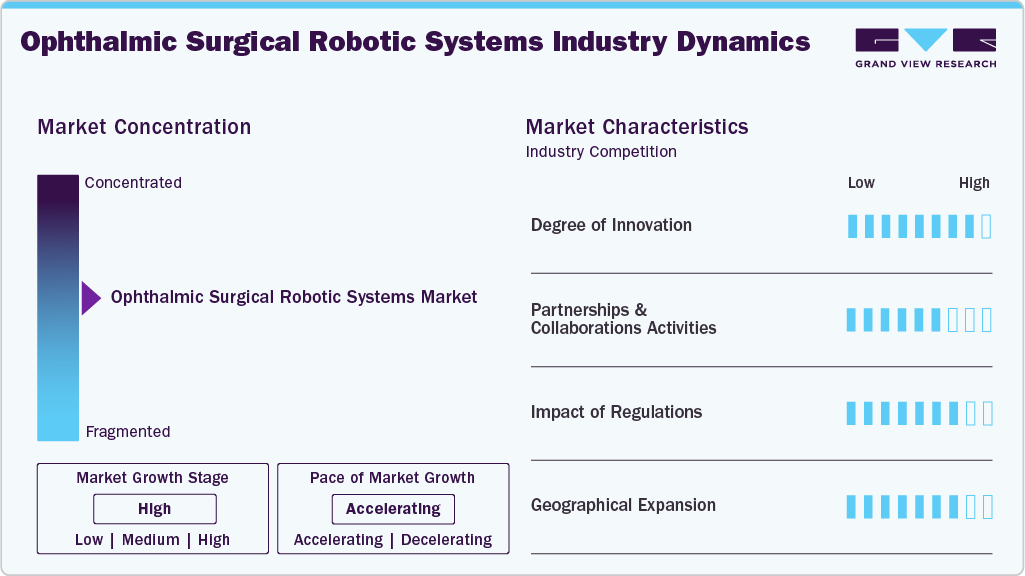
Innovation is advancing through improved instrument stability, precision control, and robotic assistance for procedures involving delicate ocular structures. New applications extend beyond cataract surgery and retinal injections to include corneal transplantation, where precise suturing is essential for graft stability and postoperative visual outcomes.
For instance, in March 2026, researchers published a report in ophthalmology describing the first human case of robot-assisted penetrating keratoplasty (corneal transplantation) using the Symani Surgical System developed by Medical Microinstruments (MMI). The procedure involved suturing a donor cornea to the patient's eye using microsurgical robotic assistance. The study explored the application of a robotic platform originally developed for vascular and nerve microsurgery in ophthalmic surgery, demonstrating the potential to extend robotic precision technology to corneal transplantation.
 To learn more about this report, Download Free Sample Report
Partnerships among universities, specialist eye hospitals, engineering teams, and medical technology companies are supporting the development and clinical translation of ophthalmic robotic systems. Public research funding also helps reduce the financial and technical risks associated with early-stage medical device development. For instance, in October 2026, researchers from King's College London, Moorfields Eye Hospital, and the University of Kent secured USD 2.93 million in funding from the National Institute for Health and Care Research (NIHR) to advance a surgical robot designed to deliver therapies into retinal veins. The three-year project includes testing the system in five patients to assess safety, usability, and performance, alongside development of its capabilities for delivering drugs directly into small retinal veins.
Regulatory requirements directly influence the development timelines, clinical testing requirements, commercialization costs, and geographic availability of ophthalmic surgical robotic systems. For instance, in September 2026, the U.S. Food and Drug Administration (FDA) issued draft guidance on premarket submissions for robotically assisted surgical devices. The guidance outlined recommendations for nonclinical testing, clinical data, and device labeling. The FDA also scheduled a public workshop for December 2-3, 2026, to discuss the benefit-risk assessment of robotic medical devices with autonomous or remote teleoperation capabilities.
Regional expansion offers ophthalmic surgical robotics companies’ opportunities to enter markets with growing demand for cataract and retinal procedures, expanding specialist eye-care infrastructure, and established clinical research networks. Asia-Pacific presents a relevant opportunity because regional hospitals and research institutions are participating in the evaluation of emerging ophthalmic robotic technologies. For instance, August 2026, For Sight Robotics reported additional human procedures using its JASPER robotic platform at the Asian Eye Institute in Manila, Philippines. The company reported a total of 26 patients in its first-in-human clinical experience, with all procedures completed robotically and patients discharged on the same day under standard cataract-care protocols.
Analyst Perspective
The ophthalmic surgical robotic systems market is positioned for growth as advances in precision engineering, real-time imaging, and robotic-assisted microsurgery expand applications in cataract and retinal procedures. Increasing demand for improved surgical accuracy, reduced procedural variability, and access to specialized eye care is encouraging innovation among companies such as ForSight Robotics, Horizon Surgical Systems, and AcuSurgical. However, high system costs, clinical validation requirements, regulatory hurdles, and integration challenges remain key barriers. Commercial growth will depend on demonstrating measurable clinical benefits, improving surgical workflow efficiency, and securing regulatory approvals.
Component Insights
By component, the surgical robots segment held the highest market share of 48.05% in 2026, supported by the increasing use of robotic platforms to improve precision, stability, and consistency during delicate ophthalmic procedures. For instance, in July 2026, Ophthorobotics AG reported successful testing of its robotic intravitreal injection platform in ex vivo human cadaveric eyes, demonstrating precise and reproducible injections. This development highlights the advancement of automated robotic systems for retinal treatments.
The surgical robotic services segment in the ophthalmic surgical robotic systems market is anticipated to grow at the fastest CAGR over the forecast period. The segment growth is driven by increasing demand for system maintenance, technical assistance, software upgrades, and specialized training. As ophthalmic robotic technologies advance toward broader clinical adoption, healthcare facilities require ongoing technical support to ensure system reliability, maintain operational efficiency, and integrate robotic platforms into existing surgical workflows.
End Use Insights
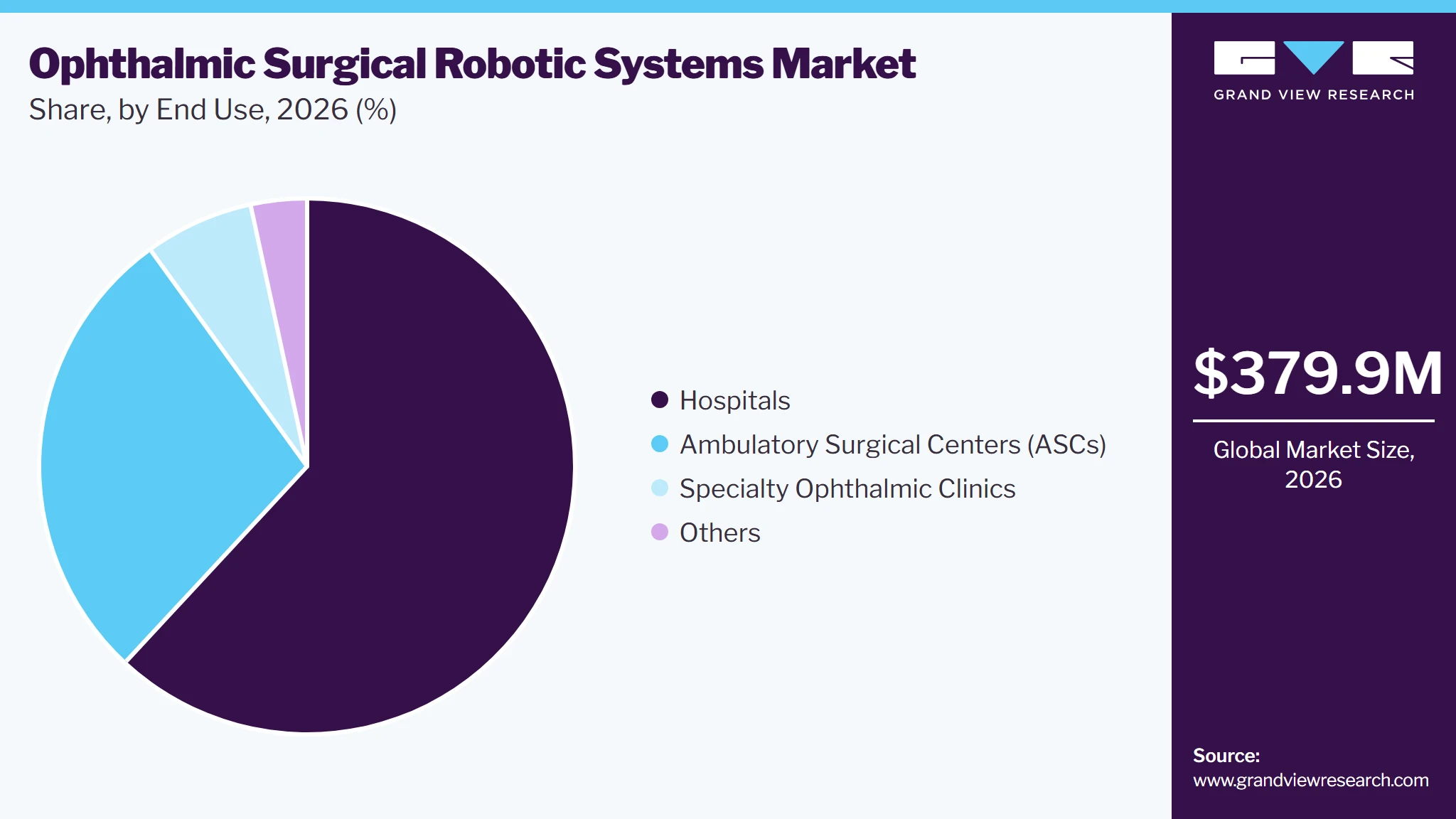
The hospital segment held the largest market share of 61.91% in 2026. The segment growth is supported by hospitals advanced surgical infrastructure, specialist ophthalmologists, and capacity to manage complex eye procedures. For instance, in August 2026, Hudson Regional Health performed Hudson County’s first robotic laser cataract surgery at Secaucus University Hospital in New Jersey, using the ALLY Robotic Cataract Laser System. The system integrates eye imaging and computer-guided laser treatment to support precise cataract surgery, highlighting hospitals’ continued investment in advanced ophthalmic technologies.
 To learn more about this report, Download Free Sample Report
The specialty ophthalmic clinics segment is expected to register the fastest CAGR over the forecast period, driven by the increasing adoption of advanced surgical technologies, rising volumes of cataract and refractive procedures, and growing preference for specialized eye-care facilities. These clinics are investing in robotic-assisted surgical systems to improve procedural precision, standardize surgical workflows and strengthen their ability to perform complex ophthalmic procedures. The expansion of specialized outpatient eye-care centres and increasing availability of technologically advanced surgical infrastructure are further supporting segment growth.
Regional Insights
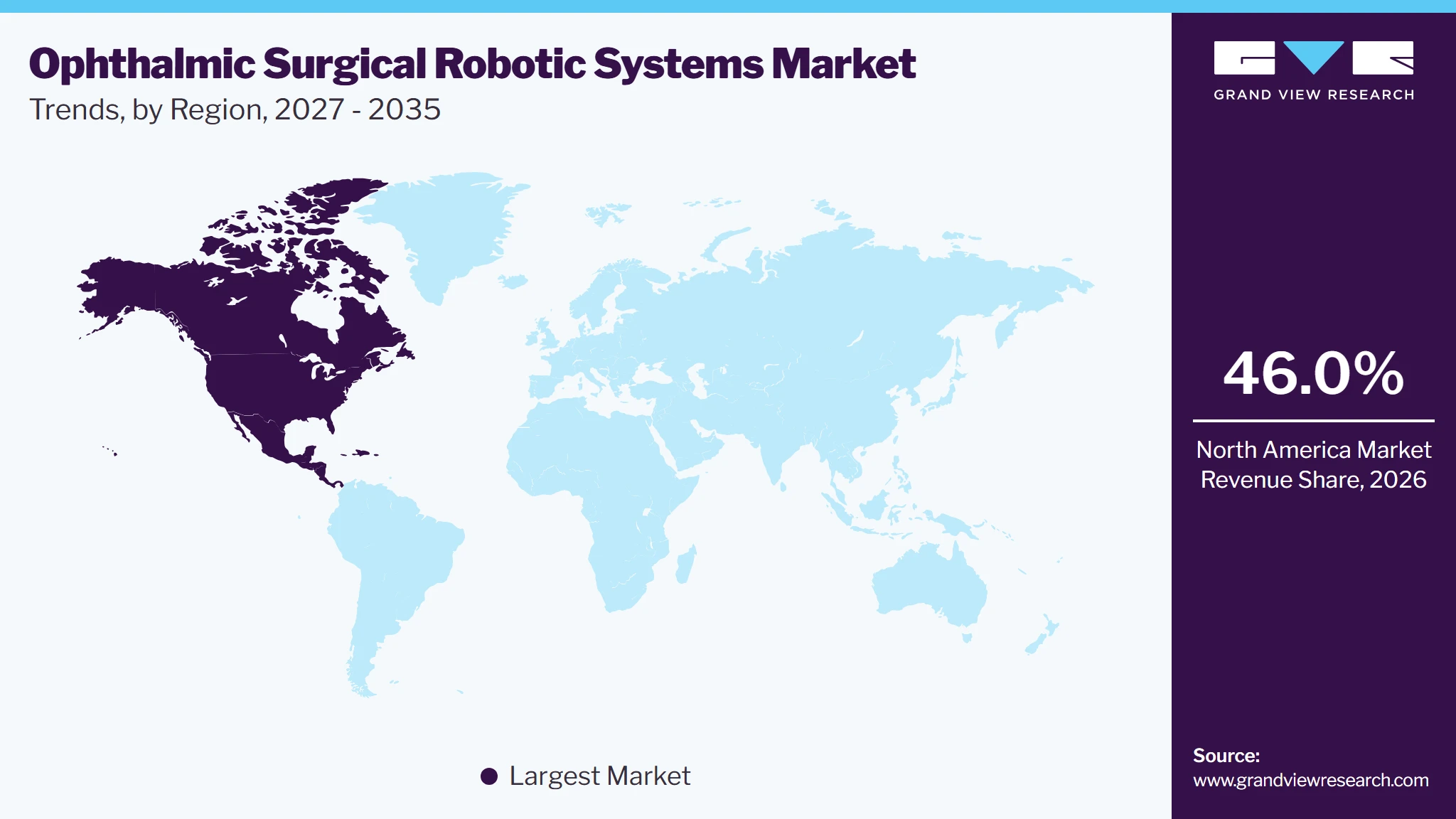
North America's ophthalmic surgical robotic systems market industry dominated the market with a 46.04% market share in 2026. The region’s growth is supported by advanced ophthalmic healthcare infrastructure, strong research capabilities, and investment in precision surgical technologies. For instance, in 2026, researchers at Johns Hopkins University developed and evaluated the PAROS (Patient Alignment for Robotic Ophthalmic Surgery) system, which integrates image-guided patient positioning with robotic surgical preparation. Testing involving eight medical experts in a simulated surgical environment reduced setup time to approximately 272 seconds, while eye-detection experiments were conducted in five patients. These findings highlight regional efforts to improve the efficiency and accuracy of robotic ophthalmic procedures.
 To learn more about this report, Download Free Sample Report
U.S. Ophthalmic Surgical Robotic Systems Market Trends
In the U.S., market growth is supported by advanced ophthalmic research infrastructure and increasing demand for precision-based retinal procedures. For instance, New York Eye and Ear Infirmary of Mount Sinai (NYEE) introduced the Preceyes micro-interventional robotic system to support surgeon training and research in retinal microsurgery, including delicate procedures such as epiretinal membrane peeling. This initiative supports clinical expertise development and research into robotic-assisted ophthalmic procedures in the U.S.
“The robotic assistant could allow surgeons for the first time to enter the subretinal space to deliver stem cells with the potential to treat blindness. It could also open the door to a new era of gene therapy, more advanced corneal refractive and cataract procedures, micro-interventional glaucoma surgery, and retinal vessel cannulation.”
-Richard Rosen, MD, Chief of Retina at Mount Sinai Health System and Director of Ophthalmic Research at NYEE.
Europe Ophthalmic Surgical Robotic Systems Market Trends
Europe’s market is expected to grow significantly over the forecast period. The region benefits from early clinical experience with robotic-assisted vitreoretinal surgery, particularly in procedures requiring precise instrument positioning and controlled movements within the eye. The Netherlands has played a notable role in this field through the development of the Preceyes Surgical System, while EU-funded research continues to advance AI-guided robotic assistance. Further, in January 2026, the European GEYEDANCE project reported completion of its Horizon Europe research program, which developed an AI-guided robotic platform for eye surgery featuring microsurgical instruments and precise intraocular control. The project reported completion of its technical objectives and the filing of more than 10 patents, supporting continued technology development and future clinical translation.
UK Ophthalmic Surgical Robotic Systems Market Trends
In the UK, research focuses on improving instrument stability and enabling interventions that require precise access to small retinal blood vessels. For instance, in October 2026, the University of Oxford’s robotic retinal vein cannulation study was listed as recruiting participants to evaluate robot-assisted treatment for retinal vein occlusion. The study combines the Preceyes robotic system with standard care and aims to assess the feasibility and safety of accessing retinal veins with robotic assistance. This clinical research strengthens the UK’s role in evaluating specialized ophthalmic robotic systems.
Germany Ophthalmic Surgical Robotic Systems Market Trends
Germany’s market is developing through investments in medical robotics, artificial intelligence, and precision microsurgical engineering. Research institutions are developing systems that combine automated positioning, image-guided control, and highly accurate drug delivery to address technical challenges in retinal treatment. For instance, in October 2026, the Technical University of Munich launched the GRATA research initiative, supported by USD 2.12 million in funding from Germany’s Federal Ministry of Research, Technology and Space. The three-year project focuses on a modular, AI-supported robotic platform for microsurgery, with a reported injection-positioning accuracy of approximately 15 micrometers and an emphasis on reducing preparation time. The initiative reflects Germany’s commitment to advancing precision-based ophthalmic robotics.
Asia Pacific Ophthalmic Surgical Robotic Systems Market Trends
The Asia Pacific market is expected to expand rapidly, driven by rising demand for cataract and retinal procedures, expanding ophthalmic healthcare infrastructure, and investments in domestically developed surgical technologies. For instance, an August 2026 bibliometric analysis of ophthalmic surgical robotics research identified China among the leading contributors to the field, reflecting the region’s growing research activity in robotic microsurgery and precision-based eye interventions.
China Ophthalmic Surgical Robotic Systems Market Trends
China’s market is developing through domestic innovation in ophthalmic microsurgery and efforts to advance locally manufactured robotic platforms toward commercialization. For instance, in August 2026, Chinese developers TIROMU and Oculotronics entered the National Medical Products Administration’s special review channel for innovative medical devices with ophthalmic surgical robotic technologies. This development, alongside the earlier inclusion of Dessight Biomedical’s device in the review process, highlighted increasing competition among domestic manufacturers to secure regulatory approval for ophthalmic surgical robots.
“Robot-assisted technology is a key approach for achieving precise delivery of gene and cell therapy drugs in ophthalmology, significantly enhancing delivery accuracy and stability.”
- Xue Mengjun, Managing Partner at Panlin Capital.
India Ophthalmic Surgical Robotic Systems Market Trends
India’s ophthalmic surgical robotic systems market is supported by increasing adoption of precision-guided cataract surgery technologies and investments in advanced ophthalmic care. For instance, in August 2026, Army Hospital Research and Referral in New Delhi performed robotic custom laser-assisted cataract surgery using the ALLY Adaptive Cataract Treatment System, which uses femtosecond laser technology to automate key surgical steps, including corneal incisions, capsulotomy, and cataract fragmentation. This development highlights growing adoption of automated surgical technologies to improve procedural precision in India’s eye-care sector.
Latin America Ophthalmic Surgical Robotic Systems Market Trends
Latin America’s market is developing alongside the expansion of specialized eye-care services and growing adoption of advanced surgical technologies. Brazil and Mexico represent potential growth markets, supported by investments in modern ophthalmic facilities and increasing demand for cataract and retinal procedures. Research collaborations between healthcare institutions, universities, and medical technology developers are also expected to support the introduction of robotic-assisted surgical platforms and precision-guided ophthalmic procedures across the region.
Middle East & Africa Ophthalmic Surgical Robotic Systems Market Trends
The Middle East and Africa market is developing through investments in advanced healthcare infrastructure, specialist eye-care services, and medical technology innovation. In July 2026, Kuwaiti ophthalmologist Khaled Al-Sabti unveiled Rebotic, a remote robotic eye-surgery system developed with Meshari Al-Jandal and supported by the Kuwait Foundation for the Advancement of Sciences. The platform was designed to facilitate remote surgical control and collaboration between specialists in different locations.
Key Companies & Market Share Insights
Key companies in the ophthalmic surgical robotic systems market are focusing on robotic precision, AI-assisted image guidance, tremor suppression, and enhanced intraoperative visualization to improve surgical accuracy and consistency. Manufacturers are developing robotic platforms that support cataract surgery, vitreoretinal procedures, and delicate intraocular interventions through motion scaling, instrument stabilization, and precise micromanipulation.
Key Ophthalmic Surgical Robotic Systems Companies
The following key companies have been profiled for this study on the ophthalmic surgical robotic systems market.
-
Horizon Surgical Systems
-
ForSight Robotics
-
Acusurgical
-
Preceyes BV
-
Lensar
-
Riverfield Inc.
-
Ophthorobotics AG
-
Mynutia
Competitive Benchmarking
Category
Operating Strategies
Competitive Edge
Weakness
Established Players (e.g., Preceyes BV, ForSight Robotics, Ophthorobotics AG, Horizon Surgical Systems, AcuSurgical)
- Leverage established ophthalmic technology expertise, clinical relationships, surgical workflow integration, and existing distribution networks to strengthen their position in eye surgery.
- Established presence in ophthalmic surgery, clinical expertise, relationships with eye-care professionals, and experience developing specialized surgical technologies.
- High development and commercialization costs for new robotic platforms, regulatory requirements, and the need to demonstrate measurable improvements over conventional surgical techniques.
Emerging / Specialized Players (e.g., Lensar,Riverfield Inc., Mynutia,)
- Focus on developing dedicated robotic platforms for cataract surgery, vitreoretinal procedures, microsurgical interventions, and automated ophthalmic drug delivery.
- Specialized technology, focused research and development, precision motion control, and the ability to address unmet needs in delicate ophthalmic procedures.
- Limited commercialization experience, clinical validation requirements, regulatory uncertainty, funding needs, and challenges associated with integrating new robotic systems into existing surgical workflows.
Recent Developments
-
In October 2026, King’s College London, Moorfields Eye Hospital, and the University of Kent received a USD 2.93 million grant from the National Institute for Health and Care Research (NIHR) to advance the development of a flexible surgical robot for delivering treatments directly into retinal blood vessels. The project addressed the challenges of manually administering treatments to vessels thinner than human hair, particularly for retinal vascular diseases such as diabetic retinopathy and retinal vein occlusion.
“This project will be the culmination of almost a decade of work across the partners, taking a robotic system from concept to first-in-patient evaluation.”
- Professor Christos Bergeles, head of surgical and interventional engineering research department at King’s College London
-
In April 2026, ForSight Robotics announced the successful completion of the world’s first-in-human fully robot-assisted cataract surgery using its proprietary JASPER Platform.
“With the first successful full robotic cataract procedure in a human patient, this achievement opens the door to dramatically expanding access to sight-restoring surgery for millions around the world.”
- Dr. Joseph Nathan, ForSight Robotics’ co-founder, president, and CMO
Ophthalmic Surgical Robotic Systems Market Report Scope
Report Attribute
Details
Market size in 2026
USD 379.9 million
Estimated market size in 2027
USD 440.5 million
Projected market size by 2035
USD 1,476.0 million
Growth rate
CAGR of 16.3% from 2027 to 2035
Actual data
2023 - 2025
Forecast period
2027 - 2035
Quantitative units
Revenue in USD Billion/Million and CAGR from 2027 to 2035
Report coverage
Revenue forecast, company ranking, competitive landscape, growth factors, and trends
Segments covered
Component, end use, and region
Regional scope
North America, Europe, Asia Pacific, Latin America, and MEA
Country scope
U.S., Canada, Mexico, UK, Germany, France, Italy, Spain, Sweden, Denmark, Norway, China, Japan, India, Australia, South Korea, Thailand, Brazil, Argentina, Saudi Arabia, South Africa, UAE, Kuwait
Key companies profiled
Horizon Surgical Systems, ForSight Robotics, AcuSurgical, Preceyes BV, LENSAR, Riverfield Inc., Ophthorobotics AG, Mynutia.
Customization scope
Free report customization (equivalent up to 8 analyst’s working days) with purchase. Addition or alteration to country, regional & segment scope
Pricing and purchase options
Avail customized purchase options to meet your exact research needs. Explore purchase options
Global Ophthalmic Surgical Robotic Systems Market Report Segmentation
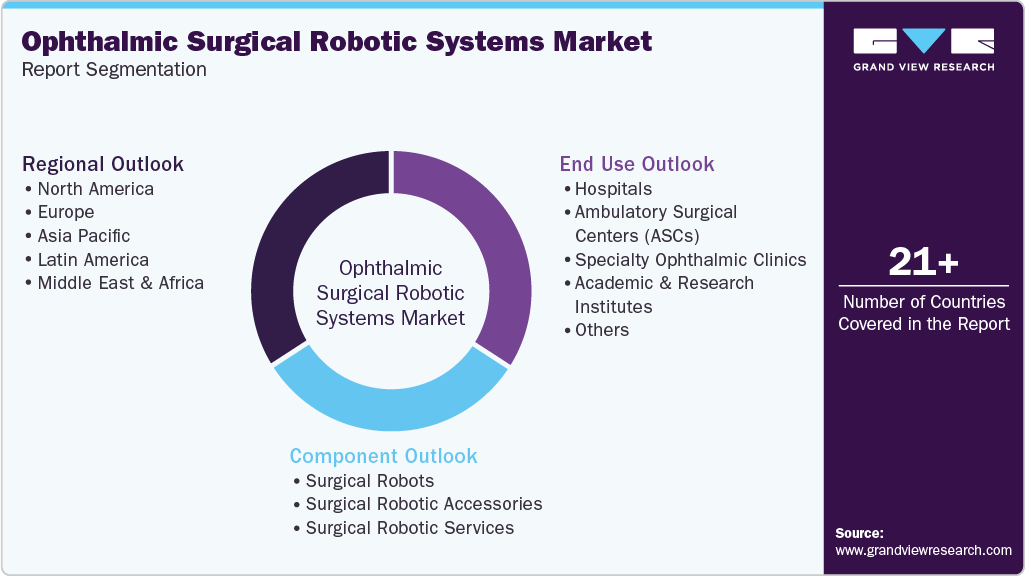
This report forecasts revenue growth at global, regional, and country levels and provides an analysis of the latest industry trends in each of the sub-segments from 2023 to 2035. For this study, Grand View Research has segmented global ophthalmic surgical robotic systems market report based on component, end use, and region.
 To learn more about this report, Download Free Sample Report
-
Component Outlook (Revenue, USD Million, 2023 - 2035)
-
Surgical Robots
-
Surgical Robotic Accessories
-
Surgical Robotic Services
-
-
End Use Outlook (Revenue, USD Million, 2023 - 2035)
-
Hospitals
-
Ambulatory Surgical Centers (ASCs)
-
Specialty Ophthalmic Clinics
-
Academic and Research Institutes
-
Others
-
-
Regional Outlook (Revenue, USD Million, 2023 - 2035)
-
North America
-
U.S.
-
Canada
-
Mexico
-
-
Europe
-
Germany
-
U.K.
-
France
-
Italy
-
Spain
-
Denmark
-
Sweden
-
Norway
-
-
Asia Pacific
-
China
-
Japan
-
India
-
South Korea
-
Australia
-
Thailand
-
-
Latin America
-
Brazil
-
Argentina
-
-
Middle East and Africa (MEA)
-
South Africa
-
Saudi Arabia
-
UAE
-
Kuwait
-
-
Research Methodology
The ophthalmic surgical robotic systems market figures in this report are based on a proven research process that combines executive interviews with secondary research from proprietary databases, company filings, and recognized regulatory and institutional sources. Market size is built through value-chain sizing - reconciling supply-side and demand-side estimates - and triangulated with bottom-up and top-down approaches. Every estimate passes multiple levels of expert validation before publication, with each ophthalmic surgical robotic systems segment quantified using the revenue-capture definitions in the table below.
Segment Definition
Segment
Segment Definition
By Component:
Surgical Robots
Surgical robots comprise robotic platforms and integrated systems designed to assist ophthalmic surgeons in performing delicate eye procedures with enhanced precision, stability, and control. These systems support microsurgical movements and reduce the impact of involuntary hand tremors during complex interventions.
Surgical Robotic Accessories
Surgical robotic accessories include specialized instruments, robotic end-effectors, surgical tool holders, disposable components, and procedure-specific attachments used with robotic platforms. These accessories enable surgeons to perform targeted ophthalmic procedures and maintain system functionality.
Surgical Robotic Services
Surgical robotic services include installation, maintenance, repair, software upgrades, technical support, and training for ophthalmic robotic systems. These services support operational reliability, system performance, and the effective integration of robotic technologies into clinical workflows.
By End Use:
Hospitals
Hospitals represent a major end-use segment because they provide specialized ophthalmic departments, operating rooms, advanced imaging systems, and multidisciplinary surgical teams. Their infrastructure supports the installation and use of robotic platforms for complex ophthalmic procedures, clinical evaluation, and specialized patient care.
Ambulatory Surgical Centers (ASCs)
Ambulatory surgical centers provide ophthalmic procedures in outpatient settings without requiring overnight hospitalization. Their focus on efficient surgical workflows, shorter patient stays, and specialized eye-care services supports interest in compact robotic systems suitable for outpatient procedures.
Specialty Ophthalmic Clinics
Specialty ophthalmic clinics focus on diagnosing and treating eye conditions and performing selected surgical procedures. These facilities represent a potential end-use segment for robotic systems that support specialized microsurgery, provided the technology aligns with their procedural requirements and infrastructure.
Academic and Research Institutes
Academic and research institutes use ophthalmic robotic systems for technology development, experimental surgery, clinical research, and surgeon training. These institutions contribute to evaluating robotic precision, developing new surgical techniques, and validating the safety and effectiveness of emerging systems.
Others
Other end users include specialized eye-care centers, collaborative research facilities, and other healthcare institutions involved in ophthalmic robotic procedures or technology evaluation. Their adoption depends on access to trained personnel, suitable infrastructure, and the availability of clinically appropriate robotic systems.
Estimation Model
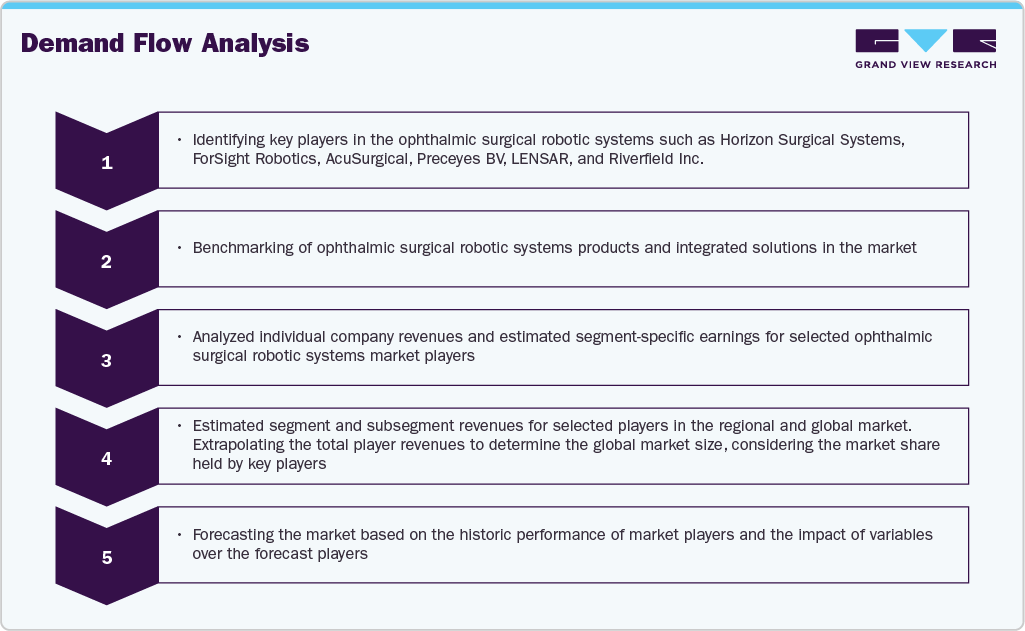
The market size of the ophthalmic surgical robotic systems market was estimated using a bottom-up approach, supported by company-level revenue analysis, product benchmarking, and segment-level revenue estimation. Key market participants were identified, and their ophthalmic surgical robotic systems were benchmarked to assess their presence in the market. Company revenues attributable to ophthalmic surgical robotic systems were analyzed to estimate segment-specific revenues, followed by extrapolation of regional and global market size based on the estimated market shares of key players. The market forecast was developed by evaluating historical company performance and key market variables over the forecast period.
 To learn more about this report, Download Free Sample Report
Delivered Customizations
This report has been delivered with the following In-depth customizations
CLIENT REQUEST
CUSTOMIZATION DELIVERED
VALUE ADDS
Procedure volume assessment
Estimated annual volumes of cataract surgeries, vitreoretinal procedures, and other relevant ophthalmic surgeries across selected countries. Assessed procedure-specific demand, historical trends, and differences in surgical activity across healthcare systems. Distinguished total procedure volumes from procedures potentially suitable for robotic assistance based on clinical requirements and technical feasibility.
Identifies high-volume surgical categories and geographic markets with potential for robotic adoption. Supports demand forecasting by linking surgical activity with the addressable market for ophthalmic robotic systems.
Installed base and penetration analysis
Evaluated the existing footprint of ophthalmic surgical robotic systems, where disclosed data were available, alongside conventional surgical equipment and relevant hospital infrastructure. Examined reported system placements, geographic distribution, clinical deployments, and adoption across hospitals and specialized eye-care centers.
Establishes a baseline for current technology penetration and identifies potential gaps between clinical demand and system availability. Supports the identification of underserved geographies, prospective hospital customers, and markets with suitable infrastructure for robotic adoption.
Average selling price and total cost of ownership
Assessed system acquisition costs and associated expenses, including installation, maintenance, software upgrades, consumables, surgeon training, technical support, and operating costs. Considered differences in system configurations, surgical applications, and utilization levels, distinguishing disclosed prices from estimates where direct pricing information was unavailable.
Supports pricing comparisons across robotic platforms and conventional surgical alternatives. Helps hospitals evaluate budget requirements, potential cost per procedure, utilization thresholds, and the financial feasibility of investing in ophthalmic surgical robotics.
About the Author(s)
Medical Devices Research Team
Healthcare · Medical DevicesThis report was authored by the medical devices research team at Grand View Research - comprising two research analysts, one senior research analyst, and one industry expert - with specialized expertise in the medical devices segment of the healthcare industry. All findings are based on proprietary healthcare databases, executive interviews, and regulatory analysis, subject to internal peer review prior to publication.
Last Updated:
Speak to Analyst

Customize this report to your needs - add regions, segments, or data points, with 20% free customization.
Or view our licence options:


ISO 9001:2015 & 27001:2022 Certified
We are GDPR and CCPA compliant! Your transaction & personal information is safe and secure. For more details, please read our privacy policy.


