
- Home
- »
- Healthcare IT
- »
-
Patient Administration System Market Size Report 2026-2033GVR Report cover

Patient Administration System Market (2026 - 2033)
Size, Share, & Trends Analysis Report By Component (Software, Services), By Deployment (Web & Cloud Based, On-premise), By Functions, By End-use, By Region, And Segment Forecasts
Market Size, 2025
$770.5MMarket Estimate, 2026
$838.8MMarket Forecast, 2033
$1,575.4MCAGR, 2026–2033
9.4%Patient Administration System Market Trends
The global patient administration system market size was valued at USD 770.5 million in 2025 and is projected to grow from USD 838.8 million in 2026 to USD 1,575.4 million by 2033, at a CAGR of 9.4% from 2026 to 2033. North America dominated the patient administration system market with the largest revenue share of 38.4% in 2025. The market growth is driven by the demand for efficient healthcare management. PAS adoption streamlines operations, enhances patient data accuracy, and reduces administrative errors.
 Source: Grand View Research, IR Documents, Primary Interviews, Paid DatabasesTo learn more about this report,
 Download Free Sample Report
 Key Market Trends & Insights
- By component: Software segment held the largest market share of 68.4% in 2025.
- By deployment: Web & cloud-based segment held the largest market share of 83.9% in 2025.
- By functions: Patient management segment held the largest market share of 37.9% in 2025.
- By end use: Hospitals & ambulatory centers segment held the largest market share of 74.4% in 2025.
Regional Highlights
- Largest regional market: North America (38.4% revenue share, 2025)
- Fastest-growing regional market: Asia Pacific (highest CAGR, 2026-2033)
- By country: The U.S. held the largest market share in 2025
Market Size & Forecast
- Market size in 2025: USD 770.5 Million
- Estimated market size in 2026: USD 838.8 Million
- Projected market size by 2033: USD 1,575.4 Million
- CAGR (2026-2033): 9.4%
Three ways to get this report
Buy it, customize it, or ask a question.Ask an Analyst
A direct answer, usually in 1 working day
- AccessReport author, directly
- Reply timeWithin 1 working day
- No sales callDirect answer only
- FormatEmail reply
- CostFree, no cost
Get the Full Report
What the study covers
- FormatsPDF · Excel · Dashboard
- Timeline2026–2033 annual, 2025 base
- Coverage20+ countries, 5 regions
- Companies10+ key players profiled
Customize the Report
20% free customization
- IncludeCountries, segments, points
- TailorTo your product definition
- ExtendDeeper competitor detail
- OrA fully bespoke study
- Turnaround5–10 working days
Automating tasks like scheduling, billing, and registration allows healthcare facilities to prioritize patient care over paperwork. This efficiency is essential for managing growing patient volumes and the complexities of modern healthcare systems. Increasing prevalence of chronic diseases like diabetes, cancer, and congestive heart failure is driving adoption of remote patient monitoring services, thereby boosting demand for IT solutions in healthcare. According to WHO 2023, approximately 41 million individuals die each year from non-communicable diseases, constituting around 74% of global deaths. Implementing patient administration systems can significantly advance disease prevention and management, resulting in substantial financial savings and improved healthcare outcomes.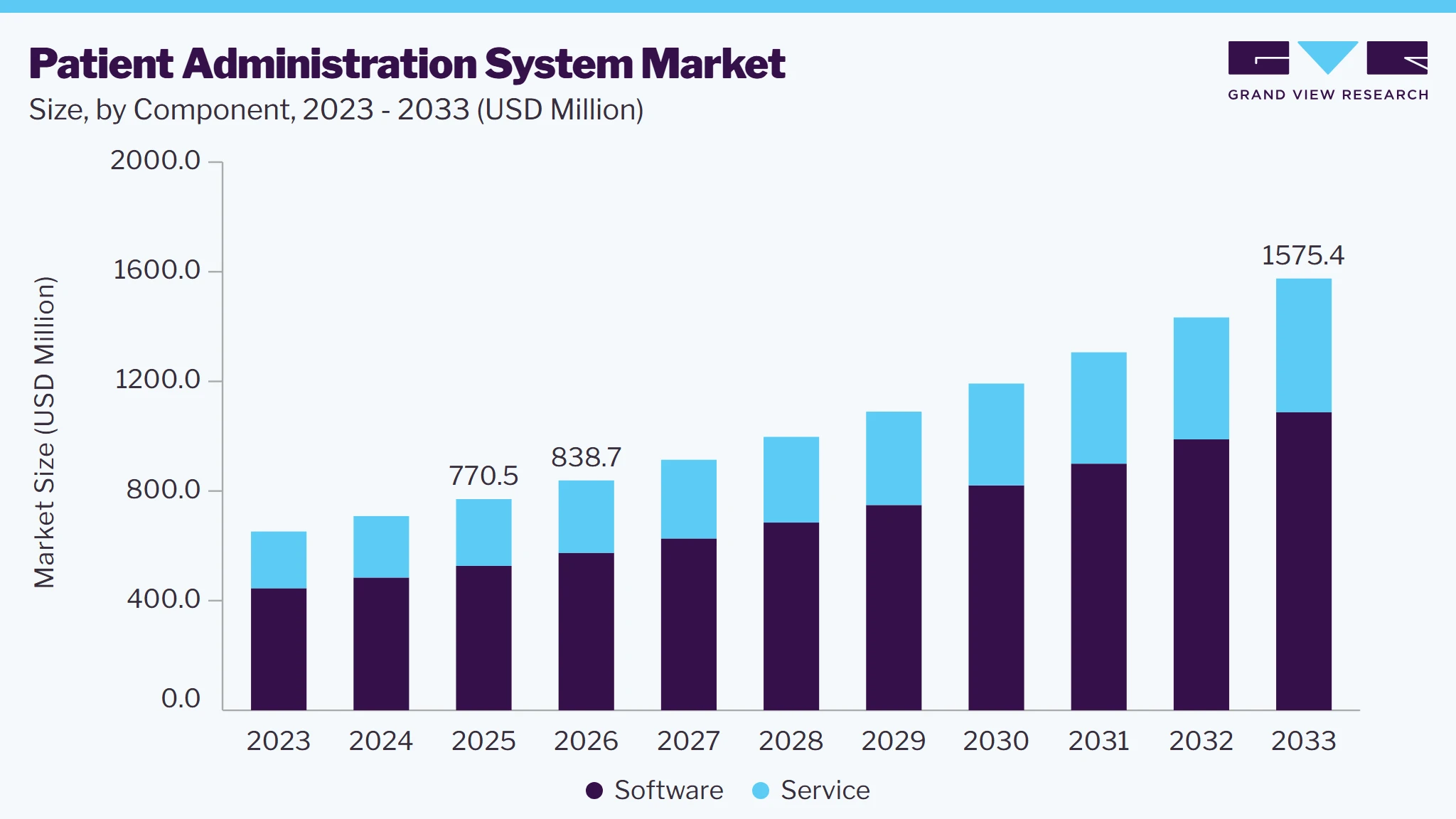 To learn more about this report, Download Free Sample Report
 The market is expected to grow significantly, driven by implementation of PAS in hospitals, private clinics, and other healthcare settings. For instance, in April 2022, Bethesda Health Care, a West Australian surgical hospital and palliative care operator, implemented Microsoft's Cloud for Healthcare technology in one of its mental health clinics, using it as a PAS. This software provides patient-centric approach, offering real-time insights into medical histories, care plans, and more. By centralizing processes and integrating communication tools, Dynamics 365 aims to revolutionize healthcare operations, enhance patient engagement, and improve financial management through secure digital tools and automation.
The advancement in technology, including integration of artificial intelligence (AI) and machine learning (ML) in PAS, is propelling market growth. These technologies enhance PAS functionality by enabling predictive analytics, personalized patient care, and improved decision-making processes. AI and ML advancements streamline operations, optimize resource allocation, and provide valuable insights, driving adoption of PAS and propelling market growth in healthcare sector.
Market Dynamics
The market growth is driven by the demand for efficient healthcare management. PAS adoption streamlines operations, enhances patient data accuracy, and reduces administrative errors. Automating tasks such as scheduling, billing, and registration allows healthcare facilities to prioritize patient care over paperwork. This efficiency is essential for managing growing patient volumes and the complexities of modern healthcare systems.
The growing global burden of chronic diseases, aging populations, and rising healthcare utilization are driving significant demand for patient administration systems. Healthcare facilities are managing larger patient volumes, creating a need for efficient administrative platforms that streamline patient intake, scheduling, admissions, discharge planning, and resource management. For instance, according to the American Hospital Association 2026 report, U.S. hospitals recorded approximately 35.7 million admissions. Manual administrative processes often lead to registration errors, scheduling conflicts, longer wait times, duplicate records, and inefficient resource utilization. Patient administration systems address these challenges by automating routine administrative workflows, improving patient tracking, and facilitating real-time information sharing across departments.
Hospitals and ambulatory care centers are increasingly adopting these solutions to optimize operational performance while maintaining high standards of patient care. The expansion of outpatient services, same-day procedures, and multispecialty healthcare networks has further increased the complexity of patient management, strengthening demand for integrated administration platforms that support coordinated care delivery across multiple facilities. For instance, in November 2025, University Hospitals of Leicester deployed a new Nervecentre Patient Administration System, replacing a 35-year-old legacy platform. Implemented by NTT DATA, it integrates with the trust’s electronic patient record, migrates 50 million records, and gives 18,000 staff real-time access to admissions, bookings, and discharge data.
"Our existing Patient Administration System just wasn't fit for a complex, modern hospital organisation. We've worked with Nervecentre to develop this system from the ground up, and this is the first time it's been used anywhere in the world. It was designed in partnership with the NHS, for the NHS, and our partnership with NTT DATA and Nervecentre has made it a huge success."
-Will Monaghan, Group Chief Digital Information Officer, University Hospitals of Leicester and University Hospitals of Northamptonshire.
Furthermore, healthcare providers are also facing increasing financial and regulatory pressures to improve efficiency while maintaining compliance with evolving healthcare standards. Patient administration systems support accurate documentation, insurance verification, coding, billing, and reporting, helping healthcare organizations reduce claim denials and strengthen revenue cycle performance. In addition, advanced reporting and analytics capabilities enable administrators to monitor patient flow, appointment utilization, occupancy rates, and operational performance in real time. The continued expansion of private healthcare providers, specialty hospitals, and integrated delivery networks is driving increased demand for centralized patient administration solutions that support large-scale healthcare operations. As healthcare systems worldwide focus on improving efficiency, reducing administrative costs, and enhancing patient access to care, the adoption of patient administration systems is expected to continue expanding throughout the forecast period.
Patient administration systems pose significant adoption challenges as they store substantial volumes of sensitive patient information, including personal identifiers, medical histories, insurance details, and billing records. Healthcare providers must comply with regulations such as the Health Insurance Portability and Accountability Act (HIPAA), the General Data Protection Regulation (GDPR), and other regional data protection laws. Compliance requires investments in encryption, access controls, cybersecurity infrastructure, and continuous monitoring. Failure to meet these regulatory requirements is anticipated to result in legal penalties, financial losses, and reputational damage, leading many healthcare organizations to adopt cautious implementation strategies.
Moreover, the growing frequency of ransomware attacks and healthcare data breaches further reinforces this adoption challenge. For instance, a November 2025 ransomware-linked breach at RCM vendor Catalyst RCM is likely to have exposed data for nearly 140,000 patients of South Carolina diagnostics firm Vikor Scientific (now Vanta Diagnostics) and affiliates KorGene and KorPath.
Providers must regularly update software, conduct security assessments, implement disaster recovery plans, and maintain robust cybersecurity frameworks to protect patient data. In addition, evolving regulations related to patient consent, interoperability, data retention, and audit documentation increase compliance complexity for both healthcare organizations and software vendors. These ongoing security and regulatory obligations increase operational costs, extend implementation timelines, and create barriers to the widespread deployment of patient administration systems, particularly among smaller healthcare providers.
The growing adoption of cloud computing and artificial intelligence presents a significant opportunity for the global patient administration system market. Cloud-based platforms reduce infrastructure costs, improve scalability, and provide secure access to patient information across multiple care settings. AI-powered capabilities such as automated appointment scheduling, patient flow optimization, predictive resource allocation, and intelligent registration enhance administrative efficiency and reduce manual workloads. For instance, in March 2026, Amazon Web Services launched Amazon Connect Health, an agentic AI platform to automate healthcare administration. It integrates with EHRs for patient verification, appointment scheduling, medical history review, ambient clinical documentation, and medical coding.
Moreover, increasing investments in digital health infrastructure and healthcare IT modernization are expected to accelerate the deployment of next-generation patient administration systems across hospitals, ambulatory centers, and integrated healthcare networks. Emerging markets are also investing in healthcare digitalization to improve access, operational efficiency, and patient outcomes, creating substantial opportunities for software providers to expand their presence and support the modernization of healthcare administration globally.
Market Concentration & Characteristics
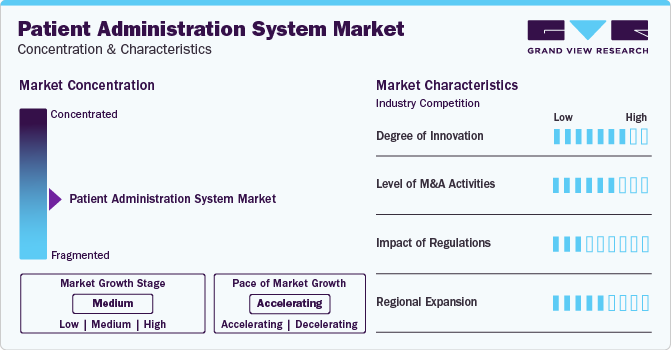
The chart below illustrates the relationship between market concentration, industry characteristics, and industry participants. The x-axis represents the level of industry concentration, ranging from low to high. The y-axis represents various industry characteristics, including industry competition, degree of innovation, level of mergers & acquisition activities, impact of regulations, and geographic expansion. The PAS market is fragmented, with many small players entering the market and offering new services. The degree of innovation is high, level of mergers & acquisition activities is medium. The impact of regulations on the market is moderate and the regional expansion of the market is medium.
 To learn more about this report, Download Free Sample Report
 The market is experiencing significant innovation, with various market players introducing new products to enhance their presence. For instance, in April 2024, The Shrewsbury and Telford Hospital NHS Trust (SaTH) launched its latest PAS, marking the initial phase of an electronic patient record upgrade initiative. This upgrade, facilitated by British Health Information Technology Company System C, aims to enhance long-term patient care. It is part of a multi-million-pound initiative focused on modernizing the storage and accessibility of patients' medical records.
The impact of merger & acquisition on the market is medium. Several key market players, including IQVIA Inc, Access Group, Global Health Limited, Dedalus Brisbane, RIOMED LTD., Veradigm LLC, Alcidion, and others, are involved in merger and acquisition activities to expand their market presence. For instance, in December 2021, Alcidion has acquired Silverlink PCS Software Limited, a leading UK specialist PAS provider. This strategic move aims to enhance Alcidion's services to the National Health Service (NHS) by complementing its existing clinical capacity in Miya Precision with Silverlink's PAS capabilities.
The impact of regulations on the market is moderate. However, it is expected to experience growth due to favorable government policies and laws that ensure the safety and efficacy of patient administration system. Market players need to consider regulations such as HIPAA (Health Insurance Portability and Accountability Act) during patient administration system development to protect the privacy and security of patient health information in the U.S. healthcare system.
Regional expansion in the market is moderate, influenced by regulatory changes and the specific demands of target customers in low- and medium-income countries. However, some market players extend their presence in different regions to capture market share. For instance, Dedalus Brisbane's webPAS (Patient Administration System) dominates hospital patient management solutions in the Australian and New Zealand health systems. Since its market introduction, webPAS has been deployed in over 252 sites across the Australia and New Zealand region, managing over 22,000 hospital beds (23% of total hospital beds).
Analyst Perspective
The patient administration system market is evolving into integrated digital platforms that support patient access, scheduling, admissions, discharge, bed management, billing, and operational decision-making across healthcare organizations. Growing adoption of electronic health records, cloud computing, interoperability standards, and digital patient engagement solutions is driving workflow modernization and improved operational efficiency. The competitive landscape is increasingly shaped by cloud-native and interoperable platforms that integrate administrative, clinical, and financial systems. Artificial intelligence, workflow automation, predictive analytics, and real-time capacity management are emerging as key differentiators, helping healthcare organizations optimize patient flow and resource utilization while supporting ongoing digital transformation initiatives.
Component Insights
By component, the software segment held the largest market share of 68.4% in 2025. In addition, this segment is expected to witness the fastest growth with a CAGR over the forecast period. With the increasing digitization of healthcare operations, PAS software streamlines administrative tasks, enhancing efficiency and patient care.
For instance, integrated software solutions such as Oracle’s, Cerner Millennium PAS software offer comprehensive tools for managing patient information, scheduling, billing, and inventory. This trend towards software-driven solutions is expected to revolutionize patient administration systems, improving operational efficiency and patient outcomes in healthcare facilities.
Services are primarily linked to incentives that require providers to demonstrate statistically measurable improvements in the healthcare sector. Patient administration system services utilize technology to support data governance, aggregation, & analytics, strengthening the capabilities required for compliance and provider incentives. Such factors are expected to boost the market growth over the forecast period.
Deployment Insights
By deployment, the web & cloud-based segment held the largest market share of 83.9% in 2025. In addition, this segment is expected to witness the fastest growth with a CAGR over the forecast period. Web-based patient administration systems offer enhanced accessibility, enabling seamless communication and data sharing among healthcare professionals, patients, and caregivers. Leveraging the internet's capabilities, these systems provide real-time access to medical records, streamline administrative tasks, optimize decision-making processes, and ultimately enhance patient care outcomes.
A cloud-based patient administration system can seamlessly integrate with other healthcare solutions, such as Electronic Health Records (EHRs), to offer a comprehensive management system. Integrating EHRs with cloud-based PAS software enhances activity tracking and boosts efficiency within healthcare organizations.
The on-premises segment is expected to grow at a significant CAGR during the forecast period. The availability of new on-premises software offers healthcare organizations improved offline accessibility, compliance adherence, customization, and data control. This grants organizations greater control over system upgrades, long-term cost considerations, and seamless integration with existing systems. These key advantages are driving the increasing demand for on-premises software adoption in the healthcare industry.
Functions Insights
By functions, the patient management segment held the largest market share of 37.9% in 2025. However, the outpatient management segment is expected to witness the fastest growth with a CAGR over the forecast period. Patient management, including Admission, Discharge, and Transfer (ADT), is a key driver of market growth. PAS solutions streamline ADT processes, enhancing patient flow and operational efficiency in healthcare facilities. As hospitals increasingly adopt digital solutions, the role of PAS in patient tracking, ward management, and informed decision-making is expected to expand over the forecast period.
The outpatient management segment is expected to witness at the fastest CAGR over the forecast period. Outpatient management, encompassing registration, appointments, outpatient department (OPD), and emergency room services, is expected to drive the market growth. As healthcare facilities focus on enhancing patient care, operational efficiency, and overall service quality, the demand for efficient systems to manage outpatient services is rising. Streamlining processes, improving patient experience, and ensuring seamless communication within healthcare institutions are key objectives driving the adoption of patient administration systems.
End-use Insights
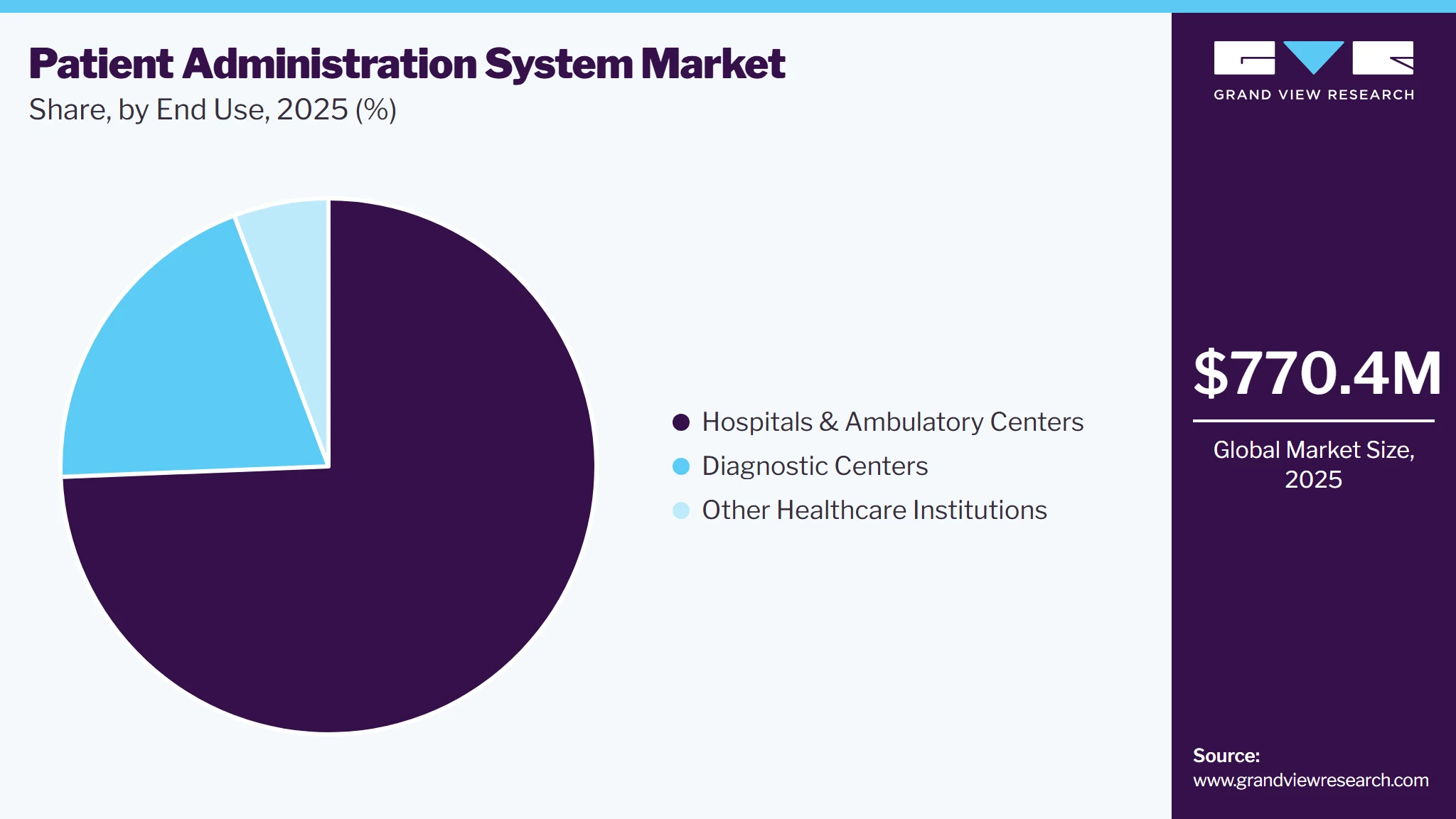
By end use, the hospitals & ambulatory centers segment held the largest market share of 74.4% in 2025. However, the diagnostic centers segment is expected to witness the fastest growth with a CAGR over the forecast period. Increasing adoption of information systems in hospitals for improving clinical, financial, & administrative efficiency and the rising need for improving information management in hospitals are some of the key factors expected to drive market growth. The shift in trend from volume-based care to value-based care is leading to increased demand for information systems. In addition, information systems in ambulatory centers are crucial for optimizing revenue operations and maximizing financial performance.
 To learn more about this report, Download Free Sample Report
 The diagnostic centers segment is projected to witness at the fastest CAGR over the forecast period, due to increasing adoption of healthcare IT services in diagnostic facilities. In addition, the introduction of a patient administration system, the rising demand for automated services, and the growing need for the integration of health-related data of individuals for efficient care delivery are some of the other factors expected to fuel the market growth.
Regional Insights
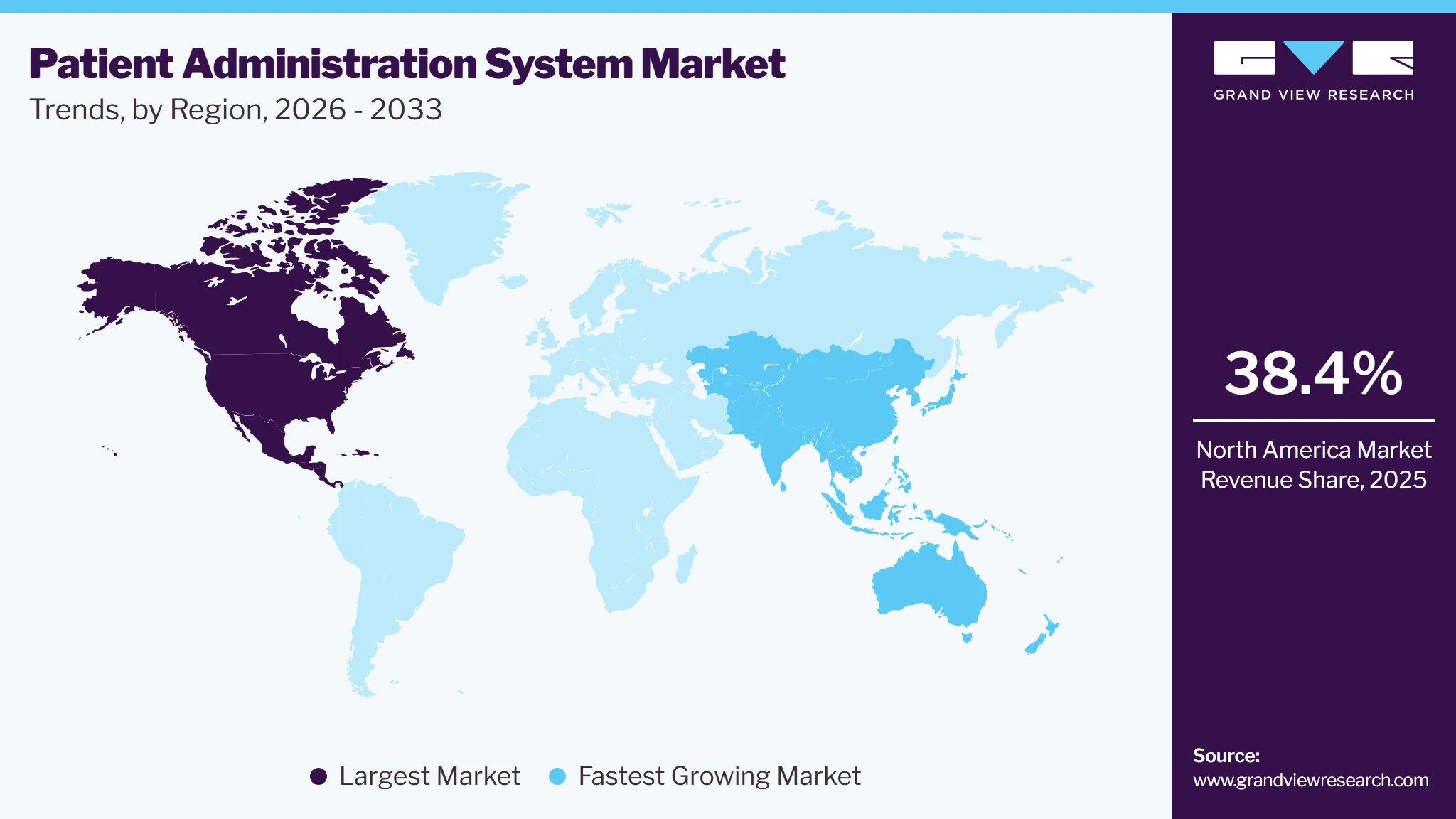
North America dominated the patient administration system market with the largest revenue share of 38.4% in 2025. This can be attributed to various factors such as availability of healthcare infrastructure with high digital literacy and policies that support the adoption of Electronic Health Records (EHRs). Furthermore, the development of support for the adoption of Healthcare Information Technology (HCIT) by healthcare providers and payers is expected to boost market growth.
 To learn more about this report, Download Free Sample Report
 U.S. Patient Administration System Market Trends
The patient administration system market in the U.S. held the largest share in the North America region in 2025. The country has witnessed an upsurge in the adoption of diverse IT services and solutions in the healthcare sector. Technologically advanced products make hospital workflows and administration more efficient.
Europe Patient Administration System Market Trends
The patient administration system market is anticipated to grow at a significant CAGR over the forecast period. The presence of developed economies, such as Germany, the UK, France, Spain, & Italy, is expected to fuel the market growth in Europe during the forecast period. The need for integrated health systems is rising due to the rapidly growing diseases prevalence. Increase in number of initiatives supporting digital health is expected to drive the market growth over the forecast period.
The UK patient administration system market is expected to grow at a significant CAGR over the forecast period. The UK government is encouraging the adoption of digital health initiatives by the NHS. For instance, the NHS is set to receive USD 4.34 billion (GBP 3.4 billion) for the digitalization of healthcare services in 2024/25. This investment offers lucrative growth opportunities for market players, driving market expansion.
The patient administration system marketis expected to grow at a significant CAGR over the forecast period, owing to the high utilization of EHRs to access patient information for treatment and reduce multiple investigations & treatment time. In addition, the adoption of digital infrastructure by physicians has significantly increased, thereby positively impacting the market growth. As per RPP (Rohde Public Policy) published article in 2024, more than 90% of the general practitioners in Germany are connected to telematics infrastructure.
Asia Pacific Patient Administration System Market Trends
The patient administration system marketinAsia Pacific is expected to witness at the fastest CAGR over the forecast period. With high demand for healthcare IT services due to an increase in government spending on healthcare. In addition, the need for healthcare IT systems has been growing, as they enable effective management of financial, clinical, and administrative aspects of hospitals.
The Japan patient administration system market is expected to grow at a significant CAGR over the forecast period. Increasing government spending on healthcare, high demand for eHealth services in the healthcare sector is fueling market growth in Japan.
The patient administration system market in China is aided by the growing adoption of cloud-based solutions, rising healthcare expenditures, and the presence of a large pool of skilled professionals.
Latin America Patient Administration System Market Trends
The patient administration system marketin Latin America is anticipated to grow at a significant CAGR over the forecast period. Latin America’s healthcare sector has undergone several technological advancements during the forecast period. Widescale use of EHR systems is being implemented in countries such as Argentina, Chile, Brazil, Peru, and Colombia. The market is projected to be driven by rising awareness of the importance of information systems in healthcare organizations.
The Brazil patient administration system market growth is expected to be driven byincreasing healthcare spending, improving access to private healthcare facilities and growing healthcare R&D. Brazil is one of Latin America's most profitable healthcare markets, with the largest healthcare spending. Strong government support and high demand for healthcare services drive the country’s healthcare sector.
MEA Patient Administration System Market Trends
The patient administration system marketin Middle East & Africa is anticipated to grow at a significant CAGR over the forecast period.MEA includes South Africa, Saudi Arabia, and the UAE. Market growth in this region can be attributed to the steady development of healthcare facilities in emerging economies and increase in healthcare expenditure.
The South Africa patient administration system market is poised for significant growth, driven by changing reforms and government initiatives supporting the adoption of PAS. This growth is further fueled by the increasing scope for digital health innovations in the country. For instance, the launch of Medici, an application facilitating secure patient-provider connections, highlighted the rising trend of digital innovations in the South African healthcare sector.
Key Patient Administration System Company Insights
The market is highly fragmented, with the presence of many country-level players. Companies are enhancing their solutions with additional capabilities, such as compliance, analytics, and vendor integration, to gain a competitive advantage in the market. Some of the emerging players in market include OneAdvanced, Nervecentre Software Ltd, KareXpert, Inc., Healthie, and IMS MAXIMS.
Key Patient Administration System Companies
The following key companies have been profiled for this study on the patient administration system market.
-
IQVIA Inc
-
Access Group
-
Global Health Limited
-
Dedalus Brisbane
-
RIOMED LTD.
-
Veradigm LLC
-
Alcidion
-
Oracle
-
IMS MAXIMS
-
Nervecentre Software Ltd
-
TPP Ltd.
-
System C.
Competitive Benchmarking
Category
Operating Strategies
Competitive Edge
Weakness
Established Players (Oracle, IQVIA Inc., Veradigm LLC, Dedalus Brisbane, TPP Ltd., System C)
- Expand patient administration platforms through strategic acquisitions, cloud migration, and partnerships with hospitals, integrated delivery networks, and government healthcare organizations. Invest in AI-enabled scheduling, patient flow optimization, interoperability, electronic health records (EHR) integration, revenue cycle management, and population health capabilities to deliver comprehensive healthcare administration solutions.
- Strong global and regional market presence, extensive installed customer base, and comprehensive healthcare IT portfolios integrating PAS with EHR, clinical, financial, and operational systems. Robust interoperability capabilities, regulatory expertise, scalable cloud infrastructure, and long-standing relationships with healthcare providers support enterprise-wide digital transformation.
- High implementation costs, lengthy deployment timelines, and complex system integrations may limit adoption among smaller healthcare providers. Legacy platform architectures and extensive customization requirements can increase upgrade complexity and total cost of ownership.
Emerging & Specialized Players (Access Group, Global Health Limited, RIOMED LTD., IMS MAXIMS, Nervecentre Software Ltd.)
- Focus on modular, cloud-based patient administration solutions designed to improve patient registration, appointment scheduling, bed management, outpatient workflows, and hospital operational efficiency. Leverage rapid implementation models, customer-centric product development, interoperability enhancements, and strategic partnerships with regional healthcare providers to expand market presence.
- Greater agility in product innovation, faster implementation, and the ability to deliver configurable solutions tailored to the operational requirements of hospitals, specialty clinics, and community healthcare organizations. Strong focus on user experience, workflow optimization, and responsive customer support enables effective deployment across diverse care settings.
- Smaller customer base, limited international footprint, and lower financial resources compared with multinational healthcare IT vendors. Narrower product portfolios and fewer enterprise-wide digital health capabilities may limit competitiveness in large-scale public health systems and multi-hospital procurement projects.
Recent Developments
-
In May 2023, Tampa General Hospital (TGH) partnered with Navina Technologies to integrate Navina’s AI into its primary care system. Navina’s AI processes large volumes of patient data, including consultation notes, lab results, and imaging, to create a concise, actionable health status overview. Clinicians using Navina’s platform can quickly assess diagnoses and identify opportunities to enhance care and compliance with quality measures
-
In August 2022, Circle Health Group implemented System C's Electronic Patient Record (EPR) across 54 hospitals. This initiative aims to achieve a paper-free environment at the point of care, support its 8,200 staff with timely information, reduce administrative burdens, and introduce mobile technology
-
In August 2019, North West Anglia NHS Foundation Trust implemented the Medway patient administration system, provided by System C, a leading provider of integrated IT solutions for the UK health and social care sectors
Patient Administration System Market Report Scope
Report Attribute
Details
Market size in 2025
USD 770.5 million
Estimated market size in 2026
USD 838.8 million
Projected market size by 2033
USD 1,575.4 million
Growth rate
CAGR of 9.4% from 2026 to 2033
Historical data
2021 - 2025
Forecast period
2026 - 2033
Quantitative units
Revenue in USD million/billion and CAGR from 2026 to 2033
Report coverage
Revenue forecast, company ranking, competitive landscape, growth factors, and trends
Segments covered
Component, deployment, functions, end use, and region
Regional scope
North America; Europe; Asia Pacific; Latin America; MEA
Country scope
U.S.; Canada; Mexico; Germany; UK; France; Italy; Spain; Norway; Denmark; Sweden; Ireland, Austria, Russia, Netherlands, Switzerland, Belgium, China; Japan; India; South Korea; Australia; Thailand; New Zealand, Singapore, Malaysia, Indonesia, Philippines, Brazil; Argentina; Saudi Arabia; South Africa; UAE; Kuwait
Key companies profiled
IQVIA Inc; Access Group; Global Health Limited; Dedalus Brisbane; RIOMED LTD.; Veradigm LLC; Oracle; IMS MAXIMS; Nervecentre Software Ltd; TPP Ltd.; System C.
IQVIA Inc
Free report customization (equivalent up to 8 analysts' working days) with purchase. Addition or alteration to country, regional & segment scope.
Access Group
Avail customized purchase options to meet your exact research needs. Explore purchase options
Global Patient Administration System Market Report Segmentation
This report forecasts revenue growth at global, regional, and country levels and provides an analysis of the latest industry trends in each of the sub-segments from 2021 to 2033. For this study, Grand View Research has segmented the global patient administration system market report based on component, deployment, functions, end-use and regions:
-
Component Outlook (Revenue, USD Million, 2021 - 2033)
-
Software
-
Services
-
-
Deployment Outlook (Revenue, USD Million, 2021 - 2033)
-
Web & Cloud Based
-
On-premise
-
-
Functions Outlook (Revenue, USD Million, 2021 - 2033)
-
Patient Management
-
Outpatient Management
-
Inventory & Procurement
-
Revenue Management
-
Others
-
-
End-use Outlook (Revenue, USD Million, 2021 - 2033)
-
Hospitals & Ambulatory Centers
-
Diagnostic Centers
-
Other Healthcare Institutions
-
-
Regional Outlook (Revenue, USD Million, 2021 - 2033)
-
North America
-
U.S.
-
Canada
-
Mexico
-
-
Europe
-
UK
-
Germany
-
France
-
Italy
-
Spain
-
Denmark
-
Sweden
-
Norway
-
Ireland
-
Austria
-
Russia
-
Netherlands
-
Switzerland
-
Belgium
-
-
Asia Pacific
-
China
-
Japan
-
India
-
South Korea
-
Australia
-
Thailand
-
New Zealand
-
Singapore
-
Malaysia
-
Indonesia
-
Philippines
-
-
Latin America
-
Brazil
-
Argentina
-
-
Middle East and Africa (MEA)
-
South Africa
-
Saudi Arabia
-
UAE
-
Kuwait
-
-
Research Methodology
The patient administration system market figures in this report are based on a proven research process that combines executive interviews with secondary research from proprietary databases, company filings, and recognized regulatory and institutional sources. Market size is built through value-chain sizing - reconciling supply-side and demand-side estimates - and triangulated with bottom-up and top-down approaches. Every estimate passes multiple levels of expert validation before publication, with each life science tools segment quantified using the revenue-capture definitions in the table below.
Segment Definition
Segment – Component
Revenue capture definition
Software
Patient administration software platforms that manage administrative, financial, and operational functions within healthcare organizations. These solutions support patient registration, appointment scheduling, admissions, discharge, transfers, billing, insurance verification, electronic patient records, and workflow automation.
Services
Professional services supporting the implementation, customization, integration, training, maintenance, technical support, software upgrades, and consulting required for the successful deployment and operation of patient administration systems.
Segment – Deployment
Revenue capture definition
Web & Cloud Based
Patient administration systems hosted on cloud infrastructure or accessed through web-based platforms. These solutions enable secure remote access, centralized data management, automatic software updates, scalability, interoperability, and reduced IT infrastructure requirements.
On-premise
Patient administration systems installed and maintained within a healthcare organization's own IT infrastructure and data centers. On-premise deployment offers greater control over system customization, security, and regulatory compliance while requiring dedicated internal IT resources.
Segment – Function
Revenue capture definition
Patient Management
Core administrative functions related to patient registration, demographic record management, appointment scheduling, admissions, discharge, transfers, insurance verification, patient identification, and electronic record maintenance throughout the patient care journey.
Outpatient Management
Functions designed to manage ambulatory care services, including outpatient registration, appointment scheduling, consultation tracking, clinical documentation, billing, follow-up visits, and coordination of same-day care services.
Inventory & Procurement
Modules that monitor and manage healthcare inventory, medical supplies, pharmaceuticals, equipment utilization, vendor management, purchasing processes, stock replenishment, and procurement workflows to ensure operational efficiency.
Revenue Management
Financial management functions that support patient billing, claims processing, coding, insurance reimbursement, payment collection, revenue cycle management, financial reporting, and accounts receivable management to optimize healthcare revenue.
Others
Includes additional administrative and operational functions such as bed management, resource scheduling, referral management, reporting and analytics, workforce management, document management, patient communication, compliance monitoring, and integration with other hospital information systems.
Segment – End Use
Revenue capture definition
Hospitals & Ambulatory Centers
Public and private hospitals, multispecialty hospitals, and ambulatory surgery centers that utilize patient administration systems to streamline patient registration, scheduling, admissions, billing, clinical workflow coordination, and overall administrative operations.
Diagnostic Centers
Standalone diagnostic laboratories, pathology laboratories, imaging centers, and diagnostic service providers that use patient administration systems to manage patient records, appointment scheduling, test orders, reporting, billing, and workflow coordination.
Other Healthcare Institutions
Includes specialty clinics, rehabilitation centers, long-term care facilities, community health centers, physician practices, academic medical centers, home healthcare organizations, and other healthcare facilities utilizing patient administration systems to support administrative and patient management activities.
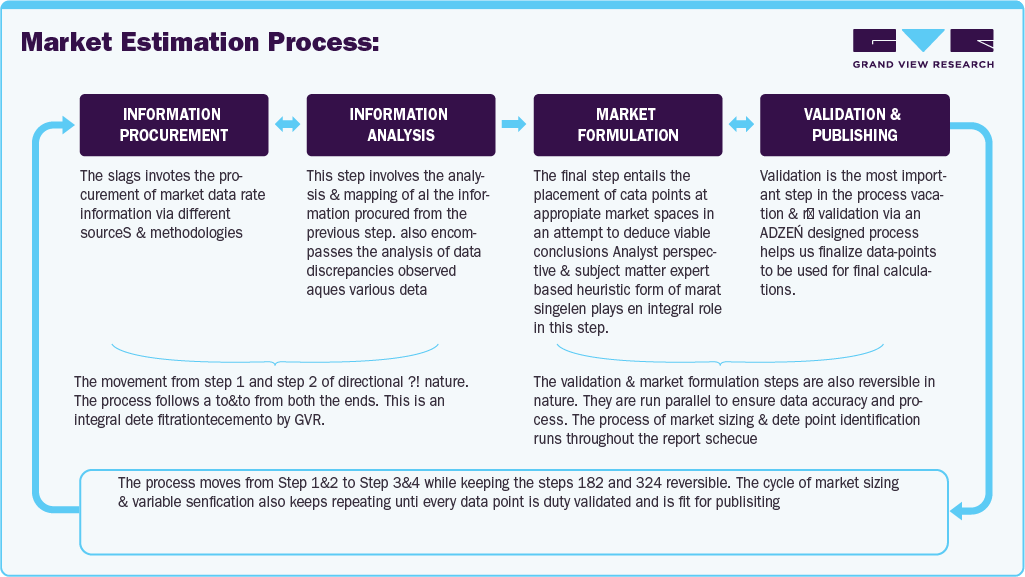
Estimation Model
 To learn more about this report, Download Free Sample Report
 Market-specific Research Models
Consensus-Based Estimates & Forecasting
The patient administration system market presents emerging to dominant opportunities, featuring global key players such as IQVIA Inc; Access Group; Global Health Limited; Dedalus Brisbane; RIOMED LTD.; Veradigm LLC; Oracle; IMS MAXIMS; Nervecentre Software Ltd; TPP Ltd.; System C. To ensure a holistic approach, the GVR research team adopted a comprehensive methodology, considering multiple companies worldwide and utilizing various variables for data accuracy.
Our methodology included:
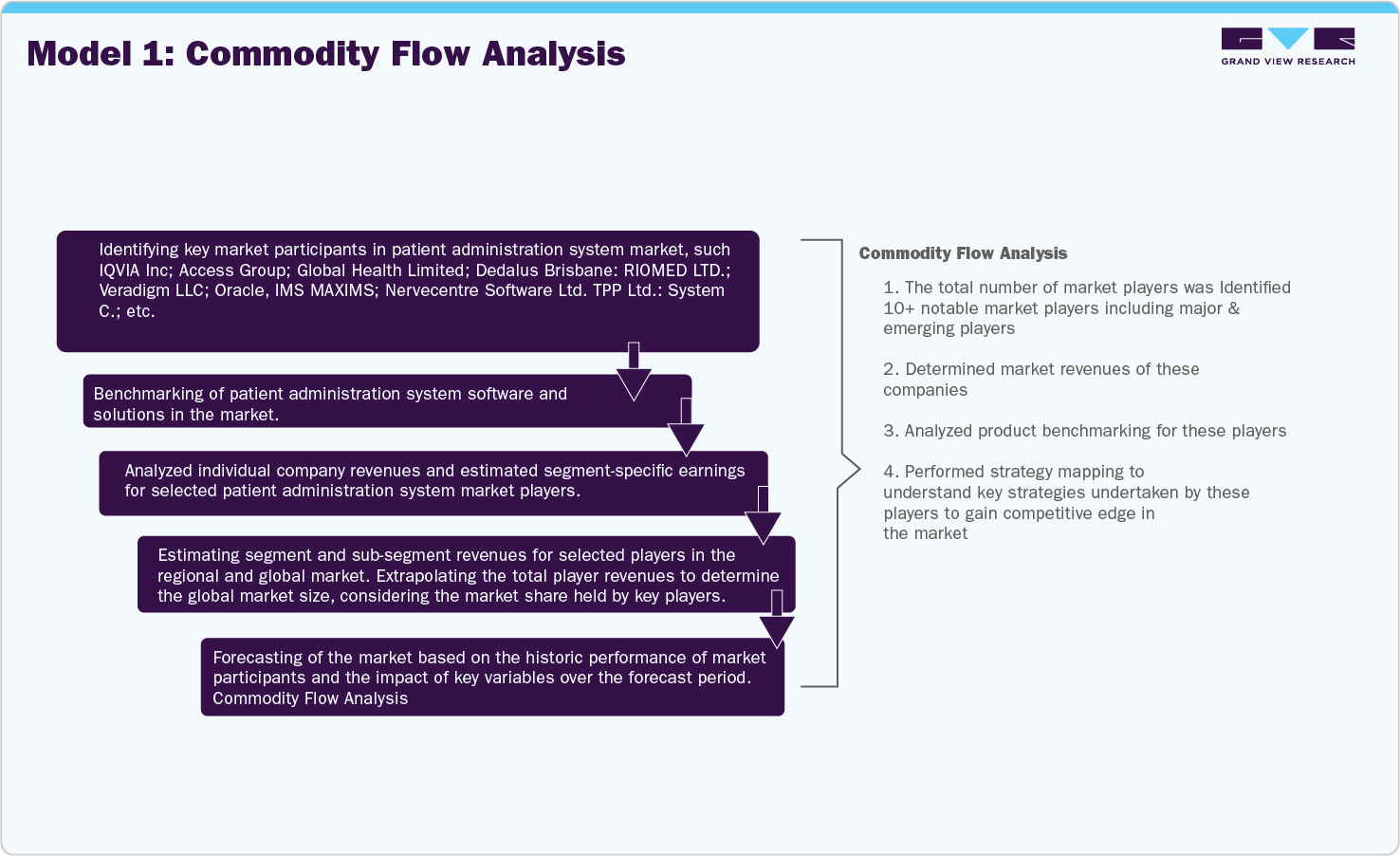
Model 1: Commodity Flow Analysis - For public players, annual reports were referenced. For private players, premium paid data sources such as S&P Global, Crunchbase, ZoomInfo, RocketReach, etc., were used for the latest revenue insights.
Model 2: Parent Market Analysis
Model 3: Country-level Multivariate Analysis Assumptions
Model 4: Segment-level Multivariate Analysis Assumptions
Model 5: Patient Administration System Market CAGR Calculations
 To learn more about this report, Download Free Sample Report
 Commodity flow analysis was employed to track the movement of patient administration system through the value chain, from technology providers to end users. This analysis provided insights into demand generation points, intermediary roles, and ultimate consumption patterns.
Delivered Customizations
This report has been delivered with the following In-depth customizations
Client Request
Customization Delivered
Value Adds
Patient Administration System Adoption & Healthcare Workflow Analysis
Developed a tailored analysis of the global Patient Administration System (PAS) market focused on patient registration, appointment scheduling, admission, discharge and transfer (ADT), patient demographics management, bed management, billing integration, referral management, and patient communication solutions. The study assessed adoption trends across hospitals, integrated delivery networks (IDNs), specialty clinics, ambulatory care centers, and public healthcare organizations while evaluating healthcare digitization initiatives, increasing patient volumes, interoperability requirements, and administrative workflow optimization driving market growth.
Enables stakeholders to understand evolving patient administration trends, identify high-growth PAS applications, assess digital transformation opportunities, and evaluate the impact of integrated administrative systems on operational efficiency, patient experience, resource utilization, and long-term market expansion.
Healthcare Administration, Interoperability & Digital Patient Management Assessment
Delivered a customized evaluation of PAS utilization across patient registration, appointment and referral management, waiting list management, bed allocation, electronic admission-discharge-transfer (ADT) workflows, billing integration, patient portals, and care coordination. The analysis assessed cloud-based deployment, AI-enabled scheduling, interoperability with electronic health records (EHRs), revenue cycle integration, data analytics, and healthcare provider adoption patterns. Additionally, it evaluated technology innovations and implementation strategies from leading companies including IQVIA Inc., Access Group, Global Health Limited, Dedalus, RIOMED Ltd., Veradigm LLC, Oracle, IMS MAXIMS, Nervecentre Software Ltd., TPP Ltd., and System C.
Provides actionable insights into commercially attractive software segments, emerging healthcare IT technologies, evolving administrative requirements, and growth opportunities associated with workflow automation, enhanced patient engagement, reduced administrative burden, improved care coordination, and optimized healthcare delivery.
Healthcare IT Infrastructure, Regulatory Environment & Competitive Landscape Assessment
Conducted a focused assessment of the Patient Administration System ecosystem, including healthcare information systems, cloud infrastructure, interoperability frameworks, cybersecurity, data privacy regulations, regulatory compliance standards, and competitive positioning. The analysis evaluated implementation challenges, legacy system integration, scalability requirements, procurement practices, technology adoption barriers, and competitive differentiation initiatives among leading market participants such as IQVIA Inc., Access Group, Global Health Limited, Dedalus, RIOMED Ltd., Veradigm LLC, Oracle, IMS MAXIMS, Nervecentre Software Ltd., TPP Ltd., and System C.
Supports strategic planning for healthcare IT modernization, PAS implementation, technology investments, healthcare partnerships, geographic expansion, and market entry strategies by identifying adoption drivers, operational challenges, regulatory considerations, revenue opportunities, infrastructure requirements, and competitive advantages across the global Patient Administration System value chain.
Frequently Asked Questions About This Report
Asia Pacific is the fastest-growing region over the forecast period.
Software segment held the largest market share of 68.4% in 2025.
Web & cloud-based segment held the largest market share of 83.9% in 2025.
Hospitals & ambulatory centers segment held the largest market share of 74.4% in 2025.
The global patient administration system market size was valued at USD 770.5 million in 2025 and is estimated at USD 838.8 million for 2026.
The global patient administration system market is expected to grow at a CAGR of 9.4% from 2026 to 2033, reaching USD 1,575.4 million by 2033.
North America dominated with a 38.4% revenue share in 2025.
Key players include IQVIA Inc; Access Group; Global Health Limited; Dedalus Brisbane; RIOMED LTD.; Veradigm LLC; Alcidion.; Oracle; IMS MAXIMS; Nervecentre Software Ltd; TPP Ltd.; System C.
Key factors that are driving the patient administration system market growth include increasing demand for efficient healthcare management, growing focus on patient-centered care and technological advancement.
About the Author(s)
Healthcare IT Research Team
Healthcare · Healthcare ITThis report was authored by the healthcare it research team at Grand View Research - comprising two research analysts, one senior research analyst, and one industry expert - with specialized expertise in the healthcare it segment of the healthcare industry. All findings are based on proprietary healthcare databases, executive interviews, and regulatory analysis, subject to internal peer review prior to publication.
Last Updated:
Speak to Analyst

Customize this report to your needs - add regions, segments, or data points, with 20% free customization.
Or view our licence options:


ISO 9001:2015 & 27001:2022 Certified
We are GDPR and CCPA compliant! Your transaction & personal information is safe and secure. For more details, please read our privacy policy.


