
- Home
- »
- Pharmaceuticals
- »
-
Pericardium Diseases Market Size, Industry Report, 2033GVR Report cover
![Pericardium Diseases Market Size, Share & Trends Report]()
Pericardium Diseases Market (2025 - 2033) Size, Share & Trends Analysis Report By Drug Class (NSAIDs, Colchicine), By Disease Type (Acute Pericarditis, Recurrent Pericarditis), By Distribution Channel, By Region, And Segment Forecasts
- Report ID: GVR-4-68040-790-6
- Number of Report Pages: 150
- Format: PDF
- Historical Range: 2021 - 2023
- Forecast Period: 2025 - 2033
- Industry: Healthcare
- Report Summary
- Table of Contents
- Segmentation
- Methodology
- Download FREE Sample
-
 Download Sample Report
Pericardium Diseases Market Summary
The global pericardium diseases market size was estimated at USD 2.96 billion in 2024 and is projected to reach USD 5.06 billion by 2033, growing at a CAGR of 6.14% from 2025 to 2033. The growth is driven by the prevalence of cardiovascular conditions, aging populations, and improved diagnostic capabilities, which are driving demand for effective treatments targeting pericardial disorders such as pericarditis, pericardial effusion, and constrictive pericarditis.
Key Market Trends & Insights
- North America dominated the market with the largest share of 42.73% in 2024.
- U.S. pericardium disease market represents the largest single-country segment in North America.
- By drug class, the nonsteroidal anti-inflammatory drugs (NSAIDs) segment held the largest market share of 40.20% in 2024.
- By disease type, the acute pericarditis segment held the largest market share in 2024.
- By distribution channel, the hospital pharmacies segment held the largest market share in 2024.
Market Size & Forecast
- 2024 Market Size: USD 2.96 Billion
- 2033 Projected Market Size: USD 5.06 Billion
- CAGR (2025-2033): 6.14%
- North America: Largest market in 2024
- Asia Pacific: Fastest growing market
Rising awareness about early detection and management of heart-related conditions is boosting the adoption of advanced therapeutics and minimally invasive interventions. Factors such as sedentary lifestyles, chronic infections, autoimmune diseases, and post-surgical complications have also contributed to the growing disease burden.
The global pericarditis market is driven by advancements in healthcare practices, evolving lifestyles, and technological innovation. Pericarditis, characterized by inflammation of the pericardial sac, remains the most prevalent pathological condition affecting the pericardium. According to the National Library of Medicine, pericardial cases are classified into acute, incipient, subacute, chronic, and recurrent forms, accounting for an estimated 15%-30% of cases. The increasing prevalence of cardiovascular risk factors, including hypertension, autoimmune disorders, infections, and post-myocardial infarction complications, is augmenting the market opportunity.
Market Concentration & Characteristics
The Pericardium Diseases Market reflects a moderate degree of innovation, centered on advancements in imaging diagnostics, minimally invasive procedures, and novel anti-inflammatory therapies. Research focuses on improving early detection, precision treatment, and reducing recurrence of pericarditis. Development of biologic agents and regenerative approaches for pericardial repair adds new therapeutic possibilities. Integration of AI-based diagnostics enhances accuracy and clinical decision-making. Continuous technological evolution supports steady market growth and clinical improvement.
Entry into the Pericardium Diseases Market is constrained by high R&D costs, limited patient populations, and complex regulatory pathways. Specialized expertise in cardiovascular drug and device development is required for successful commercialization. The dominance of established pharmaceutical and medical device players restricts opportunities for smaller firms. Manufacturing precision and clinical validation create additional challenges. These barriers favor companies with advanced research infrastructure and long-term investment capacity.
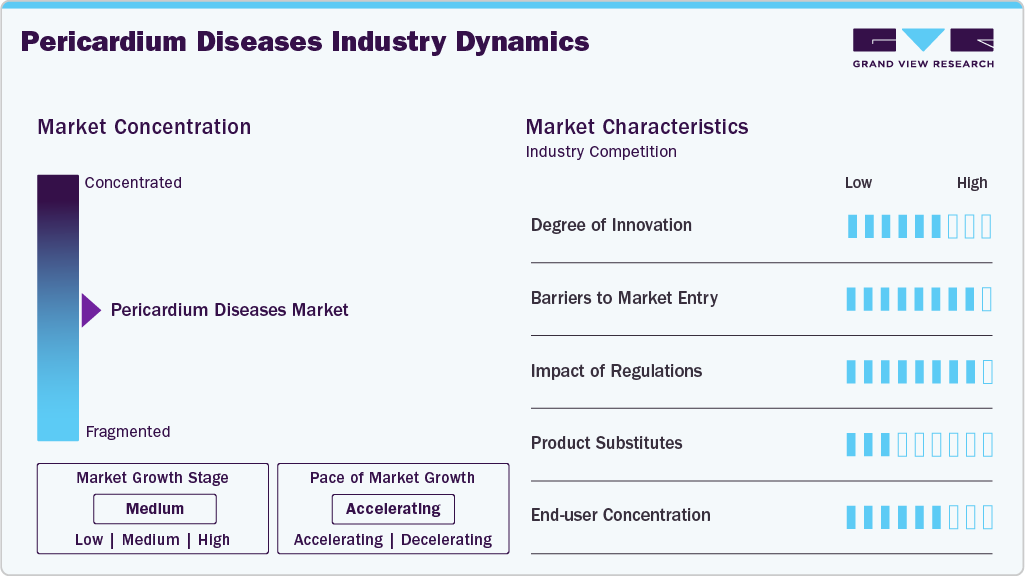
Regulatory authorities impose stringent safety and efficacy requirements for cardiovascular therapies and devices. Approval processes for pericardial drugs and implants demand extensive clinical data and post-marketing surveillance. Compliance with international standards such as FDA and EMA guidelines ensures patient safety and product reliability. Frequent updates in clinical practice recommendations influence treatment adoption and market timelines. Strong regulatory oversight encourages transparency and drives innovation in safer therapeutic solutions.
The market faces limited substitution threats, as pericardial conditions often require targeted interventions. Alternative options include corticosteroids, NSAIDs, and surgical procedures such as pericardiectomy or drainage. Advances in imaging-guided management provide complementary but not replacing solutions. Substitutes are chosen based on disease severity, etiology, and patient response. The preference for specialized therapies maintains steady demand for disease-specific products and devices.
North America and Europe lead the market due to advanced healthcare systems and strong diagnostic capabilities. Asia Pacific is emerging as a high-growth region supported by rising cardiac disease prevalence and improving clinical infrastructure. Local manufacturing and distribution networks enhance accessibility in developing economies. Regional collaborations among hospitals and research institutes accelerate technology transfer. Geographical diversification enables companies to strengthen presence and balance revenue streams globally.
Drug Class insights
Based on drug class, the Nonsteroidal Anti-Inflammatory Drugs (NSAIDs) segment led the market with the largest revenue share of 40.20% in 2024. NSAIDs are a mainstay of therapy for idiopathic pericarditis (IP). They decrease fever, reduce pain, and prevent blood clots and inflammation.
Colchicine is expected to grow in the coming years. It inhibits microtubule polymerization, reducing neutrophil activity and inflammatory responses within the pericardial sac. Colchicine is often used alongside NSAIDs to shorten symptom duration, prevent recurrences, and improve long-term outcomes. Its proven efficacy and safety make it a standard first-line treatment in pericardial inflammation management.
Disease Type Insights
Based on disease type, the acute pericarditis segment led the market with the largest revenue share of 51.73% in 2024. The acute pericarditis market is being driven by the growing prevalence of cardiovascular disorders and heightened awareness around early diagnosis and treatment strategies. A 2024 study by Elsevier B.V. reports an annual incidence of 27.7 cases per 100,000 person-years, with 15% of cases accompanied by myocarditis. Hospitalizations occur in approximately 3.32 cases per 100,000 person-years, accounting for 0.2% of total hospital admissions.
The recurrent pericarditis segment is expected to grow with the fastest CAGR during the forecast period. The recurrent pericarditis (RP) market is witnessing growth due to the high clinical burden and the need for effective long-term management options. According to the National Center for Biotechnology Information (NCBI), RP is the most common complication following an initial episode of pericarditis and occurs after a symptom-free interval of 4-6 weeks. Its prevalence ranges from 15-30%, with a third episode reported in 20-40% of cases, and up to 10% of patients experiencing multiple recurrences, often requiring long-term corticosteroid therapy.
Distribution Channel Insights
Based on the distribution channel, the hospital pharmacies segment held the largest market share of 60.37% in 2024 driven by managing pericarditis by ensuring timely access to advanced therapeutics and maintaining optimal treatment protocols within healthcare facilities. Hospitals are often the first point of care for patients presenting with acute or recurrent pericarditis, necessitating the availability of anti-inflammatory drugs, corticosteroids, and biologics such as interleukin-1 inhibitors. The growing prevalence of cardiovascular diseases and increasing hospitalization rates for acute pericarditis are driving segment growth.
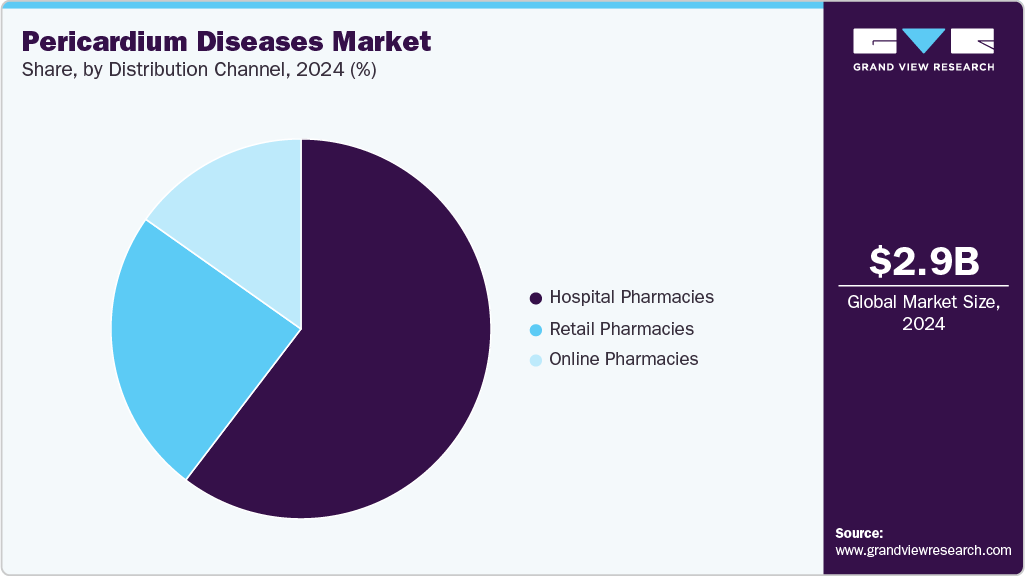
The online pharmacy segment is expected to grow at the fastest CAGR during the forecast period, driven by increasing digitalization of healthcare services and rising consumer preference for convenient access to prescription medications.
Regional Insights
North America pericardium diseases market held the largest market share of 42.73% in 2024. The most common form of pericardial disease accounts for approximately 5% of patients presenting with non-ischemic chest pain in emergency departments. The incidence ranges between 16.1 and 27.7 cases per 100,000 population annually. According to recent studies in 2022, around 80-90% of pericarditis cases in the region are classified as idiopathic, most likely viral in origin.

U.S. Pericardium Diseases Market Trends
U.S. pericardium diseases market represents the largest single-country segment in North America with active clinical trials and rapid adoption of new treatments. Recurrent pericarditis prevalence and long-term follow-up data enhance commercial potential for specialty therapies. High hospital throughput for post-operative and cancer-related effusions ensures steady demand for drainage devices. Specialist referral networks concentrate complex case management in tertiary centers. Payer coverage favors therapies that reduce recurrence and readmission risk. Real-world studies continue to refine patient counts for new product launches.
Europe Pericardium Diseases Market Trends
Europe Pericardium Diseases Market follows guideline-driven care emphasizing anti-inflammatory therapy and selective use of immunomodulators. Advanced cardiology infrastructure supports high diagnostic accuracy and timely procedural intervention. Recurrent and complicated cases are concentrated in tertiary cardiac centers evaluating biologics. Reimbursement frameworks require strong clinical evidence for premium pricing. Device adoption for pericardial drainage and pericardiectomy remains stable in high-income countries. Country-specific differences in disease etiology create distinct submarkets.
UK Pericardium Diseases Market shows consistent management with rapid guideline adoption and centralized specialist referrals for complex cases. Hospital networks maintain demand for imaging, pericardiocentesis, and inpatient management of large effusions. Clinicians focus on reducing recurrence and shortening hospital stays, which encourages durable therapies. Pricing processes require evidence of cost effectiveness and patient outcomes. Investments in registry data and audits support adoption of novel agents. Growth is concentrated in tertiary cardiology and thoracic surgery centers.
Germany Pericardium Diseases Market combines high diagnostic capability with a strong procedural base, generating significant volume for pericardial interventions. Cardiothoracic surgery centers manage constrictive and malignant effusions, sustaining device demand. Payer systems influence evaluation of high-cost therapies. Academic centers and clinical networks support research and early adoption of new treatments. High per-capita healthcare spending ensures access to advanced imaging and specialist care. The market provides a predictable commercial environment for evidence-based products.
France Pericardium Diseases Market maintains well-developed cardiology infrastructure and organized referral pathways. Hospital-based care handles complex cases, including malignant and post-operative effusions. Clinicians follow anti-inflammatory regimens while reserving biologics for refractory disease. Health technology assessment impacts access and pricing for premium therapies. Centers of excellence support clinical research and real-world evidence collection. Market dynamics balance measured adoption with thorough clinical evaluation.
Asia Pacific Pericardium Diseases Market Trends
The Asia Pacific Pericardium Diseases Market is expected to grow steadily, driven by the rising prevalence of cardiovascular disorders and increasing awareness of early diagnosis and treatment. Pericarditis, the most common pericardial condition, affects a significant portion of the population, with viral infections being the predominant cause in developed countries. Post-cardiac injury syndromes, autoimmune disorders, and lifestyle-related cardiovascular risk factors further amplify the disease burden. Advancements in diagnostic imaging, such as echocardiography, MRI, and CT scans, alongside minimally invasive interventions and targeted anti-inflammatory therapies, are improving patient outcomes and fueling market expansion in the region.
Japan Pericardium Diseases Market maintains high standards of cardiac imaging and post-operative care, resulting in early detection and management of pericardial conditions. An aging population contributes to a steady caseload of inflammatory and effusive presentations. Specialist centers adopt evidence-based therapies with careful safety evaluation. Device procedures are performed at high volumes in cardiology and thoracic surgery departments. Pricing and procurement favor established clinical benefits. The market emphasizes clinical evidence and incremental innovation.
China Pericardium Diseases Market shows rapid capacity expansion in tertiary hospitals with growing demand for pharmaceutical and procedural solutions. Aging populations and increasing cancer survival rates raise incidence of malignant and secondary pericardial effusions. Urban centers adopt imaging and interventional techniques quickly, while rural areas remain underpenetrated. Local production of generics and devices improves availability and affordability. Regulatory pathways have accelerated for promising therapies, supporting faster launches. The market opportunity centers on scaling access and increasing clinician awareness.
Latin America Pericardium Diseases Market Trends
Latin America Pericardium Diseases Market presents heterogeneous access to cardiac care, with metropolitan centers offering advanced imaging and rural areas relying on basic diagnostics. Infectious etiologies remain common in some countries, altering drug demand toward antimicrobial and antitubercular therapy. Oncology-related effusions and post-surgical cases drive procedural demand in specialized hospitals. Payment patterns influence adoption of high-cost biologics. Regional distributors and partnerships are essential for market entry. Growth is moderate with urban tertiary centers showing concentrated demand.
Brazil Pericardium Diseases Market has a concentrated structure with major urban hospitals delivering most specialist care and procedures. Infectious pericarditis contributes to a diverse therapeutic mix in certain groups. Teaching hospitals perform the majority of pericardiectomies and complex drainage procedures. Public and private payers create mixed reimbursement conditions affecting premium therapy uptake. Clinical research networks generate region-specific evidence for market access. The market offers important scale for device and pharmaceutical companies.
Middle East & Africa (MEA) Pericardium Diseases Market Trends
MEA Pericardium Diseases Market shows varied disease patterns with higher prevalence of infectious pericarditis and growing malignant effusions in oncology centers. Resource constraints limit advanced imaging and device access in some countries, while private hospitals in major cities offer comprehensive care. Demand for low-cost medicines and minimally invasive drainage solutions remains strong. Clinical management emphasizes rapid stabilization and targeted therapy selection. Market entry requires consideration of distribution complexity and hospital capabilities. Growth is uneven but present where tertiary cardiac services expand.
Saudi Arabia Pericardium Diseases Market benefits from modern hospital infrastructure and expanding subspecialty cardiology services in major cities. High tertiary care referrals drive demand for pericardial drainage procedures and complex surgeries. Specialist centers evaluate novel therapies for recurrent cases and maintain active clinical collaborations. Payer systems and private hospitals support access to high-cost treatments with demonstrated clinical value. Recruitment of cardiothoracic specialists strengthens procedural capacity. The market shows steady growth tied to expanding tertiary care capabilities.
Key Pericardium Diseases Company Insights
The pericardium diseases market is characterized by a competitive landscape dominated by global biopharmaceutical leaders and specialized firms. Key players include Kiniksa Pharmaceuticals, Regeneron, Novartis, Sanofi, AbbVie, Amgen, Takeda, Bristol-Myers Squibb, Swedish Orphan Biovitrum, Pfizer, Alnylam, and BridgeBio Pharma. Companies focus on innovative therapies targeting recurrent pericarditis and inflammatory cardiovascular conditions, leveraging advanced biologics, immunomodulators, and small-molecule treatments. Market competition is driven by product differentiation, clinical efficacy, regulatory approvals, and geographic presence. Strategic initiatives such as partnerships, licensing, and pipeline expansions aim to enhance market share, improve patient access, and address unmet needs in the pericardium disease segment.
Key Pericardium Diseases Companies:
The following are the leading companies in the pericardium diseases market. These companies collectively hold the largest market share and dictate industry trends.
- Kiniksa Pharmaceuticals Corp.
- Regeneron Pharmaceuticals Inc.
- Sanofi
- Novartis AG
- Amgen Inc.
- Takeda Pharmaceutical Company Limited
- AbbVie Inc.
- Bristol-Myers Squibb Company
- Swedish Orphan Biovitrum AB
- Pfizer Inc.
- Alnylam Pharmaceuticals, Inc.
- BridgeBio Pharma, Inc
Recent Developments
- In October 2025, Kiniksa Pharmaceuticals International, plc announced the U.S. Food and Drug Administration (FDA) granted Orphan Drug Designation to KPL-387 for treating recurrent pericarditis.
Global Pericardium Diseases Market Report Scope
Report Attribute
Details
Market size value in 2025
USD 3.14 billion
Revenue forecast in 2033
USD 5.06 billion
Growth rate
CAGR 6.14% from 2025 to 2033
Base year for estimation
2024
Historical data
2021 - 2023
Forecast period
2025 - 2033
Quantitative units
Revenue in USD million/billion, and CAGR from 2025 to 2033
Report coverage
Revenue forecast, company ranking, competitive landscape, growth factors, trends
Segments covered
Drug class, disease type, distribution channel
Regional scope
North America; Europe; Asia Pacific; Latin America; Middle East and Africa
Country scope
U.S.; Canada; Mexico; UK; Germany; France; Italy; Spain; Norway; Sweden; Denmark; China; Japan; India; Australia; Thailand; South Korea; Argentina; Brazil; Saudi Arabia; South Africa; Kuwait; UAE
Key company profiled
Kiniksa Pharmaceuticals Corp.; Regeneron Pharmaceuticals Inc.; Sanofi; Novartis AG; Amgen Inc.; Takeda Pharmaceutical Company Limited; AbbVie Inc.; Bristol-Myers Squibb Company; Swedish Orphan Biovitrum AB; Pfizer Inc.; Alnylam Pharmaceuticals, Inc.; BridgeBio Pharma, Inc
Customization scope
Free report customization (equivalent up to 8 analysts working days) with purchase. Addition or alteration to country, regional & segment scope.
Pricing and purchase options
Avail customized purchase options to meet your exact research needs. Explore purchase options
Global Pericardium Diseases Market Report Segmentation
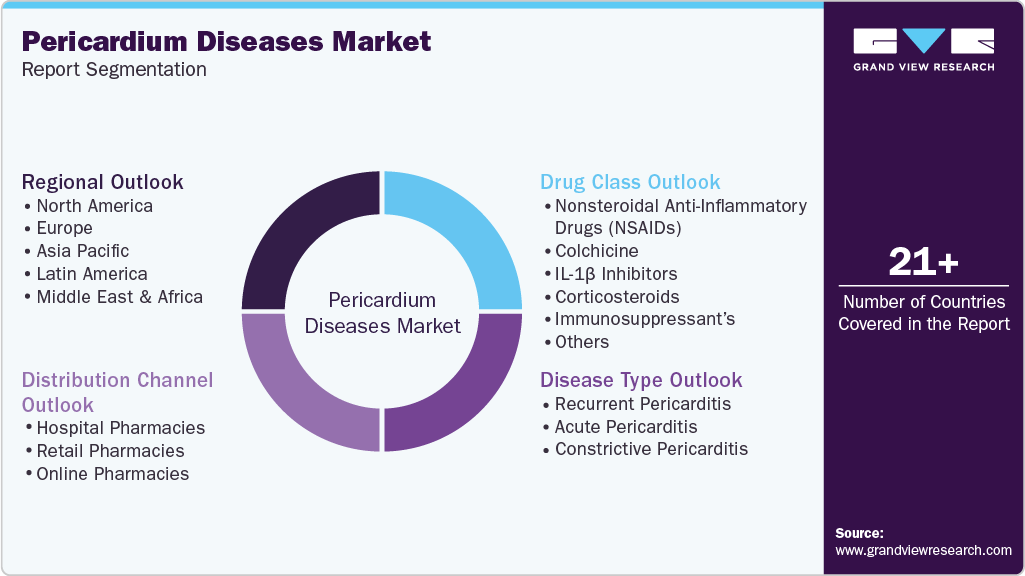
This report forecasts revenue growth at global, regional, and country levels and provides an analysis of the latest industry trends in each of the sub-segments from 2021 to 2033. For this study, Grand View Research has segmented the global pericardium diseases market report based on drug class, disease type, distribution channel, and region.
-
Drug Class Outlook (Revenue, USD Million, 2021 - 2033)
-
Nonsteroidal Anti-Inflammatory Drugs (NSAIDs)
-
Colchicine
-
IL-1β Inhibitors
-
Corticosteroids
-
Immunosuppressant’s
-
Others
-
-
Disease Type Outlook (Revenue, USD Million, 2021 - 2033)
-
Recurrent Pericarditis
-
Acute Pericarditis
-
Constrictive Pericarditis
-
-
Distribution Channel Outlook (revenue, USD Million, 2021 - 2033)
-
Hospital Pharmacies
-
Retail Pharmacies
-
Online Pharmacies
-
-
Regional Outlook (Revenue, USD Million, 2021 - 2033)
-
North America
-
U.S.
-
Canada
-
Mexico
-
-
Europe
-
UK
-
Germany
-
France
-
Italy
-
Spain
-
Norway
-
Sweden
-
Denmark
-
-
Asia Pacific
-
China
-
Japan
-
India
-
Australia
-
Thailand
-
South Korea
-
-
Latin America
-
Argentina
-
Brazil
-
-
Middle East & Africa
-
Saudi Arabia
-
South Africa
-
Kuwait
-
UAE
-
-


Share this report with your colleague or friend.
Need a Tailored Report?
Customize this report to your needs — add regions, segments, or data points, with 20% free customization.


ISO 9001:2015 & 27001:2022 Certified
We are GDPR and CCPA compliant! Your transaction & personal information is safe and secure. For more details, please read our privacy policy.
Trusted market insights - try a free sample
See how our reports are structured and why industry leaders rely on Grand View Research. Get a free sample or ask us to tailor this report to your needs.













