
- Home
- »
- Beauty & Personal Care
- »
-
Personalized Skin Care Products Market Report, 2026-2033GVR Report cover

Personalized Skin Care Products Market (2026 - 2033)
Size, Share & Trends Analysis Report By Product (Face Care, Body Care), By Gender, By Type (Mass, Premium), By Distribution Channel, By Testing (DNA, Others), By Region, And Segment Forecasts
Market Size, 2025
$31.6BMarket Estimate, 2026
$34.8BMarket Forecast, 2033
$74.2BCAGR, 2026–2033
11.4%Personalized Skin Care Products Market Summary
The global personalized skin care products market size was valued at USD 31.6 billion in 2025 and is projected to grow from USD 34.8 billion in 2026 to USD 74.2 billion in 2033, at a CAGR of 11.4% from 2026 to 2033. North America dominated the market, accounting for a revenue share of 31.0% in 2025 The emergence of technologies associated with the manufacturing, formulation, and packaging of personal care products, effective distribution enabled by online portals and the quick commerce industry, and growing awareness about the role of skin and hair care are some of the key growth drivers for this market.
Key Market Trends & Insights
- By product: The face care segment held the largest market share and accounted for more than 63.0% in 2025.
- By gender: The female segment held the largest market share and accounted for over 85.0% in 2025.
- By distribution channel: The offline distribution segment dominated the market and accounted for more than 70.0% in 2025.
- By testing: The other testing types such as blood tests, imaging, and quizzes/questionnaires held the largest market share in 2025.
- By type: The mass segment accounted for largest share of more than 76.0% in 2025.
Regional Insights
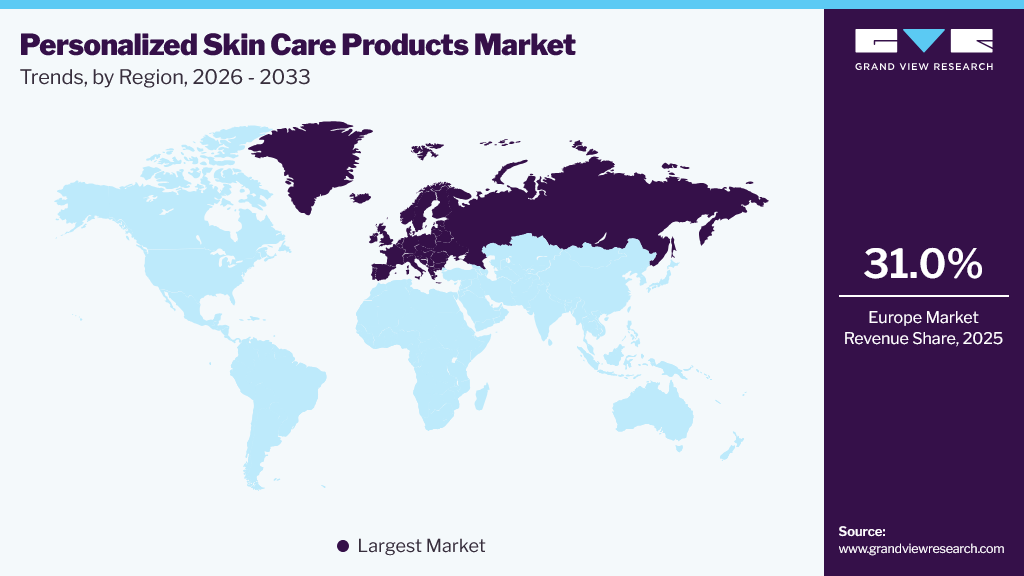
- Largest regional market: Europe (31.0% revenue share, 2025)
- Fastest-growing regional market: Asia Pacific (highest CAGR, 2026-2033)
Market Size & Forecast
- Market size in 2025: USD 31.6 Billion
- Estimated market size in 2026: USD 34.8 Billion
- Projected market size by 2033: USD 74.2 Billion
- CAGR (2026-2033): 11.4%
Three ways to get this report
Buy it, customize it, or ask a question.Ask an Analyst
Analyst response in 1 business day
- AccessReport author, directly
- Reply timeWithin 1 working day
- No sales callDirect answer only
- FormatEmail reply
- CostFree, no cost
Get the Full Report
What the study covers
- FormatsPDF · Excel · Dashboard
- Timeline2026–2033 annual, 2025 base
- Coverage20+ countries, 5 regions
- Companies10+ key players profiled
Customize the Report
20% free customization
- IncludeCountries, segments, points
- TailorTo your product definition
- ExtendDeeper competitor detail
- OrA fully bespoke study
- Turnaround5–10 working days
Innovation, government initiatives to support industry growth, and science-backed product development are key to the market's further course. For instance, in June 2025, the U.S. FDA announced the inclusion of bemotrizinol in the list of officially permitted active ingredients for sunscreen. This marked the addition of the first new ingredient to the OTC sunscreen monograph since the 1990s. Such developments highlight potential growth opportunities for this market.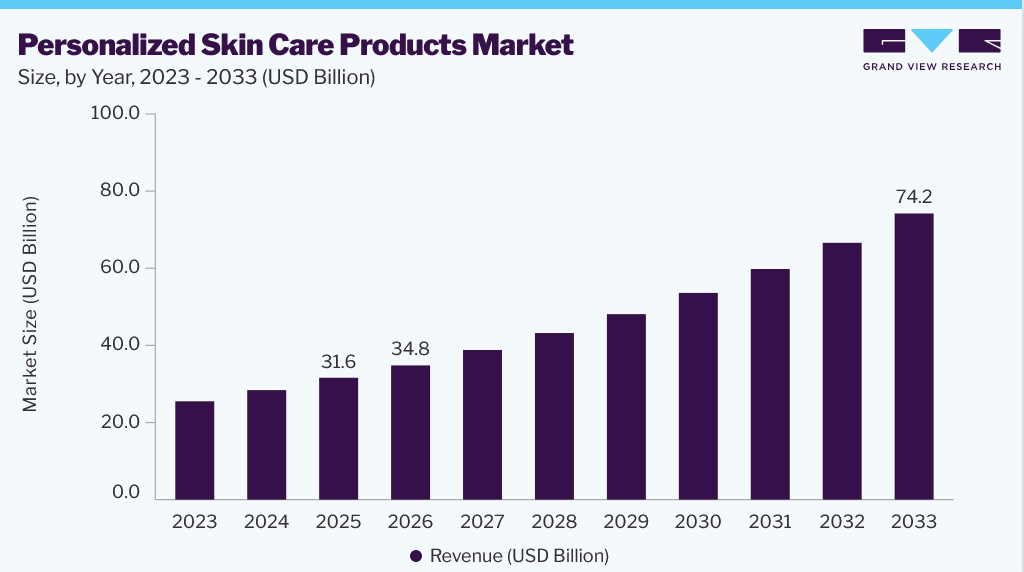 Source: Grand View Research, IR Documents, Primary Interviews, Paid DatabasesTo learn more about this report,
 Download Free Sample Report
The growing awareness and improved information availability through the internet, increasing adoption among men, and the availability of diverse portfolios equipped with products designed for common problems as well as specific conditions are expected to generate greater engagement among key market participants in the coming years. Celebrity endorsements, partnerships with actors, sports professionals, and other individuals in the entertainment and media industry also contribute to growing penetration for products. Multiple brands in this industry focus on engaging in collaborations and partnerships to improve brand visibility. This includes both emerging companies operating in the market with disruptive concepts and limited product lines, and established global beauty and care companies offering extensive portfolios. For instance, in September 2025, Bubble Beauty Inc., a community-powered skin care company, announced a collaboration with Leighton Meester as its first brand ambassador for Bubble. Furthermore, in January 2026, The Estée Lauder Companies Inc., one of the skin care, makeup, fragrance, and hair care products manufacturers operating on a global scale, announced signing Daisy Edgar-Jones, a British actress, as its new brand ambassador. Such developments signify the role of endorsement, targeted marketing, engaging advertisements, and planned campaigns in this industry.
In addition, the market's leading companies are taking an increasing number of actions, such as mergers and acquisitions, new product development, and innovation in existing products, which should help the next-generation personalized beauty industry including personalized skin care products experience growth throughout the projection period. Additionally, the market is projected to be supported by the rising demand for skincare products that address certain concerns, such as face creams, moisturizers, body lotions, shaving gels, accessories, and cosmetics.
Manufacturers are being driven to create goods that are specialized to meet the needs of each individual by the growing consumer preference for intelligent and adaptive formulations for the skin. As a result, manufacturers are creating ready-to-use formulations that are customized to each customer's skin type using substances such as granactive retinoid turmeric extract, arbutin, and pomegranate extract. For instance, the personalized skincare line Proven provides cleansers, day moisturizers, and night creams with components that are tailored to the various skin types and textures.
Analyst Perspective
Increasing inclination toward personalized skin care products is largely influenced by the growing awareness regarding the benefits of customized formulations suitable for one’s skin type and related issues. A large number of customers are moving away from mass-produced solutions and preferring products designed according to unique genetic, environmental, and biological requirements. Growing adoption of products that provide targeted efficacy and a variety of root causes associated with issues such as aging, acne, and microbiome imbalance is expected to drive demand for personalized skin products. Innovation plays a critical role in shaping the further course of this industry, as AI-powered imaging solutions, analysis capabilities of modern platforms backed by AI/ML technologies, and novel formulations highly influence the purchase decision. Key companies have been focusing on the deployment of modern platforms to facilitate the selection of personalized products, improving digital footprint, and establish a presence in various markets.
Product Insights
The face care products segment dominated the market in 2025 with a share of more than 63.0%. Face care products are an important part of many people’s rituals because they nourish, heal, and enhance the quality of the skin. Face care product use has been popular across all age groups owing to social media sites like Instagram, Facebook, and others. One of the most trending and recommended face care products is sunscreen. Various advantages are associated with the use of sunscreen; such as it protects from skin cancer, anti-skin aging, and more.
The body care products segment is projected to grow at a CAGR during the forecast period. With time, body care products have increased among consumers of all age groups. Various products such as body creams, lotions, and serums provide the body with as much care and nourishment as the face. Moreover, players operating in the market are incorporating various ingredients in body care products such as AHAs, retinol, and hyaluronic acid for numerous skin benefits.
Gender Insights
In terms of gender, the female segment dominated the market with a share of about 85.0% in 2025. Women have an increasing need for customized skin care products because they look for goods that address their unique needs, which is one of the main drivers of the segment's growth. Additionally, the gap between usage and spending on conventional and customized skin care products has narrowed, contributing to the segment's growth.
The male segment is expected to experience significant growth during the forecast period. Men's increasing interest in skin care products to obtain healthy skin is a major element driving the segment's rise, which is related to greater awareness of the topic. To appeal to the male client sector, industry companies such as PROVEN offer items that are either gender-neutral or specifically marketed to men.
Distribution Channel Insights
The offline distribution channel segment dominated the market in 2025 with a share of more than 70.0%. This channel offers a variety of products to customers through various international and local brands. Offline channels such as hypermarkets and supermarkets are located in central parts of the city and are easily accessible to consumers. Consumers generally tend to buy skincare products through such channels as it provides them with the option of numerous brands to choose from.
The online distribution channel segment is estimated to experience significant growth during the forecast period. This segment has witnessed immense popularity over the past few years. The shift in consumer preference toward online channels is due to the convenience that the channel provides, such as high discounts, availability of a diverse range of products on a single platform, easy payment methods, on-door delivery, and others.
Testing Insights
The other testing types such as blood tests, imaging, and quizzes/questionnaires dominated the market with a share of over 90.0% in 2025. The growing trend of zero-party data is expected to bode well with the growth of quiz/questionnaire segments in the next seven years. Key players are allowing customers to share their personal information for the right outcome by creating quizzes, surveys, and questionnaires that build zero-party data profiles of their customers with their buy-in.
The DNA-based testing segment is projected to experience substantial growth during the forecast period. The provision of a significant amount of information on skin characteristics through DNA-based reports will propel consumers to opt for the above-mentioned testing over the forecast period. The test generates epigenetic profiles and best-matched skincare products for the consumer, which makes it easy for them to decide on the product for their skin type and texture.
Type Insights
The mass segment dominated the industry with a revenue share of about 76.0% in 2025. The high demand for and usage of personalized skincare products among consumers across the globe is a key factor contributing to segment growth. Mass personalized skincare products are easily available online and offline and at an affordable price. Some of the brands offering personalized skincare products to the masses are Clinique Laboratories, LLC; Curology; Atolla; SkinCeuticals; The Buff; Proven; and Skin Inc.
The premium segment is expected to experience noteworthy growth from 2026 to 2033. Premium personalized skincare products offer numerous benefits over mass products, mainly the fact that they contain more unique ingredients and elements. This has been driving their demand and uptake among consumers. The growing preference of consumers for premium products to address various skin problems, coupled with their rising willingness to spend more on these products, is expected to boost segment growth over the forecast period.
Regional Insights
Europe dominated this market with a share of over 31.0% in 2025. Increasing awareness regarding significance of using products suitable for the skin type and specific skin issues instead of mass-manufactured, off-the-shelf products in the region primarily drives the growth. In addition, presence of multiple companies engaged in providing personalized skin care solutions for wide range of problems and skin types in across Europe also contributes significantly to growth trends in this regional market. For instance, developed by L’Oréal’s Technology Incubator in collaboration with Skinceuticals, D.O.S.E, offers a service for personalized skincare through scanning and evaluating unique skin requirements and combine active ingredients to form a tailor-made corrective product. This is available through authorized dermatologists, surgeons, and more. Some of the players participating in this market are aepell, L'Oréal, Beiersdorf, Formel Skin, and others.
 To learn more about this report, Download Free Sample Report
Asia Pacific Personalized Skin Care Products Market Trends
Asia Pacific is expected to witness significant growth from 2026 to 2033. The increasing application of skincare and cosmetic products in the emerging markets of Australia, South Korea, Japan, China, India, and other ASEAN countries due to a growing number of product launches and rising concerns about skin health, the harmful effects of UV rays, and skin conditions are likely to influence the Asia Pacific personalized skin care products market positively.
Key Personalized Skin Care Products Market Companies Insights
The industry is characterized by the presence of multiple startups, small and medium-scale operators, companies operating at national or regional level, and some of the established brands. Market participants have been focusing on adopting novel technologies, innovation-based tools, and modern AI capabilities for generating an improved experience for users.
Key Personalized Skin Care Products Companies
The following key companies have been profiled for this study on the personalized skin care products market.
-
The Estée Lauder Companies Inc.
-
Amway Corp
-
Coty Inc.
-
AUGUST SKINCARE
-
PROVEN
-
Function of Beauty
-
L’Oréal Groupe
-
Curology
-
It’s The Buff
Recent Developments
-
In February 2025, Perfect Corp. and Skinworx announced a partnership to improve guest experience through technology integration. The partnership involves Perfect Corp.'s Skincare Pro Software as a Service (SaaS) platform integration at Skinworx’s medspa location in California. U.S.
Personalized Skin Care Products Market Report Scope
Report Attribute
Details
Market size in 2025
USD 31.6 billion
Estimated market size in 2026
USD 34.8 billion
Projected market size by 2033
USD 74.2 billion
Growth rate
CAGR of 11.4% from 2026 to 2033
Base year for estimation
2025
Historical data
2021 - 2024
Forecast period
2026 - 2033
Quantitative units
Revenue in USD billion and CAGR from 2026 to 2033
Report coverage
Revenue forecast, company ranking, competitive landscape, growth factors, and trends
Segments covered
Product, gender, distribution channel, type, testing, region
Regional scope
North America; Europe; Asia Pacific; Central & South America; Middle East & Africa
Country scope
U.S.; Canada; Mexico; UK; Germany; France; Italy; Spain; China; India; Japan; Australia & New Zealand; South Korea; Brazil; Argentina; South Africa; UAE
Key companies profiled
The Estée Lauder Companies Inc.; Amway Corp; Coty Inc.; AUGUST SKINCARE; PROVEN; Function of Beauty; L’Oréal Groupe; Curology; It’s The Buff
Customization scope
Free report customization (equivalent up to 8 analysts working days) with purchase. Addition or alteration to country, regional & segment scope.
Pricing and purchase options
Avail of customized purchase options to meet your exact research needs. Explore purchase options
Global Personalized Skin Care Products Market Report Segmentation
This report forecasts revenue growth at global, regional, and country levels and provides an analysis of the latest industry trends and opportunities in each of the sub-segments from 2021 to 2033. For this study, Grand View Research has segmented the global personalized skin care products market report based on product, gender, distribution channel, type, testing, and region:
-
Product Outlook (Revenue, USD Billion, 2021 - 2033)
-
Face Care
-
Body Care
-
-
Gender Outlook (Revenue, USD Billion, 2021 - 2033)
-
Male
-
Female
-
-
Distribution Channel Outlook (Revenue, USD Billion, 2021 - 2033)
-
Online
-
Offline
-
-
Type Outlook (Revenue, USD Billion, 2021 - 2033)
-
Mass
-
Premium
-
-
Testing Outlook (Revenue, USD Billion, 2021 - 2033)
-
DNA
-
Others
-
-
Regional Outlook (Revenue, USD Billion, 2021 - 2033)
-
North America
-
U.S.
-
Canada
-
Mexico
-
-
Europe
-
UK
-
Germany
-
France
-
Italy
-
Spain
-
-
Asia Pacific
-
Australia & New Zealand
-
China
-
India
-
Japan
-
South Korea
-
-
Central & South America
-
Brazil
-
Argentina
-
-
Middle East & Africa
-
South Africa
-
UAE
-
-
Frequently Asked Questions About This Report
Europe dominated with a revenue share of 31.0% in 2025.
The global personalized skin care products market size was valued at USD 31.6 billion in 2025 and is estimated at USD 34.8 billion for 2026.
The global personalized skin care products market is expected to grow at a CAGR of 11.4% from 2026 to 2033, reaching USD 74.2 billion by 2033.
Some key players operating in this market include Coty Inc., L'Oréal Groupe, The Estée Lauder Companies Inc., AUGUST SKINCARE, PROVEN, Amway Corp., Function of beauty, Curology, and It's The Bluff.
Other testing types dominated the personalized skin care products market with a share of 90.0% in 2025
About the Author(s)
Beauty & Personal Care Research Team
Consumer Goods · Beauty & Personal CareThis report was authored by the beauty & personal care research team at Grand View Research - comprising two research analysts, one senior research analyst, and one industry expert - with specialized expertise in the beauty & personal care segment of the consumer goods industry. All findings are based on proprietary consumer goods databases, executive interviews, and regulatory analysis, subject to internal peer review prior to publication.
Last Updated:
Speak to Analyst

Customize this report to your needs - add regions, segments, or data points, with 20% free customization.
Or view our licence options:


ISO 9001:2015 & 27001:2022 Certified
We are GDPR and CCPA compliant! Your transaction & personal information is safe and secure. For more details, please read our privacy policy.


