
- Home
- »
- Homecare & Decor
- »
-
Pet Care Market Size, Share & Growth, Industry Report 2033GVR Report cover

Pet Care Market (2026 - 2033) Size, Share & Trends Analysis Report Pet Type (Dog, Cat, Fish, Bird, and Others), By Type (Products and Food), By Region (North America, Europe, Asia Pacific), And Segment Forecasts
Market Size, 2025
$181.9BMarket Estimate, 2026
$189.5BMarket Forecast, 2033
$283.7BCAGR, 2026–2033
5.9%Pet Care Market Summary
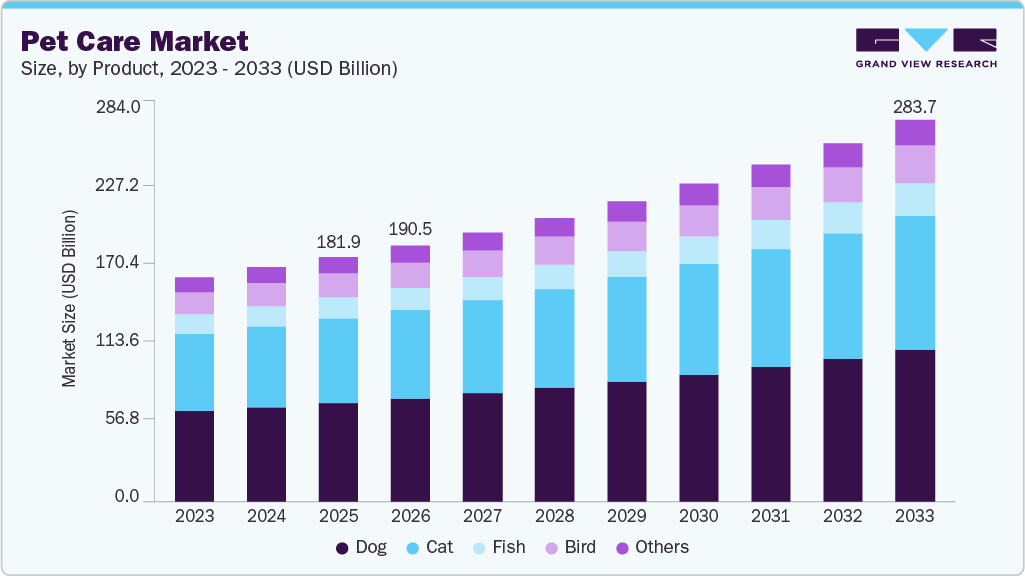
The global pet care market size was valued at USD 181.9 billion in 2025 and is projected to grow from USD 190.5 billion in 2026 to USD 283.7 billion by 2033, at a CAGR of 5.9% from 2026 to 2033. The North American pet care market held the largest share of 42.9% of the global market in 2025. Rising pet ownership and the growing pet humanization trend are key drivers shaping the pet care industry.
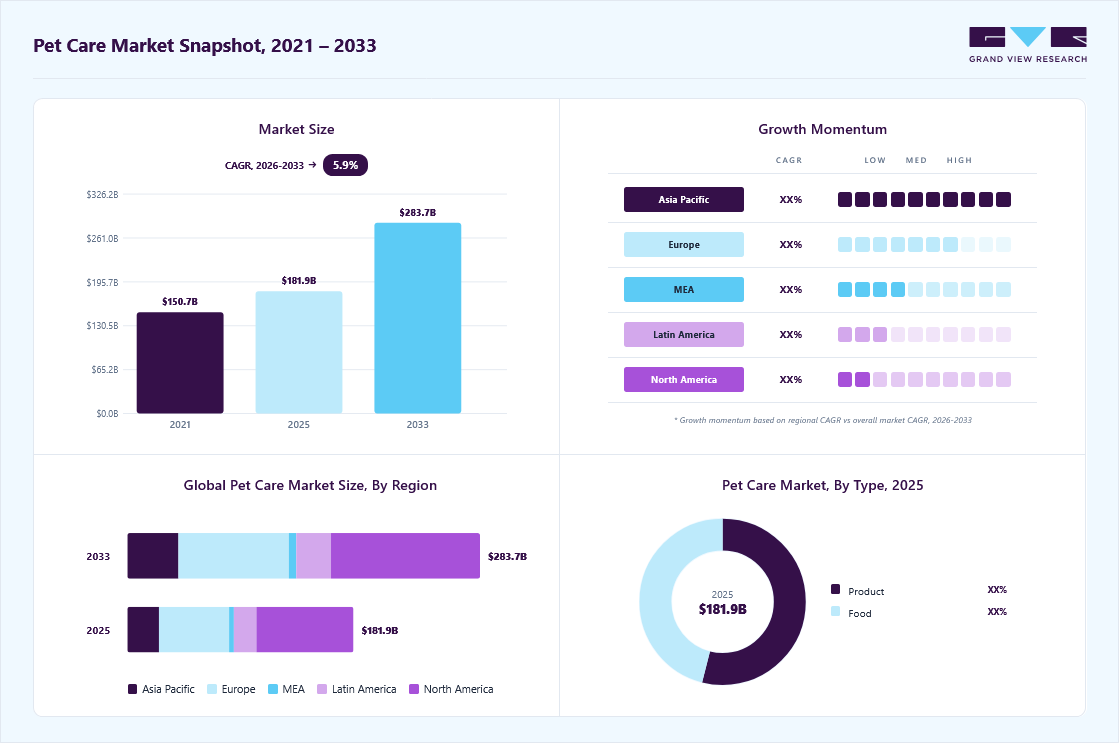 Source: Grand View Research, IR Documents, Primary Interviews, Paid DatabasesTo learn more about this report,
 Download Free Sample Report
 Key Market Trends & Insights
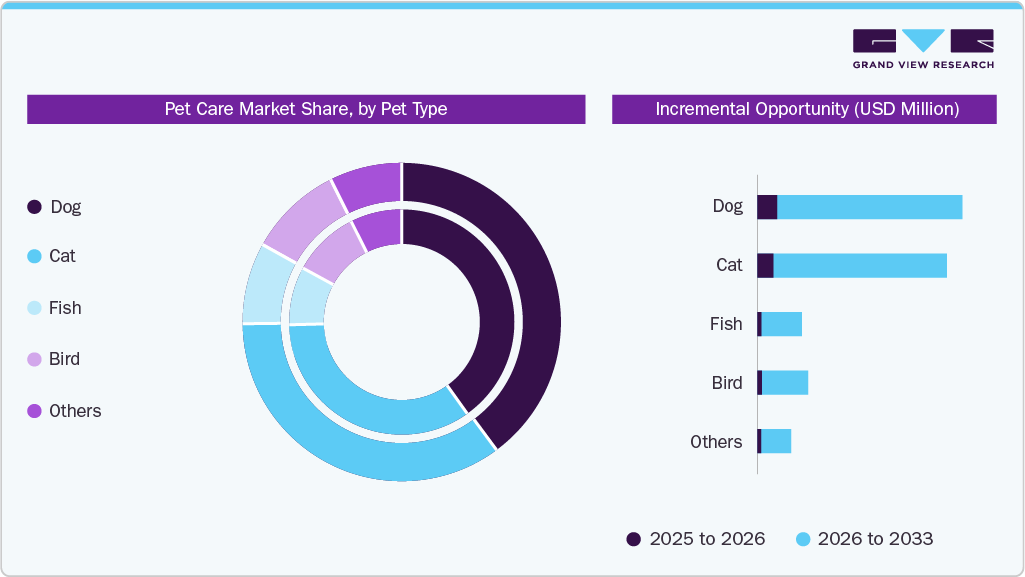
- By pet type: Dogs segment led the market with the largest revenue share of 40.4% in 2025.
- By pet type: Cats segment is anticipated to witness at the fastest CAGR of 5.8% from 2026 to 2033.
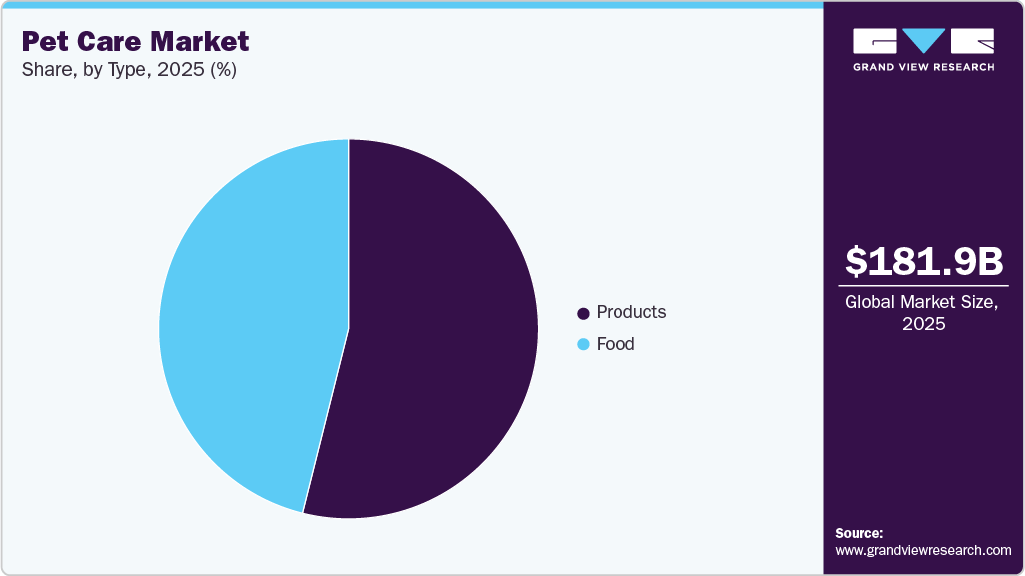
- By type: Product segment led the market with the largest revenue share of 53.9% in 2025.
Regional Highlights
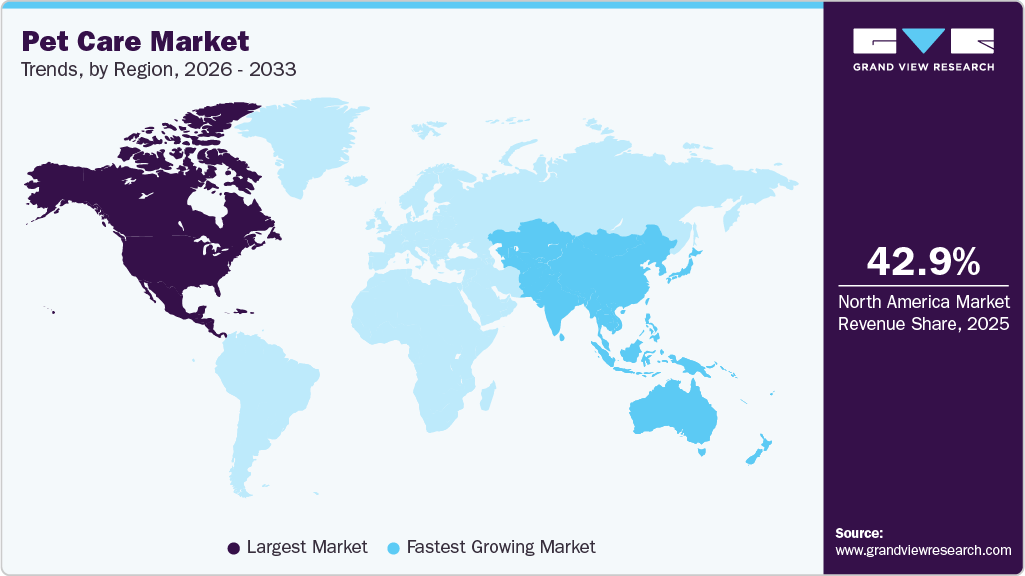
- Largest regional market: North American (42.9% revenue share, 2025)
- Fastest-growing regional market: Asia Pacific (highest CAGR, 2026-2033)
- The pet care industry in the U.S. accounted for the largest market revenue share in North America in 2025.
Market Size & Forecast
- Market size in 2025: USD 181.9 Billion
- Estimated market size in 2026: USD 190.5 Billion
- Projected market size by 2033: USD 283.7 Billion
- CAGR (2026-2033): 5.9%
Three ways to get this report
Buy it, customize it, or ask a question.Ask an Analyst
Analyst response in 1 business day
- AccessReport author, directly
- Reply timeWithin 1 working day
- No sales callDirect answer only
- FormatEmail reply
- CostFree, no cost
Get the Full Report
What the study covers
- FormatsPDF · Excel · Dashboard
- Timeline2026–2033 annual, 2025 base
- Coverage20+ countries, 5 regions
- Companies10+ key players profiled
Customize the Report
20% free customization
- IncludeCountries, segments, points
- TailorTo your product definition
- ExtendDeeper competitor detail
- OrA fully bespoke study
- Turnaround5–10 working days
Increasing adoption rates, particularly among millennials, Gen Z, and urban households, have expanded the global pet population and boosted demand for food, healthcare, grooming, and related services. At the same time, pets are increasingly viewed as family members rather than animals, leading owners to prioritize comfort, nutrition, and overall well-being. This emotional connection encourages higher spending on premium products, specialized diets, wellness solutions, and personalized services, significantly accelerating market growth and premiumization within the industry.The rising focus on pet health and wellness is a significant trend shaping the pet care industry, as pet owners increasingly prioritize preventive care and long-term well-being for their animals. Consumers are shifting toward nutritionally balanced diets, functional pet foods, supplements, regular veterinary checkups, and fitness-oriented products that support immunity, digestion, and overall health. Growing awareness about pet longevity and disease prevention, combined with the humanization of pets, has significantly increased spending on healthcare services, wellness products, and specialized medical treatments, driving strong growth across the global industry.
The expansion of the pet services ecosystem is a significant trend in the pet care industry, driven by changing lifestyles and stronger emotional bonds between owners and their pets. Services such as grooming, daycare, boarding, training, pet insurance, and tele-veterinary consultations are growing rapidly as busy urban consumers seek convenience and professional care solutions. According to data published in 2025, 97% of pet owners stated that their pets are “part of the family,” which encourages higher spending on comfort, wellness, and experience-based services beyond basic food and healthcare, thereby accelerating the overall market growth.
 To learn more about this report, Download Free Sample Report
 Pet owners are increasingly using smart devices such as GPS tracking collars, automated feeders, activity trackers, health-monitoring wearables, and AI-enabled cameras to remotely monitor their pets’ location, behavior, and well-being. These technologies help improve safety, support preventive healthcare, and provide real-time insights into pet health, making smart pet products an important innovation segment that contributes to modernization and premiumization in the global industry.
Rising spend prioritization toward pets is a key factor reinforcing market growth. A 2025 consumer survey referenced by the pet food industry showed that over 50% of pet owners ranked pet-related expenses above discretionary personal spending, including entertainment and dining. Even amid inflationary pressure, consumers continued to maintain or increase spending on pet food, grooming, and healthcare, highlighting the non-discretionary nature of pet care. This spending resilience is supporting volume stability and premium adoption across the industry.
Market Dynamics
The increasing trend of pet ownership, coupled with rising willingness to travel with pets, is one of the key factors contributing to the growth of the pet care market. As pets are increasingly considered family members, owners are more frequently including them in domestic and international travel, leading to higher demand for pet-friendly transportation and mobility solutions. This shift is supported by the expansion of pet-friendly hotels, airlines, and public spaces, which have made pet travel more convenient and accessible than ever before. A growing share of pet owners now travels with their pets for vacations and short trips, significantly increasing spending on travel-specific pet products. Pet owners are now investing more in portable carriers, travel crates, seat belts and comfort accessories to ensure safety and convenience during transit. This heightened adoption of pet travel behaviour not only boosts direct sales of mobility products but also supports the broader ecosystem of pet-friendly hospitality services, travel accessories, and premium lifestyle pet offerings, further accelerating overall market growth.
The increasing cost of pet ownership remains a major challenge restraining the growth of the pet care market. Rising expenses related to premium pet food, veterinary care, grooming, insurance, and wellness services often make pet ownership financially burdensome, especially for middle-income households. Advanced treatments, specialized diets, and preventive healthcare products further increase overall spending, limiting adoption rates in price-sensitive regions. In addition, unexpected medical emergencies and long-term chronic care costs for pets significantly add to financial pressure, leading some potential consumers to delay or avoid pet adoption. This cost barrier particularly impacts emerging economies where awareness is increasing, but affordability remains limited, thereby slowing overall market expansion.
Consumer Insights
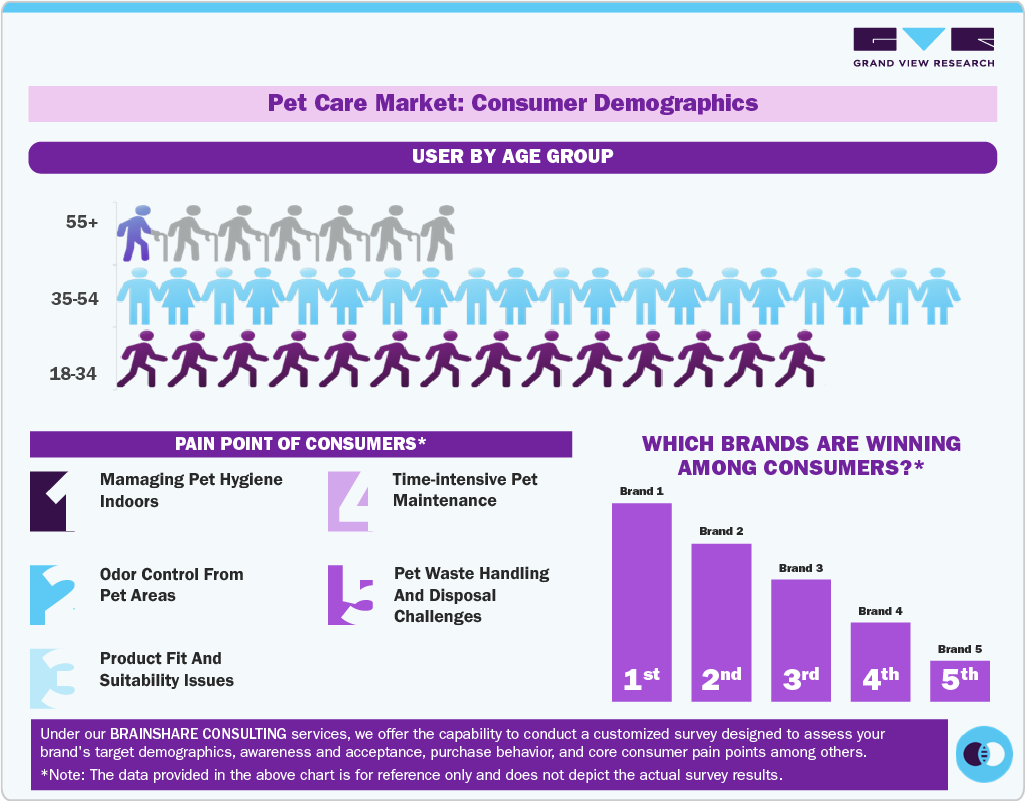
Consumer spending habits in the pet care industry highlight the growing emotional and financial commitment pet owners have toward their pets. A survey by U.S. News & World Report (2025) reveals that one in three pet owners spends more on their pets each month than on their own health and wellness needs, demonstrating the strong humanization trend influencing purchasing behavior and encouraging higher spending on nutrition, grooming, dental hygiene, and preventive care solutions.
Among the 1,500 respondents, 68% dog owners and 32% cat owners, 72% reported spending between USD 50 and USD 200 per month on pet-related expenses such as food, grooming, insurance, veterinary care, toys, and dental hygiene products. This steady expenditure reflects strong demand, particularly within the dog care market, where owners invest heavily in specialized nutrition, grooming services, and oral hygiene solutions such as dental chews, toothpaste, and cleaning accessories, contributing to the expansion of the pet oral care products market. The consistency of monthly spending indicates that pet care has become a regular household expense rather than an occasional one.
 To learn more about this report, Download Free Sample Report
 The survey further shows how deeply integrated pet spending has become in personal financial planning. Around 54% of pet owners stated that their spending aligns with their planned budget, suggesting growing acceptance of recurring expenses across the global industry, including preventive dental care and wellness routines. However, 28% of respondents exceed their pet budgets, reflecting emotionally driven purchasing behavior and increased willingness to upgrade to premium services and health-focused products. In addition, 30% of pet owners spend more on pet care than on their own self-care, reinforcing rising investment in preventive healthcare, grooming, and oral hygiene, which continues to accelerate growth within the pet oral care industry.
Healthcare expenses are among the most significant contributors to rising pet spending. More than half of pet owners reported paying over USD 500 annually in veterinary bills in 2025, while 67% experienced unexpected medical expenses ranging from USD 500 to USD 3,000. This highlights the unpredictable nature of pet healthcare costs and explains the growing demand for insurance, preventive care, and routine dental maintenance.
Increasing awareness of oral diseases in pets is further driving adoption of dental checkups and hygiene products, strengthening growth opportunities across the pet oral care products market alongside the expanding dog care market.
Pet Type Insights
The dogs segment led the market with the largest revenue share of 40.4% in 2025. High adoption rates are supported by growing awareness of the emotional and physical benefits of dog ownership, including reduced stress and anxiety, improved mental well-being, and increased daily physical activity through walking and outdoor routines. These lifestyle benefits have strengthened long-term spending on dog-specific products such as food, grooming essentials, health supplements, and toys. In urban households, particularly in flats and apartments, there is a rising demand for indoor-friendly solutions, such as dog beds, crates, carriers, and functional pet furniture, that optimize limited living space.
 To learn more about this report, Download Free Sample Report
 The cats segment is anticipated to witness at the fastest CAGR of 5.8% from 2026 to 2033. Cats are increasingly preferred in urban and high-density areas due to their lower space requirements, independent nature, and suitability for indoor living. The growing number of single-person households and working professionals, particularly in developed economies, has accelerated demand for low-maintenance companion pets, thereby boosting spending on cat-specific products such as litter solutions, indoor furniture, feeding accessories, and grooming items. In addition, rising awareness around feline health, hygiene, and comfort has encouraged owners to invest in premium and specialized products.
Type Insights
The product segment led the market with the largest revenue share of 53.9% in 2025, driven by expanding product innovation and rising consumer awareness around pet hygiene, comfort, and overall well-being. Growing concern over climate change has accelerated the launch of sustainably produced and eco-friendly pet care products, encouraging consumers to shift toward biodegradable, non-toxic, and responsibly sourced options. In parallel, increased access to information through digital channels and pet-specialty retail has improved consumer understanding of product quality, safety, and long-term value.
 To learn more about this report, Download Free Sample Report
 The food segment is anticipated to witness at the fastest CAGR of 5.9% from 2026 to 2033. Pet food consists of meat, meat byproducts, grains, cereals, vitamins, and minerals. Rising awareness among pet owners about balanced diets, ingredient quality, and long-term wellness has strengthened demand across both everyday and supplementary feeding. Consumers are increasingly attentive to clean labeling, clear ingredient disclosure, and functional benefits such as digestive support and immunity enhancement, which is encouraging regular upgrades in food choices. In parallel, the rapid expansion of online pet stores and home delivery services has improved product accessibility and convenience, reinforcing repeat purchases.
Regional Insights
North America dominated the global pet care market with the largest revenue share of 42.9% in 2025. High pet ownership penetration, coupled with elevated disposable income levels, has consistently translated into higher per-pet spending on food, healthcare, grooming, and wellness products. Increasing humanization of pets has further shifted consumer behavior toward preventive care, premium products, and convenience-oriented services.
 To learn more about this report, Download Free Sample Report
 In addition, widespread urban living, dual-income households, and busy lifestyles have encouraged reliance on packaged pet care solutions and recurring purchases, reinforcing North America’s position as the leading regional market within the global industry.
U.S. Pet Care Market Trends
The pet care market in the U.S. accounted for the largest revenue share in North America in 2025, supported by demand drivers specific to U.S. consumer behavior and living patterns. A strong culture of pet companionship, particularly among millennials and Gen Z households, has translated into higher discretionary spending on pet wellness, nutrition, and comfort. The widespread adoption of pets during and after the pandemic has reinforced long-term trends in pet ownership, increasing demand for routine care and preventive health products. In addition, high penetration of e-commerce, subscription services, and direct-to-consumer brands in the U.S. has simplified access to pet care products, encouraging frequent and recurring purchases.
The Canada pet care market is anticipated to witness at a significant CAGR of 6.0% from 2026 to 2033, shaped by distinct demographic and consumption patterns within the country. An aging population and rising number of small households have increased demand for companion animals, supporting stable long-term spending on everyday pet care needs. Canadian consumers also show a strong preference for quality, safety, and regulatory-compliant products, driving demand for trusted and premium pet care offerings.
Europe Pet Care Market Trends
The pet care market in Europe held the significant revenue share in 2025. High urban population density and widespread apartment living have increased reliance on structured, indoor-oriented pet care solutions across major European economies. Strong animal welfare regulations and stringent product standards have pushed consumers toward certified, high-quality, function-led pet care products, supporting higher-value spending. In addition, Europe’s sustainability-driven consumer culture has accelerated the adoption of eco-friendly, biodegradable, and ethically sourced pet care offerings.
The Germany pet care market is shaped by distinct demographic and consumption patterns within the country. An aging population and rising number of small households have increased demand for companion animals, supporting stable long-term spending on everyday pet care needs. Canadian consumers also show a strong preference for quality, safety, and regulatory-compliant products, driving demand for trusted and premium pet care offerings.
The pet care market in the UK is anticipated to witness at a significant CAGR of 7.2% from 2026 to 2033. Strong enforcement of animal welfare regulations and mandatory pet identification requirements has increased ongoing spending on compliance-related and health-supporting products. The widespread adoption of pet insurance and routine veterinary care has shifted consumer behavior toward preventive health management, driving regular demand for nutrition, supplements, and wellness-focused products. In addition, the expansion of private-label and own-brand pet care ranges across major retail channels has improved affordability and accessibility, supporting higher purchase frequency and sustained growth.
Asia Pacific Pet Care Market Trends
The pet care market in the Asia Pacific is anticipated to witness at the fastest CAGR of 6.3% from 2026 to 2033. Rapid expansion of apartment living in major cities has increased demand for indoor-focused pet care solutions, particularly hygiene and maintenance products. Growth in first-time pet ownership, especially among younger consumers, has supported steady uptake of basic and recurring care products. In addition, the rising influence of digital platforms and pet-focused social media has accelerated product awareness and adoption, reinforcing market growth across the region.
The China pet care market held a significant share in the Asia Pacific in 2025. The rapid growth of community-based pet services and neighborhood veterinary clinics has increased routine spending on everyday pet care products. The expansion of cold-chain and logistics capabilities has improved the availability of packaged pet food and health products beyond major metropolitan areas, supporting volume growth. In addition, rising penetration of private-label and mid-priced domestic brands has narrowed the affordability gap, encouraging more frequent purchases and accelerating market scale-up across urban and semi-urban regions in China.
The pet care market in India is expected to grow at the fastest CAGR of 8.0% from 2026 to 2033. Rising discretionary spending among younger working populations has led to greater prioritization of pet care in monthly household budgets. The growing visibility of pets in mainstream media, advertising, and popular culture has normalized organized pet care consumption beyond niche urban segments. In addition, the gradual shift from unbranded and homemade pet care solutions toward packaged and standardized products has expanded market volumes, while increased availability of pet care products through modern trade and pharmacy channels has strengthened regular purchase behavior across the country.
Alongside product adoption, the pet boarding market is witnessing significant growth as changing urban lifestyles and busy work schedules increase demand for professional pet care services. With rising nuclear families, frequent travel, and longer working hours, pet owners increasingly rely on boarding facilities, pet hotels, daycare centers, and professional pet-sitting services to ensure their pets receive safe, supervised care. The humanization of pets and a higher willingness to spend on comfort and well-being are encouraging consumers to choose organized boarding services that offer grooming, medical supervision, and personalized attention, thereby supporting the rapid expansion of the pet boarding market within the broader pet care industry.
Central & South America Pet Care Market Trends
The pet care market in Central & South America is supported by evolving ownership patterns and market formalization across the region. Rising pet adoption in urban households has increased baseline demand for routine care products. Growing participation of local manufacturers and regional brands has expanded product availability across price points, supporting broader consumer reach. In addition, improving retail penetration beyond major cities has strengthened repeat purchases, contributing to steady market expansion.
Middle East & Africa Pet Care Market Trends
The pet care market in the Middle East & Africa is driven by evolving consumer awareness and market maturation across the region. Growing exposure to global pet care standards has increased understanding of nutrition, hygiene, and routine care needs among pet owners, which is also supporting expansion within the pet oral care market as consumers become more aware of dental health, plaque prevention, and preventive hygiene practices for pets. The expansion of veterinary services and professional pet care providers has further encouraged the adoption of specialized products such as dental chews, oral hygiene solutions, and routine dental checkups, contributing to more structured spending patterns and strengthening growth.
Key Pet Care Company Insights
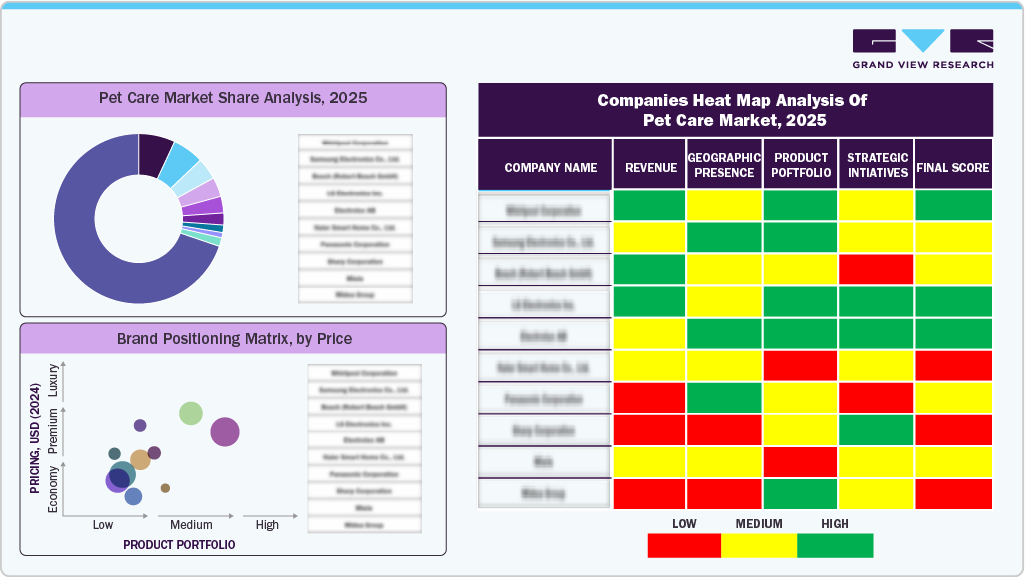
The pet care industry is highly competitive, characterized by the presence of global players such as Ancol Pet Products Limited, Blue Buffalo Co., Ltd, Champion Petfoods LP. These companies maintain leadership positions by offering diversified product ranges across pet food, healthcare, grooming, and wellness.
Regional and emerging brands increasingly compete by targeting price-sensitive consumers with affordable product offerings and localized formulations tailored to regional preferences. Competition is intensifying as consumer demand shifts toward premium, natural, and sustainable pet care solutions, encouraging companies to invest in organic products, functional nutrition, eco-friendly packaging, and specialized healthcare offerings.
 To learn more about this report, Download Free Sample Report
 Key Pet Care Companies:
The following key companies have been profiled for this study on the pet care market.
- Ancol Pet Products Limited
- Blue Buffalo Co., Ltd.
- Champion Petfoods LP
- Hill`s Pet Nutrition, Inc.
- Mars, Incorporated
- Nestle Purina PetCare
- Petmate Holdings Co
- Saturn Petcare GmbH
- Tail Blazers
- The Hartz Mountain Corporation
Recent Developments
-
In November 2025, Nylabone introduced a new range of dog chew toys featuring real meat-inspired flavors such as chicken, beef, bacon, venison, and bison, marking an expansion of its long-standing chew portfolio. The collection is designed to support dogs’ natural chewing behavior while helping with boredom relief and oral engagement through durable, textured formats. Manufactured in the U.S., the new flavored chews reinforce Nylabone’s focus on functional, long-lasting toys that combine enrichment with everyday dental benefits.
-
In June 2025, Woof Gang Bakery & Grooming expanded its in-house pet treat offerings by introducing a new freeze-dried raw range, taking its proprietary product portfolio beyond 200 items. The newly launched line includes raw entrees, meal toppers, and single-protein treats made with high-quality ingredients and without artificial additives, aligning with growing consumer interest in natural and minimally processed pet nutrition.
Pet Care Market Report Scope
Report Attribute
Details
Market size in 2025
USD 181.9 billion
Estimated market size in 2026
USD 190.5 billion
Projected market size by 2033
USD 283.7 billion
Growth rate
CAGR of 5.9% from 2026 to 2033
Base year for estimation
2025
Historical data
2021 - 2024
Forecast period
2026 - 2033
Quantitative units
Revenue in USD million/billion, and CAGR from 2026 to 2033
Report coverage
Revenue forecast, company ranking, competitive landscape, growth factors, and trends
Segments covered
Pet type, type, region
Regional scope
North America; Europe; Asia Pacific; Central & South America; Middle East & Africa
Country scope
U.S.; Canada; Mexico; UK; Germany; France; Italy; Spain; China; India; Japan; Australia & New Zealand; South Korea; South Africa; Brazil
Key companies profiled
Ancol Pet Products Limited; Blue Buffalo Co., Ltd.; Champion Petfoods LP; Hill`s Pet Nutrition, Inc.; Mars, Incorporated; Nestle Purina PetCare; Petmate Holdings Co.; Saturn Petcare GmbH; Tail Blazers; The Hartz Mountain Corporation
Customization scope
Free report customization (equivalent up to 8 analysts working days) with purchase. Addition or alteration to country, regional & segment scope.
Pricing and purchase options
Avail customized purchase options to meet your exact research needs. Explore purchase options
Global Pet Care Market Report Segmentation
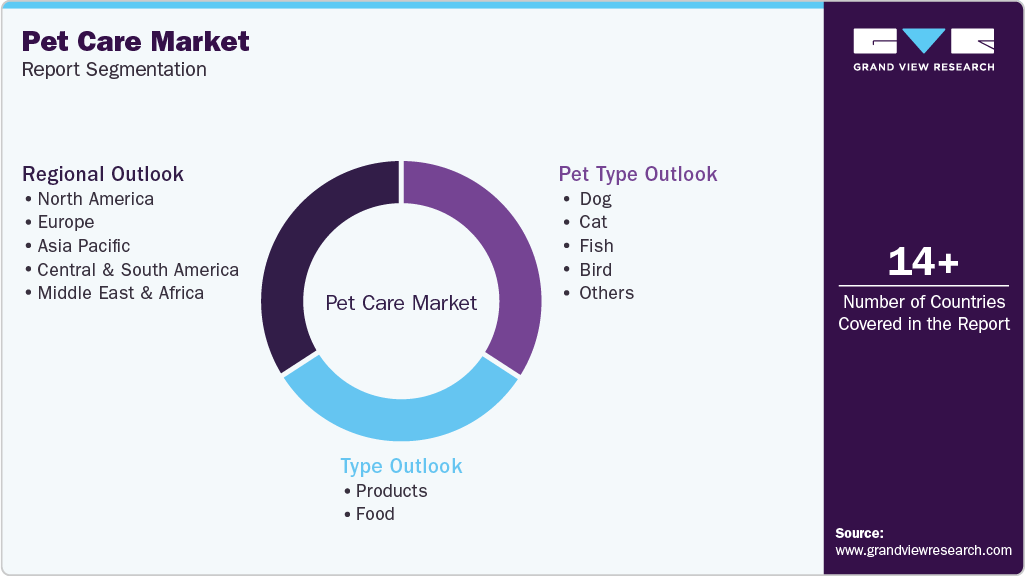
This report forecasts revenue growth at the regional and country levels and provides an analysis of the latest industry trends and opportunities in each of the sub-segments from 2021 to 2033. For this study, Grand View Research has segmented the global pet care market report based on the pet type, type, and region.
 To learn more about this report, Download Free Sample Report
 -
Pet Type Outlook (Revenue, USD Million, 2021 - 2033)
-
Dog
-
Cat
-
Fish
-
Bird
-
Others
-
-
Type Outlook (Revenue, USD Million, 2021 - 2033)
-
Products
-
Pet litter
-
Pet grooming products
-
Fashion, Toys, and Accessories
-
-
Food
-
Dry Food
-
Wet/ Canned
-
Treats/snacks
-
-
-
Regional Outlook (Revenue, USD Million, 2021 - 2033)
-
North America
-
U.S.
-
Canada
-
Mexico
-
-
Europe
-
UK
-
Germany
-
France
-
Italy
-
Spain
-
-
Asia Pacific
-
China
-
Japan
-
India
-
Australia & New Zealand
-
South Korea
-
-
Central & South America
-
Brazil
-
-
Middle East & Africa
-
South Africa
-
-
Delivered Customizations
This report has been delivered with the following In-depth customizations
Client Request
Customization Delivered
Value Adds
Pet Type & Ownership Trend Analysis
Developed a detailed assessment of global pet ownership trends across key companion animal categories such as dogs, cats, fish, and birds, covering rising adoption rates, pet humanization trends, and demographic shifts across developed and emerging markets. Millennial and Gen Z consumers were identified as the dominant ownership group.
Enables stakeholders to identify high-growth pet categories, evaluate regional adoption patterns, and align product development and marketing strategies with long-term demand growth.
Pet Care Products & Food Market Segmentation
Delivered a comprehensive breakdown of the pet care ecosystem, including pet food, pet grooming products, fashion, toys & accessories, and wellness services. Alongside an evaluation of consumer demand patterns and emerging product preferences across developed and emerging markets.
Provides actionable insights into fast-growing product and service segments, identifies high-margin opportunities, supports portfolio expansion decisions, and helps businesses align offerings with shifting consumer preferences toward premium and convenience-driven solutions.
Pet Humanization & Consumer Spending Analysis
Developed an assessment of the rising pet humanization trend and its direct impact on consumer spending across household and pet care categories. The analysis covered growing demand for pet care products such as feeders, bowls, and waterers, and the role of technology and internet purchases in reshaping consumer engagement with pet care.
Enables brands and retailers to capitalize on the pet humanization trend, understand the growing willingness of pet owners to spend more to ensure the best care for their pets, and align marketing strategies toward consumers who account for the largest share of pet ownership.
Frequently Asked Questions About This Report
The global pet care market size was valued at USD 181.9 billion in 2025 and is estimated at USD 190.5 billion for 2026.
The global pet care market is expected to grow at a CAGR of 5.9% from 2026 to 2033, reaching USD 283.7 billion.
Key factors include rising pet ownership and the growing pet humanization trend.
the dogs held the largest revenue share of 40.4% in 2025, while cats is the fastest-growing segment.
The product holds the largest market share of 53.9% in 2025, while food is the fastest-growing area.
Asia Pacific is the fastest-growing region over the forecast period.
Key players include Ancol Pet Products Limited; Blue Buffalo Co., Ltd.; Champion Petfoods LP; Hill`s Pet Nutrition, Inc.; Mars, Incorporated; Nestle Purina PetCare; Petmate Holdings Co.; Saturn Petcare GmbH; Tail Blazers; The Hartz Mountain Corporation.
North American dominated with a 42.9% revenue share in 2025.
About the Author(s)
Homecare & Decor Research Team
Consumer Goods · Homecare & DecorThis report was authored by the homecare & decor research team at Grand View Research - comprising two research analysts, one senior research analyst, and one industry expert - with specialized expertise in the homecare & decor segment of the consumer goods industry. All findings are based on proprietary consumer goods databases, executive interviews, and regulatory analysis, subject to internal peer review prior to publication.
Last Updated:
Speak to Analyst

Customize this report to your needs - add regions, segments, or data points, with 20% free customization.
Or view our licence options:


ISO 9001:2015 & 27001:2022 Certified
We are GDPR and CCPA compliant! Your transaction & personal information is safe and secure. For more details, please read our privacy policy.


