
- Home
- »
- Homecare & Decor
- »
-
Pet Toys Market Size, Share And Trends Report, 2026-2033GVR Report cover

Pet Toys Market (2026 - 2033)
Size, Share & Trends Analysis Report By Pet Type (Dog, Cat), By Product (Chew Toys, Interactive Toys, Soft Toys, Plush Toys), By Distribution Channel (Hypermarkets & Supermarkets, Specialty Pet Stores), By Region, And Segment Forecasts
Market Size, 2025
$10.6BMarket Estimate, 2026
$11.6BMarket Forecast, 2033
$22.4BCAGR, 2026–2033
9.9%Pet Toys Market Summary
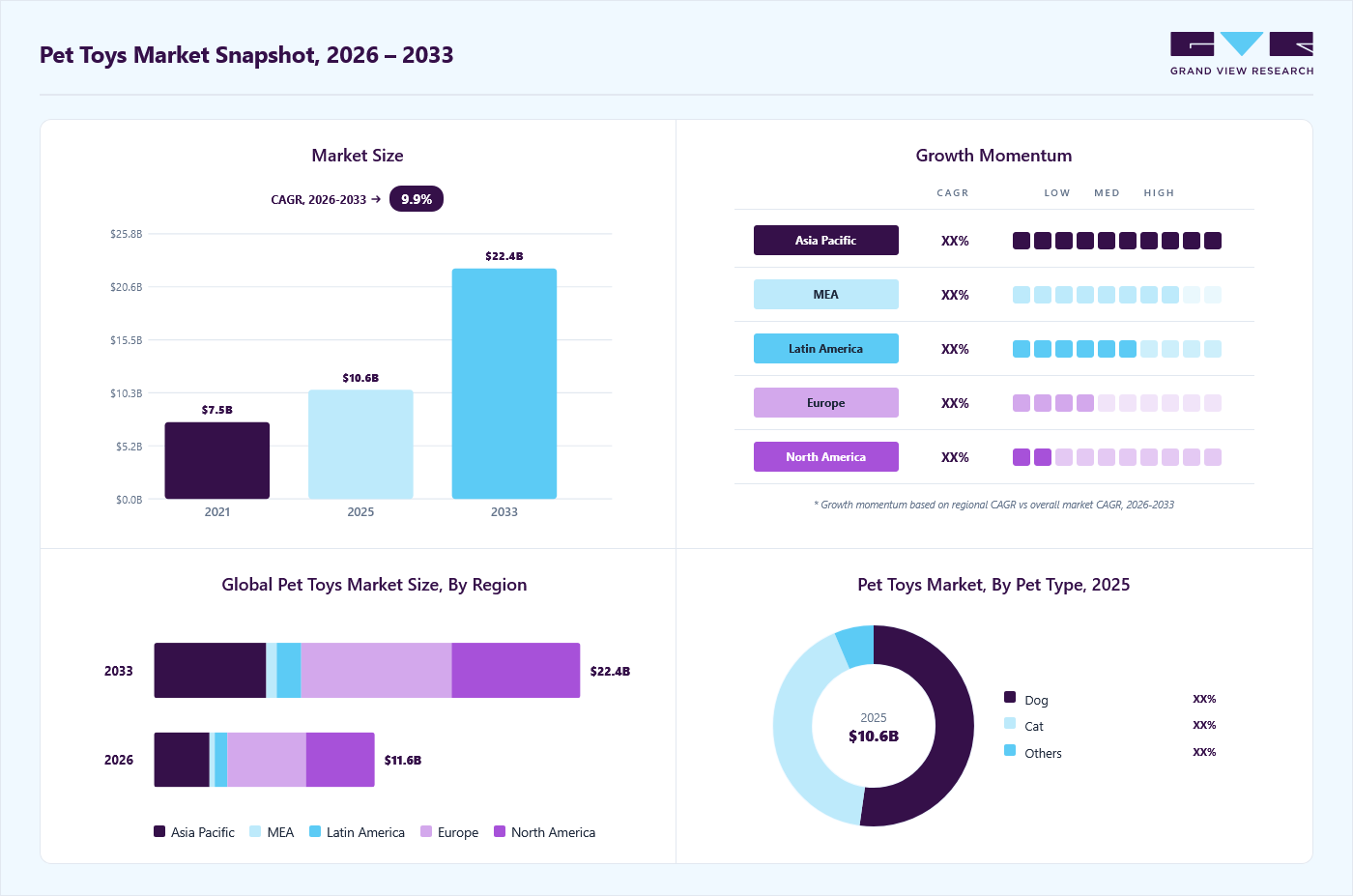
The global pet toys market size was valued at USD 10.6 billion in 2025 and is projected to grow from USD 11.6 billion in 2026 to USD 22.4 billion by 2033, at a CAGR of 9.9% from 2026 to 2033. The Europe held the largest share of 35.6% of the global market in 2025. The global pet toys industry is experiencing sustained growth, driven by the increasing focus on pet health, mental stimulation, and behavioral well-being within the broader pet products market.
 Source: Grand View Research, IR Documents, Primary Interviews, Paid DatabasesTo learn more about this report,
 Download Free Sample Report
 Key Market Trends & Insights
- By pet type: Dog toys segment held the largest market share of 52.2% in 2025.
- By product: Chew pet toys segment held the largest market share of 25.4% in 2025.
- By distribution channel: Hypermarkets/supermarkets segment held the largest market share of 42.1% in 2025.
Regional Highlights
- Largest regional market: Europe (35.6% revenue share, 2025)
- By country: Germany held the largest share in 2025
Market Size & Forecast
- Market size in 2025: USD 10.6 Billion
- Estimated market size in 2026: USD 11.6 Billion
- Projected market size by 2033: USD 22.4 Billion
- CAGR (2026-2033): 9.9%
Three ways to get this report
Buy it, customize it, or ask a question.Ask an Analyst
Analyst response in 1 business day
- AccessReport author, directly
- Reply timeWithin 1 working day
- No sales callDirect answer only
- FormatEmail reply
- CostFree, no cost
Get the Full Report
What the study covers
- FormatsPDF · Excel · Dashboard
- Timeline2026–2033 annual, 2025 base
- Coverage20+ countries, 5 regions
- Companies10+ key players profiled
Customize the Report
20% free customization
- IncludeCountries, segments, points
- TailorTo your product definition
- ExtendDeeper competitor detail
- OrA fully bespoke study
- Turnaround5–10 working days
Pet owners are actively investing in toys that support cognitive engagement, reduce anxiety, and prevent destructive habits, particularly among indoor pets. This shift reflects the broader humanization of pets, in which animals are treated as family members and given products that enhance their daily lives. As a result, toys are evolving from occasional purchases to essential components of routine pet care, supporting consistent demand across both developed and emerging markets, including segments such as the pet educational toys market and pet teaser toys market, which are gaining traction within the wider pet products market.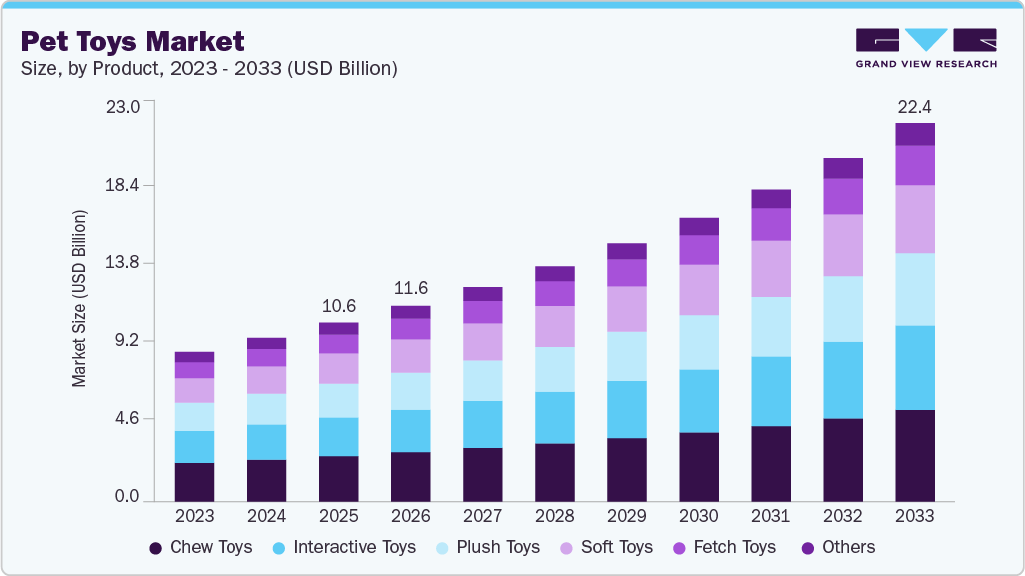 To learn more about this report, Download Free Sample Report
 The expansion of pet ownership continues to provide a strong foundation for market growth. According to the American Pet Products Association (APPA) 2025 State of the Industry Report, 66% of U.S. households, equivalent to approximately 86.9 million homes, own a pet, highlighting the scale of the consumer base. In addition, data from Pet Food Industry indicates that Gen Z is rapidly emerging as a key pet-owning demographic, with nearly 20% of Gen Z consumers now owning pets, reflecting a shift toward younger, first-time pet owners. This growing ownership base is directly driving increased demand for toys, particularly those designed for engagement, training, and indoor activity, across the pet toys training market, which continues to expand alongside the pet educational toys market.
Rising consumer spending on pet care is further accelerating demand for pet toys. APPA reports that total U.S. pet industry expenditure reached approximately USD 147 billion in 2023, marking a significant increase from previous years. Complementing this, CivicScience findings indicate that nearly 62% of pet owners consider pet spending a top priority, even amid economic uncertainty, with many willing to cut back on personal expenses rather than reduce spending on their pets. On an individual level, average annual spending remains substantial, with dog owners spending close to USD 900 per year and cat owners over USD 600, reinforcing the willingness to invest in both essential and enrichment products such as toys, including those within the eco-friendly pet toys market, which is increasingly overlapping with the pet products market.
Demographic and lifestyle trends are also shaping market expansion. Urbanization, smaller households, and delayed family formation are increasing reliance on pets for companionship, particularly among millennials and Gen Z. In China, for instance, urban pet populations exceeded 100 million dogs and cats, with the pet market valued at over USD 45 billion, reflecting strong consumer spending on pet care products, including toys. These trends are mirrored globally, including in the India pet toys market, where younger consumers prioritize interactive, aesthetically appealing, and multifunctional toys that align with modern living environments, further supporting growth in the pet teaser toys market.
The market is further supported by premiumization and product innovation. Consumers are increasingly opting for high-quality, durable, and safe toys, with over 40% of pet owners preferring premium or upgraded products, according to APPA insights. Manufacturers are responding with technologically advanced and design-led offerings, including smart toys, eco-friendly materials, and multifunctional play systems. This shift toward innovation and value-added products, combined with a large and growing pet-owning population, continues to drive the global market across segments such as the pet educational toys market, the pet toys training market, and the eco-friendly pet toys market, with additional momentum from the India pet toys market.
Brand Market Share Insights
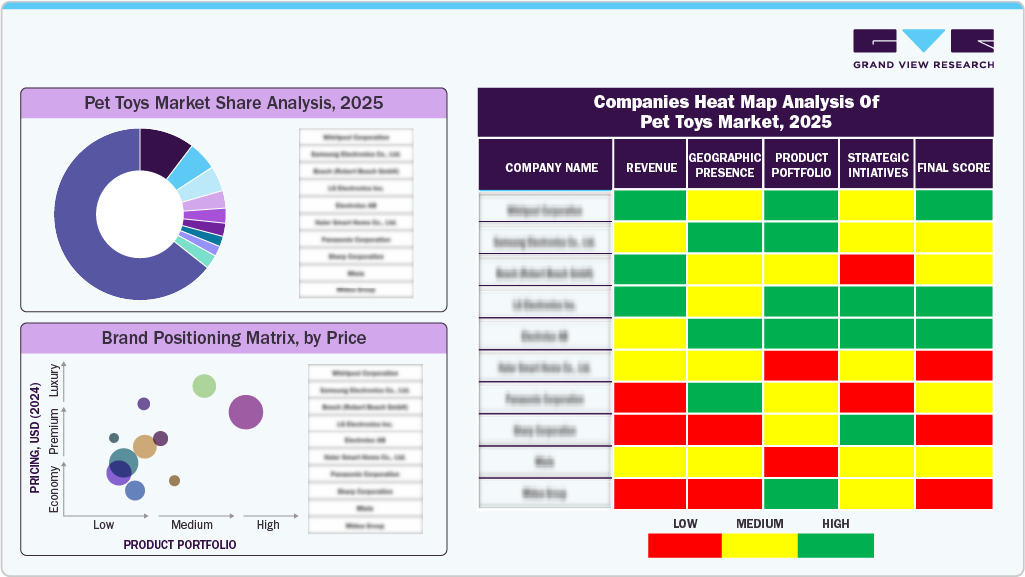
The global pet toys industry is highly competitive, driven by multinational pet care companies, specialized manufacturers, and emerging direct-to-consumer brands competing through product innovation, branding, and strong retail and online distribution. Leading players such as KONG Company, PetSafe (Radio Systems Corporation), Hartz Mountain Corporation, Central Garden & Pet Company, and Outward Hound offer a wide range of products, including chew toys, interactive toys, plush toys, and training toys, designed to support pet engagement and mental stimulation. Companies are increasingly focusing on durable, non-toxic, and behavior-focused toy designs to address needs such as teething, anxiety reduction, and physical activity. In addition, growing investments in e-commerce platforms and DTC channels are enhancing product accessibility and customer engagement, while rising pet humanization and pet enrichment awareness continue to drive innovation and intensify competition across the global pet toys market.
 To learn more about this report, Download Free Sample Report
 Consumer Insights
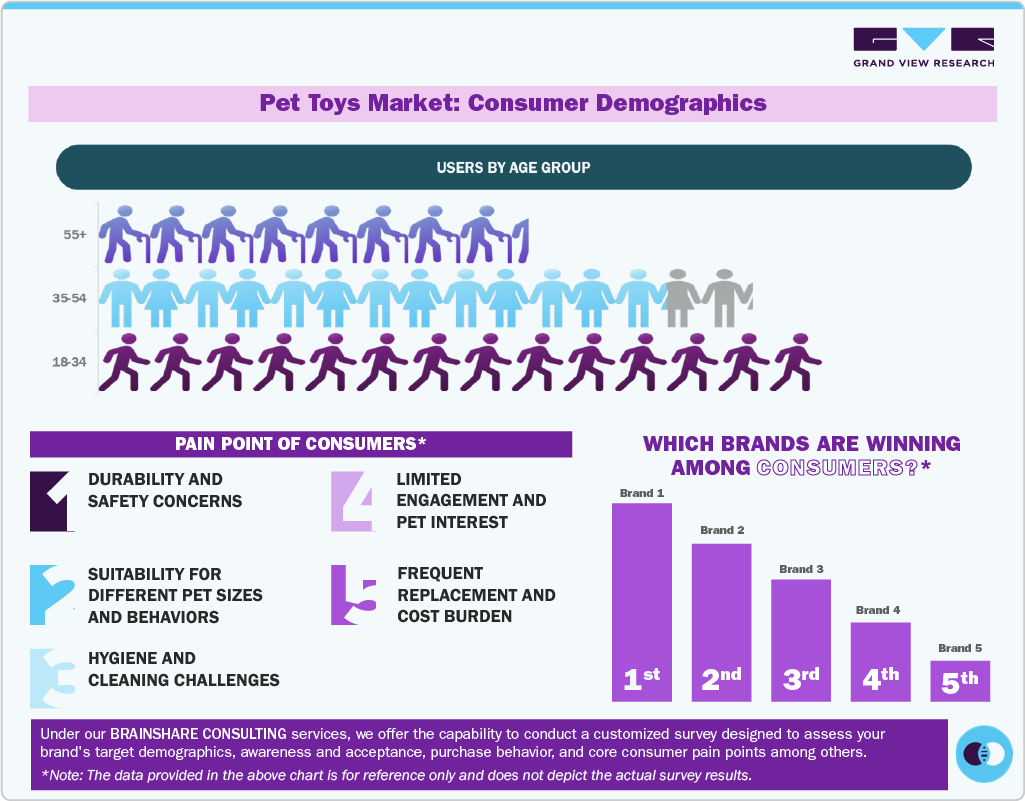
The global pet toys industry demonstrates clearly segmented consumer behavior across age groups, with each demographic influencing demand intensity, product preference, and spending patterns. Younger consumers, particularly millennials and Generation Z, are emerging as high-growth contributors, driven by emotional attachment and a focus on pet engagement and enrichment. According to Capital One Shopping statistics, total U.S. pet spending is projected to reach approximately USD 157 billion in 2025 and exceed USD 200 billion by 2030, highlighting the expanding scale of discretionary categories such as pet toys. In addition, 94 million U.S. households own at least one pet, reinforcing a broad and growing consumer base. Younger consumers tend to prioritize interactive toys, puzzle-based products, and visually appealing designs that support mental stimulation and are often influenced by digital content and social media. Their higher engagement levels translate into more frequent purchases across categories such as chew toys, fetch toys, and enrichment products.
 To learn more about this report, Download Free Sample Report
 In contrast, older demographics continue to anchor market stability through consistent, need-based purchasing behavior. These consumers prioritize durability, safety, and functional benefits, supporting steady demand for long-lasting chew toys and products designed for dental health or behavioral management. Middle-aged consumers balance value and quality, often choosing toys that combine durability with engagement, positioning them as key contributors to the mid-range and premium segments. Spending behavior further reinforces market strength, with data indicating that average annual pet spending per household exceeds USD 1,500 and, in some regions, reaches USD 1,800-USD 1,900, demonstrating strong and consistent allocation toward pet-related products. Additionally, surveys show that 65% of pet owners are willing to reduce personal expenses to maintain spending on their pets, and around 40% actively spend on toys and enrichment products, highlighting the emotional importance of these purchases.
Overall, consumer insights indicate a clear shift in the pet toys market from basic play items to enrichment-focused and behavior-driven products. Younger, digitally engaged consumers and multi-pet households are accelerating demand through higher purchase frequency and openness to innovation, while older consumers sustain the market through consistent, functionality-driven spending. The combination of rising pet ownership, increasing per-household expenditure, and growing awareness of pet mental stimulation is creating a structurally strong demand environment, encouraging brands to focus on interactive design, safety, and product differentiation in the global market.
Pet Type Insights
The dog toys market segment accounted for a share of 52.2% in 2025, supported by the increasing adoption of dogs in urban households, where owners seek products to manage indoor activity and prevent destructive behavior. Rising demand for training and behavior-management tools is also driving the use of toys, such as chew toys and interactive products that support obedience and skill development. In addition, the expansion of premium and specialized toy categories, including durable, non-toxic, and breed-specific designs, is attracting consumers who prioritize product quality, safety, and long-term usability, thereby further supporting global demand for dog toys.
The cat toys market segment is projected to grow at a CAGR of about 9.7% from 2026 to 2033, supported by the rising adoption of indoor cats, particularly in urban environments, where toys play a critical role in maintaining activity levels and preventing boredom. Pet owners are increasingly purchasing toys such as teaser wands, balls, and interactive products that stimulate natural hunting instincts and support mental engagement. In addition, the growing availability of automated and sensor-based toys is attracting consumers seeking convenient play solutions, while rising interest in eco-friendly, non-toxic materials is driving demand for sustainable cat toy products.
Product Insights
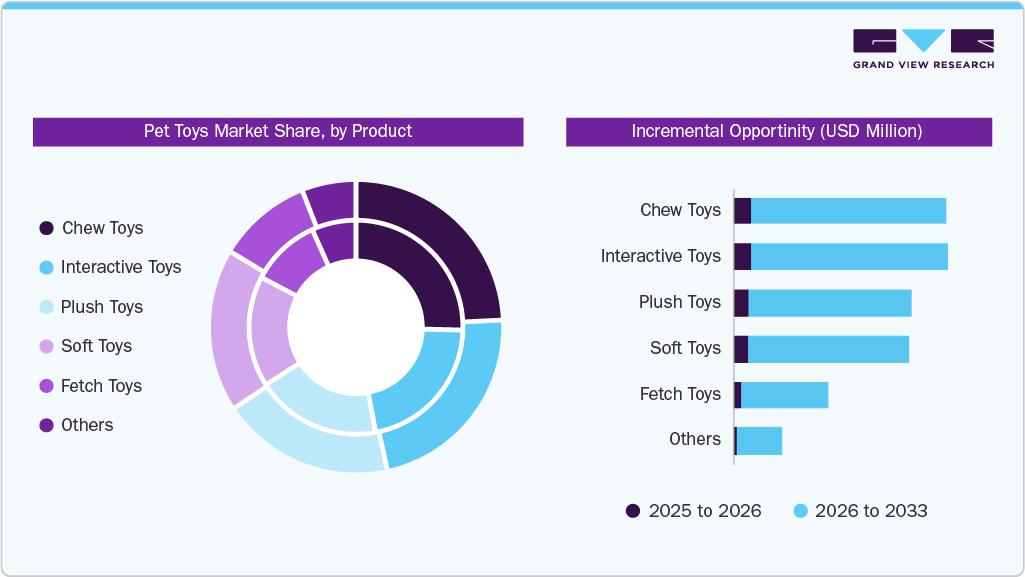
The chew pet toys market segment accounted for a share of 25.4% in 2025, driven by their functional benefits in promoting dental health, as they help reduce plaque buildup and maintain oral hygiene, making them a preferred choice among health-conscious pet owners. The natural chewing instinct in dogs also drives consistent demand for durable and safe chew toys that prevent destructive behavior and support stress relief. In addition, product innovation is strengthening this segment, with manufacturers introducing flavored, textured, and long-lasting materials to enhance pet engagement. For instance, in November 2025, Nylabone launched a new range of dog chew toys featuring real meat-inspired flavors such as chicken, bacon, and beef, designed with textured surfaces to support dental hygiene while satisfying natural chewing behavior. The growing availability of these products across online platforms and specialty pet stores is further supporting the expansion of the chew toy segment.
 To learn more about this report, Download Free Sample Report
 The demand for soft toys is expected to grow at a CAGR of about 10.7% from 2026 to 2033, supported by the increasing preference for indoor play solutions, particularly in urban households where limited space encourages the use of soft, noise-free toys. Pet owners are also opting for lightweight and easy-to-handle toys that allow safe play without damaging household surfaces or furniture. In addition, rising demand for multi-functional toys, such as plush toys with squeakers or hidden compartments for treats, is enhancing engagement and extending playtime. The expanding availability of aesthetically designed and themed soft toys is further attracting consumers who seek visually appealing products that align with home environments and lifestyle preferences.
Distribution Channel Insights
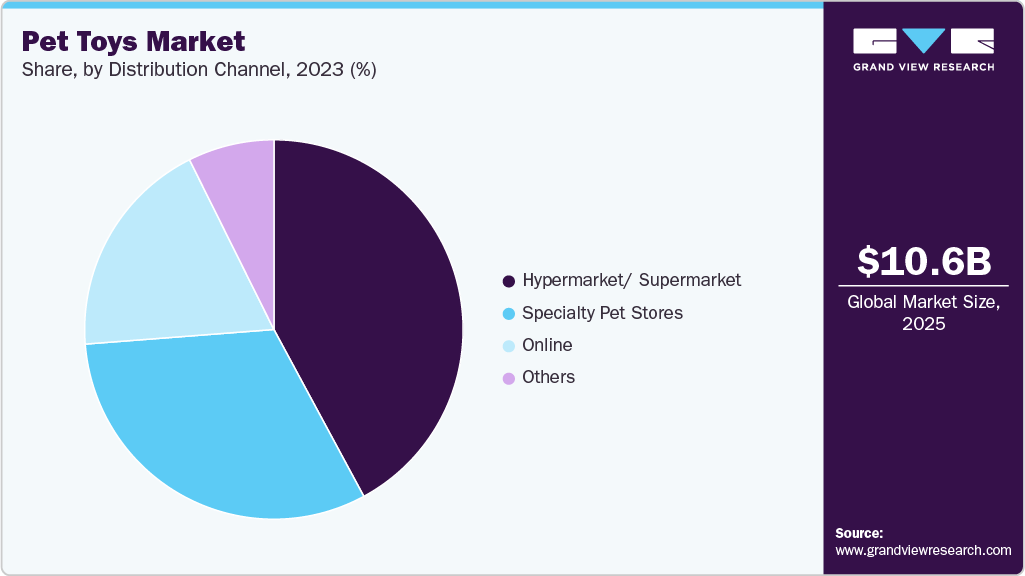
Sales of pet toys through hypermarkets/supermarkets dominated the pet toys market with a share of 42.1% in 2025. These large retail chains offer a wide variety of pet toys, providing a convenient one-stop shopping experience for pet owners. The accessibility and widespread presence of hypermarkets and supermarkets make it easy for customers to purchase pet toys during regular grocery shopping trips. Competitive pricing and frequent promotions in these stores attract budget-conscious consumers looking for value. The ability to physically examine and choose products appeals to buyers who prefer to assess the quality and durability of pet toys before purchasing.
 To learn more about this report, Download Free Sample Report
 The sales of pet toys through online channels are expected to rise at a CAGR of about 11.1% during the forecast period, driven by increasing consumer preference for digital shopping platforms that offer convenience, wider product selection, and easy price comparison. Pet owners can access a broad range of toys, including specialized and premium products, along with detailed descriptions, customer reviews, and usage insights that support informed purchasing decisions. In addition, the growing influence of social media, pet-focused content, and influencer recommendations is accelerating product discovery and encouraging impulse purchases, while fast delivery options and subscription-based services are further strengthening online sales growth.
Regional Insights
North America Pet Toys Market Trends
The North America pet toys industry accounted for a share of 31.4% in 2025. The market growth is driven by the increasing demand for pet-specific lifestyle products, with owners seeking toys tailored to breed size, age, and activity level, including senior pet toys and puppy-specific products. In addition, the rising trend of indoor pet ownership, particularly in urban apartments, is driving demand for compact and noise-controlled toys that suit confined living spaces. The growing influence of licensed and branded merchandise, including character-themed and entertainment-linked pet toys, is also attracting consumer interest and encouraging higher discretionary spending, further supporting market expansion across North America.
U.S. Pet Toys Market Trends
The U.S. pet toys industry accounted for a revenue share of 74.9% in 2025, driven by increasing demand for enrichment-focused products that support pet behavior, training, and mental stimulation. Pet owners are actively purchasing puzzle, treat-dispensing, and durable chew toys to reduce boredom and improve activity levels, particularly for indoor pets. In addition, the growing influence of premium, innovation-led product offerings is encouraging consumers to invest in technologically advanced toys, including automated and sensor-based play solutions. The strong presence of subscription-based pet services and digital retail platforms is also driving repeat purchases and product discovery, supporting continued expansion of the U.S. market.
The Canada pet toys market is expected to grow at a CAGR of 10.0% from 2026 to 2033, driven by increasing focus on pet enrichment and behavioral well-being, with pet owners actively purchasing toys that support mental stimulation and reduce anxiety. Demand is rising for interactive toys, puzzle-based products, and durable chew items that keep pets engaged, particularly in indoor environments during colder seasons. In addition, the growing influence of premium pet care trends is encouraging consumers to invest in high-quality, safe, and long-lasting toys.
Europe Pet Toys Market Trends
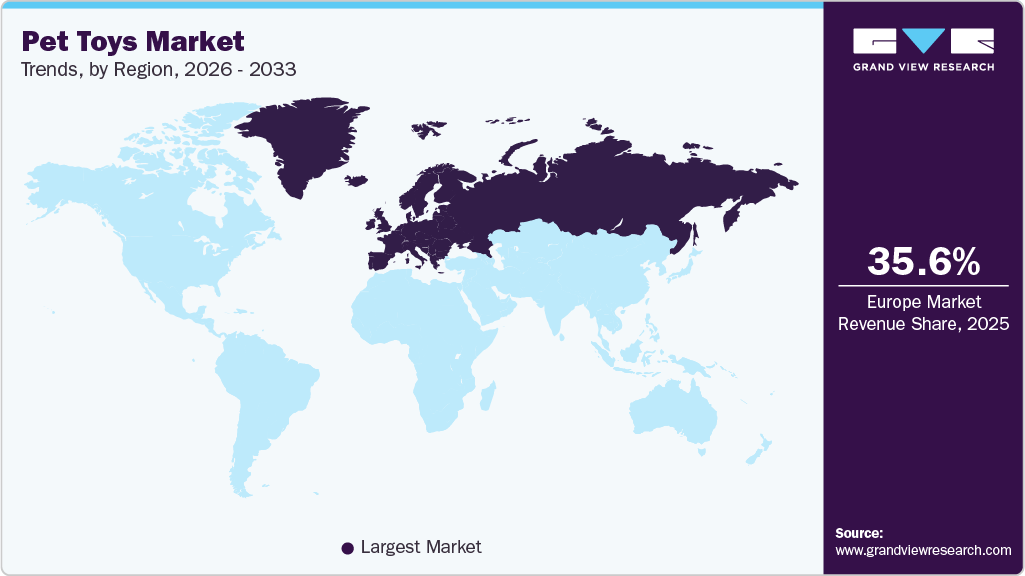
The Europe pet toys industry accounted for largest global revenue share of 35.6% in 2025. The market is driven by increasing regulatory and consumer focus on pet product safety and material standards, which is encouraging demand for certified, non-toxic, and high-quality toys. In addition, the rising popularity of pet insurance across European countries is indirectly supporting higher spending on preventive care products, including toys that promote activity and reduce health risks such as obesity and anxiety. The expansion of private-label pet product ranges by major retail chains is also making pet toys more affordable and accessible, enabling broader consumer adoption and supporting steady market growth across Europe.
 To learn more about this report, Download Free Sample Report
 The pet toys market in Germany accounted for a 20.3% revenue share of Europe in 2025, driven by increasing consumer focus on pet enrichment and activity-based care, driving demand for toys that support mental stimulation and physical exercise. Pet owners are increasingly purchasing interactive toys, chew products, and training toys to manage pet behavior and improve overall well-being. In addition, strong demand for high-quality, durable products is driving the adoption of toys made from safe, long-lasting materials.
The UK pet toys market is expected to grow at a CAGR of 10.6% from 2026 to 2033, driven by increasing awareness of pet behavioral health, with owners actively using toys to reduce anxiety, separation stress, and destructive habits, particularly among dogs left alone during working hours. In addition, rising demand for subscription-based pet product services is driving recurring toy purchases, as consumers receive curated selections tailored to their pet's size, breed, and activity level. The growing influence of premium and branded pet products, including licensed and themed toys, is also attracting consumers seeking differentiated and higher-quality offerings, further supporting market expansion.
Asia Pacific Pet Toys Market Trends
The Asia Pacific pet toys industry accounted for a revenue share of 24.8% in 2025, driven by the increasing adoption of pets across urban households, where toys are widely used to support indoor activity, behavioral management, and mental stimulation. As more consumers treat pets as companions, there is a rising demand for interactive, durable, and engagement-focused toys such as chew toys, balls, and puzzle-based products that enhance daily play and reduce boredom. This shift toward activity-driven pet care is strengthening consistent demand for pet toys across key markets, including China, India, Japan, and Southeast Asia.
In addition, the rapid expansion of digital commerce and the influence of social media across Asia Pacific are significantly shaping purchasing behavior. Pet owners are increasingly discovering innovative toy products through online platforms, influencer content, and pet-focused communities, encouraging greater experimentation and more frequent purchases. Younger consumers, in particular, are driving demand for visually appealing, customizable, and functionally advanced toys. The strong presence of local manufacturers, combined with the growth of e-commerce platforms, is improving product accessibility and affordability, supporting sustained regional growth.
The pet toys market in China accounted for a 23.5% revenue share of Asia Pacific in 2025, driven by the increasing preference for indoor pets, particularly in urban areas where apartment living drives demand for toys that support activity within limited spaces. Pet owners are increasingly purchasing interactive toys, balls, and enrichment products to keep pets engaged and reduce boredom in indoor environments. In addition, the growing influence of digital platforms and social media is encouraging consumers to explore innovative, visually appealing pet toys, thereby accelerating product discovery and purchase frequency. The strong presence of domestic manufacturers and the rapid expansion of e-commerce platforms are further improving product availability and affordability, supporting steady growth.
The India pet toys market is expected to grow at a CAGR of 11.4% from 2026 to 2033, supported by the rapid expansion of the pet care ecosystem and increasing digital adoption among consumers. According to Business Standard, online pet care sales in India doubled in FY25, with a large share of demand coming from tier 2 and tier 3 cities, indicating the widening consumer base for pet-related products beyond major urban centers. This surge in online purchasing is significantly boosting the accessibility and sales of pet toys across the country.
In addition, rising pet ownership, urban lifestyles, and limited outdoor spaces are encouraging consumers to invest in toys that support indoor activity and mental stimulation for pets. The growing trend of pet humanization is further driving demand for engaging, safe, and durable toys such as chew products, balls, and interactive play items. Expanding availability through e-commerce platforms, pet specialty stores, and veterinary clinics is also enabling consumers to explore a broader range of pet toys, supporting sustained market growth in India.
Central & South America Pet Toys Market Trends
The Central & South America pet toys industry is expected to grow at a CAGR of 10.0% from 2026 to 2033, supported by the increasing preference for affordable, locally manufactured pet toys, which make products more accessible to a wider consumer base. In addition, rising awareness of pet training and behavioral development is driving demand for toys that support obedience, agility, and skill-building activities. The growing popularity of community pet culture, including pet parks and social pet gatherings, is also encouraging higher usage of interactive and activity-based toys, further supporting the regional market expansion.
Middle East & Africa Pet Toys Market Trends
The Middle East & Africa pet toys industry is expected to grow at a CAGR of 10.3% from 2026 to 2033, driven by rising pet ownership, particularly in urban areas, and by increasing awareness of the importance of pet activity and mental stimulation. Pet owners are increasingly purchasing toys such as chew toys, interactive toys, and balls to keep pets engaged and reduce boredom, especially for indoor pets. In addition, the growing trend of pet humanization is encouraging higher spending on products that enhance pet well-being and entertainment. The expansion of pet specialty stores, veterinary clinics, and online retail platforms across the region is also improving product availability, encouraging consumers to explore a wider range of pet toys, and supporting steady market growth.
Key Pet Toys Companies:
The following key companies have been profiled for this study on the pet toys market.
- Fluff and Tuff, Inc.
- Petsport USA, Inc.
- Cosmic Pet
- ZyppyPaws
- Ethical Products, Inc.
- Benebone LLC
- Jolly Pets
- Honest Pet Products
- Petmate
- Coastal Pet Products, Inc.
Recent Developments
-
In March 2025, Benebone launched a new line of interactive dog toys made from natural rubber, designed to expand beyond traditional chew products into more active play. The collection includes a variety of formats such as bones, balls, tug toys, slow-feeding cones, and treat-dispensing designs, all built to balance durability with flexibility for safer play. With bright colors for visibility and features that encourage fetching, tugging, and mental stimulation, the range aims to keep dogs engaged while supporting everyday activity and enrichment.
-
In January 2025, ThoozyPet officially entered the pet products market through a partnership with Pet Palette Distribution, introducing a portfolio of over 100 items across categories such as dog and cat toys, feeders, and bowls. The brand focuses on combining quality, durability, and engaging designs with accessible pricing, aiming to create value for both pet owners and independent retailers. With plans to expand into additional segments, such as grooming products, treats, and accessories, ThoozyPet is positioning itself as a multi-category offering tailored to everyday pet care needs.
Pet Toys Market Report Scope
Report Attribute
Details
Market size in 2025
USD 10.6 billion
Estimated market size in 2026
USD 11.6 billion
Projected market size by 2033
USD 22.4 billion
Growth rate
CAGR of 9.9% from 2026 to 2033
Actuals
2021 - 2025
Forecast period
2026 - 2033
Quantitative units
Revenue in USD million/billion and CAGR from 2026 to 2033
Report coverage
Revenue forecast, company ranking, competitive landscape, growth factors, and trends
Segments covered
Pet type, product, distribution channel, region
Regional scope
North America; Europe; Asia Pacific; Central & South America; Middle East & Africa
Country scope
U.S.; Canada; Mexico; France; Germany; Italy; UK; Spain; China; Japan; India; Australia & New Zealand; South Korea; Brazil; South Africa
Key companies profiled
Fluff and Tuff, Inc.; Petsport USA, Inc.; Cosmic Pet; ZyppyPaws; Ethical Products, Inc.; Benebone LLC; Jolly Pets; Honest Pet Products; Petmate; Coastal Pet Products, Inc.
Customization scope
Free report customization (equivalent up to 8 analysts working days) with purchase. Addition or alteration to country, regional & segment scope.
Pricing and purchase options
Avail customized purchase options to meet your exact research needs. Explore purchase options
Global Pet Toys Market Report Segmentation
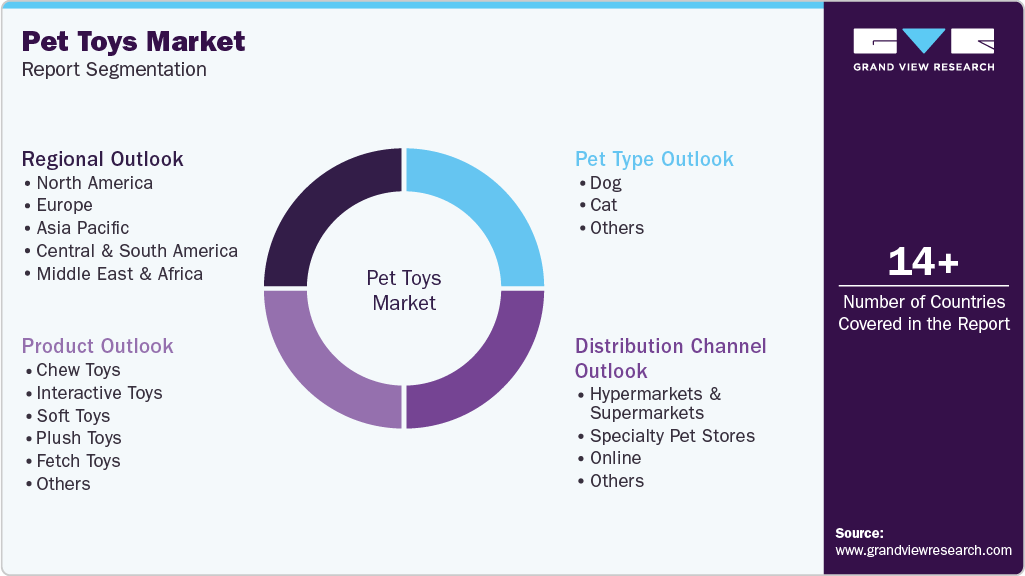
This report forecasts revenue growth at the global, regional, and country levels and provides an analysis of the latest industry trends and opportunities in each of the sub-segments from 2021 to 2033. For this study, Grand View Research has segmented the global pet toys market report based on pet type, product, distribution channel, and region:
 To learn more about this report, Download Free Sample Report
 -
Pet Type Outlook (Revenue, USD Million, 2021 - 2033)
-
Dog
-
Cat
-
Others
-
-
Product Outlook (Revenue, USD Million, 2021 - 2033)
-
Chew Toys
-
Interactive Toys
-
Soft Toys
-
Plush Toys
-
Fetch Toys
-
Others
-
-
Distribution Channel Outlook (Revenue, USD Million, 2021 - 2033)
-
Hypermarkets & Supermarkets
-
Specialty Pet Stores
-
Online
-
Others
-
-
Regional Outlook (Revenue, USD Million, 2021 - 2033)
-
North America
-
U.S.
-
Canada
-
Mexico
-
-
Europe
-
Germany
-
UK
-
Spain
-
Italy
-
France
-
-
Asia Pacific
-
China
-
India
-
Japan
-
Australia & New Zealand
-
South Korea
-
-
Central & South America
-
Brazil
-
-
Middle East & Africa
-
South Africa
-
-
Frequently Asked Questions About This Report
Some of the key players operating in the pet toys market include Fluff and Tuff, Inc.; Petsport USA, Inc.; Cosmic Pet; ZyppyPaws; Ethical Products, Inc.; Benebone LLC; Jolly Pets; Honest Pet Products; Petmate; and Coastal Pet Products, Inc.
Key factors driving the pet toys market growth include the growing awareness of pet health and well-being, leading pet owners to seek engaging and interactive toys to enrich their pets' lives.
The chew pet toys segment led with a 25.4% revenue share in 2025, while the soft toys segment is expected to grow at a CAGR of about 10.7% from 2026 to 2033.
The hypermarkets/supermarkets segment led with a 42.1% revenue share in 2025, while the online segment is expected to rise at a CAGR of about 11.1% during the forecast period.
The dog toys segment led with a 52.2% revenue share in 2025, while the cat toys segment is projected to grow at a CAGR of about 9.7% from 2026 to 2033.
The global pet toys market was estimated at USD 10.6 billion in 2025 and is expected to reach USD 11.6 billion in 2026.
The global pet toys market is expected to grow at a compound annual growth rate of 9.9% from 2026 to 2033 to reach USD 22.4 billion by 2033.
Europe dominated the pet toys market with a share of over 35.6% in 2025. The growth of the regional market is mainly driven by high pet ownership rates, strong consumer spending on pet products, and a culture that views pets as family members.
About the Author(s)
Homecare & Decor Research Team
Consumer Goods · Homecare & DecorThis report was authored by the homecare & decor research team at Grand View Research - comprising two research analysts, one senior research analyst, and one industry expert - with specialized expertise in the homecare & decor segment of the consumer goods industry. All findings are based on proprietary consumer goods databases, executive interviews, and regulatory analysis, subject to internal peer review prior to publication.
Last Updated:
Speak to Analyst

Customize this report to your needs - add regions, segments, or data points, with 20% free customization.
Or view our licence options:


ISO 9001:2015 & 27001:2022 Certified
We are GDPR and CCPA compliant! Your transaction & personal information is safe and secure. For more details, please read our privacy policy.


