
- Home
- »
- Advanced Interior Materials
- »
-
Plunger Pumps Market Size & Share Report, 2026-2033GVR Report cover

Plunger Pumps Market (2026 - 2033)
Size, Share & Trends Analysis Report By Product (Dual Plunger, Single Plunger, Multi-Plunger), By Technology, By End Use (Water & Wastewater, Agriculture, Chemical & Petrochemical, Power Generation), By Region, And Segment Forecasts
Market Size, 2025
$3.6BMarket Estimate, 2026
$3.8BMarket Forecast, 2033
$5.4BCAGR, 2026–2033
5.1%Plunger Pumps Market Summary
The global plunger pumps market size was valued at USD 3.6 billion in 2025 and is projected to grow from USD 3.8 billion in 2026 to USD 5.4 billion by 2033, at a CAGR of 5.1% from 2026 to 2033. Asia Pacific dominated the market, accounting for the revenue share of 33.2% in 2025. The market is primarily driven by the growing need for reliable high-pressure fluid handling across a wide range of applications.
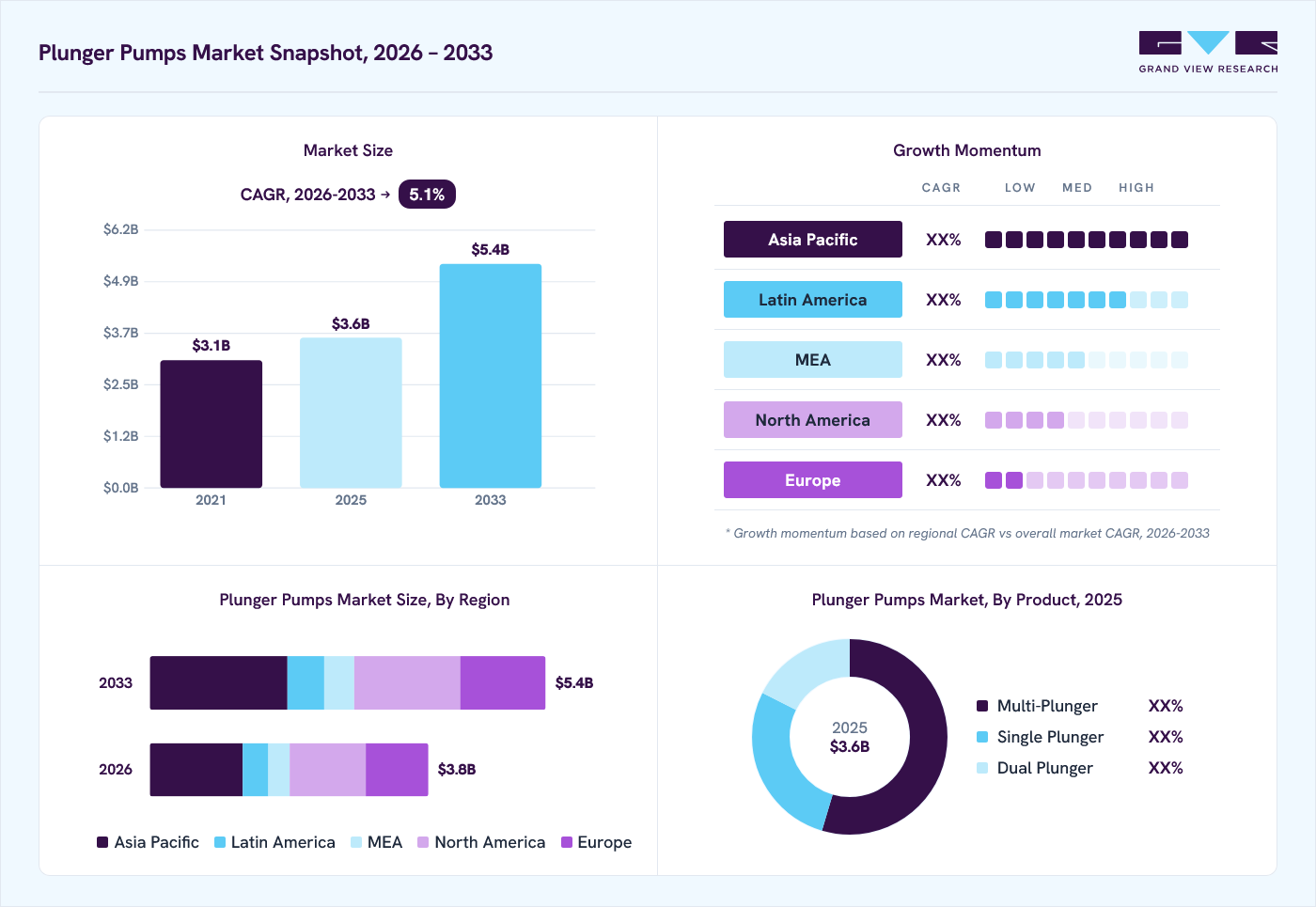 Source: Grand View Research, IR Documents, Primary Interviews, Paid DatabasesTo learn more about this report,
 Download Free Sample Report
 Key Market Trends & Insights
- By product: The multi-plunger segment led the market with the largest revenue share of 54.5% in 2025.
- By technology: The electric plunger pumps segment led the market with the largest revenue share of 45.7% in 2025.
- By end use: The oil & gas segment led the market with the largest revenue share of 25.5% in 2025.
Regional Highlights
- Largest regional market: Asia Pacific (33.2% revenue share, 2025)
- Fastest-growing regional market: Asia Pacific (highest CAGR, 2026-2033)
- By country: The China dominated the Asia Pacific with the largest revenue share in 2025.
Market Size & Forecast
- Market size in 2025: USD 3.6 Billion
- Estimated market size in 2026: USD 3.8 Billion
- Projected market size by 2033: USD 5.4 Billion
- CAGR (2026-2033): 5.1%
Three ways to get this report
Buy it, customize it, or ask a question.Ask an Analyst
A direct answer, usually in 1 working day
- AccessReport author, directly
- Reply timeWithin 1 working day
- No sales callDirect answer only
- FormatEmail reply
- CostFree, no cost
Get the Full Report
What the study covers
- FormatsPDF · Excel · Dashboard
- Timeline2026–2033 annual, 2025 base
- Coverage20+ countries, 5 regions
- Companies10+ key players profiled
Customize the Report
20% free customization
- IncludeCountries, segments, points
- TailorTo your product definition
- ExtendDeeper competitor detail
- OrA fully bespoke study
- Turnaround5–10 working days
The plunder pumps provide consistent flow and pressure, making them suitable for demanding operations such as fluid injection, pressure testing, cleaning, dosing, and high-pressure transfer. Expansion of infrastructure, water treatment and desalination facilities, energy-related projects, and industrial processing activities is increasing the requirement for efficient pumping systems.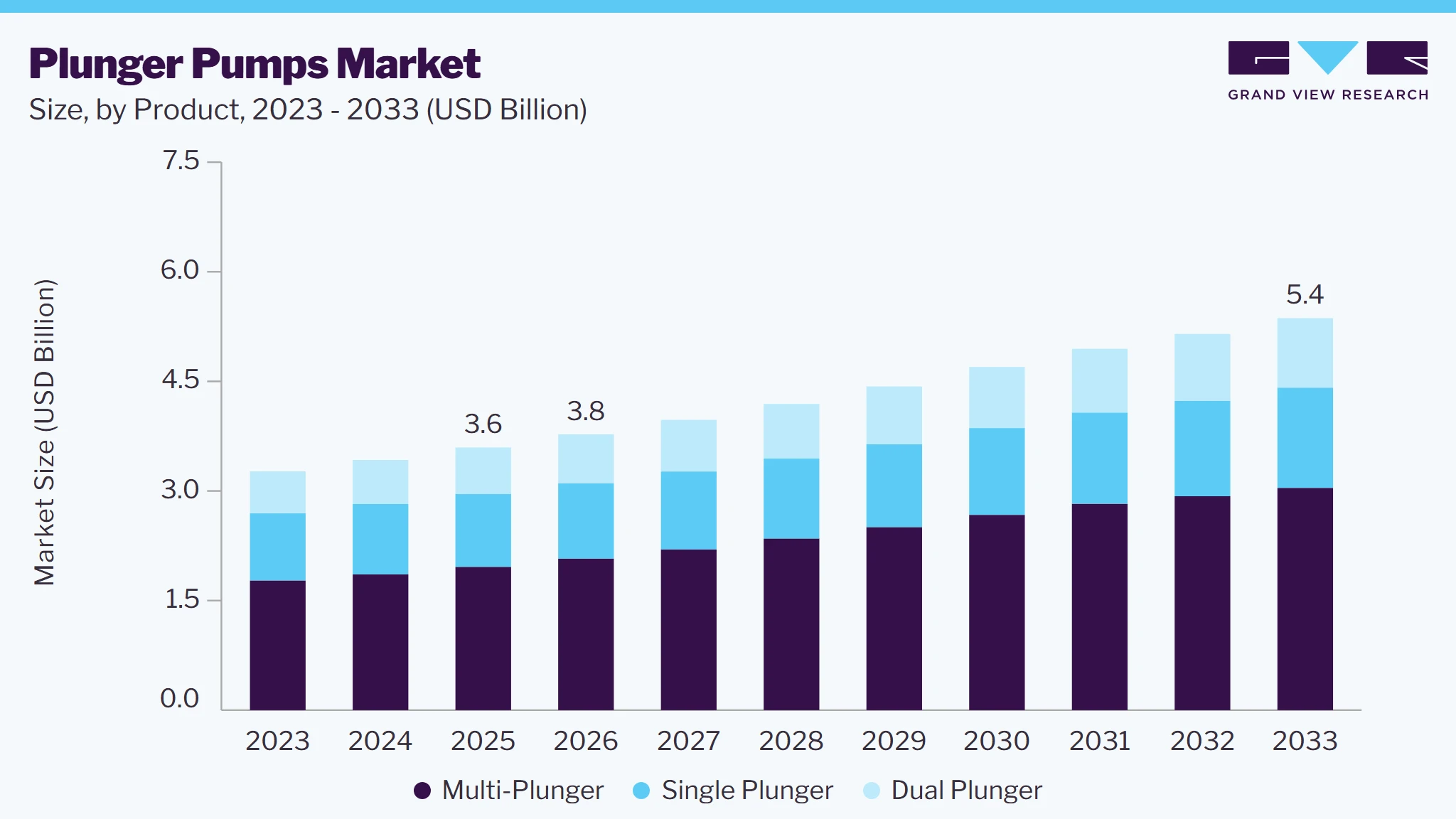 To learn more about this report, Download Free Sample Report
 Technological advancements aimed at improving pump efficiency, durability, flow control, and operational reliability are also driving adoption. Industries are increasingly replacing conventional pumping equipment with high-performance plunger pumps in applications with demanding pressure requirements and continuous operation. Growth in chemical and petrochemical production, power generation, mining and metals, and agricultural spraying is expanding the application base of these pumps. In addition, manufacturers are developing customized pump systems capable of handling corrosive, abrasive, and high-temperature fluids, which is increasing the suitability of plunger pumps for specialized industrial applications.
Market Dynamics
The market is shaped by the growing requirement for reliable high-pressure fluid handling, consistent flow delivery, and precise fluid control across diverse applications. Market expansion is supported by infrastructure development, increasing investment in water and wastewater systems, rising demand for high-pressure cleaning and process equipment, and modernization of existing pumping installations. At the same time, factors such as high upfront investment, maintenance needs, energy consumption, and competition from alternative pump technologies influence purchasing decisions and market adoption.
Growing demand for reliable high-pressure fluid transfer, injection, and industrial cleaning operations is driving the adoption of plunger pumps across multiple end-use industries. Plunger pumps are well-suited to applications requiring consistent flow and high discharge pressure, making them valuable across industrial manufacturing services. Expansion of industrial facilities and investments in process infrastructure are consequently creating additional demand for high-performance plunger pumping systems.
The need for continuous and reliable pumping performance under demanding operating conditions further supports adoption. End users are increasingly seeking equipment that can operate for extended periods while handling abrasive, corrosive, high-temperature, or otherwise challenging fluids. Improvements in pump materials, sealing arrangements, hydraulic designs, and monitoring capabilities are helping extend equipment life and reduce maintenance requirements, encouraging replacement of older systems with more advanced plunger pumps.
Maintenance complexity and relatively high operating requirements can restrict the adoption of plunger pumps, particularly among cost-sensitive end users. Continuous reciprocating movement subject’s components such as plungers, seals, valves, and bearings to mechanical wear, requiring regular inspection and replacement. In addition, specialized maintenance expertise and the downtime associated with servicing high-pressure equipment can increase the overall cost of ownership, prompting some customers to consider alternative pumping technologies with less demanding pressure requirements.
The expansion of water and wastewater treatment infrastructure presents a significant opportunity for plunger pump manufacturers. Growing water consumption, industrialization, stricter water-quality requirements, and investments in wastewater treatment and desalination are increasing demand for reliable high-pressure pumping equipment. Opportunities are also emerging from the modernization of aging industrial infrastructure and the development of advanced treatment systems, in which efficient, precise, and durable pumping solutions can support processes such as high-pressure water transfer, dosing, membrane-related applications, and industrial cleaning.
Market Concentration & Characteristics
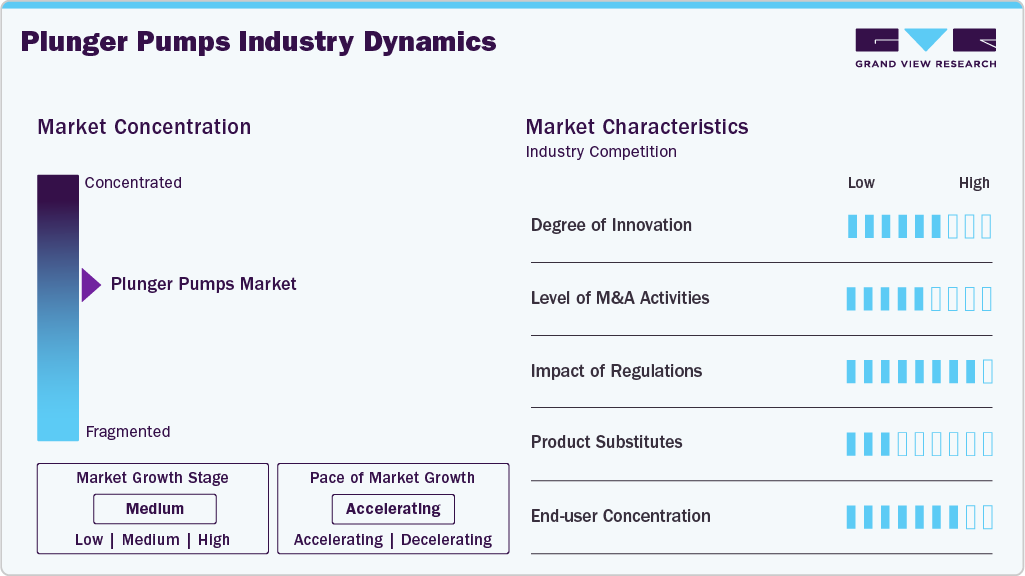
The market exhibits a concentrated competitive structure, characterized by the presence of established international manufacturers alongside a significant number of regional and specialized suppliers. Major participants benefit from advanced engineering capabilities, diverse product offerings, extensive distribution channels, and strong expertise in high-pressure pumping applications. At the same time, regional manufacturers continue to compete effectively through cost-efficient solutions, application-specific designs, faster delivery, and localized after-sales support. This combination of established global participants and smaller specialized suppliers results in a market that is neither highly concentrated nor fully fragmented.
The market has a moderate to high degree of innovation, with manufacturers focusing on improving pressure capability, energy efficiency, durability, flow accuracy, and operational reliability. Product development is increasingly centered on advanced materials, improved sealing technologies, optimized hydraulic designs, and monitoring systems that help reduce wear, leakage, and unplanned downtime. Innovation is also focused on developing pumps that maintain reliable performance when handling abrasive, corrosive, high-temperature, or otherwise challenging fluids.
 To learn more about this report, Download Free Sample Report
 Regulatory requirements have a moderate impact on the global market, as equipment selection is increasingly influenced by environmental protection, operational safety, water quality, leakage control, and energy consumption. These requirements encourage users to upgrade older pumping systems with equipment offering better efficiency, improved containment, longer maintenance intervals, and dependable operation. The growing focus on sustainable resource use and safer equipment operation is therefore driving the adoption of more efficient, technologically advanced plunger pump systems.
The plunger pumps industry has moderate end-user concentration, with demand influenced by large-scale infrastructure projects and applications requiring dependable high-pressure fluid handling. Customers operating large facilities often require customized, high-capacity pumping systems and prefer established suppliers with proven technical capabilities and reliable after-sales support. However, demand is spread across multiple application areas, including water management, agriculture, industrial cleaning, energy, manufacturing, and other specialized processes, which helps diversify revenue sources and reduces reliance on any single end-user group.
Analyst Perspective
The plunger pumps market is expected to witness steady growth, driven by increasing demand for reliable high-pressure fluid handling, precise flow control, and continuous pumping performance across diverse applications. Market opportunities are shifting toward energy-efficient, durable, and application-specific pumping systems capable of operating under high pressure, elevated temperatures, and challenging fluid conditions. Continued investments in water and wastewater infrastructure, desalination, energy projects, industrial modernization, and replacement of aging equipment are expected to sustain demand. Established manufacturers benefit from broad portfolios, engineering expertise, and global service networks, while specialized players can strengthen their position through customized solutions, faster technical support, and niche application expertise.
Product Insights
The multi-plunger segment led the market with the largest revenue share of 54.5% in 2025, owing to its ability to deliver high pressure and flow capacity while maintaining stable, reliable performance in demanding operating conditions. The configuration distributes the pumping load across multiple plungers, helping maintain smoother fluid delivery and reducing pressure fluctuations. This makes multi-plunger pumps well-suited for heavy-duty applications requiring continuous operation, high throughput, and consistent pumping performance.
The dual-plunger segment is expected to grow at the fastest CAGR of 5.2% during the forecast period, supported by demand for pumping systems that balance performance, equipment complexity, and cost. Dual-plunger configurations provide greater flow continuity and capacity than single-plunger designs while remaining comparatively simpler than multi-plunger systems. Their suitability for applications requiring moderate-to-high pressure, dependable flow, and flexible operation is expected to support the segment's continued expansion.
Technology Insights
The electric plunger pumps segment led the market with the largest revenue share of 45.7% in 2025, supported by their wide availability, ease of integration, operational flexibility, and suitability for continuous-duty applications. Electric-driven systems offer consistent and controllable pumping performance while integrating readily with existing power infrastructure. Improvements in motor efficiency, drive systems, and pump controls are further enhancing their operating performance and supporting adoption across diverse applications.
The pneumatic plunger pumps segment is expected to grow at the fastest CAGR of 5.9% during the forecast period, driven by increasing demand for pumping solutions in operating environments where electrical drives may present safety or reliability concerns. Air-powered systems can operate without direct electrical power at the pump, making them suitable for applications involving flammable, explosive, corrosive, or hazardous fluids. Growing demand for flexible equipment, improved process safety, and dependable operation under challenging conditions is expected to accelerate the adoption of pneumatic plunger pumps.
End Use Insights
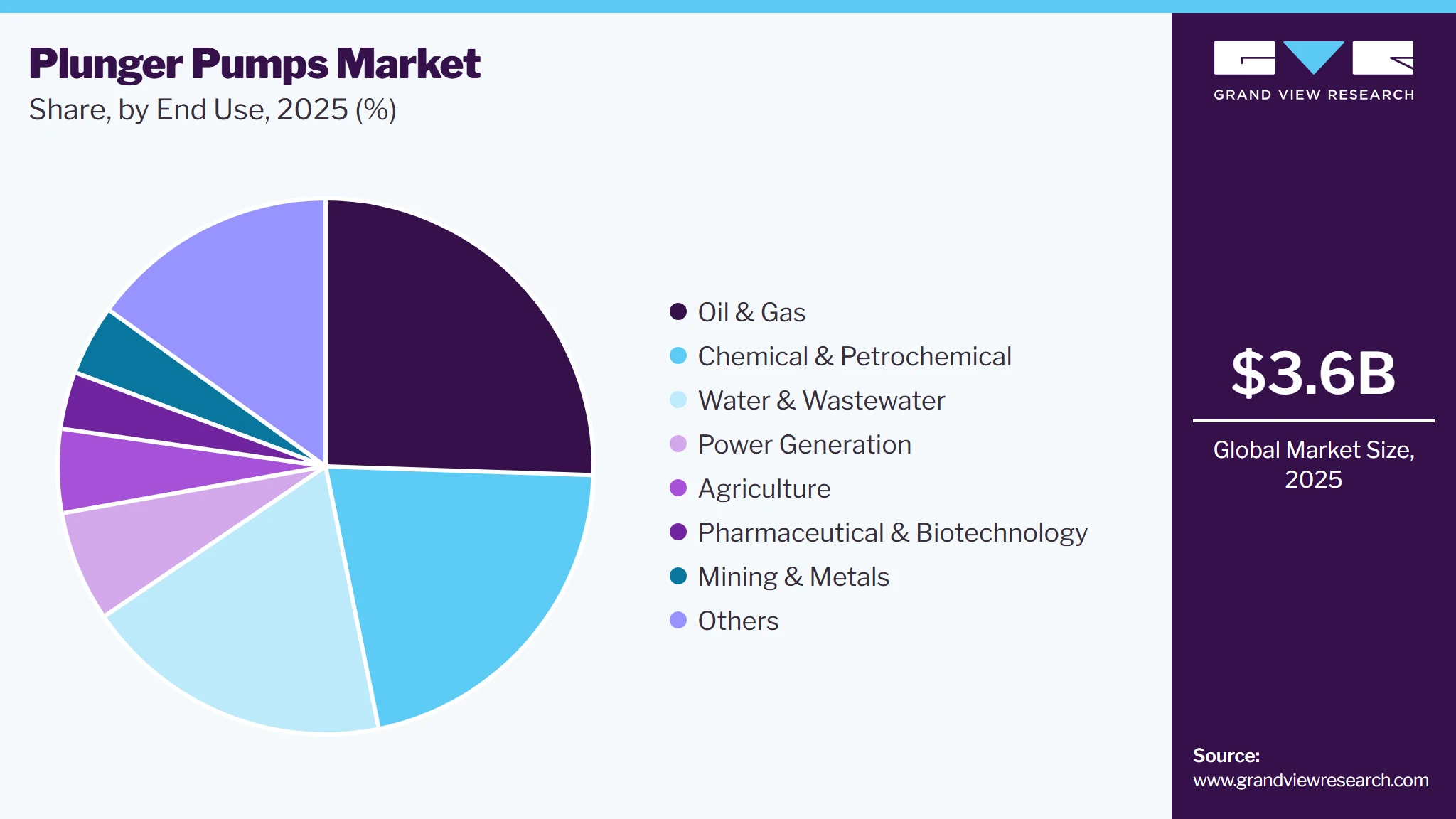
The oil & gas segment led the market with the largest revenue share of 25.5% in 2025, driven by extensive use of high-pressure pumping equipment across upstream, midstream, and downstream operations. Plunger pumps are widely used in well servicing, water and chemical injection, pressure testing, pipeline operations, and high-pressure fluid transfer, where reliable performance under demanding pressure conditions is essential. Continued investments in exploration and production activities, well intervention, and oilfield infrastructure are expected to sustain demand for high-pressure plunger pumping systems.
 To learn more about this report, Download Free Sample Report
 The pharmaceutical & biotechnology segment is expected to grow at the fastest CAGR of 8.0% during the forecast period, supported by increasing investments in pharmaceutical manufacturing, biotechnology production, and advanced processing facilities. Plunger pumps are gaining importance in applications requiring precise and controlled fluid transfer, dosing, and handling of process liquids while maintaining stringent hygiene and operational standards. The growing production of biologics, specialty pharmaceuticals, and other high-value products, along with the expansion of manufacturing capacity and the adoption of sophisticated processing systems, is expected to create further opportunities for plunger pump suppliers.
Regional Insights
The plunger pumps market in North America is supported by strong industrial activity, ongoing infrastructure development, and a large installed base of high-pressure pumping equipment. The replacement of aging systems, upgrades to improve operational efficiency, and the increasing demand for reliable equipment in demanding applications are encouraging the adoption of technologically advanced plunger pumps. In addition, investments in water treatment, energy infrastructure, and process modernization are creating further opportunities for high-pressure pumping systems across the region.
U.S. Plunger Pumps Market Trends
The plunger pumps market in the U.S. is supported by its strong energy infrastructure, extensive manufacturing base, and substantial investment in water and utility systems. According to the U.S. Energy Information Administration (EIA), crude oil production reached a record 13.6 million barrels per day in 2025, up 3% from 2024, while the Permian Basin contributed approximately 6.6 million barrels per day. Dry natural gas production also reached a record 39 trillion cubic feet, reflecting the scale of the country’s energy infrastructure and associated demand for high-pressure pumping equipment. In addition, the U.S. faces an estimated USD 630.1 billion requirement for clean-water infrastructure over the next 20 years, creating further opportunities for reliable pumping systems as utilities and facilities modernize aging infrastructure.
Europe Plunger Pumps Market Trends
The plunger pumps market in Europe is witnessing steady growth, driven by industrial modernization, infrastructure upgrades, and increasing investment in efficient water management systems. The region’s mature manufacturing base and focus on improving production efficiency are supporting demand for reliable high-pressure pumping equipment. In addition, greater emphasis on energy efficiency, operational reliability, equipment performance, and replacement of aging systems is encouraging end users to upgrade existing pumping infrastructure and adopt more advanced solutions.
The Germany plunger pumps market held a significant share in Europe in 2025, supported by its strong manufacturing base, advanced engineering capabilities, and extensive industrial infrastructure. Continued modernization of production facilities and investment in water and energy infrastructure are creating demand for high-pressure pumping equipment across a range of applications. The country’s focus on improving equipment efficiency, reliability, and automation is also driving the replacement of older systems with technologically advanced plunger pumps that meet demanding operating requirements.
The plunger pumps market in France is expected to grow steadily during the forecast period, supported by industrial modernization, infrastructure development, and investments in water management and energy systems. The country’s established manufacturing ecosystem and technically advanced power infrastructure create opportunities for reliable high-pressure pumping solutions. Increasing focus on improving operational efficiency, upgrading aging equipment, and adopting advanced fluid-handling technologies is expected to further support the use of plunger pumps across France.
Asia Pacific Plunger Pumps Market Trends
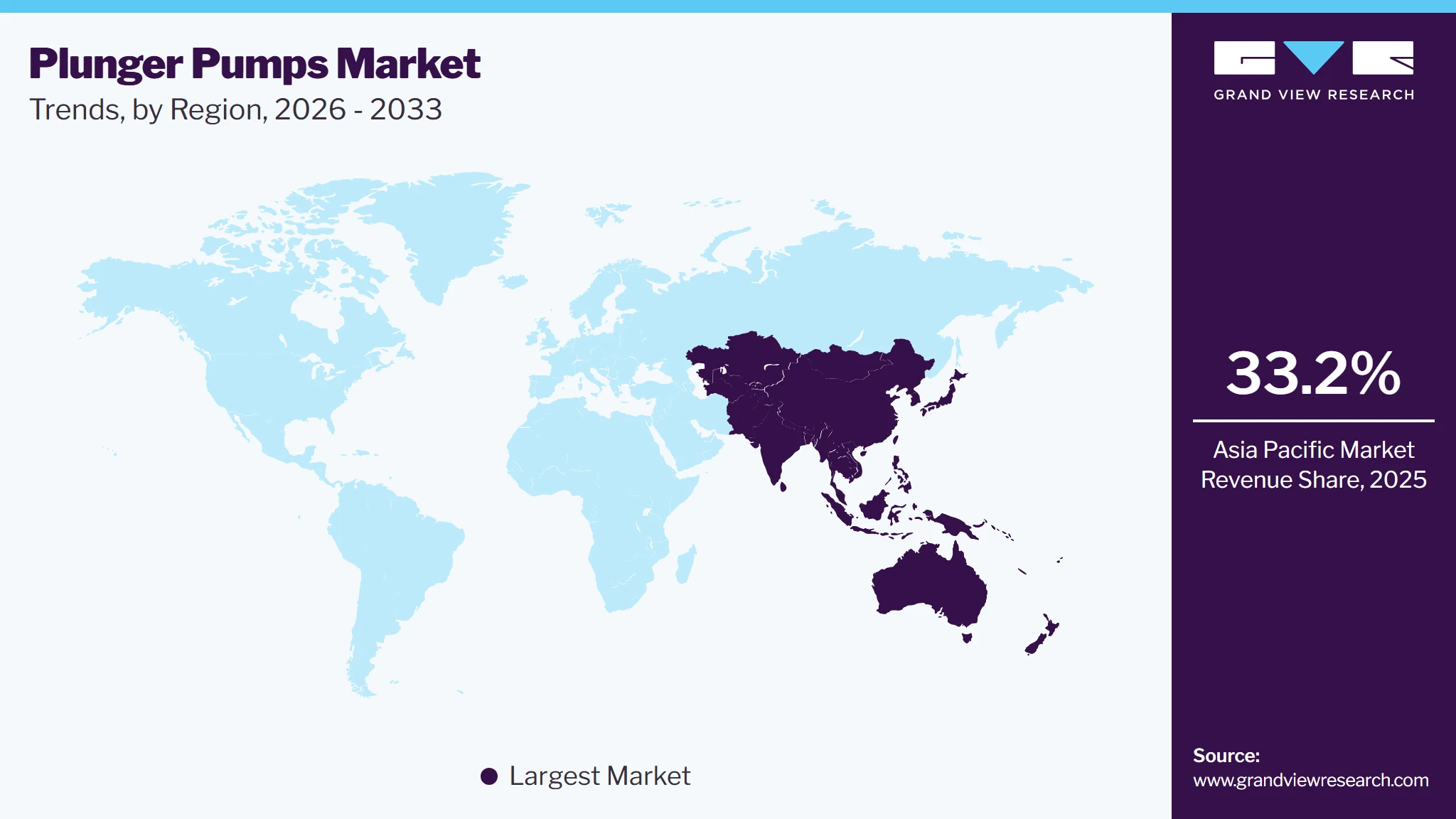
The Asia Pacific plunger pumps market held the largest revenue share of 33.2% in 2025 and is also expected to grow at the fastest CAGR during the forecast period, supported by rapid industrialization, expanding manufacturing capacity, and increasing investments in water, wastewater, and energy infrastructure. Rising production capacity, infrastructure development, and modernization of processing facilities across major economies are increasing the need for reliable high-pressure pumping systems. In addition, replacement of aging equipment, automation, and growing emphasis on operational efficiency and durable pumping solutions are creating further opportunities for advanced plunger pumps across the region.
 To learn more about this report, Download Free Sample Report
 The plunger pumps market in China accounted for the largest market revenue share in the Asia Pacific in 2025, supported by its extensive manufacturing base, large-scale chemical and petrochemical industries, power generation capacity, mining activities, and expanding water infrastructure. The country’s broad industrial ecosystem creates sustained demand for high-pressure pumping equipment used in fluid transfer, chemical dosing, pressure testing, cleaning, and process applications. Continued expansion of equipment manufacturing and high-tech industries, together with modernization of industrial facilities and water-treatment systems, is expected to maintain strong demand for plunger pumps across China.
The India plunger pumps market is expected to witness strong growth in the Asia-Pacific region in 2025, supported by expansion in manufacturing, energy, water infrastructure, and process industries. The country’s oil & gas sector remains an important driver of demand; data from the Petroleum Planning & Analysis Cell (PPAC) show indigenous crude oil production of 27.2 million tonnes in FY2023-24, while total crude oil and condensate production reached 29.4 million tonnes. India is also rapidly expanding its power infrastructure, with the Ministry of New and Renewable Energy (MNRE) reporting 253.96 GW of installed renewable energy capacity as of November 2025, up more than 23% year-on-year. Increasing industrial capacity and investments in energy and infrastructure are expected to create additional applications for high-pressure pumping systems across key applications.
Middle East & Africa Plunger Pumps Market Trends
The plunger pumps market in the Middle East & Africa is benefiting from continued investments in oil & gas production, petrochemical facilities, desalination, and large-scale water infrastructure projects. High-pressure pumping requirements in energy production, water treatment, and industrial processing create a strong market for plunger pumps. In addition, efforts to expand non-oil industrial activities and improve water security are gradually creating new demand across chemical processing, mining, and municipal applications.
The Saudi Arabia plunger pumps market is anticipated to grow at a significant CAGR during the forecast period, owing to its well-established oil & gas industry and expanding downstream industrial base. High-pressure plunger pumps are widely suited to applications such as well servicing, chemical injection, pressure testing, water injection, and fluid transfer across energy and petrochemical facilities. Ongoing development of refining, petrochemical, water treatment, and industrial infrastructure is further broadening the application base for high-pressure pumping equipment. In addition, efforts to diversify the economy beyond hydrocarbons are supporting investments in manufacturing and other process industries, creating additional opportunities for plunger pump adoption.
Latin America Plunger Pumps Market Trends
The plunger pumps market in Latin America is gaining momentum, supported by infrastructure development, expanding resource-based activities, and increasing investment in water management and industrial facilities. Growing demand for reliable equipment in demanding operating environments, along with the modernization of existing infrastructure, is encouraging the adoption of high-pressure pumping systems. Improvements in municipal water networks and increasing investments in production and processing facilities are also broadening opportunities for plunger pump applications across the region.
The Brazil plunger pumps market is supported by its large industrial base, extensive infrastructure network, and continued investment in energy, mining, agriculture, and water infrastructure. The expansion of production capacity and the modernization of existing facilities are increasing demand for reliable, durable high-pressure pumping equipment. In addition, investments in water and wastewater infrastructure, equipment replacement, and new capacity development are expected to support the adoption of technologically advanced plunger pump systems in Brazil.
Key Plunger Pumps Company Insights
Some of the key players operating in the market include LEWA GmbH, KSB SE & Co. KGaA, and Flowserve Corporation.
-
LEWA GmbH is a Germany-based manufacturer of pumps and integrated fluid-handling solutions, serving applications that require precise, reliable, and controlled fluid movement. The company provides metering, process, diaphragm, and reciprocating pumps, as well as customized pumping systems designed for demanding operating conditions. Its portfolio supports applications across energy, chemicals, petrochemicals, pharmaceuticals, water management, and other process industries, with a focus on accurate dosing, high-pressure performance, and operational reliability. LEWA also develops application-specific engineered solutions and complete pumping systems, enabling customers to address specialized fluid-handling requirements and complex process conditions.
-
KSB SE & Co. KGaA is a global manufacturer specializing in pumps, valves, and fluid-transfer solutions for industrial and infrastructure applications. Its portfolio serves sectors including petrochemicals and chemicals, energy, water and wastewater, mining, general industry, and building services. The company focuses on developing efficient and reliable pumping solutions, supported by engineering expertise, research, materials technology, digital capabilities, and testing services. KSB also provides integrated products and services designed to address demanding fluid-transfer and process requirements across a wide range of industrial applications.
Key Plunger Pumps Companies
The following key companies have been profiled for this study on the plunger pumps market.
-
LEWA GmbH
-
KSB SE & Co. KGaA
-
Flowserve Corporation
-
Dover Corporation
-
ITT Flow Technologies
-
Cat Pumps
-
KAMAT
-
Hammelmann GmbH
-
URACA GmbH & Co. KG
-
WOMA GmbH
-
Ruhrpumpen Group
-
Interpump Group S.p.A.
-
Peroni Pompe S.p.A.
-
Milton Roy (Ingersoll Rand)
-
National Oilwell Varco (NOV)
Competitive Benchmarking
Category
Operating Strategies
Competitive Edge
Weakness
Established Players (e.g., LEWA GmbH; KSB SE & Co. KGaA; Flowserve Corporation; Dover Corporation; ITT Flow Technologies)
- Focus on expanding high-pressure pump portfolios and offering application-specific solutions.
- Strengthen global distribution, aftermarket services, and long-term customer relationships to support recurring equipment and service demand.
- Strong brand recognition, established customer relationships, and proven performance in demanding high-pressure applications.
- Broad engineering capabilities, extensive product portfolios, and global service networks enable them to serve large and complex projects.
- Higher operating and organizational costs can make their solutions less competitive in price-sensitive markets.
- Large corporate structures may result in longer customization, decision-making, and delivery cycles for smaller or highly specialized requirements.
Emerging & Regional Players (e.g., Cat Pumps; KAMAT; Hammelmann GmbH; URACA GmbH & Co. KG; WOMA GmbH, Ruhrpumpen Group, Interpump Group S.p.A.)
- Concentrate on specialized plunger pump applications such as industrial cleaning, desalination, pressure testing, water treatment, and oilfield services.
- Compete through product customization, localized manufacturing, shorter lead times, and responsive technical support.
- Greater flexibility in adapting pump configurations to specific pressure, flow, fluid, and operating requirements.
- Competitive pricing and strong regional service capabilities can help capture customers seeking cost-effective alternatives.
- Smaller global distribution and service networks can limit their ability to support multinational customers and large international projects.
- Lower brand visibility and limited financial and R&D resources may create challenges in competing with established manufacturers on advanced technologies and large-scale contracts.
Recent Developments
-
In March 2025, Hammelmann presented the HDP 474, its latest-generation high-pressure plunger pump, at bauma 2025. The pump supports operating pressures of up to 3,200 bar and delivery volumes of up to 1,497 L/min, with seven plungers and a multi-speed gearbox designed for efficiency and operating flexibility.
-
In July 2025, KAMAT introduced the K45000-3G high-pressure triplex plunger pump, designed for demanding applications requiring high flow rates and consistent pressure. The pump can deliver up to 1,310 L/min at pressures of up to 3,500 bar, depending on the configuration. It is designed for continuous-duty operation and can handle applications such as pressure testing, industrial cleaning, and hydraulic systems. Its modular design also enables adaptation to different fluids, operating pressures, and flow requirements.
Global Plunger Pumps Market Report Scope
Report Attribute
Details
Market size in 2025
USD 3.6 billion
Estimated market size in 2026
USD 3.8 billion
Projected market size by 2033
USD 5.4 billion
Growth rate
CAGR of 5.1% from 2026 to 2033
Base year for estimation
2025
Historical data
2021 - 2024
Forecast period
2026 - 2033
Quantitative units
Revenue in USD billion and CAGR from 2026 to 2033
Report coverage
Revenue forecast, company ranking, competitive landscape, growth factors, and trends
Segments covered
Product, technology, end use, region
Regional scope
North America; Europe; Asia Pacific; Latin America; Middle East & Africa, Africa
Country scope
U.S.; Canada; Mexico; UK; Germany; France; Spain; Italy; China; Japan; India; Australia; South Korea; Brazil; Argentina; Saudi Arabia; UAE; South Africa
Key companies profiled
LEWA GmbH; KSB SE & Co. KGaA; Flowserve Corporation; Dover Corporation; ITT Flow Technologies; Cat Pumps; KAMAT; Hammelmann GmbH; URACA GmbH & Co. KG; WOMA GmbH; Ruhrpumpen Group; Interpump Group S.p.A.; Peroni Pompe S.p.A.; Milton Roy (Ingersoll Rand); National Oilwell Varco (NOV)
Customization scope
Free report customization (equivalent up to 8 analysts working days) with purchase. Addition or alteration to country, regional & segment scope.
Pricing and purchase options
Avail customized purchase options to meet your exact research needs. Explore purchase options
Global Plunger Pumps Market Report Segmentation
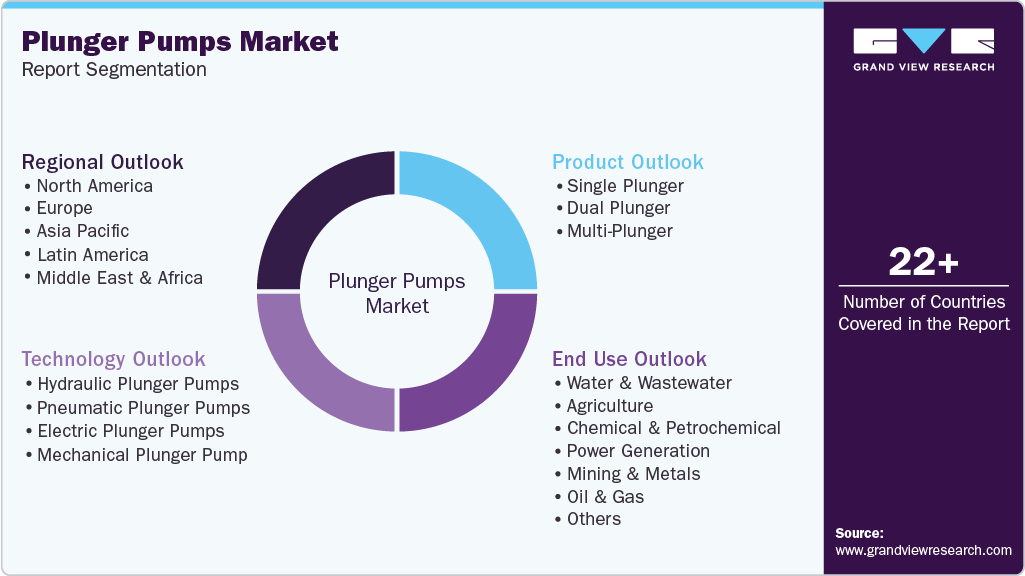
This report forecasts revenue growth at global, regional, and country levels and provides an analysis of the latest industry trends in each of the sub-segments from 2021 to 2033. For this study, Grand View Research has segmented the global plunger pumps market report based on Product, technology, end-use, and region.
 To learn more about this report, Download Free Sample Report
 -
Product Outlook (Revenue, USD Billion, 2021 - 2033)
-
Single Plunger
-
Dual Plunger
-
Multi-Plunger
-
-
Technology Outlook (Revenue, USD Billion, 2021 - 2033)
-
Hydraulic Plunger Pumps
-
Pneumatic Plunger Pumps
-
Electric Plunger Pumps
-
Mechanical Plunger Pump
-
-
End Use Outlook (Revenue, USD Billion, 2021 - 2033)
-
Water & Wastewater
-
Agriculture
-
Chemical & Petrochemical
-
Power Generation
-
Mining & Metals
-
Oil & Gas
-
Pharmaceutical & Biotechnology
-
Others
-
-
Regional Outlook (Revenue, USD Billion, 2021 - 2033)
-
North America
-
U.S.
-
Canada
-
Mexico
-
-
Europe
-
Germany
-
France
-
Italy
-
Spain
-
UK
-
-
Asia Pacific
-
China
-
India
-
Japan
-
South Korea
-
Australia
-
-
Latin America
-
Brazil
-
Argentina
-
-
Middle East & Africa
-
Saudi Arabia
-
UAE
-
South Africa
-
-
Research Methodology
The plunger pumps market figures in this report are based on a proven research process that combines executive interviews with secondary research from proprietary databases, company filings, and recognized regulatory and institutional sources. Market size is built through value-chain sizing - reconciling supply-side and demand-side estimates - and triangulated with bottom-up and top-down approaches. Every estimate passes multiple levels of expert validation before publication, with each plunger pumps segment quantified using the revenue-capture definitions in the table below.
Segment Definition
Product
Revenue Capture Definition
Single Plunger
Revenue generated from the sale of plunger pumps equipped with a single reciprocating plunger, primarily used for applications requiring controlled fluid delivery, moderate flow rates, and relatively simple pump configurations.
Dual Plunger
Revenue generated from the sale of plunger pumps incorporating two reciprocating plungers, providing improved flow continuity, greater pumping capacity, and reduced pulsation for a range of industrial and process applications.
Multi-Plunger
Revenue generated from the sale of plunger pumps equipped with multiple plungers, typically used for high-pressure and high-flow applications requiring continuous operation, enhanced reliability, and stable fluid delivery.
Technology
Revenue Capture Definition
Hydraulic Plunger Pumps
Revenue generated from the sale of plunger pumps driven by hydraulic power systems, used where high force, controlled operation, and compatibility with existing hydraulic equipment are required.
Pneumatic Plunger Pumps
Revenue generated from the sale of plunger pumps powered by compressed air, particularly for applications requiring flexible operation or use in environments where electrical drives may be unsuitable.
Electric Plunger Pumps
Revenue generated from the sale of plunger pumps powered by electric motors, widely used for continuous fluid transfer, dosing, cleaning, water treatment, and other industrial applications.
Mechanical Plunger Pump
Revenue generated from the sale of mechanically driven plunger pumps using crankshafts, gearboxes, or similar mechanisms to provide reciprocating motion for high-pressure pumping applications.
End Use
Revenue Capture Definition
Water & Wastewater
Revenue generated from the sale of plunger pumps for water treatment, wastewater processing, desalination, chemical dosing, high-pressure cleaning, and other water-management applications.
Agriculture
Revenue generated from the sale of plunger pumps for irrigation, crop spraying, pesticide and fertilizer application, and other agricultural fluid-handling activities.
Chemical & Petrochemical
Revenue generated from the sale of plunger pumps for chemical transfer, metering, dosing, injection, and high-pressure process applications involving industrial and petrochemical fluids.
Power Generation
Revenue generated from the sale of plunger pumps for high-pressure water systems, boiler-related applications, chemical dosing, cleaning, descaling, and other power-generation processes.
Mining & Metals
Revenue generated from the sale of plunger pumps for high-pressure water supply, metal descaling, mineral processing, equipment cleaning, dust suppression, and other mining and metal-processing operations.
Oil & Gas
Revenue generated from the sale of plunger pumps for well servicing, water and chemical injection, pressure testing, pipeline operations, hydraulic fracturing-related services, and other upstream, midstream, and downstream applications.
Pharmaceutical & Biotechnology
Revenue generated from the sale of plunger pumps for controlled fluid transfer, precision dosing, processing, cleaning, and other applications requiring reliable and hygienic fluid handling.
Others
Revenue generated from the sale of plunger pumps for food & beverage, pulp & paper, automotive, construction, general manufacturing, industrial cleaning, and other specialized applications.
Estimation Model
Layer Name
Key Question
Description
Addressable Demand Base
What is the overall demand for plunger pumps?
Identify the demand for plunger pumps across key industries, applications, product configurations, technologies, and geographic markets. This layer establishes the broad market scope and potential demand for high-pressure fluid-handling equipment.
Installed & Replacement Demand
What portion of demand translates into pump requirements?
Assess the installed base of plunger pumps, replacement requirements, equipment upgrades, capacity additions, and demand from new industrial and infrastructure projects.
Unit Sales & Market Value
How many plunger pumps are sold, and what is their value?
Estimate annual unit sales across product types, technologies, end-use industries, and regions. The analysis also evaluates the corresponding value of pump sales based on the application mix and equipment configurations.
Revenue
What revenue is generated from plunger pump sales?
Calculate the total revenue generated from the sale of plunger pumps across all major product categories, technologies, end-use industries, and geographic markets. Segment-level revenues are aggregated to determine the overall market revenue.
Delivered Customizations
This report has been delivered with the following In-depth customizations
Client Request
Customization Delivered
Value Adds
Regional Segmentation
Delivered a detailed regional and country-level assessment covering North America, Europe, Asia Pacific, Latin America, and the Middle East & Africa, with a deeper analysis of key markets such as the U.S., Germany, China, India, Saudi Arabia, and Brazil.
Enables the client to identify high-potential geographies, understand regional demand drivers, and evaluate differences in industrial activity, infrastructure development, and application opportunities.
Competitive Benchmarking
Delivered a structured competitive assessment of major plunger pump manufacturers, covering their product portfolios, application focus, operating strategies, competitive positioning, recent product developments, and strengths and weaknesses.
Helps the client compare key market participants, understand competitive positioning, identify areas of differentiation, and assess the strategies adopted by established and specialized players.
Opportunity Assessment
Delivered an opportunity assessment across product type, technology, end-use industry, and regional markets, supported by market drivers, restraints, growth opportunities, segment trends, and application-level analysis.
Helps identify the most attractive growth pockets, prioritize target segments and applications, and support strategic decisions related to market entry, product development, and expansion.
Frequently Asked Questions About This Report
The global plunger pumps market size was estimated at USD 3.6 billion in 2025 and is expected to be USD 3.8 billion in 2026.
The global plunger pumps market, in terms of revenue, is expected to grow at a compound annual growth rate of 5.1% from 2026 to 2033 to reach USD 5.4 billion by 2033.
The global plunger pumps market is driven by rising demand for high-pressure and precise fluid handling across oil & gas, water & wastewater, chemical processing, power generation, mining, and industrial applications. Increasing investments in water treatment, desalination, industrial infrastructure, and energy projects are further supporting market growth.
Asia Pacific was the largest regional market in 2025, accounting for 33.2% of global revenue. Rapid industrialization, expanding manufacturing and chemical industries, infrastructure development, and increasing investments in water treatment and energy projects support the region's leading position.
China held the largest country-level market share in 2025. Its extensive manufacturing base, chemical and petrochemical industries, power generation capacity, water infrastructure, and large industrial equipment demand contribute to its leading position in the global market.
The multi-plunger segment dominated the market in 2025, accounting for the largest revenue share of 54.5%. Its strong position is supported by its ability to deliver high pressure and flow rates with reliable performance in demanding industrial applications.
Electric plunger pumps held the largest share in 2025, accounting for 45.7% of market revenue. Their broad industrial applicability, ease of integration with existing electrical systems, and suitability for continuous-duty operations contribute to their leading position.
The oil & gas segment led the market in 2025 with a 25.5% revenue share. Extensive use of high-pressure pumps for well servicing, fluid injection, pressure testing, pipeline operations, and other upstream and downstream activities supports demand from the sector.
Some of the key players operating in the global plunger pumps market include LEWA GmbH; KSB SE & Co. KGaA; Flowserve Corporation; Dover Corporation; ITT Flow Technologies; Cat Pumps; KAMAT; Hammelmann GmbH; URACA GmbH & Co. KG; WOMA GmbH; Ruhrpumpen Group; Interpump Group S.p.A.; Peroni Pompe S.p.A.; Milton Roy (Ingersoll Rand); National Oilwell Varco (NOV).
About the Author(s)
Advanced Interior Materials Research Team
Advanced Materials · Advanced Interior MaterialsThis report was authored by the advanced interior materials research team at Grand View Research - comprising two research analysts, one senior research analyst, and one industry expert - with specialized expertise in the advanced interior materials segment of the advanced materials industry. All findings are based on proprietary advanced materials databases, executive interviews, and regulatory analysis, subject to internal peer review prior to publication.
Last Updated:
Speak to Analyst

Customize this report to your needs - add regions, segments, or data points, with 20% free customization.
Or view our licence options:


ISO 9001:2015 & 27001:2022 Certified
We are GDPR and CCPA compliant! Your transaction & personal information is safe and secure. For more details, please read our privacy policy.


