
- Home
- »
- Plastics, Polymers & Resins
- »
-
Polyethylene Vapor Barrier Films For Under Slab Market Report, 2033GVR Report cover

Polyethylene Vapor Barrier Films For Under Slab Market (2026 - 2033)
Size, Share & Trends Analysis Report By Thickness, By Product (HDPE, LLDPE), By Application (New Construction, Refurbishment), By End Use, By Grade, By Region, And Segment Forecasts
Market Size, 2025
$1.8BMarket Estimate, 2026
$1.9BMarket Forecast, 2033
$2.7BCAGR, 2026–2033
5.0%Polyethylene Vapor Barrier Films for Under Slab Market Summary
The global polyethylene vapor barrier films for under slab market size was valued at USD 1.8 billion in 2025 and is projected to grow from USD 1.9 billion in 2026 to USD 2.7 billion by 2033, at a CAGR of 5.0% from 2026 to 2033. Asia Pacific dominated the polyethylene vapor barrier films for under slab market, accounting for the largest revenue share of 53.9% in 2025. Growing adoption of polyethylene vapor barrier films across residential, commercial, and industrial construction is driving market growth due to increasing awareness of moisture control, stricter building codes, and rising demand for durable foundation protection.
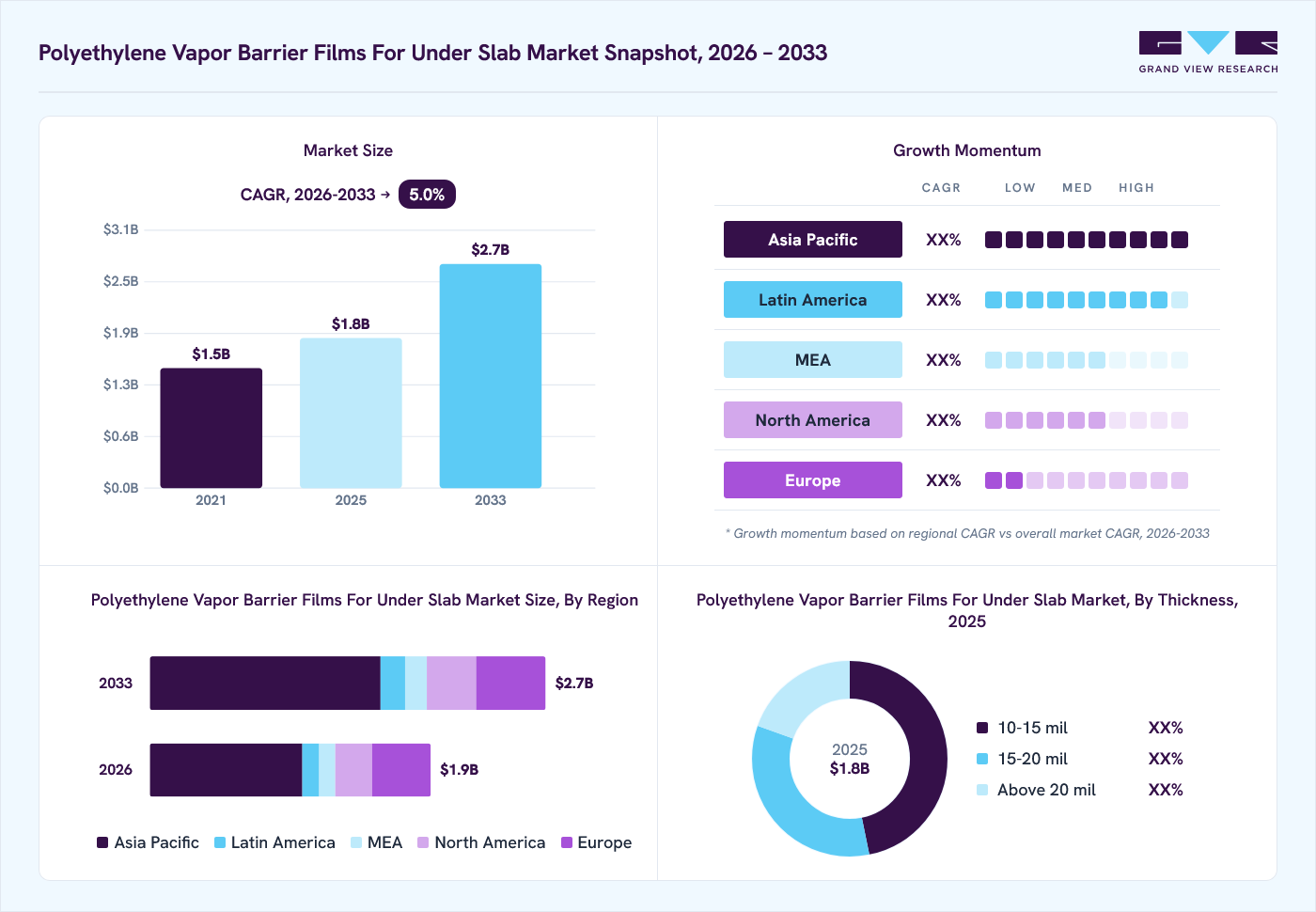 Source: Grand View Research, IR Documents, Primary Interviews, Paid DatabasesTo learn more about this report,
 Download Free Sample Report
Key Market Trends & Insights
- By grade: Concrete segment held the largest market share of 68.9% in 2025.
- By end use: Non-residential segment held the largest market share of 67.5% in 2025.
- By product: Linear low density segment held the largest market share of 66.1% in 2025.
- By thickness: 10-15 mil segment held the largest market share of 46.7% in 2025.
- By application: New construction segment held the largest market share of 71.4% in 2025.
Regional Highlights
- Largest regional market: Asia Pacific (53.9% revenue share, 2025)
- By country: China held the largest market share in 2025.
Market Size & Forecast
- Market size in 2025: USD 1.8 Billion
- Estimated market size in 2026: USD 1.9 Billion
- Projected market size by 2033: USD 2.7 Billion
- CAGR (2026-2033): 5.0%
Prism AI by Grand View Research Free to tryAsk a question about the polyethylene vapor barrier films for under slab marketTry asking✓Every figure cited from GVR research Prefer the report? Download free sample →
The growing construction activities are significantly fueling the growth of the market. Polyethylene (PE) vapor barrier films are widely used in the construction industry for under-slab applications to block water vapors from the ground underneath a building. Expanding sustainable construction practices further support adoption as recyclable polyethylene films improve indoor air quality, prevent mold and structural deterioration, and provide long-term moisture resistance, making them an essential component in modern under-slab construction systems. These films play a major role in mitigating damage caused by trapped moisture below flooring and foundation, which, in the long term, results in the formulation of mold and mildew, releasing airborne mold spores that can lead to serious respiratory ailments and deterioration of building materials.The polyethylene vapor barrier films for under-slab are specialized layers of polyethylene material designed to prevent moisture from seeping into buildings through the ground. These films act as an effective shield, safeguarding the foundation of structures from the harmful effects of moisture, such as mold growth, rot, and structural deterioration. The rising recognition of the importance of controlling moisture in construction is driving the markets’ growth. Professionals in the industry are increasingly aware of the detrimental impact that moisture can have on buildings, especially over time. As the understanding of its risks spreads, the demand for polyethylene vapor barrier films grows as a solution to prevent moisture-related problems, ensuring the longevity and integrity of structures. These films help maintain indoor air quality, further supporting their widespread adoption.
 To learn more about this report, Download Free Sample Report
In addition, the growing interest in sustainable building practices further contribute to the expansion of the global polyethylene vapor barrier films for under-slab industry. Polyethylene vapor barrier films are often made from recycled materials and can be recycled after use, making them an environmentally conscious choice for construction projects. With consumers and businesses placing greater emphasis on sustainability, the demand for eco-friendly materials such as polyethylene vapor barrier films has surged.
Furthermore, government regulations and building codes are reinforcing the demand for these films. In many areas, local laws require the installation of vapor barriers in construction projects to address potential moisture issues and ensure the safety and stability of buildings. These regulations create a favorable environment for the market, driving the continued adoption of polyethylene vapor barrier films as a necessary component in modern construction.
Market Dynamics
Polyethylene vapor barrier films for under-slab use are specified to control moisture migration, protect slab-to-floor interfaces, and reduce foundation-related deterioration in moisture-sensitive construction. Demand is concentrated in non-residential and new construction projects, where code compliance, puncture resistance, and long-term slab performance influence purchasing decisions. Residential demand remains tied to durable homebuilding in humid or damp-soil locations. Asia Pacific leads on construction intensity, while North America and Europe remain important specification markets. The commercial structure is shaped by resin suppliers, specialty film converters, and construction distributors competing on thickness, durability, and installation reliability.
The key driver is the growing specification of moisture-control films in concrete-intensive building projects where trapped vapor can compromise flooring adhesion, raise alkalinity at the slab interface, and damage finished surfaces. As a result, builders and specifiers increasingly treat under-slab films as a standard protective layer rather than an optional material. The market therefore benefits from recurring demand in commercial and industrial construction, where low permeance and puncture resistance are central buying criteria.
This demand is reinforced by the preference for product grades that can maintain performance under field conditions and deliver a practical balance of cost and durability. LLDPE remains attractive in standard builds because of flexibility and strength, while HDPE gains relevance where higher barrier integrity is required. The market also benefits from the shift toward thicker films in harsher moisture environments, which supports higher value per project and improves revenue capture for suppliers with specification-led offerings.
A major restraint is the fragmented nature of slab specification, which varies by grade, thickness, application, and regional building practice. This limits product standardization and keeps procurement highly price-sensitive in many projects. Because HDPE and LLDPE products often compete on closely compared performance criteria, suppliers face pressure to defend margin through service, certification, and channel access rather than through price alone. Smaller players are especially exposed to this structure.
The clearest opportunity lies in premium film systems for high-moisture or high-risk construction sites, especially above 20 mil products and foundation-focused applications. Suppliers that offer higher puncture resistance, better long-term moisture exclusion, and project-specific support can move beyond commodity film sales. There is also room for recycled-content and eco-positioned products where sustainability criteria increasingly influence construction material selection.
Analyst Perspective
The market is moving from a largely volume-driven construction consumables category toward a more value-led specification market. Over the next 5 to 10 years, demand should remain anchored by non-residential slabs, new construction, and moisture-sensitive foundation work, while refurbishment and residential applications add stable secondary growth. Suppliers that win will be those that combine resin security, film performance, and application-specific support with stronger distribution and compliance capability. Sustainability will matter more through recycled-content offerings, lower-waste product design, and code-aligned material positioning. At the same time, the market will remain exposed to resin volatility, price compression, and fragmented specification standards.
Thickness Insights
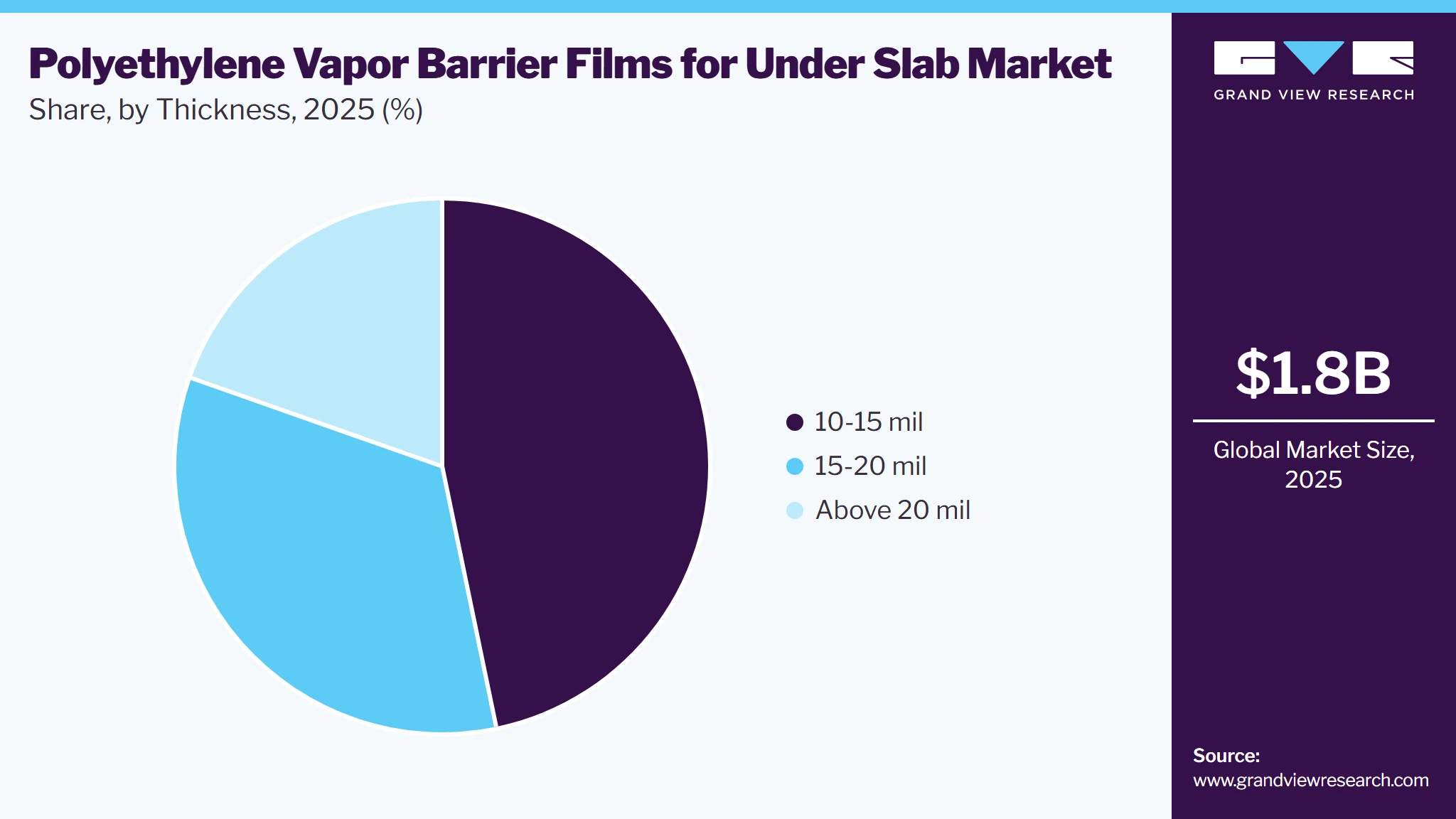
Based on thickness, the 10-15 mil segment led the market with the largest revenue share of 46.7% in 2025. The 10-15 mil polyethylene vapor barrier films are considered to be adequately effective in most environments for preventing the penetration of moisture and water vapor through the slab into the structure, which reduces fungus, mildew, and mold growth. These mid-range thickness films offer a balanced combination of durability and cost-effectiveness, making them ideal for standard moisture protection needs. Furthermore, the rising focus on energy efficiency and sustainable building practices further boosts the demand for these films in under-slab applications.
 To learn more about this report, Download Free Sample Report
Above 20 mil thickness segment is expected to grow at a CAGR of 5.7% over the forecast period, due to the growing need for superior vapor barriers in high-moisture areas and harsh environmental conditions. In addition, these thicker films offer enhanced protection, ensuring longer-lasting moisture control, especially in industrial and large-scale construction projects. Furthermore, the rising awareness of foundation durability, coupled with the increasing adoption of high-performance materials in building designs, drives the demand for above 20 mil polyethylene vapor barrier films for under-slab applications.
Product Insights
Based on product, the linear low density polyethylene (LLDPE) polyethylene vapor barrier films for under slab segment led the market with the largest revenue share of 66.1% in 2025. This growth can be attributed to its flexibility, strength, and excellent moisture resistance. LLDPE offers superior puncture resistance and is cost-effective, making it ideal for residential and commercial construction applications where durability and performance are key priorities in moisture control.
High-density polyethylene segment is expected to grow at a CAGR of 5.3% over the forecast period. High-density polyethylene has great moisture-resistant characteristics and is generally preferred if the barrier is expected to be subjected to heavy foot and vehicle traffic. It also offers strength and lower permeance for a higher level of integrity in under the slab applications. In addition, the market growth is driven by its high strength, durability, and exceptional resistance to moisture and chemicals.
Application Insights
Based on application, the new construction polyethylene vapor barrier films for under slab segment led the market with the largest revenue share of 71.4% in 2025. This growth can be attributed to the rising concerns over trapped moisture leading to mold and fungus growth. PE vapor barrier films for Under Slab applications are being preferred in new construction owing to their low-moisture vapor permeability, decay resistance, high puncture resistance, and tensile strength, among others, which in turn drives the markets’ growth. Furthermore, the increasing population in urban areas, coupled with favorable government initiatives for providing affordable homes, is expected to fuel the growth of new construction projects, propelling the demand for polyethylene vapor barrier films for Under Slab applications.
The refurbishment application segment is expected to grow at a CAGR of 4.9% from 2026 to 2033, driven by the increasing need to renovate and maintain older buildings, particularly in areas prone to moisture problems. Furthermore, as structures age, the risk of moisture damage rises, leading to mold, mildew, and structural decay. Polyethylene vapor barrier films are being used in refurbishment projects to restore moisture protection, improve indoor air quality, and extend the lifespan of buildings, making them a critical component in renovation efforts.
Grade Insights
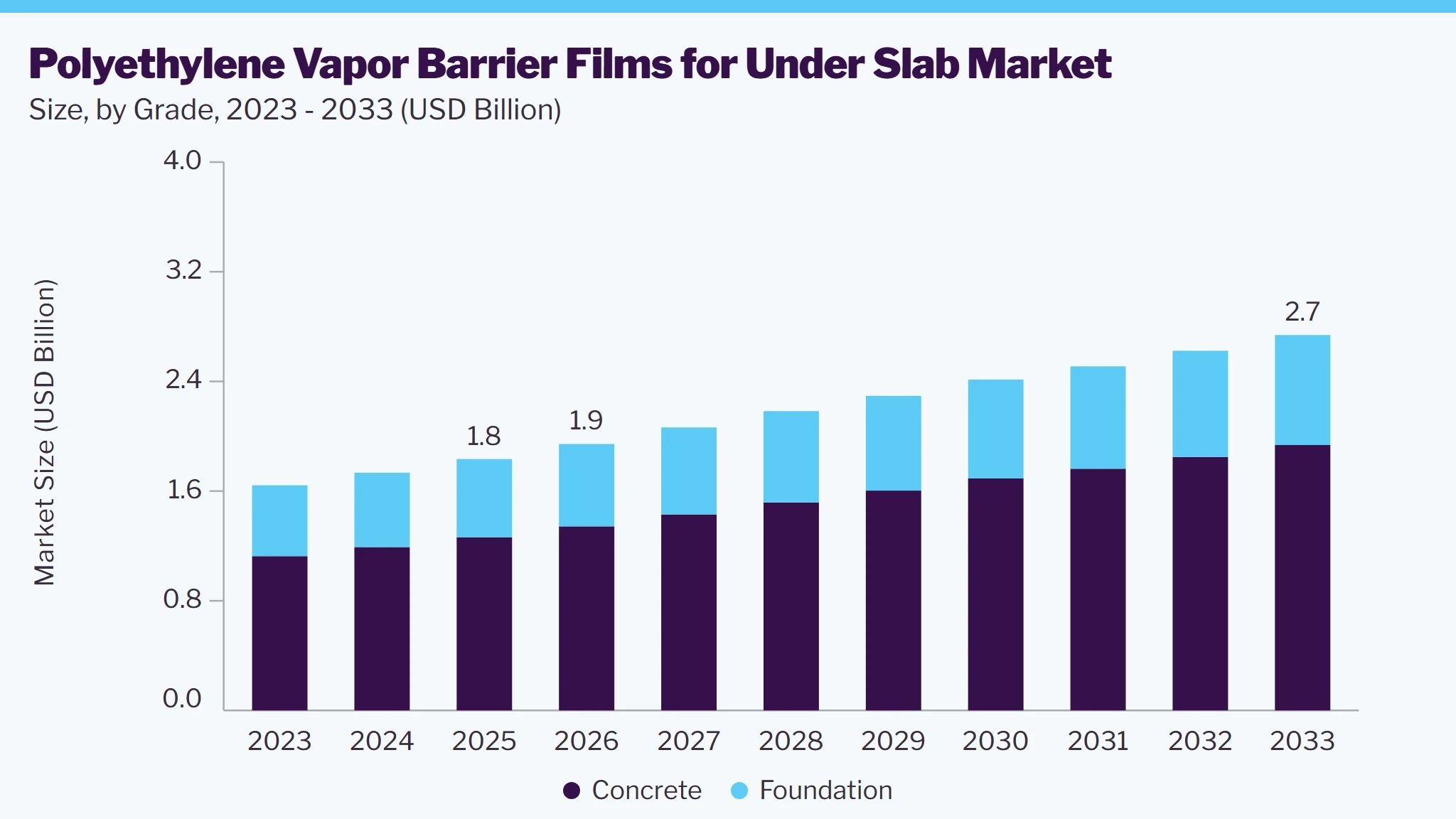
Based on grade, the concrete polyethylene vapor barrier films for under slab segment led the market with the largest revenue share of 68.9% in 2025. Rising infrastructural development in the residential and commercial sectors has propelled the demand for vapor barrier films made of polyethylene. Water vapors diffuse through concrete, raising the pH level and alkalinity of the slab. Higher pH and alkalinity at the floor adhesive to slab interface can compromise the adhesion of expensive finished flooring systems. This has been driving the adoption of PE vapor barrier films for concrete applications.
The foundation grade segment is expected to grow at the CAGR of 4.8% over the forecast period, primarily driven by the increasing focus on structural integrity and moisture protection in foundation construction. Polyethylene vapor barrier films in foundation applications effectively prevent moisture from seeping into the building, which can cause mold, rot, and weakening of the structure. Furthermore, with a rising awareness of the importance of long-term durability and moisture control in foundations, the demand for high-quality vapor barrier films in foundation-grade applications continues to grow.
End Use Insights
Based on end use, the non-residential polyethylene vapor barrier films for under slab segment led the market with the largest revenue share of 67.5% in 2025. The segment is anticipated to maintain its lead over the forecast period. The non-residential end use segment includes the consumption of polyethylene vapor barrier films for slabs in commercial and industrial buildings. In addition, the demand for PE vapor barrier films from commercial and industrial building construction is expected to grow over the forecast period due to gas and moisture migration resistance, puncture resistance, low water vapor permeance even after exposure to severe field conditions, and other beneficial properties of polyethylene vapor barrier films.
The residential end use segment is project to grow at a CAGR of 5.8% over the forecast period, due to the rising demand for durable and energy-efficient homes. As homeowners seek to enhance the longevity of their properties, the need for effective moisture control solutions has increased. In addition, polyethylene vapor barrier films are crucial in preventing moisture-related issues such as mold and structural damage, particularly in areas with high humidity or damp soil conditions. This growing awareness of home protection and energy efficiency fuels their adoption in residential construction.
Regional Insights
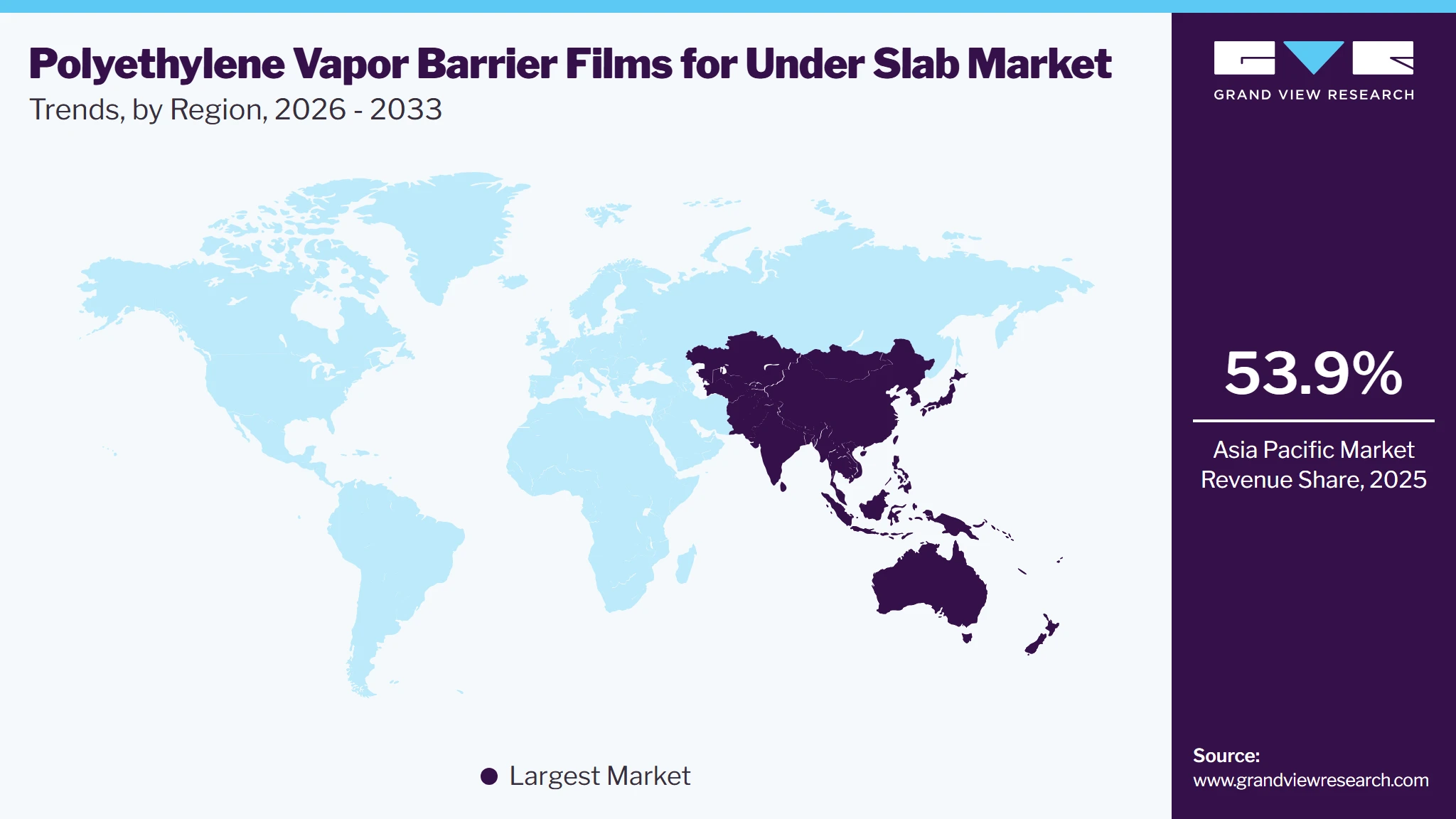
Asia Pacific dominated the polyethylene vapor barrier films for under slab market with the largest revenue share of 53.9% in 2025. Growing construction activities are expected to boost the demand for polyethylene vapor barrier films for Under Slab in the region. Furthermore, the industrial and manufacturing sectors in Asia Pacific have been attracting significant investments from leading MNCs. The availability of cheap labor and close proximity to raw material suppliers are further luring investors to the region.
 To learn more about this report, Download Free Sample Report
China Polyethylene Vapor Barrier Films For Under Slab Market Trends
The polyethylene vapor barrier films for under slab market in China accounted for the largest market revenue share in the Asia Pacific in 2025. The growth of the polyethylene vapor barrier films for under-slab market in China is driven by rapid urbanization and the increasing demand for residential and commercial infrastructure. With construction booming, there is a growing focus on moisture control and energy-efficient building practices. Furthermore, government regulations promoting sustainable construction and building durability are further fueling the adoption of vapor barrier films, ensuring that buildings meet modern standards for long-lasting performance and protection against environmental factors.
Latin America Polyethylene Vapor Barrier Films For Under Slab Market Trends
Latin America polyethylene vapor barrier films for under-slab market is expected to grow at a CAGR of 6.5% over the forecast period, owing to the region's rising construction activities, especially in countries such as Brazil and Mexico. In addition, as urbanization increases, there is a greater need for moisture control in buildings to prevent mold and damage, particularly in humid areas. Furthermore, the growing awareness of sustainable building materials and the need to comply with updated building codes has prompted the use of polyethylene vapor barriers in both residential and commercial projects.
Europe Polyethylene Vapor Barrier Films For Under Slab Market Trends
The polyethylene vapor barrier films for under-slab market in Europe is expected to witness a significant growth over the forecast period, due to stringent building regulations aimed at improving energy efficiency and moisture control. In addition, with increasing concerns about climate change and sustainability, European countries are prioritizing eco-friendly construction methods. Furthermore, the demand for high-performance polyethylene vapor barriers is also rising as older buildings undergo refurbishment, ensuring compliance with modern standards for durability, energy efficiency, and moisture protection, especially in regions with high humidity levels.
North America Polyethylene Vapor Barrier Films For Under Slab Market Trends
North America polyethylene vapor barrier films for under-slab market held a significant revenue share in 2025, driven by the demand for more resilient and energy-efficient homes and commercial properties. In addition, as awareness of moisture-related issues such as mold and structural damage grows, the need for effective vapor barriers in construction projects is becoming more apparent. Furthermore, building codes and environmental regulations that prioritize moisture control and sustainability in construction are encouraging widespread adoption of polyethylene vapor barrier films across the region.
The polyethylene vapor barrier films for under-slab market in the U.S. led the North American market and accounted for the largest revenue share in 2024, owing to the increased demand for durable and energy-efficient buildings. In addition, homeowners and builders are increasingly recognizing the importance of moisture control to protect against damage to foundations, leading to greater adoption of vapor barriers. Furthermore, the U.S. also benefits from robust construction activity, particularly in regions with high humidity or soil moisture.
Key Polyethylene Vapor Barrier Films For Under-Slab Company Insights
Key companies in the global polyethylene vapor barrier films for under-slab industry include Dow Inc., Poly-America, L.P., A. Proctor Group Ltd., and others. These players adopt strategies such as product innovation, focusing on improving durability, moisture resistance, and eco-friendliness. In addition, they also emphasize strategic partnerships, expanding distribution networks, and adhering to regulatory standards to meet growing demand for sustainable and efficient construction materials.
-
SABIC produces innovative polyethylene vapor barrier films, catering to various construction applications, including under-slab moisture control. Operating in the chemicals and advanced materials segment, the company focuses on offering sustainable and durable solutions that enhance building performance, protect foundations, and improve energy efficiency in both residential and commercial construction sectors.
-
Reef Industries produces high-quality polyethylene films that provide moisture protection for foundations in construction projects. Operating in the industrial and construction materials segment, Reef Industries focuses on offering reliable, durable, and cost-effective vapor barrier solutions, helping to safeguard structures against moisture-related damage while meeting regulatory and performance standards in the construction industry.
Key Polyethylene Vapor Barrier Films For Under Slab Companies:
The following key companies have been profiled for this study on the polyethylene vapor barrier films for under slab market.
-
Exxon Mobil Corporation
-
LyondellBasell Industries Holdings B.V.
-
Repsol
-
SABIC
-
Dow Inc.
-
Poly-America, L.P.
-
Proctor Group Ltd.
-
Reef Industries
-
Layfield Group
-
RKW Group. Ltd.
-
W. R. Meadows, Inc.
-
Cover-Tech Inc.
Competitive Benchmarking
Category
Operating Strategies
Competitive Edge
Weakness
Established Players ( Exxon Mobil Corporation, LyondellBasell Industries Holdings B.V., Repsol, SABIC, Dow Inc., Poly-America, L.P., Proctor Group Ltd., RKW Group. Ltd., W. R. Meadows, Inc.)
- Maintain broad resin and film positions across upstream and downstream value chains.
- Use product innovation, distribution expansion, and specification support to defend project access.
- Target commercial and industrial construction channels with code-aligned barrier solutions.
- Larger scale and stronger raw material integration.
- Wider brand recognition in construction and polymer supply.
- Better ability to support technical specifications, certifications, and project continuity.
- Higher exposure to resin-linked pricing pressure.
- Slower reaction to niche or regional product requests.
- Greater overhead and less flexibility in highly localized channels.
Emerging Players (Reef Industries, Layfield Group, Cover-Tech Inc.)
- Focus on niche construction-film formats and targeted project accounts.
- Compete through responsiveness, custom sizes, and distributor-led reach.
- Emphasize practical value and regional service over broad portfolio scale.
- Faster customization and shorter decision cycles.
- Stronger fit for local or specialty contractor requirements.
- More agile pricing and product adaptation in smaller accounts
- Limited scale versus integrated majors.
- Weaker negotiating leverage on resin procurement.
- Lower visibility in large national specification programs.
Recent Developments
-
In January 2025, LyondellBasell was selected by Indian Oil Corporation Ltd. (IOCL) for its advanced HDPE technology, marking a significant step in enhancing polyethylene production capabilities. This partnership is expected see the development of high-density polyethylene (HDPE) resins that can be utilized in a range of industries, including packaging, infrastructure, and agriculture. This advanced HDPE technology can also be integrated into the production of Polyethylene Vapor Barrier Films for Under-Slab applications, providing improved durability and environmental benefits.
-
In October 2024, ExxonMobil Chemical highlighted a breakthrough in thermoformed packaging in collaboration with Reifenhäuser focused on creating a fully polyethylene-based (PE) packaging solution that offers high functionality and optics while ensuring recyclability. This innovation is significant for the Polyethylene Vapor Barrier Films for Under-Slab Market, offering a potential for more sustainable solutions in construction applications. The PE thermoformed packaging utilizes advanced water quenching technology, promoting both performance and eco-friendly attributes.
Polyethylene Vapor Barrier Films For Under Slab Market Report Scope
Report Attribute
Details
Market size in 2025
USD 1.8 billion
Estimated market size in 2026
USD 1.9 billion
Projected market size by 2033
USD 2.7 billion
Growth rate
CAGR of 5.0% from 2026 to 2033
Base year for estimation
2025
Historical data
2021 - 2024
Forecast period
2026 - 2033
Quantitative units
Revenue in USD million/billion, volume in kilotons, and CAGR from 2026 to 2033
Report coverage
Revenue forecast, company ranking, competitive landscape, growth factors, and trends
Segments covered
Grade, end-use, application, product, thickness, and region
Regional scope
North America, Asia Pacific, Europe, Latin America, Middle East And Africa
Country scope
U.S., Canada, Mexico, Germany, France, Italy, UK, China, Japan, India, Australia, Brazil, Argentina, Colombia, Saudi Arabia, UAE, and South Africa
Key companies profiled
Exxon Mobil Corporation; LyondellBasell Industries Holdings B.V.; Repsol; SABIC; Dow Inc.; Poly-America, L.P.; Proctor Group Ltd.; Reef Industries; Layfield Group; RKW Group. Ltd.; W. R. Meadows, Inc.; Cover-Tech Inc.
Customization scope
Free report customization (equivalent to up to 8 analysts' working days) with purchase—addition or alteration to country, regional & segment scope.
Pricing and purchase options
Avail customized purchase options to meet your exact research needs. Explore purchase options
Global Polyethylene Vapor Barrier Films For Under Slab Market Report Segmentation
This report forecasts revenue growth at global, regional, and country levels and analyzes the latest industry trends in each sub-segment from 2021 to 2033. For this study, Grand View Research has segmented the global polyethylene vapor barrier films for Under Slab market report based on thickness, product, application, end use, grade, and region.
-
Thickness Outlook (Volume, Kilotons; Revenue, USD Million, 2021 - 2033)
-
10-15 mil
-
15-20 mil
-
Above 20 mil
-
-
Product Outlook (Volume, Kilotons; Revenue, USD Million, 2021 - 2033)
-
High Density Polyethylene (HDPE)
-
Linear Low Density Polyethylene (LLDPE)
-
Higher Alpha-olefin Linear Low-Density Polyethylene (HAOLLDPE)
-
Metallocene Linear Low-density Polyethylene (mLLDPE)
-
-
-
Application Outlook (Volume, Kilotons; Revenue, USD Million, 2021 - 2033)
-
New Construction
-
Refurbishment
-
-
End Use Outlook (Volume, Kilotons; Revenue, USD Million, 2021 - 2033)
-
Residential
-
Single Family
-
Multi-family
-
-
Non-Residential
-
-
Grade Outlook (Volume, Kilotons; Revenue, USD Million, 2021 - 2033)
-
Concrete
-
Foundation
-
-
Regional Outlook (Volume, Kilotons; Revenue, USD Million, 2021 - 2033)
-
North America
-
U.S.
-
Canada
-
Mexico
-
-
Europe
-
Germany
-
UK
-
France
-
Italy
-
-
Asia Pacific
-
China
-
Japan
-
India
-
-
Latin America
-
Brazil
-
-
Middle East and Africa
-
GCC
-
South Africa
-
-
Research Methodology
The polyethylene vapor barrier films for under slab market figures in this report are based on a proven research process that combines executive interviews with secondary research from proprietary databases, company filings, and recognized regulatory and institutional sources. Market size is built through value-chain sizing - reconciling supply-side and demand-side estimates - and triangulated with bottom-up and top-down approaches. Every estimate passes multiple levels of expert validation before publication, with each polyethylene vapor barrier films for under slab segment quantified using the revenue-capture definitions in the table below.
Segment Definition
Segment - Grade
Revenue capture definition
Concrete
Revenue is captured when films are specified under slab pours for concrete floors, where moisture vapor migration, adhesive failure risk, and slab durability requirements drive purchase of standard or premium PE barrier grades.
Foundation
Revenue is captured through foundation applications where buyers prioritize long-life moisture exclusion, structural protection, and heavier gauges that support perimeter and base-layer performance.
Segment - End-Use
Revenue capture definition
Residential
Revenue is generated from single-family and multifamily construction where moisture control, indoor comfort, and long-term floor protection influence product choice in cost-sensitive but specification-driven projects.
Non-Residential
Revenue is captured in commercial and industrial buildings where procurement favors low permeance, high puncture resistance, and more demanding slab protection standards.
Segment - Application
Revenue capture definition
New Construction
Revenue is earned during original slab installation, when vapor barriers are embedded as a planned component of the build and are more likely to be specified as part of the project bill of materials.
Refurbishment
Revenue is generated when aging buildings are renovated and moisture protection is upgraded to address slab deterioration, mold risk, and performance failures in existing structures.
Segment - Product
Revenue capture definition
High Density Polyethylene (HDPE)
Revenue is captured from projects requiring higher integrity, stronger moisture resistance, and improved performance under heavier traffic or more severe field exposure.
Linear Low Density Polyethylene (LLDPE)
Revenue is captured through the dominant flexible-film route, where buyers value puncture resistance, strength, and cost-effective performance in mainstream residential and commercial slabs.
Segment - Thickness
Revenue capture definition
10-15 mil
Revenue is captured from standard slab projects that need a balanced mix of durability and affordability, making this the common commercial specification tier.
15-20 mil
Revenue is captured from projects that require an intermediate upgrade in barrier strength, typically where performance needs exceed basic residential specifications.
Above 20 mil
Revenue is captured from harsher environments and high-moisture sites where premium protection, longer life, and stronger puncture resistance justify higher film value.
Estimation Model
Layer Name
Key Question
Description
Demand Layer
Why assess demand drivers?
The model starts with grade and application demand because revenue is created at the slab specification stage, where moisture risk, project type, and compliance needs define material selection.
Product Layer
Why differentiate product types?
HDPE and LLDPE are separated because flexibility, puncture resistance, and moisture integrity shape pricing power and project preference across different construction conditions.
Thickness Layer
Why analyze thickness tiers?
Thickness is modeled independently because 10-15 mil, 15-20 mil, and above 20 mil products serve distinct performance tiers and create different average selling values.
Geography Layer
Why compare regional demand?
Regional estimation is required because construction intensity, climate exposure, and specification discipline vary sharply across markets, shaping both volume concentration and premium-product adoption.
Delivered Customizations
This report has been delivered with the following In-depth customizations
Client Request
Customization Delivered
Value Adds
Regional split by major construction markets
Expanded the regional discussion to include demand concentration, specification intensity, and construction activity patterns across leading markets, with room to highlight region-specific product preferences and project profiles.
Improves buyer targeting and supports region-wise commercial prioritization.
Thickness-level commercial commentary
Added a thicker-gauge perspective across 10-15 mil, 15-20 mil, and above 20 mil films, showing how durability requirements and moisture risk affect revenue capture.
Strengthens product positioning and pricing analysis.
Company benchmarking by market role
Segmented the profiled companies into mature and emerging groups, with operating strategies, competitive edge, and weaknesses tailored to the under-slab film market structure.
Helps compare scale, channel strength, and competitive positioning.
Frequently Asked Questions About This Report
The polyethylene vapor barrier films for under slab market was estimated at around USD 1.8 billion in the year 2025 and is expected to reach around USD 1.9 billion in 2026.
The polyethylene vapor barrier films for under slab market is expected to grow at a compound annual growth rate of 5.0% from 2026 to 2033 to reach around USD 2.7 billion by 2033.
Some key players operating in the PE vapor barrier films for under slabs market include Exxon Mobil Corporation; LyondellBasell Industries Holdings B.V.; Repsol; SABIC; Dow Inc; DuPont de Nemours, Inc; INEOS AG; BASF SE; LG Chem; Sumitomo Chemical Co., Ltd; among others.
Key factors that are driving the PE vapor barrier films for under slabs market growth include growing construction activities and rising demand for green buildings.
The Asia Pacific polyethylene vapor barrier films for under slab market accounted for the largest share of 53.9% market size in 2025.
India was the leading polyethylene vapor barrier films for under slab market and is expected to grow at a compound annual growth rate of 7.1%.
The linear low density polyethylene (LLDPE) polyethylene vapor barrier films for under slab industry led the polyethylene vapor barrier films for under slab product type market in 2025 with a 66.1% share. Growing demand from residential, commercial, and industrial construction, coupled with advances in multilayer film extrusion, puncture-resistant formulations, and moisture barrier technologies, is accelerating the adoption of low-density polyethylene (LDPE) vapor barrier films for under-slab applications, foundation protection, concrete moisture control, and durable, cost-effective building envelope solutions.
Based on application, the new construction segment accounted for the largest share of 71.4% market size in 2025. Growing residential, commercial, and industrial construction activity, increasing infrastructure development, and rising adoption of moisture-resistant building practices, together with advances in high-performance polyethylene film technologies and stricter building code compliance, are accelerating polyethylene vapor barrier film adoption for new construction, under-slab moisture protection, foundation durability, concrete floor preservation, and long-term structural performance.
Which is the fastest -growing segment in the polyethylene vapor barrier films for under slab market?The concrete segment, based on grade, is expected to grow at a CAGR of 5.4% for the forecast period.
About the Author(s)
Plastics, Polymers & Resins Research Team
Bulk Chemicals · Plastics, Polymers & ResinsThis report was authored by the plastics, polymers & resins research team at Grand View Research - comprising two research analysts, one senior research analyst, and one industry expert - with specialized expertise in the plastics, polymers & resins segment of the bulk chemicals industry. All findings are based on proprietary bulk chemicals databases, executive interviews, and regulatory analysis, subject to internal peer review prior to publication.
Last Updated:
Speak to Analyst

Customize this report to your needs - add regions, segments, or data points, with 20% free customization.
Or view our licence options:


ISO 9001:2015 & 27001:2022 Certified
We are GDPR and CCPA compliant! Your transaction & personal information is safe and secure. For more details, please read our privacy policy.


