
- Home
- »
- Medical Devices
- »
-
Polyhexamethylene Biguanide Dressing Market Report, 2035GVR Report cover

Polyhexamethylene Biguanide Dressing Market (2027 - 2035)
Size, Share & Trends Analysis Report By Product Type (PHMB Gauze (Sheets, Rolls, Packing Strips), PHMB Bacterial Cellulose Dressings), By Application, By End-use, By Distribution Channel, By Region, And Segment Forecasts
Market Size, 2026
$115.4MMarket Estimate, 2027
$126.3MMarket Forecast, 2035
$252.1MCAGR, 2027–2035
9.0%Polyhexamethylene Biguanide Dressing Market Summary
The global polyhexamethylene biguanide dressing market size was valued at USD 115.4 million in 2026 and is projected to grow from USD 126.3 million in 2027 to USD 252.1 million by 2035, at a CAGR of 9.0% from 2027 to 2035. North America dominated the market, accounting a revenue share of 43.0% in 2026. The market is primarily driven by the rising prevalence of chronic wounds, diabetes, and surgical procedures, increasing the demand for effective antimicrobial wound management solutions. Growing emphasis on healthcare-associated infection prevention is encouraging the adoption of polyhexamethylene biguanide (PHMB)-based dressings due to their broad-spectrum antimicrobial properties.
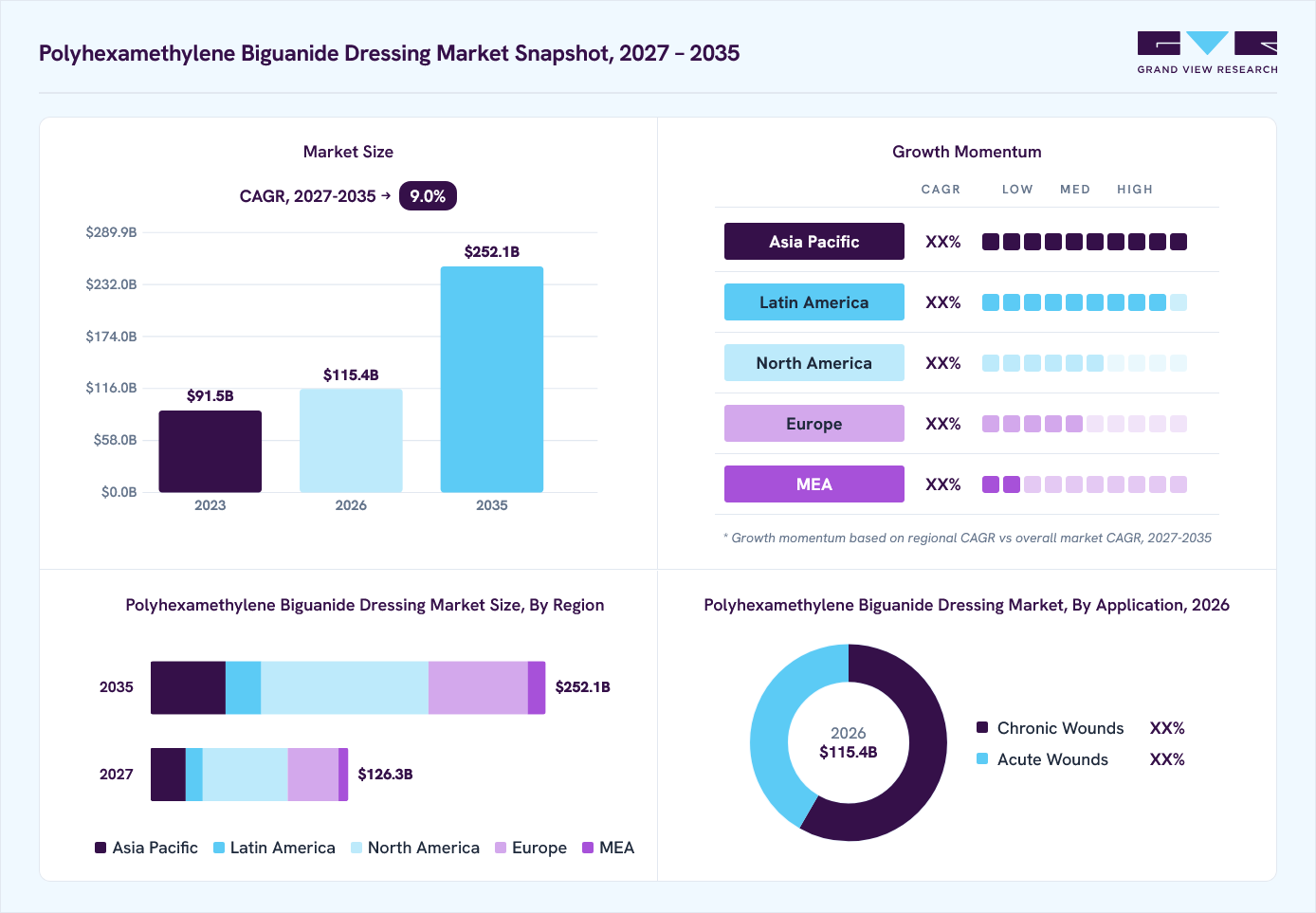 Source: Grand View Research, IR Documents, Primary Interviews, Paid DatabasesTo learn more about this report,
 Download Free Sample Report
Key Market Trends & Insights
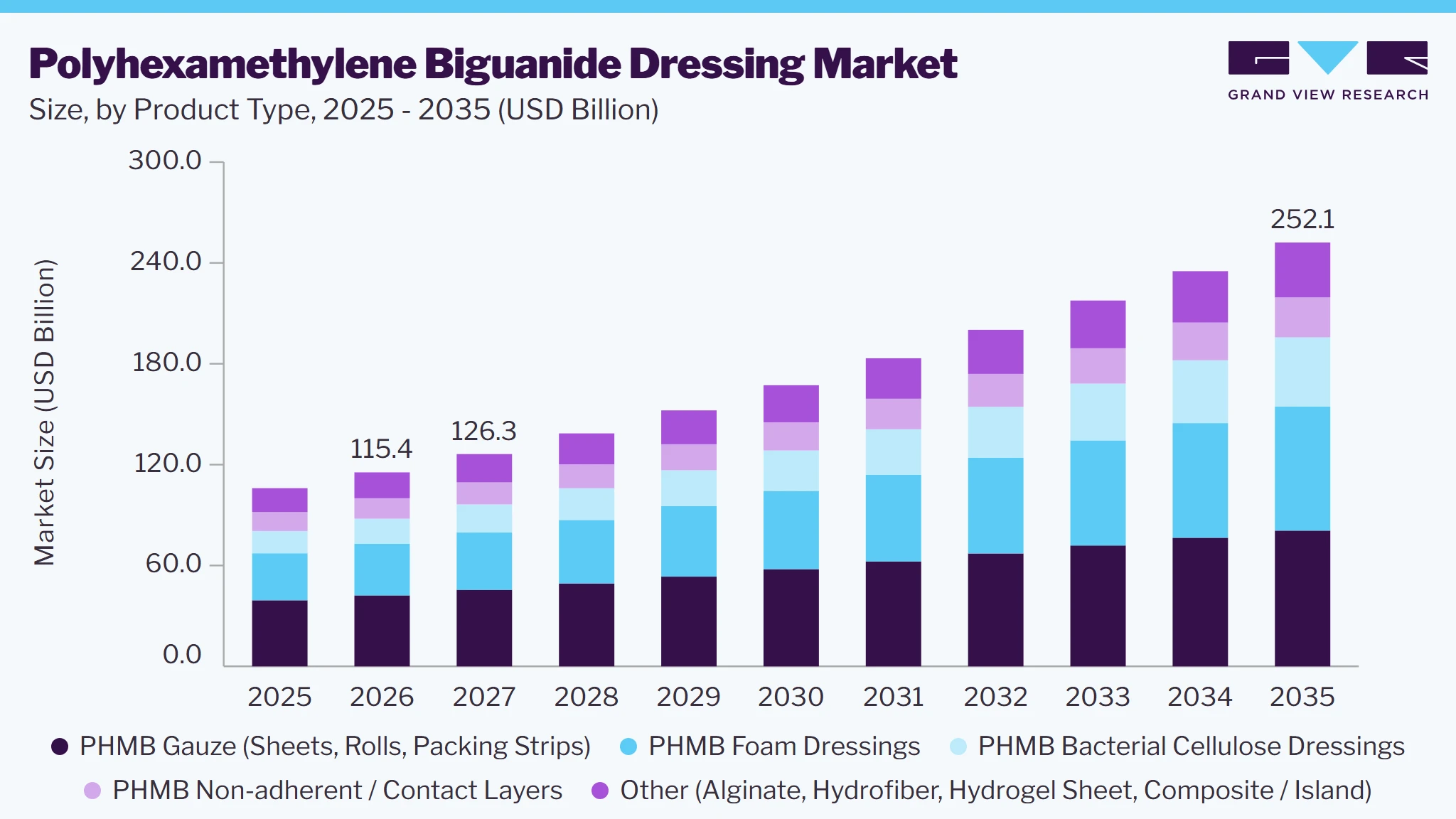
- By product type: PHMB gauze (sheets, rolls, packing strips) segment led the market with the largest revenue share of 36.6% in 2026.
- By application: Chronic wounds segment led the market with the largest revenue share of 58.2% in 2026.
- By end use: Hospitals segment led the market with the largest revenue share of 51.3% in 2026.
- By distribution channel: Institutional sales segment led the market with the largest revenue share of 89.2% in 2026.
Regional Highlights
- Largest regional market: North America (43.0% revenue share, 2026)
- By country: The U.S. held the largest market share in 2026
Market Size & Forecast
- Market Size in 2026: USD 115.4 Million
- Estimation Market Size in 2027: USD 126.3 Million
- Projected Market Size by 2035: USD 252.1 Million
- CAGR (2027-2035): 9.0%
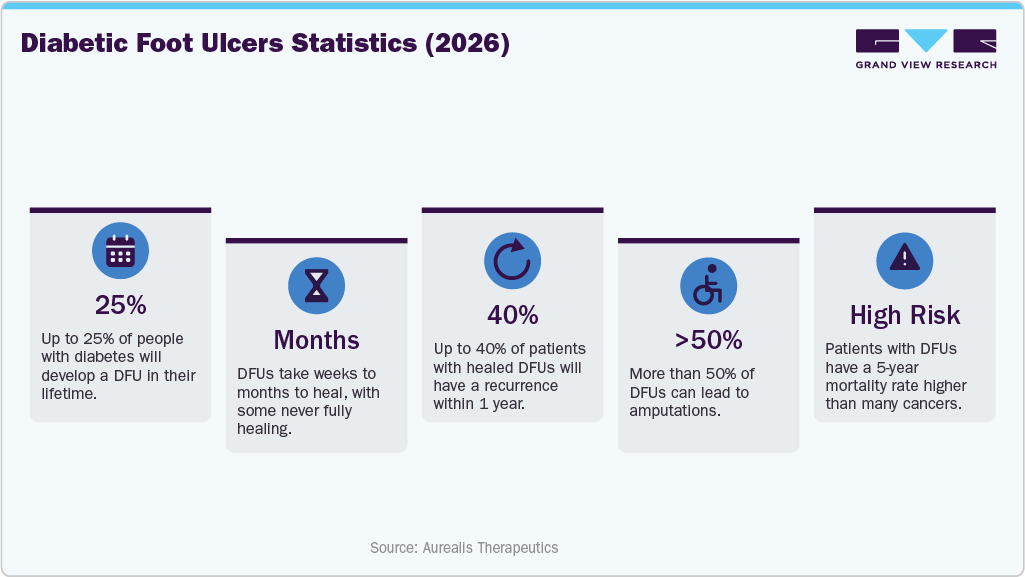
Prism AI by Grand View Research Free to tryAsk a question about the polyhexamethylene biguanide dressing marketTry asking✓Every figure cited from GVR research Prefer the report? Download free sample →The rising prevalence of chronic wounds, particularly diabetic foot ulcers, pressure ulcers, and venous leg ulcers, is driving demand for effective antimicrobial wound management solutions. Increasing diabetes incidence contributes to a growing population susceptible to delayed wound healing, recurrent infections, and prolonged treatment requirements. PHMB dressings help manage microbial contamination through their broad-spectrum antimicrobial properties, supporting their adoption in chronic wound care. Increasing demand for effective infection management and advanced wound care products is expected to support market growth.
 To learn more about this report, Download Free Sample Report
Growing emphasis on healthcare-associated infection (HAI) prevention is increasing the demand for antimicrobial wound care products across hospitals and healthcare facilities. Surgical site infections and wound-related microbial contamination are encouraging healthcare providers to adopt PHMB-based dressings as part of infection prevention and wound management practices. PHMB dressings offer broad-spectrum antimicrobial activity against various microorganisms, supporting their use in managing contaminated and infection-prone wounds. Increasing focus on patient safety and hospital infection control is expected to support market growth. According to the CDC's 2024 National and State HAI Progress Report, approximately 1 in 38 hospitalized patients experienced at least one HAI on any given day in 2023, with an estimated 518,000 HAIs reported in U.S. acute care hospitals.
 To learn more about this report, Download Free Sample Report
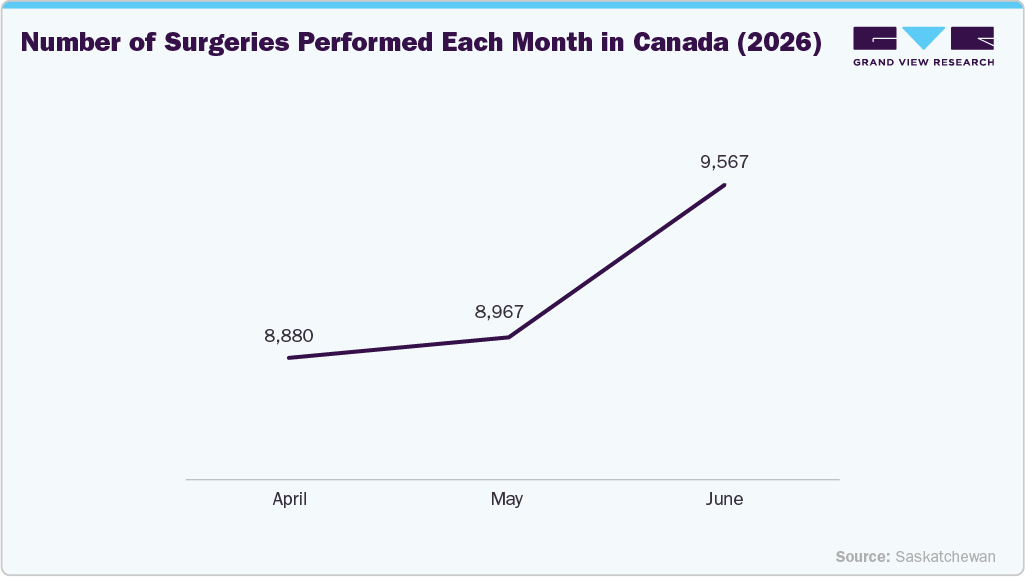
The increasing number of surgical procedures worldwide is driving demand for effective postoperative wound management and infection prevention solutions. Surgical incisions create a risk of microbial contamination and surgical site infections, encouraging healthcare providers to adopt antimicrobial wound dressings. PHMB-based dressings offer broad-spectrum antimicrobial properties and are used in managing surgical wounds, supporting their adoption across hospitals and surgical care facilities. Consequently, rising surgical volumes and growing emphasis on postoperative infection control are expected to support PHMB dressing market growth.
 To learn more about this report, Download Free Sample Report
Market Dynamics
The PHMB dressing market is driven by the rising prevalence of chronic wounds, increasing surgical procedures, and growing emphasis on healthcare-associated infection prevention. Increasing adoption of advanced wound care products and antimicrobial dressing technologies is supporting demand for PHMB-based gauze, foam, and specialized dressings. However, high product costs, competition from alternative antimicrobial dressings, and the need for stronger clinical evidence may restrict market penetration. Continuous product innovation, expansion of home healthcare, and growing investments in wound care infrastructure are expected to create new growth opportunities.
The rising prevalence of chronic wounds, particularly diabetic foot ulcers, pressure ulcers, and venous leg ulcers, is increasing the demand for effective wound management solutions. The growing global diabetic population contributes to a higher incidence of non-healing wounds, recurrent infections, and prolonged treatment requirements. PHMB-based dressings provide broad-spectrum antimicrobial protection, helping manage microbial contamination in chronic wounds. Consequently, increasing demand for infection management and advanced wound care products is expected to drive growth in the PHMB dressing market.
According to European Wound Management Association (EWMA),
• Chronic wounds affect approximately 2.2 individuals per 1,000 population, highlighting a significant healthcare burden across Europe.
• The point prevalence of venous leg ulcers is estimated at 0.33%-1.01% of the population, contributing substantially to the global burden of chronic wound management.
• An estimated 19-34% of people with diabetes are expected to develop diabetic foot disease during their lifetime, driving demand for advanced wound care and infection management solutions.
• Of the estimated 64.3 million people with diabetes in Europe, approximately 16.1 million are expected to develop a diabetic foot ulcer during their lifetime, highlighting the substantial burden of chronic wound care.
The high cost of advanced antimicrobial dressings, including PHMB-based foam, bacterial cellulose, and specialized contact-layer products, can restrict their adoption across cost-sensitive healthcare settings. These dressings generally involve specialized materials, antimicrobial formulations, and manufacturing processes that can increase overall product costs compared with conventional gauze dressings. Budget constraints in hospitals and limited reimbursement coverage may further discourage their use, particularly in developing markets. Consequently, cost considerations can limit the wider adoption of PHMB dressings.
The development of next-generation PHMB-based wound dressings presents significant opportunities for innovation in the PHMB Dressing Market. Manufacturers are increasingly focusing on advanced materials, including foam, hydrofiber, bacterial cellulose, and non-adherent layers, to improve antimicrobial performance and wound management. Integration of PHMB with technologies that enhance exudate absorption, moisture balance, and patient comfort can further differentiate products. These innovations are expected to expand clinical applications and support the adoption of advanced PHMB dressings across healthcare settings.
Market Concentration & Characteristics
The PHMB dressing market demonstrates a moderate degree of innovation, driven by the development of advanced antimicrobial dressing formats, including foam, bacterial cellulose, hydrofiber, and non-adherent contact layers. Manufacturers are focusing on improving antimicrobial performance, exudate management, moisture balance, and patient comfort through material innovation and advanced product formulations. For instance, Kairos Biosciences' PurForm AM PHM-135, a PHMB-containing antimicrobial silicone foam wound dressing, was listed in the U.S. Global Unique Device Identification Database (GUDID) as a new device in commercial distribution. The product is intended for acute and chronic wounds, including diabetic ulcers, pressure ulcers, and surgical incisions.
The PHMB dressing market exhibits a moderate level of merger and acquisition activity, with established wound care companies focusing on portfolio expansion, technology acquisition, and strengthening their advanced wound care capabilities. Strategic acquisitions and partnerships provide opportunities to enhance antimicrobial dressing portfolios, expand geographical presence, and access innovative wound care technologies.
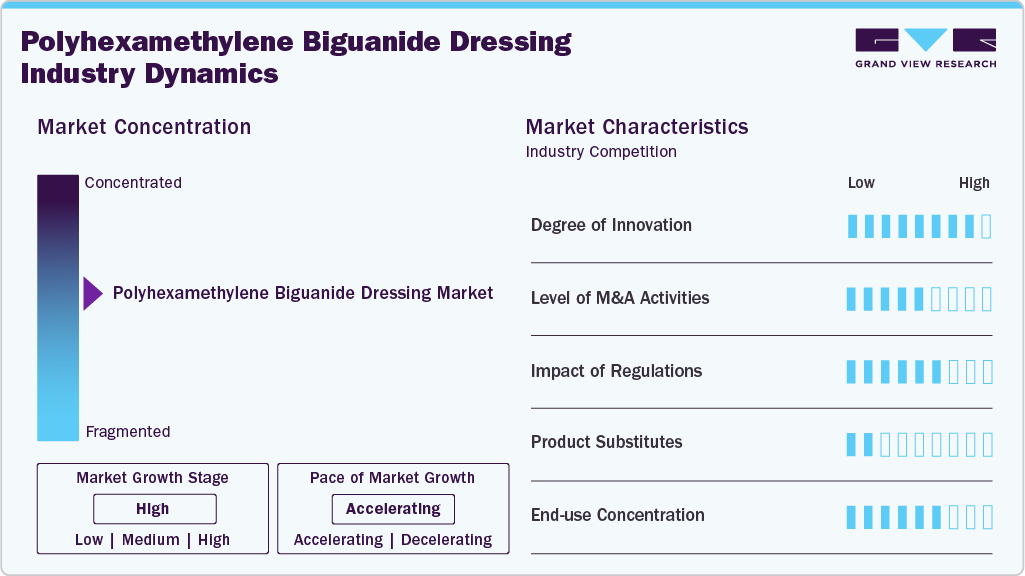 To learn more about this report,Regulatory requirements significantly influence the PHMB dressing market by governing product safety, antimicrobial performance, clinical evidence, and medical device approvals across different regions. Compliance with regulations such as the EU Medical Device Regulation (MDR) and U.S. FDA requirements can increase product development costs and commercialization timelines. However, clear regulatory standards help strengthen product quality, clinical confidence, and market acceptance. Download Free Sample Report
The PHMB dressing market exhibits high end-use concentration in hospitals, which account for significant demand due to the high volume of surgical procedures, chronic wound treatments, and infection prevention requirements. Wound care clinics and ambulatory surgical centers also contribute to market demand, while home healthcare adoption is gradually increasing with the expansion of outpatient and home-based wound management.
Product Insights
PHMB gauze (sheets, rolls, and packing strips) segment dominated the PHMB dressing market with a market revenue share of 36.6% in 2026, supported by its widespread use across hospitals, wound care clinics, and other healthcare settings. These products are commonly used for wound coverage, cavity packing, and management of acute and chronic wounds while providing antimicrobial protection. Their established clinical usage, versatility, ease of application, and availability in multiple formats contribute to higher adoption compared with specialized PHMB dressing formats.
PHMB bacterial cellulose dressings are expected to register the fastest growth in the PHMB Dressing Market during the forecast period, driven by increasing demand for advanced antimicrobial wound care solutions. These dressings combine the moisture-retention and wound-conforming properties of bacterial cellulose with the antimicrobial activity of PHMB, supporting effective wound management. Their ability to maintain a moist wound environment, manage exudate, and provide antimicrobial protection is expected to encourage adoption in chronic and complex wound treatment. Growing innovation in biomaterial-based wound dressings is further expected to accelerate segment growth.
Application Insights
Chronic wounds segment dominated the PHMB dressing market with a market revenue share of 58.2% in 2026 and are expected to register the fastest growth in the PHMB dressing market during the forecast period, driven by the rising prevalence of diabetes, pressure ulcers, venous leg ulcers, and other non-healing wounds. The prolonged treatment duration and increased risk of microbial contamination associated with chronic wounds drive the demand for antimicrobial dressing solutions. PHMB-based dressings provide broad-spectrum antimicrobial protection and support wound management, encouraging their adoption across hospitals and specialized wound care clinics. In addition, the growing burden of chronic diseases and increasing demand for advanced wound care products support segment dominance.
The acute wounds segment is expected to witness significant growth in the PHMB dressing market, driven by the increasing number of surgical procedures, traumatic injuries, burns, and accidental wounds. The need for effective infection prevention and timely wound management is encouraging healthcare providers to adopt PHMB-based antimicrobial dressings. These dressings help manage microbial contamination while supporting wound protection and healing. In addition, the growing emphasis on postoperative care and hospital infection control is expected to support segment growth.
End Use Insights
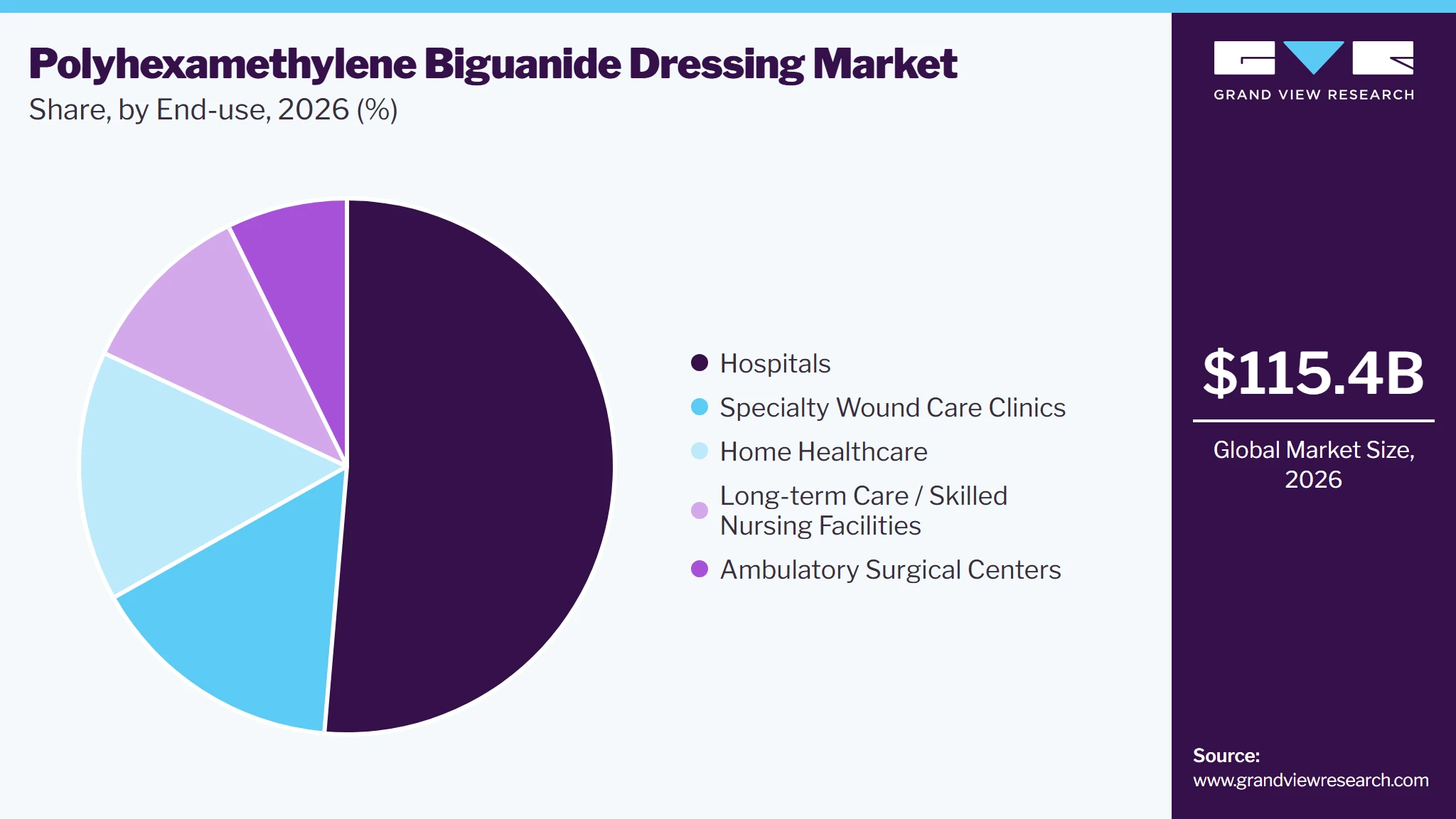
The hospitals segment dominated the PHMB dressing market with a market share of 51.3% in 2026, driven by the high volume of surgical procedures, chronic wound treatments, and increasing focus on hospital-acquired infection prevention. Hospitals have greater demand for antimicrobial wound care products to manage postoperative wounds, diabetic foot ulcers, pressure ulcers, and other complex wounds. The availability of specialized wound care departments, trained healthcare professionals, and established procurement systems further supports PHMB dressing adoption. In addition, increasing emphasis on infection control and patient safety contributes to segment dominance.
 To learn more about this report, Download Free Sample Report
The home healthcare segment is expected to register the fastest growth in the PHMB dressing market during the forecast period, driven by the increasing preference for home-based wound management and outpatient care. The rising population of elderly individuals and patients with chronic wounds is creating demand for convenient and easy-to-use antimicrobial dressing solutions. PHMB-based dressings offer practical options for managing wounds outside hospital settings while supporting infection control. In addition, expanding home healthcare services and growing awareness of advanced wound care products are expected to accelerate segment growth.
Distribution Channel Insights
Institutional sales segment dominated the PHMB dressing market with a market revenue share of 89.2% in 2026, driven by bulk procurement of antimicrobial wound care products by hospitals, wound care clinics, and other healthcare facilities. Institutional buyers prioritize product quality, antimicrobial effectiveness, regulatory compliance, and reliable supply to support routine and complex wound management. Established supplier relationships, centralized purchasing agreements, and recurring demand for wound dressings further strengthen this distribution channel's dominance. In addition, increasing emphasis on infection prevention across healthcare facilities supports institutional sales growth.
The retail sales segment is expected to register the fastest growth in the PHMB Dressing Market during the forecast period, driven by increasing demand for convenient access to advanced wound care products. Growing adoption of home-based wound management and rising awareness of antimicrobial dressings among patients and caregivers are supporting retail purchases. Expansion of pharmacy chains, medical supply stores, and e-commerce platforms is further improving product accessibility. In addition, increasing self-care practices and demand for easy-to-use wound dressing products are expected to accelerate segment growth.
Regional Insights
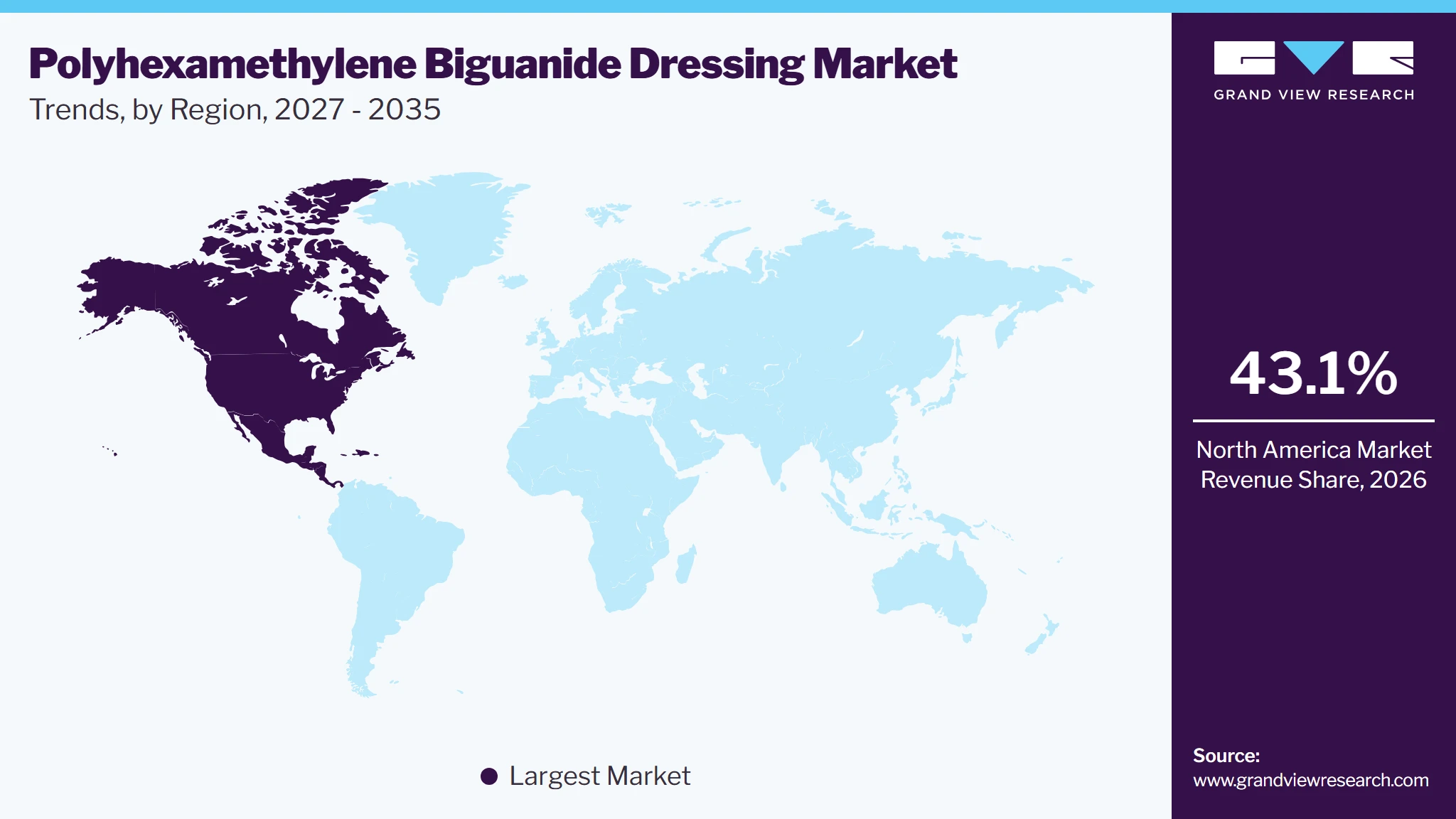
North America dominated the polyhexamethylene biguanide dressing market with the largest revenue share of 43.0% in 2026. The market is witnessing strong growth driven by advanced wound care infrastructure, high diabetes prevalence, and increasing adoption of antimicrobial wound management products. According to the 2025 IDF Diabetes Atlas, approximately 56.2 million adults in North America and the Caribbean were living with diabetes in 2024. Growing demand for advanced wound care solutions and clinical research into PHMB-based products is supporting regional market development.
 To learn more about this report, Download Free Sample Report
U.S. Polyhexamethylene Biguanide Dressing Market Trends
The U.S. PHMB dressing market is supported by a large population with diabetes, established wound care treatment facilities, and increasing focus on infection prevention. According to the 2025 IDF Diabetes Atlas, approximately 38.5 million U.S. adults were living with diabetes in 2024. Additionally, in October 2026, a multicenter randomized controlled trial evaluated purified native collagen matrix combined with PHMB in hard-to-heal diabetic foot ulcers across 25 U.S. clinical sites, involving 170 randomized patients.
Europe Polyhexamethylene Biguanide Dressing Market Trends
Europe represents an established market for PHMB dressings, supported by the presence of wound care manufacturers, advanced healthcare systems, and increasing clinical evaluation of antimicrobial dressing technologies. According to the 2025 IDF Diabetes Atlas, approximately 65.6 million adults in the European region were living with diabetes in 2024. Furthermore, a 2025 post-market surveillance study published in the Journal of Wound Care evaluated the safety, performance, and usability of Lohmann & Rauscher’s Suprasorb X+PHMB bacterial cellulose dressing under routine clinical conditions.
The UK market is supported by the growing burden of chronic wounds, increasing NHS focus on wound infection management, and adoption of advanced antimicrobial dressing technologies. According to a 2026 announcement by Polaroid Therapeutics, leg and foot ulcers account for 37% of the 3.8 million wounds requiring NHS care, highlighting the demand for advanced wound management solutions. In addition, the MHRA approved POLTX_Fiber in August 2026, expanding access to an advanced antimicrobial dressing, although this product uses antimicrobial polymer technology rather than PHMB
The French PHMB dressing market is supported by the increasing burden of diabetes-related foot complications and established wound management services. According to Santé publique France, more than 3.8 million people were receiving medication for diabetes in 2023, representing 5.6% of the population. Furthermore, hospitalizations for diabetic foot complications increased between 2012 and 2022, highlighting the need for effective chronic wound management and antimicrobial dressing solutions.
Asia Pacific Polyhexamethylene Biguanide Dressing Market Trends
Asia Pacific offers significant growth potential for PHMB dressings, driven by a large diabetic population, increasing healthcare expenditure, and expanding access to advanced wound care products. According to the 2025 IDF Diabetes Atlas, the Western Pacific region accounted for approximately 215.4 million adults with diabetes, while South-East Asia accounted for another 106.9 million in 2024. A 2025 Journal of Wound Care clinical case-series supplement also documented the use of PHMB and betaine-based wound cleansing solutions and gels in burn management across Asia Pacific, demonstrating growing clinical interest in antimicrobial wound management.
The Japanese PHMB dressing market is supported by an aging population, increasing chronic wound management requirements, and demand for advanced medical dressing technologies. According to the 2025 IDF Diabetes Atlas, approximately 10.8 million adults in Japan were living with diabetes in 2024. The growing need to manage diabetic foot ulcers, pressure injuries, and postoperative wounds creates opportunities for antimicrobial dressings, including PHMB-based foam and specialized wound contact layers.
Latin America Polyhexamethylene Biguanide Dressing Market Trends
The Latin American PHMB dressing market is expected to benefit from the rising prevalence of diabetes, expanding private healthcare infrastructure, and increasing awareness of advanced wound management. According to the 2025 IDF Diabetes Atlas, approximately 35.4 million adults in South and Central America were living with diabetes in 2024. Brazil accounted for approximately 16.6 million adults, creating substantial potential demand for antimicrobial wound dressings used in diabetic foot ulcer and chronic wound management.
MEA Polyhexamethylene Biguanide Dressing Market Trends
The MEA PHMB dressing market offers growth opportunities due to the increasing burden of diabetes, expanding hospital infrastructure, and growing focus on infection prevention. According to the 2025 IDF Diabetes Atlas, approximately 84.7 million adults in the Middle East and North Africa region were living with diabetes in 2024, with regional prevalence reaching 17.6%. Increasing demand for advanced wound management, particularly in Saudi Arabia, the UAE, and South Africa, is expected to support the adoption of antimicrobial dressings.
Key Polyhexamethylene Biguanide Dressing Company Insights
Key companies in the PHMB dressing market include Cardinal Health, Lohmann & Rauscher, HARTMANN, Advanced Medical Solutions, and other specialized wound care manufacturers. The market is moderately competitive, with established players benefiting from broad distribution networks and diversified product portfolios, while market share remain fragmented due to the presence of regional and specialized manufacturers.
Key Polyhexamethylene Biguanide Dressing Companies
The following key companies have been profiled for this study on the polyhexamethylene biguanide dressing market.
-
Advanced Medical Solutions Limited
-
Winner Medical Co., Ltd.
-
Mil Laboratories Pvt. Ltd.
-
Plastod
-
L&R Group
-
Organogenesis Holdings Inc.
-
Cardinal Health
-
Paul Hartmann AG
-
SMITH & NEPHEW
Recent Developments
-
In May 2026, Lohmann & Rauscher introduced Suprasorb X Pro and Suprasorb X + PHMB Pro, an upgraded range of biocellulose wound dressings featuring enhanced moisture management and antimicrobial properties. The PHMB-containing dressing is designed for infected wounds and wounds at risk of infection, supporting the treatment of acute and chronic wounds.
-
In November 2026, Advanced Medical Solutions (AMS) entered into a preferred partnership with NAMSA to accelerate the development and commercialization of its surgical and advanced wound-care portfolio through integrated regulatory, testing, biological safety, and clinical research services.
-
In May 2026, Winner Medical commenced construction of a USD 60 million manufacturing facility in Vietnam to produce advanced medical dressings and operating-room consumables, with production expected to begin in Q3 2027.
Polyhexamethylene Biguanide Dressing Market Report Scope
Report Attribute
Details
Market size value in 2026
USD 115.4 million
Market size value in 2027
USD 126.3 million
Revenue forecast in 2035
USD 252.1 million
Growth rate
CAGR of 9.0% from 2027 to 2035
Historical data
2023 - 2026
Forecast period
2027 - 2035
Quantitative units
Revenue in USD million/billion and CAGR from 2027 to 2035
Report coverage
Revenue forecast, company ranking, competitive landscape, growth factors, and trends
Segments covered
Product type, application, end use, distribution channel & region
Regional scope
North America; Europe; Asia Pacific; Latin America; MEA
Country scope
U.S.; Canada; Mexico; Germany; UK; France; Italy; Spain; Norway; Denmark; Sweden; China; Japan; India; South Korea; Australia; Thailand; Singapore; Brazil; Argentina; Saudi Arabia; South Africa; UAE; Kuwait;
Key companies profiled
Advanced Medical Solutions Limited, Winner Medical Co., Ltd., Mil Laboratories Pvt. Ltd., Plastod, L&R Group, Organogenesis Holdings Inc., Cardinal Health, Paul Hartmann AG, SMITH & NEPHEW
Customization scope
Free report customization (equivalent up to 8 analysts' working days) with purchase. Addition or alteration to country, regional & segment scope.
Pricing and purchase options
Avail customized purchase options to meet your exact research needs. Explore purchase options
Global Polyhexamethylene Biguanide Dressing Market Report Segmentation
This report forecasts revenue growth at global, regional, and country levels and provides an analysis on the latest industry trends in each of the sub-segments from 2023 to 2035. For the purpose of this study, Grand View Research has segmented the global polyhexamethylene biguanide dressing market report on the basis of product type, application, end use, distribution channel, and region:
-
Product Type Outlook (Revenue USD Million; 2023 - 2035)
-
PHMB Gauze (Sheets, Rolls, Packing Strips)
-
PHMB Foam Dressings
-
PHMB Non-adherent / Contact Layers
-
PHMB Bacterial Cellulose Dressings
-
Other
-
Alginate
-
Hydrofiber
-
Hydrogel Sheet
-
Composite / Island
-
-
-
Application Outlook (Revenue USD Million; 2023 - 2035)
-
Chronic Wounds
-
Diabetic Foot Ulcers
-
Pressure Ulcers
-
Venous Leg Ulcers
-
Other Chronic Wounds
-
-
Acute Wounds
-
Surgical & Traumatic Wounds
-
Burns
-
-
-
End Use Outlook (Revenue USD Million; 2023 - 2035)
-
Hospitals
-
Specialty Wound Care Clinics
-
Ambulatory Surgical Centers
-
Home Healthcare
-
Long-term Care / Skilled Nursing Facilities
-
-
Distribution Channel Outlook (Revenue USD Million; 2023 - 2035)
-
Institutional Sales
-
Retail Sales
-
-
Regional Outlook (Revenue USD Million; 2023 - 2035)
-
North America
-
U.S.
-
Canada
-
Mexico
-
-
Europe
-
Germany
-
UK
-
France
-
Italy
-
Spain
-
Sweden
-
Denmark
-
Norway
-
-
Asia Pacific
-
Japan
-
China
-
India
-
Australia
-
South Korea
-
Thailand
-
-
Latin America
-
Brazil
-
Argentina
-
-
Middle East & Africa
-
South Africa
-
Saudi Arabia
-
UAE
-
Kuwait
-
-
Research Methodology
The polyhexamethylene biguanide dressing market figures in this report are based on a proven research process that combines executive interviews with secondary research from proprietary databases, company filings, and recognized regulatory and institutional sources. Market size is built through value-chain sizing - reconciling supply-side and demand-side estimates - and triangulated with bottom-up and top-down approaches. Every estimate passes multiple levels of expert validation before publication, with each polyhexamethylene biguanide dressing segment quantified using the revenue-capture definitions in the table below.
Segment Definition
Segment - Product
Revenue capture definition
PHMB Gauze (Sheets, Rolls, Packing Strips)
Revenue generated from PHMB-impregnated gauze products used for wound packing, coverage, and antimicrobial wound management.
PHMB Foam Dressings
Revenue generated from PHMB-containing foam dressings designed to absorb wound exudate while providing antimicrobial protection.
PHMB Non-adherent / Contact Layers
Revenue generated from PHMB-coated or impregnated non-adherent wound contact layers that prevent wound-bed adherence and provide antimicrobial activity.
PHMB Bacterial Cellulose Dressings
Revenue generated from PHMB-integrated bacterial cellulose dressings that maintain a moist wound environment and provide antimicrobial protection.
Other
Revenue generated from other PHMB-containing wound dressing formats, including alginate, hydrofiber, hydrogel, and composite dressings, offering antimicrobial protection and wound exudate management.
Estimation Model
Number
Title
Description
01
Bottom-Up Product Volume Modeling
Estimates the PHMB dressing market by assessing sales volumes and average selling prices (ASPs) of PHMB-based wound care products, including gauze, foam dressings, non-adherent contact layers, bacterial cellulose dressings, and other formats. The model evaluates product-wise adoption, annual consumption, unit pricing, and manufacturer sales across key geographies to calculate overall market revenue.
02
Top-Down Revenue Triangulation
Aggregates supplier-side revenues from leading wound care manufacturers offering PHMB-based dressings, considering company financial disclosures, product portfolios, annual reports, regulatory approvals, and commercial product launches. Revenue estimates are validated through PHMB product-level contributions, estimated market penetration, pricing trends, and competitive positioning to determine the overall market size.
03
Demand-Side Care-Setting Modeling
Evaluates demand across hospitals, wound care clinics, ambulatory surgical centers (ASCs), long-term care facilities, and home healthcare settings. The model assesses chronic and acute wound prevalence, including diabetic foot ulcers, pressure ulcers, surgical wounds, and venous leg ulcers, alongside PHMB dressing adoption rates, treatment frequency, product consumption, and average selling prices. Regional healthcare infrastructure, infection prevention practices, and antimicrobial wound management trends are considered to validate market estimates.
Delivered Customizations
This report has been delivered with the following In-depth customizations
Client Request
Customization Delivered
Value Adds
Epidemiological assessment of chronic and acute wounds driving demand for PHMB dressings.
Analysis of diabetic foot ulcers, pressure ulcers, venous leg ulcers, surgical wounds, and other wound types across key regions.
Helps assess the addressable patient population and identify high-demand wound care applications.
Country-wise analysis of PHMB dressing adoption across major geographic markets.
Regional demand assessment covering healthcare infrastructure, product availability, reimbursement scenarios, and adoption trends.
Supports geographical expansion strategies and market entry decisions.
Competitive benchmarking of key PHMB dressing manufacturers.
Comparative assessment of product portfolios, pricing strategies, distribution networks, innovations, and competitive positioning.
Helps identify competitive gaps, differentiation opportunities, and potential strategic partnerships.
Frequently Asked Questions About This Report
Asia Pacific is the fastest-growing region over the forecast period.
The PHMB gauze (sheets, rolls, packing strips) segment led the market with the largest revenue share of 36.6% in 2026.
The global polyhexamethylene biguanide dressing market size was valued at USD 115.4 million in 2026 and is estimated at USD 126.3 million in 2027.
The global polyhexamethylene biguanide (PHMB) dressing market is expected to grow at a CAGR of 9.0% from 2027 to 2035, reaching USD 252.1 million by 2035.
The institutional sales segment led the market with the largest revenue share of 89.2% in 2026.
North America dominated the PHMB dressing market with the largest revenue share of 43.0% in 2026.
Key factors include the rising prevalence of chronic wounds, diabetes, and surgical procedures, increasing the demand for effective antimicrobial wound management solutions.
Key players include Advanced Medical Solutions Limited, Winner Medical Co., Ltd., Mil Laboratories Pvt. Ltd., Plastod, L&R Group, Organogenesis Holdings Inc., Cardinal Health, Paul Hartmann AG and SMITH & NEPHEW.
The hospitals segment led the market with the largest revenue share of 51.3% in 2026.
The chronic wounds segment led the market with the largest revenue share of 58.2% in 2026.
About the Author(s)
Medical Devices Research Team
Healthcare · Medical DevicesThis report was authored by the medical devices research team at Grand View Research - comprising two research analysts, one senior research analyst, and one industry expert - with specialized expertise in the medical devices segment of the healthcare industry. All findings are based on proprietary healthcare databases, executive interviews, and regulatory analysis, subject to internal peer review prior to publication.
Last Updated:
Speak to Analyst

Customize this report to your needs - add regions, segments, or data points, with 20% free customization.
Or view our licence options:


ISO 9001:2015 & 27001:2022 Certified
We are GDPR and CCPA compliant! Your transaction & personal information is safe and secure. For more details, please read our privacy policy.


