
- Home
- »
- Alcohol & Tobacco
- »
-
Premium Spirits Market Size & Share Report, 2026-2033GVR Report cover

Premium Spirits Market (2026 - 2033)
Size, Share & Trends Analysis Report By Product (Vodka, Whiskey, Gin, Rum, Tequila, Brandy), By Distribution Channel (On-trade, Off-trade), By Region (NA, Europe, APAC, Central & South America, MEA), And Segment Forecasts
Market Size, 2025
$253.8BMarket Estimate, 2026
$275.9BMarket Forecast, 2033
$546.7BCAGR, 2026–2033
10.3%Premium Spirits Market Summary
The global premium spirits market size was valued at USD 253.8 billion in 2025 and is projected to grow from USD 275.9 billion in 2026 to USD 546.7 billion by 2033, at a CAGR of 10.3% from 2026 to 2033. The market in Asia Pacific dominated with a revenue share of 33.1% in 2025. The growing popularity of high-end drinks among the millennial population has been fueling market growth across the world.
 Source: Grand View Research, IR Documents, Primary Interviews, Paid DatabasesTo learn more about this report,
 Download Free Sample Report
 Key Market Trends & Insights
- By product, The vodka segment accounted for the largest share of 32.5% in 2025.
- By distribution channel, The on-trade segment dominated the global premium spirits market with a revenue share of 56.3% in 2025.
Regional Highlights
- Largest regional market: Asia Pacific (33.1% revenue share, 2025)
- The premium spirits industry in the China held the largest revenue share in 2025.
Market Size & Forecast
- Market size in 2025: USD 253.8 Billion
- Estimated market size in 2026: USD 275.9 Billion
- Projected market size by 2033: USD 546.7 Billion
- CAGR (2026-2033): 10.3%
Three ways to get this report
Buy it, customize it, or ask a question.Ask an Analyst
Analyst response in 1 business day
- AccessReport author, directly
- Reply timeWithin 1 working day
- No sales callDirect answer only
- FormatEmail reply
- CostFree, no cost
Get the Full Report
What the study covers
- FormatsPDF · Excel · Dashboard
- Timeline2026–2033 annual, 2025 base
- Coverage20+ countries, 5 regions
- Companies10+ key players profiled
Customize the Report
20% free customization
- IncludeCountries, segments, points
- TailorTo your product definition
- ExtendDeeper competitor detail
- OrA fully bespoke study
- Turnaround5–10 working days
The industry is being reshaped by a wave of “premiumization” that goes beyond price point to emphasize provenance, craftsmanship, and storytelling. Cocktails such as margaritas, martinis, and Manhattans have gained remarkable traction in the developed economies of North America and Europe. Furthermore, the growing popularity of the cocktail culture in developing countries, such as China and India, is expected to expand the scope of premium spirits. Over the past few years, the growth of the high-end alcohol segment has been outpacing the growth of the overall segment and, hence, pushing the overall consumption of alcohol all over the world.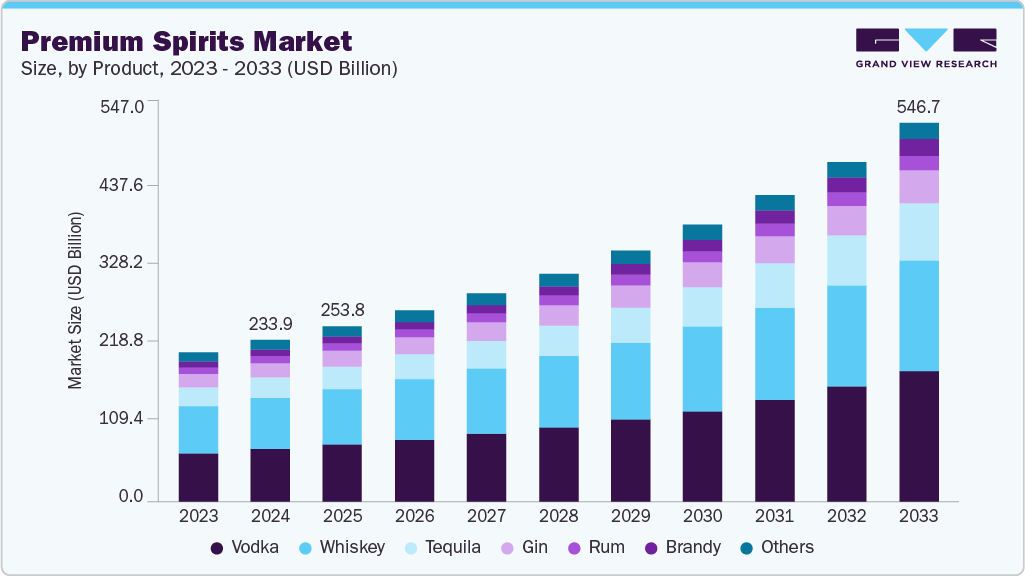 To learn more about this report, Download Free Sample Report
 Consumers are gravitating toward single‑origin whiskies, small‑batch bourbons, and terroir‑driven gins that showcase unique botanicals and locally sourced ingredients, while brands respond with limited‑edition releases and curated barrel‑aged collections. Rising disposable incomes and aspirational purchasing behavior have significantly shifted consumer preference from standard spirits toward high-end and super-premium offerings. Additionally, consumer surveys indicate that nearly 40-45% of global alcohol consumers actively prefer premium or super-premium spirits, particularly in urban markets where lifestyle consumption and social status signaling influence purchase decisions.
Another important factor driving the market for premium spirits is the focus on authenticity and provenance. Consumers are increasingly interested in the story behind the products they consume, including where and how the spirits are made. This has led to a growing preference for premium spirits that are produced using traditional methods, high-quality ingredients, and a strong emphasis on craftsmanship and heritage.
A major growth driver has been the increasing influence of Millennial and Gen Z consumers, who prioritize authenticity, craftsmanship, and storytelling-led brands. Approximately 64% of premium spirits demand growth is attributed to younger legal-age consumers, supported by rising participation in cocktail culture, luxury nightlife, and experiential drinking occasions. Nearly 60% of premium spirit purchases are linked to social gatherings and experience-led consumption, including premium bars, travel retail, and luxury hospitality venues. This shift has encouraged producers to introduce aged whiskies, botanical gins, and artisanal tequila variants positioned around exclusivity and limited editions.
The premium spirits market is primarily driven by an increase in disposable income. Customers with high disposable income have access to the best quality spirits. Customers are paying more for high-quality, premium products because they are becoming more conscious of their drinking habits. In addition, the increasing trend of visiting pubs and bars among the youth is expected to drive the market forward.
Product innovation and brand premiumization strategies have further accelerated market expansion. In 2024 alone, over 4,800 new spirit products were launched globally, reflecting a strong pipeline of flavored, aged, and limited-release premium spirits targeting niche luxury segments. Manufacturers are increasingly focusing on celebrity collaborations, heritage positioning, and small-batch production, with craft spirits accounting for nearly 18% of premium spirit launches and micro-distillery output rising by over 22% annually. Recent developments, such as the launch of new premium portfolios by global players, including Pernod Ricard’s Xclamat!on premium spirits line (2025), demonstrate intensified competition centered on innovation and brand differentiation.
Another prominent trend shaping the premium spirits industry is health-conscious and sustainability-driven premiumization. Around 29% of new premium alcohol launches now emphasize low-alcohol, organic, or clean-label formulations, while more than 190 distilleries globally adopted carbon-reduction or water-efficient production processes in 2024. Premium consumers increasingly associate sustainability credentials, recycled packaging, and transparent sourcing with product quality, prompting brands to integrate ESG-led manufacturing practices into premium positioning strategies.
Consumer Insights for the Premium Spirits Market:
 To learn more about this report, Download Free Sample Report
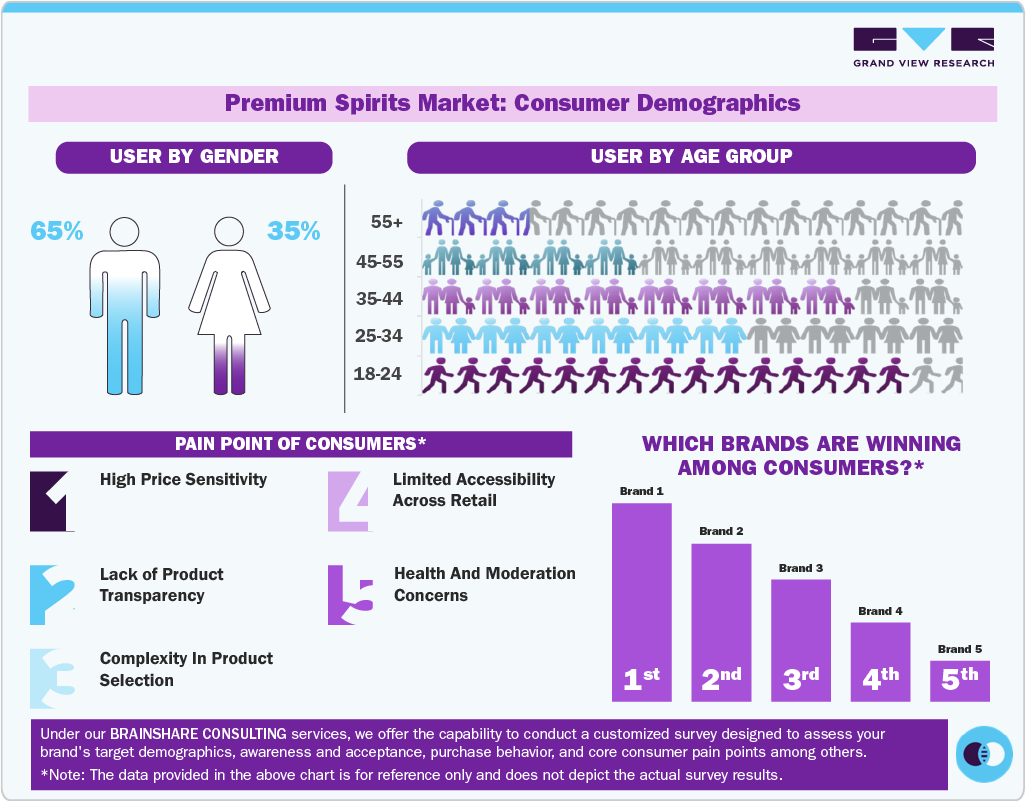
 Consumer trends and preferences in the alcohol industry have been changing gradually over the years. The millennials have been shifting toward premium spirits owing to rising purchasing power. Tequila has been one of the fastest‐growing categories for several years, and the sales of tequila brands such as Patrón, Don Julio, Casamigos Tequila, and Epsolòn Tequila have grown significantly in the last few years.
Consumer behavior in the premium spirits market has undergone a significant shift toward value-driven, experience-led, and lifestyle-aligned consumption. Recent global consumer surveys indicate that modern alcohol buyers increasingly prioritize quality over quantity, with nearly 52% of spirits consumers stating they prefer to “drink less but better”, reflecting a structural premiumization trend across both developed and emerging markets. Millennials currently account for approximately 45% of global premium spirits consumption, demonstrating a strong willingness to pay higher prices for craftsmanship, aging techniques, and brand authenticity rather than volume-based drinking.
 To learn more about this report, Download Free Sample Report
 A key consumer trend shaping purchasing behavior is the growing demand for experiential and social drinking occasions. Studies show that around 40% of premium spirits consumers identify as social drinkers, primarily purchasing premium whisky, tequila, or craft gin for weekend gatherings, cocktail experiences, and on-trade venues. Cocktail culture has significantly influenced preferences, with experiential mixology contributing to nearly a 30% increase in cocktail-centric premium spirit demand globally. Consumers increasingly associate premium spirits with lifestyle experiences such as curated tastings, destination bars, and home mixology setups rather than routine alcohol consumption.
Another consumer trend that is driving the growth of the market is the rise in demand for natural and organic beverages. Spirits that are made organically and involve less fermentation are in high demand. Several small producers do not use chemicals in their drinks, and these locally produced alcoholic beverages are being highly preferred by consumers. Health and wellness are becoming increasingly important to alcohol consumers, and as a result, consumers across the region are opting for alcoholic beverages made with natural flavors. Manufacturers have been focusing on ingredient quality and transparency, considering the growing trend.
Younger consumers, particularly Gen Z and Millennials are redefining premium alcohol preferences through digital discovery and aesthetic appeal. Approximately 30% of consumers aged 21-34 discover new premium spirits via social media platforms, while nearly 60% of Gen Z purchasing decisions are influenced by packaging design and visual branding. Luxury packaging, storytelling, and limited-edition releases have therefore become central to brand engagement strategies. Additionally, survey data indicates that 48% of premium spirits buyers consider brand heritage and authenticity a primary purchase driver, reinforcing demand for craft distillation and origin-based spirits.
Product Insights
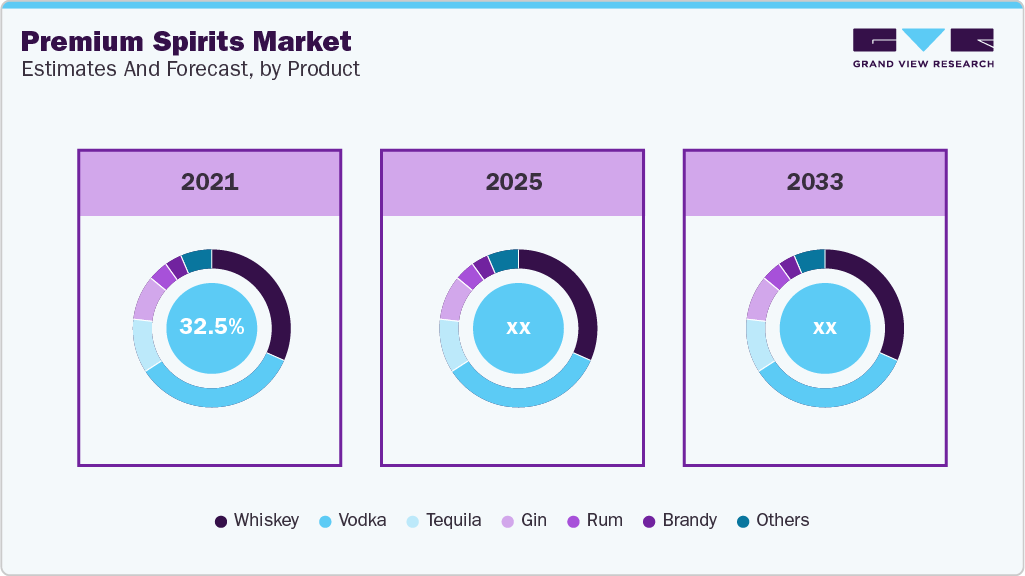
Premium vodka held the largest share, accounting for 32.5% of the global revenue in 2025. As consumers become more discerning, they are increasingly opting for premium and ultra-premium vodkas that offer superior taste, unique production methods, and distinct branding. This trend is particularly evident among younger demographics, such as Millennials and Gen Z, who value authenticity, craftsmanship, and the overall drinking experience. The rise of craft distilleries and the introduction of innovative flavor profiles have further fueled the demand for premium vodka. Additionally, the trend towards health-conscious consumption has led to a preference for vodkas with natural ingredients and no additives. Premium vodka brands are also capitalizing on this trend by emphasizing their heritage, production transparency, and commitment to quality, which resonate with consumers seeking a more refined and luxurious drinking experience.
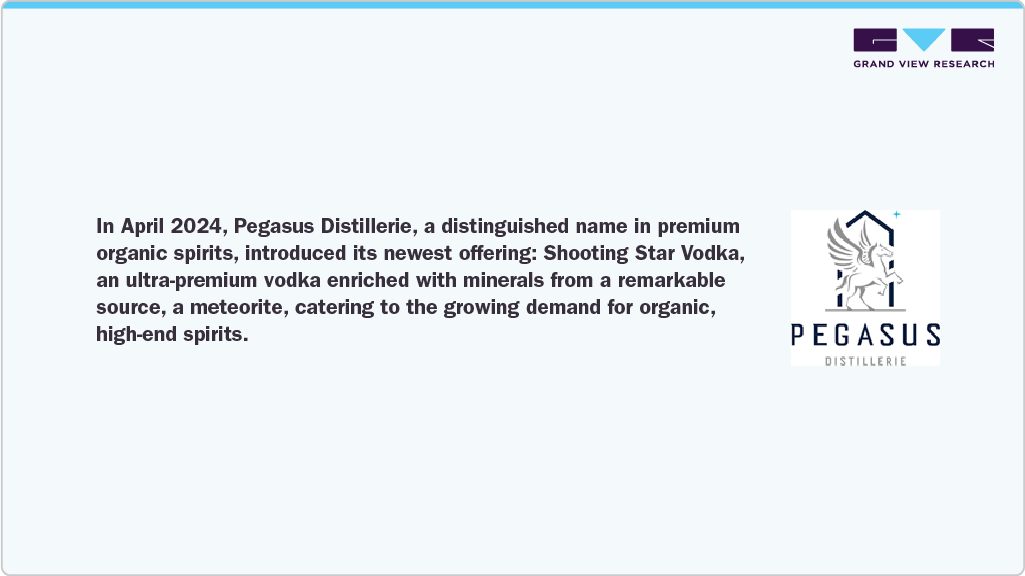
In 2025, Russian alcohol exports-largely dominated by vodka shipments-recorded a four-fold increase in exports to India, reflecting rising acceptance of imported premium vodka across developing markets where urban consumers are trading up to international spirits brands. Product innovation remains a primary growth catalyst within the vodka segment. In 2025, flavored, craft, and premium vodkas represented nearly 28% of all new spirit product launches globally, demonstrating strong consumer demand for differentiated taste experiences and mixology-focused offerings. In July 2025, Radico Khaitan introduced “The Spirit of Kashmyr”, a luxury vodka positioned around regional purity and heritage storytelling, targeting upscale consumers in India’s rapidly expanding premium alcohol segment.
 To learn more about this report, Download Free Sample Report
 Premium tequila market is anticipated to grow at a CAGR of 12.6% from 2026 to 2033. Tequila has continued to demonstrate strong global momentum and remains one of the fastest-growing premiumizing spirits categories, supported by rising exports, luxury product innovation, and growing consumer preference for aged and artisanal agave spirits. According to the Tequila Regulatory Council (CRT), tequila exports recorded a 29.3% year-on-year increase at the beginning of 2025, reflecting sustained international demand led by premium and super-premium expressions such as reposado and añejo variants. The export expansion has been largely attributed to consumers trading up toward high-quality tequilas, emphasizing authenticity, origin protection, and traditional agave cultivation practices rather than mass-produced spirits.
Premiumization trends have further intensified through luxury brand diversification and celebrity-backed launches. In August 2025, Indian spirits manufacturer Radico Khaitan partnered with entrepreneur Aryan Khan and actor Shah Rukh Khan to introduce D’YAVOL Añejo Tequila, a luxury aged tequila matured for nearly two years in wine casks and positioned within the ultra-premium price segment. The launch reflects growing global and emerging-market demand for aged tequila offerings, with industry executives projecting that tequila consumption in India alone could expand toward one million cases within five years, driven primarily by affluent consumers shifting toward premium imported spirits.
Distribution Channel Insights
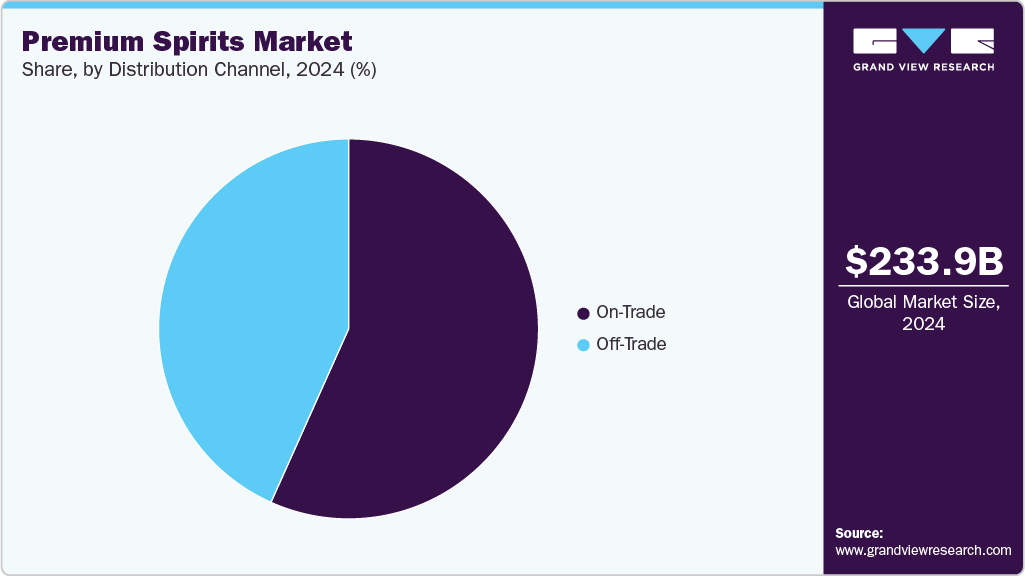
The sale of premium spirits through the on-trade channel accounted for a share of 56.3% of the global revenues in 2025. The rise of experiential dining and drinking plays a significant role in the on-trade distribution of premium spirits. Consumers increasingly value experiences over products, seeking venues that provide excellent drinks and a memorable atmosphere. Bars and restaurants that offer unique premium spirits-tasting experiences, themed nights, or interactive cocktail-making sessions attract patrons looking for immersive and engaging outings. Premium spirits brands and distributors collaborate with these establishments to create special events, promotions, and limited-edition releases, enhancing the overall customer experience and driving sales in the on-trade sector.
 To learn more about this report, Download Free Sample Report
 The sales of premium spirits through the off-trade channel are anticipated to grow at a CAGR of 10.9% from 2026 to 2033. The segment includes all retail outlets such as hypermarkets, supermarkets, convenience stores, mini markets, and wine & spirit shops. Consumers prefer these outlets as they provide various discounts and offers on the product. Moreover, retail outlets such as liquor stores, supermarkets, and convenience stores provide consumers with easy access to various premium spirits brands and types in one location. Consumers appreciate the convenience of purchasing premium spirits while shopping for other groceries or household items. Online retail platforms have further enhanced accessibility, allowing consumers to order premium spirits from the comfort of their homes, leading to increased off-trade sales.
Regional Insights
North Americapremium spirits market is expected to grow at a CAGR of 9.3% from 2026 to 2033. The popularity of brands such as Kendall-Jackson, Jack Daniels, and Absolut has resulted in an increased demand for spirits, including cognac, vodka, and whiskey, in the region. Premium brands witness a greater demand due to the perception of alcohol as a status symbol, the association of ‘premium’ labels with better taste and quality, and the rise in per capita income of consumers.
In March 2025, Johnnie Walker launched the Johnnie Walker Vault, an ultra-premium platform allowing consumers to co-create bespoke Scotch blends alongside Master Blender Dr. Emma Walker using rare whiskies sourced from more than 10 million casks, including liquids from closed distilleries. The experience, priced from approximately USD 58,000, reflects rising demand for personalization and exclusivity in luxury spirits, where affluent consumers increasingly seek individualized flavor profiles and storytelling-based products rather than standard releases.
U.S. Premium Spirits Market Trends
The premium spirits market in the U.S. held a share of 68.6% of the North American region in 2025. Consumers in the U.S. are increasingly interested in premium and super-premium alcoholic beverages, opting for quality over quantity. There is a growing interest in craft and artisanal varieties, as well as ethnic-flavored spirits. This has been part of a broader trend toward more diverse and creative offerings in the spirits market. Moreover, the craft spirits boom has introduced a range of new brands that focus on quality and unique packaging design.
Europe Premium Spirits Market Trends
The premium spirits market in Europe held a share of 25.5% of the global market in 2025. The rapid rise in demand for premium quality spirits as a result of altering cultural views among the region's young and affluent population is a primary driver of the spirits market's expansion in the region. In comparison to their normal spirit selections, an increasing number of European consumers are looking for new, more exciting offerings, which is driving revenue generation in the spirits sector. This shift to premiumization has spurred a growing interest in exploring the craftsmanship behind spirits, such as wood-aged brandies and whiskies with unique finishes. Consumers are trading up to hand-crafted, vintage products that reflect the distiller's art. This preference for high-quality spirits encourages moderate and responsible drinking, a trend supported by industry bodies. Additionally, premium spirits are often featured in airport stores, showcasing Europe's finest artisan spirits to a global audience and inspiring ongoing innovation among producers.
The UK premium spirits market is expected to grow at a CAGR of 9.9% from 2026 to 2033. The rising demand for premium spirits in the U.K. is reshaping the alcoholic beverage market, driven by a growing preference for high-quality, savor-worthy drinks. By 2025-2026, tequila transitioned from a niche party drink into a mainstream premium spirit across the U.K., with industry analysis showing that premium tequila now accounts for more than 50% of total tequila value sales in Europe, including the U.K. market. This shift has been largely driven by consumers increasingly choosing sipping tequilas and aged expressions rather than entry-level variants traditionally associated with shots. The rise of mixology-led consumption has further accelerated demand, as premium tequila is increasingly incorporated into elevated cocktail formats such as Palomas, Tequila Old Fashioneds, and craft Espresso Martinis across urban bars and upscale hospitality venues.
Asia Pacific Premium Spirits Market Trends
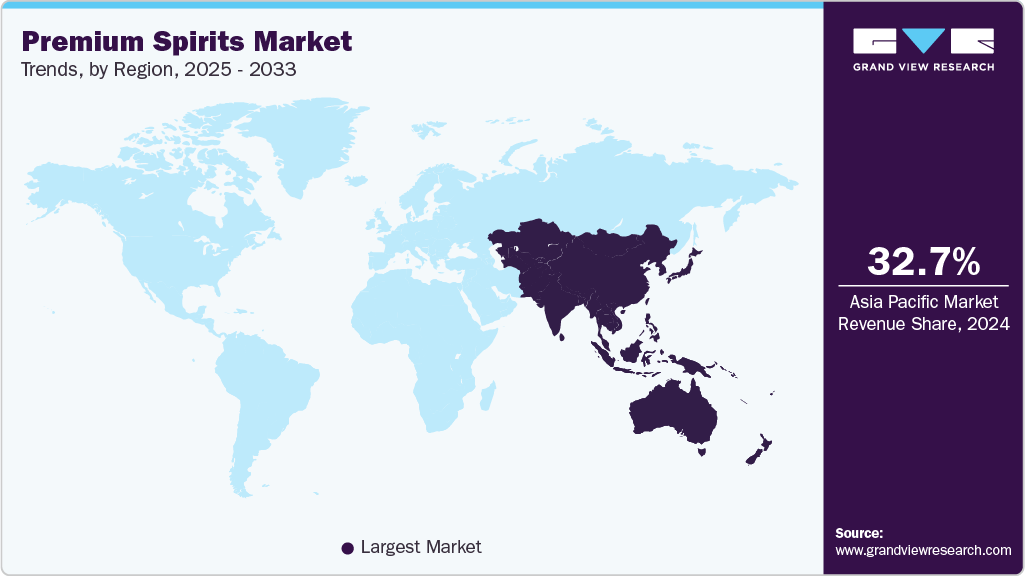
The premium spirits market in the Asia Pacific is expected to grow at a CAGR of 11.4% from 2026 to 2033. According to the Scotch Whisky Association (SWA), the global Scotch whisky export landscape continued to shift toward Asia-Pacific markets in 2025-2026, reinforcing the region’s dominance as the primary growth engine for premium Scotch demand. Latest SWA export figures released in February 2026 reported that Scotch whisky exports reached USD 5.89 billion in 2025, with approximately 1.3 billion bottles shipped to over 160 international markets, despite short-term macroeconomic pressures affecting Western demand.
 To learn more about this report, Download Free Sample Report
 The emphasis on cultural relevance and targeted marketing has been instrumental in this growth. Pernod Ricard’s USD 150 million investment in The Chuan Malt Whisky Distillery in China illustrates the luxury experiences offered by the brand. By understanding local market nuances, such as festivals and rituals, these companies have effectively integrated their products into culturally significant events. This strategic method, combined with a growing interest in premium and diverse whisky options, is establishing Asia as a vital market for the future expansion of the premium spirits industry.
China premium spirits market is driven by evolving consumer preferences and strategic efforts by major brands. Baijiu, the traditional Chinese liquor, continues to hold cultural significance and dominates the market with luxury brands like Kweichow Moutai and Wuliangye. However, there is a growing desire among younger Chinese consumers for lighter, more modern spirits that fit their everyday consumption habits. This shift has led to increased demand for brandy and whisky, which are favored for their European heritage and sophisticated appeal.
Central & South America Premium Spirits Market Trends
The premium spirits market in Central & South America is expected to grow at a CAGR of 10.6% from 2026 to 2033. A rich heritage and strong brand presence drive the high demand. In this region, iconic Scotch brands like Johnnie Walker, Old Parr, and Buchanan’s dominate the market, demonstrating a longstanding preference for high-quality whiskies. The local market is also influenced by culturally significant spirits such as Ypioca cachaça in Brazil and Cacique rum in Venezuela, showcasing the importance of traditional beverages alongside international favorites. The trend towards premiumization is evident as consumers seek unique and luxurious experiences, leading to a diversification of offerings. Brands like Smirnoff have innovated with local variants to cater to the evolving tastes and preferences of the Latin American market.
Brazil premium spirits industry has been growing significantly, with Scotch whisky emerging as a favorite among consumers. According to HMRC (Her Majesty's Revenue and Customs) figures, the country imported the equivalent of 93 million bottles of Scotch, elevating Brazil to fourth place among the category's export markets, just behind India, France, and the U.S. Diageo, the market leader with brands like Johnnie Walker, Buchanan's, and Old Parr, has played a pivotal role in this growth. Johnnie Walker, in particular, has seen impressive traction, with 52% of its growth attributed to new whisky drinkers. Meanwhile, Old Parr has experienced a 66% growth from new consumers, underscoring the brand's appeal in the Brazilian market.
Middle East & Africa Premium Spirits Market Trends
The premium spirits market in the Middle East and Africa is expected to grow at a CAGR of 8.0% from 2026 to 2033. The Middle East & Africa market is anticipated to experience steady growth in the forecasted period. However, the demand for handmade spirits in this region is constrained due to the total prohibition of alcohol in specific areas, such as Saudi Arabia, Iran, Kuwait, Yemen, and the Emirate of Sharjah. The restrictions on alcohol consumption in these regions limit the market potential for handmade spirits in the Middle East.
In South Africa, with an increasing number of craft spirit brands, competition has also increased. Due to this, craft spirits companies have started focusing on innovative offerings and advertising. For example, Hope Distillery, located in the heart of urban Cape Town, has emerged as a key player in the artisanal spirits space. The distillery began by manufacturing its boutique gin and has since expanded its portfolio to include a wide range of spirits. It has also received recognition for distilling on behalf of several craft companies. The Hope Rhum Agricole, a creative take on traditional rum, is the most recent addition to its portfolio.
Key Premium Spirits Companies Insights
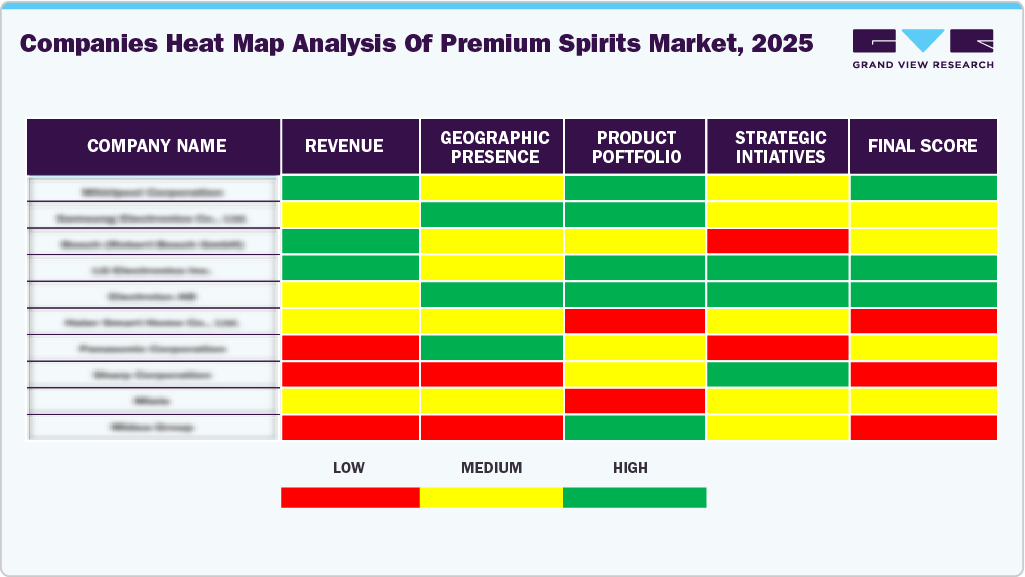
Key companies operating in the premium spirits industry primarily focus on innovation, flavor diversity, and health-centric offerings. They are investing in product development, strategic partnerships, and sustainable packaging to cater to evolving consumer preferences, expand their footprint, and strengthen competitiveness across regions.
 To learn more about this report, Download Free Sample Report
 Key Premium Spirits Companies:
The following key companies have been profiled for this study on the premium spirits market
- Asahi Group Holdings, Ltd.
- Diageo plc
- Pernod Ricard
- Constellation Brands, Inc.
- Rémy Cointreau
- Bacardi Limited
- Suntory Holdings Limited
- Davide Campari-Milano N.V.
- SAZERAC CO, INC
- Highwood Distillers
- Heaven Hill Distilleries, Inc
Recent Developments
-
In October 2025, renowned Mexican distillery El Tesoro launched the Mundial Yamazaki Edition Añejo Tequila, aged for 12 months in rare Japanese Yamazaki whisky casks, marking the brand’s first cross-category maturation collaboration.
-
In August 2025, Indian spirits manufacturer Radico Khaitan partnered with entrepreneur Aryan Khan and actor Shah Rukh Khan to introduce D’YAVOL Añejo Tequila, a luxury aged tequila matured for nearly two years in wine casks and positioned within the ultra-premium price segment.
-
In July 2024, Suntory Holdings announced the establishment of Suntory India Private Limited, which is designed to support corporate functions essential for building a strong business foundation. This initiative aims to accelerate growth in its current spirits sector and create opportunities within the soft drinks and health and wellness markets in India.
-
In June 2024, Pernod Ricard strengthened its dedication to its American Whiskey portfolio by launching a new Global Brand Company in the U.S. named North American Distillers (NADL).
Premium Spirits Market Report Scope
Report Attribute
Details
Market size in 2025
USD 253.8 billion
Estimated market size in 2026
USD 275.9 billion
Projected market size by 2033
USD 546.7 billion
Growth rate
CAGR of 10.3% from 2026 to 2033
Actual data
2021 - 2025
Forecast period
2026 - 2033
Quantitative units
Volume in million liters, revenue in USD million/billion, and CAGR from 2026 to 2033
Report coverage
Revenue forecast, company ranking, competitive landscape, growth factors, and trends
Segments covered
Product, distribution channel, region
Regional scope
North America; Europe; Asia Pacific; Central & South America; Middle East & Africa
Country scope
U.S.; Canada; Mexico; UK; Germany; France; Italy; Spain; Spain, China; India; Japan; Australia & New Zealand; South Korea; Brazil; South Africa
Key companies profiled
Asahi Group Holdings, Ltd.; Diageo plc; Pernod Ricard; Constellation Brands, Inc.; Rémy Cointreau; Bacardi Limited; Suntory Holdings Limited; Davide Campari-Milano N.V.; SAZERAC CO, INC; Highwood Distillers; Heaven Hill Distilleries, Inc.
Customization scope
Free report customization (equivalent up to 8 analysts’ working days) with purchase. Addition or alteration to country, regional & segment scope.
Pricing and purchase options
Avail customized purchase options to meet your exact research needs. Explore purchase options
Global Premium Spirits Market Report Segmentation
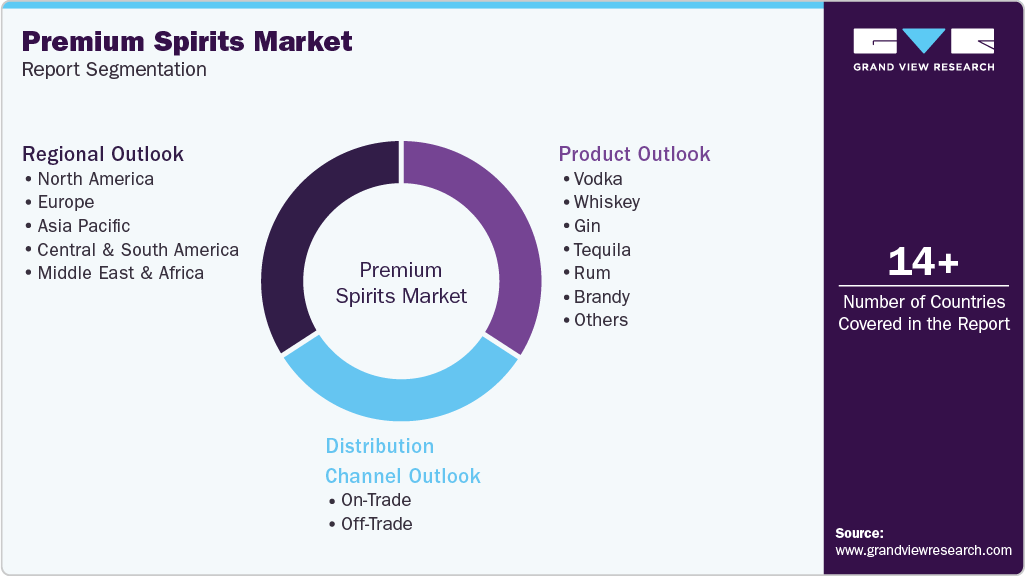
This report forecasts revenue growth at global, regional & country levels and provides an analysis of the latest trends and opportunities in each of the sub-segments from 2021 to 2033. For this study, Grand View Research has segmented the global premium spirits market report on the basis product, distribution channel, and region.
 To learn more about this report, Download Free Sample Report
 -
Product Outlook (Volume, Million Liters; Revenue, USD Million, 2021 - 2033)
-
Vodka
-
Whiskey
-
Gin
-
Tequila
-
Rum
-
Brandy
-
Others
-
-
Distribution Channel Outlook (Volume, Million Liters; Revenue, USD Million, 2021 - 2033)
-
On-Trade
-
Off-Trade
-
Supermarkets & Hypermarkets
-
Liquor Stores
-
Others
-
-
-
Regional Outlook (Volume, Million Liters; Revenue, USD Million, 2021 - 2033)
-
North America
-
U.S.
-
Canada
-
Mexico
-
-
Europe
-
Germany
-
UK
-
Spain
-
Italy
-
France
-
Spain
-
-
Asia Pacific
-
China
-
India
-
Japan
-
Australia & New Zealand
-
South Korea
-
-
Central & South America
-
Brazil
-
-
Middle East & Africa
-
South Africa
-
-
Frequently Asked Questions About This Report
Key factors that are driving the market growth include the growing popularity of high-end drinks among the millennial population, rising cocktail culture in emerging economies, and the launch of innovative products.
Some key players operating in the premium spirit market include DAsahi Group Holdings, Ltd., Diageo plc, Pernod Ricard, Constellation Brands, Inc., Rémy Cointreau, Bacardi Limited, Suntory Holdings Limited, Davide Campari-Milano N.V., SAZERAC CO, INC, Highwood Distillers, Heaven Hill Distilleries, Inc, and LVMH.
The premium vodka segment led with a 32.5% revenue share in 2025.
On-trade held the largest revenue share 56.3% in 2025.
The global premium spirit market size was estimated at USD 253.8 billion in 2025 and is expected to reach USD 275.9 billion in 2026.
The global premium spirit market is expected to grow at a compound annual growth rate of 10.3% from 2026 to 2033 and is expected to reach a value of USD 546.7 billion.
Asia Pacific dominated the premium spirit market with a share of 33.1% in 2025.
About the Author(s)
Alcohol & Tobacco Research Team
Consumer Goods · Alcohol & TobaccoThis report was authored by the alcohol & tobacco research team at Grand View Research - comprising two research analysts, one senior research analyst, and one industry expert - with specialized expertise in the alcohol & tobacco segment of the consumer goods industry. All findings are based on proprietary consumer goods databases, executive interviews, and regulatory analysis, subject to internal peer review prior to publication.
Last Updated:
Speak to Analyst

Customize this report to your needs - add regions, segments, or data points, with 20% free customization.
Or view our licence options:


ISO 9001:2015 & 27001:2022 Certified
We are GDPR and CCPA compliant! Your transaction & personal information is safe and secure. For more details, please read our privacy policy.


