
- Home
- »
- Medical Devices
- »
-
Prostatic Ablation Devices Market Size Report, 2026-2033GVR Report cover

Prostatic Ablation Devices Market (2026 - 2033)
Size, Share & Trends Analysis Report By Product / Technology (Radiofrequency (RF) Ablation Device, High-Intensity Focused Ultrasound (HIFU) Devices, Cryoablation Devices), By Application, By End-use, By Region, And Segment Forecasts
Market Size, 2025
$2.2BMarket Estimate, 2026
$2.5BMarket Forecast, 2033
$6.3BCAGR, 2026–2033
14.0%Prostatic Ablation Devices Market Summary
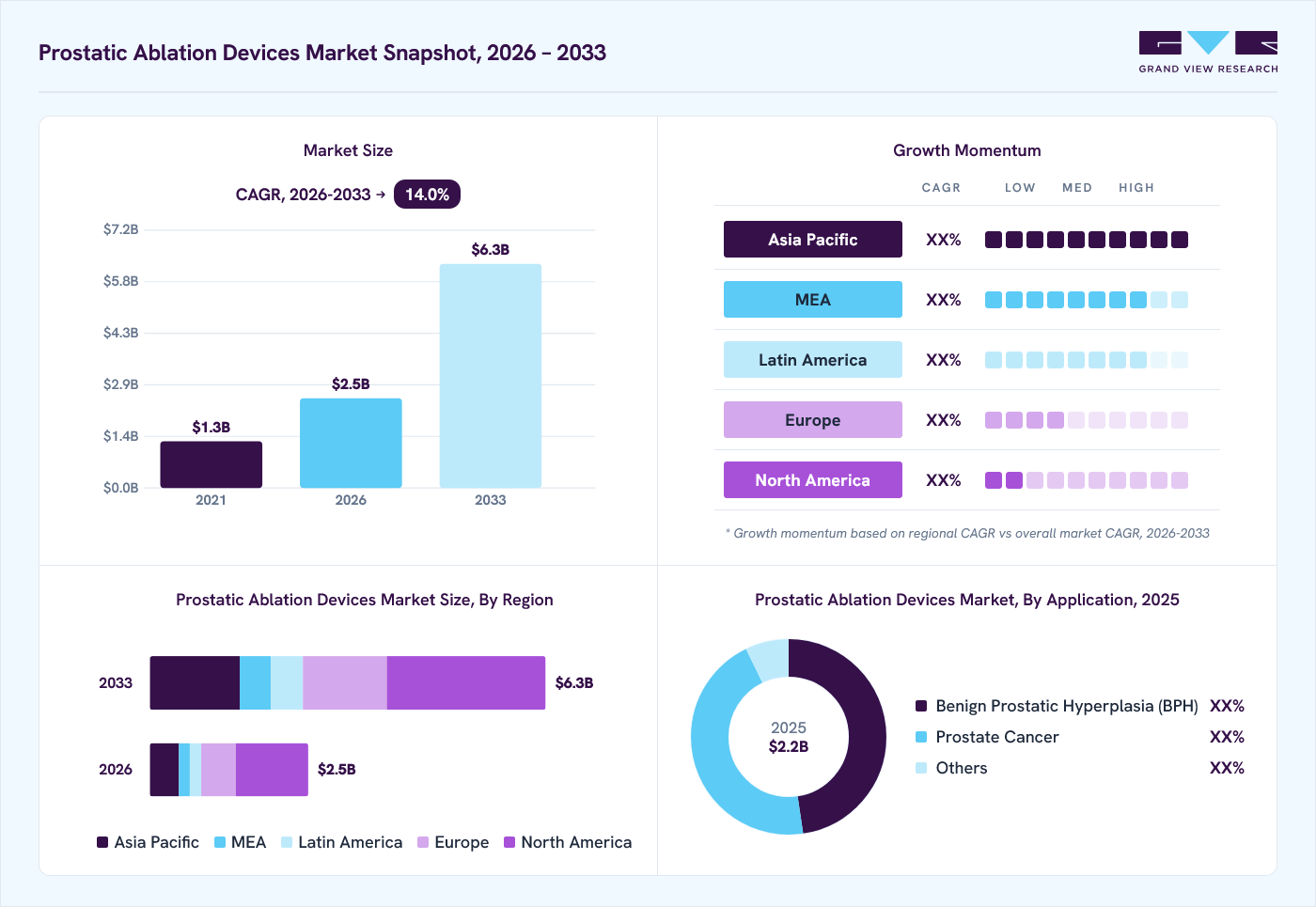
The global prostatic ablation devices market size was valued at USD 2.2 billion in 2025 and is projected to grow from USD 2.5 billion in 2026 to USD 6.3 billion by 2033, at a CAGR of 14.0% from 2026 to 2033. North America dominated the market, accounting for the largest revenue share of 46.4% in 2025. The growth of the prostatic ablation devices industry is primarily driven by the rising prevalence of localized prostate cancer and benign prostatic hyperplasia (BPH), coupled with increasing demand for minimally invasive treatment options that reduce hospital stays and preserve urinary and sexual function.
 Source: Grand View Research, IR Documents, Primary Interviews, Paid DatabasesTo learn more about this report,
 Download Free Sample Report
 Key Market Trends & Insights
- By product / technology: Radiofrequency (RF) ablation device held the largest revenue share of 27.6% in 2025.
- By application: Benign prostatic hyperplasia (BPH) held the largest revenue share of 47.6% in 2025.
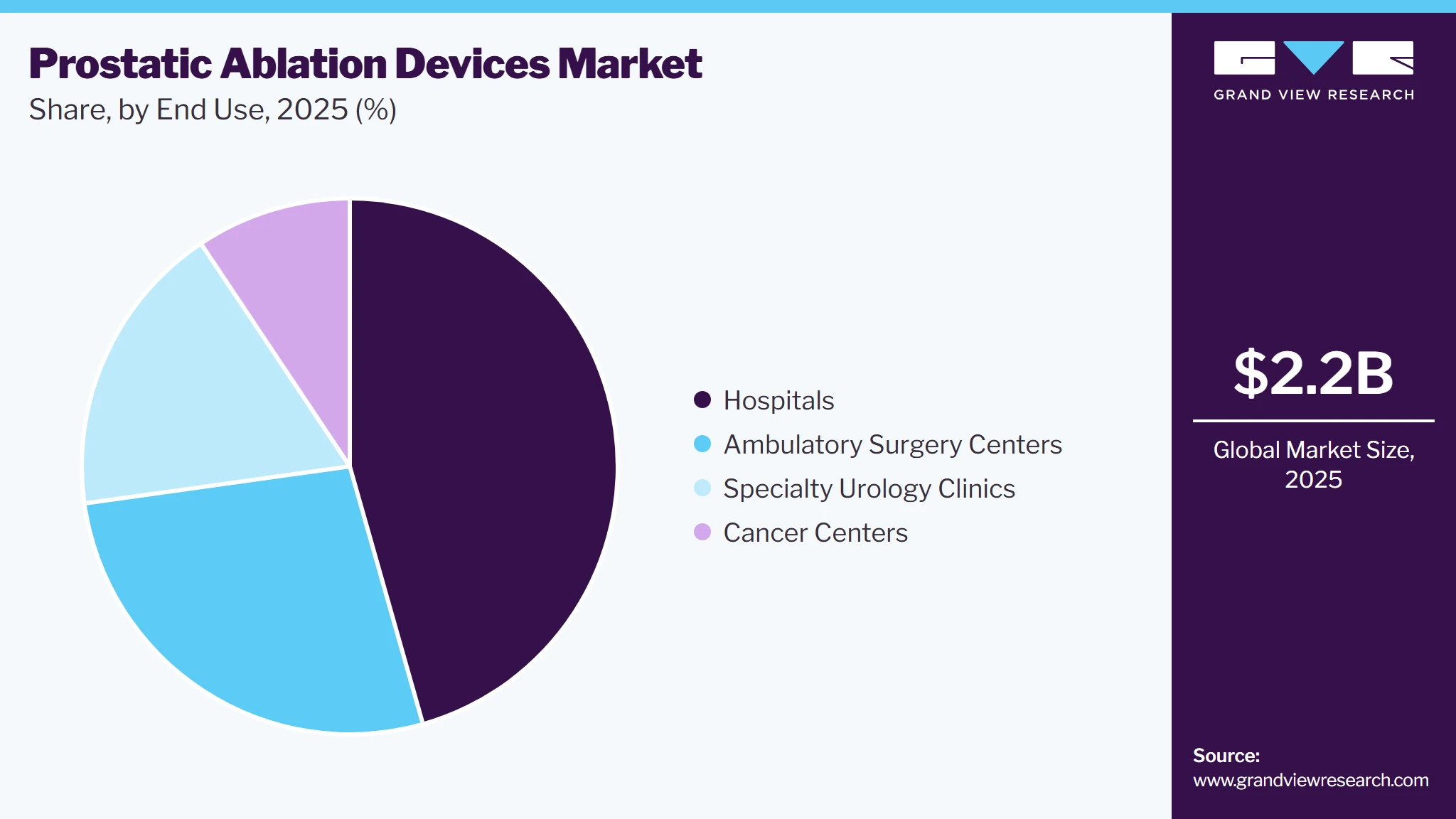
- By end use: Hospitals held the largest revenue share of 45.6% in 2025.
Regional Highlights
- Largest regional market: North America (46.4% revenue share, 2025).
- Fastest-growing regional market: Asia Pacific (highest CAGR, 2026-2033).
- By country: The U.S. held the largest revenue share of North America in 2025.
Market Size & Forecast
- Market size in 2025: USD 2.2 Billion
- Estimated market size in 2026: USD 2.5 Billion
- Projected market size by 2035: USD 6.3 Billion
- CAGR (2026-2033): 14.0%
Three ways to get this report
Buy it, customize it, or ask a question.Ask an Analyst
A direct answer, usually in 1 working day
- AccessReport author, directly
- Reply timeWithin 1 working day
- No sales callDirect answer only
- FormatEmail reply
- CostFree, no cost
Get the Full Report
What the study covers
- FormatsPDF · Excel · Dashboard
- Timeline2026–2033 annual, 2025 base
- Coverage20+ countries, 5 regions
- Companies10+ key players profiled
Customize the Report
20% free customization
- IncludeCountries, segments, points
- TailorTo your product definition
- ExtendDeeper competitor detail
- OrA fully bespoke study
- Turnaround5–10 working days
The growth of the prostatic ablation devices industry is primarily driven by the rising prevalence of localized prostate cancer and benign prostatic hyperplasia (BPH), coupled with increasing demand for minimally invasive treatment options that reduce hospital stays and preserve urinary and sexual function. In addition, continuous advancements in image-guided ablation technologies, including focal therapies such as laser ablation, ultrasound ablation, cryotherapy, and irreversible electroporation, are improving treatment precision and accelerating clinical adoption.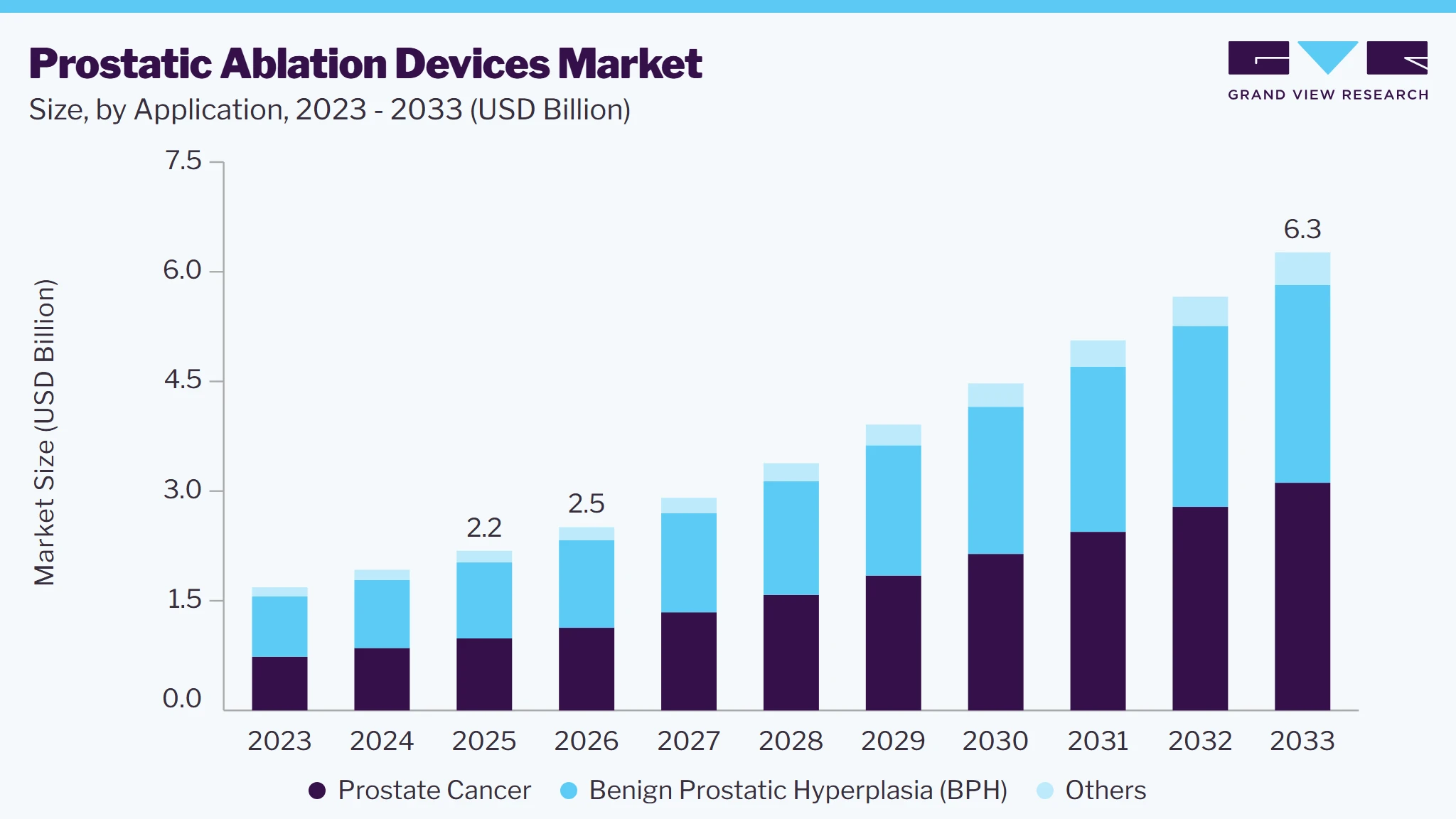 To learn more about this report, Download Free Sample Report
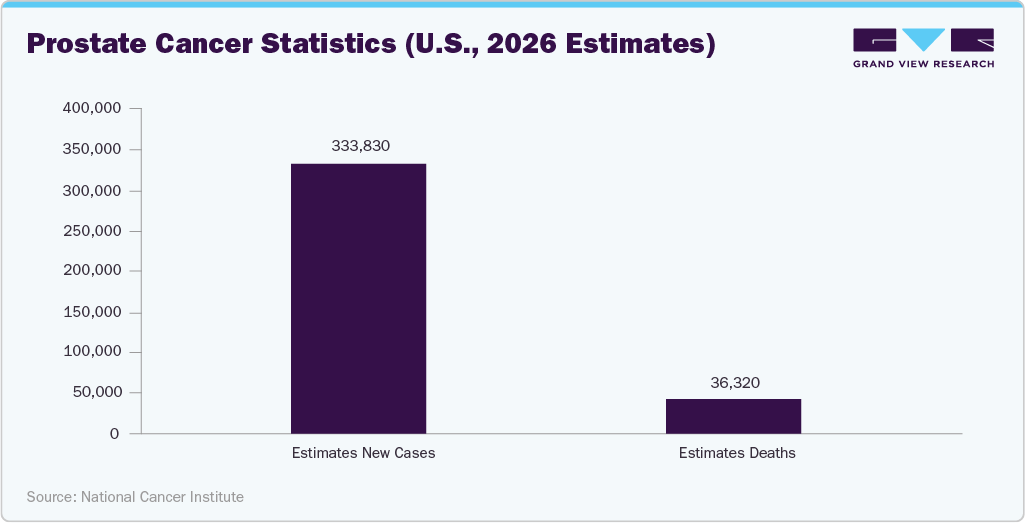
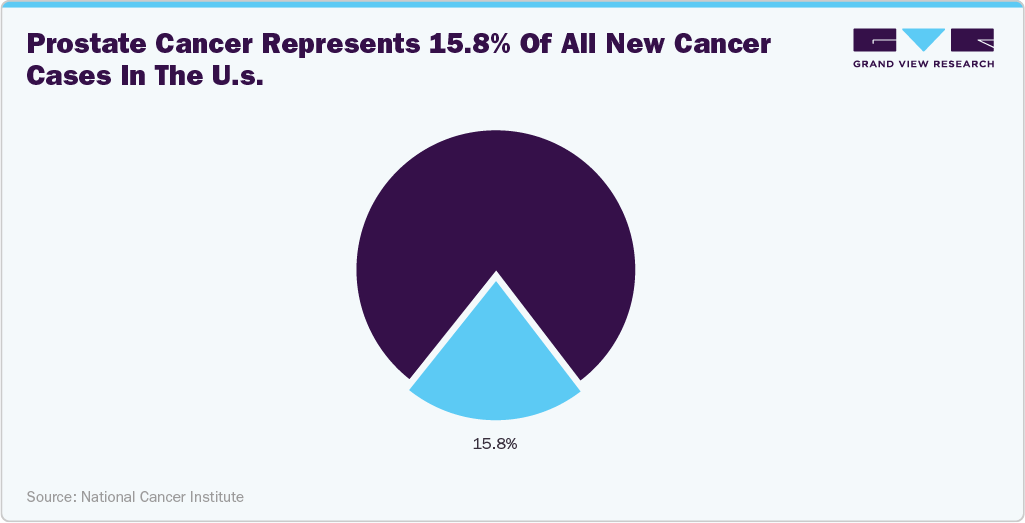
 The rising prevalence of benign prostatic hyperplasia (BPH) and prostate cancer is a major driver of the market. The growing elderly male population and increasing awareness of prostate health are leading to higher diagnosis and treatment rates worldwide. As more patients seek minimally invasive alternatives that offer faster recovery, fewer complications, and preservation of urinary and sexual function, the demand for advanced prostate ablation devices continues to grow across both BPH and localized prostate cancer indications.
 To learn more about this report, Download Free Sample Report
  To learn more about this report, Download Free Sample Report
 Furthermore, continuous advancements in image-guided ablation technologies are driving growth in the prostate ablation device market by improving procedural precision, treatment planning, and clinical outcomes. The integration of multiparametric MRI (mpMRI), real-time ultrasound, MRI-ultrasound fusion imaging, and robotic navigation enables accurate localization and targeted ablation of prostate lesions while minimizing damage to surrounding healthy tissue. These innovations enhance physician confidence, reduce procedure-related complications, and improve preservation of urinary continence and sexual function.
The development of MRI-guided transurethral ultrasound ablation (TULSA), advanced high-intensity focused ultrasound (HIFU) systems, and image-guided irreversible electroporation (IRE) platforms has expanded treatment options for both benign prostatic hyperplasia (BPH) and localized prostate cancer. Continuous improvements in software, treatment planning algorithms, and real-time monitoring capabilities are expected to support wider clinical adoption and drive sustained demand for advanced prostate ablation devices.
-
For instance, in April 2026, Profound Medical announced that its TULSA-PRO platform would be featured in multiple presentations at the Society of Interventional Radiology Annual Scientific Meeting 2026. The system combines real-time MRI guidance with directional ultrasound to enable incision-free, personalized prostate ablation with continuous treatment monitoring and verification.
“Our significant presence at SIR 2026 comes at an opportune time as leading iMRI procedures, including MRI-guided biopsy and TULSA, are poised to transform how unmet medical needs across the prostate disease spectrum are being addressed,” said Arun Menawat, Profound’s CEO and Chairman. “Awareness and acceptance of the TULSA Procedure’s strong clinical profile, as well as its potential to become the next mainstream treatment modality for most men with prostate disease, is growing. And we look forward to building on that progress by highlighting CAPTAIN trial data and showcasing real-world physician experience throughout 2026.”
Moreover, the expanding use of focal therapy for localized prostate cancer presents a significant growth opportunity for the prostate ablation device market. Advances in multiparametric MRI, targeted biopsy, and image-guided ablation technologies are improving treatment precision while preserving healthy prostate tissue and reducing treatment-related side effects. As clinical evidence supporting focal therapy continues to grow and more patients seek organ-preserving, minimally invasive treatment options, the demand for advanced prostate ablation devices is expected to increase across hospitals and specialized urology centers.
Overview of Focal Therapy Technologies for Prostate Cancer: Devices, Imaging Integration, Regulatory Status, and Cost Analysis
Modality
Device Name
Manufacturer
Technology Features
Imaging Integration
Regulatory Approvals
Estimated Procedural Cost (USD) (U.S. & Europe)
Estimated Equipment Purchase Cost (USD)
High-Intensity Focused Ultrasound (HIFU)
Ablatherm
EDAP TMS
Non-invasive thermal ablation using focused ultrasound
MRI, Ultrasound
FDA, CE
USD 15,000-USD 25,000
USD 300,000-USD 500,000
Sonablate
SonaCare Medical
Focused ultrasound ablation with real-time treatment planning
Ultrasound
FDA, CE
USD 18,000-USD 28,000
USD 350,000-USD 550,000
Focal One
EDAP TMS
Robotic image-guided focal HIFU with fusion imaging
MRI-Ultrasound Fusion
FDA, CE
USD 20,000-USD 30,000
USD 500,000-USD 700,000
TULSA-PRO
Profound Medical
MRI-guided transurethral directional ultrasound ablation
MRI
FDA, CE
USD 18,000-USD 30,000
USD 700,000-USD 1,000,000
Cryotherapy
Visual ICE
Boston Scientific
Argon-based freeze-thaw cryoablation system
MRI, Ultrasound
FDA, CE
USD 12,000-USD 20,000
USD 180,000-USD 300,000
Cryocare
Endocare
Percutaneous cryotherapy platform
Ultrasound
FDA
USD 10,000-USD 20,000
USD 150,000-USD 250,000
SeedNet
Galil Medical
Cryotherapy with integrated planning software
Ultrasound
FDA, CE
USD 12,000-USD 22,000
USD 180,000-USD 300,000
Irreversible Electroporation (IRE)
NanoKnife
AngioDynamics
Non-thermal ablation using high-voltage electrical pulses
Ultrasound, CT, MRI
FDA, CE
USD 20,000-USD 35,000
USD 250,000-USD 400,000
Dophi N3000
SurgNova (China)
IRE platform for soft-tissue ablation
Ultrasound
CE
USD 5,000-USD 8,000
USD 80,000-USD 120,000
Laser Ablation (LA)
Visualase
Medtronic
Fiber-optic laser thermal ablation
MRI, Ultrasound
CE
USD 12,000-USD 22,000
USD 200,000-USD 350,000
EchoLaser
Elesta
Multi-fiber laser interstitial thermal therapy
Ultrasound, MRI
CE
USD 10,000-USD 20,000
USD 180,000-USD 300,000
Photodynamic Therapy (PDT)
TOOKAD
Steba Biotech
Light-activated photosensitizer for targeted tumor ablation
MRI
EMA (Europe)
USD 18,000-USD 30,000*
Drug-based pricing model
Radiofrequency Ablation (RFA)
STARmed RF System
STARmed
Radiofrequency thermal ablation using electromagnetic energy
Ultrasound, CT, MRI
CE
USD 10,000-USD 18,000
USD 100,000-USD 200,000
Emprint™ Ablation System
Medtronic
Advanced electromagnetic thermal ablation platform
CT, Ultrasound
FDA, CE
USD 12,000-USD 20,000
USD 150,000-USD 250,000
Source: NCBI
(Note: Acquisition models vary by manufacturer, with options including purchase, leasing, and pay-per-use systems.
Abbreviations: CT, computed tomography; CE, Conformité Européenne (European certification); EMA, European Medicines Agency; EU, European Union; FDA, U.S. Food and Drug Administration; FLA, focal laser ablation; HIFU, high-intensity focused ultrasound; IRE, irreversible electroporation; LA, Laser Ablation; MRI, magnetic resonance imaging; PDT, photodynamic therapy; RFA, radiofrequency ablation.)
Market Dynamics
The prostatic ablation devices market is experiencing significant growth, driven by the rising prevalence of benign prostatic hyperplasia (BPH) and localized prostate cancer, increasing adoption of minimally invasive therapies, and continuous advancements in image-guided ablation technologies. Growing preference for outpatient procedures that preserve urinary and sexual function is further accelerating market expansion. However, high capital costs, variable reimbursement policies, and limited long-term clinical evidence for certain focal ablation technologies continue to restrain widespread adoption. The expanding use of MRI-guided focal therapy, AI-assisted treatment planning, and increased healthcare investments in emerging markets are expected to create significant growth opportunities over the forecast period.
The increasing prevalence of benign prostatic hyperplasia (BPH) and localized prostate cancer is a key driver of the prostatic ablation devices market. Population aging and improved diagnostic capabilities are driving more patients to seek effective, tissue-preserving treatment options. As demand shifts toward minimally invasive therapies that reduce recovery time and preserve urinary and sexual function, the adoption of advanced prostatic ablation devices is expected to continue increasing across hospitals and specialized urology centers.
The high capital investment required for advanced prostatic ablation systems, including laser, high-intensity focused ultrasound (HIFU), and MRI-guided platforms, remains a significant restraint in the prostatic ablation devices market. In addition to equipment costs, hospitals must invest in specialized imaging infrastructure, disposable consumables, and physician training, thereby increasing overall procedural expenses. These financial barriers can delay technology adoption, particularly among smaller hospitals and healthcare facilities in emerging economies with limited capital budgets.
The integration of artificial intelligence (AI) with image-guided ablation systems presents a significant opportunity for the prostatic ablation devices market. AI-powered algorithms can assist in automated prostate segmentation, lesion detection, treatment planning, and real-time image analysis, improving the precision and consistency of focal ablation procedures while supporting market demand for more advanced prostate ablation technologies. By combining AI with multiparametric MRI (mpMRI), ultrasound, and MRI–ultrasound fusion imaging, clinicians can achieve more accurate targeting of cancerous tissue while minimizing damage to surrounding healthy structures and strengthening market adoption of these systems.
Furthermore, AI-driven decision support and predictive analytics can enhance patient selection, optimize ablation margins, and support post-treatment monitoring by identifying residual or recurrent disease, creating additional value for manufacturers in the prostatic ablation devices market. As healthcare providers adopt digital imaging platforms and precision medicine approaches, the integration of AI into prostate ablation workflows is expected to improve clinical outcomes, reduce procedure variability, and create new growth opportunities for manufacturers of advanced prostate ablation technologies.
Market Concentration & Characteristics
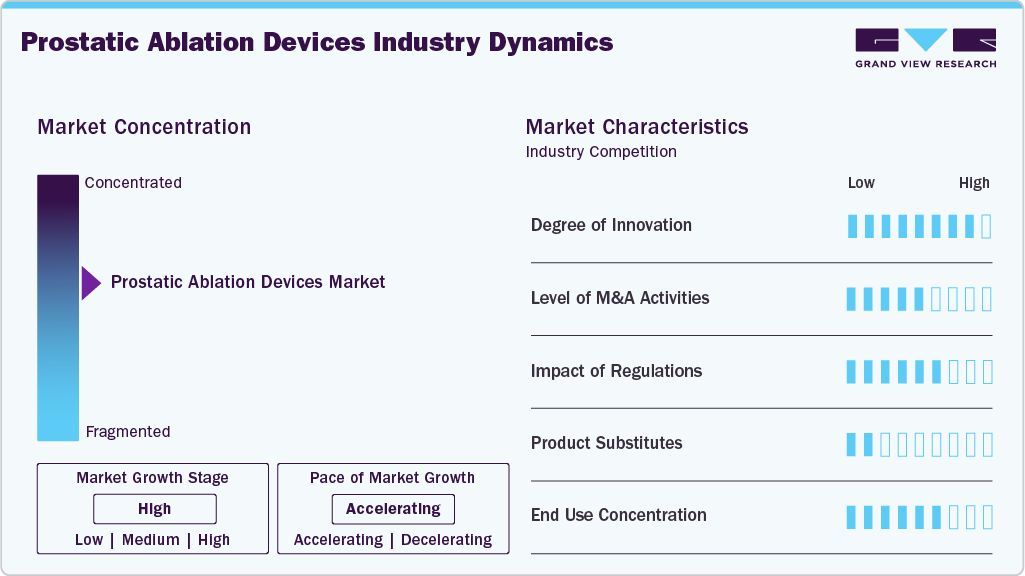
The prostatic ablation devices market demonstrates a high degree of innovation, driven by the development of image-guided focal therapy systems that improve treatment precision while minimizing damage to surrounding healthy tissues. Manufacturers are integrating real-time MRI, ultrasound fusion imaging, robotic navigation, and AI-enabled treatment planning to enhance procedural accuracy and clinical outcomes. Ongoing advancements in energy modalities such as irreversible electroporation (IRE), transurethral ultrasound ablation (TULSA), focal laser ablation (FLA), and high-intensity focused ultrasound (HIFU) are expanding treatment options for localized prostate cancer and benign prostatic hyperplasia (BPH), supporting wider clinical adoption. For instance, in April 2025, EDAP TMS SA announced the launch of its next-generation Focal One i robotic high-intensity focused ultrasound (HIFU) system at the 120th American Urological Association (AUA) Annual Meeting held in Las Vegas, Nevada. The new platform features enhanced imaging integration, AI-enabled treatment planning, and improved workflow capabilities to advance precision focal therapy for localized prostate cancer.
“The new features and design of the Focal One i system are based directly on the feedback from our customers, as well as anticipating the future needs of surgeons performing focal therapy. Voice of Customer feedback is clear that Focal One surgeons want to incorporate the latest diagnostic imaging modalities like PSMA PET and emerging AI- driven and intelligent algorithms to further personalize Focal One Robotic HIFU procedures,” said Ryan Rhodes, Chief Executive Officer of EDAP TMS. “In addition, we believe Focal One’s digital interface and fully robotic HIFU energy delivery design is uniquely suited to enable remote proctoring and remote collaborative procedures. Cleveland Clinic’s successful achievement of the world’s first remote transatlantic Focal One Robotic HIFU treatment from Ohio to Abu Dhabi serves as the first step in continued innovations that will allow Focal One surgeon experts to connect remotely and share their expertise. We also believe the Focal One i will allow more efficient and effective training and mentoring of surgeons while further broadening patient access to expert care.”
The prostatic ablation devices industry is witnessing moderate merger and acquisition (M&A) activity, with strategic transactions focused on expanding minimally invasive urology portfolios and strengthening energy-based ablation technologies. Large medical device companies are acquiring or partnering with innovative developers to gain access to advanced focal therapy platforms, imaging capabilities, and next-generation ablation systems. These activities are helping accelerate commercialization, broaden geographic reach, and enhance competitive positioning as demand for organ-preserving prostate treatments continues to grow.
 To learn more about this report, Download Free Sample Report
 Regulatory frameworks have a high impact on the market, as manufacturers must demonstrate long-term safety, efficacy, and clinical benefits through rigorous clinical trials to obtain approvals from agencies such as the U.S. FDA and European regulatory authorities. Increasing emphasis on evidence-based approvals, post-market surveillance, and quality management standards is driving investment in clinical research and product development. Regulatory clearances for innovative focal therapy technologies are boosting physician confidence, expanding reimbursement opportunities, and accelerating the adoption of minimally invasive prostate ablation procedures.
The prostatic ablation devices market exhibits a moderate-to-high end-use concentration, with hospitals and specialty urology centers accounting for the largest share due to their advanced imaging infrastructure, skilled clinicians, and ability to perform complex, minimally invasive procedures. Ambulatory surgical centers (ASCs) are witnessing increasing adoption as improvements in focal ablation technologies enable safe outpatient treatment with shorter recovery times and lower procedural costs. The growing shift toward minimally invasive care is expected to further diversify end-user adoption over the coming years.
Analyst Perspective
The prostatic ablation device market is transitioning from conventional surgical interventions toward precision, minimally invasive therapies that prioritize functional preservation and faster patient recovery. Growing adoption of focal therapy for benign prostatic hyperplasia (BPH) and localized prostate cancer, coupled with advancements in MRI-guided, ultrasound-guided, and AI-enabled treatment planning, is reshaping the competitive landscape. While high equipment costs, reimbursement variability, and the need for strong long-term clinical evidence remain key challenges, ongoing regulatory approvals, expanding clinical data, and increasing outpatient procedure volumes are expected to support sustained market growth. Companies that invest in image-guided innovation, clinical validation, physician training, and value-based healthcare solutions will be well-positioned to strengthen their market presence over the coming years.
Product /Technology Insights
Radiofrequency ablation devices dominated the prostatic ablation devices market in 2025, supported by their established clinical use, proven efficacy in treating benign prostatic hyperplasia (BPH), and widespread availability across hospitals and specialty urology centers. Their ability to deliver precise tissue ablation with minimal bleeding, reduced procedure times, and favorable safety outcomes has contributed to strong physician confidence. In addition, well-defined clinical guidelines, reimbursement support, and the availability of commercially established RF systems have reinforced their leading market position.
Water vapor ablation systems are expected to register the fastest growth during the forecast period, owing to their minimally invasive nature, favorable safety profile, and ability to preserve sexual and urinary function. Increasing adoption for the treatment of benign prostatic hyperplasia (BPH), coupled with shorter procedure times and rapid patient recovery, is driving demand. Growing clinical evidence, expanding physician acceptance, and rising preference for office-based and outpatient procedures are further supporting the accelerated adoption of water vapor ablation systems.
Application Insights
Benign prostatic hyperplasia (BPH) dominated the prostatic ablation devices industry in 2025, driven by its high prevalence among the aging male population and the rising incidence of lower urinary tract symptoms (LUTS). The growing preference for minimally invasive treatments that offer shorter recovery times, fewer complications, and preservation of urinary function has accelerated the adoption of prostate ablation technologies for BPH management. In addition, expanding availability of outpatient procedures and continuous advancements in image-guided ablation systems have further strengthened the segment’s leading market position.
The prostate cancer segment is expected to witness the fastest growth in the prostatic ablation device market during the forecast period, driven by the increasing incidence of localized prostate cancer and growing adoption of focal, organ-preserving treatment approaches. Advances in multiparametric MRI (mpMRI), targeted biopsy, and image-guided ablation technologies have improved patient selection and treatment precision, accelerating the use of minimally invasive therapies. In addition, expanding clinical evidence supporting HIFU, cryoablation, TULSA, and irreversible electroporation (IRE), along with rising patient preference for treatments that preserve urinary continence and sexual function, is expected to further propel segment growth.
End Use Insights
Hospitals dominated the prostatic ablation device market in 2025, accounting for the largest revenue share due to their access to advanced imaging infrastructure, specialized urology departments, and high-cost ablation platforms such as HIFU, TULSA, cryoablation, and irreversible electroporation (IRE). Hospitals remain the preferred setting for complex prostate ablation procedures because they offer multidisciplinary expertise, comprehensive perioperative care, and the capability to manage high-risk patients. Furthermore, favorable reimbursement for hospital-based procedures and increasing investments in advanced image-guided technologies have reinforced their leading position in the market.
 To learn more about this report, Download Free Sample Report
 Ambulatory surgery centers (ASCs) are expected to witness the fastest growth during the forecast period, driven by the increasing shift toward minimally invasive outpatient procedures that reduce hospital stays and overall treatment costs. Advances in laser, water vapor, HIFU, and robotic ablation technologies have enabled safe, efficient procedures in ASC settings, resulting in faster patient recovery. In addition, favorable reimbursement for outpatient care, rising patient preference for same-day discharge, and the expansion of ASC infrastructure are accelerating the adoption of prostatic ablation devices in these facilities.
Regional Insights
North America dominated the prostatic ablation devices market with the largest revenue share of 46.4% in 2025. The market is witnessing strong growth driven by the increasing adoption of minimally invasive focal therapies for localized prostate cancer and benign prostatic hyperplasia (BPH). Healthcare providers across the U.S. and Canada are increasingly utilizing advanced technologies such as high-intensity focused ultrasound (HIFU), irreversible electroporation (IRE), transurethral ultrasound ablation (TULSA), and water vapor ablation to improve clinical outcomes while preserving urinary and sexual function. The market is further supported by favorable regulatory approvals, ongoing clinical research, and the presence of leading medical device manufacturers and specialized urology centers.
 To learn more about this report, Download Free Sample Report
 U.S. Prostatic Ablation Devices Market Trends
The U.S. prostatic ablation devices industry held the largest share of North America in 2025. The market is shifting toward focal, minimally invasive therapies that preserve urinary continence and erectile function while effectively treating localized prostate cancer. Growing adoption of advanced technologies such as irreversible electroporation (IRE), high-intensity focused ultrasound (HIFU), transurethral ultrasound ablation (TULSA), and water vapor ablation is supported by expanding clinical evidence, FDA clearances, and recommendations from leading urology centers. In addition, the integration of MRI-guided treatment planning, fusion imaging, and AI-assisted procedural navigation is improving treatment precision, accelerating outpatient procedures, and driving demand for next-generation prostate ablation systems.
Europe Prostatic Ablation Devices Market Trends
The Europe prostatic ablation devices industry is characterized by increasing adoption of organ-preserving focal therapies as clinicians seek to reduce treatment-related urinary and sexual side effects compared with radical prostatectomy and radiation therapy. The region is witnessing growing utilization of MRI-guided HIFU, irreversible electroporation (IRE), focal laser ablation (FLA), and TULSA across specialized urology centers, supported by expanding clinical evidence, CE-marked technologies, and favorable acceptance of minimally invasive procedures. In addition, multicenter clinical studies, investments in image-guided intervention platforms, and the expansion of focal therapy centers in countries such as Germany, the UK, France, and Italy are accelerating market growth and technological innovation.
The UK prostatic ablation device market is experiencing significant growth, driven by the increasing adoption of focal therapy for localized prostate cancer within specialist NHS and private urology centers. The market is witnessing rising use of high-intensity focused ultrasound (HIFU), irreversible electroporation (IRE), and MRI-guided focal ablation, supported by strong clinical evidence aimed at preserving urinary continence and sexual function. Growing participation in multicenter clinical trials, enhanced multiparametric MRI diagnostics, and increasing investment in precision urology are further accelerating the adoption of next-generation prostate ablation technologies across the UK.
The prostatic ablation device market in France is witnessing increasing adoption of image-guided focal therapies, particularly high-intensity focused ultrasound (HIFU), supported by the country’s long-standing expertise in HIFU technology and strong clinical research ecosystem. French hospitals and academic urology centers are expanding the use of MRI-targeted focal ablation and irreversible electroporation (IRE) to preserve urinary and sexual function while treating localized prostate cancer. Growing participation in multicenter clinical studies, favorable acceptance of precision medicine, and continued innovation by domestic HIFU technology developers are further strengthening France’s position as a key European market for prostate ablation devices.
Asia Pacific Prostatic Ablation Devices Market Trends
The Asia Pacific prostatic ablation device market is experiencing rapid growth, driven by the rising incidence of prostate cancer, expanding aging populations, and increasing investment in advanced urology care across countries such as Japan, China, South Korea, Australia, and India. Healthcare providers are adopting HIFU, irreversible electroporation (IRE), transurethral ultrasound ablation (TULSA), and laser-based focal therapies to offer minimally invasive treatment with improved functional outcomes. In addition, expanding hospital infrastructure, greater availability of multiparametric MRI, rising healthcare expenditure, and growing physician training programs are accelerating the adoption of next-generation prostate ablation technologies throughout the region.
The Japan prostatic ablation devices market is being driven by the country’s rapidly aging population, increasing prostate cancer incidence, and strong preference for organ-preserving, minimally invasive therapies that maintain quality of life. Japanese hospitals are expanding the adoption of high-intensity focused ultrasound (HIFU) and other image-guided focal ablation technologies, supported by advanced MRI infrastructure, experienced urologists, and a well-established precision medicine ecosystem. In addition, continuous investment in robotic-assisted interventions, early cancer detection programs, and clinical research is accelerating the uptake of next-generation prostate ablation devices across leading academic and tertiary care centers.
Latin America Prostatic Ablation Devices Market Trends
The Latin America prostatic ablation devices industry is witnessing gradual growth, driven by increasing prostate cancer awareness, improving access to minimally invasive urological procedures, and expanding investments in advanced healthcare infrastructure across Brazil and Argentina. Adoption of HIFU, laser ablation, and other focal therapy technologies is primarily concentrated in private hospitals and leading tertiary care centers, where demand for organ-preserving treatments is increasing. Growing physician training, expanding access to multiparametric MRI, and rising collaborations with global medical device manufacturers are further supporting the regional uptake of advanced prostate ablation technologies.
MEA Prostatic Ablation Devices Market Trends
The MEA prostatic ablation devices industry is experiencing significant growth, supported by increasing prostate cancer diagnosis rates, expanding investments in advanced urology services, and the modernization of healthcare infrastructure in countries such as Saudi Arabia, the UAE, and South Africa. Adoption of HIFU, laser ablation, and other minimally invasive focal therapies is rising in tertiary hospitals and private specialty centers as demand grows for treatments with shorter recovery times and improved functional outcomes. Government healthcare reforms, increasing physician training, and collaborations with international medical device manufacturers are further accelerating the availability and adoption of advanced prostate ablation technologies across the region.
Key Prostatic Ablation Devices Company Insights
The prostate ablation device market is moderately consolidated, with leading companies such as EDAP TMS, AngioDynamics, Inc., Profound Medical Corp., and Francis Medical, Inc. competing through technological innovation, clinical evidence, and geographic expansion. Market leaders are strengthening their positions by investing in next-generation focal therapy platforms, securing regulatory approvals, and collaborating with leading urology centers, while emerging companies are driving competition through novel energy-based ablation technologies and image-guided treatment solutions.
Key Prostatic Ablation Devices Companies
The following key companies have been profiled for this study on the prostatic ablation devices market.
-
Boston Scientific Corporation
-
PROCEPT BioRobotics Corporation
-
Urologix, LLC.
-
EDAP TMS
-
Sonablate Corp.
-
Insightec
-
Profound Medical Inc.
-
ProVerum Ltd.
-
Francis Medical, Inc.
-
AngioDynamics
-
Mermaid Medical
-
IceCure Medical
Competitive Benchmarking
Category
Operating Strategies
Competitive Edge
Weakness
Established Players (EDAP TMS; Boston Scientific; AngioDynamics)
- Invest heavily in R&D to enhance precision, image guidance, and workflow automation.
- Expand product portfolios through next-generation ablation platforms and software upgrades.
- Strong brand recognition and established customer relationships.
- Broad regulatory approvals (FDA, CE, etc.) with proven clinical performance.
High capital equipment costs can limit adoption in cost-sensitive markets.
Slower product development cycles due to large organizational structures.
Emerging Players (Profound Medical; ProVerum Ltd.; Francis Medical, Inc.)
- Focus on niche technologies such as MRI-guided focal therapy and next-generation ablation platforms.
- Generate clinical evidence through investigator-sponsored and multicenter studies.
- Highly innovative and technology-focused product portfolios.
- Faster product development and commercialization cycles.
- Limited global commercial presence and distribution networks.
- Smaller financial resources compared with established competitors.
Recent Developments
-
In June 2026, Francis Medical, Inc. announced the publication of the initial clinical outcomes from the first 110 patients enrolled in its VAPOR 2 pivotal multicenter study in the Journal of Urology. The findings support the clinical evaluation of the company’s minimally invasive therapy for localized prostate cancer, reinforcing the growing adoption of advanced focal ablation technologies in urological oncology.
-
In December 2025, Francis Medical, Inc., a privately held medical device company, announced that the Vanquish Water Vapor Ablation System received U.S. FDA 510(k) clearance for prostate tissue ablation. The clearance was supported by positive 12-month follow-up results from the first 110 patients enrolled in the ongoing VAPOR 2 clinical study, marking a significant regulatory milestone and enabling the commercial launch of the Vanquish System.
-
In December 2024, AngioDynamics, Inc. announced that the U.S. Food and Drug Administration (FDA) granted 510(k) clearance for its NanoKnife System for prostate tissue ablation. The clearance expands the clinical application of the irreversible electroporation (IRE) platform to prostate cancer treatment, strengthening the company’s position in the minimally invasive prostate ablation market and supporting broader commercialization of focal therapy technologies.
Prostatic Ablation Devices Market Report Scope
Report Attribute
Details
Market size in 2025
USD 2.2 billion
Estimated market size in 2026
USD 2.5 billion
Projected market size by 2033
USD 6.3 billion
Growth rate
CAGR of 14.0% from 2026 to 2033
Historical data
2021 - 2025
Forecast period
2026 - 2033
Quantitative units
Revenue in USD million/billion and CAGR from 2026 to 2033
Report coverage
Revenue forecast, company ranking, competitive landscape, growth factors, and trends
Segments covered
Product / technology, application, end use, region
Regional scope
North America; Europe; Asia Pacific; Latin America; MEA
Country scope
U.S.; Canada; Mexico; Germany; UK; France; Italy; Spain; Norway; Denmark; Sweden; Russia; Iceland; Finland; China; Japan; India; South Korea; Australia; Thailand; Singapore; Brazil; Argentina; Saudi Arabia; South Africa; UAE; Kuwait; Israel
Key companies profiled
Boston Scientific Corporation; PROCEPT BioRobotics Corporation; Urologix, LLC.; EDAP TMS; Sonablate Corp.; Insightec; Profound Medical Inc.; ProVerum Ltd.; Francis Medical, Inc.; AngioDynamics; Mermaid Medical; IceCure Medical
Customization scope
Free report customization (equivalent up to 8 analysts' working days) with purchase. Addition or alteration to country, regional & segment scope.
Pricing and purchase options
Avail customized purchase options to meet your exact research needs. Explore purchase options
Global Prostatic Ablation Devices Market Report Segmentation
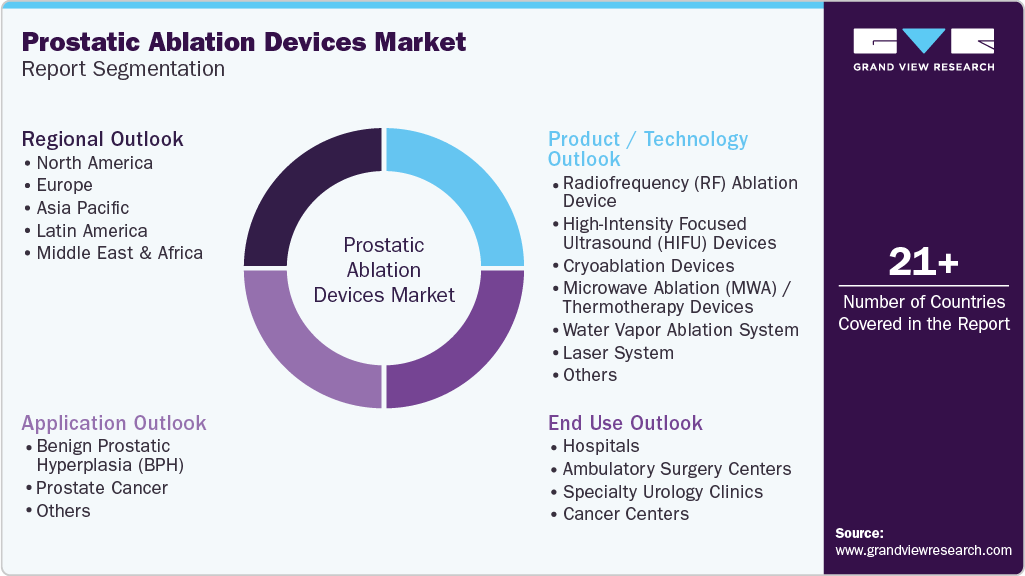
This report forecasts revenue growth at the global, regional, and country levels and provides an analysis of the latest industry trends in each of the sub-segments from 2021 to 2033. For this study, Grand View Research has segmented the global prostatic ablation devices market report based on product /technology, application, end use, and region:
 To learn more about this report, Download Free Sample Report
 -
Product / Technology Outlook (Revenue, USD Million/Billion, 2021 - 2033)
-
Radiofrequency (RF) Ablation Device
-
High-Intensity Focused Ultrasound (HIFU) Devices
-
Cryoablation Devices
-
Microwave Ablation (MWA) / Thermotherapy Devices
-
Water Vapor Ablation System
-
Laser System
-
Irreversible Electroporation (IRE)
-
-
Application Outlook (Revenue, USD Million/Billion, 2021 - 2033)
-
Benign Prostatic Hyperplasia (BPH)
-
Prostate Cancer
-
Others
-
-
End Use Outlook (Revenue, USD Million/Billion; 2021 - 2033)
-
Hospitals
-
Ambulatory Surgery Centers
-
Specialty Urology Clinics
-
Cancer Centers
-
-
Regional Outlook (Revenue, USD Million/Billion, 2021 - 2033)
-
North America
-
U.S.
-
Canada
-
Mexico
-
-
Europe
-
Germany
-
UK
-
France
-
Italy
-
Spain
-
Sweden
-
Denmark
-
Norway
-
-
Asia Pacific
-
Japan
-
China
-
India
-
Australia
-
South Korea
-
Thailand
-
-
Latin America
-
Brazil
-
Argentina
-
-
Middle East & Africa
-
South Africa
-
Saudi Arabia
-
UAE
-
Kuwait
-
-
Research Methodology
The prostatic ablation devices market figures in this report are based on a proven research process that combines executive interviews with secondary research from proprietary databases, company filings, and recognized regulatory and institutional sources. Market size is built through value-chain sizing-reconciling supply-side and demand-side estimates-and triangulated with bottom-up and top-down approaches. Every estimate passes multiple levels of expert validation before publication, with each prostatic ablation devices segment quantified using the revenue-capture definitions in the table below.
Segment Definition
Segment - Product / Technology
Revenue capture definition
Radiofrequency (RF) Ablation Device
Revenue is generated through the sale of RF ablation generators, recurring purchases of single-use electrodes, probes, and sterile procedure kits, and after-sales services such as maintenance, software upgrades, and training. Additional revenue is driven by increasing RF ablation procedure volumes in hospitals and urology centers.
High-Intensity Focused Ultrasound (HIFU) Devices
Revenue is generated from the sale of HIFU systems, recurring purchases of single-use treatment cartridges, transducers, cooling accessories, and sterile procedure kits, as well as software licenses, maintenance contracts, and clinical training. Additional revenue is driven by increasing HIFU procedure volumes in hospitals and specialized urology centers.
Cryoablation Devices
Revenue is generated through the sale of cryoablation systems, recurring purchases of disposable cryoprobes, argon and helium gas, sterile procedure kits, and accessories, as well as maintenance contracts, software upgrades, and service agreements. Additional revenue is driven by increasing cryoablation procedures performed in hospitals and specialized urology centers for prostate treatment.
Microwave Ablation (MWA) / Thermotherapy Devices
Revenue is generated from the sale of microwave ablation/thermotherapy systems, recurring purchases of single-use microwave antennas, cooling accessories, sterile procedure kits, and consumables, as well as maintenance contracts, software upgrades, and clinical training. Additional revenue is driven by increasing minimally invasive prostate ablation procedures in hospitals and urology centers.
Estimation Model
Approach
Description
Bottom-Up Procedure Volume Modeling
Models the total addressable market by estimating the prevalence and incidence of benign prostatic hyperplasia (BPH) and localized prostate cancer, followed by eligible patient populations undergoing minimally invasive ablation procedures. The model incorporates procedure adoption rates, technology shares (HIFU, Cryoablation, RF Ablation, Microwave Ablation, Laser Ablation, IRE, and others), average selling prices (ASP) of capital equipment and consumables, and regional procedure volumes.
Top-Down Revenue Triangulation
Aggregates supplier-side revenues from leading and emerging manufacturers of prostate ablation devices through annual reports, regulatory filings, investor presentations, product portfolios, distributor sales, and public financial disclosures. Revenue estimates are validated using regional market shares, installed base analysis, pricing trends, and procurement data to derive the overall market size.
Demand-Side Care-Setting Modeling
Evaluates demand across hospitals, ambulatory surgical centers (ASCs), specialty oncology clinics, and cancer centers by assessing procurement patterns, installed equipment base, physician adoption, reimbursement environment, and patient treatment pathways. The model further segments demand based on clinical indications (BPH vs. localized prostate cancer), procedure setting, and regional healthcare infrastructure to validate market estimates.
Delivered Customizations
This report has been delivered with the following In-depth customizations
Client Request
Customization Delivered
Value Adds
Product Share Analysis
Detailed market share analysis by product type (HIFU, Cryoablation, RF Ablation, Microwave Ablation, Laser Ablation, IRE, and Other Modalities), including revenue contribution, adoption trends, and competitive positioning.
Enables benchmarking of high-growth technologies, identifies leading revenue-generating segments, and supports product portfolio optimization.
Regional Market Analysis
In-depth analysis of market size, growth trends, competitive landscape, and adoption patterns across North America, Europe, Asia-Pacific, Latin America, and the Middle East & Africa.
Helps identify high-growth regions, investment opportunities, and region-specific expansion strategies.
Company Competitive Benchmarking
Comparative assessment of leading manufacturers based on product portfolio, technology platform, regulatory approvals, geographic presence, innovation pipeline, and strategic initiatives.
Supports competitive intelligence, partnership evaluation, investment decisions, and market entry or expansion planning.
Frequently Asked Questions About This Report
The benign prostatic hyperplasia (BPH) segment led the market with the largest revenue share of 47.6% in 2025.
The hospitals segment led the market with the largest revenue share of 45.6% in 2025.
Asia Pacific is the fastest-growing region over the forecast period.
The global prostatic ablation devices market size was estimated at USD 2.2 billion in 2025 and is expected to reach USD 2.5 billion in 2026.
The global prostatic ablation devices market is expected to grow at a compound annual growth rate of 14.0% from 2026 to 2033 to reach USD 6.3 billion by 2033.
The radiofrequency (RF) ablation device segment led the market with the largest revenue share of 27.6% in 2025.
North America dominated the prostatic ablation devices market with the largest revenue share of 46.4% in 2025.
The rising prevalence of benign prostatic hyperplasia (BPH) and localized prostate cancer, increasing adoption of minimally invasive therapies, and continuous advancements in image-guided ablation technologies.
Some key players operating in the prostatic ablation devices market include Boston Scientific Corporation, PROCEPT BioRobotics Corporation, Urologix, LLC., EDAP TMS, Sonablate Corp., Insightec, Profound Medical Inc., ProVerum Ltd., Francis Medical, Inc., AngioDynamics, Mermaid Medical and IceCure Medical.
About the Author(s)
Medical Devices Research Team
Healthcare · Medical DevicesThis report was authored by the medical devices research team at Grand View Research - comprising two research analysts, one senior research analyst, and one industry expert - with specialized expertise in the medical devices segment of the healthcare industry. All findings are based on proprietary healthcare databases, executive interviews, and regulatory analysis, subject to internal peer review prior to publication.
Last Updated:
Speak to Analyst

Customize this report to your needs - add regions, segments, or data points, with 20% free customization.
Or view our licence options:


ISO 9001:2015 & 27001:2022 Certified
We are GDPR and CCPA compliant! Your transaction & personal information is safe and secure. For more details, please read our privacy policy.


