
- Home
- »
- Consumer F&B
- »
-
Protein-fortified Food Products Market Size, Growth Report, 2026-2033GVR Report cover

Protein-fortified Food Products Market (2026 - 2033)
Size, Share & Trends Analysis Report By Nature (Organic, Conventional), By Product (Protein Bars, Sports & Nutrition Supplements), By Distribution Channel, By Region, And Segment Forecasts
Market Size, 2025
$75.3BMarket Estimate, 2026
$80.0BMarket Forecast, 2033
$120.3BCAGR, 2026–2033
6.4%Protein-fortified Food Products Market Summary
The global protein-fortified food products market size was valued at USD 75.3 billion in 2025 and is projected to grow from USD 80.0 billion in 2026 to USD 120.3 billion in 2033, at a CAGR of 6.0% from 2026 to 2033. North America dominated the market, accounting for a revenue share of 35.0% in 2025. With increasing health consciousness and busy lifestyles, consumers seek convenient, easy-to-consume, protein-rich food products.
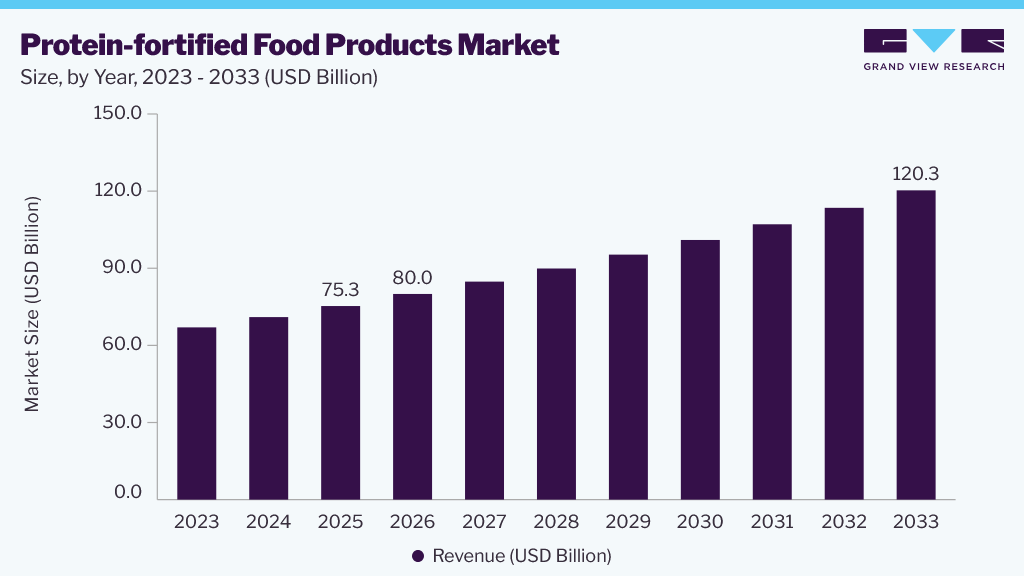 Source: Grand View Research, IR Documents, Primary Interviews, Paid DatabasesTo learn more about this report,
 Download Free Sample Report
 Key Market Trends & Insights
- By nature: The conventional protein-fortified food products segment dominated and held the largest market share of around 25.0% in 2025.
- By product: The protein segment held the largest market share of over 20.0% in 2025.
- By distribution channel: The supermarkets and hypermarkets segment held the largest market share of over 35.0% in 2025.
Regional Highlights
- Largest regional market: North America (35.0% revenue share, 2025)
Market Size & Forecast
- Market size in 2025: USD 75.3 Billion
- Estimated market size in 2026: USD 80.0 Billion
- Projected market size by 2033: USD 120.3 Billion
- CAGR (2026-2033): 6.0%
Three ways to get this report
Buy it, customize it, or ask a question.Ask an Analyst
Analyst response in 1 business day
- AccessReport author, directly
- Reply timeWithin 1 working day
- No sales callDirect answer only
- FormatEmail reply
- CostFree, no cost
Get the Full Report
What the study covers
- FormatsPDF · Excel · Dashboard
- Timeline2026–2033 annual, 2025 base
- Coverage20+ countries, 5 regions
- Companies10+ key players profiled
Customize the Report
20% free customization
- IncludeCountries, segments, points
- TailorTo your product definition
- ExtendDeeper competitor detail
- OrA fully bespoke study
- Turnaround5–10 working days
This has fueled the growth of protein-fortified snacks, beverages, and ready-to-eat meals. The popularity of plant-based diets has led to a surge in demand for plant-based protein sources, such as soy, pea, and rice proteins. Manufacturers are fortifying various food products with these plant-based proteins to cater to vegan and vegetarian consumers.
Increasing awareness regarding health, wellness, and nutrition, especially among Gen-Z and millennials, is a major factor driving the demand for healthier and more nutritious foods, including protein-fortified food products.
Many critical private and public players in the market have been launching various campaigns to help raise awareness regarding the importance of protein in the diet and emphasize the benefits of nutritious foods. Such initiatives drive consumer demand for protein-fortified food products. For instance, in January 2024, Danone India's Protinex partnered with Kaun Banega Crorepati Season 16 to promote the importance of daily protein intake for a healthy lifestyle. Protinex used this collaboration to integrate protein education into the show, encouraging healthier dietary habits and increased protein consumption.
The rise of flexitarianism has led to increased demand for plant-based proteins as consumers seek alternatives to traditional animal-based sources. Plant-based proteins have gained popularity among health-conscious consumers, with pea, oat, soy, and almond proteins being particularly appealing in various applications such as bars, snacks, and beverages.
While flexitarians make up a significant portion of the consumer base, brands that offer plant- and animal-based proteins can attract a broader following. Formulating products with plant-based proteins presents unique challenges related to taste and texture, which must be addressed to meet consumer expectations.
Analyst Perspective
The market is driven by increasing consumer awareness of high-protein diets, rising demand for functional and nutrient-enriched foods, and growing health and wellness trends. Conventional protein-fortified products continue to account for the largest market share owing to their widespread availability, affordability, and strong consumer acceptance. Ongoing product innovation, clean-label formulations, and expanding retail and e-commerce distribution channels are further supporting market growth. Manufacturers that diversify protein sources, improve taste and texture, and introduce premium, convenient, and value-added products are expected to strengthen their competitive position.
Nature Insights
The conventional protein-fortified food products segment accounted for a share of around 25.0% of the total revenue in 2025. The easy availability of conventional protein-fortified food products, backed by new product launches and innovation by key market players, is further expected to drive segmental growth. For instance, in January 2024, General Mills Inc. brand Yoplait introduced a line of high-protein, low-sugar yogurt snacks. The product has various flavors, such as vanilla, cherry, peach, strawberry, and mixed berry. In addition, these products can be easily found in various grocery stores, supermarkets, and other markets, making them easier for the general public to purchase. This accessibility ensures that individuals living in urban and rural areas can access them.
The organic protein-fortified food products segment is projected to grow from 2026 to 2033. The increasing preference for organic and clean-label products due to rising health and environmental concerns is a major driver for segmental growth. According to the article published by the European Food Safety Authority (EFSA) in May 2025, it was found that organically produced foods generally contained pesticide residues less frequently than conventionally produced foods. This supports consumer confidence in organic products. Such benefits are expected to drive the adoption of organic ingredients in various food products.
Product Insights
The protein segment accounted for the market share of over 20.0% in 2025. Protein bars are a convenient and quick option for protein and calories that can help increase daily intake of essential nutrients without much hassle and offer a more filling alternative to less nutritious snack foods. The ease of consumption offered by protein bars and the ability to provide a quick energy boost make them an attractive choice for on-the-go snacking, driving their popularity and contributing to the overall segment growth. In addition, protein bars also provide a healthy and protein-packed snack option, making them suitable for athletes who require high-nutrition intake and energy. For instance, in January 2024, according to a study published in the Multidisciplinary Digital Publishing Institute (MDPI), protein bars fortified with minerals, vitamins, and antioxidants have around 20 g of protein per serving and have low carbohydrate and sodium content. These bars are hence considered beneficial nutritional supplements for athletes.
The sports & nutrition supplements segment is projected to grow from 2026 to 2033. The increasing emphasis on preventive health and the desire to improve physical well-being drive the demand for sports and nutrition supplements, including tablets, gummies, and pills. The rise in the health-conscious population, which is more inclined to use dietary supplements as a preventive measure, drives demand for these products. In addition, athletes often turn to sports supplements to improve their fitness levels and enhance their performance. Increasing research and development efforts and the launch of innovative products by key players are expected to further boost market growth. For instance, in February 2024, Nestlé launched Resource Activ, a high-protein supplement in India, to address nutritional gaps and meet the wellness needs of active millennials nationwide.
Distribution Channel Insights
The supermarkets and hypermarkets segment accounted for over 35.0% of the market in 2025 due to their multiple options and the convenience of buying everything in a single place. The availability of various products also enables customers to choose from numerous options according to their preferences, dietary requirements, and budget.
The online distribution channel segment is projected to grow from 2026 to 2033. Online channels offer advantages to both brands and customers, as they eliminate mediators and storage costs and add a personalized shopping experience. These also provide brands with insights into consumer preferences through integrating big data analytics and help improve their product portfolios. Key players in the protein-fortified food market are shifting to online sales channels to expand their customer base and sales. For instance, in June 2025, Nurri launched its high-protein milk shakes on Amazon, making them available nationwide. This expansion improves consumer access to protein-fortified products and supports the increasing trend of online grocery shopping, contributing to the growth of the online distribution channel during the forecast period.
Regional Insights
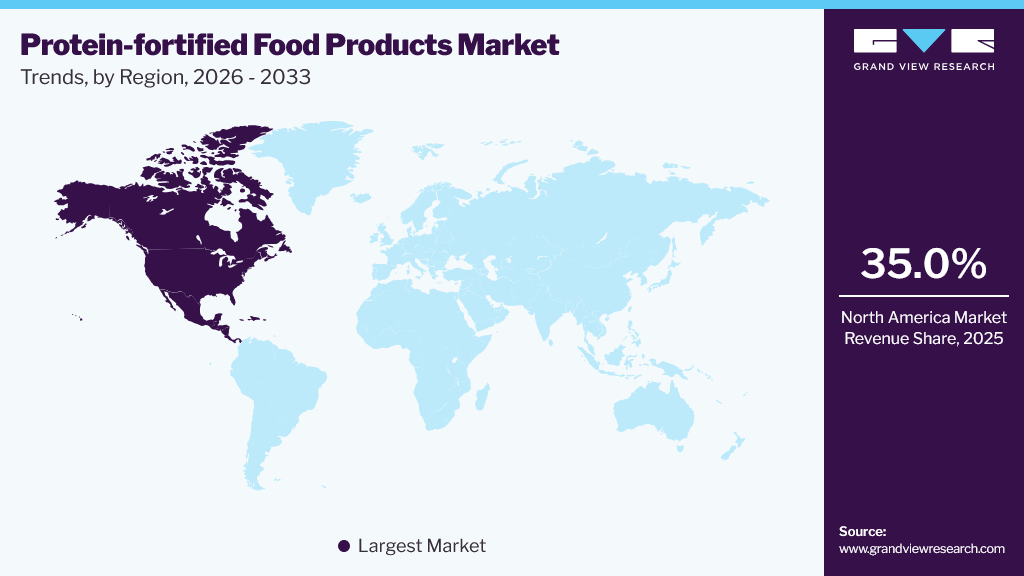
North America protein-fortified food products dominated the market, accounting for a revenue share of 35.0% of the global market in 2025. Companies have been actively expanding their presence in the U.S. market through acquisitions of smaller firms, increasing their protein production capacities, and broadening their product offerings. Players such as Agropur, Anchor Ingredients, and Hilmar Cheese have notably enhanced their production capabilities during the review period. This continuous focus on product innovation and diversification has led to increased sales volume. For instance, in April 2026, Agropur announced investments in its Beauceville, Quebec, and Bedford, Nova Scotia plants to enhance its production of value-added dairy proteins. This investment is expected to improve North America's local protein ingredient supply and meet the rising demand for protein-fortified food products.
 To learn more about this report, Download Free Sample Report
 U.S. Protein-fortified Food Products Market Trends
The protein-fortified food products market in the U.S. is expected to grow from 2026 to 2033. Consumers in the U.S. are increasingly focused on living healthier lifestyles and making more conscious choices about the foods they consume. This health-conscious behavior has led to a growing interest in functional foods that offer nutritional benefits, including protein fortification. The U.S. dairy industry has been focusing on innovation and introducing new products to meet customer demands.
Asia Pacific Protein-fortified Food Products Market Trends
The protein-fortified food products market in Asia Pacific is expected to grow significantly from 2026 to 2033. In the Asia Pacific, probiotics are commonly associated with yogurt and sour milk products, which are in high demand in the probiotic food and drinks market. Consumers in the region are increasingly looking for healthier alternatives to staple foods, such as high-protein rice and milk. The demand for high-protein snack bars, once considered a niche product primarily favored by bodybuilders and athletes, is now on the rise among the general population seeking an additional energy source. Therefore, companies actively participate in diverse strategies, including product launches, to hold a strong position in the market.
Key Protein-fortified Food Products Companies Insights
The protein-fortified food products market is expected to witness moderate competition owing to the presence of numerous players across the industry. Owing to changing consumer trends, many companies are expanding their product portfolio to gain a competitive edge in the market. Some of the key players are WK Kellog Co.; MYPROTEIN - The Hut.com Ltd.; Mars Inc.; General Mills Inc.; and Nestlé.
Key Protein-fortified Food Products Companies
The following key companies have been profiled for this study on the protein-fortified food products market:
-
General Mills Inc.
-
1440 Foods
-
BELLRING BRANDS, INC
-
WK Kellogg Co
-
Nestlé
-
Mondelēz International
-
Glanbia PLC
-
Mars, Incorporated
-
Naturell India Pvt. Ltd
-
FULFIL
Recent Developments
-
In September 2025, The Kroger Co. launched the Simple Truth Protein line, offering over 80 protein-rich meals and snacks under its private label. This launch expands Kroger's protein-fortified product portfolio to meet increasing consumer demand for convenient, high-protein options.
-
In March 2025, Danone India introduced Protinex Sachets, providing an affordable and convenient way to increase daily protein intake. This launch broadens the company's protein-fortified nutrition portfolio and improves access to high-protein products for more consumers.
-
In January 2024, the WK Kellogg Co. launched Eat Your Mouth Off, a new line of vegan cereal with chocolate and fruity tastes. The cereal puffs have 22 grams of plant-based protein, 0 grams of sugar, and 2 grams of carbohydrates per serving. The brand lists canola oil, lentil protein, oat fiber, soy protein isolate, and pea protein isolate as ingredients
-
In March 2024, MYPROTEIN - The Hut.com Ltd. launched Jimmy's x MYPROTEIN Iced Coffee in collaboration with Jimmy’s, the iced coffee brand. This product is designed to meet consumers' on-the-move demand and increase the company's ready-to-drink offerings
Protein-fortified Food Products Market Report Scope
Report Attribute
Details
Market size in 2025
USD 75.3 billion
Estimated market size in 2026
USD 80.0 billion
Projected market size by 2033
USD 120.3 billion
Growth rate
CAGR of 6.0% from 2026 to 2033
Base year for estimation
2025
Historical data
2021 – 2024
Forecast period
2026 – 2033
Quantitative units
Revenue in USD billion, and CAGR from 2026 to 2033
Report coverage
Revenue forecast, company ranking, competitive landscape, growth factors, and trends
Segments covered
Nature, product, distribution channel, region
Regional scope
North America; Europe; Asia Pacific; Latin America; Middle East & Africa
Country scope
U.S.; Canada; Mexico; Germany; UK; France; Spain; Italy; Sweden; The Netherland; Poland; Belgium; China; Japan; India; Australia & New Zealand; South Korea; Vietnam; Indonesia; South Africa; Brazil
Key companies profiled
General Mills Inc.; 1440 Foods; BELLRING BRANDS, INC; WK Kellogg Co; Nestlé; Mondelēz International; Glanbia PLC; Mars, Incorporated
Naturell India Pvt. Ltd; FULFIL
Customization scope
Free report customization (equivalent up to 8 analysts working days) with purchase. Addition or alteration to country, regional & segment scope.
Pricing and purchase options
Avail of customized purchase options to meet your exact research needs. Explore purchase options
Protein-fortified Food Products Market Report Segmentation
This report forecasts revenue growth at global, regional, and country levels and provides an analysis of the latest industry trends and opportunities in each of the sub-segments from 2021 to 2033. For this study, Grand View Research has segmented the global protein-fortified food products market report based on nature, product, distribution channel, and region:
-
Nature Outlook (Revenue, USD Billion, 2021 - 2033)
-
Organic
-
Conventional
-
-
Product Outlook (Revenue, USD Billion, 2021 - 2033)
-
Bakery & Snacks Products
-
Cookies
-
Chips
-
Cereals
-
Breads
-
Sweet Goods (Muffins, Pastries, etc.)
-
-
Protein Bars
-
Sports Nutrition Bars
-
Meal Replacement Bars
-
Others
-
-
RTD & RTM Beverages
-
RTD Shakes
-
RTD Smoothies
-
RTM Powders
-
-
Dairy & Dairy Alternatives
-
Yogurt
-
Milk
-
Cheese
-
-
Meat & Meat Alternatives
-
Protein Jerky
-
Meat Alternatives
-
-
Breakfast & Cereals Bars
-
Frozen & Refrigerated Foods
-
Protein Ice Creams
-
Frozen Meals
-
-
Baby Food & Infant Formula
-
Baby Food
-
Infant Formula
-
-
Sports & Nutrition Supplements
-
Others
-
-
Distribution Channel Outlook (Revenue, USD Billion, 2021 - 2033)
-
Hypermarkets & Supermarkets
-
Convenience Stores
-
Specialty Stores
-
Online
-
Others
-
-
Regional Outlook (Revenue, USD Billion, 2021 - 2033)
-
North America
-
U.S.
-
Canada
-
-
Europe
-
UK
-
Germany
-
France
-
Italy
-
Spain
-
Sweden
-
The Netherland
-
Poland
-
Belgium
-
-
Asia Pacific
-
China
-
Japan
-
India
-
Australia & New Zealand
-
South Korea
-
Vietnam
-
Indonesia
-
-
Latin America
-
Brazil
-
Mexico
-
-
MEA
-
South Africa
-
-
Frequently Asked Questions About This Report
Asia Pacific is the fastest-growing region over the forecast period.
The conventional protein-fortified food products segment dominated and held the largest market share of around 25.0% in 2025
The global protein-fortified food products market size was valued at USD 75.3 billion in 2025 and is estimated at USD 80.0 billion for 2026
Key players in the market include General Mills Inc., 1440 Foods, BELLRING BRANDS, INC, WK Kellogg Co, Nestlé, Mondelēz International, Glanbia PLC, Mars, Incorporated Naturell India Pvt. Ltd, FULFIL, and others
The conventional protein-fortified food products segment accounted for the largest revenue share of approximately 25.0% in 2025
Protein bars led the market, accounting for 20.0% in 2025 while sports & nutrition supplements are the fastest-growing segment.
Supermarkets & hypermarkets led the market, accounting for 35.0% in 2025. Supermarkets and hypermarkets are gaining popularity due to the availability of a wide range of options and the convenience of buying everything in one place.
The global protein-fortified food products market size was valued at USD 75.3 billion in 2025 and is estimated at USD 80.0 billion for 2026.
North America dominated with a 35.0% revenue share in 2025.
About the Author(s)
Consumer F&B Research Team
Consumer Goods · Consumer F&BThis report was authored by the consumer f&b research team at Grand View Research - comprising two research analysts, one senior research analyst, and one industry expert - with specialized expertise in the consumer f&b segment of the consumer goods industry. All findings are based on proprietary consumer goods databases, executive interviews, and regulatory analysis, subject to internal peer review prior to publication.
Last Updated:
Speak to Analyst

Customize this report to your needs - add regions, segments, or data points, with 20% free customization.
Or view our licence options:


ISO 9001:2015 & 27001:2022 Certified
We are GDPR and CCPA compliant! Your transaction & personal information is safe and secure. For more details, please read our privacy policy.


