
- Home
- »
- Medical Devices
- »
-
Radiopharmaceuticals Third-Party Logistics Market Report, 2026-2033GVR Report cover

Radiopharmaceuticals Third-party Logistics Market (2026 - 2033)
Size, Share & Trends Analysis Report By Type (Diagnostic Radiopharmaceuticals, Therapeutic), By Service, By Radioisotope Half-Life, By Temperature Range, By End Use, By Region, And Segment Forecasts
Market Size, 2025
$932.0MMarket Estimate, 2026
$1,073.9MMarket Forecast, 2033
$2,913.4MCAGR, 2026–2033
15.3%Radiopharmaceuticals Third-party Logistics Market Summary
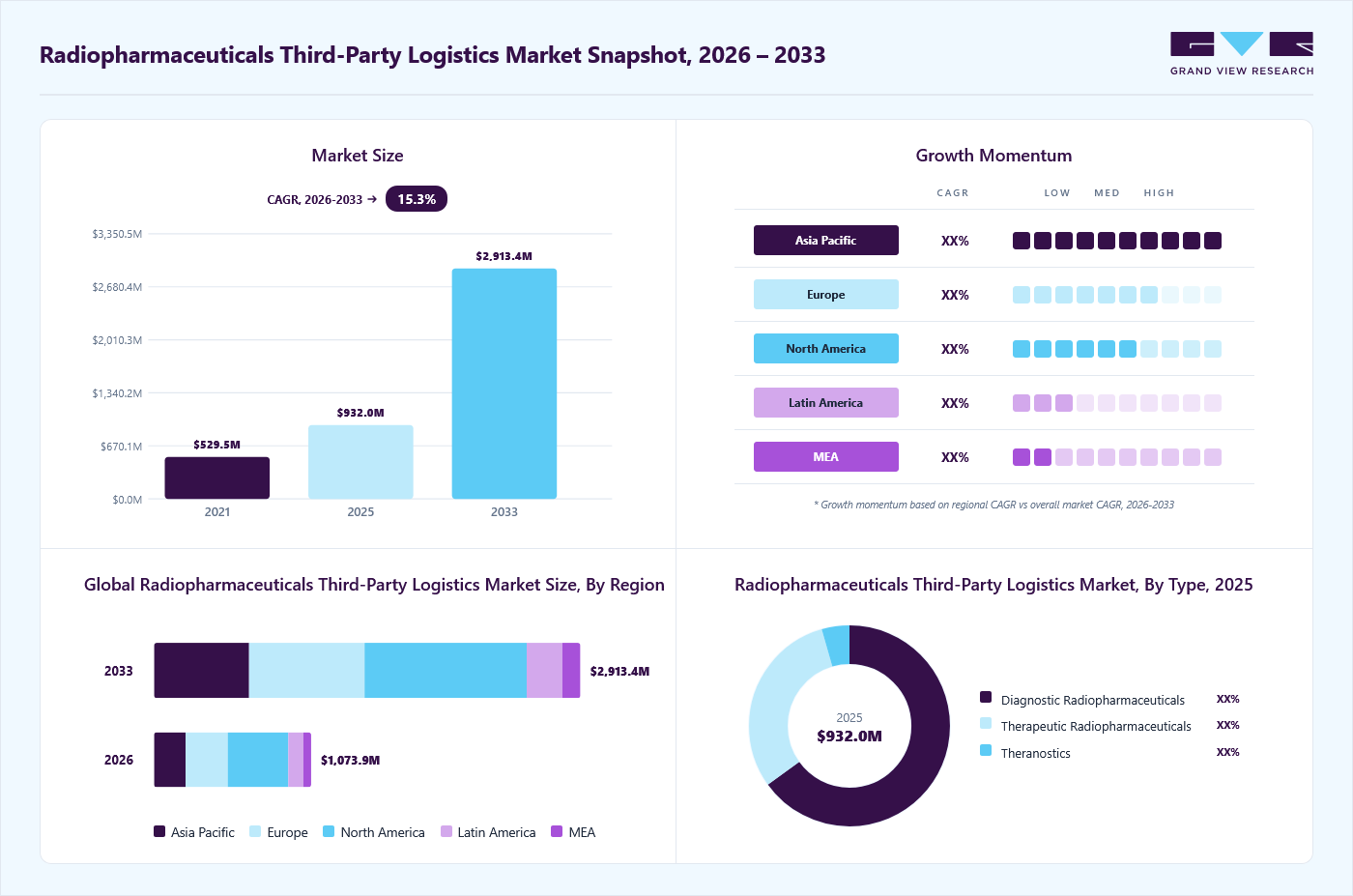
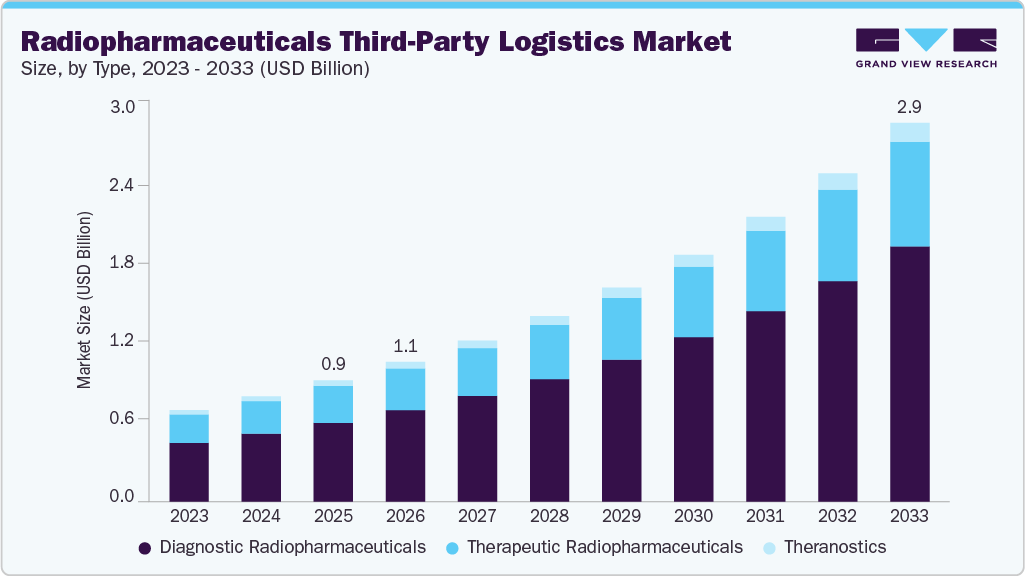
The global radiopharmaceuticals third-party logistics market size was valued at USD 932.0 million in 2025 and is projected to grow from USD 1073.9 million in 2026 to USD 2913.4 million by 2033, at a CAGR of 15.3% from 2026 to 2033. The North America held the largest share of 38.1% of the global market in 2025. The radiopharmaceuticals third-party logistics (3PL) market is driven by a range of factors, including operational and clinical dynamics associated with the handling of radioactive therapeutics and diagnostics.
 Source: Grand View Research, IR Documents, Primary Interviews, Paid DatabasesTo learn more about this report,
 Download Free Sample Report
Key Market Trends & Insights
- By type: Diagnostic radiopharmaceuticals segment held the largest market share of 65.0% in 2025.
- By service: Transportation segment held the largest market share in 2025.
- By radioisotope Half-Life: Short half-life segment held the largest market share in 2025.
- By temperature range: Ambient segment held the largest market share in 2025.
- By end use: Pharma & biopharma companies segment held the largest market share in 2025.
Regional Highlights
- Largest regional market: North America (38.1% revenue share, 2025)
- By country: The U.S. held the largest share in 2025
Market Size & Forecast
- Market size in 2025: USD 932.0 Million
- Estimated market size in 2026: USD 1073.9 Million
- Projected market size by 2033: USD 2913.4 Million
- CAGR (2026-2033): 15.3%
Three ways to get this report
Buy it, customize it, or ask a question.Ask an Analyst
Analyst response in 1 business day
- AccessReport author, directly
- Reply timeWithin 1 working day
- No sales callDirect answer only
- FormatEmail reply
- CostFree, no cost
Get the Full Report
What the study covers
- FormatsPDF · Excel · Dashboard
- Timeline2026–2033 annual, 2025 base
- Coverage20+ countries, 5 regions
- Companies10+ key players profiled
Customize the Report
20% free customization
- IncludeCountries, segments, points
- TailorTo your product definition
- ExtendDeeper competitor detail
- OrA fully bespoke study
- Turnaround5–10 working days
Besides, the growing time-sensitive nature of radiopharmaceuticals, as many isotopes possess ultra-short half-lives, necessitating highly synchronized, just-in-time delivery models to ensure product efficacy and minimize decay-related losses are further contributing to market growth. In addition, the expanding adoption of nuclear medicine, molecular imaging, and theranostics is significantly increasing shipment volumes and frequency, thereby intensifying demand for specialized, high-reliability logistics solutions. The growing pipeline of radiopharmaceutical-based diagnostics and targeted therapies further reinforces this trend.
The market is benefiting from the strategic shift by pharmaceutical and biotechnology companies toward outsourcing logistics functions. Organizations are increasingly leveraging 3PL providers to optimize cost structures, enhance operational flexibility, and access specialized capabilities in handling radioactive materials. Moreover, growing stringent regulatory requirements and the need for advanced cold-chain and radiation-controlled infrastructure are expected to drive the involvement of experienced 3PL partners. Compliance with international transport regulations and safety standards remains a key barrier to in-house logistics management. Furthermore, ongoing technological advancements, including real-time shipment tracking, automation, and integrated monitoring systems, are enhancing supply chain visibility, risk mitigation, and delivery precision. Thus, these factors makes 3PL providers strategic enablers of efficient, compliant, and time-critical radiopharmaceutical distribution.
 To learn more about this report, Download Free Sample Report
According to the International Atomic Energy Agency, the growing global demand for medical radioisotopes results in over 40 million nuclear medicine procedures performed each year worldwide. Most of these procedures depend on short-lived isotopes like Technetium-99m. The agency noted the urgent need for reliable, timely distribution systems due to the rapid decay rates of these isotopes. In addition, the U.S. Department of Energy has been promoting domestic production of radioisotopes to reduce reliance on international supply chains, especially for Molybdenum-99, which is essential for diagnostic imaging. Besides, the European Commission has recognized the resilience of radiopharmaceutical supply chains as a key priority and is advocating for investments in local production and specialized transportation infrastructure. Moreover, the World Nuclear Association mentioned that over 85% of nuclear medicine procedures worldwide rely on isotopes produced in reactors or cyclotrons. This underscores the need for well-coordinated logistics and swift distribution capabilities. These government initiatives and statistics highlight the mounting pressures on radiopharmaceutical supply chains, illustrating the crucial role that specialized third-party logistics providers play in ensuring uninterrupted, compliant, and timely delivery across global healthcare systems.
Moreover, technological advancements are significantly enhancing efficiency and reliability in the third-party logistics (3PL) market for radiopharmaceuticals. The integration of real-time tracking systems, IoT-enabled sensors, and GPS monitoring allows precise shipment visibility and proactive risk management. Advanced temperature-controlled packaging solutions and smart containers ensure strict cold chain integrity and radiation safety compliance. Automation in warehousing and handling processes minimizes human error and improves turnaround times. Additionally, data analytics and predictive modeling enable optimized route planning and demand forecasting. Digital platforms further support regulatory documentation and compliance, strengthening operational transparency and ensuring the timely, secure delivery of time-sensitive radiopharmaceutical products.
Furthermore, growing investments are playing a pivotal role in advancing the third-party logistics (3PL) market for radiopharmaceuticals. Public and private sector funding is increasingly directed toward expanding radioisotope production capacity, developing cyclotron and reactor infrastructure, and strengthening distribution networks. Investments in specialized logistics hubs, cold chain systems, and radiation-compliant transport solutions are enhancing supply chain resilience. Additionally, pharmaceutical and biotech companies are allocating capital to long-term partnerships with 3PL providers to ensure reliable, time-critical delivery. Venture capital and strategic collaborations are also supporting innovation in theranostics and nuclear medicine, further driving demand for advanced, compliant, and high-precision logistics services globally.
Opportunity Analysis
The third-party logistics (3PL) market for radiopharmaceuticals presents new growth opportunities driven by the rapid expansion of nuclear medicine and precision diagnostics. The increasing adoption of theranostics and targeted radionuclide therapies is creating sustained demand for highly specialized, time-sensitive logistics solutions. As healthcare systems globally shift toward personalized treatment approaches, the need for reliable distribution of short half-life isotopes is expected to intensify.
Emerging markets across Asia-Pacific, Latin America, and the Middle East offer significant untapped potential, driven by improving healthcare infrastructure, rising cancer prevalence, and growing investments in nuclear medicine capabilities. This creates opportunities for 3PL providers to establish regional distribution hubs and localized cold chain networks. In addition, advancements in radioisotope production technologies, including cyclotron-based manufacturing, are decentralizing production, thereby increasing the complexity and frequency of shipments further expanding the market for logistics providers.
Moreover, strategic collaborations between pharmaceutical companies, isotope producers, and logistics firms are also opening new revenue streams through integrated service offerings, including packaging, regulatory compliance, and real-time monitoring. Besides, increasing regulatory standardization across regions is expected to streamline cross-border transportation, enabling more efficient global distribution networks. Thus, the market offers strong opportunities for innovation, capacity expansion, and value-added service differentiation, positioning 3PL providers as critical partners in the evolving radiopharmaceutical supply chain.
Impact of U.S. Tariffs on the Global Radiopharmaceuticals Third-party Logistics Market
The U.S. tariffs on imported medical isotopes and related inputs have a multifaceted impact on the global radiopharmaceuticals third-party logistics (3PL) market. A key effect is increased costs across the supply chain, as tariffs on isotopes or specialized equipment are typically passed downstream, raising the overall cost of radiopharmaceutical doses and logistics services. Tariffs introduce supply chain volatility and disruption risks, particularly given the U.S.’s heavy reliance on imported isotopes from 30 types sourced globally, with no large-scale domestic substitutes. The short half-life of radiopharmaceuticals further amplifies this risk, as delays caused by customs or trade barriers can immediately affect product availability and patient access.
For 3PL providers, these dynamics increase operational complexity, requiring greater agility in routing, regulatory navigation, and contingency planning. At the same time, tariffs may create long-term opportunities by incentivizing domestic production and regional supply chain development, potentially reshaping logistics networks. Thus, U.S. tariffs act as both a disruptor and a structural catalyst, influencing pricing, supply reliability, and strategic investment in the global radiopharmaceutical logistics ecosystem.
Technological Advancements
 To learn more about this report, Download Free Sample Report
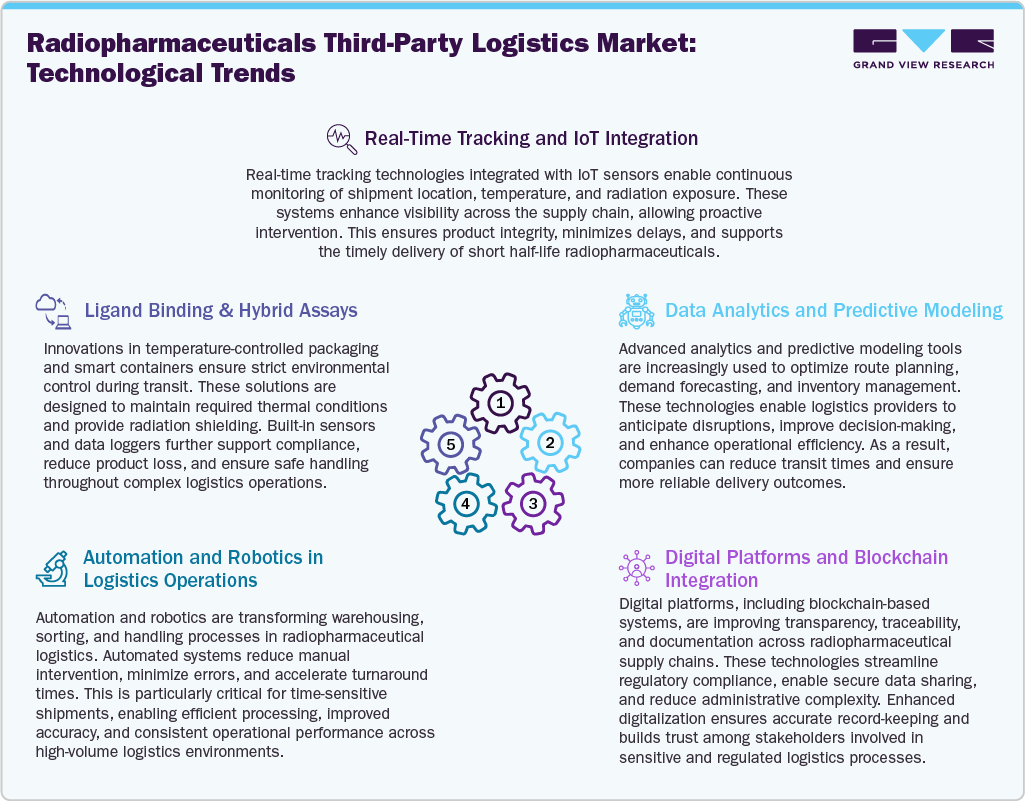
Technological advancements are transforming the third-party logistics (3PL) market for radiopharmaceuticals by enhancing efficiency, compliance, and delivery precision. The integration of real-time tracking systems with IoT-enabled sensors allows for continuous monitoring of shipment location, temperature, and radiation exposure, ensuring product integrity and enabling proactive risk management. Besides, advanced cold chain and smart packaging solutions help maintain strict thermal conditions and provide the necessary radiation shielding, minimizing product loss and ensuring regulatory compliance.
Moreover, automation and robotics are streamlining warehousing and handling operations, reducing manual intervention, improving accuracy, and accelerating turnaround times for time-sensitive shipments. The adoption of data analytics and predictive modeling enables logistics providers to optimize route planning, forecast demand, and mitigate potential disruptions, thereby improving operational efficiency and reliability. Digital platforms, including blockchain-based systems, are enhancing transparency, traceability, and secure documentation across the supply chain. Thus, these technological improvements are strengthening end-to-end logistics capabilities, reducing operational risks, and supporting the timely and compliant distribution of radiopharmaceuticals. Thus, these factors are expected to drive the market growth.
Pricing Model Analysis
 To learn more about this report, Download Free Sample Report
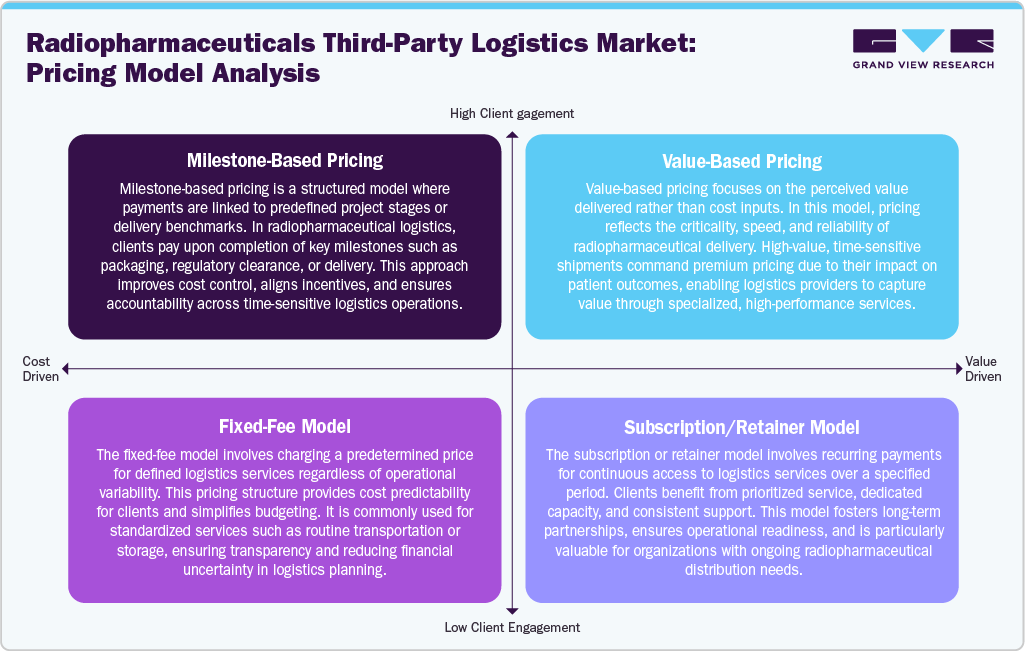
Pricing models in the radiopharmaceuticals third-party logistics (3PL) market are evolving to align with the complexity, time sensitivity, and value-driven nature of services. Milestone-based pricing is widely adopted for structured logistics operations, where payments are linked to predefined stages such as packaging, regulatory clearance, and final delivery, ensuring accountability and performance alignment. In contrast, value-based pricing reflects the criticality and urgency of radiopharmaceutical shipments, with premium charges applied to high-priority, time-sensitive deliveries that directly impact patient outcomes and treatment timelines.
The fixed-fee model remains relevant for standardized and recurring services, offering cost predictability and simplified budgeting for routine transportation, storage, and handling requirements. This approach enhances transparency and minimizes financial uncertainties for clients. In addition, the subscription or retainer model is gaining traction, particularly among pharmaceutical companies with continuous distribution needs. This model involves recurring payments in exchange for dedicated logistics capacity, prioritized service, and consistent operational support.
Thus, these pricing strategies enable 3PL providers to balance revenue predictability with service flexibility, while addressing diverse client requirements. They also support long-term partnerships, optimize resource allocation, and enhance the overall efficiency and reliability of radiopharmaceutical logistics operations.
Market Concentration & Characteristics
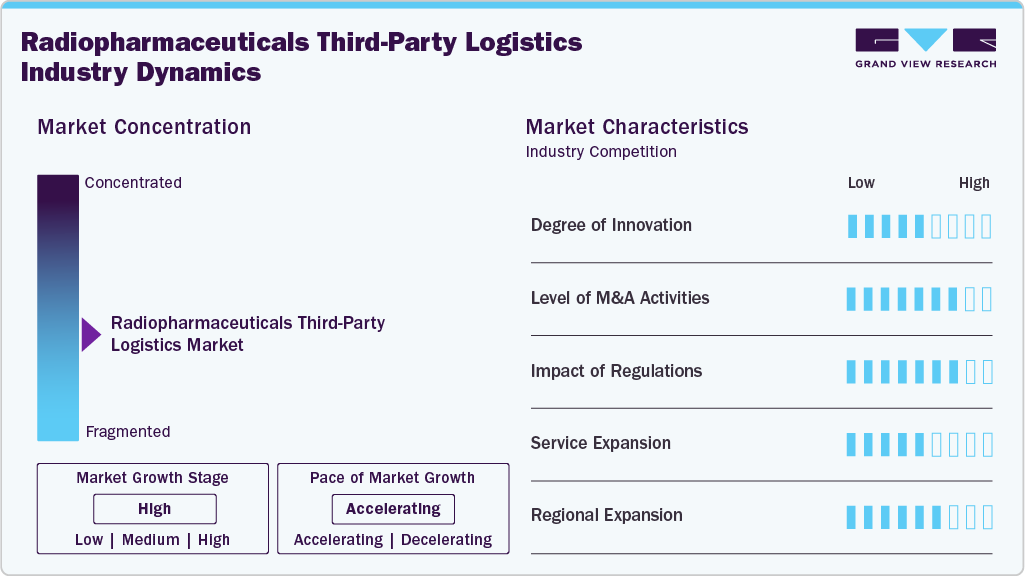
The radiopharmaceuticals third-party logistics (3PL) market is in a high-growth phase, driven by accelerating demand from expanding nuclear medicine applications and an increasing reliance on specialized logistics providers. The market is characterized by the degree of technological innovation, level of strategic collaborations and M&A activities, regulatory intensity, service diversification, and regional network expansion
Innovation remains a key competitive factor as 3PL providers adopt real-time tracking, IoT-enabled monitoring, advanced cold chain packaging, and automation technologies. These advancements enhance shipment visibility, ensure product integrity, and enable precise, time-critical delivery, positioning logistics providers as essential partners in radiopharmaceutical distribution.
 To learn more about this report, Download Free Sample Report
Strategic partnerships, acquisitions, and collaborations are increasing as companies aim to strengthen capabilities and geographic reach. These activities facilitate access to specialized infrastructure, regulatory expertise, and integrated service offerings, enabling providers to enhance competitiveness and support the growing complexity of radiopharmaceutical supply chains.
Stringent regulations governing radioactive material handling, transport safety, and international compliance significantly influence market dynamics. Adherence to evolving global standards impacts operational costs and timelines, making regulatory expertise a critical differentiator for 3PL providers managing cross-border shipments.
Service portfolios are expanding beyond transportation to include packaging, labeling, regulatory support, real-time monitoring, and last-mile delivery. End-to-end logistics solutions help attract pharmaceutical and nuclear medicine clients, fostering long-term partnerships and improving value chain integration.
Expansion into emerging markets and the establishment of localized distribution hubs are enhancing supply chain efficiency and resilience. Strengthening regional networks enables faster delivery, improved compliance, and scalability, enabling 3PL providers to effectively support global radiopharmaceutical demand.
Type Insights
On the basis of type segment, in 2025 , the diagnostic radiopharmaceuticals segment held the largest market share in the market, accounting for a revenue share of 65.0%. The segment growth is attributed to driven by extensive use in routine imaging procedures such as PET and SPECT scans. The high volume of diagnostic procedures globally, particularly in oncology, cardiology, and neurology, creates consistent demand for short-lived isotopes such as Technetium-99m and Fluorine-18. This necessitates frequent, time-sensitive deliveries, increasing reliance on specialized logistics providers. In addition, growing clinical adoption, expanding diagnostic infrastructure, and growing disease prevalence further strengthen the segment growth within radiopharmaceutical logistics services.
The theranostics segment is expected to grow significantly during the forecast period. Segment growth is driven by the increasing use of personalized medicine and targeted radionuclide therapies. By merging diagnostics with therapeutics, this approach requires highly coordinated, precision-oriented logistics solutions. The expanding pipeline of radioligand therapies, especially in oncology, is further driving the need for specialized handling, regulatory compliance, and just-in-time delivery. Moreover, advancements in molecular imaging and paired treatments are broadening clinical applications worldwide. As healthcare systems continue to embrace integrated diagnostic-therapeutic models, the demand for agile and reliable logistics services is anticipated to drive the segment growth over the estimated period.
Service Insights
On the basis of service, the transportation segment accounted for the largest share in 2025. The segment includes air freight, road transport, and just-in-time (JIT) delivery services. The segment is driven by the increasing requirement for rapid, secure, and compliant delivery of highly time-sensitive isotopes. Due to their short half-lives, these shipments rely heavily on air and road transport, supported by just-in-time delivery models to minimize decay and ensure usability upon arrival. Specialized packaging, effective radiation shielding, and precise temperature control are essential to maintain product integrity throughout transit. In addition, strict compliance with international regulations governing the transport of radioactive materials adds to the operational complexity. Advanced tracking systems and optimized routing solutions enhance shipment visibility and reliability, helping transportation services ensure the safe and timely distribution of radiopharmaceuticals.
Air freight is a vital transportation mode in the radiopharmaceuticals third-party logistics (3PL) market due to the urgent delivery requirements of short half-life isotopes. It enables rapid, long-distance distribution between production facilities and healthcare centers, ensuring product viability. Specialized handling, temperature-controlled packaging, and strict compliance with international aviation regulations for radioactive materials are essential. Air cargo networks support just-in-time delivery models, minimizing decay-related losses. In addition, integration with real-time tracking and priority shipping services enhances reliability, making air freight a preferred option for time-critical radiopharmaceutical shipments globally.
The specialized handling and compliance services segment is expected to grow significantly during the forecast period. Specialized handling and compliance services are critical in the third-party logistics (3PL) market for radiopharmaceuticals, given the hazardous and time-sensitive nature of radioactive materials. These services encompass radiation-shielded packaging, secure labeling, and precise documentation aligned with international transport and safety regulations. Logistics providers employ trained personnel and certified processes to ensure safe handling, minimize exposure risks, and prevent contamination. Compliance with regulatory frameworks across multiple jurisdictions is essential to avoid delays and penalties. In addition, real-time monitoring, audit trails, and quality assurance systems enhance transparency, ensuring safe, efficient, and fully compliant distribution of radiopharmaceuticals across global supply chains. Such factors are expected to drive the market growth.
Radioisotope Half-Life Insights
On the basis of source, the short half-life segment dominated the market with the largest revenue share in 2025. The segment is driven by increasing demand for diagnostic imaging procedures and the widespread use of isotopes such as Technetium-99m and Fluorine-18. The need for rapid, just-in-time delivery and minimal decay loss is accelerating reliance on specialized 3PL providers, which is expected to drive the market. In addition, tracking technologies and optimized routing further support operational efficiency. Besides, expanding nuclear medicine infrastructure and rising chronic disease prevalence are fueling the demand for high-frequency, time-critical logistics services in short-half-life radiopharmaceuticals. Such factors are expected to drive segment growth.
On the other hand, the ultra-short half-life segment is projected to grow at a significant CAGR duringthe forecast period. The segment is driven by growing adoption of PET imaging and on-site cyclotron-based production models. The requirement for near-immediate delivery and precise synchronization with clinical workflows is expected to drive the market growth. Investments in localized manufacturing and dedicated courier networks are enhancing feasibility. Furthermore, increasing focus on precision diagnostics and personalized medicine is driving the need for ultra-fast, highly coordinated logistics solutions capable of supporting minute-level delivery timelines.
Temperature Range Insights
Based on the temperature range, the ambient segment accounted for the largest share in 2025 during the forecast period. The segment growth is driven by the rising need for cost-effective, flexible logistics solutions for radiopharmaceuticals that are stable at controlled room temperature. Reduced dependency on complex cold chain infrastructure lowers operational costs while maintaining compliance, is expected to drive the market. The growing demand for standardized transport solutions and rising shipment volumes support this segment's growth. In addition, advancements in protective packaging and regulatory alignment are enabling safe and efficient ambient transportation, making it a viable option for specific radiopharmaceutical categories. Thus, these factors are expected to drive the market.
The refrigerated segment is expected to grow significantly during the forecast period. The growth is attributed to rising demand for temperature-sensitive radiopharmaceuticals that require strict thermal control. Besides, growth in biologics-based radiopharmaceuticals, increasing requirement for advanced therapies, and increasing regulatory emphasis on cold chain compliance and product integrity further support the segment growth. In addition, growing technological advancements in temperature monitoring, insulated packaging, and active cooling systems are enhancing reliability, while expanding global distribution networks are driving the need for robust refrigerated logistics solutions. Such factors are expected to drive the market.
End Use Insights
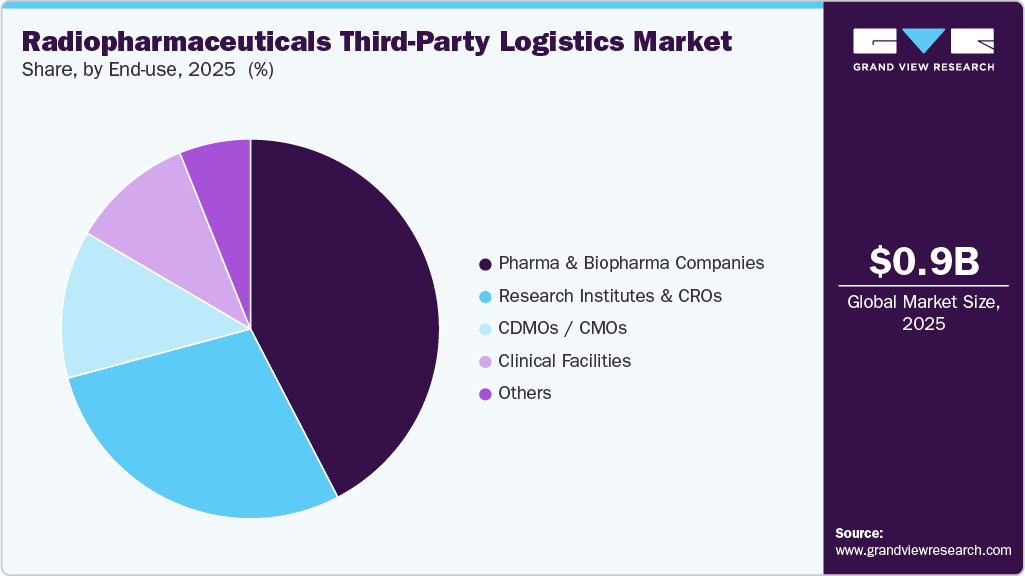
Based on end the, the pharma & biopharma companies segment accounted for the largest share in 2025 during the forecast period. Pharmaceutical companies play a crucial role in driving the market by expanding pipelines in nuclear medicine and targeted therapies. The increasing trend of outsourcing logistics to reduce capital expenditure and improve operational efficiency is accelerating market growth. In addition, the need for regulatory compliance, specialized handling, and time-sensitive distribution is reinforcing reliance on experienced 3PL providers. Strategic collaborations and global commercialization efforts are further driving demand for integrated, end-to-end logistics solutions. Such factors are expected to drive the market growth.
 To learn more about this report, Download Free Sample Report
The CDMOs / CMOs segment is expected to grow at the second-fastest CAGR during the forecast period. CDMOs and CMOs are driving demand in the radiopharmaceutical logistics market due to the growing outsourcing of manufacturing and development activities. The increasing complexity of radiopharmaceutical production and the need for scalable capabilities are key factors driving this trend. These organizations rely on specialized 3PL providers to manage distribution, regulatory compliance, and time-critical delivery requirements. In addition, rising investments in contract manufacturing and global expansion strategies are strengthening the need for efficient, compliant, and integrated logistics support services, which are further contributing to segment growth.
Regional Insights
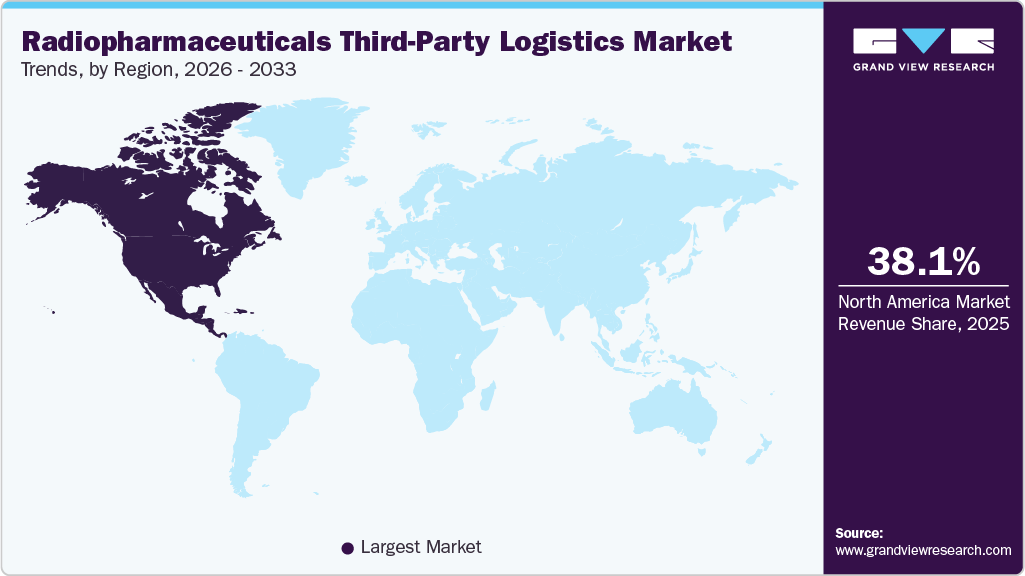
North America dominated the global radiopharmaceuticals third-party logistics market in 2025, holding a revenue share of 38.1%. The market growth is attributed to increasing adoption of nuclear medicine, molecular imaging, and theranostics, which is driving up the demand for time-sensitive distribution. The short half-life of radioisotopes creates a need for rapid, reliable, and compliant logistics solutions. In addition, many pharmaceutical and biotech companies are increasingly outsourcing logistics, which is expected to drive the market growth. Besides, strict regulatory requirements, along with the necessity for specialized handling, radiation shielding, and cold chain infrastructure, are enhancing the demand for expert 3PL providers, fueling the market growth. In addition, technological advancements like real-time tracking and automation are improving efficiency, visibility, and overall supply chain performance. Such factors are expected to drive the market growth.
 To learn more about this report, Download Free Sample Report
U.S. Radiopharmaceuticals Third-party Logistics Market Trends
The radiopharmaceuticals third-party logistics market in the U.S. accounted for the highest market share in the North America market, owing to increasing use of nuclear medicine and advanced diagnostic imaging techniques in fields such as oncology and cardiology. In addition, presence of strong healthcare infrastructure in the U.S., along with leading radiopharmaceutical manufacturers are expected to drive the market growth. Besides, rising demand for theranostics and personalized medicine is expected to drive the need for efficient, time-sensitive logistics solutions further contributing to market growth. Moreover, presence of strict regulatory frameworks governing the handling and transport of radioactive materials further compel healthcare providers to depend on specialized 3PL companies. In addition, the trend toward outsourcing logistics and improvements in tracking, cold chain operations, and compliance technology are making logistics efficient and reliable in the industry. Such factors are expected to drive the market over the estimated time period.
The Canada radiopharmaceuticals third-party logistics market is expected to grow at a significant CAGR during the forecast period. The market is driven by rising adoption of nuclear medicine and increased requirement for diagnostic imaging procedures, specifically in the fields of oncology and cardiology. Besides, the country has presence of robust healthcare system and governmental support for the production of medical isotopes which is expected to drive the market growth over the estimated time period. In addition, the availability of research reactors and cyclotron facilities are expected to play crucial role in ensuring a stable domestic supply of radiopharmaceuticals further fueling the market growth. In addition, presence of stringent regulatory requirements associated with handling radioactive materials has led increased dependency of organizations on specialized logistics providers that can ensure compliance and safety. Moreover, increasing investments toward healthcare infrastructure, coupled with the expansion of theranostics, is expected to drive the necessity for efficient, compliant, and time-sensitive logistics solutions in the radiopharmaceutical sector across the country. Such factors are expected to drive the market growth.
Europe Radiopharmaceuticals Third-party Logistics Market Trends
Europe's radiopharmaceuticals third-party logistics market is driven by strong cross-border healthcare integration and harmonized regulatory frameworks that facilitate multi-country distribution. Besides, increased reliance on imported isotopes in certain regions increases the need for efficient logistics networks that are contributing to market growth. In addition, the presence of centralized radiopharmacies and regional distribution hubs supports frequent, and short-distance deliveries are further contributing to market growth. In addition, growing investments in sustainable & compliant transport solutions, along with increasing adoption of theranostics, are further accelerating demand for specialized 3PL services in the region. Such factors are expected to drive the market growth over the estimated time period.
The radiopharmaceuticals third-party logistics market in Germany held the highest share in 2025 . Germany is one of the leading hub for radiopharmaceutical 3PL, supported by strong domestic manufacturing base and extensive network of nuclear medicine facilities. Besides, the country has strong emphasis on precision diagnostics and high procedural volumes creates consistent demand for logistics are further contributing to market growth. In addition, presence of advanced infrastructure and proximity to key European markets enable efficient cross-border transport, which further drive the market growth. Moreover, presence of strict quality standards and operational efficiency requirements further propels the demand for technologically advanced, highly reliable logistics solutions tailored to time-sensitive radiopharmaceutical shipments, further contributing to market growth.
The UK radiopharmaceuticals third-party logistics market is expected to grow significantly over the forecast period. The country's growth is fueled by increased dependency on imported medical isotopes and a centralized healthcare system. This factor has led increased requirement for highly coordinated distribution from key entry points to hospitals. Moreover, Brexit-related regulatory adjustments have increased the complexity of cross-border logistics which further contributes to market growth. In addition, presence of robust clinical research activity and the increasing adoption of innovative therapies are fueling the demand for flexible, compliant, and responsive logistics services across the country.
Asia Pacific Radiopharmaceuticals Third-party Logistics Market Trends
Asia Pacific is expected to grow at a significant CAGR over the forecast period. The market is driven by rapid urbanization and healthcare access, creating demand for efficient last-mile delivery solutions. Besides, the expansion of private healthcare sectors and increased foreign investment are supporting infrastructure development in the market. In addition, regional disparities in isotope production capacity necessitate strong inter-country logistics networks further supporting the market. Moreover, cost sensitivity and scalability requirements are encouraging outsourcing to specialized 3PL providers, driving the market growth across the diverse economies.
The radiopharmaceuticals third-party logistics market in China is witnessing new growth opportunities due to government-led healthcare expansion and localization of isotope production. The rapid increase in hospital infrastructure and diagnostic centers is boosting logistics demand for radiopharmaceutical 3PL services in the country. In addition, the country’s focus on self-reliance in critical medical supplies which is further encouraging the development of domestic distribution networks. Besides, presence of complex regulatory frameworks and vast geographic coverage further necessitate efficient, technology-driven logistics solutions to ensure timely and compliant delivery. Such factors are expected to drive the market growth over the estimated time period.
The radiopharmaceuticals third-party logistics market in Japan is driven by characterized by a high healthcare standards and strong emphasis on operational precision. Besides, the country has presence of developing urban healthcare networks that supports frequent, small-batch deliveries. Moreover, limited land availability and logistical constraints drive demand for highly efficient and compact distribution models, which further contributes to the market growth. In addition, the country’s strong focus on disaster preparedness and supply chain resilience is encouraging investment in secure, reliable radiopharmaceutical logistics systems.
The India radiopharmaceuticals third-party logistics market is driven by expanding tier-2 and tier-3 healthcare access, requiring robust last-mile delivery capabilities. Besides, increasing government initiatives to promote nuclear medicine and domestic isotope production are further propelling the market growth. Besides, infrastructure gaps and traffic constraints necessitate innovative logistics planning supports the market growth. In addition, cost optimization and rising private-sector participation are driving outsourcing to specialized 3PL providers, thereby enhancing efficiency and scalability. Such factors are expected to drive the market growth over the estimated time period.
Latin America Radiopharmaceuticals Third-party Logistics Market Trends
The radiopharmaceuticals third-party logistics market in the Latin America region is driven by geographic challenges and uneven healthcare distribution, leading to increased reliance on air and long-distance transport. Besides, limited domestic isotope production in several countries creates dependency on imports, which contributes to the market growth. In addition, growing economic variability and regulatory differences across countries require flexible logistics strategies are further supporting the market growth. Moreover, growing private healthcare investments are driving demand for reliable, compliant radiopharmaceutical distribution services, which is expected to fuel the market growth.
Brazil radiopharmaceuticals third-party logistics market is driven by large geographic size and concentration of healthcare facilities in urban centers. This creates rising demand for long-distance and multimodal logistics solutions which is expected to increase the dependence on government-supported isotope production and imports drives the need for efficient distribution networks. In addition, infrastructure variability and regulatory oversight increase the importance of experienced 3PL providers capable of managing complex logistics operations are contributing to market growth.
Middle East & Africa Radiopharmaceuticals Third-party Logistics Market Trends
The radiopharmaceuticals third-party logistics market in the MEA region is expected to experience steady growth over the forecast period. The market is driven by increasing medical tourism and investments in advanced healthcare facilities. Besides, climatic conditions necessitate robust temperature-controlled logistics solutions that has led increased reliance on imported isotopes requires efficient international transport networks further contributing to the market growth. In addition, government initiatives to diversify healthcare capabilities and partnerships with global players are supporting the development of specialized radiopharmaceutical logistics services across the region.
UAE radiopharmaceuticals third-party logistics market is experiencing growth driven by its role as a regional healthcare and logistics hub. Besides, strategic location and world-class transport infrastructure support efficient regional distribution, which is expected to drive the market growth. In addition, high demand for premium healthcare services and medical tourism drives the adoption of advanced radiopharmaceutical solutions. In addition, strong regulatory frameworks and investments in smart logistics technologies are enhancing supply chain efficiency, positioning the UAE as a key center for radiopharmaceutical logistics in the region. Such factors are expected to drive the market growth over the estimated time period.
Key Radiopharmaceuticals Third-party Logistics Company Insights
The key players operating across the market are adopting strategic initiatives such as service launches, mergers & acquisitions, partnerships & agreements, and expansions to gain a competitive edge in the market. For instance, in April 2026, Telix Pharmaceuticals and Regeneron Pharmaceuticals established a collaboration to co-develop and commercialize innovative radiopharmaceutical therapies. The partnership brings Telix’s strengths in radiopharmaceutical development, manufacturing capabilities, and global supply chain operations with Regeneron’s expertise in biologic drug research, especially in bispecific antibody technology.
Key Radiopharmaceuticals Third-party Logistics Companies:
The following key companies have been profiled for this study on the radiopharmaceuticals third-party logistics market.
- Life Couriers
- UPS
- World Courier (Cencora)
- American Expediting
- AirNet II LLC
- GTA Air Inc.
- Lab Carriers
- Kalitta Charters
- NAF Pharma
- PHSE S.r.l.
Recent Developments
-
In January 2026, King Faisal Specialist Hospital and Research Centre (KFSHRC) launched an air-transport service for short half-life radiopharmaceuticals, following a successful pilot flight from the hospital’s headquarters in Riyadh to its Jeddah branch. Delivered in coordination with relevant aviation, regulatory, and logistics authorities, the service is designed to ensure the timely and secure delivery of radiopharmaceuticals within the narrow timeframes required for clinical use.
-
In April 2025, Life Couriers UK announced the expansion of its service portfolio to include the transportation of radiopharmaceuticals across the UK. This development enhances its specialized healthcare logistics capabilities, supporting the timely delivery of critical treatments used in cancer diagnosis and therapy. The expansion leverages the broader expertise of the Life Couriers Group, which brings decades of experience in radiopharmaceutical logistics across Europe and the U.S. By strengthening its service offering, the company aims to improve access to time-sensitive therapies while maintaining high standards of operational efficiency, compliance, and patient-centric delivery across the UK healthcare system.
Radiopharmaceuticals Third-party Logistics Market Report Scope
Report Attribute
Details
Market size in 2025
USD 932.0 million
Estimated market size in 2026
USD 1073.9 million
Projected market size by 2033
USD 2913.4 million
Growth rate
CAGR of 15.3% from 2026 to 2033
Actual data
2021 - 2024
Forecast period
2026 - 2033
Quantitative units
Revenue in USD Million/Billion and CAGR from 2026 to 2033
Report coverage
Revenue forecast, company ranking, competitive landscape, growth factors, and trends
Segments covered
Type, service, radioisotope half-life, temperature range, end use, and region
Regional scope
North America; Europe; Asia Pacific; Latin America; MEA
Country scope
U.S.; Canada; Mexico; UK; Germany; France; Italy; Spain; Denmark; Sweden; Norway; Japan; China; India; Thailand; South Korea; Australia; Brazil; Argentina; South Africa; UAE; Saudi Arabia; Kuwait; Qatar; Oman
Key companies profiled
Life Couriers; UPS; World Courier (Cencora); American Expediting; AirNet II LLC; GTA Air Inc.; Lab Carriers; Kalitta Charters; NAF Pharma; PHSE S.r.l.
Customization scope
Free report customization (equivalent up to 8 analysts working days) with purchase. Addition or alteration to country, regional & segment scope.
Pricing and purchase options
Avail customized purchase options to meet your exact research needs. Explore purchase options
Global Radiopharmaceuticals Third-party Logistics Market Report Segmentation
This report forecasts revenue growth at global, regional, and country levels and provides an analysis of the latest industry trends in each of the sub-segments from 2021 to 2033. For this study, Grand View Research has segmented the global radiopharmaceuticals third-party logistics market report based on type, service, radioisotope half-life, temperature range, end use and region:
-
Type Outlook (Revenue, USD Million, 2021 - 2033)
-
Diagnostic Radiopharmaceuticals
-
Therapeutic Radiopharmaceuticals
-
Theranostics
-
-
Service Outlook (Revenue, USD Million, 2021 - 2033)
-
Transportation
-
Air Freight
-
Road Transport
-
Just-in-Time (JIT) Delivery Services
-
-
Warehousing & Storage
-
Packaging Solutions
-
Monitoring & Visibility Solutions
-
Specialized Handling & Compliance Services
-
Others
-
-
Radioisotope Half-Life Outlook (Revenue, USD Million, 2021 - 2033)
-
Ultra-Short Half-Life
-
Short Half-Life
-
Medium/Long Half-Life
-
-
Temperature Range Outlook (Revenue, USD Million, 2021 - 2033)
-
Ambient
-
Controlled Room Temperature (CRT)
-
Refrigerated
-
Others
-
-
End Use Outlook (Revenue, USD Million, 2021 - 2033)
-
Pharma & Biopharma Companies
-
Research Institutes & CROs
-
CDMOs / CMOs
-
Clinical Facilities
-
Others
-
-
Regional Outlook (Revenue, USD Million, 2021 - 2033)
-
North America
-
U.S.
-
Canada
-
Mexico
-
-
Europe
-
UK
-
Germany
-
France
-
Italy
-
Spain
-
Denmark
-
Sweden
-
Norway
-
-
Asia Pacific
-
Japan
-
China
-
India
-
Australia
-
Thailand
-
South Korea
-
-
Latin America
-
Brazil
-
Argentina
-
-
Middle East & Africa
-
South Africa
-
UAE
-
Saudi Arabia
-
Kuwait
-
Qatar
-
Oman
-
-
Frequently Asked Questions About This Report
North America dominated with a 38.1% revenue share in 2025.
The transportation segment held the largest revenue share in 2025, while the specialized handling and compliance services segment to grow significantly.
The ambient segment held the largest revenue share in 2025, while the refrigerated segment is projected to grow at a significant CAGR.
Pharma & biopharma companies segment held the largest share in 2025.
The diagnostic radiopharmaceuticals segment dominated the radiopharmaceuticals third-party logistics market accounted for the largest revenue share of 65.0% in 2025.The segment growth is attributed to driven by extensive use in routine imaging procedures such as PET and SPECT scans. The high volume of diagnostic procedures globally, particularly in oncology, cardiology, and neurology, generates consistent demand for short half-life isotopes like Technetium-99m and Fluorine-18
The short half-life segment held the largest revenue share in 2025, while the ultra-short half-life segment is projected to grow at a significant CAGR.
The global radiopharmaceuticals third-party logistics market size was valued at USD 932.0 million in 2025 and is projected to reach USD 1,073.9 million by 2026.
The global radiopharmaceuticals third-party logistics market is projected to reach USD 2,913.4 million by 2033, growing at a CAGR of 15.3% from 2026 to 2033.
Some key players operating in the radiopharmaceuticals third-party logistics market include Life Couriers, UPS, World Courier (Cencora), American Expediting, AirNet II LLC, GTA Air Inc., Lab Carriers, Kalitta Charters, NAF Pharma, and PHSE S.r.l., among others.
Key factors driving the growth of the radiopharmaceuticals third-party logistics market include operational and clinical dynamics associated with the handling of radioactive therapeutics and diagnostics. Besides, the growing time-sensitive nature of radiopharmaceuticals, as many isotopes possess ultra-short half-lives, necessitating highly synchronized, just-in-time delivery models to ensure product efficacy and minimize decay-related losses are further contributing to market growth
About the Author(s)
Medical Devices Research Team
Healthcare · Medical DevicesThis report was authored by the medical devices research team at Grand View Research - comprising two research analysts, one senior research analyst, and one industry expert - with specialized expertise in the medical devices segment of the healthcare industry. All findings are based on proprietary healthcare databases, executive interviews, and regulatory analysis, subject to internal peer review prior to publication.
Last Updated:
Speak to Analyst

Customize this report to your needs - add regions, segments, or data points, with 20% free customization.
Or view our licence options:


ISO 9001:2015 & 27001:2022 Certified
We are GDPR and CCPA compliant! Your transaction & personal information is safe and secure. For more details, please read our privacy policy.


