
- Home
- »
- Clinical Diagnostics
- »
-
Rapid STI Testing Market Size And Share Report, 2026-2033GVR Report cover

Rapid STI Testing Market (2026 - 2033)
Size, Share & Trends Analysis Report By Technology (Molecular Diagnostics/NAAT, Rapid Immunoassays), By Infection Type, By Test Type, By Sample Type, By End Use, By Region, And Segment Forecasts
Market Size, 2025
$1.5BMarket Estimate, 2026
$1.6BMarket Forecast, 2033
$2.8BCAGR, 2026–2033
8.7%Rapid STI Testing Market Summary
The global rapid STI testing market size was valued at USD 1.5 billion in 2025 and is projected to grow from USD 1.6 billion in 2026 to USD 2.8 billion by 2033, at a CAGR of 8.7% from 2026 to 2033. North America dominated the market, accounting for a revenue share of 41.1% in 2025. Market growth is primarily driven by the rising global burden of sexually transmitted infections, which is increasing demand for rapid, accessible, and timely diagnostic testing
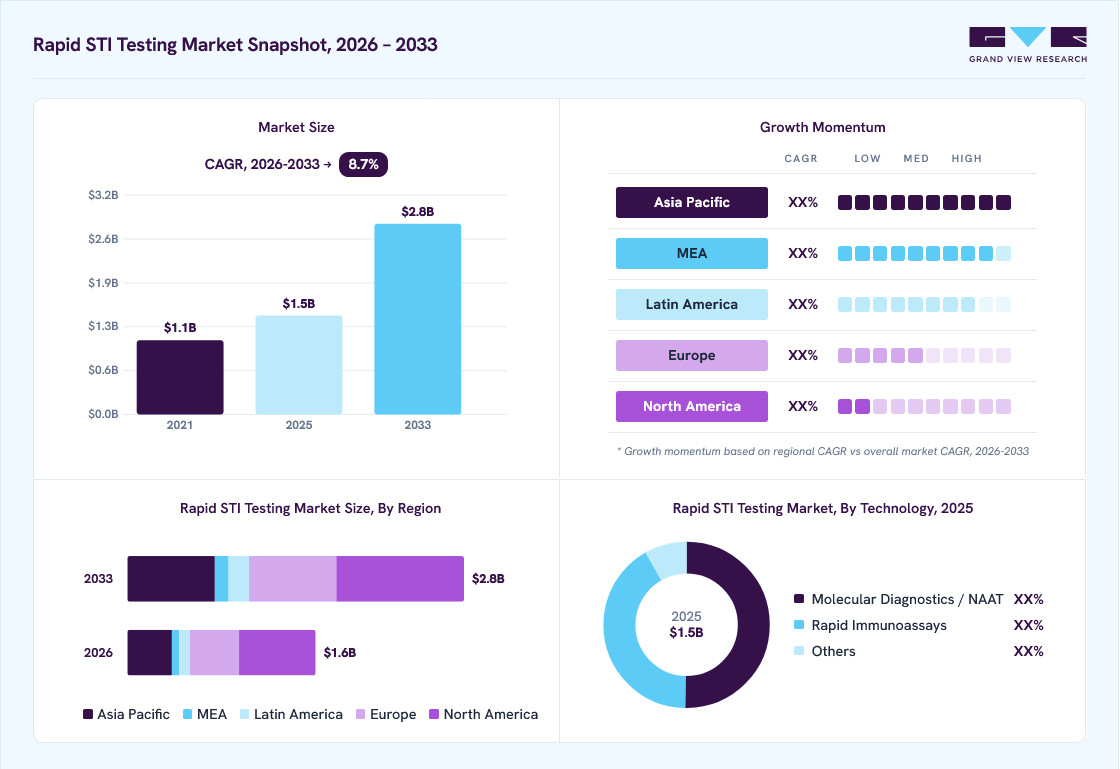 Source: Grand View Research, IR Documents, Primary Interviews, Paid DatabasesTo learn more about this report,
 Download Free Sample Report
 Key Market Trends & Insights
- By technology: Molecular Diagnostics/NAAT segment led the market with the largest revenue share of 50.2% in 2025.
- By infection type: Syphilis segment led the market with the largest revenue share of 27.8% in 2025.
- By test type: Single-target tests segment led the market with the largest revenue share of 63.1% in 2025.
- By sample type: Swab specimens led the market with the largest revenue share of 37.8% in 2025
- By end use: Diagnostic laboratories & near-point-of-care facilities segment led the market with the largest revenue share of 34.1% in 2025.
Regional Highlights
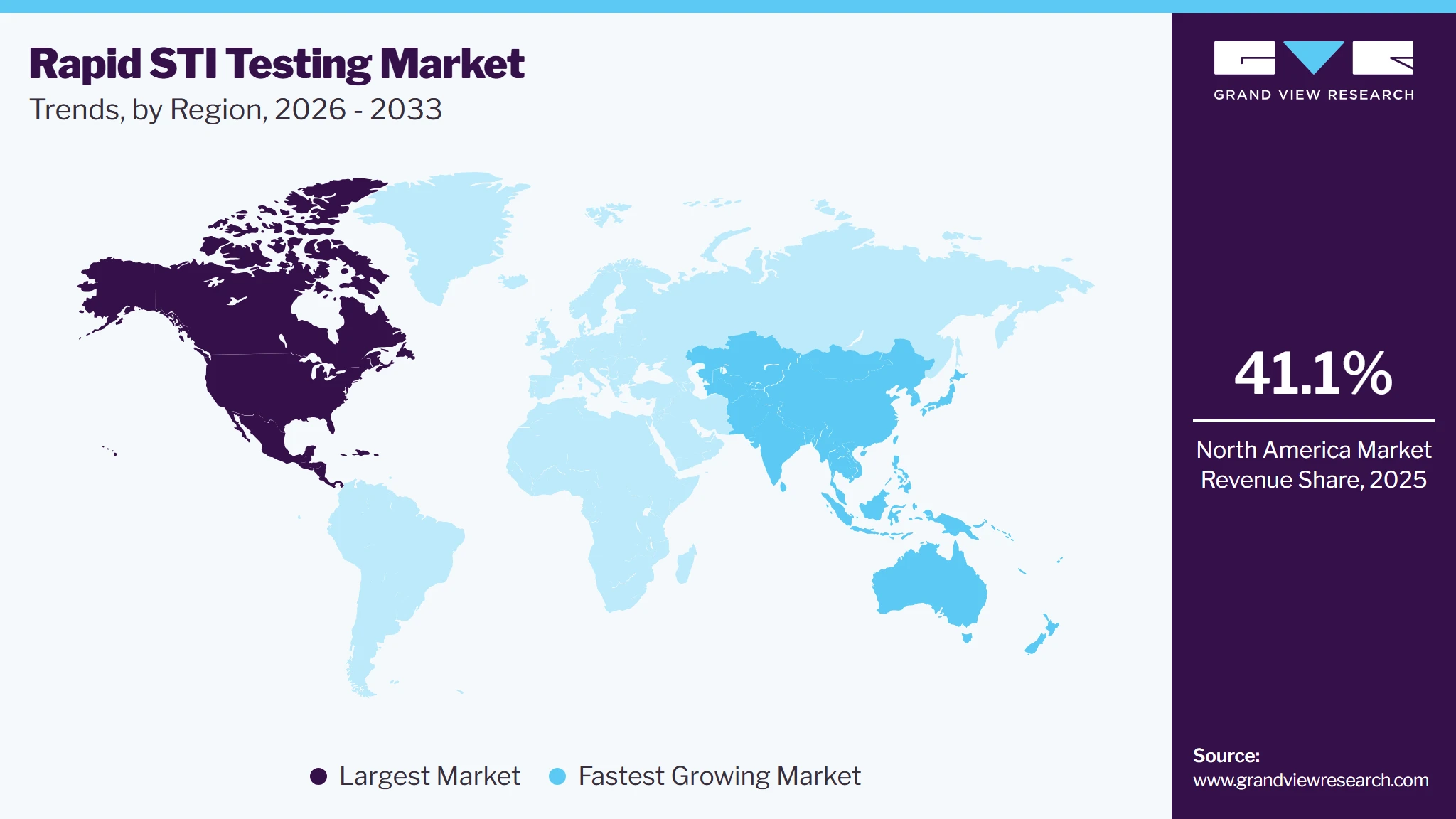
- Largest regional market: North America (41.1% revenue share, 2025)
- Fastest-growing regional market: Asia Pacific (highest CAGR, 2026-2033)
- By country: The U.S. held the largest market share in 2025.
Market Size & Forecast
- Market size in 2025: USD 1.5 Billion
- Estimated market size in 2026: USD 1.6 Billion
- Projected market size by 2033: USD 2.8 Billion
- CAGR (2026-2033): 8.7%
Three ways to get this report
Buy it, customize it, or ask a question.Ask an Analyst
A direct answer, usually in 1 working day
- AccessReport author, directly
- Reply timeWithin 1 working day
- No sales callDirect answer only
- FormatEmail reply
- CostFree, no cost
Get the Full Report
What the study covers
- FormatsPDF · Excel · Dashboard
- Timeline2026–2033 annual, 2025 base
- Coverage20+ countries, 5 regions
- Companies10+ key players profiled
Customize the Report
20% free customization
- IncludeCountries, segments, points
- TailorTo your product definition
- ExtendDeeper competitor detail
- OrA fully bespoke study
- Turnaround5–10 working days
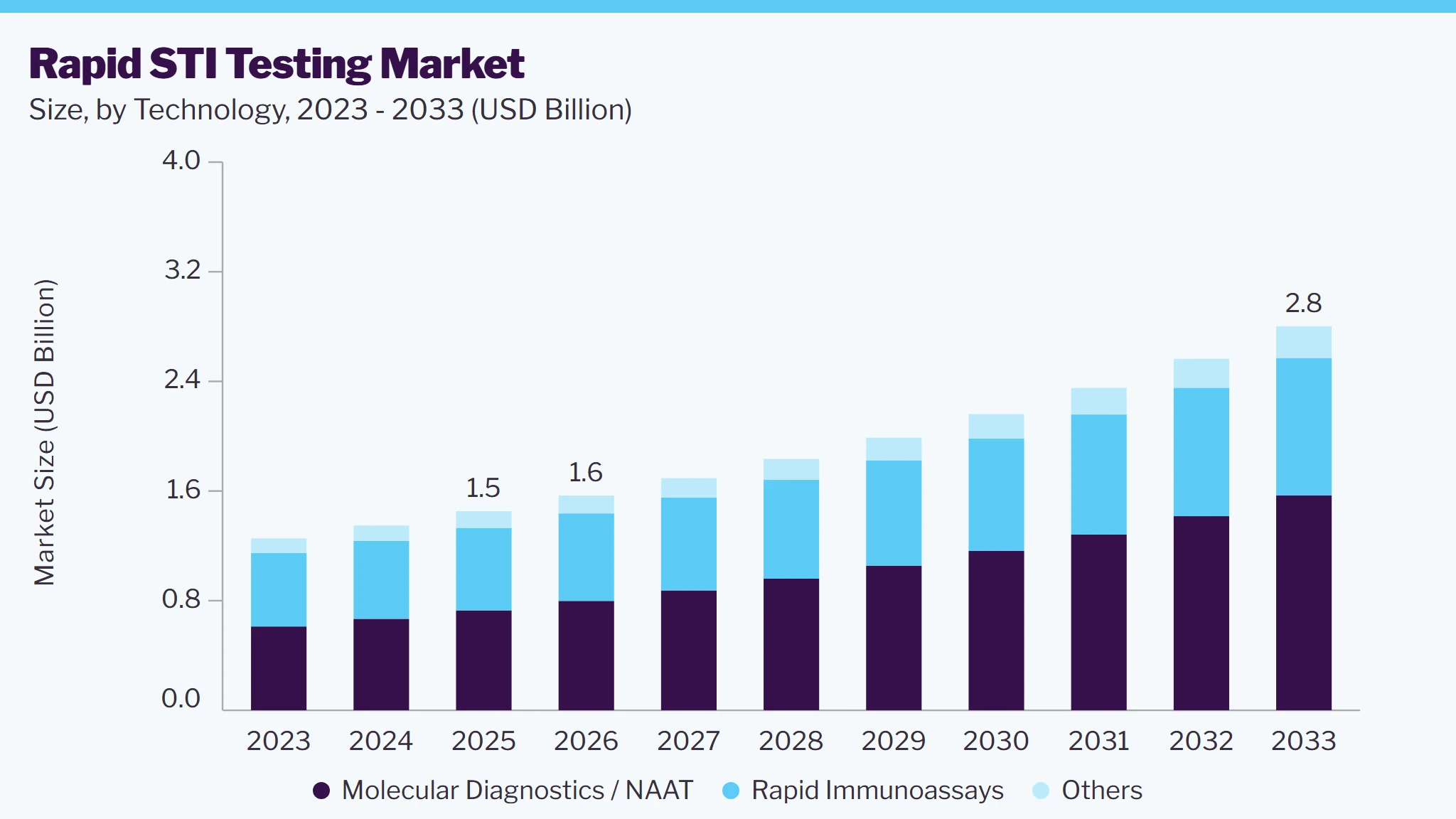 To learn more about this report, Download Free Sample Report
 Market Dynamics
Technological innovation is strengthening demand in the rapid STI testing market by improving diagnostic turnaround time, multiplex detection, automation, and decentralized testing capabilities. The need for faster diagnostics is reinforced by the substantial global burden of STIs. According to recent data published by the World Health Organization (WHO) on 10 September 2025, more than 1 million curable STIs are acquired every day worldwide among people aged 15-49 years, with the majority of infections being asymptomatic. WHO also estimated 374 million new infections in 2020 caused by the four major curable STIs chlamydia, gonorrhea, syphilis, and trichomoniasis. In addition, approximately 8 million adults aged 15-49 years were living with syphilis in 2022. The high prevalence and frequently asymptomatic nature of these infections underscore the need for rapid diagnostic technologies that facilitate timely detection and treatment, supporting adoption of decentralized STI testing solutions.
Advancements in molecular diagnostics, rapid PCR, and multiplex nucleic acid amplification testing (NAAT) are bringing laboratory-quality STI testing closer to the point of care. In January 2025, Roche received FDA clearance and a CLIA waiver for its cobas liat CT/NG and CT/NG/MG assays, representing a significant advancement in rapid molecular STI diagnostics. The assays use real-time PCR and deliver results in approximately 20 minutes, with the CT/NG assay simultaneously detecting Chlamydia trachomatis and Neisseria gonorrhoeae, while the CT/NG/MG assay additionally detects Mycoplasma genitalium. The CLIA-waived status facilitates deployment in decentralized healthcare environments, including physician offices and other near-patient settings. Such capabilities can support same-visit clinical decision-making and reduce dependence on delayed centralized laboratory results.
Technological advances are also broadening the applicability of rapid STI testing through automated workflows and multiple specimen types. Roche's cobas liat CT/NG/MG assay supports male urine, female urine, and vaginal swab specimens, allowing healthcare providers to integrate molecular testing into routine near-patient workflows. The approximately 20-minute turnaround time can facilitate faster treatment decisions and potentially reduce follow-up requirements associated with conventional laboratory testing. Moreover, the integration of multiplex detection within a single platform enables providers to evaluate multiple clinically relevant pathogens from one sample, improving testing efficiency. As healthcare systems increasingly emphasize decentralized diagnostics and timely treatment, continued development of rapid PCR, multiplex NAAT, and automated testing platforms is expected to support adoption across clinics, urgent-care facilities, community health centers, and other point-of-care settings, thereby driving expansion of the rapid STI testing market
Regulatory and clinical-performance requirements can constrain the development and commercialization of rapid STI testing technologies. In 2025, the World Health Organization (WHO) issued technical specifications for rapid diagnostic tests that detect antigens of Chlamydia trachomatis and Neisseria gonorrhoeae, defining minimum analytical and clinical performance studies for products seeking WHO prequalification. WHO also established technical specifications for nucleic acid tests detecting N. gonorrhoeae, C. trachomatis, and Trichomonas vaginalis, covering both single-target and multiplex assays across various clinical specimens. These requirements place greater emphasis on demonstrating diagnostic performance while maintaining the speed, usability, and decentralized characteristics expected from rapid testing technologies. Consequently, manufacturers developing molecular and multiplex rapid STI tests face substantial analytical and clinical evaluation requirements, which can increase product-development complexity and create barriers to broader commercialization and adoption.
Diagnostic performance and quality-assurance requirements represent an additional constraint for the rapid STI testing market, particularly for infections such as gonorrhea, where rapid diagnostic capabilities remain limited. WHO identifies reliable, low-cost point-of-care tests as an important unmet need and notes that existing STI point-of-care technologies do not yet satisfy all desired performance and usability criteria. For N. gonorrhoeae, WHO states that molecular tests remain the diagnostic gold standard, while rapid diagnostic tests are still under development. WHO further notes that a quality-assured rapid diagnostic test for gonorrhea is not currently available, underscoring the technical challenge of combining diagnostic accuracy with rapid turnaround and point-of-care usability. The need to achieve adequate sensitivity and specificity while maintaining simple workflows and decentralized operations can therefore limit the availability of commercially viable rapid STI testing solutions and slow the penetration of newer technologies.
Cost and affordability constraints can further limit adoption, particularly for rapid molecular STI testing in resource-constrained healthcare systems. WHO identifies the cost of molecular tests as the biggest barrier to their uptake in resource-constrained settings and reports that near-point-of-care molecular assays for C. trachomatis, N. gonorrhoeae, and T. vaginalis are commercially available but remain inaccessible in many settings due to cost and availability constraints. WHO consequently emphasizes the need for rapid, simple, cost-effective, and quality-assured point-of-care tests that can support diagnosis and treatment at the patient's first healthcare contact. The cost of molecular platforms, together with associated consumables and testing infrastructure, can therefore constrain deployment beyond well-resourced healthcare settings. This affordability challenge may particularly limit the expansion of advanced rapid molecular STI testing across low- and middle-income countries, restricting broader market penetration despite the clinical value of faster diagnosis.
The expansion of decentralized point-of-care (POC) testing represents a significant growth opportunity for the rapid STI testing market by bringing diagnostic services closer to patients in primary care facilities, community health centers, urgent care facilities, and other near-patient settings. The World Health Organization (WHO) identifies reliable, affordable, and quality-assured POC STI diagnostics as an important unmet need because rapid testing can enable diagnosis and treatment during a single healthcare encounter. Supporting this opportunity, a 2026 study conducted in remote First Nations communities in Australia found that implementation of molecular POC testing was associated with immediate increases of 26% in chlamydia and gonorrhea testing and 21% in trichomoniasis testing. These findings demonstrate the potential of decentralized molecular testing to improve testing utilization in geographically underserved populations and strengthen access to timely STI diagnosis.
In December 2025, Testmate Health and Intermountain Health announced a strategic partnership and investment to expand access to rapid molecular STI testing in the U.S. Testmate's single-use molecular platform is designed to detect Chlamydia trachomatis and Neisseria gonorrhoeae in less than 30 minutes, while eliminating the need for a separate reader or centralized laboratory workflow. The platform supports urine and swab specimens, enabling potential deployment across decentralized healthcare environments. Intermountain Health's participation is intended to support clinical validation and advancement toward FDA submission. This collaboration highlights growing healthcare-system investment in rapid molecular technologies that can facilitate testing closer to the point of patient care and expand access to timely STI diagnosis.
In May 2026, AAZ and En Carta Diagnostics announced a co-development and commercialization agreement for rapid molecular tests targeting chlamydia and gonorrhea, with the planned assays designed to provide results in less than 30 minutes and support use across primary care, pharmacies, and homes. Separately, Scout received up to US$6 million in CARB-X funding in December 2025 to advance STI Scout, a rapid molecular diagnostic targeting N. gonorrhoeae and C. trachomatis for POC and OTC applications. These developments demonstrate increasing investment in decentralized rapid molecular testing and support the expansion of testing beyond conventional laboratory settings. As rapid platforms become more accessible and adaptable to diverse care environments, decentralized testing is expected to create additional opportunities for market penetration, particularly among underserved and hard-to-reach populations.
Market Concentration & Characteristics
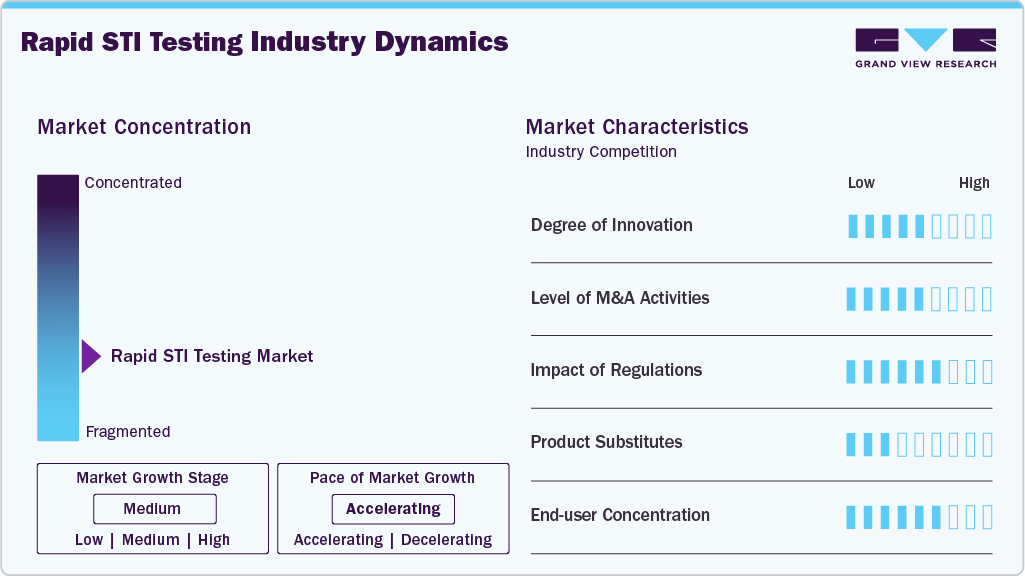
The rapid STI testing market demonstrates a high degree of innovation, supported by advancements in molecular self-testing and decentralized diagnostic technologies. In January 2026, OraSure Technologies submitted an FDA application for a rapid molecular self-test targeting Chlamydia trachomatis and Neisseria gonorrhoeae, alongside its Colli-Pee at-home urine collection device. The development integrates molecular detection with self-testing and decentralized specimen collection, minimizing dependence on conventional laboratory workflows. These advancements are expected to enhance testing accessibility, privacy, and convenience while supporting the market’s transition toward patient-centric, rapid, and home-based STI diagnostic solutions.
The rapid STI testing market demonstrates a low level of M&A activity, with limited acquisition activity specifically targeting rapid STI diagnostic technologies. In December 2024, OraSure Technologies acquired Sherlock Biosciences, whose lead product included a rapid molecular self-test for chlamydia and gonorrhea, strengthening OraSure’s rapid STI diagnostics portfolio. The transaction involved an initial aggregate purchase price of US$28.35 million, with additional contingent consideration of up to USD 20 million. The transaction highlights strategic interest in rapid molecular STI diagnostics; however, the limited number of comparable acquisitions indicates that market development remains primarily driven by product innovation, partnerships, and commercialization initiatives.
 To learn more about this report, Download Free Sample Report
 Regulations have a significant impact on the rapid STI testing market, influencing product development, clinical validation, commercialization, and adoption across healthcare settings. Stringent regulatory requirements for analytical performance, clinical accuracy, safety, quality management, and labeling can extend development timelines and increase compliance costs. Requirements for regulatory clearance or approval may also affect the deployment of rapid molecular and self-testing technologies. In addition, evolving standards for decentralized and over-the-counter diagnostics can shape manufacturers’ commercialization strategies, while regulatory harmonization across countries may facilitate broader market access and international expansion.
Product expansion is strengthening the rapid STI testing market as manufacturers broaden test menus, target additional pathogens, and develop solutions suited to decentralized testing environments. Expansion toward multiplex molecular assays enables simultaneous detection of multiple infections while reducing testing time and improving diagnostic efficiency. Manufacturers are also developing self-testing and near-point-of-care formats to address demand for convenient testing outside centralized laboratories. Broader specimen compatibility, simplified workflows, and integration with digital result-management tools further enhance product utility. These developments are expanding the range of rapid STI testing applications across clinics, pharmacies, community settings, and home-based testing environments.
Regional expansion is creating new growth opportunities in the rapid STI testing market, particularly across regions where centralized laboratory infrastructure and access to timely diagnostics remain limited. Manufacturers are extending molecular and rapid testing solutions into decentralized healthcare networks, community-based programs, pharmacies, and home-testing channels. Expansion across emerging markets is supported by the need for affordable, accessible, and faster STI diagnosis, while developed markets are witnessing broader adoption of near-point-of-care and self-testing technologies. Increasing regulatory alignment, local partnerships, distribution networks, and investments in diagnostic infrastructure are further supporting commercialization and geographic penetration of rapid STI testing solutions.
Analyst Perspective
The rapid STI testing market is positioned for sustained growth as healthcare systems increasingly prioritize timely diagnosis, decentralized testing, and improved patient accessibility. Advances in rapid molecular diagnostics, multiplex assays, self-testing, and simplified sample collection are reducing dependence on centralized laboratory workflows and supporting faster clinical decision-making. Growing STI testing requirements and expansion of community- and home-based testing are expected to strengthen market adoption. North America and Europe remain key markets due to established diagnostic infrastructure, while Asia Pacific offers significant growth potential. However, regulatory requirements, affordability constraints, and variable access to quality-assured rapid tests may influence commercialization and adoption across emerging markets.
Technology Insights
The molecular diagnostics / naat segment accounted for the largest share of 50.2% and is expected to register the fastest growth in the rapid STI testing market Its strong position is supported by high analytical sensitivity and specificity, multiplex pathogen detection, shorter turnaround times, and increasing deployment of molecular technologies in decentralized testing environments. In January 2025, Roche received FDA 510(k) clearance and CLIA waiver for its cobas liat sexually transmitted infection assay panels, including CT/NG and CT/NG/MG configurations. The real-time PCR assays provide results in approximately 20 minutes and support testing of urine and vaginal swab specimens. The availability of rapid, automated molecular platforms is strengthening same-visit testing capabilities and supporting broader adoption of NAAT-based STI diagnostics across point-of-care settings.
The rapid Immunoassays segment is expected to grow at a lucrative CAGR over the forecast period, supported by short turnaround times, simple workflows, low equipment requirements, and suitability for decentralized STI screening. In August 2026, Health Canada approved MedMira’s Reveal TP (Syphilis) Antibody Test, a rapid immunoassay designed for point-of-care detection of Treponema pallidum antibodies. Health Canada lists the product as a licensed Class III test kit. WHO reported in 2025 that approximately 8 million adults aged 15-49 acquired syphilis in 2022, while rapid tests can enable treatment initiation during the same clinical visit. These advantages are expected to support continued adoption of rapid immunoassays across clinics, community programs, and other near-patient settings.
Infection Type
The syphilis segment dominated the global rapid STI testing market, accounting for 27.8% of the revenue share in 2025. Its leading position is supported by the substantial disease burden, widespread use of rapid antibody-based screening, and growing integration of syphilis testing into antenatal and decentralized healthcare programs. In July 2025, WHO prequalified Abbott’s Determine Antenatal Care Panel, the first bundled rapid diagnostic panel for simultaneous screening of syphilis, HIV, and hepatitis B using capillary whole blood, strengthening integrated syphilis screening in resource-limited settings. WHO estimated 8 million new syphilis infections among adults aged 15-49 in 2022, alongside approximately 700,000 congenital syphilis cases, highlighting the substantial unmet testing requirement. These factors are expected to sustain demand for rapid syphilis testing across clinical, community, and antenatal settings.
The mycoplasma genitalium segment is expected to demonstrate the fastest growth, with a CAGR of 12.5% over the forecast period, supported by increasing clinical recognition of the infection, growing availability of molecular diagnostics, and the need for accurate detection to guide treatment amid antimicrobial resistance concerns. In May 2026, COWIN GENE launched the Cowingene MG/MH NATBox, a rapid molecular diagnostic solution designed for detection of Mycoplasma genitalium and Mycoplasma hominis. The development expands the availability of targeted nucleic acid-based testing for genital mycoplasma infections. In addition, the CDC identifies M. genitalium as an important cause of urethritis and estimates that it accounts for approximately 15%-20% of nongonococcal urethritis cases among men, supporting the need for expanded diagnostic testing and targeted disease management.
Test Type Insights
The single-target tests segment dominated the global rapid STI testing market, accounting for 63.1% of the revenue share in 2025. Its leading position is supported by established clinical use, simplified workflows, lower testing complexity, and widespread availability of pathogen-specific assays for infections such as syphilis, chlamydia, and gonorrhea. Single-target tests remain particularly relevant in screening programs where testing is directed toward a specific suspected infection and rapid clinical decision-making is required. Their relatively simple test formats, ease of interpretation, and compatibility with decentralized testing settings further support adoption. In addition, the substantial global burden of individual STIs continues to sustain demand for pathogen-specific testing, particularly for syphilis, where rapid antibody-based assays are widely used across clinical, antenatal, community, and point-of-care screening programs.
The multiplex/combination tests segment is expected to demonstrate the fastest growth, with a CAGR of 11.1% over the forecast period, supported by the ability to detect multiple STI pathogens from a single specimen, improve diagnostic efficiency, and reduce the need for sequential testing. In January 2025, Kryptos Biotechnologies and Osang Healthcare announced the development of a rapid multiplex molecular STI test based on the portable KUICK platform. The real-time qPCR-based assay is being developed to simultaneously detect chlamydia, gonorrhea, and trichomoniasis from vaginal swab or urine specimens, with testing targeted within 30 minutes. The RIGHT Foundation committed approximately KRW 1.78 billion to the project, highlighting investment in rapid multiplex STI diagnostics for decentralized settings.
Sample Type Insights
The swab specimens segment dominated the global rapid STI testing market, accounting for 37.8% of the revenue share in 2025, and is expected to register the fastest CAGR of 9.5%. Growth is supported by the suitability of vaginal, cervical, rectal, and oropharyngeal swabs for molecular and rapid STI testing, along with increasing acceptance of self-collection. In March 2025, FIND sought a manufacturing and commercialization partner for its low-cost fluorescence-based rapid antigen test for Neisseria gonorrhoeae, designed to use vaginal swabs in women and urine in men; the device had reached design freeze and was ready for technology transfer. Clinical evidence also indicates that vaginal swabs are an optimal specimen type for STI testing among women, supporting their continued use across decentralized and point-of-care testing pathways.
The whole blood/serum/plasma segment is expected to demonstrate lucrative growth over the forecast period, supported by the established use of blood-based specimens for rapid serological detection of syphilis and other sexually transmitted infections, particularly across antenatal, community, and point-of-care screening programs. In 2026, WHO prequalified Abbott’s Determine Syphilis Advanced, an immunochromatographic lateral-flow assay for syphilis, highlighting continued advancement of rapid blood-based STI diagnostics. WHO documentation also confirms the availability of rapid combination assays capable of detecting Treponema pallidum antibodies using serum, plasma, and venous or capillary whole blood. The compatibility of these specimens with simple rapid-testing workflows is expected to support broader screening and near-patient STI testing.
End Use Insights
The diagnostic laboratories & near-point-of-care facilities segment is expected to account for the largest share of 34.1% of the rapid STI testing market, supported by high testing volumes, established diagnostic infrastructure, availability of trained personnel, and increasing integration of rapid molecular platforms into decentralized laboratory workflows. In June 2025, Linear Diagnostics secured approximately £1 million in funding from the UK National Institute for Health and Care Research (NIHR) to advance its rapid molecular STI testing technology, which is being developed to detect infections such as chlamydia and gonorrhoea in as little as five minutes. The development highlights continued investment in near-patient molecular diagnostics designed to shorten turnaround times and enable earlier clinical decision-making, supporting adoption across diagnostic laboratories and near-point-of-care facilities.
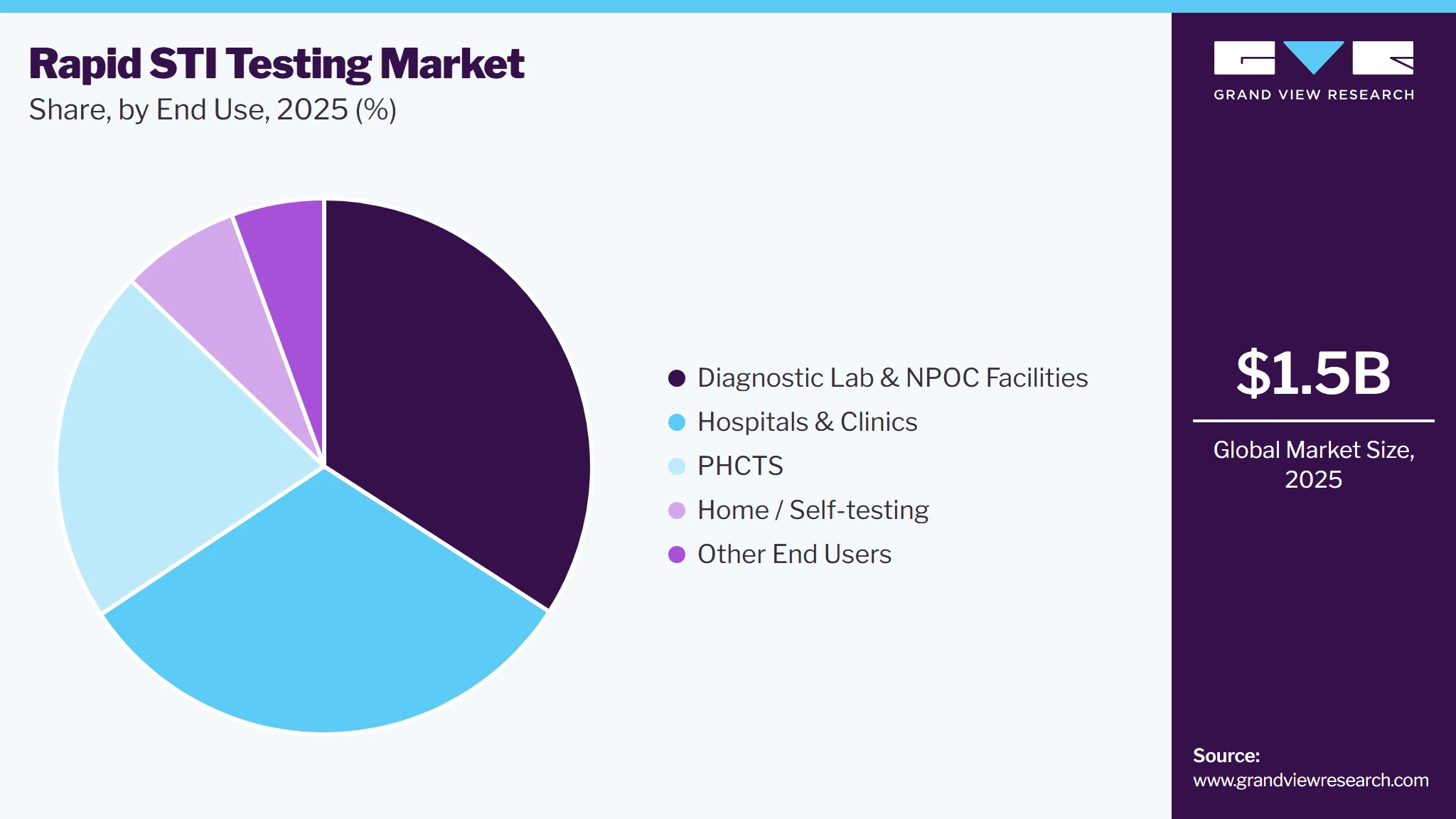 To learn more about this report, Download Free Sample Report
 The home/self-testing segment is expected to see the fastest growth, driven by rising demand for privacy, convenience, self-collection, and reduced reliance on clinic-based testing. In March 2025, the U.S. FDA granted De Novo marketing authorization to the Visby Medical Women’s Sexual Health Test, the first over-the-counter test capable of detecting chlamydia, gonorrhea, and trichomoniasis entirely at home. The PCR-based test uses a self-collected vaginal swab and provides results in approximately 30 minutes. Clinical evaluation demonstrated positive agreement of 97.2% for chlamydia, 100% for gonorrhea, and 97.8% for trichomoniasis. The availability of fully at-home molecular diagnostics is expected to improve access to testing and support rapid expansion of the segment.
Regional Insights
North America dominated the global rapid STI testing market and accounted for the largest revenue share of 41.1% in 2025, supported by advanced diagnostic infrastructure, established screening programs, and increasing adoption of molecular and point-of-care testing technologies. Regional market growth is further supported by the expansion of self-collection and decentralized testing approaches to improve diagnostic accessibility. In Canada, the iStatis Syphilis Antibody Test provides results within 15 minutes and is intended for near-patient testing across healthcare facilities. In addition, Canadian screening recommendations published in 2026 highlighted the potential of point-of-care, self-testing, and rapid testing approaches to improve testing acceptability and uptake. These factors are strengthening access to timely STI diagnosis and supporting broader adoption of rapid diagnostic solutions across North America.
 To learn more about this report, Download Free Sample Report
 U.S. Rapid STI Testing Market Trends
The U.S. accounted for the largest share of the North America rapid STI testing market, supported by advanced diagnostic infrastructure, substantial STI testing volumes, and increasing adoption of point-of-care and self-testing solutions. In October 2024, Labcorp expanded its STI testing portfolio through an agreement with NOWDiagnostics to exclusively distribute the FDA-authorized First to Know Syphilis Test to healthcare providers nationwide. The fingerstick blood test delivers results within 15 minutes and supports use across clinical and home-based settings. Labcorp reported conducting more than 5.5 million syphilis tests annually, with testing volumes more than doubling over the preceding decade. The expanding availability of rapid diagnostic solutions through established distribution networks is expected to improve testing accessibility and support timely STI detection across the U.S.
Europe Rapid STI Testing Market Trends
Europe represents a significant market for rapid STI testing, supported by established sexual health services, comprehensive disease surveillance, and growing demand for decentralized and multiplex diagnostic solutions. In July 2025, France-based MagIA Diagnostics launched the MAGESTICS project, in collaboration with INFYNITY BIOMARKERS and Grenoble Alpes University Hospital, to expand its MforScreen platform toward simultaneous detection of syphilis, chlamydia, and gonorrhea, complementing its existing viral STI screening capabilities. The initiative reflects increasing regional emphasis on integrated STI diagnostic platforms and broader testing coverage. In addition, ECDC reported 213,443 chlamydia, 106,331 gonorrhea, and 45,577 syphilis cases in the EU/EEA in 2024, highlighting the substantial diagnostic burden and supporting continued demand for accessible and timely STI testing solutions across Europe.
The UK rapid STI testing market is supported by well-established sexual health services, expanding self-sampling pathways, and increasing demand for convenient and timely diagnostic solutions. In 2025, Randox Health offered rapid STI urine screening through its London clinics, covering 10 common STIs, including chlamydia and gonorrhoea, with expedited laboratory testing and result delivery. According to UKHSA, England recorded 334,151 new STI diagnoses in 2025, including 151,163 chlamydia and 63,943 gonorrhoea diagnoses. Approximately 8.9 million STI tests were conducted during the year, while 42.2% of sexual health consultations were delivered online. High testing volumes and increasing integration of digital sexual health services are expected to support continued adoption of rapid and decentralized STI testing solutions across the UK.
The Germany rapid STI testing market is expected to represent a significant growth, supported by established laboratory infrastructure, specialized STI diagnostic networks, and increasing demand for timely molecular and point-of-care testing. In 2025, the Robert Koch Institute strengthened STI surveillance through molecular characterization of Neisseria gonorrhoeae and Chlamydia trachomatis, supporting evidence-based approaches to diagnosis and antimicrobial-resistance monitoring. The diagnostic requirement remains substantial, with 9,519 syphilis cases reported in Germany in 2024, representing a 3.9% increase from 2023 and a record high, while the national incidence reached 11.2 cases per 100,000 population. Continued STI surveillance, coupled with the need for earlier diagnosis and treatment, is expected to support adoption of rapid and decentralized STI testing solutions across Germany.
Asia Pacific Rapid STI Testing Market Trends
The rapid STI testing industry in the Asia Pacific is anticipated to grow at the fastest CAGR from 2026 to 2033. Asia Pacific is expected to register strong growth in the rapid STI testing market, supported by a substantial STI burden, disparities in access to centralized laboratory services, and increasing adoption of decentralized diagnostic approaches. WHO estimates indicate approximately 86 million new cases of chlamydia, gonorrhoea, syphilis, and trichomoniasis in the Western Pacific Region in 2020, underscoring the significant regional testing requirement. In Australia, the government-supported Test, Treat and Go (TTANGO) program incorporates molecular point-of-care testing for chlamydia, gonorrhoea, and trichomoniasis in remote Aboriginal and Torres Strait Islander communities. Australia also reported 155,681 notifiable STI cases in 2024. Continued expansion of near-patient testing programs is expected to improve diagnostic accessibility and support timely STI detection and treatment across the region.
The China rapid STI testing market represents a high-potential, supported by a substantial STI burden, expanding molecular diagnostic capabilities, and growing demand for timely and decentralized testing solutions. In April 2025, Sinopharm subsidiary Shanghai GeneoDx received NMPA Class III medical device registration for a PCR-based assay designed for simultaneous detection of Treponema pallidum and herpes simplex virus types I and II, strengthening the availability of multiplex molecular STI diagnostics. The underlying diagnostic requirement remains significant, with China CDC reporting 52,197 syphilis cases and 10,547 gonorrhea cases in December 2025. Continued advancement of molecular testing technologies, regulatory authorization of multiplex assays, and sustained STI testing requirements are expected to support market expansion and broader adoption of rapid diagnostic solutions across China.
The Japan rapid STI testing market is an important market, supported by advanced healthcare infrastructure, sophisticated diagnostic laboratories, and established infectious disease surveillance systems. The diagnostic requirement remains significant, particularly for syphilis, with Japan’s Ministry of Health, Labour and Welfare reporting that annual syphilis notifications have exceeded 10,000 cases since 2022, with elevated levels continuing in provisional 2025 data. In November 2025, Japan revised its national STI prevention guidelines in response to the expansion of syphilis and congenital syphilis, emphasizing strengthened testing and consultation systems, healthcare provision, surveillance, and research and development. These public-health measures, combined with Japan’s established diagnostic capabilities, are expected to support greater adoption of timely, accessible, and decentralized rapid STI testing solutions.
Latin America Rapid STI Testing Market Trends
Latin America represents an emerging market for rapid STI testing, supported by a substantial STI burden, expanding public health screening programs, and increasing emphasis on decentralized diagnostic access. In 2025, PAHO introduced regional recommendations to strengthen syphilis testing and treatment, emphasizing expanded screening through primary healthcare and diversified approaches, including rapid and self-testing strategies. PAHO estimated approximately 4.2 million new syphilis cases in the Americas in 2024, representing a 15% increase from 2022, with 90% of these cases concentrated in Latin America and the Caribbean. The substantial disease burden, coupled with regional initiatives to expand timely diagnosis, is expected to support greater adoption of affordable and accessible rapid STI testing solutions across Latin America.
Middle East and Africa Rapid STI Testing Market Trends
The Middle East & Africa rapid STI testing market is expected to develop gradually, supported by improving diagnostic infrastructure, expansion of community-based screening programs, and increasing adoption of point-of-care testing across resource-constrained settings. In July 2025, WHO issued updated STI service-delivery recommendations emphasizing decentralization, service integration, task sharing, and digital health approaches to improve access to STI prevention, diagnosis, and treatment. In September 2025, WHO also reported that more than 1 million curable STIs are acquired globally each day, while access to molecular testing for chlamydia and gonorrhoea remains limited across many low- and middle-income countries. Continued expansion of decentralized healthcare services and affordable rapid diagnostic technologies is expected to improve testing accessibility and support market development across the Middle East & Africa.
Key Rapid STI Testing Company Insights
The rapid STI testing market is characterized by the presence of established diagnostic companies and specialized manufacturers competing through product innovation, diagnostic performance, and expanded point-of-care capabilities. Key market participants include Danaher Corporation, F. Hoffmann-La Roche Ltd., Abbott, Visby Medical, Inc., SD Biosensor, INC., Premier Medical, bioLytical Laboratories Inc., Biosynex SA, Trinity Biotech plc, Guangzhou Wondfo Biotech Co., Ltd., InTec Products, Inc., and Access Bio, Inc. These companies are strengthening their competitive positions through molecular diagnostic platforms, rapid immunoassays, multiplex testing solutions, and self-testing products. Continued investment in decentralized diagnostics, regulatory approvals, product portfolio expansion, and broader distribution networks is expected to support competitive development across the market.
Key Rapid STI Testing Companies
The following key companies have been profiled for this study on the rapid STI testing market.
-
Danaher Corporation
-
F. Hoffmann-La Roche Ltd
-
Abbott
-
Visby Medical, Inc.
-
SD Biosensor, INC
-
Premier Medical
-
bioLytical Laboratories Inc.
-
Biosynex SA
-
Trinity Biotech plc
-
Guangzhou Wondfo Biotech Co., Ltd.
-
InTec Products, Inc.
-
Access Bio, Inc.
Competitive Benchmarking
Operating Strategies
Competitive Edge
Weaknesses
Mature Players: F. Hoffmann-La Roche Ltd
- Expand portfolios across rapid molecular, immunoassay, and multiplex STI tests.
- Increase point-of-care and decentralized testing capabilities.
- Invest in regulatory approvals and clinical validation.
- Pursue partnerships, acquisitions, and commercialization agreements.
- Leverage established distribution networks for geographic expansion.
- Strong brand presence and established distribution networks.
- Advanced molecular and immunoassay capabilities.
- Broad STI testing portfolios and multiple testing formats.
- Established regulatory and commercialization expertise.
- Strong R&D and clinical validation capabilities.
- Higher product and platform costs.
- Dependence on regulatory approvals and reimbursement conditions.
- Molecular platforms may require instrument investment and trained operators.
- Longer development and validation timelines.
- Competitive pressure from lower-cost manufacturers.
Emerging Players: Access Bio, Inc
- Focus on cost-effective and easy-to-use rapid STI tests.
- Expand single-target and combination test portfolios.
- Target emerging and underserved markets through local distribution.
- Invest in assay development and regulatory registrations.
- Strengthen manufacturing capabilities to support competitive pricing.
- Competitive pricing and simplified test formats.
- Flexibility in addressing regional market requirements.
- Presence in decentralized and resource-constrained settings.
- Focus on high-demand STI targets such as syphilis.
- Potential for expansion through distribution partnerships.
- Smaller commercial scale compared with major multinational companies.
- Lower global brand recognition.
- Relatively narrower rapid STI testing portfolios.
- Greater dependence on distributors and strategic partners.
Recent Developments
-
In January 2025, Roche received U.S. FDA 510(k) clearance and CLIA waiver for its cobas liat CT/NG and CT/NG/MG STI multiplex assay panels. The PCR-based assays enable simultaneous detection and differentiation of chlamydia, gonorrhea, and Mycoplasma genitalium, providing results in 20 minutes or less for point-of-care testing.
-
In March 2025, Visby Medical received U.S. FDA De Novo marketing authorization for its Women’s Sexual Health Test, the first over-the-counter diagnostic test for chlamydia, gonorrhea, and trichomoniasis that can be performed entirely at home. The test uses a self-collected vaginal swab and provides results in approximately 30 minutes.
-
In 2026, COWIN GENE launched the Cowingene MG/MH NATBox Detection Kit, a molecular point-of-care diagnostic solution for rapid detection of Mycoplasma genitalium and Mycoplasma hominis. The assay supports urine, urethral, cervical, and vaginal-swab specimens and operates with the compact NATBox Mini II platform, strengthening decentralized STI testing capabilities.
-
In May 2026, AAZ and En Carta Diagnostics entered into a co-development and commercialization agreement to develop rapid molecular tests and self-tests for chlamydia and gonorrhea. The tests are designed to provide results in under 30 minutes and enable decentralized testing across primary care, pharmacies, and home settings in Europe.
Rapid STI Testing Market Report Scope
Report Attribute
Details
Market size in 2025
USD 1.5 billion
Estimated market size in 2026
USD 1.6 billion
Projected market size by 2033
USD 2.8 billion
Growth rate
CAGR of 8.7% from 2026 to 2033
Actual data
2021 - 2025
Forecast period
2026 - 2033
Quantitative units
Revenue in USD million/billion and CAGR from 2026 to 2033
Report coverage
Revenue forecast, company ranking, competitive landscape, growth factors, and trends
Segments covered
Technology, infection type, test type, sample type, end use, region
Regional scope
North America; Europe; Asia Pacific; Latin America; MEA
Country scope
U.S.; Canada; Mexico; UK; Germany; France; Italy; Spain; Norway; Denmark; Sweden; China; Japan; India; Australia; Thailand; South Korea; Brazil; Argentina; South Africa; Saudi Arabia; UAE; Kuwait
Key companies profiled
Danaher Corporation; F. Hoffmann-La Roche Ltd.; Abbott; Visby Medical, Inc.; SD Biosensor, INC.; Premier Medical; bioLytical Laboratories Inc.; Biosynex SA; Trinity Biotech plc; Guangzhou Wondfo Biotech Co., Ltd.; InTec Products, Inc.; Access Bio, Inc.
Customization scope
Free report customization (equivalent up to 8 analyst working days) with purchase. Addition or alteration to country, regional & segment scope.
Pricing and purchase options
Avail customized purchase options to meet your exact research needs. Explore purchase options
Global Rapid STI Testing Market Report Segmentation
This report forecasts revenue growth at country levels and provides an analysis on the latest industry trends and opportunities in each of the sub-segments from 2021 to 2033. For the purpose of this study, Grand View Single-target Tests has segmented the Rapid STI testing market report on the basis of technology, infection type, test type, sample type, end use and region.
-
Technology Outlook (Revenue, USD Million, 2021 - 2033)
-
Molecular Diagnostics / NAAT
-
Rapid Immunoassays
-
Others
-
-
Infection Type Outlook (Revenue, USD Million, 2021 - 2033)
-
Chlamydia
-
Gonorrhea
-
SYPHILIS
-
TRICHOMONIASIS
-
Mycoplasma genitalium
-
Multiple STI Targets
-
Other STI Targets
-
-
Test Type Outlook (Revenue, USD Million, 2021 - 2033)
-
Single-target Tests
-
Multiplex / Combination Tests
-
-
Sample Type Outlook (Revenue, USD Million, 2021 - 2033)
-
Urine
-
Swab Specimens
-
Whole Blood / Serum / Plasma
-
Other Specimens
-
-
End Use Outlook (Revenue, USD Million, 2021 - 2033)
-
Hospitals & Clinics
-
Diagnostic Laboratories & Near-Point-of-Care Facilities
-
Public Health & Community Testing Settings
-
Home / Self-testing
-
Other End Uses
-
-
Rapid STI Testing Market Regional Outlook (Revenue, USD Million; 2021 - 2033)
-
North America
-
U.S.
-
Canada
-
Mexico
-
-
Europe
-
UK
-
Germany
-
France
-
Italy
-
Spain
-
Norway
-
Denmark
-
Sweden
-
-
Asia Pacific
-
Japan
-
China
-
India
-
Australia
-
South Korea
-
Thailand
-
-
Latin America
-
Brazil
-
Argentina
-
-
Middle East & Africa
-
South Africa
-
Saudi Arabia
-
UAE
-
Kuwait
-
-
Research Methodology
The rapid STI testing market figures in this report are based on a proven research process that combines executive interviews with secondary research from proprietary databases, company filings, and recognized regulatory and institutional sources. Market size is built through value-chain sizing - reconciling supply-side and demand-side estimates - and triangulated with bottom-up and top-down approaches. Every estimate passes multiple levels of expert validation before publication, with each rapid STI testing segment quantified using the revenue-capture definitions in the table below.
Segment Definition
Technology
Revenue capture definition
Molecular Diagnostics / NAAT
Includes rapid STI tests using PCR, isothermal amplification, or other nucleic acid amplification technologies for pathogen DNA/RNA detection. Market value is primarily captured through assay cartridges, test kits, and dedicated molecular testing consumables.
Rapid Immunoassays
Includes rapid STI tests using antigen-antibody reactions, including lateral-flow and immunochromatographic formats, without nucleic acid amplification. Commercial value is captured through sales of disposable immunoassay test kits, strips, cassettes, and associated reagents.
Others
Includes rapid STI diagnostic technologies not classified as molecular/NAAT or immunoassays, including emerging biosensor and alternative detection formats. Revenue flows from technology-specific disposable tests, cartridges, reagents, and related consumable components.
Infection Type
Revenue capture definition
Chlamydia
Includes rapid tests specifically detecting Chlamydia trachomatis as the reportable STI target. Market proceeds are attributed to chlamydia-specific tests and the allocated chlamydia component of applicable multi-target rapid testing products.
Gonorrhea
Includes rapid tests identifying Neisseria gonorrhoeae as the reportable infection target. Commercial contribution is derived from gonorrhea-specific assays and the allocated gonorrhea component of qualifying multi-target rapid STI tests.
Syphilis
Includes rapid tests detecting Treponema pallidum infection through antibodies, antigens, or pathogen-specific markers. Market value accrues from syphilis-specific rapid tests and the allocated syphilis component of qualifying combination testing products.
Trichomoniasis
Includes rapid diagnostic products specifically detecting Trichomonas vaginalis infection using molecular, antigen, or other rapid methods. Sales value is assigned to trichomoniasis-specific tests and its allocated component within qualifying multi-target products.
Mycoplasma genitalium
Includes rapid diagnostic tests designed to identify Mycoplasma genitalium, primarily through molecular detection. Market capture comprises MG-specific test consumables and the allocated MG component of qualifying multiplex rapid STI diagnostic products.
Multiple STI Targets
Includes rapid tests designed and commercially sold to detect two or more STI pathogens within a single testing product or workflow. Market value is captured through sales of multiplex panels, combination kits, and cartridges.
Other
Includes rapid tests targeting STIs outside the individually reported infection categories, such as herpes-associated targets where included in scope. Commercial value reflects sales of qualifying rapid tests attributable to these additional STI targets.
Test Type
Revenue capture definition
Single-target Tests
Includes rapid STI products designed to detect one STI pathogen or infection target per marketed test. Revenue is primarily captured through sales of individual pathogen-specific test kits, cassettes, cartridges, and associated consumables.
Multiplex / Combination Tests
Includes rapid tests designed to detect two or more STI targets simultaneously from one specimen or testing workflow. Market proceeds originate from sales of multiplex assay panels, combination test kits, and multi-target cartridges.
Sample Type
Revenue capture definition
Urine
Includes rapid STI tests for which urine is the specimen used for diagnostic analysis. Market value is assigned to qualifying tests performed using urine, including associated specimen-specific collection and preparation consumables supplied with the test.
Swab Specimens
Includes rapid STI testing performed using vaginal, cervical, urethral, rectal, or oropharyngeal swabs. Commercial value is attributed to tests performed using swab specimens and test-integrated collection or preparation consumables.
Whole Blood / Serum / Plasma
Includes rapid STI tests using capillary or venous whole blood, serum, or plasma, particularly serological STI assays. Market capture reflects qualifying tests performed using these blood-derived specimens and associated test-specific consumables.
Other Specimens
Includes qualifying rapid STI tests using specimen types not classified as urine, swabs, whole blood, serum, or plasma. Sales contribution is assigned according to the primary alternative specimen specified for the commercial test.
End Use
Revenue capture definition
Hospitals & Clinics
Includes rapid STI tests purchased and performed within hospitals, physician offices, sexual health clinics, and outpatient clinical facilities. Market value is captured through diagnostic test kits, cartridges, and consumables purchased for facility-based patient testing.
Diagnostic Laboratories & Near-Point-of-Care Facilities
Includes rapid STI tests purchased by diagnostic laboratories and decentralized near-patient testing facilities outside conventional hospital workflows. Commercial proceeds arise from assays, cartridges, kits, and consumables used for laboratory and near-point-of-care testing.
Public Health & Community Testing Settings
Includes rapid STI tests procured for government programs, public health centers, outreach programs, mobile clinics, and community testing organizations. Market inflow reflects institutional procurement of rapid tests and related consumables for population screening.
Home / Self-testing
Includes rapid STI tests purchased for specimen collection, test execution, and result interpretation by consumers outside professional healthcare facilities. Commercial value is realized through OTC, pharmacy, online, and direct-to-consumer sales of self-test products.
Other End Uses
Includes qualifying rapid STI tests purchased by end uses outside the specified healthcare, laboratory, community, and home-testing categories, including occupational or institutional programs. Market contribution reflects their procurement of rapid testing products.
Estimation Model
The rapid STI testing market was estimated by identifying key manufacturers, benchmarking major rapid STI testing products, and assessing product-level revenues across molecular diagnostics, immunoassays, and other technologies. Market estimates were further validated using existing market size, testing uptake/patient share, technology-level revenues, and key manufacturers’ market shares to derive the overall market size.
Delivered Customizations
This report has been delivered with the following In-depth customizations
Client Request
Customization Delivered
Value Adds
Rapid STI Testing Market Competitive Landscape & Technology Assessment
Assessed the competitive landscape across molecular diagnostics/NAAT, rapid immunoassays, multiplex assays, and other rapid testing technologies. Evaluated key manufacturers based on STI test portfolios, turnaround time, target coverage, regulatory approvals, point-of-care capabilities, self-testing formats, partnerships, and geographic presence.
Enables the client to benchmark leading rapid STI testing companies, assess technology differentiation, identify high-potential testing platforms, and evaluate competitive positioning across clinical, decentralized, community, and home-testing environments.
Rapid STI Test & Product Benchmarking Analysis
Conducted comparative benchmarking across rapid tests for chlamydia, gonorrhea, syphilis, trichomoniasis, Mycoplasma genitalium, and multiple STI targets. Assessed molecular and immunoassay technologies, single-target versus multiplex formats, sample compatibility, turnaround time, testing settings, and workflow requirements.
Helps the client identify product and technology gaps, compare test performance and positioning, and prioritize opportunities across rapid molecular testing, multiplex diagnostics, point-of-care testing, and self-testing solutions.
Rapid STI Testing Commercialization & Market Entry Assessment
Assessed commercialization strategies, regulatory pathways, distribution models, testing infrastructure, adoption barriers, and market access considerations across North America, Europe, Asia Pacific, Latin America, and Middle East & Africa. Evaluated adoption across hospitals, laboratories, near-point-of-care facilities, community programs, and home settings.
Supports market-entry and expansion planning by identifying high-potential regions and end users, evaluating regulatory and accessibility requirements, assessing decentralized testing opportunities, and developing commercialization strategies for rapid STI diagnostic products.
Frequently Asked Questions About This Report
The global rapid STI testing market was valued at USD 1.5 billion in 2025 and is estimated at USD 1.6 billion for 2026..
Key growth drivers include technological innovation in rapid STI diagnostic technologies, rising global burden of sexually transmitted infections, growing adoption of point-of-care testing.
Major market participants include Danaher Corporation, F. Hoffmann-La Roche Ltd., Abbott, Visby Medical, Inc., SD Biosensor, INC., Premier Medical, bioLytical Laboratories Inc., Biosynex SA, Trinity Biotech plc, Guangzhou Wondfo Biotech Co., Ltd., InTec Products, Inc., Access Bio, Inc., among others. These companies compete through innovation, expansion, partnerships, and acquisitions.
Single-target tests segment led the market with the largest revenue share of 63.1% in 2025 while multiplex/combination tests segment is expected to be the fastest-growing market.
The rapid STI testing market is expected to grow at a CAGR of 8.7% from 2026 to 2033, reaching USD 2.8 billion by 2033
The Molecular Diagnostics/NAAT technology segment held the largest revenue share of 50.2% in 2025, supported by its broad commercial availability, recurring demand, and widespread end-user adoption.
North America dominated the global rapid STI testing market with a revenue share of 41.1% in 2025.
Diagnostic laboratories & near-point-of-care facilities segment led the market with the largest revenue share of 34.1% in 2025.
Asia Pacific is the fastest-growing region over the forecast period.
About the Author(s)
Clinical Diagnostics Research Team
Healthcare · Clinical DiagnosticsThis report was authored by the clinical diagnostics research team at Grand View Research - comprising two research analysts, one senior research analyst, and one industry expert - with specialized expertise in the clinical diagnostics segment of the healthcare industry. All findings are based on proprietary healthcare databases, executive interviews, and regulatory analysis, subject to internal peer review prior to publication.
Last Updated:
Speak to Analyst

Customize this report to your needs - add regions, segments, or data points, with 20% free customization.
Or view our licence options:


ISO 9001:2015 & 27001:2022 Certified
We are GDPR and CCPA compliant! Your transaction & personal information is safe and secure. For more details, please read our privacy policy.


