
- Home
- »
- Medical Devices
- »
-
Retinal Detachment Treatment Market Report, 2026- 2033GVR Report cover

Retinal Detachment Treatment Market (2026 - 2033)
Size, Share & Trends Analysis Report By Product (Light Guides, Chandelier Systems, Binocular Inverting Loupes), By Treatment, By Disease, By Age Group, By End Use, By Region, And Segment Forecasts
Market Size, 2025
$166.1MMarket Estimate, 2026
$171.4MMarket Forecast, 2033
$214.7MCAGR, 2026–2033
3.3%Retinal Detachment Treatment Market Summary
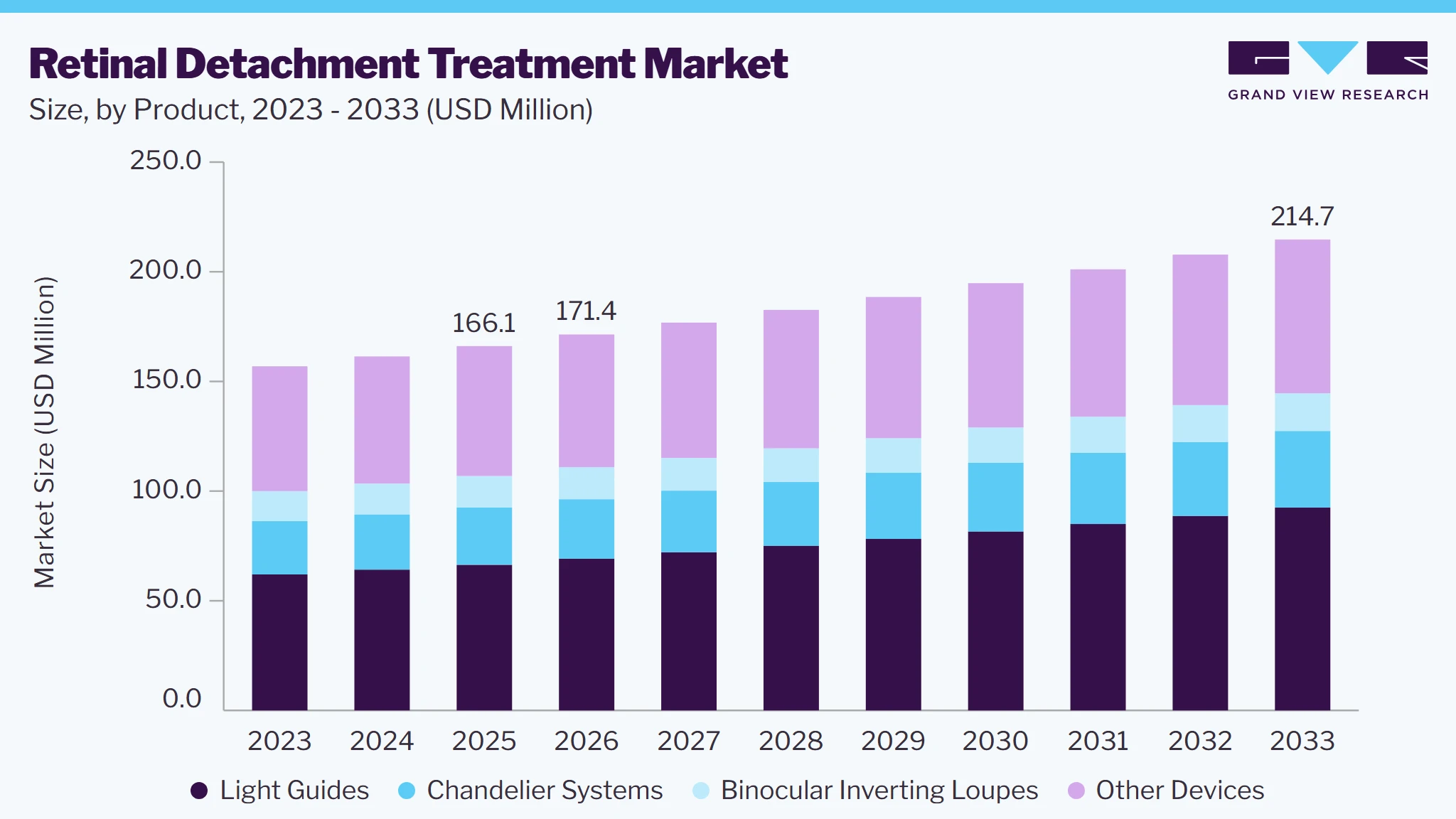
The global retinal detachment treatment market size was valued at USD 166.1 million in 2025 and is projected to grow from USD 171.4 million in 2026 to USD 214.7 million by 2033, at a CAGR of 3.3% from 2026 to 2033. Europe dominated the market, accounting for the revenue share of 42.6% in 2025. The growth is supported by the continuing clinical burden of rhegmatogenous retinal detachment (RRD), an acute sight-threatening condition that requires timely diagnosis and treatment to prevent permanent vision loss.
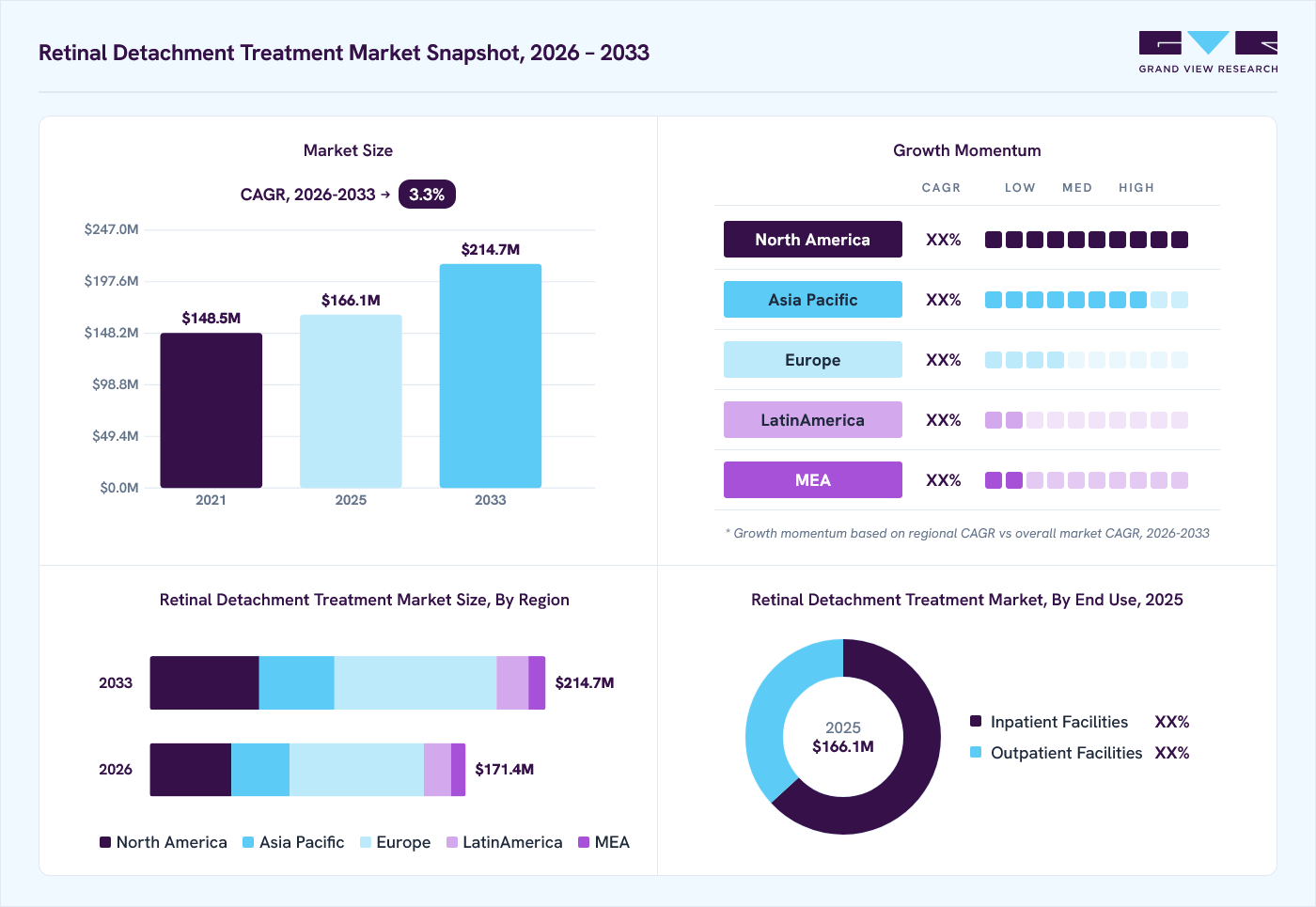 Source: Grand View Research, IR Documents, Primary Interviews, Paid DatabasesTo learn more about this report,
 Download Free Sample Report
 Key Market Trends & Insights
- By product: Light guides segment held the largest market share of 40.0% in 2025.
- By treatment: Pars plana vitrectomy segment dominated with the largest revenue share of 55.8% in 2025.
- By disease: Rhegmatogenous retinal detachment (RRD) segment accounted for the largest market revenue share of 67.3% in 2025.
- By age group: Adult segment held the largest market share of 61.7% in 2025.
- By end use: Inpatient facilities segment dominated the market with the largest revenue share of 63.1% in 2025.
Regional Highlights
- Largest regional market: Europe (42.6% revenue share, 2025)
- Fastest-growing regional market: North America (highest CAGR, 2026-2033)
- By country: The Germany dominated Europe with the largest revenue share in 2025
Market Size & Forecast
- Market size in 2025: USD 166.1 million
- Estimated market size in 2026: USD 171.4 million
- Projected market size by 2033: USD 214.7 million
- CAGR (2026-2033): 3.3%
Three ways to get this report
Buy it, customize it, or ask a question.Ask an Analyst
A direct answer, usually in 1 working day
- AccessReport author, directly
- Reply timeWithin 1 working day
- No sales callDirect answer only
- FormatEmail reply
- CostFree, no cost
Get the Full Report
What the study covers
- FormatsPDF · Excel · Dashboard
- Timeline2026–2033 annual, 2025 base
- Coverage20+ countries, 5 regions
- Companies10+ key players profiled
Customize the Report
20% free customization
- IncludeCountries, segments, points
- TailorTo your product definition
- ExtendDeeper competitor detail
- OrA fully bespoke study
- Turnaround5–10 working days
RRD is the most common form of retinal detachment and is associated with factors such as increasing age, myopia, previous ocular surgery, and ocular trauma. The market encompasses a range of surgical procedures and supporting technologies used to restore retinal attachment and preserve vision in patients with retinal detachment. Treatment selection depends on the type, location, and extent of detachment and may include PPV, scleral buckling, pneumatic retinopexy, and combined procedures. These approaches require a combination of specialized instruments and visualization technologies to allow surgeons to identify retinal breaks, remove vitreous traction, drain subretinal fluid, apply laser photocoagulation, and introduce intraocular tamponade when required.
 To learn more about this report, Download Free Sample Report
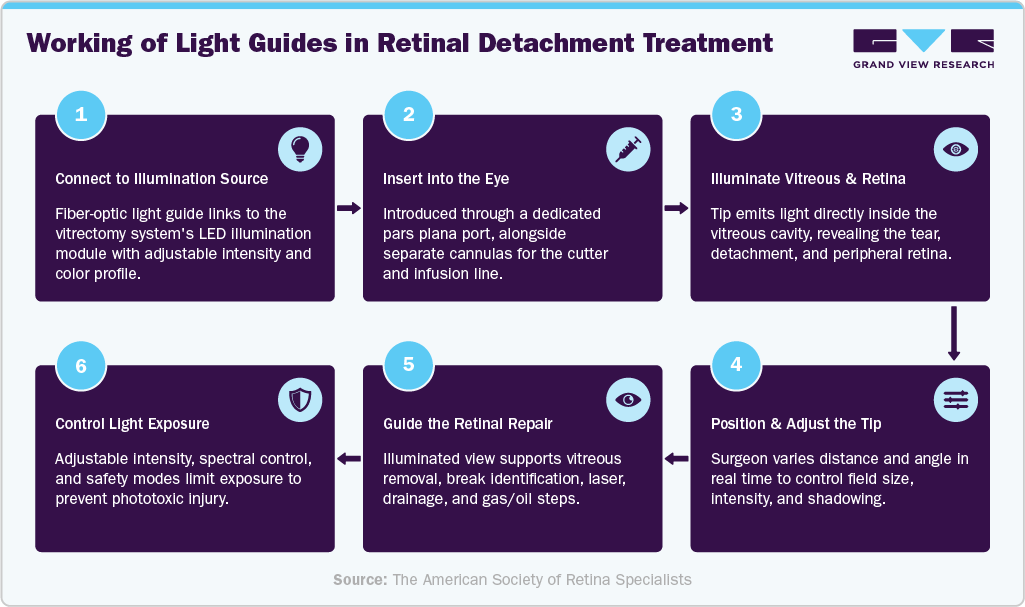
 Light guides are an important illumination component used during vitreoretinal surgery, particularly pars plana vitrectomy, performed to repair retinal detachment. These fiber-optic devices deliver light inside the eye, allowing surgeons to clearly visualize the retina, vitreous, retinal tears, and other structures during surgery. Depending on the procedure, light guides can provide focused, widefield, or midfield illumination. The availability of different gauge sizes, including 20G, 23G, 25G, 27G, and smaller sizes, supports their use in various minimally invasive retinal procedures. Bausch + Lomb, for example, offers multiple endoillumination options and fiber-optic accessories for retinal detachment procedures.
 To learn more about this report, Download Free Sample Report
 The growing adoption of minimally invasive vitrectomy is a major factor supporting demand for light guides. As retinal surgeons increasingly use small-gauge instruments, illumination systems must provide sufficient light through smaller surgical access points without compromising visualization. Recent clinical guidance also emphasizes that appropriate illumination is critical during retinal detachment surgery.
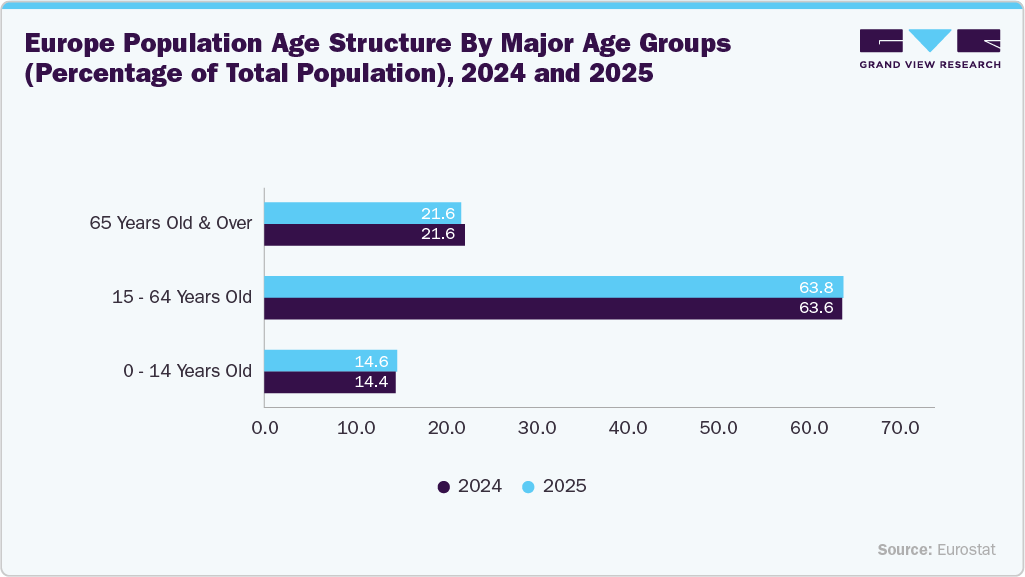
Population aging is a major driver of demand for retinal detachment treatment. According to Eurostat, people aged 65 years and older accounted for 22.0% of the EU population in 2025, up from 21.6% in 2024. Retinal detachment is particularly relevant in older adults because the incidence of RRD tends to peak in the sixth and seventh decades of life, often in association with age-related posterior vitreous detachment. The expanding older population, therefore, increases the number of individuals who require retinal examinations, diagnoses, and treatment for retinal tears and detachments. The increasing volume of cataract surgeries is expected to further support demand for retinal detachment treatment across Europe.
 To learn more about this report, Download Free Sample Report
 Market Dynamics
The retinal detachment treatment industry is witnessing steady growth as ophthalmic practices increasingly adopt advanced surgical technologies and visualization systems to improve the diagnosis, management, and repair of retinal detachment. Demand is being supported by the rising incidence of retinal detachment among aging populations, the growing prevalence of retinal disorders, the increasing adoption of minimally invasive vitreoretinal procedures, and ongoing improvements in surgical visualization and instrumentation. Retinal detachment treatment primarily includes pars plana vitrectomy, pneumatic retinopexy, and combined procedures, supported by devices such as light guides, chandelier systems, binocular inverting loupes, OCT systems, ophthalmic ultrasound/B-scan, wide-angle viewing systems, and 3D/heads-up visualization platforms.
The growing aging population is a major driver of the market growth, as the risk of retinal disorders and age-related vitreoretinal changes increases with advancing age, creating a larger patient pool requiring diagnosis and surgical management.
 To learn more about this report, Download Free Sample Report
 This demographic trend is particularly relevant to retinal detachment because population-based research has identified a substantially higher incidence of rhegmatogenous retinal detachment among older adults; a nationwide study in South Korea reported the highest incidence at 28.55 cases per 100,000 person-years among individuals aged 65-69 years. At the global level, the aging trend is also expected to continue, with the UN reporting that in countries where populations have already peaked, the proportion of people aged 65 years and older is projected to increase from 17% in 2024 to 33% by 2054. The expanding geriatric population, therefore, increases the number of individuals at risk of retinal detachment and other age-associated retinal conditions, supporting demand for pneumatic retinopexy, pars plana vitrectomy, retinal visualization systems, scleral buckling, light guides, and other vitreoretinal surgical technologies. As the number of older patients requiring ophthalmic care increases, greater procedure volumes and demand for specialized retinal surgery are expected to support revenue growth in the global market.
The limited availability of skilled vitreoretinal specialists is a key restraint for the global market, as retinal detachment repair requires specialized clinical expertise, advanced microsurgical skills, and access to dedicated ophthalmic surgical infrastructure. Procedures such as pars plana vitrectomy, pneumatic retinopexy, and combined retinal repair require trained vitreoretinal surgeons who can appropriately select the treatment approach and manage intraoperative and postoperative complications. The availability of these specialists is often concentrated in major cities, tertiary hospitals, and specialized eye-care centers, creating disparities in access to timely retinal detachment treatment, particularly in rural and underserved regions.
In addition, the aging population and the growing burden of retinal diseases are expanding the demand for specialized retinal care, potentially increasing pressure on the existing specialist workforce. Limited access to experienced surgeons can also delay diagnosis, referral, and surgical intervention and may restrict the utilization of advanced vitreoretinal technologies in facilities without adequately trained personnel. Consequently, shortages and uneven geographic distribution of skilled vitreoretinal specialists can limit procedure volumes, slow the adoption of advanced retinal surgical systems, and constrain overall market expansion.
Market Characteristics & Concentration
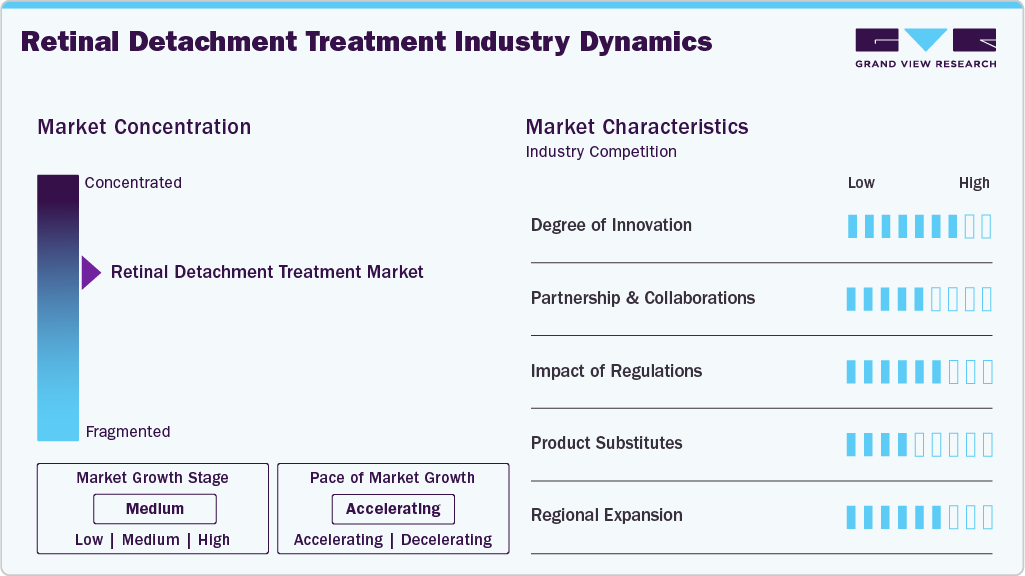
The market is moderately concentrated, with established ophthalmic and vitreoretinal device manufacturers maintaining strong positions across surgical, visualization, illumination, and diagnostic technology segments. Key market participants include Alcon, ZEISS, Bausch + Lomb, Topcon, NIDEK, OCULUS, Oertli Instrumente, BVI, Haag-Streit, and Leica Microsystems, offering products and technologies used in retinal detachment diagnosis, surgical visualization, illumination, and repair procedures. Competition is increasingly focused on advanced vitreoretinal surgical systems, high-intensity and wide-field illumination, 3D/heads-up visualization, wide-angle viewing systems, microsurgical instrumentation, and integration of imaging technologies.
The market is characterized by a high degree of technological innovation, with manufacturers continually advancing vitreoretinal surgical systems, visualization technologies, illumination systems, and microsurgical instrumentation to improve procedural precision and efficiency. Innovation is increasingly focused on high-speed vitrectomy, 3D/heads-up visualization, integrated intraoperative OCT, enhanced wide-field visualization, advanced illumination, fluidics control, smaller-gauge instrumentation, and integration of multiple surgical functions within a single platform. These developments are intended to improve visualization of the peripheral retina, provide greater control during vitreous removal, support real-time intraoperative decision-making, and facilitate complex retinal detachment procedures. For example, ZEISS ARTEVO 800 combines 4K digital visualization, heads-up 3D viewing, wide-field retinal visualization, and integrated intraoperative OCT, with the company positioning the system for retinal procedures, including retinal detachment surgery.
 To learn more about this report, Download Free Sample Report
 Partnerships and collaborations are becoming an important strategy in the retinal detachment treatment industry, as ophthalmic device manufacturers seek to combine complementary technologies, strengthen clinical capabilities, expand retinal-care workflows, and accelerate the development and adoption of advanced vitreoretinal solutions. Rather than relying solely on internal product development, companies are increasingly working with technology providers, retinal specialists, academic institutions, and healthcare organizations to integrate diagnostic imaging, surgical visualization, digital workflow, and vitreoretinal surgical technologies. In addition, collaborations with clinicians and research organizations are supporting the development and clinical evaluation of digital visualization, intraoperative OCT, AI-enabled retinal data analysis, and personalized retinal-care solutions.
Regulatory oversight significantly affects the global market, as manufacturers of vitreoretinal surgical systems, vitrectomy cutters, illumination devices, visualization systems, and related ophthalmic equipment must demonstrate appropriate safety, performance, and intended use prior to commercialization.
The market faces substitution by alternative surgical techniques and treatment approaches, which can be selected based on the type, location, severity, and clinical characteristics of the retinal detachment. Advances in laser photocoagulation and cryotherapy can reduce the progression of selected retinal tears or breaks before a complete retinal detachment develops, thereby potentially reducing the need for more extensive retinal detachment surgery in appropriate cases. The availability of multiple treatment approaches can, therefore, influence the use of specific retinal surgical devices and technologies. However, these alternatives are largely procedure-specific rather than direct substitutes for the overall retinal detachment treatment industry, as treatment selection depends on clinical presentation and surgeon assessment.
Regional expansion is an important growth strategy in the global market, as manufacturers seek to broaden their geographic presence through regulatory approvals, distributor partnerships, localized commercialization, and expansion of vitreoretinal product portfolios. Companies are increasingly targeting countries where aging populations, increasing demand for specialized retinal care, and the development of ophthalmic surgical infrastructure are supporting the adoption of advanced retinal treatment technologies. Expansion into emerging markets is also being supported by partnerships with local distributors and ophthalmic hospitals, enabling manufacturers to improve access to vitrectomy systems, retinal illumination devices, wide-angle visualization systems, microsurgical instruments, and related technologies.
Analyst Perspective
The retinal detachment treatment market is a well-established segment of the ophthalmic surgical devices industry, supported by the need for timely diagnosis, surgical repair, and ongoing advancements in vitreoretinal surgery. Treatment options include pars plana vitrectomy, pneumatic retinopexy, scleral buckling, and combined procedures, selected based on retinal detachment characteristics and patient-specific clinical factors. The market also encompasses surgical systems, visualization technologies, illumination devices, vitreous cutters, endolaser instruments, fluidics systems, and tamponade technologies that support effective retinal repair.
Product Insights
The light guides segment led the market with the largest revenue share of 40.0% in 2025 and is expected to grow at the fastest CAGR of 4.2% over the forecast period. The segment benefits from the increasing use of pars plana vitrectomy and other vitreoretinal procedures that require reliable endoillumination to visualize the posterior segment, retinal breaks, membranes, and the peripheral retina during surgery. Technological development is also expanding the addressable opportunity, with LED-based illumination being investigated as an alternative to conventional xenon-based systems because of its portability, intensity, and reliability. A 2025 PubMed-indexed report described a 3D-printed, portable LED endo-illuminator designed to connect to contemporary vitreoretinal optical fiber systems, demonstrating continued innovation in light-source design and surgical portability.
The chandelier systems segment is projected to grow at a significant CAGR of 3.7% over the forecast period. The growth is supported by growing utilization of wide-angle intraoperative visualization during scleral buckling and selected retinal detachment procedures. Chandelier systems provide continuous intraocular illumination while allowing the surgeon to use both hands for scleral depression, retinal manipulation, laser application, and buckle placement, which is particularly relevant for complex peripheral retinal breaks. Recent clinical evidence is reinforcing interest in this technology: a 2024 multicenter study evaluated chandelier-assisted scleral buckling using both contact and non-contact wide-angle viewing systems in patients with RRD. The study found that chandelier-assisted scleral buckling had comparable anatomical success to standard scleral buckling and was associated with a shorter operative time across the analyzed studies.
Treatment Insights
The pars plana vitrectomy (PPV) segment led the market with the largest revenue share of 55% in 2025 and is expected to grow at the fastest CAGR over the forecast period. PPV has become an important surgical approach for RRD, particularly in pseudophakic eyes, posterior retinal breaks, and more complex detachments, in which removal of vitreous traction, internal drainage of subretinal fluid, endolaser photocoagulation, and intraocular tamponade are required. The continued shift toward small-gauge vitrectomy systems, improved visualization, endoillumination, and more sophisticated fluidics is supporting procedure adoption while expanding the capabilities of vitreoretinal surgeons. Recent Asia-Pacific consensus recommendations published in 2025 support tailoring surgical selection to lens status, patient characteristics, and retinal break configuration, with PPV favored particularly for pseudophakic eyes and complex detachments, and 23G-27G small-gauge vitrectomy broadly endorsed.
The pneumatic retinopexy segment is anticipated to grow at a significant CAGR over the forecast period. The growth is supported by its minimally invasive nature and suitability for selected primary RRD cases involving appropriately positioned retinal breaks. The procedure can reduce the need for more extensive intraocular surgery in carefully selected patients and may support treatment in settings where rapid intervention and lower procedural burden are important considerations. Recent evidence continues to sustain clinical interest in this approach: a 2025 IRIS Registry analysis evaluated real-world outcomes of pneumatic retinopexy for RRD, while a 2025 long-term analysis of the PIVOT randomized trial found no statistically significant difference in long-term redetachment rates between pneumatic retinopexy and PPV among the study population. A separate 2025 study reported that pneumatic retinopexy successfully reattached 64.9% of eyes in a large clinical series, although some patients subsequently required PPV for non-recurrent-RD indications.
Disease Insights
The rhegmatogenous retinal detachment (RRD) segment led the market with the largest revenue share of 67.3% in 2025, and is projected to grow at the fastest CAGR over the forecast period. RRD represents a major surgical indication because retinal breaks or tears allow liquefied vitreous to enter the subretinal space, creating an acute risk of progressive visual impairment and requiring timely intervention. The underlying patient pool is driven by aging populations, myopia, history of cataract surgery, posterior vitreous changes, and ocular trauma, while improvements in diagnostic and referral pathways increase the number of patients reaching specialized vitreoretinal services. A large international systematic review and meta-analysis published in Ophthalmology reported an estimated annual RRD incidence of 12.17 cases per 100,000 population, with Europe recording the highest regional incidence at 14.52 per 100,000, and identified an increasing temporal trend in RRD incidence, indicating continued development of treatment pathways for this high-volume disease category.
The exudative/serous retinal detachment segment is expected to grow at a significant CAGR over the forecast period. The growth is driven by increasing recognition and management of non-rhegmatogenous retinal detachments associated with inflammatory, vascular, choroidal, systemic, and structural disorders. Management of exudative/serous detachment generally focuses on identifying and treating the underlying pathology, resulting in demand for disease-specific pharmacological, laser, photodynamic, and occasionally surgical interventions rather than a single standardized repair procedure. Recent clinical evidence demonstrates continued development of treatment approaches for these cases. A 2025 report described the use of a 532-nm micropulse subthreshold laser for fibrinous central serous chorioretinopathy with inferior bullous exudative retinal detachment, while a 2024 American Academy of Ophthalmology evidence review evaluated multiple therapies for central serous chorioretinopathy and supported selected use of photodynamic therapy.
Age Group Insights
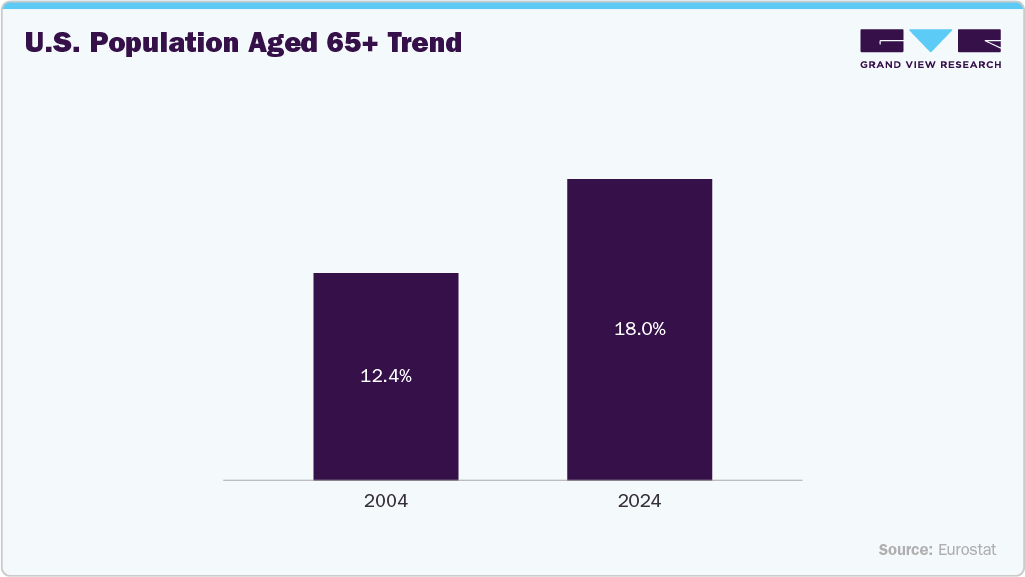
The adult segment led the market with the largest revenue share of 61.7% in 2025, reflecting the substantially larger clinical burden of retinal detachment among adult and older populations and the concentration of established surgical services around adult vitreoretinal care. RRD risk is associated with several conditions that become increasingly relevant during adulthood, including posterior vitreous changes, myopia, previous cataract surgery, ocular trauma, and age-related retinal degeneration. The demographic opportunity is further strengthened by population aging: the U.S. Census Bureau reported that the U.S. population aged 65 and older reached 61.2 million in 2024, representing 18.0% of the total population, up from 12.4% in 2004. This expanding older population is relevant to the demand for retinal detachment treatment because age-related changes in the vitreous and retina increase the clinical need for retinal evaluation and surgical management.
The pediatric segment is anticipated to grow at the fastest CAGR over the forecast period. Growth is supported by greater diagnosis and specialized management of pediatric RRD associated with ocular trauma, high myopia, congenital abnormalities, and a history of prematurity or retinopathy of prematurity. Pediatric retinal detachment generally requires specialized vitreoretinal expertise because the anatomical characteristics of younger eyes and the underlying causes can differ substantially from adult RRD. A U.S. nationwide aggregated health-record analysis identified 2,200 pediatric RRD cases among 168,152 total RRDs, with myopia, ocular trauma, and a history of prematurity among commonly associated factors; the study also found that RRD prevalence increased with age within the pediatric population. Increasing access to pediatric ophthalmology and vitreoretinal centers, together with earlier diagnosis of trauma- and prematurity-related retinal disease, can therefore support growth in this segment.
End Use Insights
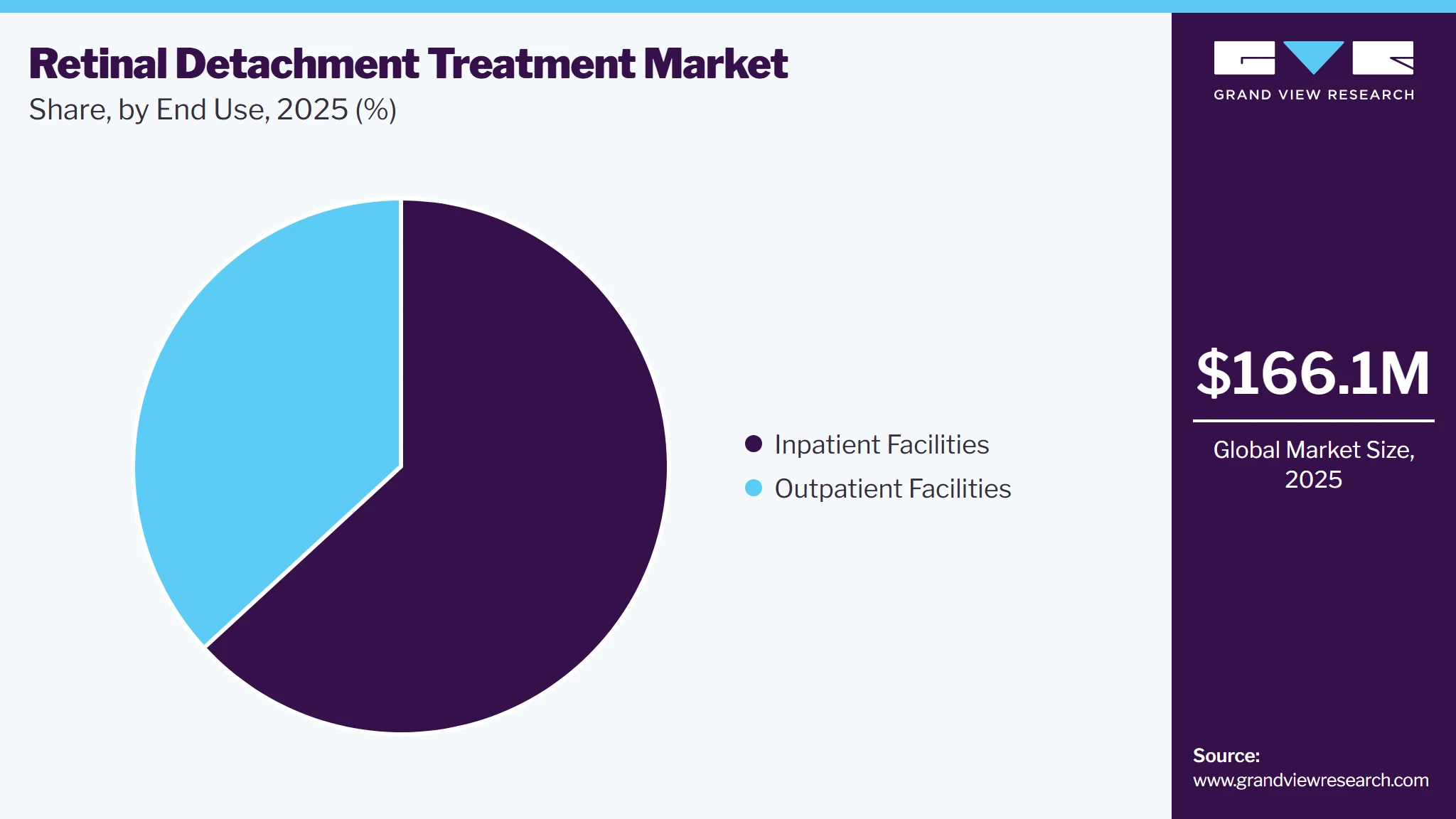
The inpatient facilities segment led the market with the largest revenue share of 63.1% in 2025. The growth is supported by the requirement for hospital-based infrastructure for patients presenting with complex or urgent retinal detachments and those requiring operating-room resources, anesthesia, postoperative monitoring, and access to specialized vitreoretinal surgeons. Inpatient and hospital-based settings remain particularly relevant for complex RRD, proliferative vitreoretinopathy, combined retinal procedures, traumatic detachments, pediatric cases, and patients with significant systemic or ocular comorbidities. The increasing complexity of retinal surgery is also supporting demand for advanced vitrectomy consoles, small-gauge instrumentation, endoillumination, wide-angle viewing systems, laser systems, and tamponade technologies within hospital ophthalmic operating rooms.
 To learn more about this report, Download Free Sample Report
 The outpatient facilities segment is anticipated to grow at the fastest CAGR over the forecast period. The growth is attributed to the increasing suitability of selected retinal detachment procedures for ambulatory treatment pathways, improvements in minimally invasive vitreoretinal surgery, and the broader shift toward procedures that reduce hospital resource utilization when clinically appropriate. The expansion of 23G-27G small-gauge systems, improved surgical visualization, faster operating workflows, and treatment options such as pneumatic retinopexy can facilitate treatment in specialized outpatient or ambulatory ophthalmic settings for appropriately selected patients. Evidence supporting this shift includes the growing use of minimally invasive pneumatic retinopexy for selected RRD cases and continued adoption of small-gauge PPV in contemporary retinal surgery.
Regional Insights
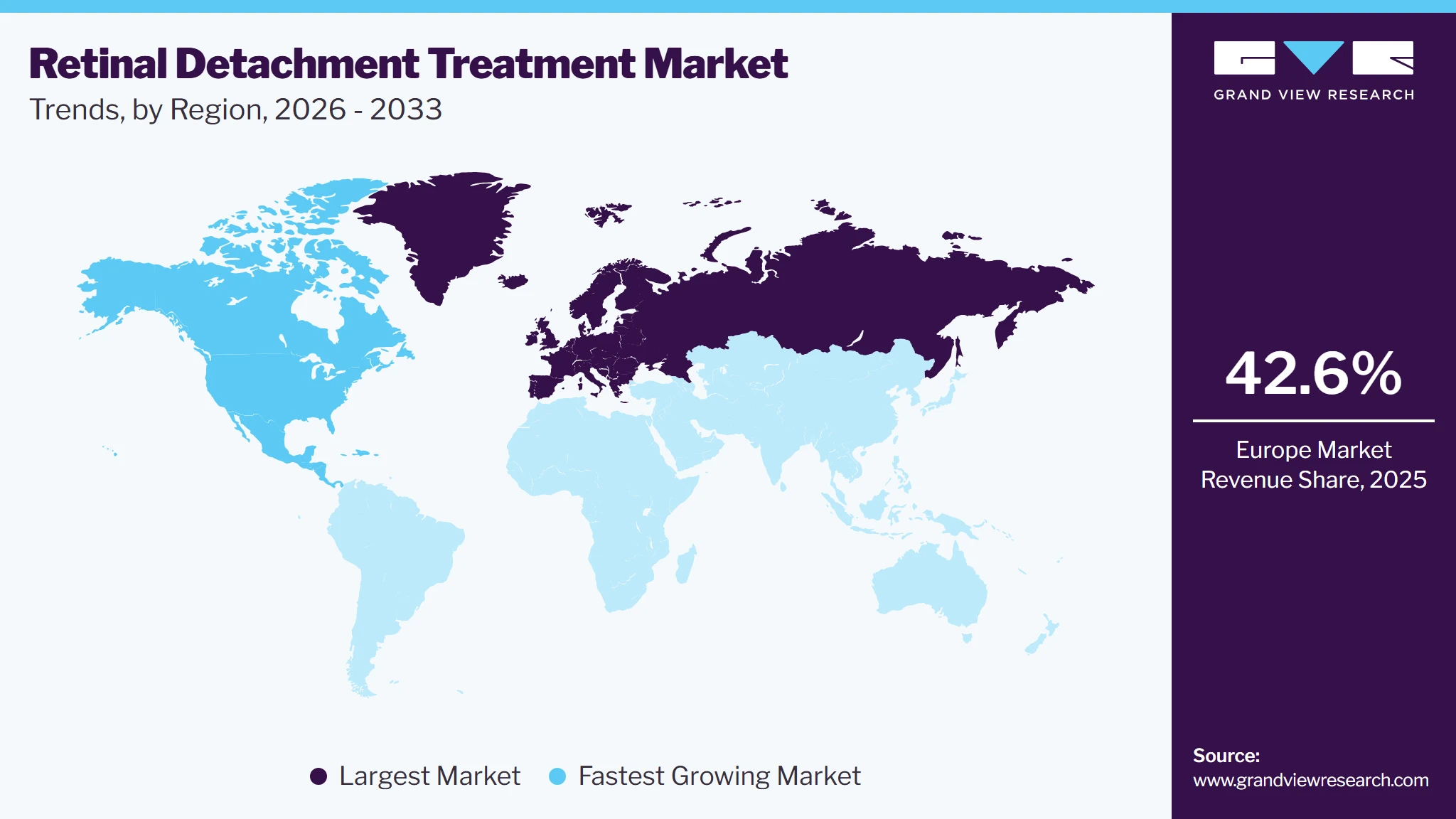
The retinal detachment treatmentmarket in North America is expected to grow at the fastest CAGR of 4.3% over the forecast period. Rising RRD incidence, aging-related ocular changes, cataract surgery, myopia, and the adoption of advanced vitreoretinal surgical technologies are key factors driving growth in the North American retinal detachment treatment market. The region's established ophthalmic healthcare infrastructure and availability of specialized retinal services further support the adoption of advanced treatment and visualization technologies.
U.S. Retinal Detachment Treatment Market Trends
The retinal detachment treatment market in the U.S. is experiencing robust growth, driven by the country's large aging population, high volume of cataract surgery, established retinal specialist network, and broad availability of advanced vitreoretinal procedures. The U.S. National Eye Institute identifies aging, severe myopia, posterior vitreous detachment, lattice degeneration, and eye injury as important risk factors for retinal detachment, creating a continuing clinical need for diagnosis and surgical intervention. Recent U.S. evidence further strengthens the demand outlook: a 2026 study involving 742,337 U.S. patients found that the prevalence of retinal detachment after phacoemulsification increased from 0.27% at one month to 1.41% at 10 years, while a 2025 IRIS Registry study involving 201,622 patients with RRD found that 3.34% subsequently developed RRD in the fellow eye.
Europe Retinal Detachment Treatment Market Trends
The Europe retinal detachment treatment market held the largest revenue share of 42.6% in 2025. The growth is supported by the region’s aging population and continued burden of rhegmatogenous retinal detachment (RRD). A European systematic review and meta-analysis reported an annual incidence of RRD of 13.3 cases per 100,000 inhabitants. A broader international meta-analysis also found that Europe had the highest regional incidence of RRD, indicating a substantial need for diagnosis and surgical treatment across the region. Similarly, according to the analysis published by Elsevier B.V. in June 2024, Europe recorded the highest incidence of rhegmatogenous retinal detachment (RRD) globally, at 14.52 cases per 100,000 population (95% confidence interval (CI): 11.79-17.88), highlighting the significant disease burden and need for timely retinal detachment treatment in the region.
 To learn more about this report, Download Free Sample Report
 The retinal detachment treatment market in the UK is steadily growing. The growth is driven by a mature National Health Service (NHS) ophthalmology network, established vitreoretinal referral pathways, increasing demand associated with an aging population, and continued utilization of PPV, scleral buckling, and pneumatic retinopexy. The NHS identifies retinal detachment as an urgent eye condition and states that surgical treatment can involve vitrectomy, scleral buckling, pneumatic retinopexy, laser, or cryotherapy, with treatment generally performed using local anesthesia and without routine overnight hospitalization. This established surgical pathway supports the use of retinal-detachment treatment technologies across NHS hospitals and specialist eye centers. The combination of established emergency referral, specialist retinal services, and ongoing refinement of surgical techniques is expected to support continued demand in the UK
The Spain retinal detachment treatment market isexperiencing significant growth, supported by a substantial clinical burden of retinal detachment, established tertiary ophthalmology centers, and continued use of PPV, scleral buckling, and tamponade-based repair. Spain's relatively high RRD incidence, well-established vitreoretinal care infrastructure, and increasing management of complex and recurrent retinal detachment cases are supporting the continued adoption of advanced retinal surgery systems and associated treatment devices.
Asia Pacific Retinal Detachment Treatment Market Trends
The retinal detachment treatment market in the Asia Pacific is gaining significant momentum, supported by a large patient population, rising rates of myopia, aging-related eye disorders, and improving access to specialized ophthalmic care. In 2025, the Asia-Pacific Vitreo-retina Society, Academy of Asia-Pacific Professors of Ophthalmology, and Academia Retina International published a regional expert consensus on RRD surgery. The consensus supports tailoring treatment to patient age, lens status, and retinal break characteristics and recognizes 23-27G small-gauge vitrectomy, scleral buckling, and pneumatic retinopexy as important treatment approaches. The development of standardized regional guidance, together with improvements in vitreoretinal equipment and specialized retinal services, is expected to support the adoption of advanced retinal detachment treatment technologies across the Asia Pacific.
The China retinal detachment treatment market is experiencing rapid expansion, driven by a large population of patients with myopia, an aging population, increasing access to specialist ophthalmology centers, and continued development of vitreoretinal surgical capabilities. More recent Chinese clinical research demonstrates ongoing development of surgical techniques and technologies: a 2024 multicenter randomized trial conducted at three Chinese ophthalmology centers evaluated perfluoro-n-octane as an intraoperative tamponade during PPV for retinal detachment, while another 2024 Chinese study evaluated 25G PPV with air tamponade for RRD with inferior breaks. These developments indicate continued clinical adoption and refinement of vitreoretinal surgery in China, supporting demand for vitrectomy systems, illumination, visualization, tamponade materials, and related retinal-detachment devices.
The retinal detachment treatment market in South Korea is experiencing strong growth, driven by a documented surgical RRD burden, high prevalence of myopia, an aging population, and continued development of specialized retinal care. More recent Korean clinical guidance is also relevant to the future treatment burden: a 2025 consensus statement reported a 65.4% prevalence of myopia and a 6.9% prevalence of high myopia among Korean children and adolescents, underscoring the country's substantial myopia burden and the long-term retinal complications associated with axial elongation. The combination of high myopia, aging, advanced ophthalmological infrastructure, and established surgical treatment pathways is driving continued demand for retinal detachment diagnosis and treatment in South Korea.
Latin America Retinal Detachment Treatment Market Trends
The retinal detachment treatment market in Latin America is emerging as a high-growth market, supported by increasing demand for ophthalmic surgical services, a large and aging population, greater access to specialized retinal centers, and continued development of vitreoretinal capabilities in major countries such as Brazil. The rapid expansion of cataract surgeries across the countries, particularly in Brazil, is another factor supporting demand for retinal monitoring and treatment services. A recent Brazilian study published in 2026 reported that cataract procedures performed through Brazil's public and private healthcare systems increased substantially, reaching 1.48 million procedures in 2024, compared with approximately 364,600 in 2009.
The Brazil retinal detachment treatment market is growing, supported by the country's large patient population, increasing need for specialized ophthalmic surgery, aging-related retinal disease, and continued development of vitreoretinal expertise. Brazilian evidence indicates that demand for retinal-detachment services increases with age and that non-traumatic phakic retinal detachment represents an important component of the treated population. A more recent 2024 Brazilian prospective study evaluated 79 patients undergoing PPV with silicone-oil injection for RRD, demonstrating continued use of advanced vitreoretinal surgery for complex cases and ongoing clinical evaluation of postoperative outcomes. The country's expanding specialist ophthalmology network, together with the need to diagnose and manage RRD before advanced disease develops, creates opportunities for wider adoption of vitrectomy platforms, intraocular illumination, visualization systems, laser equipment, and tamponade technologies.
Middle East & Africa Retinal Detachment Treatment Market Trends
The retinal detachment treatment market in the Middle East & Africa is witnessing steady growth, supported by the region’s growing need for specialized retinal care, particularly as diabetes, aging, and other eye-health conditions increase the demand for vitreoretinal services. In Sub-Saharan Africa, a 2025 systematic review covering 30 studies from 18 countries and 16,329 people with diabetes estimated the pooled prevalence of diabetic retinopathy at 25.5%. The prevalence was 31.8% in East Africa, 29.6% in Southern Africa, 27.4% in West Africa, and 13.7% in Central Africa. This growing burden of retinal disease can increase the need for retinal monitoring and treatment, including vitrectomy when advanced diabetic eye disease progresses to tractional retinal detachment.
The Saudi Arabia retinal detachment treatment market is experiencing notable growth, driven by the expansion of specialized healthcare infrastructure, the increasing availability of advanced ophthalmic services, the development of tertiary-care hospitals, and a greater emphasis on early diagnosis and specialist management of vision-threatening retinal disorders. The increasing burden of diabetes is another important market driver. A 2024 systematic review of Saudi Arabia estimated the pooled prevalence of diabetic retinopathy at 31% among adults with diabetes, including 24% among people with type 2 diabetes.
Key Retinal Detachment Treatment Company Insight
The retinal detachment treatment industry is competitive, with manufacturers and ophthalmic technology providers focusing on advancing surgical systems, vitreoretinal instruments, visualization technologies, illumination systems, and ancillary devices used across retinal detachment procedures. Market participants are increasingly emphasizing small-gauge vitrectomy systems, improved fluidics, enhanced intraoperative visualization, advanced illumination, and specialized instruments to support precise retinal manipulation and repair.
Key Retinal Detachment Treatment Companies
The following key companies have been profiled for this study on the retinal detachment treatment market:
-
Alcon
-
ZEISS
-
Bausch Health
-
Topcon Corporation
-
NIDEK Co., Ltd.
-
OCULUS Optikgeräte GmbH
-
Oertli Instrumente AG
-
BVI
-
Haag-Streit Group
-
Leica Microsystems
Competitive Benchmarking
Category
Operating Strategies
Competitive Edge
Weakness
Established Players (Alcon, ZEISS, Bausch Health, Topcon Corporation, NIDEK Co., Ltd.)
- Focus on integrated vitreoretinal surgery platforms covering vitrectomy systems, surgical illumination, visualization, fluidics, and disposable instruments.
- Invest in advanced small-gauge vitrectomy, high-speed cutting, intraoperative visualization, fluidics, and digital surgical workflows.
- Strong global brand presence, established surgeon relationships, extensive distribution networks, and broad vitreoretinal portfolios support competitive positioning.
- Integrated surgical platforms and advanced visualization, fluidics, and vitrectomy technologies enable efficient management of complex retinal procedures.
- High R&D, manufacturing, regulatory, and quality-compliance costs can increase operating expenses.
- Large product portfolios and complex regulatory requirements can lengthen development and commercialization timelines.
Emerging Players (OCULUS Optikgeräte GmbH, Oertli Instrumente AG)
- Focus on specialized vitreoretinal instruments, illumination systems, surgical consoles, and procedure-specific solutions.
- Differentiate through product customization, compact systems, specialized instruments, and cost-conscious solutions for hospitals and ophthalmic centers.
- Greater specialization can enable faster product development and targeted solutions for specific retinal surgery requirements.
- Flexible product portfolios and specialized surgical instruments support differentiation against broad-platform manufacturers.
- Smaller scale and narrower portfolios can limit financial resources, global distribution reach, and hospital-level purchasing power compared with leading manufacturers.
- Lower brand visibility among surgeons and institutions can create challenges in markets dominated by established platform providers.
Recent Development
-
In September 2025, BVI received FDA 510(k) clearance for its Leos Laser Endoscopy System, marking a regulatory milestone for the company's ophthalmic endoscopy technology. The system subsequently entered clinical use in July 2025, supporting the development of endoscopic visualization and laser capabilities for complex ophthalmic and vitreoretinal procedures
-
In February 2025, Optos launched MonacoPro, a next-generation integrated ultra-widefield scanning laser ophthalmoscopy (UWF-SLO) and spectral-domain OCT retinal imaging system designed to provide detailed retinal imaging and support diagnostic assessment and treatment planning. The system combines 200 single-shot ultra-widefield imaging with OCT, strengthening its applicability for detecting and monitoring peripheral retinal pathology, including retinal tears and detachments.
-
In May 2024, ZEISS announced enhancements to its OCT technology portfolio, focusing on improved retinal imaging capabilities and workflow efficiency for ophthalmic diagnosis. The advancements strengthen OCT-based visualization of retinal structures and support more detailed assessment and monitoring of retinal conditions, including patients undergoing retinal detachment evaluation and postoperative follow-up.
Retinal Detachment Treatment Market Report Scope
Report Attribute
Details
Market size in 2025
USD 166.1 million
Estimated market size in 2026
USD 171.4 million
Projected market size by 2033
USD 214.7 million
Growth rate
CAGR of 3.3% from 2026 to 2033
Base year for estimation
2025
Historical data
2021 - 2024
Forecast period
2026 - 2033
Quantitative units
Revenue in USD million and CAGR from 2026 to 2033
Report coverage
Revenue forecast, company ranking, competitive landscape, growth factors, and trends
Segments covered
Product, treatment, disease, age group, end use, region
Regional scope
North America; Europe; Asia Pacific; Latin America; Middle East & Africa
Country scope
U.S.; Canada; Mexico; UK; Germany; France; Italy; Spain; Denmark; Sweden; Norway; Japan; China India; Australia; Thailand; South Korea; Brazil; Argentina; South Africa; Saudi Arabia; UAE; Kuwait
Key companies profiled
Alcon; ZEISS; Bausch Health; Topcon Corporation; NIDEK Co., Ltd.; OCULUS Optikgeräte GmbH; Oertli Instrumente AG; BVI; Haag-Streit Group; Leica Microsystems
Customization scope
Free report customization (equivalent up to 8 analyst’s working days) with purchase. Addition or alteration to country, regional, and segment scope
Pricing and purchase options
Avail customized purchase options to meet your exact research needs. Explore purchase options
Global Retinal Detachment Treatment Market Report Segmentation
This report forecasts revenue growth at global, regional, and country levels and provides an analysis of the latest industry trends in each of the sub-segments from 2021 to 2033. For this study, Grand View Research has segmented the global retinal detachment treatment market report based on product, treatment, disease, age group, end use, and region:
-
Product Outlook (Revenue, USD Million, 2021 - 2033)
-
Light Guides
-
Chandelier Systems
-
Binocular Inverting Loupes
-
Other Devices
-
-
Treatment Outlook (Revenue, USD Million, 2021 - 2033)
-
Scleral Buckling/Scleral Indentation
-
Pars Plana Vitrectomy
-
Pneumatic Retinopexy
-
Combined Treatments
-
Other Treatment
-
-
Disease Outlook (Revenue, USD Million, 2021 - 2033)
-
Rhegmatogenous Retinal Detachment (RRD)
-
Tractional Retinal Detachment (TRD)
-
Exudative/Serous Retinal Detachment
-
Tractional-Rhegmatogenous Retinal Detachment (TRD-RRD)
-
Others
-
-
Age Group Outlook (Revenue, USD Million, 2021 - 2033)
-
Pediatric
-
Adult
-
Geriatric
-
-
End Use Outlook (Revenue, USD Million, 2021 - 2033)
-
Inpatient Facilities
-
Outpatient Facilities
-
-
Region Outlook (Revenue, USD Million, 2021 - 2033)
-
North America
-
U.S.
-
Canada
-
Mexico
-
-
Europe
-
UK
-
Germany
-
France
-
Italy
-
Spain
-
Norway
-
Denmark
-
Sweden
-
-
Asia Pacific
-
China
-
Japan
-
South Korea
-
Thailand
-
Australia
-
India
-
-
Latin America
-
Brazil
-
Argentina
-
-
MEA
-
South Africa
-
Saudi Arabia
-
UAE
-
Kuwait
-
-
Research Methodology
The retinal detachment treatment marketfigures in this report are based on a proven research process that combines executive interviews with secondary research from proprietary databases, company filings, and recognized regulatory and institutional sources. Market size is built through value-chain sizing-reconciling supply-side and demand-side estimates-and triangulated with bottom-up and top-down approaches. Every estimate passes multiple levels of expert validation before publication, with eachretinal detachment treatment segment quantified using the revenue-capture definitions in the table below.
Segment Definition
Segment - Product
Revenue capture definition
Light Guides
Revenue is generated through the commercialization of specialized single-use and reusable fiber-optic illumination tools designed for endoillumination during vitreoretinal procedures. Manufacturers capture steady revenue through direct sales of focal and wide-field handpieces, recurring sales of disposable optical fibers, custom connector fittings compatible with major vitrectomy consoles, and ongoing supply agreements with surgical suites.
Chandelier Systems
Revenue flows from high-intensity, hands-free endoillumination setups that secure directly into the sclera to provide panoramic intraocular lighting. Market participants derive income from single-use trocar-cannula insertion assemblies, multi-port fiber-optic cables, specialized light-source adaptors, and bundled vitrectomy accessory packs that enable two-handed surgical manipulation.
Binocular Inverting Loupes
Revenue is captured through capital hardware purchases of specialized wide-angle viewing systems and optical image-inverting lenses mounted onto surgical microscopes. Companies generate upfront sales from non-contact and contact optical lens assemblies, alongside secondary revenue from custom mounting hardware, protective storage/sterilization cases, replacement lens elements, and anti-reflective coating maintenance services.
Other Devices
Revenue encompasses auxiliary surgical hardware and specialized tools utilized during detachment repair, including intraocular heavy liquids, long-acting gases, silicone oil tamponades, scleral sponges/bands, endolaser probes, and specialized vitreoretinal micro-forceps and scissors.
Segment - Treatment
Revenue capture definition
Scleral Buckling/Scleral Indentation
Revenue is derived from the supply of bio-compatible silicone sponges, solid silicone bands, and titanium/tantalum sleeve clips used to physically indent the sclera toward the detached retina. Manufacturers earn predictable income through high-volume material packs, specialized scleral depressing instruments, and accompanying cryopexy probe consumables or localized diathermy units.
Pars Plana Vitrectomy
Revenue flows through high-value, high-margin capital equipment and procedural pack sales. Device makers monetize this primary treatment segment through vitrectomy console sales and recurring purchases of high-speed micro-incisional vitrectomy cutters (23G, 25G, 27G), infusion lines, endoillumination probes, valved trocar systems, and post-vitrectomy intraocular tamponade agents.
Pneumatic Retinopexy
Revenue is captured through the distribution of outpatient-focused procedure kits containing medical-grade expandable gas canisters, fine-gauge intravitreal injection needles, paracentesis trays, and associated topical cryopexy or transpupillary laser photocoagulation delivery accessories.
Combined Procedures
Revenue is generated from comprehensive, high-tier surgical packs designed for complex cases that require simultaneous interventions. Companies capture maximum per-procedure revenue by bundling cataract extraction cassettes, intraocular lenses, vitrectomy packs, and internal tamponade agents into unified institutional supply contracts.
Other Treatments
Revenue encompasses alternative or adjunctive therapeutic interventions, including standalone transpupillary argon laser photocoagulation, focal retinal cryopexy, enzymatic vitreolysis, and emerging biological adhesive or subretinal fluid drainage protocols.
Segment - Disease
Revenue capture definition
Rhegmatogenous Retinal Detachment (RRD)
Revenue is generated through the high-volume treatment of full-thickness retinal tears, allowing fluid ingress into the subretinal space. As the most prevalent form of detachment, market participants secure high, consistent product pull-through across vitrectomy packs, scleral bands, and endolaser probes, driven by emergency surgical case flows in hospitals and eye centers.
Tractional Retinal Detachment (TRD)
Revenue flows from complex, intracranially demanding interventions required to release fibrovascular membranes, predominantly driven by advanced proliferative diabetic retinopathy. Medtech providers capture premium margins on ultra-high-speed vitrectomy cutters, delicate micro-segmentation scissors, specialized intraocular forceps, and heavy intraocular liquids required for membrane delamination.
Exudative/Serous Retinal Detachment
Revenue is captured primarily through pharmacologic, diagnostic, and non-surgical or minimally invasive therapeutic management of subretinal fluid accumulation caused by inflammation, vascular lesions, or tumors. Income is driven by specialized anti-VEGF intravitreal injections, systemic immunosuppressive drug therapies, and diagnostic imaging accessories.
Tractional-Rhegmatogenous Retinal Detachment (TRD-RRD)
Revenue is derived from multi-faceted, high-complexity surgical management required when tractional pulling creates secondary full-thickness retinal breaks. Equipment vendors monetize this segment through high-tier procedural supply usage, extensive intraoperative tamponade requirements, and multi-stage repair toolkits.
Others
Revenue encompasses secondary or rare etiologies of detachment, including trauma-induced retinal tears, giant retinal tears (GRTs), macular hole-associated detachments, and post-infectious inflammatory vitreoretinopathies.
Segment - Age Group
Revenue capture definition
Pediatric
Revenue is generated through specialized, ultra-small-gauge surgical instrumentation and micro-sized scleral implants tailored to pediatric ocular anatomy. Income is driven by higher-margin, specialized hospital equipment setups, dedicated general anesthesia intraoperative monitoring tools, and long-term silicone oil tamponade removal and follow-up management protocols.
Adult
Revenue flows from the core working-age demographic experiencing trauma-induced, high-myopia, or lattice degeneration-related detachments. Value is captured through steady, high-volume sales of standardized 23G and 25G vitrectomy packs, scleral buckling components, and outpatient pneumatic retinopexy supplies across public and private healthcare facilities.
Geriatric
Revenue is captured through the widespread treatment of age-related posterior vitreous detachments (PVD) progressing to tears, alongside complex diabetic tractional cases. Manufacturers capitalize on high case volumes in this segment, earning revenue through high-throughput surgical consumables, combined cataract-vitrectomy procedure packs, and outpatient post-operative care accessories.
Segment - End Use
Revenue capture definition
Inpatient Facilities
Revenue is generated through large-scale capital hardware procurement, institutional tenders, and multi-year hospital group purchasing organization (GPO) supply contracts. Device manufacturers capture bulk, steady revenue through enterprise console placements, round-the-clock emergency surgical pack fulfillment, and multi-department service maintenance agreements across major tertiary hospitals and trauma centers.
Outpatient Facilities
Revenue flows from high-throughput, cost-efficient distribution models supplying Ambulatory Surgery Centers (ASCs) and private specialty eye clinics. Market participants monetize this segment through streamlined, single-use procedure bundles, compact portable visualization/laser systems, and rapid-turnaround surgical consumable kits designed to lower per-case overhead and accelerate patient discharge times.
Estimation Model
Scope Definition
Build the Product Base
Estimate Penetration
Revenue Conversion
What exactly is included in the retinal detachment treatment market?
How many retinal detachment cases require treatment, and what is the addressable procedure volume?
How are retinal detachment cases treated, and what determines the utilization of each treatment modality?
How does retinal detachment treatment volume translate into market revenue?
PROCESS STEPS
PROCESS STEPS
PROCESS STEPS
PROCESS STEPS
1. Define the market scope across retinal detachment treatment procedures and associated treatment products/devices.
1. Estimate the retinal detachment patient pool using incidence/prevalence data by country, age group, disease type, and relevant risk factors.
1. Estimate the treatment rate among diagnosed retinal detachment patients based on disease severity, visual risk, and clinical treatment requirements.
1. Collect average selling prices (ASP) and reimbursement values for major retinal detachment treatment procedures and associated devices across key countries.
2. Segment the market by treatment type.
2. Determine the proportion of diagnosed cases that are clinically eligible for surgical or procedural treatment.
2. Determine the procedure mix by disease type, age group, and geography.
2. Calculate revenue generated from each procedure/device value.
3. Define disease categories covered.
3. Estimate annual treated patient volume by applying diagnosis, treatment-seeking, and treatment-eligibility rates to the patient pool.
3. Assess utilization of supporting treatment technologies and consumables.
3. Incorporate associated revenue from retinal surgery consumables and treatment-support products, where included within the market scope.
4. Establish geographic and temporal scope.
4. Allocate treated cases across treatment modalities based on clinical practice patterns, disease severity, and anatomical characteristics.
4. Evaluate shifts in treatment utilization resulting from technological advancements, physician preferences, reimbursement policies, and evolving clinical guidelines.
4. Incorporate recurring revenue where applicable.
DATA SOURCES
DATA SOURCES
DATA SOURCES
DATA SOURCES
Ophthalmology clinical literature, AAO, WHO, CDC, national health statistics, regulatory databases
National ophthalmology statistics, peer-reviewed epidemiology studies, hospital procedure volumes, CME claims/utilization data
Clinical guidelines, peer-reviewed ophthalmology studies, surgeon interviews, hospital/retina-center surveys, procedure databases
ASP databases, treatment utilization data, national reimbursement schedules, hospital procurement data
Delivered Customizations
This report has been delivered with the following In-depth customizations
Client Request
Customization Delivered
Value Adds
Cross-Segmentation Analysis
Conducted a detailed cross-segmentation analysis of the global market by evaluating the interrelationship between product, treatment, Disease, end use, age group, and geography. The analysis assessed product adoption across light guides, chandelier systems, binocular inverting loupes, and other devices in relation to treatment modalities. It further examined treatment utilization across RRD, TRD, Exudative/Serous RD, TRD-RRD, and other retinal detachment types, and assessed differences between pediatric, adult, and geriatric populations, as well as between inpatient and outpatient settings.
Enables stakeholders to identify high-value segment combinations, understand how disease characteristics and patient demographics influence treatment selection, and assess where specific products are gaining adoption.
Volume Analysis
Conducted a comprehensive procedure and treatment volume analysis to assess the number of retinal detachment treatment procedures performed across major markets and treatment categories. The assessment considered procedure volumes with further evaluation by disease, age group, end-use setting, and region. Volume estimation incorporated key market variables, including retinal detachment incidence, aging population, diabetes, and other underlying retinal conditions, surgical treatment rates, diagnosis rates, access to vitreoretinal specialists, hospital and ambulatory surgical capacity, healthcare expenditure, and treatment penetration.
Provides stakeholders with a procedure-level view of market demand, allowing them to differentiate growth driven by increasing patient volumes from growth driven by technology, treatment mix, or pricing. Volume insights support capacity planning, manufacturing and supply forecasting, sales planning, resource allocation, and market-entry decisions.
PESTEL Analysis
Conducted a market-specific PESTEL analysis covering the political, economic, social, technological, environmental, and legal factors influencing the retinal detachment treatment market. Political factors included healthcare policies, public ophthalmology programs, medical-device regulation, and government investment in healthcare infrastructure. Economic factors assessed healthcare expenditure, hospital investment, reimbursement levels, procedure affordability, inflation, currency movements, and differences in healthcare purchasing capacity across developed and emerging economies. Social factors evaluated population aging, increasing awareness of vision-threatening conditions, delayed diagnosis, changing patient expectations, and the growing need for vision-preserving interventions.
Enables stakeholders to understand the external macroeconomic and industry forces that influence the adoption of retinal detachment treatments across markets. The analysis supports regulatory planning, investment prioritization, geographic expansion, technology strategy, pricing considerations, and risk assessment.
Frequently Asked Questions About This Report
The global retinal detachment treatment market size was estimated at USD 166.1 million in 2025 and is expected to reach USD 171.4 million in 2026.
The global retinal detachment treatment market is expected to grow at a compound annual growth rate of 3.3% from 2026 to 2033 to reach USD 214.7 million by 2033.
By product, the light guides segment held a leading market share of 40.0% in 2025.
Europe dominated the global retinal detachment treatment market with a share of 42.6% in 2025.
The retinal detachment treatment market is driven by the rising incidence of retinal detachment among aging populations, increasing prevalence of myopia and diabetes-related retinal disorders, growing adoption of minimally invasive vitreoretinal procedures, technological advancements in surgical and visualization systems, and expanding access to specialized ophthalmic care and advanced retinal treatment infrastructure.
The key players in the retinal detachment treatment market include Alcon, ZEISS, Bausch Health, Topcon Corporation, NIDEK Co., Ltd., and OCULUS Optikgeräte GmbH.
North America is the fastest-growing region over the forecast period.
By treatment type, the pars plana vitrectomy segment held a leading market share in 2025.
About the Author(s)
Medical Devices Research Team
Healthcare · Medical DevicesThis report was authored by the medical devices research team at Grand View Research - comprising two research analysts, one senior research analyst, and one industry expert - with specialized expertise in the medical devices segment of the healthcare industry. All findings are based on proprietary healthcare databases, executive interviews, and regulatory analysis, subject to internal peer review prior to publication.
Last Updated:
Speak to Analyst

Customize this report to your needs - add regions, segments, or data points, with 20% free customization.
Or view our licence options:


ISO 9001:2015 & 27001:2022 Certified
We are GDPR and CCPA compliant! Your transaction & personal information is safe and secure. For more details, please read our privacy policy.


