
- Home
- »
- Advanced Interior Materials
- »
-
Screw Compressor Rental Market Size Report, 2026-2033GVR Report cover
![Screw Compressor Rental Market (2026 - 2033)Report]()
Screw Compressor Rental Market (2026 - 2033)
Size, Share & Trends Analysis Report By Type (Stationary, Portable), By Lubrication (Oil-Filled Compressor, Oil-Free Compressor), By End-use (Healthcare & Medical, Manufacturing, Oil & Gas), By Region, And Segment Forecasts
Market Size, 2025
$4.2BMarket Estimate, 2026
$4.3BMarket Forecast, 2033
$6.0BCAGR, 2026–2033
4.7%Screw Compressor Rental Market Summary
The global screw compressor rental market size was valued at USD 4.2 billion in 2025 and is projected to grow from USD 4.3 billion in 2026 to USD 6.0 billion by 2033, growing at a CAGR of 4.7% from 2026 to 2033. The market in Asia Pacific dominated with a revenue share of 44.2% in 2025. The market is expected to grow with a combination of industry needs and broader economic trends.

Key Market Trends & Insights
- By type: Stationary segment led the market with the largest revenue share of 58.8% in 2025.
- By lubrication: Oil-filled compressor segment led the market with the largest revenue share of 62.3% in 2025.
- By end use: Manufacturing segment led the market with the largest revenue share of 40.3% in 2025.
Regional Highlights
- Largest regional market: Asia Pacific (44.2% revenue share, 2025)
- By country: The China held the largest market share in 2025.
Market Size & Forecast
- Market size in 2025: USD 4.2 Billion
- Estimated market size in 2026: USD 4.3 Billion
- Projected market size by 2033: USD 6.0 Billion
- CAGR (2026-2033): 4.7%
Many industries require compressed air for short-term or project-based operations, where investing in a permanent compressor is not cost-effective. This is particularly prevalent in construction, mining, and oil & gas exploration projects, where the site may be operational for a limited time, making rentals a more viable option. Moreover, increasing emphasis on energy-efficient operations and the rise of industries where compressed air is critical. Additionally, technological advancements that enhance the performance, energy efficiency, or environmental footprint of screw compressors can expand the rental market by increasing the scope of Lubrication. The market is significantly influenced by industrial Lubrications, such as in the food and automotive industries, where compressed air is indispensable. The food industry relies on compressed air for various processes, including pneumatic conveying of ingredients, packaging, product handling, and refrigeration. Screw compressors are favored for their reliability and ability to provide oil-free air, ensuring the safety and hygiene of food products. Segments within the food industry, such as agricultural produce processing or seasonal food products, experience peak periods when there is a temporary need for additional compressed air capacity. Renting screw compressors offers a flexible solution to meet these seasonal demands without the need for permanent investment. The above factors are expected to positively influence the growth of the screw compressor rental market.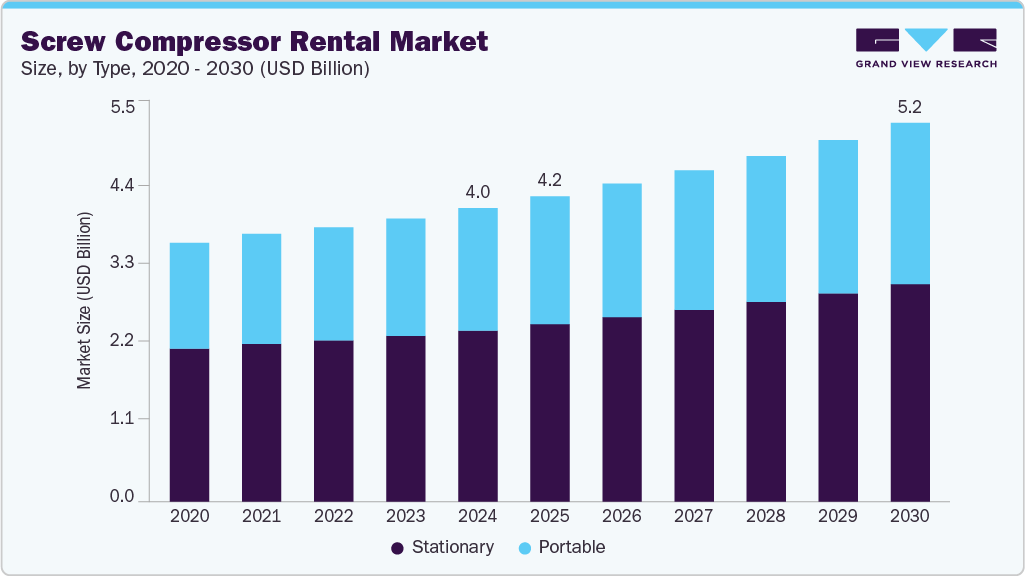
Automotive manufacturing processes, from assembly lines to painting and quality control, rely heavily on compressed air. Screw compressors are essential to ensure that these processes run smoothly and efficiently. The rental market caters to the automotive industry's need for high reliability and energy efficiency, especially during increased production or in setting up new production lines. The logistical aspects of delivering, installing, and maintaining rented screw compressors, especially in remote or challenging environments, can be significant. Additionally, ensuring that the compressors are properly maintained and quickly repaired when issues arise requires a substantial investment in service capabilities and can strain resources.
Market Dynamics
Increasing demand for temporary compressed air solutions across construction, oil and gas, manufacturing, mining, and infrastructure projects is fueling the screw compressor rental market globally. Rental services help end users avoid large capital investments while providing operational flexibility for planned maintenance, seasonal demand, and emergency requirements. The expansion of industrial activities and large-scale construction projects is supporting market demand. Technological advancements, including energy-efficient and digitally monitored compressors, are improving rental fleet performance. However, high maintenance costs and fluctuating industrial activity can affect market growth. Opportunities are emerging from infrastructure development, renewable energy projects, and expanding industrial operations in developing economies.
Many industries require compressed air for short-term projects, maintenance shutdowns, and seasonal production increases, but may not need permanent compressor installations. Renting screw compressors allows businesses to access modern equipment without significant upfront capital investment, reducing financial risks and improving cash flow management. Construction, mining, oil and gas, manufacturing, and power generation industries frequently utilize rental compressors to support temporary operations and project-based activities. Rental providers also handle maintenance, servicing, and equipment upgrades, reducing operational responsibilities for end users. The availability of different compressor capacities and configurations enables customers to select equipment suited to specific project requirements. As industries increasingly focus on optimizing operational costs and maintaining production flexibility, the demand for screw compressor rental services is expected to grow steadily across both developed and emerging markets.
Screw compressors operating in demanding industrial environments require regular servicing, component replacement, and performance monitoring to ensure reliability and minimize downtime. Rental companies must maintain large fleets and invest in preventive maintenance programs, increasing operating expenses. Harsh working conditions in construction, mining, and oil and gas projects can accelerate equipment wear and lead to higher repair costs. In addition, the presence of numerous regional and local rental providers creates pricing pressure, reducing profit margins for market participants. Economic slowdowns and fluctuations in industrial and construction activity can temporarily reduce equipment utilization rates and delay rental demand.
Large-scale construction activities, transportation projects, mining operations, and industrial developments require reliable compressed air systems for drilling, blasting, material handling, and equipment operation. Rental compressors provide a practical solution for these temporary and project-based applications without requiring long-term ownership. The expansion of renewable energy projects, including wind and solar installations, is also increasing demand for portable compressed air equipment during construction and maintenance activities. Industrial facility upgrades and plant shutdowns for maintenance create additional opportunities for rental services, as businesses seek temporary air supply solutions to avoid production interruptions. Technological improvements such as fuel-efficient engines, remote monitoring, and low-emission compressor designs are expanding the range of rental applications. As governments and private companies continue investing in infrastructure modernization and energy development, demand for screw compressor rental services is expected to strengthen over the long term.
Market Concentration & Characteristics
The screw compressor market represents a specialized yet essential segment within the broader advanced materials and industrial equipment landscape, with its growth primarily driven by rising demand from the food processing and automotive industries. In the food sector, screw compressors play a critical role in processes such as pneumatic conveying of ingredients, packaging operations, product handling, and refrigeration, where clean, reliable, and continuous compressed air supply is essential. The automotive industry similarly relies on screw compressors for various manufacturing and assembly Lubrications.
The screw compressor rental market is characterized by a fragmented structure, as a wide range of regional and local service providers are offering rental services to meet the increasing demand for flexible, short-term compressor solutions. The market is in a relatively early stage of growth, though the pace of expansion is accelerating due to rising demand across various end-use industries. Innovation remains low, with technological advancements primarily focused on improving energy efficiency, reducing carbon emissions, and incorporating smart technologies such as IoT-enabled monitoring and predictive maintenance. These enhancements aim to optimize operational performance, minimize downtime, and reduce the total cost of ownership for users.
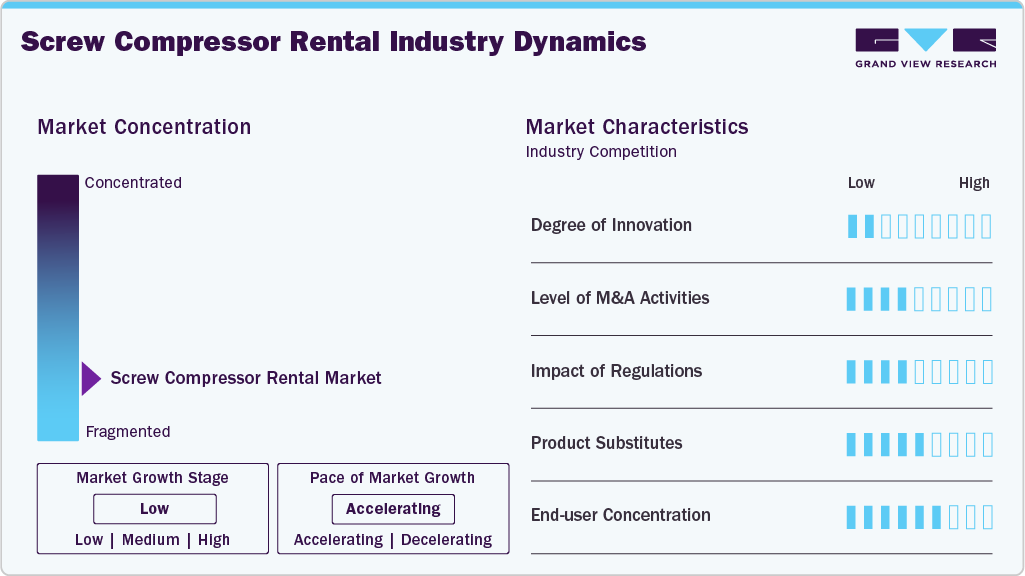
Merger and acquisition activity in the market is low to medium, with fewer large-scale strategic consolidations observed than in more mature industrial sectors. Regulatory impact is assessed as low to medium, depending on the region, with environmental and energy efficiency standards exerting a moderate influence on product offerings and adoption rates. The threat of product substitution is mild, as alternative compressor technologies may be viable for niche lubrications but generally fall short in efficiency, durability, and reliability in continuous, heavy-duty operations.
The market displays medium to high concentration among end users, driven by demand across various industries, such as construction, oil and gas, manufacturing, mining, and utilities. Each sector requires customized rental solutions aligned with specific operational conditions and compliance requirements. This extensive lubrication range continues to underscore the critical role of screw compressors in supporting industrial processes and infrastructure reliability.
Analyst Perspective
Renting screw compressors enables businesses to meet temporary operational requirements while avoiding significant capital investments and maintenance responsibilities. Portable compressor rentals are gaining traction in infrastructure and remote industrial projects, while oil-free units are seeing increased adoption in healthcare and other applications requiring high air quality standards. Established companies are expanding rental fleets and service networks, whereas regional providers compete through customized offerings and rapid equipment deployment. Although economic fluctuations and fleet maintenance costs may affect profitability, growing industrial activity, infrastructure investments, and plant maintenance requirements are expected to sustain long-term demand for screw compressor rental services.
Type Insights
Based on type, the stationary segment led the market with the largest revenue share of 58.8% in 2025. The stationary market is strengthened by industries that require a continuous and reliable supply of compressed air but prefer not to incur the high capital and maintenance costs associated with ownership. The demand for flexible air supply solutions, the reluctance to invest in expensive machinery, the need for temporary air supply solutions during peak periods or for project-based work, and the desire for updated technology without the associated costs involved in purchasing are key factors contributing to the growth of this segment.
The portable segment caters to various Lubrications requiring flexibility and mobility in compressed air supply, from construction sites and road work to mining operations and outdoor events. This market thrives on the versatility of portable screw compressors, which are designed to be easily transported and quickly deployed in various field conditions, offering on-demand, efficient, and reliable air power. Key factors driving this market include the need for temporary and emergency air supply solutions, the rise in infrastructure projects & seasonal demand in industries such as agriculture and event management, and the avoidance of capital expenditure on equipment that may not be in constant use.
Lubrication Insights
Based on lubrication, the oil-filled compressor segment led the market with the largest revenue share of 62.3% in 2025. The oil-filled market serves industries where high-quality, reliable compressed air is crucial, including manufacturing, automotive, and energy sectors, where oil-lubricated compressors are favored for their efficiency and durability. Key factors driving the growth of this segment include the demand for compressors that provide stable and continuous air flow with a lower risk of thermal degradation, particularly in heavy-duty and high-temperature industrial Lubrications. In addition, the flexibility of renting allows businesses to manage capital expenditure more effectively, adapt to fluctuating market demands, and ensure production continuity during maintenance or unexpected downtime.
The oil-free segment is driven by industries that require high-quality, contaminant-free compressed air, such as pharmaceuticals, food & beverage, electronics, and healthcare. These industries value the oil-free screw compressors for their ability to deliver clean air, which is crucial for maintaining product purity and safety standards. A significant feature of this market is the emphasis on environmental compliance and energy efficiency, as oil-free compressors eliminate oil waste and reduce the risk of contamination, aligning with stringent regulatory standards for air quality. The flexibility of rental arrangements allows businesses to adjust to seasonal demands, temporary surge in production, or project-specific needs without heavy investment in permanent equipment.
End Use Insights
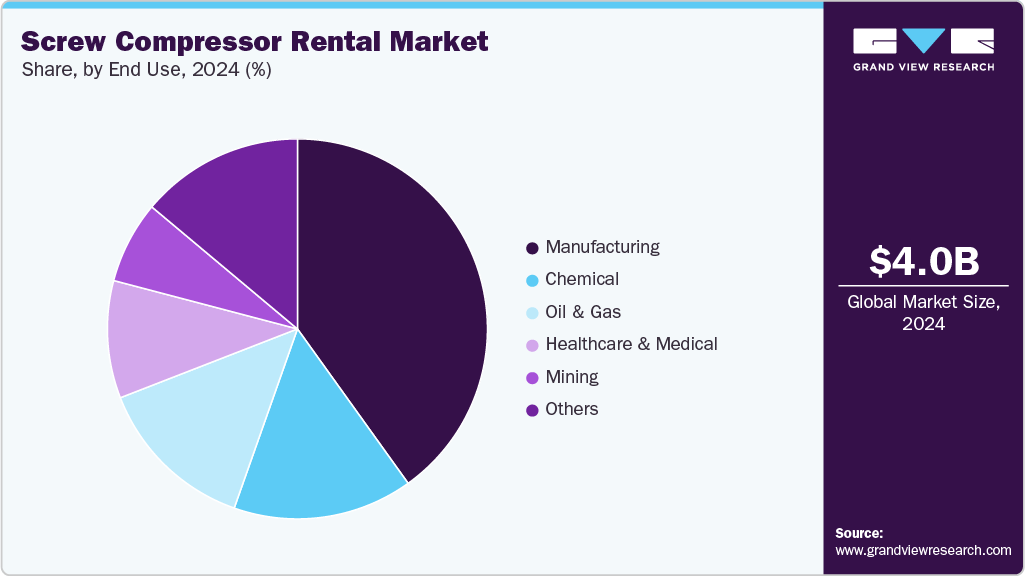
Based on end use, the manufacturing segment led the market with the largest revenue share of 40.3% in 2025. The screw compressor is a crucial component of the manufacturing industry, providing flexible, cost-effective solutions for a wide range of air compression needs. A key feature of this market is the ability to offer manufacturers short-term and scalable air supply solutions, enabling them to overcome periods of increased demand or maintain productivity during equipment maintenance without the need for capital investment in additional permanent units. Moreover, the rental market caters to the industry's evolving needs by providing access to the latest compressor technologies, including oil-free and variable-speed models, which offer enhanced performance and environmental benefits.
The oil & gas segment is expected to grow at a significant pace, with the screw compressor rental market playing a pivotal role in supporting various operational demands, including exploration, drilling, production, and maintenance activities, wherein reliable, high-capacity compressed air solutions are required. These compressors are critical for a range of Lubrications, including pipeline testing, underbalanced drilling, gas lift, and flare gas recovery, where their efficiency and durability under harsh operating conditions are highly valued. One of the key features of this market is the provision of rugged, portable screw compressors that can be quickly deployed to remote or offshore locations, offering flexibility and reducing downtime during critical operations.
Regional Insights
The North America screw compressor rental market is expected to reach 875.4 million by 2033. The region is characterized by a strong demand, driven by various sectors including construction, manufacturing, oil & gas, and the burgeoning renewable energy sector. This market benefits from the region's advanced industrial base and the continuous push for innovation and efficiency improvements in operational processes. Its emphasis on sustainability and environmental compliance has led to increased adoption of oil-free screw compressors that minimize the risk of air contamination and are in line with strict environmental regulations.
U.S. Screw Compressor Rental Market
U.S. accounted for largest share of the regional screw compressor rental market in 2025. The U.S. screw compressor rental market is expected to maintain strong growth, fueled by sustained demand across key industries and the increasing adoption of advanced technologies that improve equipment performance and reliability. The rapidly growing construction sector in the U.S. plays a major role in driving demand for screw compressor rentals. Contractors often opt to rent compressors to fulfill short-term requirements, avoiding the high upfront costs associated with purchasing equipment.
Europe Screw Compressor Rental Market Trends
Europe screw compressor rental market is estimated to grow at a consistent CAGR over the forecast period, driven by the focus on energy efficiency, environmental sustainability, and advanced manufacturing and construction sectors. Europe's stringent environmental regulations have encouraged the adoption of oil-free screw compressors, which are preferred for their lower environmental impact and capability to provide clean, contamination-free air, crucial for industries such as pharmaceuticals, food & beverage, and electronics manufacturing. In addition to environmental considerations, the demand for rental screw compressors in Europe is bolstered by the need for flexibility in capital expenditure, allowing businesses to scale operations according to project demands without heavy investment in purchasing equipment.
Asia Pacific Screw Compressor Rental Market Trends
Asia Pacific dominated the screw compressor rental market with the largest revenue share of 44.2% in 2025, driven by rapid industrialization, infrastructure development, and expansion of manufacturing activities across countries, including China, India, Japan, and Southeast Asia. This region benefits from a robust demand for flexible, cost-effective compressed air solutions in automotive, electronics, construction, and oil & gas industries. Screw compressors are valued for their efficiency, reliability, and ability to provide consistent air quality. Features that distinguish the Asia Pacific market include a strong emphasis on energy efficiency and environmental sustainability, prompting a shift toward oil-free screw compressors that meet stringent air quality standards. For instance, India's food processing sector's market size is estimated to grow from USD 307 billion in 2023 to USD 700 billion in 2030, driving demand for compressed air systems used in packaging, cleaning, and pneumatic operations. Many companies, especially SMEs and new entrants, prefer renting screw compressors to avoid high capital costs and ensure operational flexibility. Rentals also provide quick access to equipment that is energy-efficient and compliant with food-grade Lubrications. This trend is significantly boosting the screw compressor rental market.

China Screw Compressor Rental Market
The screw compressor rental market in the China held the largest share in the Asia Pacific region in 2025. China market is expanding, primarily fueled by the country's expansive manufacturing sector, ongoing infrastructure projects, and increasing investments in renewable energy sources. As one of the world's largest economies, China's demand for reliable and efficient compressed air solutions spans across several industries, including automotive, electronics, construction, and renewable energy sectors, which are integral to its industrial growth and development strategy. A distinctive feature of the Chinese market is its strong emphasis on technological innovation and sustainability, leading to a rising preference for energy-efficient and environmentally friendly screw compressors, particularly oil-free models that minimize contamination risks. The rental model's appeal in China lies in its flexibility, allowing businesses to scale operations without the considerable capital outlay required for purchasing new equipment.
Key Companies & Market Share Insights
Key market players strengthen their market position by adopting strategies such as joint ventures, technical collaborations, capacity expansions, and mergers and acquisitions. In addition, manufacturers enhance production efficiency by developing cost-effective, high-quality manufacturing processes.
Key Screw Compressor Rental Companies:
The following key companies have been profiled for this study on the screw compressor rental market.
-
Lewis System
-
CAPS Australia
-
Atlas Copco Group
-
Caterpillar.
-
Metro Air Compressor
-
Stewart & Stevenson.
-
United Rentals, Inc.
-
Ingersoll Rand
-
Aggreko
-
Air Energy Group, LLC
-
BOGE
-
KAESER KOMPRESSOREN
Competitive Benchmarking
Category
Operating Strategies
Competitive Edge
Weakness
Established Players (e.g., Atlas Copco Group, Ingersoll Rand, Aggreko, United Rentals, Inc., KAESER KOMPRESSOREN)
- These players focus on expanding rental fleets, strengthening regional branch networks, offering maintenance and technical support, and providing customized compressed air solutions for industrial projects. Long-term contracts and digital fleet management help improve equipment utilization and customer retention.
- Established players benefit from extensive rental fleets, broad geographic coverage, strong brand recognition, and comprehensive service capabilities. Their ability to provide reliable equipment, rapid deployment, and integrated maintenance solutions supports large industrial and infrastructure projects.
- These players face high fleet maintenance costs, significant capital requirements, and complex operational structures. Managing large equipment inventories and adapting quickly to regional market changes affect profitability and operational flexibility.
Emerging & Regional Players (e.g CAPS Australia, Lewis System, Air Energy Group LLC, Metro Air Compressor, Stewart & Stevenson.)
- Emerging players emphasize regional expansion, competitive pricing, and flexible rental agreements to attract customers. They focus on niche industries, maintain lean fleet operations, and develop partnerships with local contractors and industrial clients to increase market presence.
- These players gain advantages through operational flexibility, quicker customer response, and customized rental packages. Their lower overhead costs and focus on local market requirements allow them to compete effectively in specialized applications and regional projects.
- Emerging players often have limited fleet sizes, restricted geographic reach, and lower brand visibility. Limited financial resources and service networks may constrain expansion opportunities and reduce their ability to compete for large-scale industrial rental contracts.
Recent Developments
-
In March 2025, AERZEN Rental Solutions expands its U.S. footprint with new facility in Phoenix, Arizona, which enhances western region service capabilities, strengthening the delivery of reliable, efficient, and cost-effective air compression solutions, including their rental service offerings.
-
In August 2024, Hokuetsu Industries America, Corp., introduced AIRMAN PDSF750 dual-pressure air compressor. The new compressor offers exceptional flexibility and performance, especially for the rental equipment industry
Screw Compressor Rental Market Report Scope
Report Attribute
Details
Market size in 2025
USD 4.2 billion
Estimated market size in 2026
USD 4.3 billion
Projected market size by 2033
USD 6.0 billion
Growth rate
CAGR of 4.7% from 2026 to 2033
Base year for estimation
2025
Historical data
2021 - 2024
Forecast period
2026 - 2033
Quantitative units
Revenue in USD billion and CAGR from 2026 to 2033
Report coverage
Revenue forecast, company ranking, competitive landscape, growth factors, and trends
Segments covered
Type, lubrication, end use, region
Regional scope
North America; Europe; Asia Pacific; Latin America; Middle East & Africa
Country scope
U.S.; Canada; Mexico; UK; Germany; France; Spain; Italy; China; Japan; India ; Australia; South Korea; Brazil; Argentina; Saudi Arabia; UAE; South Africa
Key companies profiled
Lewis System, CAPS Australia, Atlas Copco Group, Caterpillar., Metro Air Compressor, Stewart & Stevenson., United Rentals, Inc., Ingersoll Rand, Aggreko, Air Energy Group LLC, BOGE, KAESER KOMPRESSOREN
Customization scope
Free report customization (equivalent up to 8 analysts' working days) with purchase. Addition or alteration to country, regional & segment scope.
Pricing and purchase options
Avail customized purchase options to meet your exact research needs. Explore purchase options
Global Screw Compressor Rental Market Report Segmentation
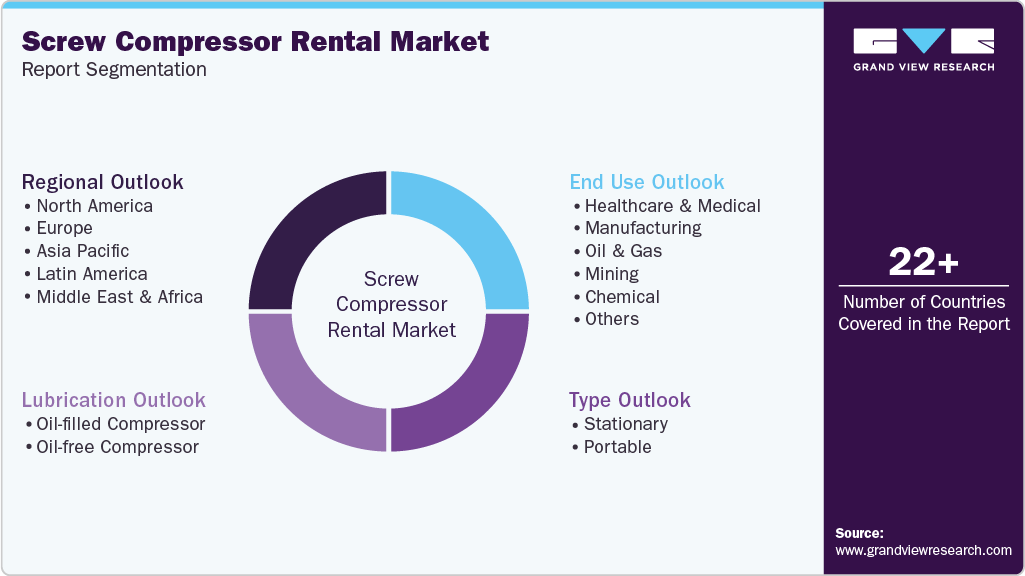
This report forecasts revenue growth at global, regional, and country level and provides an analysis of the latest industry trends in each of the sub-segments from 2021 to 2033. For this study, Grand View Research has segmented the global screw compressor rental market report based on type, lubrication, end use, and region.
-
Type Outlook (Revenue, USD Million, 2021 - 2033)
-
Stationary
-
Portable
-
-
Lubrication Outlook (Revenue, USD Million, 2021 - 2033)
-
Oil-filled Compressor
-
Oil-free Compressor
-
-
End Use Outlook (Revenue, USD Million, 2021 - 2033)
-
Healthcare & Medical
-
Manufacturing
-
Oil & Gas
-
Mining
-
Chemical
-
Others
-
-
Regional Outlook (Revenue, USD Million, 2021 - 2033)
-
North America
-
U.S.
-
Canada
-
Mexico
-
-
Europe
-
Germany
-
U.K.
-
France
-
Spain
-
Italy
-
-
Asia Pacific
-
China
-
Japan
-
India
-
SouthKorea
-
Australia
-
-
Middle East and Africa
-
Saudi Arabia
-
UAE
-
South Africa
-
-
Latin America
-
Brazil
-
Argentina
-
-
Research Methodology
The screw compressor rental market figures in this report are based on a proven research process that combines executive interviews with secondary research from proprietary databases, company filings, and recognized regulatory and institutional sources. Market size is built through value-chain sizing - reconciling supply-side and demand-side estimates - and triangulated with bottom-up and top-down approaches. Every estimate passes multiple levels of expert validation before publication, with each screw compressor rental segment quantified using the revenue-capture definitions in the table below.
Segment Definition
Segment - Type
Revenue Capture Definition
Stationary
Revenue is generated through the rental of stationary screw compressors installed at fixed industrial sites requiring continuous compressed air supply. Demand is driven by manufacturing plants, chemical facilities, refineries, and long-term infrastructure and maintenance projects.
Portable
Revenue is captured through the rental of portable screw compressors designed for mobile and temporary applications. Demand is supported by construction, mining, oil and gas, infrastructure development, and remote industrial operations requiring flexible compressed air solutions.
Segment - Lubrication
Revenue Capture Definition
Oil-filled Compressor
Revenue is generated through the rental of oil-filled screw compressors used for high-capacity industrial applications requiring durable and efficient compressed air systems. Demand is driven by manufacturing, mining, construction, and oil and gas operations.
Oil-free Compressor
Revenue is captured through the rental of oil-free screw compressors that deliver contamination-free compressed air for sensitive applications. Demand is supported by healthcare, pharmaceuticals, food processing, electronics manufacturing, and chemical industries with strict air quality requirements.
Segment - End Use
Revenue Capture Definition
Healthcare & Medical
Revenue is generated through screw compressor rental services supplying clean compressed air for hospitals, medical device manufacturing, pharmaceutical production, and healthcare facility maintenance. Demand is driven by temporary capacity requirements and equipment servicing needs.
Manufacturing
Revenue is captured through the rental of screw compressors used in production facilities for machinery operation, assembly processes, and plant maintenance. Demand is supported by temporary production increases, facility expansions, and scheduled maintenance shutdowns.
Oil & Gas
Revenue is generated through screw compressor rentals for drilling, pipeline construction, refinery maintenance, and exploration activities. Demand is driven by project-based operations and the need for reliable compressed air systems in remote and hazardous environments.
Mining
Revenue is captured through the rental of screw compressors used for drilling, blasting, mineral extraction, and quarry operations. Demand is supported by mining expansion projects, equipment maintenance periods, and temporary compressed air requirements.
Chemical
Revenue is generated through screw compressor rental services for chemical processing, plant operations, and maintenance activities. Demand is driven by process reliability requirements, facility upgrades, and the need for continuous compressed air during production interruptions.
Others
Revenue is captured through screw compressor rentals across construction, power generation, food and beverage, utilities, marine, and infrastructure projects. Demand is supported by temporary industrial operations, emergency backup requirements, and project-specific compressed air applications.
Estimation Model
Layer Name
Key Question
Description
End-use Industry Demand Layer
Which industries generate demand for screw compressor rentals?
The estimation begins by evaluating temporary compressed air requirements across healthcare & medical, manufacturing, oil & gas, mining, chemical, and other industries. Industrial activity, maintenance schedules, construction projects, and plant expansions establish the base market demand.
Equipment Configuration Layer
Which rental compressor types drive market consumption?
This layer refines demand by assessing the adoption of stationary and portable screw compressors, along with oil-filled and oil-free configurations. Mobility requirements, air quality standards, and application-specific operating conditions influence equipment selection and rental penetration.
Rental Utilization and Replacement Layer
What determines annual rental demand?
Market demand is estimated through project-based equipment requirements, planned maintenance shutdowns, emergency backup needs, seasonal production fluctuations, and industrial capacity expansions. Rental fleet utilization rates and equipment replacement cycles further support recurring revenue generation.
Revenue Layer
How is total market revenue calculated?
Revenue is estimated by aggregating screw compressor rental income across equipment types, lubrication technologies, end-use industries, and regional markets. Rental rates, fleet size, utilization levels, project durations, industrial investments, and service revenues are incorporated to validate the total market size.
Delivered Customizations
This report has been delivered with the following In-depth customizations
Client Request
Customization Delivered
Value Adds
Regional Segmentation
Detailed regional analysis covered North America, Europe, Asia Pacific, Latin America, and the Middle East & Africa, with country-level assessment of key markets. The study evaluated construction activities, manufacturing output, oil & gas operations, mining projects, industrial maintenance, and infrastructure investments influencing screw compressor rental demand.
Helped identify high-growth regions, country-specific opportunities, and evolving demand trends across construction, manufacturing, mining, oil & gas, and industrial sectors, supporting market entry strategies, regional expansion planning, and identification of emerging rental demand hubs.
Competitive Benchmarking
Comprehensive benchmarking assessed major participants based on rental fleet size, compressor technologies, service capabilities, regional presence, pricing strategies, equipment availability, maintenance support, and distribution networks. The study also compared established and emerging players in the screw compressor rental market.
Assisted clients in evaluating competitor positioning, service strengths, and market gaps while supporting strategic planning, partnership opportunities, service differentiation, and investment decisions across temporary compressed air applications.
Opportunity Assessment
In-depth opportunity assessment analyzed infrastructure development, industrial expansion, plant maintenance activities, energy projects, mining investments, and demand for portable and oil-free compressors. The study identified emerging opportunities in digital fleet management, energy-efficient equipment, and customized rental solutions.
Enabled clients to identify high-growth investment areas, prioritize regional expansion, and evaluate future revenue opportunities while supporting fleet development, technology adoption, and long-term growth strategies in the screw compressor rental market.
Frequently Asked Questions About This Report
The global screw compressor rental market, in terms of revenue, is expected to grow at a compound annual growth rate of 4.7% from 2026 to 2033 to reach USD 6.0 billion by 2033.
Some of the key players operating in the screw compressor rental market include Lewis System CAPS Australia, Metro Air Compressor, Stewart & Stevenson LLC, United Rentals Inc., Ingersoll-Rand plc, Aggreko plc, Atlas Copco AB, Air Energy Group LLC, Caterpillar Inc., BOGE KOMPRESSOREN Otto Boge GmbH & Co. KG, Kaeser Kompressoren SE
The demand for screw compressor rental market emerges from a combination of industry needs and broader economic trends. Many industries require compressed air for short-term or project-based operations, where investing in a permanent compressor is not cost-effective
Asia Pacific is anticipated to be one of the fastest-growing regional markets over the forecast period, driven by rapid industrialization, expanding manufacturing activities, and increasing infrastructure investments.
The stationary segment led the market with the largest revenue share of 58.8% in 2025.
The oil-filled compressor segment accounted for the largest revenue share of 62.3% in 2025.
The manufacturing segment led the market with the largest revenue share of 40.3% in 2025.
The global screw compressor rental market size was valued at USD 4.2 billion in 2025 and is expected to be USD 4.3 billion in 2026.
Asia Pacific is anticipated to be one of the fastest-growing regional markets over the forecast period, driven by rapid industrialization, expanding manufacturing activities, and increasing infrastructure investments.
About the Author(s)
Advanced Interior Materials Research Team
Advanced Materials · Advanced Interior MaterialsThis report was authored by the advanced interior materials research team at Grand View Research - comprising two research analysts, one senior research analyst, and one industry expert - with specialized expertise in the advanced interior materials segment of the advanced materials industry. All findings are based on proprietary advanced materials databases, executive interviews, and regulatory analysis, subject to internal peer review prior to publication.
Last Updated:
Speak to Analyst


Customize this report to your needs — add regions, segments, or data points, with 20% free customization.
Or view our licence options:


ISO 9001:2015 & 27001:2022 Certified
We are GDPR and CCPA compliant! Your transaction & personal information is safe and secure. For more details, please read our privacy policy.


