
- Home
- »
- Next Generation Technologies
- »
-
Self-supervised Learning Market Size, Share Report, 2033GVR Report cover

Self-supervised Learning Market (2026 - 2033)
Size, Share & Trends Analysis Report By End Use (Healthcare, BFSI), By Technology (Natural Language Processing, Computer Vision), By Region (North America, Europe, Asia Pacific), And Segment Forecasts
Market Size, 2025
$19.9BMarket Estimate, 2026
$26.4BMarket Forecast, 2033
$246.0BCAGR, 2026–2033
37.6%Self-supervised Learning Market Trends
The global self-supervised learning market size was valued at USD 19.9 billion in 2025 and is projected to grow from USD 26.4 billion in 2026 to USD 246.0 billion by 2033, at a CAGR of 37.6% from 2026 to 2033. North America dominated the market, accounting for a revenue share of 35.8% in 2025. The global self-supervised learning market is expanding due to increasing demand for AI models that require minimal labeled data for training.
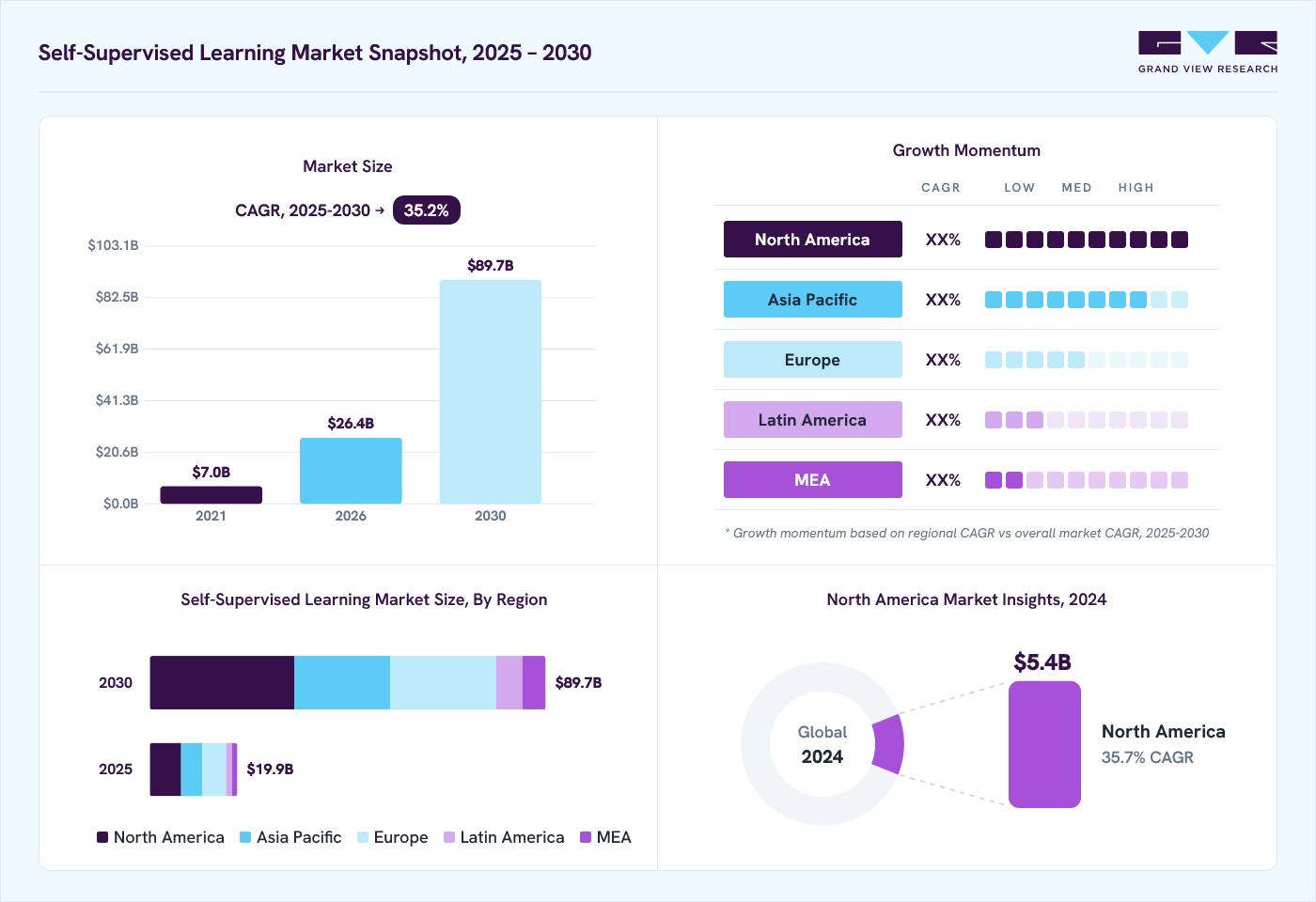 Source: Grand View Research, IR Documents, Primary Interviews, Paid DatabasesTo learn more about this report,
 Download Free Sample Report
 Key Market Trends & Insights
- By end use: BFSI segment held a significant 18.2% revenue share in 2025.
- By technology: Natural Language Processing (NLP) segment held the largest revenue share in 2025.
Regional Highlights
- Largest regional market: North America (35.8% revenue share, 2025)
- Fastest-growing regional market: Asia Pacific (highest CAGR, 2026 - 2033)
- By country: The U.S. held the largest market share in 2025.
Market Size & Forecast
- Market size in 2025: USD 19.9 Billion
- Estimated market size in 2026: USD 26.4 Billion
- Projected market size by 2033: USD 246.0 Billion
- CAGR (2026-2033): 37.6%
Three ways to get this report
Buy it, customize it, or ask a question.Ask an Analyst
Analyst response in 1 business day
- AccessReport author, directly
- Reply timeWithin 1 working day
- No sales callDirect answer only
- FormatEmail reply
- CostFree, no cost
Get the Full Report
What the study covers
- FormatsPDF · Excel · Dashboard
- Timeline2026–2033 annual, 2025 base
- Coverage20+ countries, 5 regions
- Companies10+ key players profiled
Customize the Report
20% free customization
- IncludeCountries, segments, points
- TailorTo your product definition
- ExtendDeeper competitor detail
- OrA fully bespoke study
- Turnaround5–10 working days
Growing adoption of generative AI, natural language processing, and computer vision applications is further driving market growth. By reducing reliance on labeled datasets, self-supervised learning offers cost and time efficiency, making it attractive to businesses seeking to optimize AI-driven processes. The rising need for systems that can learn from limited data is another factor contributing to the market's growth. Self-supervised learning addresses this requirement by allowing models to extract meaningful features from unlabelled data, enhancing their predictive power. This capability is critical for industries such as healthcare, where data scarcity or high labeling costs can be challenging. Moreover, the flexibility of self-supervised learning to adapt to various data types and tasks gives it a competitive edge. As organizations strive to make sense of their growing data pools, the value of self-supervised learning becomes more evident. Advances in computational power and cloud computing are further enabling the scalability of these models. Consequently, companies that adopt self-supervised learning are better positioned to capitalize on the potential of AI and ML.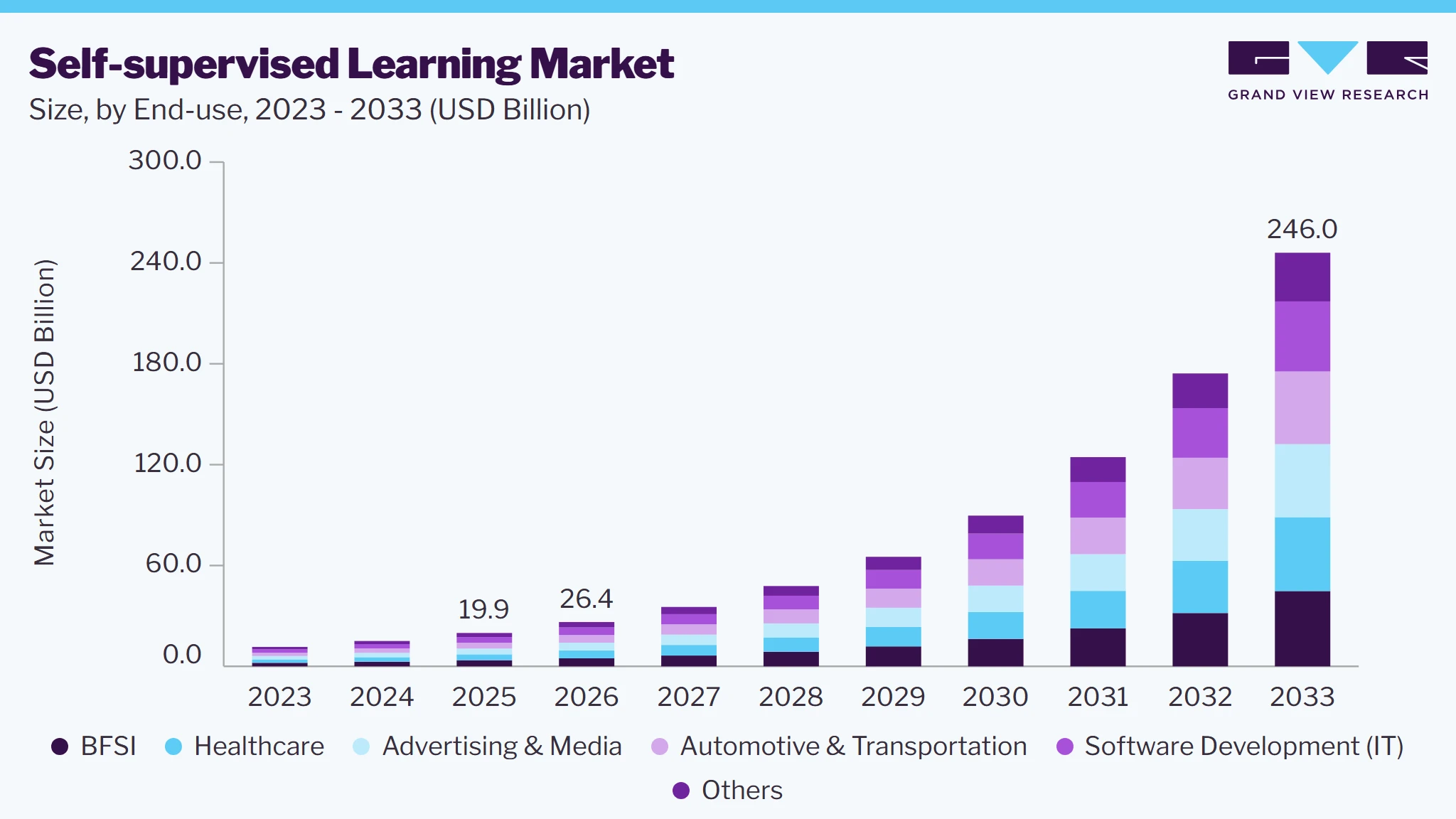 To learn more about this report, Download Free Sample Report
 The expansion of the market is not limited to technology-driven sectors but extends to industries such as finance, retail, and manufacturing. These industries are using the technology to enhance customer experiences, improve operational efficiencies, and develop innovative products. For example, applications such as fraud detection, inventory management, and predictive maintenance benefit from the adaptability of self-supervised learning models. Moreover, the global push toward digital transformation and the rise of data-centric business strategies are accelerating the adoption of AI technologies. The market is also being shaped by increasing investments in AI research and development as organizations seek to stay competitive in a rapidly evolving landscape.
Market Dynamics
The global self-supervised learning market is witnessing steady growth, supported by continuous advancements in artificial intelligence technologies and increasing adoption across industries. Organizations are focusing on improving model efficiency, scalability, and automation to enhance business outcomes. Ongoing technological innovation is creating new opportunities for market participants while expanding the range of potential applications. At the same time, technical complexities and implementation challenges continue to influence market development. Favorable investment trends and evolving AI capabilities are expected to support sustained market growth over the forecast period.
The rising demand for advanced machine learning and deep learning models is a key factor supporting the growth of the self-supervised learning market. Organizations are increasingly developing AI models capable of handling complex tasks with improved accuracy and efficiency. As AI applications become more sophisticated, the need for scalable training approaches is also increasing. Self-supervised learning enables models to learn meaningful representations from large datasets with limited manual intervention. This capability is encouraging wider adoption across AI development workflows.
Advanced machine learning and deep learning models require large volumes of high-quality training data to achieve strong performance. Self-supervised learning addresses this challenge by utilizing unlabeled data to generate useful training signals, reducing reliance on manual data annotation. This approach improves model scalability while lowering development time and costs. It also supports continuous improvement of AI models across diverse applications and environments. As demand for more capable AI systems continues to grow, self-supervised learning is expected to gain broader adoption across industries.
High computational and infrastructure requirements remain a significant restraint for the self-supervised learning market. Training self-supervised learning models requires substantial processing power, memory, and storage resources to process large volumes of data efficiently. This increases the overall cost of model development and deployment. Organizations must invest in advanced computing infrastructure to support large-scale training workloads. These factors can create barriers to adoption, particularly for organizations with limited technical resources.
In addition, managing and maintaining high-performance computing environments require specialized expertise and ongoing investment. Many organizations rely on cloud-based infrastructure to meet these computational demands, which can further increase operational expenses. The complexity of optimizing computing resources may also extend development timelines and implementation efforts. Smaller enterprises may find it challenging to justify these investments without clear returns. As a result, high computational and infrastructure requirements continue to limit broader adoption of self-supervised learning technologies.
Advancements in autonomous systems and robotics are creating significant opportunities for the self-supervised learning market. Autonomous technologies require AI models that can continuously learn from large volumes of real-world data while adapting to changing environments. Self-supervised learning enables these systems to develop robust representations without relying heavily on manually labeled datasets. This capability improves the scalability and efficiency of AI model development. As autonomous applications continue to evolve, demand for self-supervised learning techniques is expected to increase.
The growing deployment of autonomous vehicles, industrial robots, drones, and intelligent machines is further expanding the application of self-supervised learning. These systems generate vast amounts of sensor and operational data that can be utilized for continuous model improvement. Self-supervised learning supports more efficient use of this data, enhancing perception, decision-making, and automation capabilities. Organizations are increasingly investing in autonomous technologies to improve productivity and operational efficiency. This trend is expected to create new growth opportunities for the self-supervised learning market.
Market Concentration & Characteristics
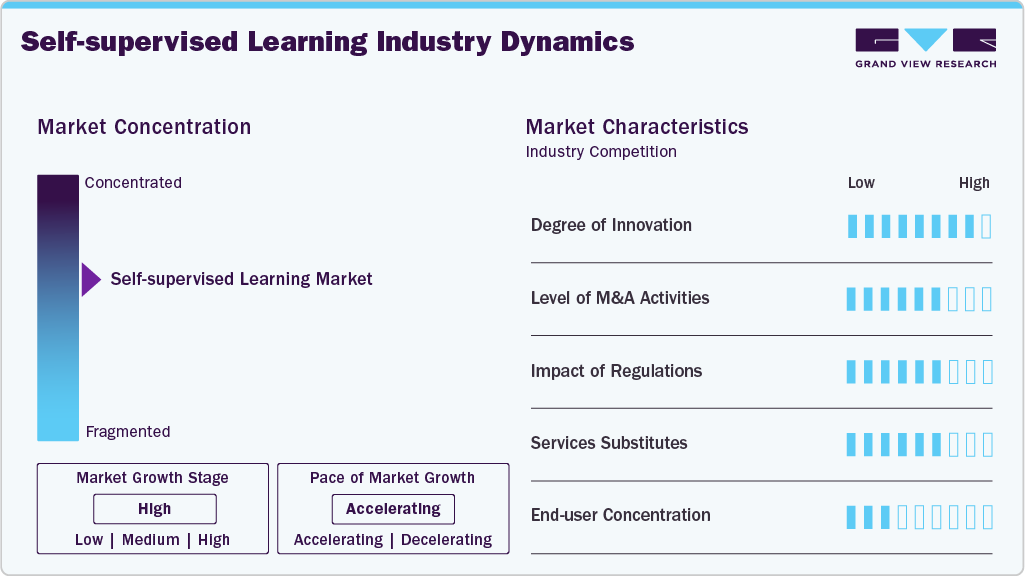
The self-supervised learning market is moderately concentrated, with the presence of established technology companies alongside emerging AI startups. Leading participants continue to invest in research and development to enhance model performance, expand product capabilities, and strengthen their competitive positions. Strategic collaborations, partnerships, and acquisitions further contribute to market development. Continuous innovation remains a key differentiating factor among market participants. As a result, competition is centered on technological advancement and AI expertise.
 To learn more about this report, Download Free Sample Report
 At the same time, the market continues to attract new entrants due to growing demand for advanced AI solutions across industries. Open-source frameworks and cloud-based AI platforms have lowered barriers to entry for developers and smaller companies. This has created a dynamic competitive environment with a mix of global technology providers and specialized AI firms. Companies are focusing on expanding their solution portfolios and industry-specific offerings to strengthen their market presence. Overall, the market exhibits moderate concentration with increasing competitive intensity.
Analyst Perspective
The self-supervised learning market is expected to witness strong growth as organizations increasingly adopt AI models that reduce dependence on labeled data. Continuous advancements in foundation models, generative AI, and computing infrastructure are expected to expand commercial applications across industries. Competition is likely to intensify as established technology companies and emerging AI vendors continue to invest in innovation and strategic collaborations. Increasing enterprise AI adoption and ongoing technological advancements are expected to support long-term market expansion.
End Use Insights
Based on end use, BFSI segment led the market with a significant revenue share of 18.2% in 2025. The BFSI sector dominated the market because it handles vast amounts of unstructured data, such as customer information, transaction records, and fraud patterns. Self-supervised models help in analyzing this data efficiently without the need for extensive manual labeling. The technology enables advanced predictive analytics, enhancing risk management, fraud detection, and personalized customer experiences. Moreover, BFSI institutions prioritize automation and data security, both of which are supported by these AI-driven models. The demand for real-time insights and operational efficiency further drives the adoption of self-supervised learning in this sector.
The Advertising & Media segment is anticipated to register lucrative growth over the forecast period. This likely growth can be attributed to its need to analyze massive amounts of unstructured data such as user behavior, content, and trends. Self-supervised models help in generating insights without requiring labeled datasets, making it easier to personalize content and target audiences effectively. As companies shift toward data-driven marketing strategies, the ability to optimize campaigns using these models becomes a competitive advantage. Moreover, self-supervised learning aids in improving recommendation systems and content moderation, both critical in this field. The push for enhanced consumer engagement and better ROI is fueling growth in this segment.
Technology Insights
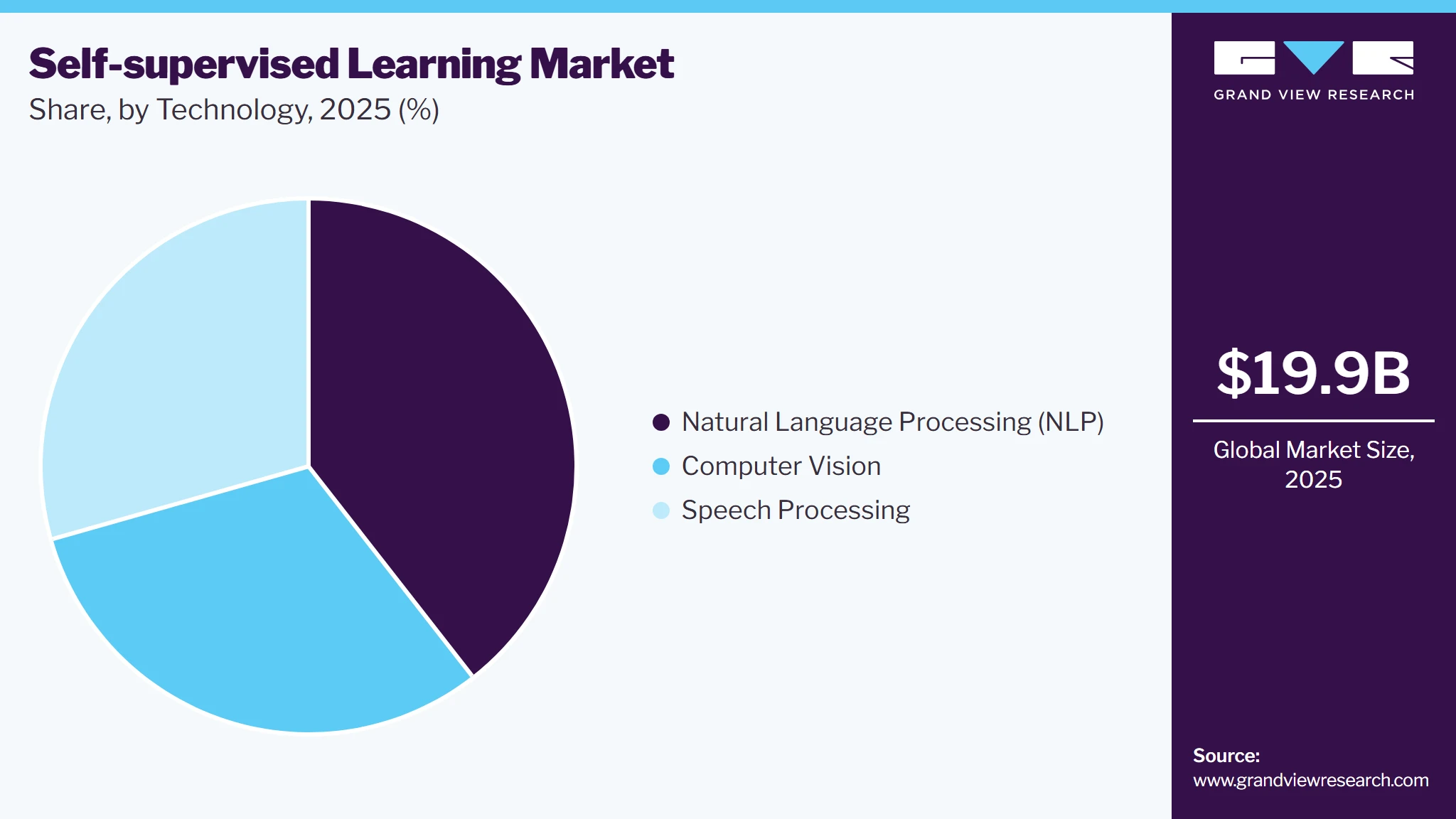
Based on technology, the Natural Language Processing (NLP) segment led the market with the largest revenue share of 39.5% in 2025. Self-supervised models allow NLP systems to learn language patterns, semantics, and relationships without relying on extensive human-labeled data, significantly improving efficiency. This technology powers applications such as chatbots, translation services, and sentiment analysis, all of which benefit from continuous advancements in NLP models. Moreover, NLP enhances customer service, automating responses and enabling personalized communication at scale. Its wide applicability and the need for real-time language understanding make NLP a leading segment in the market.
 To learn more about this report, Download Free Sample Report
 The speech processing segment is anticipated to grow at a significant CAGR over the forecast period because of its role in powering voice assistants, automated transcription, and speech recognition systems. Self-supervised learning enables these models to learn from large amounts of unlabelled audio data, improving accuracy without requiring extensive manual labeling. This growth is driven by the increasing demand for voice-activated technologies and their integration into everyday devices. Moreover, advancements in speech recognition and natural language understanding are making these systems more accessible and efficient. The rise of voice-based search, virtual assistants, and smart devices has further accelerated the adoption of speech-processing technologies.
Regional Insights
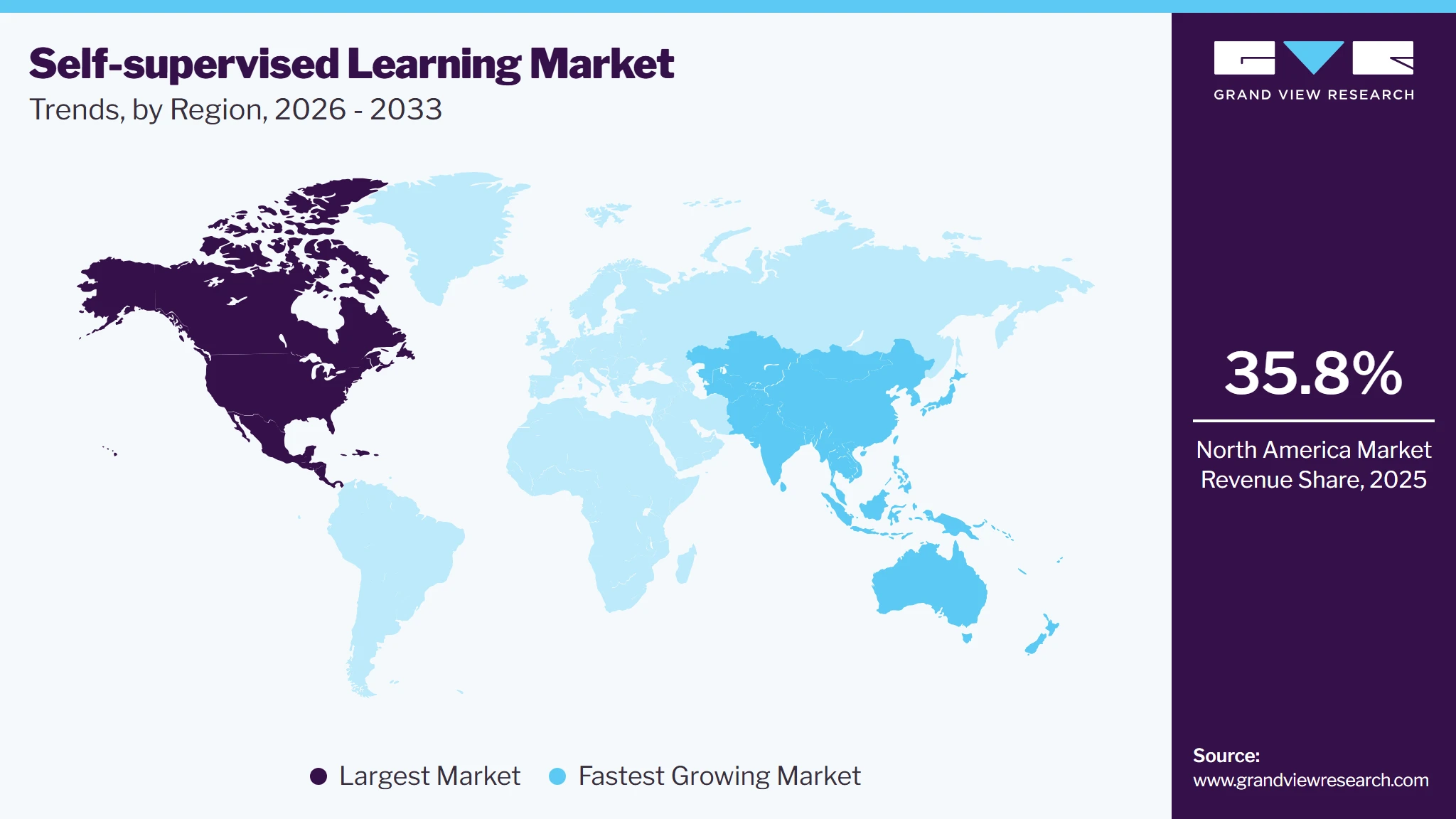
North America dominated the self-supervised learning market with the largest revenue share of 35.8% in 2025. In North America, the market is growing due to increased adoption across industries such as healthcare, finance, and retail. Companies in this region are utilizing AI-driven models to handle large datasets, improving efficiency and decision-making processes. Investments in AI research and development from private and public sectors are accelerating innovation in self-supervised learning technologies. Moreover, the availability of advanced infrastructure and cloud computing capabilities supports the scalability of these models.
 To learn more about this report, Download Free Sample Report
 U.S. Self-supervised Learning Market Trends
The self-supervised learning market in the U.S. held the largest share in the North America region in 2025. The U.S. self-supervised learning market growth is driven by its leadership in AI research, with strong contributions from tech giants and startups. The country is seeing widespread adoption of AI technologies in sectors such as defense, financial services, and healthcare. The U.S. government’s support for AI initiatives, including funding and regulatory frameworks, has further encouraged market expansion. Self-supervised learning's ability to handle unstructured data is particularly appealing for businesses focused on innovation and personalized services.
Europe Self-supervised Learning Market Trends
The self-supervised learning market in Europe is expanding due to the region's focus on ethical AI use and data privacy. European countries are adopting AI technologies while ensuring they comply with stringent data protection regulations, such as GDPR. The region's emphasis on responsible AI practices is influencing the development of self-supervised models that prioritize transparency and fairness. Moreover, Europe’s push toward digital transformation and AI-driven innovation is creating opportunities in sectors such as manufacturing, healthcare, and finance.
Asia Pacific Self-supervised Learning Market Trends
The Asia Pacific self-supervised learning market is growing rapidly, driven by strong government initiatives to promote AI development and digital transformation. Countries such as China, Japan, and South Korea are investing heavily in AI research and infrastructure, encouraging the adoption of advanced technologies across industries. The region's diverse and massive data sets provide many opportunities for self-supervised learning models to thrive, particularly in sectors such as e-commerce, telecommunications, and healthcare. The competitive tech landscape and demand for automation are further accelerating the integration of AI-driven solutions.
Key Self-supervised Learning Company Insights
Some of the key companies in the Self-supervised Learning industry include IBM Corporation, Alphabet Inc. (Google LLC), Microsoft, Amazon Web Services, Inc., and others. Organizations are focusing on increasing customer base to gain a competitive edge in the industry. Therefore, key players are taking several strategic initiatives, such as mergers and acquisitions and partnerships with other major companies.
-
IBM offers advanced self-supervised learning models that enable AI to learn from large, unlabeled datasets, reducing the need for extensive manual input. Its solutions focus on areas such as natural language processing (NLP) and computer vision, enhancing automation and data analysis for businesses. Through platforms such as Watson, IBM integrates self-supervised learning into enterprise tools, offering improved decision-making and operational efficiency. Moreover, IBM ensures its AI models prioritize ethical data use, promoting transparency and fairness in AI applications.
-
Microsoft offers self-supervised learning solutions through its Azure AI platform, enabling businesses to leverage AI models that learn from vast amounts of unlabelled data. These models are integrated into tools such as Azure Cognitive Services, which enhance natural language processing (NLP), speech recognition, and image analysis capabilities. Microsoft’s focus on self-supervised learning helps improve automation, personalized services, and real-time data processing for various industries. Moreover, the company prioritizes responsible AI development, ensuring transparency, fairness, and compliance with ethical standards across its AI offerings.
Key Self-supervised Learning Companies:
The following key companies have been profiled for this study on the self-supervised learning market.
-
Alphabet Inc. (Google LLC)
-
Amazon Web Services, Inc.
-
Apple Inc.
-
Baidu, Inc.
-
Dataiku
-
Databricks
-
DataRobot, Inc.
-
IBM Corporation
-
Meta
-
Microsoft
-
SAS Institute Inc.
-
Tesla
-
The MathWorks, Inc.
Competitive Benchmarking
Operating Strategies
Competitive Edge
Weaknesses
Mature Players: Alphabet Inc. (Google LLC), Amazon Web Services, Inc., Apple Inc
- Focus on AI innovation, large-scale R&D, strategic partnerships, cloud ecosystem expansion, and enterprise solution development.
- Strong AI research capabilities, extensive product portfolios, global customer base, robust cloud infrastructure, and significant R&D investments.
- Complex product portfolios, higher implementation costs, and slower adaptation due to large organizational structures.
Emerging Players: Dataiku, Databricks, DataRobot, Inc.
- Emerging Players: Focus on niche AI solutions, rapid product innovation, strategic collaborations, and expansion of enterprise customer base.
- Specialized AI expertise, agile innovation, flexible deployment, industry-focused solutions, and faster product development.
- Limited global presence, smaller customer base, lower brand recognition, and comparatively constrained financial and R&D resources.
Recent Developments
-
In July 2024, Google LLC launched the Agricultural Landscape Understanding (ALU) tool in India, an AI-based platform that uses high-resolution satellite imagery and machine learning to provide detailed insights on drought preparedness, irrigation, and crop management at an individual farm level. This tool aims to address challenges faced by farmers, enhancing agricultural practices by offering data-driven information to improve crop yields and market access.
-
In May 2024, Researchers from Meta AI, Google, INRIA, and University Paris Saclay created an automatic dataset curation technique for self-supervised learning (SSL) using embedding models and hierarchical k-means clustering. This method improves model performance by ensuring balanced datasets and reducing the costs and time associated with manual curation.
-
In January 2024, Sevilla FC, a Spanish professional football club, and IBM Corporation introduced Scout Advisor, a generative AI tool built on IBM's Watsonx that uses natural language processing to simplify player recruitment by analyzing scouting reports. Combining self-supervised and supervised learning, the tool enables the scouting team to quickly gather subjective and objective player information, enhancing decision-making efficiency.
-
In June 2023, Meta launched I-JEPA, a self-supervised machine-learning model that learns high-level abstractions from images, requiring significantly less computing power than other state-of-the-art models. By using abstract prediction targets instead of pixel-level details, I-JEPA enhances efficiency and accuracy in various computer vision tasks while generating semantic representations of missing information.
Self-supervised Learning Market Report Scope
Report Attribute
Details
Market size in 2025
USD 19.9 billion
Estimated market size in 2026
USD 26.4 billion
Projected market size by 2033
USD 246.0 billion
Growth rate
CAGR of 37.6% from 2026 to 2033
Base year for estimation
2025
Historical data
2021 - 2024
Forecast period
2026 - 2033
Quantitative units
Revenue in USD million/Million and CAGR from 2026 to 2033
Report coverage
Revenue forecast, company ranking, competitive landscape, growth factors, and trends
Segments covered
End use, technology, region
Regional scope
North America; Europe; Asia Pacific; Latin America; MEA
Country scope
U.S.; Canada; Mexico; Germany; UK; France; China; Japan; India; Australia; South Korea; Brazil; KSA; UAE; South Africa
Key companies profiled
Alphabet Inc. (Google LLC), Amazon Web Services, Inc., Apple Inc., Baidu, Inc., Dataiku, Databricks, DataRobot, Inc., IBM Corporation, Meta, Microsoft, SAS Institute Inc., Tesla, The MathWorks, Inc.
Customization scope
Free report customization (equivalent up to 8 analysts' working days) with purchase. Addition or alteration to country, regional & segment scope.
Pricing and purchase options
Avail customized purchase options to meet your exact research needs. Explore purchase options
Global Self-supervised Learning Market Report Segmentation
This report offers revenue growth forecasts at the global, regional, and country levels and provides an analysis of the latest industry trends in each of the sub-segments from 2021 to 2033. For this study, Grand View Research has segmented the global Self-supervised Learning market report based on end use, technology, and region:
 To learn more about this report, Download Free Sample Report
 -
End Use Outlook (Revenue, USD Million, 2021 - 2033)
-
Healthcare
-
BFSI
-
Automotive & Transportation
-
Software Development (IT)
-
Advertising & Media
-
Others
-
-
Technology Outlook (Revenue, USD Million, 2021 - 2033)
-
Natural Language Processing (NLP)
-
Computer Vision
-
Speech Processing
-
-
Regional Outlook (Revenue, USD Million, 2021 - 2033)
-
North America
-
U.S.
-
Canada
-
Mexico
-
-
Europe
-
UK
-
Germany
-
France
-
-
Asia Pacific
-
China
-
Japan
-
India
-
Australia
-
South Korea
-
-
Latin America
-
Brazil
-
-
Middle East & Africa (MEA)
-
KSA
-
UAE
-
South Africa
-
-
Research Methodology
The self-supervised learning market figures in this report are based on a proven research process that combines executive interviews with secondary research from proprietary databases, company filings, and recognized regulatory and institutional sources. Market size is built through value-chain sizing - reconciling supply-side and demand-side estimates - and triangulated with bottom-up and top-down approaches. Every estimate passes multiple levels of expert validation before publication, with each self-supervised learning segment quantified using the revenue-capture definitions in the table below.
Segment Definition
Segment - End use
Revenue Capture Definition
Healthcare
Revenue generated from self-supervised learning solutions deployed by hospitals, healthcare providers, pharmaceutical companies, biotechnology firms, medical device manufacturers, and healthcare research organizations for medical imaging, diagnostics, drug discovery, clinical decision support, and patient data analysis.
BFSI
Revenue generated from self-supervised learning solutions used by banks, financial institutions, insurance companies, fintech firms, and payment service providers for fraud detection, risk assessment, customer analytics, regulatory compliance, and financial forecasting.
Automotive & Transportation
Revenue generated from self-supervised learning solutions adopted by automotive manufacturers, autonomous vehicle developers, mobility providers, logistics companies, and transportation operators for autonomous driving, perception systems, predictive maintenance, route optimization, and fleet management.
Software Development (IT)
Revenue generated from self-supervised learning solutions implemented by software companies, IT service providers, cloud providers, enterprise technology vendors, and AI platform developers for code generation, software testing, cybersecurity, intelligent automation, and application development.
Advertising & Media
Revenue generated from self-supervised learning solutions used by advertising agencies, digital marketing companies, media organizations, streaming platforms, social media platforms, and content providers for recommendation engines, audience analytics, content moderation, targeted advertising, and media personalization.
Others
Revenue generated from self-supervised learning solutions deployed across industries such as retail, manufacturing, telecommunications, energy, education, agriculture, government, and defense for automation, predictive analytics, quality inspection, demand forecasting, and operational optimization.
Segment - Technology
Revenue Captured
Natural Language Processing (NLP)
Revenue generated from self-supervised learning solutions used for text understanding, language modeling, machine translation, sentiment analysis, question answering, document processing, chatbots, virtual assistants, and other AI-driven language applications.
Computer Vision
Revenue generated from self-supervised learning solutions deployed for image and video analysis, object detection, image classification, facial recognition, medical imaging, visual inspection, autonomous systems, and other vision-based AI applications.
Speech Processing
Revenue generated from self-supervised learning solutions used for automatic speech recognition, speech-to-text, speaker identification, voice assistants, speech synthesis, voice biometrics, and other AI-powered speech and audio processing applications.
Estimation Model
Layer Name
Key Question
Description
End-user Industry Layer
Who creates demand for self-supervised learning solutions?
Identifies the total base of organizations generating demand for self-supervised learning solutions across industries such as healthcare, BFSI, automotive & transportation, software development (IT), advertising & media, and other sectors adopting AI technologies.
Adoption / Usage Layer
Who actively adopts self-supervised learning solutions?
Filters the addressable market based on AI adoption maturity, digital transformation initiatives, availability of large-scale data, computational capabilities, automation requirements, and investment in advanced AI technologies across enterprises.
Technology & Application Layer
Where are self-supervised learning solutions deployed?
Estimates adoption across technologies including natural language processing (NLP), computer vision, and speech processing, as well as AI applications such as content generation, predictive analytics, intelligent automation, recommendation systems, and model pre-training.
Revenue Capture Layer
How is revenue generated in the self-supervised learning ecosystem?
Calculates revenue generated from self-supervised learning software platforms, cloud-based AI services, AI infrastructure, foundation models, implementation and integration services, consulting, training, maintenance, technical support, and other AI-related solutions and services.
Delivered Customizations
This report has been delivered with the following In-depth customizations
Client Objective
Custom Research Modules Delivered
Strategic Value / Business Impact
Technology & Innovation Assessment
Emerging AI technology trend analysis
Self-supervised learning model benchmarking
Technology adoption readiness assessment
AI ecosystem and partnership mapping
Identified future growth opportunities
Supported AI innovation roadmap planning
Evaluated commercialization potential
Strengthened technology partnership decisions
Market Entry & Expansion Assessment
Regional demand sizing and forecasting
End-use industry segmentation and adoption analysis
Competitive landscape benchmarking
AI regulatory and ecosystem assessment
Identified high-growth regional opportunities
Supported go-to-market strategy development
Highlighted investment priorities and risks
Enabled data-driven expansion planning
Investment Feasibility & Opportunity Analysis
Market attractiveness evaluation Revenue forecasting and profitability analysis
SWOT and competitive risk assessment
Industry trend and scenario analysis
Supported investment decision-making
Identified high-potential technologies and end-use industries
Reduced market uncertainty
Enabled long-term strategic business planning
Frequently Asked Questions About This Report
The global self-supervised learning market size was valued at USD 19.9 billion in 2025 and is estimated at USD 26.4 billion for 2026.
The global self-supervised learning market is expected to grow at a CAGR of 37.6% from 2026 to 2033, reaching USD 246.0 billion by 2033.
North America dominated the self-supervised learning Market with a share of 35.8% in 2025. This is attributable to factors such as the presence of prominent market players such as U.S.-based Meta, Microsoft, and Google, the presence of specialists, and developed technology infrastructure.
Some key players operating in the self-supervised learning Market include IBM, Google, Microsoft, Amazon Web Services, Inc., SAS Institute Inc., Dataiku, The MathWorks, Inc., Meta, Databricks, DataRobot, Inc., Apple Inc., Tesla, and Baidu, Inc.
Key factors driving the self-supervised learning market growth include the growing applications of technologies such as voice recognition and face detection and the Increasing demand to streamline workflow across industries.
Asia Pacific is the fastest-growing region over the forecast period.
The Natural Language Processing (NLP) segment led with a 39.5% revenue share in 2025, and is also the fastest-growing segment.
The BFSI segment accounted for the largest revenue share of 18.2% in the self-supervised learning market in 2025, driven by the growing adoption of AI for fraud detection, risk assessment, and customer analytics.
About the Author(s)
Next Generation Technologies Research Team
Technology · Next Generation TechnologiesThis report was authored by the next generation technologies research team at Grand View Research - comprising two research analysts, one senior research analyst, and one industry expert - with specialized expertise in the next generation technologies segment of the technology industry. All findings are based on proprietary technology databases, executive interviews, and regulatory analysis, subject to internal peer review prior to publication.
Last Updated:
Speak to Analyst

Customize this report to your needs - add regions, segments, or data points, with 20% free customization.
Or view our licence options:


ISO 9001:2015 & 27001:2022 Certified
We are GDPR and CCPA compliant! Your transaction & personal information is safe and secure. For more details, please read our privacy policy.


