
- Home
- »
- Biotechnology
- »
-
Single B-Cell Antibody Discovery Market Report, 2026-2033GVR Report cover

Single B-Cell Antibody Discovery Market (2026 - 2033)
Size, Share & Trends Analysis Report By Product & Service (Instruments, Software), By Technology (Microfluidics-based Screening), By Species (Mouse & Rat), By Disease Area, By End Use, By Region, And Segment Forecasts
Market Size, 2025
$420.0MMarket Estimate, 2026
$469.6MMarket Forecast, 2033
$1,069.0MCAGR, 2026–2033
12.5%Single B-Cell Antibody Discovery Market Summary
The global single B-cell antibody discovery market size was valued at USD 420.0 million in 2025 and is projected to grow from USD 469.6 million in 2026 to USD 1,069 million by 2033, at a CAGR of 12.5% from 2026 to 2033. North America dominated the market, accounting for a revenue share of 48.0% in 2025. Market growth is driven by increasing demand for therapeutic antibodies, rising biologics research investments, and advancements in single-cell isolation and high-throughput antibody screening technologies.
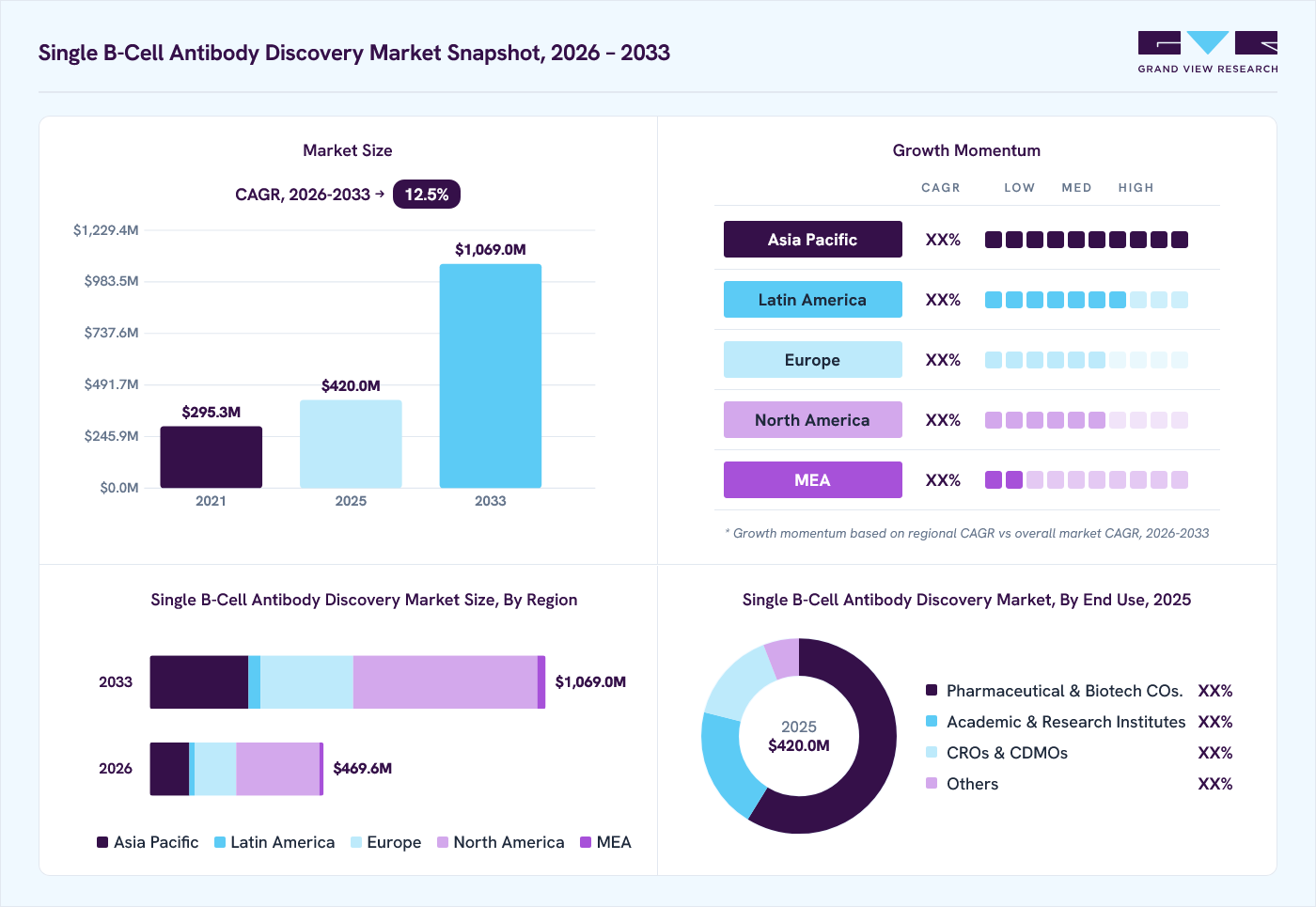 Source: Grand View Research, IR Documents, Primary Interviews, Paid DatabasesTo learn more about this report,
 Download Free Sample Report
Key Market Trends & Insights
- The single B-cell antibody discovery industry in the U.S. is expected to grow significantly over the forecast period.
- By product & service, the services segment held the highest market share of 61.4% in 2025.
- Based on technology, the microfluidics-based screening segment held the highest market share in 2025.
- Based on end use, the pharmaceutical & biotechnology companies segment held the highest market share in 2025.
Regional Highlights
- Largest regional market: North America (48.0% revenue share, 2025)
- By country: The U.S. held the largest market share in 2025.
Market Size & Forecast
- Market size in 2025: USD 420.0 Million
- Estimated market size in 2026: USD 469.6 Million
- Projected market size by 2033: USD 1069.0 Million
- CAGR (2026-2033): 12.5%
Prism AI by Grand View Research Free to tryAsk a question about the single B-Cell antibody discovery marketTry asking✓Every figure cited from GVR research Prefer the report? Download free sample →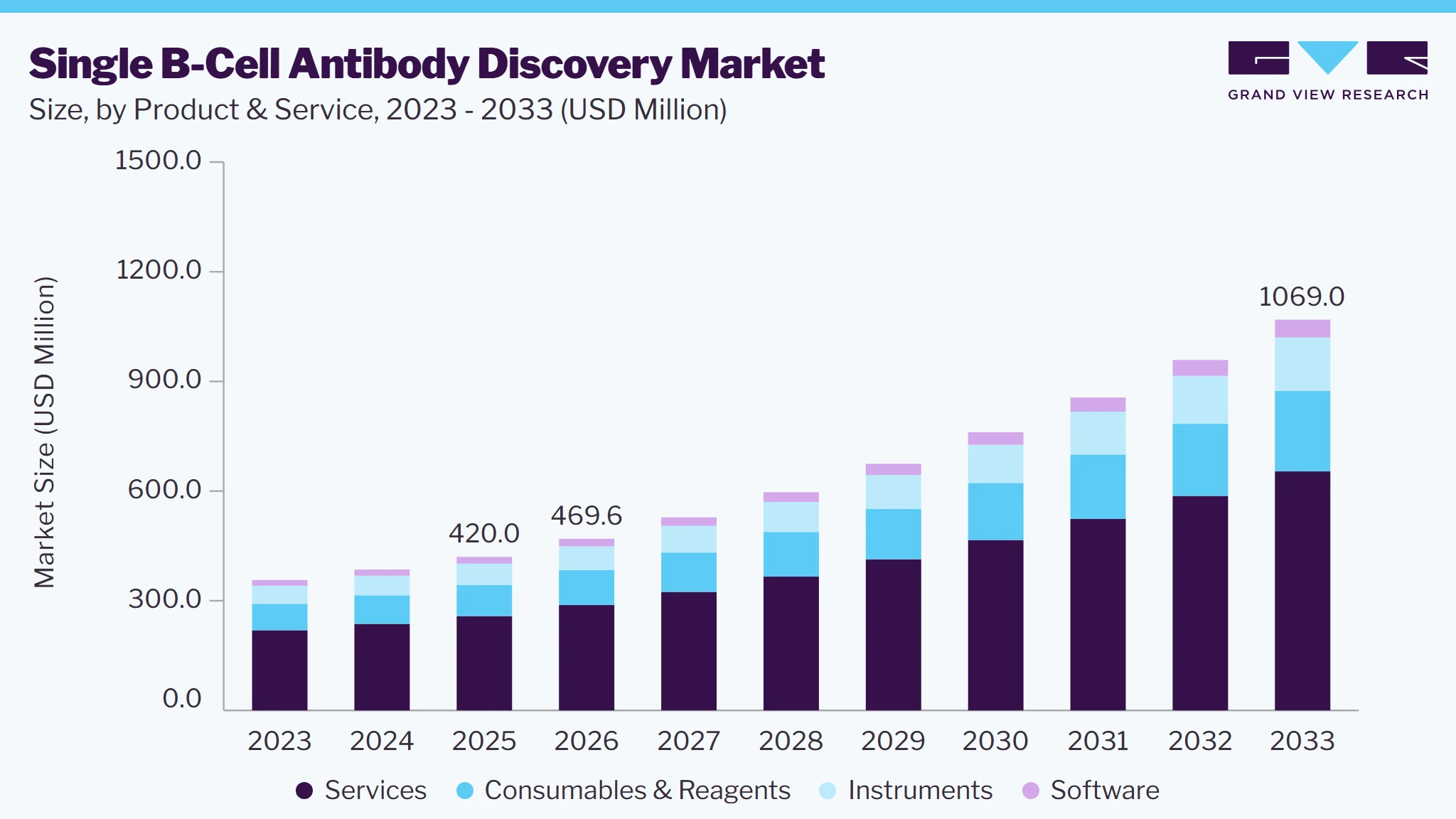 To learn more about this report, Download Free Sample Report
Market Dynamics
The single B-cell antibody discovery market is witnessing significant growth, supported by increasing investments in biologics research, rising demand for targeted therapeutics, and expanding applications in immuno-oncology and infectious disease research. Growing pharmaceutical and biotechnology R&D activities, coupled with increasing demand for high-affinity and highly specific antibody candidates for therapeutic and diagnostic applications, are expected to create new opportunities for market growth.
Advancements in single-cell technologies are improving the speed, precision, and efficiency of antibody discovery compared with conventional approaches such as hybridoma and phage display. The integration of automated cell isolation, microfluidics, and single-cell sequencing enables researchers to identify antigen-specific B cells, recover naturally paired antibody genes, and screen promising candidates more efficiently. These technological advantages are supporting the adoption of single B-cell antibody discovery platforms in therapeutic antibody development and biologics research, as highlighted in the comparison below:
Comparison of Single B-Cell Antibody Discovery with Conventional Antibody Discovery Technologies
Comparison Parameter
Single B-Cell Antibody Discovery
Hybridoma Technology
Phage Display Technology
Discovery Timeline
Typically weeks; enables rapid identification of antibody candidates
Typically months due to cell fusion, selection, and screening
Typically months, depending on library selection and screening
Natural Heavy- and Light-Chain Pairing
Preserves native heavy- and light-chain pairing from individual B cells
Does not inherently preserve the original antibody gene pairing in the same way
Antibody chains are engineered and displayed, rather than directly retaining native pairing
Access to Rare Antibody Targets
Enables targeted screening of antigen-specific B cells, including rare antibody-producing cells
May have limited efficiency in recovering rare antibody-producing clones
Depends on library diversity and selection conditions
High-Throughput Screening
Supported by automated cell isolation, microfluidics, and single-cell sequencing
Generally more labor-intensive and less suited to highly parallel screening
Supports high-throughput screening of large antibody libraries
Scalability
Can be scaled through automated workflows and parallel processing
Scaling may require additional cell culture, fusion, and screening capacity
Can be scaled through large libraries and iterative selection workflows
Source of Antibody Diversity
Accesses naturally occurring antibody repertoires from immunized animals or human donors
Relies on antibody-producing B cells that can be fused and maintained as hybridomas
Uses engineered antibody libraries, including synthetic and immune-derived libraries
Source: Boster Biological Technology, Secondary Research, Primary Interviews, Grand View Research Analysis
The comparison highlights the technological advantages of single B-cell antibody discovery, particularly its ability to preserve native antibody-chain pairing and integrate advanced screening and sequencing workflows. Continued improvements in automation and single-cell analysis are expected to enhance discovery efficiency and support the identification of promising antibody candidates. These benefits are likely to encourage adoption among pharmaceutical and biotechnology companies, contributing to the growth of the single B-cell antibody discovery market.
The technical complexity of single B-cell antibody discovery workflows acts as a restraint on market growth, as the process involves multiple specialized steps, including B-cell isolation, antigen-specific screening, antibody gene recovery, sequencing, and functional characterization. These procedures require advanced instruments, specialized laboratory infrastructure, and expertise in single-cell analysis and molecular biology. Integrating these steps into a consistent workflow can be challenging, particularly for research organizations with limited technical capabilities.
Moreover, variations in sample quality, cell viability, and antibody expression can affect discovery efficiency and reproducibility. The need for additional validation and optimization may increase operational costs and extend development timelines. These challenges can limit the adoption of single B-cell antibody discovery technologies among smaller biotechnology companies and academic institutions, thereby restraining overall market growth.
The increasing demand for human antibodies is creating significant opportunities in the single B-cell antibody discovery market, driven by the growing need for targeted and well-tolerated biologics for cancer, autoimmune disorders, and infectious diseases. Single B-cell antibody discovery enables researchers to isolate antigen-specific B cells from human donors and recover naturally paired antibody genes, supporting the identification of fully human antibody candidates. These capabilities are particularly valuable in therapeutic development, where antibody specificity, binding affinity, and reduced immunogenicity are important considerations.
Moreover, growing investments in antibody-based drug development and the expansion of clinical pipelines are encouraging pharmaceutical and biotechnology companies to adopt advanced antibody discovery approaches. Single B-cell platforms provide access to diverse human antibody repertoires, including antibodies generated through natural immune responses, creating opportunities to identify candidates against complex therapeutic targets. This growing emphasis on human antibody discovery is expected to support the adoption of single B-cell technologies and contribute to market expansion.
Market Concentration & Characteristics
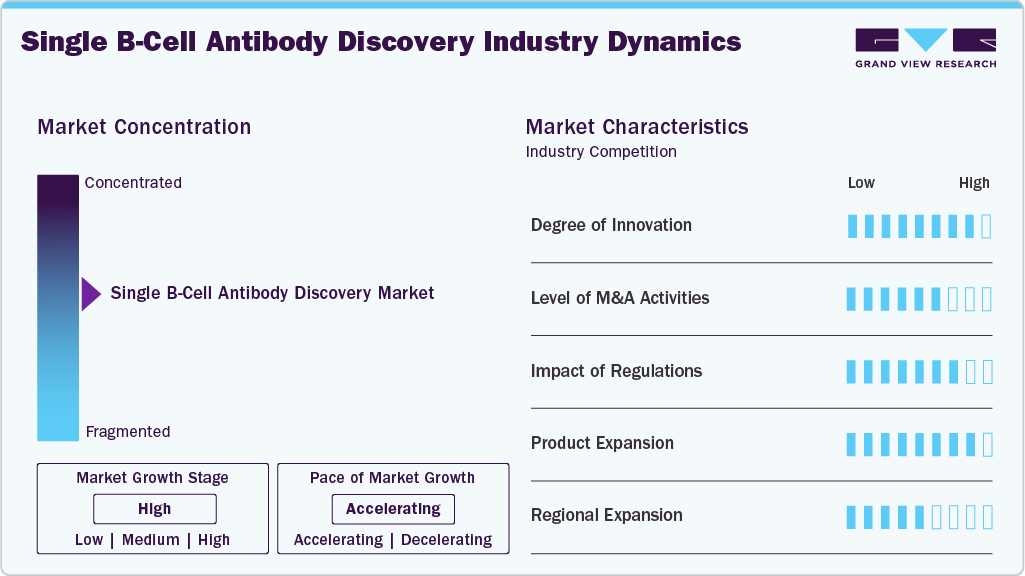
The single B-cell antibody discovery industry is characterized by a high degree of innovation, driven by continuous innovation in high-throughput screening, microfluidics, optofluidics, and AI-enabled antibody analysis. These technologies improve the identification of rare antibody-producing cells and accelerate candidate screening. For instance, in May 2025, OmniAb, Inc. introduced its xPloration Partner Access Program, allowing partners to purchase its high-throughput single B-cell screening instrument for use in their own laboratories.
“Mining primary B-cells from immunized animals is a major challenge in therapeutic antibody discovery. Traditional methods, like hybridoma or FACS-based screening, limit antibody diversity, take weeks to run and/or are restricted to simple soluble antigens. In contrast, our xPloration platform processes millions of single B-cells and recovers thousands of antibody variants within hours, delivering superior screening and cell recovery capabilities while facilitating workflow flexibility.”
- Bob Chen, Ph.D., OmniAb’s Vice President of Discovery Systems
The single B-cell antibody discovery industry is experiencing moderate M&A activity, with acquisitions and strategic partnerships aimed at strengthening antibody discovery platforms and expanding screening capabilities. For instance, in March 2024, AbTherx, Inc. partnered with Single Cell Technology, Inc. to access its proprietary single B-cell screening platform for antibody discovery campaigns, expanding its access to specialized discovery capabilities.
 To learn more about this report, Download Free Sample Report
The market is indirectly influenced by regulatory requirements governing the safety, quality, and clinical development of antibody-based therapeutics. For instance, in December 2025, the U.S. FDA issued draft guidance recommending streamlined nonclinical safety studies for certain monoclonal antibodies, including approaches to reduce unnecessary long-term non-human primate testing. Such developments may influence downstream antibody development and validation strategies.
The single B-cell antibody discovery industry is witnessing high product expansion, driven by the commercialization of specialized platforms that combine single-cell analysis with functional antibody screening. For instance, in May 2025, Lightcast Discovery Ltd. announced the limited commercial release of its Envisia benchtop platform, designed to analyze single-cell functional activity in real time to support antibody discovery and development.
The single B-cell antibody discovery industry is witnessing a moderate to high regional expansion, supported by increasing investments in biotechnology research, expanding biopharmaceutical infrastructure, and growing collaborations between pharmaceutical companies, biotechnology firms, and research institutions. The development of regional R&D capabilities and broader access to advanced antibody discovery platforms are enabling companies to strengthen their presence across key markets and address growing demand for therapeutic antibody development.
Analyst Perspective
The single B-cell antibody discovery market is expected to witness significant growth, driven by rising demand for targeted antibody therapeutics and increasing investments in drug discovery and immunotherapy. Advancements in single-cell analysis, high-throughput screening, and antibody engineering are improving discovery efficiency and accelerating the identification of high-specificity antibodies. Growing biopharmaceutical research and innovation in antibody development are expected to create new growth opportunities for market participants.
Product & Service Insights
The services segment accounted for the largest revenue share, over 61.4% in 2025, driven by increasing demand for specialized antibody discovery expertise, high-throughput B-cell screening, and end-to-end services for antibody identification, sequencing, and validation. Pharmaceutical and biotechnology companies increasingly rely on external service providers to access advanced discovery platforms, accelerate candidate selection, and reduce the need for in-house infrastructure. For instance, in April 2025, Antibody Solutions expanded its Cellestive platform by introducing single plasma B-cell discovery services, strengthening its capabilities in antibody screening, sequence recovery, and validation. Such service expansions are expected to support segment growth by improving access to specialized technologies and streamlining antibody discovery workflows.
The software segment is expected to register the fastest CAGR over the forecast period, driven by increasing adoption of AI-enabled data analysis, automated antibody screening, and bioinformatics tools for processing single B-cell sequencing data. Growing demand for efficient antibody candidate selection, sequence characterization, and affinity analysis is encouraging the integration of computational platforms into discovery workflows, helping researchers manage complex datasets and accelerate the identification of promising therapeutic antibodies.
Technology Insights
The microfluidics-based screening segment dominated the market with a 38.0% share in 2025, driven by its high-throughput screening capabilities, reduced reagent consumption, and efficient identification of antibody-producing B cells. For instance, in January 2025, Sphere Bio introduced its Cyto-Mine Chroma platform, advancing picodroplet-based single-cell analysis for antibody discovery. Such innovations are expected to improve screening efficiency and accelerate antibody candidate identification.
The single-cell BCR sequencing segment is expected to register the fastest CAGR over the forecast period, driven by increasing demand for paired heavy- and light-chain sequence information, advances in single-cell sequencing technologies, and the growing need to identify antibodies with high specificity and affinity. Its ability to preserve B-cell receptor diversity and link antibody sequences to individual cells is expected to accelerate therapeutic antibody discovery and support the development of targeted biologics.
Species Insights
The mouse & rat segment dominated the market with a 39.2% share in 2025, driven by their global use in preclinical research, established immunization protocols, and suitability for generating diverse antibody candidates against specific therapeutic targets. The availability of well-characterized animal models and established workflows for B-cell isolation and screening further supports their adoption in monoclonal antibody discovery and early-stage drug development.
The human segment is expected to register the fastest CAGR over the forecast period, driven by rising demand for fully human antibodies that offer reduced immunogenicity risks and improved suitability for therapeutic applications. Increasing adoption of single B-cell screening technologies to isolate antigen-specific human B cells from peripheral blood and convalescent or vaccinated donors is further accelerating the discovery of clinically relevant antibodies for targeted therapies and infectious disease treatment.
Disease Area Insights
The oncology segment dominated the market with a 37.8% share in 2025, driven by increasing demand for targeted biologics, rising investments in cancer immunotherapy, and growing research into tumor-specific antigens. The expanding development of monoclonal antibodies and immune-modulating therapeutics is further increasing the use of single B-cell antibody discovery technologies to identify highly specific antibody candidates for cancer treatment.
The immunology & inflammation segment is expected to register the fastest CAGR over the forecast period, driven by rising prevalence of autoimmune and chronic inflammatory disorders, increasing research into immune-mediated disease pathways, and growing demand for targeted biologics. Advances in single B-cell screening are enabling the identification of disease-specific antibodies and novel therapeutic targets, supporting the development of more precise treatments for immune-related conditions.
End Use Insights
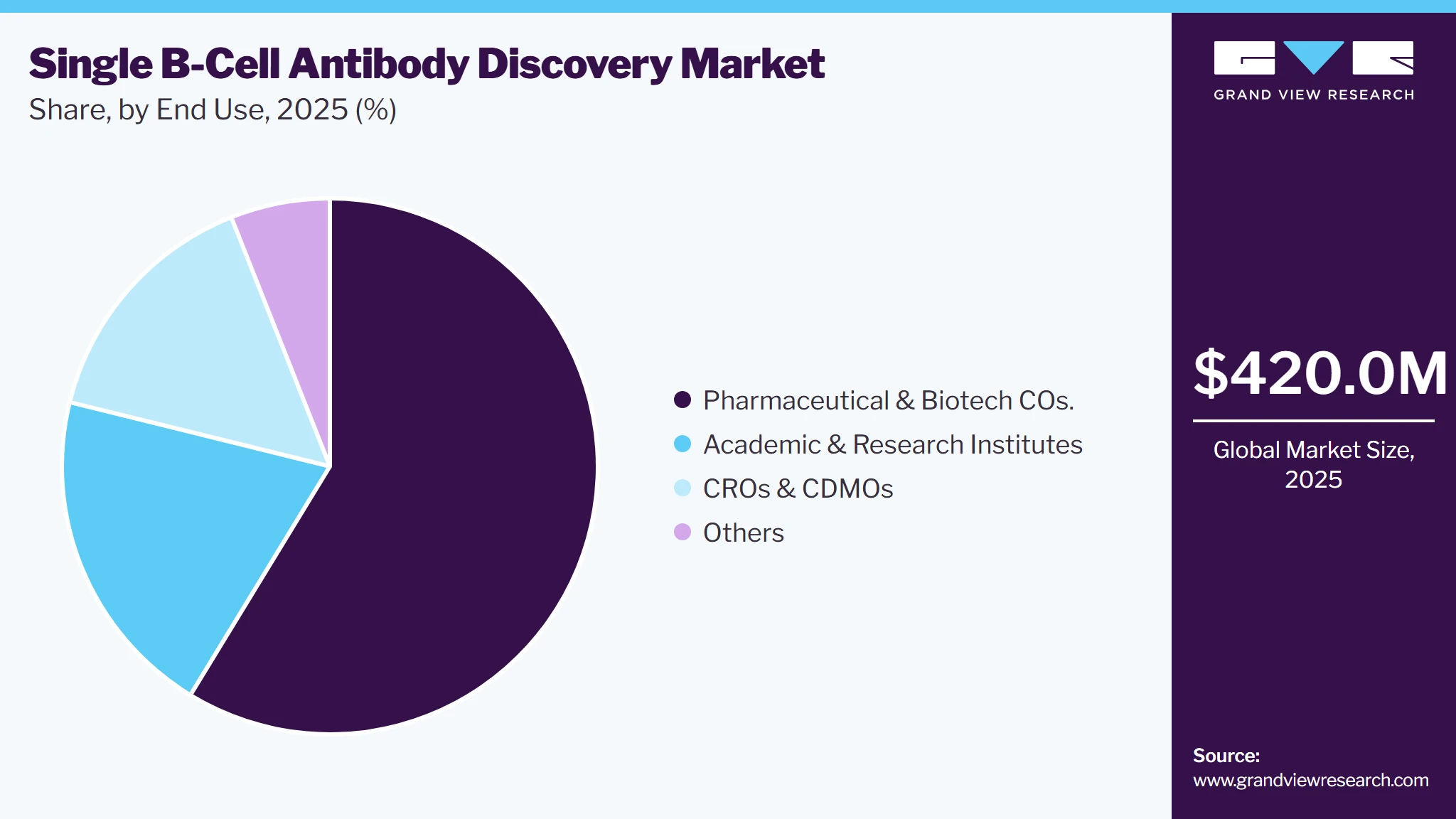
The pharmaceutical & biotechnology companies segment dominated the market with a share of 58.7% in 2025, driven by substantial investments in therapeutic antibody development, expanding biologics pipelines, and increasing adoption of advanced screening technologies for lead identification. The growing focus on developing high-specificity monoclonal antibodies for oncology, immunology, and infectious diseases is further encouraging these companies to leverage single B-cell discovery platforms to accelerate candidate selection and streamline drug development.
 To learn more about this report, Download Free Sample Report
The CROs & CDMOs segment is projected to witness the fastest CAGR, driven by increasing outsourcing of antibody discovery activities, demand for specialized screening capabilities, and the need to reduce infrastructure and operational costs. Growing reliance on external partners for B-cell isolation, antibody screening, and candidate validation is expected to support segment growth by enabling pharmaceutical and biotechnology companies to accelerate discovery timelines and optimize research resources.
Regional Insights
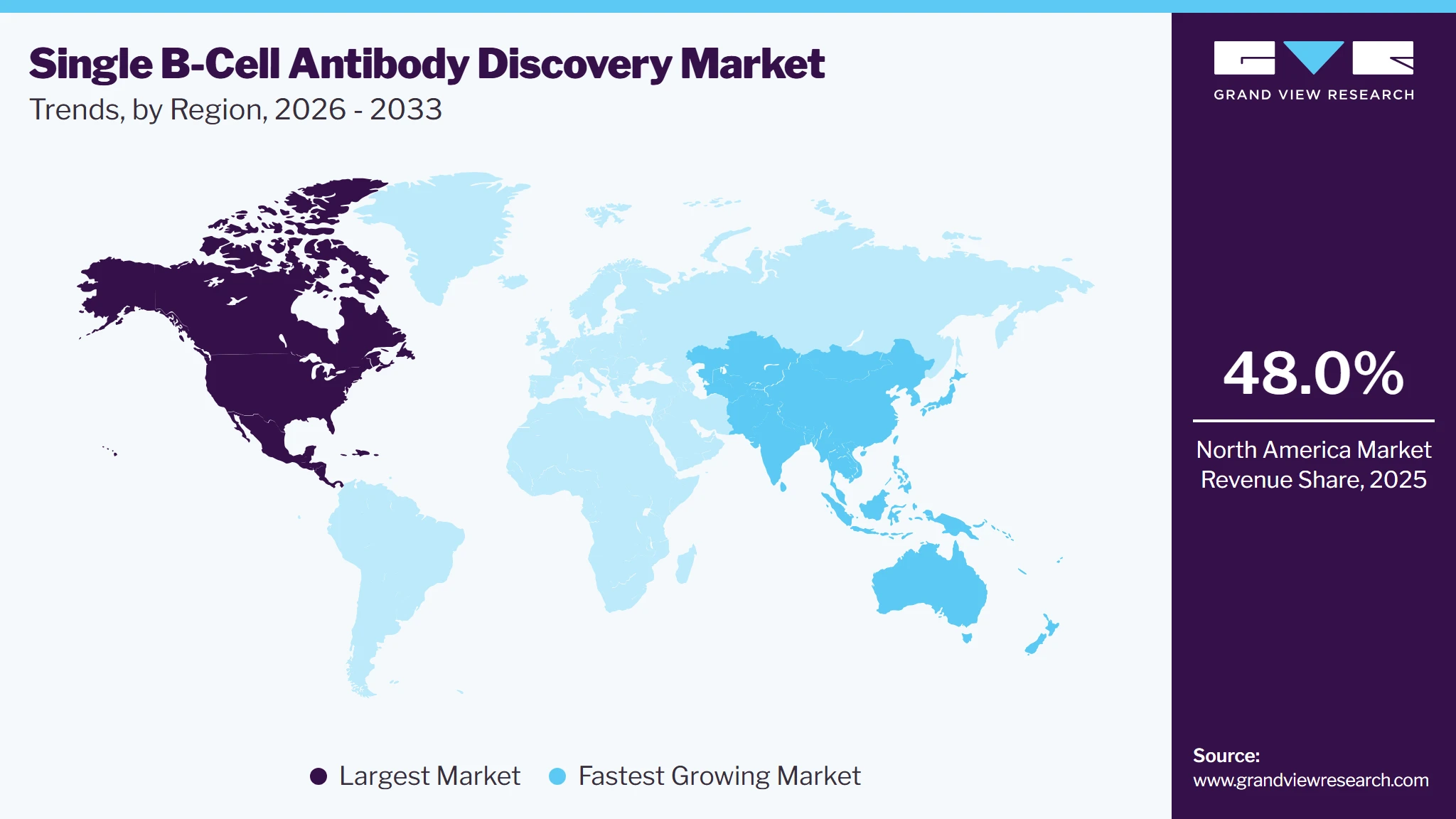
North America dominated the single B-cell antibody discovery industry, accounting for the largest revenue share of 48.0% in 2025, supported by a well-established biopharmaceutical sector, substantial investment in antibody therapeutics, and access to advanced screening technologies. The region benefits from collaboration between biotechnology companies, research institutions, and specialized discovery providers. For instance, in May 2024, AbCellera partnered with Viking Global Investors and ArrowMark Partners to establish new biotechnology companies focused on advancing antibody drug programs, including immunology candidates. This activity highlights the region’s strong ecosystem for translating antibody discovery capabilities into therapeutic development.
 To learn more about this report, Download Free Sample Report
U.S. Single B-Cell Antibody Discovery Market Trends
The single B-cell antibody discovery industry in the U.S. is expected to grow over the forecast period, supported by demand for specialized discovery services and technologies capable of identifying antibodies against challenging targets. For instance, in December 2025, Single Cell Technology, Inc. presented its AbTheneum platform, which screens antibodies across multiple parameters and sequences the resulting immunoglobulin repertoire to reduce selection bias. Such approaches may help researchers identify diverse antibody candidates and improve screening decisions.
Europe Single B-Cell Antibody Discovery Market Trends
The single B-cell antibody discovery market in Europe was identified as a lucrative region in this industry, supported by established pharmaceutical R&D capabilities, biotechnology innovation, and growing demand for advanced platforms that accelerate therapeutic antibody identification. For instance, in October 2024, Kling Biotherapeutics presented its Kling-Select and Kling-Evolve platforms at PEGS Europe in Barcelona, Spain. Kling-Select supports the capture and screening of primary B-cell repertoires to identify novel targets and therapeutic antibodies, while Kling-Evolve enables antibody optimization and affinity maturation. These technologies highlight Europe’s ongoing innovation in B-cell-based discovery and the development of antibody candidates for oncology and infectious diseases.
UK Single B-Cell Antibody Discovery Market Trends
The UK single B-cell antibody discovery market is supported by its established biotechnology research base and collaborations between academic institutions and therapeutic developers. Demand is supported by the need to identify antibodies against complex targets and develop candidates for infectious diseases and other unmet medical needs. The wider European antibody discovery ecosystem also provides access to specialized screening and characterization capabilities.
Germany Single B-Cell Antibody Discovery Market Trends
The single B-cell antibody discovery market in Germany is anticipated to grow significantly over the forecast period, supported by strong biotechnology research, advanced cell analysis capabilities, and growing biopharmaceutical R&D. Research in immunology, oncology, and infectious diseases continues to drive demand for technologies that enable the identification and characterization of antigen-specific antibodies.
Asia Pacific Single B-Cell Antibody Discovery Market Trends
Asia-Pacific is expected to grow at the fastest CAGR of 13.9% during the forecast period, supported by expanding biopharmaceutical R&D, increasing demand for human antibody therapeutics, and growing investment in domestic discovery capabilities. The region’s biotechnology companies are developing integrated workflows that combine cell sorting, sequencing, and computational analysis to improve antibody recovery and screening efficiency. These developments are expanding regional capabilities in therapeutic antibody discovery.
China Single B-Cell Antibody Discovery Market Trends
China single B-cell antibody discovery market is supported by growing investment in antibody engineering and high-throughput discovery technologies. For instance, in March 2024, Biointron introduced its AbDrop platform in collaboration with Cyagen’s HUGO-Ab technology, combining microfluidic single B-cell screening with fully human antibody discovery. The platform is designed to accelerate the identification of antibody candidates for therapeutic development.
Japan Single B-Cell Antibody Discovery Market Trends
The single B-cell antibody discovery market in Japan is expected to grow steadily, supported by the country’s established monoclonal antibody research landscape and pharmaceutical companies’ focus on developing differentiated biologics. The country’s expertise in immunology and antibody engineering supports the use of single B-cell technologies to identify naturally occurring antibodies with potential applications in therapeutic development.
Latin America Single B-Cell Antibody Discovery Market Trends
The Latin America single B-cell antibody discovery market is gradually developing alongside improvements in biotechnology research infrastructure and pharmaceutical R&D. Growing research into infectious diseases and immune-related conditions is expected to support demand for antibody discovery technologies, including single-cell isolation and screening platforms that facilitate the identification of promising antibody candidates.
MEA Single B-Cell Antibody Discovery Market Trends
The MEA single B-cell antibody discovery market is supported by efforts to strengthen biomedical research, expand healthcare innovation, and develop regional biopharmaceutical capabilities. Increasing attention to infectious diseases and targeted therapies is expected to create opportunities for technologies that enable the isolation, screening, and characterization of antibody-producing B cells.
Key Companies & Market Share Insights
Several established companies operate in the single B-cell antibody discovery market, supported by their capabilities in single-cell screening, antibody discovery platforms, high-throughput analysis, and therapeutic antibody development. Leading players such as AbCellera Biologics Inc., Bruker (Bruker Cellular Analysis), 10x Genomics, WuXi Biologics, GenScript, Charles River Laboratories, etc. maintain their market presence through technology innovation, specialized discovery services, platform development, and strategic initiatives focused on improving screening efficiency, accelerating antibody identification, and advancing therapeutic candidate development.
Key Single B-Cell Antibody Discovery Companies
The following key companies have been profiled for this study on the single B-cell antibody discovery market.
-
AbCellera Biologics Inc.
-
Bruker (Bruker Cellular Analysis)
-
10x Genomics
-
WuXi Biologics
-
GenScript
-
Charles River Laboratories
-
Twist Bioscience (Abveris)
-
OmniAb, Inc.
-
Biocytogen Pharmaceuticals (Beijing) Co., Ltd.
-
Sino Biological, Inc.
-
Sphere Bio Ltd.
-
MindWalk Holdings Corp. (formerly ImmunoPrecise Antibodies)
-
Biointron Biological Inc.
-
Alloy Therapeutics, Inc.
-
Antibody Solutions
Competitive Benchmarking
Category
Operating Strategies
Competitive Edge
Weakness
Established Players (AbCellera Biologics Inc.; Bruker (Bruker Cellular Analysis); 10x Genomics; WuXi Biologics; GenScript; Charles River Laboratories; Twist Bioscience (Abveris); OmniAb, Inc.; Biocytogen Pharmaceuticals (Beijing) Co., Ltd.; Sino Biological, Inc., etc.)
- Strengthen discovery and development services through integrated antibody engineering platforms, strategic partnerships, and expanded capabilities supporting pharmaceutical and biotechnology companies.
- Established customer relationships, strong R&D expertise, and scalable platforms that support the identification of high-affinity, highly specific therapeutic antibodies.
- High R&D investments and technology development costs associated with advanced antibody discovery platforms.
Emerging Players (Sphere Bio Ltd.; MindWalk Holdings Corp. (formerly ImmunoPrecise Antibodies); Biointron Biological Inc.; Alloy Therapeutics, Inc.; Antibody Solutions)
- Focus on specialized antibody discovery services, single-cell screening technologies, and customized antibody development solutions for therapeutic and research applications.
- Flexible service models and targeted technical capabilities that address specific antibody development requirements.
- Dependence on contract research demand, partnership opportunities, and successful progression of client antibody development programs.
Recent Developments
-
In May 2025, Bruker Cellular Analysis unveiled its Beacon Discovery platform at AACR 2025, expanding access to optofluidic single-cell analysis for antibody discovery, functional profiling, and therapeutic candidate identification across academic and biotechnology research settings.
-
In January 2025, AbCellera Biologics Inc. expanded its collaboration with AbbVie to discover novel T-cell engagers for oncology, highlighting the growing role of specialized antibody discovery platforms in developing targeted biologics for cancer treatment.
-
In December 2024, WuXi Biologics signed a discovery service agreement with Sino Biopharm to develop a first-in-class monoclonal antibody, leveraging its single B-cell technology platform for antibody generation, lead identification, optimization, and preclinical candidate selection.
Single B-Cell Antibody Discovery Market Report Scope Table
Report Attribute
Details
Market size in 2025
USD 420.0 million
Estimated market size in 2026
USD 469.6 million
Projected market size by 2033
USD 1,069.0 million
Growth rate
CAGR of 12.5% from 2026 to 2033
Historical data
2021 - 2025
Forecast period
2026 - 2033
Quantitative units
Revenue in USD million, and CAGR from 2026 to 2033
Report coverage
Revenue forecast, company ranking, competitive landscape, growth factors, and trends
Segments covered
Product & service, technology, species, disease area, end use, and region
Regional scope
North America; Europe; Asia Pacific; Latin America; MEA
Country scope
U.S., Canada, Mexico, UK, Germany, France, Italy, Spain, Norway, Denmark, Sweden, China, Japan, India, South Korea, Australia, Thailand, Brazil, Argentina, Saudi Arabia, South Africa, UAE, and Kuwait
Key companies profiled
AbCellera Biologics Inc., Bruker (Bruker Cellular Analysis), 10x Genomics, WuXi Biologics, GenScript, Charles River Laboratories, Twist Bioscience (Abveris), OmniAb, Inc., Biocytogen Pharmaceuticals (Beijing) Co., Ltd., Sino Biological, Inc., Sphere Bio Ltd., MindWalk Holdings Corp. (formerly ImmunoPrecise Antibodies), Biointron Biological Inc., Alloy Therapeutics, Inc., and Antibody Solutions
Customization scope
Free report customization (equivalent up to 8 analysts' working days) with purchase. Addition or alteration to country, regional & segment scope.
Pricing and purchase options
Avail customized purchase options to meet your exact research needs. Explore purchase options
Global Single B-Cell Antibody Discovery Market Report Segmentation
This report forecasts revenue growth and provides an analysis on the latest trends in each of the sub-segments from 2021 to 2033. For the purpose of this report, Grand View Research has segmented the global single B-cell antibody discovery market on the basis of product & service, technology, species, disease area, end use, and region:
-
Product & Service Outlook (Revenue, USD Million, 2021 - 2033)
-
Services
-
Consumables & Reagents
-
Instruments
-
Software
-
-
Technology Outlook (Revenue, USD Million, 2021 - 2033)
-
Microfluidics-based Screening
-
FACS-based Single B-Cell Sorting
-
Single-Cell BCR Sequencing
-
Others
-
-
Species Outlook (Revenue, USD Million, 2021 - 2033)
-
Mouse & Rat
-
Human
-
Rabbit
-
Others
-
-
Disease Area Outlook (Revenue, USD Million, 2021 - 2033)
-
Oncology
-
Infectious Diseases
-
Immunology & Inflammation
-
Neurology
-
Others
-
-
End Use Outlook (Revenue, USD Million, 2021 - 2033)
-
Pharmaceutical & Biotechnology Companies
-
Academic & Research Institutes
-
CROs & CDMOs
-
Others
-
-
Regional Outlook (Revenue, USD Million, 2021 - 2033)
-
North America
-
U.S.
-
Canada
-
Mexico
-
-
Europe
-
UK
-
Germany
-
France
-
Italy
-
Spain
-
Denmark
-
Sweden
-
Norway
-
-
Asia Pacific
-
Japan
-
China
-
India
-
Australia
-
Thailand
-
South Korea
-
-
Latin America
-
Brazil
-
Argentina
-
-
Middle East and Africa (MEA)
-
South Africa
-
Saudi Arabia
-
UAE
-
Kuwait
-
-
Research Methodology
The single B-cell antibody discovery market figures in this report are based on a proven research process that combines executive interviews with secondary research from proprietary databases, company filings, and recognized regulatory and institutional sources. Market size is built through value-chain sizing - reconciling supply-side and demand-side estimates - and triangulated with bottom-up and top-down approaches. Every estimate passes multiple levels of expert validation before publication, with each single B-cell antibody discovery segment quantified using the revenue-capture definitions in the table below.
Segment Definition
Segment- Product & Service
Revenue Capture Definition
Services
Revenue generated from specialized services that enable the identification, isolation, screening, and characterization of antibody-producing B cells for therapeutic antibody discovery. These offerings include single B-cell isolation, antigen-specific cell screening, antibody sequence recovery, candidate validation, and antibody engineering support for pharmaceutical research and biologics development.
Consumables & Reagents
This segment captures revenue from consumable products and biochemical reagents required for single B-cell isolation, identification, screening, and antibody characterization. It includes assay kits, cell culture media, buffers, antibodies, fluorescent labels, microfluidic chips, sorting reagents, and molecular biology reagents used throughout antibody discovery workflows.
Instruments
Market revenue stems from equipment used to isolate individual B cells, identify antigen-specific populations, and facilitate antibody discovery workflows. This category includes automated cell isolation platforms, microfluidic screening instruments, fluorescence-activated cell sorting systems, single-cell analysis platforms, and associated laboratory equipment.
Software
Income in this category arises from software platforms used to manage, analyze, and interpret data generated during single B-cell antibody discovery. These solutions support single-cell data processing, B-cell receptor sequence analysis, antibody sequence annotation, candidate ranking, and integration of experimental results to facilitate antibody identification and selection.
Segment- Technology
Revenue Capture Definition
Microfluidics-based Screening
Revenue derived from technologies that use microfluidic devices and miniaturized fluid-handling systems to isolate, compartmentalize, and screen individual B cells for antigen-specific antibody production. These platforms enable high-throughput functional screening, reduce reagent consumption, and facilitate the rapid identification of promising antibody candidates.
FACS-based Single B-Cell Sorting
This segment encompasses revenue from fluorescence-activated cell sorting (FACS) technologies used to identify and isolate individual B cells based on fluorescent labeling, surface markers, and antigen-binding characteristics. These approaches support the selection of antibody-producing cells for downstream sequence recovery, characterization, and therapeutic discovery.
Single-Cell BCR Sequencing
Market value in this category reflects technologies used to sequence and analyze B-cell receptor (BCR) genes at the individual-cell level. These methods enable the recovery of paired heavy- and light-chain sequences, characterization of antibody diversity, and identification of candidate antibodies for subsequent recombinant expression and validation.
Others
Revenue originates from alternative single B-cell screening and isolation technologies not classified under the primary methods, including specialized cell capture, imaging-enabled screening, and emerging analytical approaches used to identify antibody-producing cells.
Segment- Species
Revenue Capture Definition
Mouse & Rat
Revenue generated from single B-cell antibody discovery workflows utilizing B cells obtained from mice and rats, including immunized animal models. These approaches support the identification of antigen-specific antibodies for preclinical research, therapeutic development, immunology studies, and the generation of antibody candidates for further engineering and validation.
Human
This segment captures income from technologies and services used to discover antibodies from human B cells obtained from peripheral blood, lymphoid tissues, and other biological samples. Applications include therapeutic antibody development, immune repertoire profiling, infectious disease research, and the identification of antibodies with potential clinical relevance.
Rabbit
Market revenue stems from antibody discovery workflows employing rabbit B cells to identify antibodies with high affinity, specificity, and recognition of diverse epitopes. These approaches support therapeutic research, diagnostic reagent development, and the discovery of antibody candidates for biomedical applications.
Others
This category includes revenue from single B-cell antibody discovery involving other species, such as non-human primates, goats, sheep, and other suitable animal models, for specialized research and antibody development applications.
Segment- Disease Area
Revenue Capture Definition
Oncology
Revenue generated from single B-cell antibody discovery activities focused on identifying antibodies against cancer-associated antigens, tumor-specific targets, and immune regulatory molecules. These applications support the development of therapeutic antibodies, immuno-oncology candidates, and targeted treatment approaches for different cancer types.
Infectious Diseases
This segment captures revenue from antibody discovery workflows aimed at identifying antibodies that recognize viral, bacterial, fungal, and other infectious agents. These efforts support the development of neutralizing antibodies, infectious disease diagnostics, and potential antibody-based treatments against emerging and established pathogens.
Immunology & Inflammation
Market value in this category stems from the discovery of antibodies targeting immune signaling molecules, cytokines, receptors, and inflammatory pathways. These applications support research and therapeutic development for autoimmune disorders, inflammatory diseases, and other conditions involving immune system dysregulation.
Neurology
Revenue originates from single B-cell antibody discovery programs targeting neurological disease-associated proteins, neural receptors, and other molecular targets implicated in disorders of the central and peripheral nervous systems. These efforts contribute to research and the development of potential antibody-based treatments for neurological conditions.
Others
This segment encompasses revenue from antibody discovery programs addressing disease areas beyond oncology, infectious diseases, immunology and inflammation, and neurology. Applications may include metabolic disorders, cardiovascular conditions, and other therapeutic fields requiring specialized antibody candidates.
Segment- End Use
Revenue Capture Definition
Pharmaceutical & Biotechnology Companies
Revenue generated from single B-cell antibody discovery platforms, consumables, software, and outsourced services adopted by pharmaceutical and biotechnology companies for therapeutic antibody identification, lead optimization, preclinical development, and biologics research. These organizations use the technology to expand antibody pipelines and accelerate the development of targeted biologic therapies.
Academic & Research Institutes
This segment captures income from single B-cell antibody discovery solutions utilized by universities, public research organizations, and academic laboratories investigating antibody diversity, immune responses, B-cell biology, and disease mechanisms. These institutions also use the technology to identify novel antibodies and explore potential therapeutic targets.
CROs & CDMOs
Market revenue stems from contract research organizations (CROs) and contract development and manufacturing organizations (CDMOs) providing outsourced antibody discovery, screening, characterization, and development services. These organizations employ single B-cell technologies to support client research programs and advance antibody candidates toward subsequent development and manufacturing stages.
Others
Revenue in this category is associated with single B-cell antibody discovery solutions used by government research agencies, diagnostic developers, nonprofit research organizations, and other specialized institutions involved in antibody research, assay development, and biomedical innovation.
Estimation Model
Top-Down
Parent Market
Segmentation
Validation
Forecasting
Commodity Flow Analysis
Parent Market Analysis
Segment-Level Market Sizing
Data Triangulation & Validation
Market Forecasting & CAGR Analysis
Estimate the target market size by starting with the broader industry market and applying relevant market share assumptions, industry data, and secondary research. Use commodity flow analysis, where applicable, to assess production, imports, exports, and apparent consumption to support market sizing.
Identify the relevant parent market and establish its overall size using published industry reports, company annual reports, government statistics, and other reliable secondary sources. Determine the target market's contribution to the broader market.
Divide the parent market into relevant categories based on product type, application, end user, distribution channel, and geography. Estimate segment-level market shares to determine the size of the target market and its subsegments.
Cross-check market estimates using primary interviews, company financial disclosures, industry publications, historical data, and independent market-sizing approaches. Reconcile discrepancies between sources to improve the reliability of estimates.
Project future market size using historical growth rates, demand drivers, pricing trends, industry developments, consumption patterns, and other relevant assumptions. Estimate market growth throughout the forecast period.
Delivered Customizations
This report has been delivered with the following In-depth customizations
Client Request
Customization Delivered
Value Adds
Human Antibody Repertoire & Donor Sample Assessment
Assessment of peripheral blood B cells, memory B cells, and antigen-specific B-cell populations, including donor screening approaches, sample requirements, and access to diverse human antibody repertoires.
Helps clients identify suitable biological sources, improve candidate identification strategies, and assess opportunities for discovering human therapeutic antibodies.
Single B-Cell Discovery Platform Adoption & Cost Assessment
Comparative assessment of instrument requirements, consumables, workflow complexity, staffing needs, throughput, and in-house versus outsourced discovery models.
Enables clients to evaluate technology adoption feasibility, estimate operational requirements, compare outsourcing options, and prioritize cost-effective discovery strategies.
Therapeutic Target & Antibody Pipeline Opportunity Assessment
Evaluation of antibody development pipelines, target-specific discovery requirements, emerging therapeutic applications, and opportunities across oncology, autoimmune diseases, and infectious diseases.
Helps clients identify promising therapeutic areas, prioritize discovery programs, assess competitive opportunities, and align R&D investments with evolving biologics development needs.
About the Author(s)
Biotechnology Research Team
Healthcare · BiotechnologyThis report was authored by the biotechnology research team at Grand View Research - comprising two research analysts, one senior research analyst, and one industry expert - with specialized expertise in the biotechnology segment of the healthcare industry. All findings are based on proprietary healthcare databases, executive interviews, and regulatory analysis, subject to internal peer review prior to publication.
Last Updated:
Speak to Analyst

Customize this report to your needs - add regions, segments, or data points, with 20% free customization.
Or view our licence options:


ISO 9001:2015 & 27001:2022 Certified
We are GDPR and CCPA compliant! Your transaction & personal information is safe and secure. For more details, please read our privacy policy.


