
- Home
- »
- Medical Devices
- »
-
Skin Tag Remover Market Size And Share Report, 2026-2033GVR Report cover

Skin Tag Remover Market (2026 - 2033)
Size, Share & Trends Analysis Report By Product Type (Topical Solutions, Cryotherapy-Based Removal Kits, Devices), By Treatment (Cryotherapy, Laser Therapy, Surgical Excision), By Distribution Channel, By End Use, And Segment Forecasts
Market Size, 2025
$2.2BMarket Estimate, 2026
$2.4BMarket Forecast, 2033
$3.8BCAGR, 2026–2033
7.0%Skin Tag Remover Market Summary
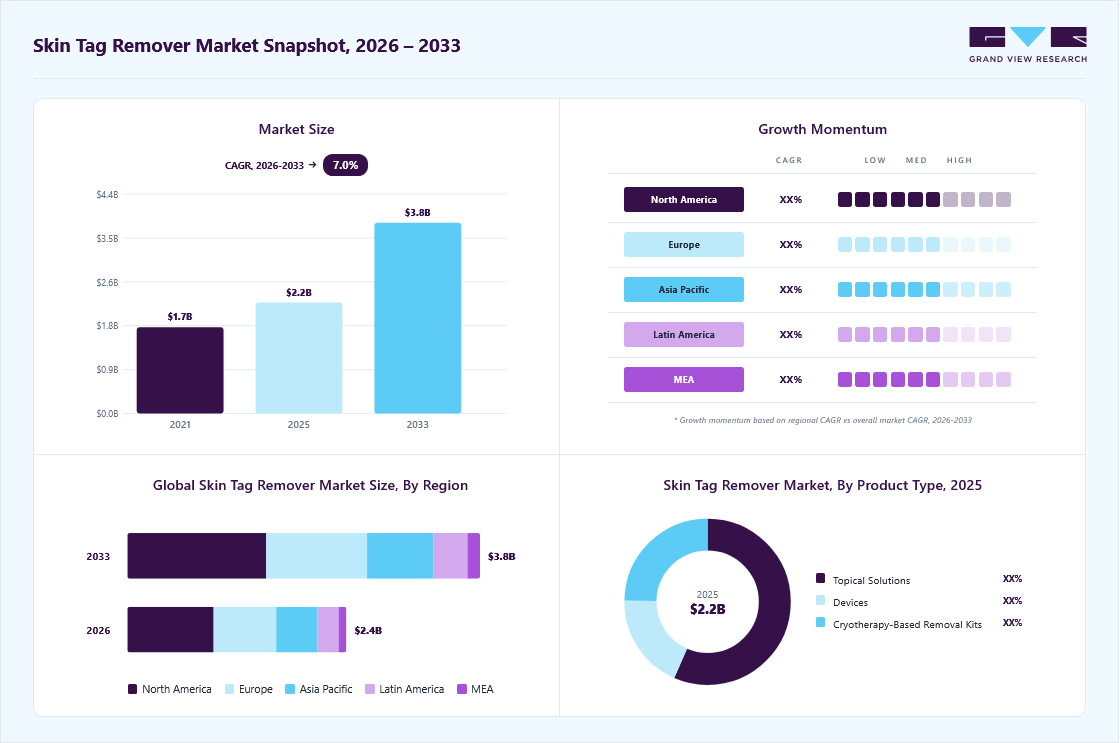
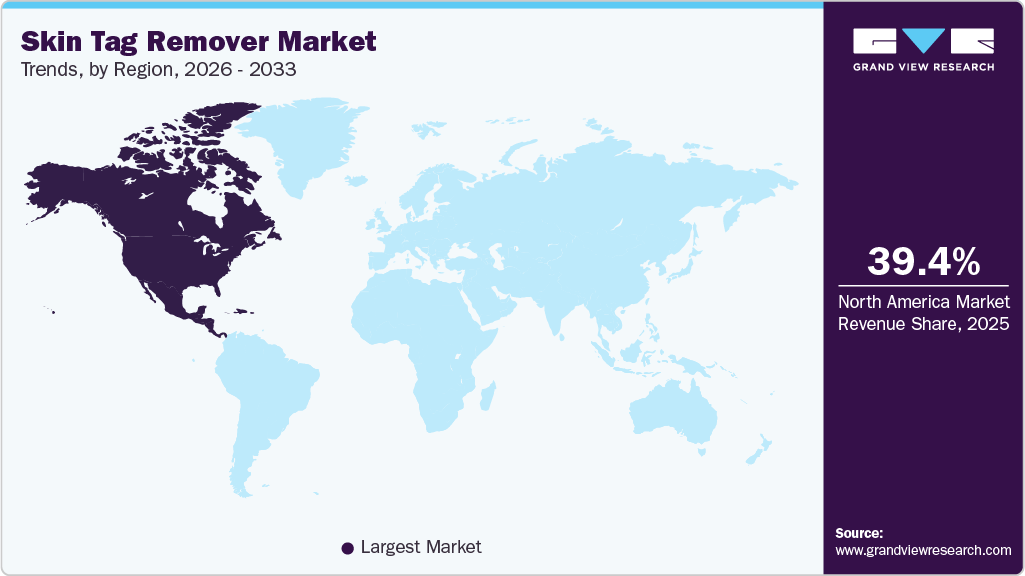
The global skin tag remover market size was valued at USD 2.2 billion in 2025 and is projected to grow from USD 2.4 billion in 2026 to USD 3.8 billion by 2033, at a CAGR of 7.0% from 2026 to 2033. The market in North America dominated with a revenue share of 39.4% in 2025. The skin tag remover market is growing due to increasing awareness of personal grooming and skin aesthetics, such as a rising preference for non-invasive, convenient treatment options.
 Source: Grand View Research, IR Documents, Primary Interviews, Paid DatabasesTo learn more about this report,
 Download Free Sample Report
Key Market Trends & Insights
- By product: Topical solutions segment held the largest market share in 2025.
- By treatment: Chemical-based removal (topical applications) segment held the largest market share in 2025.
- By distribution channel: Retail pharmacies segment held the largest market share in 2025.
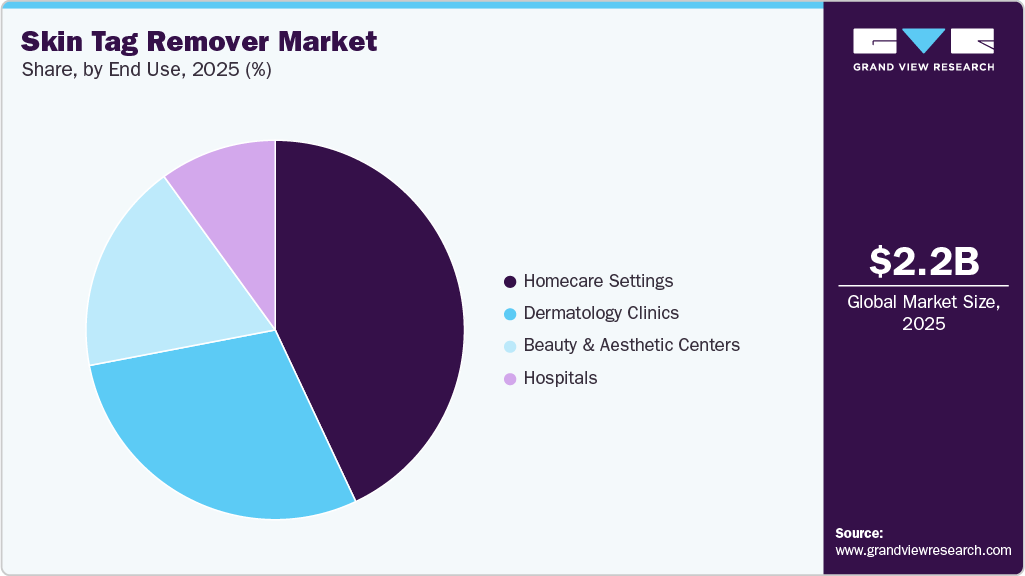
- By end use: Homecare settings segment held the largest market share in 2025.
Regional Highlights
- Largest regional market: North America (39.4% revenue share, 2025)
- By country: U.S. held the largest market share in 2025
Market Size & Forecast
- Market size in 2025: USD 2.2 Billion
- Estimated market size in 2026: USD 2.4 Billion
- Projected market size by 2033: USD 3.8 Billion
- CAGR (2026-2033): 7.0%
Three ways to get this report
Buy it, customize it, or ask a question.Ask an Analyst
Analyst response in 1 business day
- AccessReport author, directly
- Reply timeWithin 1 working day
- No sales callDirect answer only
- FormatEmail reply
- CostFree, no cost
Get the Full Report
What the study covers
- FormatsPDF · Excel · Dashboard
- Timeline2026–2033 annual, 2025 base
- Coverage20+ countries, 5 regions
- Companies10+ key players profiled
Customize the Report
20% free customization
- IncludeCountries, segments, points
- TailorTo your product definition
- ExtendDeeper competitor detail
- OrA fully bespoke study
- Turnaround5–10 working days
Consumers are opting for solutions such as creams, gels, patches, and cryotherapy-based devices, particularly for at-home use, as they offer ease of application and cost-effectiveness. The market is also supported by an aging population and a rising prevalence of lifestyle-related conditions, particularly diabetes and obesity, which are commonly associated with a higher occurrence of skin tags. In addition, increasing disposable incomes and the influence of beauty and wellness trends are encouraging individuals to invest in cosmetic skin treatments. The expansion of online retail platforms has further improved product accessibility and consumer reach.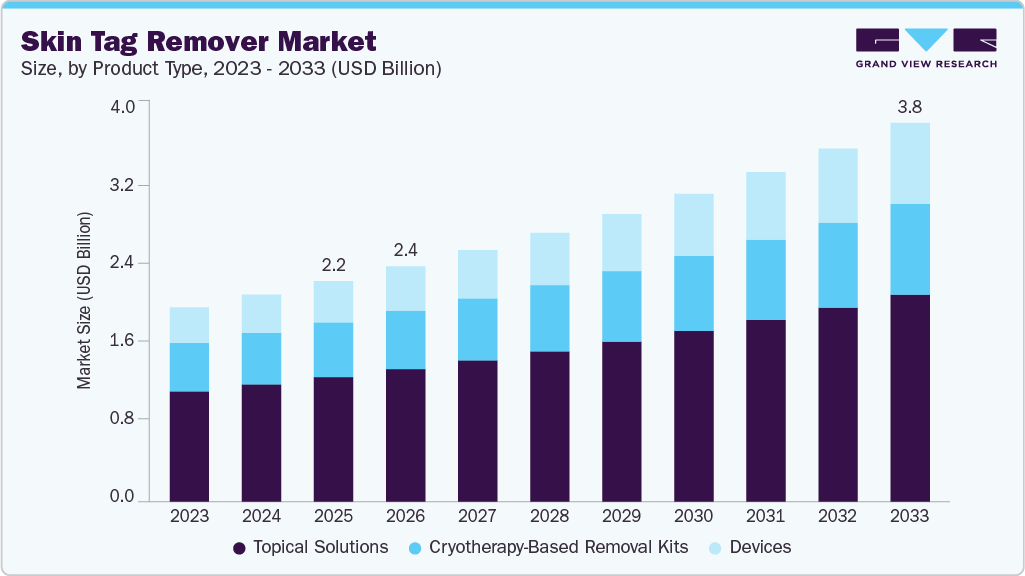 To learn more about this report, Download Free Sample Report
The rising incidence of skin tags across the general population is driving the skin tag remover market. Skin tags are observed across age groups, with their occurrence often linked to factors such as skin friction, hormonal changes, and natural aging. As these growths frequently appear in visible or high-friction areas such as the neck, underarms, eyelids, and groin, they create cosmetic concerns and occasional discomfort, prompting more individuals to seek removal. The growing visibility of such cases has led to heightened awareness and a stronger inclination toward timely treatment. Thus, there is a rising demand for convenient, non-invasive solutions that can be used without clinical assistance. Products such as topical applications and at-home removal devices are gaining traction due to their accessibility and ease of use, thereby driving increased adoption of skin tag removers.
-
According to a 2025 study by the National Library of Medicine, approximately 50% to 60% of adults develop at least one of these harmless growths during their lifetime, with the likelihood increasing after the fourth decade of life. Acrochordons were observed more frequently in individuals with obesity, diabetes mellitus, or metabolic syndrome, such as in those with a family history of skin tags. These growths affected men and women equally.
The rising prevalence of obesity is driving growth in the skin tag remover market, as excess body weight is closely associated with a higher incidence of skin tags. Increased skin folds and friction in areas such as the neck, underarms, and other body creases create conditions that favor the development of these benign growths. As obesity rates continue to rise globally, more individuals experience skin tags, leading to greater demand for effective removal solutions. This has encouraged the adoption of convenient, non-invasive options, such as topical treatments and at-home removal devices, as people seek accessible ways to manage these skin concerns. In addition, growing awareness of weight-related factors and skin conditions is prompting individuals to take corrective measures, further supporting demand for skin tag removal products and driving market expansion.
"The unprecedented global epidemic of overweight and obesity is a profound tragedy and a monumental societal failure,"- lead author Professor Emmanuela Gakidou from the Institute for Health Metrics and Evaluation (IHME), University of Washington, USA.
-
According to the data published by the WHO in 2025, in 2022, obesity and overweight conditions affected a significant share of the global population, with around 2.5 billion adults aged 18 and older classified as overweight, including approximately 890 million living with obesity. The burden was also notable among younger populations, with more than 390 million children and adolescents aged 5-19 years being overweight, including 160 million with obesity. In contrast, an additional 35 million children under 5 were overweight in 2024. Globally, this translates to roughly 1 in 8 people living with obesity, highlighting the widespread and growing nature of the issue.
Regional trends in adult obesity prevalence in 2026
Region
2026 Obesity Prevalence (%)
North America
41-43
Europe
27-30
South Asia
13-15
East & Southeast Asia
15-18
Middle East & North Africa
30-35
Sub-Saharan Africa
11-14
Latin America & Caribbean
30-34
Low- and Middle-Income Countries
22-25
Source: IJPS
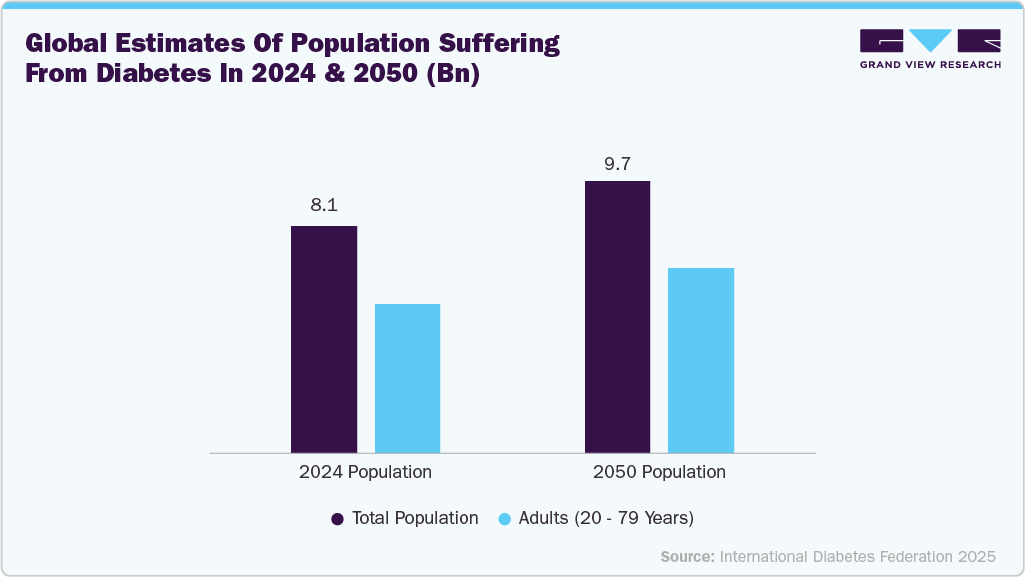
The rising prevalence of type 2 diabetes is driving growth in the skin tag remover market, as this condition is associated with a higher incidence of skin tags. Type 2 diabetes, often characterized by insulin resistance, can lead to metabolic and hormonal changes that influence skin cell growth, resulting in the formation of small, benign skin growths. These appear in areas prone to friction, such as the neck, underarms, eyelids, and other body folds. As the number of individuals diagnosed with type 2 diabetes continues to increase globally, more people are experiencing such skin-related concerns, creating a growing need for effective management solutions. This has led to higher demand for convenient, non-invasive treatment options, including topical products such as creams, gels, and patches, as well as device-based removal methods suitable for home use. In addition, increasing awareness of skin manifestations associated with type 2 diabetes encourages early intervention, further supporting the adoption of skin tag removal products and driving market growth.
“We have seen an alarming rise in diabetes over the past three decades, which reflects the increase in obesity, compounded by the impacts of the marketing of unhealthy food, a lack of physical activity, and economic hardship. To bring the global diabetes epidemic under control, countries must urgently take action. This starts with enacting policies that support healthy diets and physical activity, and, most importantly, health systems that provide prevention, early detection, and treatment.”- WHO Director-General Dr Tedrosactebreyesus.
 To learn more about this report, Download Free Sample Report
Market Concentration & Characteristics
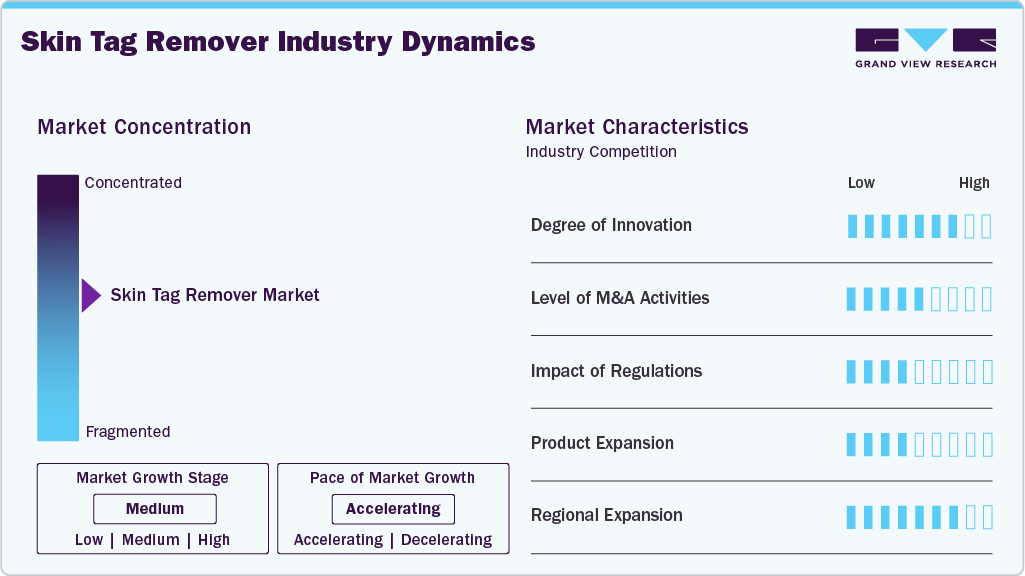
The skin tag remover market is characterized by a mix of established dermatology and skincare companies and many small and regional players, creating a highly competitive, fragmented environment. Leading companies focus on product innovation, brand positioning, and dermatologist-backed formulations to strengthen their market presence, while smaller players compete primarily on pricing and accessibility, particularly through online platforms. The market includes a wide range of offerings, from topical solutions such as creams, gels, and patches to device-based products such as cryotherapy tools, catering to both clinical and at-home use. Rapid growth in e-commerce has lowered entry barriers, enabling new entrants to reach a broader consumer base without extensive distribution networks. In addition, growing consumer preference for non-invasive and convenient solutions is driving continuous product innovation and differentiation in the market. However, challenges such as inconsistent product quality, increasing regulatory scrutiny, and the availability of unverified products continue to affect market competition, prompting a gradual shift toward safer and clinically validated offerings.
 To learn more about this report, Download Free Sample Report
The degree of innovation in the skin tag remover market is growing, with companies focusing on improving safety, ease of use, and treatment effectiveness. Innovation is primarily focused on developing advanced topical formulations that minimize irritation while delivering faster results, including user-friendly device-based solutions such as precision cryotherapy tools designed for safe at-home application. Manufacturers are also incorporating features such as ergonomic applicators, targeted delivery systems, and skin-friendly ingredients to enhance the consumer experience. In addition, there is a growing emphasis on dermatologist-tested and clinically supported products to build trust and differentiate offerings in a competitive landscape. Digital influence is also shaping innovation, with brands leveraging online platforms for product education and personalized skincare guidance.
-
In May 2025, CryoConcepts LP announced the launch of Skin Clinic, an FDA-cleared at-home solution for safe and effective skin tag removal. The product utilizes advanced cryogenic technology widely trusted in clinical settings for over three decades and adapts it into a user-friendly, at-home treatment. It features a precision cryogenic gas canister for targeted freezing, 12 hygienic foam applicators, and an advanced skin guard to protect surrounding skin and minimize discomfort during application.
Regulations play a significant role in shaping the skin tag remover market by influencing product development, approval, and commercialization processes. Regulatory authorities impose guidelines to ensure the safety, efficacy, and quality of both topical formulations and device-based solutions, particularly for products intended for at-home use. Thus, manufacturers are required to invest in clinical validation, proper labeling, and compliance with medical device or cosmetic standards, which can increase development timelines and costs. These regulations build consumer trust by reducing the presence of unsafe or unverified products in the market. Variations in regulatory frameworks across regions can create challenges for companies looking to expand globally, as they must adapt to different approval pathways and compliance requirements.
-
CryoFreeze Wart and Skin Tag Remover. The product received U.S. FDA 510(k) clearance as a Class II cryotherapy device for over-the-counter treatment of skin tags and warts, confirming safety and substantial equivalence to existing devices.
The level of mergers and acquisitions in the skin tag remover market is driven by broader consolidation in the skincare and medical aesthetics industries. Larger dermatology and personal care companies are exploring acquisitions of smaller brands and technology providers to strengthen their portfolios in non-invasive and at-home treatment solutions. While there are a few deals focused exclusively on skin tag remover products, many acquisitions are occurring in adjacent segments, such as dermatology devices, aesthetic skincare, and over-the-counter treatment solutions that include skin tag removal. This approach allows companies to expand product lines, enhance innovation capabilities, and improve market reach.
-
In February 2025, Crown Laboratories announced the successful completion of its acquisition of Revance Therapeutics, a biotechnology company focused on developing innovative aesthetic and therapeutic skincare and healthcare solutions.
The skin tag remover market is expanding globally due to increasing consumer awareness of non-invasive cosmetic treatments and a growing preference for at-home skincare solutions. Demand is rising in developed markets where consumers are highly inclined toward advanced dermatology devices, clinically tested cryotherapy solutions, and premium personal care products. Emerging markets are witnessing faster adoption supported by rising disposable incomes, urbanization, and improved access to skincare products through online retail channels. The expansion of e-commerce platforms has significantly improved product availability, enabling consumers to access a wide variety of topical treatments and device-based removal solutions without clinical visits. In addition, increased exposure to beauty trends and greater awareness of digital skincare are encouraging individuals to adopt early, convenient treatment options for minor skin concerns.
-
In November 2025, Hikma Pharmaceuticals PLC (Hikma), a multinational pharmaceutical company, signed an exclusive licensing agreement with DGI Group LLC, a US-based company specializing in professional and commercial medical equipment and supplies. The agreement granted Hikma exclusive rights to commercialize Claritag, an innovative OTC skin tag removal device, across the MENA region.
Product Insights
The topical solutions segment dominates the skin tag remover market in 2025, due to strong consumer preference for non-invasive, easy-to-use, and cost-effective treatment options. Products such as creams, gels, serums, and patches are widely accessible through both online and retail channels, making them highly convenient for at-home use. Their popularity is further supported by the rising trend of self-care and the preference for avoiding clinical procedures, which collectively strengthen topical solutions' position as the leading product type segment in the market.
The devices segment is the fastest-growing in the skin tag remover market from 2026 to 2033, driven by increasing demand for advanced, faster-acting removal technologies, such as cryotherapy kits, laser-based tools, and electrosurgical devices designed for home use. Continuous improvements in safety, portability, and effectiveness are encouraging consumers to adopt device-based solutions that deliver quicker, more precise results. In addition, growing awareness of clinically inspired at-home treatments and a shift toward technology-driven skincare solutions are accelerating this segment's growth.
Treatment Insights
The chemical-based removal (topical applications) segment dominates the market in 2025, due to its wide accessibility, affordability, and ease of self-administration. These treatments include acids, plant-based extracts, and other caustic or keratolytic agents formulated in creams, gels, and serums that gradually break down skin tags without requiring clinical intervention. Strong consumer preference for non-invasive and pain-free solutions, along with the growing popularity of over-the-counter skincare products, further supports the dominance of chemical-based topical applications in the market.
The laser therapy segment is the fastest-growing treatment type in the skin tag remover market, driven by increasing demand for precise, quick, and minimally invasive removal procedures. Laser-based treatments offer targeted destruction of skin tags with minimal damage to surrounding skin, reduced bleeding, and faster healing compared to conventional methods. Growing adoption in dermatology clinics, advances in laser technology, and rising consumer willingness to opt for advanced aesthetic procedures are key factors driving this segment's growth.
Distribution Channel Insights
The retail pharmacies segment dominates the market in 2025, due to strong consumer trust, easy product availability, and the ability to physically verify and purchase dermatology-related over-the-counter treatments. Retail pharmacies offer a wide range of topical solutions and OTC skin tag removal products, supported by pharmacist recommendations that enhance consumer confidence. Their established presence, especially in urban and semi-urban areas, along with immediate product access without waiting for delivery, continues to make retail pharmacies the preferred distribution channel for skin tag remover products.
The online platforms (e-commerce) segment is witnessing the fastest CAGR during the forecast period, driven by increasing internet penetration, rising smartphone usage, and growing preference for convenient home delivery. Consumers are attracted to online platforms due to wider product variety, competitive pricing, discounts, and discreet purchasing options for personal care products. In addition, detailed product descriptions, customer reviews, and influencer-driven awareness are further encouraging online purchases, accelerating the channel's global growth.
End Use Insights
The homecare settings segment dominates the end-use type segment in the skin tag remover market due to the strong consumer preference for self-treatment, convenience, and cost-effectiveness. Most topical solutions and over-the-counter devices are designed specifically for at-home application, allowing users to manage minor skin concerns without visiting clinics or hospitals. The increasing availability of easy-to-use products, along with growing awareness of personal skincare and privacy in treatment, further supports the dominance of homecare settings in this market.
 To learn more about this report, Download Free Sample Report
The beauty and aesthetic centers segment is the fastest-growing end-use type segment in the skin tag remover market, driven by rising demand for professional cosmetic procedures and advanced skin treatments. Consumers are opting for expert-supervised removal methods, such as laser therapy and electrosurgical procedures, to achieve faster, safer, and more precise results. Growth in disposable income, expansion of aesthetic clinics, and increasing focus on appearance enhancement are key factors accelerating the adoption of skin tag removal services in beauty and aesthetic centers.
Regional Insights
North America skin tag remover market is growing in the global market due to increasing consumer awareness of aesthetic skincare and a rising preference for convenient at-home treatment solutions. The region is characterized by early adoption of advanced dermatology technologies, particularly cryotherapy-based and device-driven products for skin tag removal. The availability of FDA-cleared over-the-counter devices and the strong penetration of e-commerce platforms have improved product accessibility, enabling consumers to purchase and use these solutions without clinical visits. In addition, a large population experiencing skin tags, along with growing interest in minimally invasive cosmetic care, is supporting market uptake. The presence of established manufacturers and the continuous introduction of improved, user-friendly devices are also contributing to market development.
 To learn more about this report, Download Free Sample Report
U.S. Skin Tag Remover Market Trends
skin tag remover market in the U.S. is growing due to the rising cases of obesity in the country are contributing to the growth of the skin tag remover market, as obesity is associated with a higher likelihood of developing skin tags. Increased body weight often leads to more skin folds and friction in areas such as the neck, underarms, and other body creases, which can promote the formation of benign skin growths. As obesity rates continue to rise, a larger proportion of the population is developing skin tags, driving greater demand for effective, convenient removal solutions. This has supported the adoption of non-invasive treatments, including topical products and at-home cryotherapy devices, as consumers seek easy, accessible ways to manage these skin concerns. In addition, growing awareness of the connection between excess body weight and skin conditions is encouraging individuals to seek timely treatment, further driving the use of skin tag removal products and supporting market expansion in the country.
-
According to the CDC in 2025, in 2024, obesity prevalence in the U.S. remained elevated across all states and territories, with every region reporting rates of 25% or higher (at least 1 in 4 adults). Regionally, the Midwest recorded the highest prevalence at 35.9%, followed closely by the South at 34.5%, while the Northeast and West reported 30.3% and 30.2%, respectively. At the state level, eight states, including the District of Columbia, reported obesity rates between 25% and 30%, while 22 states fell within the 30% to 35% range. A further 17 states, along with Puerto Rico and the U.S. Virgin Islands, recorded prevalence between 35% and 39%. In addition, two states, Mississippi and West Virginia, along with Guam, reported obesity prevalence of 40% or higher, highlighting significant variation in obesity burden across the country.
Europe Skin Tag Remover Market Trends
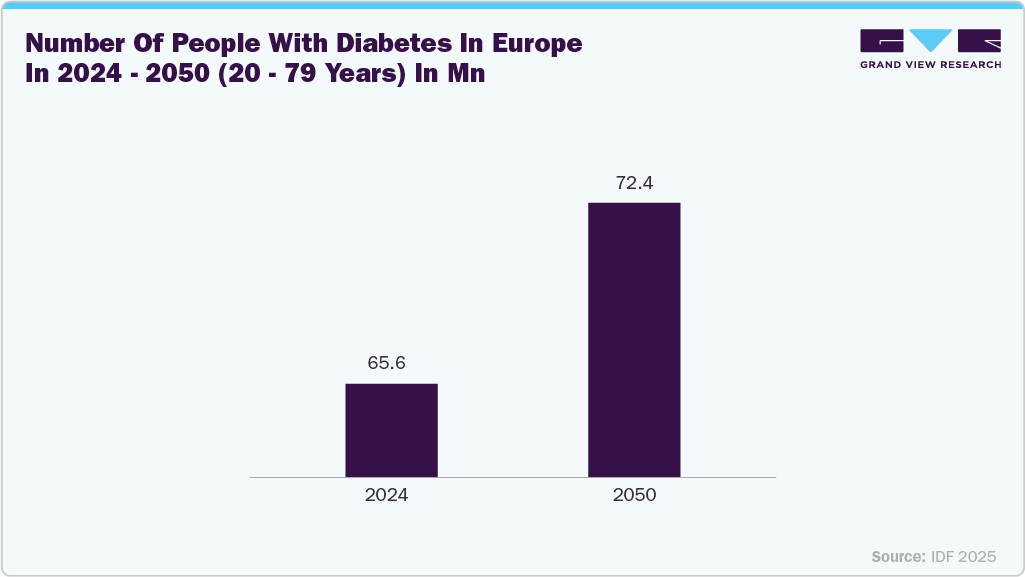
Europe is growing in the skin tag remover market due to increasing consumer awareness of aesthetic skincare and a rising preference for non-invasive and convenient treatment options. The region benefits from a strong shift toward at-home dermatological care, with consumers adopting topical solutions and cryotherapy devices to manage minor skin conditions such as skin tags. The rising prevalence of diabetes is also contributing to market growth, as this condition is associated with a higher risk of skin tag formation, thereby further increasing demand for effective removal solutions. Demand is further supported by higher spending on personal care, growing acceptance of cosmetic procedures, and a strong inclination toward clinically tested, safer products that meet strict regulatory standards. The expansion of e-commerce and cross-border online retail platforms has also improved product accessibility, allowing consumers to easily explore a wider range of treatment options.
 To learn more about this report, Download Free Sample Report
Skin tag remover market in the UK is expanding due to the increased number of aesthetic clinics in the country,as these clinics offer advanced, non-invasive skin treatment solutions. With rising cosmetic awareness and demand for minimally invasive procedures, more consumers are turning to aesthetic clinics for safe, professional removal of minor skin conditions, such as skin tags. The increasing availability of trained practitioners and advanced technologies, such as cryotherapy devices and precision removal tools, has improved treatment accessibility and outcomes, further encouraging patient visits. As the number of aesthetic clinics continues to rise, service coverage expands across urban and semi-urban areas, making treatments more widely available. This growth is also supported by increasing consumer preference for quick procedures with minimal downtime, which aligns with clinic-based offerings.
-
According to the data published by the National Library of Medicine in 2026, in 2025, non-medical aestheticians accounted for 24.8% of practitioners, doubling from 12% over the period.
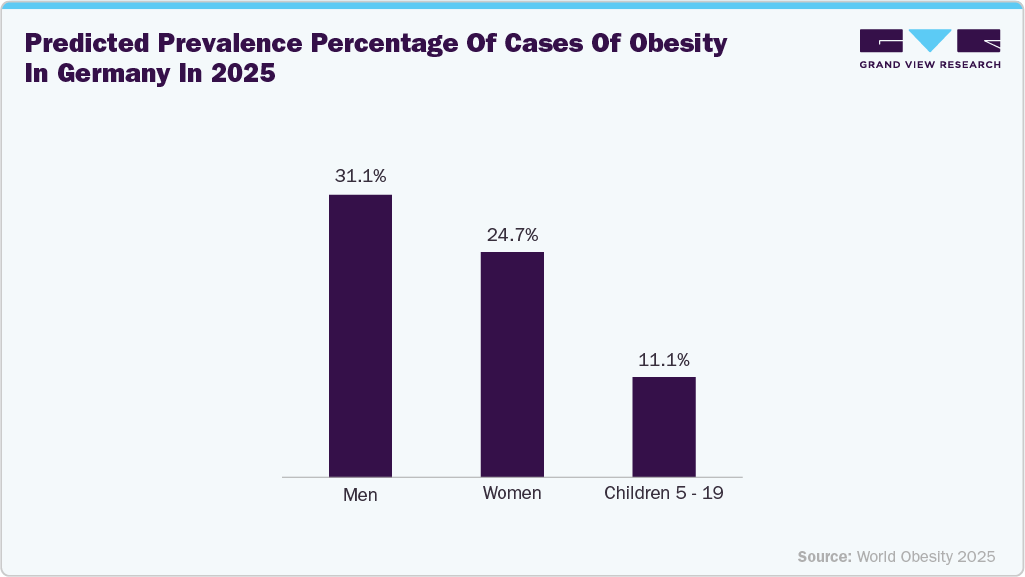
Skin tag remover market in Germany is growing due tothe rising number of obesity cases which are associated with a higher prevalence of skin tags. Increased body weight often leads to greater skin friction and the formation of folds in areas such as the neck, underarms, and other body creases, which creates favorable conditions for skin tag development. As obesity rates continue to increase, a larger segment of the population experiences these benign skin growths, resulting in greater demand for effective and convenient removal solutions. This has encouraged the use of non-invasive treatment options, including topical products and at-home cryotherapy devices, as individuals seek easy and accessible ways to manage such conditions without clinical procedures.
 To learn more about this report, Download Free Sample Report
Asia Pacific Skin Tag Remover Market Trends
Asia Pacific is growing in the skin tag remover market due to rising awareness of personal grooming, increasing disposable incomes, and expanding access to skincare products through digital and e-commerce platforms. The region is witnessing a shift toward non-invasive, convenient treatment options, with consumers adopting topical solutions and at-home removal devices to manage minor skin conditions such as skin tags. Rapid urbanization and changing lifestyles are also contributing to higher demand for aesthetic and self-care products. In addition, improving healthcare awareness and greater exposure to global beauty trends through social media are encouraging individuals to address skin concerns earlier. The growing presence of international skincare brands and the expansion of online retail channels are further enhancing product availability and affordability.
Skin tag remover market in India is expandingsteadily, with rising diabetes prevalence contributing to a higher incidence of skin tags and, in turn, increasing demand for removal solutions. Increasing blood sugar levels and metabolic changes in individuals with diabetes can lead to the formation of small, benign skin growths, particularly in areas such as the neck, underarms, and skin folds where friction is common. As the diabetic population continues to grow in the country, more individuals are experiencing skin-related concerns, driving greater demand for effective, convenient removal solutions. This has supported the adoption of non-invasive options, including topical treatments and at-home cryotherapy devices, as consumers prefer accessible solutions that do not require clinical visits.
-
According to the International Diabetes Federation (IDF) Diabetes Atlas 11th Edition (April 2025), around 89.8 million adults in India aged 20-79 years were living with diabetes in 2024, representing about 10.5% of the adult population and roughly one in seven adults globally, making India the country with the second-highest number of diabetes cases after China.
Japan skin tag remover market is growing due to increasing awareness of aesthetic skincare and a strong preference for safe, non-invasive treatment options. A key factor supporting market expansion is the aging population, as older individuals are more prone to developing skin tags due to age-related skin changes, reduced skin elasticity, and long-term friction. This has led to increased demand for convenient, effective removal solutions that can be used without extensive clinical procedures. Consumers in the country are adopting topical treatments and advanced cryotherapy devices that deliver quick, minimally invasive results. In addition, strong healthcare awareness, high spending on personal care, and the availability of technologically advanced dermatology solutions are further supporting market growth. In 2025, according to the World Economic Forum (WEF), Japan's Ministry of Internal Affairs and Communications reported that, as of 2024, the country had a record 36.25 million people aged 65 and over, accounting for 29.3% of the total population. This share is projected to rise to 34.8% in 2040 and 36.3% in 2045. Japan's proportion of elderly residents is already far higher than second-ranked Martinique (25.3%), making it the world's most aged society.
Latin America Skin Tag Remover Market Trends
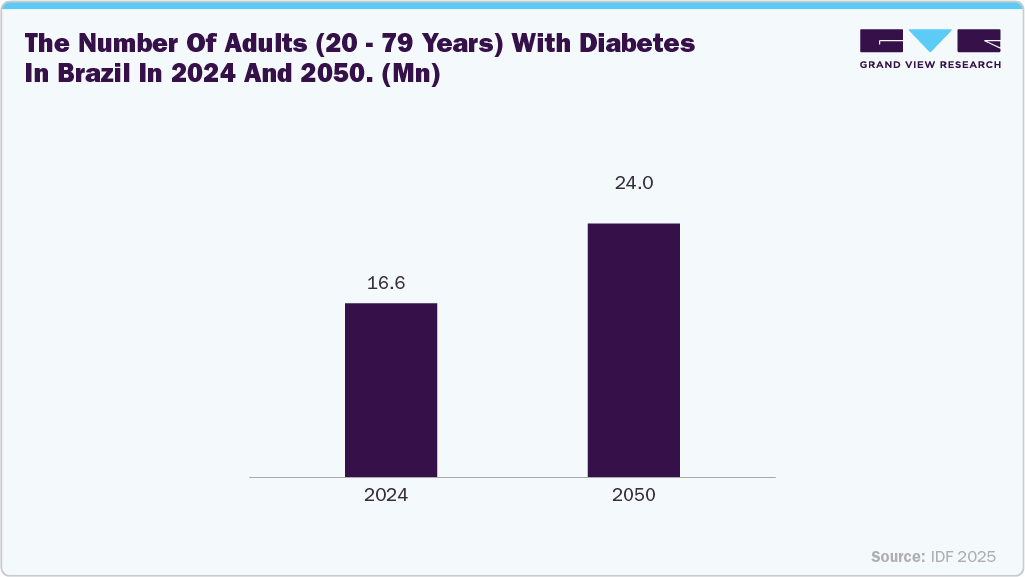
In Latin America, rising diabetes cases are driving growth in the skin tag remover market, as the condition increases the prevalence of skin tags. Elevated blood sugar levels and metabolic changes associated with diabetes can lead to the development of small, benign skin growths, particularly in areas such as the neck, underarms, and skin folds where friction is more common. As the diabetic population continues to grow, more people are developing skin tags, driving a higher demand for effective, convenient removal solutions. This has encouraged the adoption of non-invasive options, including topical treatments and at-home cryotherapy devices, as consumers prefer accessible solutions that do not require clinical procedures. In addition, increasing awareness of the link between diabetes and skin conditions is prompting earlier management, further driving the use of skin tag removal products and supporting market expansion.
 To learn more about this report, Download Free Sample Report
MEA Skin Tag Remover Market Trends
The Middle East & Africa region is growing in the skin tag remover market due to increasing awareness of aesthetic skincare, rising disposable incomes, and improving access to dermatology products and services. A key factor supporting this growth is the rising number of diabetes cases, as the disease contributes to the development of skin tags by inducing metabolic and hormonal changes that affect skin cell growth. In individuals with diabetes, particularly those with insulin resistance, elevated insulin levels can stimulate the proliferation of skin cells. In contrast, increased skin friction in body folds, such as the neck, underarms, and groin, further promotes the formation of these benign growths. As the diabetic population continues to grow across the region, more individuals are developing skin tags, driving a higher demand for convenient, non-invasive removal solutions. This has driven the adoption of topical treatments and at-home cryotherapy devices, as consumers seek easy and accessible ways to manage such conditions without clinical intervention.
- According to the data published by the IDF in 2025, the MENA Region recorded the highest regional diabetes prevalence at 17.6%. It was projected to experience the second-highest increase of 92% in the number of people with diabetes, reaching an estimated 163 million by 2050. The region also accounted for around 1.4 million people living with type 1 diabetes. In addition, it had the highest proportion of diabetes-related deaths among people of working age (under 60 years), representing approximately 21.6% of such fatalities.
Key Skin Tag Remover Companies:
The following key companies have been profiled for this study on the skin tag remover market.
- CryoConcepts LP.
- DermaTend LLC
- SkinProv Inc.
- Naturasil
- Scholl’s Wellness Co. (Yellow Wood Partners)
- Forces of Nature
- Healing Natural Oils
- LORSHEL
- Cryotag (Appia Healthcare)
- Prestige Consumer Healthcare Inc.
- ULENSY
- Alocane(Quest Products, LLC)
- Amada Pure
- DEKA M.E.L.A. S.r.l.(El.En. Group)
- Alma Lasers (Fosun Pharma)
- CONMED Corporation
- Symmetry Surgical (Aspen Surgical)
Recent Developments
-
May 2025, TagFree Skin Tag Remover solutions in 2025, presented as a fast-acting, at-home serum for skin tags and moles that aimed to deliver visible results without surgery or harsh chemicals. The review examined formulation science, common consumer concerns, application guidance, and safety considerations, and compared them with traditional removal methods. It highlighted that the product used plant-based ingredients such as Sanguinaria Canadensis and Zincum Muriaticum, aligning with clean beauty and skinimalism trends.
-
April 2025, Natura Pro introduced a plant-based skin tag and mole corrector serum, positioned as a clean beauty product offering a safe, non-invasive at-home solution for reducing skin imperfections and improving skin appearance.
-
January 2025, Derma Clear announced a new topical serum designed to remove skin tags, moles, and warts in a safe and effective manner. The formulation utilized the natural properties of Sanguinaria Canadensis and Zincum Muriaticum, offering a non-invasive alternative for achieving clearer, blemish-free skin.
Skin Tag Remover Market Report Scope
Report Attribute
Details
Market size in 2025
USD 2.2 billion
Estimated market size in 2026
USD 2.4 billion
Projected market size by 2033
USD 3.8 billion
Growth rate
CAGR of 7.0% from 2026 to 2033
Actual data
2021 - 2025
Forecast period
2026 - 2033
Quantitative units
Revenue in USD million/billion and CAGR from 2026 to 2033
Report coverage
Revenue forecast, company ranking, competitive landscape, growth factors, and trends
Segments covered
Product type, treatment, end use, distribution channel, and region
Regional scope
North America; Europe; Asia Pacific; Latin America; MEA
Country scope
U.S.; Canada; Mexico; UK; Germany; France; Italy; Spain; Denmark; Sweden; Norway; Japan; China; India; Australia; Thailand; South Korea; Brazil; Argentina; South Africa; Saudi Arabia; UAE; Kuwait.
Key companies profiled
CryoConcepts LP; DermaTend LLC; SkinProv Inc.; Naturasil; Scholl’s Wellness Co. (Yellow Wood Partners); Forces of Nature; Healing Natural Oils; LORSHEL; Cryotag (Appia Healthcare); Prestige Consumer Healthcare Inc.; ULENSY; Alocane (Quest Products, LLC); Amada Pure; DEKA M.E.L.A. S.r.l. (El.En. Group); Alma Lasers (Fosun Pharma); CONMED Corporation; Symmetry Surgical (Aspen Surgical)
Customization scope
Free report customization (equivalent to up to 8 analysts working days) with purchase. Addition or alteration to country, regional & segment scope.
Pricing and purchase options
Avail customized purchase options to meet your exact research needs. Explore purchase options
Global Skin Tag Remover Market Report Segmentation
This report forecasts country-level revenue growth and analyzes the latest industry trends and opportunities across sub-segments from 2021 to 2033. For this study, Grand View Research has segmented the skin tag remover market report based on product type, treatment, distribution channel, end use, and region:
-
Product Type Outlook (Revenue, USD Million, 2021 - 2033)
-
Topical Solutions
-
Creams
-
Patches
-
Gel
-
Serum
-
-
Cryotherapy-Based Removal Kits
-
Devices
-
Electrosurgical
-
Laser
-
-
-
Treatment Outlook (Revenue, USD Million, 2021 - 2033)
-
Chemical-based Removal (topical applications)
-
Cryotherapy
-
Laser therapy
-
Electrosurgery/Cauterization
-
Surgical Excision
-
-
Distribution Channel Outlook (Revenue, USD Million, 2021 - 2033)
-
Retail Pharmacies
-
Online Platforms (e-commerce)
-
Dermatology Clinics and Hospitals
-
Specialty Beauty Stores
-
-
End Use Outlook (Revenue, USD Million, 2021 - 2033)
-
Dermatology Clinics
-
Hospitals
-
Homecare Settings
-
Beauty and Aesthetic Centers
-
-
Region Outlook (Revenue, USD Million, 2021 - 2033)
-
North America
-
U.S.
-
Canada
-
Mexico
-
-
Europe
-
UK
-
Germany
-
France
-
Italy
-
Spain
-
Denmark
-
Sweden
-
Norway
-
-
Asia Pacific
-
Japan
-
China
-
India
-
Australia
-
South Korea
-
Thailand
-
-
Latin America
-
Brazil
-
Argentina
-
-
Middle East & Africa
-
South Africa
-
Saudi Arabia
-
UAE
-
Kuwait
-
-
Frequently Asked Questions About This Report
The topical solutions segment held the largest revenue share in 2025, while the devices segment is the fastest-growing.
The chemical-based removal (topical applications) segment held the largest revenue share in 2025, while the laser therapy segment is the fastest-growing.
The retail pharmacies segment held the largest revenue share in 2025, while the online platforms (e-commerce) segment is the fastest-growing.
Homecare settings segment held the largest share in 2025, while the beauty and aesthetic centers segment is the fastest-growing.
Key factors that are driving the market growth include the increasing awareness of personal grooming and skin aesthetics, such as a rising preference for non-invasive, convenient treatment options. Consumers are opting for solutions such as creams, gels, patches, and cryotherapy-based devices, particularly for at-home use, as they offer ease of application and cost-effectiveness.
The global skin tag remover market size was valued at USD 2.2 billion in 2025 and is estimated at USD 2.4 billion for 2026.
The global skin tag remover market is expected to grow at a CAGR of 7.0% from 2026 to 2033, reaching USD 3.8 billion by 2033.
North America dominated with a 39.4% revenue share in 2025.
Key players include CryoConcepts LP; DermaTend LLC; SkinProv Inc.; Naturasil; Scholl’s Wellness Co. (Yellow Wood Partners); Forces of Nature; Healing Natural Oils; LORSHEL; Cryotag (Appia Healthcare); Prestige Consumer Healthcare Inc.; ULENSY; Alocane (Quest Products, LLC); Amada Pure; DEKA M.E.L.A. S.r.l. (El.En. Group); Alma Lasers (Fosun Pharma); CONMED Corporation; Symmetry Surgical (Aspen Surgical)
About the Author(s)
Medical Devices Research Team
Healthcare · Medical DevicesThis report was authored by the medical devices research team at Grand View Research - comprising two research analysts, one senior research analyst, and one industry expert - with specialized expertise in the medical devices segment of the healthcare industry. All findings are based on proprietary healthcare databases, executive interviews, and regulatory analysis, subject to internal peer review prior to publication.
Last Updated:
Speak to Analyst

Customize this report to your needs - add regions, segments, or data points, with 20% free customization.
Or view our licence options:


ISO 9001:2015 & 27001:2022 Certified
We are GDPR and CCPA compliant! Your transaction & personal information is safe and secure. For more details, please read our privacy policy.


