
- Home
- »
- Animal Health
- »
-
Small Animal Endoscopes & Endoscopic Instruments Market Report, 2033GVR Report cover
![Small Animal Endoscopes And Endoscopic Instruments Market (2026 - 2033)Report]()
Small Animal Endoscopes And Endoscopic Instruments Market (2026 - 2033)
Size, Share & Trends Analysis Report By Product (Equipment, Instruments & Accessories, Consumables), By Type, By Animal, By Procedure, By Application, By End-use, By Region, And Segment Forecasts
Market Size, 2025
$396.8MMarket Estimate, 2026
$418.1MMarket Forecast, 2033
$662.2MCAGR, 2026–2033
6.8%Small Animal Endoscopes & Endoscopic Instruments Market Summary
The global small animal endoscopes and endoscopic instruments market size was valued at USD 396.8 million in 2025 and is projected to grow from USD 418.1 million in 2026 to USD 662.2 million by 2033, at a CAGR of 6.8% from 2026 to 2033. North America dominated the market, accounting for the largest revenue share of 35.4% in 2025. The key factors driving market growth are the increasing adoption of minimally invasive diagnostic and therapeutic procedures, the rising prevalence of gastrointestinal and respiratory disorders in small animals, advancements in high-definition, portable, and disposable endoscopy systems, and the expansion of veterinary specialty and referral care infrastructure.

Key Market Trends & Insights
- By product: The instruments & accessories segment led the market with the largest revenue share of 47.8% in 2025.
- By type: The reusable segment led the market with the largest revenue share of 65.5% in 2025.
- By animal: The dogs segment led the market with the largest revenue share of 69.3% in 2025.
- By procedure: The gastrointestinal procedures segment accounted for the largest share of 52.9% in 2025.
- By application: The diagnostic segment dominated the market with a share of 61.2% in 2025.
Regional Highlights
- Largest regional market: North America (35.4% revenue share, 2025)
- Fastest-growing regional market: Asia Pacific (highest CAGR, 2026-2033)
- By country: The U.S. held the largest market share in 2025.
Market Size & Forecasts
- Market size in 2025: USD 396.8 Million
- Estimated Market Size in 2026: USD 418.1 Million
- Projected market size by 2033: USD 662.2 Million
- CAGR (2026-2033): 6.8%

Market Dynamics
The small animal endoscopes & endoscopic instruments market is expanding with increasing utilization of minimally invasive approaches for gastrointestinal, respiratory, urogenital, and ENT conditions in dogs and cats. The growth of this market is supported by rising case volumes requiring foreign body removal, biopsy, lesion assessment, and therapeutic intervention. Besides this, the greater availability of specialty veterinary hospitals and referral centers is improving access to advanced endoscopic procedures. In addition, growing demand for shorter recovery periods and reduced procedural trauma is encouraging veterinarians to adopt endoscopic techniques over conventional open procedures in suitable cases. In addition, rising pet healthcare expenditure is improving the affordability of specialized diagnostic and interventional services. However, high capital expenditure on endoscopy towers, periodic maintenance, sterilization requirements, and the limited availability of trained veterinary endoscopists can limit adoption in smaller practices.
The market is also witnessing growth due to technological developments toward high-definition and 4K visualization, improved image enhancement, compact camera systems, integrated light sources, and advanced digital documentation capabilities. Some of the manufacturers are also developing smaller-diameter scopes and specialized instruments suited to feline patients and other small animals with narrow anatomical structures. Furthermore, integration of imaging systems with digital storage, wireless connectivity, and clinical documentation platforms is improving workflow management and procedure records across veterinary facilities.
The market is driven by increasing adoption of advanced endoscopic procedures for small animal endoscopes and endoscopic instruments as veterinarians use minimally invasive visualization for complex gastrointestinal, respiratory, urogenital, and ENT conditions. For instance, in April 2026, in India, otoendoscopy was performed in a dog, reporting the first such procedure, to diagnose chronic recurrent otitis that had not responded to conventional antibiotic therapy. This procedure enabled detailed examination of the eardrum and middle ear and identification of primary secretory otitis media. Such clinical applications are increasing awareness of advanced endoscopic diagnosis beyond conventional imaging and swab-based assessments.
In addition, high-resolution visualization can support identification of underlying anatomical abnormalities, foreign bodies, lesions, and tissue changes while facilitating minimally invasive intervention. Furthermore, wider use of specialized endoscopy in referral hospitals and specialty clinics is expanding the addressable procedure base and supporting demand for flexible scopes, rigid scopes, imaging systems, and procedure-specific instruments.
Limited availability of veterinarians with specialized endoscopy training can constrain the adoption of advanced endoscopic procedures in small animal practices. These techniques require knowledge of equipment handling, anatomical visualization, biopsy techniques, foreign body retrieval, and procedure-specific intervention. Moreover, interpretation of endoscopic findings often requires experience to distinguish inflammatory changes, lesions, structural abnormalities, and other pathological conditions.
In addition, training opportunities are concentrated in specialty hospitals, referral centers, and veterinary academic institutions, creating disparities in access to skilled professionals across regions. Besides this, smaller clinics may therefore refer complex cases to specialized facilities, reducing routine utilization of endoscopic systems at the primary-care level. In addition, proficiency requires continued hands-on training because newer visualization platforms, flexible scopes, and interventional instruments introduce additional procedural capabilities. The limited availability of structured veterinary endoscopy training programs and experienced specialists can extend the learning curve for new users. Similarly, inadequate clinical expertise may delay investment in advanced endoscopic systems, reduce procedure volumes, and restrict penetration among general veterinary practices, particularly in emerging markets where specialist networks and training infrastructure remain comparatively limited.
The growing demand for portable, compact veterinary endoscopy systems presents an opportunity for manufacturers to expand beyond conventional fixed video tower configurations. Besides this, traditional systems often require dedicated procedure rooms, extensive infrastructure, and substantial installation requirements, which can limit adoption among smaller veterinary clinics, mobile practices, and field-based large-animal veterinarians. In addition, portable systems with integrated cameras, light sources, monitors, and recording capabilities can support endoscopic examinations across multiple locations while reducing operational complexity.
The increasing number of insured companion animals in North America is also expanding access to advanced veterinary diagnostics, creating a larger potential user base for portable endoscopy technologies. Manufacturers can capitalize on this opportunity by developing lightweight systems, smaller-diameter scopes, wireless connectivity, enhanced image resolution, and durable components suitable for frequent transport. Furthermore, integrated data storage and remote consultation capabilities can support workflow efficiency in practices operating outside conventional hospital environments. In addition, companies offering portable systems with strong clinical performance, regulatory compliance, technical support, and flexible purchasing models can address underserved veterinary settings and broaden utilization of endoscopy across primary-care clinics, specialty practices, mobile services, and field-based veterinary operations.
Market Concentration & Characteristics
The small animal endoscopes & endoscopic instruments industry is characterized by increasing demand for minimally invasive diagnosis and intervention, product innovation, and the expansion of specialty veterinary services. The competition includes established medical-device manufacturers and specialized veterinary endoscopy companies. Market adoption varies with equipment refinement, procedure volume, veterinary expertise, and facility capabilities, with portable systems creating opportunities for smaller clinics and mobile practices.
The industry demonstrates a high degree of innovation through the development of compact endoscopes, high-definition visualization, advanced image enhancement, smaller-diameter scopes, and integrated imaging platforms. Manufacturers are introducing portable and wireless systems that improve usability across clinics and mobile settings. For instance, in March 2026, MediCapture introduced VUEES Mobility, a portable veterinary endoscopy system integrating imaging, recording, and Vision AI capabilities, expanding endoscopic accessibility across rural, mobile, and exotic animal care. In addition, instrument innovation is also expanding capabilities for biopsy, foreign body retrieval, stone extraction, and minimally invasive interventions. Integration with digital recording, data management, and remote consultation platforms is adding functionality and improving procedural workflows.
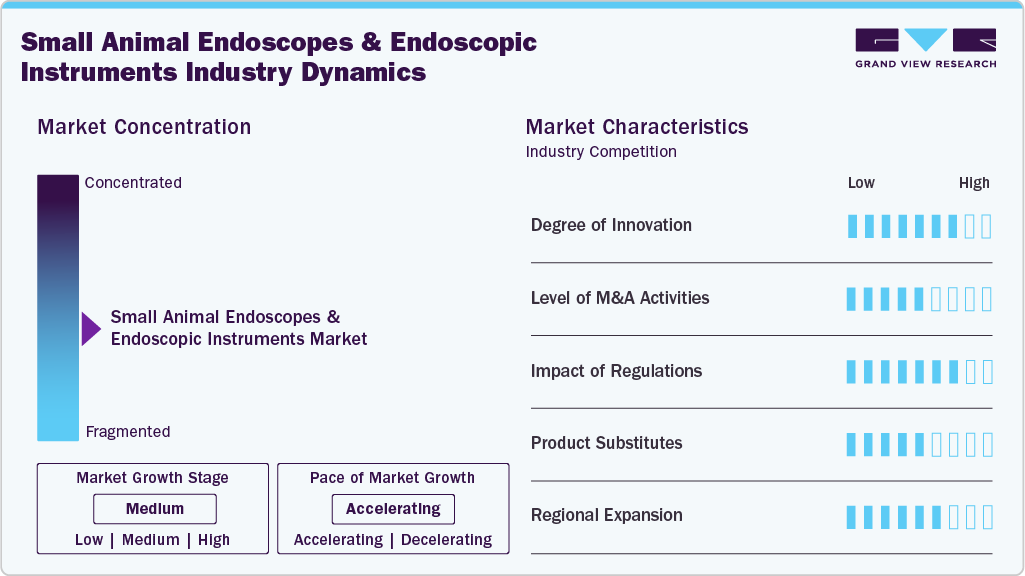
M&A activity remains moderate as established medical-device companies seek to expand veterinary portfolios, enter specialized endoscopy segments, and access proprietary imaging technologies. In addition, larger companies can gain distribution capabilities, technical expertise, and established relationships with veterinary customers through acquisitions or strategic investments. Smaller veterinary endoscopy companies may become acquisition targets as demand for portable systems and specialized instruments increases.
Regulations have a moderate to high impact because endoscopic systems and instruments must meet requirements related to device safety, electrical performance, materials, sterilization, reprocessing, labeling, and manufacturing quality. Besides this, reusable systems face additional considerations related to cleaning, disinfection, and sterilization validation. Thus, increasing regulatory attention toward device quality and infection control encourages manufacturers to improve product design and documentation.
Product substitutes include conventional radiography, ultrasonography, computed tomography, magnetic resonance imaging, fluoroscopy, and open surgical approaches, depending on the clinical indication. These technologies can reduce the need for endoscopy when direct visualization or tissue access is not required. However, endoscopy provides advantages for mucosal visualization, biopsy, foreign body retrieval, and selected minimally invasive interventions that imaging alone cannot perform. Thus, substitution varies by procedure, anatomical site, clinical objective, equipment availability, and veterinarian expertise, creating differentiated demand across diagnostic and interventional applications.
Regional expansion is supported by growing veterinary specialty infrastructure, increasing companion animal healthcare expenditure, and broader availability of minimally invasive procedures. North America and Europe offer mature demand through referral hospitals and established veterinary endoscopy services, while Asia Pacific presents opportunities through expanding specialty clinics and medical-device manufacturing capabilities. Latin America and Middle East and Africa remain developing industries, with adoption concentrated in urban veterinary centers.
Analyst Perspective
The small animal endoscopes and endoscopic instruments market is witnessing steady growth, driven by rising pet ownership, increasing incidence of companion animal diseases, and growing demand for minimally invasive diagnostic and surgical procedures in veterinary care. In addition, advancements in imaging technology, coupled with the expansion of veterinary specialty clinics and rising pet healthcare expenditure, are further propelling adoption. North America and Europe lead due to established veterinary infrastructure, while Asia-Pacific shows lucrative growth potential from rising pet humanization trends. Some of the key players continue investing in product innovation, portability, and image resolution to strengthen their competitive positioning.
Product Insights
The instruments and accessories accounted for the largest segment with a share of 47.8% in 2025, owing to their broad utilization across diagnostic and interventional endoscopic procedures. This segment comprises biopsy forceps, graspers, retrieval devices, baskets, snares, and cytology brushes. These are required for tissue sampling, foreign body extraction, lesion management, and specimen collection. In addition, growing adoption of advanced endoscopy across companion animal practices is driving demand for durable, ergonomic, and single-use accessories that reduce cross-contamination and support increasingly specialized veterinary interventions. For instance, companies such as KARL STORZ, VetVu (Swiss Precision Products, Inc.), Dr. Fritz Endoscopes GmbH, Cook Medical, and Eickemeyer continue to expand their portfolios with specialized biopsy forceps, retrieval baskets, cytology brushes, grasping forceps, snares, catheters, and cleaning accessories.
The consumables segment is expected to be the fastest-growing segment over the forecast period, as veterinary practices adopt single-use accessories in large numbers to improve procedural safety, infection control, and workflow efficiency. Some of the products, such as single-use accessories, procedure kits, protective components, cleaning and maintenance products, reduce cross-contamination risks while supporting minimally invasive diagnostic and therapeutic procedures. In addition, rising procedural volumes and greater emphasis on standardized patient care continue to drive recurring demand for high-quality endoscopic consumables. For instance, MDS Vet offers a Laryngoscope Kit with Handle and Four Blades, designed to facilitate reliable airway visualization during veterinary intubation and respiratory examinations through interchangeable blades, ergonomic handling, and dependable illumination, supporting efficient clinical workflows and improved patient care.
Type Insights
The reusable segment accounted for the largest share of 65.5% in 2025, because of its durability, superior long-term value, and suitability for high procedural volumes. Although they require higher upfront investment, reusable systems are designed for repeated clinical use when properly maintained. According to the Journal of Veterinary Medicine, reusable endoscopes must be thoroughly cleaned and correctly disinfected after every procedure, with strict adherence to established reprocessing guidelines to minimize infection risks and maintain clinical performance. In addition, despite the need for regular reprocessing, reusable endoscopes remain the preferred choice for many specialty and referral hospitals due to their proven imaging quality and broad procedural versatility.
The disposable segment is expected to demonstrate notable growth over the forecast period, as veterinary clinics prioritize infection prevention, operational efficiency, and predictable procedure costs. According to a report by BMV ANIMAL TECHNOLOGY CO., LTD, single-use systems eliminate the need for cleaning, sterilization, and repair, ensuring immediate device availability for diagnostic and therapeutic procedures. This is particularly beneficial for high-volume hospitals and emergency practices seeking faster patient turnaround and standardized clinical workflows. Furthermore, the advantages of disposable endoscopes make them more accessible for small and medium-sized veterinary clinics while reducing administrative and operational burdens. For instance, in February 2026, HUGER Medical introduced the 150 Series Veterinary Endoscope, supporting reusable and disposable scopes with backward compatibility and high image quality, advancing flexibility and diagnostic efficiency in veterinary endoscopy
Animal Insights
The dogs segment accounted for the largest share of 69.3% in 2025, driven by high ownership and increasing demand for advanced veterinary care. According to a Forbes article from July 2026, approximately 66% of U.S. households (86.9 million homes) own a pet, with 65.1 million households owning dogs, and 63% of higher-income households owning dogs. The large canine population and higher spending on companion animal healthcare continue to fuel demand for endoscopic diagnostics and minimally invasive procedures. In addition, gastrointestinal disorders are among the most frequent conditions requiring endoscopic evaluation in dogs. According to Healthy Paws, gastrointestinal (GI) diseases account for more than 200,000 veterinary visits annually, making them among the most common health issues in companion animals.
The cats segment is expected to experience the fastest growth over the forecast period, as cat owners also consistently spend on veterinary care, supporting the adoption of advanced diagnostic technologies such as flexible endoscopy for gastrointestinal, respiratory, and urinary disorders. This large and engaged ownership base continues to strengthen market demand. In addition, feline patients frequently require minimally invasive diagnostic procedures because gastrointestinal diseases, chronic vomiting, inflammatory bowel disease, foreign body ingestion, and nasopharyngeal disorders often require direct visualization and biopsy for accurate diagnosis. According to the March 2026 issue of the American Journal of Veterinary Research (AJVR), advances in feline endoscopic techniques and instrumentation continue to improve diagnostic precision while reducing procedural trauma, encouraging wider clinical adoption across specialty and referral veterinary hospitals.
Procedure Insights
The gastrointestinal procedures segment accounted for the largest segment with a share of 52.9% in 2025, due to increasing chronic gastrointestinal disorders, growing adoption of technologies, and rising awareness of gastrointestinal endoscopy in veterinary medicine. In addition, clinical guidelines recommend gastrointestinal endoscopy with biopsy for dogs that fail multiple dietary trials before treatment escalation, supporting earlier diagnosis of inflammatory bowel disease (IBD), intestinal lymphoma, and other chronic enteropathies while reducing unnecessary empirical therapies. Furthermore, clinical research strengthens the importance of gastrointestinal endoscopy in veterinary medicine. According to a study, gastroduodenoscopy, colonoscopy, and endoscopically guided biopsy remain the gold standard for confirming diffuse canine IBD by accurately identifying mucosal inflammation and enabling histopathological assessment.
The respiratory procedures segment is expected to be the fastest CAGR over the forecast period. This segment represents an important application segment in the market, attributed to the increasing incidence of infectious respiratory diseases and airway disorders in small animals. According to a U.S. survey of July 2025, it reported that dogs under five years were the most affected by respiratory illness, with severe clinical signs such as lethargy, fever, dyspnea, and sneezing significantly increasing mortality risk. These trends are driving demand for bronchoscopy to enable rapid airway evaluation, diagnosis, and treatment.
Application Insights
The diagnostic segment dominated with a share of 61.2% in 2025, as veterinary clinics prioritize minimally invasive techniques for early disease detection. Flexible video endoscopes are routinely used to diagnose gastrointestinal disorders, respiratory diseases, urinary tract abnormalities, chronic vomiting, foreign body ingestion, nasal diseases, and esophageal conditions in dogs and cats. In addition, high-definition imaging, improved maneuverability, and biopsy capabilities enable veterinarians to obtain accurate diagnoses while reducing patient trauma, hospitalization time, and recovery periods compared with exploratory surgery. In addition, growing awareness of gastrointestinal cancers and other chronic diseases is driving demand for diagnostic endoscopy.
On the other side, the surgical/interventional segment is projected to depict the fastest CAGR over the forecast period. This segment is growing within the market as veterinary hospitals adopt minimally invasive procedures in large numbers to reduce surgical trauma and improve patient recovery. Some of the techniques, such as Laparoscopy, thoracoscopy, cystoscopy, arthroscopy, and interventional gastrointestinal procedures, are replacing many traditional open surgeries. These techniques reduce postoperative pain, shorten hospital stays, minimize complications, and improve clinical outcomes, thereby encouraging greater investment in advanced endoscopic platforms.
End-use Insights
The specialty and referral centers segment dominated the market with a significant share of 35.6% in 2025, and is projected to be the fastest-growing segment over the forecast period, due to increasing case complexity and growing demand for advanced diagnostics, which accelerate referrals from primary care veterinarians. In addition, rising numbers of specialty claims in fields such as neurology, cardiology, oncology, and internal medicine reflect greater utilization of specialized procedures. These centers routinely perform advanced gastrointestinal endoscopy, bronchoscopy, laparoscopy, and minimally invasive interventions, enabling earlier diagnosis, improved treatment planning, and better clinical outcomes for companion animals. Similarly, veterinary teaching institutions and referral centers are strengthening continuing education through specialized endoscopy and laparoscopy courses, ensuring a skilled workforce capable of supporting the growing demand for sophisticated diagnostic and therapeutic procedures across the globe.

The veterinary hospitals segment is expected to grow considerably, driven by continuous investment in advanced diagnostic and minimally invasive surgical technologies. The multi-specialty hospitals utilize flexible endoscopy, laparoscopy, arthroscopy, cystoscopy, rhinoscopy, and video otoscopy in large numbers to improve diagnostic accuracy and therapeutic outcomes. In addition, increasing investment in next-generation visualization systems, including high-definition video endoscopes, digital otoscopes, and minimally invasive surgical platforms. Besides, veterinary hospitals are also emphasizing clinician training to maximize procedural efficiency and patient safety. For instance, in June 2026, the dermatology for animals' Omaha, Nebraska, facility recently introduced a new Karl Storz video otoscope, enabling highly magnified, real-time visualization of the ear canal and tympanic membrane. The investment enhances diagnostic accuracy for otic diseases while supporting advanced, minimally invasive otology procedures in companion animals.
Regional Insights
The North America small animal endoscopes & endoscopic instruments market held the largest revenue share of 35.4% in 2025,due to the concentration of specialty veterinary hospitals, referral centers, and structured veterinary accreditation systems. The U.S. and Canada have established ecosystems for advanced companion-animal diagnostics, with specialty referral increasingly integrated into primary veterinary care. For instance, the American Animal Hospital Association (AAHA) identifies specialist referral as an important component of small-animal practice, while accredited hospitals operate under extensive quality standards covering facilities, patient care, and staff competencies. In addition, strategic initiatives by key players are expanding market growth. For instance, in June 2025, KARL STORZ established a unified North America region by integrating its U.S., Canada, and veterinary businesses. Such an initiative improved operational efficiency, accelerated commercialization and innovation, and strengthened customer support while enhancing the company's ability to deliver advanced medical and veterinary endoscopy solutions across the region.

U.S. Small Animal Endoscopes & Endoscopic Instruments Market Trends
Thesmall animal endoscopes & endoscopic instruments market in the U.S.dominated the region in the market, as small-animal specialty medicine is highly developed, and referral-based care is widely established. In addition, the country is experiencing growth due to initiations of new research programs. For instance, in June 2026, MSU’s Veterinary Technology program secured a USD 150,000 NIFA-USDA grant to procure advanced veterinary training equipment, including endoscopic systems, laser units, and PRP centrifuges. Such an initiative strengthens hands-on education, enhances workforce competency, supports AVMA accreditation standards, and prepares graduates to meet the growing demand for skilled veterinary professionals using modern diagnostic technologies. Furthermore, the market also benefits from substantial veterinary clinical expenditure, although affordability concerns can influence decisions around advanced diagnostics.
The Canada small animal endoscopes & endoscopic instruments marketis transformed by rising companion-animal care combined with a geographically dispersed veterinary practice network. In addition, advanced endoscopy is most likely to remain concentrated in referral hospitals, specialty centers, and university-linked veterinary facilities capable of supporting anesthesia, imaging, and instrument reprocessing. The country's large geographic footprint creates an opportunity for portable systems that can extend specialist diagnostic capabilities beyond major metropolitan centers. Furthermore, direct relationships between manufacturers and veterinary institutions can support clinician training and equipment selection.
Europe Small Animal Endoscopes & Endoscopic Instruments Market Trends
The small animal endoscopes & endoscopic instruments market in Europe is expected to offer promising opportunities, as the region has a well-developed specialty veterinary ecosystem supported by structured surgical education and referral networks. The European College of Veterinary Surgeons maintains accredited small-animal training programs across multiple countries, supporting the availability of specialists capable of performing advanced minimally invasive procedures. In addition, continuing professional education is expanding to include advanced laparoscopic techniques. For instance, in July 2025 European College of Veterinary Surgeons (ECVS) program included advanced minimally invasive surgery training supported by major endoscopy manufacturers. These factors favor demand for flexible and rigid scopes, imaging systems, biopsy accessories, and therapeutic instruments.
The Germany small animal endoscopes & endoscopic instruments marketis supported by established veterinary specialization, university-linked clinical services, and participation in European surgical education. The demand is likely to center on advanced hospital-based applications such as gastrointestinal biopsy, airway visualization, laparoscopy, and minimally invasive surgical intervention. In addition, German veterinary facilities are more likely to invest in advanced imaging towers and reusable endoscopes, while disposable accessories can support infection-control workflows.
The small animal endoscopes & endoscopic instruments market in the UK is expected to grow significantly over the forecast period as the country’s participation in the European specialist training ecosystem supports the availability of clinicians experienced in minimally invasive techniques. In addition, new programs of training and equipment optimization are propelling market growth. For instance, in October 2025, CVS launched an Equipment Optimization project targeting endoscopy among seven diagnostic areas through staff training, mentoring, maintenance guidance, and troubleshooting support, improving equipment utilization and operational efficiency across veterinary practices. Similarly, veterinary hospitals outside the referral network may adopt compact systems as equipment becomes easier to operate and maintain.
Asia Pacific Small Animal Endoscopes & Endoscopic Instruments Market Trends
The small animal endoscopes & endoscopic instruments market in the Asia Pacificis expected to grow at the fastest CAGR over the forecast period. The regional growth is due to veterinary education, which incorporates minimally invasive techniques and advanced diagnostic instrumentation. In addition, development across advanced urban veterinary centers in Japan, China, and other Asian countries can support the adoption of compact visualization systems and procedure-specific instruments. Furthermore, portable systems can broaden accessibility because they require less dedicated infrastructure than conventional tower-based configurations.
The China small animal endoscopes & endoscopic instruments marketis accelerating, characterized by rapid development of urban companion-animal healthcare, new product launches, and increasing differentiation between general practices and specialist veterinary facilities. In addition, the expansion of cost-effective pet endoscopy devices has boosted the country’s growth. For instance, in April 2026, Shenzhen SOAIM Technology demonstrated SC-series pet endoscopes in China, featuring clear real-time imaging and consumable-based design aimed at improving affordability and expanding endoscopy adoption among smaller veterinary hospitals.
Furthermore, rising research activity and innovations in portable high-definition endoscopy are propelling the country’s growth. For instance, in July 2026, Jeet Medical expanded portable veterinary endoscopy with compact, high-definition scopes featuring flexible optics, advanced imaging, and lightweight designs, supporting point-of-care diagnostics across small-animal clinics, mobile practices, and field settings in China.
The small animal endoscopes & endoscopic instruments market in Japanhas gained prominence as the countryoffers an attractive opportunity through advanced clinical technology adoption and a highly developed companion-animal healthcare environment. In addition, growth is driven by compact, high-resolution systems suited to dogs and cats, particularly where limited anatomical dimensions require specialized instruments. In addition, Japan's technology-oriented healthcare environment and advanced veterinary infrastructure expansion also create opportunities for integrated imaging systems, digital recording, and miniaturized equipment. For instance, in October 2026, Anicom Holdings inaugurated its Tokyo New Hub, featuring the JARVIS Animal Medical Center with MRI, CT, endoscopy, robotic surgery, intensive care, and 24-hour emergency services, thereby expanding its advanced veterinary diagnostic capabilities.
The India small animal endoscopes & endoscopic instruments marketis developing through a combination of academic training, specialist veterinary services, and increasing interest in minimally invasive clinical techniques. For instance, in August 2025, the Indian Veterinary Research Institute (IVRI) and Mumbai Veterinary College conducted hands-on programs covering laparoscopy and endoscopy, including principles, instrument handling, and practical procedures. This training activity indicates rising professional interest in endoscopic techniques. Such initiatives propel market growth.
Latin America Small Animal Endoscopes & Endoscopic Instruments Market Trends
The small animal endoscopes & endoscopic instruments market in the Latin America region is expected to grow during the forecast period, as endoscopy adoption is closely linked to the expansion of specialty veterinary services and the modernization of companion-animal hospitals. The region’s growing demand is expected to concentrate on gastrointestinal endoscopy, foreign-body retrieval, rhinoscopy, bronchoscopy, and urogenital examinations. In addition, distributor-led commercialization is likely to remain important across the region, while the availability of training and equipment servicing will influence adoption outside major urban centers.
The Brazil small animal endoscopes & endoscopic instruments market is experiencing robust growth, due to the established veterinary education system and concentration of advanced services in major cities. Besides this, veterinary hospitals with surgical capabilities are likely to account for a significant share of equipment demand, while university hospitals can support clinician training and technology adoption. In addition, growth may initially favor reusable systems because hospitals performing repeated procedures can spread equipment costs over higher volumes of procedures.
Middle East & Africa Small Animal Endoscopes & Endoscopic Instruments Market Trends
The small animal endoscopes & endoscopic instruments market in the Middle East and Africa has received impetus with the adoption concentrated in premium veterinary hospitals, referral facilities, university centers, and markets with established companion-animal or specialist services. In addition, market development is likely to favor portable and versatile systems that can operate across facilities with varying infrastructure, while distributor availability and specialist training remain important determinants of uptake.
The South Africa small animal endoscopes & endoscopic instruments marketis rapidly growing, with adoption likely to be strongest among university hospitals, referral centers, and larger companion-animal practices. In addition, portable systems could create additional opportunities by reducing infrastructure requirements. Besides this, growth outside major centers will depend on technician training, equipment servicing, and distributor coverage.
The small animal endoscopes & endoscopic instruments market in Saudi Arabiais driven by the development of high-end veterinary services and specialist facilities serving companion animals. Besides this, high presence of premium hospitals may favor integrated high-definition systems, while mobile and compact platforms can address facilities with lower procedure volumes. In addition, increasing investment in specialized animal healthcare can gradually broaden access to advanced endoscopic diagnostics.
Key Small Animal Endoscopes & Endoscopic Instruments Company Insights
The small animal endoscopes & endoscopic instruments market is moderately fragmented, with established medical-device manufacturers and specialized veterinary endoscopy companies competing across equipment and instruments. KARL STORZ, STERIS, SonoScape, Mindray Animal Medical, Firefly Global, Eickemeyer, Biovision Veterinary Endoscopy, MDS Vet, VetVu, and Dr. Fritz Endoscopes maintain differentiated portfolios. The concentration is higher in advanced imaging systems, while specialized instruments remain more fragmented.
Key Small Animal Endoscopes & Endoscopic Instruments Companies
The following key companies have been profiled for this study on the small animal endoscopes & endoscopic instruments market
-
STERIS
-
SonoScape Medical Corp
-
Shenzhen Mindray Animal Medical Technology Co., LTD.
-
Firefly Global
-
KARL STORZ
-
Biovision Veterinary Endoscopy, LLC
-
MDS Vet
-
VetVu (Swiss Precision Products, Inc,)
-
Eickemeyer KG
-
Dr. Fritz Endoscopes GmbH
Competitive Benchmarking
Operating Strategies
Competitive Edge
Weaknesses
Mature Players: Shenzhen Mindray Animal Medical Technology Co., LTD. and others
- Mature players are expanding product portfolios across flexible and rigid endoscopes, imaging systems, visualization platforms, and procedure-specific instruments. Companies are investing in high-definition imaging, compact systems, enhanced image processing, and integrated digital platforms to address evolving veterinary requirements. Strategic distributor partnerships are supporting geographic expansion, while training programs and technical support improve clinician familiarity with advanced procedures. Portfolio diversification across reusable and disposable products enables companies to serve hospitals, referral centers, and smaller veterinary practices with different purchasing and workflow requirements.
- Mature players benefit from established veterinary and medical-device brands, extensive distribution networks, regulatory experience, and broad installed equipment bases. Their technological capabilities support development of high-resolution imaging systems, specialized scopes, and procedure-specific instruments for gastrointestinal, respiratory, urogenital, and ENT applications. Comprehensive after-sales services, maintenance programs, user training, and equipment integration provide additional differentiation. Long-term relationships with specialty hospitals, veterinary universities, and distributors also facilitate product placement and recurring sales of accessories, instruments, and consumables across established veterinary markets.
- Mature players face challenges associated with complex product portfolios, higher operating structures, and longer development cycles compared with smaller specialized manufacturers. Premium positioning can limit accessibility among smaller clinics and price-sensitive veterinary markets.
Emerging Players: VetVu and other players
- Emerging players are focusing on compact, portable, and cost-efficient endoscopy platforms to address smaller veterinary practices and mobile care settings. Companies are expanding disposable and hybrid systems, improving compatibility with smartphones and tablets, and developing application-specific scopes for gastrointestinal, respiratory, urogenital, and ENT procedures. Strategic distributor agreements support geographic expansion, while OEM and ODM capabilities enable product customization. Investments in high-definition imaging, wireless connectivity, and integrated recording systems are also being used to strengthen product differentiation and broaden clinical applications.
- Emerging players compete through product portability, lower acquisition complexity, application-specific designs, and faster incorporation of digital technologies. Lightweight scopes, wireless connectivity, compact imaging systems, and disposable configurations provide flexibility compared with conventional tower-based systems. Companies with specialized veterinary portfolios can tailor outer diameters, working channels, bending angles, and accessories for dogs and cats. Cost-efficient manufacturing can further improve accessibility across developing veterinary markets. In addition, direct engagement with distributors and clinicians enables faster feedback on equipment performance and facilitates product modification according to procedural requirements.
- Emerging players face challenges associated with limited brand recognition, smaller distribution networks, and lower financial resources compared with established medical-device manufacturers. Restricted installed bases can make hospitals hesitant to adopt unfamiliar platforms, particularly when interoperability with existing imaging systems is uncertain.
Recent Developments
-
In June 2026, Jeet Medical was listed among major global veterinary endoscope manufacturers in an international industry report. Such a recognition of its portable, connected, and maneuverable endoscopy portfolio may strengthen Chinese manufacturers’ competitive positioning and encourage greater adoption of cost-efficient, technology-focused veterinary endoscopy systems globally.
-
In June 2026, Reescope demonstrated a comprehensive portfolio of flexible and rigid veterinary endoscopes at WESAVS 2026 in Tianjin, attracting veterinarians and medical institutions. The exposure strengthens brand visibility in China and supports competitive expansion, product awareness, and adoption of specialized endoscopic equipment across veterinary practices.
-
In April 2026, a five-year-old Golden Retriever underwent ear endoscopy in Kolkata for chronic recurrent otitis, demonstrating advanced ENT applications in small animals. Such clinical utilization expands awareness of minimally invasive diagnostics and supports demand for specialized veterinary endoscopes, particularly among referral hospitals and advanced companion-animal practices.
Small Animal Endoscopes & Endoscopic Instruments Market Report Scope
Report Attribute
Details
Market size in 2025
USD 396.8 million
Estimated market size in 2026
USD 418.1 million
Projected market size by 2033
USD 662.2 million
Growth Rate
CAGR of 6.8% from 2026 to 2033
Actual Data
2021 - 2025
Forecast period
2026 - 2033
Quantitative units
Revenue in USD million, and CAGR from 2026 to 2033
Report coverage
Revenue forecast, company ranking, competitive landscape, growth factors, and trends
Segments covered
Product, type, animal, procedure, application, end-use, region
Regional scope
North America; Europe; Asia Pacific; Latin America; MEA
Country scope
U.S.; Canada; Mexico; UK; Germany; France; Italy; Spain; Denmark; Sweden; Norway; Japan; China; India; Thailand; South Korea; Australia; Brazil; Argentina; South Africa; UAE; Saudi Arabia; Kuwait; Qatar; Oman
Key companies profiled
STERIS; SonoScape Medical Corp; Shenzhen Mindray Animal Medical Technology Co., LTD.; Firefly Global; KARL STORZ; Biovision Veterinary Endoscopy, LLC; MDS Vet; VetVu (Swiss Precision Products, Inc.); Eickemeyer KG; Dr. Fritz Endoscopes GmbH
Customization scope
Free report customization (equivalent up to 8 analysts working days) with purchase. Addition or alteration to country, regional & segment scope.
Pricing and purchase options
Avail customized purchase options to meet your exact research needs. Explore purchase options
Global Small Animal Endoscopes & Endoscopic Instruments Market Report Segmentation
This report forecasts revenue growth at global, regional, and country levels and provides an analysis of the latest industry trends in each of the sub-segments from 2021 to 2033. For this study, Grand View Research has segmented the global small animal endoscopes & endoscopic instruments market report based on product, type, animal, procedure, application, end-use, and region.
- Product Outlook (Revenue, USD Million, 2021 - 2033)
-
Equipment
-
Flexible Endoscopes
-
Rigid Endoscopes
-
Video Processors & Imaging Systems
-
- Instruments & Accessories
-
Biopsy Forceps
-
Grasping Forceps
-
Retrieval Forceps
-
Retrieval Baskets
-
Snares
-
Cytology Brushes
-
Other Endoscopic Instruments
-
-
Consumables
-
-
Type Outlook (Revenue, USD Million, 2021 - 2033)
-
Disposable
-
Reusable
-
-
Animal Outlook (Revenue, USD Million, 2021 - 2033)
-
Dogs
-
Cats
-
Other Small Animals
-
-
Procedure Outlook (Revenue, USD Million, 2021 - 2033)
-
Gastrointestinal Procedures
-
Respiratory Procedures
-
Urogenital Procedures
-
ENT Procedures
-
Other Endoscopic Procedures
-
-
Application Outlook (Revenue, USD Million, 2021 - 2033)
-
Diagnostic
-
Surgical/Interventional
-
-
End-use Outlook (Revenue, USD Million, 2021 - 2033)
-
Veterinary Clinics
-
Veterinary Hospitals
-
Specialty & Referral Centers
-
Veterinary Universities & Research Institutes
-
-
Regional Outlook (Revenue, USD Million, 2021 - 2033)
-
North America
-
U.S.
-
Canada
-
Mexico
-
-
Europe
-
UK
-
Germany
-
France
-
Italy
-
Spain
-
Denmark
-
Sweden
-
Norway
-
-
Asia Pacific
-
Japan
-
China
-
India
-
Australia
-
Thailand
-
South Korea
-
-
Latin America
-
Brazil
-
Argentina
-
-
Middle East & Africa
-
South Africa
-
UAE
-
Saudi Arabia
-
Kuwait
-
Qatar
-
Oman
-
-
Research Methodology
The small animal endoscopes & endoscopic instruments marketfigures in this report are based on a proven research process that combines executive interviews with secondary research from proprietary databases, company filings, and recognized regulatory and institutional sources. Market size is built through value-chain sizing—reconciling supply-side and demand-side estimates—and triangulated with bottom-up and top-down approaches. Every estimate passes multiple levels of expert validation before publication, with eachsmall animal endoscopes & endoscopic instrumentssegment quantified using the revenue-capture definitions in the table below.
Segment Definition
Segment - Product
Revenue capture definition
Equipment
Represents revenue generated from the sale of endoscopic equipment used for small animal diagnosis and minimally invasive procedures globally. It includes flexible and rigid endoscopes, video processors, imaging systems, cameras, light sources, monitors, and related visualization equipment.
Flexible Endoscopes
Represents revenue generated from the sale of flexible endoscopes used for visualization, diagnosis, tissue sampling, and therapeutic procedures in small animals. It includes flexible video endoscopes, fiberoptic endoscopes, gastroscopes, bronchoscopes, cystoscopes, and other flexible scopes.
Rigid Endoscopes
Represents revenue generated from the sale of rigid endoscopes used for visualization and minimally invasive procedures in small animals. It includes rigid telescopes, laparoscopes, arthroscopes, rhinoscopes, otoscopes, and other rigid endoscopic systems.
Video Processors & Imaging Systems
Represents revenue generated from the sale of video processors and imaging systems used to capture, process, display, and enhance endoscopic images during small animal procedures. It includes camera systems, video processors, light sources, monitors, image capture systems, and visualization platforms.
Instruments & Accessories
Represents revenue generated from the sale of instruments and accessories used with endoscopic systems during diagnostic and therapeutic procedures in small animals. It includes biopsy forceps, grasping forceps, retrieval forceps, retrieval baskets, snares, cytology brushes, and other procedure-specific instruments.
Biopsy Forceps
Represents revenue generated from the sale of endoscopic biopsy forceps used to collect tissue specimens from small animals for histopathological and diagnostic evaluation.
Grasping Forceps
Represents revenue generated from the sale of endoscopic grasping forceps used to grasp, manipulate, reposition, or remove tissue, foreign bodies, and other materials during small animal endoscopic procedures.
Retrieval Forceps
Represents revenue generated from the sale of specialized endoscopic forceps designed to retrieve foreign bodies, tissue fragments, and other materials from body cavities and anatomical lumens of small animals.
Retrieval Baskets
Represents revenue generated from the sale of endoscopic retrieval baskets used to capture and extract foreign bodies, calculi, and other materials during small animal endoscopic procedures.
Snares
Represents revenue generated from the sale of endoscopic snares used for tissue resection, polyp removal, lesion removal, and other therapeutic interventions in small animals.
Cytology Brushes
Represents revenue generated from the sale of endoscopic cytology brushes used to collect cellular material and diagnostic specimens from internal tissues and organs of small animals.
Other Endoscopic Instruments
Represents revenue generated from the sale of endoscopic instruments and accessories not classified under biopsy forceps, grasping forceps, retrieval forceps, retrieval baskets, snares, or cytology brushes. It includes guidewires, dilators, injection needles, cleaning devices, sheaths, and other procedure-specific endoscopic accessories.
Consumables
Represents revenue generated from disposable or frequently replaced products used during small animal endoscopic procedures, including single-use accessories, procedure kits, protective components, cleaning and maintenance products, and other consumable items.
Segment - Type
Revenue capture definition
Disposable
Represents revenue generated from single-use endoscopic equipment, instruments, and accessories designed for one procedure or limited use, including disposable scopes, forceps, retrieval devices, baskets, snares, cytology brushes, procedure kits, and other single-use products.
Reusable
Represents revenue generated from endoscopic equipment, instruments, and accessories designed for repeated use following appropriate cleaning, disinfection, sterilization, and maintenance procedures.
Segment - Animal
Revenue capture definition
Dogs
Represents revenue generated from endoscopic equipment and instruments used for diagnostic and therapeutic procedures in canine patients, including gastrointestinal, respiratory, urogenital, ENT, and other endoscopic applications.
Cats
Represents revenue generated from endoscopic equipment and instruments used for diagnostic and therapeutic procedures in feline patients, including gastrointestinal, respiratory, urogenital, ENT, and other endoscopic applications.
Other Small Animals
Represents revenue generated from endoscopic equipment and instruments used in small animals other than dogs and cats, including rabbits, ferrets, birds, reptiles, guinea pigs, hamsters, and other exotic or companion small animals.
Surgical Wounds
Revenue generated from regenerative products used to support healing of surgical wounds, wound dehiscence, skin grafts, and reconstructive procedures.
Segment - Procedure
Revenue capture definition
Gastrointestinal Procedures
Represents revenue generated from endoscopic equipment and instruments used for examination, diagnosis, biopsy, foreign body retrieval, polyp removal, and other diagnostic or therapeutic procedures involving the gastrointestinal tract of small animals.
Respiratory Procedures
Represents revenue generated from endoscopic equipment and instruments used for visualization, diagnosis, tissue sampling, foreign body retrieval, and other procedures involving the respiratory tract and airways of small animals.
Urogenital Procedures
Represents revenue generated from endoscopic equipment and instruments used for diagnostic and therapeutic evaluation of the urinary and reproductive systems of small animals, including procedures involving the bladder, urethra, and related anatomical structures.
ENT Procedures
Represents revenue generated from endoscopic equipment and instruments used for diagnosis and treatment of conditions affecting the ears, nasal passages, pharynx, and related upper airway structures in small animals.
Other Endoscopic Procedures
Represents revenue generated from endoscopic equipment and instruments used for procedures outside gastrointestinal, respiratory, urogenital, and ENT applications. It includes arthroscopy, laparoscopy, thoracoscopy, reproductive procedures, and other diagnostic or minimally invasive therapeutic applications.
Segment - Application
Revenue capture definition
Diagnostic
Represents revenue generated from endoscopic equipment, instruments, and accessories used for visualization, examination, disease detection, tissue sampling, cytological evaluation, and other diagnostic purposes in small animals.
Surgical/Interventional
Represents revenue generated from endoscopic equipment, instruments, and accessories used for minimally invasive surgical and therapeutic interventions in small animals, including foreign body removal, tissue resection, polypectomy, stone retrieval, and related procedures.
Segment - End Use
Revenue capture definition
Veterinary Clinics
Represents revenue generated from sales of small animal endoscopy equipment, instruments, and accessories to veterinary clinics for routine and specialized diagnostic and therapeutic procedures, generally within outpatient or primary-care veterinary settings.
Veterinary Hospitals
Represents revenue generated from sales of endoscopic equipment, instruments, imaging systems, and consumables to veterinary hospitals providing comprehensive diagnostic, surgical, and interventional services for small animals.
Specialty & Referral Centers
Represents revenue generated from sales of advanced endoscopic equipment, imaging systems, specialized instruments, and accessories to specialty and referral centers performing complex dia
Estimation Model
Bottom-Up Market Estimation
Top-Down Market Estimation Model
Procedure-Based Model
Installed Base & Replacement Model
- Market revenue is estimated from the number of small animal endoscopic procedures performed across veterinary clinics, hospitals, and specialty centers. Procedure volumes are multiplied by equipment utilization, instrument consumption, replacement frequency, and average selling prices. Separate calculations are developed for flexible and rigid endoscopes, imaging systems, accessories, and consumables. Animal type, procedure category, and application are incorporated to account for differences in equipment requirements and procedural intensity. Regional aggregation provides the overall market estimate.
- The market is derived from the broader veterinary diagnostic equipment and minimally invasive veterinary procedure markets by applying endoscopy penetration rates. Adjustments are made for small animal populations, veterinary facility density, specialist availability, procedure adoption, and equipment utilization.
- Product and application shares are subsequently applied to determine revenues for endoscopes, imaging systems, instruments, and consumables. Country-level factors such as healthcare expenditure, technology adoption, and veterinary infrastructure are incorporated to improve regional estimates.
- Revenue is calculated by estimating annual gastrointestinal, respiratory, urogenital, ENT, and other endoscopic procedures performed in small animals. Each procedure category is assigned equipment utilization, instrument consumption, consumable requirements, and average procedure-related product expenditure.
- Diagnostic and surgical/interventional procedures receive distinct assumptions due to differences in instrument usage and procedural complexity. The model also incorporates disposable and reusable product adoption, replacement cycles, and procedure frequency across veterinary clinics, hospitals, and specialty referral centers to estimate annual revenue.
- Market revenue is estimated using the installed base of small animal endoscopy systems across veterinary facilities, annual new installations, equipment replacement rates, and average selling prices. Existing equipment is categorized by flexible, rigid, imaging, and integrated systems, with useful life assumptions applied to calculate replacement demand. Recurring revenue from biopsy forceps, retrieval devices, baskets, snares, brushes, and other consumables is added based on equipment utilization. Facility expansion, technology upgrades, and migration toward advanced imaging platforms are incorporated into forecasts.
The Market can be estimated using four approaches. Bottom-up estimation uses procedure volumes, product utilization, pricing, and replacement frequency. Top-down estimation derives market value from broader veterinary diagnostic and minimally invasive procedure markets using endoscopy penetration rates. Procedure-based estimation calculates revenue by procedure type, instrument consumption, and average expenditure. Installed base estimation considers existing equipment, new installations, replacement cycles, technology upgrades, and recurring consumable demand across veterinary facilities.
Delivered Customizations
This report has been delivered with the following In-depth customizations
Client Request
Customization Delivered
Value Adds
Product-level market assessment
The study has been customized across equipment, flexible endoscopes, rigid endoscopes, video processors and imaging systems, instruments and accessories, and consumables. Further granularity can cover biopsy forceps, grasping forceps, retrieval forceps, retrieval baskets, snares, cytology brushes, and other endoscopic instruments, allowing analysis of revenue contribution, demand patterns, pricing, adoption, and technology preferences across individual product categories.
This provides a detailed view of product-level demand and revenue generation, helping clients identify high-value equipment categories, rapidly expanding consumable opportunities, technology gaps, and portfolio priorities. The analysis can support product development decisions, procurement planning, competitive benchmarking, and investment allocation by identifying categories with stronger procedure utilization and replacement potential. It also enables assessment of opportunities arising from portable, high-definition, disposable, and digitally connected endoscopy systems across veterinary settings.
Regional Market Assessment
Market analysis has been customized across North America, Europe, Asia Pacific, Latin America, and Middle East and Africa, with country-level assessment for major veterinary markets. Additional evaluation can cover veterinary clinics, veterinary hospitals, specialty and referral centers, and universities and research institutes, including infrastructure, specialist availability, procurement patterns, and adoption potential.
This helps clients prioritize geographic and customer segments based on market maturity, veterinary infrastructure, procedure demand, specialist availability, and purchasing behavior. The analysis can identify markets suitable for premium systems, cost-efficient portable platforms, or disposable equipment. It also supports regional expansion planning, channel selection, distributor strategy, and resource allocation by highlighting areas with stronger future demand for small animal endoscopic.
Competitive Benchmarking
The report has been customized to benchmark established manufacturers and specialized veterinary endoscopy companies across product portfolios, image quality, portability, disposable and reusable configurations, connectivity, clinical applications, distribution strategies, and recent product launches. The analysis can also evaluate emerging technologies such as wireless systems, compact platforms, integrated imaging, and advanced visualization capabilities.
This supports competitive positioning by identifying technological differentiation, portfolio gaps, pricing opportunities, and emerging competitive threats. Clients can assess how established and emerging manufacturers compare in terms of product breadth, innovation, clinical functionality, and geographic presence. The analysis also assists in identifying potential partnership targets, distribution opportunities, acquisition candidates, and technology areas requiring additional investment to strengthen competitive positioning.
Frequently Asked Questions About This Report
The global small animal endoscopes & endoscopic instruments market size was valued at USD 386.6 million in 2025 and is estimated at USD 418.1 million for 2026.
The global small animal endoscopes & endoscopic instruments market is expected to grow at a CAGR of 6.8% from 2026 to 2033, reaching USD 662.2 million.
On the basis of product, the instruments & accessories segment led the market with the largest revenue share of 47.8% in 2025.
North America small animal endoscopes & endoscopic instruments market held the largest share of 35.4% of the global market in 2025.
The key factors responsible for market growth are increasing adoption of minimally invasive diagnostic and therapeutic procedures, rising prevalence of gastrointestinal and respiratory disorders in small animals, advancements in high-definition, portable, and disposable endoscopy systems and rising expansion of veterinary specialty and referral care infrastructure.
Some of the key players are STERIS, SonoScape Medical Corp, Shenzhen Mindray Animal Medical Technology Co., LTD., Firefly Global, KARL STORZ, Biovision Veterinary Endoscopy, LLC, MDS Vet, VetVu (Swiss Precision Products, Inc.), Eickemeyer KG, Dr. Fritz Endoscopes GmbH
Based on type, the reusable segment led the market with the largest revenue share of 65.5% in 2025.
Based on animal, dogs segment led the market with the largest revenue share of 69.3% in 2025.
Asia Pacific is the fastest-growing region over the forecast period of 2026-2033.
About the Author(s)
Animal Health Research Team
Healthcare · Animal HealthThis report was authored by the animal health research team at Grand View Research - comprising two research analysts, one senior research analyst, and one industry expert - with specialized expertise in the animal health segment of the healthcare industry. All findings are based on proprietary healthcare databases, executive interviews, and regulatory analysis, subject to internal peer review prior to publication.
Last Updated:
Speak to Analyst


Customize this report to your needs — add regions, segments, or data points, with 20% free customization.
Or view our licence options:


ISO 9001:2015 & 27001:2022 Certified
We are GDPR and CCPA compliant! Your transaction & personal information is safe and secure. For more details, please read our privacy policy.


