
- Home
- »
- Beauty & Personal Care
- »
-
Sun Care Cosmetics Market Size, Share Report, 2026-2033GVR Report cover

Sun Care Cosmetics Market (2026 - 2033)
Size, Share & Trends Analysis Report By Product (Tinted Moisturizers, SPF Foundation), By Type (Conventional, Organic), By Distribution Channel (Supermarkets & Hypermarkets), By Region, And Segment Forecasts
Market Size, 2025
$11.0BMarket Estimate, 2026
$12.0BMarket Forecast, 2033
$19.4BCAGR, 2026–2033
7.1%Sun Care Cosmetics Market Summary
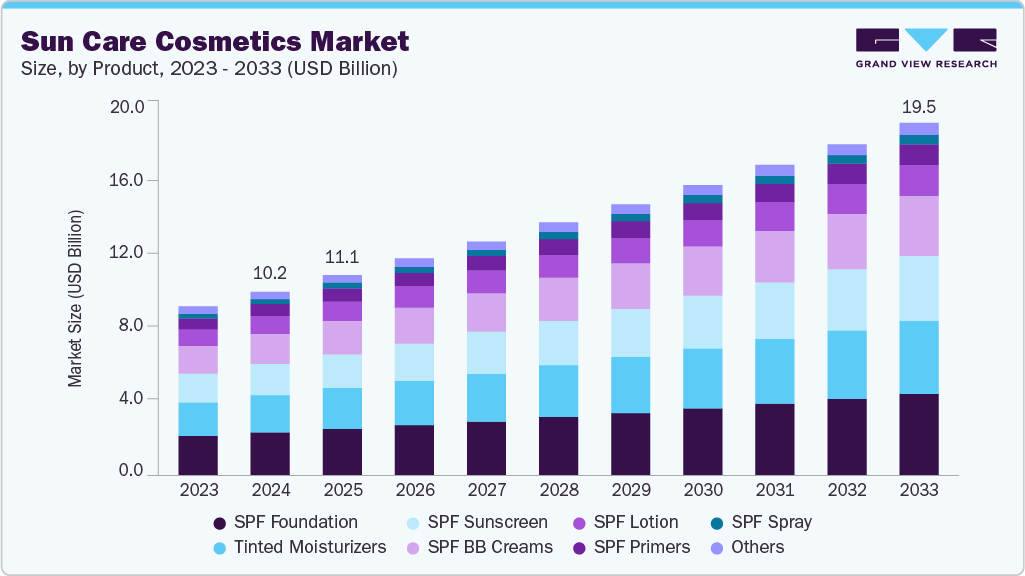
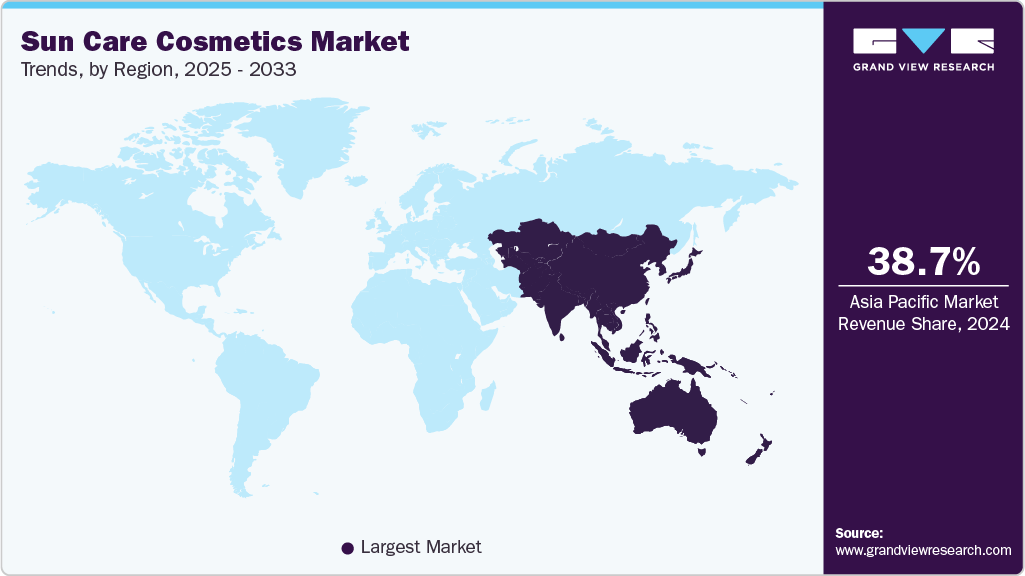
The sun care cosmetics market size was estimated at USD 11.0 billion in 2025 and is projected to grow from USD 12.0 billion in 2026 to USD 19.4 billion by 2033, growing at a CAGR of 7.1% from 2026 to 2033. The Asia Pacific market held the largest share of 39.6% of the global market in 2025. Rising concerns about the detrimental effects of sunrays and improved awareness regarding skin cancer are the major factors driving the market growth and innovation.
 Source: Grand View Research, IR Documents, Primary Interviews, Paid DatabasesTo learn more about this report,
 Download Free Sample Report
 Key Market Trends & Insights
- By product: The SPF foundation product segment led the market with the largest revenue share of 23.3% in 2025.
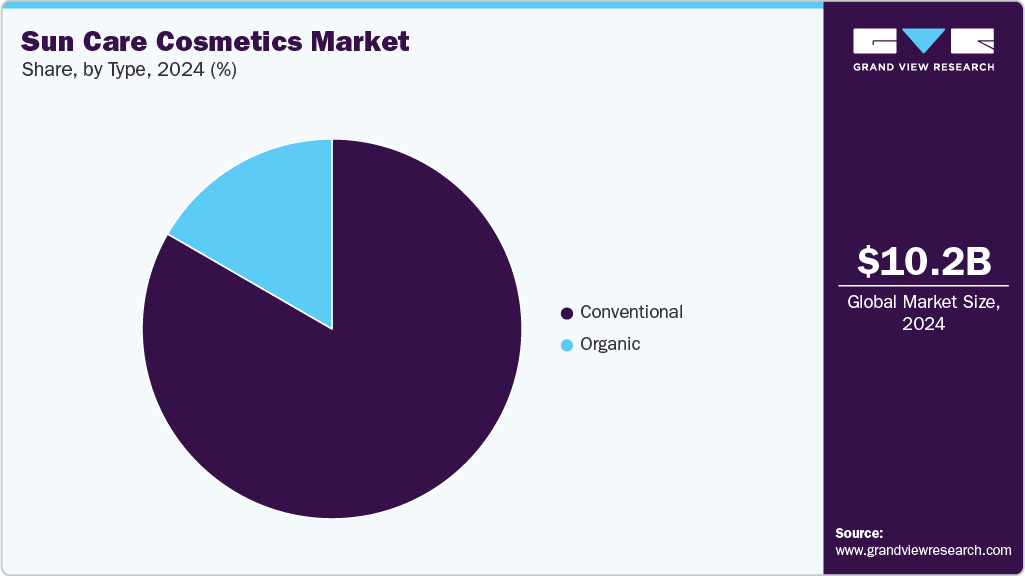
- By type: The conventional segment led the market with the largest revenue share of 83.2% in 2025.
- By distribution channel: The hypermarkets and supermarkets segment led the market with the largest revenue share of 33.7% in 2025.
Regional Highlights
- Largest regional market: Asia Pacific (39.6% revenue share, 2025)
- By country: The China held the largest market share in 2025.
Market Size & Forecast
- Market size in 2025: USD 11.0 Billion
- Estimated market size in 2026: USD 12.0 Billion
- Projected market size by 2033: USD 19.4 Billion
- CAGR (2026-2033): 7.1%
Three ways to get this report
Buy it, customize it, or ask a question.Ask an Analyst
A direct answer, usually in 1 working day
- AccessReport author, directly
- Reply timeWithin 1 working day
- No sales callDirect answer only
- FormatEmail reply
- CostFree, no cost
Get the Full Report
What the study covers
- FormatsPDF · Excel · Dashboard
- Timeline2026–2033 annual, 2025 base
- Coverage20+ countries, 5 regions
- Companies10+ key players profiled
Customize the Report
20% free customization
- IncludeCountries, segments, points
- TailorTo your product definition
- ExtendDeeper competitor detail
- OrA fully bespoke study
- Turnaround5–10 working days
Consumers nowadays want multifunctional cosmetic products that protect against skin concerns, such as skin cancer, sunburns, dark spots, wrinkles, dryness, or antiaging, while also providing makeup/beauty benefits. Therefore, innovation in cosmetic products, including sun care cosmetics, is the best way for players to gain traction.In October 2022, the U.S.-based cosmetic brand TOWER 28 BEAUTY, INC. launched an SPF foundation for sensitive skin, SunnyDays SPF 30 Tinted Sunscreen Foundation. The foundation is available in 14 different shades, providing light to medium coverage. Gen Z and millennials are among those who often follow specialty stores customer reviews as well as top influencers on social media. Therefore, brands and companies are launching specialty stores marketing campaigns on platforms, such as TikTok, Instagram, and Facebook, to gain maximum customer exposure. This has also paved the way for multiple growth opportunities in the industry.
 To learn more about this report, Download Free Sample Report
 With increased access to the internet and social media apps such as Instagram and YouTube, consumers are looking for assistance to explore sun care cosmetic products on these platforms and gain the necessary information related to skin and hair care routines. With detailed videos from how to know your skin/hair type to what kind of night/day routines to follow, these apps have a wide variety of content that suits the needs of beginners as well as experts. Brands are further making it easier to gain access to product information by increasing their specialty stores presence on social media apps as well as collaborating with influencers on these platforms.
Moreover, marketing communications can influence product adoption to a significant extent. Players can focus on factors like brand image, product efficiency, and the ethical & ecological aspects of the product in their marketing campaigns to target consumers. Easy product availability also affects consumers’ buying decisions and product adoption.
Market Dynamics
Sun care cosmetics are witnessing strong demand as consumers increasingly incorporate sun protection into their daily skincare and beauty routines. These products offer multifunctional benefits such as UV protection, hydration, anti-aging support, skin brightening, complexion enhancement, and protection against environmental stressors. Product formats, including SPF foundations, sunscreens, and setting sprays, enable consumers to combine cosmetic coverage with effective sun protection. The growing awareness of the harmful effects of UV radiation, including premature skin aging, hyperpigmentation, and skin cancer risks, coupled with rising demand for clean-label and dermatologist-recommended formulations, is expected to continue driving growth in the sun care cosmetics market. Furthermore, increasing beauty consciousness, expanding e-commerce penetration, and continuous product innovation by leading cosmetic brands are supporting long-term market expansion.
The increasing prevalence of sensitive skin conditions, allergies, and irritation caused by harsh cosmetic ingredients is driving demand for gentle sun care formulations. Consumers are increasingly seeking fragrance-free, hypoallergenic, mineral-based, and dermatologist-tested products that provide effective UV protection while minimizing the risk of skin reactions. This trend is encouraging manufacturers to develop specialized sun care cosmetics tailored to sensitive skin, supporting product innovation and market growth.
Concerns regarding the safety of certain chemical ingredients and potential adverse skin reactions remain a key restraint for the sun care cosmetics market. Many conventional sun care products contain chemical UV filters, preservatives, fragrances, and synthetic additives that may cause irritation, allergies, redness, or sensitivity in some consumers. Growing awareness of ingredient-related health and environmental concerns has led consumers to scrutinize product labels more closely and seek safer alternatives. In addition, regulatory scrutiny of certain UV-filter ingredients and increasing debate over their potential impact on human health have created challenges for manufacturers. As consumers become more cautious about ingredient safety and product transparency, brands may face increased costs associated with reformulation, testing, and regulatory compliance. These concerns can limit the adoption of conventional sun care cosmetics and may slow market growth, particularly among health-conscious and sensitive-skin consumer segments.
The growing consumer preference for multifunctional beauty products is creating significant opportunities in the sun care cosmetics market. Consumers increasingly seek products that combine sun protection with additional skincare benefits such as hydration, anti-aging, brightening, antioxidant protection, and pollution defense. This trend is encouraging manufacturers to develop innovative formulations that integrate SPF protection with active skincare ingredients, providing enhanced convenience and value. Advancements in cosmetic science are further supporting product innovation through the development of lightweight textures, invisible finishes, anti-pollution technologies, and personalized skincare solutions. Additionally, the rising popularity of hybrid products such as SPF serums, tinted sunscreens, BB creams, cushion compacts, and skincare-infused foundations is expanding the application scope of sun care cosmetics. As consumers continue to prioritize preventive skincare and daily skin protection, brands that offer multifunctional, premium, and scientifically advanced formulations are expected to capitalize on substantial growth opportunities in the market.
Analyst Perspective
The sun care cosmetics market is positioned at the intersection of two of the beauty industry's most powerful growth drivers: the global shift toward preventive skincare and the increasing consumer preference for multifunctional beauty products. While awareness of UV protection continues to expand, the market's long-term value creation will increasingly depend on manufacturers' ability to transform sun care from a functional category into a comprehensive skin health and beauty solution. This evolution is enabling brands to command premium pricing through products that combine sun protection with anti-aging, hydration, brightening, and environmental defense benefits. As consumers become more ingredient-conscious and beauty routines become increasingly streamlined, brands capable of delivering multifunctional, dermatologist-backed formulations are expected to capture the greatest market share gains. In the coming years, innovation in hybrid SPF cosmetics, premium formulations, and personalized skin protection solutions will likely determine leadership within the global sun care cosmetics market.
Consumer Surveys & Insights
Consumer behavior in the sun care cosmetics industry exhibits distinct gender-based patterns driven by differing skincare priorities, product familiarity, and lifestyle habits. Female consumers generally lead in product adoption, demonstrating consistent awareness of SPF’s preventive benefits in combating premature aging, pigmentation, and skin damage. Women are more likely to incorporate sunscreen into daily routines as part of broader skincare regimens that emphasize hydration, protection, and anti-aging.
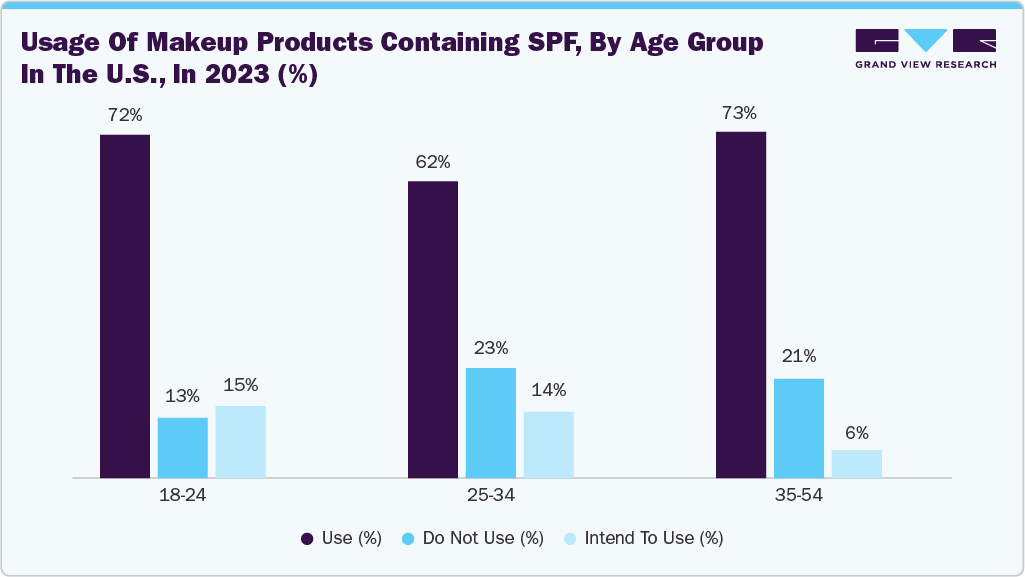
Moreover, consumer behavior in the sun care cosmetics industry reveals distinct patterns across age demographics, shaped by lifestyle, awareness, and skincare priorities. Gen Z demonstrates high engagement with SPF-based products, with a focus on sun protection integrated into daily skincare routines, influenced by social media awareness and preventive self-care. Millennials prioritize multi-functional skincare, seeking hydration and sun protection simultaneously, reflecting convenience-driven consumption.
 To learn more about this report, Download Free Sample Report
 Gen X consumers exhibit moderate SPF use but show a higher affinity toward products that offer anti-aging and moisturization benefits, often favoring established brands with trusted formulations. Baby Boomers prioritize hydration and anti-aging properties but show relatively lower proactive SPF use, typically purchasing sun care products seasonally or during travel. Across all age groups, hydration remains a universally sought-after benefit. At the same time, sun protection is increasingly valued by younger consumers, indicating a generational shift toward early prevention and long-term skin health.
Trump Tariff Impact
The Trump-era tariffs significantly impacted the global sun care cosmetics industry by increasing the cost of importing key raw materials and packaging components, particularly from China. Major manufacturers such as Edgewell, which owns brands like Banana Boat and Hawaiian Tropic, faced tariff rates on certain chemical ingredients that surged up to 60%, pushing them to renegotiate supply contracts or consider sourcing alternatives. As a result, production costs rose sharply, leading many companies to raise retail prices. Multinational corporations like L’Oréal, Estée Lauder, and Shiseido also felt the pinch, responding by reformulating products or shifting parts of their supply chain to countries outside tariff jurisdictions such as South Korea, Mexico, and the EU. This restructuring disrupted traditional pricing strategies and posed challenges in maintaining product consistency and efficacy.
Mid-sized and independent sun care brands were particularly vulnerable, often unable to absorb the increased costs without passing them on to consumers. Many of these companies faced margin pressures, exacerbated by rising freight charges and customs inspections tied to imported packaging materials. Some responded by reducing product sizes, simplifying packaging, or localizing production to minimize exposure. However, these adjustments sometimes compromised product quality or delayed launches, which affected brand reliability and customer satisfaction. In addition, types began noticing inconsistencies in packaging and a spike in prices, particularly for sunscreens reliant on specific chemical filters affected by trade restrictions.
Product Insights
Based on product, the SPF foundation product segment led the market with the largest revenue share of 23.3% in 2025, and tinted moisturizers are expected to grow at the fastest CAGR over the forecast period.. Consumers want all-in-one products that combine effective sun protection with makeup. SPF foundations eliminate the need for separate sunscreen and foundation, saving time and appealing to those accustomed to efficient routines. With rising concerns about UV damage and skin aging, Millennials and Gen Z are increasingly focused on anti-aging. A survey conducted in 2025 revealed that 57% of Millennials and 56% of Gen Z women are stressed about aging, leading many to adopt proactive skincare measures early on. This proactive approach includes integrating SPF into daily routines as a foundational step in preserving skin health and appearance.
The SPF sunscreen is expected to grow at the fastest CAGR of 8.2% from 2025 to 2033. SPF face sunscreen is a daily skincare essential that offers comprehensive protection and multiple skin benefits. It shields the skin from harmful UVA and UVB rays, helping to prevent sunburn and DNA damage and significantly lowering the risk of skin cancers such as melanoma and squamous cell carcinoma. In addition, it plays a vital role in preventing premature aging by preserving collagen and elastin, thereby reducing wrinkles, fine lines, and sunspots. SPF sunscreen also helps maintain an even complexion by minimizing hyperpigmentation, discoloration, and blotchy patches caused by sun exposure.
Distribution Channel Insights
Based on distribution channel, the hypermarkets and supermarkets segment led the market with the largest revenue share of 33.7% in 2025. These retail outlets serve as one-stop destinations, allowing consumers to easily pick up sunscreens while shopping for groceries or household items. They offer a wide range of sun care products, from conventional to branded options, often at competitive prices thanks to bulk buying and high sales volumes. Frequent promotions, discounts, and loyalty offers further enhance their appeal. High foot traffic in these stores and strategic product placement, such as end-aisle displays or checkout counters, encourage impulse purchases.
The e-commerce segment is expected to grow at the fastest CAGR of 7.9% from 2025 to 2033. Online sales channels are rapidly gaining popularity for cosmetics shopping due to convenience, variety, personalization, and social commerce. Over 65% of consumers prefer to browse and purchase cosmetics online after engaging with brand content on social media, while 82% expect personalized digital shopping experiences. Online platforms allow shoppers to explore a wider range of products, compare prices, read reviews effortlessly, and take advantage of exclusive discounts and subscription services.
Type Insights
Based on type, the conventional segment led the market with the largest revenue share of 83.2% in 2025. Conventional sun care cosmetics are mass-produced, synthetic-based formulations for broad accessibility and consistent sun protection. These products often rely on chemical UV filters like oxybenzone, avobenzone, and octinoxate to absorb harmful UVA and UVB rays. In addition, they frequently contain artificial preservatives (such as parabens), synthetic fragrances, and texturizing agents like silicones for improved feel and shelf life.
 To learn more about this report, Download Free Sample Report
 The organic segment is expected to grow at the fastest CAGR of 7.8% from 2025 to 2033. Consumers today are increasingly drawn to organic sun care cosmetics due to a growing emphasis on health, environmental responsibility, and ingredient transparency. This has driven many to prefer mineral-based sunscreens that use safer UV filters like zinc oxide and titanium dioxide. On the environmental front, awareness around the impact of chemical sunscreens on marine ecosystems, such as coral reef bleaching, has prompted bans in places like Hawaii and Palau, increasing demand for reef-safe, biodegradable formulations. Moreover, the rise of the clean beauty movement has led consumers to favor products with natural, organic, and non-GMO ingredients, along with transparent labeling and certifications (e.g., USDA Organic, NSF/ANSI 305), reinforcing both trust and brand loyalty.
Regional Insights
The North America sun care cosmetics market is shaped by evolving consumer preferences and innovation-driven trends. There is a rising demand for multi-functional products combining sun protection with skincare or makeup benefits, such as tinted moisturizers, SPF-infused foundations, serums, and lip balms. Consumers also increasingly seek high SPF (30+) and broad-spectrum protection, especially in facial products, to guard against UVA/UVB damage.
Simultaneously, the push for clean, mineral-based, and reef-safe formulations is growing, with zinc oxide and titanium dioxide becoming key ingredients among eco-conscious buyers. The inclusive beauty movement is also gaining momentum, with brands launching sheer or invisible sunscreens that suit all skin tones, addressing the long-standing issue of white-cast SPF on Black and Brown skin. For instance, Fenty Skin’s Hydra Vizor Invisible Moisturizer SPF 30 is a refillable 2-in-1 sunscreen and moisturizer with a truly invisible formula that suits all skin tones, especially people of color.
U.S. Sun Care Cosmetics Market Trends
The sun care cosmetics market in the U.S. is undergoing a dynamic transformation driven by rising consumer awareness about daily sun protection, photoaging, and long-term skin health. Sunscreen use is no longer limited to beach days but has become a core part of everyday skincare routines, with consumers seeking products that combine protection, skin benefits, and aesthetic appeal. This shift has spurred demand for lightweight, non-greasy, transparent, and multifunctional formulas that suit a wide range of skin tones and types. Mineral-based and “reef-safe” products are gaining traction due to increasing environmental consciousness and regulatory actions banning harmful ingredients like oxybenzone in some states. At the same time, brands are innovating with hybrid SPF products such as tinted moisturizers, setting sprays, and primers, blurring the line between skincare and makeup. Thus, such innovation and increasing consumer's demand are driving the market growth in the U.S.
Asia Pacific Sun Care Cosmetics Market Trends
Asia Pacific dominated the Sun Care Cosmetics market with the largest revenue share of 39.6% in 2025. Asia-Pacific sun care industry is evolving rapidly, driven by rising consumer awareness of UV risks and a growing demand for innovative, skincare-infused sun protection. Daily sunscreen use has shifted from a seasonal habit to an essential part of skincare routines, especially in high-UV markets like Japan and Australia.
 To learn more about this report, Download Free Sample Report
 Consumers are increasingly drawn to multifunctional products, including makeup- and serum-SPFs that combine sun protection with hydration, antioxidants, anti-aging, and brightening ingredients. Innovative formats such as powders, sticks, mists, cushion compacts, and UV patches are becoming mainstream, offering convenient and cosmetically elegant ways to encourage reapplication. Mineral and natural-ingredient sunscreens are also gaining preference, especially in Japan and South Korea, due to their cleaner profiles and sensitive skin suitability.
The Sun Care Cosmetics market in China held the largest share in the Asia Pacific region in 2025. The sun care market in China is growing significantly due to rising consumer awareness about UV protection, skin health, and aging prevention. Consumers, especially young urban women, are increasingly incorporating sun care into their daily skincare routines, treating it as essential rather than seasonal. The market is driven by the popularity of multifunctional products that combine sun protection with skincare benefits such as hydration, anti-aging, and skin brightening. Mineral sunscreens and sensitive-skin formulations are gaining traction due to growing concerns about skin irritation and product safety.
Europe Sun Care Cosmetics Market Trends
The sun care cosmetics market in Europe hold significant importance in Europe, largely due to the region’s strong emphasis on advanced, science-backed skin protection. European sunscreens are known for incorporating sophisticated and photostable UV filters that deliver broad-spectrum defense against UVA and UVB rays. These filters are often more modern and effective than those commonly used in other regions, offering consistent, long-lasting protection even with prolonged sun exposure.
European regulations also play a crucial role. Strict guidelines require sunscreens to meet high efficacy standards, including mandatory broad-spectrum protection, which has driven innovation in formulation. Moreover, European products emphasize UVA protection, as these rays penetrate deeper into the skin and are linked to long-term damage, such as photo aging and premature wrinkles. This advanced approach to formulation and regulation reflects the growing consumer awareness in Europe of the risks of sun exposure and the critical role of sunscreens in maintaining long-term skin health.
Key Sun Care Cosmetics Company Insights
The sun care industry is always changing and updating. To stay head-on in the market, players tend to launch new strategies more frequently. Market players are focusing on increasing investments in advertisements through social sites to increase awareness regarding sun care cosmetics in the market. Moreover, major players such as Beiersdorf AG, Johnson & Johnson Services, Inc, Coty Inc., Shiseido Company Ltd., L'Oréal Groupe, The Estée Lauder Companies Inc., Unilever, Groupe Clarins, The Clorox Company, Naos., etc. are targeting new regions and demography to increase the consumer base and expand their number of offerings by either entering the new market solely or by collaborating with local companies across the globe.
-
Coty Inc., founded in 1904 by François Coty, is a multinational beauty company headquartered in New York City. As of 2024, Coty operates three primary divisions: Consumer Beauty, Luxury, and Professional Beauty, offering a diverse range of products including fragrances, cosmetics, skincare, and hair care. The company owns approximately 40 brands, with notable names such as CoverGirl, Rimmel, Max Factor, Sally Hansen, and Wella.
-
L'Oréal S.A., established in 1909 and headquartered in Clichy, France, stands as the world's largest cosmetics and beauty company. With a diverse portfolio encompassing skincare, haircare, makeup, and fragrances, L'Oréal operates across various segments, including Consumer Products, Professional Products, and Luxe. The company owns 36 brands, such as Maybelline, Garnier, NYX Professional Makeup, Redken, and CeraVe.
Key Sun Care Cosmetics Companies:
The following key companies have been profiled for this study on the sun care cosmetics market.
-
Beiersdorf AG
-
Johnson & Johnson Services, Inc.
-
Coty Inc.
-
Shiseido Company Ltd.
-
L'Oréal Groupe
-
The Estée Lauder Companies Inc.
-
Unilever
-
Groupe Clarins
-
The Clorox Company
-
Naos
Competitive Benchmarking
Category
Operating Strategies
Competitive Edge
Weakness
Established Players (L'Oreal Groupe, Beiersdorf AG, Shiseido Company Limited, The Estee Lauder Companies, Unilever)
- Expand global sun care and skincare portfolios through SPF-infused cosmetics, premium anti-aging formulations, and multifunctional beauty products. Invest in product innovation, dermatological research, sustainability initiatives, and omnichannel distribution to strengthen market leadership.
- Strong global brand recognition, extensive retail and e-commerce presence, significant R&D investments, diversified beauty portfolios, and the ability to commercialize innovations at scale across multiple regions.
- High operational and compliance costs, slower adaptation to rapidly emerging niche trends, and increased exposure to regulatory scrutiny related to ingredients, sustainability, and product claims.
Emerging Players (Coty Inc., Groupe Clarins, NAOS, The Clorox Company)
- Focus on premium skincare positioning, clean beauty formulations, sensitive-skin solutions, and targeted product innovation. Leverage dermatologist recommendations, ingredient transparency, and growing consumer demand for sustainable and skin-health-focused products.
- Strong positioning in specialized skincare segments, agility in responding to evolving consumer preferences, premium brand perception, and differentiated product offerings in skin health and beauty categories.
- Smaller market presence in sun care cosmetics compared to global beauty leaders, lower economies of scale, narrower distribution reach in certain regions, and relatively limited marketing budgets compared to industry giants.
Recent Developments
-
In June 2025, Beiersdorf Nigeria launched a specialized NIVEA UV Face Sunscreen developed for the unique needs of African skin. The product was unveiled at an event in Lagos aimed at promoting awareness of the importance of daily sun protection. With Nigeria’s high UV exposure, the sunscreen helps prevent issues such as hyperpigmentation, premature skin aging, and the increasing threat of skin cancer. Targeted at adults aged 25 to 45, it is designed for everyday use and is compatible with makeup. Health experts at the event also highlighted the dangers of unprotected sun exposure and advised against using unsafe skin-lightening products.
-
In March 2025,Neutrogena launched a new campaign featuring actor and wrestler John Cena to promote its Ultra Sheer Mineral Face Liquid Sunscreen SPF 70. The campaign creatively plays on Cena’s famous “You Can’t See Me” phrase to highlight the sunscreen’s invisible, lightweight formula that leaves no white residue.
Sun Care Cosmetics Market Report Scope
Report Attribute
Details
Market size value in 2025
USD 11.0 billion
Estimated market size in 2026
USD 12.0 billion
Projected market size by 2033
USD 19.4 billion
Growth rate
CAGR of 7.1% from 2026 to 2033
Base year for estimation
2025
Historical data
2021 - 2024
Forecast period
2026 - 2033
Quantitative units
Revenue in USD million/billion and CAGR from 2026 to 2033
Report coverage
Revenue forecast, company ranking, competitive landscape, growth factors, and trends
Segments covered
Product, type, distribution channel, region
Regional scope
North America; Europe; Asia Pacific; Latin America; MEA
Country scope
U.S.; Canada; Mexico; Germany; UK; France; Italy; Spain; China; Japan; India; South Korea; Australia; Brazil; Saudi Arabia; South Africa; UAE
Key companies profiled
Beiersdorf AG; Johnson & Johnson Services, Inc; Coty Inc.; Shiseido Company Ltd.; L'Oreal Groupe; The Estee Lauder Companies Inc.; Unilever; Groupe Clarins; The Clorox Company; Naos
Customization scope
Free report customization (equivalent up to 8 analysts' working days) with purchase. Addition or alteration to country, regional & segment scope.
Pricing and purchase options
Avail customized purchase options to meet your exact research needs. Explore purchase options
Global Sun Care Cosmetics Market Report Segmentation
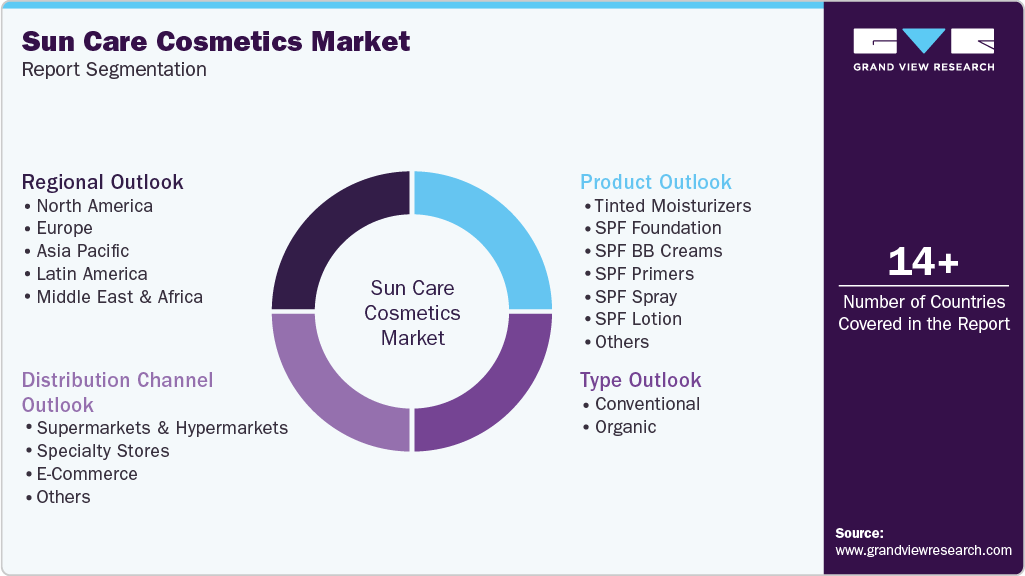
This report forecasts revenue growth at the global, regional, and country levels and provides an analysis of the latest industry trends and opportunities in each of the sub-segments from 2021 to 2033. For this study, Grand View Research has segmented the global sun care cosmetics market report based on product, type, distribution channel, and region:
 To learn more about this report, Download Free Sample Report
 -
Product Outlook (Revenue, USD Million, 2021 - 2033)
-
Tinted Moisturizers
-
SPF Foundation
-
SPF BB Creams
-
SPF Primers
-
SPF Spray
-
SPF Lotion
-
SPF Sunscreen
-
Others
-
-
Type Outlook (Revenue, USD Million, 2021 - 2033)
-
Conventional
-
Organic
-
-
Distribution Channel Outlook (Revenue, USD Million, 2021 - 2033)
-
Supermarkets & Hypermarkets
-
Specialty Stores
-
E-Commerce
-
Others
-
-
Regional Outlook (Revenue, USD Million, 2021 - 2033)
-
North America
-
U.S.
-
Canada
-
Mexico
-
-
Europe
-
UK
-
Germany
-
France
-
Italy
-
Spain
-
-
Asia Pacific
-
Japan
-
China
-
India
-
South Korea
-
Australia
-
-
Latin America
-
Brazil
-
-
Middle East and Africa (MEA)
-
South Africa
-
Saudi Arabia
-
UAE
-
-
Research Methodology
The sun care cosmetics market figures in this report are based on a proven research process that combines executive interviews with secondary research from proprietary databases, company filings, and recognized regulatory and institutional sources. Market size is built through value-chain sizing - reconciling supply-side and demand-side estimates - and triangulated with bottom-up and top-down approaches. Every estimate passes multiple levels of expert validation before publication, with each sun care cosmetics segment quantified using the revenue-capture definitions in the table below.
Segment Definition
Segment - Type
Revenue capture definition
Conventional
This segment covers the revenues generated through the sales of conventional sun care cosmetics, including products formulated with synthetic ingredients, chemical UV filters, artificial fragrances, and other widely used cosmetic compounds. These products are designed to provide effective sun protection, skincare benefits, and cosmetic enhancement while offering affordability, longer shelf life, and broad consumer accessibility.
Organic
This segment covers the revenues generated through the sales of organic sun care cosmetics, including products formulated with naturally derived ingredients, plant-based extracts, mineral UV filters, and environmentally friendly formulations. These products are typically free from synthetic fragrances, parabens, sulfates, and certain chemical sunscreen agents, catering to consumers seeking clean-label, sustainable, and skin-friendly sun protection solutions. Growing consumer awareness regarding ingredient transparency, environmental sustainability, and skin sensitivity is driving demand for organic sun care cosmetics.
Estimation Model
Layer Name
Key Question
Description
Skin Protection Need Layer
Who requires sun protection products?
Identify the population exposed to daily UV radiation, outdoor workers, travelers, sports participants, and consumers concerned about skin aging and skin health. This forms the total potential consumer base for sun care cosmetics.
Beauty & Skincare Awareness Layer
Who actively purchases skincare and cosmetic products?
Apply region-specific beauty product usage rates, skincare adoption trends, and consumer awareness regarding sun protection to derive the addressable beauty-conscious consumer population.
Sun Care Adoption Layer
Who actively uses sun care cosmetics?
Apply adoption rates for SPF foundations, tinted moisturizers, BB creams, and other sun care products. Factor in daily-use habits, premium skincare penetration, and demand for multifunctional beauty products to estimate active users.
Monetisation Layer
How much revenue is generated?
Multiply active consumers by average annual spending on sun care cosmetics and account for premium product purchases, organic formulations, dermatologist-recommended products, and e-commerce sales to estimate total market revenue.
Delivered Customizations
This report has been delivered with the following In-depth customizations
Client Request
Customization Delivered
Value Adds
SPF Cosmetics Product Segment Analysis
Conducted a focused analysis of key product categories including SPF sunscreens, SPF BB creams, tinted moisturizers, and sprays. Evaluated market size, growth prospects, consumer adoption patterns, and the increasing demand for multifunctional beauty products combining cosmetic benefits with sun protection.
Helps stakeholders identify high-growth product segments, evaluate innovation opportunities, and optimize product portfolio strategies within the sun care cosmetics market.
Organic vs. Conventional Sun Care Cosmetics Assessment
Evaluated demand trends across conventional and organic sun care cosmetics, including consumer preferences for clean-label formulations, mineral-based UV filters, reef-safe ingredients, and environmentally sustainable products. Assessed the impact of ingredient transparency and wellness-focused purchasing behavior on market growth.
Provides insights into evolving consumer preferences, premiumization opportunities, and formulation strategies to strengthen competitive positioning and product differentiation.
Distribution Channel & Regional Growth Opportunity Analysis
Assessed sales performance across supermarkets & hypermarkets and e-commerce channels. Analyzed regional growth trends across Asia Pacific, North America, Europe, and other key markets, with a focus on daily sun protection adoption, skincare awareness, and digital retail expansion.
Supports market expansion and investment strategies by identifying high-growth regions, optimizing channel strategies, and evaluating long-term opportunities in the
Frequently Asked Questions About This Report
Some key players operating in this market include Beiersdorf AG, Johnson & Johnson Services, Inc., Coty Inc., Shiseido Company, Limited, L'Oréal Groupe, The Estée Lauder Companies Inc., Unilever
Key factors driving the market growth include rising concerns about the detrimental effects of sun rays and improved awareness regarding skin cancer
The global sun care cosmetics market is expected to grow at a compound annual growth rate of 7.1% from 2025 to 2033 to reach USD 19.4 billion by 2033.
The conventional type segment dominated the sun care cosmetics market with a share of more than 83.2% in 2025.
The hypermarkets & supermarkets distribution channel dominated the sun care cosmetics market with a share of more than 33.7% in 2025.
The Asia Pacific region dominated the sun care cosmetics market with a share of more than 39.6% in 2025.
Asia Pacific is the fastest-growing region over the forecast period.
The global sun care cosmetics market size was estimated at USD 11.0 billion in 2025 and is expected to reach USD 12.0 billion in 2026
The SPF Foundation segment dominated the sun care cosmetics market with a share of more than 23.3% in 2025.
About the Author(s)
Beauty & Personal Care Research Team
Consumer Goods · Beauty & Personal CareThis report was authored by the beauty & personal care research team at Grand View Research - comprising two research analysts, one senior research analyst, and one industry expert - with specialized expertise in the beauty & personal care segment of the consumer goods industry. All findings are based on proprietary consumer goods databases, executive interviews, and regulatory analysis, subject to internal peer review prior to publication.
Last Updated:
Speak to Analyst

Customize this report to your needs - add regions, segments, or data points, with 20% free customization.
Or view our licence options:


ISO 9001:2015 & 27001:2022 Certified
We are GDPR and CCPA compliant! Your transaction & personal information is safe and secure. For more details, please read our privacy policy.


