
- Home
- »
- Medical Devices
- »
-
Surgical Display Market Size, Share & Trends Report, 2033GVR Report cover

Surgical Display Market (2026 - 2033)
Size, Share & Trends Analysis Report By Resolution Type (High Definition (HD), Full HD, 4K Ultra HD, 8K Ultra HD), By Display Type, By Application, By End-use, By Region, And Segment Forecasts
Market Size, 2025
$821.2MMarket Estimate, 2026
$846.4MMarket Forecast, 2033
$1,055.2MCAGR, 2026–2033
3.2%Surgical Display Market Summary
The global surgical display market size was valued at USD 821.2 million in 2025 and is projected to grow from USD 846.4 million in 2026 to USD 1,055.2 million by 2033, at a CAGR of 3.2% from 2026 to 2033. Asia Pacific dominated the market, accounting for a revenue share of 34.0% in 2025. Market growth can be attributed to the increasing demand for advanced surgical displays for minimally invasive surgeries, increase in digital operating rooms, growing number of strategic initiatives undertaken by key players, and rise in robotic-assisted surgeries.
 Source: Grand View Research, IR Documents, Primary Interviews, Paid DatabasesTo learn more about this report,
 Download Free Sample Report
Key Market Trends & Insights
- By resolution type: 4K Ultra HD (Ultra High Definition)) segment held the largest revenue share of over 42.1% in 2025.
- By display type: LCD (Liquid Crystal Display) displays segment held the largest revenue share of over 51.6% in 2025.
- By application: Endoscopy segment held the largest revenue share of over 29.3% in 2025.
- By end use: Hospitals segment held the largest revenue share of over 42.4% in 2025.
Regional Highlights
- Largest regional market: Asia Pacific (34.0% revenue share, 2025)
- By country: The U.S. held the largest market share in 2025.
Market Size & Forecast
- Market size in 2025: USD 821.2 Million
- Estimated market size in 2026: USD 846.4 Million
- Projected market size by 2033: USD 1,055.2 Million
- CAGR (2026-2033): 3.2%
Prism AI by Grand View Research Free to tryAsk a question about the surgical display marketTry asking✓Every figure cited from GVR research Prefer the report? Download free sample →
In January 2024, Activ Surgical announced the completion of the first international surgery at Abdali Hospital in Amman, Jordan, using its ActivSight Intelligent Light technology. Activ Surgical aims to deliver superior visualization and instantaneous surgical insights directly in the operating room. ActivSight integrates with modern laparoscopic and robotic systems, seamlessly connecting to standard monitors for enhanced surgical precision & efficiency.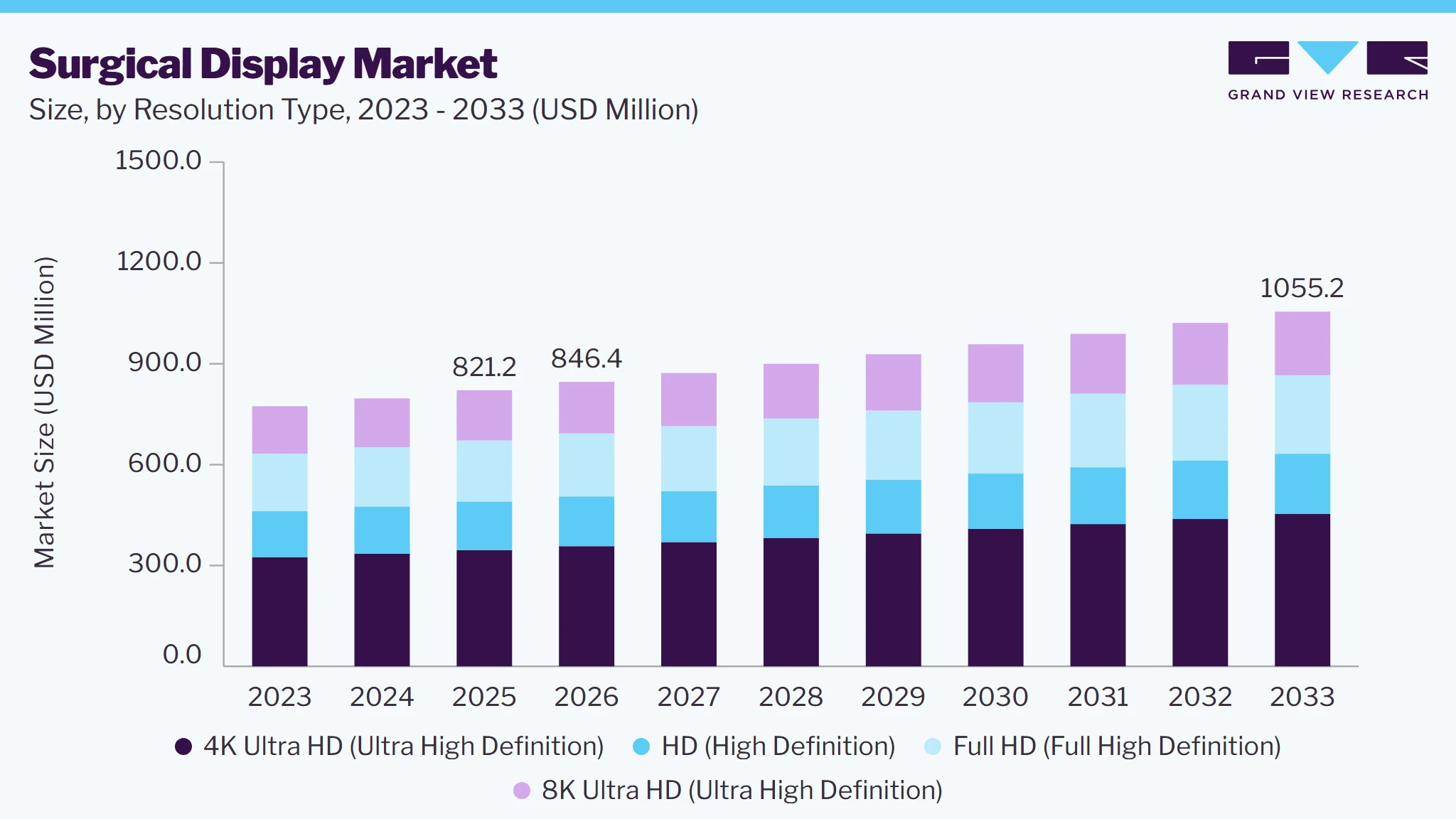 To learn more about this report, Download Free Sample Report
Hence, such advancements can increase the adoption of surgical displays, contributing to market growth. The increasing demand for Minimally Invasive Surgery (MIS) is likely to remain a significant driver for market growth. Minimally invasive procedures offer benefits, such as smaller incisions, reduced pain & scarring, shorter recovery times, and lower risk of complications than traditional open surgeries. According to North Kansas City Hospital & Meritas Health, approximately 15 million laparoscopic procedures are performed in the U.S. annually. To perform these procedures effectively, surgeons rely heavily on high-quality displays to visualize intricate details in real time, guiding their actions accurately.
The demand for MIS continues to rise due to patient-centric advantages and advancements in surgical techniques. Key MIS experiencing demand growth include laparoscopic surgery, colectomy surgery, transluminal coronary angioplasty, and cesarean section. Therefore, the need for advanced surgical displays capable of providing clear, high-resolution images will likely increase as well. This trend highlighted the importance of innovation and development within the surgical display industry to meet the evolving needs of healthcare providers and patients. Furthermore, advancements in healthcare, particularly surgical techniques, are increasingly reliant on technological progress.
MIS, such as arthroscopic procedures, have grown substantially due to innovations in surgical display monitors leveraging the latest technological insights. Analogous to the upgrade from standard to high-definition television sets, the medical field is embracing enhanced resolution displays for various benefits across surgical practices. Whether facilitating keyhole surgeries or guiding robotic procedures, medical-grade surgical displays offer multifaceted advantages to surgeons & medical professionals. The COVID-19 pandemic hampered the overall market. With hospitals and medical facilities contending with a rise in COVID-19 cases, elective surgeries were either delayed or called off to allocate resources towards pandemic management.
However, the pandemic highlighted the importance of advanced medical technologies, including surgical displays, in facilitating efficient and safe surgical procedures. Healthcare systems experienced a growing recognition of the need for enhanced infection control measures, minimally invasive techniques, and remote collaboration tools in the operating room. This shift in healthcare priorities fueled renewed interest in innovative surgical display solutions that enable seamless communication, visualization, and workflow efficiency while prioritizing infection prevention protocols.
Market Dynamics
The surgical display market is growing due to the increasing adoption of minimally invasive and image-guided surgical procedures, rising investments in operating room modernization, and the growing demand for high-resolution medical imaging systems. The expansion of hybrid operating rooms, robotic-assisted surgeries, and advanced visualization technologies such as 4K and 8K surgical displays is further driving market growth. However, the high cost of advanced surgical display systems, lengthy replacement cycles, and budget constraints in healthcare facilities may hinder market expansion. The increasing development of hybrid operating rooms and the rising adoption of robotic surgery platforms present significant growth opportunities for the market.
The growing adoption of minimally invasive and image-guided surgical procedures is driving the demand for advanced surgical displays that deliver high-resolution imaging, accurate color reproduction, and real-time visualization. These displays enhance surgical precision, improve workflow efficiency, and support better clinical outcomes in laparoscopic, endoscopic, and robotic-assisted procedures.
For instance, in August 2025, Sony Group Corporation launched the LMD-43M1MD 43-inch 4K Mini-LED surgical monitor, offering enhanced brightness, contrast, and color accuracy for operating rooms. Similarly, in March 2024, Olympus Corporation announced the regional launch of the VISERA ELITE III endoscopic visualization platform in Mexico, with expansion planned across additional Latin American countries. The platform integrates True 4K imaging, 3D visualization, fluorescence-guided surgery, and Narrow Band Imaging (NBI) to enhance visualization and support advanced minimally invasive surgical procedures.
The surgical display market is subject to stringent regulatory requirements imposed by healthcare authorities to ensure patient safety, data security, and compliance with medical standards. Obtaining regulatory approvals and certifications for surgical display systems can be a lengthy and complex process involving rigorous testing, documentation, & adherence to specific guidelines. Some of the regulations and standards are:
FCC: A medical device needs to comply with either FCC class A or B emissions and EN60601-1-2 standards.
FDA: The FDA oversees the design, control, and manufacturing procedures employed by medical device manufacturers. Certain medical devices require FDA’s 510K approval before they can be sold
The expansion of hybrid operating rooms and robotic-assisted surgery infrastructure is significant opportunities in the market. Hybrid operating rooms integrate advanced imaging systems, robotic platforms, and digital visualization technologies, increasing the demand for ultra-high-definition surgical displays that provide real-time imaging, enhanced color accuracy, and seamless integration with surgical workflows. As hospitals continue to invest in smart operating rooms, manufacturers have opportunities to introduce 4K, 8K, 3D, and AI-enabled surgical display solutions.
For instance, in September 2024, Stryker Corporation announced the launch of its 1788 Advanced Imaging Platform in India. The platform features 4K imaging, enhanced fluorescence imaging capabilities, and an OLED surgical monitor, enabling improved visualization for minimally invasive and robotic-assisted surgical procedures in modern operating rooms.
Market Concentration & Characteristics
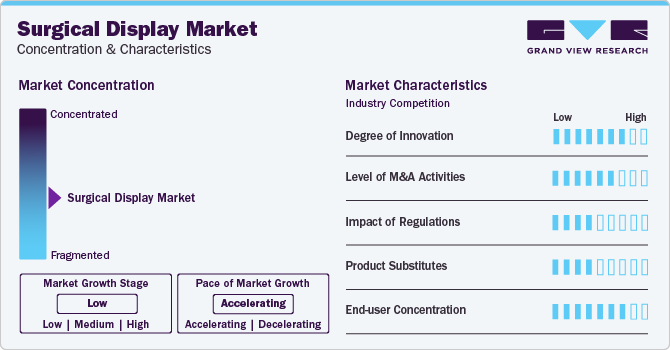
The market growth is high, and the pace of its growth is accelerating. The market is characterized by a rise in demand for digital operating room technologies, an increase in demand for advanced surgical display for minimally invasive surgery, and an increase in strategic initiatives.
 To learn more about this report, Download Free Sample Report
The degree of innovation is high. Technological advancements in surgical displays, such as high-resolution displays, multimodality displays, and wireless technology, have revolutionized the field of surgery. Key players are launching technologically advanced displays to improve precision in procedures and patient outcomes. For instance, in October 2023, Sony Europe B.V. launched a novel surgical monitor LMD-XH550MD with 4K HDR. The monitor, integrated with Sony’s advanced A.I.M.E. technology, can display highly enhanced images.
Key players are implementing strategic initiatives, such as geographical expansion, innovations, collaborations, and partnerships to strengthen their market presence. For instance, in September 2022, Olympus Corporation, Sony Corporation, and Sony Olympus Medical Solutions Inc. collaborated to create an advanced surgical endoscopy system. This system integrates high-definition surgical visualization technologies, such as 4K and 3D capabilities, infrared (IR) imaging, and narrow-band imaging (NBI). Marketed under the name “VISERA ELITE III,” Olympus has distributed this system across Europe, the EMEA, select Asian territories, Oceania, and Japan since September 2022.
The impact of regulations on the market is high. The market has witnessed a notable shift in regulatory trends, reflecting an increased focus on patient safety, technological advancements, and industry standardization. Regulatory bodies worldwide, such as the U.S. FDA and the EU EMA, have intensified their scrutiny over the development & deployment of surgical display systems. These agencies emphasize ensuring that such systems meet stringent quality & safety standards, particularly concerning image clarity, resolution, latency, and compatibility with other medical devices.
The threat of substitutes in the market is expected to be relatively low. Surgical displays are specialized equipment designed to meet the unique needs of medical professionals during procedures. While alternative display technologies such as standard monitors may be available, they often lack the specific features and certifications required for use in surgical environments.
The emphasis on patient-centric care and regulatory compliance fuels the demand for high-quality surgical displays in healthcare settings. Furthermore, companies are undertaking several strategic initiatives, such as the launch of new products, partnerships, acquisitions, and geographic expansion, to expand the reach of their products in hospitals & other healthcare facilities and ultimately promote market growth. For instance, in April 2021, Barco and Sigma-Jones | AV LLP partnered to enhance healthcare digital experiences through its advanced operating room video integration solution, Nexxis.
Analyst Perspective
The increasing adoption of minimally invasive and image-guided surgical procedures is driving growth in the surgical display market. Rising investments in operating room modernization and demand for high-resolution medical visualization systems further accelerate this trend. The expansion of hybrid operating rooms, robotic-assisted surgeries, and advanced diagnostic imaging technologies is boosting the need for surgical displays. These displays must deliver superior image clarity, accurate color reproduction, and real-time visualization to enhance surgical precision and clinical outcomes. Key market players are proactively pursuing strategic initiatives such as partnerships, collaborations, mergers, and acquisitions. Such initiatives expand market presence, broaden product portfolios, and strengthen technological solutions. They also drive innovation and cater to evolving customer preferences, propelling the surgical display market forward. Moreover, these strategies empower companies to seize emerging opportunities and penetrate untapped markets. This helps maintain a competitive edge in the dynamic healthcare sector. Strategic initiatives remain crucial for ensuring growth and sustainability in the surgical display market over the forecast period.
Resolution Type Insights
Based on resolution type, the 4K Ultra HD (Ultra High Definition)) segment held the largest revenue share of over 42.1% in 2025. Its growth can be attributed to the increasing demand for high-quality imaging solutions in the healthcare sector. 4K surgical displays offer healthcare professionals precise visual detail, enabling them to clearly determine fine anatomical structures.
The 8K Ultra HD resolution type segment is expected to grow at a significant CAGR over the forecast period. 8K surgical displays have various applications in medical specialties, revolutionizing surgical procedures. In neurosurgery, cardiovascular surgery, and orthopedics fields, using 8K displays enables surgeons to visualize complex anatomical structures with unparalleled clarity, facilitating intricate procedures with enhanced precision. Moreover, incorporating 8K displays in minimally invasive surgeries allows for improved visualization of delicate tissues and organs, ultimately leading to better patient outcomes & reduced surgical complications
Display Type Insights
Based on display type, LCD (Liquid Crystal Display) displays segment held the largest revenue share of over 51.6% in 2025. The growing adoption of business initiatives by key market players and increasing advancements in LCD technology are expected to contribute to segment growth. For instance, in October 2023, Sony Corporation introduced the LMD-XH550MD, a surgical monitor with an LCD panel and signal processing technology that supports a wide color spectrum.
The OLED segment is expected to grow at the fastest CAGR over the forecast period. Organic Light-emitting Diode (OLED) displays are gaining popularity due to their unmatched image quality, which is characterized by deep blacks, vibrant colors, and high contrast ratios. Such factors are expected to drive its adoption over the coming years.
Application Insights
Based on application, endoscopy segment held the largest revenue share of over 29.3% in 2025. Its growth can be attributed to the increasing prevalence of medical conditions, such as cancer, where surgical-display-enabled endoscopy helps screen & diagnose diseases. According to the American Cancer Society, in 2024, around 46,220 new rectal cancer cases and 106,590 new colon cancer cases are estimated in the U.S. Hence, the rising prevalence of colon and rectal cancers is boosting the demand for colonoscopies, consequently leading to market growth
End-use Insights
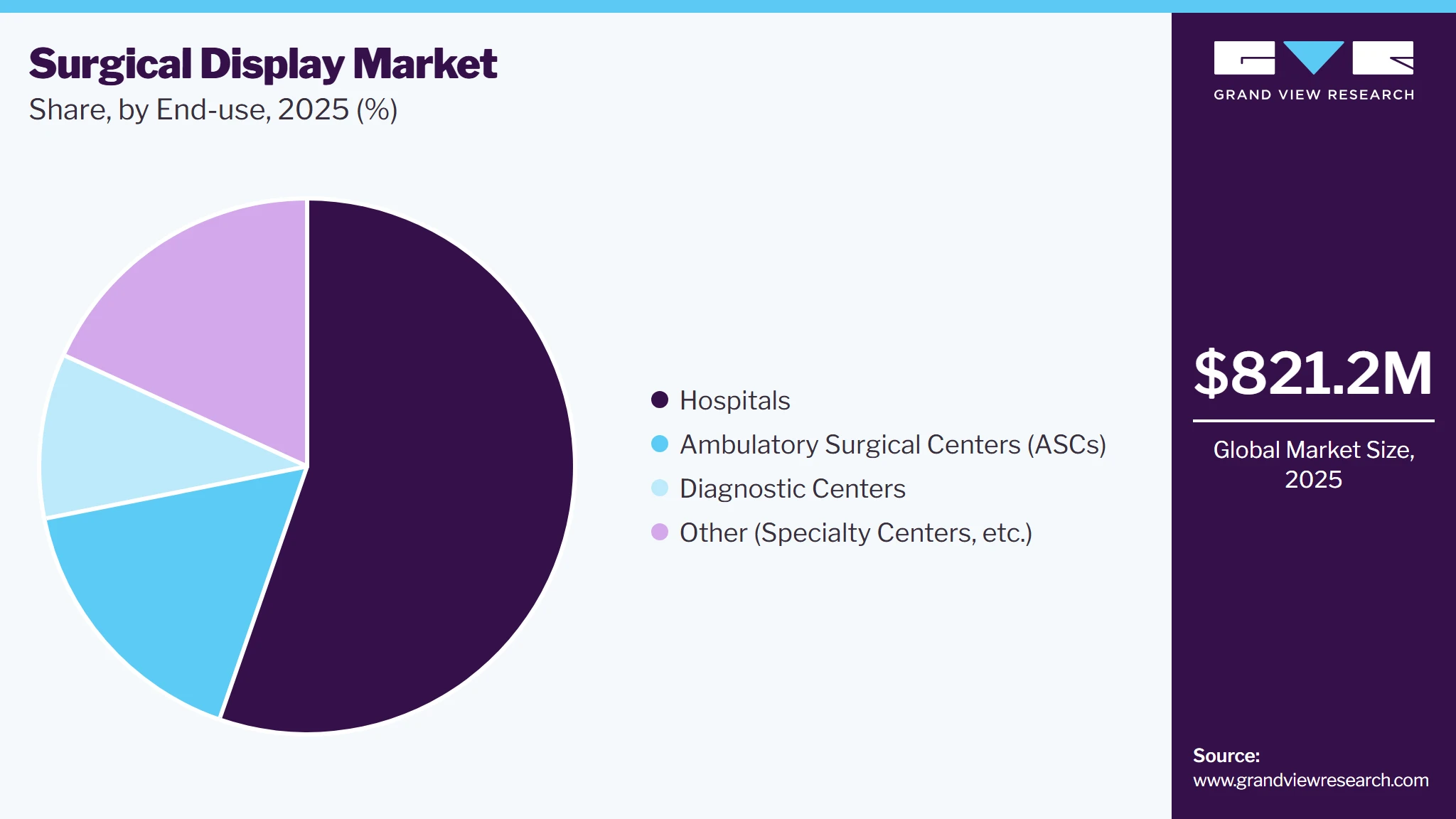
Based on end use, the hospitals segment held the largest revenue share of over 42.4% in 2025. Hospitals are adopting advanced surgical techniques, such as minimally invasive surgery, which require high-resolution displays for precise visualization during procedures. These displays improve surgical outcomes, reduce complications, and enhance patient satisfaction. Hospitals also use surgical displays for educational purposes, training surgeons, and staying updated with new techniques.
 To learn more about this report, Download Free Sample Report
The Ambulatory Surgical Centers (ASC) segment is expected to grow at the fastest CAGR from 2024 to 2030. ASCs specialize in providing minimally invasive procedures, focusing on efficient, high-quality same-day surgical care for patients. These centers heavily invest in advanced surgical technologies, including surgical displays, to support various minimally invasive procedures, such as laparoscopic surgeries, endoscopic interventions, and orthopedic surgeries.
Regional Insights
The surgical display market in North America is anticipated to witness significant growth over the forecast years due to growing investment in advancing healthcare infrastructure, the rise in robotic-assisted surgeries, and the high demand for minimally invasive surgeries.
U.S. Surgical Display Market Trends
The surgical display market in the U.S. held the largest share in the North America region in 2025. The U.S. surgical display market is expected to grow at a significant rate owing to advancements in display technology, such as higher resolutions and enhanced image quality, which contribute to the adoption of surgical displays across healthcare facilities. These technological improvements, including features, such as HDR and 3D visualization, are crucial for improving visual clarity and precision during surgical procedures, ultimately leading to better patient outcomes.
Asia Pacific Surgical Display Market Trends
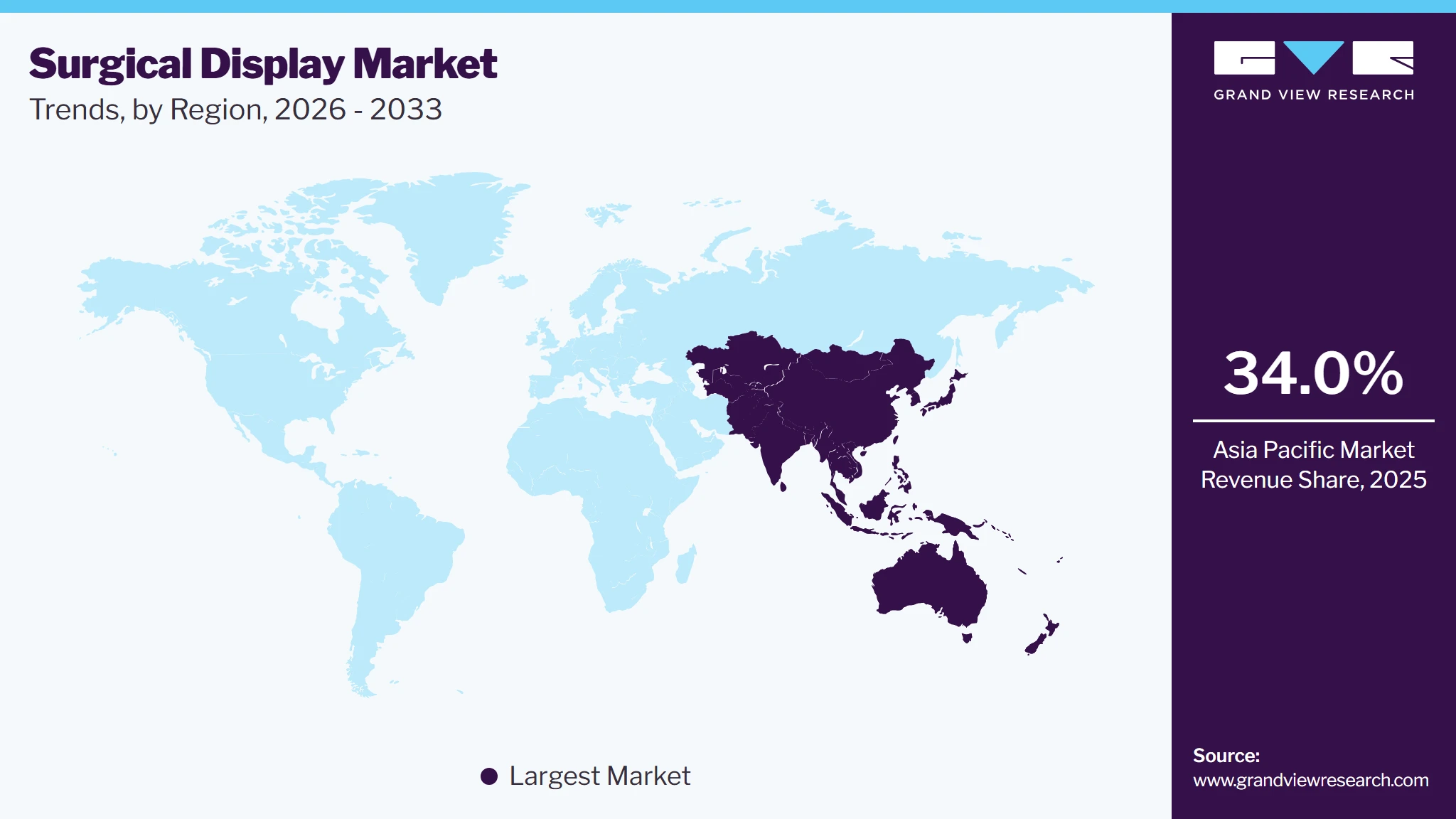
Asia Pacific dominated the surgical display market with the largest revenue share of 34.0% in 2025. The regional market growth is propelled by advancements in medical technology, notably the adoption of high-definition and 4K resolution displays in surgical settings. These displays significantly improve surgeons' visualization, thereby enhancing patient outcomes. The surge in demand for minimally invasive surgeries, which rely heavily on precise imaging and visualization, has further accelerated the adoption of advanced surgical display solutions. Moreover, increasing healthcare spending and investments in infrastructure across the region have facilitated the seamless integration of these advanced display systems in healthcare facilities. The rapidly aging population has also increased the demand for more sophisticated surgical procedures, highlighting the need for advanced display technologies in the healthcare sector.
 To learn more about this report, Download Free Sample Report
The Japan surgical display market is expected to grow at the fastest CAGR over a forecast period. This can be attributed to the increasing adoption of minimally invasive surgeries fueling the adoption of advanced surgical displays in the country. According to a study published by NCBI in March 2023, minimally invasive surgeries for the management of endometrial cancer increased to 34% in Japan. The increasing demand for surgical displays is encouraging key players in the market to invest in developing technologically advanced and cost-effective surgical displays.
The surgical display market in China is anticipated to grow at a significant rate owing to increasing government support in the form of initiatives aimed at healthcare infrastructure advancements coupled with the growing adoption of digital operating rooms is anticipated to fuel market growth over the forecast period.
Latin America Surgical Display Market Trends
The Latin America surgical display market is expected to grow due to factors such as the increasing adoption of advanced medical technologies in Brazil and Mexico necessitates high-quality display systems for precise visualization during surgical procedures. This demand is especially significant in countries witnessing growth in healthcare infrastructure and investment in modern medical equipment, driving the market.
MEA Surgical Display Market Trends
The surgical display market in MEA is expected to grow significantly over the coming years, driven by the rapid expansion & modernization of healthcare infrastructure and the increasing demand for advanced medical technologies.
Key Surgical Display Company Insights
Key players are adopting various strategies, such as product development, partnerships, funding, and investments, driving the surgical display market. For instance, in December 2023, LG Electronics launched the 24HR513C medical monitor, marking a notable advancement in functionality and user experience relative to current medical imaging devices. This monitor's 600 cd/m2 luminance makes it ideal for multiple types of clinical and diagnostic applications. With this addition, LG Electronics expanded its portfolio to 11 models, covering a range of applications from clinical and diagnostic to surgical settings.
Key Surgical Display Companies:
The following key companies have been profiled for this study on the surgical display market.
-
Olympus Corporation
-
Barco
-
STERIS
-
Sony Europe B.V.
-
LG Electronics
-
Shenzhen JLD Display Technology Co., Ltd. (Reshin)
-
EIZO GmbH
-
BenQ Materials Corporation
-
ADLINK Technology Inc.
Competitive Benchmarking
Category
Operating Strategies
Competitive Edge
Weakness
Established Players (Barco, Sony Group Corporation, Olympus Corporation, LG Electronics, EIZO Corporation, Stryker Corporation)
- Expand product portfolios through the launch of 4K/8K and OLED surgical displays, invest in advanced visualization technologies, strengthen operating room integration capabilities, and strategic partnerships with hospitals and medical device manufacturers.
- Strong global presence, broad medical display portfolios, established relationships with healthcare providers, advanced imaging technologies, extensive R&D investments, and strong regulatory compliance across major markets.
- High product prices, dependence on hospital capital expenditure cycles, lengthy product approval timelines, and intense competition from regional manufacturers offering lower-cost alternatives.
Emerging Players (FSN Medical Technologies, Double Black Imaging, Shenzhen JLD Display Technology Co., Ltd., Advantech Co., Ltd., Richardson Healthcare)
- Focus on cost-effective medical displays, customized OEM/ODM solutions, rapid product development, expansion into emerging markets, and collaborations with distributors and healthcare system integrators.
- Competitive pricing, product customization, faster response to customer requirements, flexibility in manufacturing, and growing presence in regional healthcare markets.
- Limited global brand recognition, smaller distribution networks, narrower product portfolios, lower R&D budgets, and relatively limited penetration in large hospital networks compared to established players.
Recent Developments
-
In March 2024, Barco, a global leader in visualization technologies, collaborated with NVIDIA and SoftAcuity to incorporate NVIDIA Holoscan-powered AI into its Nexxis video-over-IP platform, designed for digital operating rooms and interventional suites. This partnership is expected to add two AI-enabled products to the Nexxis lineup. Specifically, Barco plans to incorporate NVIDIA Jetson Orin and IGX Orin system-on-modules into these new offerings within the Nexxis platform to enhance digital operations and interventional procedures
-
In November 2023, LG Business Solutions USA introduced the 55MH5K model, a 55-inch surgical monitor featuring 4K resolution. This model is designed with wide viewing angles, enhanced durability, and failover technology for operational continuity. It also supports multi-image display capabilities, allowing for a 2x2 grid configuration onscreen
-
In October 2023, Sony launched the LMD-XH550MD, a 55-inch surgical monitor that supports 4K HDR imaging. This medical-grade monitor features elevated peak brightness, a high contrast ratio, and an extensive color gamut, enabling the display of high-quality 4K HDR color video images in 2D. Its 4K resolution offers superior detail, making it suitable for applications in hospital operating theaters, surgical centers, and educational settings.
Surgical Display Market Report Scope
Report Attribute
Details
Market size in 2025
USD 821.2 million
Estimated market size in 2026
USD 846.4 million
Projected market size by 2033
USD 1,055.2 million
Growth rate
CAGR of 3.2% from 2026 to 2033
Historical data
2021 - 2025
Forecast period
2026 - 2033
Quantitative units
Revenue in USD million, and CAGR from 2026 to 2033
Report coverage
Revenue forecast, company ranking, competitive landscape, growth factors, and trends
Segments covered
Resolution type, display type, application, end use, region
Regional scope
North America; Europe; Asia Pacific; Latin America; MEA; Central Asia
Country scope
U.S.; Canada; Germany; UK; France; Italy; Spain; Sweden; Denmark; Norway; Ukraine; Russia; China; Japan; India; South Korea; Australia; Thailand; Bangladesh; Cambodia; Hong Kong; Indonesia; Malaysia; Mongolia; Myanmar; Nepal; New Zealand; Philippines; Singapore; Sri Lanka; Taiwan; Vietnam; Uzbekistan; Kazakhstan; Brazil; Mexico; Argentina; UAE; South Africa; Saudi Arabia; Qatar; Bahrain; Lebanon; Kuwait
Key companies profiled
Olympus Corporation, Barco, Sony Group Corporation, LG Electronics, EIZO Corporation, Stryker Corporation, FSN Medical Technologies, Double Black Imaging, Shenzhen JLD Display Technology Co., Ltd. (Reshin), JVC Kenwood Corporation, Advantech Co., Ltd., Richardson Healthcare
Customization scope
Free report customization (equivalent up to 8 analysts' working days) with purchase. Addition or alteration to country, regional & segment scope.
Pricing and purchase options
Avail customized purchase options to meet your exact research needs. Explore purchase options
Global Surgical Display Market Report Segmentation
This report forecasts revenue growth at global, regional, and country levels and provides an analysis of the latest trends in each of the sub-segments from 2021 to 2033. For this study, Grand View Research has segmented the surgical display market report based on resolution type, display type, application, end-use, and region:
-
Resolution Type Outlook (Revenue, USD Million, 2021 - 2033)
-
High Definition (HD)
-
Full HD
-
4K ULTRA HD
-
8K ULTRA HD
-
-
Display Type Outlook (Revenue in USD Million, 2021 - 2033)
-
Light-emitting Diode (LED) Displays
-
Liquid Crystal Display (LCD)
-
Organic Light-Emitting Diode (OLED) Displays
-
-
Application Outlook (Revenue, USD Million, 2021 - 2033)
-
Endoscopy
-
Orthopedic Surgery
-
Neurosurgery
-
Cardiovascular Surgery
-
Others
-
-
End-use Outlook (Revenue, USD Million, 2021 - 2033)
-
Hospitals
-
Ambulatory Surgical Centers (ASCs)
-
Diagnostic Centers
-
Others
-
-
Regional Outlook (Revenue, USD Million, 2021 - 2033)
-
North America
-
U.S.
-
Canada
-
-
Europe
-
UK
-
Germany
-
France
-
Italy
-
Spain
-
Norway
-
Sweden
-
Denmark
-
Ukraine
-
Russia
-
-
Asia Pacific
-
Japan
-
China
-
India
-
Thailand
-
Australia
-
South Korea
-
Bangladesh
-
Cambodia
-
Hong Kong
-
Indonesia
-
Malaysia
-
Mongolia
-
Myanmar
-
Nepal
-
New Zealand
-
Philippines
-
Singapore
-
Sri Lanka
-
Taiwan
-
Vietnam
-
-
Central Asia
-
Uzbekistan
-
Kazakhstan
-
-
Latin America
-
Brazil
-
Mexico
-
Argentina
-
-
Middle East & Africa
-
Saudi Arabia
-
South Africa
-
UAE
-
Kuwait
-
Qatar
-
Bahrain
-
Lebanon
-
-
Research Methodology
The surgical display market figures in this report are based on a proven research process that combines executive interviews with secondary research from proprietary databases, company filings, and recognized regulatory and institutional sources. Market size is built through value-chain sizing - reconciling supply-side and demand-side estimates - and triangulated with bottom-up and top-down approaches. Every estimate passes multiple levels of expert validation before publication, with each surgical display segment quantified using the revenue-capture definitions in the table below.
Segment Definition
Segment- Resolution Type
Revenue Capture Definition
High Definition (HD)
Revenue generated from surgical displays offering HD resolution (typically 1280 × 720 pixels), used in basic surgical visualization and routine operating room applications.
Full HD
Revenue generated from surgical displays with Full HD (1920 × 1080 pixels) resolution, providing enhanced image clarity for endoscopic, laparoscopic, and general surgical procedures.
4K Ultra HD
Revenue generated from surgical displays with 4K Ultra HD (3840 × 2160 pixels) resolution, delivering superior image quality, color accuracy, and detail for minimally invasive, robotic-assisted, and image-guided surgeries.
8K Ultra HD
Revenue generated from surgical displays with 8K Ultra HD (7680 × 4320 pixels) resolution, designed for next-generation surgical visualization requiring ultra-high-definition imaging and maximum anatomical detail.
Segment- Display Type
Revenue Capture Definition
Light-Emitting Diode (LED) Displays
Revenue generated from LED-based surgical displays that offer high brightness, energy efficiency, and long operational life for medical imaging applications.
Liquid Crystal Display (LCD)
Revenue generated from LCD surgical displays widely used for medical imaging due to their reliable performance, image consistency, and cost-effectiveness.
Organic Light-Emitting Diode (OLED) Displays
Revenue generated from OLED surgical displays providing high contrast ratios, deep blacks, fast response times, and superior color accuracy for advanced surgical visualization.
Segment- Application
Revenue Capture Definition
Endoscopy
Revenue generated from surgical displays used during endoscopic and minimally invasive procedures requiring high-definition real-time visualization.
Orthopedic Surgery
Revenue generated from surgical displays used in orthopedic procedures, including arthroscopy, trauma, and joint replacement surgeries.
Neurosurgery
Revenue generated from surgical displays supporting neurosurgical procedures requiring high-resolution imaging for delicate brain and spinal operations.
Cardiovascular Surgery
Revenue generated from surgical displays used in cardiac and vascular surgeries, including hybrid operating room and catheter-based interventions.
Others
Revenue generated from surgical displays used in other specialties, including urology, gynecology, ENT, plastic surgery, and general surgery.
Segment- End-use
Revenue Capture Definition
Hospitals
Revenue generated from surgical displays installed in public, private, and specialty hospitals for use in operating rooms and interventional suites.
Ambulatory Surgical Centers (ASCs)
Revenue generated from surgical displays deployed in outpatient surgical centers performing same-day surgical procedures.
Diagnostic Centers
Revenue generated from surgical displays used in diagnostic imaging and interventional facilities supporting image-guided procedures and clinical visualization.
Others
Revenue generated from surgical displays used in other healthcare settings, including academic medical centers, research institutions, military healthcare facilities, and specialty clinics.
Estimation Model
Section
Methodology
Description
Top‑Down
Commodity Flow Analysis
Market size was estimated by analyzing revenues generated by key surgical display manufacturers, supported by company annual reports, investor presentations, product catalogs, regulatory filings, distributor insights, and industry databases. Revenue contributions from private companies were assessed through secondary sources and validated through primary interviews to derive the overall market value.
Segmentation
Country‑Level Segment Share Modeling
Market shares for resolution type, display type, application, and end‑use segments were derived using country‑specific surgical procedure volumes, operating room infrastructure, healthcare expenditure, technology adoption rates, hospital procurement trends, and availability of advanced surgical imaging systems. Weighted average calculations were applied to determine regional and global segment distribution.
Validation
Data Triangulation & Validation Model
Market estimates were validated through triangulation of secondary research, primary interviews with industry stakeholders, company‑level revenue analysis, product‑level assessment, healthcare infrastructure data, and demand‑side adoption trends to ensure accuracy and consistency across segments and geographies.
Forecasting
Forecasting & CAGR Modeling
Market forecasts were developed using historical growth trends, surgical procedure volumes, adoption of minimally invasive and robotic surgeries, hybrid operating room expansion, healthcare infrastructure investments, technological advancements in 4K/8K visualization, OLED displays, and regulatory developments. Trend analysis and market modeling techniques were applied to estimate future growth and CAGR.
Delivered Customizations
This report has been delivered with the following In-depth customizations
Client Request
Customization Delivered
Value Adds
Unit Volume and Average Selling Price (ASP) by Resolution Type
Detailed analysis and forecast of unit shipments and average selling price (ASP) for HD, Full HD, 4K Ultra HD, and 8K Ultra HD surgical displays, including regional demand, pricing trends, technology adoption, product mix, and revenue contribution by resolution type.
Enables clients to evaluate pricing dynamics, estimate market potential by resolution category, optimize product pricing and portfolio strategies, forecast demand, and identify high-growth investment opportunities across regions and end-use segments.
Competitive Landscape & Company Market Share Analysis
Comprehensive assessment of leading surgical display manufacturers covering estimated market share, product portfolio benchmarking, display technologies (LCD, LED, OLED), geographic footprint, company strategies.
Enables benchmarking against competitors, identification of market leaders and emerging challengers, evaluation of competitive gaps, and supports strategic planning, partnership decisions, and market entry initiatives.
Regional and Country-Level Adoption Trend Analysis
Detailed analysis of surgical display adoption trends across North America, Europe, Asia Pacific, Latin America, and the Middle East & Africa, along with country-level assessments covering market maturity, technology adoption, healthcare infrastructure, procurement patterns, and growth potential in key markets.
Helps identify high-growth regions and countries, prioritize market expansion strategies, optimize resource allocation, and support region-specific product positioning and investment decision.
Frequently Asked Questions About This Report
The global surgical display market size was valued at USD 821.2 million in 2025 and is estimated at USD 846.4 million for 2026.
The global surgical display market is expected to grow at a CAGR of 3.2% from 2026 to 2033, reaching USD 1,055.2 million by 2033.
Asia Pacific dominated with a revenue share of 34.0% in 2025.
The 4K Ultra HD (Ultra High Definition)) segment held the largest revenue share of over 42.1% in 2025.
LCD (Liquid Crystal Display) displays segment held the largest revenue share of over 51.6% in 2025.
The endoscopy segment held the largest revenue share of over 29.3% in 2025.
Hospitals segment held the largest revenue share of over 42.4% in 2025.
Key players include Olympus Corporation, Barco, Sony Group Corporation, LG Electronics, EIZO Corporation, Stryker Corporation, FSN Medical Technologies, Double Black Imaging, Shenzhen JLD Display Technology Co., Ltd. (Reshin), JVC Kenwood Corporation, Advantech Co., Ltd., Richardson Healthcare.
Key factors are an increase in demand for advanced surgical displays for minimally invasive surgery, a surge in demand for digital operating room technologies, an increase in strategic initiatives, and a surge in robotic surgical procedures.
About the Author(s)
Medical Devices Research Team
Healthcare · Medical DevicesThis report was authored by the medical devices research team at Grand View Research - comprising two research analysts, one senior research analyst, and one industry expert - with specialized expertise in the medical devices segment of the healthcare industry. All findings are based on proprietary healthcare databases, executive interviews, and regulatory analysis, subject to internal peer review prior to publication.
Last Updated:
Speak to Analyst

Customize this report to your needs - add regions, segments, or data points, with 20% free customization.
Or view our licence options:


ISO 9001:2015 & 27001:2022 Certified
We are GDPR and CCPA compliant! Your transaction & personal information is safe and secure. For more details, please read our privacy policy.


