
- Home
- »
- Clinical Diagnostics
- »
-
Syndromic Infectious Disease Testing Market Report, 2033GVR Report cover
![Syndromic Infectious Disease Testing Market (2026 - 2033)Report]()
Syndromic Infectious Disease Testing Market (2026 - 2033)
Size, Share & Trends Analysis Report By Product (Instruments, Assay Kits, Reagents & Consumables, Software & Informatics, Laboratory Testing Services), By Technology, By Application, By End Use, By Region, And Segment Forecasts
Market Size, 2025
$4.7BMarket Estimate, 2026
$5.0BMarket Forecast, 2033
$7.1BCAGR, 2026–2033
5.2%Syndromic Infectious Disease Testing Market Summary
The global syndromic infectious disease testing market size was valued at USD 4.7 billion in 2025 and is projected to grow from USD 5.0 billion in 2026 to USD 7.1 billion by 2033, at a CAGR of 5.2% from 2026 to 2033. North America dominated the market, accounting for the largest revenue share of 41.1% in 2025. Market growth is primarily driven by the increasing adoption of rapid multiplex molecular diagnostics to enable timely clinical decision-making, as healthcare providers increasingly require faster, more comprehensive identification of infectious pathogens.

Key Market Trends & Insights
- By product: The assay kits, reagents & consumables segment led the market with the largest revenue share of 51.6% in 2025.
- By technology: The multiplex PCR/RT-PCR segment held the largest market share of 86.3% in 2025.
- By application: The respiratory infections (including pneumonia) segment dominated the market with the largest revenue share 44.7 % in 2025.
- By end use: The hospitals segment held the largest market share of 41.2% in 2025.
Regional Highlights
- Largest regional market: North America (41.1% revenue share, 2025)
- Fastest-growing regional market: Asia Pacific (highest CAGR, 2026-2033)
- By country: The U.S. dominated North America with the largest revenue share in 2025
Market Size & Forecast
- Market size in 2025: USD 4.7 Billion
- Estimated market size in 2026: USD 5.0 Billion
- Projected market size by 2033: USD 7.1 Billion
- CAGR (2026-2033): 5.2%
Syndromic testing enables the simultaneous detection of multiple bacterial, viral, fungal, and parasitic targets associated with a defined clinical syndrome.
Syndromic testing helps clinicians shorten diagnostic turnaround times and initiate more appropriate treatment strategies.
Market Dynamics
The growing adoption of rapid multiplex molecular diagnostics is a key factor accelerating the expansion of the syndromic infectious disease testing industry. Unlike conventional diagnostic methods that often require sequential testing for individual pathogens, syndromic testing platforms simultaneously identify multiple viral, bacterial, and fungal targets, as well as antimicrobial resistance targets, from a single specimen. This comprehensive approach enables clinicians to establish an accurate diagnosis within hours, allowing timely initiation of targeted therapy while reducing unnecessary empirical antimicrobial use. The increasing prevalence of respiratory, gastrointestinal, bloodstream, and central nervous system infections, combined with the need for faster diagnosis in emergency departments, intensive care units, and outpatient settings, continues to drive demand for high-performance multiplex testing platforms that improve patient outcomes and optimize laboratory efficiency.
The expanding integration of automated syndromic testing systems into hospital and reference laboratory workflows is further supporting market growth by enhancing operational efficiency and diagnostic capacity. Healthcare providers are increasingly investing in scalable molecular diagnostic platforms that can accommodate growing testing volumes while maintaining high analytical accuracy and standardized performance. Continuous technological advancements in automation, throughput, and assay menu expansion are making syndromic testing more practical for routine clinical use across diverse healthcare settings. For instance, in September 2025, QIAGEN received U.S. FDA clearance for the QIAstat-Dx Rise platform, a higher-throughput automated syndromic testing system capable of processing up to 160 tests per day. The approval expanded laboratory access to rapid multiplex molecular diagnostics, strengthened testing capacity for infectious disease diagnosis, and supported broader adoption of syndromic testing across clinical laboratories and hospital settings.
The adoption of syndromic infectious disease testing is constrained by the substantial costs of multiplex molecular diagnostic platforms, proprietary assay cartridges, and ongoing laboratory operating expenses. Compared with conventional culture-based diagnostics and single-target molecular assays, syndromic testing requires advanced instrumentation, specialized reagents, and rigorous quality management systems, resulting in a higher cost per analysis. These capital and operational requirements present significant financial barriers for small and medium-sized hospitals, community healthcare facilities, and diagnostic laboratories operating under constrained budgets. Consequently, healthcare providers often evaluate the clinical benefits of comprehensive multiplex testing against cost considerations, limiting routine implementation, particularly in settings where targeted diagnostic approaches are considered clinically adequate.
Inconsistent reimbursement policies across healthcare systems further restrict market expansion by reducing the financial feasibility of routine syndromic testing. Reimbursement coverage for multiplex infectious disease panels varies considerably among public and private payers and is frequently limited to specific patient populations, clinical conditions, or healthcare settings. This lack of reimbursement standardization creates uncertainty about cost recovery and return on investment for healthcare providers and diagnostic laboratories, discouraging broader adoption of technology. Moreover, reimbursement constraints are more pronounced in emerging markets, where budgetary limitations and evolving healthcare financing frameworks continue to impede investment in advanced molecular diagnostic platforms. These economic and reimbursement challenges collectively moderate the pace of commercialization and widespread adoption of syndromic infectious disease testing solutions.
The expanding clinical focus on bloodstream infections and antimicrobial resistance (AMR) surveillance presents a significant growth opportunity for the syndromic infectious disease testing industry. Bloodstream infections are associated with high morbidity, mortality, and healthcare costs, requiring rapid pathogen identification and timely antimicrobial selection to improve patient outcomes. Conventional blood culture methods often require prolonged turnaround times, whereas syndromic molecular testing enables simultaneous detection of multiple pathogens and key antimicrobial resistance markers directly from positive blood culture samples. Growing antimicrobial stewardship initiatives, increasing incidence of healthcare-associated infections, and rising investments in advanced molecular diagnostics are expected to accelerate the adoption of syndromic testing solutions for the management of bloodstream infections across hospitals and reference laboratories.
The continued expansion of syndromic testing menus beyond respiratory and gastrointestinal infections is creating new commercial opportunities for diagnostic manufacturers. Healthcare providers are increasingly seeking comprehensive multiplex panels that address a broader range of infectious syndromes, improve laboratory efficiency, and support evidence-based clinical decision-making. In July 2026, QIAGEN launched the CE-IVDR-certified QIAstat-Dx BCID GN Plus AMR Panel in Europe, expanding its syndromic bloodstream infection testing portfolio with rapid detection of 13 gram-negative bacterial pathogens and 18 antimicrobial resistance markers. Together with its complementary gram-positive panel, the platform now enables comprehensive testing for bloodstream infections, broadening the clinical applications of syndromic diagnostics and creating new growth opportunities across antimicrobial stewardship, critical care, and hospital laboratories. The launch strengthened the clinical utility of syndromic molecular diagnostics, broadened the scope of application for multiplex testing platforms, and supported market expansion into high-value critical care and infectious disease management settings.
Market Concentration & Characteristics
The syndromic infectious disease testing industry exhibits a high degree of innovation, driven by continuous advancements in multiplex molecular diagnostics, automation, assay menu expansion, and integrated data interpretation. Market participants are focused on developing high-throughput platforms that simultaneously detect multiple pathogens and antimicrobial resistance markers with rapid turnaround times, enabling earlier clinical intervention and improved laboratory efficiency. Innovation is further accelerating through flexible multiplex technologies, streamlined workflows, and expanded testing capabilities across diverse infectious disease syndromes. In August 2025, Roche received U.S. FDA clearance for the cobas Respiratory 4-flex assay powered by its proprietary TAGS (Temperature-Activated Generation of Signal) technology. The assay introduced a flexible syndromic testing approach with customizable multiplex respiratory panels and Digital Reflex functionality, enabling additional clinically relevant pathogen results from the same PCR run. This innovation enhanced the flexibility of multiplex testing, optimized laboratory workflows, and strengthened the clinical utility of high-throughput syndromic molecular diagnostics.
The syndromic infectious disease testing industry is characterized by low merger and acquisition activity, with competitive dynamics primarily shaped by continuous technological innovation, regulatory approvals, and the expansion of multiplex testing portfolios. Market participants are focused on strengthening their positions through the development of high-throughput syndromic testing platforms, broader assay menus, and enhanced automation capabilities to address evolving clinical diagnostic requirements. As a result, strategic investments remain concentrated on research and development, product commercialization, and portfolio expansion, reinforcing organic growth and long-term competitive differentiation across the market.
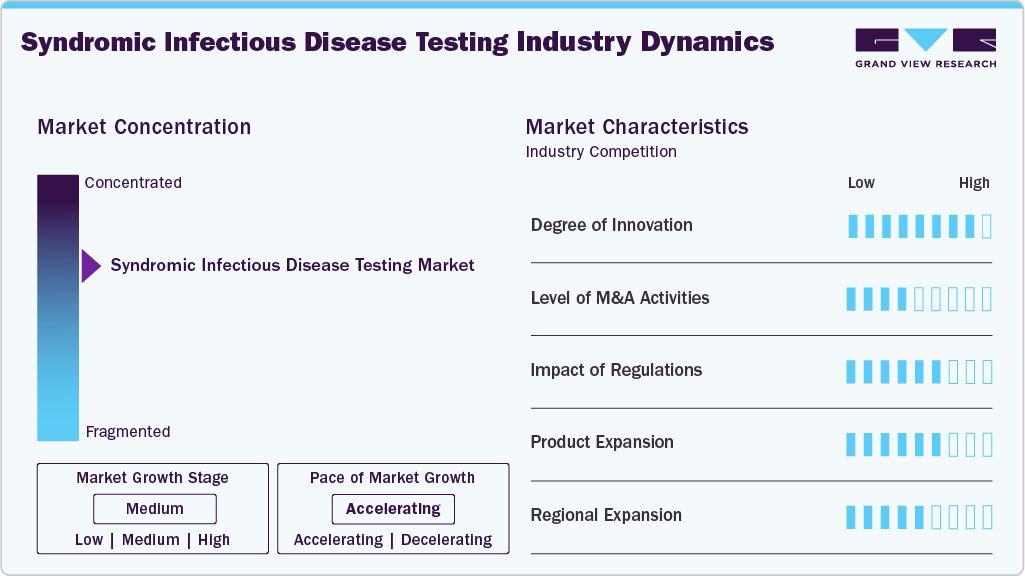
The syndromic infectious disease testing industry is highly regulated, as diagnostic platforms and multiplex assay panels must comply with stringent approval and quality standards established by regulatory authorities, including the U.S. FDA, the European Commission under CE-IVDR, and other national agencies. These regulatory frameworks ensure analytical accuracy, clinical performance, and patient safety while influencing product development timelines, commercialization strategies, and market entry. Although regulatory requirements may extend approval processes, they strengthen market confidence by promoting standardized, high-quality syndromic testing solutions and encouraging continuous innovation in multiplex molecular diagnostics.
The syndromic infectious disease testing industry is characterized by rapid product expansion, as manufacturers continue to broaden multiplex assay portfolios to address diverse infectious syndromes and improve laboratory efficiency and diagnostic accuracy. Expanding testing menus across respiratory, gastrointestinal, bloodstream, and central nervous system infections enables healthcare providers to consolidate diagnostic workflows on integrated molecular platforms, strengthening the clinical utility of syndromic testing. For instance, in March 2025, QIAGEN received U.S. FDA clearance for the QIAstat-Dx Gastrointestinal Panel 2 Mini B, expanding its U.S. syndromic testing portfolio with a targeted multiplex panel for rapid detection of five clinically significant bacterial gastrointestinal pathogens, thereby enhancing the platform's application across routine gastrointestinal infection diagnostics.
The syndromic infectious disease testing industry is witnessing moderate to high regional expansion, supported by the growing adoption of multiplex molecular diagnostics, strengthening healthcare infrastructure, and increasing demand for rapid infectious disease detection. Market participants are expanding the availability of syndromic testing platforms through regulatory approvals, localized commercialization strategies, and broader assay portfolios tailored to diverse clinical requirements. The continuous introduction of advanced testing solutions and expansion of distribution networks are improving access to syndromic diagnostics, accelerating market penetration, and reinforcing the global adoption of integrated molecular testing platforms across a wide range of healthcare settings.
Analyst Perspective
The syndromic infectious disease testing market is positioned for sustained growth, driven by the increasing need for rapid, comprehensive pathogen identification and timely clinical decision-making across acute care settings. The transition from conventional single-target diagnostics toward multiplex syndromic molecular testing is improving diagnostic accuracy, antimicrobial stewardship, and laboratory efficiency. Continuous innovation in high-throughput platforms, automated workflows, AI-enabled data interpretation, and expanded assay menus is strengthening the competitive landscape. While high testing costs and reimbursement variability remain key challenges, growing investments in infectious disease surveillance, laboratory modernization, and outbreak preparedness are expected to accelerate adoption, creating significant long-term opportunities for technology providers and diagnostic manufacturers.
Product Insights
The assay kits, reagents & consumables segment led the market with the largest revenue share of 51.6% in 2025. The segment's dominance is attributed to the recurring utilization of multiplex assay cartridges, reagents, and consumables required for routine syndromic molecular testing across hospitals, diagnostic laboratories, and reference laboratories. Continuous expansion of pathogen-specific assay menus, increasing testing volumes, and the need for rapid, accurate detection of multiple infectious agents further support sustained demand for consumables, generating recurring revenue throughout the product lifecycle. In January 2026, Cepheid received U.S. FDA clearance for the Xpert GI Panel, a multiplex PCR assay designed to detect multiple bacterial, viral, and parasitic gastrointestinal pathogens from a single specimen. The approval expanded the availability of multiplex assay cartridges for syndromic gastrointestinal testing, reinforcing demand for assay kits and consumables across clinical laboratories.
The software & informatics segment is anticipated to grow at the fastest CAGR during the forecast period, driven by the growing integration of artificial intelligence, advanced bioinformatics, real-time data analytics, and laboratory information management systems into syndromic molecular diagnostic workflows. Increasing demand for automated result interpretation, outbreak surveillance, seamless instrument connectivity, and data-driven clinical decision support is accelerating the adoption of software-enabled syndromic testing platforms across healthcare facilities. These solutions improve workflow efficiency, enhance diagnostic accuracy, and enable rapid interpretation of complex multiplex testing data. For instance, in July 2025, Seegene launched STAgora, a next-generation infectious disease analytics platform that integrates AI-powered analytics with real-time syndromic PCR diagnostics. The platform delivers real-time diagnostic interpretation, customizable dashboards, outbreak surveillance, and predictive epidemiological insights while supporting the analysis of single-pathogen infections and multi-pathogen co-infections. Its integration with Seegene's syndromic PCR ecosystem strengthened software-driven diagnostic workflows and enhanced clinical decision-making across infectious disease testing.
Technology Insights
The multiplex PCR/RT-PCR segment led the market with the largest revenue share of 86.3% in 2025. The segment's leadership is attributed to its high analytical sensitivity, rapid turnaround time, and ability to simultaneously detect multiple bacterial, viral, fungal, and antimicrobial resistance targets from a single clinical specimen. Its widespread adoption across hospitals, diagnostic laboratories, and public health institutions continues to support timely diagnosis, antimicrobial stewardship, and effective management of infectious diseases. In September 2024, Roche launched the cobas Respiratory flex test, the first assay powered by its proprietary TAGS technology, enabling simultaneous detection of up to 12 respiratory viruses and the identification of up to 15 diagnostic targets in a single multiplex PCR test. The launch strengthened high-throughput syndromic molecular diagnostics and advanced the capabilities of multiplex PCR technology for routine clinical testing.
The multiplex isothermal amplification segment is anticipated to grow at the fastest CAGR of 7.6% over the forecast period. Growth is driven by increasing demand for rapid, instrument-efficient molecular diagnostics that deliver high sensitivity with simplified workflows, making them well-suited for decentralized and near-patient testing environments. Continuous advancements in multiplex isothermal technologies are improving assay performance, reducing turnaround times, and expanding their application across diverse infectious disease syndromes. These advantages are expected to accelerate adoption in hospitals, outpatient facilities, and resource-limited healthcare settings as providers increasingly prioritize rapid and accessible syndromic diagnostic solutions.
Application Insights
The respiratory infections (including Pneumonia) segment led the market with the largest revenue share of 44.7% in 2025. The segment's dominance is driven by the high global burden of respiratory infections, overlapping clinical symptoms among viral and bacterial pathogens, and the need for rapid multiplex molecular diagnostics to support timely treatment decisions and antimicrobial stewardship. Increasing seasonal outbreaks, expanding respiratory surveillance programs, and widespread adoption of syndromic respiratory panels across healthcare facilities further strengthen demand. In August 2025, Roche received U.S. FDA clearance for the cobas Respiratory 4-flex assay, enabling simultaneous detection and differentiation of SARS-CoV-2, Influenza A, Influenza B, and RSV on a single platform. The approval strengthened multiplex respiratory testing capabilities and supported broader adoption of syndromic diagnostics in routine clinical practice.
The sexually transmitted infections segment is anticipated to grow at the fastest CAGR during the forecast period, driven by the increasing prevalence of sexually transmitted infections, expanding screening programs, and growing adoption of multiplex molecular diagnostics for rapid detection of multiple pathogens from a single specimen. Rising awareness of early diagnosis, improved access to reproductive healthcare services, and increasing demand for comprehensive syndromic testing are further supporting segment growth. Healthcare providers are increasingly adopting integrated molecular testing approaches to improve diagnostic accuracy and facilitate timely clinical intervention. In July 2026, Seegene introduced a syndromic PCR-based testing approach for reproductive tract infections, enabling the simultaneous detection of sexually transmitted infections and human papillomavirus (HPV). The development expanded the clinical application of syndromic diagnostics while supporting comprehensive reproductive health assessment and more informed patient management.
End Use Insights
The hospitals segment led the market with the largest revenue share of 41.2% in 2025. The segment's dominance is attributed to the high volume of patients requiring rapid diagnosis of acute infectious diseases, increasing adoption of multiplex molecular diagnostics in emergency departments and intensive care units, and the need for timely pathogen identification to support targeted antimicrobial therapy. Hospitals continue to invest in automated syndromic testing platforms to improve clinical decision-making, optimize infection control, and reduce diagnostic turnaround times. In April 2026, QIAGEN launched the CE-IVDR-certified QIAstat-Dx BCID GPF Plus AMR Panel, enabling rapid detection of Gram-positive pathogens, fungi, and antimicrobial resistance markers from positive blood cultures. The launch strengthened hospital-based syndromic testing capabilities for the management of bloodstream infections and critical care diagnostics.

The Public Health Laboratories segment is anticipated to register the fastest CAGR during the forecast period, driven by increasing investments in infectious disease surveillance, antimicrobial resistance monitoring, and pandemic preparedness initiatives. Public health agencies are expanding the adoption of multiplex syndromic molecular diagnostics to strengthen pathogen surveillance, outbreak investigations, and epidemiological monitoring through rapid identification of multiple infectious agents from a single specimen. Growing government funding for laboratory modernization, integration of molecular surveillance networks, and increasing emphasis on early outbreak detection are further supporting segment growth. The growing need for standardized, high-throughput diagnostic capabilities to monitor emerging and re-emerging infectious diseases is expected to accelerate the adoption of syndromic testing across public health laboratories worldwide.
Regional Insights
North America dominated the global syndromic infectious disease testing market with the largest revenue share of 41.1% in 2025. The region's leadership is driven by the widespread adoption of multiplex molecular diagnostics, well-established reimbursement frameworks, and the routine integration of syndromic testing into hospital, reference laboratory, and public health workflows. Healthcare providers increasingly prioritize rapid pathogen identification to support antimicrobial stewardship, reduce unnecessary empirical therapy, and improve clinical outcomes for respiratory, gastrointestinal, bloodstream, and central nervous system infections.

Strong regulatory support for advanced molecular diagnostics, continuous investment in infectious disease surveillance, and the presence of leading industry participants further strengthen market growth. In addition, the ongoing expansion of automated high-throughput laboratory capabilities and increasing demand for comprehensive molecular testing continue to reinforce North America's position as the largest regional market for syndromic infectious disease testing.
U.S. Syndromic Infectious Disease Testing Market Trends
The syndromic infectious disease testing market in the U.S. accounted for the largest market revenue share in North America in 2025, driven by the country's advanced molecular diagnostics ecosystem, high adoption of multiplex syndromic testing, and well-established clinical laboratory network. Strong demand for rapid pathogen identification across emergency departments, intensive care units, and hospital microbiology laboratories continues to accelerate the implementation of automated syndromic molecular diagnostics. The market further benefits from favorable reimbursement for selected molecular diagnostic procedures, robust infectious disease surveillance programs, and widespread adoption of antimicrobial stewardship initiatives that encourage evidence-based therapeutic decisions. In addition, continuous investment in laboratory automation, the expansion of integrated healthcare delivery systems, and the early adoption of next-generation molecular diagnostic technologies continue to position the United States as the primary hub for innovation and commercialization in syndromic infectious disease testing.
Europe Syndromic Infectious Disease Testing Market Trends
The syndromic infectious disease testing market in Europe is mature and innovation-driven, supported by well-established healthcare systems, stringent regulatory standards, and growing adoption of multiplex molecular diagnostics across hospital and reference laboratories. The region continues to strengthen infectious disease surveillance, antimicrobial stewardship, and laboratory standardization through the implementation of advanced molecular testing technologies. Growing demand for rapid diagnosis of respiratory, gastrointestinal, bloodstream, and central nervous system infections is further accelerating the integration of automated syndromic testing platforms into routine clinical practice. In July 2026, QIAGEN launched the CE-IVDR-certified QIAstat-Dx BCID GN Plus AMR Panel across Europe, expanding its bloodstream infection testing portfolio to include rapid detection of Gram-negative bacterial pathogens and antimicrobial resistance markers. The launch strengthened access to comprehensive syndromic molecular diagnostics while supporting faster clinical decision-making and antimicrobial stewardship across European healthcare systems.
The UK syndromic infectious disease testing market is experiencing steady growth, supported by the National Health Service's continued emphasis on rapid molecular diagnostics, antimicrobial stewardship, and integrated infectious disease surveillance. The increasing consolidation of pathology services and the expansion of centralized laboratory networks are accelerating the adoption of automated syndromic testing platforms capable of delivering rapid, comprehensive pathogen identification. Growing clinical demand for timely diagnosis of respiratory, gastrointestinal, bloodstream, and central nervous system infections is further strengthening market expansion. In addition, ongoing investments in laboratory digitalization, infection prevention strategies, and pandemic preparedness continue to enhance molecular diagnostic capabilities across hospital and public health laboratories. These factors position the UK as one of the leading European markets for the implementation of advanced syndromic infectious disease testing solutions.
The syndromic infectious disease testing market in Germany is among the largest and most technologically advanced in Europe, supported by a strong clinical laboratory network, widespread adoption of molecular diagnostics, and ongoing investment in healthcare innovation. The country's emphasis on rapid infectious disease diagnosis, antimicrobial resistance surveillance, and precision laboratory medicine has accelerated the implementation of automated syndromic testing platforms across hospitals and specialized diagnostic laboratories. Germany also benefits from a well-established reimbursement framework for molecular diagnostics, which encourages broader clinical adoption of multiplex syndromic testing. Furthermore, the presence of leading global diagnostics manufacturers, active collaboration between research institutions and healthcare providers, and ongoing modernization of laboratory infrastructure continue to strengthen Germany's position as a key market for advanced syndromic infectious disease testing technologies in Europe.
Asia Pacific Syndromic Infectious Disease Testing Market Trends
The syndromic infectious disease testing market in the Asia Pacific is projected to grow at the fastest CAGR during the forecast period, driven by the rising burden of infectious diseases, expanding healthcare infrastructure, and increasing adoption of molecular diagnostic technologies across both developed and emerging economies. Governments throughout the region are strengthening infectious disease surveillance systems, expanding public health laboratory capacity, and investing in advanced molecular testing to improve outbreak preparedness and clinical response. Rapid growth of private diagnostic laboratory networks, increasing healthcare expenditure, and improving access to automated multiplex diagnostic platforms are further supporting market expansion. In addition, the growing presence of global diagnostics manufacturers, rising domestic production capabilities, and increasing awareness of early and accurate diagnosis of infectious diseases continue to accelerate the adoption of syndromic testing for infectious diseases across the Asia Pacific region.
The China syndromic infectious disease testing market is expected to grow significantly during the forecast period, supported by increasing government investment in infectious disease surveillance, the expansion of molecular diagnostic infrastructure, and the continuous modernization of hospital and public health laboratory networks. Rising demand for rapid multiplex molecular diagnostics to manage respiratory, gastrointestinal, bloodstream, and emerging infectious diseases is accelerating market adoption across tertiary hospitals and independent diagnostic laboratories. The country's focus on strengthening epidemic preparedness, improving laboratory testing capacity, and encouraging domestic innovation in molecular diagnostics further supports market expansion. In addition, favorable healthcare reforms, growing adoption of automated diagnostic platforms, and increasing collaboration among domestic manufacturers, research institutions, and healthcare providers continue to position China as one of the fastest-growing markets for syndromic infectious disease testing in the Asia-Pacific region.
The syndromic infectious disease testing market in Japan is characterized by strong adoption of advanced molecular diagnostics, supported by the country's highly developed healthcare system, an aging population, and growing clinical demand for rapid diagnosis of infectious diseases. Healthcare providers are prioritizing automated syndromic testing platforms to improve diagnostic efficiency, reduce time to targeted treatment, and strengthen antimicrobial stewardship across hospital and reference laboratory settings. The rising incidence of respiratory infections, healthcare-associated infections, and seasonal viral outbreaks continues to support demand for multiplex molecular diagnostics. In addition, Japan's emphasis on precision healthcare, laboratory automation, and the digital transformation of clinical diagnostics, coupled with ongoing investment in high-quality diagnostic infrastructure, is expected to sustain adoption of syndromic infectious disease testing technologies throughout the forecast period.
Latin America Syndromic Infectious Disease Testing Market Trends
The syndromic infectious disease testing market in Latin America is expected to grow steadily during the forecast period, driven by the rising prevalence of MASLD and chronic hepatitis B. The Latin American market is witnessing steady growth, driven by the increasing burden of infectious diseases, expanding access to molecular diagnostics, and ongoing investments in healthcare infrastructure across major economies. The rising incidence of respiratory, gastrointestinal, tropical, and vector-borne infections is prompting healthcare providers to adopt rapid multiplex molecular diagnostics to enable timely pathogen identification and improve clinical management. The gradual expansion of private diagnostic laboratory networks, increasing modernization of hospital laboratories, and growing awareness of antimicrobial stewardship are further supporting market development. Although reimbursement variability and disparities in diagnostic infrastructure continue to influence adoption, government initiatives to strengthen infectious disease surveillance and improve laboratory capacity are expected to accelerate the implementation of syndromic testing for infectious diseases across the region during the forecast period.
Middle East and Africa Syndromic Infectious Disease Testing Market Trends
The syndromic infectious disease testing market in the Middle East & Africa is expected to grow steadily during the forecast period, supported by increasing investments in healthcare infrastructure, strengthening of infectious disease surveillance systems, and expanding access to advanced molecular diagnostic technologies. The growing prevalence of respiratory, bloodstream, and healthcare-associated infections, coupled with the continued burden of endemic and emerging infectious diseases, is driving demand for rapid multiplex diagnostic solutions across the region. Governments are prioritizing laboratory capacity expansion, outbreak preparedness, and public health monitoring by modernizing clinical and public health laboratories. Furthermore, rising healthcare expenditure, increasing adoption of automated molecular diagnostic platforms, and strategic collaborations between regional healthcare organizations and global diagnostics manufacturers are expected to support the long-term market growth across the Middle East & Africa.
Key Syndromic Infectious Disease Testing Company Insights
The syndromic infectious disease testing industry is characterized by moderate market consolidation, with competition centered on continuous innovation in multiplex molecular diagnostics, expansion of syndrome-specific testing portfolios, and integration of automation and advanced software capabilities. Market participants are focused on strengthening regulatory approvals, broadening geographic reach, and enhancing high-throughput diagnostic solutions to meet the growing demand for rapid, accurate diagnosis of infectious diseases.
Increasing investment in antimicrobial resistance detection, laboratory workflow optimization, and comprehensive pathogen identification continues to accelerate technological advancement and product differentiation. Ongoing research and development activities, combined with strategic portfolio expansion and commercialization of next-generation syndromic testing platforms, are expected to sustain competitive intensity and support long-term market growth.
Key Syndromic Infectious Disease Testing Companies
The following key companies have been profiled for this study on the global syndromic infectious disease testing market:
-
Abbott
-
bioMérieux SA
-
QIAGEN
-
BD
-
Danaher Corporation
-
F. Hoffmann-La Roche Ltd
-
Seegene Inc.
-
DiaSorin S.p.A.
-
Thermo Fisher Scientific Inc.
-
Hologic, Inc.
Competitive Benchmarking
Operating Strategies
Competitive Edge
Weaknesses
Mature Players: BioMérieux SA
- Expand multiplex syndromic testing portfolios covering respiratory, gastrointestinal, bloodstream, meningitis, and sexually transmitted infections.
- Invest in high-throughput molecular platforms, laboratory automation, AI-enabled software, and antimicrobial resistance detection.
- Strengthen market presence through regulatory approvals, strategic collaborations, geographic expansion, and continuous assay menu development.
- Extensive installed base of molecular diagnostic systems across hospitals and reference laboratories.
- Broad syndromic testing portfolios supported by integrated instruments, assay cartridges, software, and service capabilities.
- Strong R&D capabilities, regulatory expertise, global manufacturing capacity, and established distribution networks enabling rapid commercialization and sustained market leadership.
- Premium pricing of multiplex platforms and proprietary consumables may limit adoption among smaller laboratories and resource-constrained healthcare facilities.
- Lengthy regulatory and product validation timelines may delay commercialization of new assays.
- Large organizational structures can reduce operational agility compared with specialized diagnostics companies.
Emerging Players: Seegene Inc.
- Focus on expanding specialized syndromic molecular diagnostics for respiratory, sexually transmitted, bloodstream, and emerging infectious diseases.
- Develop AI-enabled diagnostic software, automated workflows, and differentiated multiplex technologies to strengthen competitive positioning.
- Pursue strategic partnerships, regional expansion, and targeted product commercialization to increase market penetration.
- Strong technological specialization in multiplex PCR, syndromic molecular diagnostics, and advanced bioinformatics.
- Greater flexibility enables faster product innovation and rapid response to evolving infectious disease trends.
- Close collaboration with healthcare institutions and research organizations supports clinical validation and technology adoption.
- Smaller installed instrument base and more limited commercial reach compared with multinational market leaders.
- Narrower product portfolios reduce opportunities for integrated end-to-end diagnostic solutions.
- Comparatively lower financial resources may constrain large-scale R&D investments, global commercialization, and manufacturing expansion.
Recent Developments
-
In July 2026, QIAGEN launched the CE-IVDR-certified QIAstat-Dx BCID GN Plus AMR Panel in Europe, expanding its bloodstream infection testing portfolio with rapid detection of 13 gram-negative bacterial pathogens and 18 antimicrobial resistance markers. The launch strengthened comprehensive syndromic bloodstream diagnostics, supporting faster clinical decision-making, antimicrobial stewardship, and broader adoption of multiplex molecular testing.
-
In January 2026, Cepheid received U.S. FDA clearance for the Xpert GI Panel, a multiplex PCR assay capable of detecting 11 clinically relevant bacterial, viral, and parasitic gastrointestinal pathogens from a single patient specimen. The approval expanded the company's gastrointestinal syndromic testing portfolio while strengthening rapid molecular diagnostics for clinical laboratories.
-
In July 2025, Seegene launched STAgora, an AI-powered infectious disease analytics platform that integrates syndromic PCR data with real-time epidemiological analysis and predictive outbreak monitoring. The platform enhanced infectious disease surveillance capabilities, enabling healthcare providers and public health organizations to improve outbreak detection and data-driven clinical decision-making.
Syndromic Infectious Disease Testing Market Report Scope
Report Attribute
Details
Market size in 2025
USD 4.7 billion
Estimated market size in 2026
USD 5.0 billion
Projected market size by 2033
USD 7.1 billion
Growth rate
CAGR of 5.2% from 2026 to 2033
Base year for estimation
2025
Historical data
2021 - 2024
Forecast period
2026 - 2033
Quantitative units
Revenue in USD million/billion, and CAGR from 2026 to 2033
Report coverage
Revenue forecast, company ranking, competitive landscape, growth factors, and trends
Segments covered
Product, technology, application, end use, region
Regional scope
North America; Europe; Asia Pacific; Latin America; MEA
Country scope
U.S.; Canada; Mexico; UK; Germany; France; Italy; Spain; Norway; Denmark; Sweden; China; Japan; India; Australia; Thailand; South Korea; Brazil; Argentina; South Africa; Saudi Arabia; UAE; Kuwait
Key companies profiled
Abbott; BioMérieux SA; QIAGEN; BD; Danaher Corporation; F. Hoffmann-La Roche Ltd.; Seegene Inc.; DiaSorin S.p.A.; Thermo Fisher Scientific Inc.; Hologic, Inc.
Customization scope
Free report customization (equivalent up to 8 analyst working days) with purchase. Addition or alteration to country, regional & segment scope.
Pricing and purchase options
Avail customized purchase options to meet your exact research needs. Explore purchase options
Global Syndromic Infectious Disease Testing Market Report Segmentation
This report forecasts revenue growth at the country level and provides an analysis of the latest industry trends and opportunities in each sub-segment from 2021 to 2033. For this study, Grand View Research has segmented the global syndromic infectious disease testing market report based on the product, technology, application, end use, and region.
-
Product Outlook (Revenue, USD Billion, 2021 - 2033)
-
Instruments
-
Assay Kits, Reagents & Consumables
-
Software & Informatics
-
Laboratory Testing Services
-
-
Technology Outlook (Revenue, USD Billion, 2021 - 2033)
-
Multiplex PCR/RT-PCR
-
Multiplex Isothermal Amplification
-
Other Multiplex Molecular Technologies
-
-
Application Outlook (Revenue, USD Billion, 2021 - 2033)
-
Respiratory Infections (Including Pneumonia)
-
Gastrointestinal Infections
-
Bloodstream Infections
-
Meningitis & Encephalitis
-
Sexually Transmitted Infections
-
Tropical & Febrile Illnesses
-
Other Infectious Syndromes
-
-
End Use Outlook (Revenue, USD Billion, 2021 - 2033)
-
Hospitals
-
Diagnostic Laboratories
-
Reference Laboratories
-
Public Health Laboratories
-
Academic & Research Institutions
-
Others
-
-
Regional Outlook (Revenue, USD Billion, 2021 - 2033)
-
North America
-
U.S.
-
Canada
-
Mexico
-
-
Europe
-
UK
-
Germany
-
France
-
Italy
-
Spain
-
Norway
-
Denmark
-
Sweden
-
-
Asia Pacific
-
Japan
-
China
-
India
-
Australia
-
South Korea
-
Thailand
-
-
Latin America
-
Brazil
-
Argentina
-
-
Middle East & Africa
-
South Africa
-
Saudi Arabia
-
UAE
-
Kuwait
-
-
Research Methodology
The syndromic infectious disease testing marketfigures in this report are based on a proven research process that combines executive interviews with secondary research from proprietary databases, company filings, and recognized regulatory and institutional sources. Market size is built through value-chain sizing—reconciling supply-side and demand-side estimates—and triangulated with bottom-up and top-down approaches. Every estimate passes multiple levels of expert validation before publication, with each syndromic infectious disease testing segment quantified using the revenue-capture definitions in the table below.
Segment Definition
Segment – Product
Revenue capture definition
Instruments
Includes capital equipment used to perform syndromic molecular infectious disease testing, such as multiplex PCR analyzers and integrated diagnostic platforms. Revenue is primarily captured through one-time sales, instrument placements, leasing agreements, and system upgrades.
Assay Kits, Reagents & Consumables
Comprises syndrome-specific assay cartridges, reagent kits, controls, calibrators, extraction consumables, and other disposable materials required for each diagnostic test. Revenue flows from recurring purchases linked to testing volume and routine laboratory operations.
Software & Informatics
Includes software platforms supporting instrument operation, assay analysis, result interpretation, laboratory workflow management, connectivity, and infectious disease surveillance. Market value is derived from software licensing, subscriptions, upgrades, and maintenance contracts.
Laboratory Testing Services
Covers outsourced syndromic infectious disease testing performed by clinical, reference, and specialized laboratories using multiplex molecular diagnostic platforms. Revenue is captured through fee-based diagnostic testing services provided on a per-sample or contractual basis.
Segment – Technology
Revenue capture definition
Multiplex PCR/RT-PCR
Includes syndromic molecular diagnostic technologies using multiplex polymerase chain reaction or reverse transcription PCR to simultaneously detect multiple pathogens within a single assay. Market value is primarily captured through instrument utilization, assay cartridges, reagent consumption, and associated software.
Multiplex Isothermal Amplification
Comprises syndromic testing technologies employing multiplex isothermal nucleic acid amplification methods that eliminate thermal cycling for rapid pathogen detection. Revenue flows from dedicated testing platforms, disposable assay kits, consumables, and integrated workflow solutions.
Other Multiplex Molecular Technologies
Covers multiplex syndromic diagnostic technologies beyond PCR and isothermal amplification, including hybridization-based, microarray, digital molecular, and emerging nucleic acid detection platforms. Market value is derived from technology-specific instruments, proprietary assays, consumables, and analytical software.
Segment – Application
Revenue capture definition
Respiratory Infections
Includes syndromic molecular tests designed to simultaneously detect multiple respiratory pathogens causing upper and lower respiratory tract infections. Revenue is primarily captured through respiratory multiplex panels, associated consumables, and testing services used in clinical diagnosis.
Gastrointestinal Infections
Covers multiplex syndromic assays used to identify bacterial, viral, and parasitic pathogens responsible for infectious gastroenteritis. Revenue flows from gastrointestinal testing panels, dedicated reagents, consumables, and laboratory diagnostic services.
Bloodstream Infections
Comprises syndromic molecular tests for rapid identification of bloodstream pathogens and antimicrobial resistance markers from positive blood cultures. Market value is derived from bloodstream infection panels, specialized consumables, and hospital laboratory testing.
Meningitis & Encephalitis
Includes multiplex molecular diagnostic panels developed for simultaneous detection of bacterial, viral, and fungal pathogens causing central nervous system infections. Revenue is captured through syndrome-specific assays, consumables, and diagnostic testing performed on cerebrospinal fluid specimens.
Pneumonia
Covers syndromic molecular testing solutions specifically intended to detect pathogens associated with community-acquired and hospital-acquired pneumonia. Revenue primarily originates from pneumonia-specific multiplex panels, supporting reagents, consumables, and laboratory-based diagnostic services.
Sexually Transmitted Infections
Comprises multiplex molecular assays that simultaneously detect pathogens responsible for sexually transmitted infections from a single clinical specimen. Revenue flows from STI testing panels, proprietary consumables, and diagnostic services across hospitals and sexual health laboratories.
Tropical & Febrile Illnesses
Includes multiplex syndromic diagnostics for infectious diseases presenting with acute febrile symptoms, including tropical and vector-borne pathogens. Market value is generated through disease-specific testing panels, consumables, and laboratory testing supporting differential diagnosis.
Other Infectious Syndromes
Covers multiplex syndromic testing applications for infectious conditions not classified under the defined application categories, including emerging and less common infectious syndromes. Revenue is captured through specialized multiplex assays, consumables, and associated diagnostic testing services.
Segment –End use
Revenue capture definition
Hospitals
Includes syndromic infectious disease testing performed within hospital laboratories and point-of-care departments for inpatient and emergency care. Revenue is primarily captured through instrument procurement, assay utilization, consumables, and hospital-based diagnostic testing services.
Diagnostic Laboratories
Covers independent and commercial diagnostic laboratories providing routine syndromic infectious disease testing for physicians, clinics, and healthcare facilities. Revenue flows from fee-based diagnostic testing, assay consumption, and laboratory service contracts.
Reference Laboratories
Comprises centralized laboratories performing high-volume, specialized syndromic molecular testing for hospitals, diagnostic laboratories, and healthcare networks. Market value is derived from outsourced testing services, high-throughput assay utilization, and long-term institutional agreements.
Public Health Laboratories
Includes government-operated laboratories conducting syndromic testing for disease surveillance, outbreak investigation, and public health monitoring. Revenue is captured through public health procurement of diagnostic instruments, testing kits, consumables, and surveillance-related laboratory services.
Academic & Research Institutions
Covers universities, medical schools, and research organizations utilizing syndromic testing technologies for infectious disease research, assay development, and clinical studies. Market value is generated through purchases of research instruments, reagents, consumables, and research-based testing activities.
Others
Includes military laboratories, veterinary diagnostic centers, occupational health facilities, and other end users performing syndromic infectious disease testing outside the primary healthcare segments. Revenue primarily originates from specialized testing platforms, consumables, and application-specific diagnostic services.
Estimation Model
The syndromic infectious disease testing industry was estimated using a bottom-up approach, beginning with the identification of key manufacturers and benchmarking their syndromic testing product portfolios. Revenue generated from syndrome-specific molecular diagnostic products was analyzed to estimate company-level market revenues, which were further validated using technology adoption rates, patient uptake, and market penetration across major applications. The aggregated revenues were then cross-verified by considering the market share of leading manufacturers to derive the overall global market size.
Delivered Customizations
This report has been delivered with the following In-depth customizations
Client Request
Customization Delivered
Value Adds
Syndromic Infectious Disease Testing Competitive Landscape & Technology Assessment
Assessed the global syndromic infectious disease testing market across multiplex PCR/RT-PCR, isothermal amplification, integrated molecular platforms, software & informatics, and laboratory testing services. Analyzed leading manufacturers, competitive positioning, product portfolios, technology adoption trends, regulatory approvals, product launches, and commercialization strategies across hospitals, diagnostic laboratories, and public health laboratories.
Enabled the client to identify high-growth syndromic testing technologies, benchmark competitors, evaluate product differentiation, prioritize investments in multiplex molecular diagnostics, and understand technology adoption trends shaping the syndromic infectious disease testing industry.
Syndromic Infectious Disease Testing Product Benchmarking Study
Delivered a comprehensive benchmarking assessment of syndromic molecular diagnostic platforms based on pathogen coverage, analytical performance, turnaround time, throughput, automation, software integration, regulatory status, antimicrobial resistance detection capabilities, and workflow efficiency across leading diagnostic manufacturers.
Helped the client evaluate product competitiveness, identify technology gaps, benchmark next-generation multiplex diagnostic platforms, prioritize product development strategies, and assess opportunities for assay menu expansion and workflow optimization.
Syndromic Infectious Disease Testing Commercialization & Market Entry Assessment
Assessed commercialization strategies, regulatory pathways, reimbursement landscape, distribution networks, healthcare adoption trends, strategic collaborations, and market readiness across hospitals, reference laboratories, public health laboratories, and academic institutions. Evaluated competitive intensity, procurement practices, and barriers to adoption for advanced syndromic molecular diagnostics.
Supported commercialization planning by identifying high-potential regional markets, evaluating partnership and distribution opportunities, assessing regulatory and reimbursement requirements, mitigating commercialization risks, and strengthening long-term growth strategies within the syndromic infectious disease testing industry.
Frequently Asked Questions About This Report
The assay kits segment accounted for the largest share of the 51.6% market in 2025.
The primary factors driving the syndromic infectious disease testing market include growing adoption of rapid multiplex molecular diagnostics for timely clinical decision-making. Market growth is also supported by technological innovation, increasing investment, growing awareness, expanding applications, and rising adoption across developed and emerging economies.
The key players operating in the syndromic infectious disease testing market include BioMérieux SA, QIAGEN, BD, Danaher Corporation, F. Hoffmann-La Roche Ltd., Seegene Inc., DiaSorin S.p.A., Thermo Fisher Scientific Inc., Hologic, Inc., Abbott.
Asia Pacific is expected to register the fastest growth during the forecast period.
The multiplex PCR/RT-PCR segment held the largest market share of 86.3% in 2025.
The respiratory infections (including pneumonia) segment dominated the market with the largest revenue share 44.7 % in 2025.
The global syndromic infectious disease testing market is expected to grow at a compound annual growth rate (CAGR) of approximately 5.2% from 2026 to 2033, reaching USD 7.1 billion by 2033
North America dominated the global syndromic infectious disease testing market in 2025. Its leading position is supported by well-developed infrastructure, high adoption of advanced solutions, the presence of major market participants, favorable funding, and a supportive regulatory environment.
The global syndromic infectious disease testing market was valued at approximately USD 4.7 billion in 2025 and is projected to reach 5.0 billion in 2026.
About the Author(s)
Clinical Diagnostics Research Team
Healthcare · Clinical DiagnosticsThis report was authored by the clinical diagnostics research team at Grand View Research - comprising two research analysts, one senior research analyst, and one industry expert - with specialized expertise in the clinical diagnostics segment of the healthcare industry. All findings are based on proprietary healthcare databases, executive interviews, and regulatory analysis, subject to internal peer review prior to publication.
Last Updated:
Speak to Analyst


Customize this report to your needs — add regions, segments, or data points, with 20% free customization.
Or view our licence options:


ISO 9001:2015 & 27001:2022 Certified
We are GDPR and CCPA compliant! Your transaction & personal information is safe and secure. For more details, please read our privacy policy.


