
- Home
- »
- Medical Devices
- »
-
Ultrasonic Skincare Devices Market Size Report, 2026-2033GVR Report cover

Ultrasonic Skincare Devices Market (2026 - 2033)
Size, Share & Trends Analysis By Product (Handheld Devices, Tabletop Devices), By End-use (Dermatology Clinics, Medspas, Homecare), By Region (North America, Europe, Latin America, MEA), And Segment Forecasts
Market Size, 2025
$717.9MMarket Estimate, 2026
$783.9MMarket Forecast, 2033
$1,589.7MCAGR, 2026–2033
10.6%Ultrasonic Skincare Devices Market Summary
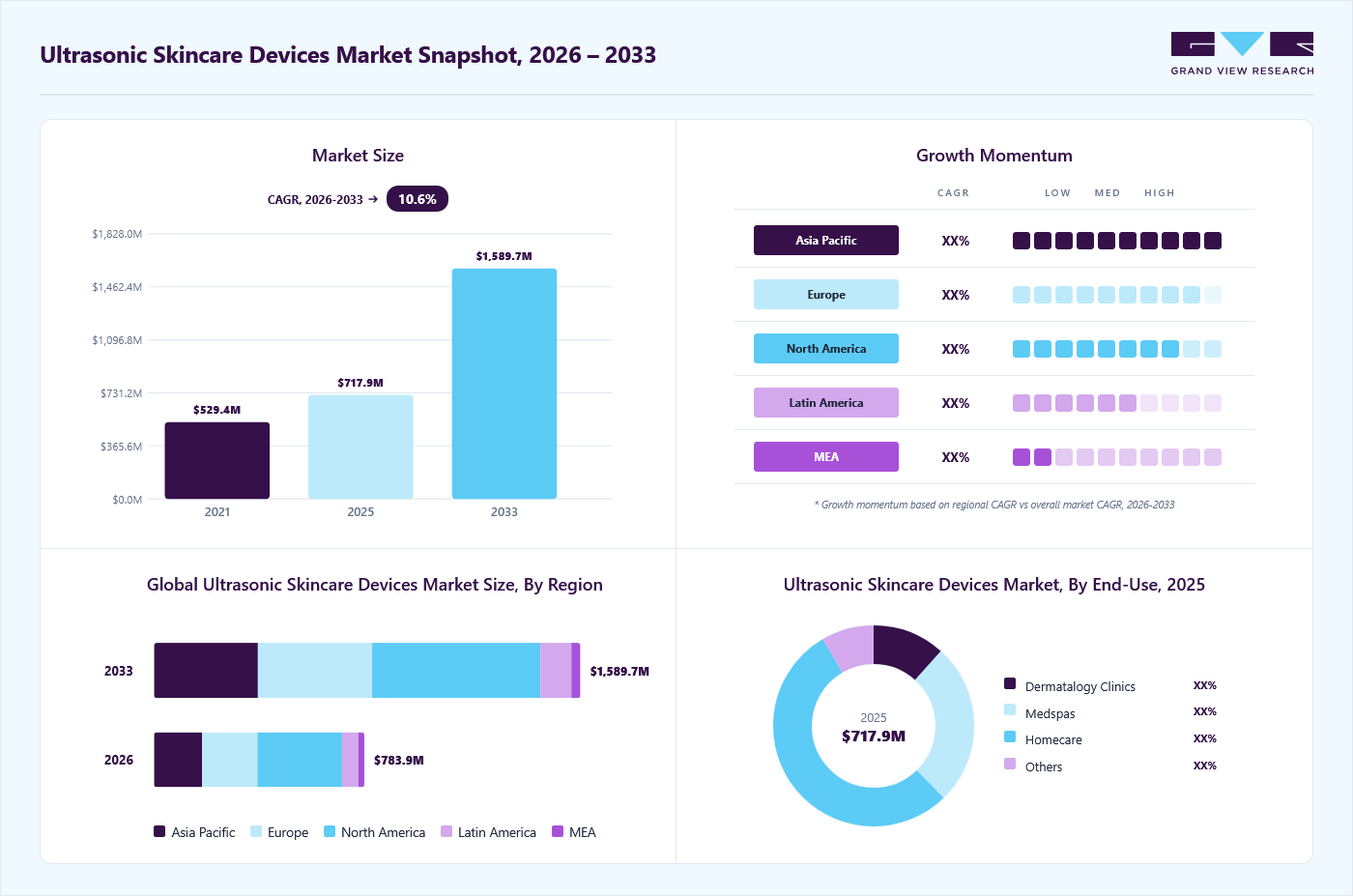
The ultrasonic skincare devices market size was valued at USD 717.9 million in 2025 and is projected to grow from USD 783.9 million in 2026 to USD 1,589.7 million by 2033, at a CAGR of 10.6% from 2026 to 2033. North America dominated the market with the largest revenue share of 40.3% in 2025. The market growth is driven by the growing demand for non-invasive and home-based skincare treatments, increased consumer awareness about personal care, and advancements in ultrasonic technology.
 Source: Grand View Research, IR Documents, Primary Interviews, Paid DatabasesTo learn more about this report,
 Download Free Sample Report
Key Market Trends & Insights
- By product: Handheld devices segment led the market with the largest revenue share of 72.3% in 2025.
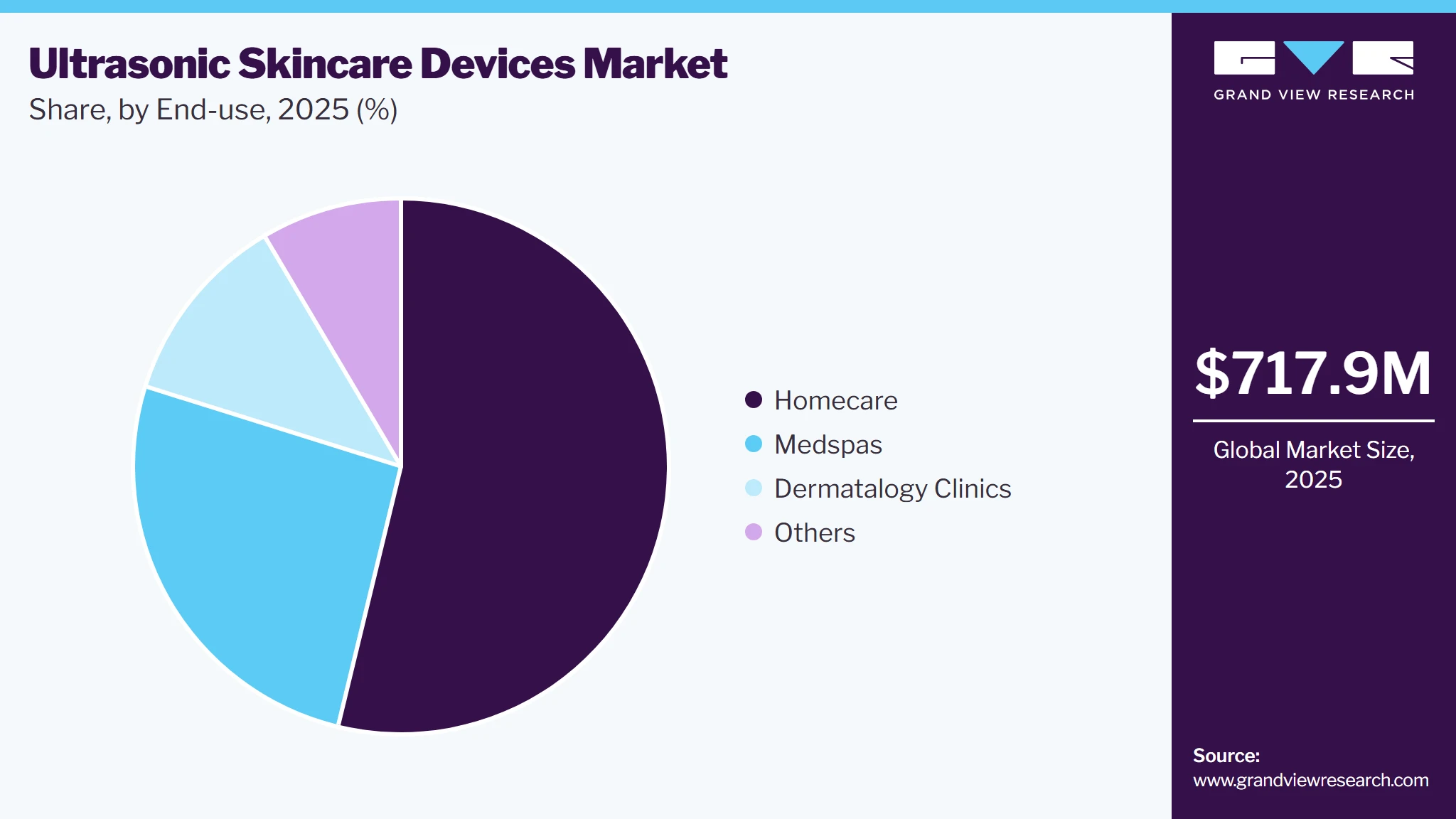
- By end-use: Homecare segment led the market with the largest revenue share of 53.8% in 2025.
Regional Highlights
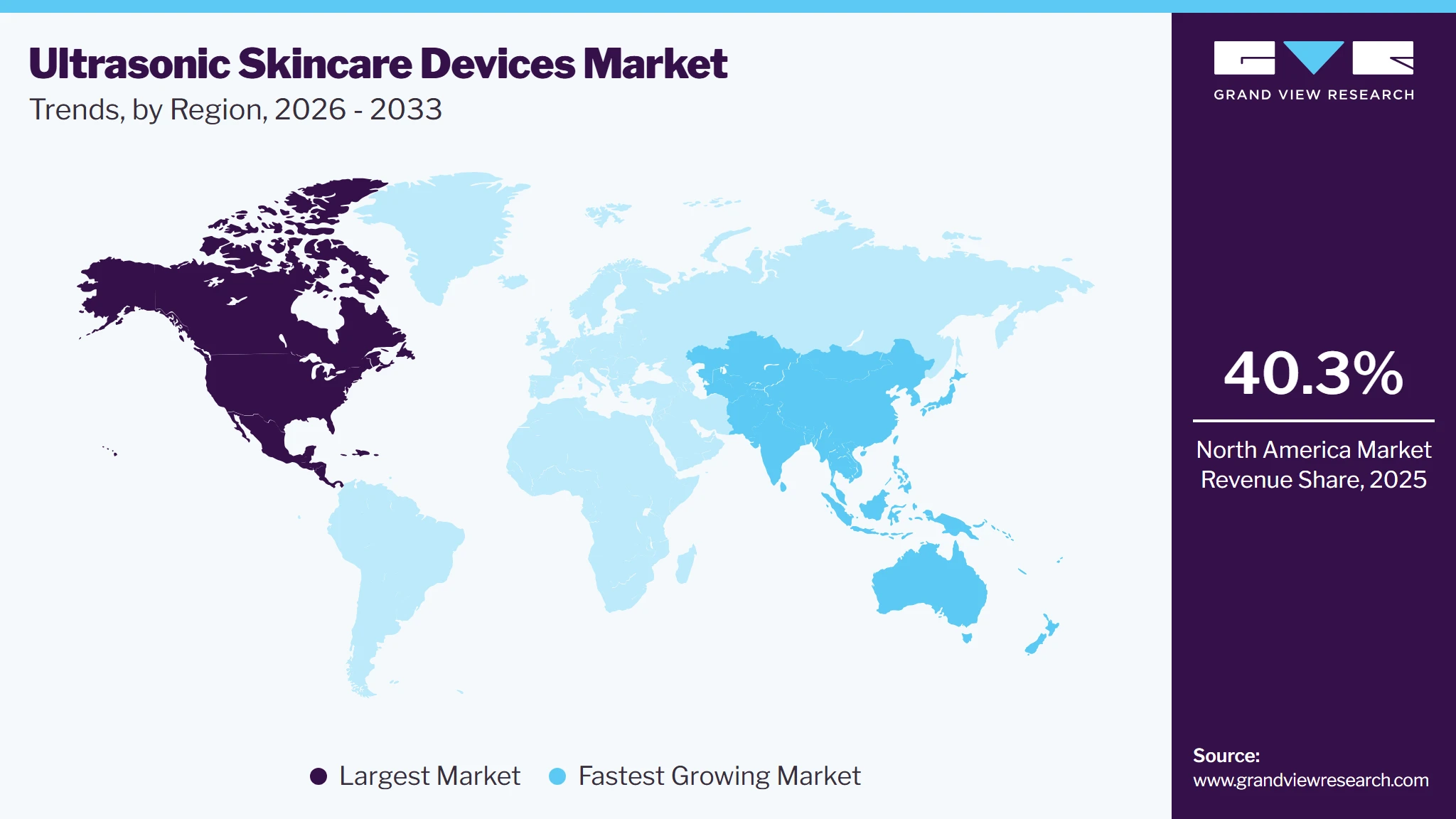
- Largest regional market: North America (40.3% revenue share, 2025)
- Fastest-growing regional market: Asia Pacific (highest CAGR, 2026-2033)
- By country: The ultrasonic skincare devices market in the U.S. held the largest share in the North America region in 2025.
Market Size & Forecast
- Market Size in 2025: USD 717.9 Million
- Estimated Market Size in 2026: USD 783.9 Million
- Projected Market Size by 2033: USD 1,589.7 Million
- CAGR (2026-2033): 10.6%
Prism AI by Grand View Research Free to tryAsk a question about the ultrasonic skincare devices marketTry asking✓Every figure cited from GVR research Prefer the report? Download free sample →
Furthermore, continuous product innovation, including portable smart devices integrated with AI-enabled skin analysis, app connectivity, and multi-functional treatment modes, is supporting market expansion. For instance, in January 2024, L'Oréal introduced the “Cell BioPrint” skin analysis technology at CES 2024, highlighting the increasing integration of advanced diagnostic and skincare technologies in the beauty device industry. Similarly, companies are launching compact ultrasonic facial cleansing and infusion devices designed specifically for at-home use, further strengthening consumer adoption globally.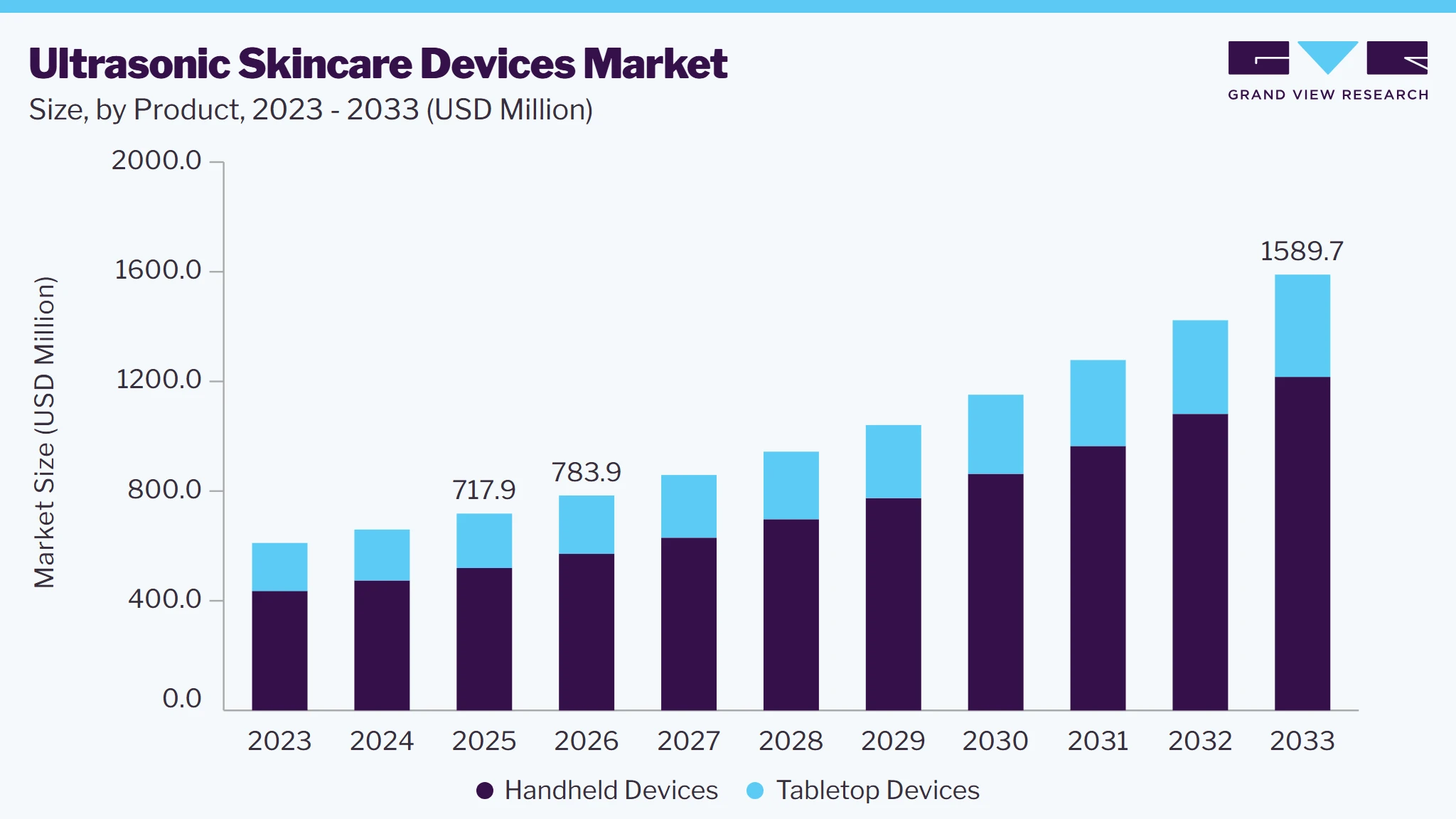 To learn more about this report, Download Free Sample Report
Ultrasonic skincare devices use high-frequency sound waves to deeply clean the skin, improve product penetration, and stimulate collagen, making them the popular choice for consumers and dermatology clinics. The demand for non-invasive or minimally invasive cosmetic procedures is rising significantly. According to data published by the American Society of Plastic Surgeons, cosmetic procedures continue to rise post-pandemic, with non-invasive and minimally invasive treatments accounting for a significant share of total procedures performed. In 2024, the total number of cosmetic surgical and minimally invasive procedures performed in the U.S. exceeded 30 million, reflecting continued consumer demand for aesthetic treatments and skin rejuvenation procedures. The organization also reported steady year-on-year growth in minimally invasive procedures, particularly injectables, skin resurfacing, and non-invasive skin tightening.
Aging populations fuel demand for anti-aging skincare solutions, particularly those that improve skin tone and elasticity, such as ultrasonic therapy. With global demographics shifting rapidly, skin aging has become a central concern in personal care. As per the data published by the World Health Organization (WHO), by 2030, 1 in 6 people worldwide will be 60 years or over. Ultrasonic skincare devices are gaining popularity among older consumers because they offer a non-invasive way to stimulate collagen and elastin production, improve microcalculation, and enhance lymphatic drainage, all beneficial for mitigating visible signs of aging.
Technological developments have positively influenced ultrasonic technology in transdermal drug delivery research, sensor technology, and materials science. Ultrasonic devices were previously used in clinical settings, but with recent advances, miniaturization, battery optimization, and multi-function integration into small, consumer-friendly devices has become possible. The evolution of this technology has enhanced the effectiveness and credibility of ultrasonic skin devices and brought them to the level of luxury beauty products and scientifically validated tools for improving skin health.
Market Dynamics
Ultrasonic skincare solutions are gaining significant traction as they enable dermatology clinics, medical spas, and plastic surgeons alongside the home-use consumer beauty tech sector to address, treat, and optimize skin health and body aesthetics through advanced energy-based platforms. These solutions integrate technologies such as High-Intensity Focused Ultrasound (HIFU), micro-focused ultrasound with visualization (MFU-V), localized dynamic ultrasound (LDM), real-time ultrasound imaging guidance, and cloud-connected practitioner dashboards to provide real-time control over focal depth, thermal energy delivery, localized collagen synthesis, and treatment efficacy. Ultrasonic skincare platforms help healthcare providers and practitioners address the rising global demand for non-invasive cosmetic procedures by supporting personalized lifting and tightening treatment plans, non-surgical facial rejuvenation, targeted subdermal structural remodeling, and proactive anti-aging or "prejuvenation" management.
Consumers are increasingly preferring non-invasive skincare solutions that provide cosmetic benefits without pain, downtime, or expensive clinical procedures. Ultrasonic skincare devices offer deep cleansing, exfoliation, anti-aging, skin tightening, and enhanced serum absorption from the comfort of home, making them highly attractive among younger consumers and aging populations alike. Furthermore, the growing popularity of professional-grade skincare treatments at home has encouraged companies to introduce technologically advanced ultrasonic beauty devices with multifunctional capabilities. For instance, in February 2025, South Korean home aesthetics brand THOME launched “The Glow,” an ultrasonic beauty device designed to deliver professional-level skincare at home using dual-frequency ultrasound technology to improve skin elasticity, hydration, and collagen activation.
The market faces strong competition from alternative skincare solutions such as microcurrent devices, LED therapy devices, radiofrequency systems, laser-based skincare treatments, and conventional dermatological procedures. Consumers may opt for these alternatives depending on treatment effectiveness, affordability, and dermatologist recommendations, thereby restraining the growth potential of ultrasonic skincare devices.
Market Concentration & Characteristics
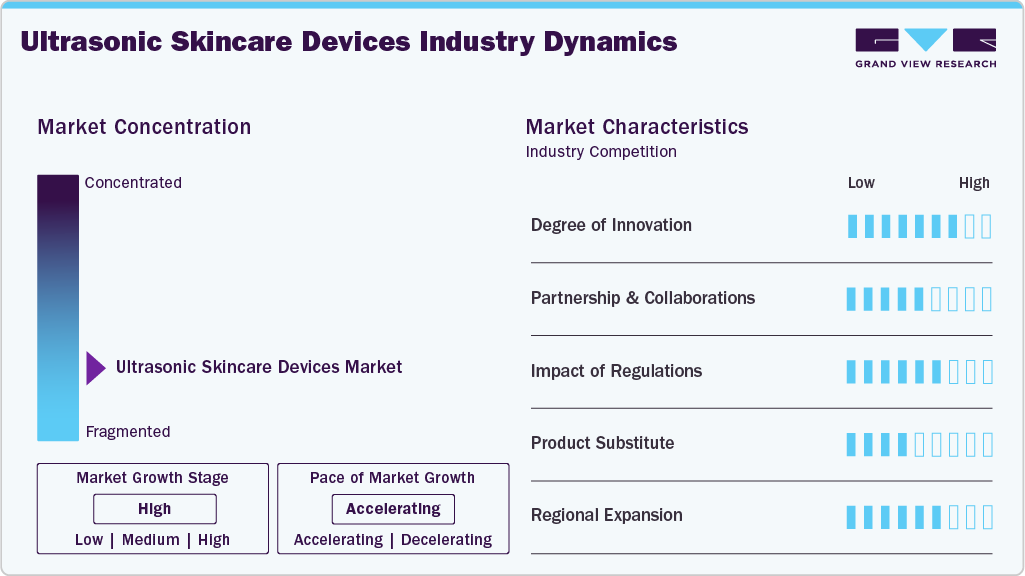
The ultrasonic skincare devices industry exhibits moderate-to-high industry concentration, with the presence of several established beauty technology and personal care companies competing alongside emerging skincare device brands. The market is characterized by growing consumer demand for non-invasive and home-based skincare treatments, driven by increasing awareness regarding skin health, anti-aging solutions, and personal grooming. The market is also influenced by continuous advancements in skincare technologies, including ultrasonic vibration systems, AI-enabled skin analysis, multifunctional beauty devices, and smart app-connected skincare solutions.
The ultrasonic skincare device industry has witnessed notable innovations to enhance treatment personalization and efficacy. Recent advancements include integrating smart technologies that allow users to tailor treatments based on individual skin types and conditions. For instance, devices such as the SolaWave Radiant Renewal Wand combine multiple therapies, such as red-light therapy, galvanic current, facial massage, and therapeutic warmth, to address skin concerns such as fine lines, puffiness, and overall skin texture.
 To learn more about this report, Download Free Sample Report
The ultrasonic skincare device industry witnessed moderate mergers and acquisitions, driven by the demand for sophisticated, non-invasive beauty technology. As firms attempt to stand out in a highly competitive market, M&A is likely to increase, with large companies purchasing small, innovative companies with new features or advanced technology. This shift is also driven by increasing focus on using artificial intelligence (AI) and machine learning to provide customized treatments for specific skin conditions. M&A activity is expected to accelerate as firms seek to diversify their base and expand into new geographies. For instance, in November 2023, South Korean beauty device manufacturers announced a merger, aiming to form the world's largest aesthetics device company by revenue, strengthening their global presence in laser and energy-based technologies.
Regulations play a significant role in shaping the ultrasonic skincare device industry, as many of these products fall under cosmetic devices rather than medical devices, depending on their claims. In the U.S., the FDA oversees devices that make medical claims, such as acne treatment devices, while other devices are regulated by the Federal Trade Commission (FTC) regarding advertising standards. In Europe, the market is regulated under the EU Cosmetics Regulation, which ensures the safety and efficacy of devices used for cosmetic purposes. Regulatory requirements for these devices generally focus on product safety, labeling, and efficacy claims, influencing design and marketing strategies for manufacturers.
The market has experienced significant product expansion, driven by rapid innovation, consumer demand for multifunctionality, and miniaturization and materials science advances. Manufacturers have moved beyond basic ultrasound cleansing tools to introduce more advanced, hybrid devices combining multiple cosmetic technologies into one unit. For instance, in January 2024, Clarius Mobile Health received CE mark approval for its PAL HD3 wireless handheld ultrasound scanner. It was concurrently launched in the European Union and the UK. The device delivers up to 40 cm deep high-resolution imaging and integrates phased linear arrays on a single head, enhancing bedside diagnostics across clinical settings.
The market is experiencing rapid regional expansion, particularly in North America, Europe, and Asia-Pacific. This is attributed to the region's increasing focus on skincare, beauty culture, and a growing middle-class population with higher disposable income. Moreover, the prevalence of beauty-conscious consumers and the increasing availability of advanced beauty technologies in these regions boost the market's expansion. As a result, global manufacturers are actively seeking to strengthen their presence in emerging markets with tailored products and localized marketing strategies.
Analyst Perspective
The ultrasonic skincare devices market is positioned for several long-term healthcare, medical aesthetics, and consumer beauty industry trends, including the surging demand for completely non-invasive lifting and tightening procedures, an increasing consumer focus on systemic skin health, and continuous advancements in acoustic wave-based technologies. Rising concerns related to skin laxity, deep wrinkles, sagging jawlines, uneven structural texture, and non-surgical body contouring are creating significant opportunities for ultrasound device manufacturers and service providers as consumers seek high-efficacy, deep-tissue structural remodeling with zero downtime. Furthermore, the dual-market expansion of these platforms spanning professional installations across dermatology clinics, plastic surgery practices, and medical spas, alongside high-growth direct-to-consumer (DTC) at-home handheld devices is fundamentally transforming the market landscape.
Product Insights
Based on product, the handheld devices segment led the market with the largest revenue share of 72.3% in 2025, driven by the growing trend of at-home beauty treatments. For instance, a study published in Lasers in Medical Science in 2024 evaluated a novel home-use handheld device emitting low-level light, radiofrequency, microcurrent, and low-intensity ultrasonic waves. The study found that this multi-energy-based device effectively enhanced skin rejuvenation by increasing type I collagen expression and strengthening the epidermal barrier, without significant adverse effects.
The tabletop ultrasonic skincare device segment is expected to grow at the fastest CAGR during the forecast period due to increased adoption within professional settings such as dermatology clinics and medspas. This growth aligns with the U.S. Bureau of Labor Statistics’ projection of a 10% employment increase for skincare specialists from 2023 to 2033, indicating a broader expansion of the skincare industry. Moreover, the U.S. Food and Drug Administration (FDA) has provided clear regulatory pathways for such devices, requiring Class II devices to obtain Premarket Notification 510(k) clearance, ensuring safety and efficacy standards are met.
End Use Insights
Based on end-use, the homecare segment led the market with the largest revenue share of 53.8% in 2025, fueled by the growing consumer demand for affordable, convenient, and non-invasive solutions. During and after the COVID-19 pandemic, users began investing in at-home devices to maintain skincare routines, reducing reliance on in-person services. Moreover, online platforms such as YouTube and TikTok have democratized skincare learning, prompting additional consumers to administer ultrasonic facials at home. With devices now priced low and featuring rechargeable batteries and waterproof builds, adoption continues to expand, particularly among millennials and Gen Z. Furthermore, companies are increasingly strengthening direct-to-consumer distribution channels to capitalize on rising homecare demand. For instance, in May 2026, Ultrasonic Skin Scrubber launched its authorized online store focused on verified ultrasonic facial spatula devices for at-home cleansing, exfoliation, and skincare enhancement, highlighting the growing consumer preference for professional-grade skincare solutions at home.
 To learn more about this report, Download Free Sample Report
The medspas segment is expected to grow at the fastest CAGR during the forecast period. This growth is driven by the expanding intersection of cosmetic dermatology and wellness, which is driving the adoption of advanced, non-invasive technologies such as ultrasonic skincare devices in professional settings. Unlike traditional spas, medspas operate under physician oversight and offer specialized treatments, including ultrasound-assisted facials, sonophoresis for enhanced product absorption, and skin tightening procedures using multifunctional hybrid systems. According to a 2023 American Med Spa Association (AmSpa) report, U.S. medspas recorded an average of 283 non-surgical aesthetic patient visits per month, reflecting strong and consistent client demand. As aesthetic preferences shift toward natural, gradual enhancements over more invasive surgical procedures, medspas have solidified their role as trusted providers of ultrasonic therapy, particularly among wellness-focused Gen X and millennial consumers seeking visible improvements without needles, downtime, or surgery.
Regional Insights
North America dominated the ultrasonic skincare devices market with the largest revenue share of 40.3% in 2025, owing to the large demand for noninvasive and antiaging skincare solutions. Manufacturers are prioritizing eco-friendly materials and energy-efficient designs to meet the expectations of environmentally conscious consumers. As this market evolves, the intersection of technology, consumer engagement, and sustainability will likely continue to drive innovation and growth.
 To learn more about this report, Download Free Sample Report
U.S. Ultrasonic Skincare Devices Market Trends
The ultrasonic skincare devices market in the U.S. held the largest share in the North America region in 2025. The U.S. ultrasonic skincare devices industry is progressing robustly, fueled by increasing consumer demand for non-invasive, at-home beauty solutions. Key market trends include integrating cutting-edge technologies such as Bluetooth connectivity, AI-driven skin analysis, and app-based controls. These advancements empower users to tailor treatments and monitor their skin health in real time. Modern devices increasingly combine ultrasonic waves with additional modalities, such as LED light therapy and microcurrent stimulation, delivering comprehensive skincare benefits. Furthermore, social media and influencer marketing are pivotal in driving consumer awareness and adoption, with platforms showcasing real-time results and authentic user testimonials. Moreover, there is an increased focus on sustainability within the industry.
Europe Ultrasonic Skincare Devices Market Trends
The European ultrasonic skincare devices industry is steadily adopting ultrasonic skincare devices, especially in wellness-focused and anti-aging segments. Many European consumers favor technologies that combine scientific efficacy with natural results, making ultrasound-based therapies a perfect fit. Aesthetic clinics in Germany, France, and the UK now regularly offer ultrasound-assisted facials as noninvasive options to stimulate collagen and improve skin texture.
The ultrasonic skincare devices industry in the UK has gained traction through the rise of private aesthetic clinics and mobile beauty professionals. Regulation by the Medicines and Healthcare Products Regulatory Agency (MHRA) guarantees quality and safety. Fears regarding fake or unlicensed aesthetic treatments have driven demand for authenticated high-performance devices. In addition, consumer interest in non-invasive, technology-based skincare treatments has grown, with ultrasonic facials becoming mainstream in upscale clinics and home routines.
The ultrasonic skincare devices industry in Germany is experiencing significant growth, driven by increasing consumer awareness regarding skin health, rising demand for non-invasive aesthetic treatments, and the growing popularity of at-home beauty devices. The country’s strong skincare and cosmetics industry, combined with high disposable income and increasing adoption of technologically advanced personal care products, is supporting market expansion. Furthermore, the rising influence of social media beauty trends, wellness-focused lifestyles, and demand for professional-grade skincare solutions at home are encouraging consumers to adopt ultrasonic facial cleansing, anti-aging, and skin rejuvenation devices. In addition, continuous product innovation by beauty technology companies and the growing presence of e-commerce and direct-to-consumer sales channels are expected to further accelerate the adoption of ultrasonic skincare devices across Germany.
Asia Pacific Ultrasonic Skincare Devices Market Trends
Asia Pacific ultrasonic skincare devices industry is the fastest-growing region for ultrasonic skincare devices, driven by a cultural focus on skin perfection, strong technological innovation, and rapid urbanization. Consumers in this region are particularly proactive in their beauty routines, embracing devices that promise enhanced product absorption, pore cleansing, and anti-aging benefits. South Korea and Japan are innovation hubs, where ultrasonic facial tools are routinely marketed alongside serums and sheet masks as part of daily skincare rituals. For instance, in February 2025, South Korean home aesthetics brand THOME launched "The Glow," an ultrasonic beauty device designed for professional-level skincare at home. Utilizing dual-frequency ultrasound technology, it targets the epidermis, dermis, and subcutaneous layers to enhance skin glow, elasticity, and moisture by activating collagen synthase. Developed in collaboration with a dermatologist with 30 years of experience, the device underwent over 50 quality tests at THOME's LabForm institute to ensure efficacy and safety.
The China ultrasonic skincare devices industry is expected to grow significantly over the forecast period. China has become a major consumer and producer of ultrasonic skincare devices. Urban millennials and Gen Z consumers have embraced portable home-use beauty devices, often promoted via livestream shopping on platforms like Douyin (TikTok China) and Taobao Live. Domestic brands capitalize on this trend by offering affordable, tech-savvy products tailored to skincare-conscious youth. Government support to innovation and local manufacturing has strengthened local R&D capability. Moreover, partnerships between beauty tech firms and cosmetics companies result in the creation of AI-powered devices, facilitating greater personalization and positioning China as an international beauty tech leader.
The ultrasonic skincare devices industry in Japan is witnessing steady growth, driven by the country’s strong beauty and personal care culture, increasing demand for technologically advanced skincare solutions, and growing consumer preference for non-invasive aesthetic treatments. Japan’s aging population and high focus on skin maintenance and anti-aging routines are significantly supporting the adoption of ultrasonic facial cleansing, skin tightening, and rejuvenation devices. Additionally, the presence of leading beauty technology and electronics manufacturers, along with continuous innovation in compact, multifunctional skincare devices, is contributing to market expansion. The increasing popularity of home-based beauty treatments, supported by e-commerce platforms, social media influence, and the integration of smart skincare technologies, is further expected to drive the adoption of ultrasonic skincare devices across Japan.
Latin America Ultrasonic Skincare Devices Market Trends
Latin America's ultrasonic skincare devices industry is witnessing steady growth as skin-related conditions become more prevalent and the population ages. Rising concerns over hyperpigmentation, acne, sun damage, and premature aging, common in the region due to high UV exposure and limited early access to dermatological care, drive individuals to seek more effective skincare solutions. As healthcare infrastructure improves and disposable income rises, more consumers turn to advanced skincare technologies for cosmetic and therapeutic use, reflecting a broader regional shift toward multi-modal, non-surgical skincare solutions that are safe, effective, and accessible.
The ultrasonic skincare devices industry in Brazil is experiencing considerable growth, driven by rising consumer interest in personal grooming, increasing awareness regarding skincare and aesthetic wellness, and the growing popularity of non-invasive beauty treatments. Brazil’s strong beauty and cosmetics industry, combined with a large young population and increasing spending on personal care products, is supporting the adoption of ultrasonic facial cleansing, exfoliation, and anti-aging devices. Additionally, the growing influence of social media beauty trends, beauty influencers, and expanding access to e-commerce platforms is encouraging consumers to invest in at-home skincare technologies. Furthermore, the increasing availability of affordable and portable ultrasonic skincare devices, along with rising demand for professional-grade beauty treatments at home, is expected to further accelerate market growth across Brazil.
Middle East and Africa Ultrasonic Skincare Devices Market Trends
The Middle East and Africa ultrasonic skincare devices industry is emerging as a promising market, with demand steadily increasing due to rising disposable incomes, rapid urbanization, and a cultural shift toward wellness and aesthetic self-care. In recent years, countries such as Saudi Arabia, the UAE, and South Africa have grown interested in non-invasive beauty technologies, including ultrasound-based facial and anti-aging treatments. This demand is partly driven by a younger, image-conscious population and an expanding middle class seeking safe, effective alternatives to surgical procedures.
The ultrasonic skincare devices industry in Saudi Arabia is witnessing strong growth, driven by rising consumer spending on beauty and personal care products, increasing awareness regarding skincare and aesthetic wellness, and growing demand for non-invasive cosmetic treatments. The country’s expanding young population, high disposable income, and strong preference for premium beauty solutions are supporting the adoption of ultrasonic facial cleansing, skin rejuvenation, and anti-aging devices. Additionally, the increasing influence of social media, beauty influencers, and evolving beauty standards are encouraging consumers to incorporate advanced skincare technologies into their daily routines. Furthermore, the rapid expansion of e-commerce platforms, luxury beauty retail channels, and the growing popularity of at-home aesthetic treatments are expected to further boost the adoption of ultrasonic skincare devices across Saudi Arabia.
Key Ultrasonic Skincare Devices Company Insights
The competitive scenario in the ultrasonic skincare devices industry is highly competitive, with several market players competing to enhance their market positions. The major companies are undertaking various organic as well as inorganic strategies such as new product development, collaborations, acquisitions, mergers, and regional expansion for serving the unmet needs of their customers.
Key Ultrasonic Skincare Devices Companies
The following key companies have been profiled for this study on the ultrasonic skincare devices market.
-
Alma Lasers GmbH
-
Cynosure, Inc.
-
Solta Medical, Inc.
-
Cutera, Inc.
-
Syneron Medical Ltd.
-
Canfield Scientific, Inc.
-
3Gen
-
Aesthetic Group
-
Ambicare Health
-
Image Derm, Inc.
-
Fotona
Competitive Benchmarking
Operating Strategies
Competitive Edge
Weaknesses
Mature Players: Alma Lasers
- Mature companies focus on expanding skincare device portfolios across ultrasonic facial cleansing, skin tightening, anti-aging, exfoliation, and serum infusion technologies for both professional and homecare applications.
- Companies emphasize multifunctional beauty devices, AI-enabled skin analysis, smart app connectivity, rechargeable portable systems, and dermatologist-backed skincare solutions to strengthen premium brand positioning and consumer engagement.
- Established manufacturers benefit from strong beauty retail partnerships, broad skincare product portfolios, extensive consumer trust, and well-developed e-commerce and distribution networks across global beauty markets.
- Advanced technologies such as ultrasonic vibration systems, integrated LED therapy, personalized skincare monitoring, waterproof portable designs, and multifunctional treatment modes improve customer convenience and brand differentiation.
- High R&D investments, intense market competition, rapidly changing beauty trends, and continuous product innovation requirements increase operational complexity for established companies.
- Large organizations may experience slower product innovation cycles due to complex supply chains, premium pricing pressures, regulatory compliance requirements, and rapidly evolving consumer preferences in the beauty technology sector.
Emerging Players: Ambicare Health
- Emerging companies focus on niche skincare technologies, affordable portable ultrasonic devices, smart beauty tools, AI-based skin assessment platforms, and direct-to-consumer business models targeting younger consumers.
- These players prioritize innovation-driven strategies including influencer collaborations, social commerce marketing, e-commerce expansion, targeted product launches, and development of compact multifunctional skincare devices for home-based treatments.
- Emerging companies benefit from faster innovation cycles and flexibility in developing trend-focused ultrasonic skincare devices tailored for Gen Z, millennials, and digitally engaged beauty consumers.
- Their ability to rapidly integrate social media marketing, personalized skincare technologies, multifunctional treatment modes, and cost-effective product offerings strengthens differentiation within the competitive landscape.
- Emerging companies face limited financial resources, lower brand recognition, smaller distribution networks, and reduced dermatologist awareness compared to multinational beauty technology leaders.
- Challenges in maintaining product quality consistency, obtaining regulatory certifications, scaling manufacturing operations, and sustaining long-term consumer trust may restrict broader commercial expansion.
Recent Developments
-
In February 2025, South Korean beauty-tech companies continued expanding multifunctional home-use skincare devices integrating ultrasound, LED therapy, and skin infusion technologies to meet growing demand for professional-grade at-home aesthetic treatments. This trend has been particularly strong among K-beauty brands targeting global consumers through e-commerce and influencer marketing channels.
-
In February 2025, Fotona unveiled its latest aesthetic laser systems, Dynamis Max, StarWalker PICO Pro, and SkyWave, at IMCAS 2025 in Paris, France, enhancing its portfolio with advanced, user-friendly technologies.
-
In May 2024, Cutera launched a new skin resurfacing and revitalization device in the United States, enhancing its energy-based aesthetics portfolio and targeting the growing demand for advanced dermatologic solutions.
Ultrasonic Skincare Devices Market Report Scope
Report Attribute
Details
Market size in 2025
USD 717.9 million
Estimated Market Size in 2026
USD 783.9 million
Projected Market Size by 2033
USD 1,589.7 million
Growth rate
CAGR of 10.6% from 2026 to 2033
Historical data
2021 - 2024
Forecast period
2026 - 2033
Quantitative units
Revenue in USD million/billion and CAGR from 2026 to 2033
Report coverage
Revenue forecast, company ranking, competitive landscape, growth factors, and trends
Segments covered
Product, end-use, region
Regional scope
North America; Europe; Asia Pacific; Latin America; MEA
Country scope
U.S.; Canada; Mexico; Germany; UK; France; Italy; Spain; Norway; Denmark; Sweden; China; Japan; India; South Korea; Australia; Thailand; Brazil; Argentina; Saudi Arabia; South Africa; UAE; Kuwait;
Key companies profiled
Alma Lasers GmbH; Cynosure, Inc.; Solta Medical, Inc.; Cutera, Inc.; Syneron Medical Ltd.; Canfield Scientific, Inc.; 3Gen; Aesthetic Group; Ambicare Health; Image Derm, Inc.; Fotona
Customization scope
Free report customization (equivalent up to 8 analysts' working days) with purchase. Addition or alteration to country, regional & segment scope.
Pricing and purchase options
Avail customized purchase options to meet your exact research needs. Explore purchase options
Global Ultrasonic Skincare Devices Market Report Segmentation
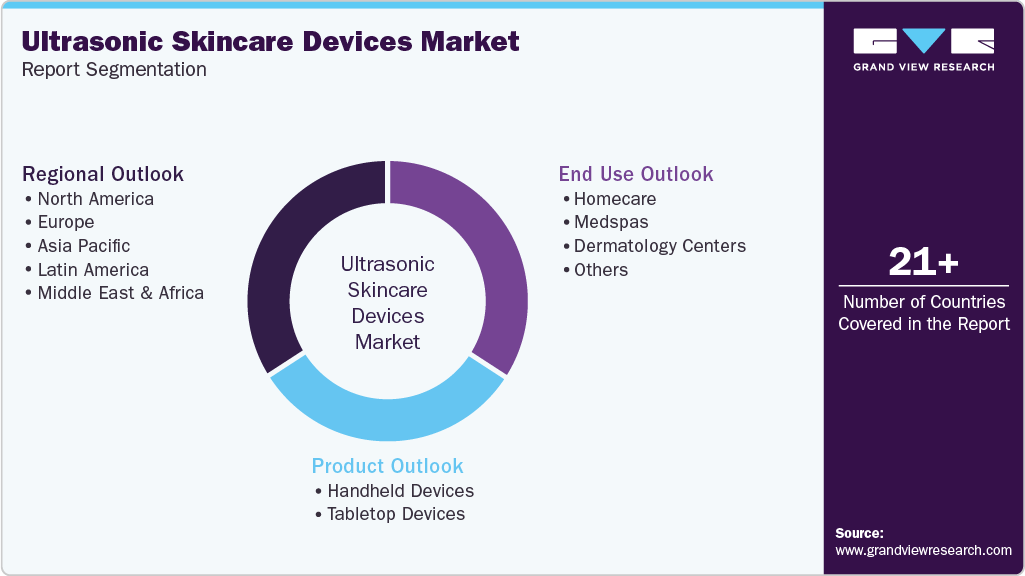
This report forecasts revenue growth at country levels and provides an analysis on the latest industry trends and opportunities in each of the sub-segments from 2021 to 2033. For this study, Grand View Research has segmented the ultrasonic skincare devices market report based on product, end use, and region:
 To learn more about this report, Download Free Sample Report
-
Product Outlook (Revenue, USD Million, 2021 - 2033)
-
Handheld Devices
-
Tabletop Devices
-
-
End Use Outlook (Revenue, USD Million, 2021 - 2033)
-
Homecare
-
Medspas
-
Dermatology Centers
-
Others
-
-
Regional Outlook (Revenue, USD Million, 2021 - 2033)
-
North America
-
U.S.
-
Canada
-
Mexico
-
-
Europe
-
UK
-
Germany
-
France
-
Italy
-
Spain
-
Denmark
-
Sweden
-
Norway
-
-
Asia Pacific
-
Japan
-
China
-
India
-
Australia
-
South Korea
-
Thailand
-
-
Latin America
-
Brazil
-
Argentina
-
-
Middle East & Africa
-
South Africa
-
Saudi Arabia
-
UAE
-
Kuwait
-
-
Research Methodology
Segment Definition
Segment - Product Type
Revenue capture definition
Handheld Devices
Revenue is derived from portable, consumer-oriented, and ergonomic ultrasonic devices designed for localized personal care and manual treatments. This segment includes handheld at-home High-Intensity Focused Ultrasound (HIFU) units, ultrasonic skin scrubbers, and portable multi-frequency wand platforms. Manufacturers capture revenue through upfront direct-to-consumer (DTC) or retail hardware sales, specialized conductive contact gels essential for acoustic energy transmission, and proprietary charging docks or replacement attachment heads.
Tabletop Devices
Revenue is generated through clinical-grade, multi-functional ultrasonic platforms designed for institutional use. These systems feature advanced configurations such as micro-focused ultrasound with visualization (MFU-V), localized dynamic ultrasound (LDM), and adjustable focal depths targeting deep tissue layers like the SMAS. Market participants capture revenue through substantial capital equipment sales or leasing agreements, recurring purchases of application-specific disposable cartridges (transducers), software upgrades for advanced diagnostic tracking, and extended B2B maintenance and calibration service contracts.
Segment - End Use
Revenue capture definition
Dermatology Clinics
Revenue flows from medical-grade, high-intensity ultrasound equipment sold directly to specialized dermatological practices. These institutions invest heavily in premium tabletop and console platforms capable of delivering high-precision treatments for deep tissue lifting, targeted structural remodeling, and clinical anti-aging therapy. Revenue generation relies heavily on high-margin capital sales, direct corporate account management, and the continuous volume supply of high-tier disposable transducer lines tailored for physician-led procedures.
Medspas
Revenue is captured through the commercialization of mid-to-high-tier ultrasound tightening and body contouring systems to medical spas, wellness retreats, and aesthetic salons. These facilities require versatile, high-throughput systems that combine ultrasound with complementary modalities (e.g., Radiofrequency or LED light therapy) to support highly requested, zero-downtime facial lifting treatments. Manufacturers monetize this segment through direct B2B sales, third-party distribution partnerships, financing/leasing models, and the steady replenishment of treatment-specific consumables and multi-use handpiece cartridges.
Homecare
Revenue is generated within the consumer electronic and beauty-tech retail sector from individuals purchasing compact, consumer-safe ultrasonic skincare devices. This high-volume segment thrives on direct-to-consumer (DTC) e-commerce platforms, premium department store distribution, and beauty specialty retailers. Revenue capture is driven by one-time hardware purchases alongside a highly predictable, recurring stream of consumable revenue from the brand’s proprietary conductive gels, primers, and topical anti-aging serums necessary to maximize treatment safety and efficacy.
Others
Revenue encompasses sales to alternative and emerging institutional segments, including academic research centers, aesthetic training academies, and multi-specialty hospitals with dedicated cosmetic outpatient departments. Revenue is realized through standard hardware procurement for training or research applications, educational licensing agreements, pilot testing units, and specialized commercial contracts that ensure compliance with institutional purchasing guidelines.
Estimation Model
Scope Definition
Build the Product Base
Estimate Penetration
Revenue Conversion
► What is being sized?
► How large is total addressable market?
► What portion of the market is active and utilizing advanced features?
► How does volume become revenue?
PROCESS STEPS: (1) Define Device & Technology Categories
(2) Scope Application & Setting Segments
(3) Set geographic boundaries (global/regional)
(4) Align on base year & forecast horizon (2026-2033)
PROCESS STEPS:
(1) Gather Clinic & Retail Volume Data
(2) Estimate Device Installation Base
(3) Apply Device Type & Price Splits
(4) Project Volume Trajectories
PROCESS STEPS:
(1) Survey Technology Adoption Rates
(2) Map Cartridge & Handpiece Utilization
(3) Identify Smart/Connected Device Mix
(4) Triangulate with vendor shipment data and distributor sales disclosures
PROCESS STEPS:
(1) Collect Cost Metrics
(2) Segment by revenue streams
(3) Apply end-use channel share
(4) Cross-Check with Import/Export Data
DATA SOURCES
WOSAM, IMCAS, ASAPS
DATA SOURCES Clinic registries, healthcare establishment databases, medical device manufacturer filings
DATA SOURCES Primary interviews, company filings, trade surveys
DATA SOURCES
Distributor pricing sheets, procurement data, import/export databases, expert interviews
Delivered Customizations
This report has been delivered with the following In-depth customizations
Client Request
Customization Delivered
Value Adds
Competitive Landscape Analysis
Conducted a comprehensive competitive landscape assessment for the global ultrasonic skincare devices market, covering major manufacturers of ultrasonic facial cleansing, skin tightening, anti-aging, exfoliation, and serum infusion devices across professional and homecare settings. The study evaluated market positioning, product portfolios, strategic collaborations with beauty retailers and e-commerce platforms, technology innovations, influencer marketing initiatives, regional expansion strategies, and consumer adoption trends adopted by leading and emerging market participants.
Enables stakeholders to understand the competitive dynamics, technological positioning, and strategic initiatives shaping the ultrasonic skincare devices market. The study supports informed decision-making related to partnerships, product differentiation, innovation investments, and commercialization planning. It also helps manufacturers identify competitive gaps, benchmark innovation strategies, and strengthen market penetration across beauty and personal care channels.
Segment Analysis (Product and End-use)
Conducted a detailed segment-level assessment of the ultrasonic skincare devices market across product categories including facial cleansing devices, skin scrubbers, anti-aging devices, and multifunctional skincare systems for professional and homecare applications. The study analyzed distribution trends across e-commerce, beauty retail stores, dermatology clinics, and direct-to-consumer channels, along with consumer purchasing preferences, pricing strategies, technological advancements, and regional demand variations influencing segment growth.
Enables stakeholders to gain granular insights into high-growth market segments, evolving consumer preferences, and distribution strategies across the ultrasonic skincare devices ecosystem. The study supports portfolio optimization, targeted commercialization strategies, e-commerce expansion planning, and product development initiatives aligned with consumer demand and beauty technology trends.
Key Market Drivers Analysis
Conducted an in-depth driver analysis focused on the increasing demand for non-invasive skincare treatments, rising consumer awareness regarding skin health and beauty routines, and advancements in ultrasonic skincare technologies. The study evaluated trends associated with home-based beauty treatments, social media influence, AI-enabled skincare personalization, and growing adoption of multifunctional skincare devices contributing to rising market demand globally.
Enables stakeholders to understand the core consumer and technological factors accelerating demand within the ultrasonic skincare devices market. The study supports strategic forecasting, investment prioritization, market expansion planning, product innovation, and commercialization strategies aligned with evolving beauty trends and consumer skincare preferences globally.
Frequently Asked Questions About This Report
North America accounted for 40.3% of revenue in 2025.
Asia Pacific is the fastest-growing region over the forecast period.
Homecare accounted for the largest revenue share of 53.8% in 2025, while medspas are a rapidly growing segment.
The global ultrasonic skincare devices market size was estimated at USD 717.9 million in 2025 and is expected to reach USD 783.9 million in 2026.
Some key players operating in the ultrasonic skincare devices market include Alma Lasers GmbH; Cynosure, Inc.; Solta Medical, Inc.; Cutera, Inc.; Syneron Medical Ltd.; Canfield Scientific, Inc.; 3Gen; Aesthetic Group; Ambicare Health; Image Derm, Inc.; Fotona.
Key factors driving market growth include the growing demand for non-invasive, home-based skincare treatments, increased consumer awareness of personal care, and advancements in ultrasonic technology.
The global ultrasonic skincare devices market is expected to grow at a compound annual growth rate of 10.6% from 2026 to 2033 to reach USD 1,589.7 million by 2033.
The handheld devices segment led with a 72.3% revenue share in 2025, while the tabletop devices segment is rapidly growing.
About the Author(s)
Medical Devices Research Team
Healthcare · Medical DevicesThis report was authored by the medical devices research team at Grand View Research - comprising two research analysts, one senior research analyst, and one industry expert - with specialized expertise in the medical devices segment of the healthcare industry. All findings are based on proprietary healthcare databases, executive interviews, and regulatory analysis, subject to internal peer review prior to publication.
Last Updated:
Speak to Analyst

Customize this report to your needs - add regions, segments, or data points, with 20% free customization.
Or view our licence options:


ISO 9001:2015 & 27001:2022 Certified
We are GDPR and CCPA compliant! Your transaction & personal information is safe and secure. For more details, please read our privacy policy.


