
- Home
- »
- Medical Devices
- »
-
U.S. Continuous Positive Airway Pressure Devices Market Report 2033GVR Report cover

U.S. Continuous Positive Airway Pressure Devices Market (2026 - 2033) Size, Unit Volume, Average Selling Price (ASP) Trends, Share & Forecast Analysis Report, By Connectivity (Connected, Non-Connected), By End Use (Home Care Settings, Hospitals & Clinics), And Segment Forecasts
U.S. Continuous Positive Airway Pressure Devices Market Summary
The U.S. continuous positive airway pressure devices market size was estimated at USD 1.35 billion in 2025 and is projected to reach USD 2.07 billion by 2033, growing at a CAGR of 5.50% from 2026 to 2033. This is attributed to the rising prevalence of sleep apnea and respiratory disorders, technological advancements in continuous positive airway pressure devices (CPAP) devices, growing awareness and diagnosis of sleep apnea, and favorable reimbursement policies.
Key Market Trends & Insights
- By connectivity, the connected segment led the market with the largest revenue share of 69.4% in 2025.
- By end use, the home care settings segment accounted for the largest market revenue share of 59.42% in 2025.
Market Size & Forecast
- 2025 Market Size: USD 1.35 Billion
- 2033 Projected Market Size: USD 2.07 Billion
- CAGR (2026-2033): 5.50%
Prism AI by Grand View Research Free to tryAsk a question about the U.S. continuous positive airway pressure devices marketTry asking✓Every figure cited from GVR research Prefer the report? Download free sample →
For instance, Medicare covers a 3-month trial of CPAP devices and accessories for individuals diagnosed with obstructive sleep apnea. The incidence of sleep apnea and other respiratory disorders is on the rise in the U.S., primarily due to factors such as obesity, sedentary lifestyles, and an aging population. According to the Centers for Disease Control and Prevention (CDC) estimates published in May 2024, between August 2021 and August 2023, the obesity rate among adults was 40.3%, with no notable differences between women & men. Obesity was higher in adults aged 41-60 compared to those aged 20-39 and those 60 and older. This growing obesity rate contributes significantly to the increasing prevalence of sleep apnea, thereby driving the demand for CPAP devices.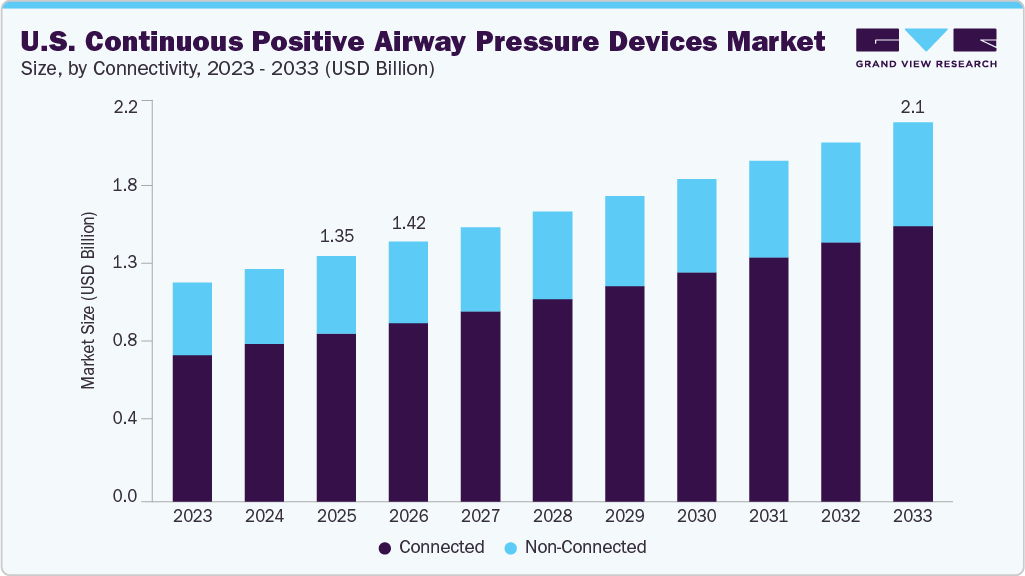 Source: Grand View Research, IR Documents, Primary Interviews, Paid DatabasesTo learn more about this report,
 Download Free Sample Report
Moreover, continuous innovations in CPAP technology have significantly enhanced patient comfort and therapy effectiveness. Modern CPAP machines feature quieter motors, compact designs, integrated humidification systems, and advanced data-tracking capabilities. These improvements address common patient concerns, such as noise and discomfort, thereby increasing therapy adherence rates.
Government health agencies and non-profit organizations frequently conduct public awareness initiatives to inform individuals about sleep apnea and treatment needs. For instance, in May 2024, the CDC in the U.S. incorporated sleep apnea into its broader public health campaigns on sleep hygiene and the management of chronic diseases.
The rental model plays a significant role in shaping the adoption of continuous positive airway pressure devices in the U.S., as well as pricing and revenue dynamics. CPAP devices are commonly provided to patients on a rent-to-own basis, typically over a 10 to 13-month period, driven largely by insurance reimbursement policies, including those of Medicare and private payers. In addition, this model reduces upfront costs for patients, enhances therapy initiation rates, and enables payers to verify compliance before full ownership, thereby facilitating broader market penetration.
However, it also slows immediate device sales revenue recognition for manufacturers, shifts purchasing power toward DME providers, and increases the importance of long-term patient adherence, remote monitoring, and replacement cycles (such as masks, tubing, and filters). CPAP rentals contribute to steady, recurring demand, greater price sensitivity, and stronger emphasis on connected devices and service-based differentiation in the U.S. continuous positive airway pressure (CPAP) devices industry.
Market Concentration & Characteristics
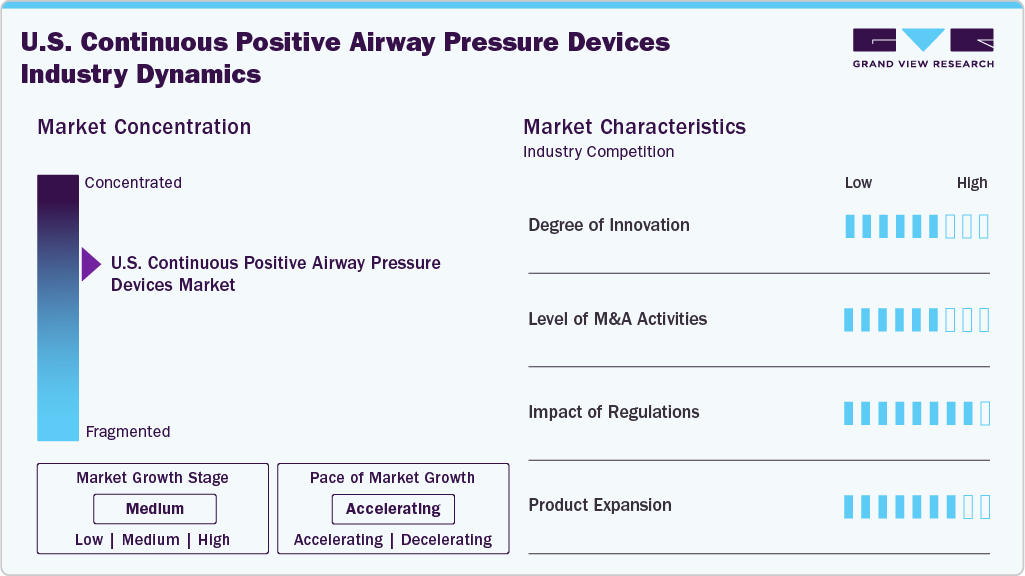
The degree of innovation in the U.S. continuous positive airway pressure (CPAP) devices industry is high due to the rising investments in research and development are anticipated to drive market growth and support ongoing innovation in the sector. For instance, in March 2024, React Health launched the Luna TravelPAP, a compact and lightweight positive airway pressure device designed for travel. It offers a pressure range of 4 to 20 hPa, a ramp time adjustable from 0 to 60 minutes, and a noise level below 30 dBA, ensuring quiet, convenient therapy.
The M&A activity in the U.S. continuous positive airway pressure (CPAP) devices industry is moderate. Companies engage in M&A to strengthen their product portfolios, expand their market reach, and integrate new technologies. For instance, in July 2023, ResMed acquired Somnoware, a company that develops software for sleep and respiratory diagnostics.
 To learn more about this report, Download Free Sample Report
“We’re committed to driving wider adoption of Somnoware’s open and interoperable platform to help more people with [obstructive sleep apnea] or COPD get the diagnoses and treatment solutions they need. Improving patients’ experience and health outcomes is our common goal.”
- Lucile Blaise, president of ResMed’s sleep and respiratory care division.
The impact of regulations on the U.S. continuous positive airway pressure (CPAP) devices industry is high. The FDA's stringent approval processes for medical devices directly influence the introduction of new products and market access. Reimbursement policies by government and private insurers significantly affect adoption rates. Increased focus on regulating sleep disorders and implementing policies to ensure device efficacy and patient safety are shaping market dynamics.
Product expansion in the U.S. continuous positive airway pressure (CPAP) devices industry is medium, with companies introducing new products to meet diverse patient needs. Such innovation highlights the company's commitment to advancing solutions for individuals with sleep-related breathing disorders.
Technology Insights
The connected CPAP devices segment led the market with the largest revenue share of 69.4% in 2025 and is anticipated to grow at the fastest CAGR over the forecast period. Integrating Bluetooth, Wi-Fi, and cellular connectivity into CPAP devices enables seamless data transmission between patients and healthcare providers, enhancing therapy adherence and effectiveness. For instance, ResMed's AirSense 10 and 11 models offer advanced connectivity and mobile health features, leading the market in this segment. This trend aligns with the broader digital transformation in healthcare, emphasizing data-driven care and patient empowerment.
The non-connected device segment is anticipated to grow at a significant CAGR over the forecast period. This segment is driven by demand from tech-averse users, older adults, and individuals in rural areas with limited internet access. Cost-effectiveness and simplicity are key drivers, as these devices are typically more affordable and easier to use than connected alternatives. They appeal to budget-conscious consumers seeking reliable, no-frills treatment for sleep apnea.
End Use Insights
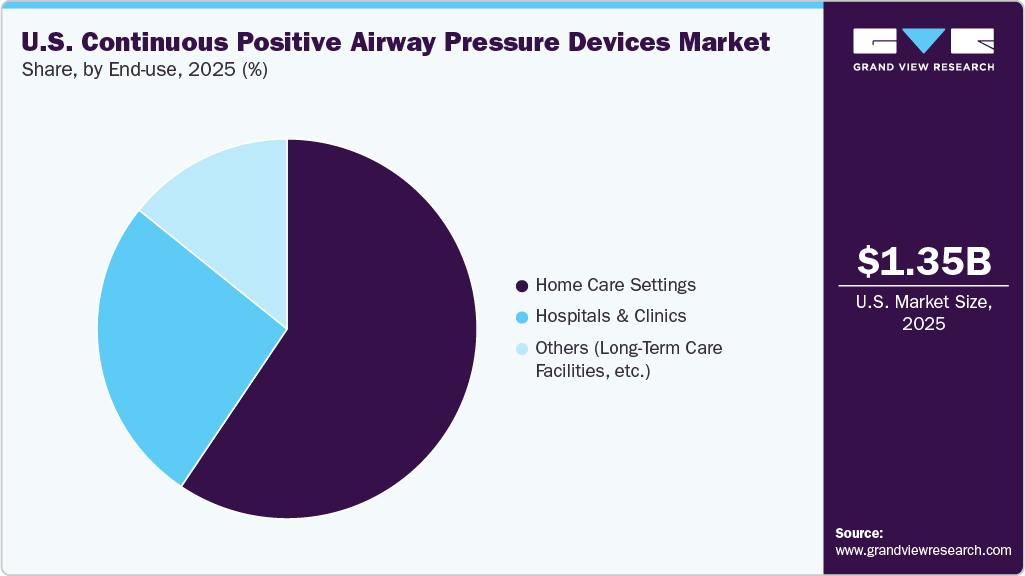
The home care settings segment led the market with the largest revenue share of 59.42% in 2025 and is anticipated to grow at the fastest CAGR during the forecast period, driven by increasing preference for at-home treatment of sleep apnea and the growing aging population. Patients and healthcare providers favor home-based CPAP therapy for its convenience, cost-effectiveness, and improved adherence. Advancements in portable and user-friendly CPAP devices have increased adoption in residential settings.
 To learn more about this report, Download Free Sample Report
The hospitals & clinics segment is anticipated to grow at a significant CAGR over the forecast period. These facilities are the first point of contact for patients undergoing sleep studies and receiving prescriptions for CPAP therapy. Hospitals provide immediate access to trained professionals and diagnostic tools, ensuring proper device setup and monitoring. In addition, post-operative and critically ill patients with respiratory conditions rely on CPAP devices during recovery.
Key U.S. Continuous Positive Airway Pressure Devices Company Insight
The U.S. CPAP market has witnessed dynamic shifts over the past decade, gradually moving toward consolidation. This trend has been primarily driven by competitive realignment, evolving consumer preferences, and advancements in sleep therapy technologies.
Key Observations: (Based on GVR Proprietary Database - Referenced and Cited by Notable Industry Players)
-
Fisher & Paykel
-
Maintained moderate, steady growth, with market value increasing from an analyzed USD 26.8 million in 2012 to USD 105.7 million by 2024.
-
Benefited from rising demand for non-invasive ventilation and sleep therapy solutions, supporting its expanding U.S. footprint.
-
-
ResMed
-
Demonstrated the strongest growth trajectory across all players.
-
Solidified its position as the market leader, especially after 2021, driven by product innovation and increased brand trust.
-
-
React Health (3B Medical)
-
A smaller but steadily growing market player, with a compound annual growth rate (CAGR) of ~0.07%.
-
Gained traction following Philips’ market exit, meeting demand from DME (durable medical equipment) providers seeking alternative device suppliers.
-
-
Philips
-
Formerly a leading player in the U.S. CPAP market.
-
Experienced a decline post-2016, followed by a complete market exit after 2021 due to widespread product recalls, resulting in a loss of market share and brand trust.
-
Market Dynamics Driving Long-Term Growth:
-
Rising prevalence of sleep apnea and increased diagnosis rates
-
Integration of telehealth and remote monitoring capabilities
-
Shift toward home-based respiratory care and portable CPAP systems
-
Loss of consumer trust in legacy brands post-recalls, reshuffling loyalty
Note for viewer: Detailed insights for each notable player from 2012 to 2024, including Annual Market Value, Average Selling Price (ASP), and Unit Volume, are part of the final deliverables prepared by the analyst team at the individual company level.
Strategies of Market Players for Entry and Exit and Their Impact on Market Competitors
1. Medical Depot, Inc. Dba Drive Devilbiss Healthcare:
Medical Depot, Inc. Dba Drive Devilbiss Healthcare’s Exit Strategy Aims to Realign The Company With Its Mission And Vision
-
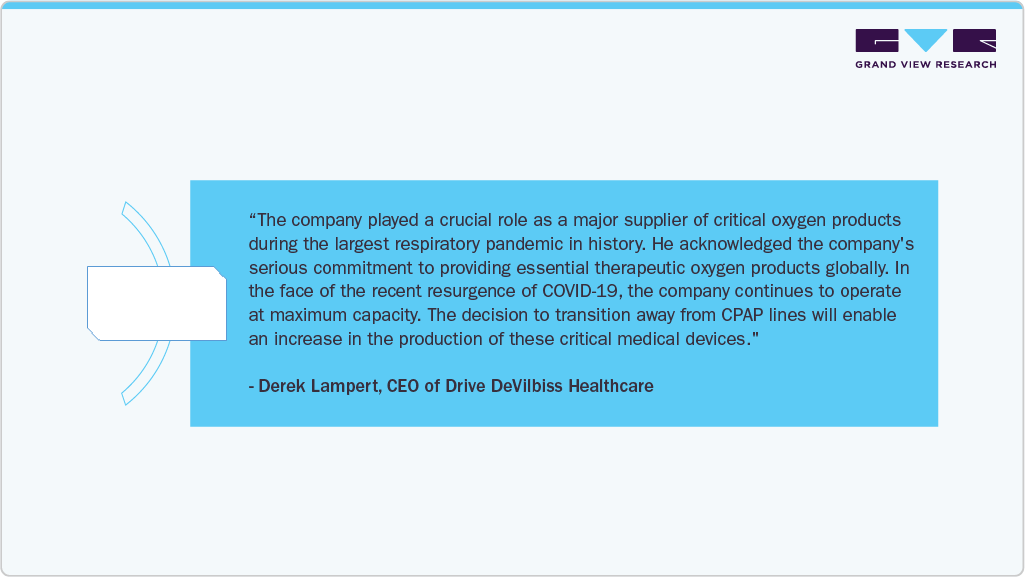
In September 2021, Medical Depot, Inc., dba Drive DeVilbiss Healthcare, announced its decision to discontinue its CPAP devices.
-
The company decided to shift its focus toward its market-leading oxygen products. This strategic move allowed the company to optimize its resources and manufacturing capacity to meet the heightened demand for oxygen therapy devices during the pandemic.
-
Following an extensive review process lasting almost a year, the decision demonstrates the company’s acknowledgment of unfavorable market conditions
 To learn more about this report, Download Free Sample Report
In accordance with the insights from secondary research, Drive DeVilbiss Healthcare has pivoted its mission focus toward the following key product lines:
2. Entry of React Health following Medical Depot, Inc., dba Drive DeVilbiss Healthcare’s exit and its anticipated impact:
The acquisition of Medical Depot, Inc., dba Drive DeVilbiss Healthcare’s IntelliPAP line of CPAP devices, by React Health is likely to have significant implications for the CPAP devices market, including changes in competition, product availability, market dynamics, and customer support.
Analyst Insight: These additions to React Health’s portfolio broaden its sleep care offerings, catering to diverse patient needs and providing comprehensive solutions for end-to-end patient care in the sleep space.
Note for the viewer: Complete insights into exit strategies will be provided in the final deliverable.
Key U.S. Continuous Positive Airway Pressure Devices Companies:
- ResMed
- Koninklijke Philips N.V.
- Fisher & Paykel Healthcare Limited
- React Health (3B Medical)
- Löwenstein Medical
- BMC Medical
- Wellell (Apex Medical)
- Armstrong Medical
- Breas Medical
- SEFAM
- Transcend Inc. (Somnetics International, Inc.)
- Trudell Medical (Vyaire)
- Medical Depot, Inc. dba Drive DeVilbiss Healthcare
- Invacare Corporation
- Apria Healthcare Group LLC
- Rotech Healthcare Inc.
U.S. PAP Device DME Distributor-Level Profiles
- Lincare Holdings Inc.
- Rotech Healthcare Inc.
- adaptHealth
- Aeroflow Health
- CPAP.com
- AHOM
- The CPAP Shop
- Sleep Direct
- Edgepark Medical Supplies
- Apria Healthcare
Recent Developments
-
In September 2024, ResMed's launch of the AirTouch N30i, a thoroughly fabric sleep apnea mask, exemplifies the industry's commitment to integrating advanced technology with user comfort.
“As a global leader in sleep health and CPAP therapy, millions of people trust ResMed’s devices to help them sleep better and live healthier lives. We are excited to introduce the AirTouch N30i, a mask that redefines comfort with its soft, natural feel and sleek, modern design. It sets a new standard in CPAP masks, helping more people stay committed to their therapy and achieve better sleep while offering a refined aesthetic that is as pleasing to look at as it is to wear.”
- Justin Leong, ResMed chief product officer.
U.S. Continuous Positive Airway Pressure Devices Market Report Scope
Report Attribute
Details
Market value size in 2026
USD 1.42 billion
Revenue Forecast in 2033
USD 2.07 billion
Growth rate
CAGR of 5.50% from 2026 to 2033
Base year for estimation
2025
Historical data
2021 - 2024
Forecast data
2026 - 2033
Quantitative units
Revenue in USD million/billion, Volume in 000' Units, ASP Trend and CAGR from 2026 to 2033
Report Coverage
Revenue, unit volume, company ranking, competitive landscape, growth factors, and trends
Segments Covered
Connectivity, end use
Country scope
U.S.
Key companies profiled
ResMed, React Health (3B Medical); Koninklijke Philips N.V.; Fisher & Paykel Healthcare Limited; Löwenstein Medical; BMC Medical; Wellell (Apex Medical); Armstrong Medical; Breas Medical; SEFAM; Transcend Inc. (Somnetics International, Inc.); Trudell Medical (Vyaire); Medical Depot, Inc. dba Drive DeVilbiss Healthcare; Invacare Corporation; Apria Healthcare Group LLC; Rotech Healthcare Inc.
Customization scope
Free report customization (equivalent to up to 8 analyst’s working days) with purchase. Addition or alteration to country & segment scope.
Pricing and purchase options
Avail customized purchase options to meet your exact research needs. Explore purchase options
U.S. Continuous Positive Airway Pressure Devices Market Report Segmentation
This report forecasts revenue growth at the country level and provides an analysis of the latest industry trends in each of the sub-segments from 2026 to 2033. For this study, Grand View Research has segmented the U.S. continuous positive airway pressure devices market report based on connectivity and end use.
-
Connectivity Outlook (Volume, 000' Units; Revenue, USD Million, 2021 - 2033)
-
Connected
-
Bluetooth-Connected CPAP
-
Wi-Fi & Cellular Connected CPAP
-
Hybrid-Connected
-
-
Non-Connected
-
-
End Use Outlook (Volume, 000' Units; Revenue, USD Million, 2021 - 2033)
-
Home Care Settings
-
Hospitals & Clinics
-
Others (Long-Term Care Facilities, etc.)
-
Frequently Asked Questions About This Report
Key factors that are driving the market growth include the rising prevalence of sleep apnea and respiratory disorders, technological advancements in CPAP devices, growing awareness and diagnosis of sleep apnea, and favorable reimbursement policies.
The U.S. continuous positive airway pressure devices market size was estimated at USD 1.35 billion in 2025 and is expected to reach USD 1.42 billion in 2026.
The U.S. continuous positive airway pressure devices market is expected to grow at a compound annual growth rate of 5.50% from 2026 to 2033 to reach USD 2.07 million by 2033.
The connected CPAP devices segment held the largest revenue share of over 69.4% in 2025and is anticipated to grow at the fastest growth rate over the forecast year. Integrating Bluetooth, Wi-Fi, and cellular connectivity features in CPAP devices allows seamless data transmission between patients and healthcare providers, enhancing therapy adherence and effectiveness.
Some key players operating in the U.S. CPAP devices market include RResMed, React Health (3B Medical), Löwenstein Medical, BMC Medical, Wellell (Apex Medical), Armstrong Medical, Breas Medical, SEFAM, Transcend Inc. (Somnetics International, Inc.), Trudell Medical (Vyaire), Medical Depot, Inc. dba Drive DeVilbiss Healthcare, Invacare Corporation, Apria Healthcare Group LLC, Rotech Healthcare Inc.
About the Author(s)
Medical Devices Research Team
Healthcare · Medical DevicesThis report was authored by the medical devices research team at Grand View Research - comprising two research analysts, one senior research analyst, and one industry expert - with specialized expertise in the medical devices segment of the healthcare industry. All findings are based on proprietary healthcare databases, executive interviews, and regulatory analysis, subject to internal peer review prior to publication.
Last Updated:
Speak to Analyst

Customize this report to your needs - add regions, segments, or data points, with 20% free customization.
Or view our licence options:


ISO 9001:2015 & 27001:2022 Certified
We are GDPR and CCPA compliant! Your transaction & personal information is safe and secure. For more details, please read our privacy policy.


