
- Home
- »
- Healthcare IT
- »
-
U.S. Electronic Health Records Market Size Report, 2033GVR Report cover

U.S. Electronic Health Records Market (2026 - 2033) Size, Share & Trends Analysis Report By Product, By Type (Acute, Ambulatory, Post-acute), By Business Model (Professional Services, Subscriptions), By Application, By End Use, And Segment Forecasts
U.S. Electronic Health Records Market Summary
The U.S. electronic health records market size was estimated at USD 13.57 billion in 2025 and is expected to reach USD 17.43 billion by 2033, growing at a CAGR of 3.26% from 2026 to 2033. This growth is attributed to government initiatives to encourage healthcare IT usage, technologically advanced healthcare services, and rising demand for centralization and streamlining of healthcare data to improve overall patient outcomes and reduce the healthcare costs.
Key Market Trends & Insights
- By product, the web & cloud-based EHR systems segment dominated the market with a revenue share of 83.51% in 2025.
- By type, the acute segment dominated the U.S. electronic health records industry, accounting for 45.54% in 2025.
- By business model, the professional services segment held the largest market share of 32.33% in 2024.
- Based on application, the cardiology segment held the largest share of the U.S. electronic health records market in 2025.
- By end-use, the hospital segment led the U.S. electronic health records industry, accounting for the largest share of 52.84% % in 2025.
Market Size & Forecast
- 2025 Market Size: USD 13.57 Billion
- 2033 Projected Market Size: USD 17.43 Billion
- CAGR (2026-2033): 3.26%
Three ways to get this report
Buy it, customize it, or ask a question.Ask an Analyst
Analyst response in 1 business day
- AccessReport author, directly
- Reply timeWithin 1 working day
- No sales callDirect answer only
- FormatEmail reply
- CostFree, no cost
Get the Full Report
What the study covers
- FormatsPDF · Excel · Dashboard
- Timeline2026–2033 annual, 2025 base
- Coverage20+ countries, 5 regions
- Companies10+ key players profiled
Customize the Report
20% free customization
- IncludeCountries, segments, points
- TailorTo your product definition
- ExtendDeeper competitor detail
- OrA fully bespoke study
- Turnaround5–10 working days
The market is growing significantly due to the high penetration of Electronic Health Records (EHR) systems across different healthcare facilities in the country. The growth of the U.S. electronic health records industry is driven by the greater adaptability of EHR solutions by healthcare companies, the integration of artificial intelligence in healthcare, and the significant management of patients and their tasks. In the U.S., office-based physicians prefer EHRs to a greater extent. As per data released by the National Center for Health Statistics, about 88.2% of office-based physicians use the EMR/EHR system in their practice.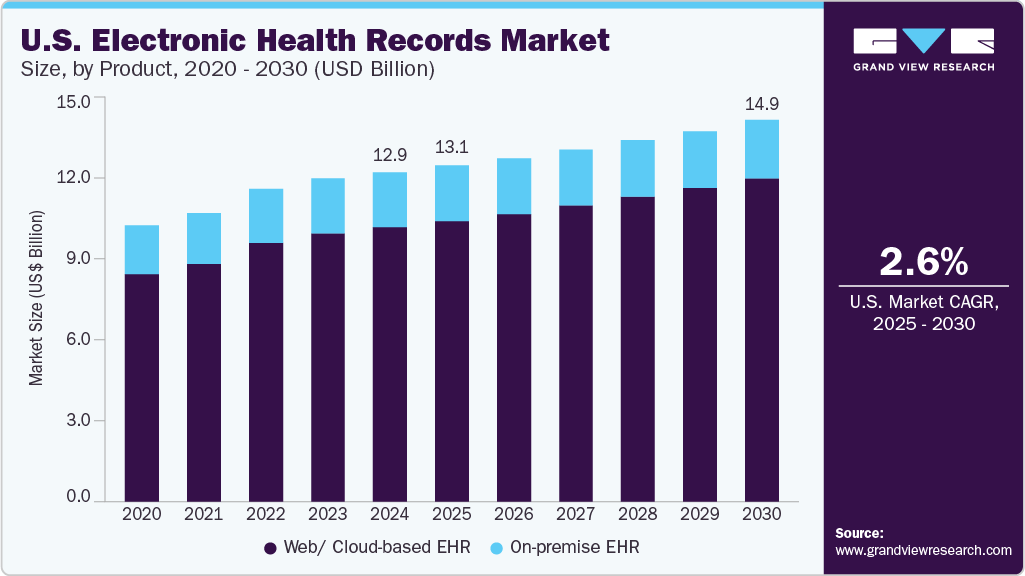 Source: Grand View Research, IR Documents, Primary Interviews, Paid DatabasesTo learn more about this report,
 Download Free Sample Report
 The advanced clinical trial designs using the modernized approach of Real-world Data (RWD) and Real-World Evidence (RWE) are reducing documentation and improving regulatory aspects. Such initiatives are anticipated to enhance the demand for electronic health record software market across the U.S. thereby supporting the market growth. For instance, in January 2025, Century Health partnered with Nira Medical to provide AI-curated electronic health record (EHR) data for over 3,000 patients with multiple sclerosis.
"Using AI to unlock previously inaccessible patient data is not only accelerating the development of new treatments, it's helping us generate insights for patients that have been historically underrepresented in clinical research."
-said Vish Srivastava, Co-Founder & CEO at Century Health.
The integration of digital technologies in healthcare is growing rapidly, fueled by the need for better patient outcomes and more efficient healthcare services. The U.S. government's commitment to promoting EHR adoption and interoperability remains strong. The Medicare and Medicaid EHR Incentive Programs provided significant financial incentives for healthcare providers to adopt, implement, upgrade, or demonstrate meaningful use of certified EHR technology. Between 2011 and 2021, over USD 24.8 billion in Medicare and USD 6 billion in Medicaid incentives were disbursed. Such factors are expected to fuel market growth.
U.S. Electronic Health Records (EHR) Penetration Rates, by State & Overall U.S. 2024
States
Estimated Penetration Rate %
States
Estimated Penetration Rate %
Alabama
87%
Montana
91%
Alaska
96%
Nebraska
97%
Arizona
94%
Nevada
100%
Arkansas
88%
New Hampshire
90%
Source: Grand View Research Analysis
 To learn more about this report, Download Free Sample Report
 Case Study Insights
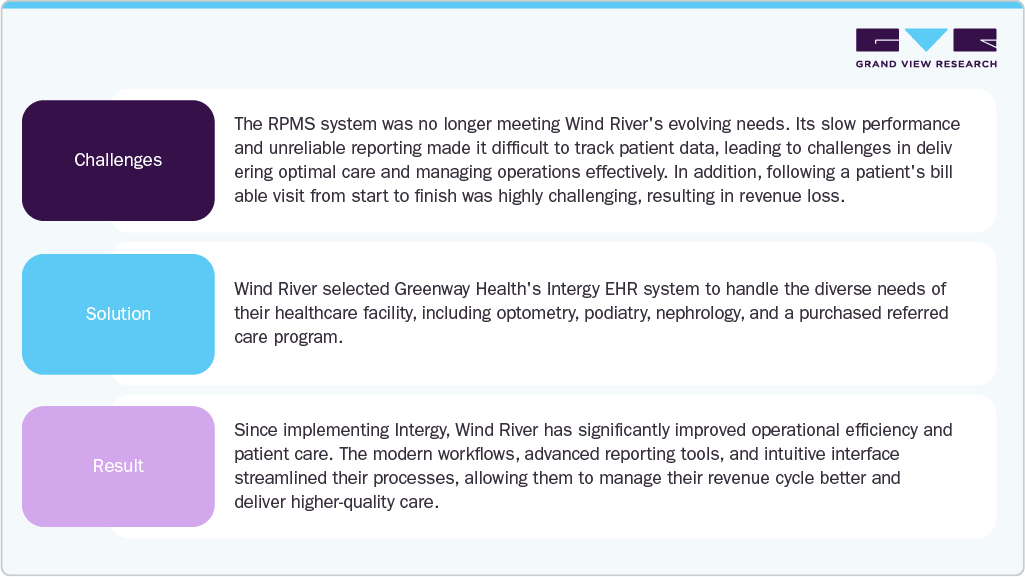
Wind River Family and Community Health Care, which serves the Northern Arapaho and Eastern Shoshone Tribes, faced significant operational challenges with its previous electronic health record (EHR) system, the Resource and Patient Management System (RPMS). The system's performance issues, including slow response times, inconsistent reporting, and challenges in tracking patient data, impacted the organization’s ability to provide optimal care and effectively manage its operations. Recognizing the need for a more advanced and responsive solution, Wind River decided to switch to Greenway Health's Intergy EHR system.
 To learn more about this report, Download Free Sample Report
 Market Characteristics and Concentration
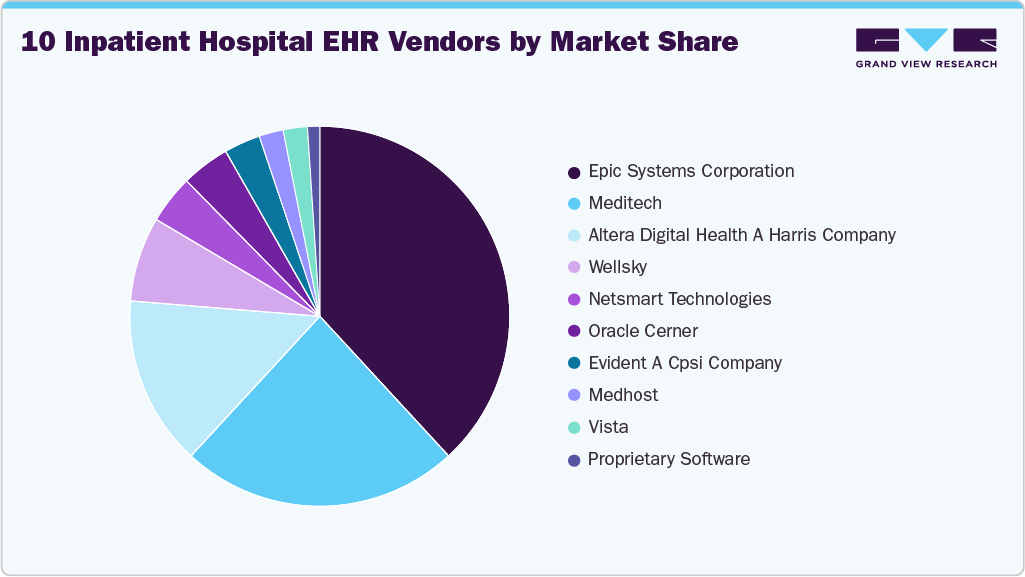
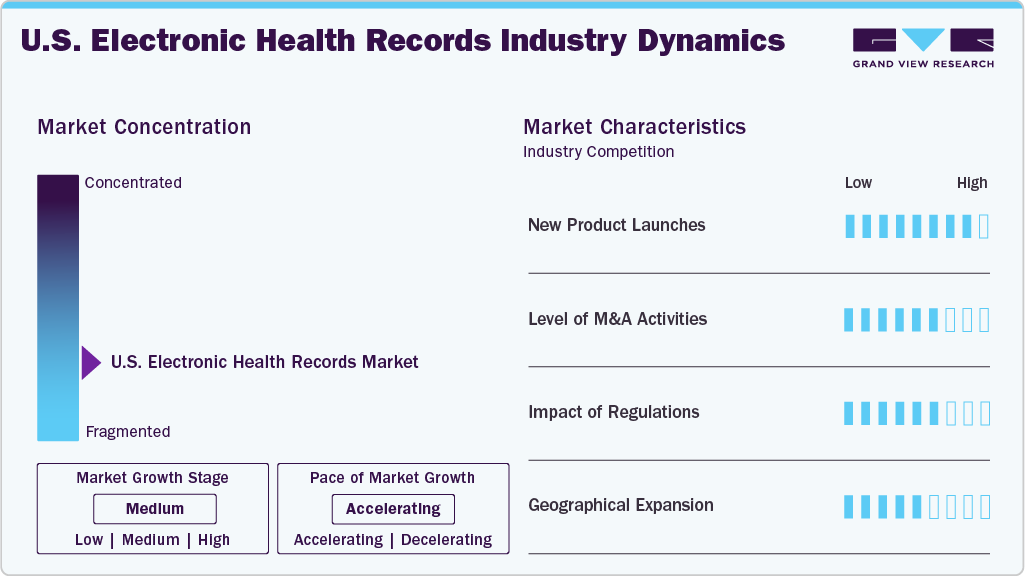
The U.S. electronic health records market landscape is concentrated, with the presence of large companies such as Epic Systems, Oracle (Cerner), MEDITECH, and a few others. Due to the high penetration of EHR systems in the U.S., the growth of the market is moderate; however, the market is expected to witness positive growth through the forecast period.
Key companies in the U.S. electronic health records industry are launching new products to expand their reach and increase availability in different regions. For instance, in May 2024, Athenahealth unveiled tailored specialty solutions within its athenaOne platform, emphasizing women's health and urgent care. These solutions feature advanced electronic health records (EHR) capabilities, streamlined workflows, and dedicated support to enhance operational efficiency and patient care for specialty providers across the healthcare sector.
 To learn more about this report, Download Free Sample Report
 Mergers and acquisitions in the electronic health records (EHR) market are increasing, with several companies acquiring smaller players to strengthen their market positions, expand product portfolios, and enhance capabilities. For instance, in September 2023, Thoma Bravo acquired NextGen Healthcare, Inc., a leading EHR systems manufacturer, to expand its capabilities in the market.
The impact of regulations on the U.S. electronic health records industry is moderate. In the U.S., the HITECH Act established the Medicare and Medicaid EHR Incentive Programs to incentivize healthcare providers to adopt and use certified EHR technology.
Several market companies are involved in geographical expansion to enhance capabilities. For instance, in July 2023, Universal Health Services (UHS), a prominent provider of hospital and healthcare services from the U.S., is extending the implementation of the Oracle Health electronic health record (EHR) system across its extensive network of behavioral health facilities. Through this expansion, the company now benefits from a unified EHR system across its acute and behavioral health facilities in the United States. This integration aims to enhance care decisions and elevate patient safety practices.
Product Insights
The web & cloud-based EHR systems segment dominated the U.S. electronic health records market with a revenue share of 83.51% in 2025 and is anticipated to grow at the fastest CAGR during the forecast period. This growth can be attributed to the rising preference among physicians and healthcare providers who operate on a smaller scale. The growth further fuels the easy installation of web-based EHRs without the need for in-house servers and can also offer extensive customization & improvements, as needed.
Moreover, the growth of the on-premise EHR systems segment is expected to decline from 2026 to 2033. Factors such as the lack of interoperability, limited scalability, and high capital & maintenance costs are contributing to the decline in the adoption of on-premises EHR systems in the U.S.
Type Insights
The acute segment dominated the U.S. electronic health records industry, accounting for 45.54% in 2025. The growth can be attributed to the government initiatives for the adoption of EHRs in small-scale facilities. For instance, acute care hospitals in the U.S. that are covered under the inpatient prospective payment system (IPPS) are eligible for the Medicare Incentive Payment System.
The post-acute EHRs segment is anticipated to grow at the fastest CAGR from 2026 to 2033. The growth is driven by the diverse applications of EHR, including facilitating rehabilitation services for patients following discharge from acute care hospitals. Post-acute care facilities, comprising inpatient rehabilitation centers, home health agencies, and long-term care hospitals, are expected to witness increased spending, thereby fueling market expansion.
Business Model Insights
The professional services segment held the largest market share of 32.33% in 2024. The segment is projected to grow at the fastest CAGR from 2026 to 2033. Professional services help healthcare systems implement information systems within their organizations. These services typically include project management, technical and application expertise, optimization of clinical processes, regulatory consulting, and end-user training for the design and implementation of EHR systems.
The subscription segment is expected to grow significantly during the forecast period. EHR services can be availed through a time-based subscription model, featuring periodic usage charges. This model represents a primary method for packaging and delivering medical knowledge. The data within EHRs is regularly updated based on research findings and can be independently updated from the software it is integrated with. Moreover, this segment encompasses electronic data interchange transactions that facilitate data transfer between payers and healthcare providers.
Application Insights
Based on application, the cardiology segment held the largest share of the U.S. electronic health records market in 2025. The growth is driven by the increasing incidence of hospitalization of patients diagnosed with cardiovascular diseases such as coronary heart disease and stroke. Cardiology EHR software seamlessly integrates data from Electrocardiograms (EKG), echocardiograms, cardiac catheterization, and other diagnostic instruments into the patient's electronic record. For instance, in May 2024, athenahealth developed cloud-based EHR software for specialty medical practices and sites of care. Moreover, the company partnered with Cardiovascular Associates of America (CVAUSA) to improve clinical and financial performance using athenaOne, Athena’s suite of EHR, RCM, and patient engagement solutions.
The neurology segment is anticipated to showcase significant growth over the forecast period, owing to the growing adoption of EHR in the neurology segment include the increasing incidence of neurological diseases and the rising need for high-quality healthcare services. According to the Global Burden of Disease 2021 study, 180.3 million US individuals were affected by nervous system disorders. This is expected to drive the demand for advanced neurology EHR software solutions.
End Use Insights
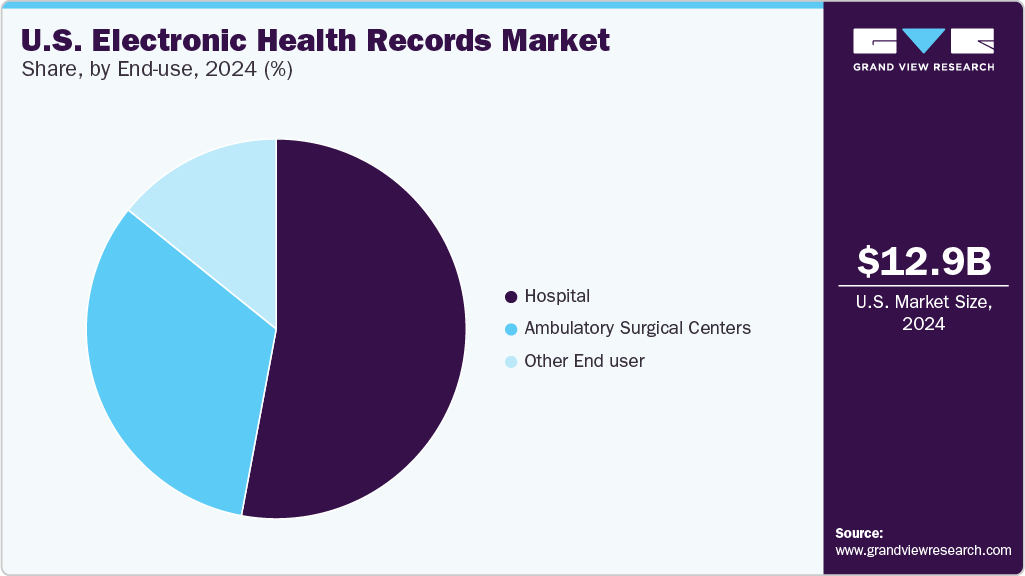
The hospital segment led the U.S. electronic health records industry, accounting for the largest share of 52.84% % in 2025. The growth can be attributed to the increasing usage of EHRs in hospitals to record large amounts of data. For instance, as per the 2023 study performed by the Oxford academic, the adoption rates of EHRs in the U.S. have increased significantly from 6.6% to 81.2%. Furthermore, 65% of hospitals intend to invest in improving the functionality of their EHR systems, which also boosts the market growth.
 To learn more about this report, Download Free Sample Report
 The ambulatory use EHR segment is projected to expand with the fastest CAGR from 2026 to 2033, driven by the growing adoption of EHR technology among healthcare facilities. For instance, as per the 2021 Ambulatory Surgery Center Association survey, 54.6% of respondents indicated the use of an EHR in ASCs. Furthermore, many physician-owned ASCs have implemented an EHR, likely to enhance the growth of the market over the forecast years.Top of Form
Key U.S. Electronic Health Records Company Insights
The U.S. EHR market landscape is consolidated, with the presence of a small number of companies holding a majority stake. Key U.S. EHR Companies are athenahealth, Inc., AdvancedMD, Inc., NXGN Management, LLC, Greenway Health, LLC, GE Healthcare, Epic Systems Corporation, Oracle, eClinicalWorks, CureMD Healthcare, CPSI, and Archetype Innovations, LLC.
New expansion activities, product approvals, product launches, partnerships, and acquisitions have positively impacted the EHR market in recent years. Furthermore, there has been a significant increase in the demand for electronic health records due to the growing digitalization, which in turn is fueling market growth.
Key U.S. Electronic Health Records Companies:
The following key companies have been profiled for this study on the U.S. electronic health records market
- Oracle
- AdvancedMD, Inc.
- TruBridge, Inc.
- Veradigm LLC
- eClinicalWorks.
- CureMD Healthcare
- Greenway Health, LLC
- DXC Technology Company
- NXGN Management, LLC
- Epic Systems Corporation
- McKesson Corporation
Recent Developments
-
In August 2025, Oracle Health debuted an AI-powered, voice-first EHR with embedded agentic AI, built natively on Oracle Cloud Infrastructure. It offers conversational navigation, automated note-taking, AI chart summaries, and workflow automation to reduce clicks and burnout.
-
In May 2025, Scotland County Hospital implemented MEDITECH's Expanse Electronic Health Record (EHR) system to enhance community-based services.
“We’re looking forward to continuing our work with Scotland County to help them simplify the patient experience, particularly for patients receiving cancer care or treatment for other complex conditions,”
-MEDITECH Vice President Carol Labadini.
-
In October 2024, Oracle unveiled its next-generation EHR, powered by Oracle Cloud Infrastructure and AI. Key features include conversational search, voice navigation, AI summaries for chart reviews, Clinical AI Agent for documentation/coding automation, and Data Intelligence for real-time insights from diverse sources.
-
In May 2024, Pearl Health partnered with Vim to launch an enhanced electronic health record (EHR) experience. This collaboration aims to integrate value-based care insights directly into EHR workflows, empowering primary care providers to deliver more enhanced, whole-patient care through improved data insights and financial tools.
-
In January 2024, American Healthtech, the subsidiary of Computer Programs and Systems, Inc. (CPSI), which provides an EHR platform for the post-acute care market, was sold to post-acute health IT vendor PointClickCare Technologies.
-
In March 2024, The VA and DoD launched a new electronic health record (EHR) system, MHS Genesis, at the Lovell Federal Health Care Center. This deployment aims to enhance interoperability and improve healthcare delivery for veterans and service members at the facility.
-
In September 2023, Oracle Health announced the integration of AI into the EHR system, presenting a new Oracle Clinical Digital Assistant. This unique innovation uses AI to improve the electronic health records available on the Oracle platform.
-
In July 2023, Innovaccer Inc. announced a strategic agreement with Post Acute Analytics (PAA) to help health systems succeed with patient-centered value-based care. This will enable providers to utilize an interoperable, cloud-native, AI-driven platform, facilitating the transition from fragmented data solutions and manual processes by consolidating patient data across various EHRs and HIT systems.
-
Carbon Health launched an AI-enabled hands-free charting feature in its electronic health record (EHR) system across all clinics.
“The rapid development and deployment of hands-free charting advances Carbon Health's AI-enabled EHR and shows how quickly AI can have a real-world impact on care delivery.”
-Carbon Health CEO Eren Bali
U.S. Electronic Health Records Market Report Scope
Attribute
Details
Market size value in 2026
USD 13.93 billion
Revenue forecast in 2033
USD 17.43 billion
Growth rate
CAGR of 3.26% from 2026 to 2033
Actual data
2021 - 2023
Forecast period
2025 - 2033
Quantitative units
Revenue in USD billion and CAGR from 2025 to 2033
Report coverage
Revenue forecast, company ranking, competitive landscape, growth factors, and trends
Segments covered
Product, type, business model, application, and end use
Country scope
U.S.
Key companies profiled
Oracle; AdvancedMD, Inc.; TruBridge, Inc; Veradigm LLC; eClinicalWorks.; CureMD Healthcare; Greenway Health, LLC; DXC Technology Company; NXGN Management, LLC; Epic Systems Corporation; McKesson Corporation
Customization scope
Free report customization (equivalent up to 8 analyst’s working days) with purchase. Addition or alteration to country, regional & segment scope.
U.S. Electronic Health Records Market Report Segmentation
This report forecasts revenue growth at the country level and provides an analysis of the latest industry trends in each of the sub-segments from 2021 to 2033. For this study, Grand View Research has segmented the U.S. electronic health records market based on product, type, business model, application, and end use:
-
Product Outlook (Revenue, USD Million, 2021 - 2033)
-
Web & Cloud-based
-
On Premise
-
-
Type Outlook (Revenue, USD Million, 2021 - 2033)
-
Acute
-
Ambulatory
-
Post-acute
-
-
Business Model Outlook (Revenue, USD Million, 2021 - 2033)
-
Professional Services
-
Subscriptions
-
Licensed Software
-
Technology Resale
-
Others
-
-
Application Outlook (Revenue, USD Million, 2021 - 2033)
-
Cardiology
-
Neurology
-
Radiology
-
Oncology
-
Mental and Behavioral Health
-
Nephrology and Urology
-
Gastroenterology
-
Pediatrics
-
General Medicine
-
Physical Therapy and Rehabilitation
-
Others
-
-
End use Outlook (Revenue, USD Million, 2021 - 2033)
-
Hospital
-
Ambulatory Surgical Centers
-
Other End Users
-
Frequently Asked Questions About This Report
The U.S. electronic health records market size was estimated at USD 13.57 billion in 2025 and is expected to reach USD 13.93 billion in 2026.
Several factors, including government initiatives to encourage healthcare IT usage, technologically advanced healthcare services, and rising demand for centralization and streamlining of healthcare data to improve overall patient outcomes and reduce the healthcare costs drive the market.
Key players in the U.S. EHR market are Oracle; AdvancedMD, Inc.; TruBridge, Inc; Veradigm LLC; eClinicalWorks.; CureMD Healthcare; Greenway Health, LLC; DXC Technology Company; NXGN Management, LLC; Epic Systems Corporation; McKesson Corporation
The U.S. electronic health records market is expected to grow at a compound annual growth rate of 3.26% from 2026 to 2033 to reach USD 17.43 billion by 2033.
The web & cloud-based electronic health records segment led the U.S. EHR market with the largest revenue share of 83.51% in 2025.
About the Author(s)
Healthcare IT Research Team
Healthcare · Healthcare ITThis report was authored by the healthcare it research team at Grand View Research - comprising two research analysts, one senior research analyst, and one industry expert - with specialized expertise in the healthcare it segment of the healthcare industry. All findings are based on proprietary healthcare databases, executive interviews, and regulatory analysis, subject to internal peer review prior to publication.
Last Updated:
Speak to Analyst

Customize this report to your needs - add regions, segments, or data points, with 20% free customization.
Or view our licence options:


ISO 9001:2015 & 27001:2022 Certified
We are GDPR and CCPA compliant! Your transaction & personal information is safe and secure. For more details, please read our privacy policy.


