
- Home
- »
- Homecare & Decor
- »
-
U.S. Garden Planters Market Size, Industry Report, 2033GVR Report cover

U.S. Garden Planters Market (2026 - 2033) Size, Share & Trends Analysis Report By Material (Clay/Terracotta, Plastic/Resin/Polypropylene, Ceramic), By End-use (Residential, Commercial), By Distribution Channel (Supermarkets & Hypermarkets), And Segment Forecasts
U.S. Garden Planters Market Summary
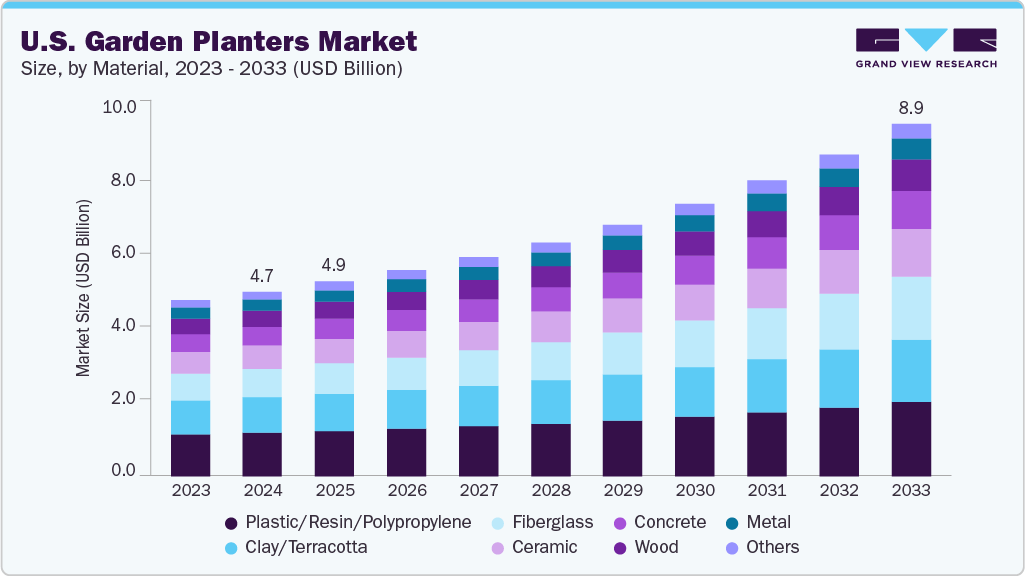
The U.S. garden planters market size was estimated at USD 4.91 billion in 2025 and is projected to reach USD 8.90 billion by 2033, growing at a CAGR of 8.0% from 2026 to 2033. The market is increasingly shaped by consumer interest in aesthetic and lifestyle gardening rather than just functional cultivation.
Key Market Trends & Insights
- By material, plastic/resin/polypropylene accounted for a market share of 23.2% in 2025.
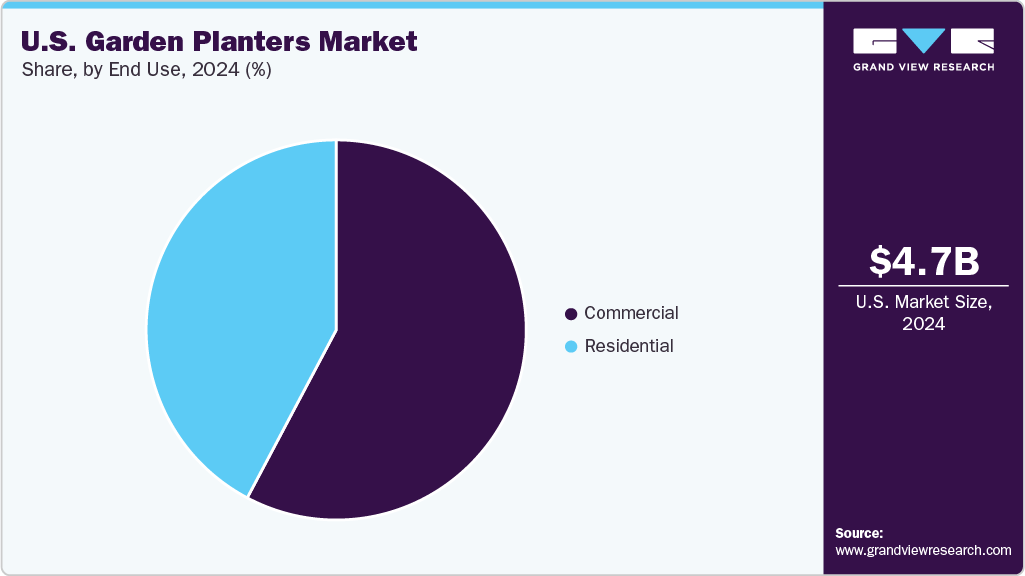
- By end use, commercial garden planters accounted for a market share of 57.5% in 2025.
- By distribution channel, sales through home improvement stores accounted for a market share of 33.6% in 2025.
Market Size & Forecast
- 2025 Market Size: USD 4.91 Billion
- 2033 Projected Market Size: USD 8.90 Billion
- CAGR (2026-2033): 8.0%
Three ways to get this report
Buy it, customize it, or ask a question.Ask an Analyst
Analyst response in 1 business day
- AccessReport author, directly
- Reply timeWithin 1 working day
- No sales callDirect answer only
- FormatEmail reply
- CostFree, no cost
Get the Full Report
What the study covers
- FormatsPDF · Excel · Dashboard
- Timeline2026–2033 annual, 2025 base
- Coverage20+ countries, 5 regions
- Companies10+ key players profiled
Customize the Report
20% free customization
- IncludeCountries, segments, points
- TailorTo your product definition
- ExtendDeeper competitor detail
- OrA fully bespoke study
- Turnaround5–10 working days
Many homeowners are looking for planters that function as décor elements. Sleek lines, textured finishes, and designer aesthetics have become central to purchasing decisions in the U.S. market for garden planters, as consumers increasingly treat planters as part of home décor rather than purely functional items. Indoor planter usage is expanding rapidly, driven by the “bring the outdoors in” trend, where plants are integrated into living rooms, kitchens, and workspaces. Younger consumers, particularly Millennials and Gen Z, are driving demand for compact and modular planters suited for smaller living spaces. According to RubyHome, approximately 55% of U.S. households participate in gardening activities, highlighting a large and active consumer base supporting demand for planters across both indoor and outdoor applications, with consumption patterns closely aligned with broader trends observed across the flower pots and planters market.Sustainability is playing a decisive role in shaping product preferences, with consumers increasingly prioritizing eco-friendly materials and production processes. Buyers are showing willingness to pay for planters made from recycled plastics, biodegradable composites, and low-impact materials. This shift aligns with broader gardening behavior trends in the U.S., where participation remains consistently high and embedded in everyday lifestyle choices. Manufacturers are responding by introducing products made from recycled polymers, bio-resins, and composite materials, along with self-watering planters that improve water efficiency and reduce maintenance, particularly for urban consumers seeking convenience and sustainability, reflecting similar product evolution across the North America pots and planters market.
 Source: Grand View Research, IR Documents, Primary Interviews, Paid DatabasesTo learn more about this report,
 Download Free Sample Report
 Beyond residential use, commercial and institutional demand is also contributing significantly to market growth. Offices, restaurants, hotels, and retail spaces increasingly integrate planters into interiors and outdoor environments to enhance ambiance, create biophilic spaces, and improve customer experience. Gardening activity in the U.S. is influenced by housing type and access to outdoor space, with both homeowners and renters participating through traditional gardens as well as container-based and indoor planting formats. This flexibility supports the use of planters across commercial and public infrastructure where permanent landscaping may not be feasible, while also complementing demand dynamics linked to the U.S. greenhouse market.
The market is further supported by strong retail accessibility and evolving consumer purchasing behavior. Specialty garden centers, home improvement stores, and e-commerce platforms enable consumers to access a wide range of planter styles, materials, and price points. Gardening remains a lifestyle-driven activity in the U.S., supported by motivations such as improving home aesthetics, enhancing well-being, and engaging in productive leisure activities. Digital content, DIY gardening trends, and home décor inspiration continue to influence purchasing decisions, driving consistent demand and encouraging ongoing product innovation in the U.S. garden planters industry.
Company/Brand Market Share Insights
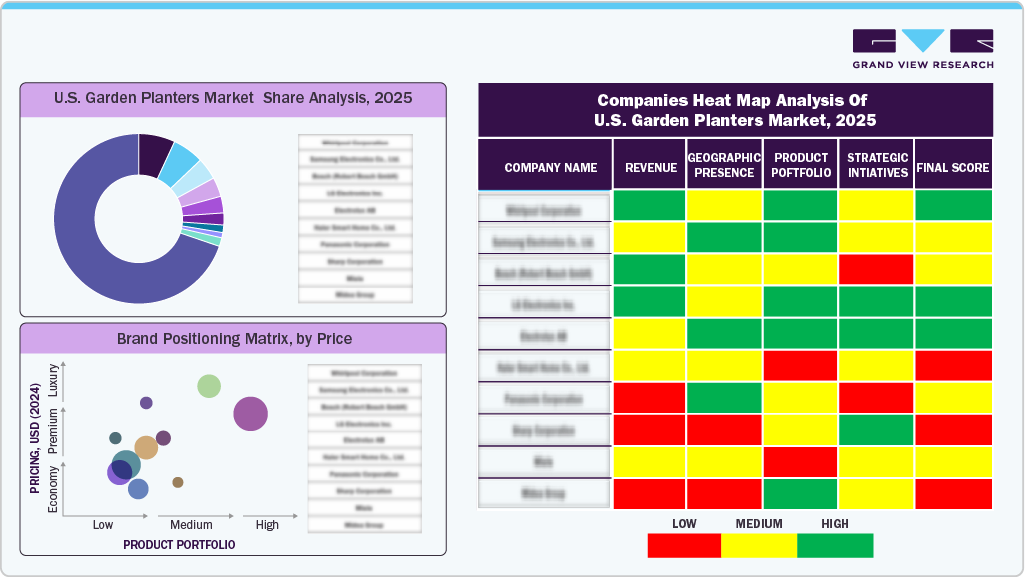
The U.S. market for garden planters is highly competitive, driven by strong consumer demand for durable, functional, and aesthetically appealing planting solutions. Manufacturers focus on features such as weather resistance, efficient drainage, lightweight materials, and space-saving designs suited for indoor and outdoor use. The market benefits from wide availability across home improvement stores, garden centers, and e-commerce platforms, ensuring easy access and price competitiveness. In addition, brands increasingly use digital marketing and social media-driven content to influence purchasing decisions, while rising interest in DIY gardening and home décor continues to drive product innovation and differentiation.
 To learn more about this report, Download Free Sample Report
 Consumer Behavioral Analysis
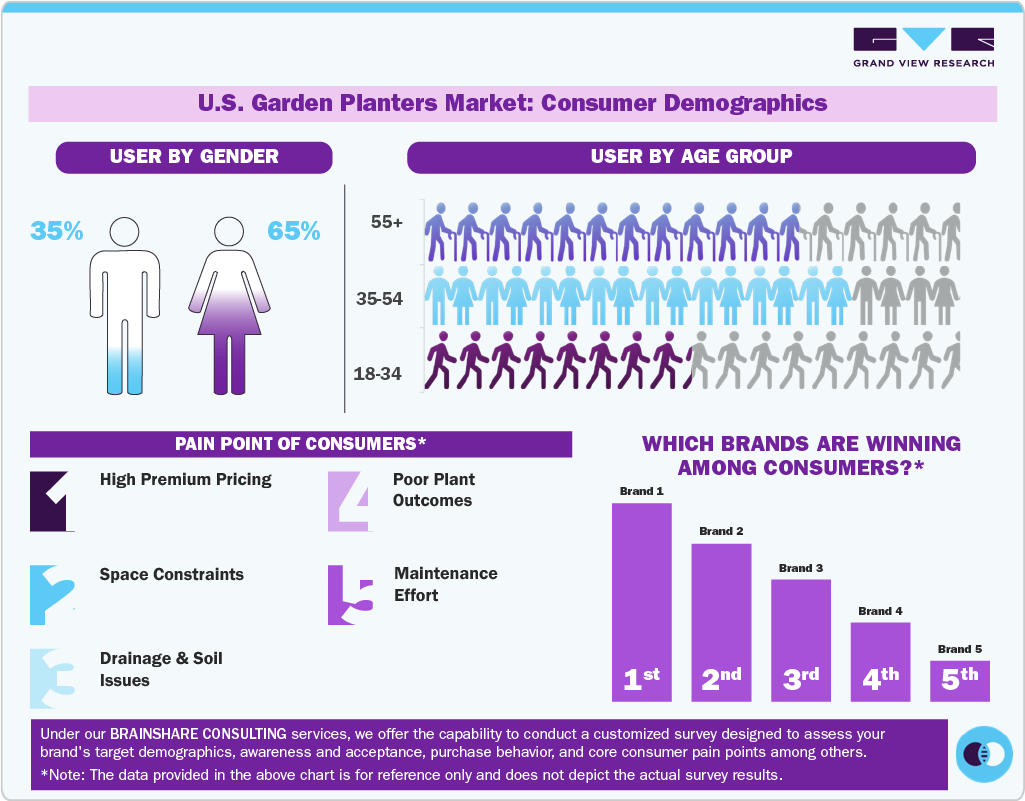
The U.S. market for garden planters is undergoing a significant transformation in its consumer demographic landscape, driven by evolving age group dynamics and an increasing involvement of millennials in gardening. According to the 2024 National Gardening Survey conducted by Garden Research, a division of the National Gardening Association, individuals aged 35-44 continue to lead gardening participation, accounting for 35% of the market. However, millennials, particularly those aged 29-34, are closely trailing behind, representing 29% of the market. This emerging trend underscores the distinct opportunities and behavioral nuances between these two influential age groups, which are reshaping the trajectory and future demand within the garden planter industry.
 To learn more about this report, Download Free Sample Report
 There is an increasing consumer demand for garden planters made from sustainable materials that minimize environmental impact. Biodegradable options, such as those made from plant-based composites and recycled materials, are gaining popularity as eco-conscious consumers seek products that align with their values. Manufacturers are responding by innovating materials that not only meet functional requirements but also adhere to sustainability standards. This trend reflects a broader movement toward environmentally responsible gardening practices, with consumers prioritizing products that contribute to a circular economy and reduce plastic waste.
As consumers become more aware of deforestation and its environmental consequences, there is a marked shift towards wood alternatives in garden planters. Products made from composite wood materials, which incorporate recycled plastics with wood fibers, are increasingly favored for their durability and resistance to decay. These alternatives provide the aesthetic warmth of natural wood while eliminating concerns related to water damage, pest infestations, and environmental sustainability. The appeal of composite wood planters aligns with consumer desires for visually appealing yet environmentally friendly gardening solutions.
Material Insights
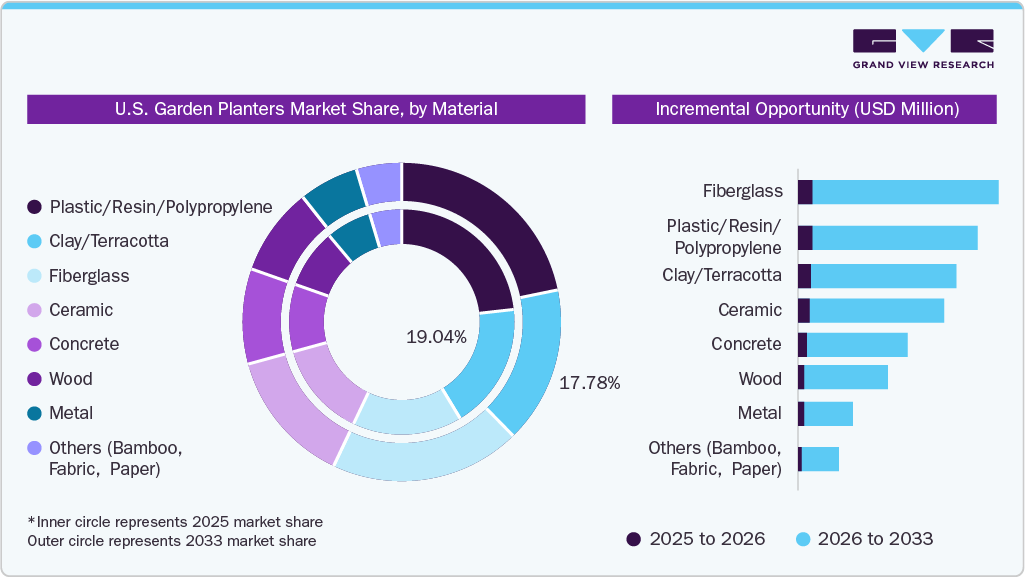
The plastic/resin/polypropylene planters accounted for a revenue share of 23.2% in 2025 due to their lightweight nature, affordability, and durability, making them suitable for both indoor and outdoor applications. These materials are resistant to harsh weather conditions, cracking, and fading, offering long-lasting performance with minimal maintenance. In addition, advancements in molding technologies have enabled the production of planters in various designs, colors, and textures that mimic ceramic or stone finishes, further driving consumer preference for stylish yet cost-effective options.
 To learn more about this report, Download Free Sample Report
 The fiberglass planters are expected to grow at a CAGR of 9.7% from 2026 to 2033 due to the rising consumer preference for premium, durable, and lightweight materials that combine aesthetics with functionality. Fiberglass planters offer superior resistance to weather, UV exposure, and corrosion, making them ideal for both residential and commercial landscaping. Their sleek, modern appearance aligns well with contemporary outdoor and indoor décor trends. Moreover, the increasing use of fiberglass in large-scale installations for hotels, offices, and public spaces, owing to its low maintenance and long lifespan, is further boosting its market demand.
Distribution Channel Insights
Garden planters sold through home improvement stores accounted for a revenue share of 33.6% in 2025 due to the wide product availability, competitive pricing, and consumer trust associated with established retail chains such as Home Depot, Lowe’s, and Ace Hardware. These stores offer an extensive range of materials, sizes, and designs, catering to both residential and commercial buyers. In addition, the in-store experience allows customers to evaluate quality and aesthetics directly, while seasonal promotions and expert advice on gardening and landscaping further drive planter purchases through this channel.
Garden planters sold through online/e-commerce are expected to grow at a CAGR of 9.3% from 2026 to 2033, largely driven by the increasing consumer preference for convenience, product variety, and doorstep delivery. E-commerce platforms offer access to a wide selection of planter styles, materials, and price ranges that may not be available in local stores. The rise of digital home décor trends, influencer marketing, and virtual gardening communities has also boosted online sales. In addition, easy product comparison, customer reviews, and frequent discounts make online platforms a preferred choice for both new and experienced gardeners.
End Use Insights
Garden planters used for commercial applications accounted for a revenue share of 57.5% in 2025 due to the rising incorporation of greenery in commercial spaces such as offices, hotels, restaurants, shopping centers, and public areas. Businesses are increasingly adopting planters to enhance aesthetics, promote employee well-being, and create inviting environments aligned with biophilic design trends. In addition, urban redevelopment projects and municipal green initiatives are driving the installation of planters in streetscapes and public plazas. The demand for durable, low-maintenance, and weather-resistant planters also supports their widespread use in commercial settings.
 To learn more about this report, Download Free Sample Report
 Garden planters used for residential applications are expected to grow at a CAGR of 8.6% from 2026 to 2033 due to the rising popularity of home gardening and interior décor trends that emphasize greenery and wellness. Consumers are increasingly incorporating plants into balconies, patios, and indoor spaces to enhance aesthetics and air quality. The growth of urban housing and smaller living spaces has fueled demand for compact, lightweight, and modular planters. In addition, the growing interest in sustainable living, DIY gardening, and online availability of decorative planters is further boosting adoption across U.S. households.
Key U.S. Garden Planters Companies:
- THE HC COMPANIES, INC.
- Bloem
- Crescent Garden Company
- Mayne Inc.
- Tusco Products
- Planters Unlimited
- Urban Pot
- Jay Scotts
- Novelty Manufacturing Co
- Veradek
Recent Developments
-
In January 2026, Vego Garden launched a new range of potting benches designed as modular and durable workstations for gardening tasks. The collection focuses on improving efficiency through integrated storage and customizable setups, allowing users to organize tools and adapt the workspace to their needs. This launch highlights the growing demand for structured and convenient home gardening solutions.
-
In April 2025, HC Companies and Classic Home & Garden came together to launch a new brand, Growscape, combining their capabilities in gardening and horticulture products. The brand aims to offer innovative and sustainable solutions across plant care and outdoor categories, while improving product development and operational efficiency. This move reflects a focus on delivering more streamlined, eco-conscious gardening solutions to consumers.
U.S. Garden Planters Market Report Scope
Report Attribute
Details
Market size value in 2026
USD 5.19 billion
Revenue forecast in 2033
USD 8.90 billion
Growth rate (Revenue)
CAGR of 8.0% from 2026 to 2033
Actuals
2021 - 2025
Forecast period
2026 - 2033
Quantitative units
Revenue in USD million, volume in thousand units, and CAGR from 2026 to 2033
Report coverage
Revenue forecast, company ranking, competitive landscape, growth factors, and trends
Segments covered
Material, end use, distribution channel
Country scope
U.S.
Key companies profiled
THE HC COMPANIES, INC.; Bloem; Crescent Garden Company; Mayne Inc.; Tusco Products; Planters Unlimited; Urban Pot; Jay Scotts; Novelty Manufacturing Co.; and Veradek.
Customization
Free report customization (equivalent up to 8 analysts working days) with purchase. Addition or alteration to country, regional & segment scope.
Pricing and purchase options
Avail customized purchase options to meet your exact research needs. Explore purchase options
U.S. Garden Planters Market Report Segmentation
This report forecasts revenue growth at the country level and provides an analysis of the latest industry trends and opportunities in each of the sub-segments from 2021 to 2033. For this study, Grand View Research has segmented the U.S. garden planters market report by material, end use, and distribution channel.
-
Material Outlook (Volume, Thousand Units; Revenue, USD Million, 2021 - 2033)
-
Clay/Terracotta
-
Plastic/Resin/Polypropylene
-
Wood
-
Concrete
-
Metal
-
Ceramic
-
Fiberglass
-
Others (Bamboo, Fabric, Paper)
-
-
End Use Outlook (Volume, Thousand Units; Revenue, USD Million, 2021 - 2033)
-
Residential
-
Commercial
-
-
Distribution Channel Outlook (Volume, Thousand Units; Revenue, USD Million, 2021 - 2033)
-
Supermarkets & Hypermarkets
-
Home Improvement Stores
-
Specialty Stores
-
Co-Op/Independent
-
Online/E-commerce
-
Frequently Asked Questions About This Report
Some key players operating in the U.S. garden planter market include TTHE HC COMPANIES, INC.; Bloem; Crescent Garden Company; Mayne Inc.; Tusco Products; Planters Unlimited; Urban Pot; Jay Scotts; Novelty Manufacturing Co.; Veradek.
Key factors that are driving the U.S. garden planter market include the growing consumer interest in gardening and government initiatives toward green cities in the U.S.
The U.S. garden planter market was estimated at USD 4.91 billion in 2025 and is expected to reach USD 5.19 billion in 2026
The U.S. garden planter market is expected to grow at a compound annual growth rate of 8.0% from 2026 to 2033 to reach USD 8.90 billion by 2033.
Plastic garden planters in the U.S. garden planter market with a share of around 23.2% in 2025. The lightweight nature of plastic garden planters, coupled with their availability in a diverse range of sizes and designs, enhances their versatility and drives their adoption among consumers.
About the Author(s)
Homecare & Decor Research Team
Consumer Goods · Homecare & DecorThis report was authored by the homecare & decor research team at Grand View Research - comprising two research analysts, one senior research analyst, and one industry expert - with specialized expertise in the homecare & decor segment of the consumer goods industry. All findings are based on proprietary consumer goods databases, executive interviews, and regulatory analysis, subject to internal peer review prior to publication.
Last Updated:
Speak to Analyst

Customize this report to your needs - add regions, segments, or data points, with 20% free customization.
Or view our licence options:


ISO 9001:2015 & 27001:2022 Certified
We are GDPR and CCPA compliant! Your transaction & personal information is safe and secure. For more details, please read our privacy policy.


