
- Home
- »
- Medical Devices
- »
-
U.S. Home Healthcare Market Size, Industry Report, 2033GVR Report cover

U.S. Home Healthcare Market (2025 - 2033) Size, Share & Trends Analysis Report By Component (Equipment, Services), By Indication (Neurological & Mental Disorders, Diabetes & Kidney Disorders, Cancer, Wound Care), By Region, And Segment Forecasts
U.S. Home Healthcare Market Size & Trends
The U.S. home healthcare market size was estimated at USD 162.35 billion in 2024 and is expected to reach USD 381.40 billion by 2033, growing at a CAGR of 10.00% from 2025 to 2033. This growth is driven by the growing geriatric population and increasing prevalence of chronic diseases, along with favorable reimbursement for home healthcare equipment. According to Census Gov. article published in June 2025, the U.S. population age 65 and older rose by 3.1% (to 61.2 million) from 2023 to 2024, driven largely by the aging of the Baby Boomer generation and improvements in life expectancy. In contrast, the population under age 18 decreased by 0.2% (to 73.1 million) from 2023 to 2024, influenced by lower birth rates and changing family planning trends. Moreover, the recent advancements in technology & cost-effectivity of these are likely to drive growth during the forecast period.
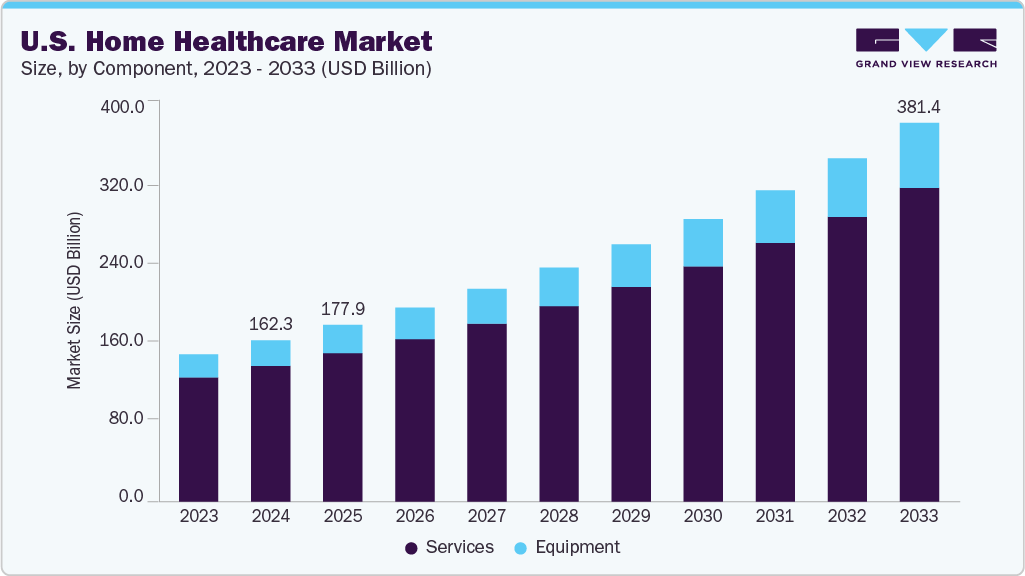 Source: Grand View Research, IR Documents, Primary Interviews, Paid DatabasesTo learn more about this report,
 Download Free Sample Report
 Aging Population & Rising Chronic Disease Burden
The U.S. geriatric population has been increasing rapidly over the past decade. Typically, older adults prefer to remain in their homes as they age, rather than move to a medical facility. Additionally, many seniors choose home healthcare services after surgery or treatment at the hospital to shorten their hospital stays, which boosts demand in the market. Older adults are also more vulnerable to chronic illnesses such as cardiovascular disease, diabetes, arthritis, COPD, and Alzheimer’s, which often require ongoing monitoring, medication management, and rehab services. Home healthcare provides these patients with a comfortable and familiar environment while easing the burden on hospitals and long-term care facilities. It also offers cost-effective, personalized care plans that address complex, multi-morbidity needs, making it an ideal solution for aging individuals with chronic conditions.
Aging Population & Chronic Disease Impact on Market
Instance
Details
Multiple Chronic Conditions
As per National Council on Aging, Inc. study published in July 2025, nearly 95% of people aged 60 and over have at least one chronic illness, and 80% have two or more, requiring ongoing household management.
Alzheimer’s Disease
According to National Library of Medicine study published in April 2024, over 6.9 million Americans aged 65 and over live with Alzheimer’s, with many cared for at residence due to comfort and safety needs.
Post-Stroke Rehabilitation
Stroke survivors often need long-term physical and speech therapy, which can be delivered effectively in household settings.
Heart Failure Management
Household healthcare programs reduce hospital readmissions for seniors with congestive heart failure through regular monitoring and telehealth check-ins.
Source: Secondary Research, National Library of Medicine, National Council on Aging, Inc., Grand View Research
Growing Technology & Telehealth Integration
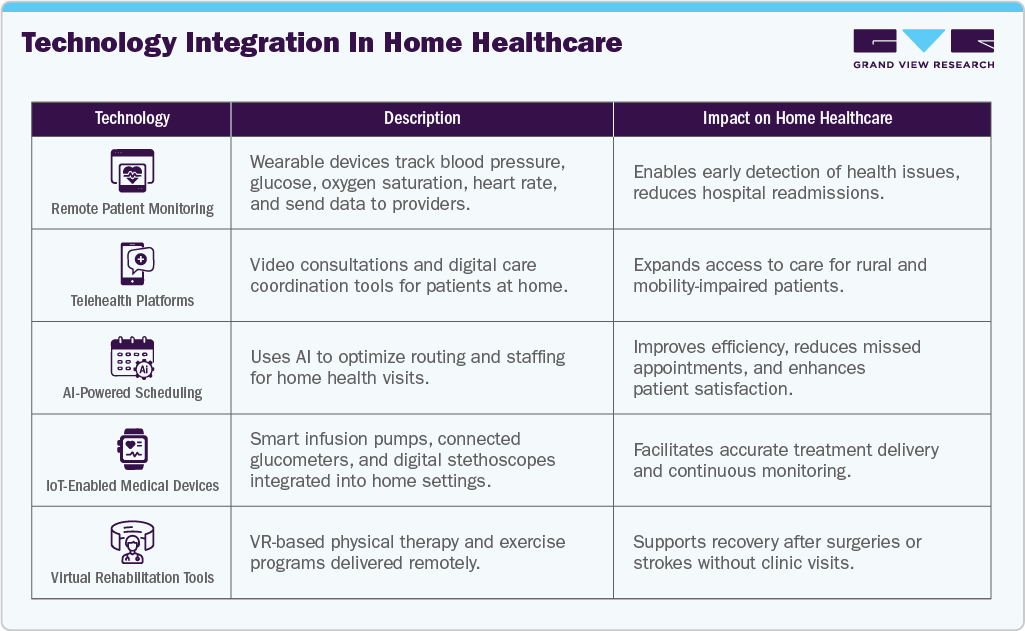
Technology and telehealth integration enable patients to receive continuous medical care without frequent hospital visits. Remote patient monitoring tools, wearable health devices, and IoT-enabled medical equipment allow healthcare providers to track real-time vital signs, medication adherence, and disease progression. This capability facilitates early intervention and helps reduce emergency admissions. Telehealth platforms also support virtual consultations, education, and emotional support, especially for patients with chronic conditions or mobility challenges. Additionally, AI-powered logistics and scheduling tools boost operational efficiency for home healthcare agencies, ensuring timely visits and enhancing patient engagement. Overall, integrating technology is transforming home healthcare into a more accessible, personalized, and cost-effective model of care.
Moreover, electronic visit verification is an upcoming technology that facilitates verification of caregiver appointments, scheduling, & cancellation, avoiding no-show home appointments. The verification includes information about the patient and professional, including the location, date, and time required. According to the social services department, by 2023, all home healthcare service providers in the U.S. must implement electronic visit verification, as per recent regulations.
 To learn more about this report, Download Free Sample Report
 Cost-Effectiveness & Preference for “Aging in Place”
Home healthcare services are usually much cheaper than hospital stays or skilled nursing facilities, often costing 50 to 70% less, while offering personalized care in a familiar setting. Many seniors prefer remaining in their homes instead of relocating to institutional environments, valuing comfort, emotional well-being, and independence. This choice, known as "aging in place," matches families' goals of receiving quality care without the high costs linked to inpatient care. Furthermore, programs such as Medicare's Home Health Services and the growing Hospital at Home models are making in-home care more affordable. The combined benefits of cost savings and lifestyle preferences increase demand, especially among the rapidly expanding senior population in the U.S.
Medicare provides reimbursement for services such as intermittent skilled nursing care, care provided by a home health aide, and therapy under either Part A or Part B, depending on the circumstances. However, government organizations are taking measures to get service providers to focus more on the clinical characteristics of the patients, to eliminate the use of therapy service thresholds. For instance, a major change to the reimbursement system in recent decades is the Patient-Driven Groupings Model (PDGM) that was implemented in January 2020, which is reshaping the reimbursement of these services.
Instances of Cost-Effectiveness & Aging in Place in the Market
Instance
Description
Impact
Medicare Services
Provides eligible seniors with skilled nursing, therapy, and aide services at no additional cost beyond Medicare coverage.
Reduces financial burden for seniors and encourages in-home care use.
Hospital at Home Programs
Delivers hospital-level care (IV therapy, monitoring, etc.) at a patient’s residence for certain conditions.
Cuts treatment costs by 19% compared to inpatient stays while improving patient comfort.
Medicaid Waiver Programs
State-run initiatives allow long-term care services at residences instead of in nursing homes.
Keeps seniors in familiar surroundings and saves state healthcare budgets.
Veterans Affairs (VA) Home-Based Primary Care
Offers chronic disease management to veterans in their residence.
Supports aging in place for a high-needed population at lower costs.
Private Insurer Home Care Benefits
Insurers such as Humana and UnitedHealthcare expanding home-based care coverage.
Encourages members to opt for home settings, lowering claims costs for payers.
Source: Secondary Research, Grand View Research
Supportive Government Programs & Payment Reforms
Federal initiatives such as Medicare and Medicaid have gradually expanded coverage for home-based services, including skilled nursing, therapy, and more recently, remote patient monitoring and telehealth visits. The Home Health Value-Based Purchasing (HHVBP) model incentivizes agencies that provide high-quality, cost-efficient care, leading to savings for Medicare and improved patient outcomes. Legislative efforts such as the Hospital Inpatient Services Modernization Act aim to extend the “Hospital at Home” program, allowing acute-level treatment in residential settings. Additionally, CMS reimbursement reforms such as the 2023 telehealth billing codes motivate providers to incorporate digital health tools into home care. Political proposals, including expanding Medicare coverage for long-term in-home aides, aim to make aging in place more financially accessible for millions of seniors. Combined, these programs and reforms decrease reliance on institutional care, ease hospital overcrowding, and promote the shift toward patient-centered, household healthcare models.
Market Concentration & Characteristics
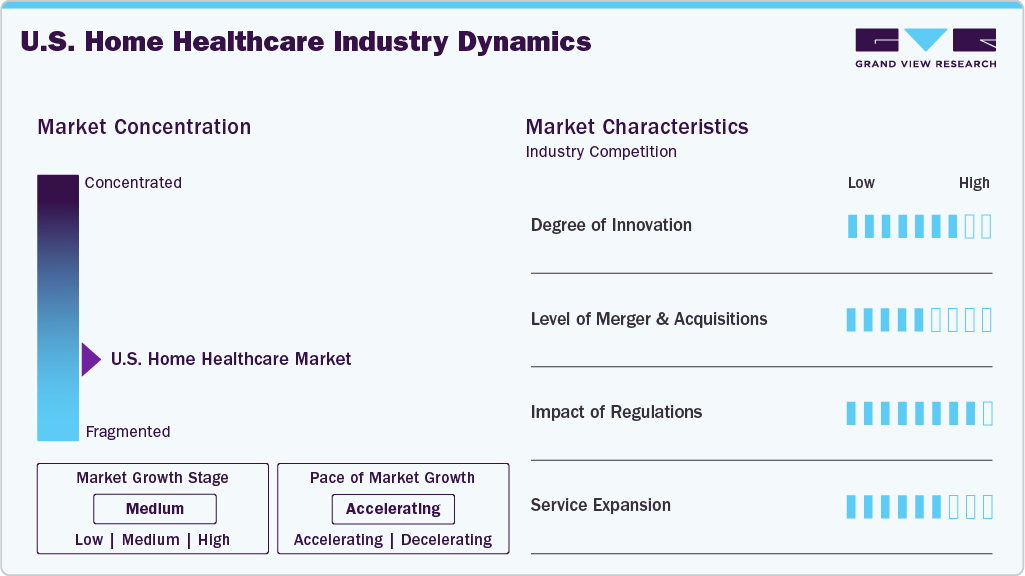
The chart below illustrates the relationship between industry concentration, industry characteristics, and industry participants. The x-axis shows the level of industry concentration, ranging from low to high. The y-axis depicts various market characteristics, such as the degree of innovation, the impact of regulations, industry competition, service and product expansion, the level of partnerships and collaboration activities, and regional expansion. For example, the industry is fragmented, with many service providers entering the market. There is a high level of innovation, a moderate level of merger and acquisition activities, a moderate impact of regulations, and moderate geographical expansion of the industry.
The industry is experiencing a high degree of innovation. The use of technology, such as telemedicine and remote patient monitoring, is also driving innovation in the market. For instance, in August 2024, LG’s in partnership with Amwell launched the Carepoint TV Kit, which integrates existing LG healthcare TVs with advanced monitoring capabilities. This solution allows healthcare providers to engage with patients remotely, facilitating virtual consultations and monitoring without the need for physical presence. The product enables tasks such as patient admission, discharge processes, and care coordination to be managed efficiently from a centralized location.
 To learn more about this report, Download Free Sample Report
 The market players are leveraging strategies such as collaborations, partnerships, and acquisitions, to promote the reach of their offerings and increase their services capabilities. In June 2025, New Day Healthcare acquired Heritage Home Healthcare LLC, in New Mexico. Heritage brings a seasoned presence, having delivered household care, hospice, and skilled nursing services to New Mexicans since 1993 through over 900 caregivers serving roughly 1,100 patients daily. In addition, New Day plans to deploy its “continuum-based” model and proprietary CareLytics platform to enhance patient care workflows and drive organic growth within the New Mexico market.
The regulatory framework for the industry involves compliance with industry-specific guidelines and standards to ensure accuracy and consistency. These regulations cover areas such as licensing requirements for providers, accreditation of home healthcare agencies, and reimbursement policies for household healthcare services. In the U.S., according to federal laws and regulations, each province and territory has its own set of rules and requirements for home healthcare services. These may include requirements for licensing, training, and certification of providers, and rules around the types of services that can be provided and the conditions under which they can be provided.
Market players and government bodies utilize a strategy of service expansion to increase and promote the at household healthcare services & offerings. For instance, in April 2024, The U.S. FDA introduced the “Home as a Health Care Hub” initiative, by the Center for Devices and Radiological Health (CDRH), to reimagine the home as a foundational component of the healthcare system. Recognizing pressing challenges-such as clinician shortages, ballooning healthcare costs, rising chronic disease rates, and limited access especially in underserved, rural, and low-income communities. The initiative aims to advance health equity by shifting the focus from institutions to individuals and their living environments.
Component Insights
The services segment dominated the market, accounting for 84.12% in 2024. It is further divided into skilled nursing services and unskilled nursing services. Skilled nursing services include a wide range of care provided by licensed healthcare professionals. Unskilled nursing services are delivered by caregivers or household health aides, who are not certified medical professionals but are skilled at offering patients non-medical support. The market demand is rapidly increasing as a more affordable alternative to hospitalization or institutional care. Skilled nursing services have gained popularity due to their convenience and ability to foster patient independence.
The equipment segment is projected to grow at the fastest rate during the forecast period. It is divided into therapeutic, diagnostic, and mobility assistance categories. Diagnostic equipment held the largest market share and is expected to expand rapidly in the coming years. Advances in sensors, medical devices, and software lead to the creation of accurate and portable diagnostic tools. This is likely to boost the segment's growth. For example, in July 2024, Smart Meter launched a multi-cuff blood pressure monitor designed to improve remote patient monitoring and chronic care management. This innovative device enables clinicians to track blood pressure readings from multiple patients or different cuff sizes using a single system, enhancing efficiency and accessibility in both home and clinical environments.
Indication Insights
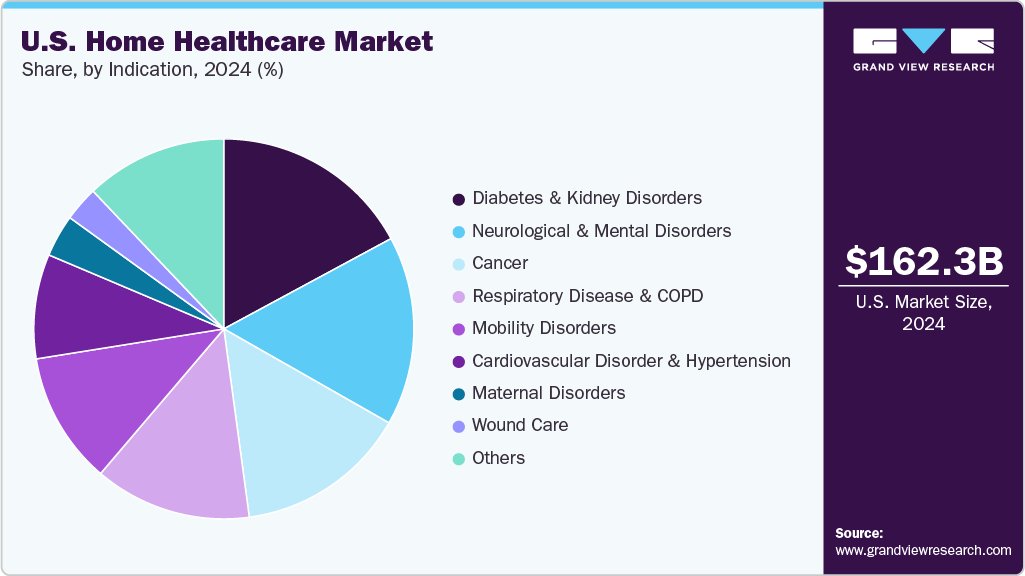
Based on indication, the neurological and mental disorder segment led the market with the largest revenue share of 17.12% in 2024 due to the high prevalence and low awareness of these chronic conditions among adults. For instance, according to the American Diabetes Association, in 2021, approximately 14.7% of U.S. adults, or nearly 38.4 million people, have diabetes, with about 8.7 million unaware of their condition. Additionally, as reported by the Centers for Disease Control and Prevention, it is estimated that over 1 in 7 adults in the U.S.-around 35.5 million individuals, or 14%-suffer from chronic kidney disease (CKD). These significant gaps in early detection highlight the need for household care models that enable remote monitoring, medication adherence, and proactive interventions.
 To learn more about this report, Download Free Sample Report
 The mobility disorders segment is expected to grow at the fastest CAGR during the forecast period. According to the CDC, 12.2% of U.S. adults have a mobility-related disability with serious difficulty walking or climbing stairs. Mobility disorders are conditions that limit movement due to physical, psychological, or neurological impairment, and treatment may include physical therapy, assistive devices, and medications. Household healthcare services can provide numerous benefits to individuals with mobility disorders, such as assistance with daily tasks & activities to help maintain independence and physiotherapists to help regain mobility, functionality, strength & reduce pain through exercise, movements, & massage. The increasing prevalence of mobility disorders is expected to drive the growth of this segment over the forecast period.
Regional Insights
Southeast region held a significant revenue share in 2024 due to rapidly aging population, most notably in states such as Florida. This region also benefits from robust growth in Medicare Advantage enrollment and supportive Medicaid waiver programs that prioritize residence and community-based services, reinforcing incentive structures for providers to deliver care outside institutional settings. Moreover, technological advancements including telehealth integration, remote patient monitoring, connectivity via IoT and AI-driven solutions-enhance the efficiency, accessibility, and personalization of in-home services, enabling skilled care to be delivered with better clinical outcomes and cost-effectiveness.
The Midwest region is expected to see significant growth during the forecast period due to the rising prevalence of chronic illnesses such as cardiovascular disease, diabetes, dementia, and respiratory disorders, which are increasing the demand for skilled household care and long-term support. Additionally, patients and payers are increasingly choosing home-based care because it is cheaper than hospital or facility-based treatment, reduces the risk of hospital-acquired infections, and offers greater comfort and convenience. Furthermore, rural and medically underserved areas common in the Midwest have limited access to traditional healthcare facilities, creating more opportunities for home-based care.
Key U.S. Home Healthcare Companies Insights
The market is fragmented, dominated by a few large players. Key competitors include Humana’s CenterWell Home Health, which emphasizes at-home care, and Optum (UnitedHealth Group), which has expanded through acquisitions such as LHC Group and Amedisys. Enhabit operates over 200 sites across 30+ states with a tech-enabled model, while Addus HomeCare offers a mix of personal care and home health services tailored for Medicaid. In addition, large networks such as BAYADA and Interim HealthCare enhance competition for staff and referrals. Diversified players like BrightSpring are also emerging as competitors in this space.
Key U.S. Home Healthcare Companies:
- Manufacturers
- McKesson Medical-Surgical, Inc.
- NxStage Medical (Fresenius Medical Care)
- Medline Industries Inc.
- Medtronic plc
- 3M Healthcare
- Baxter International Inc.
- B. Braun Melsungen AG
- F. Hoffman-La Roche AG
- Becton, Dickinson and Company
- Service Providers
- Kindred Healthcare, LLC
- Brookdale Senior Living Inc.
- Sunrise Senior Living, LLC
- Genesis Healthcare, Inc.
- Sonida Senior Living (Capital Senior Living Corporation)
- Diversicare Healthcare Services, Inc.
- Senior Care Center
- Atria Senior Living, Inc.
- Amedisys, Inc.
- Home Instead, Inc.
Three ways to get this report
Buy it, customize it, or ask a question.Ask an Analyst
Analyst response in 1 business day
- AccessReport author, directly
- Reply timeWithin 1 working day
- No sales callDirect answer only
- FormatEmail reply
- CostFree, no cost
Get the Full Report
What the study covers
- FormatsPDF · Excel · Dashboard
- Timeline2025–2033 annual, 2024 base
- Coverage20+ countries, 5 regions
- Companies10+ key players profiled
Customize the Report
20% free customization
- IncludeCountries, segments, points
- TailorTo your product definition
- ExtendDeeper competitor detail
- OrA fully bespoke study
- Turnaround5–10 working days
Recent Developments
-
In July 2025, TeleMedCare initiated a remote chronic patient monitoring program in collaboration with a leading U.S. health insurance and service provider; an insurer that operates across five U.S. states and covers over 500,000 members. TeleMedCare is piloting the program in Florida, focusing initially on 300 patients suffering from chronic cardiovascular, respiratory, and metabolic conditions such as heart failure (CHF), COPD, diabetes, and hypertension
-
In July 2025, The Pennant Group, Inc. announced the acquisition of GrandCare Health Services, a respected home health agency located in Southern California. Now renamed GrandCare Home Health, this acquisition expands Pennant’s home health care services into Los Angeles, Orange, Riverside, and San Diego counties, strengthening its strategic presence in markets where it already operates senior living facilities.
-
In June 2025, BrightSpring Health Services announced to expand their home health operations to drive greater synergy across its diverse service lines. This expansion enables BrightSpring’s provider team nurses and doctors visiting patients at home to identify emerging needs beyond immediate care, such as medication management or rehab services, effectively creating cross-service opportunities that reduce hospitalizations.
-
In March 2025, DispatchHealth and Boston-based Medically Home finalized their merger, uniting two leaders in hospital-level home healthcare into a single, robust platform operating under the DispatchHealth name. This merger was aimed at delivering a full continuum of care from same-day urgent visits and emergency-alternative services to inpatient-level hospital-at-home care and transitional care aimed at reducing readmission.
-
In April 2024, the U.S. FDA, through its Center for Devices and Radiological Health (CDRH), unveiled the “Home as a Health Care Hub” initiative-often also referred to as the Health Care at Home initiative. The aim is to reimagine homes as central, integrated health environments rather than peripheral afterthoughts.
U.S. Home Healthcare Market Report Scope
Report Attribute
Details
Revenue forecast in 2033
USD 381.40 billion
Growth rate
CAGR of 10.00% from 2025 to 2033
Actual data
2021 - 2024
Forecast data
2025 - 2033
Quantitative units
Revenue in USD million/billion and CAGR from 2025 to 2033
Report coverage
Revenue forecast, company ranking, competitive landscape, growth factors, and trends
Segments covered
Component, indication, region
Country scope
U.S.
Regional scope
West; Southeast; Southwest; Midwest; Northeast
Key companies profiled
Manufacturers: McKesson Medical-Surgical, Inc.; NxStage Medical (Fresenius Medical Care); Medline Industries Inc.; Medtronic plc; 3M Healthcare; Baxter International Inc.; B. Braun Melsungen AG; F. Hoffman-La Roche AG; Becton, Dickinson and Company
Service Providers: Kindred Healthcare, LLC; Brookdale Senior Living Inc.; Sunrise Senior Living, LLC; Genesis Healthcare, Inc.; Capital Senior Living Corporation (Sonida Senior Living); Diversicare Healthcare Services, Inc.; Senior Care Center; Atria Senior Living, Inc.; Amedisys, Inc.; Home Instead, Inc.
Customization scope
Free report customization (equivalent up to 8 analysts working days) with purchase. Addition or alteration to country, regional & segment scope.
Pricing and purchase options
Avail customized purchase options to meet your exact research needs. Explore purchase options
U.S. Home Healthcare Market Report Segmentation
This report forecasts revenue growth, country level and provides an analysis of the latest industry trends in each of the sub-segments from 2021 to 2033 For this study, Grand View Research has segmented the U.S. home healthcare market report based on component, indication, and region:
-
Component Outlook (Revenue, USD Billion, 2021 - 2033)
-
Equipment
-
Therapeutic
-
Home Respiratory Equipment
-
Insulin Delivery Market
-
Home IV Pumps
-
Home Dialysis Equipment
-
Other Therapeutic Equipment
-
-
Diagnostic
-
Diabetic Care Unit
-
BP Monitors
-
Multi Para Diagnostic Monitors
-
Home Pregnancy and Fertility Kits
-
Apnea And Sleep Monitors
-
Holter Monitors
-
Heart Rate Meters (Including pacemakers)
-
Other
-
-
Mobility Assist
-
Wheel Chair
-
Home Medical Furniture
-
Walking Assist Devices
-
-
-
Services
-
Skilled Nursing Services
-
Physician Primary Care
-
Nursing Care
-
Physical/Occupational/Speech Therapy
-
Nutritional Support
-
Hospice & Palliative
-
Other Skilled Nursing Services
-
-
Unskilled Nursing Services
-
-
-
Indication Outlook (Revenue, USD Billion, 2021 - 2033)
-
Cardiovascular Disorder & Hypertension
-
Diabetes & Kidney Disorders
-
Neurological & Mental Disorders
-
Respiratory Disease & COPD
-
Maternal Disorders
-
Mobility Disorders
-
Cancer
-
Wound Care
-
Others
-
-
Region Outlook (Revenue, USD Billion, 2021 - 2033)
-
West
-
Southeast
-
Southwest
-
Midwest
-
Northeast
-
Frequently Asked Questions About This Report
The U.S. home healthcare market size was estimated at USD 162.35 billion in 2024.
The U.S. home healthcare market is expected to grow at a compound annual growth rate of 10.00% from 2025 to 2033 to reach UUSD 381.40 billion by 2033.
Service segment dominated the U.S. home healthcare market with a share of 84.12% in 2024. This is attributable to increasing home healthcare agencies, rising demand for home healthcare services, and favorable health reimbursement policies.
Some key players operating in the U.S. home healthcare market include McKesson Medical-Surgical, Inc.; NxStage Medical (Fresenius Medical Care); Medline Industries Inc.; Medtronic plc; 3M Healthcare; Baxter International Inc.; B. Braun Melsungen AG; F. Hoffman-La Roche AG; Becton, Dickinson and Company; Kindred Healthcare, LLC; Brookdale Senior Living Inc.; Sunrise Senior Living, LLC; Genesis Healthcare, Inc.; Capital Senior Living Corporation (Sonida Senior Living); Diversicare Healthcare Services, Inc.; Senior Care Center; Atria Senior Living, Inc.; Amedisys, Inc.; Home Instead, Inc.
Key factors that are driving the U.S. home healthcare market growth include growing geriatric population, recent advancements in technology, and cost-effectivity of home healthcare services.
About the Author(s)
Medical Devices Research Team
Healthcare · Medical DevicesThis report was authored by the medical devices research team at Grand View Research - comprising two research analysts, one senior research analyst, and one industry expert - with specialized expertise in the medical devices segment of the healthcare industry. All findings are based on proprietary healthcare databases, executive interviews, and regulatory analysis, subject to internal peer review prior to publication.
Last Updated:
Speak to Analyst

Customize this report to your needs - add regions, segments, or data points, with 20% free customization.
Or view our licence options:


ISO 9001:2015 & 27001:2022 Certified
We are GDPR and CCPA compliant! Your transaction & personal information is safe and secure. For more details, please read our privacy policy.


