
- Home
- »
- Medical Devices
- »
-
U.S. Mental Health And Addiction Treatment Centers Market Report, 2033GVR Report cover

U.S. Mental Health And Addiction Treatment Centers Market (2025 - 2033) Size, Share & Trends Analysis Report By Disorder (Substance Abuse Disorders), By Treatment Centers Type, By Age Group, And Segment Forecasts
U.S. Mental Health And Addiction Treatment Centers Market Summary
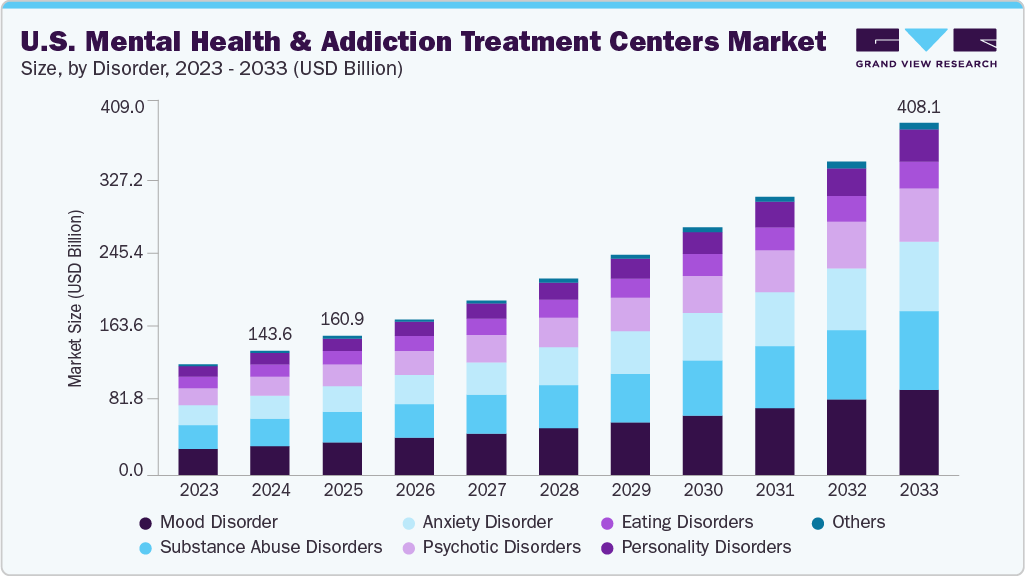
The U.S. mental health and addiction treatment centers market size was estimated at USD 143.62 billion in 2024 and is expected to reach USD 408.12 billion by 2033, growing at a CAGR of 12.3% from 2025 to 2033. The market is driven by rising awareness and diagnosis of behavioral health conditions, growing acceptance of mental health as a critical aspect of overall wellness, and increasing government support through funding and policy initiatives. Furthermore, integrating behavioral health into primary care and expanding insurance coverage under federal programs such as Medicaid and the Affordable Care Act have further improved access to treatment services.
 Source: Grand View Research, IR Documents, Primary Interviews, Paid DatabasesTo learn more about this report,
 Download Free Sample Report
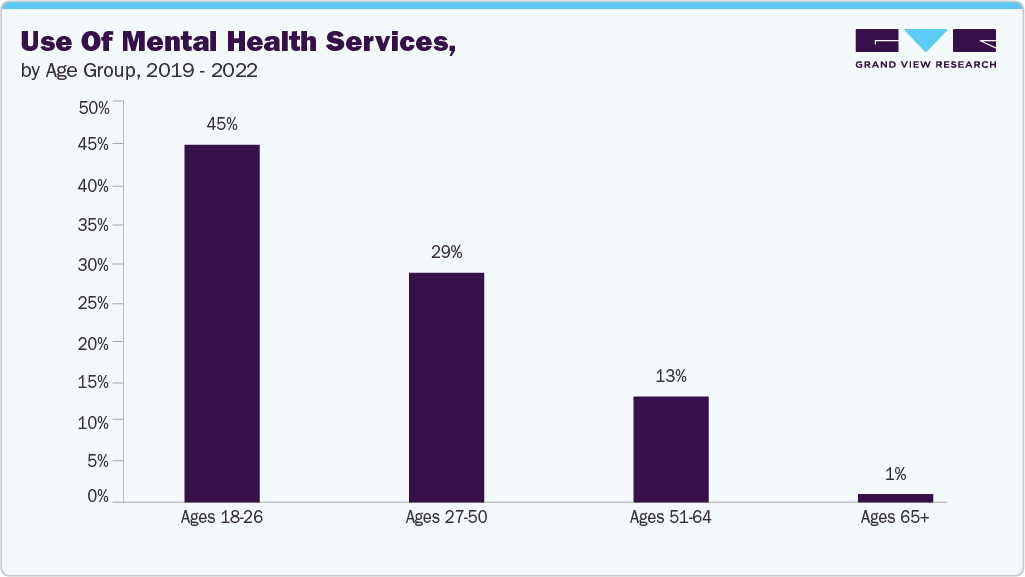
 Increasing prevalence of mental illness and substance use disorders is one of the primary factors driving industry growth in the U.S. According to the National Institute of Mental Health (NIMH) report, in 2022, approximately 59.3 million adults in the U.S., representing 23.1% of the adult population, experienced some form of mental illness during the year. Notably, the highest prevalence was observed among young adults aged 18 to 25, where over one-third reported mental health challenges.
In addition, data from the Kaiser Family Foundation (KFF) illustrate a consistent increase in the use of mental health services across adult age groups from 2019 to 2022. The most significant growth was observed among adults aged 18-26, whose usage of mental health services rose by 45% during this period.
 To learn more about this report, Download Free Sample Report
 In addition, a substantial portion of individuals with substance use disorders also experience co-occurring mental health conditions. According to the 2023 National Survey on Drug Use and Health (NSDUH), around 20.4 million adults were diagnosed with both mental disorder and substance use disorder. This overlap necessitates integrated and specialized treatment environments, prompting many providers to invest in dual-diagnosis capable inpatient, outpatient, and residential centers. As a result, facilities equipped to manage complex, multi-condition cases are becoming increasingly essential across the U.S.
Moreover, the expansion and financial sustainability of mental health and addiction treatment centers in the U.S. are significantly influenced by a supportive reimbursement environment and evolving federal and state-level policy reforms. These reimbursement mechanisms, which cover specific mental health and substance use disorder (SUD) services, have directly impacted treatment centers' capacity to maintain operations, expand infrastructure, and increase service delivery.
Following the implementation of the Affordable Care Act (ACA), many states expanded Medicaid coverage, which considerably increased access to behavioral health services. A 2020 study published in Health Affairs found that Medicaid expansion led to a 36% increase in SUD treatment admissions in expansion states compared to non-expansion states. In addition, Medicaid’s share of funding for these services rose by approximately 23 percentage points, reducing the financial burden on local governments and supporting greater service delivery by treatment centers.
Furthermore, federal and state funding continues to be a critical growth driver for the market in the U.S. One of the largest contributors is the Substance Abuse and Mental Health Services Administration (SAMHSA), which requested USD 10.2 billion for FY 2025, up from USD 6.2 billion in FY 2021 These funds support certified community behavioral health clinics (CCBHCs), state block grants, mobile crisis teams, and suicide prevention programs, all of which contribute to expanding service delivery and reducing gaps in care access.
Key funding allocations aimed at enhancing treatment capacity and service reach include
-
State Opioid Response (SOR) Program: USD 1.6 billion has been requested for FY 2025 to address the opioid crisis through expanded access to medication-assisted treatment (MAT), recovery services, and community-based infrastructure for substance use disorder care. These investments are expected to directly boost demand for treatment centers that provide integrated, evidence-based care.
-
Community Mental Health Services Block Grant (MHBG) - The FY 2025 request is USD 35 million. These grants support the development of comprehensive community mental health systems and enable states to invest in service expansion and facility upgrades, thereby improving overall treatment capacity.
The market landscape has witnessed a surge in platform investment activity, with private equity firms and strategic investors actively consolidating fragmented providers across treatment modalities. The increasing demand for behavioral healthcare services, driven by the ongoing opioid crisis, rising mental well-being awareness, and payer shifts toward value-based care, has made the sector attractive for long-term strategic investment.
Platform investments in the U.S. mental health & addiction treatment centers, 2022 - 2025
Target Company
Acquirer
Treatment Segment
Date
Recovery Dynamics
Optimal Investment Group
Counseling
22-Jan-25
Purpose Healing Center
Owner Resource Group
Counseling
4-Dec-24
Odyssey Behavioral Healthcare
JLL Partners
Residential
21-Nov-24
Windmill Wellness Ranch
Magnificent Legacy Capital & Legacy Quest Partners
Residential
15-Aug-24
First Steps Recovery
Avesi Partners
Residential
23-Apr-24
Market Concentration & Characteristics
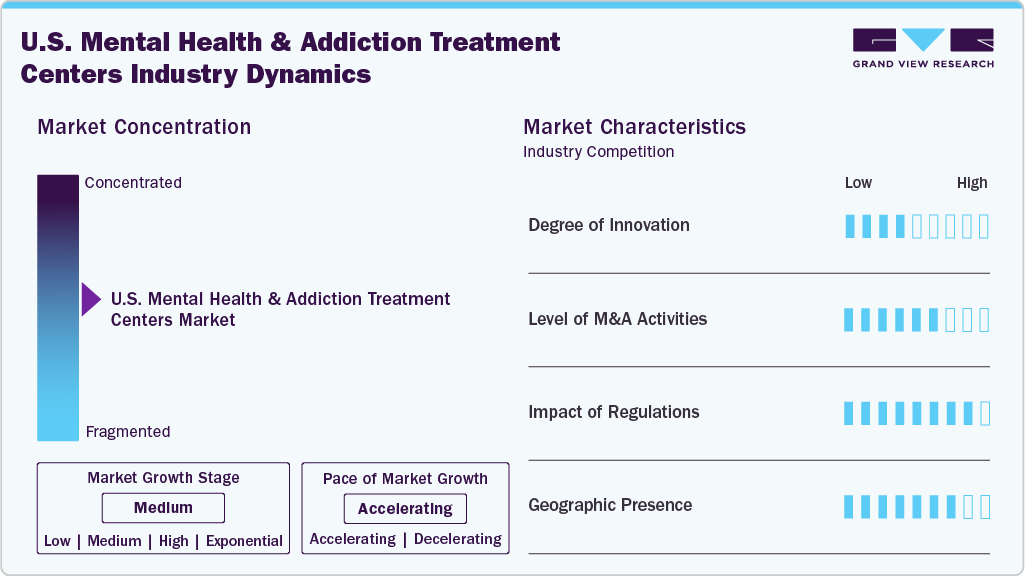
The market is evolving rapidly, with well-established and emerging players driving transformation through acquisitions, partnerships, and new technologies. The market is moderately fragmented, with key players actively expanding their service footprint and investing in innovation to improve patient outcomes.
Innovations include the rise of telepsychiatry, digital therapeutics, and virtual therapy platforms that are transforming care delivery in the market. These tools are expanding access to care, especially in rural and underserved areas. AI-powered analytics enable early detection, personalized treatment planning, and relapse prevention strategies. In June 2025, UHS partnered with Hippocratic AI to introduce generative AI agents that follow up with patients after discharge by phone. Piloted at Summerlin Hospital (NV) and Texoma Medical Center (TX), the AI reached thousands of patients, earned an average satisfaction rating of 9.0/10, and helped alert clinicians to changes in patient condition.
 To learn more about this report, Download Free Sample Report
 Several key market players are devising business growth strategies through mergers and acquisitions (M&A). Through M&A activity, these companies can expand their business geographies. For instance, in January 2025, Oceans acquired all outstanding shares of Nashville-based Haven Behavioral Healthcare, adding seven behavioral health facilities (hospitals and outpatient centers) across five new states: Arizona, Idaho, Ohio, New Mexico, and Pennsylvania. The acquisition increased Oceans Healthcare’s footprint to 48 facilities in nine states, supported by approximately 4,000 employees.
Regulations have significantly influenced access and delivery of mental health and addiction treatment services across the U.S. The enforcement of the Mental Health Parity and Addiction Equity Act has strengthened insurance coverage equality for behavioural health. Medicare’s inclusion of licensed counsellors and therapists' services has expanded the provider base.
Several market players are expanding their business by entering new geographical regions to strengthen their market position and expand their product portfolio. For instance, in April 2025, Aware debuted a new virtual clinic called Anew by Aware, offering virtual detox and medication-assisted treatment (MAT) across eight states. Staffed by psychiatric nurse practitioners, this extension of their IHAT model aims to increase access to FDA-approved addiction treatments via remote delivery.
Disorder Insights
The mood disorder segment dominated the market in 2024 with a market share of over 23.79%. Increasing prevalence of conditions such as depression drives market growth. According to the CDC article published in April 2025, data highlights the extent of this issue, revealing that between August 2021 and August 2023, an estimated 13.1% of individuals in the U.S. aged 12 and older experienced symptoms of depression within a two-week timeframe. The prevalence was notably higher among females compared to males and showed a decline with increasing age. This trend underlines the need for targeted mental health interventions, especially among adolescents and young adults.
Anxiety disorder is anticipated to grow significantly during the forecast period. Increasing cases of anxiety drive the growth of the market. According to the PreferNP article published in September 2024, anxiety disorders remain one of the most common mental health challenges in the U.S., affecting an estimated 6.9% of the population, or more than 23 million people. This prevalence places the U.S. third globally in terms of anxiety disorder rates. The widespread incidence highlights a significant public health concern, underscoring the growing demand for professional treatment and therapeutic interventions.
Treatment Centers Type Insights
The outpatient treatment centers segment dominated the market in 2024 with a market share of over 55.56%. Outpatient treatment centers have become a central component of the U.S. mental health and addiction recovery landscape. According to the Valley Forge article published in February 2025, there were approximately 17,353 licensed substance abuse treatment facilities across the U.S. in 2022, with outpatient programs among the most commonly utilized care models. These programs provide structured, evidence-based treatments while enabling individuals to maintain personal and professional routines.
The residential treatment centers segment is anticipated to grow significantly during the forecast period. Residential treatment centers (RTCs) provide structured, live-in environments for individuals who require ongoing care for mental disorders or substance use disorders. These centers offer an essential alternative to inpatient hospitalization, emphasizing therapeutic stability, behavioral health support, and reintegration into daily living. RTCs are a critical component of the U.S. mental health and addiction treatment continuum, especially as demand grows for long-term, holistic recovery solutions across diverse populations.
Age Group Insights
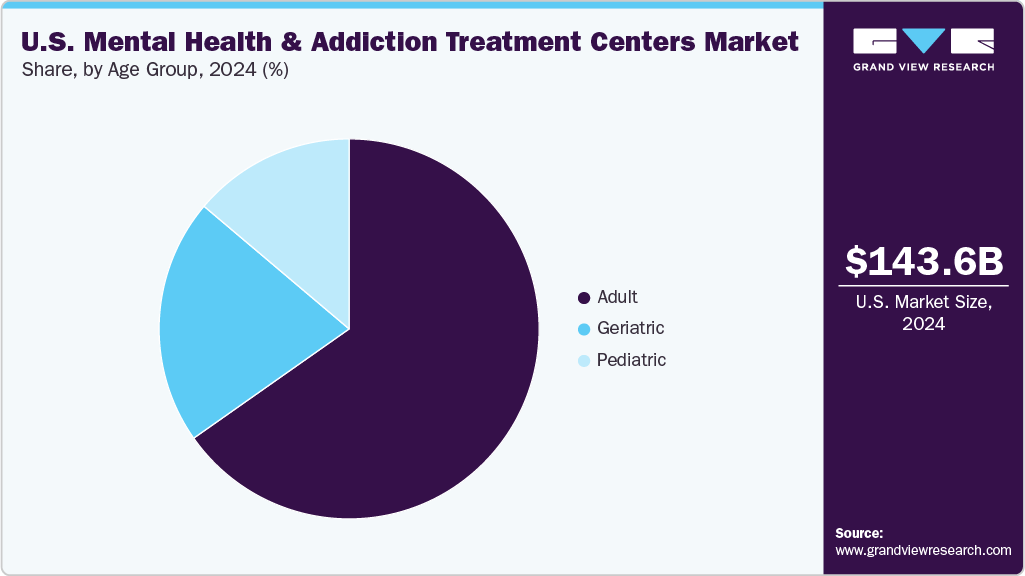
The adult segment dominated in 2024 with a revenue market share of 65.25%. Adults (ages 18-60) comprise the bulk of service users in behavioral health centers across the U.S., particularly in outpatient, intensive outpatient, residential, and crisis recovery settings. From managing adult-onset mental illness to navigating economic and psychosocial stressors, this population experiences high rates of anxiety, depression, PTSD, and substance use disorders. To serve this broad and complex demographic, treatment providers are rolling out innovative, adult-focused care models tailored to enhance accessibility, continuity, and effectiveness. Increasing mental well-being conditions among U.S. adults drive the growth of the market. According to the Mental Health America article published in March 2025, about 1 in 5 American adults, approximately 59 million individuals, will experience a diagnosable mental health condition each year, underscoring the enormous scale of need within the adult population.
 To learn more about this report, Download Free Sample Report
 Pediatric is anticipated to grow at the fastest CAGR during the forecast period. The pediatric population (ages 0-17) in the U.S. is experiencing a growing mental health crisis fueled by a range of developmental and societal stressors. Younger children (ages 0-11) often face challenges related to developmental disorders, emotional regulation, and adverse childhood experiences (ACEs), while older children and adolescents (ages 12-17) grapple with more complex mental issues, including depression, anxiety, substance use, and suicidal ideation.
Key U.S. Mental Health And Addiction Treatment Centers Company Insights
The market is evolving rapidly, with well-established and emerging players driving transformation through acquisitions, partnerships, and new technologies. The market is moderately fragmented, with key players actively expanding their service footprint and investing in innovation to improve patient outcomes. Acadia Healthcare, Universal Health Services, Inc. (UHS), Pyramid Healthcare Inc., and Behavioral Health Network, Inc. (BHN) are among the market's leading players. These companies are leveraging strategic acquisitions and advanced technologies to strengthen their positions.
Key U.S. Mental Health and Addiction Treatment Centers Companies:
- Acadia Healthcare
- Behavioral Health Network, Inc. (BHN)
- Promises Behavioral Health
- Pyramid Healthcare Inc
- Oceans Healthcare
- Universal Health Services, Inc. (UHS)
- Aware Recovery Care.
- The Meadows
- American Addiction Centers
Three ways to get this report
Buy it, customize it, or ask a question.Ask an Analyst
Analyst response in 1 business day
- AccessReport author, directly
- Reply timeWithin 1 working day
- No sales callDirect answer only
- FormatEmail reply
- CostFree, no cost
Get the Full Report
What the study covers
- FormatsPDF · Excel · Dashboard
- Timeline2025–2033 annual, 2024 base
- Coverage20+ countries, 5 regions
- Companies10+ key players profiled
Customize the Report
20% free customization
- IncludeCountries, segments, points
- TailorTo your product definition
- ExtendDeeper competitor detail
- OrA fully bespoke study
- Turnaround5–10 working days
Recent Developments
-
In February 2025, Acadia Healthcare began operations in the fourth quarter at three new locations: a joint venture hospital with Intermountain Health in Denver, Colorado, and two newly established facilities in Madison, Wisconsin, and Indio, California. Throughout 2024, the Company finished building around 1,300 new beds, with 776 of these beds officially licensed by December 31, 2024.
-
In October 2024, Acadia Healthcare acquired three opioid treatment program clinics in South Carolina. These clinics, formerly known as Recovery Concepts, Recovery Concepts of the Carolina Upstate, and Clear Skye Treatment Center, will be rebranded as Clinton, Easley, and Ridgeland Comprehensive Treatment Centers within Acadia’s Comprehensive Treatment Center (CTC) service line. This acquisition marks Acadia's entry into South Carolina's opioid treatment landscape and expands its network of CTC locations to 165 across 33 states. The facilities provide medication-assisted treatment and behavioral therapy for opioid use disorder, serving all patients, including those with Medicaid.
-
In February 2024, Pyramid’s first expansion into West Virginia came by acquiring Mountaineer Recovery Center. This added detox, residential, outpatient, and MAT services to its network in Kearneysville.
U.S. Mental Health And Addiction Treatment Centers Market Report Scope
Report Attribute
Details
Revenue forecast in 2033
USD 408.12 billion
Growth rate
CAGR of 12.3% from 2025 to 2033
Actual data
2021 - 2024
Forecast data
2025 - 2033
Quantitative units
Revenue in USD million/billion and CAGR from 2025 to 2033
Report coverage
Revenue forecast, company ranking, competitive landscape, growth factors, and trends
Segments covered
Disorder, treatment centers type, age group
Country scope
U.S.
Key companies profiled
Acadia Healthcare; Behavioral Health Network, Inc. (BHN); Promises Behavioral Health; Pyramid Healthcare Inc.; Oceans Healthcare; Universal Health Services, Inc. (UHS); Aware Recovery Care.; The Meadows; American Addiction Centers
Customization scope
Free report customization (equivalent up to 8 analysts working days) with purchase. Addition or alteration to country, regional & segment scope.
Pricing and purchase options
Avail customized purchase options to meet your exact research needs. Explore purchase options
U.S. Mental Health And Addiction Treatment Centers Market Report Segmentation
This report forecasts revenue growth at the country level and provides an analysis of the latest industry trends in each of the sub-segments from 2021 to 2033. For this study, Grand View Research has segmented the U.S. mental health and addiction treatment centers market report based on disorder, treatment centers type, and age group:
-
Disorder Outlook (Revenue, USD Billion, 2021 - 2033)
-
Mood Disorder
-
Substance Abuse Disorders
-
Anxiety Disorder
-
Psychotic Disorders
-
Eating Disorders
-
Personality Disorders
-
Others
-
-
Treatment Centers Type Outlook (Revenue, USD Billion, 2021 - 2033)
-
Outpatient Treatment Centers
-
Inpatient Treatment Centers
-
Residential Treatment Centers
-
Other Treatment Options
-
-
Age Group Outlook (Revenue, USD Billion, 2021 - 2033)
-
Adult
-
Geriatric
-
Pediatric
-
Frequently Asked Questions About This Report
The U.S. mental health and addiction treatment centers market was estimated at USD 143.62 billion in 2024 and is expected to reach USD 160.98 billion in 2025.
The mood disorder segment accounted for 23.79% of revenue share in 2024. The segment growth is driven by increasing awareness and diagnosis of mood disorders, advances in treatment methods such as cognitive-behavioral therapy and medication management, and greater insurance coverage for behavioral disorders treatment through the Affordable Care Act.
The outpatient treatment centers segment held the largest share in 2024 and is expected to exhibit the highest CAGR during the forecast period. The rise in demand for outpatient treatment centers can be attributed to the increasing prevalence of behavioral disorders. The U.S. Outpatient programs offer structured care while allowing patients to maintain social and professional responsibilities. Research has indicated that outpatient treatment significantly improves the chances of long-term recovery for individuals with behavioral disorders.
The rising prevalence of addiction and substance use disorders is contributing to the growth of the market.
Some of the key market players operating in the market are Acadia Healthcare, Behavioral Health Network, Inc. (BHN), Promises Behavioral Health, Pyramid Healthcare Inc, Oceans Healthcare, Universal Health Services, Inc. (UHS), Aware Recovery Care., The Meadows, American Addiction Centers
About the Author(s)
Medical Devices Research Team
Healthcare · Medical DevicesThis report was authored by the medical devices research team at Grand View Research - comprising two research analysts, one senior research analyst, and one industry expert - with specialized expertise in the medical devices segment of the healthcare industry. All findings are based on proprietary healthcare databases, executive interviews, and regulatory analysis, subject to internal peer review prior to publication.
Last Updated:
Speak to Analyst -

Customize this report to your needs - add regions, segments, or data points, with 20% free customization.
Or view our licence options:


ISO 9001:2015 & 27001:2022 Certified
We are GDPR and CCPA compliant! Your transaction & personal information is safe and secure. For more details, please read our privacy policy.


