
- Home
- »
- Medical Devices
- »
-
U.S. Neuroendoscopy Devices Market Report, 2026-2033GVR Report cover

U.S. Neuroendoscopy Devices Market (2026 - 2033)
Size, Share & Trends Analysis Report By Product Type (Rigid Neuroendoscopes), By Setting (Hospital, Neurosurgical Centers/Specialty Centers), By Region (Northeast, Southeast, Southwest, Midwest), And Segment Forecasts
Market Size, 2025
$27.0MMarket Estimate, 2026
$28.6MMarket Forecast, 2033
$43.3MCAGR, 2026–2033
6.1%U.S. Neuroendoscopy Devices Market Size & Trends
The U.S. neuroendoscopy devices market size was valued at USD 27.0 million in 2025 and is projected to grow from USD 28.6 million in 2026 to USD 43.3 million by 2033, at a CAGR of 6.1% from 2026 to 2033. The market growth is driven by the adoption of endoscopic visualization in intraventricular procedures, transnasal surgery, skull-base interventions, and selected intracranial applications. Advances in endoscopic imaging and the development of procedure-specific rigid and flexible neuroendoscopes support demand for improved visualization in minimally invasive neurosurgery. Demand for reusable instruments is also supported by equipment replacement and upgrades, while single-use devices may provide an additional growth avenue as their adoption expands.
Key Market Trends & Insights
- By product type: Rigid neuroendoscopes held the majority share of 72.0% in 2025.
- By setting: Hospitals held the majority share of 98.1% in 2025.
Market Size & Forecast
- Market Size in 2025: USD 27.0 Million
- Estimated Market Size in 2026: USD 28.6 Million
- Projected Market Size by 2033: USD 43.3 Million
- CAGR (2026-2033): 6.1%
Prism AI by Grand View Research Free to tryAsk a question about the U.S. neuroendoscopy devices marketTry asking✓Every figure cited from GVR research Prefer the report? Download free sample →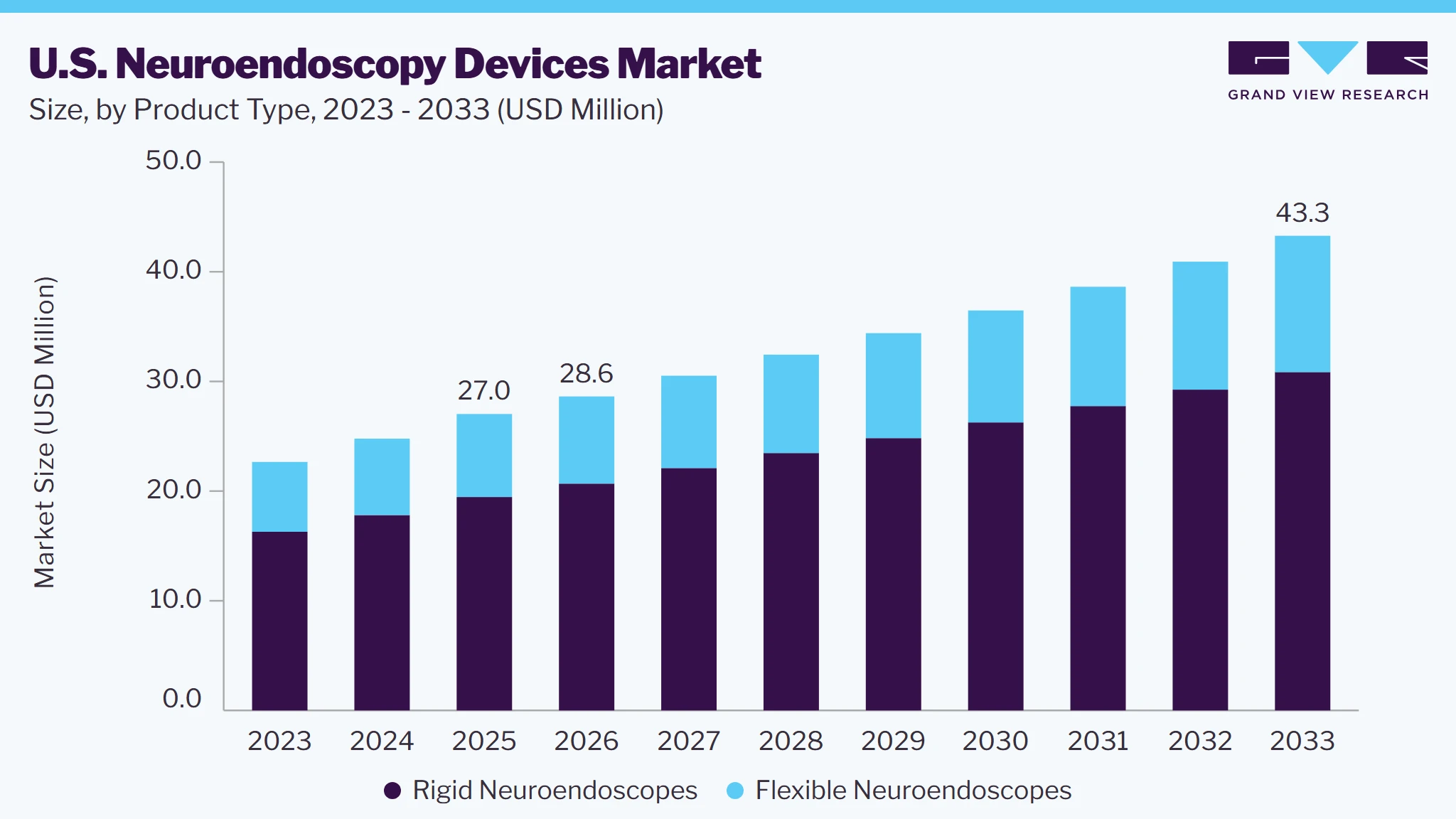 Source: Grand View Research, IR Documents, Primary Interviews, Paid DatabasesTo learn more about this report,
 Download Free Sample Report
Market Dynamics
The U.S. neuroendoscopy devices market is driven by the growing adoption of minimally invasive neurosurgical procedures, including ventricular endoscopy, transsphenoidal surgery, and endonasal skull-base interventions. Advances in high-definition imaging, compact endoscopes, and procedure-specific instruments are supporting improved visualization and surgical precision. However, high equipment costs, the need for specialized surgical training, and technical limitations in complex procedures may restrain market growth. Opportunities are emerging through continued product innovation, equipment upgrades, and the development of single-use neuroendoscopic devices.
The increasing utilization of endoscopic third ventriculostomy for adult and pediatric hydrocephalus is expected to drive demand for neuroendoscopes in the U.S. ETV requires direct visualization of the ventricular system to identify anatomical landmarks and create an opening in the floor of the third ventricle. Growth in these procedures therefore translates directly into increased utilization of rigid ventricular neuroendoscopes and selected flexible systems.
For instance, according to a May, 2025 U.S. study published in Surgical Neurology International, researchers analyzed Medicare Part B National Summary Data to assess cerebrospinal fluid diversion procedures among adults with hydrocephalus. ETV utilization increased by 11.34% during the study period, with the increase reaching statistical significance at p<0.01. The study also reported an average annual growth rate of 4.29% for ETV procedures, demonstrating increasing use of ventricular neuroendoscopy among Medicare beneficiaries.
Moreover, a November, 2025 U.S. study published in Child’s Nervous System analyzed National Inpatient Sample data for pediatric patients who developed hydrocephalus following posterior fossa brain tumor resection. Among 5,305 pediatric tumor-resection cases, 470 patients received a ventriculoperitoneal shunt and 140 underwent ETV. Compared with shunt placement, ETV was associated with lower odds of prolonged hospitalization and high hospital charges, along with a greater likelihood of routine discharge. The findings support the clinical and economic relevance of ETV for selected patients with tumor-associated hydrocephalus.
Furthermore, increasing ETV use across adult hydrocephalus and selected pediatric tumor-related cases is expected to expand the procedure base served by neuroendoscopes. This trend supports recurring utilization and replacement of reusable ventricular scopes, additional placements at hospitals establishing neuroendoscopy devices capabilities, and selective adoption of single-use systems. Demand is expected to remain concentrated among hospitals and specialized neurosurgical centers with trained surgeons and established ventricular surgery programs.
The high cost of reusable neuroendoscopes and associated surgical care is expected to restrict market adoption, particularly among community hospitals and facilities with limited neurosurgical procedure volumes. Hospitals must invest in rigid and flexible neuroendoscopes while also managing expenses related to visualization systems, reprocessing, maintenance, repairs, staff training, and backup devices. These costs increase the financial burden of establishing and maintaining a neuroendoscopic devices program.
U.S. Department of Veterans Affairs pricing demonstrates the significant acquisition cost of neuroendoscopes. KARL STORZ reusable flexible neuroendoscopes are priced between USD 13,972.76 and USD 22,104.80 per unit. The Video Neuro-Endoscope is priced at USD 22,104.80, the Steerable Neuro-Fiberscope at USD 15,137.17, and the Neuro-Fiberscope 3.7 × 34 Set at USD 13,972.76. Similarly, reusable rigid products, including the LOTTA Ventriculoscope, LOTTA 30° Ventriculoscope, and Little LOTTA Ventriculoscope, are priced at approximately USD 9,035 per unit. Hospitals generally require multiple scopes to support procedure schedules, reprocessing turnaround, repairs, and backup requirements, further increasing the initial investment.
The overall cost of neuroendoscopic surgical care adds to this financial pressure. According to the 2021 U.S. study titled Drivers of In-Hospital Costs Following Endoscopic Transsphenoidal Pituitary Surgery, the average total in-hospital cost among 190 patients was USD 28,624. This included an average direct cost of USD 19,444 and an indirect cost of USD 9,181. The average hospital stay was 4.71 days, while postoperative cerebrospinal fluid leakage was associated with an additional cost of USD 40,981.
Accordingly, smaller hospitals may delay neuroendoscope purchases, extend replacement cycles, limit backup inventory, or refer complex cases to specialized centers. This is expected to concentrate demand among academic hospitals and high-volume neurosurgical centers that can distribute equipment, maintenance, and surgical costs across a larger number of procedures.
Advances in image quality, three-dimensional visualization, digital imaging, and operating-room connectivity are expected to create growth opportunities in the U.S. neuroendoscopy devices market. Neuroendoscopic procedures are performed through narrow anatomical corridors, where illumination, image resolution, depth perception, angled viewing, and orientation directly affect procedural confidence. Hospitals are therefore increasingly evaluating neuroendoscopes based on visualization performance and compatibility with their existing operating-room platforms.
The adoption of 4K and three-dimensional imaging, compact digital scopes, distal-chip cameras, improved illumination, and image-recording capabilities is expected to support the replacement of older neuroendoscopes. Compatibility with navigation systems and digital operating-room platforms can further improve workflow during ventricular, intracranial, and skull-base procedures. These technologies can also support premium product positioning and encourage hospitals to standardize neuroendoscope fleets around compatible visualization platforms.
Recent FDA clearances demonstrate continued product development. In April 2025, the FDA cleared Integra LifeSciences’ AURORA Surgiscope System through K250752. In May 2025, HJY Smart Medical Device received clearance for the VisualNext 3D Endoscopic Vision System through K243429. The FDA also cleared the ZEISS QEVO System through K232159 in September 2023 and Stryker’s 1688 4K Camera System with Precision S 4K Sinuscopes through K211202 in August 2021. These devices were classified by the FDA as neurological endoscopes under product code GWG.
Academic hospitals and integrated delivery networks are expected to prioritize neuroendoscopes that provide improved image quality and compatibility with existing visualization, navigation, and recording systems. Smaller hospitals may favor compact or modular products that require less additional infrastructure.
Furthermore, manufacturers offering advanced visualization, platform compatibility, ergonomic operation, and reliable service support are expected to strengthen their position in the U.S. market. Longer-term development of software-assisted visualization and image guidance could further support neuroendoscopic devices upgrades and replacement demand.
Market Concentration & Characteristics
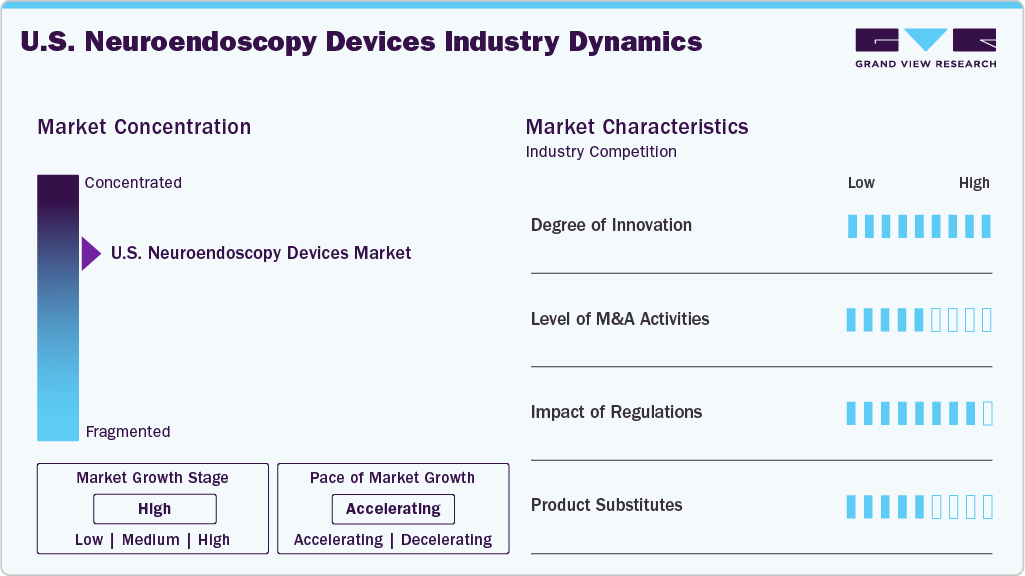
The chart below illustrates the relationship between industry concentration, industry characteristics, and industry participants. The X-axis represents the level of market concentration, ranging from low to high. The Y-axis represents various market characteristics, including industry competition, degree of innovation, level of mergers & acquisition activities, regulatory impact, product substitutes, and regional expansion.
The U.S. neuro endoscopy devices market is characterized by a high degree of innovation, supported by the development of three-dimensional imaging and advanced digital visualization systems. For instance, in May 2025, the FDA granted 510(k) clearance to HJY Smart Medical Device Co., Ltd.'s VisualNext 3D Endoscopic Vision System, which is classified as a Class II neurological endoscope and supports 2D and 3D visualization during neurological and spinal procedures.
 To learn more about this report, Download Free Sample Report
The market is characterized by moderate merger and acquisition activity, as established medical technology companies pursue complementary surgical technologies and digital visualization capabilities to expand their portfolios. For instance, in August 2024, KARL STORZ completed its acquisition of Asensus Surgical, strengthening its capabilities in robotic-assisted surgery and digital surgical technologies.
"We are thrilled to complete this merger with KARL STORZ, which marks an exciting new chapter for Asensus, By joining forces with a leading company in endoscopy that became a system provider for integrated MedTech, we are well-positioned to accelerate the development and delivery of our innovative robotic and digital surgical solutions. This union will benefit patients and surgeons worldwide by advancing precise, safer, and more predictable surgical outcomes."
-Anthony Fernando, Asensus Surgical President and CEO.
The U.S. neuroendoscopy devices market is subject to significant regulatory oversight, as medical devices must meet applicable FDA requirements before commercial distribution. For instance, in April 2025, the FDA granted 510(k) clearance to Integra LifeSciences' AURORA Surgiscope System (ASX15/60 and ASX15/80), classified as a Class II neurological endoscope for neurosurgical and neuroendoscopic applications. These regulatory requirements influence product development, market entry timelines, and manufacturers' compliance costs.
The U.S. market is characterized by moderate substitution pressure, owing to the availability of exoscopic visualization systems for selected neurosurgical procedures. For instance, in December 2024, KARL STORZ received Vizient’s Innovative Technology Designation for the VITOM eagle exoscope with ARTip CRUISE, a 4K/3D/ICG visualization system designed to support exoscopic and endoscopic visualization through the IMAGE1 S platform.
Analyst Perspective
The U.S. neuroendoscopy devices market is driven by the growing use of endoscopic techniques across ventricular, intracranial, and skull-base procedures, with hospitals serving as the primary demand center due to their neurosurgical infrastructure and multidisciplinary care capabilities. Demand is rising for applications such as endoscopic third ventriculostomy, ventricular interventions, tumor procedures, hemorrhage evacuation, and endoscopic skull-base surgery. The existing installed base of reusable rigid and flexible neuro endoscopes generates recurring demand through replacement, repair, and system expansion, while disposable platforms introduce a procedure-based purchasing model supported by reduced reprocessing requirements and immediate availability. Product selection is increasingly influenced by clinical application, maneuverability, visualization quality, working-channel functionality, compatibility with existing equipment, and procedure economics.
Product Type Insights
The rigid neuroendoscopes segment accounted for the largest share of around 71.3% in 2025, driven by their established use in ventricular, cranial, and skull-base procedures. Rigid systems provide stable visualization and precise access through surgical corridors, supporting their continued use across neurosurgical procedures. For instance, in June 2026, Stryker received U.S. FDA clearance for its Precision S 4K Sinuscope under the neurological endoscope classification, reflecting continued development of high-resolution rigid endoscopic visualization for neurosurgical applications.
The flexible neuro endoscopes segment is expected to grow at fastest CAGR over the forecast period from 2026 to 2033. This growth is driven by the maneuverability of flexible and steerable systems in procedures involving complex intracranial anatomy. Flexible neuro endoscopes support ventricular and selected non-ventricular cerebral procedures requiring access to anatomically difficult areas. For instance, in August 2024, researchers from the University of Wisconsin-Madison reported a mother-daughter ventricular endoscopy technique in Operative Neurosurgery. The technique uses a smaller endoscope through a larger endoscope to improve visualization and access within the ventricular system, addressing anatomical constraints encountered during conventional rigid endoscopy.
Setting Insights
The hospital segment accounted for the largest revenue share of 98.1% in 2025, due to the concentration of complex neurosurgical procedures and the availability of specialized operating rooms, neurosurgical teams, and perioperative support. Neuro endoscopic procedures, including endoscopic endonasal skull base surgery, generally require hospital-based infrastructure for surgical intervention and postoperative management. For instance, in May 2025, UPMC’s Center for Cranial Base Surgery performed its 5,000th endoscopic endonasal approach (EEA) skull base surgery at UPMC Presbyterian Hospital, reflecting the established use of hospital settings for endoscopic neurosurgical procedures.
The neurosurgical centers / specialty centers segment is expected to grow at fastest in CAGR over the forecast period from 2026 to 2033, owing to the expansion of specialized neurosurgical services and dedicated treatment facilities. The availability of trained neurosurgeons, advanced visualization equipment, and procedure-specific infrastructure may support the adoption of neuroendoscopic systems in these settings. Selected procedures suitable for short-stay care may also contribute to demand where appropriate anesthesia, monitoring, and emergency support are available.
Regional Insights
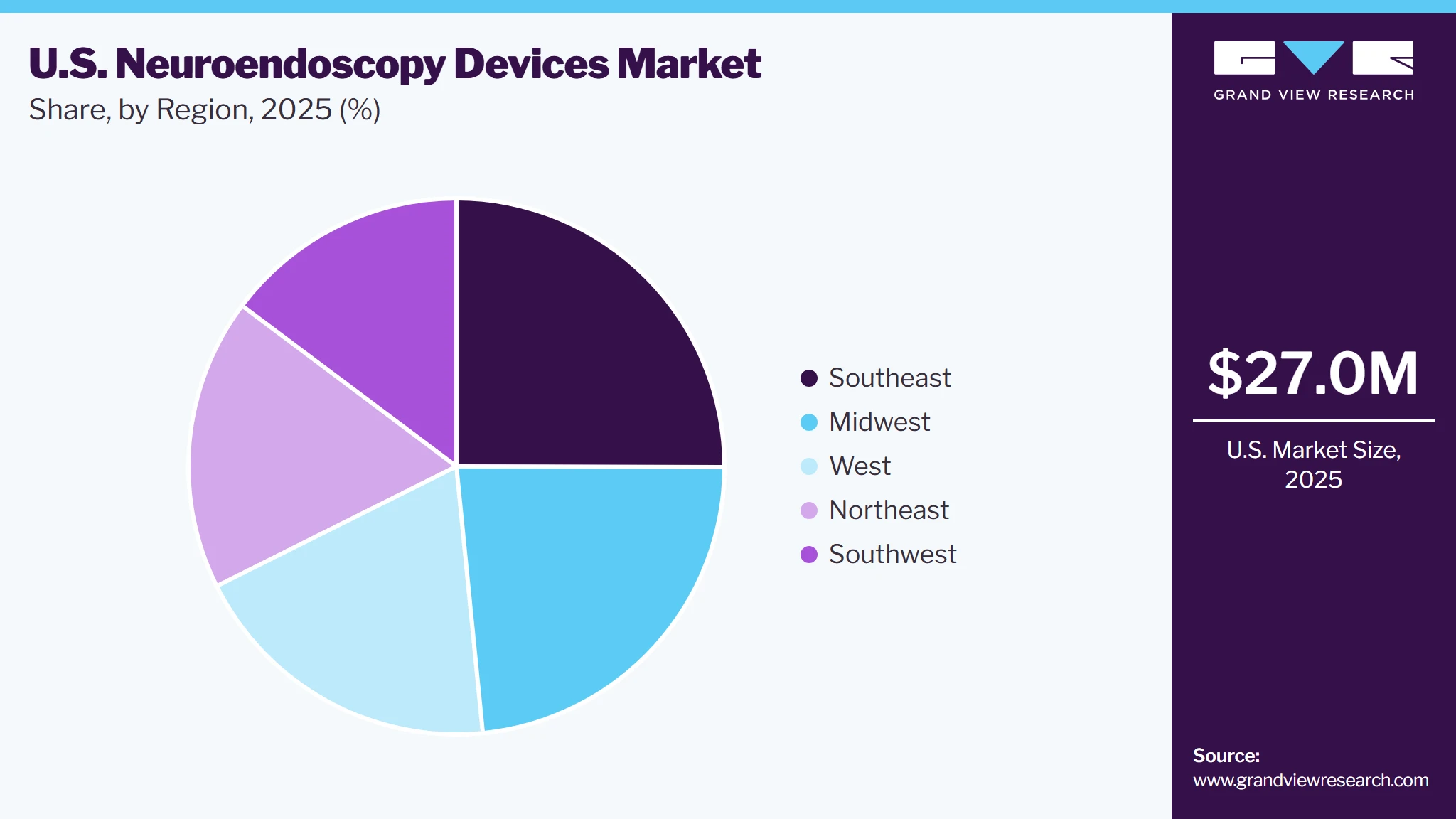
The Southeast accounted for the largest share of 25.04% of the U.S. neuro endoscopy market in 2025, supported by academic medical centers, tertiary-care hospitals, and specialized neurosurgical programs performing ventricular, skull-base, and intracranial procedures. For instance, in March 2025, Duke Health introduced a multidisciplinary Pediatric Skull Base Program integrating pediatric neurosurgery, skull-base surgery, and other specialties to provide treatment options, including minimally invasive endoscopic procedures, for children with skull-base tumors.
 To learn more about this report, Download Free Sample Report
The West is expected to register the fastest CAGR from 2026 to 2033, driven by specialized neurosurgical centers and the presence of neuroendoscopy devices technology developers. For instance, in October 2025, California-based Clearmind Biomedical signed an exclusive U.S. distribution agreement with Sutter Medical Technologies and launched its Neuroblade Multi-Function Neuro-Endoscope System at the Congress of Neurological Surgeons annual meeting in Los Angeles. The system integrates visualization, irrigation, suction, coagulation, and powered debridement for minimally invasive neurosurgical procedures, strengthening the region’s role in neuroendoscopy devices technology development and commercialization.
Key U.S. Neuroendoscopy Devices Company Insights
Key companies in the U.S. market are pursuing business growth strategies, including product portfolio expansion, new product development, regulatory clearances, partnerships and collaborations, and acquisitions. These initiatives are aimed at strengthening endoscopic visualization capabilities, expanding clinical applications, and increasing market presence.
Key U.S. Neuroendoscopy Devices Companies
-
KARL STORZ
-
B. Braun Melsungen AG (Aesculap)
-
Clarus Medical LLC.
-
Stryker (NICO)
-
Olympus Corporation
-
Richard Wolf GmbH
-
Penumbra, Inc.
-
Integra LifeSciences Corporation
-
Medtronic
-
Carl Zeiss Meditec AG
-
ClearMind Biomedical Inc.
-
Machida Endoscope Co., Ltd.
Competitive Benchmarking
Operating Strategies
Competitive Edge
Weaknesses
Mature Players: KARL STORZ, B. Braun Melsungen AG (Aesculap), Olympus Corporation, Stryker (NICO), Richard Wolf GmbH, Medtronic, Carl Zeiss Meditec AG, Integra LifeSciences Corporation, Penumbra, Inc.
- Expand reusable rigid neuroendoscope portfolios
- Incorporate advanced visualization and imaging technologies
- Develop application-specific scopes for ventricular, cranial, and skull-base procedures
- Strengthen hospital and neurosurgeon relationships
- Expand integrated endoscopy platforms and accessories
- Strong market goodwill and physician familiarity
- Established reusable rigid neuroendoscope portfolios
- Broad range of scopes, sheaths, instruments, and visualization systems
- Established U.S. distribution and service networks
- Strong clinical and technical expertise
- High acquisition cost of complete reusable systems
- Reprocessing and sterilization requirements
- Higher maintenance requirements compared with disposable systems
- Complex systems may require specialized training
Emerging Players: Clarus Medical LLC, ClearMind Biomedical Inc., Machida Endoscope Co., Ltd.
- Introduce specialized reusable rigid neuroendoscopes
- Focus on differentiated scope designs and visualization capabilities
- Develop application-specific solutions for minimally invasive neurosurgery
- Establish partnerships with hospitals and neurosurgeons
- Build U.S. clinical adoption and distribution networks
- Specialized and focused product development
- Greater flexibility in responding to specific clinical requirements
- Potentially differentiated optical and ergonomic designs
- Ability to target underserved neuroendoscopic applications
- Limited U.S. market goodwill
- Smaller installed base and physician familiarity
- Limited distribution and service infrastructure
- Lower resources for large-scale clinical adoption and marketing
- Competition from established reusable and disposable platforms
Recent Developments
-
In July 2026, KARL STORZ announced a strategic partnerships with Moon Surgical and Sovato in the U.S. to expand its robotics ecosystem by combining 3D visualization, robotic technologies, digital capabilities, and operating room integration.
-
In May 2026, Clarus Medical received FDA 510(k) clearance for the Digital ClarusScope System and Digital NeuroPEN System, expanding its digital endoscopy portfolio for diagnostic and operative endoscopic procedures involving the spine and other anatomical sites.
-
In September 2025, B. Braun completed the acquisition of True Digital Surgery, a California-based developer of digital robotic-assisted 3D surgical microscopy. The acquisition strengthens Aesculap’s digital visualization capabilities and supports further development of the AEOS platform for neurosurgery, spine surgery, and ENT procedures.
-
In March 2025, Integra LifeSciences received FDA 510(k) clearance for its AURORA Surgiscope System, a neurological endoscope intended for neurosurgery, endoscopic neurosurgery, and ventriculoscopy. The system integrates a single-use sheath with an integrated camera and illumination with a reusable Image Control Box for visualization during procedures such as ventriculostomy, biopsy, and removal of cysts, tumors, and other obstructions.
U.S. Neuro Endoscopy Devices Market Report Scope
Report Attribute
Details
Market Size in 2025
USD 27.0 million
Market size value in 2026
USD 28.6 million
Revenue forecast in 2033
USD 43.3 million
Growth Rate
CAGR of 6.1% from 2026 to 2033
Actual data
2021 - 2025
Forecast data
2026 - 2033
Quantitative units
Revenue in USD million, Unit Volume (Unit, 000’), Install Base (Units, 000’), ASP, 2021 - 2033 (USD per Unit), and CAGR from 2026 to 2033
Report coverage
Revenue forecast, company ranking, competitive landscape, growth factors, and trends
Segments covered
Product type, setting, and region
Regional scope
Northeast, Southeast, Midwest, Southwest, West
Key companies profiled
KARL STORZ; B. Braun Melsungen AG (Aesculap); Clarus Medical LLC.; Stryker (NICO); Olympus Corporation; Richard Wolf GmbH; Penumbra, Inc.; Integra LifeSciences Corporation; Medtronic; Carl Zeiss Meditec AG; ClearMind Biomedical Inc.; Machida Endoscope Co., Ltd.
Customization scope
Free report customization (equivalent up to 8 analysts working days) with purchase. Addition or alteration to country, regional & segment scope.
Pricing and purchase options
Avail customized purchase options to meet your exact research needs. Explore purchase options
U.S. Neuroendoscopy Devices Market Report Segmentation
This report forecasts revenue growth at global, regional, and country levels and provides an analysis of the latest industry trends in each of the sub-segments from 2021 to 2033. For this study, Grand View Research has segmented the global U.S. neuroendoscopy devices market report based on component, settings, and region:
-
Product Type Outlook (Revenue, USD Million, 2021 - 2033), (Unit Volume, 000’ Units, 2021 - 2033), (Install Base, 000’ Units, 2021 - 2033), (ASP, Units, 2021 - 2033)
-
Rigid Neuroendoscopes
-
Disposable Rigid Neuroendoscopes
-
Disposable Rigid Ventricular Neuro endoscopes
-
Disposable Rigid Skull-base / Intracranial Neuroendoscopes Disposable Flexible Neuro endoscopes
-
-
Reusable Rigid Neuroendoscopes
-
Reusable Rigid Ventricular Neuro endoscopes
-
Reusable Rigid Skull-base / Transsphenoidal Neuroendoscopes
-
Reusable Rigid Cranial Neuro endoscopes Flexible Neuroendoscopes
-
-
Disposable Flexible Neuroendoscopes
-
Disposable Flexible Ventricular Neuroendoscopes
-
Disposable Flexible Cerebral / Intracranial Neuro endoscopes
-
-
Reusable Flexible Neuroendoscopes
-
Reusable Flexible Ventricular Neuroendoscopes
-
Reusable Flexible Cerebral / Intracranial Neuro endoscopes
-
-
-
-
Settings Outlook (Revenue, USD Million, 2021 - 2033)
-
Hospitals
-
Inpatient
-
Outpatient
-
-
Neurosurgical Centers / Specialty Centers
-
-
Regional Outlook (Revenue, USD Million, 2021 - 2033), (Unit Volume, 000’ Units, 2021 - 2033), (Install Base, 000’ Units, 2021 - 2033), (ASP, Units, 2021 - 2033)
-
Northeast
-
Southeast
-
Southwest
-
Midwest
-
West
-
Research Methodology
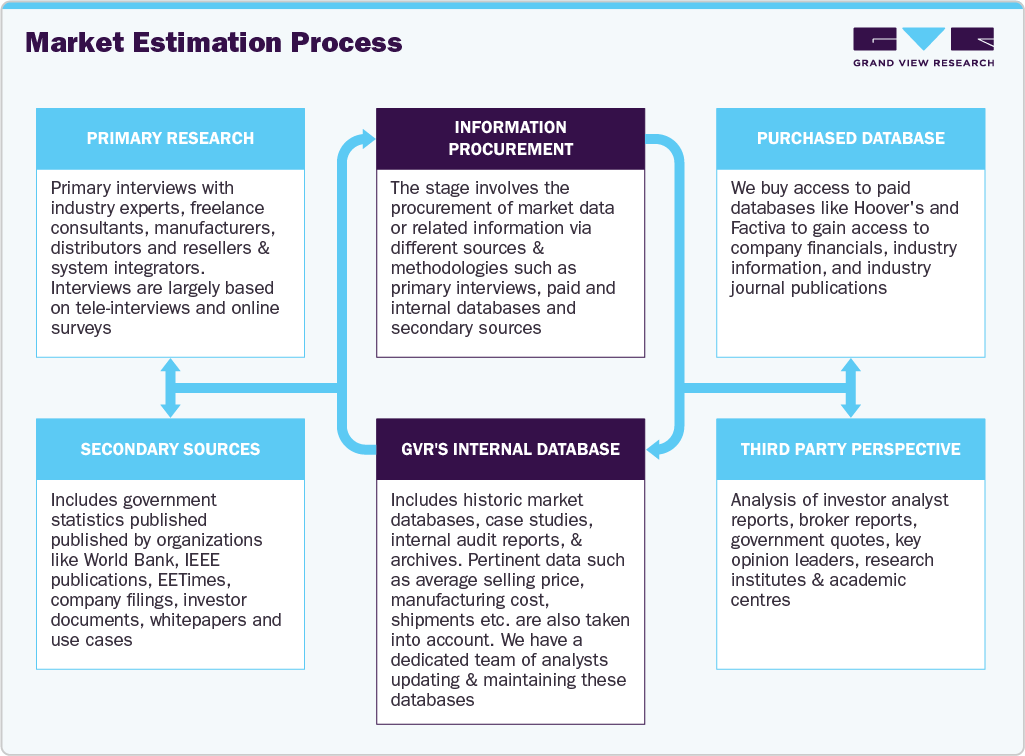
The neuroendoscopy devices market figures in this report are based on a proven research process that combines executive interviews with secondary research from proprietary databases, company filings, and recognized regulatory and institutional sources. Market size is built through value-chain sizing-reconciling supply-side and demand-side estimates-and triangulated with bottom-up and top-down approaches. Every estimate passes multiple levels of expert validation before publication, with each neuroendoscopy devices segment quantified using the revenue-capture definitions in the table below.
Segment Definition
Segment - Product Type
Revenue capture definition
Flexible Neuro endoscopes
Revenue generated from flexible or steerable neurological endoscopes used for direct visualization of the cerebral ventricular system and other intracranial anatomy during diagnostic and therapeutic neurosurgical procedures. The segment includes reusable and disposable flexible neuro endoscopes with integrated or connected optical/digital imaging capabilities.
Reusable Flexible Neuro endoscopes
Revenue generated from flexible neuro endoscopes designed for repeated clinical use following validated cleaning, disinfection, or sterilization processes. The segment covers flexible scopes used for ventricular and other selected intracranial procedures, excluding separately sold processors, monitors, light sources, access sheaths, and surgical instruments.
Disposable Flexible Neuro endoscopes
Revenue generated from sterile, single-use flexible, steerable, or deflectable neurological endoscopes used for visualization during neurosurgical procedures. The segment includes patient-contacting endoscopes with integrated or connected imaging capabilities and excludes reusable control modules, displays, access sheaths, and introducers.
Rigid Neuro endoscopes
Revenue generated from rigid neurological endoscopes with fixed shafts used to provide direct visualization through defined surgical corridors during ventricular, cranial, and endonasal skull-base procedures. The segment includes reusable and disposable rigid neuro endoscopes with varying shaft diameters, viewing angles, and working-channel configurations.
Reusable Rigid Neuro endoscopes
Revenue generated from rigid neuro endoscopes designed for repeated use following validated cleaning and sterilization processes. The segment covers rigid systems used in ventricular, cranial, and skull-base procedures, including configurations with different viewing angles, shaft diameters, and working channels.
Disposable Rigid Neuro endoscopes
Revenue generated from sterile, single-use rigid neurological endoscopes with fixed, non-deflectable shafts and integrated or connected imaging capabilities. The segment covers endoscopes used for selected neurosurgical visualization procedures and excludes disposable sheaths, access ports, obturators, and introducers used with reusable endoscopes.
Segment - Setting
Revenue capture definition
Hospital
Revenue generated from neuro endoscopy procedures performed within hospital-based facilities, including inpatient and outpatient settings. The segment covers procedures supported by specialized neurosurgical operating rooms, imaging capabilities, anesthesia services, postoperative monitoring, and multidisciplinary clinical teams.
Inpatient
Revenue generated from neuro endoscopic procedures performed for patients formally admitted to a hospital for overnight or longer care. The segment includes procedures requiring postoperative neurological monitoring, imaging, cerebrospinal fluid management, or other specialized hospital-based care.
Outpatient
Revenue generated from neuro endoscopic procedures performed without overnight hospital admission. The segment includes selected procedures supported by anesthesia, postoperative neurological assessment, short-term observation, and same-day discharge protocols.
Neurosurgical Centers / Specialty Centers
Revenue generated from neuro endoscopic procedures performed in specialized surgical facilities with dedicated neurosurgical expertise, operative infrastructure, imaging capabilities, and neuro endoscopy equipment outside general hospital operating departments.
Estimation Model
 To learn more about this report, Download Free Sample Report
Market-specific Research Models:
Consensus-Based Estimates & Forecasting
The U.S. neuro endoscopy devices market was estimated using supply-side and demand-side models. Public data, product evidence, existing primary research, and internal databases were used to validate the key assumptions.
The model covers 2021 to 2033. Values for 2021 to 2024 are modeled historical estimates, 2025 is the base year, and 2026 to 2033 are forecasts. All annual estimates were built from the underlying drivers rather than applying one common growth rate to every segment.
Our methodology included:
-
Model 1: Commodity Flow Analysis - For publicly listed companies, annual reports, 10-K filings, investor presentations, earnings releases, and geographical revenue disclosures were reviewed. For private companies and subsidiaries, revenue information was sourced from company disclosures and premium paid databases, including S&P Global, Crunchbase, ZoomInfo, and RocketReach. Neuro endoscope revenue was derived using product portfolio, U.S. availability, FDA clearance, site-of-care suitability, market penetration, and product-level ASP.
-
Model 2: Demand-based Market Sizing Framework
-
Model 3: Primary Market Research Validation
-
Model 4: Internal Database
-
Model 5: U.S. Neuro Endoscopy Devices Market CAGR Calculations
Market Scope and Product Boundary
The market includes reusable and single-use neuro endoscopes used for endoscopic visualization in ventricular, skull-base, and selected intracranial procedures.
Introducers, access sheaths, aspiration devices, tissue-removal tools, navigation systems, cameras, processors, monitors, light sources, repair services, and reusable control units are excluded from neuroendoscope units and revenue. For transsphenoidal and skull-base surgery, general scopes are excluded unless they are specifically used as the qualifying neurosurgical visualization scope.
Model 1: Commodity Flow Analysis
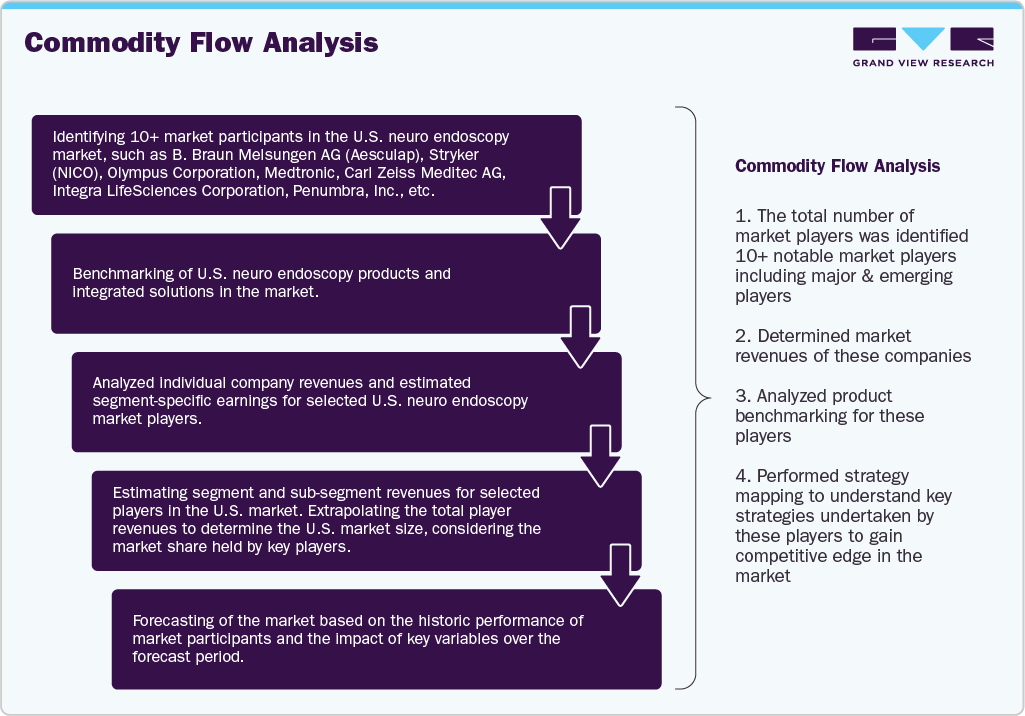
Commodity flow analysis is the supply-side methodology used to derive and validate the U.S. neuro endoscopy devices market size. The approach estimates the market revenue pool from company-level financial information and product-level revenue estimates.
For publicly listed companies, financial data was sourced from annual reports, 10-K filings, investor presentations, earnings releases, and official geographical disclosures. Where companies did not report neuro endoscopy devices revenue separately, the analysis started with the reported business segment and applied a transparent revenue-allocation framework. For private companies and subsidiaries, the latest available revenue information was sourced from official company disclosures and premium databases, including S&P Global, Crunchbase, ZoomInfo, and RocketReach. The U.S. neuro endoscopy devices contribution was estimated using product breadth, U.S. commercial presence, regulatory availability, distribution coverage, installed-base potential, replacement demand, and product ASP.
 To learn more about this report, Download Free Sample Report
Commodity flow analysis was employed to track the movement of U.S. neuro endoscopy devices through the value chain, from technology providers to end users. This analysis provided insights into demand generation points, intermediary roles, and ultimate consumption patterns.
Delivered Customizations
This report has been delivered with the following In-depth customizations
Client Request
Customization Delivered
Value Adds
Regional Market Coverage: Northeast, Southeast, Midwest, Southwest & West
Delivered a customized regional analysis of the U.S. endoscopy devices market across the Northeast, Southeast, Midwest, Southwest, and West regions. Market estimates and forecasts are provided at the overall U.S. level and at the regional level for each covered segment. The analysis covers regional differences in hospital and ambulatory surgical center (ASC) density, endoscopic procedure adoption, reprocessing infrastructure, and purchasing patterns, including how these vary across regions over 2021 - 2033.
Enables stakeholders to identify high-potential regions, prioritize regional sales and distribution strategies, and allocate resources based on regional demand. Also supports benchmarking across regions and territory planning.
Installed Base & Unit Sales Analysis (2021 - 2033)
Provided an installed endoscopy devices base analysis and unit sales analysis (in 000's) at the overall U.S. level and for each segment, for 2021 - 2033. The analysis covers replacement cycles, device lifespan and repair trends, new procurement versus replacement demand, and the shift between reusable and single-use endoscopes.
Provides a clear view of the size and growth of the installed base and of future replacement and new-purchase demand. Helps manufacturers plan production, service, and repair capacity. Also helps investors and distributors gauge the long-term revenue potential of each segment and region.
Pricing & Procedure Volume Analysis (2021 - 2033)
Delivered a customized evaluation of realized average selling price (ASP) and price range (USD) and annual procedure volume (in 000's) for 2021 - 2033, at the overall U.S. level and for each segment. The pricing analysis covers price ranges by segment, pricing pressure from single-use alternatives, and contract and GPO pricing trends. The procedure volume analysis covers screening and diagnostic growth, therapeutic procedure trends, and the shift of procedures to outpatient settings. Both are also provided for the five regions.
Helps stakeholders assess pricing trends and margin potential and link procedure growth to equipment demand. Supports pricing strategy, competitive positioning, and sales forecasting by segment and region.
About the Author(s)
Medical Devices Research Team
Healthcare · Medical DevicesThis report was authored by the medical devices research team at Grand View Research - comprising two research analysts, one senior research analyst, and one industry expert - with specialized expertise in the medical devices segment of the healthcare industry. All findings are based on proprietary healthcare databases, executive interviews, and regulatory analysis, subject to internal peer review prior to publication.
Last Updated:
Speak to Analyst

Customize this report to your needs - add regions, segments, or data points, with 20% free customization.
Or view our licence options:


ISO 9001:2015 & 27001:2022 Certified
We are GDPR and CCPA compliant! Your transaction & personal information is safe and secure. For more details, please read our privacy policy.


