
- Home
- »
- Medical Devices
- »
-
U.S. Pediatric Diabetes Management Market Report, 2033GVR Report cover

U.S. Pediatric Diabetes Management Market (2025 - 2033) Size, Share & Trends Analysis Report By Product (CGM, BGM, Insulin Pump, Insulin Pen), By Technology (Connected, Non-Connected), By End Use, And Segment Forecasts
Market Size & Trends
The U.S. pediatric diabetes management market size was estimated at USD 2,015.9 million in 2024 and is projected to reach USD 4,691.2 million in 2033, registering a CAGR of 9.9% from 2025 to 2033. The market growth is driven by several factors, including the rising prevalence of diabetes among children and adolescents, technological advancements in diabetes management devices, and the growing awareness of early diagnosis and the importance of proactive diabetes management. Additionally, government support and advantageous regulatory policies, such as efforts to enhance access to care, further drive market growth.
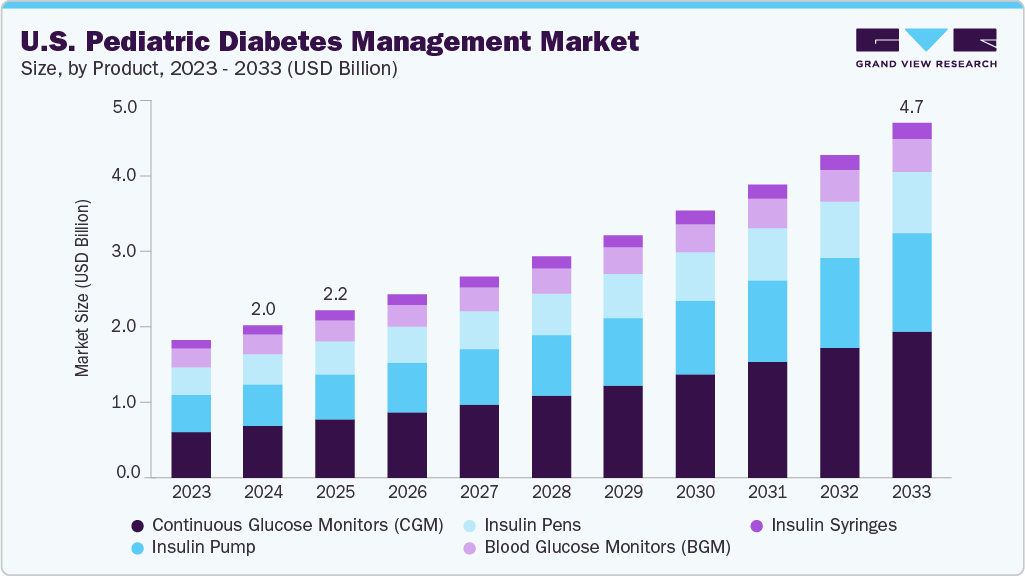 Source: Grand View Research, IR Documents, Primary Interviews, Paid DatabasesTo learn more about this report,
 Download Free Sample Report
The U.S. is witnessing a significant rise in diabetes prevalence among children, necessitating a rise in demand for diabetes management solutions. Furthermore, the shift towards proactive and preventative healthcare, coupled with increased awareness among parents and healthcare providers, has fueled early diagnosis and intervention, further expanding the market. The market's expansion is also influenced by the availability of advanced healthcare infrastructure, including specialized pediatric clinics and hospitals equipped to handle complex diabetes cases. The growing emphasis on patient education and support programs, facilitated by both government and private organizations, contributes to improved disease management. For instance, the Project Power for Youth by the American Diabetes Association (ADA), a free, community- and school-based program, is designed to help children aged 5 to 12 reduce their risk of type 2 diabetes and manage obesity-related behaviors. The program educates youth on the importance of healthy eating and regular physical activity through interactive, age-appropriate content.
 To learn more about this report, Download Free Sample Report
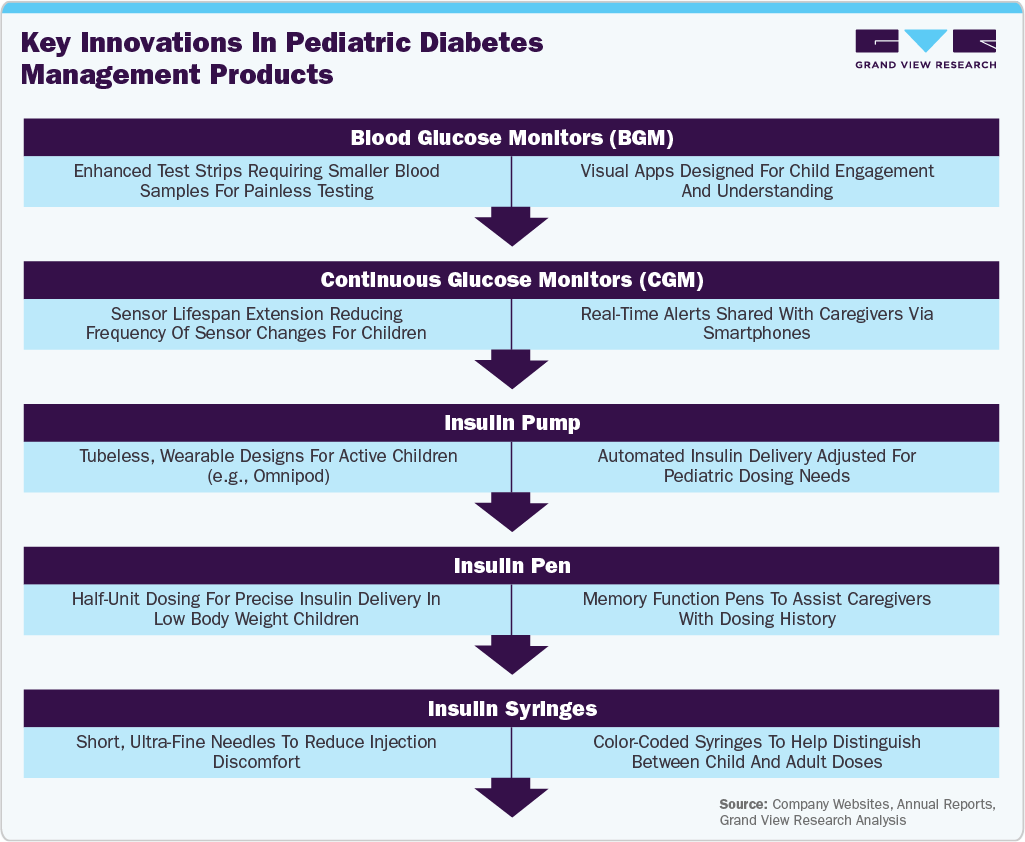
Moreover, technological innovation plays a crucial role in driving the growth of the pediatric diabetes management market. The development of advanced insulin pumps, CGM systems, and integrated diabetes management platforms has significantly improved pediatric diabetes management. Moreover, several market players are focusing on developing advanced solutions that can automate insulin delivery, which can further drive the adoption of these devices. For instance, in March 2025, Tandem Diabetes Care launched Control-IQ+ automated insulin delivery technology in the U.S., extending its use to people with type 1 diabetes aged 2 years and older, and adults with type 2 diabetes. Compatible with the t:slim X2 insulin pump and Tandem Mobi System, Control-IQ+ features expanded weight and insulin parameters, enhanced extended bolus up to 8 hours, and new temporary basal rate adjustments to better manage glucose during exercise, stress, or illness. It includes AutoBolus for automatic correction doses and aims to improve glucose control, ease of use, and personalization for diverse users. The continuous evolution of these technologies, coupled with their increasing affordability and ease of use, is further expected to drive market expansion.
Market Concentration & Characteristics
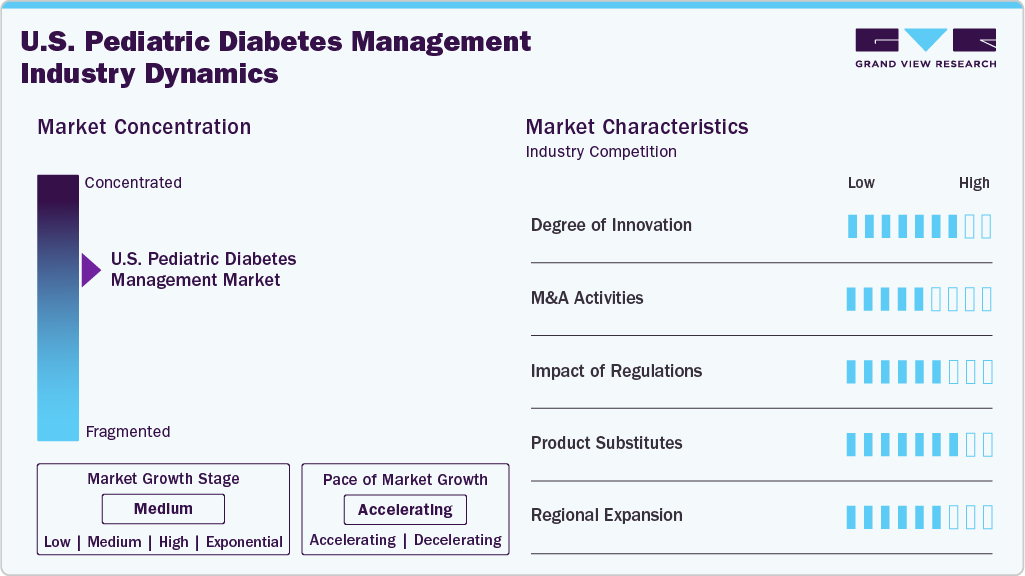
The U.S. pediatric diabetes management market is characterized by rising prevalence of diabetes in children, evolving competitive landscape, and innovations in diabetes management devices. Moreover, the rising efforts by the government and private organizations to increase focus on diabetes in children further shape the market.
The U.S. pediatric diabetes management devices industry is witnessing a significant rise in innovations, primarily driven by advancements in continuous glucose monitoring (CGM) systems and insulin delivery technologies. For instance, in August 2024, The Twiist Automated Insulin Delivery (AID) system, developed by DEKA Research & Development and Sequel Med Tech, received FDA 510(k) clearance for use in patients aged six and older with type 1 diabetes. It is the first insulin pump to integrate the patient-driven Tidepool loop algorithm and to offer Apple Watch control, providing customizable, precise insulin delivery and improved time-in-range outcomes in clinical studies. The market is witnessing a shift towards more user-friendly and integrated solutions, with a strong emphasis on improving patient outcomes and reducing the burden of diabetes management.
 To learn more about this report, Download Free Sample Report
Mergers and acquisitions in the U.S. pediatric diabetes management industry are accelerating, driven by the rising efforts by companies to increase their market presence. Key players are strategically acquiring companies to integrate innovative technologies such as monitoring devices and insulin delivery systems, enhancing their offerings for younger patients. For instance, in August 2024, Ypsomed announced the sale of its blood glucose monitoring (BGM) and pen needle business to Medical Technology and Devices (MTD). This strategic decision was driven by Ypsomed's intent to focus its resources on the development and expansion of its mylife Loop insulin pump system and related digital diabetes solutions. MTD, a specialist in injection and infusion systems, aimed to strengthen its global market presence with this acquisition. These acquisitions often aim to expand market reach & product portfolio and improve operational efficiencies.
The U.S. Food and Drug Administration (FDA) classifies these devices based on risk, with most falling under Class II or Class III regulations, necessitating premarket clearance or approval. This requires manufacturers to demonstrate device safety and efficacy through rigorous clinical trials and comprehensive data submissions. The FDA's emphasis on interoperability and cybersecurity is also significantly impacting the market, as devices need to meet specific standards to ensure data security and seamless integration with other healthcare systems. These regulatory mechanisms collectively drive innovation while ensuring that pediatric diabetes management devices meet stringent safety standards, facilitating improved clinical outcomes and quality of life for children with diabetes.
The threat of substitutes in the U.S. pediatric diabetes management devices market is relatively low, owing to the critical nature of these devices in managing diabetes in children. The market includes a wide range of essential tools, including blood glucose meters (BGMs), continuous glucose monitors (CGMs), insulin pumps, insulin pens, insulin syringes, and integrated insulin delivery devices. These devices are not easily replaced by alternative products because they are essential for daily diabetes management. While there might be some substitution between device types, the core need for glucose monitoring and insulin delivery remains constant. Furthermore, the continuous innovation and integration of these devices, such as closed-loop systems, create a competitive advantage and reduce the preference for complete substitution by other products or services.
The regional expansion in the U.S. pediatric diabetes management devices industry is driven by the increasing prevalence of diabetes and technological advancements. Companies are strategically focusing on expanding their footprint across various regions within the country to address the demands of the growing patient population and improve accessibility of their products. This involves establishing distribution networks, partnerships with healthcare providers, and localized marketing efforts to address specific regional needs and preferences. Simultaneously, several international market players are entering the market through product launches, collaborations, or direct market entry, introducing innovative technologies and intensifying competition.
Product Insights
The Continuous Glucose Monitors (CGM) segment accounted for the largest revenue share in 2024 and is expected to witness the fastest growth during the forecast period. The advantages of CGMs, including real-time glucose data and alerts, are highly valued by both pediatric patients and their caregivers, leading to improved glycemic control and reduced risk of complications. This preference is further fueled by technological advancements, such as improved accuracy, smaller device sizes, and integration with insulin pumps and other diabetes management tools. For instance, in December 2022, Dexcom announced the launch of Dexcom G7, a continuous glucose monitoring (CGM) system in the U.S. This system offers real-time glucose readings, eliminating the need for finger pricks for most users. The G7 provides valuable data to help manage diabetes effectively, improving the quality of life for individuals with diabetes. The system's features include a smaller sensor and an easier application compared to previous models. Such advancements coupled with the ease of use and the ability to remotely monitor glucose levels are key drivers of the CGMs.
The insulin pump segment is expected to witness significant growth over the forecast period. This can be attributed to the benefits of insulin pumps, such as improved glycemic control and reduced risk of hypoglycemia. Moreover, factors such as insurance coverage for these devices and the availability of user-friendly features for younger patients and their caregivers. Furthermore, the integration of continuous glucose monitoring (CGM) systems with insulin pumps has enhanced their appeal, offering real-time data and automated insulin delivery capabilities. This combination of technologies has made insulin pumps a preferred option for pediatric diabetes management.
Technology Insights
The connected devices segment accounted for the largest revenue share and is expected to witness the fastest growth over the forecast period. The growth is attributed to the need for improved glycemic control, enhanced patient and caregiver convenience. The integration of continuous glucose monitors (CGMs), insulin pumps, and smart pens with data-sharing capabilities is transforming the management of pediatric diabetes. These devices enable real-time glucose monitoring, automated insulin delivery, and remote data access for healthcare providers and parents, leading to more proactive and personalized care. The emphasis on user-friendly interfaces and remote monitoring capabilities is further accelerating the adoption of connected devices in the market.
The non-connected devices segment is also expected to witness significant growth owing to their cost-effectiveness and ease of use. The segment includes devices such as traditional blood glucose meters, traditional insulin pens, and syringes. The growth is also fueled by the preference of some patients and caregivers for devices with fewer technological complexities, prioritizing straightforward operation and reduced reliance on digital infrastructure. Moreover, the ease of use and affordability of these devices make them easily accessible and preferred for wider population base.
End Use Insights
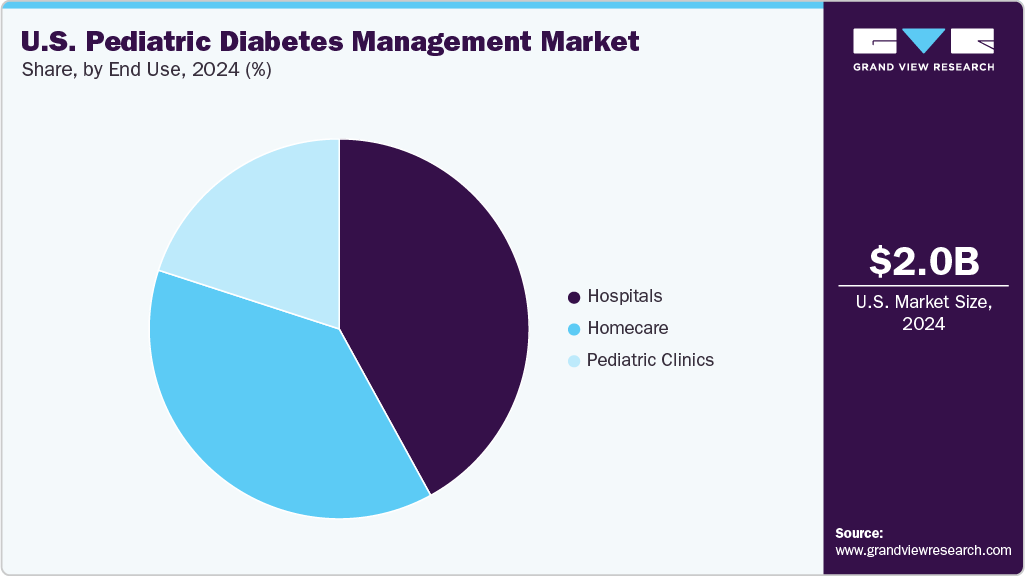
Hospitals dominated the end use segment in 2024. Hospitals serve as critical hubs for initial diagnosis and intensive treatment of pediatric diabetes, particularly for Type 1 diabetes, which often requires immediate medical intervention and ongoing monitoring. Furthermore, hospitals are essential for managing acute complications such as diabetic ketoacidosis (DKA) and hypoglycemia, which are more prevalent and dangerous in children. The comprehensive resources available within hospitals, including specialized pediatric endocrinologists, diabetes educators, and advanced monitoring technologies, further contribute to their dominance in this segment.
 To learn more about this report, Download Free Sample Report
The homecare segment is expected to witness the fastest growth over the forecast period. This growth is fueled by several factors, including advancements in technology, rising focus on minimizing hospital visits, and ease of use of advanced pediatric diabetes management devices. Furthermore, the rising costs of hospital-based care is making homecare more attractive and cost-effective option for many families and healthcare providers.
Key U.S. Pediatric Diabetes Management Company Insights
Leading market players include Medtronic, Dexcom, and Abbott. These companies utilize their technological expertise, broader distribution network, and wide product portfolios to enhance their presence in this growing market. Their strategies emphasize the development of effective solutions, improved accessibility, and ensuring widespread adoption of their advanced pediatric diabetes management devices.
Key U.S. Pediatric Diabetes Management Companies:
- Medtronic
- Dexcom
- Abbott
- Tandem Diabetes Care
- Insulet Corporation
- Novo Nordisk
- Sanofi
- Eli Lilly and Company
- Roche Diabetes Care
- Ascensia Diabetes Care
Prism AI by Grand View Research Free to tryAsk a question about the U.S. pediatric diabetes management marketTry asking✓Every figure cited from GVR research Prefer the report? Download free sample →Recent Developments
-
In July 2023, Tandem Diabetes Care’s miniature-sized insulin pump, Tandem Mobi, controllable via iPhone app and compatible CGM, got FDA clearance for children (≥6 years) and adults. Half the size of t : slim X2, it integrates Control‑IQ automation, features shorter tubing, and remote updates.
-
In March 2023, the FDA cleared the FreeStyle Libre 2 and 3 continuous glucose monitoring (CGM) systems for use with automated insulin delivery (AID) systems. This clearance allows individuals with diabetes to integrate these CGM technologies with compatible AID systems, potentially improving glucose control and reducing the burden of diabetes management. This integration represents a significant advancement in diabetes technology, offering a more streamlined approach to managing blood sugar levels.
-
In August 2022, the FDA cleared Insulet's Omnipod 5 for children aged two years and older with type 1 diabetes, expanding its previous approval for those six and older. The tubeless, wearable automated insulin delivery system integrates with the Dexcom 6 CGM and features SmartAdjust technology and a SmartBolus calculator app. Clinical data showed significant improvements in glucose control and HbA1c reduction in young children over 12 months.
U.S. Pediatric Diabetes Management Market Report Scope
Report Attribute
Details
Market size value in 2025
USD 2,210.5 million
Revenue forecast in 2033
USD 4,691.2 million
Growth rate
CAGR of 9.9% from 2025 to 2033
Actual data
2021 - 2024
Forecast period
2025 - 2033
Quantitative units
Revenue in USD million/billion and CAGR from 2025 to 2033
Report coverage
Revenue forecast, company ranking, competitive landscape, growth factors, and trends
Segments covered
Product, technology, end use
Regional scope
U.S.
Key companies profiled
Medtronic; Dexcom; Abbott; Tandem Diabetes Care; Insulet Corporation; Novo Nordisk; Sanofi; Eli Lilly and Company; Roche Diabetes Care; Ascensia Diabetes Care
Customization scope
Free report customization (equivalent to 8 analysts working days) with purchase. Addition or alteration to segment scope.
Pricing and purchase options
Avail customized purchase options to meet your exact research needs. Explore purchase options
U.S. Pediatric Diabetes Management Market Report Segmentation
This report forecasts revenue growth at country levels and analyzes the latest industry trends in each of the sub-segments from 2021 to 2033. For this study, Grand View Research has segmented the U.S. pediatric diabetes management market report based on product, technology, and end use:
-
Product Outlook (Revenue, USD Million, 2021 - 2033)
-
Blood Glucose Monitors (BGM)
-
Continuous Glucose Monitors (CGM)
-
Insulin Pumps
-
Insulin Pens
-
Insulin Syringes
-
-
Technology Outlook (Revenue, USD Million, 2021 - 2033)
-
Connected Devices
-
Non-connected Devices
-
-
End Use Channels Outlook (Revenue, USD Million, 2021 - 2033)
-
Hospitals
-
General Hospitals
-
Children Hospitals
-
-
Homecare
-
Pediatric Clinics
-
Frequently Asked Questions About This Report
The U.S. pediatric diabetes management market size was estimated at USD 2,015.9 million in 2024 and is expected to reach USD 2,210.5 million in 2025.
The U.S. pediatric diabetes management market is expected to grow at a compound annual growth rate of 9.86% from 2025 to 2033 to reach USD 4,691.2 million by 2033.
The Continuous Glucose Monitors (CGM) segment accounted for the largest revenue share of 34.0% in 2024 and is expected to witness the fastest growth. The advantages of CGMs, including real-time glucose data and alerts, are highly valued by both pediatric patients and their caregivers, leading to improved glycemic control and reduced risk of complications.
Some key players operating in the U.S. pediatric diabetes management market include Medtronic; Dexcom; Abbott; Tandem Diabetes Care; Insulet Corporation; Novo Nordisk; Sanofi; Eli Lilly and Company; Roche Diabetes Care; Ascensia Diabetes Care
Key factors driving market growth include the rising prevalence of diabetes among children and adolescents, technological advancements in diabetes management devices, and the growing awareness of early diagnosis and the importance of proactive diabetes management.
About the Author(s)
Medical Devices Research Team
Healthcare · Medical DevicesThis report was authored by the medical devices research team at Grand View Research - comprising two research analysts, one senior research analyst, and one industry expert - with specialized expertise in the medical devices segment of the healthcare industry. All findings are based on proprietary healthcare databases, executive interviews, and regulatory analysis, subject to internal peer review prior to publication.
Last Updated:
Speak to Analyst

Customize this report to your needs - add regions, segments, or data points, with 20% free customization.
Or view our licence options:


ISO 9001:2015 & 27001:2022 Certified
We are GDPR and CCPA compliant! Your transaction & personal information is safe and secure. For more details, please read our privacy policy.


