
- Home
- »
- Consumer F&B
- »
-
U.S. Protein-fortified Noodles & Pasta Market Report, 2033GVR Report cover

U.S. Protein-fortified Noodles & Pasta Market (2026 - 2033)
Size, Share & Trends Analysis Report By Product (Pasta, Noodles), By Type (Dried, Instant, Frozen/ Canned), By Distribution Channel (Offline, Online), By Country, And Segment Forecasts
Market Size, 2025
$339.5MMarket Estimate, 2026
$352.8MMarket Forecast, 2033
$459.7MCAGR, 2026–2033
3.9%U.S. Protein-fortified Noodles & Pasta Market Summary
The U.S. protein-fortified noodles & pasta market size was valued at USD 339.5 million in 2025 and is projected to grow from USD 352.8 million in 2026 to USD 459.7 million by 2033, at a CAGR of 3.9% from 2026 to 2033. The market growth is supported by increasing consumer interest in protein-rich diets, convenient meal options, and functional nutrition.
Key Market Trends & Insights
- By type: The instant protein-fortified noodles & pasta segment held the largest market share of 60.0% in 2025.
- By product: The pasta segment held the largest market share of 53.3% in 2025.
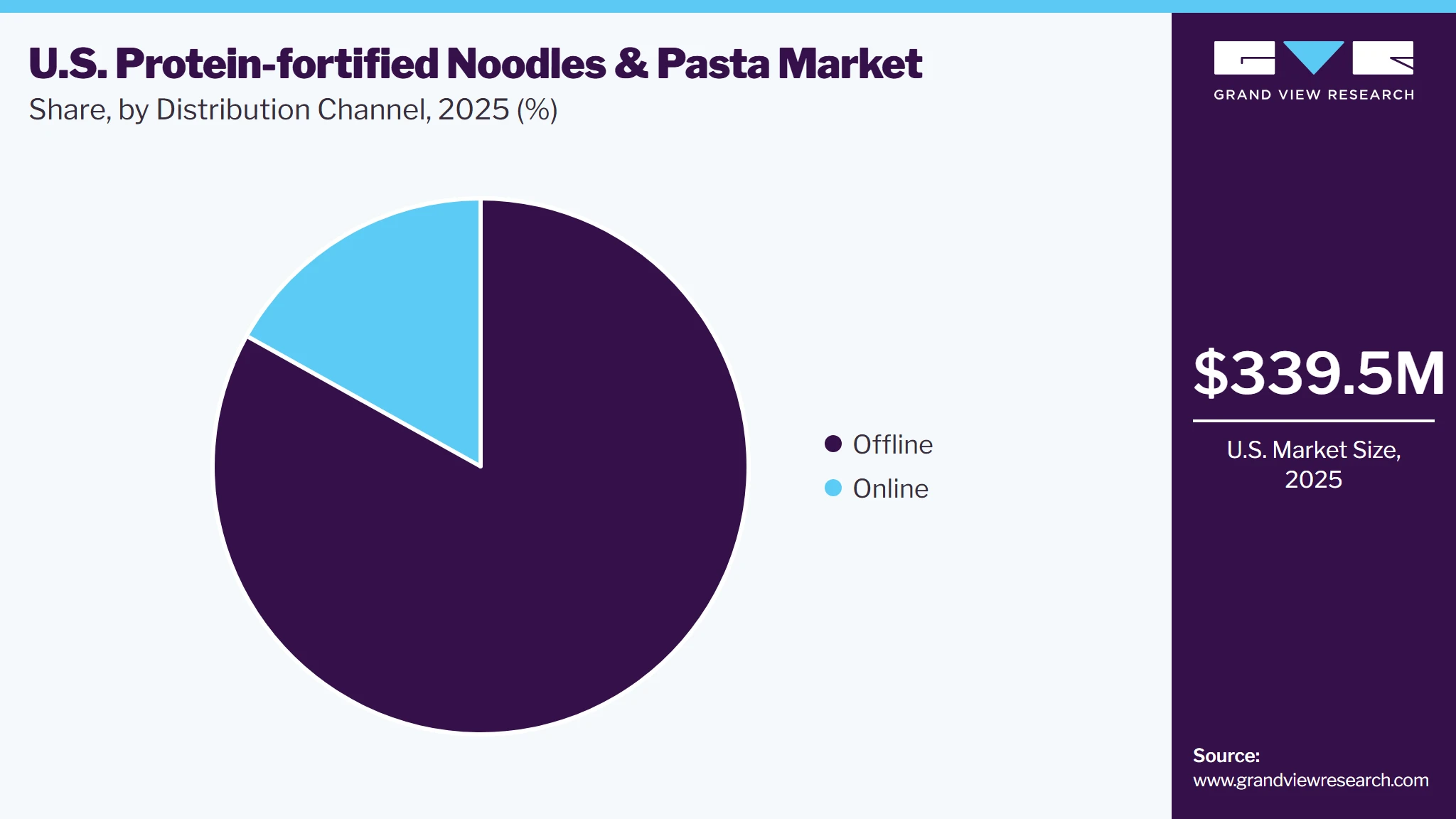
- By distribution channel: The offline segment held the largest market share of 83.1% in 2025.
Market Size & Forecast
- Market size in 2025: USD 339.5 Million
- Estimated market size in 2026: USD 352.8 Million
- Projected market size by 2033: USD 459.7 Million
- CAGR (2026-2033): 3.9%
Three ways to get this report
Buy it, customize it, or ask a question.Ask an Analyst
A direct answer, usually in 1 working day
- AccessReport author, directly
- Reply timeWithin 1 working day
- No sales callDirect answer only
- FormatEmail reply
- CostFree, no cost
Get the Full Report
What the study covers
- FormatsPDF · Excel · Dashboard
- Timeline2026–2033 annual, 2025 base
- Coverage20+ countries, 5 regions
- Companies10+ key players profiled
Customize the Report
20% free customization
- IncludeCountries, segments, points
- TailorTo your product definition
- ExtendDeeper competitor detail
- OrA fully bespoke study
- Turnaround5–10 working days
Product innovation, expanding retail availability, and the introduction of high-protein formulations are further strengthening category adoption across the U.S. The market is gaining momentum as consumers increasingly prioritize protein in everyday meals. Circana identifies protein as the leading dietary attribute consumers want to increase, with 41% of U.S. adults actively seeking higher protein intake in 2025. This shift is encouraging manufacturers to incorporate protein into familiar staple foods, including noodles and pasta. Growing interest in balanced nutrition, convenient meal solutions, and functional benefits is further supporting demand, while retailers are expanding shelf space for protein-enhanced products to address evolving consumer preferences.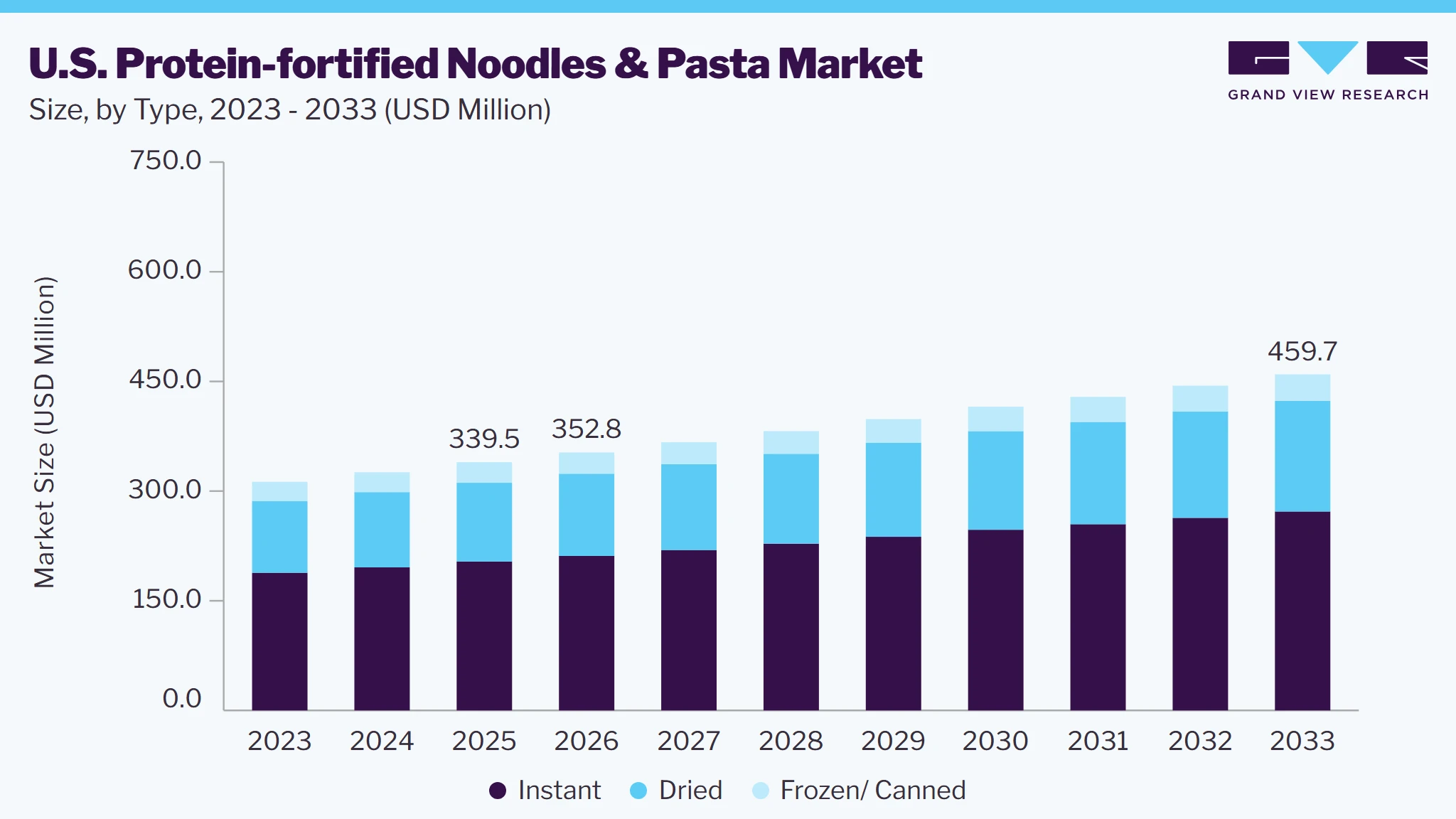 Source: Grand View Research, IR Documents, Primary Interviews, Paid DatabasesTo learn more about this report,
 Download Free Sample Report
 Product innovation is further accelerating demand across the U.S. food industry. Circana’s 2025 report identified high-protein claims as the most sought-after attribute in new food and beverage launches, underscoring the growing influence of protein-focused innovation. In response, pasta and noodle manufacturers are introducing protein-enriched formulations that combine nutritional benefits with familiar taste, texture, and convenience. Wider availability across supermarkets, mass retailers, specialty stores, and e-commerce platforms is also improving product accessibility and supporting broader adoption of protein-fortified noodles and pasta.
Consumer Insights
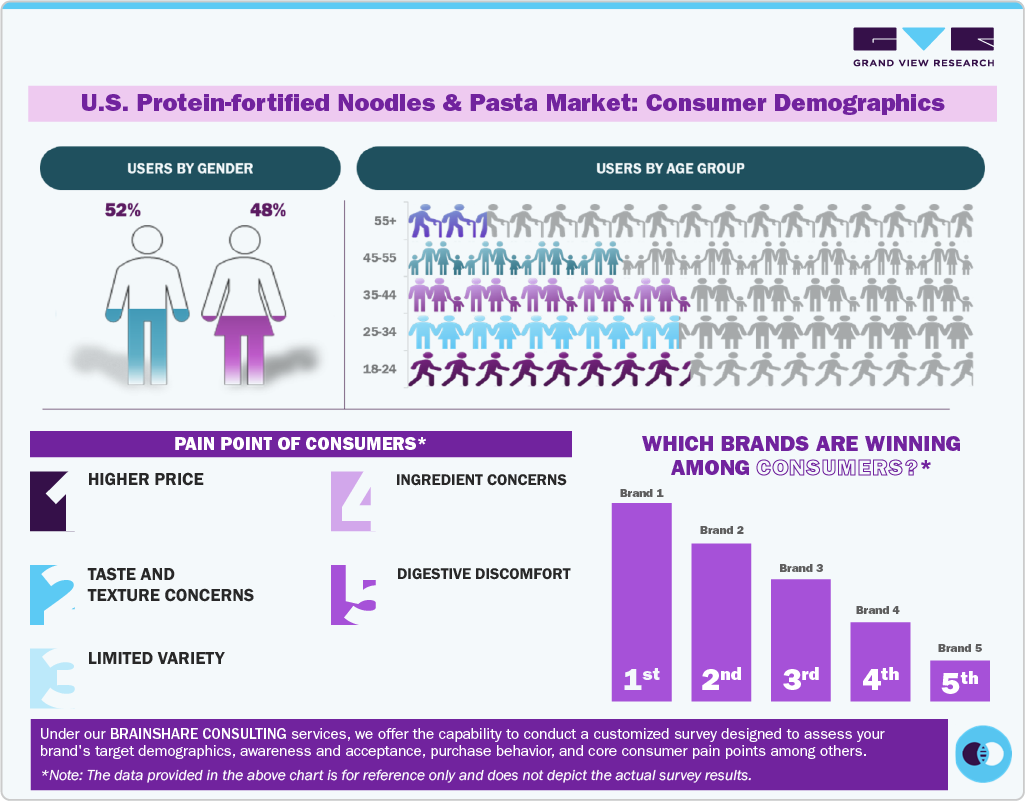
Consumers in the U.S. are increasingly seeking protein-rich options as awareness of nutrition, fitness, and balanced diets grows. This shift is strengthening demand for convenient foods that provide added nutritional value while fitting easily into established eating routines. Protein-fortified noodles and pasta align with these preferences by combining the familiarity and versatility of traditional staples with enhanced protein content.
 To learn more about this report, Download Free Sample Report
 Younger consumers, active lifestyles, and growing interest in nutrient-dense meals are supporting category adoption, while expanding product choices and wider retail distribution are improving accessibility across the U.S. market.
Market Dynamics
Growing consumer emphasis on protein intake is supporting the adoption of protein-fortified noodles and pasta in the U.S. Consumers increasingly seek convenient ways to add protein to regular meals without substantially changing their eating habits. Pasta and noodles provide a solid meal base, making them suitable for protein enhancement with ingredients such as pea, wheat, egg, and other protein sources. Rising participation in fitness activities, interest in balanced nutrition, and demand for functional everyday foods are encouraging manufacturers to introduce higher-protein formulations across mainstream retail channels.
Higher production costs and the use of specialized protein ingredients can lead to higher prices for fortified noodles and pasta than conventional alternatives, potentially limiting purchases among price-sensitive households. Differences in taste, texture, firmness, and cooking performance may further discourage consumers accustomed to traditional pasta. Limited awareness of the nutritional benefits can also restrict trial and repeat purchases. In addition, the perception that protein-fortified products are primarily designed for athletes or fitness-focused consumers may constrain their adoption among mainstream households, thereby restraining the overall market growth.
Manufacturers have significant opportunities to broaden the U.S. market by developing protein-fortified noodles and pasta that combine higher protein levels with clean-label ingredients, appealing taste, and familiar cooking performance. Innovation around plant-based proteins, gluten-free formulations, organic ingredients, and specialized nutritional profiles can attract additional consumer segments. Brands can also leverage single-serve and convenient formats for consumers seeking quick, nutrient-dense meals. Expanding distribution through supermarkets, warehouse clubs, natural-food retailers, and e-commerce can further improve visibility and create opportunities for category penetration across diverse consumer groups.
Analyst Perspective
The U.S. protein-fortified noodles and pasta market is evolving as consumers increasingly prioritize protein, weight management, and nutritional quality in everyday meals. This shift is encouraging established manufacturers and emerging brands to enhance traditional products with chickpea, lentil, edamame, and other plant-based protein sources. Established players benefit from strong distribution networks, brand recognition, and R&D capabilities, while niche brands are differentiating through clean-label, high-protein, and specialized formulations. Going forward, competitive positioning will depend on delivering higher protein content without compromising taste, texture, convenience, or affordability, while expanding availability across retail and e-commerce channels to capture the growing demand for high-protein, low-carbohydrate foods.
Type Insights
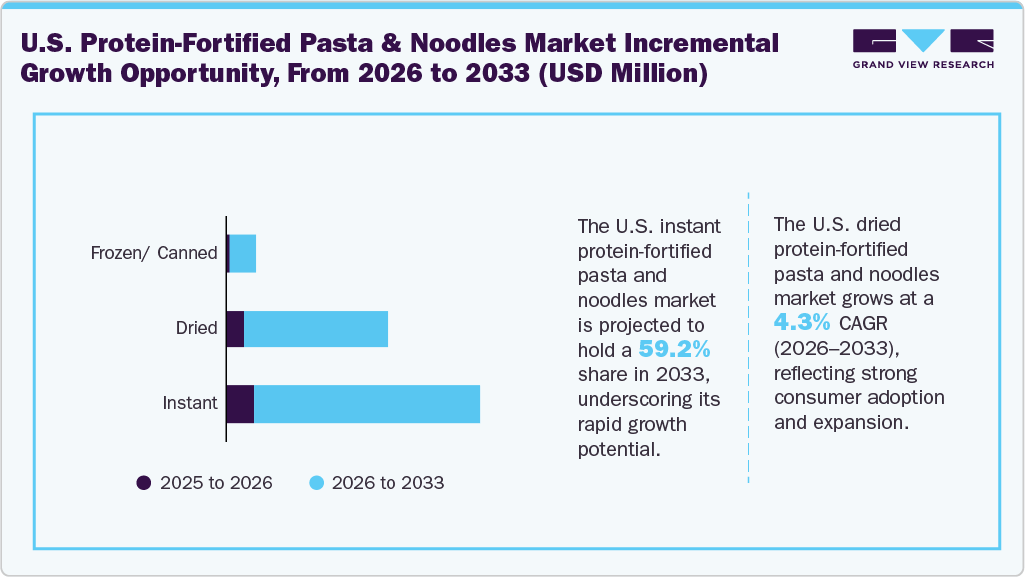
The instant protein-fortified pasta & noodles segment led the market with the largest revenue share of 60.0% in 2025. Strong demand for convenient meal solutions, combined with growing interest in higher-protein nutrition, is supporting the segment’s performance. In July 2025, Nissin Foods expanded its U.S. product portfolio with the launch of Cup Noodles Protein, offering 16 grams of protein per serving. The product launch highlights the food industry's shift toward nutritionally enhanced convenience foods, as manufacturers respond to growing consumer interest in high-protein options without compromising the ease and familiarity of instant meal formats.
 To learn more about this report, Download Free Sample Report
 The dried protein-fortified pasta and noodles segment is anticipated to grow at the fastest CAGR of 4.3% from 2026 to 2033. Growth is supported by rising demand for convenient pantry staples with enhanced nutritional value. Increasing consumer focus on protein intake, longer shelf life, easy preparation, and product innovation is encouraging manufacturers to expand dried pasta and noodle offerings with higher-protein formulations across retail channels.
Product Insights
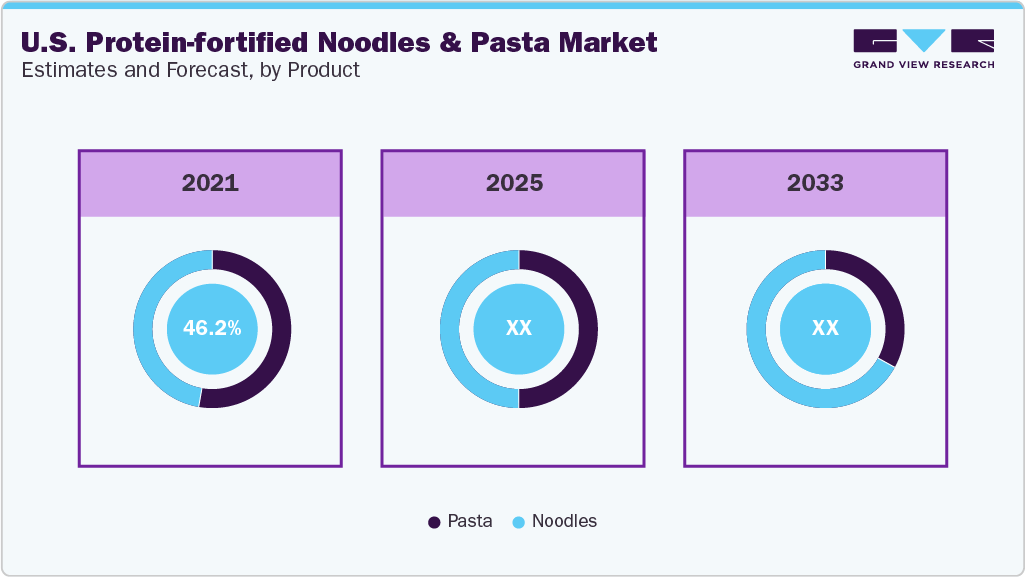
The pasta segment led the market with the largest revenue share of 53.3% in 2025. Its leading share is supported by the established role of pasta in U.S. diets, its versatility across meal occasions, and strong consumer familiarity. Growing interest in protein-enriched foods is encouraging manufacturers to introduce fortified pasta varieties that combine familiar formats with enhanced nutritional value, further strengthening demand in the segment.
 To learn more about this report, Download Free Sample Report
 The noodles segment is projected to grow at the fastest CAGR of 4.2% from 2026 to 2033. Increasing demand for convenient meal solutions, particularly among busy consumers and younger demographics, is supporting category expansion. Rising interest in protein-rich diets is also encouraging brands to develop fortified noodle products that combine quick preparation with enhanced nutritional value, while product innovation and broader retail availability are expected to further strengthen adoption of the segment.
Distribution Channel Insights
The offline segment led the market with the largest revenue share of 83.1% in 2025, reflecting the continued importance of physical retail in the U.S. market. Supermarkets, hypermarkets, mass merchandisers, and specialty food stores provide consumers with convenient product discovery and immediate purchase options. Strong shelf presence, promotional activities, and established grocery shopping habits are expected to sustain offline sales, particularly as protein-enhanced products gain wider mainstream acceptance.
 To learn more about this report, Download Free Sample Report
 The online segment is projected to grow at the fastest CAGR of 4.9% from 2026 to 2033, reflecting increasing consumer reliance on e-commerce for convenient grocery purchases. Digital platforms provide access to a broader assortment of specialized, high-protein products than many physical stores, while product reviews, nutritional information, subscription options, and promotional pricing can influence purchasing decisions. Growing digital grocery penetration and improved home-delivery services are expected to further support online sales throughout the forecast period.
Country Insights
The U.S. protein-fortified noodles and pasta industry is supported by heightened consumer interest in protein-rich everyday foods and convenient nutrition. Consumers are increasingly looking for familiar meal options that provide greater nutritional value without requiring significant changes to their diets. Manufacturers are responding through innovations such as plant-based protein, high-protein pasta, and fortified instant noodles. Clean-label positioning, improved taste and texture, and broader availability through supermarkets and e-commerce are also shaping category development. Rising interest in fitness, balanced diets, and functional nutrition is expected to sustain innovation and consumer adoption.
Key U.S. Protein-fortified Noodles & Pasta Company Insights
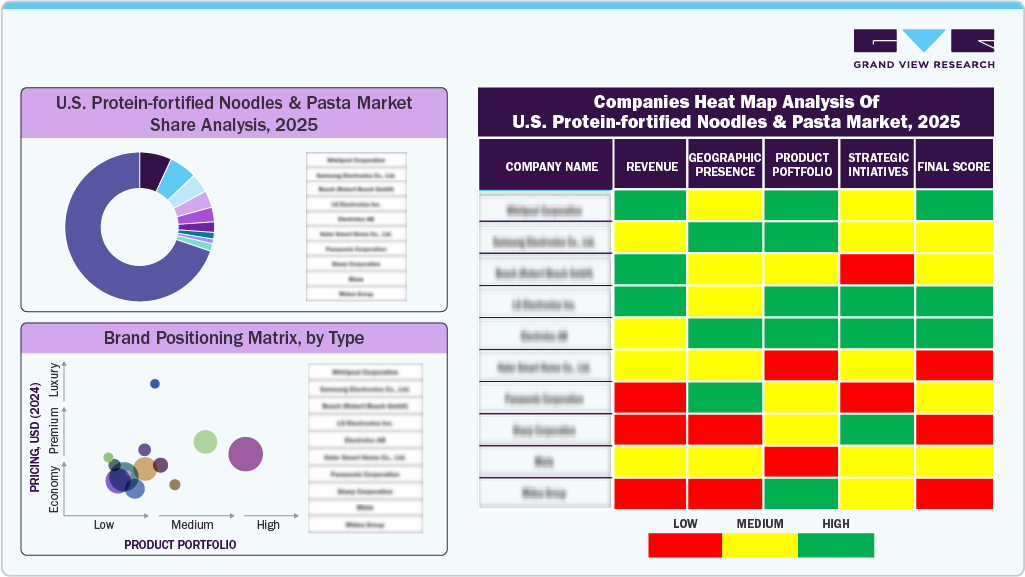
The U.S. protein-fortified noodles & pasta industry is becoming increasingly competitive as established food companies and emerging nutrition-focused brands expand their high-protein offerings. Leading players are strengthening their positions through product innovation, extensive retail distribution, brand recognition, and investments in formulation development. At the same time, smaller brands are differentiating through plant-based proteins, gluten-free and clean-label formulations, and targeted nutritional benefits. New product launches, growing e-commerce penetration, and expanded retail partnerships are further intensifying competition. Companies able to deliver higher protein content while maintaining appealing taste, texture, affordability, and convenience are likely to gain greater consumer acceptance and market share.
 To learn more about this report, Download Free Sample Report
 Key U.S. Protein-fortified Noodles & Pasta Companies
-
Barilla Group
-
Nestlé S.A.
-
Banza
-
The Only Bean
-
Borgatti's
-
Kaizen Food Company
-
Vite Ramen
-
Chickapea
-
F.lli De Cecco di Filippo S.p.A
-
Explore Cuisine
Competitive Benchmarking
Category
Operating Strategies
Competitive Edge
Weakness
Established Players (Barilla Group, Nestlé S.A., Borgatti's, F.lli De Cecco di Filippo S.p.A)
Expand protein-fortified and legume-based pasta lines alongside core offerings, invest in large-scale R&D and production technology, leverage existing U.S. manufacturing and distribution infrastructure, and broaden retail and e-commerce presence nationwide.
Strong brand recognition built over decades, extensive U.S. distribution and retailer relationships, significant R&D and marketing budgets, and established production efficiencies at scale.
Higher operating costs, slower innovation cycles versus startups, legacy formulations that can lag behind clean-label trends, and rising competitive pressure from agile, niche entrants.
Emerging Players (Banza, The Only Bean, Kaizen Food Company, Vite Ramen, Chickapea, Explore Cuisine)
Build product lines around a single functional legume or grain, secure placement in natural and specialty grocery chains, pursue B-Corp and clean-label certifications to build trust, and rely on e-commerce, subscription models, and founder-led social media storytelling to reach niche health-focused shoppers.
Deep category specialization gives each brand a clear point of difference, faster decision-making, shorter product development cycles, and stronger credibility with allergen-conscious and plant-based consumer segments.
Reliance on a single ingredient or product line limits portfolio breadth; higher per-unit costs from specialty inputs squeeze margins; a thin retail footprint outside natural/specialty channels; and limited capital relative to multinational competitors for large-scale expansion.
Recent Developments:
-
In July 2025, Nissin Foods USA launched Cup Noodles Protein nationwide, expanding its instant noodle portfolio with a protein-focused formulation. The product is available in three flavors, offering consumers a convenient meal option that aligns with the growing preference for protein-rich foods.
-
In 2026, Banza expanded its pasta portfolio with Wheat Protein Pasta, combining chickpeas and semolina wheat in a higher-protein formulation designed to deliver a more familiar pasta eating experience. The launch reflects continued innovation in protein-fortified pasta, as manufacturers seek to improve nutritional value while maintaining the taste and texture expected from conventional pasta.
U.S. Protein-fortified Noodles & Pasta Market Report Scope
Report Attribute
Details
Market size value in 2025
USD 339.5 million
Estimated market size in 2026
USD 352.8 million
Revenue forecast in 2033
USD 459.7 million
Growth rate
CAGR of 3.9% from 2026 to 2033
Base year for estimation
2025
Historical data
2021 – 2024
Forecast period
2026 – 2033
Quantitative units
Revenue in USD million, and CAGR from 2026 to 2033
Report coverage
Revenue forecast, company ranking, competitive landscape, growth factors, and trends
Segments covered
Product, type, distribution channel, country
Country scope
U.S.
Key companies profiled
Barilla Group; Nestlé S.A.; Banza; The Only Bean; Borgatti's; Kaizen Food Company; Vite Ramen; Chickapea; F.lli De Cecco di Filippo S.p.A.; Explore Cuisine
Customization scope
Free report customization (equivalent up to 8 analysts working days) with purchase. Addition or alteration to country, & segment scope.
Pricing and purchase options
Avail customized purchase options to meet your exact research needs. Explore purchase options
U.S. Protein-fortified Noodles and Pasta Market Report Segmentation
This report forecasts revenue growth at the country level and provides an analysis of the latest industry trends and opportunities in each of the sub-segments from 2021 to 2033. For this study, Grand View Research has segmented the U.S. protein-fortified noodles & pasta market report based on product, type, distribution channel and country:
-
Product Outlook (Revenue, USD Million, 2021 - 2033)
-
Pasta
-
Noodles
-
-
Type Outlook (Revenue, USD Million, 2021 - 2033)
-
Dried
-
Instant
-
Frozen/ Canned
-
-
Distribution Channel Outlook (Revenue, USD Million, 2021 - 2033)
-
Offline
-
Hypermarkets & Supermarkets
-
Convenience Stores
-
Others
-
-
Online
-
Research Methodology
The U.S. protein-fortified noodles & pasta market figures in this report are based on a proven research process that combines executive interviews with secondary research from proprietary databases, company filings, and recognized regulatory and institutional sources. Market size is built through value-chain sizing—reconciling supply-side and demand-side estimates—and triangulated with bottom-up and top-down approaches. Every estimate passes multiple levels of expert validation before publication, with eachU.S. protein-fortified noodles & pasta segment quantified using the revenue-capture definitions in the table below.
Segment Definition
Product
Revenue capture definition
Pasta
This segment includes the sales of protein-fortified pasta products made from wheat, legumes, pulses, or other protein-rich ingredients.
Noodles
This segment includes the sales of protein-fortified noodle products formulated with added protein from plant-based or other protein sources.
Estimation Model
Layer
Key Question
Description
Consumption Universe
Who consumes protein-fortified noodles & pasta?
The total U.S. population consuming protein-fortified noodles and pasta across everyday meals, quick-service occasions, post-workout nutrition, and convenient high-protein meal needs.
Access & Availability
Where can they access protein-fortified noodles & pasta?
U.S. consumers access these products through supermarkets, hypermarkets, convenience stores, specialty and health food stores, restaurants, foodservice outlets, and e-commerce platforms nationwide.
Purchase & Usage
Who buys protein-fortified noodles & pasta regularly?
Regular U.S. buyers include health-conscious consumers, fitness enthusiasts, active individuals, and households seeking convenient, high-protein meal options.
Revenue Conversion
How is revenue generated?
Revenue is generated through U.S. sales of protein-fortified noodles and pasta across retail, foodservice, and restaurant channels, capturing monetization from both consumer and commercial purchase occasions.
Delivered Customizations
This report has been delivered with the following In-depth customizations
Client Request
Customization Delivered
Value Adds
U.S. Protein-Fortified Noodles & Pasta Market Share Analysis
Analyzed the competitive positioning and market shares of key protein-fortified noodles and pasta companies, assessing their relative presence across product categories, distribution channels, and key market segments.
Provides a clear understanding of the competitive landscape, leading players, market concentration, and opportunities to strengthen market positioning and identify underserved segments.
U.S. Protein-Fortified Noodles & Pasta Market Volume Analysis
Developed a volume-based market assessment across product types and distribution channels, supported by historical consumption patterns and forward-looking demand trends.
Provides a quantitative basis for evaluating market scale, demand growth, capacity requirements, investment opportunities, and prioritization of high-potential product and channel segments.
U.S. Protein-Fortified Noodles & Pasta Regulatory Analysis
Assessed the U.S. regulatory framework applicable to protein-fortified noodles and pasta, including requirements related to ingredients, protein and nutrient claims, nutrition labeling, food safety, product formulation, and applicable FDA regulations.
Helps manufacturers and investors understand compliance requirements, reduce regulatory risks, support product development and labeling decisions, and facilitate the commercialization of protein-fortified noodles and pasta in the U.S. market.
Frequently Asked Questions About This Report
Key factors include rising consumer demand for high-protein diets, growing preference for convenient and nutrient-dense foods, increasing interest in weight management and wellness, and expanding demand for plant-based protein ingredients.
The instant segment led with a 60.0% revenue share in 2025, while dried is the fastest-growing segment.
The offline channel held the largest share in 2025, while the online channel is the fastest-growing channel.
Key players include Barilla Group; Nestlé S.A.; Banza; The Only Bean; Borgatti's; Kaizen Food Company; Vite Ramen; Chickapea; F.lli De Cecco di Filippo S.p.A.; and Explore Cuisine.
The U.S. protein-fortified noodles & pasta market size was valued at USD 339.5 million in 2025 and is estimated at USD 352.8 million for 2026.
The U.S. protein-fortified noodles & pasta market is expected to grow at a CAGR of 3.9% from 2026 to 2033, reaching USD 459.7 million by 2033.
Pasta segment held the largest market share of 53.3% in 2025, while noodles is the fastest-growing area.
About the Author(s)
Consumer F&B Research Team
Consumer Goods · Consumer F&BThis report was authored by the consumer f&b research team at Grand View Research - comprising two research analysts, one senior research analyst, and one industry expert - with specialized expertise in the consumer f&b segment of the consumer goods industry. All findings are based on proprietary consumer goods databases, executive interviews, and regulatory analysis, subject to internal peer review prior to publication.
Last Updated:
Speak to Analyst

Customize this report to your needs - add regions, segments, or data points, with 20% free customization.
Or view our licence options:


ISO 9001:2015 & 27001:2022 Certified
We are GDPR and CCPA compliant! Your transaction & personal information is safe and secure. For more details, please read our privacy policy.


