
- Home
- »
- Beauty & Personal Care
- »
-
U.S. Skin Care Products Market Size & Share Report, 2033GVR Report cover

U.S. Skin Care Products Market (2026 - 2033)
Size, Share & Trends Analysis Report By Product (Face Skin Care, Body Skin Care), By Form, By Price Tier, By Gender (Men, Women), By Concern, By Age Group (Teenagers, Young Adults, Adults, Mature Adults), By Distribution Channel, And Segment Forecasts
Market Size, 2025
$35.6BMarket Estimate, 2026
$38.0BMarket Forecast, 2033
$62.9BCAGR, 2026–2033
7.5%U.S. Skin Care Products Market Summary
The U.S. skin care products market size was valued at USD 35.6 billion in 2025 and is projected to reach USD 38.0 billion in 2026 and USD 62.9 billion by 2033, at a CAGR of 7.5% from 2026 to 2033. The market is increasingly being shaped by consumer demand for efficacy, value, and targeted skin-health benefits, as shoppers become more selective about the products they incorporate into their routines
Key Market Trends & Insights
- By product: Face skin care segment held the largest share of 70.7 in 2025.
- By form: Emulsified segment accounted for the largest share of 38.6% in 2025.
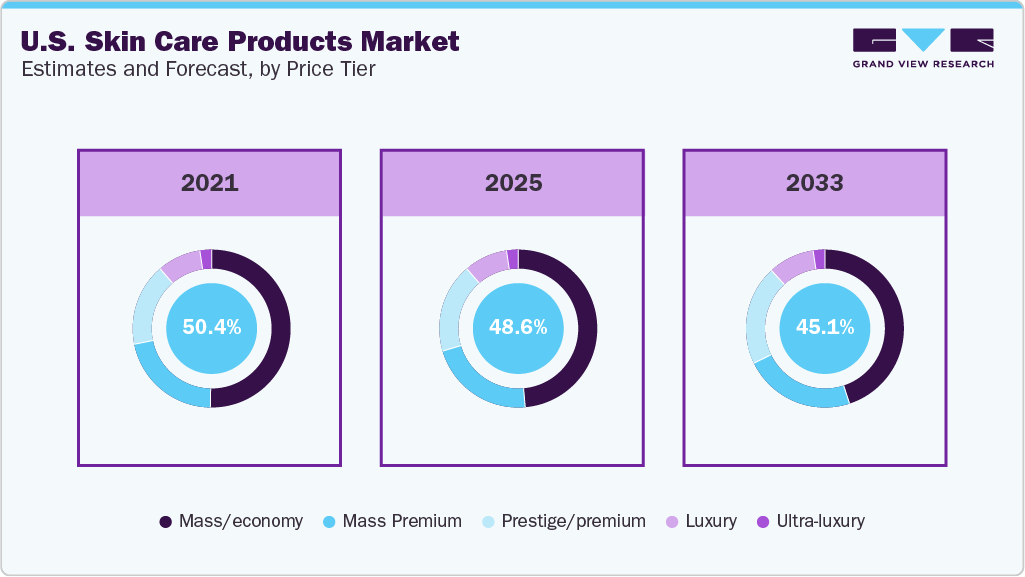
- By price tier: Mass/economy segment led the market with a share of 48.6% in 2025.
- By gender: Women accounted for the largest market share of 66.1% in 2025.
- By concern: Anti-aging & wrinkle reduction held the largest share of 34.0% in 2025.
- By age group: Adults accounted for the largest market share of 38.2% in 2025.
- By distribution channel: Hypermarkets & supermarkets held the largest share of 34.1% in 2025.
Market Size & Forecast
- Market size in 2025: USD 35.6 Billion
- Estimated market size in 2026: USD 38.0 Billion
- Projected market size by 2033: USD 62.9 Billion
- CAGR (2026-2033): 7.5%
Three ways to get this report
Buy it, customize it, or ask a question.Ask an Analyst
Analyst response in 1 business day
- AccessReport author, directly
- Reply timeWithin 1 working day
- No sales callDirect answer only
- FormatEmail reply
- CostFree, no cost
Get the Full Report
What the study covers
- FormatsPDF · Excel · Dashboard
- Timeline2026–2033 annual, 2025 base
- Coverage20+ countries, 5 regions
- Companies10+ key players profiled
Customize the Report
20% free customization
- IncludeCountries, segments, points
- TailorTo your product definition
- ExtendDeeper competitor detail
- OrA fully bespoke study
- Turnaround5–10 working days
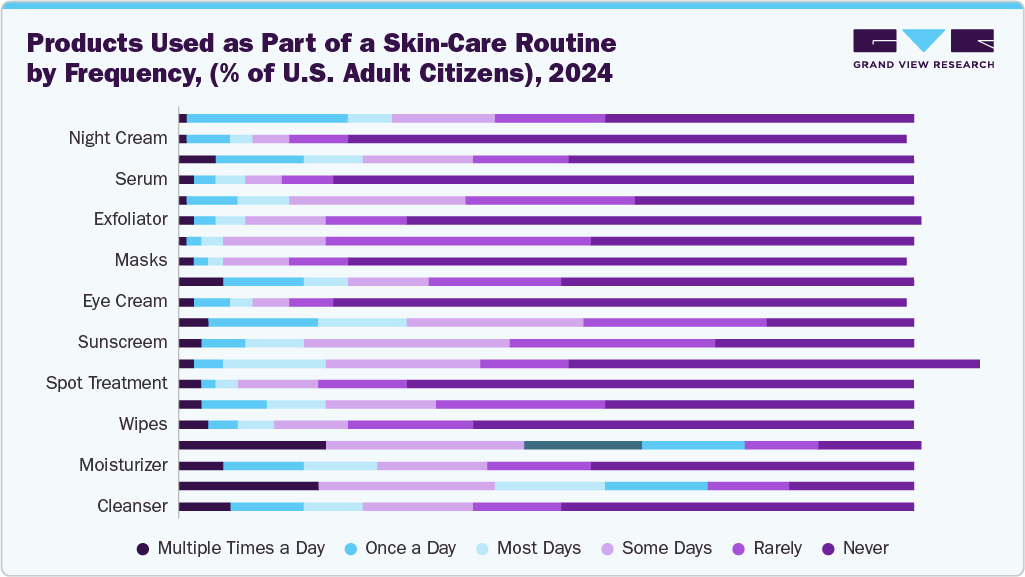
Consumer adoption of skincare is becoming increasingly routine-oriented and linked to broader skin-health and wellness needs. A 2025 Provoke Insights survey of 1,500 U.S. adults found that 89% use skincare products, with 46% using them daily, while 87% consider dermatological beauty important. This growing focus on skin health is supporting demand for targeted solutions addressing acne, pigmentation, aging, sensitivity, and barrier repair. Circana's 2026 data supports this shift, with skincare remaining one of the leading growth areas across U.S. beauty retail and all major mass-market skincare segments, including facial products, hand and body lotions, and sunscreen, recording both dollar and unit gains during the first half of the year.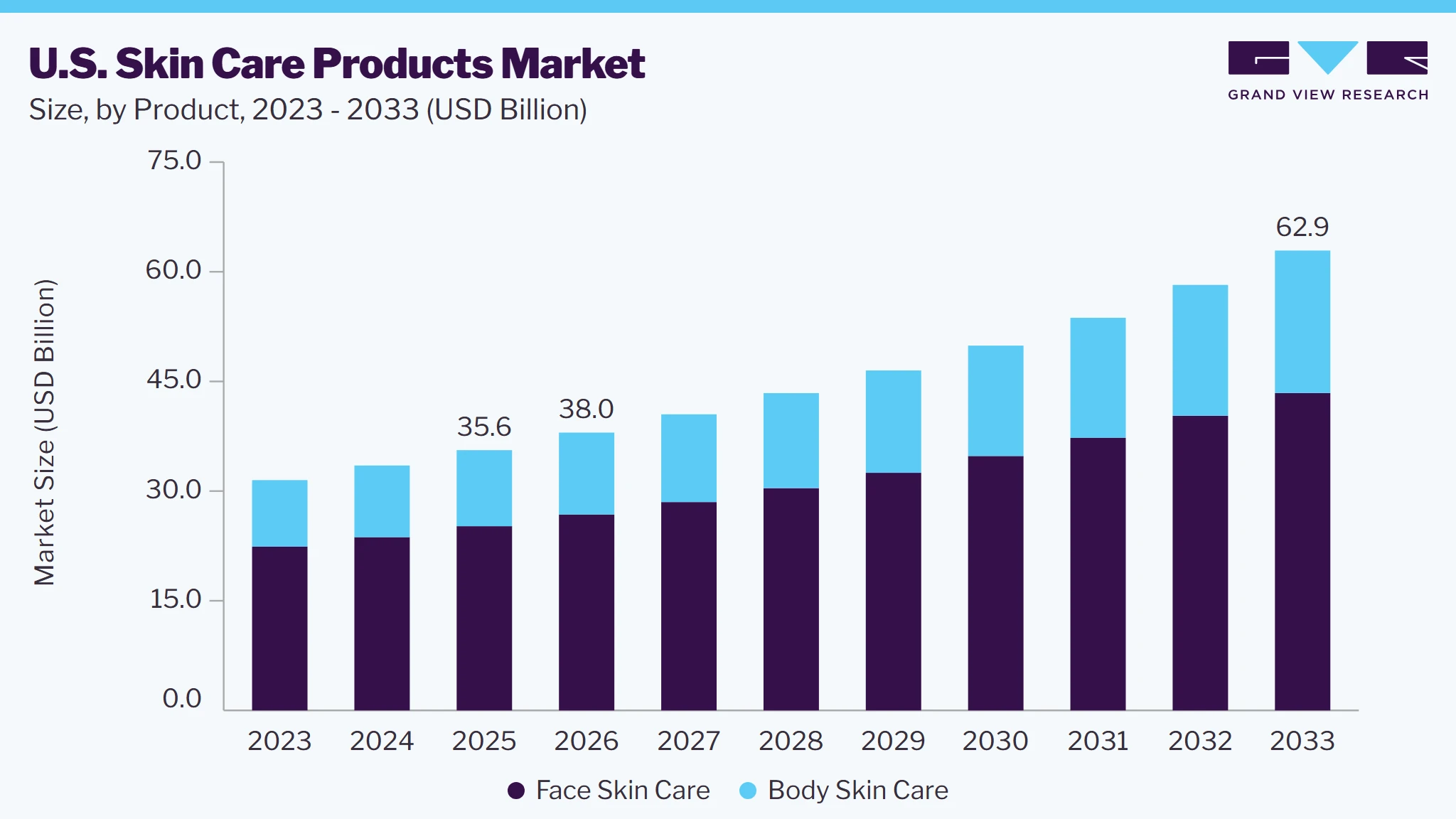 Source: Grand View Research, IR Documents, Primary Interviews, Paid DatabasesTo learn more about this report,
 Download Free Sample Report
Purchasing decisions are also becoming more information and value-driven. According to YouGov, 72% of U.S. consumers consider affordability important when purchasing skincare, while 66% value online reviews and 60% consider dermatologist recommendations. Therefore, brands are strengthening ingredient communication, clinical positioning, and digital engagement. This shift is also supporting online-led discovery, with Circana identifying e-commerce as a key contributor to prestige facial skincare growth in 2025, while Korean skincare recorded 23% dollar and 24% unit growth in U.S. prestige retail during Q1 2026.
Personalization and treatment-oriented products are further influencing innovation strategies. Provoke Insights found that 62% of recent skincare purchasers were interested in AI-enabled shopping tools, reflecting growing demand for personalized product discovery. In response, brands are emphasizing targeted formulations and dermatological credibility; CeraVe focuses on dermatologist-developed barrier care, while La Roche-Posay and SkinCeuticals offer treatment-oriented solutions, and Neutrogena and Aveeno address face, body, and sun care needs. Competition is increasingly centered on value-for-efficacy, with brands across mass, masstige, and prestige tiers competing on targeted benefits and demonstrable performance.
 To learn more about this report, Download Free Sample Report
To conclude, the U.S. skin care products market is moving beyond basic routine adoption toward targeted, science-backed, and value-driven skincare. As consumers become more discerning about efficacy, ingredients, and credibility, competitive advantage is expected to increasingly depend on delivering demonstrable skin benefits at the right price point, supported by strong clinical positioning, personalization, and omnichannel accessibility.
Major Trends in the U.S. Skin Care Products Market
Trend
Description
Skinification of Body Care
Body care is increasingly adopting facial‑skincare ingredients and formats, creating a broader treatment‑oriented opportunity beyond the face. Spate’s 2026 U.S. analysis identifies rising interest in glycolic‑acid body washes, niacinamide lotions, body serums, and body oils, indicating that consumers increasingly expect body products to deliver skincare‑level benefits. Consumers now prefer products like body serums, chemical exfoliants (AHAs/BHAs), retinoids, and peptides to address firming, hyperpigmentation, and barrier repair.
AI‑Powered Skin Diagnostics
AI is moving skincare personalization from basic recommendations toward image‑based diagnostics and skin profiling. L’Oréal’s SkinConsultAI was trained on 6,000 clinical images and more than 4,500 smartphone selfies, while its 2025 Beauty Genius generated over 1.1 million U.S. conversations. This is expanding technology‑led product discovery and personalized routines.
Barrier Health Gains Greater Attention
Skin‑barrier health is becoming an important formulation and positioning theme, supported by growing interest in ceramides, microbiome‑friendly ingredients, gentle formulations, and barrier‑repair products. The trend is also influencing K‑beauty innovation, with Circana noting that Korean brands in 2026 are increasingly emphasizing biotech‑powered ingredients and skin‑barrier health.
Skin Longevity Becomes a New Innovation Platform
Skincare is increasingly converging with the broader longevity and healthy‑aging movement, shifting innovation beyond conventional anti‑aging claims. BCG estimates that “Optimizers” represent approximately 6% of U.S. adults, or 15 million consumers, with beauty increasingly connected to aesthetics, performance, and longevity. L’Oréal’s Cell BioPrint similarly applies longevity science to consumer skin analysis.
These trends indicate that technology and scientific innovation are becoming important drivers of change within the U.S. skin care products market. The integration of AI-enabled diagnostics, at-home treatment devices, biomarker-based analysis, microbiome science, and longevity-focused formulations is expanding the market beyond conventional topical skincare. As these technologies become more accessible and commercially viable, brands are increasingly using them to differentiate products, improve personalization, strengthen consumer engagement, and develop higher-value solutions across facial, body, and treatment-oriented skincare categories.
Source & Year
Survey Finding
CeraVe U.S. Consumer Survey (2024)
80% of U.S. adults experience skin concerns, highlighting the broad need for skincare products and skin‑health solutions.
YouGov U.S. Skincare Survey (2024)
50% of Americans report having a very or somewhat consistent skincare routine, indicating that skincare has become an established part of consumers’ regular personal‑care habits.
American Academy of Dermatology – Practice Safe Sun Survey (2025)
96% of Americans believe that sun protection is important, underscoring strong consumer awareness of preventive skin care.
Market Dynamics
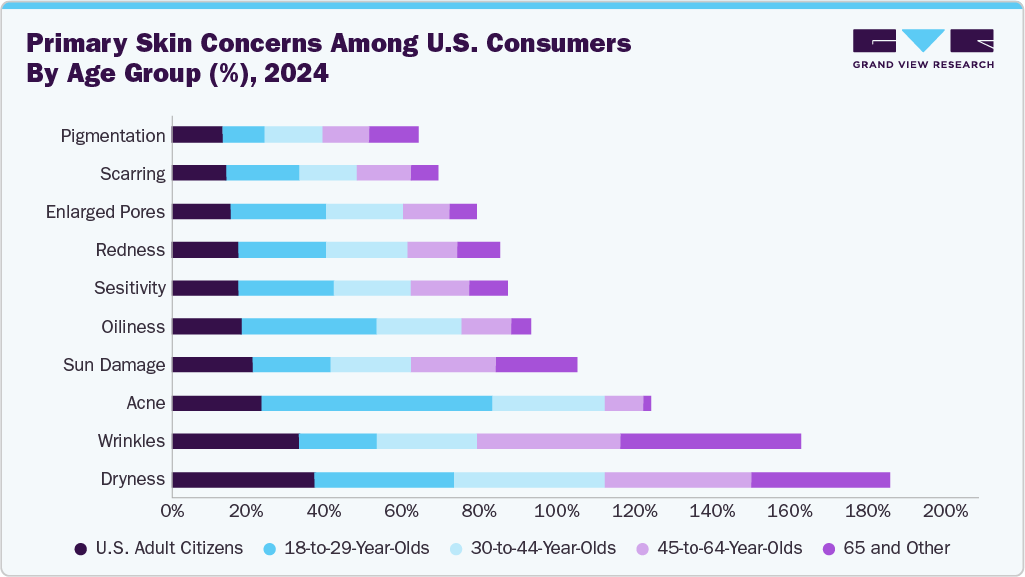
Rising consumer awareness of skin health and grooming is expanding the U.S. skincare market beyond appearance-focused products toward preventive and wellness-oriented solutions. A May 2024 YouGov survey found that 50% of Americans maintain a consistent skincare routine, with concerns such as acne, aging, sensitivity, and UV exposure supporting regular use of cleansers, moisturizers, sunscreens, and treatment products. This growing awareness is also strengthening demand for preventive skincare and targeted formulations.
Consumer knowledge of skin protection is increasing, particularly within sun care. According to YouGov in July 2026, 55% of U.S. consumers consider UVA/UVB protection the most important factor when purchasing sunscreen, while 46% purchase sunscreen immediately after finishing their current supply, indicating relatively consistent replenishment behavior. Academic research published by Oxford University Press in 2024 further found that 79.2% of surveyed melanoma patients knew the correct amount of sunscreen to apply, reflecting awareness of preventive practices.
 To learn more about this report, Download Free Sample Report
Growing understanding of skin concerns is encouraging manufacturers to develop age- and concern-specific products targeting acne, pigmentation, sensitivity, premature aging, and barrier health. Therefore, higher consumer awareness is supporting greater product specialization and penetration across U.S. skincare categories.
The implementation of the Modernization of Cosmetics Regulation Act (MoCRA) is increasing regulatory responsibilities for U.S. skincare manufacturers by introducing requirements for facility registration, product listing, safety substantiation, adverse-event reporting, and access to relevant records. As of June 2026, the FDA recorded 16,398 active cosmetic facility registrations and 1.30 million active product listings, highlighting the scale of the compliance framework. These requirements increase administrative, testing, documentation, and quality-assurance expenses, particularly for smaller and emerging brands with limited regulatory capabilities.
The regulatory burden is consequently affecting product development, market entry, and competitive dynamics within the U.S. skincare market. Established companies with extensive R&D and regulatory infrastructure are better positioned to absorb compliance costs; for example, L'Oréal operates a U.S. R&I center with more than 600 scientists, supporting formulation development and regulatory requirements. In contrast, smaller brands may need to rely more heavily on third-party testing and compliance partners, increasing commercialization costs and timelines. As a result, MoCRA is gradually raising the barrier to entry and scale, while strengthening the competitive advantage of well-resourced skincare companies.
Growing consumer focus on specific skin concerns is creating opportunities for ingredient-led and benefit-specific skincare formulations. Demand is shifting from generic skincare toward products designed around clearly defined needs such as hydration, barrier support, healthy ageing, pigmentation, blemish care, and sensitive-skin management. This is encouraging brands and formulators to combine established actives such as hyaluronic acid, ceramides, niacinamide, peptides, vitamin C, and salicylic acid with targeted delivery systems and complementary ingredients. Consequently, manufacturers can develop differentiated formulations that address individual consumer priorities while maintaining clear product positioning.
Consumer Priorities and Ingredient-Led Formulation Opportunities
Consumer priority
Representative ingredients
Technical opportunity
Claims / regulatory consideration
B2B product opportunity
Hydration
Hyaluronic acid, glycerin, beta-glucan
Humectancy and moisturization
Hydrating or moisturizing claims should be supported through appropriate instrumental or consumer testing
Hydrating serum
Barrier support
Ceramides, niacinamide, panthenol
Barrier repair and conditioning
Products should use cosmetic positioning that supports or helps maintain the skin barrier and should avoid claims that the product repairs or treats the skin
Barrier moisturizer
Healthy ageing
Retinoids, peptides
Texture and firmness support
Products should focus on improving the appearance of fine lines and firmness and should avoid claims that imply changes to skin structure or function
Treatment serum
Tone/pigmentation
Vitamin C, niacinamide, azelaic acid
Antioxidant and tone support
Products should use cosmetic claims related to skin brightness and even tone and should avoid claims that the product treats or lightens hyperpigmentation
Brightening product
Blemish care
Salicylic acid, niacinamide
Exfoliation and conditioning
Products positioned for acne treatment should comply with the applicable U.S. OTC acne requirements while cosmetic products should avoid claims that they treat acne
Targeted treatment
Sensitive-skin care
Panthenol, allantoin, soothing systems
Soothing and microbiome support
Products can use soothing and comforting claims while microbiome related claims should be supported with appropriate evidence, and anti-inflammatory claims should be avoided
Sensitive-skin moisturizer
The U.S. skincare market is shifting from broad categories to routine-led, efficacy-focused use, with consumers combining mass, dermatologist-backed, and premium products. CeraVe, La Roche-Posay, and The Ordinary combine clinical credibility with accessible prices, especially for younger consumers. Meanwhile, prestige brands face pressure from value-conscious shoppers and indie brands. Key demand areas include barrier repair, acne, anti-aging, and sensitive skin, with ingredient transparency and dermatologist recommendations influencing buying choices. Brands and retailers are using personalized recommendations and social commerce to enhance direct-to-consumer and omnichannel engagement.
Consumer Insights
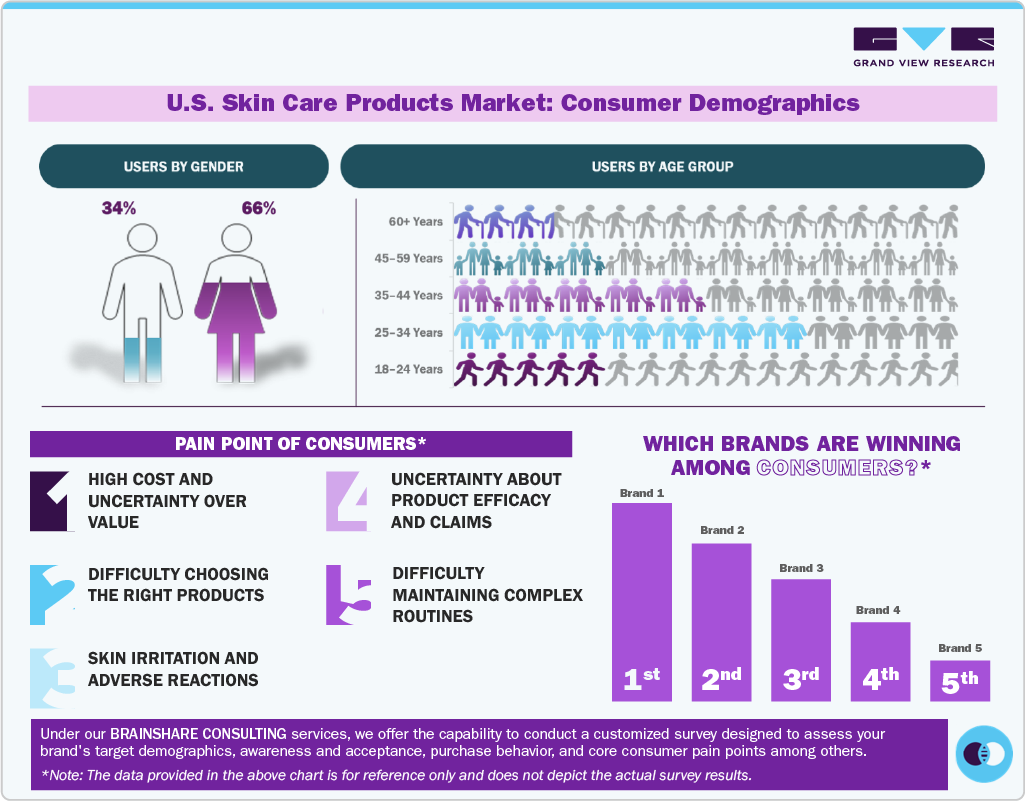
Skin health is becoming a routine-oriented priority rather than an occasional beauty activity: Consumers are increasingly incorporating skincare into daily personal-care routines, with needs extending beyond appearance including hydration, barrier health, acne management, pigmentation, sensitivity, and healthy ageing. This is encouraging brands to develop broader routines covering cleansers, moisturizers, serums, sunscreens, and targeted treatments. Provoke Insights also identifies skincare as increasingly connected with health, wellness, and personal routines, supporting demand for products addressing specific and evolving skin needs.
 To learn more about this report, Download Free Sample Report
-
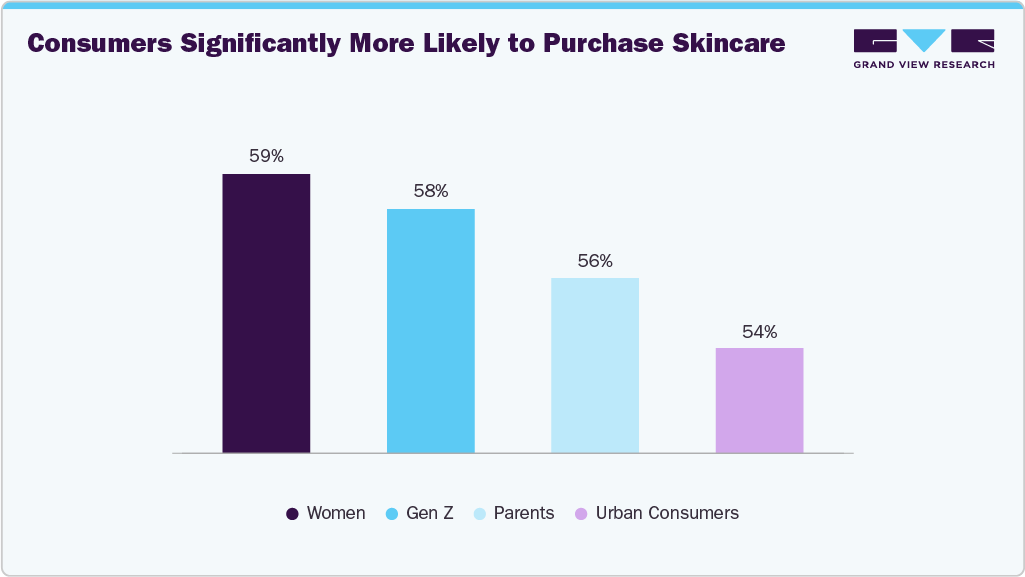
Women represent the major category in the U.S. skin care products market: As women have higher engagement with skincare, supported by several structural and biological factors. Hormonal changes across menstruation, pregnancy, perimenopause, and menopause can influence acne, pigmentation, dryness, sensitivity, collagen, and skin elasticity. Greater exposure to cosmetic and beauty routines, including makeup and hair-removal practices, can also increase the need for cleansing, moisturizing, barrier care, and targeted treatments. In addition, age-related skin changes such as collagen loss, fine lines, uneven tone, and reduced hydration create evolving skincare needs, while pregnancy and postpartum changes can further increase demand for products addressing pigmentation, dryness, and sensitivity. These factors encourage brands to develop women-focused solutions spanning everyday maintenance, treatment-oriented care, and healthy ageing.
 To learn more about this report, Download Free Sample Report
-
Consumers are increasingly seeking efficacy rather than simply premium positioning: Skincare buyers are becoming more focused on whether a product addresses a specific concern and delivers visible results. This supports demand for clinically positioned products, dermatologist-developed formulations, and ingredient-led solutions. Brands such as CeraVe, La Roche-Posay, SkinCeuticals, and Neutrogena emphasize dermatological credibility, active ingredients, and targeted benefits to strengthen consumer confidence.
-
Consumers are becoming more willing to experiment with new skincare brands: Skincare purchasing is not entirely driven by long-term brand loyalty, as consumers increasingly explore alternatives when new products offer differentiated ingredients, benefits, or value. Criteo's 2026 Health & Beauty Pulse found that only 34% of shoppers rarely switch from preferred beauty brands, while up to 53% of skincare, fragrance, and makeup purchases globally involve shoppers buying a brand they had not purchased during the previous year. This creates opportunities for emerging brands to compete through targeted innovation and strong product discovery strategies.
Key Factors Influencing U.S. Consumer Skincare Product Choices
Factor
Percentage
Price
59.5%
Quality
65.8%
Ingredients
48.9%
Brand Reputation
30.5%
Recommendations
18.7%
Packaging
11.7%
Celebrity Endorsements
3.6%
Others
1.0%
-
Key Factors Influencing U.S. Consumer Skincare Product Choices: According to the Grand View Research analysis, U.S. consumers primarily consider product quality, price, and ingredients when selecting skincare products, reflecting stronger emphasis on efficacy and value. Consumers are increasingly willing to pay for products they perceive as effective rather than choosing solely on the lowest price. Ingredient transparency is also gaining importance as consumers become more knowledgeable about formulations and specific skin benefits. Brand reputation and recommendations influence decisions by strengthening trust and reducing uncertainty, particularly for unfamiliar products. In comparison, packaging design and celebrity endorsements have a relatively limited influence, indicating that functional benefits and credibility generally outweigh promotional appeal.
-
Online research increasingly shapes the consideration stage: Consumers frequently investigate ingredients, product benefits, reviews, demonstrations, and competing products before purchasing. Criteo found that beauty shoppers can evaluate numerous products before completing a purchase, demonstrating the importance of digital product pages, search visibility, reviews, educational content, and comparison tools. Consequently, brands increasingly need to provide detailed online information rather than relying solely on physical retail visibility.
-
Reviews and peer recommendations strengthen purchase confidence: Consumers increasingly use social proof to reduce uncertainty when evaluating skincare products, particularly when comparing unfamiliar brands or higher-value treatments. Reviews, ratings, recommendations, and educational content can validate product efficacy and reduce perceived purchase risk. This makes consumer-generated content and credible product information important components of the skincare purchase journey. Criteo identifies reviews and ratings as leading influences on beauty purchase decisions.
-
Personalization is becoming an important expectation in product discovery: Consumers increasingly expect recommendations to reflect their individual skin type, concerns, lifestyle, and desired outcomes rather than receiving generic product suggestions. Provoke Insights notes that consumers are increasingly receptive to AI-enabled tools that simplify product discovery and provide personalized and explainable recommendations. This is creating opportunities for brands to use AI skin diagnostics, digital consultations, and customized routines to improve engagement and product selection.
-
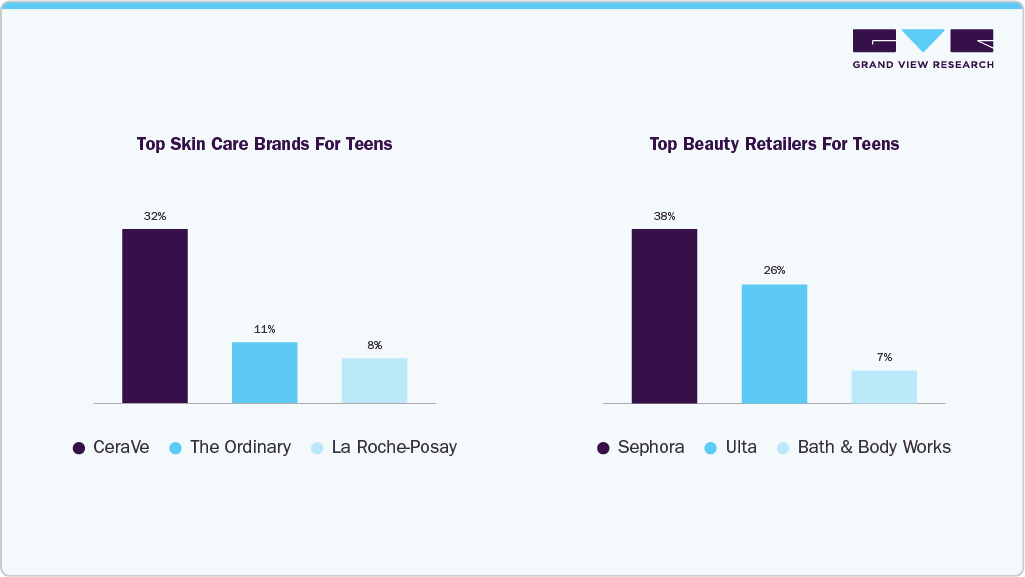
Younger consumers are entering skincare earlier and influencing category discovery: Skincare adoption among younger consumers is strengthening the importance of education, social media, specialty beauty retailers, and accessible price points. Piper Sandler's Fall 2025 teen research shows that Sephora remained the leading beauty shopping destination, followed by Ulta, while skincare and beauty remain important components of teen personal-care behavior. This creates a long-term opportunity for brands that establish credibility and routine adoption early among younger consumers.
-
Consumers are increasingly interested in treatment-oriented and device-enabled skincare: Skincare routines are expanding beyond conventional topical products toward LED devices, skin diagnostics, microbiome-focused formulations, and other technology-enabled solutions. This reflects growing interest in measurable or personalized outcomes and is encouraging brands to combine topical skincare with diagnostic and treatment ecosystems. Companies such as L’Oréal, CurrentBody, Neutrogena, and Olay are expanding technology-led approaches to skincare discovery, personalization, or treatment.
-
Among U.S. teens, CeraVe led skincare brand preference with 33% share, followed by The Ordinary at 10% and La Roche-Posay at 8% in Piper Sandler’s Fall 2024 Taking Stock with Teens survey. The results indicate a strong preference for dermatologist-positioned and ingredient-focused skincare brands among younger consumers, highlighting the importance of perceived efficacy, skin health, and accessible clinical positioning in the teen skincare segment. While Sephora is the top beauty shopping destination for teens with 38% of teens choosing Sephora for Skin Care Products, and Ulta is also a preferred channel for skin care products for teens, and Bath & Body Works takes the third spot; this is the first time the retailer has been in the top 10 since 2018.
 To learn more about this report, Download Free Sample Report
U.S. skincare consumers are shifting from a simple product-selection mindset toward a more informed and benefit-specific decision process. Consumers increasingly consider which product best matches their skin concern, ingredients, budget, and desired outcome rather than relying solely on brand recognition. This behavior strengthens demand for clinically positioned formulations, transparent ingredient communication, personalized recommendations, digital research, targeted products, and omnichannel accessibility. For manufacturers, competitive differentiation increasingly depends on combining efficacy, credibility, personalization, value, and convenient product discovery rather than relying primarily on broad product portfolios or brand awareness.
Product Insights
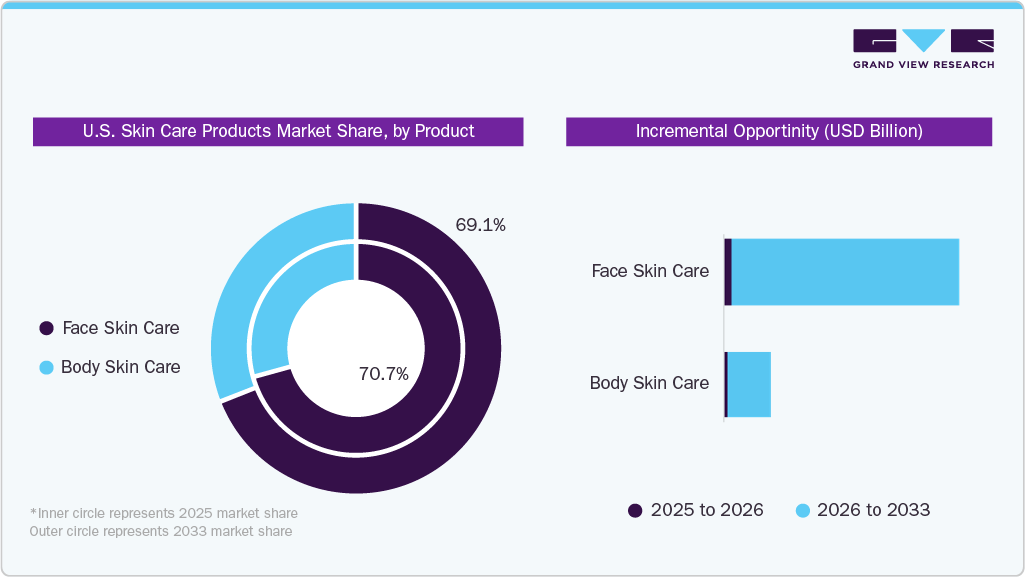
The face skin care segment led the U.S. skin care products industry, accounting for a share of 70.7% in 2025, supported by the widespread adoption of daily facial cleansing and treatment routines among consumers. Products such as facial cleansers, serums, toners, and sunscreens are commonly used as part of multi-step skincare regimens designed to maintain skin health and improve appearance. The segment is also driven by increasing consumer demand for targeted facial treatments that address concerns such as acne, hyperpigmentation, uneven skin tone, and signs of aging. In addition, manufacturers continue to introduce innovative formulations featuring active ingredients such as retinol, vitamin C, niacinamide, and exfoliating acids that provide specific skin benefits. The strong presence of dermatology-backed brands, premium skincare collections, and specialized facial treatment products across beauty retailers and online platforms further supports the dominant position of face skin care products in the U.S. market.
 To learn more about this report, Download Free Sample Report
Body skin care segment is expected to grow at the fastest CAGR of 8.2% from 2026 to 2033, supported by the growing consumer focus on overall skin hydration and body care as part of daily personal grooming routines. Products such as body lotions, creams, body oils, and exfoliating scrubs are increasingly used to maintain skin softness, improve texture, and prevent dryness caused by environmental factors and seasonal weather changes. The segment is also benefiting from the rising popularity of body care routines that extend beyond basic cleansing, as consumers incorporate moisturizing and skin-repair products into their regular skincare regimens. In addition, manufacturers are introducing advanced body care formulations enriched with ingredients such as shea butter, ceramides, vitamin E, and botanical extracts designed to nourish and protect the skin. The growing availability of premium body care products and dermatologist-recommended formulations across beauty retailers and online platforms further supports the rising demand for body skin care products in the U.S. market.
Form Insights
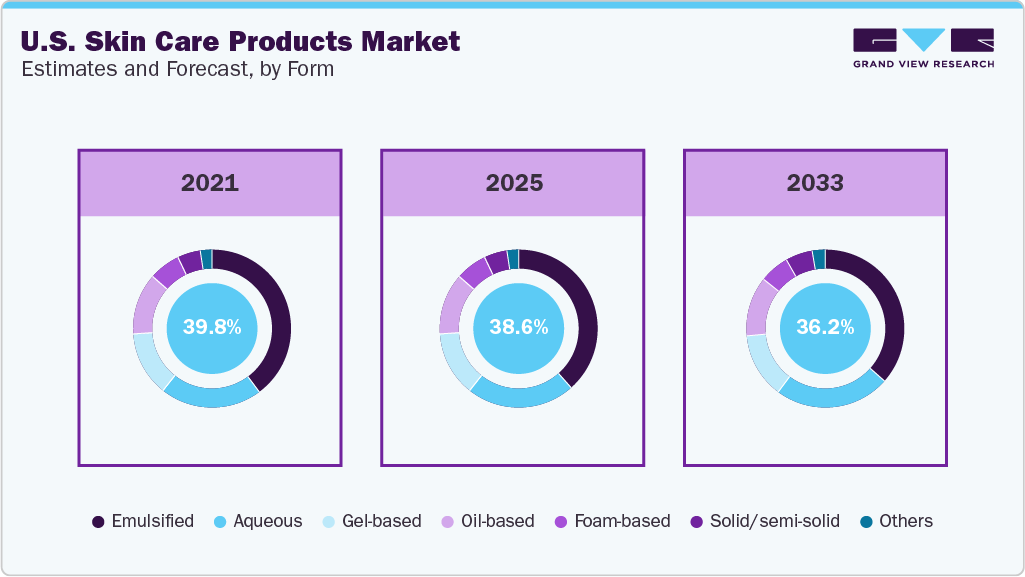
The emulsified segment accounted for the largest market share of 38.6% in 2025, supported by the growing demand for multifunctional skincare products that combine hydration, treatment, and protection in a single formulation. Emulsified products such as creams and lotions allow manufacturers to incorporate active ingredients, including retinol, niacinamide, and vitamin C, while maintaining a stable and easy-to-apply texture. The segment is also driven by increasing consumer preference for skincare products that spread evenly across the skin and provide longer-lasting moisturization compared to gel or water-based formulations. In addition, premium skincare brands are introducing advanced cream-based products designed for specific skin concerns such as barrier repair, overnight skin renewal, and deep nourishment, further supporting the growth of emulsified skincare products in the U.S. market.
 To learn more about this report, Download Free Sample Report
Aqueous segment is expected to grow at a CAGR of 8.7% from 2026 to 2033, driven by the rising popularity of multi-step skincare routines that incorporate hydrating toners, facial essences, and water-based serums. These products are commonly used as the initial stages of skincare regimens to balance skin moisture levels and enhance the absorption of subsequent treatment products. The segment is also driven by rising consumer interest in skincare routines influenced by global beauty trends that emphasize hydration-focused formulations. In addition, aqueous skincare products are often preferred during warmer seasons due to their light texture and cooling properties, which encourage consumers to adopt them as part of daily skincare maintenance.
Price Tier Insights
Mass/economy skin care products accounted for the largest market share of 48.6% in 2025. Many consumers prefer mass-market skincare products because they offer accessible solutions for everyday concerns such as dryness, acne, and sun protection without requiring a high price tag. The segment is also supported by the presence of well-known consumer brands that offer a broad range of cleansers, moisturizers, and treatment products designed for different skin types. In addition, manufacturers in the mass segment frequently introduce new formulations and product lines that incorporate popular skincare ingredients while maintaining competitive price points, encouraging repeat purchases among a large consumer base in the U.S.
 To learn more about this report, Download Free Sample Report
Demand for prestige/premium skin care products is expected to grow at a CAGR of 8.7% from 2026 to 2033, driven by the increasing consumer focus on high-efficacy skincare products that deliver visible and long-term results. Many consumers are shifting toward premium products with higher concentrations of active ingredients and advanced formulations designed to address specific skin concerns, such as aging, uneven skin tone, and skin barrier repair. The segment is also supported by rising disposable incomes among urban consumers who are more willing to spend on luxury personal care products as part of self-care and wellness routines. In addition, premium skincare brands often emphasize product exclusivity, superior ingredient sourcing, and sophisticated packaging, which enhances brand perception and encourages consumers to upgrade from mass-market skincare products to higher-value premium offerings.
Gender Insights
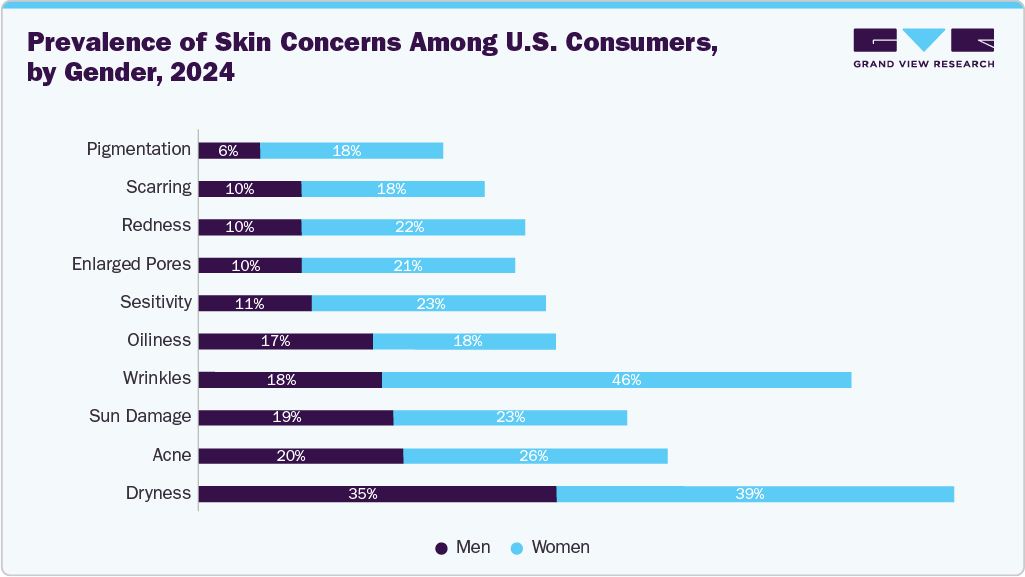
Skin care products for women segment dominated the market, with a revenue share of 66.1% in 2025, reflecting greater participation by female consumers in preventive and treatment-oriented skincare. Women are more likely to purchase products designed to address specific dermatological concerns, such as fine lines, uneven pigmentation, and loss of skin firmness, thereby increasing the variety and frequency of product use within this segment. The category also benefits from strong product differentiation, with manufacturers offering specialized formulations such as age-specific treatments, dermatologically tested repair creams, and targeted serums designed for different skin conditions. In addition, extensive marketing investments, brand collaborations, and product launches aimed at female consumers continue to expand product visibility and drive sustained demand for women’s skincare products in the U.S. market.
 To learn more about this report, Download Free Sample Report
Demand for skin care products for men is expected to grow at a CAGR of 7.7% from 2026 to 2033, supported by the growing normalization of grooming and skincare routines among male consumers. According to insights published by the U.S. Chamber of Commerce, around 66% of men now report using at least one skincare product regularly, reflecting a clear shift in consumer behavior toward personal care and skin maintenance. The segment is also gaining momentum as brands increasingly develop skincare lines formulated specifically for men’s skin characteristics, such as thicker skin texture, higher oil production, and frequent shaving irritation.
Concern Insights
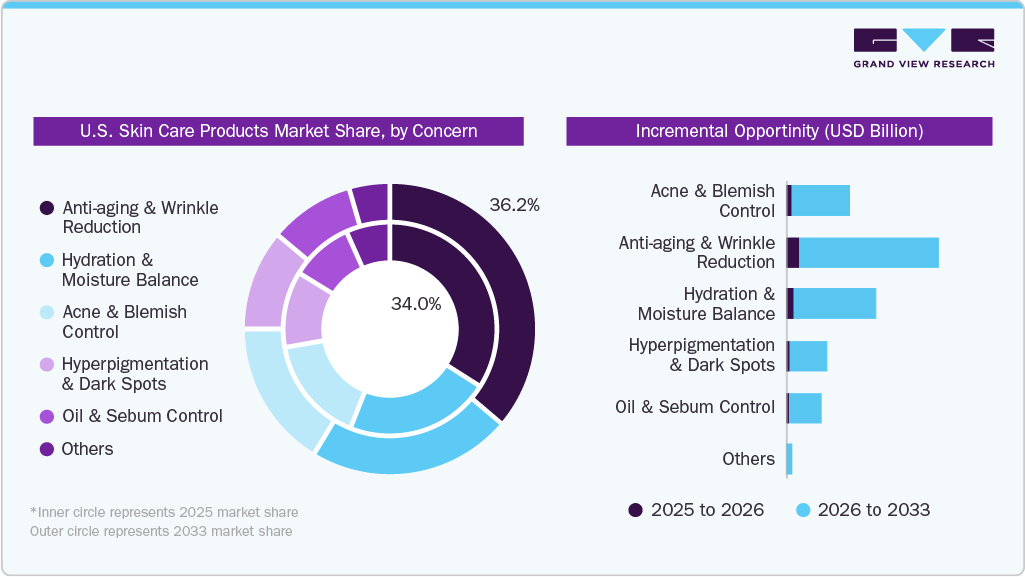
The anti-aging & wrinkle reduction segment held the largest share of 34.0% in 2025, supported by the country's aging demographic profile and the growing demand for products that maintain skin vitality over time. Consumers in middle-aged and older groups increasingly purchase specialized formulations, such as wrinkle-repair creams, collagen-supporting serums, and skin-firming treatments, to improve skin appearance and texture. The segment also benefits from continuous innovation in cosmetic science, with brands introducing products that incorporate ingredients such as retinoids, peptides, and growth-factor-based complexes to improve skin renewal and elasticity.
 To learn more about this report, Download Free Sample Report
Acne & blemish control is expected to grow at a CAGR of 7.6% from 2026 to 2033, supported by increasing consumer awareness of skin health and the rising prevalence of acne-related concerns among both teenagers and adults. Consumers are increasingly incorporating targeted treatments such as salicylic acid cleansers, benzoyl peroxide spot treatments, exfoliating toners, and oil-control serums into their skincare routines to manage breakouts and prevent blemishes. The segment is also gaining traction as preventive skincare becomes more common, particularly among younger consumers who adopt structured skincare routines earlier in life. In addition, growing exposure to skincare education through dermatologists, digital platforms, and social media has encouraged consumers to address acne concerns using specialized products rather than relying solely on basic skincare items.
Age Group Insights
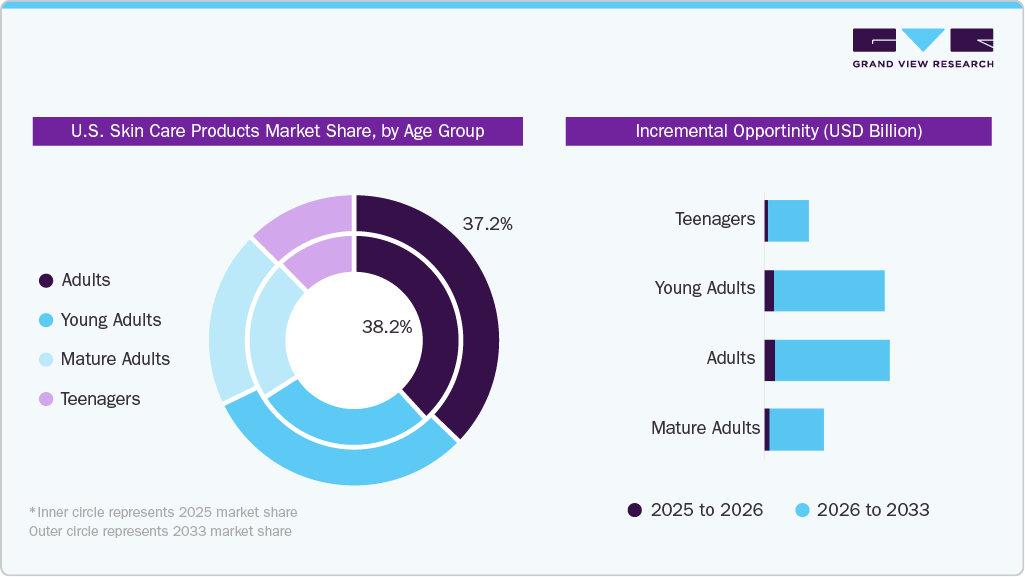
The adults segment accounted for a 38.2% share of the U.S. skin care products market in 2025. Many adults increasingly invest in specialized formulations designed to address visible signs of aging, such as fine lines, loss of elasticity, uneven skin tone, and dryness. Products such as anti-wrinkle creams, collagen-boosting serums, and skin-firming moisturizers are widely adopted as part of daily skincare routines to maintain skin health and appearance over time. The segment is further supported by ongoing advancements in cosmetic science, with manufacturers introducing formulations enriched with ingredients such as retinoids, peptides, hyaluronic acid, and antioxidant complexes that enhance skin renewal, hydration, and firmness, thereby strengthening demand for adult-focused skincare solutions.
 To learn more about this report, Download Free Sample Report
Demand for skin care products for young adults is expected to grow at the fastest CAGR of 8.8% from 2026 to 2033, supported by increasing adoption of early skincare routines and greater awareness of preventive skin health among younger consumers. Many young adults are incorporating gentle cleansers, lightweight moisturizers, sunscreens, and targeted treatment serums into their daily routines to maintain clear, healthy skin. The segment is also benefiting from the rising popularity of preventive skincare, where consumers focus on protecting the skin barrier, maintaining hydration, and preventing early signs of skin damage rather than addressing concerns later in life.
Distribution Channel Insights
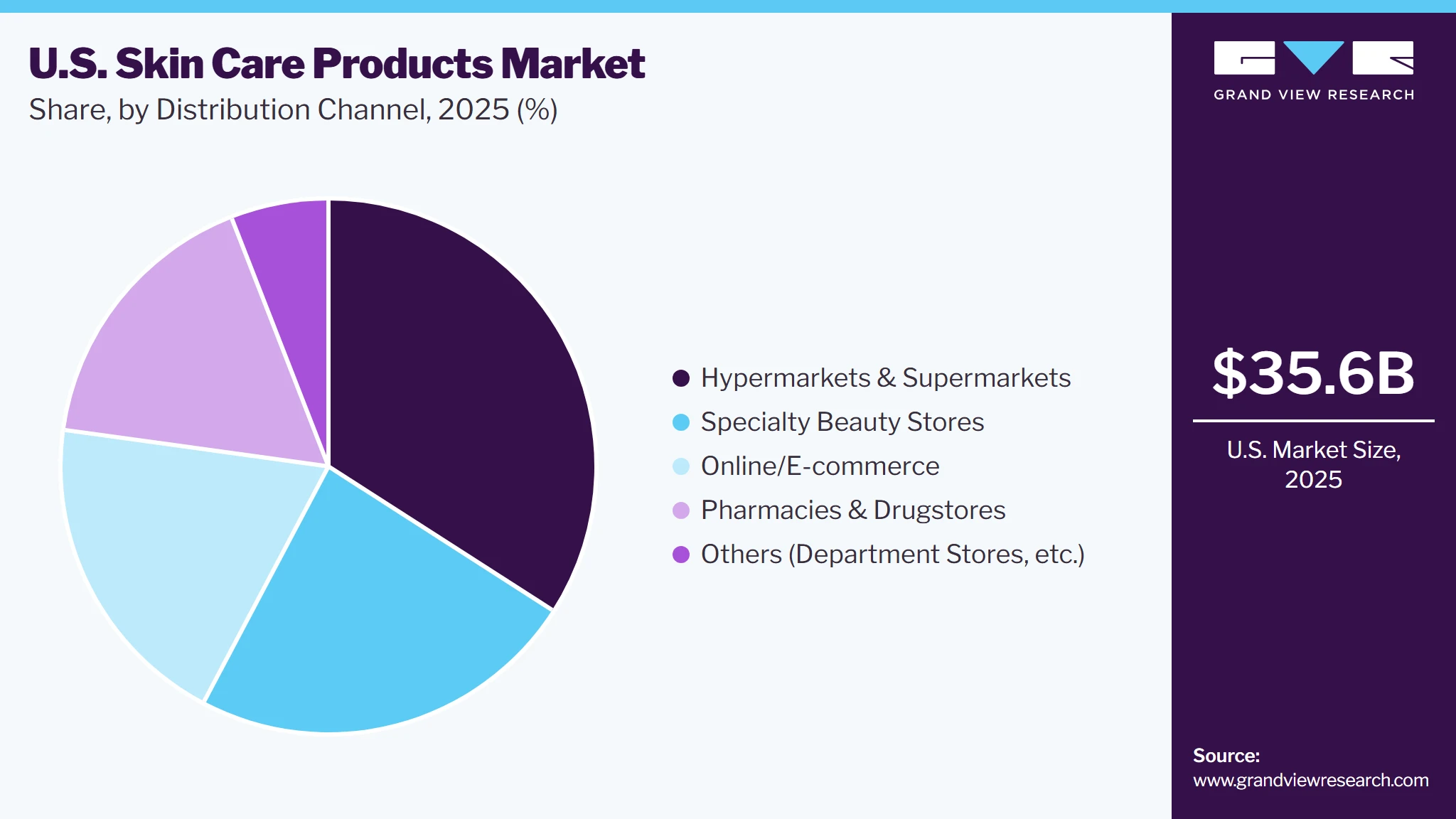
Sales of skin care products through hypermarkets & supermarkets accounted for the largest revenue share of 34.1% in 2025. Large retail chains allow consumers to explore a wide range of skincare brands, compare product formulations, and evaluate packaging, textures, and product variants before making purchase decisions. These stores also offer the advantage of immediate product availability, promotional discounts, and bundled offers, which encourage impulse purchases and repeat buying. In addition, the presence of dedicated beauty sections, in-store product displays, and promotional campaigns further strengthens product visibility, making hypermarkets and supermarkets an important distribution channel for mass and mid-range skincare brands across the U.S. market.
 To learn more about this report, Download Free Sample Report
Demand for skin care products in the U.S. through online/e-commerce is expected to grow at a CAGR of 8.5% from 2026 to 2033. Online marketplaces and brand-owned websites allow consumers to browse a wide variety of skincare products, compare ingredients, prices, and customer reviews, and access detailed product information before making purchase decisions. Many consumers prefer online purchasing for the convenience of home delivery, subscription-based replenishment options, and access to exclusive product launches and online-only discounts.
Cross Segmentation Analysis
The study provides detailed cross-segmentation analysis to offer a more granular understanding of the U.S. skin care products market. In addition to individual segment-level analysis, the report evaluates product types across key dimensions, including price tier and gender, and others, enabling assessment of how demand and market participation vary across mass/economy, mass-premium, prestige/premium, luxury, and ultra-luxury price positions, as well as between male and female consumers. These cross-segment insights help identify product-specific premiumization opportunities, differences in consumer adoption, and evolving gender participation across facial and body skin care categories, thereby supporting more targeted competitive and strategic decision-making.
Key U.S. Skin Care Products Company Insights
-
 To learn more about this report, Download Free Sample Report
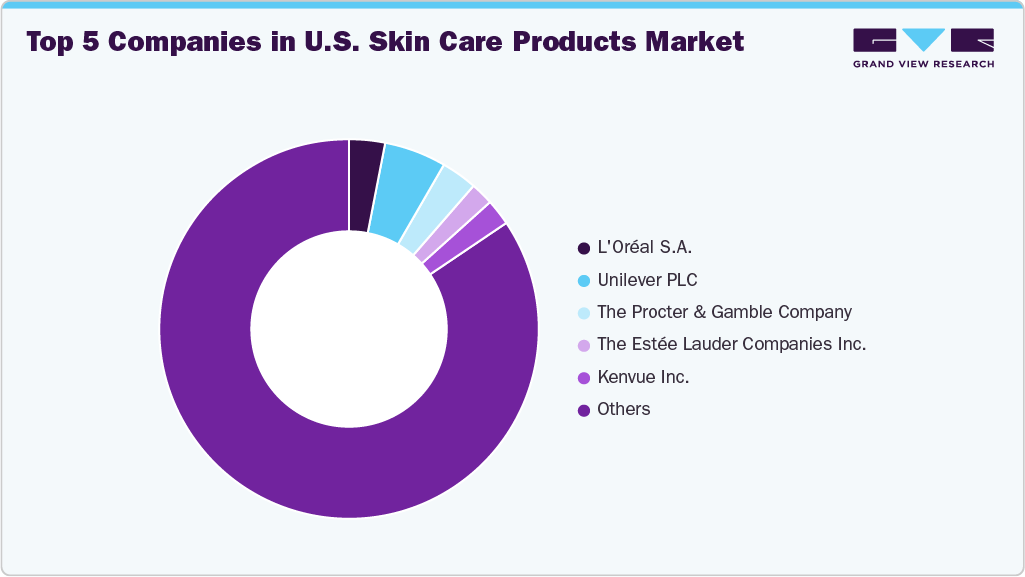
Leading Skin Care Companies: Companies such as L'Oréal, Estée Lauder Companies, Procter & Gamble, Unilever, Kenvue, Beiersdorf, Shiseido, Kao, Colgate-Palmolive, and Natura & Co. form a major competitive group across mass, premium, and dermatological skincare. Their competitive strength is supported by extensive brand portfolios, established retail networks, R&D capabilities, marketing resources, and strong consumer recognition.
-
Dermatological & Clinical Positioning: Clinical efficacy and dermatologist-backed positioning are becoming important competitive differentiators, particularly across facial skincare, treatment-oriented products, and sensitive-skin categories. Brands such as CeraVe, La Roche-Posay, Neutrogena, and Eucerin compete through dermatologist associations, ingredient credibility, clinical testing, and targeted solutions for specific skin concerns.
-
Premium & Specialized Players: Premium brands compete through advanced formulations, specialized ingredients, clinical claims, personalized routines, and higher perceived efficacy. This segment includes established prestige brands as well as specialist skincare companies focused on anti-ageing, sensitive skin, pigmentation, and treatment-oriented applications. Premiumization is increasingly supported by consumers' willingness to pay for products perceived to provide measurable benefits.
-
Masstige & Value-Oriented Competition: Competition is expanding between mass-market and premium skincare as consumers increasingly seek high efficacy at accessible price points. Masstige brands bridge this gap by combining premium ingredients, targeted benefits, and credible formulations with relatively affordable pricing. This creates pressure on both traditional mass brands and prestige players to strengthen value propositions without compromising perceived efficacy.
-
Market Share Remains Fragmented: Company-level market share should be interpreted carefully because most diversified beauty companies do not separately disclose U.S. skincare revenue across the exact market scope. Reported revenues may combine skincare with cosmetics, haircare, fragrance, personal care, or other beauty categories. Consequently, competitive assessment should consider brand-level presence, category exposure, retail distribution, product portfolios, and reported company performance rather than relying solely on corporate revenue comparisons.
-
Omnichannel Distribution as a Competitive Advantage: Retail reach remains an important competitive factor, with leading companies maintaining presence across mass retailers, drugstores, specialty beauty retailers, department stores, pharmacies, and e-commerce platforms. Digital channels are becoming particularly important for product discovery, consumer reviews, personalized recommendations, and direct engagement, while physical retail remains important for established brands seeking broad market penetration.
-
Innovation & Personalization: Product differentiation is increasingly shifting toward targeted and technology-enabled skincare. Companies are investing in AI-based skin diagnostics, personalized recommendations, biomarker analysis, advanced delivery systems, microbiome-oriented formulations, and ingredient-specific solutions. These capabilities allow brands to move beyond standardized products and strengthen consumer engagement through more individualized skincare routines.
-
Clinical Validation & Ingredient Transparency: Scientific substantiation, recognizable active ingredients, and transparent formulation communication are becoming stronger competitive tools. Brands increasingly emphasize ingredients such as ceramides, retinoids, peptides, niacinamide, hyaluronic acid, vitamin C, and salicylic acid alongside clinical testing and dermatologist positioning. This favors companies with stronger R&D and testing capabilities and makes scientific credibility an increasingly important component of brand differentiation.
-
Brand Trust & Consumer Loyalty: Established brand reputation remains a significant competitive advantage, particularly in categories involving sensitive skin, treatment-oriented products, and higher-value purchases. However, emerging brands can challenge incumbents by building credibility around specific skin concerns, ingredient expertise, social-media engagement, reviews, and targeted consumer communities. As switching between brands becomes easier through e-commerce, companies increasingly need to maintain trust through consistent product performance and transparent communication.
The competitive environment is expected to remain fragmented, although large companies with extensive R&D capabilities, broad brand portfolios, strong retail relationships, and established consumer trust are likely to retain significant advantages. Competitive differentiation is increasingly moving beyond brand scale toward clinical efficacy, ingredient innovation, personalization, value, digital engagement, and omnichannel accessibility, while specialized and emerging brands can gain share by addressing narrowly defined consumer needs.
 To learn more about this report, Download Free Sample Report
Key U.S. Skin Care Products Companies
-
Beiersdorf
-
Colgate-Palmolive
-
Estée Lauder Companies
-
Kao Corporation
-
Kenvue Inc.
-
L'Oréal S.A.
-
Natura & Co.
-
Procter & Gamble
-
Shiseido
-
Unilever PLC
Recently Closed Transactions
e.l.f. Beauty Acquires Rhode
e.l.f. Beauty completed its acquisition of Rhode, Hailey Bieber’s skincare and color cosmetics brand, in August 2025. The transaction had an announced value of USD 1 billion, while e.l.f. subsequently reported total consideration of approximately USD 897.5 million, including cash, equity consideration, and potential earnout. Founded in 2022 by Hailey Bieber, Rhode offers a portfolio of high-performance, skin-focused products and has developed a strong digital and direct-to-consumer presence. The acquisition further strengthens e.l.f. Beauty’s position in skincare and expands its reach among digitally engaged younger consumers. Following the transaction, Rhode became a wholly owned subsidiary of e.l.f. Beauty, while Hailey Bieber assumed expanded responsibilities as Chief Creative Officer and Head of Innovation and continues to serve as a strategic advisor. The acquisition supports e.l.f. Beauty’s strategy of expanding through culturally relevant, digitally native brands and increasing its penetration within skincare.
L’Oréal Acquires Majority Stake in Medik8
L’Oréal acquired a majority stake in British premium skincare brand Medik8 in June 2025 for an undisclosed amount. L’Oréal announced the transaction on June 9, 2025, with Medik8 joining the Group’s Luxe Division. Founded by scientist Elliot Isaacs, Medik8 is known for science-led, ingredient-focused skincare products, including its flagship Crystal Retinal serum and its CSA Philosophy. The brand has evolved from its professional origins into an omnichannel premium skincare business and has developed a growing presence in the United States. Inflexion remained a minority shareholder following the transaction, while the founder and existing management team continued to be involved in the business. The acquisition strengthens L’Oréal’s premium skincare portfolio and expands its exposure to clinically positioned and science-led skincare, supporting the Group’s strategy of strengthening its presence in high-value beauty segments.
Rare Beauty Brands Acquires Kate Somerville from Unilever
Rare Beauty Brands acquired Kate Somerville, a premium skincare brand, from Unilever in October 2025 for an undisclosed amount. The transaction included the Kate Somerville brand and its West Hollywood skin health clinic in Los Angeles. Kate Somerville has established a position in prestige skincare through products focused on skin health and treatment-oriented beauty. The acquisition expands Rare Beauty Brands’ portfolio of founder-led beauty businesses and provides an additional platform within the premium skincare segment. For Unilever, the transaction forms part of its broader portfolio optimization strategy and continued reshaping of its Prestige Beauty business. The deal also strengthens Rare Beauty Brands’ presence in skincare while providing opportunities to expand the brand's distribution and consumer reach.
Bansk Group Acquires Majority Stake in Byoma
Bansk Group entered into an agreement to acquire a majority stake in skincare brand Byoma from U.S.-based private equity firm Yellow Wood Partners in September 2025. Bansk announced the transaction on September 9, 2025, although financial terms were not disclosed. Founded in 2022, Byoma has positioned itself as a science-backed skincare brand focused on strengthening and protecting the skin barrier, with products positioned at an accessible price point. The brand has experienced rapid growth through innovation, digital engagement and broader retail distribution. Following the transaction, founder and CEO Marc Elrick continued to lead the company alongside the existing management team. The acquisition demonstrates continued private-equity interest in fast-growing skincare brands with strong consumer engagement and scalable omnichannel distribution models. Bansk intends to support Byoma's continued innovation, geographic and retail expansion, and consumer education initiatives.
Church & Dwight Acquires Touchland
Church & Dwight agreed to acquire Touchland for up to USD 880 million in June 2025, comprising USD 700 million in cash at closing and potential additional consideration based on future performance. Touchland is a digitally driven personal care brand best known for its Power Mist hand sanitizers and has expanded into adjacent hand and body care categories. The acquisition provides Church & Dwight with a rapidly growing premium personal-care platform and strengthens its exposure to digitally engaged consumers. While Touchland is not a core skincare brand, the transaction is relevant to the broader U.S. skin care and personal-care competitive landscape because it demonstrates continued strategic interest in premium, digitally native beauty and personal-care brands. The acquisition also complements Church & Dwight’s existing portfolio and provides opportunities to leverage its retail distribution and commercial capabilities to scale Touchland.
L’Oréal Increases Stake in Galderma
L’Oréal acquired an additional 10% stake in Galderma in December 2025, increasing its total ownership in the dermatology company to 20%. The transaction was announced on December 8, 2025, with financial terms undisclosed. Galderma operates across therapeutic dermatology, aesthetic injectables and consumer skin health, giving the investment strategic relevance to the broader skincare and dermatology ecosystem. The increased stake strengthens the relationship between two major players in skin health and provides L’Oréal with greater exposure to the intersection of dermatological science, aesthetics and skincare. The transaction also reflects the increasing convergence between traditional skincare, clinical dermatology and aesthetic beauty, particularly within premium and science-led segments.
Competitive Benchmarking
Category
Operating Strategies
Competitive Edge
Weakness
Established Players (L'Oréal S.A.; Estée Lauder Companies; Procter & Gamble; Unilever PLC)
- Maintain diversified portfolios across facial care, body care, cleansing, moisturization, sun care, anti-aging, and treatment-oriented products, covering mass to premium price points. Leverage broad retail and e-commerce networks while emphasizing science-backed formulations, dermatologist positioning, premiumization, and ingredient-led innovation.
- For instance, L'Oréal combines CeraVe, La Roche-Posay, Vichy, and SkinCeuticals across dermatological and premium skin care; Beiersdorf similarly operates NIVEA in mass skin care and Eucerin in dermocosmetics.
- Strong brand equity, extensive retail relationships, broad portfolios, R&D capabilities, and economies of scale provide high consumer reach and support frequent product innovation.
- L'Oréal's U.S. business, for example, highlights its broad brand portfolio and channel-partner capabilities, while its Dermatological Beauty division reported 320,000 healthcare professionals reached globally in 2025.
- Large organizational structures and broad portfolios can reduce agility versus smaller niche brands. High marketing and distribution commitments also increase exposure to retailer bargaining power, promotional intensity, and rapidly shifting consumer preferences.
- Beiersdorf's 2025 results illustrate this contrast: its Derma business grew strongly, while the broader NIVEA business faced a slower skin-care environment and required portfolio realignment.
Emerging & Specialized Players (Beiersdorf; Kenvue Inc.; Shiseido; Kao Corporation; Colgate-Palmolive; Natura & Co.)
- Focus on differentiated hydrotherapy systems, energy-efficient designs, premium customization, cold-climate performance, swim spas, and specialized residential wellness applications. Leverage dealer partnerships, regional distribution, digital marketing, and product-specific technologies to compete against larger brands. Emphasize modular jet systems, insulation, durability, smart controls, and customization to strengthen consumer appeal.
- Greater specialization in hydrotherapy, energy efficiency, customization, and niche applications enables these companies to differentiate beyond basic hot-tub functionality. Strong dealer relationships and focused product portfolios also allow faster responses to consumer preferences and regional requirements, particularly in premium and specialty segments.
- Smaller manufacturing scale and geographic reach compared with the largest global brands. Greater dependence on dealer networks, premium residential demand, and discretionary spending can increase vulnerability during housing slowdowns or weaker consumer confidence. International expansion may also require higher logistics, service, and distribution investments.
Recent Developments
-
In September 2026, CeraVe launched its Skin Renewing Super Boost Serum in the U.S., introducing a dermatologist-developed anti-aging serum built around a barrier-first approach. The product combines ceramides and CeraVe's Ceramide Booster Technology with hyaluronic acid, peptides, niacinamide, vitamin B12, and LHA to address multiple visible signs of aging. The launch reflects continued innovation toward combining barrier repair with anti-aging benefits, as consumers increasingly seek multifunctional skincare products that address both skin health and visible aging.
-
In September 2026, CLEARSTEM Skincare expanded into more than 600 Target Beauty Studio locations nationwide and launched on Target.com. The acne-focused brand positions its products around addressing breakouts and aging simultaneously while avoiding pore-clogging ingredients. The expansion provides CLEARSTEM with significantly broader physical retail access and illustrates how emerging, clinically positioned skincare brands are using major mass retailers to transition from digital and specialty distribution toward national omnichannel availability.
-
In September 2026, Rodan + Fields expanded its U.S. retail presence from 150 to 400 Ulta Beauty stores and launched on Amazon Premium Beauty, while also expanding its TikTok Shop presence. The dermatologist-founded skincare company is simultaneously strengthening its direct-to-consumer and affiliate channels through a new loyalty program. The development demonstrates the continued shift of established skincare brands toward omnichannel distribution, combining specialist beauty retail, marketplaces, social commerce and DTC channels to increase consumer accessibility.
-
In August 2026, Sephora and CJ Olive Young launched their global retail partnership in the U.S., bringing 19 Olive Young-curated Korean beauty brands to more than 500 Sephora stores nationwide and Sephora.com. The partnership gives Korean skincare brands access to Sephora's established U.S. prestige beauty distribution network while allowing Olive Young to use its local market expertise to curate high-performing Korean brands for American consumers. The development highlights the accelerating mainstream adoption of K-beauty and the increasing importance of international skincare brands within the U.S. market.
-
In August 2026, Medik8 expanded its North American presence through a new Sephora partnership, launching on Sephora.com in the U.S. and rolling out to 250 U.S. Sephora stores. The British clinical skincare brand is using the partnership to increase its physical retail footprint following its acquisition by L'Oréal in 2025. The expansion strengthens Medik8's access to U.S. prestige-skincare consumers and illustrates the growing importance of clinical efficacy and science-led positioning within premium skincare.
-
In August 2026, WELLAGE entered Sephora stores across the U.S. through a strategic partnership involving OLIVE YOUNG. The Korean clinical skincare brand launched five products from its Real Hyaluronic line as part of its U.S. market entry. The development further demonstrates the expansion of Korean dermocosmetic and clinically positioned skincare brands into mainstream U.S. prestige retail, while the involvement of OLIVE YOUNG provides an additional route for Korean brands to establish physical distribution and consumer awareness in North America.
-
In July 2026, LUDIENT officially launched in the U.S. as an AI-first clinical skincare brand. Developed using lululab's proprietary technology and insights from more than five million analyzed skin-data points, the brand focuses on using artificial intelligence and skin data to personalize skincare recommendations and product selection. The launch highlights the emergence of data-driven personalization as an innovation theme within U.S. skincare, alongside the broader movement toward clinical and technology-enabled beauty solutions.
-
In June 2026, OLAY launched its Science Cell Repair collection in the U.S., introducing three peptide-powered products previously established in its Asian markets. The collection includes a toner and two moisturizers targeting early signs of aging and was made available through Amazon, with actress Brenda Song appointed as brand ambassador for the U.S. launch. The development demonstrates the increasing transfer of skincare innovation from Asian markets into the U.S. and the use of celebrity partnerships to support product localization and consumer awareness.
U.S. Skin Care Products Market Report Scope
Report Attribute
Details
Market size in 2025
UDA 35.6 billion
Estimated market size in 2026
USD 38.0 billion
Projected market size by 2033
USD 62.9 billion
Growth rate
CAGR of 7.5% from 2026 to 2033
Base Year
2025
Historical data
2021 - 2024
Forecast period
2026 - 2033
Quantitative units
Revenue in USD billion and CAGR from 2026 to 2033
Report coverage
Revenue forecast, company ranking, competitive landscape, growth factors, and trends
Segments covered
Product, form, price tier, gender, concern, age group, distribution channel
Country scope
U.S.
Key companies profiled
L'Oréal S.A.; Estée Lauder Companies; Procter & Gamble; Unilever PLC; Kenvue Inc.; Beiersdorf; Shiseido; Kao Corporation; Colgate-Palmolive; Natura & Co.
Customization scope
Free report customization (equivalent up to 8 analysts’ working days) with purchase. Addition or alteration to country, regional & segment scope.
Pricing and purchase options
Avail customized purchase options to meet your exact research needs. Explore purchase options
U.S. Skin Care Products Market Report Segmentation
This report forecasts revenue growth at country level and provides an analysis of the latest trends and opportunities in each of the sub-segments from 2026 to 2033. For this study, Grand View Research has segmented the U.S. skin care products market based on product, form, price tier, gender, concern, age group, and distribution channel.
-
Product Outlook (Revenue, USD Billion, 2021 - 2033)
-
Face Skin Care
-
Lotions, Face Creams, & Moisturizers
-
Cleansers & Face Wash
-
Facial Serums
-
Sunscreen/Sun Care
-
Sheet Face Masks
-
Others (Scrub, etc.)
-
-
Body Skin Care
-
Hair Removal Products
-
Lotions, Creams, & Moisturizers
-
Body Sunscreen/Sun Care
-
Body Scrub
-
Others (Serum, Oils, etc.)
-
-
-
Form Outlook (Revenue, USD Billion, 2021 - 2033)
-
Aqueous
-
Emulsified
-
Oil-based
-
Gel-based
-
Foam-based
-
Solid/semi-solid
-
Others
-
-
Price Tier Outlook (Revenue, USD Billion, 2021 - 2033)
-
Mass/economy
-
Mass premium
-
Prestige/premium
-
Luxury
-
Ultra-luxury
-
-
Gender Outlook (Revenue, USD Billion, 2021 - 2033)
-
Men
-
Women
-
-
Concern Outlook (Revenue, USD Billion, 2021 - 2033)
-
Acne & blemish control
-
Anti-aging & wrinkle reduction
-
Hydration & moisture balance
-
Hyperpigmentation & dark spots
-
Oil & sebum control
-
Others
-
-
Age Group Outlook (Revenue, USD Billion, 2021 - 2033)
-
Teenagers (ages 13-19)
-
Young adults (ages 20-30)
-
Adults (ages 31-50)
-
Mature adults (ages 51 & above)
-
-
Distribution Channel Outlook (Revenue, USD Billion, 2021 - 2033)
-
Hypermarkets & Supermarkets
-
Specialty Beauty Stores
-
Pharmacies & Drugstores
-
Online/E-commerce
-
Others (Department Stores, etc.)
-
Research Methodology
The U.S. skin care products market figures in this report are based on a proven research process that combines executive interviews with secondary research from proprietary databases, company filings, and recognized regulatory and institutional sources. Market size is built through value-chain sizing—reconciling supply-side and demand-side estimates—and triangulated with bottom-up and top-down approaches. Every estimate passes multiple levels of expert validation before publication, with each U.S. skin care products segment quantified using the revenue-capture definitions in the table below.
Segment Definition
Segment - Product
Revenue capture definition
Face Skin Care Products
Covers skin care products formulated primarily for facial application, including facial cleansers, toners, moisturizers, serums, facial oils, masks, exfoliators, treatments, eye-care products, and facial sunscreen products. Products may address cleansing, hydration, barrier care, acne, pigmentation, aging, sensitivity, and other facial skin-care needs.
Body Skin Care Products
Covers skin care products formulated primarily for application to areas of the body other than the face, including lotions, creams, body oils, scrubs, body sunscreen/sun care, hair removal products, body moisturizers and others products like serums, scrubs etc. Products addressing dryness, roughness, sensitivity, body acne, pigmentation, and general skin maintenance are included.
Segment - Form
Revenue capture definition
Aqueous
Covers skin care products in which water serves as the principal formulation medium, including water-based lotions, toners, essences, mists, lightweight moisturizers, cleansers, and treatments. Products with predominantly aqueous compositions are classified here regardless of whether they are packaged as liquids, sprays, or other consumer-ready formats.
Emulsified
Covers skin care formulations combining water and oil phases through emulsification, including creams, lotions, moisturizers, cleansing emulsions, and related facial or body products. Both oil-in-water and water-in-oil formulations are included where the finished product is commercially positioned as an emulsified skin-care preparation.
Oil-based
Covers skin care products in which oils or lipid ingredients constitute the primary formulation base, including facial oils, body oils, cleansing oils, treatment oils, and concentrated oil-based preparations. Products containing botanical, mineral, synthetic, or blended oils are included when oil constitutes the principal product vehicle.
Gel-based
Covers skin care products which are formulated primarily as gels, including gel cleansers, moisturizers, serums, treatments, masks, and other facial or body preparations. Water-based, hydrogel, and polymer-thickened gel formulations are included when the finished consumer product is presented and used in gel form.
Foam-based
Covers skin care products delivered primarily as foams, including foaming facial cleansers, body cleansers, shaving-related skin-care preparations, and other wash-off products. Products dispensed directly as foam or transformed into foam during application are included within this formulation category.
Solid/semi-solid
Covers skin care products presented as solid or semi-solid preparations, including cleansing bars, balm cleansers, solid moisturizers, body balms, exfoliating bars, treatment sticks, and related products. Formulations that retain a stable solid or semi-solid consistency at normal consumer-use conditions are included.
Others
Covers skin care formulations that do not fall within aqueous, emulsified, oil-based, gel-based, foam-based, or solid/semi-solid classifications. This includes specialized textures and delivery forms such as powders, aerosols, anhydrous formats, and other commercially available formulation types used for facial or body skin care.
Segment - Price Tier
Revenue capture definition
Mass/economy
Covers skin care products positioned at the entry-level or economy end of the market, generally sold through mainstream mass-market channels and characterized by accessible consumer pricing. The category includes facial and body products across cleansing, moisturizing, treatment, and general skin-maintenance applications.
Mass premium
Covers skin care products positioned above economy and conventional mass offerings while remaining accessible through mainstream retail channels. Products may include enhanced formulations, specialized ingredients, differentiated packaging, or targeted skin-care benefits and are included across facial and body care applications.
Prestige/premium
Covers premium-positioned skin care products sold through selective, specialty, department store, beauty, and comparable channels. The category includes products with higher-end formulations, specialized treatments, elevated packaging, professional-inspired positioning, and targeted facial or body skin-care applications.
Luxury
Covers high-end skin care products positioned as luxury offerings, including premium facial and body treatments, creams, serums, oils, masks, and specialized preparations. Products are classified based on their luxury market positioning, elevated formulation or packaging, and premium retail presentation.
Ultra-luxury
Covers the highest-priced and most exclusive skin care offerings, including highly specialized creams, serums, treatments, facial oils, and other premium preparations. The scope includes products positioned around exceptional formulation attributes, exclusivity, limited availability, prestige branding, or highly elevated packaging and presentation.
Segment - Gender
Revenue capture definition
Men
Covers skin care products primarily marketed and formulated for male consumers, including facial cleansers, moisturizers, treatments, shaving-related skin care, aftershave products, body care, and other preparations. Products specifically positioned for men's skin-care routines are included irrespective of formulation, price tier, or distribution channel.
Women
Covers skin care products primarily marketed and formulated for female consumers, including facial and body cleansers, moisturizers, serums, treatments, masks, oils, creams, and related preparations. Products specifically positioned for women's skin-care routines are included irrespective of formulation, price tier, or distribution channel.
Segment - Concern
Revenue capture definition
Acne & blemish control
Covers skin care products specifically formulated or positioned to address acne, pimples, blemishes, clogged pores, breakouts, and related imperfections. Included products encompass cleansers, treatments, serums, creams, gels, masks, spot treatments, and other facial or body preparations targeting acne-related concerns.
Anti-aging & wrinkle reduction
Covers skin care products positioned to address visible signs of skin aging, including fine lines, wrinkles, loss of firmness, elasticity concerns, and age-related skin appearance. Included products encompass creams, serums, treatments, masks, oils, eye-care preparations, and other anti-aging facial or body products.
Hydration & moisture balance
Covers skin care products formulated or positioned to replenish, retain, or maintain skin moisture and support hydration balance. Included products encompass moisturizers, creams, lotions, serums, gels, masks, facial oils, body care products, and other preparations targeting dry, dehydrated, or moisture-imbalanced skin.
Hyperpigmentation & dark spots
Covers skin care products targeting uneven skin tone, hyperpigmentation, dark spots, discoloration, and related pigmentation concerns. Included products encompass brightening creams, serums, treatments, masks, exfoliators, spot treatments, and other facial or body preparations specifically positioned for pigmentation management.
Oil & sebum control
Covers skin care products formulated or positioned to manage excess oil, sebum production, shine, and oily skin conditions. Included products encompass cleansers, toners, masks, moisturizers, gels, treatments, exfoliators, and other facial or body preparations intended to regulate or absorb excess surface oil.
Others
Covers skin care products addressing concerns outside acne, anti-aging, hydration, hyperpigmentation, and oil control. Included concerns encompass sensitive or reactive skin, redness, irritation, uneven texture, barrier support, enlarged pores, environmental exposure, and other specialized skin-care requirements across facial and body applications.
Segment - Age Group
Revenue capture definition
Teenagers
Covers skin care products primarily targeted toward consumers in the teenage age group, including cleansers, moisturizers, acne treatments, exfoliators, masks, toners, and other facial or body preparations. Products specifically positioned for adolescent skin-care routines or teenage-specific concerns are included.
Young adults
Covers skin care products primarily targeted toward young adult consumers, including facial and body cleansers, moisturizers, serums, treatments, masks, exfoliators, and related products. The scope includes products addressing routine maintenance, acne, hydration, pigmentation, early aging, and other young-adult skin concerns.
Adults
Covers skin care products primarily targeted toward adult consumers, including facial and body cleansing, moisturizing, treatment, exfoliation, and specialized skin-care preparations. Products addressing hydration, pigmentation, acne, texture, oil control, early signs of aging, and general skin maintenance are included.
Mature adults
Covers skin care products, targeted toward mature consumers, including anti-aging creams, serums, treatments, moisturizers, oils, masks, eye-care products, and body care preparations. Products addressing wrinkles, firmness, elasticity, dryness, pigmentation, and other mature-skin concerns are included.
Segment - Distribution Channel
Revenue capture definition
Hypermarkets & Supermarkets
Covers sales of skin care products through large-format grocery and mass-merchandise retail stores offering dedicated or integrated beauty and personal-care sections. The scope includes facial and body products sold through physical stores, including national chains, regional operators, supercenters, and comparable large-format retail outlets.
Specialty Beauty Stores
Covers sales through specialized beauty and cosmetics retailers whose principal merchandise includes skin care, cosmetics, personal care, or beauty products. The scope includes specialty beauty chains, standalone beauty retailers, branded beauty stores, and comparable physical retail formats selling facial and body skin-care products.
Pharmacies & Drugstores
Covers skin care products sold through pharmacy and drugstore retail formats, including prescription-independent skin care, over-the-counter preparations, dermo cosmetic products, moisturizers, cleansers, acne treatments, and related facial or body products. Both standalone stores and pharmacy departments within broader retail formats are included.
Online/E-commerce
Covers skin care products purchased through digital retail channels, including brand-owned websites, online marketplaces, retailer websites, beauty-commerce platforms, and other internet-based storefronts. The scope includes direct-to-consumer and third-party online sales of facial and body skin-care products across all price tiers.
Others (Department Stores, etc.)
Covers skin care sales through distribution formats outside the specified hypermarket, specialty beauty, pharmacy, and online channels. Included channels comprise department stores, salons, spas, professional beauty outlets, direct selling, specialty boutiques, and other physical or alternative retail formats offering skin-care products.
Estimation Model
Each layer progressively narrows the population pool and applies a conversion rate to arrive at addressable revenue
Step Number
Layer
Guiding Question
Description
01
Skin Care Consumer Base Layer
Who uses skin care products?
U.S. population segmented by age, gender, household characteristics, and consumer demographics, with emphasis on individuals participating in personal care and beauty routines. Skin care usage can be assessed across facial and body care needs, including cleansing, moisturizing/treatment, sun protection, and other routine‑based applications.
02
Skin Care Need & Accessibility Layer
Who has a relevant skin care need and access to products?
Consumer incidence across facial and body skin care categories, supported by household income, personal care expenditure, retail accessibility, e‑commerce penetration, and availability across drugstores, mass merchants, specialty beauty retailers, department stores, and direct‑to‑consumer channels.
03
Product Adoption & Purchase Frequency Layer
Who actively purchases skin care products?
Annual purchasing incidence and product usage frequency across consumers, differentiated by routine intensity, age group, gender, product category, and price positioning. Repeat purchases, replenishment cycles, seasonal demand, and increasing multi‑product routines provide the basis for estimating annual unit and spending demand.
04
Monetisation Layer
How much is spent on skin care products?
Annual purchasers and purchase frequency combined with category‑specific ASPs across facial and body skin care products. Revenue is differentiated by product form, price tier, retail channel, and consumer segment, with premiumization and higher‑value treatment products incorporated into the blended market value.
Delivered Customizations
This report has been delivered with the following In-depth customizations
Client Request
Customization Delivered
Value Adds
Cross-Segmentation Analysis of Skin Care Products by Product, Concern, Gender & Age Group
Detailed cross-segmentation analysis of the U.S. skin care products market by face vs. body skin care, mapped against key consumer concerns including acne & blemish control, anti-aging & wrinkle reduction, hydration & moisture balance, hyperpigmentation & dark spots, and oil & sebum control. The analysis further evaluates differences across men, women, teenagers, young adults, adults, and mature adults, identifying the product categories and formulations most relevant to each consumer need state.
Identifies high-opportunity intersections such as acne-focused products among teenagers and young adults, anti-aging products among mature consumers, and hydration/barrier-focused products across broader adult demographics. It also reveals how product portfolios are evolving from general-purpose moisturizers and cleansers toward targeted solutions addressing specific skin concerns, enabling a more granular understanding of consumer demand beyond the headline product categories.
Pricing, Consumer Concern & Distribution Channel Opportunity Mapping
Assessment of the interaction between price tier, skin-care concern, product category, and distribution channel, covering hypermarkets & supermarkets, specialty beauty stores, pharmacies & drugstores, online/e-commerce, and other channels. The analysis evaluates how mass and premium products are positioned across retail environments and how channel characteristics influence product discovery, purchase frequency, promotional activity, and brand accessibility.
Identifies which price tiers and skin-care needs are best suited to each channel, distinguishing high-volume mass products typically supported by broad retail availability from premium and specialized products that benefit from specialty beauty, pharmacy, or direct-to-consumer channels. The analysis also highlights opportunities for online growth in targeted, ingredient-led, dermatologist-positioned, and premium skincare, where consumers often seek detailed product information and reviews before purchase.
Brand & Price-Tier Benchmarking Across the U.S. Skin Care Competitive Landscape
Comprehensive benchmarking of major multinational and established skincare companies across mass/economy, mass premium, prestige/premium, luxury, and ultra-luxury positioning. The assessment compares companies such as L'Oréal, Estée Lauder Companies, Procter & Gamble, Unilever, Kenvue, Beiersdorf, Shiseido, Kao, Colgate-Palmolive, and Natura & Co. across product breadth, target consumer, formulation positioning, ingredient/claim strategy, innovation, brand architecture, and pricing.
Helps distinguish mass-market scale players from prestige/luxury specialists and premium challenger brands, while showing where companies compete directly or occupy differentiated price positions. It also identifies whitespace opportunities where specific concerns, demographic groups, or product formats remain underrepresented within particular price tiers.
Frequently Asked Questions About This Report
Emulsified skin care products led the market with a 38.6% revenue share in 2025. However, Aqueous formulations are projected to be the fastest-growing form segment, with an 8.7% CAGR from 2026 to 2033.
The Mass/Economy segment dominated the market with a 48.6% revenue share in 2025. The Prestige/Premium segment is projected to grow at the fastest rate among the major price tiers, with an 8.7% CAGR from 2026 to 2033.
Anti-aging & wrinkle reduction led the market with a 34.0% revenue share in 2025 and is projected to grow at an 8.3% CAGR from 2026 to 2033.
Key players include L'Oréal S.A., The Estée Lauder Companies Inc., Procter & Gamble, Unilever PLC, Beiersdorf AG, Johnson & Johnson, Kao Corporation, Shiseido Company, Limited, Coty Inc., and Kenvue Inc.
The U.S. skin care products market was valued at USD 35.6 billion in 2025 and is estimated at USD 38.0 billion in 2026.
The U.S. skin care products market is expected to grow at a CAGR of approximately 7.5% from 2026 to 2033, reaching approximately USD 62.9 billion by 2033.
Key factors include increasing consumer focus on preventive skin care, rising demand for targeted solutions for aging, acne and hyperpigmentation, growing adoption of facial serums and sunscreen products, premiumization and masstige product adoption, greater interest in hydration and skin-barrier care, and continued expansion of online and e-commerce beauty purchasing.
The U.S. skin care products market is expected to grow at a compound annual growth rate of 7.5% from 2026 to 2033 to reach USD 62.87 billion by 2033.
Face Skin Care dominated the market with a 70.7% revenue share in 2025. Within face skin care, Lotions, Face Creams, & Moisturizers represented the largest subsegment, accounting for 38.2% of the face skin care market.
About the Author(s)
Beauty & Personal Care Research Team
Consumer Goods · Beauty & Personal CareThis report was authored by the beauty & personal care research team at Grand View Research - comprising two research analysts, one senior research analyst, and one industry expert - with specialized expertise in the beauty & personal care segment of the consumer goods industry. All findings are based on proprietary consumer goods databases, executive interviews, and regulatory analysis, subject to internal peer review prior to publication.
Last Updated:
Speak to Analyst

Customize this report to your needs - add regions, segments, or data points, with 20% free customization.
Or view our licence options:


ISO 9001:2015 & 27001:2022 Certified
We are GDPR and CCPA compliant! Your transaction & personal information is safe and secure. For more details, please read our privacy policy.


