
- Home
- »
- Medical Devices
- »
-
U.S. Wireless Cardiac Monitoring Systems Market Report 2033GVR Report cover

U.S. Wireless Cardiac Monitoring Systems Market (2026 - 2033) Size, Share & Trends Analysis Report By Test Type (Resting ECG, Stress ECG), By Product Type, By Indication, By End Use (Hospitals & Clinics, Ambulatory / Diagnostic Centers), By Payer Type, And Segment Forecasts
U.S. Wireless Cardiac Monitoring Systems Market Summary
The U.S. wireless cardiac monitoring systems market size was estimated at USD 2.4 billion in 2025 and is projected to reach USD 5.2 billion by 2033, growing at a CAGR of 10.1% from 2026 to 2033. The market is driven by expanding reimbursement coverage for extended ECG and remote monitoring, rising prevalence of cardiac rhythm disorders, and growing adoption of AI-enabled wearable and patch-based technologies that enhance diagnostic accuracy and efficiency.
Key Market Trends & Insights
- Based on test type, the mobile cardiac telemetry (MCT) systems segment held the largest revenue share of 31.2% in 2025.
- Based on product type, the implantable cardiac monitors segment held the largest revenue share of 31.3% in 2025.
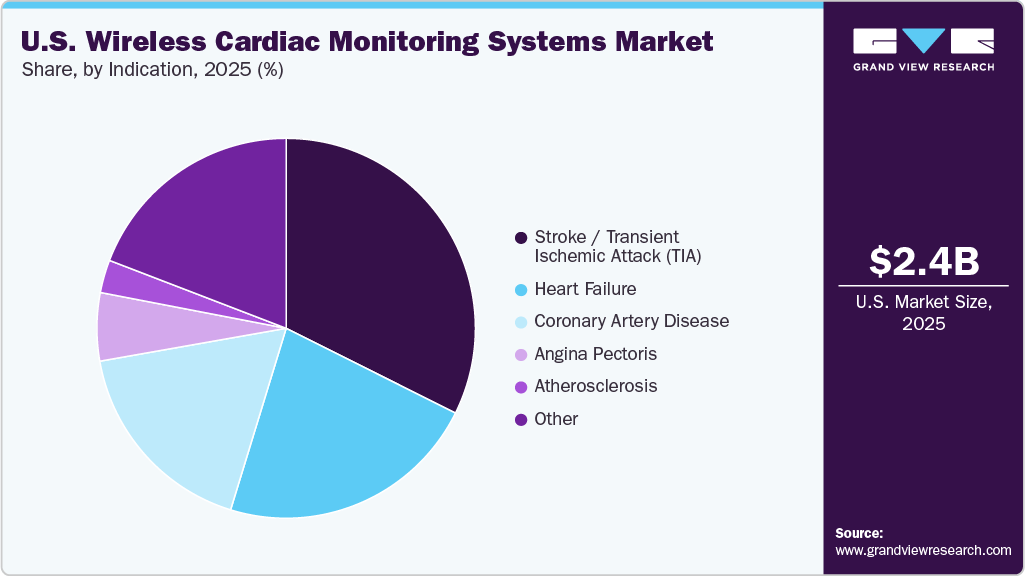
- Based on indication, the stroke/transient ischemic attack (TIA) segment held the largest revenue share of 32.4% in 2025.
- Based on end use, the hospitals and clinics segment held the largest revenue share of 48.9% in 2025.
- Based on payer type, the medicare segment held the largest revenue share of 53.9% in 2025.
Market Size & Forecast
- 2025 Market Size: USD 2.4 Billion
- 2033 Projected Market Size: USD 5.2 Billion
- CAGR (2026-2033): 10.1%
Prism AI by Grand View Research Free to tryAsk a question about the U.S. wireless cardiac monitoring systems marketTry asking✓Every figure cited from GVR research Prefer the report? Download free sample →
The shift toward outpatient and home-based monitoring, supported by telehealth integration and payer-backed remote patient management programs, is further accelerating market growth across hospitals, ambulatory centers, and home care settings.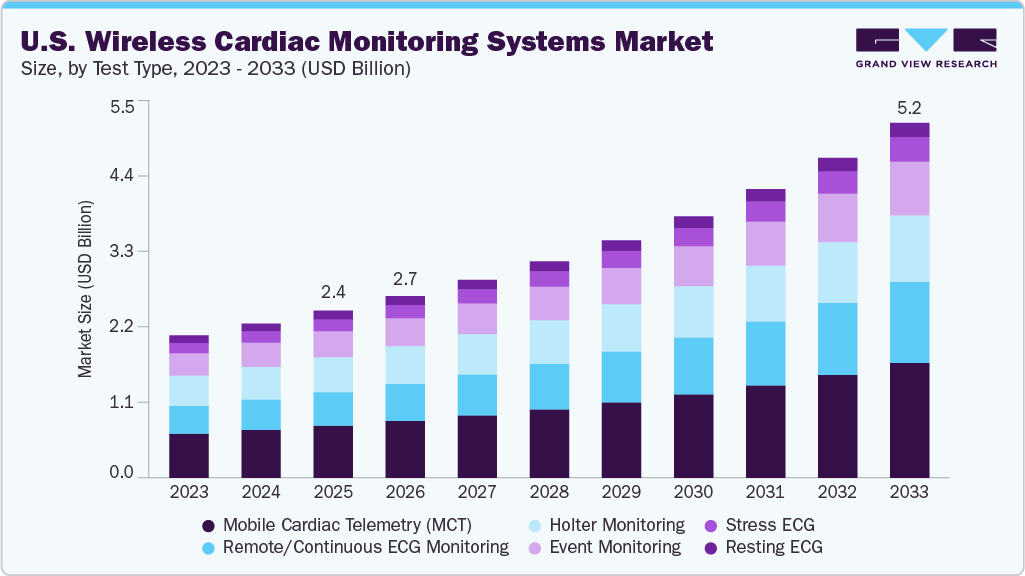 Source: Grand View Research, IR Documents, Primary Interviews, Paid DatabasesTo learn more about this report,
 Download Free Sample Report
Market Drivers
The market is driven by expanding reimbursement support, a shift toward value-based care, and rapid advancements in AI-enabled and wireless technologies. Improved integration with digital platforms and the rise of remote patient monitoring are further enabling continuous, patient-centric cardiac care beyond traditional clinical settings.
Reimbursement and Payor Support Expansion
Rising reimbursement policies and increased payor support is a key driver for the market. Favorable coverage by private insurers, Medicare, and Medicaid has lowered the financial barriers for both providers and patients, encouraging adoption of these technologies in clinical practice. The availability of reimbursement for remote monitoring, continuous ECG tracking, and post-procedural cardiac care enables healthcare providers to integrate wireless monitoring into standard care pathways without significant out-of-pocket costs for patients. In December 2024, CMS included AI-enabled ECG devices in its 2025 Hospital Outpatient Prospective Payment System (OPPS) final rule, covering technologies such as Anumana’s Low Ejection Fraction ECG-AI and Tempus AI’s ECG-AF. This reimbursement recognition supports adoption of these devices, including those integrating wearable or ambulatory ECG sensors, for earlier detection of cardiac conditions in outpatient and remote monitoring settings across the U.S.
Shift Toward Value-Based Care Models
The shift toward value-based care models is driving adoption of wireless cardiac monitoring systems across the U.S. healthcare landscape. Hospitals and outpatient facilities are increasingly moving away from fee-for-service models, focusing instead on patient outcomes, quality metrics, and reduced readmissions. In February 2025, Zing Health and Karoo Health partnered to advance cardiac value-based care for Medicare Advantage members in six U.S. states, leveraging 700-plus cardiology provider partners. Such initiatives support broader adoption of wireless cardiac monitoring systems by enabling early detection, personalized interventions, and improved outcomes for seniors with chronic cardiovascular conditions.
"Zing Health has built its benefits, member experience, and care delivery around providing the best care and experience to seniors with chronic conditions possible. We believe Karoo will be an important partner to ensure our members with cardiovascular disease receive the highest quality care leading to the best possible outcomes. We are excited about this partnership and appreciate Karoo's innovative approach to improving access and outcomes."
- CEO of Zing Health
Advancement in Wireless and AI-Driven Monitoring Technologies
Advancements in wireless and AI-driven monitoring technologies are accelerating the U.S. cardiac monitoring market by enabling continuous, real-time tracking of heart activity outside traditional clinical settings. Devices now integrate wearable sensors, cloud connectivity, and machine learning algorithms to detect arrhythmias, ischemic events, and low ejection fraction with higher accuracy and minimal patient burden. Regulatory approvals and increasing interoperability standards are supporting deployment across healthcare networks. In May 2023, Boston Scientific launched two large-scale U.S. studies evaluating its LATITUDE wireless home monitoring system for heart failure patients, including a wireless implantable device, in-home communicator, and remote patient monitoring website. The system collects real-time cardiac and symptom data, automatically alerting physicians to potential heart failure events to improve early intervention and patient management.
"LATITUDE Active Monitoring works without the need of an office visit by providing integrated information on a patient's heart failure and arrhythmia status so all physician stakeholders can work together to better manage their device patients. It also delivers confidence and assurance to physicians by providing two types of notifications depending on the severity of the alert."
-M.D., Director of Cardiac Electrophysiology, University of Southern California, Los Angeles, California
Market Opportunities
Expansion of Home-Based and Remote Patient Monitoring Programs
The rise of home-based care and telehealth programs is driving demand for wireless cardiac monitoring systems. Hospitals and clinics are increasingly deploying these solutions to manage chronic cardiac patients remotely, reducing readmissions and overall healthcare costs. In August 2025, the American Heart Association launched its Connected Care program, providing virtual, at-home support for heart failure patients. The initiative targets gaps in post-discharge care, helping reduce 30-day readmissions and improve adherence to guideline-directed therapies.
“Too often, people with heart failure get discharged from the hospital only to find themselves back within a month. With timely interventions and evidence-based support, remote patient monitoring allows us to bridge that gap by keeping a close eye on patients’ health while they’re at home, avoiding unnecessary hospitalizations and achieving better long-term outcomes.”
- M.D., MHS, associate professor of medicine at Duke University School of Medicine and heart failure cardiologist at the Duke University Medical Center
Industry Trends
Integration Of AI and Predictive Analytics In Cardiac Monitoring
AI and predictive analytics embedded in wireless cardiac monitors help detect subtle irregularities, enabling early intervention and preventing serious events such as heart attacks and strokes. Continuous data collection improves algorithm accuracy, supporting personalized patient management. In August 2025, a peer reviewed narrative review published by Lake Erie College of Osteopathic Medicine reported that predictive analytics and AI driven ECG algorithms achieved approximately 80-97 percent accuracy in early detection of arrhythmias and cardiac dysfunction across 11 studies.
Shift Toward Wearable, Patch-Based, And Patient-Centric Devices
The cardiac monitoring market is moving toward smaller, more comfortable, and patient-friendly devices, including wearable sensors, chest patches, and smartwatches. These devices offer continuous monitoring while minimizing disruption to daily life, addressing a key barrier in patient adherence observed with traditional monitoring systems. In October 2025, Samsung Electronics announced AI-enabled smartwatch features for early detection of left ventricular systolic dysfunction, a key precursor to heart failure, using ECG-based algorithms validated in large clinical datasets. The development underscores the growing role of wearables in the U.S. wireless cardiac monitoring systems market, especially for early heart failure screening beyond clinical settings.
Market Concentration & Characteristics
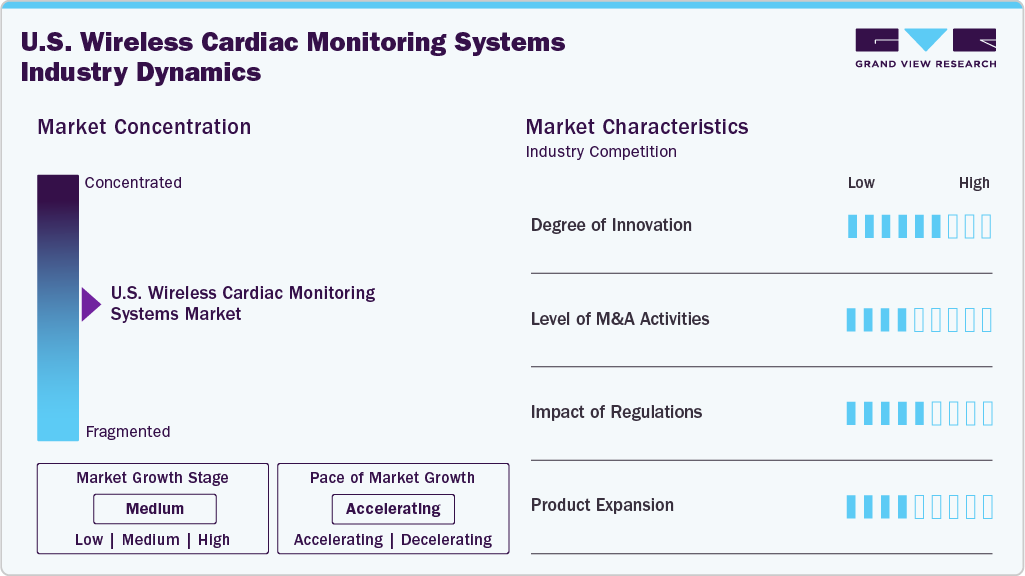
The U.S. market exhibits a high degree of innovation, fueled by advancements in wearable technology, AI-driven analytics, and remote patient monitoring solutions. Companies are increasingly developing multi-lead wireless ECG devices and home based monitoring platforms to enable continuous tracking of cardiac conditions, improve early diagnosis, and reduce hospital dependency. For instance, in December 2025, Wearlinq raised USD 14 million in Series A funding to expand its eWave platform, an FDA-cleared 6-lead wireless cardiac monitor that delivers near real-time data to clinicians, supporting effective management of arrhythmias and heart failure. This reflects the market’s strong shift toward scalable, patient-centric, and technology-enabled cardiac care.
The level of mergers and acquisitions (M&A) activity in the U.S. market is moderate, with companies focusing on strategic deals to expand clinical service networks, enhance technology capabilities, and strengthen their presence in remote patient monitoring. Market participants are leveraging acquisitions to integrate advanced wireless ECG technologies with established diagnostic services, enabling broader adoption across healthcare settings. For instance, in May 2024, WearLinq acquired AMI Cardiac Monitoring to expand its nationwide clinical service footprint in the U.S., combining its FDA-cleared eWave 6-lead ECG technology with AMI’s expertise in ambulatory cardiac monitoring. This move highlights the growing emphasis on integrated solutions that support scalable, continuous, and home-based cardiac care.
 To learn more about this report, Download Free Sample Report
The impact of regulations on the U.S. market is high, as the industry operates under stringent oversight from the U.S. Food and Drug Administration (FDA), particularly for device clearance, data accuracy, and patient safety in remote monitoring solutions. Regulatory requirements for clinical validation, cybersecurity, and real-time data reliability ensure the effectiveness of wireless ECG and telemetry systems, but they also increase development timelines and compliance costs for manufacturers.
The level of product expansion in the market is moderate, with companies focusing on enhancing existing wireless monitoring technologies and introducing advanced solutions such as multi-lead ECG wearables, AI-powered analytics, and integrated remote patient monitoring platforms. Firms are also expanding service offerings by combining devices with cloud-based data platforms and clinical support services, enabling continuous cardiac monitoring, early diagnosis, and improved management of conditions such as arrhythmias and heart failure.
Test Type Insights
The mobile cardiac telemetry (MCT) segment held the largest market share of 31.2% in 2025, driven by the increasing CVD prevalence and technological advanced product launch. For instance, in 2025, VitalConnect introduced its VitalPatch RTM platform, offering full-access cardiac monitoring with real-time detection of 21 arrhythmias and continuous tracking of four vital signs. The cloud-based system streamlines reporting and enables remote patient monitoring, improving diagnostic speed and clinical insight.
Remote/Continuous ECG Monitoring segment is expected to grow at the fastest CAGR during the forecast period. Increasing cardiovascular incidence and technologically advanced product launch drives the growth of the market. For instance, in November 2024, SmartCardia received FDA clearance for its 7-lead ECG patch and cloud platform for outpatient cardiac telemetry. The patch enables real-time 7-lead ECG and vital monitoring for 7-14 days, with automated AI-powered arrhythmia detection, full-disclosure data transmission, and seamless transition from Holter to extended telemetry, allowing clinicians to monitor patients remotely with high accuracy and efficiency.
Product Type Insights
Implantable cardiac monitors segment held the largest market share of 31.3% in 2025, due to their ability to provide continuous, long-term cardiac rhythm tracking and improve detection of intermittent arrhythmia such as atrial fibrillation and unexplained syncope. In March 2025, a study published in JACC: Advances reported that AI-enhanced insertable cardiac monitors (ICMs) reduced nonactionable alerts by 58.5% compared to non-AI devices, saving an estimated 559 clinic staff hours and USD 29,470 annually in a 600-patient clinic, with long-term follow-up showing 979 hours and USD 51,592 in projected savings, highlighting improved workflow and reduced clinical burden.
Wearable consumer devices/ smartwatches segment is expected to grow at the fastest CAGR during the forecast period. Wearable consumer devices, particularly smartwatches and sensor-based monitors, are witnessing growing adoption in the U.S. market due to their accessibility, ease of use, and ability to support continuous or on-demand heart rhythm tracking outside clinical environments. For instance, in December 2025, the U.S. FDA updated its list of sensor-based digital health devices, highlighting wireless cardiac monitors such as Zio AT, BioButton, and Rhythm Express that meet safety and effectiveness standards. These devices enable continuous or spot-check heart monitoring in clinical and home settings, supporting real-world data integration for patient care.
Indication Insights
The Stroke / Transient Ischemic Attack (TIA) segment dominated the market with a share of 32.4% in 2025. Stroke and transient ischemic attack (TIA) cases are increasingly driving the adoption of wireless cardiac monitoring systems in the U.S., as extended rhythm tracking improves the detection of underlying arrhythmias such as atrial fibrillation and supports timely clinical intervention. In September 2025, an article published in Cureus highlighted that 24-hour Holter monitoring detects atrial fibrillation (AF) in about 3-5% of post-stroke patients, while 30-day external loop recorders increase detection to 16.1%, demonstrating the impact of extended monitoring. The study also noted that implantable cardiac monitors identify AF in 12.4% at 12 months and up to 30% by three years, underscoring the value of long-term surveillance.
 To learn more about this report, Download Free Sample Report
Heart failure segment is expected to grow at the fastest CAGR during the forecast period. Heart failure is emerging as a key indication driving the use of wireless cardiac monitoring systems in the U.S., as continuous remote tracking enables early detection of cardiac abnormalities and supports proactive disease management. In October 2025, an article in BioSupply Trends Quarterly reported that FDA-cleared remote cardiac monitoring systems, particularly iRhythm’s Zio suite, are improving the detection of atrial fibrillation in U.S. patients by providing continuous, single-lead ECG monitoring with AI-assisted analysis, enabling earlier diagnosis and timely clinical intervention.
End Use Insights
Hospitals and clinics segment held the largest market share of 48.9% in 2025. Hospitals and clinics are experiencing pressure to reduce length of stay and optimize operational costs, which is shaping procurement strategies. There is growing preference for interoperable and scalable wireless monitoring solutions that support continuity of care beyond discharge, linking in-facility monitoring with post-acute and remote follow-up pathways. In May 2024, InfoBionic.Ai and HBox.ai partnered to introduce the first AI-powered “Cardiology Clinic of the Future,” combining cutting-edge cardiac telemetry with a virtual care platform. The initiative seeks to strengthen clinical insights, elevate patient engagement, and optimize operational efficiency by supporting remote monitoring, virtual consultations, and diagnostic services, ultimately aiming to lower hospitalizations and enhance cardiovascular outcomes.
Telehealth providers segment is expected to grow at the fastest CAGR during the forecast period, driven by the growing demand for remote patient management, continuous monitoring, and reduced hospital dependency. For instance, In April 2025, InfoBionic.Ai highlighted that AI-enabled remote cardiac monitoring can improve early detection of atrial fibrillation (AFib) in the U.S., enabling continuous home-based monitoring and personalized interventions. The technology demonstrated potential to reduce hospitalizations, improve medication adherence, and lower stroke and heart failure risks through proactive, data-driven care.
Payer Type Insights
Medicare segment held the largest market share of 53.9% in 2025 and is growing at the fastest CAGR during the forecast period, driven by high prevalence of arrhythmias, heart failure, post stroke cardiac risk, and syncope among the elderly population. The clinical need for continuous and extended rhythm monitoring is more frequent in this age group due to chronic disease burden and recurrence risk. In January 2025, the U.S. Centers for Medicare and Medicaid Services approved Medicare reimbursement for AliveCor’s Kardia 12L ECG System under the Hospital Outpatient Prospective Payment System, assigning it to APC 5733. The ruling established a Medicare outpatient payment rate of USD 59.40 per test, supporting use of portable, AI enabled ECG technology within Medicare covered hospital outpatient settings and strengthening reimbursement clarity for digitally enabled cardiac diagnostics.
Private insurance segment is expected to grow at the significant CAGR during the forecast period, driven by reimbursement support for outpatient care, increasing demand for continuous monitoring, and a focus on early diagnosis and cost-effective disease management. For instance, in May 2025, Octagos launched OctaLink, an AI-powered mobile platform that provides clinicians with real-time cardiac monitoring alerts, workflow management, and secure, HIPAA-compliant access to patient data. The system integrates with ambulatory cardiac monitors and supports fast, remote decision-making for patients covered under private and commercial insurance, where adoption is driven by reimbursement incentives, emphasis on outpatient care, and demand for continuous cardiac surveillance.
Key U.S. Wireless Cardiac Monitoring Systems Company Insights
Some of the key players operating in the U.S. wireless cardiac monitoring systems industry include Koninklijke Philips N.V., Abbott, iRhythm Technologies, Inc., and Boston Scientific Corporation. These companies are making significant infrastructure investments, enabling them to develop, manufacture, and commercialize many devices in the country. In addition, companies engage in several strategic partnerships with distributors and other companies to increase their presence.
Key U.S. Wireless Cardiac Monitoring Systems Companies:
- Koninklijke Philips N.V.
- iRhythm Technologies, Inc.
- Abbott
- Medtronic
- Biotronik (Teleflex)
- Boston Scientific Corporation
- Asahi Kasei Corporation
- Avertix Medical, Inc.
- Baxter
- OSI Systems, Inc.
- VivaQuant, Inc.
- Rhythm Express
Recent Developments
-
In September 2025, Koninklijke Philips N.V. launched a smart telemetry platform featuring the Telemetry Monitor 5500 to streamline cardiac monitoring and alarm management. The system integrates wearable monitors, mobile workflows, and Philips Mobile Cardiac Telemetry (MCOT) to enhance patient surveillance and post-discharge monitoring.
-
In June 2025, Cardinal Health launched the Kendall DL Multi System in the U.S., a single-patient use device enabling continuous monitoring of cardiac activity, blood oxygen level, and temperature through one integrated connection. The system is designed to improve clinician workflows, reduce false ECG alarms and infection risks, and support more efficient, value-driven hospital monitoring from admission to discharge.
-
In January 2024, Medtronic partnered with Cardiac Design Labs to launch Padma Rhythms, an external loop recorder patch for long-term heart rhythm monitoring in India. The collaboration positions Medtronic as the exclusive distributor in India, aiming to expand access to affordable, AI-enabled remote cardiac diagnostics.
U.S. Wireless Cardiac Monitoring Systems Market Report Scope
Report Attribute
Details
Market size value in 2026
USD 2.7 billion
Revenue forecast in 2033
USD 5.2 billion
Growth rate
CAGR of 10.1% from 2026 to 2033
Actual data
2021 - 2025
Forecast period
2026 - 2033
Quantitative units
Revenue in USD million/billion and CAGR from 2026 to 2033
Report coverage
Revenue forecast, company ranking, competitive landscape, growth factors, and trends
Segments covered
Test type, product type, indication, end use, payer type
Key companies profiled
Koninklijke Philips N.V.; iRhythm Technologies, Inc.; Abbott; Medtronic; Biotronik (Teleflex); Boston Scientific Corporation; Asahi Kasei Corporation; Avertix Medical, Inc.; Baxter; OSI Systems, Inc.; VivaQuant, Inc..; Rhythm Express
Customization scope
Free report customization (equivalent up to 8 analyst’s working days) with purchase. Addition or alteration to country, regional & segment scope.
Pricing and purchase options
Avail customized purchase options to meet your exact research needs. Explore purchase options
U.S. Wireless Cardiac Monitoring Systems Market Report Segmentation
This report forecasts revenue growth at the country level and provides an analysis of the latest industry trends in each of the sub-segments from 2021 to 2033. For this study, Grand View Research has segmented the U.S. wireless cardiac monitoring systems market report based on test type, product type, indication, payer type and end use:
-
Test Type Outlook (Revenue, USD Million, 2021 - 2033)
-
Resting ECG
-
Stress ECG
-
Holter Monitoring
-
By Monitoring Duration:
-
Short-term (24-48 hours)
-
Intermediate (3-7 days)
-
Long-term (>7 days)
-
-
By Data Handling:
-
On-device storage
-
Cloud upload
-
-
By Interpretation:
-
Manual read
-
Automated
-
AI-assisted
-
-
-
Event Monitoring
-
By Use Model:
-
Intermittent (patient-triggered)
-
Continuous (auto-triggered)
-
-
By Data Handling:
-
Offline Upload
-
Real-time transmission
-
-
By Interpretation:
-
Manual
-
Automated
-
-
-
Mobile Cardiac Telemetry (MCT)
-
By Monitoring Duration:
-
Intermediate (48 hr-7 days)
-
Long-term (>7 days)
-
-
By Interpretation:
-
Manual confirm
-
AI- assisted (primary read)
-
-
-
Remote/Continuous ECG Monitoring
-
By Monitoring Duration:
-
Long-term (>14 days)
-
Continuous
-
-
By Interpretation:
-
Fully AI-assisted
-
Physician-validated
-
-
-
-
Product Type Outlook (Revenue, USD Million, 2021 - 2033)
-
Implantable Cardiac Monitors (ICM)
-
By Type / Longevity:
-
Insertable Loop Recorders (ILRs)
-
Long-life ICMs (>3 years)
-
-
-
Patch-Type Monitors
-
By Lead Configuration:
-
Single-lead
-
Multi-lead (3-12 leads)
-
-
By Usage:
-
Single-use
-
Reusable
-
-
-
Mobile Cardiac Telemetry (MCT)
-
By Service Model:
-
Patch + Service Bundles
-
Module + Subscription
-
-
-
Holter Device
-
By Channel Configuration
-
Single-channel
-
Multi-channel (3-12 channels)
-
-
-
Wearable Consumer Devices/ Smartwatches
-
By Regulatory Status
-
FDA-cleared medical-grade
-
Consumer-grade
-
-
-
Others
-
-
Indication Outlook (Revenue, USD Million, 2021 - 2033)
-
Coronary artery disease
-
Angina pectoris
-
Atherosclerosis
-
Heart failure
-
Stroke / Transient Ischemic Attack (TIA)
-
Others
-
-
End Use Outlook (Revenue, USD Million, 2021 - 2033)
-
Hospitals & Clinics
-
Ambulatory / Diagnostic Centers
-
Telehealth Providers
-
Home Care Settings
-
Cardiac Rehabilitation Programs
-
Others
-
-
Payer Type Outlook (Revenue, USD Million, 2021 - 2033)
-
Medicare
-
Medicaid
-
Private Insurance
-
Frequently Asked Questions About This Report
The U.S. wireless cardiac monitoring systems market size was estimated at USD 2.4 billion in 2025 and is expected to reach USD 2.7 billion in 2025.
The U.S. wireless cardiac monitoring systems market is expected to grow at a compound annual growth rate of 10.1% from 2026 to 2033 to reach USD 5.2 billion by 2033.
The Mobile Cardiac Telemetry (MCT) segment held the largest market share of 31.2% in 2025, driven by the increasing CVD prevalence and technological advanced product launch.
The U.S. wireless cardiac monitoring systems market is dominated by key industry players such as Koninklijke Philips N.V.; iRhythm Technologies, Inc.; Abbott; Medtronic; Biotronik (Teleflex); Boston Scientific Corporation; Asahi Kasei Corporation; Avertix Medical, Inc.; Baxter; OSI Systems, Inc.; VivaQuant, Inc..; Rhythm Express
The market is driven by expanding reimbursement coverage for extended ECG and remote monitoring, rising prevalence of cardiac rhythm disorders, and growing adoption of AI-enabled wearable and patch-based technologies that enhance diagnostic accuracy and efficiency.
About the Author(s)
Medical Devices Research Team
Healthcare · Medical DevicesThis report was authored by the medical devices research team at Grand View Research - comprising two research analysts, one senior research analyst, and one industry expert - with specialized expertise in the medical devices segment of the healthcare industry. All findings are based on proprietary healthcare databases, executive interviews, and regulatory analysis, subject to internal peer review prior to publication.
Last Updated:
Speak to Analyst

Customize this report to your needs - add regions, segments, or data points, with 20% free customization.
Or view our licence options:


ISO 9001:2015 & 27001:2022 Certified
We are GDPR and CCPA compliant! Your transaction & personal information is safe and secure. For more details, please read our privacy policy.


