
- Home
- »
- Medical Devices
- »
-
U.S. Wound Care Centers Market Size, Industry Report 2033GVR Report cover

U.S. Wound Care Centers Market (2026 - 2033) Size, Share, & Trends Analysis Report By Procedure (Debridement, HBOT, Compression Therapy, Specialized Dressing, Infection Control), By Region, And Segment Forecasts
U.S. Wound Care Centers Market Summary
The U.S. wound care centers market size was estimated at USD 15.50 billion in 2025 and is expected to reach USD 24.74 billion by 2033, growing at a CAGR of 6.20% from 2026 to 2033. The market is expected to grow significantly owing to the rising prevalence of chronic conditions such as diabetes, obesity, and vascular diseases which has led to an increased incidence of chronic wounds, including diabetic foot ulcers, pressure injuries, and venous leg ulcers, creating a sustained demand for specialized care.
Key Market Trends & Insights
- By procedure, the hyperbaric oxygen therapy segment held the largest revenue share of 31.13% in 2025 and is expected to grow at the fastest CAGR over the forecast period.
- The debridement segment is expected to grow at a significant CAGR over the forecast period owing to its rising adoption for the treatment of diabetic foot ulcers.
- By region, Southeast region held a significant revenue share in 2025.
Market Size & Forecast
- 2025 Market Size: USD 15.50 Billion
- 2033 Projected Market Size: USD 24.74 Billion
- CAGR (2026-2033): 6.20%
Three ways to get this report
Buy it, customize it, or ask a question.Ask an Analyst
Analyst response in 1 business day
- AccessReport author, directly
- Reply timeWithin 1 working day
- No sales callDirect answer only
- FormatEmail reply
- CostFree, no cost
Get the Full Report
What the study covers
- FormatsPDF · Excel · Dashboard
- Timeline2026–2033 annual, 2025 base
- Coverage20+ countries, 5 regions
- Companies10+ key players profiled
Customize the Report
20% free customization
- IncludeCountries, segments, points
- TailorTo your product definition
- ExtendDeeper competitor detail
- OrA fully bespoke study
- Turnaround5–10 working days
In addition, technological advancements in wound management, such as negative pressure wound therapy, bioengineered skin substitutes, and advanced dressings, have improved treatment outcomes, encouraging both patients and healthcare providers to opt for dedicated wound care centers.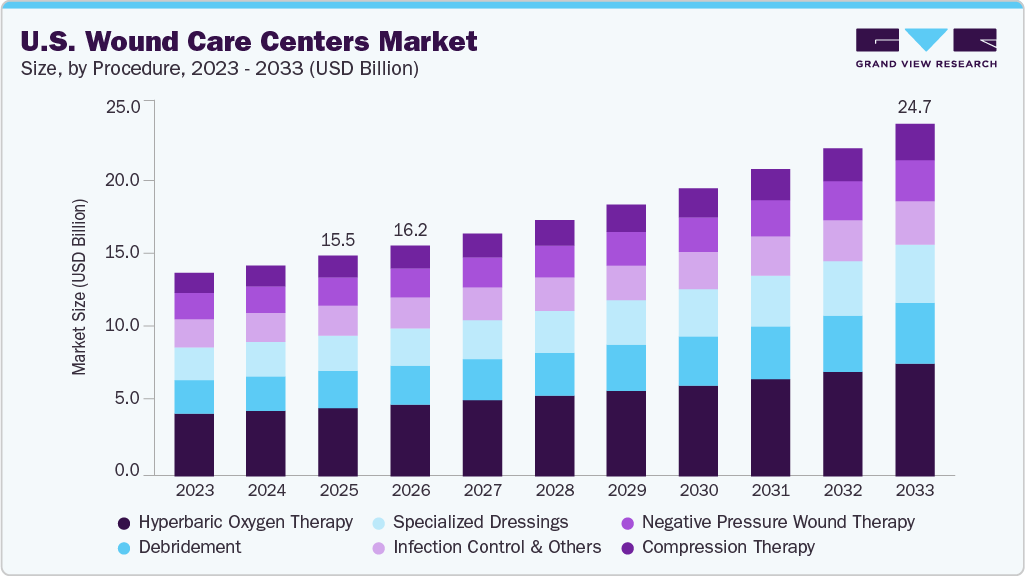 Source: Grand View Research, IR Documents, Primary Interviews, Paid DatabasesTo learn more about this report,
 Download Free Sample Report
 Rising Incidence of Traumatic Injuries:
The rising incidence of traumatic injuries is a significant driver for the market as trauma-related wounds such as those from road accidents, falls, sports injuries, and industrial accidents often result in complex, acute wounds that require specialized and sustained care. As the number of traumatic injury cases increases, there is growing demand for advanced wound management services that go beyond basic first aid, including debridement, infection control, specialized dressings, negative pressure wound therapy, and surgical interventions when needed. As per CDC, the mortality burden of unintentional injuries in the U.S. in 2023 was substantial, with a total of 222,698 deaths reported, corresponding to a death rate of 66.5 per 100,000 population.
Breakdown of leading causes:
Cause
Number of Deaths
Deaths per 100,000
Unintentional falls
47,026
14.0
Motor vehicle traffic
43,273
12.9
Unintentional poisoning
100,304
29.9
Source: CDC
This surge in trauma cases increases patient inflow to dedicated wound care facilities and prompts healthcare providers and payers to invest more in infrastructure, training, and advanced technologies to improve healing outcomes and reduce complications. Consequently, wound care centers are expanding their services and capacity to meet this heightened need, making traumatic injuries a key market growth driver.
Increasing Surgical-Procedure Volume Driving Post-Operative Wound Incidence:
Increasing surgical-procedure volume is a significant driver of the market as more surgeries inherently lead to a higher incidence of post-operative wounds that require specialized care. According to Sage Publications updated published in August 2025, nearly one out of every six Medicare beneficiaries, representing about 10.5 million individuals, is affected by chronic wounds in the U.S., encompassing conditions such as pressure ulcers (PUs) and surgical site infections (SSIs), licensors, or contributors. As surgical interventions, including elective, emergency, orthopedic, cardiovascular, cosmetic, and ambulatory procedures, grow in number due to broader access to healthcare and an aging population, the number of patients with surgical incisions and potential complications rises proportionally. Post-operative wounds, such as surgical site wounds and other acute incisions, require professional management to promote healing, prevent infection, and reduce readmissions, which increases demand for wound care services and products in dedicated centers. Surgeons and healthcare providers increasingly rely on advanced dressings, antimicrobial solutions, negative pressure wound therapy, and structured follow-up care to ensure optimal outcomes, further fueling market growth.
Expansion of Reimbursement Coverage for Advanced Wound Therapies:
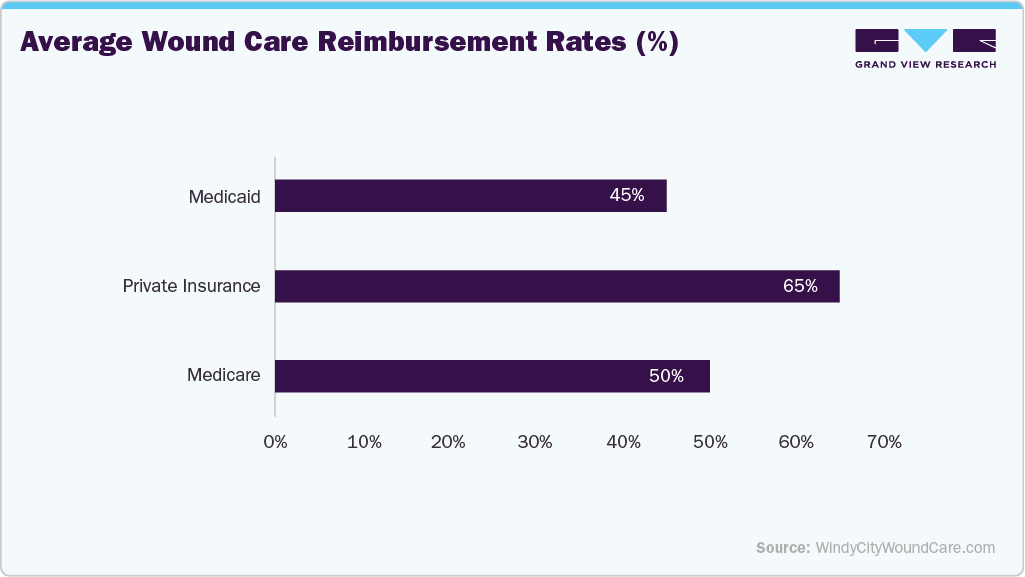
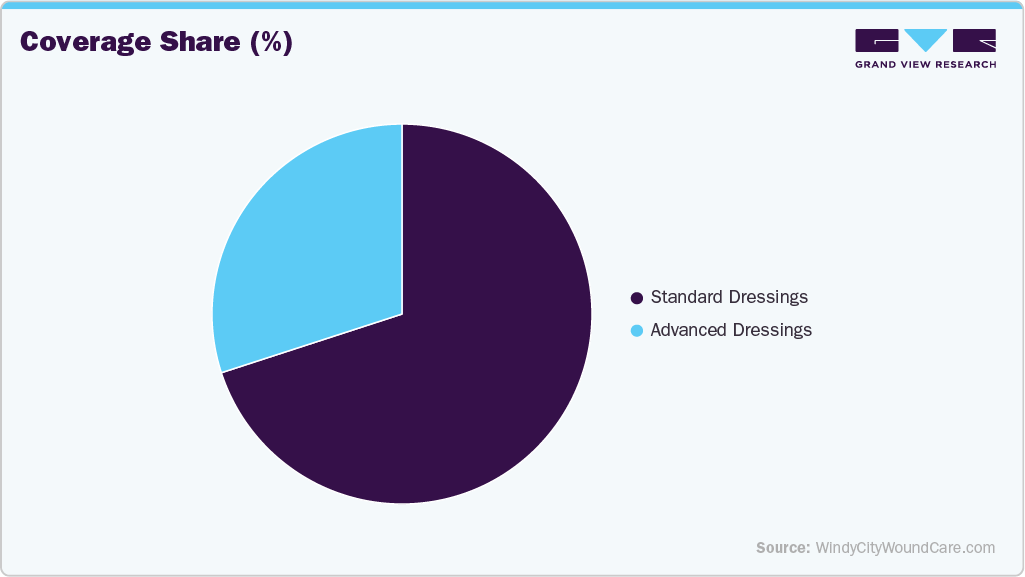
Traditionally, limitations in coverage have constrained healthcare providers from routinely using advanced wound care technologies such as bioengineered skin substitutes, negative pressure wound therapy (NPWT), and growth factor-based treatments due to concerns over patient affordability and institutional cost burdens. However, as Medicare, Medicaid, and private insurers increasingly recognize the long-term clinical and economic benefits of these therapies, they are expanding reimbursement guidelines and increasing payment rates. This expanded coverage reduces financial barriers for patients and providers, encouraging clinicians to integrate more sophisticated wound management solutions into standard practice.
In April 2024, Medicare Administrative Contractors (MACs) jointly released a proposed Local Coverage Determination (LCD) aimed at ensuring that Medicare beneficiaries have access to skin substitute products that are supported by strong clinical evidence and deemed reasonable and necessary for wound management. The proposed LCD seeks to align coverage decisions with established professional and clinical guidelines, promoting appropriate use of advanced wound therapies while maintaining evidence-based care standards. CMS has also emphasized transparency and stakeholder engagement by encouraging public comments and hosting listening sessions during the review period, allowing clinicians, manufacturers, and other stakeholders to provide input before the policy is finalized. This process underscores CMS’s effort to balance patient access, clinical effectiveness, and responsible reimbursement in advanced wound care.
Therefore, wound care centers experience higher patient volumes, greater demand for advanced products and services, and improved clinical outcomes, which collectively stimulate market growth and innovation in the sector.
 To learn more about this report, Download Free Sample Report
  To learn more about this report, Download Free Sample Report
 Increasing Demand for Faster Wound Recovery Among Patients and Payers:
Patients with chronic or acute wounds such as diabetic ulcers, surgical incisions, or pressure injuries are seeking treatments that alleviate symptoms and accelerate healing, reduce pain, and improve quality of life. At the same time, payers, including private insurers and government healthcare programs, are under pressure to contain rising costs and minimize complications that lead to expensive hospital readmissions or long-term care. Faster wound recovery aligns with these goals by lowering overall treatment expenses, shortening care episodes, and reducing the likelihood of costly secondary infections or complications. Hence, healthcare providers are motivated to adopt advanced wound care technologies and evidence-based protocols that promise improved healing rates, making this demand a key factor driving investment, service expansion, and innovation within the U.S. wound care centers market.
Shift Toward Outpatient & Home-Based Care:
The shift toward outpatient and home-based care as a driver for the U.S. wound care centers market is evident in both clinical practices and industry trends. For instance, organizations such as Healogics Inc. and HeathTrust Wound Care have established extensive outpatient wound care networks across multiple states, providing advanced therapies such as negative pressure wound therapy and bioengineered skin substitutes directly in clinics. Similarly, home healthcare providers such as LHC Group and Amedisys integrate wound care services into their home-based care offerings, allowing patients, especially elderly and mobility-limited individuals to receive continuous treatment without frequent hospital visits.
As per the study published in the Journal of Wound Care in May 2024, outpatient and home-based management of chronic wounds reduce hospital readmissions by up to 30% and improves healing rates by ensuring timely interventions. Furthermore, reimbursement policies from Medicare and private insurers increasingly favor outpatient and home care models, offering coverage for clinic visits and home nursing services, which encourages healthcare systems to expand specialized wound care facilities outside traditional hospitals. These instances collectively illustrate how the transition to outpatient and home-based care is propelling the growth of wound care centers in the U.S.
Market Concentration & Characteristics
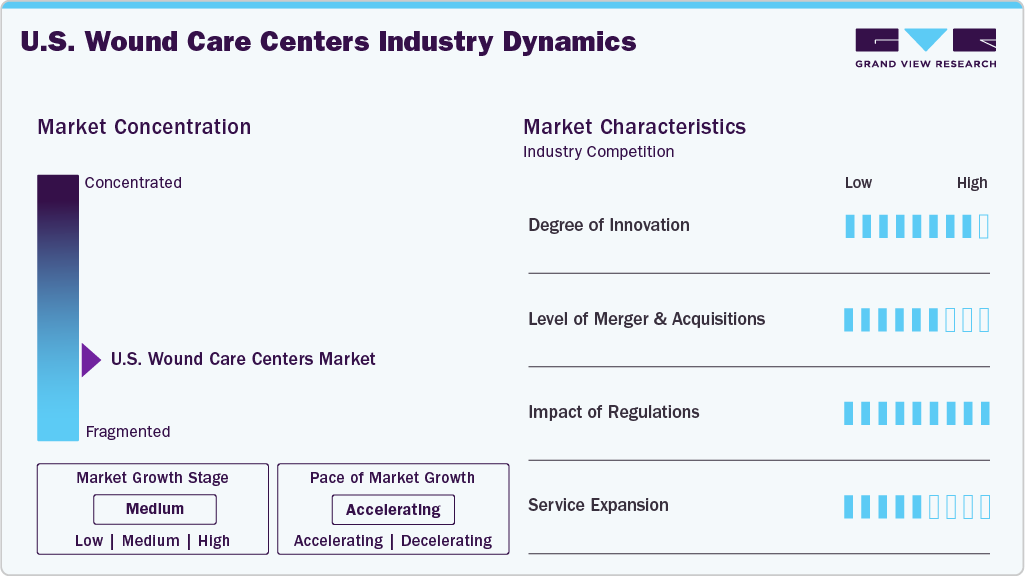
The chart below illustrates the relationship between market concentration, market characteristics, and market participants. The degree of innovation is high, the level of merger & acquisition activities is medium, the impact of regulations on the market is high, and the service expansion of the market is medium.
The degree of innovation is high. As per September 2025 updates, smart wound care devices are integrating artificial intelligence (AI) and bioelectronics transforming the wound healing process by enabling personalized, real-time treatment and monitoring. These advanced systems typically combine sensors, microelectronics, and intelligent algorithms to continuously assess wound conditions such as moisture levels, pH, temperature, oxygenation, and signs of infection.
 To learn more about this report, Download Free Sample Report
 The market saw notable consolidations as larger operators sought to expand their reach and capabilities. For instance, in November 2025, Solventum acquired Acera Surgical as part of its strategy to strengthen its advanced wound care portfolio and expand capabilities in regenerative and surgical solutions.
Bryan Hanson, chief executive officer of Solventum said:
"The addition of Acera's innovative synthetic tissue matrix technology complements our existing advanced wound care portfolio, enhancing the solutions our specialized commercial team can provide to clinicians and decision makers in acute care settings. We are excited to welcome the Acera team to the Solventum family and look forward to our work together to accelerate growth and create significant value for patients, clinicians and shareholders."
The impact of regulations on the industry is high, with strict guidelines influencing device development and deployment. The primary regulatory authority is the U.S. Food and Drug Administration (FDA), which oversees wound care products under different pathways depending on their classification, such as 510(k) clearance for many advanced dressings and devices, Premarket Approval (PMA) for higher-risk products, and Biologics License Applications (BLA) for bioengineered skin substitutes and cellular therapies. Manufacturing and quality compliance are further regulated through Quality System Regulations (QSR) and Good Manufacturing Practices (GMP).
The launch of the first-ever wound care Health Information Exchange (HIE) by the U.S. Wound Registry in January 2024 represents a major advancement in the coordination and quality of wound care across the U.S. This platform is designed to securely collect, share, and analyze patient wound data among healthcare providers, enabling better continuity of care as patients move between hospitals, outpatient wound centers, and home health settings.
“This connection in the wound care industry will be profound to wound centers, and more importantly, to their patients,” said Dr. Caroline Fife, Executive Director of the US Wound Registry.
Procedure Insights
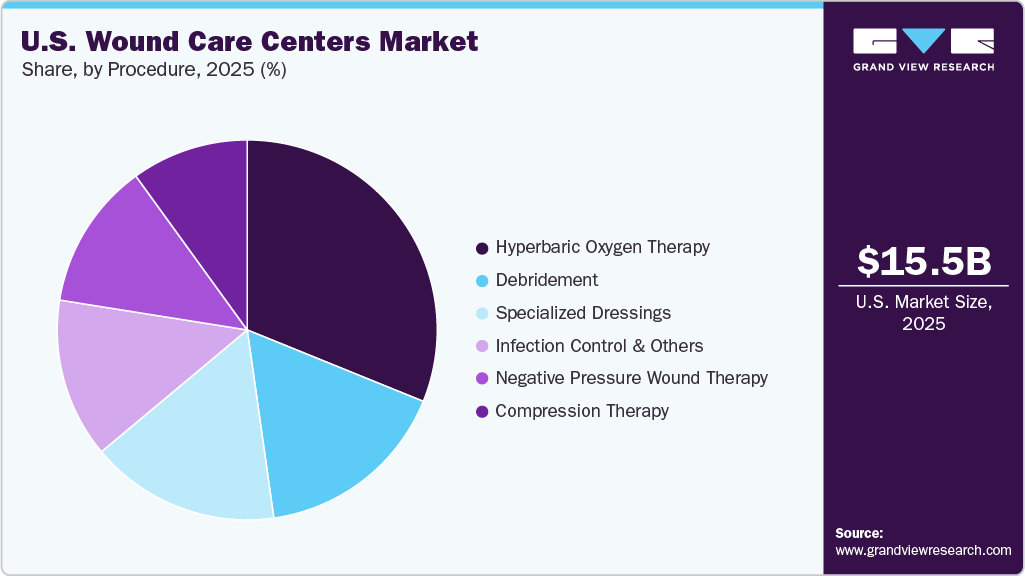
On the basis of procedure, the hyperbaric oxygen therapy segment held the largest revenue share of 31.13% in 2025 and is expected to grow at the fastest CAGR over the forecast period. Increasing awareness about the use of HBOT for chronic wounds, including diabetic foot ulcers, is expected to drive segment growth. Effective results with the use of HBOT for the treatment of chronic wounds, such as arterial ulcers & diabetic foot ulcers, are expected to boost the demand for HBOT from physicians. The number of HBOT treatments requires changes depending on the extent of a patient’s wound and how well the wound responds to the therapy. Wound care centers are proving reliable and improved HBOT services to promote effective & faster healing. For instance, in December 2025, Holland Hospital announced the expansion and enhancement of its Wound Healing & Hyperbaric Medicine Program to improve access to advanced care for patients suffering from chronic and complex wounds in West Michigan.
 To learn more about this report, Download Free Sample Report
 The debridement segment is expected to grow at a significant CAGR over the forecast period owing to its rising adoption for the treatment of diabetic foot ulcers. According to the National Library of Medicine, the lifetime prevalence of Diabetic Foot Ulcerations (DFU) is around 15-34% in the U.S., and debridement as a treatment enhance ulcer healing and prevent complications, such as infections & amputations, which can otherwise cause major clinical & public health implications.
Region Insights
Southeast region held a significant revenue share in 2025. Its dominance is driven by high prevalence of chronic diseases, particularly diabetes, obesity, and cardiovascular disorders, which are significantly higher in states such as Florida, Texas, Georgia, and North Carolina. These conditions increase the incidence of chronic wounds, including diabetic foot ulcers and pressure injuries, creating sustained demand for specialized wound care services and advanced therapies. The region also has a rapidly growing elderly population, particularly in retirement-focused states such as Florida, which contributes to higher rates of slow-healing wounds and post-surgical complications.
The Southwest region is expected to grow at a lucrative CAGR over the forecast period. This is driven by expansion of healthcare infrastructure, including specialized wound clinics and ambulatory surgical centers, along with favorable reimbursement policies for advanced wound therapies such as negative pressure wound therapy and biologics, further supports market growth. Climate-related factors, including higher temperatures and increased risk of skin injuries and infections, also contribute to wound incidence. Moreover, rising awareness about early wound treatment, combined with increasing investments by healthcare providers to reduce hospital readmissions and complications, is accelerating the adoption of advanced wound care solutions across the Southwest region.
Key U.S. Wound Care Centers Company Insights
The U.S. wound care centers market is moderately fragmented, led by large networks such as Healogics, Inc., which holds a significant share due to its nationwide partnerships and standardized wound care programs. Regional hospital systems and multi-specialty providers including Baptist Health South Florida, EmergeOrtho, and community hospitals such as Clarion Hospital and Natchitoches Regional Medical Center account for meaningful regional shares. Specialized and independent providers such as Tower Wound Care Center, Wound Care Center NYC, SNF Wound Care, and North Shore Health and Hyperbarics strengthen the market through niche expertise in chronic wound management and hyperbaric therapy, contributing to a competitive but diversified industry structure.
Key U.S. Wound Care Centers Companies:
- Healogics, Inc.
- TOWER WOUND CARE CENTER
- Wound Care Center NYC
- SNF Wound Care
- WOUND INSTITUTE OF AMERICA
- Schoolcraft Memorial Hospital
- EmergeOrtho
- Clarion Hospital
- North Shore Health and Hyperbarics
- Baptist Health South Florida
- Natchitoches Regional Medical Center
Recent Developments
-
In February 2026, Gentell acquired Innovative Supply Group (ISG) representing a strategic move to strengthen Gentell’s presence in the U.S. nursing home and long-term care segment. ISG specializes in supplying medical products to post-acute care facilities, including skilled nursing homes, which aligns closely with Gentell’s core wound care portfolio and target customer base.
David Navazio - Chief Executive Officer, Gentell said:
“Although many people think of wound care as starting and ending bandages and dressing changes, improved nutrition has increasingly demonstrated its essential role contributing to more effective wound healing. Linking nutrition to wound care creates a multiplier effect enhancing the potential to achieve superior quality wound recovery results more quickly.”
-
In May 2025, Summit Products Group was launched marking the entry of a new healthcare solutions provider focused on advancing surgical and regenerative wound care through innovative technologies and strategic partnerships.
Greg Yager, chief commercialization officer of Summit Products Group said:
“Our growing portfolio is specifically engineered for surgical applications, which is ideal for OR and procedural settings,” “We’re purpose-built for surgical precision and are building a platform that not only brings novel technologies to life-but also ensures they reach the hands of the providers who need them most.”
-
In November 2024, Geistlich Pharma AG and StimLabs announced a national distribution partnership to expand the reach of Geistlich’s advanced wound care solutions across the U.S. Under this agreement, StimLabs will take over all commercial responsibilities, including sales, marketing, and distribution, for the Derma-Gide® Advanced Wound Matrix, enabling broader market penetration through its established wound care network and customer relationships.
Diego Gabathuler, CEO of Geistlich said:
“Geistlich is very pleased to have StimLabs as an exclusive distribution partner of Derma-Gide in the United States to offer our Advanced Wound Matrix to patients suffering from difficult to heal wounds,”
U.S. Wound Care Centers Market Report Scope
Report Attribute
Details
Market size value in 2026
USD 16.2 billion
Revenue forecast in 2033
USD 24.74 billion
Growth rate
CAGR of 6.20% from 2026 to 2033
Actual data
2021 - 2025
Forecast data
2026 - 2033
Quantitative units
Revenue in USD million/billion and CAGR from 2026 to 2033
Report coverage
Revenue forecast, company ranking, competitive landscape, growth factors, and trends
Segments covered
Procedure, region
Country scope
U.S.
Key companies profiled
Baptist Health South Florida; TOWER Wound Care Center; SNF Wound Care; Wound Care Center NYC; Wound Institute of America; EmergeOrtho; North Shore Health and Hyperbarics; Natchitoches Regional Medical Center; Schoolcraft Memorial Hospital; Clarion Hospital; Healogics, Inc.
Customization scope
Free report customization (equivalent up to 8 analysts working days) with purchase. Addition or alteration to country, regional & segment scope.
Pricing and purchase options
Avail customized purchase options to meet your exact research needs. Explore purchase options
U.S. Wound Care Centers Market Report Segmentation
This report forecasts revenue growth, country level and provides an analysis of the latest industry trends in each of the sub-segments from 2021 to 2033. For this study, Grand View Research has segmented the U.S. wound care centers market report based on procedure, and region:
-
Procedure Outlook (Revenue, USD Billion, 2021 - 2033)
-
Debridement
-
Negative Pressure Wound Therapy
-
Compression Therapy
-
Hyperbaric Oxygen Therapy
-
Specialized Dressings
-
Infection Control & Others
-
-
Region Outlook (Revenue, USD Billion, 2021 - 2033)
-
Southeast
-
Midwest
-
West
-
Northeast
-
Southwest
-
Frequently Asked Questions About This Report
Some key players operating in the U.S. wound care centers market include Baptist Health South Florida; TOWER Wound Care Center; SNF Wound Care; Wound Care Center NYC; Wound Institute of America; EmergeOrtho; North Shore Health and Hyperbarics; Natchitoches Regional Medical Center; Schoolcraft Memorial Hospital; Clarion Hospital; Healogics, Inc.
Key factors that are driving the U.S. wound care centers market growth include the rising prevalence of chronic conditions such as diabetes, obesity, and vascular diseases which has led to an increased incidence of chronic wounds, including diabetic foot ulcers, pressure injuries, and venous leg ulcers, creating a sustained demand for specialized care.
The U.S. wound care centers market size was estimated at USD 15.50 billion in 2025.
The U.S. wound care centers market is expected to grow at a compound annual growth rate of 6.20% from 2026 to 2033 to reach USD 24.74 billion by 2033.
The hyperbaric oxygen therapy segment held the largest revenue share of 31.13% in 2025 and is expected to grow at the fastest CAGR over the forecast period. Increasing awareness about the use of HBOT for chronic wounds, including diabetic foot ulcers, is expected to drive segment growth.
About the Author(s)
Medical Devices Research Team
Healthcare · Medical DevicesThis report was authored by the medical devices research team at Grand View Research - comprising two research analysts, one senior research analyst, and one industry expert - with specialized expertise in the medical devices segment of the healthcare industry. All findings are based on proprietary healthcare databases, executive interviews, and regulatory analysis, subject to internal peer review prior to publication.
Last Updated:
Speak to Analyst

Customize this report to your needs - add regions, segments, or data points, with 20% free customization.
Or view our licence options:


ISO 9001:2015 & 27001:2022 Certified
We are GDPR and CCPA compliant! Your transaction & personal information is safe and secure. For more details, please read our privacy policy.


