
- Home
- »
- Medical Devices
- »
-
UV Phototherapy Devices Market Size, Share Report, 2033GVR Report cover

UV Phototherapy Devices Market (2026 - 2033)
Size, Share & Trends Analysis Report By Product, By UV Spectrum, By Application, By Light Source, By End Use, By Distribution Channel, By Region, And Segment Forecasts
Market Size, 2025
$192.4MMarket Estimate, 2026
$199.8MMarket Forecast, 2033
$288.2MCAGR, 2026–2033
5.4%UV Phototherapy Devices Market Summary
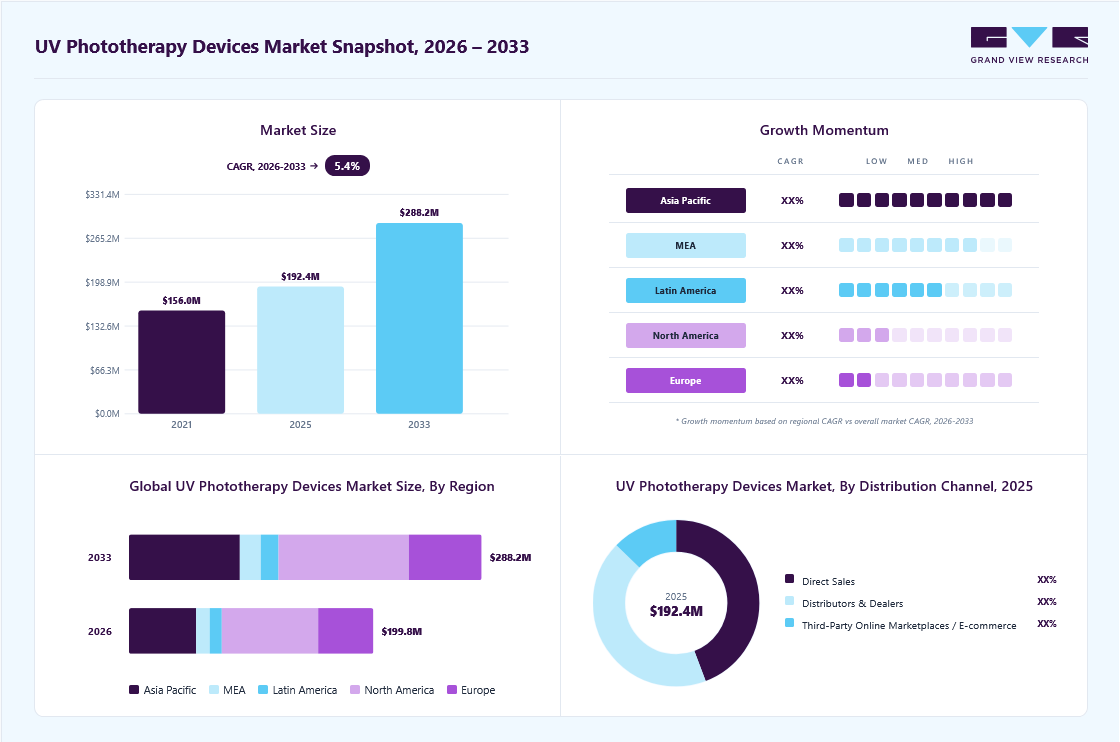
The global UV phototherapy devices market size was valued at USD 192.4 million in 2025 and is projected to grow from USD 199.8 million in 2026 to USD 288.2 million by 2033, at a CAGR of 5.4% from 2026 to 2033. North America dominated the market, accounting for a revenue share of 39.7% in 2025. The market is driven by the increasing prevalence of skin disorders such as psoriasis and vitiligo, rising adoption of narrowband UVB phototherapy, and growing demand for home-based treatment solutions. Continued advancements in targeted UVB devices, portable phototherapy systems, and treatment monitoring technologies are expected to support market growth.
 Source: Grand View Research, IR Documents, Primary Interviews, Paid DatabasesTo learn more about this report,
 Download Free Sample Report
Key Market Trends & Insights
- By product: Partial-body / localized phototherapy devices segment led the market with the largest revenue share of 51.3% in 2025.
- By UV spectrum: Monochromatic / targeted 308 nm UVB (Excimer) segment led the market with the largest revenue share of 37.8% in 2025.
- By application: Vitiligo segment led the market with the largest revenue share of 41.0% in 2025.
- By light source: Fluorescent lamps segment led the market with the largest revenue share of 41.7% in 2025.
- By end use: Dermatology clinics and specialty clinics segment led the market with the largest revenue share of 45.2% in 2025.
- By distribution channel: Direct sales segment led the market with the largest revenue share of 44.2% in 2025.
Regional Highlights
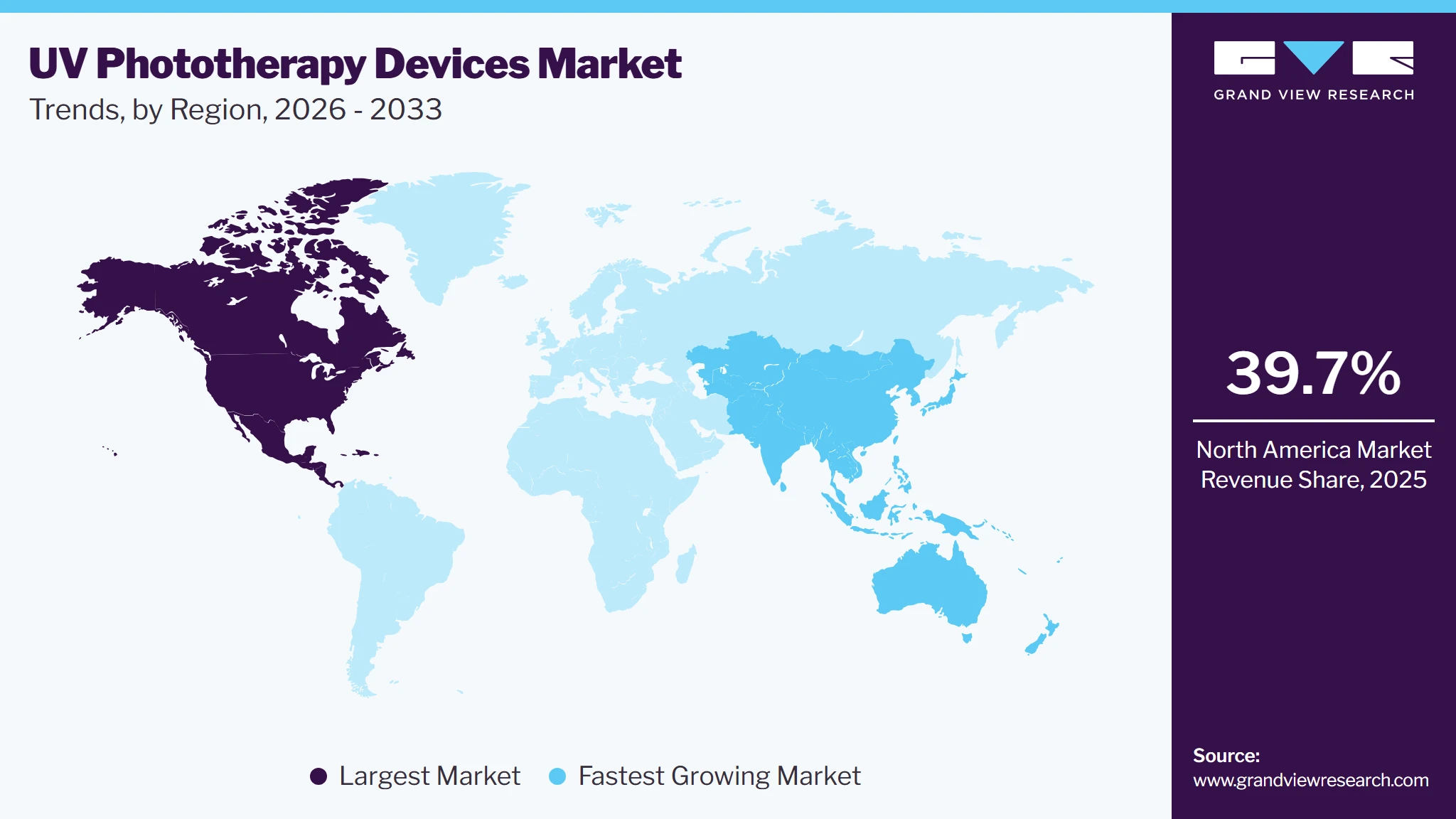
- Largest regional market: North America (39.7% revenue share, 2025)
- Fastest-growing regional market: Asia Pacific (highest CAGR, 2026-2033)
Market Size & Forecast
- Market size in 2025: USD 192.4 million
- Estimated market size in 2026: USD 199.8 million
- Projected market size by 2033: USD 288.2 million
- CAGR (2026-2033): 5.4%
Prism AI by Grand View Research Free to tryAsk a question about the UV phototherapy devices marketTry asking✓Every figure cited from GVR research Prefer the report? Download free sample →
Growing demand for targeted treatment of skin conditions such as psoriasis, vitiligo, and atopic dermatitis is supporting the adoption of advanced UV phototherapy devices. For instance, in July 2025, Gunze Medical, a subsidiary of Gunze Limited, launched CAREVEAM, a 308 nm excimer UV-B phototherapy device developed by South Korea-based LAMEDITECH, across medical institutions in Japan under an exclusive sales agreement. The device offered adjustable irradiation intensity and targeted treatment for dermatological conditions, including psoriasis, vitiligo, atopic dermatitis, and alopecia areata, expanding the availability of excimer-based phototherapy in the Japanese market. This development highlights the growing focus on targeted UV-B technologies that enable precise, condition-specific treatment and expand the clinical applications of UV phototherapy devices.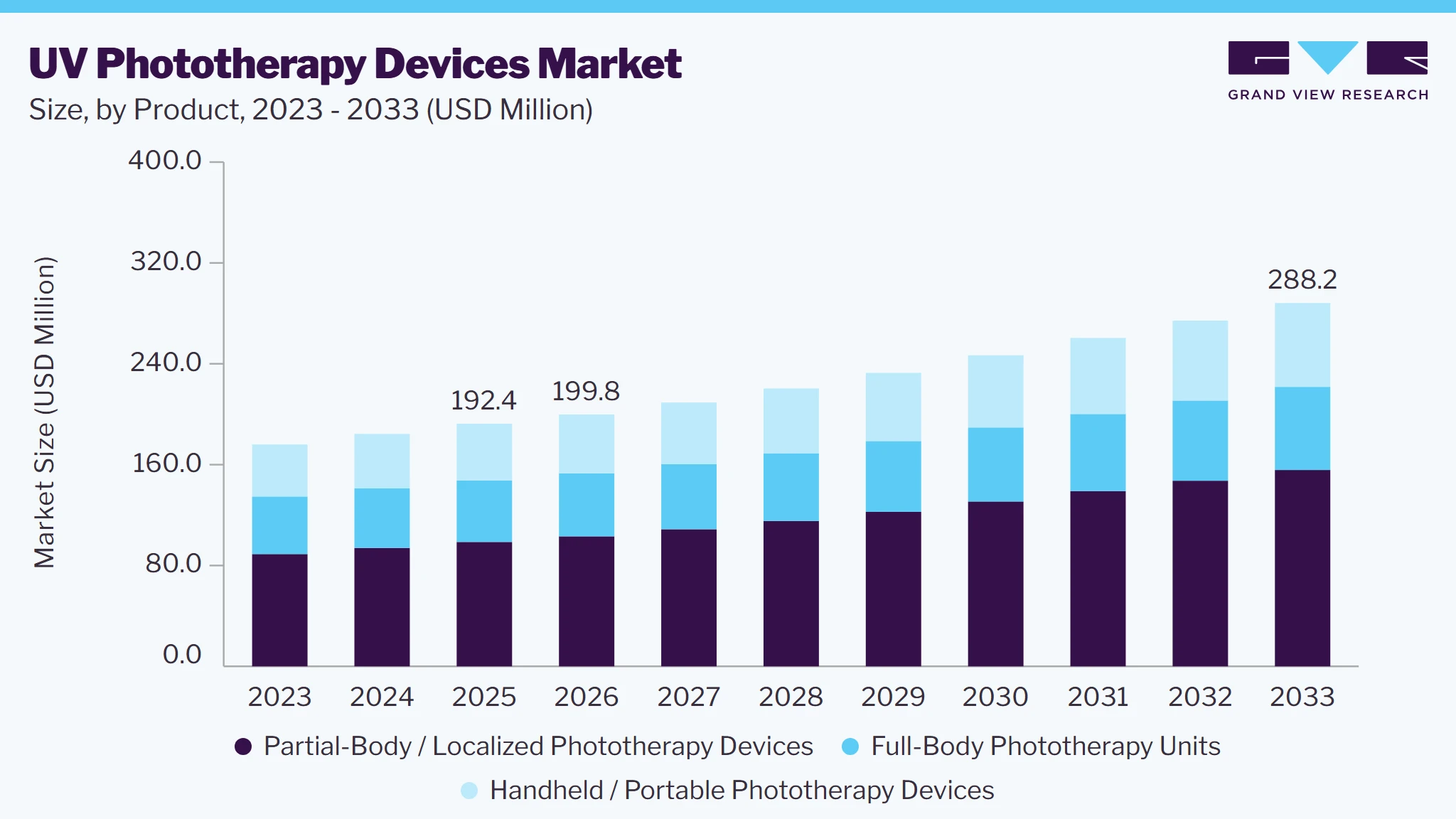 To learn more about this report, Download Free Sample Report
The rising global burden of psoriasis is supporting demand for UV phototherapy devices, including narrowband UVB systems and targeted excimer devices. In December 2025, a report by Medical Xpress, based on a study published in JAMA Dermatology, found that age-standardized psoriasis incidence increased by 10.3% among males and 7.3% among females between 1990 and 2021, with further increases projected through 2050. This trend is expected to strengthen the need for targeted phototherapy solutions for psoriasis management.
 To learn more about this report, Download Free Sample Report
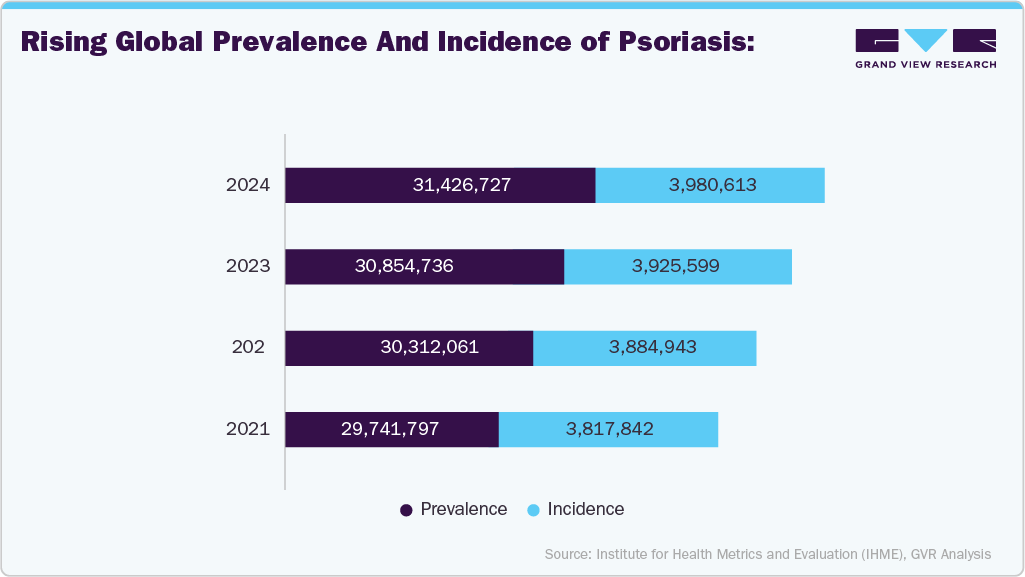
The increasing global burden of psoriasis is expected to support demand for effective dermatological treatment options, including UV phototherapy devices. Global psoriasis prevalence increased from approximately 29.74 million in 2021 to 31.43 million in 2024, while annual incidence rose from approximately 3.82 million to 3.98 million during the same period. This growing patient population creates potential demand for narrowband UVB and targeted excimer phototherapy systems used to manage eligible patients with psoriasis.
Advancements in UV LED technology for phototherapy devices:
Advancements in ultraviolet light-emitting diode (UV LED) technology are creating opportunities for the development of compact, energy-efficient UV phototherapy devices. In February 2026, Marktech Optoelectronics expanded its UV LED portfolio to include 310 nm UVB and 340 nm UVA emitters, with potential applications in phototherapy for psoriasis, eczema, and vitiligo. These wavelength-specific components could support the development of portable, targeted treatment systems and provide manufacturers with alternatives to conventional UV light sources. Further development will depend on clinical validation, irradiation performance, thermal management, and regulatory requirements before these components can be incorporated into commercially available medical phototherapy devices.
Technology
Application
Market opportunity
310 nm UVB LEDs
Targeted dermatological phototherapy
Development of compact NB-UVB treatment devices
340 nm UVA LEDs
UVA-based therapeutic applications
Development of specialized UVA light sources
Compact UV LED modules
Portable and localized treatment systems
Smaller device designs and home-use applications
Source: AZoOptics, Marktech Optoelectronics UV LED portfolio
Reimbursement policy and home-based phototherapy adoption:
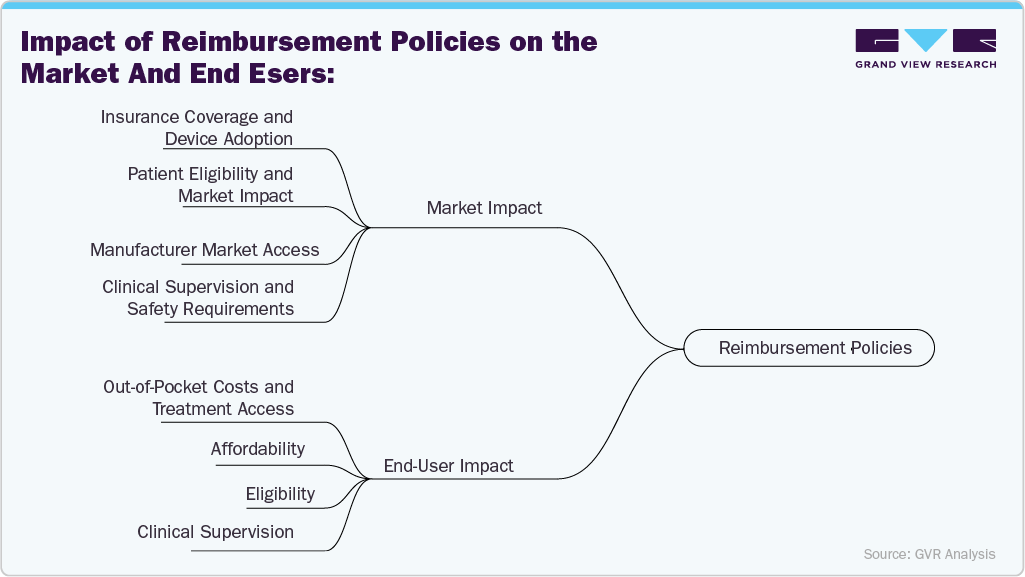
The adoption of home-based UV phototherapy devices is influenced by payer coverage policies, clinical eligibility criteria, and requirements for supervised treatment. In June 2026, AmeriHealth Caritas implemented Clinical Policy CCP.1564, addressing coverage for home ultraviolet light therapy equipment for skin conditions. The policy outlines requirements related to medical necessity, clinician oversight, treatment planning, and device safety, highlighting the role of reimbursement frameworks in determining patient access to home-based narrowband UVB therapy. Such policies provide insight into potential market-access opportunities and barriers, as coverage may be restricted to eligible patients and specific clinical circumstances. However, the policy applies to one health plan and should not be interpreted as a nationwide U.S. coverage standard.
 To learn more about this report, Download Free Sample Report
Comparative analysis of home UV phototherapy devices:
The availability of diverse home-based UV phototherapy devices provides manufacturers with opportunities to address varying patient needs and preferences. For instance, Daavlin’s Phothera portfolio includes four models differentiated by design, size, weight, and control systems, ranging from a handheld wand to a full-body unit. This product variety allows manufacturers to serve different home-treatment requirements and expand their presence across the home-based phototherapy segment.
Specification
Phothera 100
Phothera 200
Phothera 400
Phothera 600
Description
Small, handheld treatment wand with removable comb; approximately 2″ × 4″ treatment area for small or hard-to-reach areas
Lightweight, 18″ panel for the face, localized areas, hands, or feet
Medium-sized panel for localized body areas; suitable for small rooms, apartments, or dorms
6-foot-tall, slim panel designed for full-body surface treatment in fewer turns
Weight
1 lb 12 oz (wand only: 4 oz)
9 lbs
30 lbs
75 lbs
Height
8.25″ (wand height)
21.75″
49.5″
74.5″
Control system
DT Controller
DT Controller
ClearLink Controller
DT Controller
Included accessories
UV-blocking goggles, removable comb attachment, travel case
UV-blocking goggles
UV-blocking goggles
UV-blocking goggles
Source Daavlin.
Market Dynamics
The market is experiencing growth due to the increasing clinical use of UV light-based treatments for chronic dermatological conditions, including psoriasis, vitiligo, and atopic dermatitis. Narrowband UVB (NB-UVB) phototherapy and targeted 308 nm excimer systems are used to manage selected skin disorders by delivering controlled UV radiation to affected areas. The market is further supported by growing interest in home-based phototherapy, which can improve treatment convenience for eligible patients requiring repeated sessions. In addition, technological advancements in localized UVB devices, portable treatment systems, and UV LED light sources are creating opportunities for product innovation and differentiated treatment options. However, concerns regarding cumulative UV exposure, potential adverse effects, treatment adherence, and the need for appropriate dose monitoring remain important considerations. Increasing clinical evidence, improvements in device design, and wider access to specialized dermatological care are expected to influence market development during the forecast period.
Home-based UV phototherapy is gaining attention as an alternative to repeated visits to hospitals and dermatology clinics, particularly for patients with chronic skin conditions such as psoriasis and vitiligo. Clinical studies evaluating home-use narrowband UVB (NB-UVB) systems can help establish their effectiveness, safety, treatment adherence, and suitability for selected patients. Home treatment reduces travel time, improves convenience, and makes repeated treatment sessions easier to manage. As clinical evidence and physician confidence increase, demand for prescription home phototherapy devices may grow.
UV phototherapy exposes the skin to ultraviolet radiation, which can cause erythema, burns, premature skin ageing, and potential long-term skin cancer risks, depending on the wavelength, cumulative exposure, and individual patient factors. Repeated treatment requires careful control of radiation dose and session frequency to minimize adverse effects. Although medically supervised NB-UVB is an established treatment for several skin disorders, uncertainty about the long-term effects of cumulative exposure in some patient groups can influence treatment decisions. These concerns limit the use of UV phototherapy in certain patients and increase the need for clinical monitoring, safety controls, and clear treatment protocol.
Localized and indication-specific UVB devices offer manufacturers an opportunity to develop products that deliver ultraviolet radiation to affected skin areas rather than exposing large areas of the body. Targeted systems, including 308 nm excimer devices, can support treatment of localized psoriasis, vitiligo, and other selected dermatological conditions. These devices may help clinicians focus treatment on lesions while limiting exposure to unaffected skin. Further product development could improve portability, dose precision, usability, and suitability for specific clinical settings. Manufacturers can differentiate their portfolios through specialized treatment systems, although clinical effectiveness, safety, and regulatory requirements must be established for each intended use.
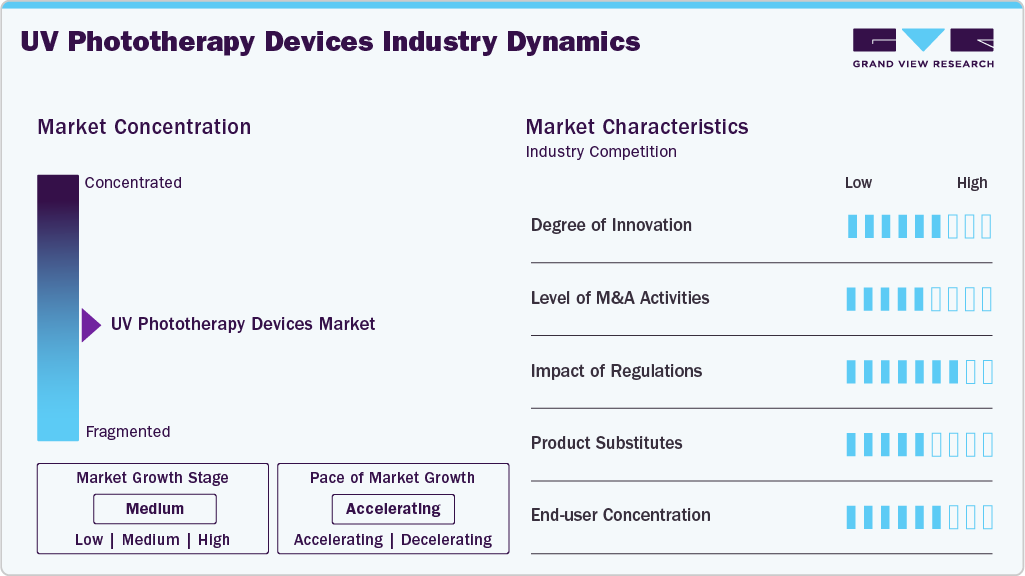
Market Characteristics
The market is witnessing innovation in personalized UVB dosing, localized treatment delivery, and device accessibility. Manufacturers are developing systems that tailor UV exposure to specific treatment needs and support more controlled administration. For instance, in January 2026, the U.S. Food and Drug Administration cleared Solius Labs’ SOLIUS PRO UVB Light Panel for over-the-counter use. The wall-mounted device uses personalized UVB therapy, expanding product development beyond conventional prescription-based phototherapy systems. This development highlights innovation in dose personalization and new delivery models, although the device’s specific intended use should be distinguished from UV phototherapy systems indicated for psoriasis or vitiligo.
The market is characterized by limited publicly documented merger and acquisition activity specifically focused on UV phototherapy equipment manufacturers. Market participants appear to pursue expansion primarily through distribution partnerships, product portfolio development, and entry into new geographic markets. Companies use commercial agreements to access new customer bases, strengthen regional distribution networks, and introduce existing UVB and excimer phototherapy technologies to additional healthcare markets.
 To learn more about this report, Download Free Sample Report
Regulatory requirements significantly influence the development, marketing, and commercialization of UV phototherapy devices because these products deliver UV radiation for therapeutic purposes. In the U.S., applicable devices require FDA clearance under the relevant classification and premarket pathway, while manufacturers marketing medical devices in the European Union must comply with applicable requirements under the Medical Device Regulation (EU) 2017/745. For instance, in March 2025, the FDA granted 510(k) clearance to Boston Aesthetics' 308 nm UV Phototherapy Systems.
The UV phototherapy devices market faces competition from alternative treatment options for dermatological conditions, including topical corticosteroids, topical calcineurin inhibitors, systemic medications, biologic therapies, and other condition-specific treatments. For psoriasis, treatment selection depends on disease severity, affected body areas, previous treatment response, and patient suitability. Vitiligo management may also involve topical therapies and other medical approaches. These alternatives can reduce the need for UV phototherapy in some patients, particularly when medication-based treatment is preferred or more appropriate.
Demand for UV phototherapy devices is concentrated primarily among dermatology clinics, hospitals, and specialized skin treatment centers, where clinicians administer repeated treatment sessions for conditions such as psoriasis, vitiligo, and atopic dermatitis. Whole-body phototherapy cabinets and localized UVB systems serve different clinical requirements, with targeted devices offering treatment for specific affected areas. Home-based phototherapy represents an additional end-use opportunity for appropriately selected patients who require ongoing treatment and can follow prescribed safety and dosing protocols. Purchasing decisions are influenced by patient volume, available clinical space, treatment capacity, equipment costs, and the need for trained staff.
Analyst Perspective
The UV phototherapy devices market is expected to grow as dermatology providers continue using UV-based treatments for psoriasis, vitiligo, and other skin disorders. Adoption of narrowband UVB systems, targeted 308 nm excimer devices, and home-use phototherapy equipment create opportunities for manufacturers to address diverse treatment requirements. Also, competitive positioning will depend on improving dose precision, patient safety, device usability, and clinical evidence while expanding distribution across established and emerging markets. Companies that strengthen regulatory compliance, physician support, and access to specialized treatment technologies will be better positioned to capture demand. However, long-term safety considerations, equipment costs, and alternative therapies will influence adoption.
Product Insights
The partial-body / localized phototherapy devices segment dominated the UV phototherapy devices market, accounting for 51.3% of the market in 2025 and is expected to grow at the fastest rate during the forecast period. This dominance is supported by the rising prevalence of localized psoriasis, vitiligo, and atopic dermatitis lesions, the ability to deliver targeted UV doses to affected skin while sparing healthy tissue, lower cumulative UV exposure compared with whole-body treatment, shorter and more convenient treatment sessions, and growing availability of compact localized systems across dermatology practices. For instance, in April 2025, APK Technology received U.S. FDA 510(k) clearance for its Ultraviolet Phototherapy Device, indicated for localized phototherapeutic treatment of psoriasis, vitiligo, atopic dermatitis, seborrheic dermatitis, and leukoderma across Fitzpatrick skin types I–VI. The clearance expands the availability of FDA-cleared localized phototherapy options for clinicians.
The handheld / portable phototherapy devices segment in the UV phototherapy devices market is expected to grow at a significant rate during the forecast period due to the growing demand for compact, lightweight, and easy-to-use devices that enable targeted treatment of small lesions, the shift of phototherapy from hospital settings to outpatient and home environments, battery-operated designs, improved patient convenience and treatment adherence, and lower per-treatment costs. For instance, in March 2025, Boston Aesthetics received U.S. FDA 510(k) clearance for its 308 nm UV phototherapy system (models UV-K, UV-X, UV-Y, and UV-Z), a portable handheld LED-based device, with battery-powered variants, indicated for psoriasis, vitiligo, seborrheic dermatitis, atopic dermatitis, and leukoderma. The device is intended for use under physician direction in hospitals, clinics, and households.
UV Spectrum Insights
The monochromatic / targeted 308 nm UVB (Excimer) segment dominated the UV phototherapy devices market, accounting for 37.8% of the market in 2025 and is expected to grow at the fastest rate during the forecast period. This dominance is supported by widespread preference among dermatologists for targeted, high-intensity 308 nm UVB delivery, faster lesion clearance with fewer treatment sessions than conventional broadband and narrowband UVB, minimal exposure of healthy skin, strong clinical evidence in psoriasis and vitiligo, and expanding global access to excimer systems. For instance, in June 2026, STRATA Skin Sciences announced an exclusive distribution partnership with EKPAC Healthcare for its XTRAC 308 nm excimer systems, parts, and service in the People's Republic of China. Under the agreement, EKPAC will establish a dedicated XTRAC business unit with sales, clinical, and technical teams to support the installed base and future growth.
The UVA / UVA-1 (320–400 nm) segment in the UV phototherapy devices market is expected to grow at a significant rate during the forecast period due to the expanding clinical use of UVA-1 in sclerosing and inflammatory skin conditions such as morphea, systemic sclerosis, and atopic dermatitis, the deeper dermal penetration of longer UVA wavelengths, the use of UVA in combination with UVB and photochemotherapy protocols, and the development of compact, cooler, and more energy-efficient LED-based UVA sources. For instance, in May 2026, Choyang Medics received U.S. FDA 510(k) clearance for its DUV-COMBO phototherapy system, a professional LED-based platform with separate UVA (360–390 nm) and UVB (300–320 nm) handpieces. The system is indicated for targeted PUVA photochemistry and UVB phototherapy of psoriasis, vitiligo, atopic dermatitis, and seborrheic dermatitis.
Application Insights
The vitiligo segment dominated the UV phototherapy devices market, accounting for 41.0% of the market in 2025. This dominance is supported by the high disease burden of vitiligo as a chronic autoimmune depigmenting disorder, strong clinical evidence supporting narrowband UVB and excimer phototherapy for repigmentation, rising awareness and diagnosis, the significant psychosocial impact driving treatment-seeking, and growing use of phototherapy alongside topical and systemic therapies.
The atopic dermatitis / eczema segment in the UV phototherapy devices market is expected to grow at a significant rate during the forecast period, driven by the rising prevalence of the condition among children and adults and increasing demand for non-systemic treatment options. The established use of narrowband UVB phototherapy for moderate-to-severe cases, particularly when conventional treatments provide limited relief, is supporting adoption. In addition, growing awareness among patients, increasing dermatologist referrals, and the need for long-term disease management are contributing to segment growth. Improvements in phototherapy devices and the expansion of specialized dermatology clinics are also expected to support demand during the forecast period.
Light Source Insights
The Fluorescent Lamps segment dominated the UV phototherapy devices market, accounting for 41.7% of the market in 2025. This dominance is supported by the wide installed base of fluorescent-tube narrowband UVB cabinets, well-established clinical efficacy and standardized treatment protocols, large-area and uniform irradiation suited to full-body treatment, lower equipment and lamp replacement costs, and ease of operation and servicing in hospitals and clinics. For instance, in May 2026, NHS Highland announced the relaunch of phototherapy services at Campbeltown Hospital with a new walk-in narrowband UVB cabinet fitted with fluorescent tubes. The service, which began treating patients in March 2026 on dermatology referral, supports patients with psoriasis, eczema, and vitiligo and is aimed at reducing waiting times.
The UV LED segment in the UV phototherapy devices market is expected to grow at the fastest rate during the forecast period due to longer operating life, instant on/off operation, mercury-free construction, compact form factor, lower heat generation, reduced energy consumption, and precise wavelength control that enable lightweight handheld and home-use systems, along with continuous improvements in UV-B LED efficiency and output. For instance, in September 2026, Nichia announced the NVSU434A series of UV-B (308 nm) and UV-A (330 nm and 340 nm) LEDs, with the 308 nm product delivering a typical radiant flux of 280 mW at 700 mA and a wall-plug efficiency of 8.2%, roughly double that of its earlier products. The series, aimed at applications including medical fields, is scheduled for launch in January 2027.
End Use Insights
The dermatology clinics and specialty clinics segment dominated the UV phototherapy devices market, accounting for 45.2% in 2025. This dominance is driven by the high patient volumes of chronic skin conditions such as psoriasis, vitiligo, and atopic dermatitis, availability of trained dermatologists and phototherapy staff, access to advanced full-body and targeted excimer systems, physician-supervised dosing and monitoring, and established reimbursement pathways for in-office treatment. For instance, in February 2026, Johns Hopkins Dermatology added the XTRAC 308 nm excimer laser to its clinical offerings to expand care for patients with psoriasis, vitiligo, atopic dermatitis, and other complex inflammatory and autoimmune skin conditions. The system will also support the department's clinical research and academic initiatives.
The home healthcare segment of the UV phototherapy devices market is expected to grow at the fastest rate during the forecast period. Growth is driven by the convenience of treating at home, reduced travel time and clinic visit costs, improved treatment adherence, increasing availability of FDA-cleared home-use devices, rising adoption of app-connected and handheld systems, and growing preference for patient-centered care models for chronic skin diseases. For instance, in March 2026, Radcliffe Watts received U.S. FDA 510(k) clearance for Klär Lite (RCW-KL1000), a handheld, home-use narrowband UVB (311 nm) LED phototherapy device indicated for localized treatment of psoriasis, vitiligo, atopic dermatitis, seborrheic dermatitis, and leukoderma in all skin types. The device was tested to the IEC 60601-1-11 standard for medical equipment used in the home healthcare environment.
Distribution Channel Insights
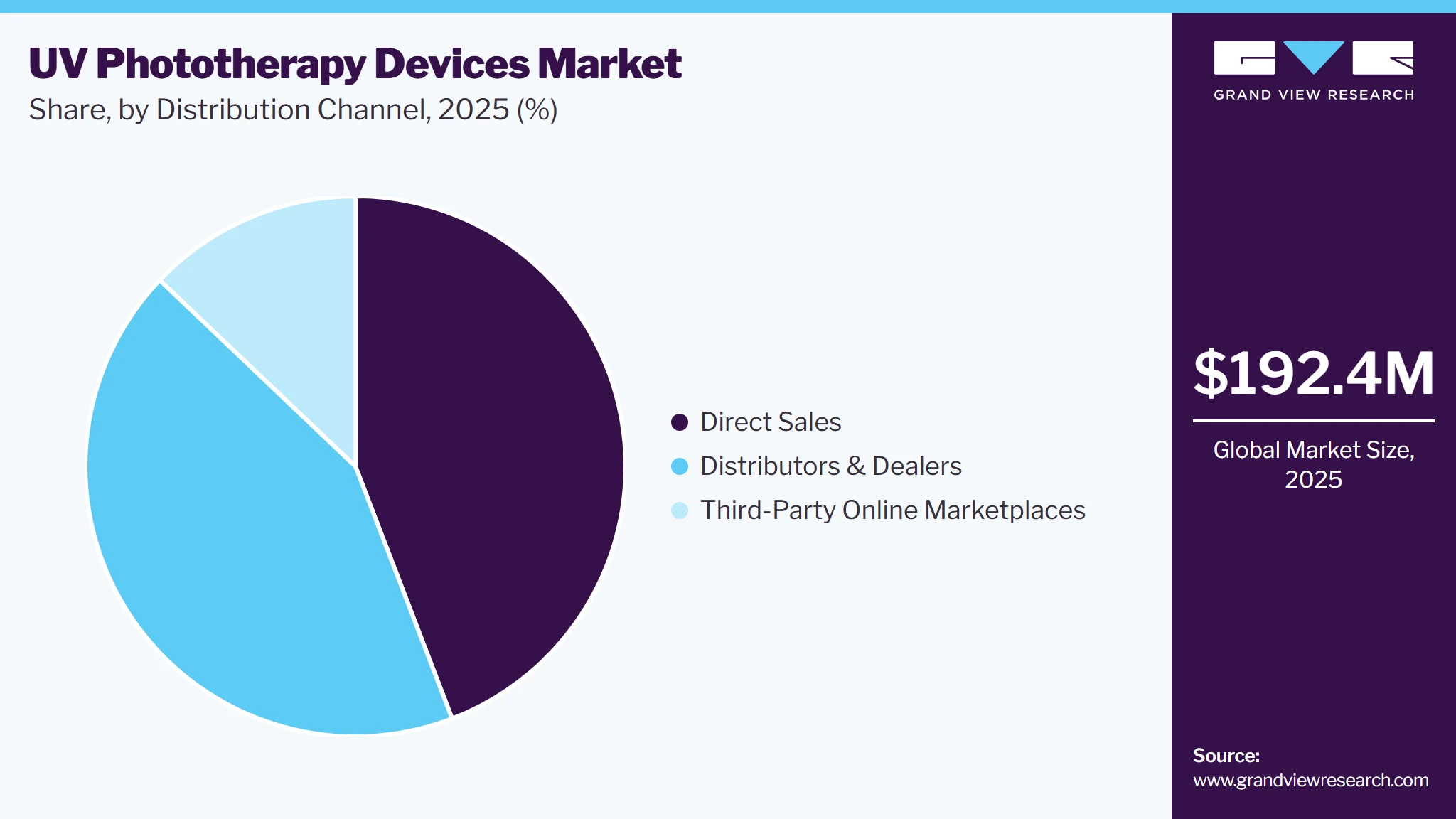
The direct sales segment dominated the UV phototherapy devices market, accounting for 44.2% in 2025. This dominance is driven by the need for installation, operator training, and after-sales service for high-value phototherapy equipment, close relationships between manufacturers and dermatologists, direct clinical support and protocol guidance, and the ability of manufacturers to control pricing, usage-based placement models, and customer engagement. For instance, in March 2026, STRATA Skin Sciences reported in its annual report filed with the U.S. Securities and Exchange Commission that it places XTRAC systems directly in dermatologists' offices at no upfront charge and earns revenue on a per-use basis. The company served 842 U.S. partner clinics as of December 31, 2025, supported by a dedicated sales and marketing team of 44 staff.
 To learn more about this report, Download Free Sample Report
The third-party online marketplaces / e-commerce segment of the UV phototherapy devices market is expected to grow at the fastest rate during the forecast period. Growth is driven by the rising consumer preference for purchasing home-use medical devices online, wider product assortment and price transparency, doorstep delivery, increasing availability of compact handheld UV devices, and growing digital health awareness among patients managing chronic skin conditions. Rising regulatory scrutiny of UV devices sold online is also encouraging buyers to choose licensed and cleared products. For instance, in December 2025, Health Canada issued a public advisory on the unlicensed Chroma D-Light UV lamp sold online, warning consumers to stop using it and asking companies to stop selling it immediately. The action underscores tightening oversight of UV devices sold through e-commerce channels and the growing importance of compliant, licensed devices in online sales.
Regional Insights
North America UV Phototherapy Devices Market Trends
North America dominated the UV phototherapy devices market with the largest revenue share of 39.7% in 2025. The North America UV phototherapy devices market is shaped by clinical evaluation of home-use treatment systems, prescription-based phototherapy, and the availability of specialized dermatology equipment. Clinical evidence is helping assess whether home-based NB-UVB can provide outcomes comparable to clinic-administered treatment. For instance, the 2024 LITE randomized clinical trial, conducted across 42 academic and private dermatology practices in the U.S., evaluated home-based versus office-based NB-UVB phototherapy in 783 patients with psoriasis. The study found home treatment to be noninferior to office treatment for the primary clinical and quality-of-life outcomes, supporting further consideration of home-use systems for eligible patients.
 To learn more about this report, Download Free Sample Report
Category
Details
Study Title
Home- vs Office-Based Narrowband UV-B Phototherapy for Patients with Psoriasis
Total Participants
783 participants randomized
Participant Demographics
407 males and 376 females; adults and children aged ≥12 years; mean age: 48 years
Study Settings
42 dermatology practices across the U.S.
Home Phototherapy Group
393 participants received home-based narrowband UV-B phototherapy 2–3 times per week for 12 weeks
Office Phototherapy Group
390 participants received routine office-based narrowband UV-B phototherapy 2–3 times per week for 12 weeks
Source: LITE Randomized Clinical Trial, published in JAMA Dermatology on September 2024.
U.S. UV Phototherapy Devices Market Trends
The U.S. UV phototherapy devices market is influenced by FDA clearance requirements and the introduction of differentiated dermatological UV treatment systems. Regulatory records provide evidence of continued product commercialization across targeted UVB technologies, including devices designed to deliver ultraviolet radiation to specific skin lesions. Manufacturers are focusing on product development to address conditions such as psoriasis and vitiligo while improving treatment precision and expanding clinical applications.
Europe UV Phototherapy Devices Market Trends
The Europe UV phototherapy devices market is influenced by medical-device compliance requirements, established dermatology services, and the availability of specialized UV treatment technologies. Manufacturers seeking to commercialize equipment across European markets must address applicable requirements under the EU Medical Device Regulation (MDR), including conformity assessment and post-market obligations. Product differentiation through localized excimer systems and wavelength-specific treatment platforms provides opportunities to address different dermatological indications.
UK UV Phototherapy Devices Market Trends
The UK market is shaped by established clinical protocols for narrowband UVB (NB-UVB) treatment and the availability of specialized dermatology services. The use of UV phototherapy for conditions such as psoriasis, vitiligo, and other inflammatory skin disorders creates demand for equipment that supports controlled UV exposure, accurate dose administration, and appropriate patient monitoring. Home-based phototherapy also presents an opportunity to improve treatment accessibility for eligible patients who face travel or scheduling barriers. Market adoption depends on clinical suitability, equipment safety, treatment supervision, and healthcare service capacity. These factors influence purchasing decisions and the use of UV phototherapy systems across hospitals, dermatology clinics, and selected home-care settings.
Asia Pacific UV Phototherapy Devices Market Trends
The Asia Pacific UV phototherapy devices market is benefiting from strategic partnerships that facilitate product commercialization and expand access to specialized dermatological treatment technologies. Collaborations between international device developers and regional healthcare companies enable manufacturers to navigate local regulatory requirements, strengthen distribution networks, and reach medical institutions in new markets. For instance, in February 2026, ams OSRAM entered an exclusive brand licensing partnership with Ziwooo Biotechnology to expand OSRAM-branded health and beauty products across Greater China, other APAC markets, Australia, and New Zealand. The planned portfolio included UVB skin therapy devices, red-light therapy and massage wearables, LED therapy solutions, and depilators, expanding the brand’s presence in consumer phototherapy and wellness products.
China UV Phototherapy Devices Market Trends
The China UV phototherapy devices market is supported by domestic manufacturers expanding the visibility of their dermatological treatment technologies and developing international distribution relationships. For instance, in September 2025, China-based KernelMed showcased its UV phototherapy portfolio at the European Academy of Dermatology and Venereology (EADV) Congress and prepared to present its broader medical device portfolio at the China International Medical Equipment Fair (CMEF) in Shenzhen. Its UV phototherapy range included narrowband UVB cabins, targeted phototherapy devices, and portable home-use systems for conditions such as psoriasis, vitiligo, and eczema. These activities demonstrate efforts to strengthen product visibility and expand commercial access through industry exhibitions and distributor engagement.
Latin America UV Phototherapy Devices Market Trends
The Latin American UV phototherapy devices market is influenced by country-specific medical-device oversight and the distinction between therapeutic UV equipment and products intended for cosmetic tanning. In Brazil, ANVISA's April 2025 regulatory publication addressed restrictions on high-power UV lamps used for artificial tanning while explicitly excluding certain medical and dermatological applications, including 311 nm narrowband UVB lamps and 308 nm excimer lamps, from that prohibition. This distinction is relevant to manufacturers and distributors because medical phototherapy products must be assessed according to their intended therapeutic use and applicable regulatory requirements. Market development will also depend on product registration, access to dermatology services, and the availability of equipment through local distribution channels.
MEA UV Phototherapy Devices Market Trends
The Middle East & Africa UV phototherapy devices market benefits from the expansion of specialist dermatology services in medical tourism destinations, particularly the UAE and South Africa. International patients seeking advanced dermatological care can support demand for hospitals and clinics offering specialized treatment options, including UV phototherapy for psoriasis, eczema, and vitiligo. For instance, Burjeel Medical City in Abu Dhabi lists narrowband UVB, PUVA, and excimer laser systems among its dermatology treatment technologies. Such specialized clinical capabilities demonstrate the availability of UV-based treatment in the region's advanced healthcare facilities.
Key UV Phototherapy Devices Company Insights
Some of the key companies in the UV phototherapy devices market include Daavlin (Phothera Phototherapy), Solarc Systems Inc., Herbert Waldmann GmbH & Co. KG, Kernel Medical Equipment Co., Ltd., and STRATA Skin Sciences, Inc. These companies pursue various operating strategies to strengthen their market positions and expand their customer base. Key strategies include product portfolio expansion, with manufacturers offering different UV phototherapy systems, including whole-body cabinets, handheld home-use devices, and targeted UVB systems.
Key UV Phototherapy Devices Companies
Some prominent players in the global UV phototherapy devices market include:
-
Daavlin (Phothera Phototherapy)
-
Solarc Systems Inc.
-
Herbert Waldmann GmbH & Co. KG
-
Kernel Medical Equipment Co., Ltd.
-
Vision Tech Electronics
-
SCI Health (UV Tactus)
-
Colmed HealthTech Pvt. Ltd.
-
Ziree Co.,Ltd.
-
Diosole Medical (Jiangsu Daoshuo Medical Technology Co., Ltd.)
-
MeCan Medical
-
Yonker Healthcare PK
-
NOXM
-
STRATA Skin Sciences, Inc.
-
Solius Labs
-
LAMEDITECH Co., Ltd
Market Participant Categorization
Category
Operating Strategies
Competitive Edge
Weakness
Established Players (Daavlin, Herbert Waldmann GmbH & Co. KG, STRATA Skin Sciences, Solarc Systems Inc.)
- Expand UV phototherapy portfolios across whole-body NB-UVB cabinets, targeted excimer systems, and home-use devices.
- Strengthen distribution networks, clinical support, and product availability across hospitals, dermatology clinics, and home-care settings.
- Established product portfolios, specialized UV treatment technologies, clinical-market experience, and distribution and service capabilities.
- STRATA Skin Sciences has a presence in targeted excimer laser phototherapy, while Daavlin and Solarc Systems offer equipment for home and clinical UV treatment.
- Equipment costs, regulatory requirements, and the need for technical support and clinical training limit adoption.
- Manufacturers also face competition from lower-cost products and differences in reimbursement and purchasing capacity across markets.
Emerging Players (Kernel Medical Equipment Co., Ltd., LAMEDITECH, Vision Tech Electronics, Colmed HealthTech Pvt. Ltd.)
- Expand product visibility through medical exhibitions, regional distributors, and commercial partnerships.
- Develop targeted UVB systems, portable devices, and differentiated equipment for dermatological applications, while pursuing regulatory access in additional countries.
- Product specialization, opportunities to compete on price, regional market knowledge, and flexibility in developing targeted treatment systems.
- Kernel Medical promotes a portfolio of UV phototherapy equipment, while LAMEDITECH developed the 308 nm excimer UV-B device CAREVEAM.
- Lower international brand recognition in some markets, uneven distributor coverage, and the need to establish clinical evidence and regulatory compliance across jurisdictions constrain expansion.
- Service infrastructure and access to established hospital purchasing networks can also affect adoption.
Recent Developments:
- In June 2026, STRATA Skin Sciences, Inc. appointed EKPAC Healthcare as the exclusive distributor of its XTRAC excimer laser systems, parts, and services in China. The partnership aimed to rebuild XTRAC’s market presence, expand its installed base, and strengthen adoption of targeted phototherapy through clinical engagement, physician education, and dedicated sales and technical support.
“This partnership with EKPAC represents a pivotal step in STRATA’s global strategy,” said Dr. Dolev Rafaeli, President and Chief Executive Officer of STRATA. “China is a critical market for dermatology innovation, and we believe this collaboration will allow us to reestablish XTRAC as the gold standard for targeted phototherapy. EKPAC brings the operational discipline, clinical relationships, and strategic vision required to execute this transformation.”
- In June 2026, Solius Labs launched Solius Pro, an FDA-cleared over-the-counter UVB phototherapy device that analyzed users’ skin tones to deliver personalized light doses for home and professional use. The launch introduced a new product category designed to provide targeted UVB therapy with a claimed 99% lower UV risk than sunlight.
“Decades of peer-reviewed research confirm that sunlight is fundamental to human health beyond vitamin D," said Chris Kiple, Chief Executive Officer of Solius Labs. "Solius is the first technology to deliver the health benefits of UVB light therapy with dosing personalized to each user’s skin. We are committed to bringing clinically-proven efficacy and an unprecedented standard of safety to the UVB light therapy space.”
- In June 2026, Solius Labs raised USD 23 million in Series A funding and launched Solius Pro, a USD 2,995 at-home UVB light therapy device for home and professional use. The FDA-cleared Class II device uses skin scanning to calculate personalized UVB doses at a targeted 293 nm wavelength, aiming to make light therapy more accessible for stimulating vitamin D production in adults aged 22 and older.
“UVB is not new,” Solius CEO Chris Kiple told GeekWire. “We’re just the first that has made UVB safe and usable and accessible anytime in an efficient way.”
UV Phototherapy Devices Market Report Scope
Report Attribute
Details
Market size in 2025
USD 192.4 million
Estimated market size in 2026
USD 199.8 million
Projected market size by 2033
USD 288.2 million
Growth rate
CAGR of 5.4% from 2026 to 2033
Base year for estimation
2025
Actual estimates/Historical data
2021-2024
Forecast period
2026 – 2033
Quantitative units
Revenue in USD Million and CAGR from 2026 to 2033
Report coverage
Revenue forecast, company ranking, competitive landscape, growth factors, and trends
Segments covered
Product, UV spectrum, application, light source, end use, distribution channel, region
Regional scope
North America; Europe; Asia Pacific; Latin America; Middle East & Africa
Country scope
U.S.; Canada; Mexico; UK; Germany; France; Italy; Spain; Denmark; Sweden; Norway; Japan; China; India; Thailand; Australia; South Korea; Brazil; Argentina; South Africa; Saudi Arabia; UAE; Kuwait
Key companies profiled
Daavlin (Phothera Phototherapy), Solarc Systems Inc., Herbert Waldmann GmbH & Co. KG, Kernel Medical Equipment Co., Ltd., Vision Tech Electronics, SCI Health (UV Tactus), Colmed HealthTech Pvt. Ltd., Ziree Co., Ltd., Diosole Medical (Jiangsu Daoshuo Medical Technology Co., Ltd.), MeCan Medical, Yonker Healthcare PK, NOXM, STRATA Skin Sciences, Inc., Solius Labs, and LAMEDITECH Co., Ltd
Customization scope
Free report customization (equivalent up to 8 analyst’s working days) with purchase. Addition or alteration to country, regional & segment scope
Pricing and purchase options
Avail customized purchase options to meet your exact research needs. Explore purchase options
Global UV Phototherapy Devices Market Report Segmentation
This report forecasts revenue growth at global, regional & country levels and provides an analysis of the latest industry trends in each of the sub-segments from 2021 to 2033. For this study, Grand View Research has segmented the global UV phototherapy devices market report based on product, UV spectrum, application, light source, end use, distribution channel, and region:
-
Product Outlook (Revenue, USD Million, 2021 - 2033)
-
Full-Body Phototherapy Units
-
Handheld / Portable Phototherapy Devices
-
Partial-Body / Localized Phototherapy Devices
-
-
UV Spectrum Outlook (Revenue, USD Million, 2021 - 2033)
-
Broadband UVB (280–320 nm)
-
Narrowband UVB (311–313 nm)
-
Monochromatic / Targeted 308 nm UVB (Excimer)
-
UVA / UVA-1 (320–400 nm)
-
Combined / Multi-Wavelength Systems
-
-
Application Outlook (Revenue, USD Million, 2021 - 2033)
-
Psoriasis
-
Vitiligo
-
Atopic Dermatitis / Eczema
-
Cutaneous T-Cell Lymphoma (CTCL / Mycosis Fungoides)
-
Other Indications
-
-
Light Source Outlook (Revenue, USD Million, 2021 - 2033)
-
Fluorescent Lamps
-
Excimer Laser (XeCl)
-
Excimer Lamp (XeCl)
-
UV LED
-
-
End Use Outlook (Revenue, USD Million, 2021 - 2033)
-
Hospitals
-
Dermatology Clinics and Specialty Clinics
-
Home Healthcare
-
Others
-
-
Distribution Channel Outlook (Revenue, USD Million, 2021 - 2033)
-
Direct Sales
-
Distributors & Dealers
-
Third-Party Online Marketplaces / E-commerce
-
-
Regional Outlook (Revenue, USD Million, 2021-2033)
-
North America
-
U.S.
-
Canada
-
Mexico
-
-
Europe
-
UK
-
Germany
-
France
-
Italy
-
Spain
-
Denmark
-
Sweden
-
Norway
-
-
Asia Pacific
-
Japan
-
China
-
India
-
Thailand
-
Australia
-
South Korea
-
-
Latin America
-
Brazil
-
Argentina
-
-
Middle East & Africa
-
South Africa
-
Saudi Arabia
-
UAE
-
Kuwait
-
-
Research Methodology
The UV phototherapy devices market figures in this report are based on a proven research process that combines executive interviews with secondary research from proprietary databases, company filings, and recognized regulatory and institutional sources. Market size is built through value-chain sizing-reconciling supply-side and demand-side estimates-and triangulated with bottom-up and top-down approaches. Every estimate passes multiple levels of expert validation before publication, with each UV phototherapy devices segment quantified using the revenue-capture definitions in the table below.
Segment Definition
Segment – Product
Revenue capture definition
Full-Body Phototherapy
Units
Revenue generated from the sale of full-body UV phototherapy systems designed to expose large areas of the body to ultraviolet light for treating dermatological conditions such as psoriasis, vitiligo, and atopic dermatitis.
Handheld / Portable
Phototherapy Devices
Revenue generated from the sale of handheld and portable UV phototherapy devices designed for targeted or localized treatment, particularly for patients requiring convenient, home-based, or portable treatment options.
Partial-Body / Localized
Phototherapy Devices
Revenue generated from the sale of UV phototherapy systems designed to treat specific body regions, such as the hands, feet, scalp, or other affected skin areas, in clinical or home-care settings.
Estimation Model
Approach No.
Approach Name
Description
01
Bottom-Up Estimation
The UV phototherapy devices market is estimated by assessing the adoption and annual sales volume of phototherapy equipment across hospitals, dermatology and specialty clinics, home healthcare settings, and other end users at the country, regional, and global levels. The assessment incorporates product categories such as full-body phototherapy units, handheld/portable devices, and partial-body/localized devices.
02
Top-Down Approach
The market estimation begins with an assessment of the broader dermatology devices, phototherapy equipment, and medical light therapy markets, followed by an evaluation of the share attributable to UV phototherapy devices through secondary research and expert validation. The analysis considers key market indicators, including the prevalence of UV-responsive skin disorders, patient treatment volumes, dermatologist and specialty clinic availability.
03
Supply-Side Analysis
The analysis evaluates manufacturers' annual production capacity, device shipments, product portfolios, average selling prices, manufacturing facilities, regulatory clearances, and geographic distribution networks. It considers major product categories, including full-body, handheld/portable, and localized phototherapy devices, alongside UV spectrum technologies such as broadband UVB, narrowband UVB, UVA/UVA-1, and combined/multi-wavelength systems.
Customization Table
CLIENT REQUEST
CUSTOMIZATION DELIVERED
VALUE ADDS
UV Phototherapy Devices Product Portfolio & Application Analysis
Conducted a comprehensive assessment of the UV phototherapy devices product portfolio, covering full-body phototherapy units, handheld/portable devices, and partial-body/localized phototherapy devices. Evaluated product demand across key UV spectrum categories, including broadband UVB, narrowband UVB, targeted 308 nm excimer systems, UVA/UVA-1, and combined/multi-wavelength systems. The analysis also examined light source technologies, including fluorescent lamps, excimer lasers, excimer lamps, and UV LEDs.
Helps stakeholders identify high-growth product and technology segments, understand indication-specific demand, evaluate emerging light source technologies, and optimize product portfolios based on evolving dermatological treatment requirements and clinical preferences.
End-user Adoption & Distribution Channel Analysis
Analyzed the adoption of UV phototherapy devices across hospitals, dermatology and specialty clinics, home healthcare settings, and other end users. Assessed purchasing preferences, device accessibility, treatment settings, equipment utilization, and the growing relevance of home-based phototherapy. The study also evaluated distribution channels, including direct sales, distributors and dealers, and third-party online marketplaces/e-commerce.
Enables manufacturers to identify high-demand end-user segments, strengthen distribution strategies, optimize channel partnerships, improve market access, and expand commercial reach across established and emerging healthcare markets.
Product Positioning & Manufacturer Competitiveness Assessment
Evaluated leading UV phototherapy device manufacturers based on product portfolio breadth, device configuration, treatment coverage, wavelength specifications, light source technologies, portability, treatment precision, safety features, regulatory compliance, geographic presence, pricing strategies, and distribution strength. The assessment also examined innovations in targeted phototherapy, UV LED technology, home-use devices, and multi-wavelength systems, alongside recent product launches, portfolio expansion initiatives, and competitive differentiation across the global UV phototherapy devices market.
Supports competitive benchmarking, identifies product development and technology investment opportunities, enables differentiation across device categories, strengthens go-to-market strategies, and helps manufacturers improve competitive positioning through innovation, portfolio expansion, and entry into high-growth applications and end-user segments.
Frequently Asked Questions About This Report
The global UV phototherapy devices market size was valued at USD 192.4 million in 2025 and is estimated at USD 199.8 million for 2026.
Key factors include increasing prevalence of skin disorders such as psoriasis and vitiligo, rising adoption of narrowband UVB phototherapy, and growing demand for home-based treatment solutions. Continued advancements in targeted UVB devices, portable phototherapy systems, and treatment monitoring technologies are expected to support market growth.
North America dominated with a 39.7% revenue share in 2025.
Asia Pacific is the fastest-growing region over the forecast period.
The partial-body / localized phototherapy devices segment held the largest share of 51.3% in 2025 and is the fastest-growing segment over the forecast period.
The monochromatic / targeted 308 nm UVB (Excimer) held the largest share of 37.8% in 2025 and is the fastest-growing segment over the forecast period.
The vitiligo held the largest share of 41.0% in 2025, while other indications is the fastest-growing segment over the forecast period.
Key players include Daavlin (Phothera Phototherapy), Solarc Systems Inc., Herbert Waldmann GmbH & Co. KG, Kernel Medical Equipment Co., Ltd., Vision Tech Electronics, SCI Health (UV Tactus), Colmed HealthTech Pvt. Ltd., Ziree Co., Ltd., Diosole Medical (Jiangsu Daoshuo Medical Technology Co., Ltd.), MeCan Medical, Yonker Healthcare PK, NOXM, STRATA Skin Sciences, Inc., Solius Labs, and LAMEDITECH Co., Ltd.
The global UV phototherapy devices market is expected to grow at a CAGR of 5.4% from 2026 to 2033, reaching USD 288.2 million by 2033
About the Author(s)
Medical Devices Research Team
Healthcare · Medical DevicesThis report was authored by the medical devices research team at Grand View Research - comprising two research analysts, one senior research analyst, and one industry expert - with specialized expertise in the medical devices segment of the healthcare industry. All findings are based on proprietary healthcare databases, executive interviews, and regulatory analysis, subject to internal peer review prior to publication.
Last Updated:
Speak to Analyst

Customize this report to your needs - add regions, segments, or data points, with 20% free customization.
Or view our licence options:


ISO 9001:2015 & 27001:2022 Certified
We are GDPR and CCPA compliant! Your transaction & personal information is safe and secure. For more details, please read our privacy policy.


