
- Home
- »
- Animal Health
- »
-
Veterinary Eye Care Services Market Size Report, 2026-2033GVR Report cover

Veterinary Eye Care Services Market (2026 - 2033)
Size, Share & Trends Analysis Report By Animal (Companion, Production), By Service (Consultation, Diagnosis, Treatment), By Indication, By Service Provider, By Region, And Segment Forecasts
Market Size, 2025
$11.4BMarket Estimate, 2026
$12.3BMarket Forecast, 2033
$21.7BCAGR, 2026–2033
8.4%Veterinary Eye Care Services Market Summary
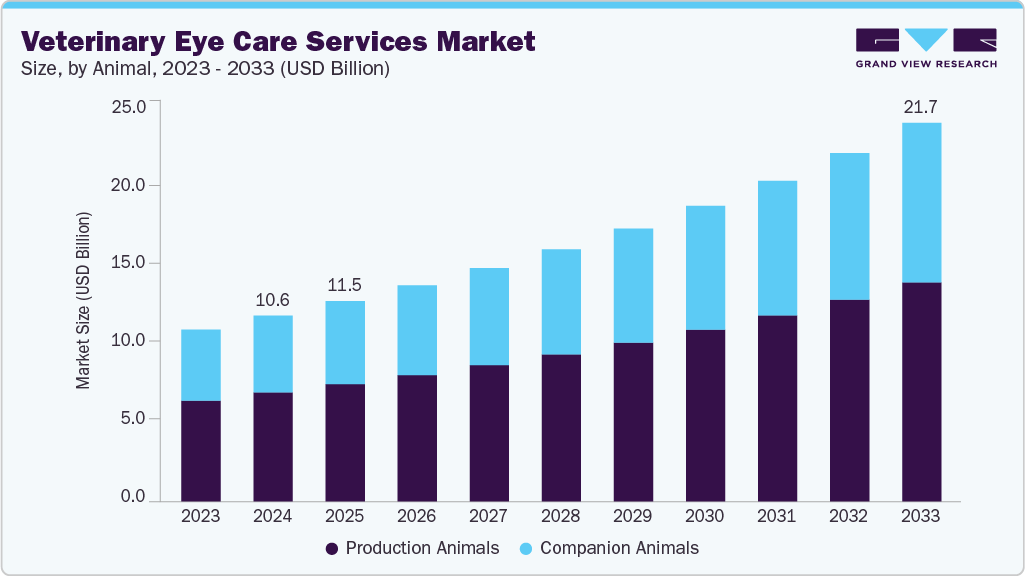
The global veterinary eye care services market size was valued at USD 11.4 billion in 2025 and is projected to grow from USD 12.3 billion in 2026 to USD 21.7 billion by 2033, at a CAGR of 8.4% from 2026 to 2033. The North America held the largest share of 36.5% of the global market in 2025. Some of the leading factors driving the growth are ongoing advancements in veterinary eye care practice, rapid veterinary service expansion activities, increasing awareness efforts from the veterinary fraternity, and booming research activities to enhance eye care.
 Source: Grand View Research, IR Documents, Primary Interviews, Paid DatabasesTo learn more about this report,
 Download Free Sample Report
 Key Market Trends & Insights
- By service: Treatment segment held the largest market share in 2025.
- By animal: Production animals segment held the largest market share of 58.6% in 2025.
- By service provider: Veterinary hospitals/clinics segment accounted for the largest revenue share in 2025.
- By indication: Uveitis segment accounted for the largest market share in 2025.
Regional Highlights
- Largest regional market: North America (36.5% revenue share, 2025)
- Fastest-growing regional market: Asia Pacific (highest CAGR, 2026-2033)
- By country: The U.S. held the largest market share in 2025.
Market Size & Forecast
- Market size in 2025: USD 11.4 Billion
- Estimated market size in 2026: USD 12.3 Billion
- Projected market size by 2033: USD 21.7 Billion
- CAGR (2026-2033): 8.4%
Three ways to get this report
Buy it, customize it, or ask a question.Ask an Analyst
Analyst response in 1 business day
- AccessReport author, directly
- Reply timeWithin 1 working day
- No sales callDirect answer only
- FormatEmail reply
- CostFree, no cost
Get the Full Report
What the study covers
- FormatsPDF · Excel · Dashboard
- Timeline2026–2033 annual, 2025 base
- Coverage20+ countries, 5 regions
- Companies10+ key players profiled
Customize the Report
20% free customization
- IncludeCountries, segments, points
- TailorTo your product definition
- ExtendDeeper competitor detail
- OrA fully bespoke study
- Turnaround5–10 working days
One of the major drivers of market growth is the ongoing advancements in veterinary eye care practices. The June 2025 data published by Improve Veterinary Practice highlighted four research papers that are proving to be crucial in small animal ophthalmology by enhancing diagnostics, refining treatment protocols, and standardizing clinical practices.The first study on lens capsule disruption (LCD) in canine cataract surgery revealed a higher-than-expected prevalence (~28%), even in non-diabetic dogs with slow cataract progression. The integration of preoperative ocular ultrasound proved valuable for identifying vitreous abnormalities when direct visualization is obstructed, enabling improved surgical planning, more precise risk stratification, and better owner counseling. These refinements contribute to higher surgical success rates and reduced postoperative complications, setting a higher standard of eye care.
 To learn more about this report, Download Free Sample Report
 In the second study, which was centered on spontaneous chronic corneal epithelial defects (SCEEDs), it was demonstrated that corneal thermal cautery, especially in combination with debridement, may yield first-procedure success rates of approximately 65% with minimal sedation. This provides a safer, cost-effective therapeutic option for practitioners, reducing healing times and procedural risks while expanding access to effective ulcer management.
The third paper emphasized pathogen profiling in feline ocular surface disease, showing Mycoplasma spp. as a more prevalent etiological agent than previously recognized. The results demonstrate the advantages of targeted therapy and molecular diagnostics, which promote treatment effectiveness, reduce excessive antibiotic usage, and reinforce biosecurity in shelter populations.
The fourth study, the Schirmer tear test (STT) study, focused on the impact of eyelid position on measurements of tear production and the value of standardizing testing methods to improve accuracy and reproducibility, two factors that are crucial for chronic conditions like keratoconjunctivitis sicca.
These innovations highlight three core growth factors for the global veterinary eye care services market, namely, enhanced diagnostic accuracy, evidence-based treatment optimization, and procedural standardization. These advances improve patient outcomes, boost client confidence, and increase adoption of advanced surgical tools, diagnostics, and therapeutics - directly supporting market expansion across equipment, biologics, and specialty services.
How AI Is Revolutionizing The Veterinary Eye Care Services Sector:
Factor
Effect on Veterinary Eye Care Services
AI-powered diagnostics
Enhances early detection of eye diseases, improves accuracy, and reduces misdiagnosis in animals.
Image analysis & pattern recognition
Enables automated interpretation of retinal scans, OCT images, and other ocular imaging, speeding up evaluations.
Predictive analytics
Helps forecast disease progression, allowing veterinarians to plan timely interventions and personalized treatment.
Workflow optimization
Streamlines administrative tasks and patient records, freeing clinicians to focus more on patient care.
Telemedicine & AI-assisted consultations
Facilitates remote ophthalmic assessments, expanding access to specialized care in underserved regions.
AI-guided surgical planning
Supports precision in complex eye surgeries, improving outcomes and reducing complications.
Drug and therapy recommendation systems
Suggests optimized treatment plans based on patient data and historical outcomes, enhancing therapeutic efficiency.
Market Concentration & Characteristics
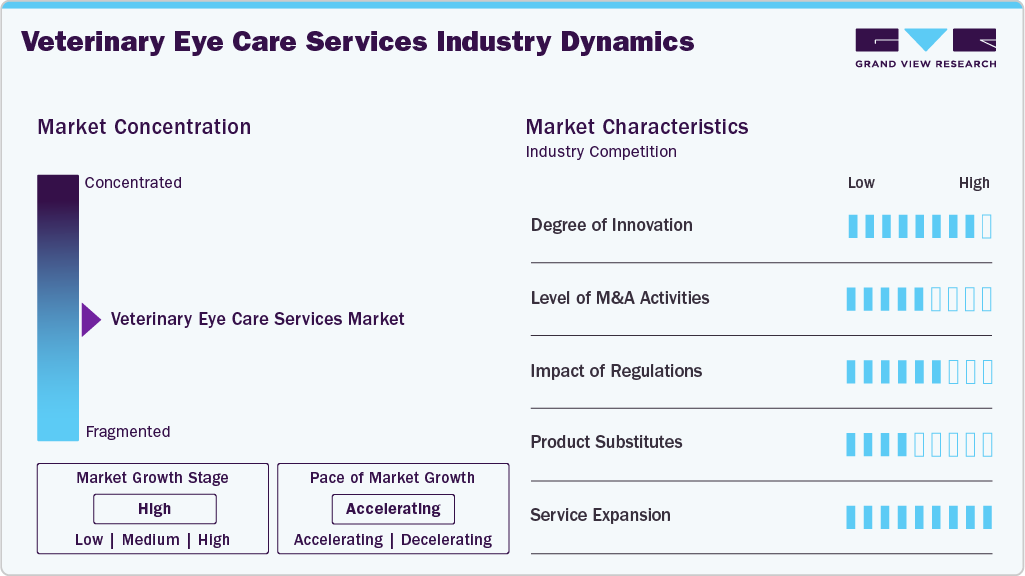
The industry is expected to exhibit a high level of innovation. Rapid advances in technology integration, diagnostics, and therapeutics contribute to this innovation. AI-driven solutions boost workflow efficiency and diagnostic precision, while standardized products like serum-based eye drops reduce in-clinic preparation times. Innovations like long-acting ocular implants, which redefine treatment options at the same time, highlight an important industry transition toward more rapid, reliable, and patient-focused ophthalmic care.
The industry's M&A activity level is expected to be moderate. The industry is exhibiting a steady stream of acquisitions and consolidations as corporate groups and private equity firms seek to build scale, access new geographies, and acquire specialty or high-value clinics. At the same time, regulatory constraints, market fragmentation, and varying deal multiples mean that not all players are rushing in; many practices seek more measured, cautious dealmaking rather than large-scale deals.
 To learn more about this report, Download Free Sample Report
 The industry's regulatory impact can be characterized as moderate, highlighting ethical, superior and safe standards over establishing significant barriers. In order to ensure that treatments and procedures adhere to constant quality standards, the regions mandate compliance with veterinary licensing standards, drug and biologics approvals, and clinical practice guidelines. This balanced regulatory environment supports innovation and adoption of new technologies while safeguarding animal welfare, making it a steady but manageable driver of market growth.
The industry's product substitutes are expected to be low to moderate, as most treatments and diagnostics have limited direct replacements, but several alternative management options exist. For instance, in early-stage conditions, topical therapies are sometimes utilized in place of surgical procedures, and generic ophthalmic medications can be administered in place of branded ones, providing less costly alternatives. The demand for high-quality care remains fairly stable, regardless of price sensitivity, as specialized procedures like cataract surgery, advanced imaging, or ocular implants have few viable options.
Service expansion in the industry is at a high stage and is expected to steadily increase, with more clinics adding emergency, specialty, advanced diagnostics, and referral services under one roof. Practices are scaling up physical facilities, extending hours, and diversifying into subspecialties to meet growing demand for comprehensive, integrated animal health care. This trend boosts client access, raises care standards, and drives investments in infrastructure and talent, all of which support stronger growth in the market.
Animal Insights
On the basis of animal, the production animals segment held the largest revenue share of 58.59% in 2025, largely owing to their high economic value and wide population base, which makes eye care essential for productivity. In addition to decreased weight gain, milk yield, or egg production, eye diseases like infectious conjunctivitis in poultry or pinkeye in cattle may result in large financial losses. Preventive eye care and timely treatment reduce morbidity, improve animal welfare, and protect herd performance. Producers' return on investment justifies the ocular care cost in production animals. As a result, demand for diagnostics, therapeutics, and field-level veterinary services remains consistently high, giving production animals the largest market share.
The companion animal segment is expected to grow at a significant CAGR over the forecast period. Leading factors driving this growth are increasing demand from pet owners for advanced treatments and willingness to pay for specialized surgical procedures (such as retinal reattachment or cataract removal with intraocular lens implants) that were once rare. Diagnostic sophistication is also rising; veterinary ophthalmology now offers advanced imaging and early detection tools for glaucoma, retinal disease, and corneal damage in pets that improve prognosis. Increased access to veterinary specialist services and pet owners' increasing understanding of ocular disease promote regular examinations, early interventions, and elective procedures, all of which boost the companion animal segment's growth rate to rise.
Service Insights
On the basis of service, the treatment segment accounted for the largest revenue share in 2025. This is due to the high cost yet specialized nature of these treatments. For instance, as per the November 2024 article by PetMD, Dog cataract surgery may cost anywhere from $2,700 to $4,000, depending on the extent of the disease and if either of the eyes is treated. The need for specialized surgical methods is being driven by the rising incidence of ocular disorders in animals. Revenue from these advanced and costly treatments continues to grow the segment's market share as pet owners demonstrate a rising willingness to invest in the health of their animals.
The consultation segment is projected to exhibit a significant growth rate over the forecast period. This growth trend is influenced by recent advancements in artificial intelligence (AI) and tele-ophthalmology. Internet-based tools like fundus and anterior segment photography are being used by veterinarians to assess and track eye conditions in animals, thereby reducing the need for in-person visits. AI-powered solutions are continuously enhancing diagnostic accuracy, accelerating diagnostic processes, and interpreting diagnostic images with greater efficiency. By eliminating the reliance on in-person consultations, these innovations are actively improving both the efficacy and accessibility of eye care services. The growing demand for practical remote veterinary services, combined with ongoing technological advancements, is driving the rapid expansion of the consultation segment.
Service Provider Insights
The veterinary hospitals/ clinics segment led the market in terms of revenue in 2025. Their ability to offer a full spectrum of eye care services from routine exams to advanced diagnostics and complex surgeries makes them the preferred choice for pet owners. These facilities, equipped with advanced technology and qualified ophthalmologists, garner a significant number of patients, including referrals and emergencies. Their focus on comprehensive care and improved treatment outcomes fosters persistent client trust and promotes repeated visits. Growing pet health awareness positions veterinary hospitals and clinics as the primary growth driver.
The other service providers segment, which includes academic and research institutions and animal welfare organizations, represents the second-largest share of the market. These institutions play a vital role by driving innovation through clinical studies, developing new therapies, and advancing treatment protocols for animal ocular diseases. Animal welfare organizations also contribute significantly by offering affordable or subsidized eye care services, particularly for rescued, stray, or community animals. They enhance awareness of early identification and treatment of eye problems and expand access to care. The combination of welfare-focused outreach and research-driven innovations firmly establishes them as the second-largest division in the industry.
Indication Insights
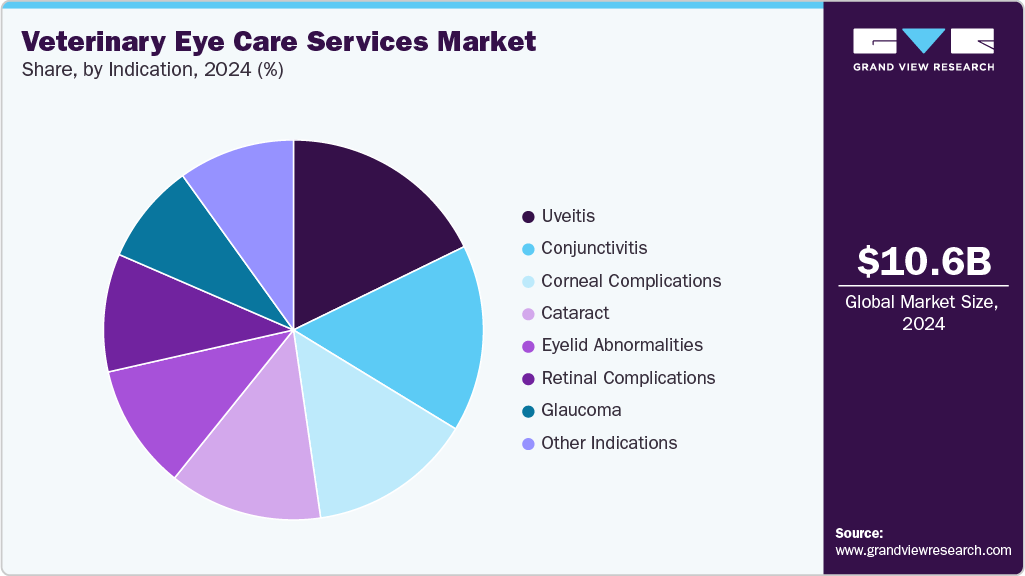
On the basis of indication, uveitis holds the largest share in veterinary eye care due to its high prevalence and status as a leading cause of animal blindness. Its chronic and recurrent nature requires ongoing management, driving repeat veterinary visits and high treatment demand. Costly, ongoing therapies such as topical steroids, cyclosporine implants, or vitrectomy surgery are a frequent part of treatment. Recent innovations, like novel anti-inflammatory eye drops, further increase treatment adoption. Regular monitoring to prevent flare-ups adds to the segment’s revenue share.
 To learn more about this report, Download Free Sample Report
The conjunctivitis segment is expected to grow at the fastest CAGR over the forecast period. Conjunctivitis is the most common eye condition in dogs and cats, making it a leading reason for veterinary visits and fueling strong growth in this segment. Its wide range of causes, like bacterial, viral, allergic, or trauma-related, necessitates frequent diagnostic workups and tailored treatments, from antibiotics and antivirals to anti-inflammatory drops. Since some cases are recurrent or chronic, they require ongoing follow-ups and repeat prescriptions, creating sustained revenue opportunities. Additionally, the condition’s visible symptoms, such as redness and discharge, prompt pet owners to seek care quickly, driving high treatment adoption and supporting the fastest CAGR for this segment over the forecast period.Regional Insights
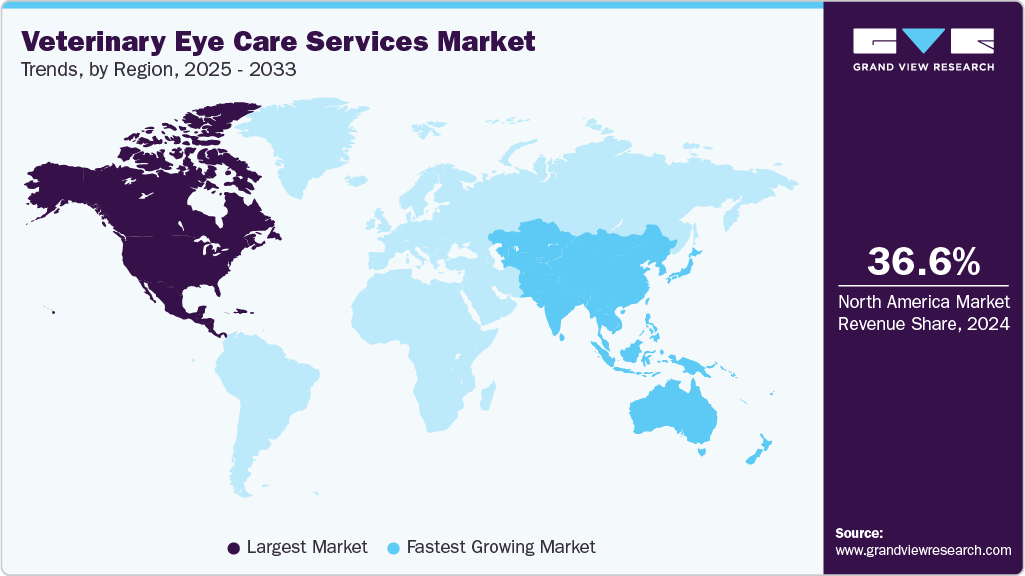
North America veterinary eye care services market held the largest revenue share of 36.50% in 2025. The regional market is driven by the rapid expansion of emergency and specialty veterinary hospitals offering 24/7 care, advanced diagnostics, and ICU facilities. Rising pet ownership and humanization of pets are pushing demand for high-quality care and specialized treatments. Investments in innovative technology and consolidated service networks are further boosting market growth.
 To learn more about this report, Download Free Sample Report
 U.S. Veterinary Eye Care Services Market Trends
The veterinary eye care services market in the U.S. led North America and held the largest revenue share in 2025. The country's specialty and emergency veterinary services are expanding due to increasing demand for advanced diagnostics and around-the-clock care. Workforce shortages are creating capacity constraints, which drive investment in facilities and technology. Pet owners’ willingness to spend on high-quality, convenient care is increasing per-pet revenue.
Europe Veterinary Eye Care Services Market Trends
The veterinary eye care services market in Europe is growing as clinics invest in modern, specialized facilities like advanced ophthalmology centers and referral hospitals. Demand for comprehensive and skilled treatment is being driven by increasing pet owners' expectations for superior, specialized care. Sustainable practices, state-of-the-art infrastructure, and innovative technology boost service quality and distinguish suppliers, fueling market growth. For instance, in July 2024, Eye Vet, a veterinary ophthalmology center in the UK, appointed two new ophthalmologists to enhance its specialized eye care services.
The UK veterinary eye care services marketis driven by investments in modern veterinary facilities and specialized centers like ophthalmology clinics. Pet owners' expectations for superior amenities are seen in the growing demand for specialized and advanced care. The country is witnessing growth due to a number of strategic initiatives positioning it as an increasingly competitive marketplace. For instance, in January 2026, Defra launched a consultation to reform UK veterinary legislation, including mandatory licensing for practices, price transparency, and stronger regulatory oversight. This is expected to improve service quality, compliance standards, and structured delivery of specialized veterinary eye care services across the UK.
Asia Pacific Veterinary Eye Care Services Market Trends
The veterinary eye care services market in Asia Pacific is expected to be the fastest growing industry. The region is driven by rapidly increasing pet populations, especially in countries like China, South Korea, and India, among others, which is driving demand for veterinary services. Rising disposable incomes and awareness of animal welfare are encouraging owners to invest in premium and specialty care. The emergence of specialist veterinarians and advanced clinics further supports growth.
China veterinary eye care services market is driven by rising companion animal ownership, increasing disposable income, and growing demand for specialty ophthalmology services for cataract, glaucoma, and retinal disorders. The MARA administrative measures strengthened clinic standardization and service compliance, improving quality across veterinary practices. Some of the key players include Ruipeng Pet Healthcare, New Ruipeng Group, and specialty referral clinics in major cities. Competition is increasing through advanced diagnostics, ophthalmic surgery adoption, and the expansion of premium multi-specialty veterinary hospitals.
The veterinary eye care services market in India is driven by the expansion of specialized services such as animal eye care to meet rising pet owner expectations. Increased awareness of pet welfare and growing pet ownership are key demand drivers. Investments in clinic infrastructure and advanced equipment are accelerating market development. For instance, in December 2025, rising smog levels in Delhi led to a surge in respiratory distress and eye infections among pets and birds, with veterinarians reporting increased conjunctivitis and ocular irritation cases. This increased pollution-driven demand is accelerating growth in the veterinary eye care services market through higher ophthalmic consultations and treatment needs.
Latin America Veterinary Eye Care Services Market Trends
The veterinary eye care services market in Latin America is expanding quickly due to rising pet ownership and increasing demand for quality care in urban centers. The establishment of specialized medical facilities and competition are being driven by corporate players and new entrants. Investment in modern infrastructure and specialized treatments is being promoted by the professionalization of veterinary services and growing awareness of animal welfare.
Brazil veterinary eye care services market is supported by new entrants and corporate players like VetFamily, increasing competition and service coverage. Growing pet ownership and demand for quality veterinary care in urban centers drive growth. Academic and research engagement is improving standards and advancing specialty services.
Middle East & Africa Veterinary Eye Care Services Market Trends
The veterinary eye care services market in the Middle East & Africa is expanding, fueled by regulatory initiatives and government-backed expansion of veterinary services in countries like Saudi Arabia and Oman. Investments in modern clinics and specialty treatments complement the rising demand for quality care. For instance, in September 2025, Saudi Arabia and Oman launched the region's first mobile veterinary clinic.
South Africa veterinary eye care services market is driven by increasing pet care awareness and demand for high-quality veterinary services. Financial constraints among owners affect service uptake, making cost-effective solutions necessary. Investment in preventive care, efficiency, and clinic modernization supports growth despite affordability challenges.
Key Veterinary Eye Care Services Companies Insights
The veterinary eye care services market is moderately concentrated, with a relatively small number of specialized providers offering advanced treatments like ocular implants, cataract surgery, and referral services. Most clinics, however, focus on general consultations and diagnostics, which are more common and form the backbone of the industry. Standardized treatments and AI-driven diagnostics are two examples of innovations that aid professionals in distinguishing themselves and provide more valuable care. Some businesses may grow and enhance their capabilities while preserving quality through M&A activity and gradual service expansion. Overall, the market strikes a balance between specialized expertise and widely accessible care, supporting steady and sustainable growth.
Key Veterinary Eye Care Services Companies:
The following key companies have been profiled for this study on the veterinary eye care services market.
- The Animal Medical Center (AMC)
- VCA Animal Hospitals
- Salam Veterinary Group
- Royal Veterinary College (RVC)
- The Eye Vet
- Veterinary Eye Institute (VEI)
- Veterinary Vision
- Perth Animal Eye Hospital
- Veterinary Eye Clinic Nagoya
- The Eye Specialist for Animals
Recent Developments
-
In December 2025, Schwarzman Animal Medical Center completed its USD 125 million hospital expansion, adding new ophthalmology, radiology, and emergency facilities. Enhanced specialty infrastructure and advanced ophthalmic capabilities are strengthening the veterinary eye care services market by improving access to complex eye care treatments.
-
In October 2025, researchers from The Hebrew University of Jerusalem and the University of California, Davis School of Veterinary Medicine found that topical 1% penciclovir cream was safe and effective for feline herpesvirus eye infections. This innovation supports the veterinary eye care services market by expanding treatment options for chronic ocular diseases in cats.
-
In October 2025, Anderson Moores Veterinary Specialists launched a dedicated ophthalmology service in partnership with Eastcott Veterinary Referrals. The addition of specialist-led eye care services increases referral capacity and advanced ocular treatment access, supporting growth in the veterinary eye care services market.
-
In July 2025, Oklahoma State University's College of Veterinary Medicine received a USD 2 million donation from Dr. James and Elizabeth Wise to establish the James and Elizabeth Wise Endowed Chair of Veterinary Ophthalmology. This donation aims to enhance education and research in animal eye care, supporting the college's mission to provide top-tier veterinary services and address the state's veterinary needs.
Veterinary Eye Care Services Market Report Scope
Report Attribute
Details
Market size in 2025
USD 11.4 billion
Estimated market size in 2026
USD 12.3 billion
Projected market size by 2033
USD 21.7 billion
Growth rate
CAGR of 8.4% from 2026 to 2033
Actual data
2021 - 2025
Forecast period
2026 - 2033
Quantitative units
Revenue in USD million/billion and CAGR from 2026 to 2033
Report coverage
Revenue forecast, company ranking, competitive landscape, growth factors, and trends
Segments covered
Animal, service, indication, service provider, region
Regional scope
North America; Europe; Asia Pacific; Latin America; MEA
Country scope
U.S.; Canada; Mexico; UK; Germany; France; Italy; Spain; Denmark; Sweden; Norway; Japan; China; India; Australia; South Korea; Thailand; Brazil; Argentina; South Africa; Saudi Arabia; UAE; Kuwait; Qatar; Oman
Key companies profiled
The Animal Medical Center (AMC); VCA Animal Hospitals; Salam Veterinary Group; Royal Veterinary College (RVC); The Eye Vet; Veterinary Eye Institute (VEI); Veterinary Vision; Perth Animal Eye Hospital; Veterinary Eye Clinic Nagoya; The Eye Specialist for Animals
Customization scope
Free report customization (equivalent up to 8 analysts working days) with purchase. Addition or alteration to country, regional & segment scope.
Pricing and purchase options
Avail customized purchase options to meet your exact research needs. Explore purchase options
Global Veterinary Eye Care Services Market Report Segmentation
This report forecasts revenue growth at global, regional, and country levels and provides an analysis of the latest industry trends in each of the sub-segments from 2021 to 2033. For this study, Grand View Research has segmented the global veterinary eye care services market report based on animal, service, indication, service provider, and region.
-
Animal Outlook (Revenue, USD Million, 2021 - 2033)
-
Companion Animals
-
Dogs
-
Cats
-
Horses
-
Others
-
-
Production Animals
-
Cattle
-
Poultry
-
Swine
-
Others
-
-
-
Service Outlook (Revenue, USD Million, 2021 - 2033)
-
Consultation
-
Diagnosis
-
In-Vitro Diagnosis
-
In-Vivo Diagnosis
-
-
Treatment
-
Surgery
-
Corneal
-
Cataract
-
Eyelid
-
Other Surgeries
-
-
Others
-
-
-
Indication Outlook (Revenue, USD Million, 2021 - 2033)
-
Eyelid Abnormalities
-
Cataract
-
Glaucoma
-
Retinal Complications
-
Uveitis
-
Conjunctivitis
-
Corneal Complications
-
Other Indications
-
-
Service Provider Outlook (Revenue, USD Million, 2021 - 2033)
-
Veterinary Hospitals/Clinics
-
Others
-
-
Regional Outlook (Revenue, USD Million, 2021- 2033)
-
North America
-
U.S.
-
Canada
-
Mexico
-
-
Europe
-
UK
-
Germany
-
France
-
Italy
-
Spain
-
Denmark
-
Sweden
-
Norway
-
-
Asia Pacific
-
Japan
-
India
-
China
-
South Korea
-
Australia
-
Thailand
-
-
Latin America
-
Brazil
-
Argentina
-
-
Middle East and Africa (MEA)
-
South Africa
-
Saudi Arabia
-
UAE
-
Kuwait
-
Qatar
-
Oman
-
-
Frequently Asked Questions About This Report
The treatment segment held the largest market share in 2025.
The production animals segment held the largest revenue share of 58.6% in 2025.
The veterinary hospitals/clinics segment accounted for the largest revenue share in 2025.
The uveitis segment held the largest market share in 2025.
North America dominated the market with a 36.5% revenue share in 2025.
Key factors driving the veterinary eye care services market include ongoing advancements in veterinary eye care practices, rapid veterinary service expansion activities, increasing awareness efforts from the veterinary fraternity, growing research activities to enhance eye care, improved diagnostic accuracy, evidence-based treatment optimization, and procedural standardization.
The global veterinary eye care services market is expected to grow at a CAGR of 8.4% from 2026 to 2033, reaching USD 21.7 billion by 2033.
Asia Pacific is the fastest-growing region over the forecast period.
The global veterinary eye care services market size was valued at USD 11.4 billion in 2025 and is estimated at USD 12.3 billion for 2026.
Some of the key players operating in the veterinary eye care services market include The Animal Medical Center (AMC), VCA Animal Hospitals, Salam Veterinary Group, Royal Veterinary College (RVC), The Eye Vet, Veterinary Eye Institute (VEI), Veterinary Vision, Perth Animal Eye Hospital, Veterinary Eye Clinic Nagoya, and The Eye Specialist for Animals.
About the Author(s)
Animal Health Research Team
Healthcare · Animal HealthThis report was authored by the animal health research team at Grand View Research - comprising two research analysts, one senior research analyst, and one industry expert - with specialized expertise in the animal health segment of the healthcare industry. All findings are based on proprietary healthcare databases, executive interviews, and regulatory analysis, subject to internal peer review prior to publication.
Last Updated:
Speak to Analyst

Customize this report to your needs - add regions, segments, or data points, with 20% free customization.
Or view our licence options:


ISO 9001:2015 & 27001:2022 Certified
We are GDPR and CCPA compliant! Your transaction & personal information is safe and secure. For more details, please read our privacy policy.


