
- Home
- »
- Biotechnology
- »
-
Viral Inactivation Market Size & Share Report, 2026-2033GVR Report cover
![Viral Inactivation Market (2026 - 2033)Report]()
Viral Inactivation Market (2026 - 2033)
Size, Share & Trends Analysis Report By Product & Service (Kits & Reagents, Services), By Application (Vaccines & Therapeutics, Stem Cell Products), By End-use, By Region, And Segment Forecasts
Market Size, 2025
$793.0MMarket Estimate, 2026
$878.0MMarket Forecast, 2033
$1,980.0MCAGR, 2026–2033
12.3%Viral Inactivation Market Summary
The global viral inactivation market size was valued at USD 793.0 million in 2025 and is projected to grow from USD 878.0 million in 2026 to USD 1,980.0 million by 2033, at a CAGR of 12.3% from 2026 to 2033. North America dominated the global market with the largest revenue share of 41.2% in 2025. The rise in the number of pharmaceutical and biotechnological companies, rise in drug launches and approvals, increasing funding and investments for R&D, and the increasing prevalence of chronic diseases such as cancer, diabetes, and autoimmune disorders leading to the increase in healthcare expenditure are the driving factors propelling the market growth.

Key Market Trends & Insights
- By product & service: Kits and reagents segment led the market with the largest revenue share of 57.0% in 2025.
- By application: Vaccines and therapeutics segment led the market with the largest revenue share of 34.0% in 2025.
- By end-use: Pharmaceutical and biotechnology companies segment led the market with the largest revenue share of 38.5 % in 2025.
Regional Highlights
- Largest regional market: North America (41.2% revenue share, 2025)
- Fastest-growing regional market: Asia Pacific (highest CAGR, 2026-2033)
- By country: The viral inactivation market in the U.S. held the largest share in the North America region in 2025.
Market Size & Forecast
- Market size in 2025: USD 793.0 Million
- Estimated market size in 2026: USD 878.0 Million
- Projected market size by 2035: USD 1,980.0 Million
- CAGR (2026-2033): 12.3%
The development of novel therapeutics against SARS-CoV2 during the outbreak of the COVID-19 pandemic has led many biopharmaceutical companies to study viral inactivation procedures and their market. Recent developments have helped this market grow positively to quite an extent, such as viral inactivation procedures, which irradiation rays can also perform. For instance, according to a research report published in 2023 by Springer Nature Limited, irradiation rays help in inactivating virions through ionizing and non-ionizing effects. These rays destroy the genome by the action of radicals on viral nucleic acids, causing less damage to the protein membrane.
In addition, according to a report published by the PDA Journal of Pharmaceutical Science and Technology, in 2024, the use of detergents or low pH was employed in downstream biologics processing to inactivate enveloped viruses. In addition, other procedures such as media supplement treatments, virus filtration, and high-temperature, short-time processing have been widely used for viral inactivation procedures. For instance, according to a study by the Institute of Virology, Slovakia, in 2023, an approach to combat infectious diseases was performed by using heat inactivation (high temperature). It was found that 99.8% of SARS-CoV2 were killed by a single Ni foam-based filter pass-through, which was heated up to 200 degrees Celsius.
Market Dynamics
The viral inactivation market is being driven by the growing demand for biologics, biosimilars, vaccines, blood and plasma-derived products, and advanced cell and gene therapies, all of which require stringent viral safety measures to comply with regulatory standards. Increasing regulatory scrutiny from agencies such as the U.S. Food and Drug Administration and European Medicines Agency is encouraging pharmaceutical and biotechnology companies to adopt robust viral inactivation technologies throughout manufacturing processes. Technological advancements in solvent-detergent treatment, low-pH inactivation, pasteurization, and emerging pathogen reduction methods are further supporting market growth. However, the market faces challenges including high implementation and validation costs, complex regulatory requirements, and potential impacts on product quality during inactivation procedures. Despite these constraints, increasing investments in biopharmaceutical production capacity, rising prevalence of infectious diseases, and expanding research activities in cell and gene therapy are expected to create significant growth opportunities, particularly in North America, Europe, and rapidly developing biopharmaceutical hubs across Asia-Pacific.
The increasing production of biopharmaceuticals, including monoclonal antibodies, recombinant proteins, vaccines, and plasma-derived therapeutics, is a major driver of the viral inactivation market. As these products are derived from biological sources, manufacturers must implement effective viral safety measures to eliminate the risk of viral contamination and ensure patient safety. The rapid expansion of biologics pipelines, coupled with rising demand for advanced therapies such as cell and gene therapies, has significantly increased the adoption of viral inactivation technologies across pharmaceutical and biotechnology manufacturing facilities.
A key restraint in the viral inactivation market is the high cost associated with implementing and validating viral inactivation processes. Manufacturers must conduct extensive studies to demonstrate the effectiveness, reproducibility, and regulatory compliance of viral clearance methods, which can be both time-consuming and expensive. Additionally, specialized equipment, skilled personnel, and stringent quality control requirements increase operational costs, creating challenges for small and mid-sized biotechnology companies with limited resources.
The growing commercialization of cell and gene therapies presents a significant opportunity for the viral inactivation market. As these innovative therapies increasingly move from clinical development to large-scale manufacturing, ensuring viral safety throughout production becomes critical. This has created demand for advanced viral inactivation and viral clearance solutions that can effectively protect highly sensitive biological products without compromising their efficacy. Rising investments in regenerative medicine, expanding clinical trial activity, and increasing regulatory emphasis on product safety are expected to drive the adoption of next-generation viral inactivation technologies in the coming years.
Market Concentration & Characteristics
The viral inactivation industry demonstrates a moderate to high degree of innovation, driven by advancements in biopharmaceutical manufacturing and safety protocols. Emerging technologies, such as advanced filtration methods and UV-C irradiation, enhance process efficiency and scalability. Innovations focus on ensuring compliance with stringent regulatory standards, improving product quality, and reducing operational costs.
The viral inactivation industry exhibits a high level of collaboration and partnership, with biopharmaceutical companies, research institutions, and technology providers working together to develop advanced solutions. Strategic alliances, co-development agreements, and shared expertise drive innovation, regulatory compliance, and market expansion, fostering growth and ensuring the safe production of biologics.
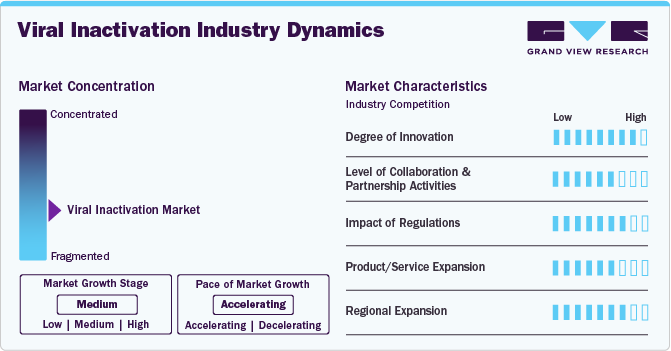
Regulations significantly shape the viral inactivation industry, driving innovation and ensuring product safety. Strict guidelines from agencies like the FDA and EMA mandate rigorous testing, validation, and compliance in biopharmaceutical manufacturing.
Product and service expansion in the viral inactivation industry is accelerating, driven by rising demand for biologics, vaccines, and gene therapies. Companies are diversifying their offerings with advanced inactivation technologies, enhanced filtration systems, and integrated validation services. These expansions address evolving industry needs, enabling scalability, efficiency, and improved biopharmaceutical manufacturing processes.
Regional expansion in the viral inactivation industry is fueled by growing biopharmaceutical industries in emerging markets like Asia-Pacific and Latin America. Established players are entering these regions through partnerships, new facilities, and distribution networks. This expansion supports local biologics production, meeting rising demand while diversifying the global market presence.
Analyst Perspective
The viral inactivation market sits at the intersection of accelerating biologics innovation and tightening global safety expectations, making it a structurally resilient segment within bioprocessing. Demand is being consistently reinforced by the expanding pipeline of monoclonal antibodies, vaccines, and next-generation therapies, where viral safety is a non-negotiable regulatory requirement rather than an optional step. At the same time, the market is gradually shifting from conventional chemical-based methods toward more integrated, process-friendly and automated inactivation solutions that reduce production risk and improve efficiency. While high costs and process complexity can slow adoption in smaller firms, long-term growth visibility remains strong due to increasing outsourcing to CDMOs and continuous capacity expansion across established and emerging biotech hubs.
Product & Services Insights
Based on product & service, the kits and reagents segment led the market with the largest revenue share of 57.0% in 2025. This is attributed to the rise in biopharmaceutical and biotechnological companies worldwide. The increasing development activities of companies and product launches have positively impacted the market. For instance, in 2023, Croda Pharma launched Virodex TXR-1 and TXR-2 for effective viral inactivation. The increase in R&D investments has led to drug development, which is driving growth in the market.

The services segment is expected to register at the fastest CAGR of 13.71% over the forecast period. This growth can be attributed to the ease of management and services offered by various service-providing companies, thereby helping the segment growth of this market. Contract Research Organizations offer quality standards and safety guidelines by providing virus inactivation procedures and planning further steps in the drug development process.
Application Insights
Based on application, the vaccines and therapeutics segment led the market with the largest revenue share of 33.9% in 2025. It can be attributed to the rising investments in R&D applications such as gene therapy and stem cell research, contributing significantly to market growth. The increasing incidences of cancer and other chronic diseases have increased demand for inactivated vaccines, which is further expected to help market growth. Researchers and scientists have developed various procedures for viral activation. For instance, according to a research report published in Frontiers in 2023, chemical reagents such as TNA-Cifer Reagent E help in the effective inactivation of the virus while preserving RNA for sensitive PCR testing. This also helps in the safe handling of samples and transport without the need for biosafety facilities.
The stem cell products segment is expected to register at a significant CAGR over the forecast period. Stem cell products are at high risk of contamination, so intense requirement for viral inactivation is required. Stem cell research has also been increasing in developed and developing countries with the help of government support. Stem cell research has progressed a lot within a shorter time period and has contributed to treating various diseases, thereby driving market growth. For instance, according to the information published by the Ministry of Health and Family Welfare in February 2022, the Department of Biotechnology (DBT), India, invested USD 8.79 million in stem cell research and other potential therapeutic applications in the past three years.
End-use Insights
Based on end-use, the pharmaceutical and biotechnology companies segment led the market with the largest revenue share of 38.5% in 2025. It can be attributed to the growth of pharmaceutical and biopharmaceutical companies, which has helped in the investment to find alternative therapies, thereby increasing the number of new drugs. These companies use bioreactors and various techniques such as solvent detergent, low pH, and other methods to ensure the safety of the product. For instance, in March 2022, Thermo Fisher Scientific Inc., a global company operating in life science research, developed and introduced a viral inactivation Medium formula, InhibiSURE. The new formula is expected to help in the collection and inactivation of the SARS-CoV-2 virus and RNA stabilizing at ambient temperature for use in in-vitro diagnostic testing procedures.
The academic and research institutes segment is expected to register at a significant CAGR during the forecast period. These institutes help in conducting fundamental research by studying the mechanisms, developing various viral inactivation techniques and collaborating with biopharmaceutical and biotechnological companies to translate research findings into practical applications for enhancing the safety of biological products. This is expected to help this segment grow positively in this market.
Regional Insights
North America dominated the Viral Inactivation Market with the largest revenue share of 41.2% in 2025. This growth can be attributed to the advanced infrastructure, presence of major pharmaceutical and biotechnological companies, significant R&D investments, and healthcare expenditure by the government and companies. For instance, in May 2024, the University of Alberta researchers received federal research grants of nearly USD 100 million to find and develop diagnostic tests, vaccines, and treatments against a wide range of threats.

U.S. Viral Inactivation Market Trends
The Viral Inactivation Market in the U.S. held the largest share in the North America region in 2025. The growth can be attributed to the increasing R&D facilities and government initiatives. The high prevalence of various diseases and their requirement for treatment facilities has also surged market growth in the country. The U.S. viral clearance testing service providers have helped in upgrading capabilities and infrastructure. The increase in funding has also driven the market growth.
Europe Viral Inactivation Market Trends
The viral inactivation market in Europe registered significant growth in 2024. Europe’s well-developed infrastructure, healthcare facilities, and scope of R&D have driven the market to grow. The German Center for Infection Research (DZIF) studies eco-immunological factors associated with viral infections, which can inform the development of better viral inactivation methods. Various partnerships have proved to be a major source of market growth in Germany. The University of Technology Sydney has collaborated with German partners on using irradiation to inactivate viruses by damaging their genome and disrupting viral proteins.
The UK viral inactivation market theld a significant share in 2024, due to a strong biopharmaceutical sector and advanced research infrastructure. Demand is fueled by vaccine production, biologics development, and stringent regulatory standards. Companies focus on innovative solutions and partnerships to enhance manufacturing efficiency, ensuring compliance and competitiveness in the global market.
The viral inactivation market in France is experiencing significant growth. The market is growing steadily, supported by a well-established pharmaceutical industry and strong government investment in biotechnology. The country's focus on biologics, vaccines, and gene therapies drives demand for innovative inactivation technologies. Regulatory compliance and collaborations with research institutions further enhance market growth and global competitiveness.
The Germany viral inactivation market is growing due to a combination of factors. The market is bolstered by its leadership in biotechnology and pharmaceutical manufacturing. The country's emphasis on precision engineering and innovation supports the development of advanced inactivation technologies. Strong regulatory frameworks, extensive R&D investments, and collaborations with global players position Germany as a key hub in the viral inactivation sector.
Asia Pacific Viral Inactivation Market Trends
The viral inactivation market in the Asia Pacific is anticipated to witness at a significant CAGR during the forecast period, owing to the significant increase in investments, technological advancements, and research across the region. The Department of Biotechnology (DBT) and the Ministry of Science and Technology of India are supporting various R&D projects. Researchers at the Indian Institute of Technology (IIT) Guwahati are conducting fundamental research to understand the mechanisms of viral inactivation. Their labs focus on studying immune responses to viral infections that can inform the development of better inactivation methods. The continuous efforts made by the government and various initiatives have also helped in driving the market growth.
The China viral inactivation market is rapidly expanding, driven by the growing biopharmaceutical industry and increasing demand for biologics and vaccines. Government initiatives, substantial R&D investments, and local manufacturing capabilities fuel innovation. Partnerships with global firms and adherence to evolving regulatory standards position China as a rising player in the global market.
The viral inactivation market in Japan is steadily advancing, supported by a strong biopharmaceutical sector and cutting-edge research in biotechnology. The country’s focus on high-quality biologics and vaccines drives demand for innovative inactivation technologies. Regulatory rigor, government support, and collaborations with global and domestic players enhance Japan’s competitiveness in the global market.
MEA Viral Inactivation Market Trends
The viral inactivation market in MEA has experienced considerable growth in recent years, driven by several factors. The region is driven by increasing investments in healthcare infrastructure and the rising demand for vaccines and biologics. The region benefits from growing pharmaceutical industries, collaborations with global companies, and improving regulatory standards, positioning MEA as a promising market for viral inactivation technologies.
The Saudi Arabia viral inactivation market is growing, fueled by significant investments in healthcare and biotechnology as part of the Vision 2030 initiative. The country's expanding pharmaceutical sector, focus on vaccine production, and regulatory reforms drive demand for advanced inactivation technologies. Strategic partnerships and local manufacturing boost Saudi Arabia's position in the regional market.
The viral inactivation market in Kuwait is emerging, supported by the country's investments in healthcare and biotechnology. While the market is still developing, the demand for viral inactivation technologies is growing due to the increasing focus on biologics, vaccines, and regulatory advancements. Collaborations with global pharmaceutical companies are expected to drive future growth.
Key Viral Inactivation Company Insights
Key companies are growing their market revenue by launching new products, collaborations and adopting various other strategies.
Key Viral Inactivation Companies
The following are the leading companies in the viral inactivation market.
-
Charles River Laboratories, Inc.
-
Clean Cells
-
Cytiva (Danaher Corporation)
-
Merck KGaA
-
Mettler Toledo
-
Parker Hannifin Corp
-
Rad Source Technologies Inc
-
Sartorius AG
-
Texcell SA
-
Vironova AB
Competitive Benchmarking
Category
Operating Strategies
Competitive Edge
Weakness
Established Players (e.g., Danaher, Merck KGaA, Sartorius AG, Thermo Fisher Scientific)
- Focus on providing comprehensive viral safety solutions including viral inactivation reagents, filtration systems, validation services, and bioprocessing platforms. Expand capabilities through acquisitions, strategic partnerships with biopharmaceutical manufacturers, and investments in advanced viral clearance technologies for biologics, vaccines, and cell and gene therapies. Emphasize regulatory compliance, process integration, and global service networks.
- Strong global presence, extensive product portfolios, established relationships with pharmaceutical and biotechnology companies, and deep expertise in regulatory requirements. Ability to offer end-to-end viral safety solutions integrated with broader bioprocessing workflows enhances customer retention and recurring revenue streams.
- High operational and compliance costs, lengthy product development and validation cycles, and relatively slower adaptation to niche or emerging viral safety technologies. Large organizational structures may reduce flexibility in addressing highly specialized customer requirements.
Emerging Players (e.g., Clean Cells, Rad Source Technologies Inc, Texcell & others)
- Focus on innovative viral inactivation methods, rapid viral detection technologies, next-generation filtration systems, and customized viral clearance services for advanced therapy developers. Target high-growth applications such as cell and gene therapy, regenerative medicine, and personalized therapeutics through flexible service models and technology partnerships.
- Faster innovation cycles, strong specialization in emerging therapeutic segments, and ability to deliver customized solutions tailored to specific manufacturing processes. Agile business models enable quicker response to evolving regulatory and customer requirements.
- Limited global footprint, lower brand recognition, and constrained financial resources compared to established players. Dependence on partnerships and contract-based revenues can create scalability challenges, while limited regulatory experience may hinder penetration into large commercial biopharmaceutical projects.
Recent Developments
-
In June 2023, Texcell SA announced the launch of a testing facility in North America. This step is expected to help the company in enhancing the viral safety and clearance procedures of medical devices and biotherapeutics.
-
In May 2021, Charles River Laboratories announced its plans to acquire Rockville’s Vigene Biosciences, which is engaged in providing viral vector-based gene delivery solutions. The acquisition is expected to help the company in enhancing its gene therapy capabilities.
-
In September 2020, Merck KGaA announced the expansion of its biosafety testing laboratory services in Singapore. It is expected to enable customers to conduct viral clearance studies and ensure the safety & quality of various biological drugs during clinical development.
Viral Inactivation Market Report Scope
Report Attribute
Details
Market size in 2025
USD 793.0 million
Estimated market Size in 2026
USD 877.9 million
Projected market Size by 2033
USD 1,980.0 million
Growth rate
CAGR of 12.3% from 2026 to 2033
Historical data
2021 - 2025
Forecast period
2026 - 2033
Quantitative units
Revenue in USD million/billion and CAGR from 2026 to 2033
Report coverage
Revenue forecast, company ranking, competitive landscape, growth factors, and trends
Segments covered
Product & Services, application, end-use, region
Regional scope
North America; Europe; Asia Pacific; Latin America; MEA
Country scope
U.S.; Canada; Mexico; Germany; UK; France; Italy; Spain; Norway; Denmark; Sweden; China; Japan; India; South Korea; Australia; Thailand; Brazil; Argentina; Saudi Arabia; South Africa; UAE; Kuwait
Key companies profiled
Charles River Laboratories, Inc.; Clean Cells; Cytiva (Danaher Corporation); Merck KGaA; Mettler Toledo; Parker Hannifin Corp; Rad Source Technologies Inc; Sartorius AG; Texcell SA; Vironova AB.
Customization scope
Free report customization (equivalent up to 8 analysts' working days) with purchase. Addition or alteration to country, regional & segment scope.
Pricing and purchase options
Avail customized purchase options to meet your exact research needs. Explore purchase options
Global Viral Inactivation Market Report Segmentation
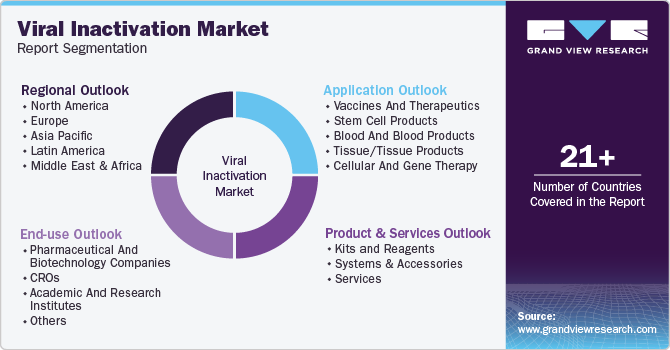
This report forecasts revenue growth at global, regional, and country levels and provides an analysis of the latest industry trends in each of the sub-segments from 2021 to 2033. For this study, Grand View Research has segmented the global viral inactivation market report based on product & services, application, end-use, and region:
-
Product & Services Outlook (Revenue, USD Million, 2021 - 2033)
-
Kits and Reagents
-
Systems & Accessories
-
Services
-
-
Application Outlook (Revenue, USD Million, 2021 - 2033)
-
Vaccines and Therapeutics
-
Stem Cell Products
-
Blood and Blood Products
-
Tissue/ Tissue Products
-
Cellular and Gene Therapy
-
-
End-use Outlook (Revenue, USD Million, 2021 - 2033)
-
Pharmaceutical and Biotechnology Companies
-
CROs
-
Academic and Research Institutes
-
Others
-
-
Regional Outlook (Revenue, USD Million, 2021 - 2033)
-
North America
-
U.S.
-
Canada
-
Mexico
-
-
Europe
-
UK
-
Germany
-
France
-
Italy
-
Spain
-
Denmark
-
Sweden
-
Norway
-
-
APAC
-
Japan
-
China
-
India
-
Australia
-
South Korea
-
Thailand
-
-
Latin America
-
Brazil
-
Argentina
-
-
MEA
-
South Africa
-
Saudi Arabia
-
UAE
-
Kuwait
-
-
Research Methodology
Segment Definition
Segment - Product & Services
Revenue capture definition
Kits and Reagents
Revenue is generated through the sale of viral inactivation reagents, detergents, solvents, buffers, filtration media, validation kits, and consumables used to eliminate or reduce viral contamination during biologics manufacturing, blood processing, and cell therapy production. Recurring purchases of consumables make this a key revenue-generating segment.
Systems & Accessories
Revenue is captured from the commercialization of viral inactivation equipment, filtration systems, chromatography platforms, UV irradiation devices, automated processing units, and related accessories used in biopharmaceutical production and viral safety workflows. Demand is driven by increasing bioprocess automation and regulatory compliance requirements.
Services
Revenue is derived from outsourced viral clearance studies, viral safety testing, process validation, regulatory consulting, and contract viral inactivation services provided to pharmaceutical, biotechnology, and advanced therapy developers seeking compliance with global regulatory standards.
Segment - Application
Revenue capture definition
Vaccines and Therapeutics
Revenue is generated through viral inactivation technologies and services utilized in the development and manufacturing of vaccines, monoclonal antibodies, recombinant proteins, plasma-derived therapies, and other biologics where viral safety is a critical regulatory requirement.
Stem Cell Products
Revenue is captured from viral inactivation solutions used during stem cell processing and manufacturing to ensure product safety, reduce contamination risks, and comply with stringent quality standards in regenerative medicine applications.
Blood and Blood Products
Revenue is derived from the use of viral inactivation methods in blood plasma, coagulation factors, immunoglobulins, and transfusion products to minimize the risk of pathogen transmission and enhance patient safety.
Tissue/Tissue Products
Revenue is generated through viral safety technologies applied in tissue processing, preservation, and transplantation products to reduce viral contamination risks while maintaining tissue integrity and therapeutic effectiveness.
Cellular and Gene Therapy
Revenue is captured from advanced viral clearance and inactivation solutions supporting the manufacturing of cell therapies, gene therapies, viral vectors, and genetically engineered products, a rapidly expanding segment driven by next-generation therapeutic development.
Segment - End-use
Revenue capture definition
CROs
Revenue is derived from contract research organizations investing in viral safety testing capabilities, viral clearance studies, and regulatory support services to meet outsourcing demand from pharmaceutical and biotechnology clients.
Academic and Research Institutes
Revenue is captured from research laboratories, universities, and public research organizations utilizing viral inactivation technologies for vaccine research, virology studies, cell culture applications, and translational medicine programs.
Others
Revenue is generated from government laboratories, blood banks, tissue banks, contract development and manufacturing organizations (CDMOs), diagnostic centers, and healthcare institutions implementing viral safety protocols across various biomedical and clinical applications.
Delivered Customizations
This report has been delivered with the following In-depth customizations
Client Request
Customization Delivered
Value Adds
Viral Inactivation Market Landscape & Technology Adoption Analysis
Developed a tailored assessment of the global viral inactivation market across key segments including kits & reagents, systems & accessories, and services. The analysis also covered application areas such as vaccines & therapeutics, blood and blood products, stem cell products, tissue products, and cell & gene therapy, along with end-use dynamics across pharmaceutical companies, CROs, and research institutes.
Enables stakeholders to understand evolving viral safety requirements in biologics manufacturing, identify high-growth application areas such as cell & gene therapy, evaluate adoption of advanced inactivation technologies, and assess regulatory-driven demand expansion across global biopharmaceutical production.
Competitive Landscape & Viral Safety Technology Benchmarking
Delivered a customized evaluation of leading viral inactivation solution providers, including reagent manufacturers, filtration system developers, and service providers. The study includes benchmarking of viral clearance technologies, process integration capabilities, regulatory compliance readiness, validation service offerings, and innovation in rapid and scalable viral safety platforms.
Provides actionable insights into competitive positioning, technology differentiation, innovation gaps, and partnership opportunities, helping clients optimize procurement strategies, strengthen product development pipelines, and align with evolving regulatory standards in biologics manufacturing.
Cell & Gene Therapy and Advanced Biologics Opportunity Assessment
Conducted a focused analysis of viral inactivation requirements in high-growth advanced therapy segments including cell therapy, gene therapy, and viral vector manufacturing. The study evaluated evolving viral safety protocols, increasing complexity of biologics pipelines, and the need for next-generation viral clearance and validation services.
Supports strategic decision-making by identifying high-value growth opportunities in advanced therapeutics, enabling investment prioritization in scalable viral safety solutions, improving risk mitigation strategies, and strengthening positioning in next-generation biomanufacturing ecosystems.
Frequently Asked Questions About This Report
The global viral inactivation market size was estimated at USD 793.0 million in 2025 and is expected to reach USD 878.0 million in 2026.
The global viral inactivation market is expected to grow at a compound annual growth rate of 12.3% from 2026 to 2033 to reach USD 1,980.0 million by 2033.
Key factors that are driving the market growth include the global rise in the number of pharmaceutical and biopharmaceutical companies, increasing investment in the life sciences sector, rise in the number of drug launches & approvals, increase in funding by government for the development of pharmaceutical and biopharmaceutical industries.
Kits and reagents dominated the viral inactivation market with a share of 57.0% in 2025. This is attributable to their continuous usage by pharmaceutical and biopharmaceutical companies and rises in R&D spending for the purpose of new drug development.
Some key players operating in the viral inactivation market include Charles River Laboratories, Inc.; Clean Cells; Cytiva (Danaher Corporation); Merck KGaA; Mettler Toledo; Parker Hannifin Corp; Rad Source Technologies Inc; Sartorius AG; Texcell SA; Vironova AB.
the vaccines and therapeutics segment led the market with the largest revenue share of 34.0% in 2025
North America dominated the Viral Inactivation Market with the largest revenue share of 41.2% in 2025.
Asia Pacific is the fastest-growing region over the forecast period.
the pharmaceutical and biotechnology companies segment led the market with the largest revenue share of 38.5% in 2025
About the Author(s)
Biotechnology Research Team
Healthcare · BiotechnologyThis report was authored by the biotechnology research team at Grand View Research - comprising two research analysts, one senior research analyst, and one industry expert - with specialized expertise in the biotechnology segment of the healthcare industry. All findings are based on proprietary healthcare databases, executive interviews, and regulatory analysis, subject to internal peer review prior to publication.
Last Updated:
Speak to Analyst

Need a Tailored Report?
Customize this report to your needs — add regions, segments, or data points, with 20% free customization.
Or view our licence options:


ISO 9001:2015 & 27001:2022 Certified
We are GDPR and CCPA compliant! Your transaction & personal information is safe and secure. For more details, please read our privacy policy.












