
- Home
- »
- Electronic & Electrical
- »
-
Water Dispenser Market Size And Share Report, 2026-2033GVR Report cover

Water Dispenser Market (2026 - 2033)
Size, Share & Trends Analysis Report By Product (Bottled, Bottle-less), By Application (Residential, Commercial, Industrial), By Distribution Channel (Online, Retail Stores), By Region, And Segment Forecasts
Market Size, 2025
$3.6BMarket Estimate, 2026
$3.9BMarket Forecast, 2033
$6.5BCAGR, 2026–2033
7.7%Water Dispenser Market Summary
The global water dispenser market size was valued at USD 3.6 billion in 2025 and is projected to grow from USD 3.9 billion in 2026 to USD 6.5 billion by 2033, at a CAGR of 7.7% from 2026 to 2033. The market in North America dominated with a revenue share of 37.5% in 2025. The industry is gaining momentum due to increasing demand for convenient and reliable access to safe drinking water across residential and commercial settings.
 Source: Grand View Research, IR Documents, Primary Interviews, Paid DatabasesTo learn more about this report,
 Download Free Sample Report
 Key Market Trends & Insights
- By product: Bottled water dispenser segment held the largest market share of 69.9% in 2025.
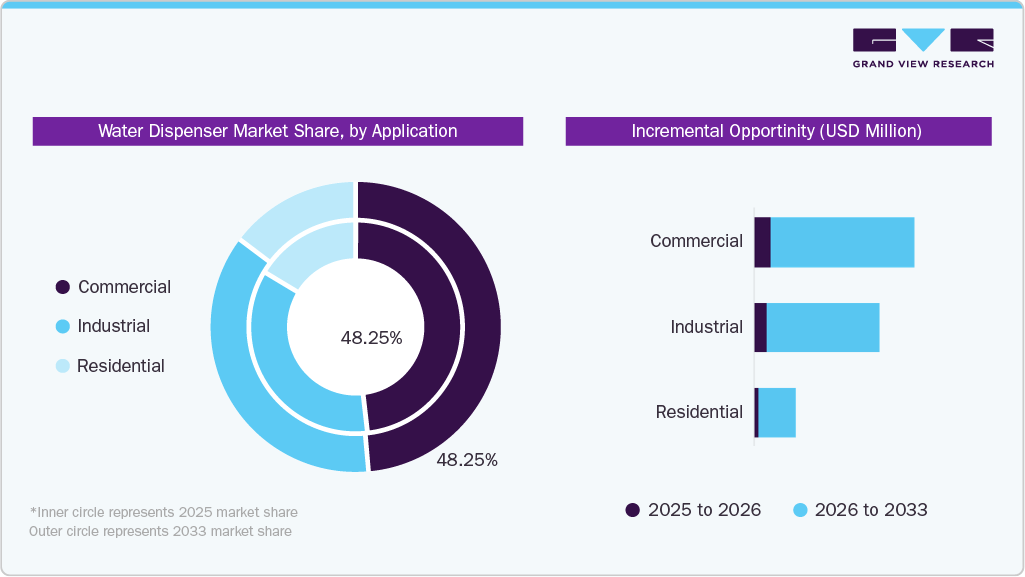
- By application: Commercial water dispensers segment held the largest market share of 48.2% in 2025.
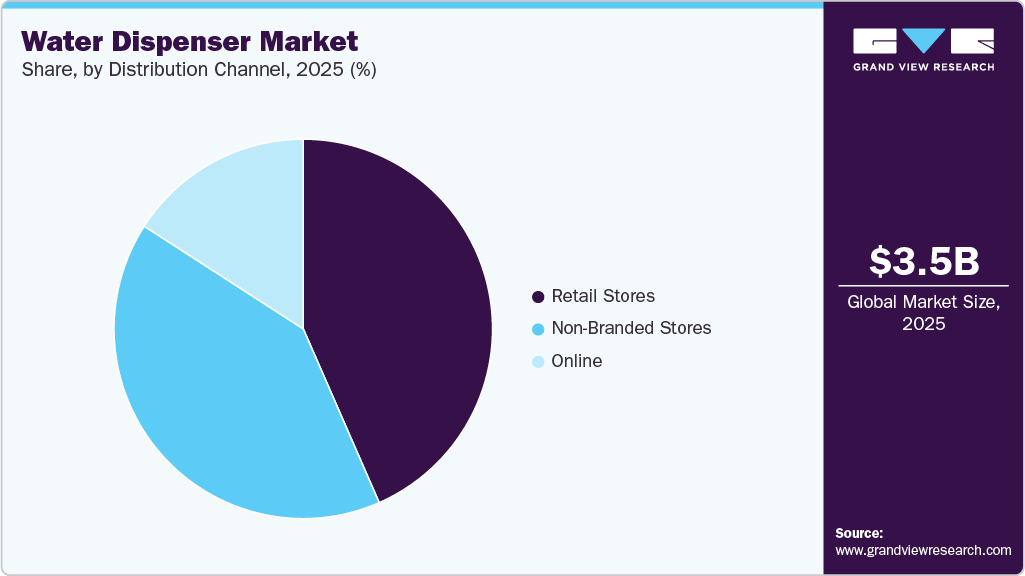
- By distribution channel: Retail stores segment held the largest market share of 43.4% in 2025.
Regional Highlights
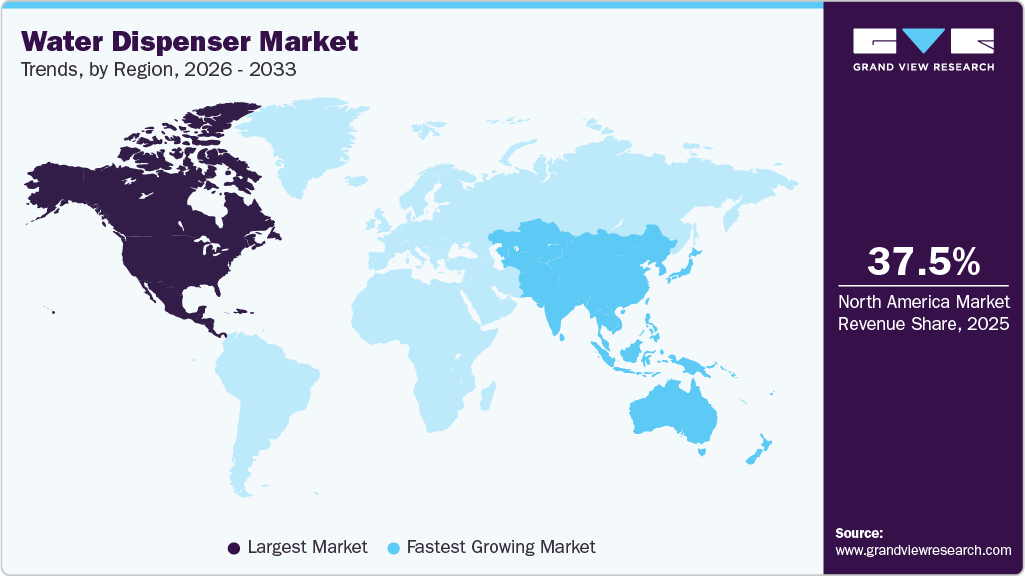
- Largest regional market: North America (37.5% revenue share, 2025)
- Fastest-growing regional market: Asia Pacific (highest CAGR, 2026-2033)
- By country: The U.S. held the largest market share in 2025
Market Size & Forecast
- Market size in 2025: USD 3.6 Billion
- Estimated market size in 2026: USD 3.9 Billion
- Projected market size by 2033: USD 6.5 Billion
- CAGR (2026-2033): 7.7%
Three ways to get this report
Buy it, customize it, or ask a question.Ask an Analyst
Analyst response in 1 business day
- AccessReport author, directly
- Reply timeWithin 1 working day
- No sales callDirect answer only
- FormatEmail reply
- CostFree, no cost
Get the Full Report
What the study covers
- FormatsPDF · Excel · Dashboard
- Timeline2026–2033 annual, 2025 base
- Coverage20+ countries, 5 regions
- Companies10+ key players profiled
Customize the Report
20% free customization
- IncludeCountries, segments, points
- TailorTo your product definition
- ExtendDeeper competitor detail
- OrA fully bespoke study
- Turnaround5–10 working days
Product adoption is supported by ease of installation, minimal plumbing requirements, and low maintenance needs, making dispensers suitable for a wide range of environments, including homes, offices, schools, and healthcare facilities. Rising concerns around water quality and contamination are encouraging consumers to shift toward systems that provide instant access to purified water, particularly in regions facing inconsistent municipal water supply. This has strengthened demand for dispensers equipped with integrated purification technologies such as multi-stage filtration, UV, and RO systems, which enhance water safety while maintaining ease of use.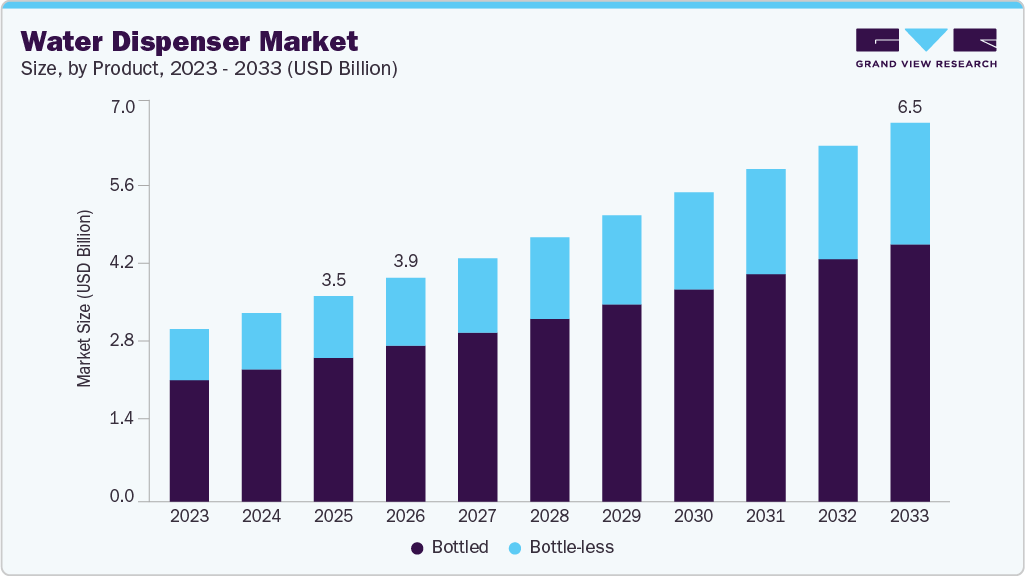 To learn more about this report, Download Free Sample Report
 Changing consumer preferences toward hygiene and touch-free interactions are also influencing product development, with sensor-based dispensing and contactless operation gaining strong traction in shared environments. Heightened awareness around health and sanitation has accelerated the adoption of such features, particularly in workplaces and public spaces where minimizing physical contact is a priority. At the same time, consumers are increasingly favoring economical and functional models that deliver reliable performance without high upfront costs, especially in price-sensitive markets. The rapid expansion of e-commerce platforms is further supporting market growth by improving product accessibility, enabling easy comparison of features, and offering competitive pricing, thereby influencing faster purchase decisions.
Rising commercial and office demand is emerging as a key growth driver, as businesses prioritize employee well-being and workplace amenities. Offices, co-working spaces, and commercial establishments are increasingly installing water dispensers to ensure continuous access to clean drinking water, reduce dependence on single-use plastic bottles, and support sustainability goals. High footfall environments require systems that can deliver consistent performance during peak usage hours, driving demand for durable, high-capacity dispensers with efficient cooling and heating capabilities. In addition, service contracts, regular maintenance support, and bulk installation solutions offered by manufacturers are making dispensers a practical and scalable solution for commercial applications.
Ongoing product innovation is further strengthening market expansion, with manufacturers focusing on advanced filtration systems, improved temperature control, and smart monitoring features that enhance usability and performance. Reflecting this trend, Elkay launched the Liv EZ built-in filtered water dispenser in October 2025, extending its commercial-grade filtration technology into residential applications with features such as high-flow filtered water, flexible in-wall installation, and battery-powered operation that removes the need for electrical wiring. The system is designed to reduce contaminants, including lead and microplastics, aligning with growing consumer demand for safe and convenient hydration solutions at home. At the same time, factors such as recurring filter replacement costs, maintenance expenses, and higher usage during summer months can influence overall ownership costs. Despite these challenges, rising urbanization, increasing disposable incomes, and growing awareness of health and hydration continue to support long-term demand, positioning water dispensers as an essential utility across modern households and commercial infrastructure.
Brand Market Share Insights
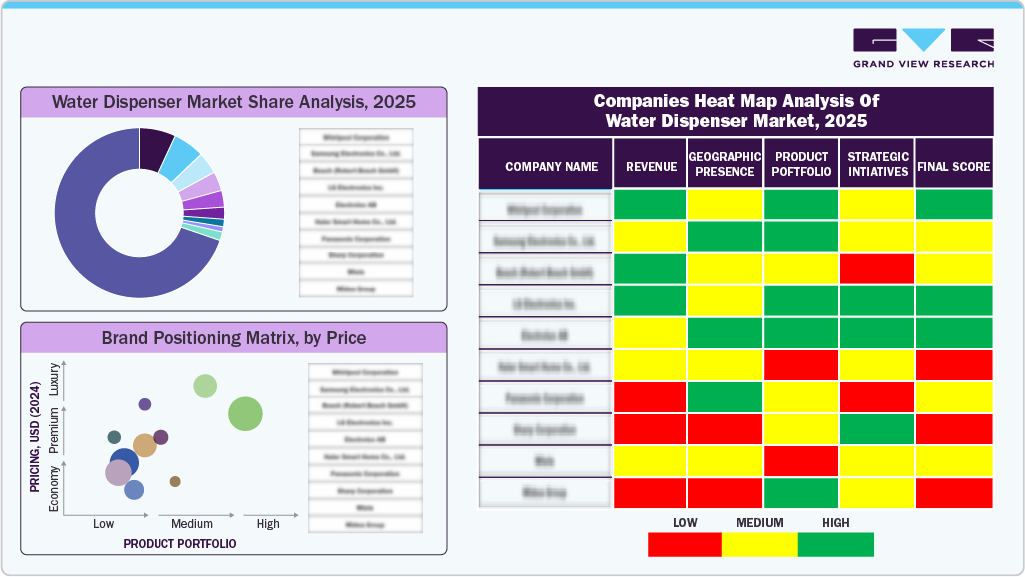
The global water dispenser industry is characterized by a mix of multinational manufacturers and regional players focusing on convenience, hygiene, and water quality. Companies are integrating advanced filtration, compact designs, and user-friendly features to support usage across homes, offices, and public spaces with high-frequency demand.
 To learn more about this report, Download Free Sample Report
 Players such as Culligan International and Primo Water Corporation are expanding portfolios with multi-stage purification, touchless dispensing, and service-based models. At the same time, sustainability is becoming a key differentiator, with growing emphasis on reducing plastic usage, improving energy efficiency, and promoting refill-based consumption.
Consumer Insights
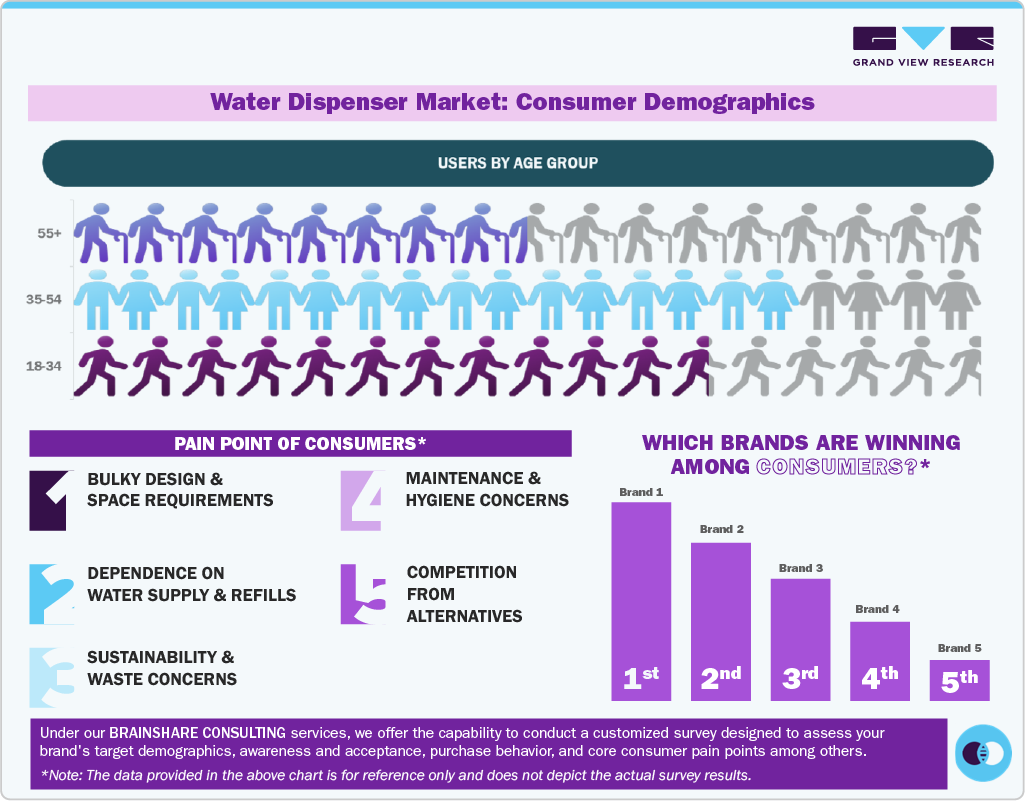
Consumers are evaluating products based on real-world performance over time, rather than just initial functionality. Buyers pay close attention to filtration consistency, water taste stability, flow rate, and durability of internal components such as filters, taps, and cooling systems after prolonged use. Demand is strongest for systems that deliver reliable purification, consistent temperature output, and minimal performance drop even with high-frequency usage. Ease of maintenance, including simple filter replacement, cleaning accessibility, and clear service indicators, has become a baseline expectation. Brands that clearly communicate filtration efficiency, contaminant reduction capabilities, and product lifespan tend to see higher customer retention, while products that require frequent servicing or show performance inconsistencies are quickly replaced.
 To learn more about this report, Download Free Sample Report
 Spending patterns reflect usage intensity and application environment rather than just income levels. Value-driven consumers, particularly in residential settings, prioritize affordable models with essential filtration and dispensing functions, often influenced by bundled offers, subscription-based filter replacements, and online discounts. In contrast, commercial users and higher-income households focus on long-term reliability, higher capacity, and advanced purification technologies, showing willingness to invest in systems that reduce dependency on bottled water and lower operating costs over time. Sustainability is becoming a practical purchase factor, with increasing preference for point-of-use systems that minimize plastic waste while maintaining water quality. Additionally, factors such as after-sales service availability, warranty coverage, and ease of installation are playing a critical role in decision-making, positioning water dispensers as a functional, repeat-use appliance embedded in daily consumption rather than a one-time purchase.
Product Insights
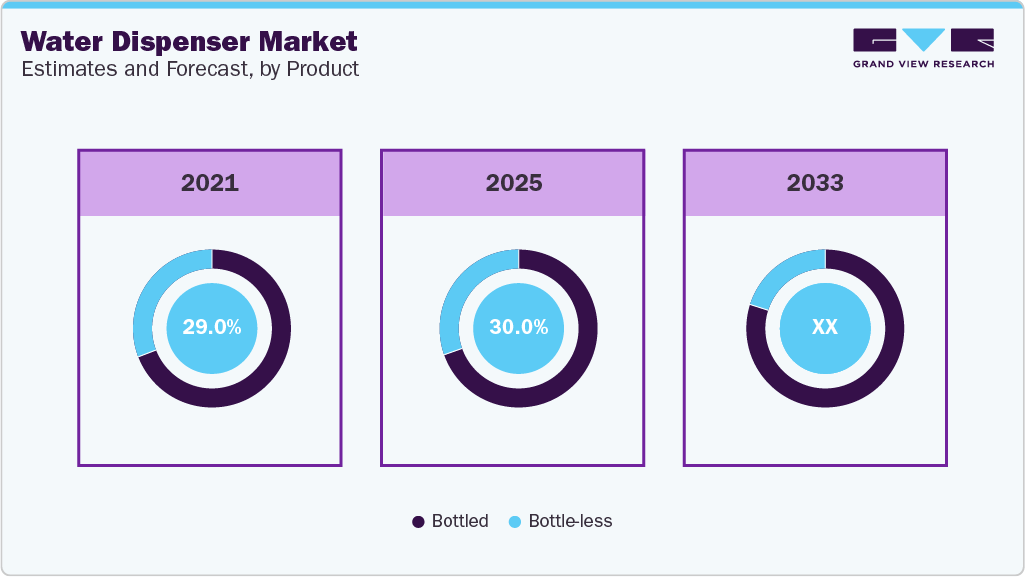
The bottled water dispenser segment led the market with the largest revenue share of 69.9% in 2025, supported by its widespread adoption across both residential and commercial environments where ease of access and minimal installation are key requirements. These systems operate independently of direct plumbing, making them highly suitable for offices, retail spaces, educational institutions, and rental homes where infrastructure constraints or flexibility needs limit the use of point-of-use systems. The recurring demand for water bottles also contributes to sustained revenue generation, as consumers and businesses regularly reorder supplies to maintain uninterrupted usage. In addition, bottled dispensers are often preferred for their consistent water quality, particularly in regions where tap water reliability is a concern, reinforcing trust and repeat usage.
 To learn more about this report, Download Free Sample Report
 Bottle-less water dispensers are anticipated to grow at the fastest CAGR of 8.7% from 2026 to 2033, driven by increasing preference for continuous, on-demand access to purified water without the need for bottle handling or replacement. These systems connect directly to water supply lines and use built-in filtration, making them highly suitable for offices, commercial spaces, and modern households seeking convenience and operational efficiency. Consumers are shifting toward solutions that eliminate the logistical burden of storing, lifting, and reordering water cans, particularly in high-usage environments, while also benefiting from lower long-term costs compared to bottled systems. At the same time, rising awareness around sustainability and plastic waste reduction is accelerating adoption, as bottle-less dispensers support refill-free usage and reduced environmental impact.
Application Insights
Commercial water dispensers led the market with the largest revenue share of 48.2% in 2025, driven by consistent and high-volume usage across offices, corporate campuses, educational institutions, healthcare facilities, and hospitality environments. These settings require reliable systems capable of delivering continuous hot and cold water throughout the day, particularly during peak usage hours, making durability and performance stability key purchase criteria. Demand is further supported by the need to provide safe and accessible drinking water to employees, visitors, and customers, positioning dispensers as an essential workplace and facility utility rather than an optional appliance. In addition, commercial users prioritize features such as high-capacity output, fast dispensing, low downtime, and ease of maintenance to ensure uninterrupted operation.
 To learn more about this report, Download Free Sample Report
 The industrial water dispenser segment is projected to grow at a substantial CAGR of 8.3% from 2026 to 2033, driven by rising demand for high-capacity, durable hydration solutions across manufacturing facilities, construction sites, warehouses, and large-scale industrial operations. These environments require systems that can withstand continuous usage, deliver high output volumes, and operate reliably under harsh conditions such as dust, heat, and heavy footfall. Demand is reinforced by the need to ensure worker safety and compliance with occupational health standards, where access to clean drinking water is essential during long working hours and physically intensive tasks. Industrial users prioritize features such as robust build quality, high cooling efficiency, corrosion-resistant components, and low maintenance requirements to support uninterrupted performance. In addition, easy installation, large storage capacity, and compatibility with varying water sources are key considerations, particularly in remote or infrastructure-limited locations.
Distribution Channel Insights
The sales of water dispensers through retail stores led the market with the largest revenue share of 43.4% in 2025, driven by the need for physical evaluation and purchase assurance for a utility-based appliance. Consumers prefer visiting appliance and electronics stores to assess key factors such as dispenser size, build quality, storage capacity, and compatibility with bottled or direct water connections before making a decision. Retail environments allow buyers to compare multiple models side by side, understand differences in filtration systems, cooling and heating performance, and overall usability, which is critical for products intended for long-term daily use. In addition, in-store sales staff provide guidance on installation requirements, maintenance needs, and suitable product types based on the usage environment, whether residential, office, or industrial. Retail stores also support immediate purchase and faster setup, often including delivery and installation services, reducing waiting time compared to online channels.
 To learn more about this report, Download Free Sample Report
 The online sale of water dispensers is projected to grow at a substantial CAGR of 9.4% from 2026 to 2033, driven by increasing consumer preference for convenience, wider product availability, and transparent price comparison. E-commerce platforms allow buyers to explore multiple models across capacities, filtration technologies, and configurations, supported by detailed specifications and customer reviews that aid decision-making without the need for store visits. Competitive pricing, discounts, and bundled offers on filters or services further improve purchase attractiveness, particularly among price-sensitive consumers. At the same time, improvements in logistics, including faster delivery, doorstep installation, and easy return policies, are reducing purchase barriers for large appliances.
Regional Insights
North America water dispenser market accounted for a revenue share of 37.5% of the global market in 2025. The industry in North America is driven by strong demand across residential, commercial, and institutional settings where reliable access to safe drinking water is a baseline requirement. High penetration of office spaces, corporate campuses, healthcare facilities, and educational institutions creates consistent, year-round usage, supporting stable demand rather than seasonal spikes. Consumers across the U.S. and Canada increasingly integrate water dispensers into daily routines at home and workplaces, driven by convenience, hygiene, and the need for instant access to hot and cold water. In addition, growing awareness of water quality and contamination concerns is reinforcing demand for systems equipped with advanced filtration technologies. A well-established distribution network, widespread adoption of both bottled and bottle-less systems, and strong presence of manufacturers such as Primo Water Corporation and Culligan International continue to support market maturity.
 To learn more about this report, Download Free Sample Report
 U.S. Water Dispenser Market Trends
The water dispenser market in the U.S. accounted for a revenue share of 82.8% of the North American region in 2025. The industry in the U.S. is driven by widespread adoption across households, corporate offices, healthcare facilities, and educational institutions, where continuous access to safe drinking water is essential. Demand remains consistent throughout the year due to high usage frequency in workplaces and residential settings, supported by large-scale office infrastructure and strong emphasis on employee well-being and workplace amenities. Consumers in the U.S. increasingly prefer both bottled and bottle-less systems based on convenience, water quality, and long-term cost considerations, with a growing inclination toward advanced filtration technologies to address concerns around contaminants and water safety.
Canada water dispenser market is expected to grow at a CAGR of 7.7% from 2026 to 2033, driven by increasing demand for reliable and convenient access to safe drinking water across both residential and commercial environments. Growing urbanization and higher adoption of modern kitchen and workplace infrastructure are supporting demand for both bottled and bottle-less dispenser systems, particularly in offices, co-working spaces, and multi-unit residential buildings. Consumers are showing a stronger preference for systems that offer integrated filtration and consistent water quality, reflecting rising awareness around water safety and long-term health considerations.
Europe Water Dispenser Market Trends
The water dispenser market in Europe accounted for a revenue share of 29.0% in 2025, driven by strong demand across commercial offices, public infrastructure, and residential settings where access to clean drinking water and sustainability are key priorities. High penetration of workplaces, educational institutions, and healthcare facilities supports consistent, year-round usage, while stringent regulations around water quality and hygiene standards encourage adoption of advanced filtration systems. Consumers across major European markets place strong emphasis on energy efficiency, low environmental impact, and reduced plastic consumption, accelerating the shift toward bottle-less and point-of-use dispensers. In addition, compact designs and built-in formats are gaining traction in urban households where space optimization is important.
Germany water dispenser market accounted for a revenue share of 23.5% of the European revenue in 2025. The market in Germany is driven by a strong emphasis on workplace infrastructure quality and employee welfare across corporate and industrial environments. Companies are increasingly investing in hydration solutions to ensure continuous access to clean drinking water during long working hours, particularly in manufacturing and logistics settings with high workforce density. Demand is further supported by preference for direct-plumbed systems that enable uninterrupted usage and reduce manual handling. In addition, purchasing decisions are influenced by strict hygiene standards, operational efficiency, and regulatory compliance, with buyers prioritizing systems that deliver consistent performance under frequent use.
The water dispenser market in the UK is expected to grow at a CAGR of 8.9% from 2026 to 2033, driven by increasing refurbishment and modernization of office spaces, public buildings, and rental housing, where integrated hydration solutions are being incorporated as part of upgraded infrastructure. Property owners and facility managers are prioritizing water dispensers to enhance occupant experience in shared environments such as offices, waiting areas, and common facilities. Growth is further supported by rising demand across the healthcare and education sectors, where access to safe drinking water is essential for compliance and daily operations. In addition, businesses are placing greater emphasis on service reliability, favoring solutions that include maintenance support, predictable operating costs, and minimal downtime.
Asia Pacific Water Dispenser Market Trends
The water dispenser market in Asia Pacific is expected to grow at a CAGR of 9.9% from 2026 to 2033. The Asia Pacific water dispenser industry is driven by rapid urbanization and increasing demand for reliable drinking water solutions across densely populated cities. Expanding commercial infrastructure, including offices, manufacturing facilities, educational institutions, and healthcare centers, is creating consistent demand for high-capacity dispensers that can support large user bases. At the same time, concerns around water quality and inconsistent municipal supply in several countries are encouraging the adoption of systems with integrated filtration to ensure safe and continuous access to drinking water. Rising disposable incomes and improving living standards are further supporting household adoption, while the expansion of e-commerce platforms and stronger logistics networks is improving product accessibility across urban markets.
China water dispenser market accounted for a revenue share of 32.3% of the Asia Pacific revenue in 2025, driven by increasing demand from the hospitality, retail, and foodservice sectors, where continuous access to clean drinking water is essential for customer service and operational efficiency. Hotels, quick-service restaurants, and shopping complexes are actively installing dispensers to reduce dependence on bottled water logistics while improving convenience. At the same time, rising health awareness among urban consumers is encouraging the adoption of home water dispensing systems with features such as temperature control and purified water for daily consumption. Demand is further supported by growing interest in smart appliances with digital controls, filtration indicators, and energy-efficient operation, along with steady replacement of older units.
The water dispenser market in India is expected to grow at a CAGR of 12.9% from 2026 to 2033. The Indian industry is driven by increasing demand for safe and convenient drinking water across residential and commercial settings. Rapid urbanization and rising population density in metropolitan and tier 2 cities are supporting adoption in apartments, offices, educational institutions, and healthcare facilities where consistent access to clean water is essential. Growing concerns around water quality and inconsistent municipal supply are encouraging consumers to shift toward dispensers with integrated purification systems. At the same time, expansion of organized retail and e-commerce platforms is improving product accessibility and price transparency, while rising disposable incomes are enabling more households to invest in long-term hydration solutions.
Central & South America Water Dispenser Market Trends
The water dispenser market in Central & South America is expected to grow at a CAGR of 7.0% from 2026 to 2033, driven by increasing demand for reliable and safe drinking water solutions across residential and commercial settings. Inconsistent municipal water supply and rising concerns around water quality are encouraging households and businesses to adopt dispensers with integrated filtration systems for daily use. Demand is particularly strong in offices, retail outlets, and educational institutions where continuous access to clean water is essential. At the same time, growing urbanization and improving living standards are supporting higher adoption of modern appliances, especially in metropolitan areas.
Middle East & Africa Water Dispenser Market Trends
The water dispenser market in the Middle East & Africa is expected to grow at a CAGR of 4.9% from 2026 to 2033. The MEA water dispenser industry is driven by increasing demand from commercial and public infrastructure, such as transportation hubs, government buildings, and healthcare facilities, where access to drinking water is a basic service requirement. Rising temperatures across several countries in the region are also contributing to higher daily water consumption, supporting consistent usage of dispensers in both indoor and outdoor environments. In addition, growth in the tourism and hospitality sectors is encouraging hotels, resorts, and foodservice establishments to install water dispensers to improve guest experience and reduce reliance on bottled water logistics.
Key Water Dispenser Companies Insights
Key players operating in the water dispenser market are undertaking various initiatives to strengthen their presence and increase the reach of their products and services. Strategies such as expansion activities and partnerships are key in propelling the market growth.
Key Water Dispenser Companies:
The following key companies have been profiled for this study on the water dispenser market.
- Whirlpool Corporation
- Brio Water Technology, Inc.
- Primo Water Corporation
- Honeywell International Inc.
- Culligan International Company
- Clover Co. Ltd.
- Waterlogic Holdings Limited
- Midea Group Co. Ltd.
- A.O. Smith Corporation
- Edgar’s Water
Recent Developments
-
In April 2026, Aqualume launched an eco-friendly bottleless water cooler designed to provide sustainable hydration solutions for businesses across Southern California. The system connects directly to existing water lines and uses advanced filtration to deliver continuous access to purified water, eliminating the need for single-use plastic bottles and recurring deliveries. This launch reflects the company’s focus on offering cost-efficient, environmentally responsible hydration systems while addressing growing demand from businesses for sustainable workplace solutions.
-
In February 2026, Glacier Fresh launched the Coolon countertop cold water dispenser, designed to provide instant access to chilled, filtered drinking water without the need for plumbing or complex installation. The product features advanced nano-filtration technology to improve water quality and taste, along with a compact, plug-and-play design suited for modern homes, apartments, and offices. This launch reflects the company’s focus on making convenient, space-efficient, and sustainable hydration solutions more accessible, particularly as consumers increasingly prioritize health, ease of use, and reduced reliance on bottled water.
Water Dispenser Market Report Scope
Report Attribute
Details
Market size in 2025
USD 3.6 billion
Estimated Market size in 2026
USD 3.9 billion
Projected Market size by 2033
USD 6.5 billion
Growth rate (revenue)
CAGR of 7.7% from 2026 to 2033
Actuals
2021 - 2025
Forecast period
2026 - 2033
Quantitative units
Revenue in USD million/billion, and CAGR from 2026 to 2033
Report coverage
Revenue forecast, company ranking, competitive landscape, growth factors, and trends
Segments covered
Product, application, distribution channel, region
Regional scope
North America; Europe; Asia Pacific; Central & South America; Middle East & Africa
Country scope
U.S; Canada; Mexico; Germany; UK; France; Italy; Spain; China; Japan; India; Australia & New Zealand; South Korea; Brazil; South Africa, Saudi Arabia; UAE
Key companies profiled
Whirlpool Corporation; Brio Water Technology, Inc.; Primo Water Corporation (formerly Cott Corporation); Honeywell International Inc.; Culligan International Company; Clover Co. Ltd.; Waterlogic Holdings Limited; Midea Group Co. Ltd.; A.O. Smith Corporation; Edgar’s Water
Customization scope
Free report customization (equivalent up to 8 analysts working days) with purchase. Addition or alteration to country, regional & segment scope.
Pricing and purchase options
Avail customized purchase options to meet your exact research needs. Explore purchase options Global Water Dispenser Market Report Segmentation
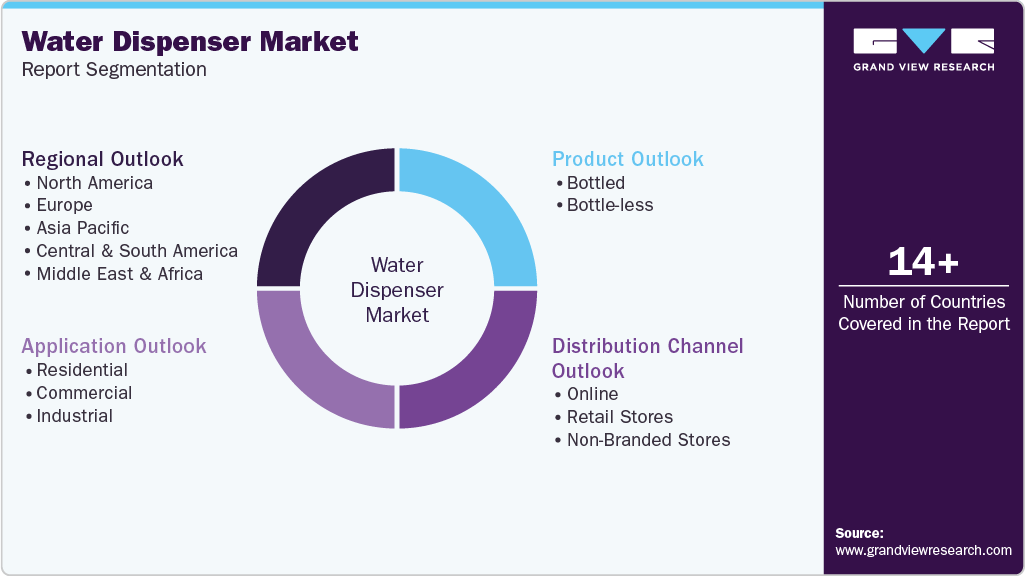
This report forecasts revenue growth at the global, regional, and country levels and provides an analysis of the latest industry trends and opportunities in each of the sub-segments from 2021 to 2033. For this study, Grand View Research has segmented the global water dispenser market report on the basis of product, application, distribution channel, and region:
 To learn more about this report, Download Free Sample Report
 -
Product Outlook (Revenue, USD Million, 2021 - 2033)
-
Bottled
-
Top Load
-
Bottom Load
-
-
Bottle-less
-
-
Application Outlook (Revenue, USD Million, 2021 - 2033)
-
Residential
-
Commercial
-
Hospitality
-
Transport Terminals
-
Institutions
-
Corporate Offices
-
Others
-
-
Industrial
-
Healthcare
-
Food and Beverages
-
Others
-
-
-
Distribution Channel Outlook (Revenue, USD Million, 2021 - 2033)
-
Online
-
Retail Stores
-
Non-Branded Stores
-
-
Regional Outlook (Revenue, USD Million, 2021 - 2033)
-
North America
-
U.S.
-
Canada
-
Mexico
-
-
Europe
-
Germany
-
UK
-
France
-
Italy
-
Spain
-
-
Asia Pacific
-
China
-
Japan
-
India
-
Australia & New Zealand
-
South Korea
-
-
Central & South America
-
Brazil
-
-
Middle East & Africa
-
South Africa
-
Saudi Arabia
-
UAE
-
-
Frequently Asked Questions About This Report
Asia Pacific is the fastest-growing region over the forecast period.
Bottled water dispenser segment led with a 69.9% revenue share in 2025, while bottle-less water dispensers is the fastest-growing product.
The commercial water dispensers segment led with a 48.2% revenue share in 2025.
Retail stores segment dominated the market and accounted for the largest revenue share of 43.4% in 2025.
North America dominated with a 37.5% revenue share in 2025, due to high demand for advanced home appliances in countries such as the U.S. and Canada. Furthermore, the presence of leading manufacturers such as Honeywell, Culligan International Company, and Whirlpool Corp. increases product sales, fueling regional market growth.
Key players include Whirlpool Corporation; Brio Water Technology, Inc.; Primo Water Corporation (formerly Cott Corporation); Honeywell International Inc.; Culligan International Company; Clover Co. Ltd.; Waterlogic Holdings Limited; Midea Group Co. Ltd.; A.O. Smith Corporation; Edgar’s Water.
Key factors that are driving the water dispenser market growth include product features such as portability; easy usage and installation process; and minimal maintenance costs.
The global water dispenser market size was valued at USD 3.6 billion in 2025 and is estimated at USD 3.9 billion for 2026.
The global water dispenser market is expected to grow at a CAGR of 7.7% from 2026 to 2033, reaching USD 6.5 billion by 2033.
About the Author(s)
Electronic & Electrical Research Team
Consumer Goods · Electronic & ElectricalThis report was authored by the electronic & electrical research team at Grand View Research - comprising two research analysts, one senior research analyst, and one industry expert - with specialized expertise in the electronic & electrical segment of the consumer goods industry. All findings are based on proprietary consumer goods databases, executive interviews, and regulatory analysis, subject to internal peer review prior to publication.
Last Updated:
Speak to Analyst

Customize this report to your needs - add regions, segments, or data points, with 20% free customization.
Or view our licence options:


ISO 9001:2015 & 27001:2022 Certified
We are GDPR and CCPA compliant! Your transaction & personal information is safe and secure. For more details, please read our privacy policy.


